Caroline Sommers

The outsider

Mike Wallace could've been my mentor. Where did I go wrong?

  • more
    • All Share Services

“Good evening. What you are about to witness is an unrehearsed, uncensored interview. My name is Mike Wallace. The cigarette,” says a stern, young Wallace, holding up his smoky stub in black and white, “is Phillip Morris.”

Cut to noir-ish title sequence, complete with smoke curling its way up the television in fast-motion as the words “The Mike Wallace Interview” pop up on the screen one at a time.

It’s now 42 years later, and the very industry that helped put Wallace’s kids through college is at the center of a controversy that threatens to undermine his five-decade career in a mere two and a half hours. That’s the running time of a new movie chronicling what was may turn out to be the lowest point in Wallace’s career. “The Insider” centers on the “60 Minutes” debacle over whether to air a controversial exposi of the tobacco industry.

Wallace is said to be fuming over his portrayal, and rightly. Despite his reputation as the country’s No. 1 hard-nosed journalist, Wallace, as interpreted by Christopher Plummer, is a sell-out. He throws his loyal, longtime producer to the wolves (network executives), who are terrified of repercussions (lawsuits) from the big bad tobacco industry. Only after another media outlet breaks the story does the real-life Wallace reportedly burst forth with bravado, insisting that CBS run the story of whistle-blower Jeffrey Wigand.

From Wallace’s point of view, the timing of this movie couldn’t be worse. To be made to look foolish in the twilight of his career must seem to him grossly unfair. Had the tobacco fiasco occurred, say, 20 years ago, he would have had a couple of decades to repair his tarnished reputation. Instead, the battle went down in 1996, and now that every ugly detail has been preserved on celluloid, Wallace is starting to think about how he will be remembered.

And it’s easy to see why he’d be concerned about his legacy: He’s won 19 Emmys, three Peabody Awards and three DuPont Awards. He’s interviewed everyone from LBJ to JFK, from the Ayatollah Khomeini to Nixon to Baryshnikov — and now, at 81, this is how he stands to be remembered? As the wuss who nearly brought down CBS? How … anti-climactic.

In the summer of 1992, I’d just won an Emmy while working for a small television production company in upstate New York. It was time to try to break into the big leagues: a job in New York City.

So what’s a girl from Albany to do if she doesn’t know anyone in the business? She gathers all her moxie and calls everyone she knows to see if they do. And, as luck would have it, someone does.

A friend of a friend used to go to school with a man who writes for Dan Rather at CBS. I make my cold call, and he agrees to give me a few minutes of his time. A few days later, I take the Amtrak down to the city for one of those “informational meetings” that rarely lead to a job, and usually lead only to more “informational meetings.”

After our brief chat, I’m standing in the hallowed halls once roamed by Edward R. Murrow, and for some reason, Mike Wallace pops into my mind. I dare myself to try to get him on the phone. “Call him!” says one side of my brain. “Are you crazy?” says the other. “He’ll think you’re a stalker. Forget it.” I exit the building and head toward the train station. After a few hesitant steps, I turn around and go back into the building. What do I have to lose? I stand in front of the bank of in-house phones for a good 10 minutes before I gather up the nerve to give it a shot.

The operator answers. “Mike Wallace please,” I say with every drop of courage I possess. “Just a moment.” I prepare to leave a message that will never be returned. Waiting, waiting … and suddenly a forceful “Hello” from the other end of the phone. This voice is male. It is strong. It is confident. And, it is a bit impatient when I don’t immediately respond. “Hello!” the voice shouts. It is Mike Wallace.

I’ll be damned. He answers his own phone! “Uh, yes, I’m looking for Mike Wallace?” “This is Mike Wallace.” I stumble my way through a brief “bit” I haven’t even bothered to rehearse.

“I’m a television producer living in Albany, I’ve just won an Emmy for a piece I produced about a pedophile, and I really want to break into the TV business down here. It’s time for the big leagues, but I’m not quite sure how best to do it. I’d love to get some advice from someone I admire, and I’ve always admired you. I’m, uh, well, actually, I’m downstairs at CBS. Right now.”

“Well, today’s really not the best day for me,” he says. Here it comes: the rejection. “I just came from a memorial service we had for Harry Reasoner.” Long pause. “But you know what? I’ll betcha Harry would’ve done it. Come on up.” It’s an impossibly nice gesture, even if he was doing it out of the goodness of someone else’s heart. My pulse racing, I cross 57th Street in the pounding rain, walk into Wallace’s building and jump in the elevator. (The same elevator Mike rides!)

As his secretary leads me into Wallace’s office, I feel as if I’m having an out-of-body experience. Wallace greets me and invites me to take a seat. Only when he points it out do I realize I’m clutching my umbrella so hard that my knuckles are white. “Relax,” he tells me. “Put your umbrella down and tell me your story.” I reiterate exactly what I’d said on the phone.

He asks me if I have a copy of the Emmy-winning story with me. Of course I have it. I figure he’ll take a copy and never watch it. Instead, he motions me over to the VCR and takes the tape from me, puts it in the machine and presses play. We watch my piece — called “Chain of Pain” — in its entirety. My story holds Mike Wallace’s attention for eight whole minutes!

As the piece is ending, Don Hewitt walks by. To my shock, Wallace grabs his legendary executive producer and asks him if he has a minute to come in and meet a producer who just won an Emmy. This experience gets more surreal by the second as the three of us proceed to watch my story again. My confidence building, I even manage to make a wisecrack or two. When the piece ends, sensing my time is up, I thank them both for their time. Wallace offers up the name and number of his agent and tells me to call her in a week. He’ll put in a good word. I walk out of the “60 Minutes” office with a skip in my step, convinced I’m going to become the next Diane Sawyer.

And of course, if I’m going to be Diane Sawyer, I’d better carry myself like Diane Sawyer. These upstate clothes just aren’t going to cut it. I go into the first store I see, one of those Israeli-owned discount joints on every other corner in New York, and proceed to buy myself three suits I can’t afford. OK, they’re not Armani, but I have to start somewhere. I remember two of the three suits: Both have very short skirts (bad choice, in retrospect); one is a tan and cream plaid number and the other is a blinding primary purple. What did I know.

On the train back upstate, my head is in the clouds. I’m thinking about what I’ll say to my boss when I give notice, and what it’ll be like working my way up to becoming the youngest correspondent in “60 Minutes” history. I send follow-up letters, and a few days later, I begin leaving phone messages for Mike Wallace and Don Hewitt. They don’t return my calls, so they must be very, very busy. I know this must be the case — we’re chums!

Two weeks later, when there is still no response from Wallace or Hewitt, I become impatient. I want answers. I start leaving more messages.

The secretaries at “60 Minutes” are beginning to get really tired of me. As I’m leaving what may or may not be my fourth message for Don Hewitt, his secretary lets out her most vicious bark. “He’s gotten all of your messages,” she tells me. “You can stop calling now.” And what do I do? Thinking it will actually earn me points to be ballsy, I make the mistake of barking back.

“You don’t have to talk to me that way. I’m just trying to be conscientious. I have left several messages and he hasn’t returned even one of them. Are you giving Don Hewitt my messages?”

At the time, I’m sure Don Hewitt will hear from the secretary how feisty I am. He will like that, I think. It’s a good trait for a “60 Minutes” correspondent to have. And I’m sure it’ll get him to return my call.

He calls me back on Yom Kippur, the holiest day of the Jewish year. I’m in my parents’ living room in Albany, in the middle of breaking the fast, when the phone rings.

“Hello?”

“Yeah, is this Caroline Sommers?” asks an angry, older man.

“Uhh, yes it is.”

“Yeah, well, this is Don Hewitt. Stop calling my office and harassing my secretary. You’re not going to get a job at ’60 Minutes,’ so leave us alone.” Click.

I feel like I’ve been sucker-punched. Eventually, the sting wears off and, a month later, I get a job working for another TV show (albeit one that is much less prestigious). And within no time at all, I manage to put my “60 Minutes” experience behind me.

One night about three years later, I’m covering a black-tie gala at the Waldorf. I’m about to interview Mike Wallace. “Before I get to my questions,” I say, “I just want to thank you so much for what you did for me.” Blank stare. I start recounting the events of that late summer day, someone else grabs his attention, and he’s gone.

I experienced what I still believe was genuine kindness on the part of Mike Wallace. It was a gesture that spoke volumes about the man and his instincts. But by the time the tobacco story came about, four years later, the newsman was pushing 80. He may simply have been tired of fighting the good fight, and unwilling to take on another underdog.
Imagine — he has the scoop of a lifetime, but it’s risky. It could get ugly and expensive — for him and for CBS. He figures he’s in the home stretch — why stick his neck out now and jeopardize his legacy and good name?

As I read about Wallace’s current troubles, I wonder. Why did he ask me up to his office that day — and was he thinking about how he’d be remembered? Was he just acting, in a sentimental moment, the way he believed a great man (like Harry Reasoner) would act? Or is it possible that he really is a brave man, who truly cares about helping people and about pursuing the truth? If it’s the latter, then Mike Wallace has nothing to worry about. His legacy is safe. At least with me.

All hail the queen

Think watching talk shows is bad? Try making them.

  • more
    • All Share Services

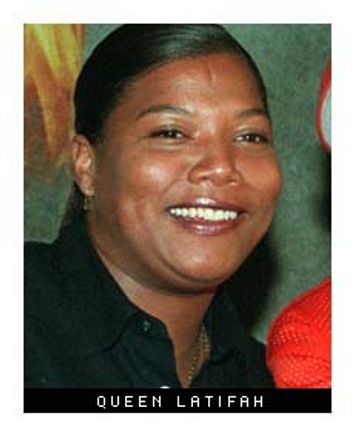
All hail the queenRap Artist Queen Latifah, left, poses for photographers at the Virgin Superstore in New York, Monday, June 15, 1998. She was there with rapper Lil Nique, right, to promote her new release "Order in the Court." (AP Photo/Tom Zuback)(Credit: Associated Press)

The news has not been good for TV talk shows of late. Jerry Springer has been emasculated, no longer allowed to feature fistfights on his former daily brawl-fest. Jenny Jones has lost face over the murder of Scott Amedure, a guest who confessed his gay crush on a friend and was subsequently shot by the man. Montel has just announced he suffers from multiple sclerosis. And now, there’s Queen Latifah, rap artist, actress, and talk show hostess extraordinaire (at least that’s what her producers at Time Telepictures, a division of Time Warner, hope.) The new talker premieres Sept. 20 but, as I said, the news isn’t good.

Having worked in television over the last dozen years, I’ve seen my share of the bizarre and the distasteful. But never have I seen anything like what I experienced this past summer, spending one full month in pre-production for the Queen Latifah show.

I admit I went in with a bit of a chip on my shoulder. After all, who wants to be in the same scuzzy profession as Jerry Springer? After producing documentaries for such esteemed cable outlets as A&E and Court TV (well, at least they’re better than “My father is a transvestite hooker!”), it was a major step down. But the money was good.

I was to run the field department for the show, supervising a team of two field producers, an associate producer and a cameraman. The upper tier of producers had lofty goals for Queen Latifah. They didn’t want it to be “just” a talk show. They wanted pieces, important pieces, that set up the one-hour, single-subject episodes in a compelling, meaningful manner — all in one minute or less.

Week 1: As a newcomer to the airwaves, Latifah was an unknown quantity, and nothing scares a publicist more than booking a big-name client on a loser show. The upshot? No one wanted to stick their neck out, so it was time to start calling in the favors from B-list actors and FOLs (Friends of Latifah): Brooke Shields, Carmen Electra, Donna D’Erico. Slim pickings.

My staff’s first assignment was to produce a short intro for the episode featuring Vivica A. Fox, who played Will Smith’s wife in “Independence Day.” Even the powers-that-be knew better than to book a full hour with Vivica Fox talking about, well, Vivica Fox. What to do? Well, they knew she was a newlywed, so they decided to broaden the hour into a themed show titled “Surviving the First Year of Marriage.” Our mission: find a bunch of couples who’d been married less than a year; find a couple that had written a “how-to” guide about making it to the first anniversary; set up a surprise walk-on with Fox’s husband, Sixx Nine; and — voila! — a show about surviving the first year of marriage. Our piece was to set up the hour.

The treatment was approved by the supervising producer — in a room full of other producers — and we were off. I sent a member of my staff out to do all the interviews, and though I was pleased with the results, the supervising producer was not. He insisted on sending my producer back out, but not before telling us exactly how he wanted the questions worded. He also told me that our sound bites were to be no longer than five seconds. “Do you realize how much a person can say in five seconds? Not a whole lot,” I warned him. He didn’t care. Five seconds.

Then there was the matter of the pictures. We were told it was too expensive to get photos of “dead” Hollywood couples like Madonna and Sean Penn or Bruce Willis and Demi Moore, so we sent out an inner-office memo: anyone who’s married and OK having their wedding photos seen on national television, fork ‘em over.

We had our photos. We had our interviews. We were ready for the edit room. But unbeknown to us, it was only at that moment that the show’s executive producer, Cathy Chermol, learned about this segment. And she didn’t like it.

“I know you’re a great producer,” she said, “but one thing you have to know is we don’t use tape just for the sake of using tape. There’s got to be a compelling reason for it.”

“But, Cathy, this segment was laid out word for word, and approved by the supervising producer, a senior producer and the producer of this episode. They all really liked it and gave me the green light.”

She looked over at the supervising producer, a pisher of 30 if he was a day, and asked, “Did you approve this segment?” To which he replied, “No!”

At this point, the executive and supervising producers’ attention was suddenly and irrevocably claimed by the bank of monitors on the office wall. Someone was wearing an outfit on TV, and they couldn’t get over how tacky it was. As they launched into a lively analysis of the hapless woman’s wardrobe choice, I asked if they wanted to finish the conversation. They ignored me. Not knowing what else to do (and not having any particular opinion on the garment in question) I slowly walked out of the office.

On Friday of my first week, I was told I’d been chosen to put together a 10-minute video highlighting Latifah’s best moments from the shows that had been taped to date (again, slim pickings.) Time Telepictures was throwing a pair of parties for publicists the following week — one on the East Coast, one on the West — and they were going to use my video to show that Latifah is hot. Latifah is edgy. Latifah cares about her audience. The publicists would, in a perfect world, begin booking their clients on Latifah’s show.

This assignment was a tall order, as the show’s biggest-name guest to date was Brooke Shields. My staff and I were to cull through hours and hours of shows and try to find the best sound bites, the funniest moments, the most innocuous, star-friendly material that would convince publicists that the show was an acceptable outlet for their clients. The number-two honcho from Telepictures wanted to know every single sound bite I planned to use for the video, and she scrutinized each and every quote with the kind of intensity usually reserved for Talmudic scholars studying the words of the Rabbi Hillel.

“I don’t know,” she fretted about one of Brooke Shields’ racier comments, “If she admits she lost her virginity to Dean Cain at Princeton, would that put off a publicist? Or would they like it that Latifah was able to get Brooke to kiss and tell? Does it make Latifah look good? Or does it make the show look sensationalist?”

I was dumbstruck by this conversation, but I played along. After all, it was a paycheck.

Week 2: Over the next four days, I spent dozens of hours in the edit room, combing through material, and talking on the phone with the Telepictures senior vice president, who was obsessively concerned about the success of the piece. After several agonizing attempts, I finally put together a short piece that worked beautifully. The morning after the New York party, I had messages on my voice mail from the senior vice president and from the executive producer. The video was a major hit. I was shocked to hear any positive feedback. Until now, the news around here had only been of the bad variety.

In the short time I’d worked there, the mantra at Queen Latifah had become: “We don’t want to be another Ricki Lake. We don’t want to be another Ricki Lake.” Her name had become the benchmark for everything our show wanted to avoid. (Ironically, we shared office space with her staff — though Ricki was supposedly so paranoid about producer-poaching that she’d had another entrance built in the back of the building.) In light of this, I was surprised to learn that our supervising producer had spent the last six years of his career cutting his teeth, where else, but at Ricki Lake.

Week 3: No one was happy with the shows that were being taped, so a mandatory meeting was called for the entire staff. With Time Telepictures’ top executive presiding, each producer team was to pitch several show topics. I knew the meeting was important, because even Queen Latifah was there (it was one of the few times we’d seen her in the office when she wasn’t taping shows.) She was accompanied by a co-executive producer I’d never seen or heard of before.

With so many people and so many ideas, it seemed the only sensible way to run the meeting would have been to have each person run down his or her list, and then go back to only the pitches that piqued the interest of Latifah or the executives. Instead, the first producer took close to one hour to get through her list. The room became stuffy, then sweaty, as almost every one of her ideas was analyzed, scrutinized, and then unceremoniously discarded. Another producer took her turn, then another. Finally, the top dog from Time Telepictures blew his stack. “All of these ideas suck!” he blurted out, red in the face. “We have only a few weeks left before we premiere, and every one of you knows that the shows we’ve taped have been shit. We have to get our act together. We cannot continue to produce shows the way we’ve been producing them. If you can’t do it, you shouldn’t be here!”

Now, the staff was not just angry and demoralized, but hungry! We were three and a half hours into a meeting that had begun at 11:30. Someone must have said something, because a few dozen pizzas suddenly showed up. The show’s top executives, meanwhile, were nowhere to be found.

After lunch, Queen Latifah and the phantom co-executive producer returned to hold an impromptu meeting with the staff — minus the top executives. The rest of the staff had collectively decided it was now or never, and the complaints spilled forth. One woman spoke for the bunch about how we’ve been pointed in one direction, turned around, pointed in another, and then another. “No one seems to know what they want this show to be!” she lamented. Another woman talked about how everyone on the staff left really solid shows to come here, because we were promised this was going to be different. “Not only isn’t it different, but it’s an abusive atmosphere.”

Latifah listened sympathetically, but at the same time, she had a lot on the line. She said that she wouldn’t put up with the tabloid show topics and the low caliber of the guests. “I believe we have the power in this room to make this show work,” she said. “Some of us will make it, some of us won’t be here in a month or even in a few weeks. That’s just the way this business is. But I’ll tell you one thing, if I don’t like the kinds of stories I see coming out of here, I ain’t gonna stick around. It’s in my contract that I can walk, and I will walk, if these shows don’t get better.”

Clearly, Latifah didn’t want to inflict any more wounds upon an already beaten-down staff. But she also knew she couldn’t afford to sit by idly and let the show die a painful death before it even premiered. She wrapped up the meeting at 4:30 — five hours after it had begun — by asking everyone in the room to hold hands, form a giant circle, and bow our heads for a short prayer

“I pray to God to give us the strength and the know-how to make this show a success. I know we can do it.” And it went on from there. I opened my eyes and peered over at my cameraman. We had trouble keeping a straight face. What were we all really praying for? For Latifah and the show’s executives to get rich? On Friday of my third week, I went into the executive producer’s office and told her I didn’t think this was the right fit. She agreed. I told her I’d be equally happy to leave that same day, or the following Friday. She said to take another week. I considered it a gift.

Week 4: During my fourth and final week, there were the usual B-roll shoots, for which I sent my cameraman out to shoot video of people walking in the streets, of women getting makeovers and of taxis speeding by. The supervising producer still insisted on approving every single shot before we handed tapes over to the show’s director. Morale on my staff was at an all-time low. Still, the week was fairly uneventful — except for the several voicemail messages I received from the executive producer on Thursday. I couldn’t imagine what she wanted, since I’d been off her radar screen for several weeks. Things had gotten so bad, however, that even though I only had only 24 hours left at Latifah, I spent the better part of the day worrying about what I had done wrong.

On the morning of my last day, I learned that the executive producer had been fired. Apparently she’d been trying to reach me on Thursday to let me know. That last day was probably the strangest I’d experienced since I’d been there. There was a collective sigh of relief over her departure, but this was dampened by a creeping sense of dread that her successor could end up being far worse.

Since my departure from Latifah, I’ve stayed in touch with several people, and they tell me things have in fact gotten worse. In order to keep the show from becoming the next Ricki Lake, Time Telepictures pulled the executive producer from its other crown jewel, “Jenny Jones,” to serve as temporary EP of Queen Latifah. Heads have been rolling ever since. The new chief’s open-door policy seemed inviting enough at first — until a producer, unhappy with the direction of one of her segments, tried to share her concerns. According to Latifah lore, he told her to pack up her things immediately and had her escorted from the premises.

Now I’m told he’s gone too, and the team running the show consists of the executives from Time Telepictures, the supervising pisher, and another woman — formerly the producer of a program I’ve never seen called “Forgive and Forget.”

Continue Reading Close

Horror show: The nightmare of making tabloid TV

You think waking up to find a neatly arranged pile of rocks just outside your tent is bad? I've interviewed Joey Buttafuoco -- now that's scary!

  • more
    • All Share Services

Seen it? I’ve lived it. As I watched the summer’s surprise mega-hit, “The Blair Witch Project,” I thought I’d drown in the flood of memories. Having spent the last dozen years making documentary television, it’s safe to say I’ve been in “Blair Witch”-type situations countless times. Did I really need to watch an amateur documentary film crew whine, fight, scream, beg, freak out and shoot dizzying tape for 87 minutes? Hadn’t I had enough of that in real life?

Although the film did manage to capture the emotional coaster ride that is working in film and television, compared to the real thing, those kids had it easy. I’ve interviewed Joey Buttafuoco! Now that’s scary!

Like Heather Donahue and her trusty crew pursuing their elusive witch, I ran around Long Island chasing the overfed, oversexed auto mechanic and his wife — as they craftily avoided me. (They were under contract to “A Current Affair,” and my show, the competition, was considered the enemy.) The story led me to a gym, where I wore a hidden microphone to try to interview a grotesquely muscular guy who’d supposedly been involved with Amy and then dumped her. As soon as the guy “made me” (i.e. discovered that I was a reporter wearing a microphone with a camera crew filming me from the street), he summoned a bunch of other weight lifters to physically shove me out the door, kick me in the behind as I ran away and push my cameraman to the ground. To risk your life for a tabloid TV show is to know the true meaning of terror and shame. If it taught me anything, it’s that a pile of rocks outside your tent is nowhere near as scary as a bunch of guys who are dumber than a pile of rocks.

Elusive and reluctant subjects can inflict a great deal of pain, but the havoc wreaked by miscommunication between crew members can’t be underestimated. I was in Mexia, Texas, interviewing the hometown ex-boyfriend of model Anna Nicole Smith for a syndicated tabloid show. My mission was to cajole this young man into telling me — on camera, of course — that Anna Nicole Smith had surgically enhanced her breasts. “I’m not gonna tell you if she had a boob job or not,” he drawled, “unless you shut off that camera.” I turned my head and told the cameraman to cut, and then secretly, over-dramatically lip-synched to him: “Keep it rolling.” (In tabloid TV, anything goes; if you don’t come home with the story, as they say, don’t bother coming home.) The boyfriend proceeded to go into agonizing detail about the procedure, in spite of having been sternly warned by Smith to keep it a secret.

In the crew van after the interview, proud of my coup, I asked the cameraman to cue up the great moment for me. “What do you mean?” he asked. “You told me to cut.” “Are you kidding me?” I shouted in disbelief. “I lip-synched to you after I told you to stop rolling, to keep it rolling! You mean you really cut? Are you out of your mind?” The cameraman, a pot-bellied TV veteran, felt stupid. There we were, in the hot, mid-summer Mexia sun, having our very own “Blair Witch” moment. Afterwards, I felt guilty for making him feel stupid, angry at myself for engaging in sleazy tabloid practices, and sick — because I was surely going to lose my job. (I didn’t.)

Infighting, also a problem. I was producing a story about how, in the liberal climate of Denmark, fathers supply their 12-year-old boys with condoms in case they get lucky, and seventh-grade teachers take their classes on field trips to the Sex Museum. Ordinarily, this would be a pretty fun piece to produce. But the “talent,” an on-camera reporter whose right-wing attitudes were what my crew and I called “a major buzzkill,” didn’t agree.

For one segment, we went on a location scout for Christiania — a hippie commune where Danes walk around barefoot, filthy and stoned — without a camera. I felt that these would be powerful images for our story, but the talent didn’t see it that way. After half an hour, we found ourselves back at the van. “I think it’s pretty cool,” I told him. “You have these hippies smoking hash right in front of their kids. People selling dope and not even trying to hide it. If you’re looking to shock people in Peoria, I don’t think we can do much better.” Morally offended by everything he’d seen, he refused to consider it. “Never gonna sell,” he said. “It’s a waste of time.”

“What do you mean, it’s not gonna sell?” I asked, stupefied. His reply: “These people are filthy. They’re disgusting.”

The discussion escalated into an argument of “Blair Witch” proportions, and I ended up in tears — just as Heather Donahue did when her sound man threw out the map that was their only hope to get out of the woods. And it was no longer only about the hippie commune, either. “How can you call me your producer if you don’t even let me make any decisions?” I wailed to the talent. “You don’t respect me!” The cameraman and sound man quietly slinked away. It got uglier. Eventually, he gave me permission to get my pictures, but upon my return to the van, I sulked and gave him the silent treatment — a real joy for the rest of the crew.

As for physical danger — remember how nervous the “Blair Witch” producer and her crew were when they had to walk across a log to get from one side of a brook to the other? In my day, we snacked on that sort of drill. I camped in the woods with an entire battalion of New York State Air National Guardsmen! I chartered a boat the morning after the crash of TWA Flight 800 and made it all the way to point of impact in East Moriches! I’ve been thrown in the back of police cruisers in small Florida towns! I’ve been on the Howard Stern show without having to show my breasts! I’ve been in more prisons than John Gotti! I’ve interviewed Joey Buttafuoco, dammit! As for that last, gruesome scene, well, I have to admit, I’ve never been killed on camera, but that’s just about the only thing I can’t top from “The Blair Witch Project.” Everything else in those 87 minutes? Been there, done that.

There was another incident in Texas in which I was taken apart by my managing editor for asking the show’s lawyers whether I could ambush a judge at his home. It wasn’t slaughter, but it was close. The judge had refused an interview in his chambers, so I tried — and failed — to stake him out by waiting near his parking spot. I really needed this interview, and the only way I figured I could get it was to go to the general store in town, say I was a long-lost niece and secure the judge’s address. Good sleuthing, I thought. I was proud of myself. But once I had the information, I thought it would be a good idea to make sure I wouldn’t get thrown in jail for showing up at his doorstep with a camera crew. I spoke to the lawyers, and 10 minutes later, was beeped by the managing editor. I should have known, I was told, that my allegiance was to the editorial team back in New York — not to the lawyers with whom they butt heads all day long. In that one phone call, I lost all face. My tabloid reputation was shot. I would have to go into something respectable now — something where guts of steel were not required — something like “20/20,” or “Dateline.”

Tame as the movie seemed to me, there is one thing I regret about the “Blair Witch” documentarians’ demise — its timing. They never had a chance to get around to the sex! Inter-office romances are a dime a dozen in the incestuous world of tabloid television — so imagine the possibilities for the Blair Witchies! Someone was bound to wind up having sex with someone within a day or two, had they lived. Hey, you’re stuck out there in the woods, spending virtually every moment with your colleagues. What do you think would happen next?

Continue Reading Close