Charles Hawley
Soldier of conscience
After serving in Iraq, Army Spc. Agust
Is it possible to become a conscientious objector once you have signed up to fight a war? According to U.S. military regulations, the answer is yes. But as confirmed by a U.S. Army court-martial in the case of former Army Spc. Agustín Aguayo near the western German city of Würzburg on Tuesday, the Army also reserves the right to answer no.
Aguayo, a 35-year-old Mexican-American from Los Angeles, served a tour of duty in Iraq as a combat medic from 2004 to 2005. Early on in basic training, however, he began to realize that he was opposed to war. When his unit was ordered to return to Iraq for a second tour of duty, Aguayo decided he could not obey with a clear conscience. He deserted from the military base in Germany.
On Tuesday, in a small cramped courtroom in the Leighton Barracks near Würzburg, Aguayo was found guilty of desertion, slapped with a bad-conduct discharge, stripped of pay and benefits, and sentenced to eight months’ imprisonment. It could have been much worse — the prosecution had asked for Aguayo to be locked away for two years.
“I never intended to cause any disruption,” a visibly nervous Aguayo told the military judge hearing his case. “I always tried to do the best I could. I sincerely believe I am a conscientious objector. My life reflects that, and it’s what I have become at the very core of myself.”
In the days since he turned himself in to military authorities in California — where he went after deserting his unit in early September last year — Aguayo has also become something else: a symbol.
In closing arguments, an Army co-prosecutor made perfectly clear that the court-martial’s message was for those increasing number of men and women in uniform who object to what they are being asked to do in Iraq: “It is not OK to abandon your brothers in arms.”
But thrown in among the couple dozen journalists on hand for the trial were those for whom Aguayo symbolizes a much different message. They were representatives of the anti-Iraq war movement in the United States and Europe. For them, Aguayo is something of a hero.
It is a role that Aguayo is uncomfortable talking about. For him, it was always about his changing beliefs once he entered the Army. About his growing discomfort with picking up a weapon and his eventual refusal to carry a loaded gun even while serving in a war zone. Or, as his civilian defense attorney David Court put it: “This is a case of a man of conscience who did not want to break the law.”
Whether he likes it or not, though, Aguayo has become the latest in an ever-growing list of U.S. soldiers making headlines for refusing to fight in Iraq. Some, like Lt. Ehren Watada — who recently became the first U.S. officer to be court-martialed for opting not to obey orders sending him to Iraq — argue that the fight is illegal. Others, like Aguayo and Mark Wilkerson, who was sentenced to seven months behind bars in February for desertion, choose the conscientious objector route, saying that their belief systems have changed.
All, though, are needed by an antiwar movement that — despite widespread disapproval of the war — has had difficulty gaining traction in the United States. Soldiers who oppose the war reason that those on the front lines of that movement could be just the representatives they need.
“Those who take a public stand give support to those [still in the military] who are against the war and thinking of resisting,” said Kelly Dougherty, executive director of Iraq Veterans Against the War. “The only ones who can destroy the myth [that the Iraq war is necessary] are the military.”
Dougherty — in Germany this week for Aguayo’s trial — helped found Iraq Veterans Against the War three years ago. The group recently elected to focus more of its attention on fostering resistance within the military and counts more than 400 members — all current or former soldiers.
Other peace and antiwar groups have also recognized the potential of supporting real soldiers as they try to turn their back on the military. Lori Hurlebaus of Courage to Resist was also in Würzburg on Tuesday. A number of antiwar groups based in Germany, including Tübingen Progressive Americans and American Voices Abroad, were also there.
Support for these organizations is increasing. Like Dougherty’s group, Veterans for Peace is seeing rapid growth. Furthermore, nearly 1,600 active soldiers have signed a petition to the U.S. Congress that reads in part: “Staying in Iraq will not work and is not worth the price.” Likewise, according to the War Resisters Support Campaign in Canada, there may be as many as 200 to 300 U.S. soldiers who have headed north across the border to escape deployment.
For his part, Aguayo is now heading to Mannheim for his prison term, after which he will be exactly where he has wanted to be since he filed his conscientious objector papers just days before his first deployment to Iraq: at home with his family. And far from any battlefields and orders to commit violence.
Indeed, he had been hoping to be granted conscientious objector status from the beginning. It was only after his application was refused, despite being initially approved by his immediate superiors, that Aguayo realized he had to move to plan B. Which wasn’t much of a plan. On the evening of Sept. 1, 2006, his unit began its journey back to Iraq. And Aguayo elected not to join them. The next day, he turned himself in, only to be told that he might still be sent to Iraq. After being taken to his on-base apartment to collect his belongings, Aguayo took off out the bedroom window, leaving his wife Helga in the front room.
“Until he is back, our lives are at a standstill,” Helga told the court during the sentencing proceedings. Because he has been in custody pending his trial, the standstill will be over in as little as 40 days.
- – - – - – - – - – - -
This article has been provided by Der Spiegel through a special arrangement with Salon. For more from Europe’s most-read newsmagazine, please visit Spiegel Online or subscribe to the daily newsletter.
Coalition of losers
With its voters rejecting both major parties, Germany will have the weakest government since World War II.
A quick glance at German election results will tell you that Angela Merkel’s center-right Christian Democratic Union (CDU) and its Bavarian sister party, the Christian Social Union (CSU), got the most votes. A total of 35.2 percent, to be precise. Chancellor Gerhard Schröder and his Social Democrats (SPD), on the other hand, only managed to garner 34.3 percent of all votes cast. She wins, he loses. Time to form a coalition government.
But German political theater this autumn is a bit more complex than that. Angela Merkel’s results, as it happens, are nothing short of catastrophic. In June, just after she was nominated as the Union’s candidate for the chancellery, surveys indicated that she had a shot at an absolute majority of over 50 percent. That soon proved overly optimistic, but even in the days before Sunday’s election, no survey had her receiving less than 40 percent. But on election day, her result took a steep dive and will go down in history as one of the worst ever for the Union — even worse than the 38.5 percent the party got in 2002.
Continue Reading CloseImagining a world without nuclear weapons
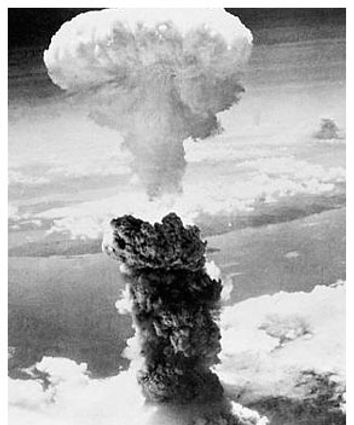
Historian Richard Rhodes talks about the atomic bombing of Japan 60 years ago, today's global arms race -- and the only way to stop a nuclear attack by terrorists.
The atomic bombing of Hiroshima and Nagasaki, Japan, was the horrendous ending to a horrific war. But was there a silver lining? Atomic weapons historian Richard Rhodes, 68, is the author of 20 books, including the Pulitzer Prize-winning “The Making of the Atomic Bomb” in 1986. He has written extensively on the hydrogen bomb and nuclear energy, and is currently working on a book about nuclear weapons issues from the last 20 years. Spiegel Online spoke with Rhodes about how nuclear bombs limited 20th century violence, U.S. guilt for the arms race, and just how simple it may be for terrorists to acquire and set off a nuclear weapon.
Continue Reading CloseThe Pakistan powder keg
Ahmed Rashid, an expert on militant Islam, says unless the West turns up the heat on Musharraf, al-Qaida will continue to flourish there.
The investigation into the July 7 terrorist bombings in London quickly revealed connections to Pakistan. But what role if any did the country run by Gen. Pervez Musharraf play in the attacks? Pakistani journalist and scholar Ahmed Rashid tells us.
After the London bombings, police quickly revealed that most of the bombers were British citizens of Pakistani origin and that they might have traveled to Pakistan to receive instructions and training prior to the July 7 attacks. Was this a surprise to you?
Continue Reading Close