Cheryl L. Reed

Collared

A priest and nun are silenced after refusing to condemn homosexuality.

  • more
    • All Share Services

Even before the recent priest sex scandals, the Catholic Church was eliminating outreaches to the gay and lesbian community. While Vatican spokesman Joaquin Navarro-Valls earlier this month was calling the ordination of gay priests “invalid,” the Vatican had already forbidden a Catholic gay and lesbian conference from celebrating mass as a group.

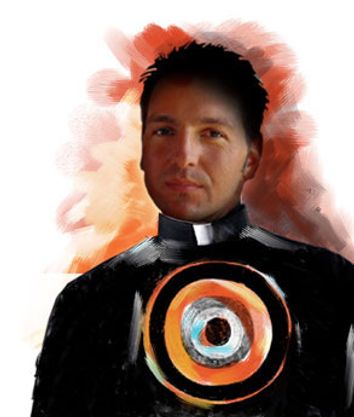
For the past three years, the Vatican has banned a Maryland priest and nun from ministering to gays and lesbians because they refuse to condemn homosexuality outright. “The Vatican has been fixated on sexuality,” says Sister Jeannine Gramick, who along with the Rev. Robert Nugent has been under strict orders from the Vatican since 1999 to no longer give workshops to gays and lesbians or their parents, a ministry she began in 1971. “Here are judgments being made about sexuality and homosexuality by allegedly celibate men who do not have a first-hand experience of sexuality. They are not in touch with people’s experiences.”

Sister Gramick and Nugent were investigated for 11 years by the Vatican for their ministry in the Maryland suburbs before they were ordered to discontinue it. The Vatican called their teachings “ambiguous” and criticized them for not stressing that homosexual acts are always sinful.

Sister Gramick told church officials that homosexuality was a matter of conscience and, while she made people aware of the church’s teaching on the matter, she also encouraged them to study what science and psychology and other faiths had to say about homosexuality.

After the Vatican’s verdict, Sister Gramick traveled the country speaking out about the investigation and how she was ordered to stop her ministry and told to keep quiet. Vatican officials received thousands of letters in support of Sister Gramick and Nugent, and church leaders in Rome pressured the sister and priest’s religious orders to stop them from speaking out.

Their orders’ superiors drew up a list of “obediences” that the two were to follow: They were not allowed to speak about the Vatican investigation, nor criticize the Vatican, nor ask people to write to the Vatican on their behalf. Sister Gramick responded by saying that such a ban on speaking violated her civil rights. She then joined another order, the Sisters of Loretto, known for their progressive stance on social justice, including gay and lesbian outreach.

Because male religious orders are much more controlled by church hierarchy, there was no equivalent order for Nugent to transfer to that would allow him to continue talking about his Vatican investigation. So Nugent followed his obediences and went to work at a Baltimore parish. He still counsels gays and lesbians privately in one-on-one counseling sessions, but he and Sister Gramick are prohibited from holding workshops for gays and lesbians or their parents.

“I miss my ministry,” Nugent said. “It’s been a very difficult two years. The ultimate punishment would be not to allow me to function as a priest in the public area of the church. I don’t want to be a renegade priest.”

Meanwhile, Nugent uses his priestly pulpit to talk about social justice. And he waits. He believes if he is patient enough, another pope will come into power and his order can petition to have his gay and lesbian ministry reinstated.

Both Sister Gramick and Nugent worry that instead of making it easier for gay priests to be more open about their sexuality, the church will place even greater pressure on seminaries not to let in gay men. “Young men entering the seminary or priesthood will be scrutinized very closely,” Nugent says. “It’s much healthier for young men to say: ‘Yes, I’m gay, but I feel good about myself and I feel called to celibacy.’”

Angered by the Vatican’s statement calling the ordinations of gay priests “invalid,” Sister Gramick charges that the church is trying to lay blame on a group of people already stigmatized.

“The real scandal is not gay priests or homosexuality or pastoral outreach to gay and lesbian people,” said Sister Gramick. “The real scandal is the secrecy and the coverups of people in authority and trying to lay blame on gay priests. The people in the pews, by and large, know gay priests and love them.”

The gay purge

By scapegoating homosexual priests, the Catholic Church seeks to avoid a tougher look at its secret history of abuse.

  • more
    • All Share Services

The gay purge

The Vatican has come up with a simple solution to the Catholic Church’s recent sex scandal: Eliminate gay priests. “People with these inclinations just cannot be ordained,” says Vatican spokesman Joaquin Navarro-Valls, responding to the sex scandals sweeping the American Catholic Church in recent weeks.

U.S. conservatives have also taken up the cause. Former drug czar and self-appointed “values” cop Bill Bennett told CNN last week that “the church has to consider the whole question as to whether it wants priests who are homosexual in orientation.”

That answer may make sense to many, since the sex cases that have received the most attention have involved priests who have molested young boys. And turning the scandals into a “gay” issue allows the church to suggest that it, too, is a victim in the scandal. Rather than being responsible for pedophile priests, the church can portray itself as victimized by gays who have sneaked into the priesthood. But it blurs a central fact at the heart of the controversy: No one, including the church itself, seems to know exactly how big the sex scandal really is, who it involves or what role homosexuality plays in child abuse by priests.

At least one well-known clinical psychologist says he believes the victims are much more likely to be girls and women.

“There are far more heterosexual cases than homosexual,” says Gary Schoener, a clinical psychologist who has been diagnosing and treating clergy abuse for 28 years. “The Vatican damn well knows that, and the leadership in the American church knows that.”

Since 1974, Schoener and his staff at the Minneapolis Walk-In Counseling Center have consulted in more than 2,000 clergy sexual abuse cases. In a number of denominations around the country, including Catholic dioceses, he assesses priests and their victims and helps develop training programs to teach clergy proper boundaries. He has been involved in over 100 legal cases involving clergy abuse in Colorado, Florida, Texas and New Jersey.

“I would challenge the church to show me that there are more boys than girls being abused by priests,” he says. “There are plenty of cases of girls and they are just not getting the visibility.”

Though recently they have. On Thursday, when Pope John Paul for the first time denounced the “grave scandal” of priest sex abuse, saying that such men had betrayed their vows and succumbed to evil, a Washington priest was suspended after admitting he might have “crossed over the line” with at least one teenage girl. His admission came after two women contended that he had engaged in sexual misconduct with them when they were teenagers in the 1980s. Almost simultaneously, a former pastor in Santa Rosa, Calif., Don Kimball, stood trial on criminal charges that he raped and molested two underage girls 20 years ago. A former bishop testified that Kimball had admitted to him that he had molested teenagers — and that he waited three years before doing anything about Kimball.

Many experts on clergy sexual abuse would disagree with Schoener’s assertion that most victims of priest abuse are female, though no one has the comprehensive data to prove him wrong. And therein lies the biggest problem with the current sex scandal: In order for any concrete conclusions to be drawn, the church would need to assemble its own comprehensive list of abuses. So far, the church has not done so.

Schoener says that in his practice he sees six times more female (both adolescent and adult) than male victims of abuse from priests. But because the cases that make headlines usually involve boys, the public is being misled about the scope of the problem, he says.

The few cases litigated in public tend to involve a small minority of priest sexual predators who have numerous victims. In most cases, however, Schoener says, only one or two victims surface and the church settles quietly out of the public eye. He estimates that 98 percent of all priest sex cases are settled out of court.

“The sexual abuse of a boy is treated far more seriously, and is considered a far worse offense than girls or women, and there’s no comparison,” Schoener says, referring to public opinion evident in press coverage and jury verdicts. “The big damage awards go to the boy cases,” he says.

Not only has media coverage created the impression that the typical abuse scenario involves pedophilic priests abusing little boys, but the church itself has strongly suggested that the culprits are homosexuals. Vatican spokesman Navarro-Valls earlier this month said the church recommended that seminaries reject all gays and declared the ordinations of gay priests “invalid,” suggesting that a gay man who becomes a priest is like a gay man who marries a woman who is unaware of his orientation. Because the church would annul such a marriage, the ordination of a gay man might be viewed as similarly invalid, he says.

Schoener became irate at the church’s suggestion that the abuse stemmed from homosexual priests: “Any such statement that links homosexuality to these cases is bullshit. That’s outrageous. They are playing on homophobia. It’s a perfect group to nail. And it’s also deflecting an attack on them.”

Dr. Frederick Berlin, an expert on pedophilia and a member of the Catholic Church’s newly appointed commission to investigate priest sexual abuse, says he thinks there are probably more male victims than female. But he isn’t sure, and says it’s possible that Schoener “may be absolutely right,” since the church has delivered no concrete documentation. “Different people are seeing different things. What we really need is some kind of systematic look at the abuse in its totality in order for us to be really confident.”

But A.W. Richard Sipe, a Catholic priest turned therapist who has written three books on priests, sex and celibacy and often testified on behalf of victims, says Schoener is right in saying that the majority of priest victims are female. He bases much of his research on personal interviews with priests who have been sexual abusers — 129, at last count.

Most of those female victims, Sipe points out, are adult women. Among adolescents and children, Sipe believes, based on his own research, that boys are victimized by priests four times more than girls. He says that is in marked contrast with statistics in the general population, where girls are three times more often sexually victimized than boys.

Those figures can be somewhat misleading, he says, because girls tend to underreport abuse by priests. “Girls fall in love with boys and older men. So to be loved or involved with an older man, a priest, doesn’t strike girls as inconsistent with their psychosexual attractions,” he says. “That doesn’t mean it’s not abuse.” When a boy is molested, however — especially because of the church’s own stance against homosexuality — he is more likely to know that what has been done is wrong, and to report it.

It’s also worth noting that when priests prey upon adult women, it violates their vows of celibacy as well as the trust between priest and parishioner but, in most cases, it’s not illegal. It’s more like when a therapist seduces a patient: It’s a breach of trust to be avoided, certainly, but not the same kind of outrage as child sexual abuse. The number of young boys molested by priests understandably gets more attention, because it plays on parents’ worst fears — that children will be harmed by trusted caregivers — and often leaves lasting scars.

Sipe says that the reason so many boys are targets of priest abuse is because priests have the closest contact with boys and young men in seminaries and in parishes where, until recently, girls were not allowed to be altar servers. Sipe calls the priesthood a “homosocial culture,” not unlike a men’s prison. “Think what kind of sex is available to men in prison. Just because prisoners are committing homosexual acts doesn’t mean they are all homosexuals. It’s what’s available to them,” Sipe says. “Boys and men are more available to priests socially.”

Sipe is also quick to defend gay priests, saying that his research shows one-third of priests are gay, but just as many remain true to their vows of celibacy as heterosexual priests — about 50 percent. “Gay priests are getting a terribly bad rap,” Sipe says. And, like Schoener, he is angered by the church’s approach. “Blaming gay priests is bullshit. This anti-gay spirit is so unfounded. I call it the ‘sexual holocaust.’ The church’s attitude is that if you can find a scapegoat, you can persecute them and then you’ll eliminate the problem. If you got rid of homosexual-oriented priests, that would mean you would eliminate one-third of priests and bishops,” he says. “There have always been homosexual bishops, priests and popes.”

Berlin also rejects the notion that a homosexual priest is any more likely to become a pedophile than a heterosexual one. “There’s no evidence whatsoever that a man who is homosexual is any more a risk to a young boy than would be a heterosexual man to a young girl,” he says.

Those priests who have molested teenage boys may be ephebophiles, Berlin says, those who tend to be attracted to adolescents. But while he acknowledges that some cases of priest abuse involve homosexual priests who became sexually involved with teenage boys, he says there was not enough information to determine whether the cases coming to light now are homosexual men or ephebophiles. Celibacy, he says, can aggravate a preexisting sexual problem, but the vow doesn’t create sexual abusers.

Berlin does allow for gray areas. “Certainly a priest who is homosexual and feeling lonely and lacking intimacy can begin to feel drawn towards an older adolescent he is working closely with,” he says.

But even some who do believe that gay priests are the source of the scandal believe that the responsibility still rests largely with the church itself. “They are not pedophiles. They are psychosexually arrested homosexual priests,” insisted the Rev. Robert Nugent, who spent 27 years ministering to gays and lesbians, including gay priests, before the Vatican banned his ministry in 1999. He now is a parish priest in Baltimore.

“They have not come to grips or an understanding or integration of their homosexual identity. In a celibate culture, they don’t have to,” he says. Nugent believes the celibacy requirement for priests, along with the church’s teaching that gays are “disordered” and that homosexual behavior is “deviant,” has created an atmosphere where priests are too ashamed to deal with their homosexuality. As a result, gay priests repress their sexual feelings, never developing their sexuality until it manifests in inappropriate behavior with young males. “The only ones they can relate to on a sexual level are males younger than them,” Nugent said. “Psychosexually these priests are 14, 15 years old.”

Although parishioners are calling for stricter screening and testing, Nugent, along with other priests, is worried that targeting gays would only further entrench the culture of secrecy in the priesthood. “There is no absolute way of screening out a homosexual candidate,” Nugent said. “The danger, of course, is that they will hide and try to pass themselves off as a heterosexual in order to get into the seminary. And that’s a recipe for disaster because sooner or later they’re going to have to deal with it. Some of the cases now probably fit that similar profile.”

The Rev. John, a 44-year-old parish priest who asked that his last name not be used, found himself less willing to accept the church’s teachings on homosexuality when he finally recognized his own sexual feelings for other men. John was ordained in 1983. “My own celibate training presumed that I was a straight person,” said John. “In a church where homosexuality is considered a disorder, it’s not easily brought up in a formal setting. Part of the problem is that gay men don’t get thorough help in developing their sexual, celibate lifestyle. It is left undealt with.”

It wasn’t until his 14th year as a priest that John wound up in the hospital, suffering from severe depression. He realized then that he had to deal with his sexual orientation. He told his bishop that he was gay and didn’t know whether he could remain celibate for the rest of his life. “The bishop understood why I needed to step away. He encouraged me to stay close,” said John, who has been on a leave of absence for the past four years. Since then, John has dated and had sexual relationships with two men. He’s come out to several of his former parishioners, and written articles that criticized the Catholic Church’s teaching toward gays and lesbians.

But now, having accepted his homosexuality, John says he’s ready to reenter the active priesthood and remain celibate. But just as he is about to put on his clerical collar, the official church is trying to connect gay priests with the string of molestation cases that have come to light. “Homosexuality has nothing to do with being a pedophile,” said John. “That is completely misguided and misleading. It once again shows this kind of easy scapegoating of sexual problems onto gay priests to deflect attention on the real issue.”

Like other priests, John fears there will be a crackdown on gay priests and seminarians, depleting the shrinking pool of priests. “What would happen is that there would be even more secrecy and more coverups. It would increase the deception in the church. One of the problems with the church is that there are so many coverups regarding sexuality. There is far too much secrecy.”

Because the Catholic Church has grown more conservative since he became a priest, John feels a responsibility to be a more moderate voice on sexuality — though a cautious one, who demands anonymity. And he admits that his impulse after the latest scandal is to flee the entire organization. “I won’t hide my sexual orientation. I won’t lie and I won’t deceive people. But it’s also not something I would bring up,” he says. “The fact that I can’t use my last name says that I am afraid of a gay purge. It’s one more example that I’m afraid to say that I’m a gay priest. I can be as confident as I can be and it’s still a liability.”

It may be years before researchers have a more complete understanding of the role homosexuality and the vow of celibacy have, or don’t have, in the current scandal. And it will require more full disclosure from the church itself — something that attorney Jeff Anderson, who has represented numerous plaintiffs against the Catholic Church in the past 20 years, is actively seeking. Anderson filed suit last week under the federal Racketeer Influenced and Corrupt Organizations Act (RICO) alleging that Catholic bishops have conspired to conceal sexual misconduct by priests.

The charges in his suit include conspiring to bribe and avoid prosecution by maintaining secret files available only to church bishops, moving priests from parish to parish to avoid lawsuits and criminal prosecution, routinely not reporting child-abuse allegations, even in states where the law requires it, and reaching secret settlements, which he calls bribery.

Like Sipe, Anderson believes child abuse by priests is vastly underreported. Because so many cases are settled out of court, Anderson says, there is no way to know what percentage actually becomes public. “The RICO law clearly applies to the conspiracy at the highest levels of the Catholic Church.”

Says Anderson: “If they act like mobsters, then they have to be held accountable like mobsters.”

Continue Reading Close