Christina Hoag

Court upholds California affirmative action ban

  • more
    • All Share Services

LOS ANGELES (AP) — Affirmative action proponents took a hit Monday as California’s ban on using race, ethnicity and gender in admitting students to public colleges and universities was upheld by a federal appeals court panel.

The ruling marked the second time the 9th U.S. Circuit Court of Appeals turned back a challenge to the state’s landmark voter initiative, Proposition 209, which was passed in 1996.

Affirmative action proponents, who had requested that the court reconsider its 1997 decision after the U.S. Supreme Court ruled in 2003 that affirmative action could be used in college admissions, said they would continue fighting.

“We think the decision is wrong,” said Detroit attorney George B. Washington, who is representing the group of minority students and advocacy groups that filed the latest challenge in January 2010.

Washington said he would ask the full appellate court to review the case since this decision was issued by a three-judge panel.

In its ruling, the court rejected the plaintiffs’ arguments that a new ruling is needed and said the previous decision still applies.

Universities may implement race-based admissions programs, but they are not constitutionally required, the court said.

Ralph Kasarda, attorney with the Pacific Legal Foundation who had argued against overturning the ban, said the court’s decision was not surprising since the issue had already been decided. This case was redundant and baseless, he said.

“The bottom line from both decisions by the 9th Circuit — today’s and the ruling 15 years ago — is that California voters have every right to prohibit government from color-coding people and playing favorites based on individuals’ sex or skin color,” Kasarda said in a statement.

At least six states have adopted bans on using affirmative action in state college admissions. Besides California and Michigan, they include Arizona, Nebraska, Oklahoma, and Washington.

Advocates of affirmative action say such bans lead to the exclusion of minority students and less campus diversity.

In California, the year after ban was adopted, the number of black, Latino and Native American students at the University of California’s most prestigious campuses — Berkeley and Los Angeles — plummeted by 50 percent, the opinion said.

The university has tried to compensate for the drop in those students by using other admissions criteria, including a “comprehensive review” of applicants, admitting the top 4 percent of graduates from any high school and decreasing the weight of standardized tests, the opinion said.

But affirmative action proponents say the measures have not been enough to boost opportunities for historically excluded minorities.

Although blacks, Latinos and Native Americans comprise about half of California’s high school graduates, they make up only 19.5 percent of the current freshman class at UC Berkeley. Whites compose roughly 30 percent and Asians 48 percent. The remainder is out-of-state students.

Backers of affirmative action bans say ruling out race, gender and ethnicity criteria guarantees that all applicants are treated fairly and not discriminated against.

The issue has led to protracted legal battles in several states.

In 2003, the U.S. Supreme Court said the University of Michigan Law School could consider race in admissions decisions to promote campus diversity.

That decision led to a three-judge panel of the U.S. 6th Circuit Court of Appeals overturning Michigan’s affirmative action ban last year. The full appellate court, however, has agreed to reconsider the case.

In February, the U.S. Supreme Court agreed to hear another case against the University of Texas, alleging that use of affirmative action is discriminatory. If the court decides against the university, the ruling could definitively end consideration of race in public university admissions.

___

Contact the reporter at http://twitter.com/ChristinaHoag.

.

Police in L.A., Philly raid Occupy camps

Hundreds arrested overnight as cops break up two of the largest remaining protester encampments

  • more
    • All Share Services

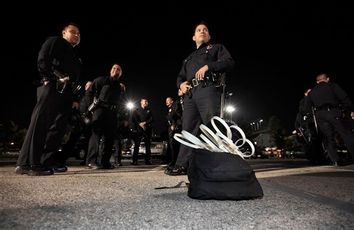
Police in L.A., Philly raid Occupy campsLos Angeles police officers stand by a sack containing wrist restraints late Tuesday, as they prepare to evict protesters from the Occupy Los Angeles encampment outside City Hall. (Credit: AP/Lucy Nicholson)

LOS ANGELES (AP) — Police in Los Angeles and Philadelphia stormed Occupy Wall Street encampments under darkness Wednesday to arrest or drive out some of the longest-lasting protesters since crackdowns ended similar occupations across the country.

Dozens of officers in riot gear flooded down the steps of Los Angeles City Hall just after midnight and started dismantling the two-month-old camp two days after a deadline passed for campers to leave the park. Officers in helmets and wielding batons and guns with rubber bullets converged on the park from all directions with military precision and began making arrests after several orders were given to leave.

The raid in Los Angeles came after demonstrators with the movement in Philadelphia marched through the streets after being evicted from their site. About 40 protesters were arrested after refusing to clear a street several blocks northeast of City Hall, Philadelphia Police Commissioner Charles Ramsey. They were lined up in cuffs and loaded on to buses by officers. Six others were arrested earlier after remaining on a street police that police tried to clear.

Los Angeles Mayor Antonio Villaraigosa raised public safety and health concerns in announcing plans for the eviction last week, while Philadelphia officials said protesters must clear their site to make room for a $50 million renovation project.

Defiant Los Angeles campers who were chanting slogans as the officers surrounded the park, booed when an unlawful assembly was declared, paving the way for officers to begin arresting those who didn’t leave.

In the first moments of the raid, officers tore down a tent and tackled a tattooed man with a camera on City Hall steps and wrestled him to the ground. Someone yelled “police brutality.”

Teams of four or five officers moved through the crowd making arrests one at a time, cuffing the hands of protesters with white plastic zip-ties. A circle of protesters sat with arms locked, many looking calm and smiling.

Opamago Cascini, 29, said the night had been a blast and he was willing to get arrested.

“It’s easy to talk the talk, but you gotta walk the walk,” Cascini said.

At least two dozen people had been arrested in the first two hours and police said they planned to arrest the 75 people remaining in the park. Police Cmdr. Andrew Smith said one person was arrested for violence against a police officer, but Smith couldn’t provide details.

Police used a cherry picker to pluck five men from trees. Two others were in a tree house — one wore a crown and another taunted police with an American flag.

In Philadelphia, police began pulling down tents at about 1:20 a.m. EST after giving demonstrators three warnings that they would have to leave, which nearly all of the protestors followed. Dozens of demonstrators then began marching through the streets and continued through the night.

Ramsey said breaking up the camp in the early-morning hours helped minimize any disruption to businesses and traffic.

“We acknowledge the fact that we are going to have to leave this space …. but in another sense this has been our home for almost two months and no one wants to see their home taken away from them,” Philadelphia protestor Bri Barton, 22, said before police began clearing out the camp.

“Whether or not we have this space or work in the city is nowhere near done,” she said.

The eviction overall appeared to have been carried out without any significant scuffles or violence.

Demonstrators and city officials in both Los Angeles and Philadelphia were hoping any confrontation would be nonviolent, unlike evictions at similar camps around the country that sometimes involved pepper spray and tear gas. The movement against economic disparity and perceived corporate greed began with Occupy Wall Street in Manhattan two months ago.

About 1,200 Los Angeles officers staged for hours outside Dodger Stadium before the raid. They were warned that demonstrators might throw everything from concrete and gravel to human feces at them.

“Please put your face masks down and watch each other’s back,” a supervisor told them. “Now go to work.”

Before police arrived in large numbers, protesters were upbeat and the mood was almost festive. A protester in a Santa Claus hat danced in the street. A woman showed off the reindeer antlers she had mounted on her gas mask.

Some were smoking pot, some were carrying gas masks, others wore hoodies and had bandanas around their faces. Some protesters carried lit candles and held signs saying “Defend Occupy LA.”

Fireworks exploded in the sky at one point. Later, as helicopters hovered above, someone blew “The Star Spangled Banner” on a horn.

As officers first surrounded the camp, hundreds of protesters chanted, “The people united will never be defeated.”

Campers planning to defend the camp and hold their ground barricaded entrances to the park with trash cans.

The police operation was planned at night because downtown is mostly vacant, with offices closed, fewer pedestrians and less traffic, but a spokesman said it could make officers more vulnerable.

“It’s more difficult for us to see things, to see booby traps,” Lt. Andy Neiman, told pool reporters. “Operating in the dark is never an advantage.”

Neiman said the force was prepared to deal with demonstrators holed up in the camp or those who had climbed up trees in the small park.

Gia Trimble, member of the Occupy LA media team, said a lot of people committed to the cause would stay and risk arrest.

“This is a monumental night for Los Angeles,” Trimble said. “We’re going to do what we can to protect the camp.”

In their anticipation of an eviction, the Los Angeles protesters designated medics designated with red crosses taped on clothing. Some protesters had gas masks.

Organizers at the camp packed up computer and technical equipment from the media tent.

Two men who constructed an elaborate tree house lashed bamboo sticks together with twine to push away any ladder police might use to evict them.

Police said they would be able to remove the tree climbers.

Members of the National Lawyers guild had legal observers on hand for an eviction.

Matheson reported from Philadelphia. Associated Press writer Shaya Tayefe Mohajer also contributed to this report.

Continue Reading Close

3 arrests as police clear Occupy L.A. protesters

Hundreds had gathered in streets after passing deadline to vacate City Hall park encampment

  • more
    • All Share Services

3 arrests as police clear Occupy L.A. protestersA crowd gathers at the Occupy LA protestors' camp outside of Los Angeles City Hall in Los Angeles on Sunday, Nov. 27, 2011. (Credit: AP/Phil McCarten)

LOS ANGELES (AP) — Police have arrested three people after ordering Occupy Los Angeles protesters to leave a downtown intersection.

The arrests came after hundreds of people gathered in the street after a deadline passed to vacate a City Hall park encampment.

Water bottles were thrown at officers as officers in riot gear started clearing 1st and Main streets just after 5 a.m. Monday.

The police department has been on tactical alert, meaning the late night watch was held over, since midnight.

At 4:50 a.m., police on loudspeakers declared an unlawful assembly and protesters were told to get out of the street within five minutes.

Commanders corralled demonstrations beck to the City Hall park, telling them they won’t be arrested there.

Many tents were dismantled as the deadline loomed.

Ammo seized at Bulger apartment

Bullets and firearms were removed from the fugitive mobster's Santa Monica residence on Thursday

  • more
    • All Share Services

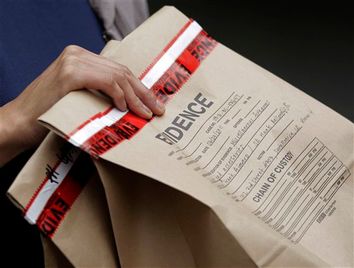
Ammo seized at Bulger apartmentAn FBI agent holds an evidence bag outside an apartment complex where fugitive crime boss James "Whitey" Bulger and his longtime companion Catherine Greig were arrested in Santa Monica, Calif., Thursday, June 23, 2011. The Boston mob boss was captured near Los Angeles after 16 years on the run that embarrassed the FBI and exposed the bureau's corrupt relationship with its underworld informants. (AP Photo/Jae C. Hong)(Credit: AP)

FBI agents have hauled ammunition and bags labeled as containing weapons out of the Santa Monica, Calif., apartment building where Boston mob boss James “Whitey” Bulger was captured after 16 years on the run.

One clear plastic bag removed Thursday morning contained boxes of .357 Magnum bullets, and another bag was labeled miscellaneous firearms and accessories.

Numerous other pieces of evidence in paper bags were also carried out and placed in a law enforcement truck.

Agents arrested the 81-year-old Bulger and longtime girlfriend Catherine Greig late Wednesday after receiving a tip and setting up surveillance.

Bulger had a $2 million reward on his head and rose to No. 1 on the FBI’s Ten Most Wanted list after Osama bin Laden was killed.

Friends say Americans killed by pirates were careful

The Four Americans shot to death by Somali pirates yesterday were not known to be risk-takers

  • more
    • All Share Services

Friends say Americans killed by pirates were carefulFILE - In this June 11, 2005 file photo provided by Joe Grande, Phyllis Macay and Bob Riggle are seen on a yacht in Bodega Bay, Calif. The U.S. military says Tuesday, Feb. 22, 2011 that pirates killed four American hostages they were holding on the yacht Quest off Somalia's coast. The victims are the Quest's owners, Scott and Jean Adam of California, and Macay and Riggle, both of Seattle. (AP Photo/Joe Grande, File) NO SALES(Credit: AP)

They were four adventure seekers who loved the sea and wanted to see the world. Friends said they were meticulous and planned for any dangers, but even that couldn’t prepare them for the Somali pirates who stormed their yacht and took their lives.

The boat’s owners, Jean and Scott Adam of Marina del Rey, along with Bob Riggle and Phyllis Macay of Seattle, were shot to death early Tuesday, after pirates took them hostage on Friday about several hundred miles south of Oman.

Macay’s niece, Nina Crossland, told reporters Tuesday that her aunt was “a very smart and avid sailor.”

“I think she was smart enough and planned ahead and prepared to not be in this type of situation,” she said, visibly shaken and holding back tears.

The Adams had been sailing full-time on their 58-foot yacht, the Quest, since December 2004 after retiring. They often travelled with friends, and on this trip were joined by Riggle and Macay.

Mariners were warned about traveling around the Horn of Africa because of the risk of pirate attacks. The four sailors traveled with a large flotilla to stay safe earlier in the trip, but left the group at the time of the attack, said Crossland.

The pirates shot the four after firing a rocket-propelled grenade at a U.S. warship, one of several vessels tracking the hijacked boat over the weekend. Fifteen men were captured.

Macay, 59, was wounded but alive when Navy SEALs boarded the Quest after the shooting, but she died later, her niece said.

Macay and Riggle had left Seattle on Riggle’s sailboat for a world voyage in September 2007, but in recent years had been crewing on separate boats, said Macay’s friend Cynthia Kirkham, of Seattle.

Joe Grande, a fellow member of the Seattle Singles Yacht Club, said the deaths were like losing family to those who knew the pair.

“Great sailors, good people. They were doing what they wanted to do, but that’s small comfort in the face of this,” Grande said.

The U.S. flag flew at half-staff Tuesday at the Del Rey Yacht Club in Marina del Rey, a small boat harbor on the Southern California coast where the Adams made their base.

Gary Deitsch, commodore of the club, said members were devastated by the killings. The couple had belonged to the club since 2001.

“We are deeply saddened,” he said. “We hope their deaths will bring about the world’s focus to eliminate this violence.”

DeDe Allen, the club’s secretary who was a friend of couple and had sailed with them, said they were last in Marina del Rey in December.

“They were just wonderful people to be with,” Allen said. “Their personal mission was enjoying life.”

Scott Adam, who was in his mid-60s, had been an associate producer in Hollywood when he became spiritual and enrolled in Fuller Theological Seminary in Pasadena a decade ago, said Robert K. Johnston, a professor at the seminary.

His wife had been a dentist, Torgerson said.

At St. Monica’s Catholic Church in Santa Monica, where the Adams were parishioners and Jean Adam sang in the choir, Monsignor Lloyd Torgerson described the killings as heartbreaking during morning Mass.

The Adams took Bibles with them to distribute to far-flung corners of the world, he said.

“They were an extraordinary couple,” Torgerson said. “They were joyful people.”

Riggle was a relief veterinarian for the Seattle Animal Shelter for the past eight years or so, spaying and neutering adopted animals, said director Don Jordan.

“He wasn’t a man of many words, but he was a kind-hearted individual with a great passion for animals and animal welfare,” Jordan said.

Riggle once took a colleague’s family sailing when their daughter was diagnosed with cancer to get their mind off their troubles. “That was just a small indicator about how he treated people,” he said.

Macay was vice president for training and development for Profitability Consulting Group, an adviser to retail furniture stores based in Hillsborough, N.C. She and Riggle were romantically involved when they first met, but later were friends who sailed together, Kirkham said.

Profitability Consulting CEO John Eggers said Macay was regarded in the industry as one of the top educators and presenters on design and sales.

“She was such a free spirit,” Eggers said. “She was just a real professional and just loved life.”

Tibbits reported from Seattle. Associated Press writers Phuong Le in Seattle and Jason Dearen in South San Francisco also contributed to this report.

Continue Reading Close

Judge orders disaster plan for L.A.’s disabled

Lawsuit stems from the abandonment of the disabled during Hurricanes Katrina and Rita due to lack of planning

  • more
    • All Share Services

Judge orders disaster plan for L.A.'s disabled

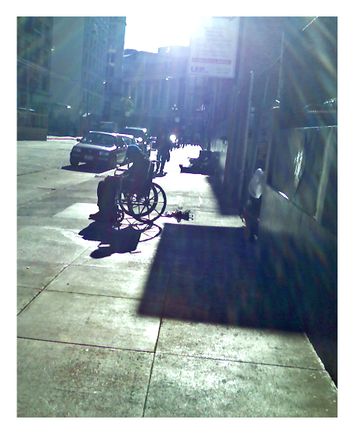
The city of Los Angeles discriminates against disabled people because it lacks specific plans to meet their needs in the event of a natural disaster or other emergency, a federal court ruled Friday, the first such decision in the country.

“Because of the city’s failure to address their unique needs, individuals with disabilities are disproportionately vulnerable to harm in the event of an emergency or disaster,” U.S. District Court Judge Consuelo Marshall said.

Marshall ordered the city to meet with the plaintiffs, Audrey Harthorn, a Los Angeles resident who uses a wheelchair, and Communities Actively Living Independent and Free, a Los Angeles nonprofit independent living center, in the next three weeks to come up with a disaster plan for disabled people.

City attorney’s office spokeswoman Cindy Shin said the office has not had a chance to fully review the decision and had no immediate comment.

The class-action lawsuit was filed in 2009, spurred by events during Hurricanes Katrina and Rita in New Orleans, when many disabled people were abandoned and left stranded during evacuations because of a lack of disability planning.

Advocates for disabled people said they hoped the ruling in Los Angeles would cause other cities to examine disaster preparedness policies.

“This is society’s moral duty to people with disabilities,” said Lilibeth Navarro, executive director of Communities Actively Living Independent and Free.

The lawsuit noted that Los Angeles is particularly vulnerable to disasters, including earthquakes, wildfires and possibly terrorist attacks. The city has some 800,000 disabled residents out of a population of about 4 million, according to the Disability Rights Legal Center in Los Angeles.

A disability disaster plan would include provisions for transportation and evacuation assistance, and wheelchair-accessible emergency shelters equipped with electricity for people on life-saving machines, refrigeration for medicines, and commonly used medications, said Shawna L. Parks, director of the disability rights center.

“These will be life and death issues for thousands of people with disabilities in the event of a major disaster,” she said.

Continue Reading Close