Christine Kenneally
Terrorist wannabes
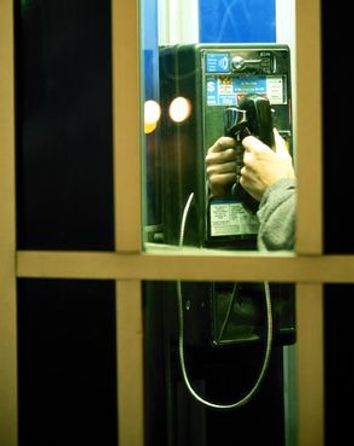
In the wake of unimaginable devastation, what motivates someone to phone in a bomb threat?
The unnecessary evacuation of Grand Central Station began for Tom Petrella of Oren’s Daily Roast at 9.15 a.m. last Thursday when a police officer ran into his store yelling, “Get the fuck out of the terminal. Now!” A few minutes earlier, Petrella realized that something was wrong when a crowd of 50 people surged up the subway stairs next to his coffee bar. At that time of day, he said, people should have been heading down. But the crowd moved up and out, making a sharp U-turn to take a nearby exit onto 42nd Street. Shortly afterward, police officers ran into the terminal to evacuate it. Petrella sent his frightened staff out straightaway, locked up and then joined the huge crowds on the streets outside. The terminal was later closed for the rest of the day. Petrella spoke to MTA police who said someone had placed a package on one of the platforms and immediately run away from it. “The motivations of these people,” Petrella said, “are beyond comprehension.”
The smoke has barely cleared over lower Manhattan, but in addition to incidents like that at Grand Central, confusion is still thick. A week after the attack, many phone lines remain down, while others work intermittently. Still, enough connections are working for the cranks to get through. In a press conference last week, NYPD Police Commissioner Bernard Kerik stated that New York City bomb threats had jumped from an average of seven a day to more than 100. The hoax threats, acts of terror that exploit an already vulnerable population, have hampered rescue and salvage efforts and caused a wave of evacuations that are themselves dangerous.
Professor Robert Ziller, a psychologist at Florida University and a specialist in terrorism, believes that people who make bomb threats fit the terrorist profile with respect to self-esteem. “Like the terrorists, they’ve almost certainly been disappointed by life; it hasn’t met their expectations. Making the calls gives them a sense of power.” Dr. James Janik, a forensic psychologist at the Cook County Juvenile Detention Center in Chicago, agrees: “People who make crank call bomb threats have a desire for power, but they lack the courage to be public about what they want or need.”
In stark contrast to their private desires, the effects of a crank’s threats are very public when taken seriously. Indeed, for the callers, the entire point is to witness the ensuing disruption knowing that they were responsible for it. Many hoaxers linger in the vicinity of an evacuation they have caused. “It’s similar to arson,” said Janik. “Many arsonists get a secret charge from knowing something that no one else knows. While watching the fire trucks and all the flashing lights, they feel very pleased with themselves and proud of their deception. They bask in the commotion.”
Arsonists tend not to exhibit other pathological behaviors, says Janik, who suspects that this is also the case for bomb threat hoaxers. It’s likely that the crank callers of the last week are not also robbing banks, committing fraud or perpetrating other more frightening crimes. However, in addition to their craving for an effect, such people tend to have trouble meeting their needs for interaction. “Because of this,” says Janik, “they may be unsuccessful socially.” They can be anxious loners, often less intelligent and less engaged with the world. Says Ziller, “Whereas violent terrorists have above-average intelligence, these people do not.”
It’s not unheard of for terrorist groups that carry out bombings to include bomb threats in their arsenal. The IRA has been held responsible for countless bomb threats in Ireland and England, and over many decades, public events such as Britain’s Grand National horse race have been evacuated as a result of their calls. In 1999, 20,000 people were forced to leave the horse races at Kempton park after an IRA threat, but no bomb was discovered. While it is possible that some of last week’s crank callers may be aligned with actual terrorist groups seeking to further disrupt the nation, experts think this is unlikely. Most calls are not political but pathological, and can be characterized as psychopathic.
The signature characteristic of psychopaths is a lack of conscience. This trait, says Dr. Kim Gorgens, a clinical psychologist in Colorado, would color all their interactions. Such individuals would have no empathy for either the victims of last week’s terrorist attacks or for the victims of their hoax threats. But Gorgens cautions against the assumption that all psychopaths are jail-bound loners. “It may actually be the people who didn’t really cut it as psychopaths who are in jail,” she said. Some psychopaths are well served by their condition and are successful in day-to-day interactions, developing charm and wiliness, even being in positions of leadership within the community. “While they are characterized by the true absence of feelings diagnostically,” says Gorgens, “these people can turn on the appearance of feelings if necessary.”
Individuals with an extreme antisocial personality disorder like psychopathy may be wealthy or poor, employed or not. They tend to be younger, between 17 and 44 (psychologists believe that many die young or lose the impulse as they get older), and they also tend to be male. But this is the age and sex group that researchers focus on anyway, says Gorgens, who feels that further research is required. “Psychopathy may be an equal opportunity personality disaster.”
Hearing about bomb threats can stimulate crank callers to make more. This kind of copycat behavior is illustrated by the recent epidemic of malicious threats spreading throughout not just America, but the world. The AP reported that New Zealander Marco Eldon Kerkmeester, 35, an IBM manager, was charged in Singapore on Friday for sending an e-mail claiming a bomb was planted on a Singapore Airlines plane. Also reported was an incident concerning a Virgin Airlines Boeing 747 carrying 314 people from London to New York on Monday. The flight was escorted by four Canadian F-18s to an unscheduled landing in Newfoundland because officials received a bomb threat allegedly coming from someone external to the flight. No bomb was found, and passengers had to spend the night in Newfoundland.
It’s possible that for some callers, the fear and powerlessness aroused by the actual attacks provoked the crank behavior. Such a horrifying event can bring out first-timers, stimulating people with deviant tendencies to make a call. For some individuals, this will be the only crank call they ever make. If theyre caught, it could also be the most expensive call they ever make. Making false bomb threats is a federal offense, punishable even for first-time offenders by up to 10 years in prison and a $250,000 fine. Daniel Alonso, the assistant U.S. attorney for the Eastern District of New York says his office is taking bomb threat cases very seriously. On Monday, he began proceedings against a man who told a Verizon operator last weekend that there was a bomb in the Empire State Building.
Many of last week’s evacuations in New York City and elsewhere resulted from scares rather than specific threats. In one Times Square building, the act of merely wondering aloud about a perfectly normal package rapidly escalated and set off an evacuation. A worker in the building described opening a fire door to see a “river of people flowing down the stairs.” Similarly, not all bomb threats resulted in evacuations. Savvy citizens are learning to discern which threats to worry about.
Even though many of the workers evacuated in Manhattan last week knew their bomb threat was almost certainly a prank, they had no choice but to run. Most were painfully conscious that their panicked flight echoed what others went through at the World Trade Center only days before. One midtown worker, who asked not to be named, remembers running down a flight of stairs last Thursday thinking, This can’t be real, but how do you not take it seriously? She noted, “We only had to travel down 10 floors, but I couldn’t help thinking what 80 or 90 would have felt like.”
Coma studies and jungle madness
"Days of Our Lives" was paving the way for science long before real-life eggheads had figured anything out.
In the form of elementary particles, black holes and other such nerdy delights, science in fiction has long been the province of Trekkers, computer programmers and clerks in secondhand-book stores. Indeed, much has been made of “The Real Science Behind the X-Files” and “The Physics of Star Trek,” but the relative movement of time, just like sands through the hourglass, is a concept familiar to anyone who has watched “Days of Our Lives.” Spurning the showoffy special effects and spaceship sets of other shows, “Days” does relativity on a domestic scale: Small misunderstandings last an eternity, pregnancies come to term in weeks and marriages evaporate faster than you can say “I made sweet love to the best man’s twin brother the night before our wedding.”
Continue Reading Close“The Making of Intelligence” by Ken Richardson
A new attempt to answer a stubborn old question: If humans are such an intelligent species, why can't we figure out what IQ tests measure?
Intelligence may be hard to define, but there’s one thing you can be sure of after reading Ken Richardson’s “The Making of Intelligence”: Whatever it is, psychologists don’t have much of it. Psychology is a “backwards discipline,” according to Richardson, who paints a picture of Laurel-and-Hardyesque psychologists who “seem to heave a sigh of relief when they feel they can attribute something to a genetic code (‘Whew, I’m glad that that’s off my mind’).” Richardson outlines the confused, as he sees it, history of intelligence studies, from the early 20th century crackpots who explained poverty as a function of natural intelligence (some have it, some don’t, tough luck) to developments in modern cognitive science such as the battery of new surgical and imaging techniques for exploring the brain. He advances an alternative theory that sidesteps the differences between individuals and focuses on the intelligence of the human species as a whole. Everyone is intelligent, he says; what a person scores on an IQ test is far less important than why the species has evolved the particular mental abilities it has. Not surprisingly, he makes an impassioned case for abolishing IQ altogether.
Continue Reading CloseG'day, Caesar!
A funny thing happened to Russell Crowe's accent on the way to the Colosseum.
In the movies, accents of the ancient past are never easy. For “Gladiator,” the Ridley Scott epic in its second week as box-office champ, Hollywood decreed that the lovely diphthongs (and sometimes triphthongs) of Australian English do not appropriately signal the stature and nobility of a Roman general turned slave.
So for his role as Maximus, Russell Crowe overlaid his native accent with a somewhat arbitrary mix of general American and formal British, known as British Received Pronunciation. But are his “I may be in the Colosseum but my heart is in Londinium” vowels any closer to the vernacular of Rome than his native Aussie? Well, notus exactlyus.
Continue Reading CloseHow the other half eats
During Restaurant Week, New York's hottest restaurants offer prix fixe lunches even commoners can afford.
Twice a year in New York, the doors of haute and hallowed eateries such as
Aquavit, the Russian Tea Room and the Gotham Bar and Grill are thrown open
to the hoi polloi in a gesture of seasonal goodwill and P.R. savvy. The bearer of a mere $20 note (tax and tip not included) can whip out a Zagat guide, choose the place he or she has always dreamed of going to and, if it is one of the 86 participating restaurants, lunch on delights usually reserved for one’s CEO
friends.
Throw another stereotype on the barbie
An Aussie in New York wonders what it means when Mum's Sunday standby becomes Gotham's hot cuisine.
Have you ever eaten roo? Not many Australians have either, but we Aussies
do insist on serving it in any restaurant we open overseas. You can try it
with salad in downtown Manhattan at the newly opened Eight Mile Creek,
recently praised by the New York Times for its fabulous food and restrained
decor. Or you can order it from the joey menu at the Outback
Steakhouse in the form of a “Grilled Cheese-A-Roo” or the inexplicably
hyphenless, “Mac A Roo ‘N Cheese.” To compare the two restaurants is also to
compare different conceptions of Australia, from the sophisticated to the
crass, from the real to the fake. The carefully prepared culinary
exotica at Eight Mile Creek is without doubt worth the trip, but is it
really any more Australian than the American food with funny names at the Outback Steakhouse?
Page 1 of 2 in Christine Kenneally