Christine Schoefer

Draculas of everyday life

Energy vampires suck you dry and leave you depleted -- and not just on Halloween

  • more
    • All Share Services

Draculas of everyday life

On Halloween, our dark sides rise from their hidden corners, and ghosts, demons and witches roam the nighttime streets. Fortunately, these unsavory creatures disappear before sunrise. All, that is, except a particular kind of Dracula — the energy vampire who wanders about every day of the year, fearing neither bright sunlight nor crucifixes.

Energy vampires do not drink blood. They do not favor gloomy windswept castles or sucking orgies in misty graveyards under the full moon. These are individuals who imbibe other people’s life force as if their own depended on it. With their plump cheeks and brightly colored clothes, they pass easily as ordinary folks. Odds are that you will not even notice when they strike. But you will notice the lingering effects: lassitude, depression and the loss of your emotional spark.

These are the ones who want too much of you and have devised elaborate strategies for obtaining it. It could be the nonstop talker who drains your spirit on a date, the friend who calls you to share another chapter in her endless saga of misfortune, the good-looking stranger who corners you at a party. You know the ones — after spending time with them, you feel as though someone has hit your dimmer switch. You assume it’s stress or fatigue, and as you desperately gulp down that double latte, you reproach yourself for not getting enough sleep. But sleep is not the issue — an energy vampire is draining your psychic battery dry.

Though they usually have no awareness of what they are doing, energy vampires are crafty and relentless creatures. They seek you out, court you and pursue you; they will snare you with blatant, titillating lies to get what they want. They come in four distinct types: Talkers, Poor Me’s, Shadows and Diggers. While all share an insatiable hunger for others’ life force, they have different modes of operation.

The first kind, the Talkers, are actually the most benign. They will tire you out and steal your time, but they do not go after your soul. Often striking and dramatic in appearance, they seem to have gathered more than their share of impressive deeds and adventures. But they need your energy to make their own come alive. You are the mirror that reflects what they have experienced. Your presence verifies the Talker’s existence like an echo confirms a sound.

Since they only want to hear themselves, they don’t actually interact with you and they never ask questions. If you find your eyes glazing over when your friend tells you about a close encounter with piranhas — or the 10th close encounter with piranhas — you are probably playing host to this type of energy vampire. You will attempt to escape by drifting away. But the part of yourself you let go is the piece snatched by the Talker.

You have seen these energy vampires at work: At a restaurant table, the man leans forward as he talks nonstop, the woman arching her back ever so slightly, a smile pasted on her face while her spirit is somewhere far away. As a small gesture of compensation for the welcome energy infusion, the Talker will usually pick up the check.

Poor Me’s are easiest to spot because they wear their neediness like signature accessories. They appear diminished somehow, with a droopy posture, perhaps, or a concave aura. They wallow in their belief that life has beaten them up. They may not look like predators, but be aware: They hypnotize you with their helplessness and trap you into staging guilt-motivated rescue attempts.

But these efforts are futile; no amount of sympathy or gesture of compassion can, in the end, alleviate the pain with which they identify so deeply. They may be attentive as you outline sources of support and avenues for change, but they will not pursue your suggestions. It is your energy that props them up, not the prospect of change.

Shadows have an altogether original appearance and strategy. Often quite flashy, they lure you with attention, flattery and praise. These energy vampires invade your aura in a desperate attempt to inhabit it themselves. In a group setting, Shadows like to spin webs among participants, collecting loyalties with gossip and praise. When they do not get what they are after — which they never do — they crucify you.

Like parasites, Shadows live vicariously; they draw sustenance from your enthusiasm, your ideas, your creativity. They accomplish this by delving into your private life with countless questions. I was flattered at first when a new acquaintance showed great interest in my writing, emulated my style of dress and copied my hairstyle. But when she started befriending my friends, alarm bells rang in my head. Before long, her presence felt as stifling as someone’s hot breath in a crowded elevator. I had to shake her off.

Diggers are the most devastating type of energy vampire. Their bite sinks deeper than that of Talkers, Poor Me’s and Shadows, and the symptoms are harder to treat. Diggers work at the soul level. They siphon your energy by filling you up with their private darkness. Like Shadows, they will bait you with questions and charm you by paying rapt attention to your revelations. Then they push deeply into you and, once inside, they tap into your insecurities to sow doubt and dissatisfaction.

This is the “friend” who asks you about your new job or lover. Her empathy encourages you to reveal your concerns, but once she has found the weak spot in your story, she will work that until it overwhelms everything else. Mysteriously, you come away from the conversation feeling less: less happy, less certain, less loved. And the Digger has absorbed all that you have surrendered.

Like Count Dracula in Bram Stoker’s tale, the energy vampire cannot be satiated by anyone. And so the task of feeding themselves, which leaves others depleted and diminished, becomes a never-ending labor. Need in itself, of course, is not a bad thing. Reciprocal exchange of energy and love is what friendships and partnerships are built on.

But energy vampires never reciprocate. Contact with them is more like a psychic assault than an exchange. Because they have no awareness of what they are doing, they feel no guilt or remorse. It is up to the victim to stop the psychic Dracula.

If you find yourself surrounded by energy vampires, beware — you may need them as much as they need you. If you always put friends’ desires before your own, rescue acquaintances from drowning in their melancholia or fall strangely ill after the departure of demanding houseguests, you may be an unconscious target of an energy vampire. Like the sleepwalking victims of Stoker’s Count Dracula, you need to wake up.

You cannot defeat energy vampires with rosaries or necklaces made of garlic. But you can follow the basic lesson taught in self-defense courses: Cultivate awareness. Recognize their presence when they appear in your circle. And then avoid them. Because energy vampires are real. They may not wear black capes and bare their fangs on Halloween. But they are truly scary — every season of the year.

Strangers in the night

Europeans have such a flair for flirting that it must be transmitted via breast milk. Why don't Americans get it?

  • more
    • All Share Services

I still think about a stranger whose gaze held mine as
I leaned out of a train window at the Gare du Nord station in Paris. There was something about his smile that makes me wonder, to this day, who he was.

I remember a dark-haired woman from a Berlin garden party because of the way she steadied my hand with hers when I lit her cigarette during a playful verbal repartee.

And on dreary mornings, I recall my sunlit breakfast at a small trattoria in Viareggio, where a man lowered his newspaper just long enough to watch me walk over to my table. His gaze was neither demanding nor demeaning, but it awakened me to my presence. Tingling with this self-awareness, I sipped my cappuccino — solo.

This is the art of flirting. What I love about it is that it has no consequences. It just stirs up the energy of an average day, for a shared moment of mutual recognition and attraction. Unlike friendship, its lifeblood is ambiguity and nuance. It thrives on glances, gestures and half-smiles. Flirting is not in pursuit of anything except itself.

I find it revealing that my fondest recollections of flirtation occurred while I was abroad. Sadly, in this country, the art of flirting is languishing. Weakened by the ’60s, inhibited by the women’s movement and the epidemic of sexually transmitted diseases, displaced by tell-all talk shows, its proximity to sexual harassment may have dealt flirting a mortal blow.

Flirting is not a strategy, but an artful riff on attraction. It has nothing to do with the sexuality flaunted in low-cut dresses or seductive poses. Compare the out-there sexuality of Madonna or Mick Jagger with Audrey Hepburn’s sweet glances or Marcello Mastroianni’s encounters and you get the difference. You know you’ve crossed over into the terrain of seduction when you begin issuing invitations or feel pressured by the other person’s expectations.

Unfortunately, in the United States flirting is commonly thought of as a strategy in the mating game. It invariably connotes seduction and is considered an essential ingredient for snaring a mate.

I learned this the hard way when I first came to the United States as a teenager from Berlin. Hormones stirring, I was eager to make contact with the opposite sex in a Midwestern high school. Quite innocently, I engaged in actions that would be deemed adolescent flirtations by behavioral researchers: jostling, sitting close, smiling, making eye contact, etc.

I didn’t mind being called a flirt by my peers until I learned that the subtext of that word was “she’s asking for it.” Actually, I wasn’t asking for a thing except for a playful exchange. It never occurred to me that boys and girls would interpret a lingering gaze as a promise.
Flirtation could taint you regardless of whether or not you followed through — you were either a tease or a slut. The girls voted “biggest flirt” in our high school yearbooks were called sluts behind their backs.

Of course, then I didn’t understand that this relentless
typecasting was a way of penalizing girls for playing too aggressively with attraction. But the unspoken message came through loud and clear: The terrain of desire is governed by a complex set of rules made by
boys. Since every action had implications, playfulness was out of the question. Taking the initiative of flirting, for example, committed one to some sort of follow-up action.

It’s possible that America’s proverbial pragmatism left no
room for the ambiguity of innuendo and nuance in matters of sexual attraction. Certainly, Puritanism suppressed expressions of sensuality and designated eroticism, no matter how subtle, as treacherous territory.
My Webster’s dictionary, which defines flirting as “behaving amorously without serious intent,” captures the spirit of artful flirtation. But my thesaurus, which suggests synonyms with negative connotations, more accurately describes what the term has come to mean in America.

A flirt is a coquette, but also a tease, gold-digger, siren, vamp, vixen, swinger and philanderer. To flirt is to banter and dally, but also to make a pass, pick up, proposition, tease. Someone who is flirtatious is coy and enticing, but also libidinous, wolfish and a nymphomaniac. In other
words, flirtation is not as a harmless hide and seek game with Eros, but a means to a specific end.

A recent issue of Psychology Today stressed the importance of flirting and attempted to determine in two articles whether flirting is biologically or culturally driven.

In the first piece, evolutionary biologists argue that humans of all cultures engage in a fairly fixed repertoire of gestures to test a potential partner’s sexual availability and interest. In this regard, we are not so different from insects, fish or mammals. Our mating dance follows a predictable sequence of attention, recognition, dancing, synchronization, which is another way of saying meeting, looking, touching, having sex. As the initial step in the procreation sequence, flirting is a form of self-promotion, a clever kind of advertising. And it is a silent negotiating process in which gestures transmit information about the viability of a possible sexual coupling.

This teleological view raises more questions than it answers. For one, it assumes rigid role behavior that seems outdated, to say the least. There is no reason to assume that women’s signals are always submissive and men’s are necessarily dominant. For another, it disregards the fact that flirtation, like other kinds of behavior, is culturally shaped and individually modulated. What happens when two women or two men flirt with each other?

The more sociologically oriented writers of the second article maintain that flirtation is not necessarily biologically driven. They see it as a game that can be played with artful self-awareness and even conscious calculation for fun and suspense. Citing recent studies, they conclude that flirting tends to be feminine domain: Women practice it more consciously and more frequently than men and many admit to rehearsing their moves.

I doubt that these last two conclusions have much currency in Europe. There, the flair for flirting is so universal and so second nature that I’m convinced it is either transmitted via breast milk or tiny airborne spores. The seasoned market vendor knows what she’s up to when she tosses her head just so, but does the 12-year-old realize that his sparkly sidelong glance qualifies as flirting?

Could it be that Americans have infected this practice with their relentless work ethic, while Europeans include it in their broad range of playful leisure activities? Or did the pomp and extravagance of courtly rituals and games encourage Europeans to develop their own simpler versions of erotic play, to smooth out the rough edges of daily existence. Perhaps it’s the pervasive presence of other sensuous pleasures? Pungent cheeses, velvety wines, chocolate with its purported aphrodisiac qualities that stimulates the desire to flirt?

Glossies like Cosmopolitan and Glamour have an endless supply of advice for women on how to snare a man with sizzling and sparkling acts of flirtation. And if you need more intensive lessons, you can study strategies of flirting in workshops that mix therapy and coaching. You will practice the most effective gestures — stroking your hair, short, darting glances, mysterious half-smiles or absent-minded nods — until they look fluid and spontaneous.

I have my doubts that the art of flirting can be learned by mastering a repertoire of scripted gestures. Like other arts, this one feeds on creativity and inspiration. It lives in the moment and unfolds in reference to another person. Actually, the most difficult part of flirting — the strong sense of self it requires — cannot be taught in a crash course but must be cultivated as a daily practice, like meditation. You have to have firm boundaries when another’s gaze crosses over into the realm of intimacy. And if you are the one who is gazing, you must be solid enough to hold the other person’s reaction.

There is no question that most of us have flirted strategically at some point. But what if mating is not on our minds at all? What if we are happily settled, and dating is the last thing we desire? Do we disregard everyday erotic vibrations altogether for fear of being misinterpreted as hunters on the prowl?

In the past few decades, even strategic flirting has come under attack. The women’s movement, which coded all erotic innuendo as patriarchal, blasted flirtation as yet another means by which men objectified and intimidated women. It took me years to realize that flirting was not misogynist by definition and to reclaim it as fun.

With the epidemic of sexually transmitted diseases, the erotic became dangerous terrain. Talk shows that offer orgies of self-revelation are promoting a climate in which the subtlety of flirting doesn’t stand a chance. Finally, as if all that weren’t enough, sexual harassment has called into question the innocence of flirtation with legislation demonizing all erotic tension and playfulness, making acts of flirtation dangerous mines in the landscape of mutual attraction.

But sexual harassment goes counter to the spirit of flirtation. It proceeds from a stance of entitlement, and it favors the colonialist stare that grazes rather than gazes. While flirting is a horizontal encounter that presupposes equality and acknowledges the other as a subject, sexual harassment is vertical and denigrates the other as an object.

Flirtation wants nothing except momentary pleasure, it is invigorating, witty, light, even elegant. Sexual harassment is deadening, oppressive and heavy-handed, intent on trapping the other in discomfort and even fear.

When practiced artfully, flirting is as light as a chocolate souffli, stick a fork into it and it collapses. The pleasure of flirting is that you can play whether you are in a committed relationship or not. On my European travels, I learned that you do not have to be young, beautiful or single to flirt, just alive. Regardless of your sexual orientation, you can engage in it with men and women. I have flirted with solidly committed white-haired men, with women as married as myself, with adolescent lifeguards and ice-cream vendors. Sometimes, I fear that if I go too long without a European sojourn, I’ll get too rusty to pass on this art to my daughters.

The worst a flirtation can do is to evoke jealousy in a third person. Because American culture teaches us to be single-minded when it comes to sexual attraction — seeking a partnership for bed or for life — acknowledging the erotic has an unsettling effect.

But since artful flirtation is not intent upon acting, it poses no threat, really. Watching a lover flirt with someone else can be like a pinprick piercing the bubble of our complacency, but what’s wrong with stirring up the energy?

In our daily lives, a stranger is the closest thing we come to encountering a new frontier. Countless people flow past us unnoticed, but occasionally, one will kindle our interest. Artful flirtation does nothing more than acknowledge this fact. A glittering glimpse of our energy, it is like a shooting star that fades into the night, leaving us with nothing except perhaps a wish.

Continue Reading Close

Harry Potter's girl trouble

The world of everyone's favorite kid wizard is a place where boys come first.

  • more
    • All Share Services

Harry Potter's girl trouble

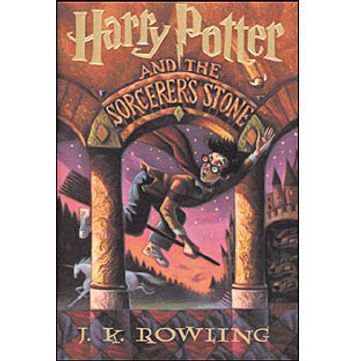
Four factors made me go out and buy the Harry Potter books: Their impressive lead on the bestseller lists, parents’ raves about Harry Potter’s magical ability to turn kids into passionate readers, my daughters’ clamoring and the mile-long waiting lists at the public library. Once I opened “The Sorcerer’s Stone,” I was hooked and read to the last page of Volume 3. Glittering mystery and nail-biting suspense, compelling language and colorful imagery, magical feats juxtaposed with real-life concerns all contributed to making these books page turners. Of course, Diagon Alley haunted me, the Sorting Hat dazzled me, Quidditch intrigued me. Believe me, I tried as hard as I could to ignore the sexism. I really wanted to love Harry Potter. But how could I?

Harry’s fictional realm of magic and wizardry perfectly mirrors the conventional assumption that men do and should run the world. From the beginning of the first Potter book, it is boys and men, wizards and sorcerers, who catch our attention by dominating the scenes and determining the action. Harry, of course, plays the lead. In his epic struggle with the forces of darkness — the evil wizard Voldemort and his male supporters — Harry is supported by the dignified wizard Dumbledore and a colorful cast of male characters. Girls, when they are not downright silly or unlikable, are helpers, enablers and instruments. No girl is brilliantly heroic the way Harry is, no woman is experienced and wise like Professor Dumbledore. In fact, the range of female personalities is so limited that neither women nor girls play on the side of evil.

But, you interject, what about Harry’s good friend Hermione? Indeed, she is the female lead and the smartest student at Hogwart’s School of Witchcraft and Wizardry. She works hard to be accepted by Harry and his sidekick Ron, who treat her like a tag-along until Volume 3. The trio reminds me of Dennis the Menace, Joey and Margaret or Calvin, Hobbes and Suzy. Like her cartoon counterparts, Hermione is a smart goody-goody who annoys the boys by constantly reminding them of school rules. Early on, she is described as “a bossy know-it-all,” hissing at the boys “like an angry goose.” Halfway through the first book, when Harry rescues her with Ron’s assistance, the hierarchy of power is established. We learn that Hermione’s bookish knowledge only goes so far. At the sight of a horrible troll, she “sinks to the floor in fright … her mouth open with terror.” Like every Hollywood damsel in distress, Hermione depends on the resourcefulness of boys and repays them with her complicity. By lying to cover up for them, she earns the boys’ reluctant appreciation.

Though I was impressed by Hermione’s brain power, I felt sorry for her. She struggles so hard to get Harry and Ron’s approval and respect, in spite of the boys’ constant teasing and rejection. And she has no girlfriends. Indeed, there don’t seem to be any other girls at the school worth her — or our — attention. Again and again, her emotions interfere with her intelligence, so that she loses her head when it comes to applying her knowledge. Although she casts successful spells for the boys, Hermione messes up her own and as a result, while they go adventuring, she hides in the bathroom with cat fur on her face. I find myself wanting Hermione to shine, but her bookish knowledge and her sincere efforts can’t hold a candle to Harry’s flamboyant, rule-defying bravery.

Even though Hermione eventually wins the boys’ begrudging respect and friendship, her thirst for knowledge remains a constant source of irritation for them. And who can blame them? With her nose stuck in books, she’s no fun. Thankfully, she is not hung up on her looks or the shape of her body. But her relentless studying has all the characteristics of a disorder: It makes her ill-humored, renders her oblivious to her surroundings and threatens her health, especially in the third volume.

Ron’s younger sister Ginny, another girl student at Hogwart’s, can’t help blushing and stammering around Harry, and she fares even worse than Hermione. “Stupid little Ginny” unwittingly becomes the tool of evil when she takes to writing in a magical diary. For months and months, “the foolish little brat” confides “all her pitiful worries and woes” (“how she didn’t think famous good great Harry Potter would ‘ever’ like her”) to these pages. We are told how boring it is to listen to “the silly little troubles of an eleven-year-old girl.”

Again and again, we see girls so caught up in their emotions
that they lose sight of the bigger picture. We watch them “shriek,” “scream,” “gasp” and “giggle” in situations where boys retain their composure. Again and
again, girls stay at the sidelines of adventure while the boys jump in. While Harry’s friends clamor to ride his brand-new Firebolt broomstick, for example, classmate Penelope is content just to hold it.

The only female authority figure is beady-eyed, thin-lipped Minerva McGonagall, professor of transfiguration and deputy headmistress of Hogwart’s. Stern instead of charismatic, she is described as eyeing her students like “a wrathful eagle.” McGonagall is Dumbledore’s right hand and she defers to him in every respect. Whereas he has the wisdom to see beyond rules and the power to disregard them, McGonagall is bound by them and enforces them strictly. Although she makes a great effort to keep her feelings under control, in a situation of crisis she loses herself in emotions because she lacks Dumbledore’s vision of the bigger picture. When Harry returns from the chamber of secrets, she clutches her chest, gasps and speaks weakly while the all-knowing Dumbledore beams.

Sybill Trelawney is the other female professor we encounter. She teaches divination, a subject that includes tea-leaf reading, palmistry, crystal gazing — all the intuitive arts commonly associated with female practitioners. Trelawney is a misty, dreamy, dewy charlatan, whose “clairvoyant vibrations” are the subject of constant scorn and ridicule. The only time she makes an accurate prediction, she doesn’t even know it because she goes into a stupor. Because most of her students and all of her colleagues dismiss her, the entire intuitive tradition of fortune-telling, a female domain, is discredited.

A brief description of the guests in the Leaky Cauldron pub succinctly summarizes author J.K. Rowling’s estimation of male and female: There are “funny little witches,” “venerable looking wizards” who argue philosophy, “wild looking warlocks,” “raucous dwarfs” and a “hag” ordering a plate of raw liver. Which would you prefer to be? I rest my case.

But I remain perplexed that a woman (the mother of a daughter, no less) would, at the turn of the 20th century, write a book so full of stereotypes. Is it more difficult to imagine a headmistress sparkling with wit, intelligence and passion than to conjure up a unicorn shedding silver blood? More farfetched to create a brilliant, bold and lovable heroine than a marauder’s map?

It is easy to see why boys love Harry’s adventures. And I know that girls’ uncanny ability to imagine themselves in male roles (an empathic skill that boys seem to lack, honed on virtually all children’s literature as well as Hollywood’s younger audience films) enables them to dissociate from the limitations of female characters. But I wonder about the parents, many of whom join their kids in reading the Harry Potter stories. Is our longing for a magical world so deep, our hunger to be surprised and amazed so intense, our gratitude for a well-told story so great that we are willing to abdicate our critical judgment? Or are the stereotypes in the story integral to our fascination — do we feel comforted by a world in which conventional roles are firmly in place?

I have learned that Harry Potter is a sacred cow. Bringing up my objections has earned me other parents’ resentment — they regard me as a heavy-handed feminist with no sense of fun who is trying to spoil a bit of magic they have discovered. But I enjoyed the fantastical world of wizards, witches, beasts and muggles as much as anyone. Is that a good reason to ignore what’s been left out?

Continue Reading Close