Christine Smallwood

Uncovering Gertrude and Alice

Janet Malcolm's search for the real Gertrude Stein and Alice B. Toklas exposes some hard truths about the duo and biography itself.

  • more
    • All Share Services

Uncovering Gertrude and Alice

Gertrude Stein has a much deserved reputation as a great American writer whom no one reads. This is considerably different from being an obscure experimental filmmaker because, in the end, a difficult filmmaker will always have more fans than a difficult writer — not because one is a greater or lesser art form, but simply because it takes less time to watch a difficult movie than it does to read a hard book. I have absolutely no evidence to this effect, but my gut tells me — and it’s a strong gut — that there are probably more people who have sat through six hours of slow tracking shots across a desolate Hungarian farming collective in Bela Tarr’s “Satantango” than have slogged through the 900 pages of Gertrude Stein’s “Making of the Americans.” Six hours? Six hours won’t get you through Stein’s first chapter.

Even if you love the hard, repetitive machinations of Stein’s sentences, which draw on the same small pool of words turning over phrases until they are more or less meaningless concrete things — “This one was not really owning the one this one needed for his loving. This one could only own one this one needed for loving by getting rid of the one this one needed for loving” — even if you really love this, you will have to read each line over and over again. (John Ashbery read each sentence four times.) It will require more than devotion; it will require commitment.

To the extent that Stein is familiar to the reading public, it is as the voice behind “a rose is a rose is a rose”; as coiner of the term “Lost Generation”; as the host of a fabulous salon on the Rue de Fleurus where she hosted Picasso, among others; and as the fat Buddha with the giant Roman head who had a lifelong love affair with wiry, pursed-mouth Alice Toklas.

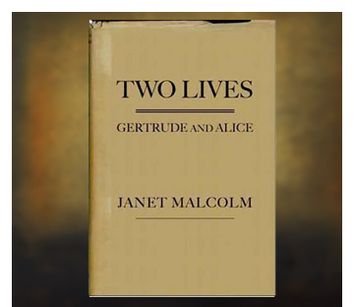
She cuts a striking figure. So it is that those who know Stein only by way of “The Autobiography of Alice B. Toklas,” or even those who know absolutely nothing of her many poems, plays, vignettes, speeches and novels, will find Janet Malcolm’s “Two Lives: Gertrude and Alice” hard to put down. The book combines three essays about Stein and Toklas that Malcolm published in the New Yorker in 2003, 2005 and 2006. (Some minor editing has been done, but there is no significant new material to be found in its pages.) Like the best New Yorker writing, which can make the average lay reader momentarily obsessed with the habits of bonobos, it requires no preparation.

The first section deals largely with how it was that Stein and Toklas, two Jews who almost never wrote about, spoke about or otherwise acknowledged their Jewishness, survived World War II while hidden in plain view in the French countryside. The somewhat distressing answer is that their political ignorance spared them from mental anguish and their friendship with a high-level Vichy collaborator, one Bernard Faÿ, spared their lives. It seems that Stein and Toklas were unaware of Faÿ’s crimes; after he was sentenced to prison following the war, Toklas lobbied for his release (which proved a little awkward for some of her friends). Helping Malcolm to unravel the story of Stein and Toklas’ relationship with Faÿ is a trio of Stein academics who warmly share their enthusiasm for her while taking pity on Malcolm for preferring the “audience”-friendly Stein to the “real” work.

In the second essay, Malcolm writes about “The Making of Americans,” the humongous novel whose central project seems to be creating “truly a new way of writing a novel, a novel where the author withholds the characters from the reader.” The book is a “text of magisterial disorder,” a tug of war between characters that Stein cannot bring to life and a narrator “aware of the incommunicability of her maddeningly complex thoughts.” Malcolm’s visits with the Stein oracles yield the story of one mysterious scholar, Leon Katz, who famously interviewed Toklas for many hours in the 1950s about the making of “The Making of Americans” and unpublished notes Stein made during the drafting of the book. Katz’s dissertation is a kind of “cult classic” in academia, and yet he has been remarkably slow to deliver (that is, publish) all the goods from the interview, which frustrates the Steinophiles to no end. Malcolm tries to meet him, and he cancels their meeting, afraid she will steal his narrative for her own.

The relationship between Toklas and Stein that emerges in “Two Lives” indicates that the two “did not set out on their walk through life quite as decisively and serenely as the legend has it.” Katz confronts Toklas with unflattering notes Stein wrote about her when they first met; Malcolm highlights passages from Toklas’ “What Is Remembered” that paper over a mysterious argument; a letter reveals the resentment Toklas carried against Stein because while Nazi looters ignored Stein’s precious modern paintings, they ransacked the pretty things — candlesticks, a petit-point footstool — that this “wife of a willful genius” cherished.

In one of the book’s most startling episodes, Ulla E. Dydo, one of Malcolm’s posse of professors, shares the discovery she made while painstakingly comparing Stein’s published texts to the manuscripts. In the book-length poem “Stanzas in Meditation,” Dydo found that every instance of the word “may” or “May” had been crossed out, replaced with “can” or “day” or “today.” The change was not an improvement — on the contrary, it made the difficult work even more awkward and, at times, nonsensical — and Dydo puzzled over why Stein would have made this revision.

In a dream, the answer came to her. Alice Toklas, according to “The Autobiography of Alice B. Toklas,” had come across a “forgotten” Stein novel, presumably “Q.E.D.,” which features May Bookstaver — a stand-in for a woman that Stein had loved before she met Toklas. Toklas became enraged, jealous, paranoid. According to Dydo, there are no “mays” in “Stanzas” because Stein was forced to eradicate them.

“The manuscript tells a terrible story,” another of the Stein scholars says to Malcolm. “The force with which these words are crossed out. The anger with which this was done. Some of the slashes go right through the paper.”

Craig Seligman once argued in Salon that the criticism that plagues Malcolm and her analyses of journalism and biography misunderstands her work. “She wasn’t attacking the biographer’s art any more than she had earlier been attacking the journalist’s,” Seligman writes in reference to “The Silent Woman,” Malcolm’s book about Sylvia Plath and Ted Hughes. “What she was doing, in fact, was engaging in it.”

This newest installment of what is very much an ongoing investigation into narrative — how a story is built, how facts are marshaled and how “truth” is agreed on — is likely to trouble readers who would rather not know certain facts about Stein and Toklas. But it powerfully demonstrates how their images have been built and passed down to us. And so while Toklas emerges from “Two Lives” as a pinched, unpleasant woman, at once enabler and destroyer of Stein’s art, Malcolm puts it into context. “Confessions of not really liking Alice are a leitmotiv of the Stein/Toklas memoir literature.” And yet, she continually emphasizes, it is impossible to know for certain what passed between the two. Biography is merely a tool, and like all tools, is limited.

In one instance, Malcolm learns from a source that Stein advised a friend to not adopt a Jewish orphan in 1943, effectively sentencing him to death. Yet when she digs a little deeper, she finds the incident actually occurred in 1944, four months before France’s liberation. There was never any question of putting the child in harm’s way, or of his leaving the household until it was safe. The source “had not realized that her laconic account could be read as a condemnation of Stein. She assumed that we knew what she knew.”

“Almost everything we know we know incompletely at best,” Malcolm continues. “And almost nothing we are told remains the same when retold.” Malcolm conjures up the figures of Stein and Toklas in flashes, temporarily igniting the letters and texts she makes such good use of. The biographer’s game is a kind of treasure hunt, and “Two Lives” lays bare its rules.

Fear factors

Allen Shawn -- son of William, brother of Wallace -- is afraid of almost everything, but not of writing a memoir of his phobic life.

  • more
    • All Share Services

Allen Shawn never drives down unfamiliar roads. If he did, he’d likely have to turn back and return home, for the talismans he carries with him on trips — Xanax, ginger ale, a cellphone and a paper bag — are no match for his many phobias. Shawn is scared of bridges, subways, elevators, crowds, planes and large museums. He can’t even walk across an open parking lot without becoming distressed. His new book, “Wish I Could Be There: Notes From a Phobic Life,” elegantly combines memoir and research to try to understand the reasons for the fears that have ruled his life since he was a young man.

Shawn is a composer of classical music, but may be better known as the son of famous New Yorker editor William Shawn and the younger brother of actor and playwright Wallace Shawn (of “My Dinner With Andre” and “The Princess Bride,” among many other projects). The matter of his family name is not merely one of pedigree. His upbringing, as “Wish I Could Be There” shows, encouraged whatever genetic predisposition to anxiety he had. His was a childhood marked by an excess of the usual secrets and lies. There was the matter of the Shawns’ “ambivalence” toward their Jewishness — his mother preferred to identify with her Swedish side rather than her Russian side, and William and one of his brothers changed their name from “Chon” to the decidedly more Anglo “Shawn.” There was his mentally ill twin sister, Mary, who, at the age of 8, was sent to a home and seen only once a year.

Then there was his father’s own agoraphobia, never discussed among the family but probably inherited and modeled by his son. (William persuaded his office building to maintain one manually operated elevator for his use.) There was his mother’s terror of storms, and her habit of ruling little Allen’s life with a ferocity matched only by her back-seat driving in taxicabs. And finally, there was the matter of his father’s double life with a second “wife,” New Yorker writer Lillian Ross. He interrupted road trips for surreptitious visits to phone booths; at home he took Ross’ calls on a separate line, vanishing into a closet with the receiver. Yet Shawn did not learn of his father’s lifelong affair until he was almost 30, when, he told the New York Times, someone “a bit angry at men … mentioned it in the context of a speech in which she was speaking disparagingly of the way men behave.”

The name “Lillian Ross” is conspicuously absent from “Wish I Could Be There”; so is Jamaica Kincaid, Allen’s ex-wife, with whom he has two children. For a man from such a famous family, of whom so much is known, the tactful silence seems almost too coy. But even in this quasi memoir, Shawn wants his privacy. Indeed, as an agoraphobic — someone who is afraid of both open spaces and enclosed places, who, when asked what he is afraid of, might plausibly reply “everything” — he is obsessed with control and dreads revealing more of himself than he must. “Severe phobias can bring with them the fear of discovery and of becoming an outcast,” he writes. “Shame begins inside, with being afraid to admit, even to oneself, that one is in some respects hampered.”

Shawn argues, rather sensibly, that while phobics are predisposed to their anxieties, those anxieties may be triggered and conditioned by environment and experience. “Wish I Could Be There” uses science, clearly put into layman’s terms, to talk about the relationship between the mind and body during a phobic episode. Shawn reviews some basic biology lessons about how the brain fires and the mind creates an explanation for the sweaty palms and racing heart — a “shoot first, ask questions later” scenario. Once you’re in the midst of responding to fear, your emotions step in to give you a way to think about and understand the panic: This open field must present a danger, otherwise why would I be having trouble breathing? In this way, a phobic’s fears are almost rational; the only other explanation for the body’s sudden attack, after all, would be that you were actually going crazy. The circuit is completed when the desire to explain the fear, to create a story around it, winds up reinforcing it.

There are certainly some weird phobias out there — ephebophobia, fear of adolescents — but the common ones are, Shawn thinks, common for a reason. From Darwin, he gets the idea that our fears are vestiges of evolution, deformed and out of place in modern times: In open spaces, there is nowhere to hide from attack; in the dark, predators lurk around any corner. Phobias are the cure that has become a disease. (Darwin, too, was terribly anxious, and “would awaken trembling in terror in the night,” although in his day he apparently suffered without understanding.)

From Freud, Shawn gets everything else — notions of trauma, memory, repression and, most crucially, “the insight that we carry our past inside us as a permanent present.” He seems eager to redeem Freud’s usefulness, bristling that “new books on the brain seem almost mockingly dismissive” of him. Not so Shawn. He dwells on the case study of 5-year-old Little Hans, who “developed a morbid terror of horses” around the same time that his mother had another baby. Shawn admires Freud for recognizing that “Hans’s phobia was constructed on top of an evolutionarily primed wariness about animals” while understanding it as “Hans’s outlet for the conflicted longings and fears of punishment he hadn’t been able to express in other ways.”

Shawn has a literary mind, and it is no surprise that he’s drawn to such a literary thinker. “Freud’s genius revealed that the infinite resourcefulness of the human mind necessitates a greatly expanded concept of what can constitute ‘danger.’ The fear mechanism constructed for tigers in the forest can be used by humans to fight tigers in the mind.” (Feminists take note: Shawn’s discussion of hysteria makes no mention of Dora, the patient who famously broke off treatment, and whose story Freud published as his own.) The fact that he “never got over the suspicion” that he caused the birth trauma suffered by his sister might explain his phobias: They could be, as Freud thought, displaced anxieties, “a discharge of fear in a safe place.” Still, Shawn wonders, “if phobias are decoys, what will strike us when the decoys are removed? What awaits us in the emptiness of space?”

Shawn’s looping, meandering style, with chapters organized by theme (“Father,” “Conditioning,” “Alone/Not Alone”), sprinkled with anecdotes, invites self-analysis. But Shawn, it must be said, is not a champion storyteller. His subject is always interesting, but his style can be reverie producing. (Occasionally one might reread a paragraph a few times without noticing.) And yet something sinister vibrates underneath. Much like a conversation with an extremely anxious person, the same territory is mined over and over, unearthed from many angles in a search for something — a definitive cause, a cure — that can never be found.

In music Shawn found joy and freedom, the ability to experiment and to be dark and daring. “Some lurching hidden tragic power coursed through me and made me shiver and feel that I had been living a very long time.” And yet the overall tenor of the book is muted and tender, steeped in quiet reverence for fragile attempts to manage fear and muddle through as best we can. Of his father, Shawn writes that he “tended to treat people the way the character Alyosha in Dostoevski’s ‘The Brothers Karamazov’ recommends: ‘like patients in a hospital.’” On the one hand it is true that we are all, as we learned from Freud, sick, and that the best thing we can do with life is help each other through it. On the other hand, we are not, or not only, hospital patients.

Continue Reading Close

Destination: Berlin

The past of this eternally youthful "city of the world" is captured in the work of journalist Joseph Roth, author John le Carr

  • more
    • All Share Services

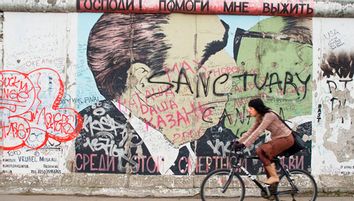
Destination: BerlinFeb 15, 2006; Berlin, GERMANY; (File Photo. Date Unknown) What's left of the Berlin Wall is one of the attractions of Germany's largest city, which is also the political and cultural centre of the country. Berlin is one of the cities where the 2006 World Cup of Soccer will take place. Mandatory Credit: Photo by Peter Bennett/eyevine /ZUMA Press. (©) Copyright 2006 by eyevine(Credit: Peter Bennett/eyevine)

Berlin was the capital of the 20th century, home to some of its biggest thrills and most terrible crimes. Now, in 2006, it is closer than ever before to its glory days a hundred years past, once more a roaring center of change. Bismarck, Weimar, Hitler, Vopos, Stasis, David Hasselhoff: Berlin has been conquered, bombed, broken, divided, reunited and survived it all.

And it’s done more than survive — it’s practically incandescent. During the Cold War, West Berlin was a hot spot for the fabulous (think David Bowie and Iggy Pop recording “Lust for Life” in Schöneberg), and unified Berlin has become an international destination for contemporary art, a mecca for musicians and actors and exhibitionists of all stripes. The city is absolutely crawling with expats, too — not to mention the pretty things who keep amphetamine-fueled parties of heavy techno going well into the next afternoon.

Berlin is truly a Weltstadt, a city of the world, as “German” as New York is “American.” And like New York, it has been distrusted by the country that lies outside its limits. As David Clay Large points out in his engrossing history “Berlin” (1995), “much of Europe watched in trepidation as the Germans marked the establishment of their new nation with a pompous ceremony at Versailles in 1871, and many Europeans shuddered anew when the two Germanys were reunited in 1990.” Yet shuddering hasn’t done much to slow Berlin down. A hundred years ago, no other German city “embraced the new world more readily than Berlin, or, as a consequence, became such a magnet for the young.” Today, Berlin is again the embodiment of modernity, of change, of restless youth and invention and tragedy.

Indeed, Berlin has had more makeovers than Madonna and suffered under just as many myths of nostalgia. When I was there in 2003, Berliners repeatedly lamented that I had arrived too late: “If only you had been here five years ago,” they told me again and again. This, it turns out, is a very Berlin thing to say. As far back as the 1930s, Frankfurt School critic and philosopher Walter Benjamin was turning over stones and turning back the clock to his childhood to excavate the past from the places around him — the Tiergarten, the Market Hall, the intersection of two streets. His recently republished “Berlin Childhood Around 1900″ is a great companion to days lost to wandering about the city, imagining what the galleries and clubs were five years ago, or 50, or 100.

A collection of Joseph Roth’s newspaper columns — published a few years back as “What I Saw: Reports From Berlin, 1920-1933″ — is also a fine guide to Berlin past. Born in Galicia, in the far east of the Habsburg empire, Roth was a journalist and novelist who fought for monarchy in World War I and traveled throughout Europe after his beloved empire fell. A brilliant storyteller with a special talent for the feuilleton — part essay, part observation, part cultural critique — he was among the best-paid newspapermen of his time, earning a whole one mark per line. Roth lived in Berlin until Hitler took power, at which point he fled the country.

In essays like “An Apolitical Observer Goes to the Reichstag,” “Skyscrapers,” “The Berlin Pleasure Industry” and “Nights in Dives,” his wry humor and eye for detail bring Weimar Berlin to life, and any traveler will see that his observations are as fresh today as ever. “If the very large department store looked to begin with like a work of hubris,” he writes in “The Very Large Department Store,” “it comes to seem merely an enormous container for human smallness and modesty: an enormous confession of earthly cheapness.”

Alfred Döblin’s neglected 1929 masterpiece “Berlin Alexanderplatz” — the greatest book about the city — delves deeper into the daily life of 1920s Berlin. The novel opens as Franz Biberkopf, who has served four years for killing his girlfriend, is released from prison in Tegel. “The punishment begins,” Döblin intones, when Biberkopf, back on the streets, must try to play it straight. Wandering the ground between Alexanderplatz and Rosenthaler Platz, now home to trendy cafes, galleries and shops, Biberkopf is pummeled by the city, suffering poverty, loneliness and betrayal from friends while flirting with Nazism and communism.

Döblin brought a unique perspective to writing about Berlin. As a psychiatrist who worked in mental hospitals with laborers and workers, he was able to use his knowledge, as well as a healthy dose of mystical figures and symbols, to create a vivid portrait of madness — and the mad city that drives its inhabitants to desperation. Unlike Christopher Isherwood, whose autobiographical “Berlin Stories” (1963) call up images of bohemian glamour (and are also a treat to read), Döblin’s Berlin is unromantic: It is a place of struggle, where the only victory is survival.

Of course, Berlin has inspired a host of espionage novels too, from Ian McEwan’s “The Innocent” (1996) — set in the divided city before the Berlin Wall — to John le Carré’s “The Spy Who Came in From the Cold” (1963), the gold standard in Berlin spy fare. Yet for an actual true-life account of wartime, turn to “A Woman in Berlin: Eight Weeks in the Captured City.” Published last year to great acclaim, the book is an anonymous 34-year-old journalist’s personal record of the fall of Hitler’s regime and of the suffering Berliners endured under the Russians who came to “liberate” them. “A Woman in Berlin” is difficult, painful reading. But it offers a uniquely grim and honest portrait of Berlin life in the last days of its devastating Nazi rule.

The jewel of today’s rebuilt Potsdamer Platz, which was destroyed by bombs in WWII and split by the wall in 1961, is the glass roof, cinema and offices of the glittering Sony Center. But outside its curved reflective walls, the city is decked out in graffiti, pockmarked with empty lots; some buildings are still marred by bullet holes. Berlin is fabulous, but wounded. The most obvious sign of the past is the construction that still dots the landscape. Underneath every giant crane is history that has been papered over, put under glass or willed out of existence. And while reflective walls are nice, the numbers don’t lie: Unemployment hovers at nearly 20 percent and the city is struggling with $70 billion of debt. (Rent is cheap in Berlin for a reason.) Everywhere hums the tension of the past, the Mauer im Kopf — the wall in the head — that divides East and West and breeds Ostalgie, nostalgia for the East, when loyalty to the party was cruelly enforced but at least there was butter on the table.

To investigate this lost life of East Berlin, read Anna Funder’s “Stasiland” (2003). An Australian working for German television in the late 1990s, Funder became obsessed with collecting East Germans’ stories of life behind the wall. She interviews ex-Stasi men, informers and East Germans who suffered under the Stasi rule and the paranoia it bred. Funder goes beyond the lives of the famous to give regular East Germans — a people who will no longer exist, who are already ceasing to exist — a voice. Whether talking to an East Berliner whose sick son was raised in a hospital in the West or the agent who painted the line where the wall was raised, “Stasiland” grants Easterners the humanity that they have been long denied. Their stories are today’s “Berlin Stories.”

Continue Reading Close

“The Man of My Dreams”

In the follow-up to her sleeper hit "Prep," Curtis Sittenfeld captures the pain of growing from girl to woman.

  • more
    • All Share Services

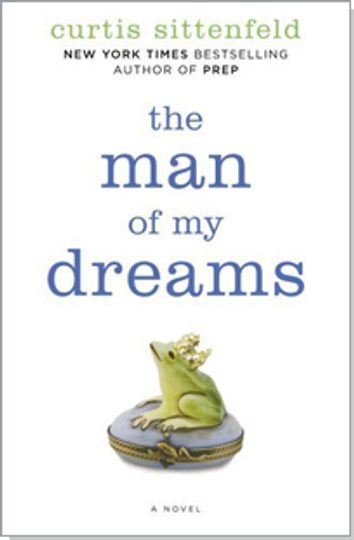
In the second week of Hannah and Oliver’s relationship — which is already messy, because dating a co-worker is never a good idea — he announces that earlier that morning, another woman in their office gave him a blow job in the handicapped bathroom. Oliver is Boyfriend No. 2 for Hannah in Curtis Sittenfeld’s new novel, “The Man of My Dreams,” but if you’re thinking to yourself that Oliver may not be the man of her dreams — or anyone’s, really — you are right. Don’t tell that to Hannah, though. She thinks he might be “the best I can do.”

“The Man of My Dreams” is the story of Hannah’s search for love in all the wrong places, bathrooms included. It opens in the summer of 1991, when Hannah is 14 and living in exile with an aunt and uncle after her emotionally abusive father kicked her, her sister and her mother out of the house. Jumping in time, we next find her at Tufts University, and finally, as a woman in her 20s, working at a nonprofit. She takes up with Oliver after breaking things off with her doting college boyfriend Mike, and before spending a couple of years lusting after her best friend Henry. Grown up and looking back, she understands each as a certain type — “the man who is with you completely, the man who is with you but not with you, the man who will get as close to you as he can without being yours.” There may be other possibilities, she hopes, but she “can’t imagine what they are.”

Obsessed with boys as a teenager, Hannah doesn’t date, or kiss one, until college. When she sleeps with Mike for the first time, she is neither impressed nor devastated. She is confused — ” Really? Just this? ” she thinks — but also relieved. At last, she is like other people. She feels a little closer to normal.

As a college student, Hannah finds normalcy is more romantic than love — she is not like the others she sees on campus, who fall easily into each other’s arms and beds. She passes Friday nights alone in her dorm room and fantasizes about being married, when she can stop worrying about parties and just grab takeout and a video. (Lucky for her, she is described by Henry as “exactly the kind of girl a guy marries” — just before he turns and throws away his burrito wrapper.) She knows she is chronically “judgmental and disappointed,” but she doesn’t know if she can change. And besides, “the unflattering things she notices about other people, the comments she makes that get her in trouble, aren’t these truer than small talk and thank-you notes?”

In this Hannah is very much — perhaps too much — like Lee, the protagonist of “Prep,” Sittenfeld’s bestselling first novel. Both young women experience life behind a screen, as a series of things that happen to them; they are dedicated anthropologists who study their peers, looking to the behavior of others for the secret of their confidence. Like Lee, Hannah is not particularly gorgeous; neither is she devastatingly witty, or brilliant. She lacks hobbies and passions, devoting most of her free time to finding fault with others and examining herself with the same microscope. This close attention to social behavior — so typical of girls and young women — is familiar. It is easy to feel close to Hannah, to feel that she is someone you have known, or have been.

When she’s alone one Friday night, “She wishes she owned nail polish so she could paint her nails right now, or that she wore make-up and could stand before the mirror, with her lips puckered, smearing them some oily, sparkly shade of pink. At the very least, she wishes she had a women’s magazine so she could read about other people doing those things.”

More than anything, Hannah is blank, propelled not by goals or aspirations, by likes or dislikes, but by outside events. She reacts to, and is formed by, whatever happens to come her way. Because of that, “The Man of My Dreams” makes for strange reading — a character study that is driven by plot. It is an ordinary, routine journey of divorce, remarriage, boyfriends had and lost, but Sittenfeld makes it captivating, like another family’s home movies. She writes in the third person, inside Hannah’s head, which turns reading into something closer to eavesdropping. Like here, when Hannah takes a camping trip with her sister Allison, Allison’s fiancé, and the fiancé’s brother Elliot, Hannah is forced to share a tent with Elliot. She’s drawn to him, but notices he has a crush on her sister.

“It is in this moment, in his worship of Allison, that Hannah feels a weird kinship with Elliot. Watching them, she can feel in her own hand the desire to touch this girl’s wavy hair, this girl whose kindness and beauty could make your life right if you could get her to be yours. Hannah wonders if Elliot imagined she would be another version of Allison.”

In this moment, as in so many others, it is easy to slip inside Hannah, to get into her head. And because Sittenfeld is so good at bringing Hannah to life, she is also very good at getting you to turn the pages.

Unlike “Prep’s” Lee, Hannah is not just a morose adolescent — she is a depressed adult. She is not deeply ashamed of her father, but has been damaged, traumatized by his outbursts. The screen she hides behind doesn’t just separate her from others, it makes her into a bit of a zombie, removed from her own feelings. After Oliver tells her about the bathroom blow job, “it occurred to her that she should feel more devastated than she did.” Any emotional outbursts embarrass her; she is even bemused by Mike’s passionate defense of migrant workers, which she finds “silly.” During her childhood, “any given day was about not stirring the pot, so people who stir the pot voluntarily” strike her as “playing a game, even if they’re not aware of it.”

This attempt to preserve balance and tranquility means that Hannah does what she thinks she should do, not what she wants to do — a problem compounded by the typical confusion around determining what it is one really wants. (She and Mike take a walk along the Charles River, which she “imagines will feel fake-romantic, like they’re trying too hard,” but is surprised that “it just feels nice.”) For her, life is a problem to be solved, a code to be cracked: While at Tufts, she begins to see a therapist, Dr. Lewin. When she returns each week from her session, she scribbles down notes, trying to force an epiphany, imagining that “when enough pieces of paper have accumulated” she will “understand the secret of happiness.” The drama of the novel is Hannah’s passage from adolescence to maturity; she only grows up, becomes unstuck, when she learns how to go after the things she wants instead of trying to follow an imaginary script.

Still, with all that recommends “The Man of My Dreams,” why did Sittenfeld choose such an awful title? In this month’s Glamour, she writes that it is meant to be “more than a little ironic,” but irony or no, it’s cringe-worthy. And given the care she has taken to develop Hannah slowly, to let the impact of each new year and major change sink in, the ending is baffling — a letter to Dr. Lewin, in which Hannah recaps the previous two years. It seems like she runs out of steam at the end, even taking the downright corny shortcut of resolving a major argument with the appearance of a rainbow.

But Sittenfeld’s ear for dialogue is always sharp, and her observations can be shiver-inducing. She is especially good at capturing the spaces that divide people from each other, the invisible gulf between how we see ourselves and how others see us — and the sadness when we get a glimpse of that divide, when what one thinks is keen observation is revealed to be simple misperception. One night Hannah and Frank, her mother’s second husband, see an elderly family friend home. After a trying visit in which stooped, slow Mrs. Dawes breaks a glass, insists on cleaning it up herself and refuses to be helped on the stairs, they sit in the car together.

“Frank shakes his head. ‘I never want to grow old, Hannah,’ he says. She looks at him in astonishment. She thinks, But you already are.”

At the end of “Prep,” it was easy to think, Thank God that’s over and I never have to go back to the horrible person I was in high school and all those other horrible people I knew. Closing “The Man of My Dreams,” someone in her 20s might wonder, Is this ever going to end? Sittenfeld captures the pain of growing up in such a raw, palpable way, that it is a relief to finally close the book and put it aside. Of course, if characters have lives when books end, Hannah will still have to move forward, into an unknown future. It’s a testament to Sittenfeld’s writing that there’s no way to guess what will happen when she gets there.

Continue Reading Close

The sweetest dream

A disinherited grandchild of the man who created Sweet'N Low dissects his screwy family -- and the history of fake sugar -- in a winning new book.

  • more
    • All Share Services

Since the 1950s, when otherwise healthy people began buying no-cal drinks that had been created for diabetics, the market for artificial sweeteners in this country has grown to gargantuan proportions. While sugar was once so expensive and coveted that a 15th century caliph demonstrated his power by having a mosque sculpted out of marzipan, that same high-calorie powder has been left in the dust by the pink, blue and yellow paper packets of Sweet’N Low, Equal and Splenda. By the late 1990s, sugar — of which the average American, only 30 years before, had consumed 60 pounds annually — had lost 70 percent of its market; by 2004, artificial sweeteners were generating $343 million a year in sales.

In his terrific new book, “Sweet and Low,” Rich Cohen (the author of “Tough Jews” and “Lake Effect”) writes the history of the title sweetener and the history of his family, who just happened to have invented the pink packet back in 1956 in Brooklyn, N.Y. The book is an absolute pleasure: expansive, fascinating, funny and full of historical tidbits to be read aloud to anyone around. It takes readers from the diner where his grandpa Ben worked to the factory where Sweet’N Low was packaged; from regulatory agencies and labs to the tony Long Island neighborhoods where embezzling higher-ups in the company had built themselves $2 million mansions; from his grandmother Betty’s funeral to the bedroom that his crazy Aunt Gladys never left.

Family feuds have long strained Cohen’s relationships with the rest of the clan. The short story is that Cohen’s mother, Ellen, had been the favorite of her father, Ben, which made Betty, who believed “that love is finite, that love is coal, and there is a shortage, and there will never be enough to go around,” resentful. Ellen was excluded from the extremely profitable business; Betty, pressured by Gladys, eventually disinherited Ellen and all her children. The long story is “Sweet and Low” itself, which is propelled by Cohen’s attempt to answer the question that moves anyone trying to understand their parents and grandparents, the choices they made that turned us into the people we are: “Is this the way it had to be?”

The book opens with Cohen’s visit with Uncle Marvin at Cumberland Packing, where he runs the business. He is there to tell Marvin (who prefers “Marvelous”) of his plans for the history. It is a typically Cohen-esque passage.

“I told him about the book I wanted to write: It would be about Ben and Betty and the factory; and Brooklyn; and the waterfront; and the Second World War; and Betty’s brother Abraham, who died in the Philippines and won the Purple Heart and the Silver Star; and Bubba, Betty’s mother, who tried to jump off the roof of her Brooklyn apartment house; and the diner where Ben first worked; and the diner across from the Navy Yard, where Ben invented the sugar packet and Sweet’N Low. And it would be about the history of sugar, which is the history of the West, and how Sweet’N Low is part of that history; and about dieting, and fat people; and packing, and the saccharin ban … and the scandal, and the kickbacks, and the raid by the Feds…”

And it is.

Some readers might tire of Cohen’s style; his words rush and build to a momentum that ebbs and flows but never dies down. His prose is a bit like a booze cruise: It makes you seasick, and a little dizzy, but assuming you haven’t eaten too many shrimp onboard, you still feel really good when you dock. The writing is so warm and generous that it manages the very difficult task of including the reader, making us complicit in what is essentially a very personal story, the story of his family: their dreams and disappointments, their cruelties and loyalties and betrayals.

Cohen has a tendency to glide over history, to sprinkle facts and dates and names like so much garnish. It makes for an exciting read, but sometimes you can’t help wishing that he’d slow down. For instance, when he explains that “the British turned against slavery only when steam power and other advances made the harvesting and refining of sugarcane far less labor intensive. That is, slavery became reprehensible only when slaves are no longer needed,” it’s illuminating, but it also seems like maybe it requires a pinch of salt. The assault of one-sentence epochal assessments is fun, but the freewheeling way in which they’re tossed in also makes you wonder if they’re totally true — they might be, and they probably are, but you’re not quite sure.

Unsurprisingly, Cohen is best on the Sweet’N Low history, which begins not with sugar, but with sugar packets. Shortly after the end of World War II, Ben’s diner business was faltering. So he bought a tea-bagging machine and opened the Cumberland Packing Co. One afternoon, he and Betty were having lunch at Cookie’s in Midwood, Brooklyn. She reached for the sugar dispenser and, according to family lore, realized how unsanitary it was to store sugar that way. All of a sudden, she hit upon the idea of individual sugar packets.

“He was able to reconfigure the machine into the world’s first sugar packer,” Cohen writes. “My grandfather was not the sort of man who invents the new thing. He was the sort of man who takes two things that already exist and combines them in a new and interesting way.” He tried to sell his idea to Domino, but instead, they stole it. (“No thank you, Mr. Eisenstadt,” he was told a month after he demonstrated his invention. “Your machine is quite clever. In fact, we’ve already built one of our own.”) He took on contracts from smaller sugar producers and packed duck sauce, perfume and tokens until one day, in light of the nation’s diet craze, a drug company asked him to create a sugar substitute. There was nothing on the market that tasted good — just vials of Sucaryl, a combination of saccharin and cyclamate that was too sweet in liquid form, and didn’t dissolve properly when crushed into a powder from a pill.

So, in 1957, Ben hired Dr. Kraceur, a chemist. (Cohen compares him to Pete Best, the Beatles’ first drummer — “mostly expunged from lore, but the name endures on the patents.”) The goal was to approximate the texture of sugar and minimize saccharin’s terrible aftertaste. After much experimentation, they settled on adding lactose, a compound sugar that occurs only in milk. It worked beautifully, providing the formula with body and dulling the bitterness of saccharin. The only problem was that the drug company that originally proposed the project was no longer interested. So Ben and Marvin went into business for themselves. They named their concoction Sweet’N Low, not after the Tennyson poem of the same name, but after the hit 1919 song that used the poem’s words. Aunt Barbara provided the famous musical notes.

The days of the family business are going by the wayside; “Sweet and Low” is a story of an era that may no longer exist, of a time when an accidental invention literally changed the world. As Cohen writes, “We are in the age of the genome and the genetic code, the double helix twisting towards the sun. The age of the accidental discovery is over.” Splenda, which leads the artificial sweetener market, is the product of purposeful genetic engineering, the rearrangement of the sugar molecule that passes through the body unabsorbed because the body can’t recognize it. (Creepy.) And, as you might expect, it’s distributed by a huge multinational corporate behemoth — Johnson & Johnson. (Although, to be fair, J&J offered to sell the sucralose patent to Marvin in 1998; characteristically, he refused.)

When all the powders and packets and dirty dealings are stripped away, “Sweet and Low” is a snapshot of a kind of business that is rarer and rarer — an independent, mismanaged enterprise, marred by petty squabbling, jealousies and childhood rivalries, that muddles along, managing to bring in, as of 2004, $66 million in sales. Somehow Cumberland is still standing, although the Brooklyn Domino refinery has been shuttered up and shut down for a couple of years now. It’s exciting to see the double helix reach the sun, but I hope there’s still room on the table for our old friend sugar. Building a mosque out of Splenda just doesn’t have the same ring to it.

Continue Reading Close

Girls gone wild

In "Female Chauvinist Pigs," Ariel Levy asks why so many young women today have embraced a raunchy, porn-drenched sexuality

  • more
    • All Share Services

Girls gone wild

A quick glance at the T-shirts ought to be enough of a clue that all is not well in American mass culture. Girls no more than 14 saunter down the street with their low-riders jammed down below their thongs and, snugly fitted over their brand-new breasts, piquant words of wisdom: “Everyone loves a Jewish girl.” “What boyfriend?” “Save a Horse: Ride a Cowboy.” A picture of a rooster above the word “Tease.”

In another life, wearing a garment advertising the favor you wish to do the cowboys of the world might be degrading or, at the very least, embarrassing. In another life — say, in a radical feminist compound of the future where no men exist and we rely on frozen sperm for breeding — it might be ironic. In this one, it is simply the thing to do.

Enter New York magazine writer and editor Ariel Levy. Her new book, “Female Chauvinist Pigs,” examines the rise of this American “raunch culture,” that amalgamation of pornography and porn signifiers — the single entendre T-shirt, implants, excessive waxing, cardio pole-dancing classes, Playboy bunny keychains, Howard Stern and Robin Quivers, “Girls Gone Wild,” “The Man Show” and its ever-present “Juggies” — that has popped up all over television, music videos, fashion, advertising and publishing.

Levy traces the ascendancy of this peculiarly porn-tastic culture to the ashes of the feminist movement, which famously split 30 years ago into “sex-positive” and anti-porn camps. People like Candida Royalle fled, frustrated that an emphasis on the politics of sex had done away with its pleasures (Royalle went on to direct adult films for women), while the likes of Andrea Dworkin and Catharine MacKinnon became anti-porn crusaders. Both sides believed they were radically sex-positive/pro-sex, but saw the conditions for sexual liberation in radically different ways. Levy defines “raunch feminism” as the legacy of the unresolved contradictions between the two sides, as well as the continuation of rebellion against uptight movement mothers. Only instead of supplementing political lobbying or social work with sexual liberation, these days we believe that the work ends with sex. As Erica Jong, whose “Fear of Flying” advocated the enjoyment of consequence-free sex for women, says to Levy, “Sexual freedom can be a smoke screen for how far we haven’t come.”

The picture that Levy paints is more than a little grim: raunch culture, which is essentially misogynist, callow, simplistic and ubiquitous, breeds women-hating-women who angle for power with men and propagate more raunch under the deceitful guise of feminist empowerment. Thus women are burdened with the usual demands to be sexy, come hither, and look like you want it — only now, “because we have determined that all empowered women must be overtly and publicly sexual, and because the only sign of sexuality we seem to be able to recognize is a direct allusion to red-light entertainment, we have laced the sleazy energy and aesthetic of a topless club or a Penthouse shoot throughout our entire culture.” In this way, the dominance of raunch has superseded all other sexualized behaviors, creating lesbian bois who fuck and chuck one-night stands and straight girls who test their dates’ mettle by bringing them to strip clubs.

Levy goes further. “In this new formulation of raunch feminism, stripping is as valuable to elevating womankind as gaining an education or supporting rape victims,” she writes. “Throwing a party where women grind against each other in their underwear while fully clothed men watch them is suddenly part of the same project as marching on Washington for reproductive rights.” This unlikely feat is possible because in 2005, there’s no consensus on what feminism, or a feminist, is — there are S/M feminists, radical lesbian feminists, NOW and Planned Parenthood feminists, even some pro-lifers who call themselves feminists. While the big-tent approach to feminism has created space for everyone, it has also allowed for conservatism, exploitation and commercialism to pollute women’s hard-won gains.

The biggest lie of pornography’s ascendant place in American culture is the notion that it has somehow made us all more free. Levy looks for the “new feminism” in raunch culture — for the proof of freedom and power — but all she finds is the “old objectification.” What’s unusual in her telling, though, is that women today have only themselves to blame. They produce HBO’s “G-String Divas” and work for “Girls Gone Wild”; they gobble up porn diva Jenna Jameson’s book; and if they don’t audition for Playboy’s 50th anniversary casting call, they read the magazine, which is run by a woman, too.

Playboy empress Christie Hefner, Hugh’s daughter, sees no contradiction between her stable of bunnies and the two women’s organizations — Emily’s List, a fundraising tool for pro-choice candidates, and the Committee of 200, a mentoring and scholarship group — she founded. She identifies the increased female readership of Playboy as a sign that “the post-sexual revolution, post-women’s movement generation that is now out there in their late twenties and early thirties … has just a more grown-up, comfortable, natural attitude about sex and sexiness that is more in line with where guys were a couple generations before.” (Because of course admiring someone wearing a tail who’s serving you cocktails is natural, not to mention grown-up.)

For some women — those who are turned on by other women, for example — the license to consume Playboy is unquestionably an advance; for others, though, you might wonder what they get out of page after page of identical bodies with identically parted lips. For instead of celebrating the diversity not only of shapes, but of desires, Playboy and its kin have commodified female sexuality into a series of recognizable poses that have been reproduced and repeated until they are now the very definition, the only definition, of sexiness. Hefner argues that female Olympians posed in Playboy as a way to tell the world that they “don’t think that athleticism in women is at odds with being sexy.” Interesting then, that to prove their sexiness, these athletes posed as soft, sedate pin-ups, not in action on the court.

Critiquing — let alone complaining about — pornography has become very old-fashioned and, worse, a real killjoy. Better to become a “female chauvinist pig,” to mimic men — have casual sex, check out girls, show a little skin of your own. (Of course, unlike their male heroes, female pigs still “parade around in their skivvies as a means to attaining power.”) An FCP, in Levy’s definition, “is funny. She gets it. She doesn’t mind cartoonish stereotypes of female sexuality, and she doesn’t mind a cartoonishly macho response to them. The FCP asks: Why throw your boyfriend’s Playboy in a freedom trash can when you can be partying at the Mansion? … Why try to beat them when you can join them?”

Levy talks to Erin and Shaina, two sisters who have a pile of magazines like Playboy and FHM on their bedroom floor (they share a room at their parents’ place). Erin’s been known to make out with another girl in public cause it “turns guys on.” (She thought it would be like being on TV, but the real experience wasn’t as sexy as in her fantasies.) Shaina thinks that getting your ass slapped at a bar by a stranger isn’t harassment — just flattery. Although Erin feels “conflicted being a woman” and tries to “join the ranks of men,” she owns a copy of “The Feminine Mystique” — but she would never try to push her ideas on someone else. The meaning of feminism for today’s FCPs is a private affair. Another FCP, Anyssa, a struggling actress, likes to fantasize about what it feels like to be a stripper, with dozens of eyes on you. When Levy suggests that stripping was more a parody of female sexuality than an enactment of it, Anyssa’s friend Sherry snaps. “I can’t feel sorry for those women,” she said. “I think they’re asking for it.”

Ultimately, FCPs want power. They equate power with being like men, and being liked by men. They’re the kind of girl who’s always felt more comfortable with boys, who doesn’t really like other girls. Raunch is one way for them to gain access to that circle of men and to separate themselves from other women. Annie, for instance, used to enjoy Howard Stern because “it’s humor masking a pretty woman-hating thing — which I’ve got a good amount of in me, I guess, because I take pleasure in it.”

“Yeah, we’re all women, but are we supposed to band together?” asks Anyssa. “Hell, no. I don’t trust women.”

Yet as Levy points out, being the exception that proves the rule — the girl who gets raunch, who laughs at Howard Stern — just means the rules are still intact. As long as “acting like a man” is valued, acting like a woman will be devalued. And regardless of how you understand gender, being a woman — having breasts, bleeding once a month — will be a handicap.

Levy extrapolates from her research subjects to all women, relying on a “we” without clearly defining who she’s speaking about, or for. We revel in the porn aesthetic. We fetishize strippers. We do cardio striptease workouts. We have no real erotic role models. We are female chauvinist pigs.

But are we? It’s clear that “we” live in a culture permeated by raunch and pornography — at least white women do. Levy doesn’t take account of black, Asian or Latino culture. She doesn’t look at booty shakers pouring champagne on themselves, dripping with gold on the music videos on BET, or thumb through “Confessions of a Video Vixen,” the bestselling book about a hip-hop video dancer. She doesn’t think about Japanese anime and manga, with their double-D heroines. After second-wave feminism was accused of being a white movement, women of color assumed an important position in academic and activist debate. “We” could have a lot to teach each other about the ways that we are uniquely, and commonly, misused across media. “Female Chauvinist Pigs” ignores that possibility.

It also neglects any mention of class. Male-identified FCPs are financially successful. Even if they’re not at the top of the ladder, if they’re bartenders or registered nurses, they’re not struggling to get by. They would never be forced to strip for money, for instance, which is one reason it’s easy for them to dissociate themselves from women who do. So you have to wonder why Levy doesn’t take the time to interview strippers or sex workers. She quotes Jenna Jameson, but she doesn’t get an analysis of raunch from the perspective of an actual sex worker. Presumably such a thing falls outside the scope of her subject matter, but you’d think that a G-string diva would have an idea or two of her own on her new role as cultural heroine.

Raunch, whether or not we like it, is tangled and complicated, fraught with pleasure, voyeurism, mimicry, excitement, revulsion, exploitation — a whole host of contradictory impulses. (There’s a reason this stuff tore the women’s movement apart.) But all is not a matter of false consciousness. Many women are savvy enough to recognize those contradictions and see through the charade that is broadcast into their lives 24 hours a day, seven days a week. The ways that they consume and digest endless streams of newspaper stories, television shows, magazine covers, books, advertising campaigns, billboards and Internet pop-up ads would have been worth investigating. After all, being a woman faced with infinite images of other women taking their clothes off, gyrating, tittering, moaning and pushing product can be exhausting and demoralizing. (Shockingly, there are those rare mornings that the New York Times online goes down better without the Victoria’s Secret pop-up ads.) Raunch, like so much of mass culture, is both out of our control and impossible to ignore. We must develop a smarter strategy for living with it than simply wishing it would go away.

Levy’s book diagnoses, but it doesn’t prescribe. After carefully documenting the sale of female sexuality, Levy closes with the call for readers to believe they are “sexy and funny and competent and smart.” Apparently the solution to a system of objectification in which women themselves are complicit, in which feminism has been co-opted by and for profit, is for us to be ourselves. It’s a little hard to swallow. Unless there is a political dimension to our personhood that extends to other women, we will never be more than marketing niches. Levy has done the good work of documenting raunch culture. What next?

Continue Reading Close

Page 1 of 2 in Christine Smallwood