My friend Mary Ellen once approvingly likened the experience of reading a novel by W. G. Sebald to having an autumn chill trapped in the threads of one’s sweater. I recalled her aperçu while tussling with the work of the Hungarian writer László Krasznahorkai — a less delicate but no less eloquent purveyor of melancholia. (It’s no surprise that the New Directions edition of his novel “Satantango” carries a quotation from Sebald.) If one cared to gauge the book’s median climate, near the end there is a part in which Irimiás — a charlatan around whom many of the characters pitch their hopes — illuminates the seasonal affective disorder clouding his environment:
They met not a single soul until they got to the church square, Petrina even remarking on it: “What is this? A curfew?” “No, it’s just autumn, the time of year,” Irimiás noted sadly: “People sit by their stoves and don’t get up till spring. They spend hours by the window until it grows dark. They eat, they drink, they cling to each other in bed under the eiderdown. There are moments when they feel everything is going wrong for them, so they give their kids a good beating or kick the cat, and in this way they get by a while longer.
First published in 1985, “Satantango” is Krasznahorkai’s debut novel. It focuses on a small, hapless group — adulterers, schemers and prostitutes, plus the odd misanthrope, neglected child and evangelical — eking out a living on a dilapidated agricultural estate. The story was adapted into a bleak, beautifully draining seven-hour film directed by fellow Hungarian Béla Tarr, who collaborated with Krasznahorkai on four additional movies: “Werckmeister Harmonies” (2000), which is adapted from the author’s second novel, “The Melancholy of Resistance” (1989); “Damnation” (1988); “The Man From London” (2007); and “The Turin Horse” (2011). Spending time with” Satantango,” in either its literary or cinematic incarnation, is akin to taking an aesthetic pilgrimage to a cheerless hamlet in eastern European flyover country. An unnamed spot that is a staging ground for inclement weather, bitterness, frustration and manipulation. Everyone in the book seems put upon, and one imagines their socks need darning.
The first half of “Satantango” is consecrated to waiting. The story opens with the workers waiting for a couple of their number to return to the collective farm with the wages for their harvest. While in a town, Irimiás and his sidekick, Petrina, wait for an audience with the officials overseeing the local informant department, who have summoned them. After they are dismissed — but not before they have been compromised — the pair make their way to a bar, where they are spotted by a man who carries word of their imminent arrival to the people of the estate. The news stokes an air of festive anticipation, not only because the two had been presumed dead but also because Irimiás is much esteemed. As Futaki — arguably the most likable person in the book — recollects: “[I]t was to him everyone ran in case of trouble, the managers too, because, as Petrina said at the time, Irimiás was ‘an angel of hope to hopeless people with hopeless difficulties.’”
There is little cause for celebration when Irimiás and Petrina arrive, however, on account of a suicide that jars the tiny community. Playing off of their emotions, Irimiás convinces most of the workers to leave their old lives behind them and follow him to establish a utopian community. As you have no doubt inferred, halcyon days are not on the horizon.
So what to make of this archly crafted ode to human fallibility that asks its audience to forgo accouterments like indented paragraphs, short sentences or, as in the case of Tarr’s film, snappy transitions between scenes? As is typical with other forms of avant-garde art, such negations are offered in the service of an alternative venture to the kind of mass market entertainment that relies on a series of ingratiating emotional checkpoints that privilege clarity over ambiguity. Considered ethically, the function of an art that requires its audience to continuously step up — and that provides no banisters — is to dignify that effort with a memorable reward. Think of “Satantango,” then, as an Eastern European blues album that looks to affirm the coarse texture of life rather than auto-tune it into something smoother or more amendable to wish fulfillment.
Needless to say, one’s mind-set going in is everything. Speaking personally, I didn’t realize how mentally out of step I was with Krasznahorkai’s book for some time. For on a stylistic level, I wasn’t fazed by the author’s stratagems. I was familiar with blocks of text à la Thomas Bernhard, and long sentences don’t make me fidget. (If the same is not true for you, Mathias Énard’s “Zone”– the current record holder for the longest sentence in literature — may cure you.) Occasionally, however, Krasznahorkai’s taste for pyrotechnics gets the best of him:
And as the wood creaked, the wind outside, like a helpless hand searching through a dusty book for some vanished main clause, kept asking the same question time and again, hoping to give a “cheap imitation of a proper answer” to the banks of solid mud, to establish some common dynamic between tree, air and earth, and to seek through invisible cracks in the door and walls the first and original sound, of Halics belching.
But such frills are counterweighed by an abundance of bravura writing, like this passage wherein Irimiás and Petrina are brought before a captain who is responsible for managing the network of citizen informants:
The captain is rubbing his brow and his face…it is as if he were covered in armor; gray, dull, yet metallic; he seems to be swallowing light, some secret power is entering his skin; the decay resurrected from the cavity of the bones, liberated, is filling every cell of his body as if it were blood spreading to the extremities thereby announcing its unquenchable power. In that briefest of moments the rosy slow of health vanishes, the muscles tighten and once more the body begins to reflect light rather than absorb it, glittering and silvery, and the finely arched nose, the delicately chiseled cheekbones and the microscopically thin wrinkles are replaced by a new nose, new bones, new wrinkles that wipe away all memory of what had preceded them to preserve in a single mass everything which, years from now, will find itself interned six feet under.
At the risk of downplaying such excellent prose, it wasn’t until I decided to skip the book’s last 30 pages and restart it that I realized the extent to which its Eeyore-ish disposition had initially thrown me off. In retrospect, I suppose this was because I was still coasting on the promise of a New Year (and the last novel I’d read was about the vicissitudes of contemporary hopes and dreams in America). By way of contrast, there is a line from one of Irimiás’ reports to his handler that distills “Satantango’s” pessimistic comedy: “Should anyone contemplating the advisability of leaping off a high bridge be in any doubt or prone to any hesitation, I advise him to consider the headmaster: once he has considered this ridiculous figure he will immediately know that there is simply no alternative but to jump!”
On my second go-around, the dense textual columns of Krasznahorkai’s novel lost none of their strategic claustrophobia, but it was easier for me to get into the mind-set of its characters, who take life for the rough beast it is and try to throttle it a little, each in his or her own way. To its credit, “Satantango” is not in its original or its cinematic form a masterpiece suited to be read or screened any ol’ day. It’s an experience worth rearranging your schedule around.
Like relationships, books can uncover knots in our psyches that might otherwise have remained obscured. Using myself as an example, I noticed that when speaking to friends about Helen DeWitt’s “Lightning Rods,” the word “fun” leaped to mind but slipped out bashfully through my lips. To what extent a streak of literary Puritanism burns within me, I cannot fully compass. Admittedly, “fun” is not a word that I’m used to deploying in a review. Yet, there is no denying that DeWitt’s third novel — an office satire about a plucky entrepreneur named Joe who transforms an erotic fantasy into the idea behind a multimillion-dollar company — is the most well executed literary sex comedy that I’ve come across in ages; just the thing to lighten a subway commute or add zest to a lunch break.
“We have to deal with people the way they are, not how we’d like them to be” is an adage that recurs throughout the book. And so Joe, a frustrated door-to-door salesman given to fantasizing about furtive sexual encounters, strikes upon the concept of helping businesses diffuse sexual tensions in the office through an ingenious system for anonymous assignations — a high-tech update of the glory hole. Joe sells his idea by appealing to his prospective clients’ common sense:
Speaking as a businessman…I know that it is often the most valuable individuals in a company who present the greatest vulnerability to sexual harassment related issues. We know that a high level of testosterone is inseparable from the drive that produces results. Speaking of people as they are rather than as they should be I know that a high-testosterone-level individual has a high likelihood of being sexually aggressive; if the individual is working twenty-hour days as a driven results-oriented individual often does, that sexual aggression will find an outlet in the office…I have strong views on sexual harassment. I believe that those in a place of work who do not welcome sexual advances should not be subjected to them. I also believe that a man who is producing results in today’s competitive market place has a right to be protected from potential undesirable side effects of the physical constitution which enables him to make a valued contribution to the company.
DeWitt has a field day sending up the lingo of business culture. Somber topics like sexual harassment and the Equal Employment Opportunities Act collapse into stitches before her crisply turned out prose. “Lightning Rods” is “A Modest Proposal” for our sexually emancipated age. The only guilt involved in this pleasure will come to those who miss it.
Continue Reading
Close
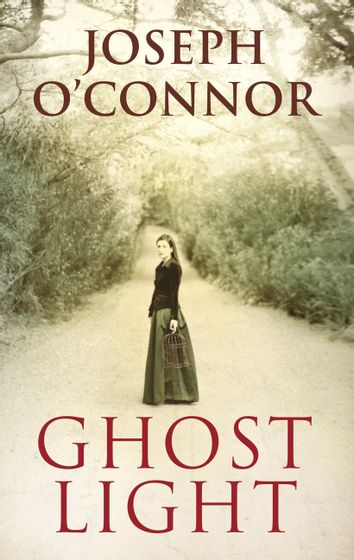
Growing up in the coastal town of Dun Laoghaire, Joseph O’Connor lived but a short walk from the Victorian house that had once sheltered the playwright John Millington Synge (1871-1909) and his immediate family. In the acknowledgments that close “Ghost Light” — O’Connor’s accomplished seventh novel — the author notes that he’d fancied the Synge domicile “as a slightly decrepit embassy of literature, a headquarters where brave things had been attempted, some magnificently achieved, but also a hermitage of ghosts.” O’Connor projects himself into that gothic space and, furthermore, into the theatrical society that blossomed around Ireland’s Abbey Theatre, by fixing upon Synge’s relationship with the spirited actress Maire O’Neill (1885-1952).
At the time of his death from Hodgkin’s disease, Synge was engaged to O’Neill (neé Molly Allgood), who had been the lead actress in the original production of his mordantly droll comedy “The Playboy of the Western World” (1907). Their courtship met with resistance from Synge’s family and social circle, which included fellow Abbey Theatre co-directors William Butler Yeats and Isabella Augusta, Lady Gregory. Of issue to the naysayers was not only the age difference between them — Synge was 35 and O’Neill 19 when they first became fond of each other — but differences in station. Yeats and Lady Gregory, like the rest of those who frowned upon Synge’s amorous leanings, were sensitive to the class markers that distinguished him from his beloved: O’Neill was the product of a working-class background, who had received a spotty education at an orphanage where she was placed for a time, after her father’s death. Synge — the offspring of a barrister and a landowner — was a graduate of Trinity College Dublin who could read in six languages and was well traveled.
In his novel “Ghost Light,” O’Connor pulls from such contrasts reasons for mirth and gravity. Frequently, such emotions spur one another on as they do when O’Neill reads a lyric that has been added to an oft-consulted map, which bears the stamp “Ex Libris Trinity College Dublin”:
If this chart — thou steal’st away,
What shall thou say
– On Judgment Day?
Yet if this map be — wrongly drawn
Trav’ller — mercy — from thy scorn.
She reads the final couplet aloud. [Synge] chuckles at her pronunciation. In his accent, it rhymes. In hers, it does not. For less have millions starved.
It is O’Neill’s voice, by turns vulgar and classed-up, that centers the novel and invests it with a stubborn optimism.
“Life abounds with blessings.” This motto comes to her at the beginning of the story, where we find O’ Neill, aged 65, hung-over and indebted, living in a dilapidated London flat. She bundles herself in that sentiment, as she does in the best of her few remaining garments, to see her through a chilly day in October 1952. In part, she is made giddy by an afternoon appointment at the BBC, where she is to participate in a radio adaptation of a play by Sean O’Casey. As she goes about her preparatory rituals, she mulls over an interview request from a scholar who is eager to discuss her relationship with Synge, and to obtain for her institution’s archives any personal documents relating to the literary artist. Having long ago sold off all but one of his letters, O’Neill, for dire want of groceries, decides to part with this last memento, though it’s her intention to sell it to a London book dealer who has been kind to her in the past. Placing the letter in the pocket of her only coat, she goes outside to meet the day, which will give her the occasion to visit a pub, a museum, Trafalgar Square and a movie theatre, before heading off to work in a fog of alcohol and remembrance.
O’Connor is superb at holding the reader’s attention across scenes drawn from O’Neill’s youth as a rising actress at the Abbey Theatre, to her ominous middle years, to the waning moments of her life. There is a noticeable physicality to his writing. Peering at her aged knuckles, O’Neill sees “the fossil of a bird’s wing.” A clock “placks solidly, adjusting its ratchets.” An overstuffed ashtray “calls to mind a porcupine.” The author’s delineation of psychological states is equally sharp. Synge’s ambivalence toward marriage belies a quality “many women have known: the suitor who craves you but secretly wants to be dismissed.” As O’Neill shuffles about in the morning, getting ready for what is fated to be her final performance, she is keen to shrug off the memories that have stirred within her, because “otherwise we pull into ourselves like snails … and you can lose thirty years in such a withdrawal. This is how time unfolds when you are old and susceptible. Wander into its spiral shell and it is hard to escape. The glisten that looks inviting to age-bleared eyes has a way of suddenly liquefying and then coagulating around your heart, and the womb in which you find yourself so numbingly cocooned is too enveloping to allow you to resurface.”
“Ghost Light” imparts much of its joy by tracking O’Neill as she gallivants about London brushing off the slights and acknowledging the serendipities strewn along her path. It’s regrettable that the novel falters for a brief spell, near the end, when she arrives at the radio studio and is introduced to a young fan eager for her autograph. What transpires is a schmaltzy incident that interrupts the otherwise unobtrusive current of pathos that carries the story along. Be that as it may, this Hallmark moment needn’t deter readers in the mood for a literary work that is as inviting as a liquid indulgence.
Continue Reading
Close
For Mark Greif, one of the founding editors of the literary and political journal n+1, the modern-day hipster was reborn around 1999. His dating accords with my own perception. During my senior year at Vassar, before I became consciously aware of the name by which to designate the trend, I wondered at why some of my smartest Caucasian friends spurned high-gloss refinement, why they stopped reading French theorists and started watching TV, forsook microbrews or Guinness in favor of cheap beers like Pabst Blue Ribbon, and began wearing trucker hats. As a black guy, from a genuinely middle-class background, I was mystified by these déclassé affectations. I remained in a muddle about all of this, after financial obligation sent me back to the predominantly black suburbs of northeastern Maryland where styles had remained more or less consistent with those that I’d known since high school.
In 2005, I got an office job in Manhattan. Through a co-worker I learned how to name the trend that I’d brushed up against intermittently, when I’d drop in on friends in Williamsburg. I can still recall her surprise that I was unfamiliar with hipster accoutrements like Vice magazine or websites that posted party photos, such as the Cobra Snake. Aside from feeling removed from what was supposedly the vital present, what struck me in talking to her was the hypocrisy she wore as lightly as a chiffon scarf when speaking contemptuously about the hipsters of her Williamsburg neighborhood or about the pretentiousness exhibited by some of the Vice editorial staff, to whom she’d applied for an internship. As if all-knowing (the very definition of a hipster), she personified the lame but telling quip, “What’s the easiest way for a hipster to offend another hipster? By calling him a hipster!”
There is a history to this sort of outsider-insider exceptionalism. In his primordial incarnation, as memorably anatomized in Anatole Broyard’s 1948 essay for Partisan Review, “A Portrait of the Hipster,” this dean of the streets was assumed to be of African-American descent. Broyard — a Creole who in part made his name by trading on his intimate familiarity with black culture, but passed himself off as white — advanced the claim that the hipster sauntered out of the muck of institutionalized racism. The savvier-than-thou posturing, which became his calling card, was predicated on inverting the power structure that conspired to keep blacks on the periphery of tony society. Philosophic legerdemain assisted him in this feat; he concealed his ignorance by contriving to make others feel theirs. In this way, the hipster charmed or chafed the squares around him with his persona which radiated what Broyard refers to as “a priorism”: “[This quality] arose out of a desperate, unquenchable need to know the score; it was a great projection, a primary self-preserving postulate. It meant ‘it is given to us to understand.’ Carrying his language and his new philosophy like concealed weapons, the hipster set out to conquer the world. He took his stand on the corner and began to direct human traffic.”
This patented cool — a supposed flower of his racial heritage — would not remain solely at his disposal for long. White kids wanted to aggrandize themselves, too. As Norman Mailer wrote in his controversial 1957 essay for Dissent, “The White Negro: Superficial Reflections on the Hipster,” “there was a new breed of adventurers, urban adventurers who drifted out at night looking for action with a black man’s code to fit their facts. The hipster had absorbed the existentialist synapses of the Negro, and for practical purposes could be considered a white Negro.” The assurance with which Mailer defines the lineaments of black identity, and suggests how easily it can be appropriated, should give one pause.
The aftermath of the civil rights and Vietnam era witnessed the rise of punk, which in turn spurred the emergence of ’80s indie culture. These countercultures flowed out of a rejection of what many young people saw as an increasingly corporatized world. On the heels of these movements (which eventually became co-opted by the mainstream, as the documentary “1991: The Year Punk Broke” attests), neighborhoods like Williamsburg in Brooklyn and Wicker Park in Chicago rose to prominence as places that were connected with bohemia and artists. But by the late ’90s these locales seemed less identified with a community and more with attitude, prime real estate, or even the brands associated with them. Out of the nexus of these events the hipster regained his strut.
In the spring of 2009, the editorial board of n+1 convened a group of intellectuals to deliver papers and participate in a dialogue with an audience at the New School in Manhattan. “What Was the Hipster? A Sociological Investigation” presents a record of these proceedings as well as responses and reflections occasioned by them. “For once,” Grief writes in his introduction, “here is analysis of a cultural phenomenon not learned from TV, or pre-digested.” The book’s kaleidoscopic mapping of the (typically white) hipster, in his or her many guises (e.g., “the poison conduit” between the “rebel subculture” and “the dominant class” or, in the case of the female hipster, one beholden to the photographic lens), feels so of-the-moment that it may make you cringe at your online profile.
Returning to the subject of hypocrisy, one of the virtues of the book is how the contributors inscribe themselves in the topic of investigation. Thus, with no small display of wit, Christian Lorentzen in his essay, “I Was Wrong,” confesses to having profited from “a massive fraud [that] held that there were people called hipsters who followed a creed called hipsterism and existed in a realm known as hipsterdom. The truth was that there was no culture worth speaking of, and the people called hipsters just happened to be young and, more often than not, funny-looking.” Or Rob Horning, who writes:
Hipsters reduce the particularity of anything you might be curious about or invested in into the same dreary common denominator of how ‘cool’ it is perceived to be. Thus hipsterism forces on us a sense of the burden of identity, of constantly having to curate it if only to avoid seeming like a hipster.We keep consuming more, and more cravenly, yet this always seems to us to be the hipster’s fault, not our own.
As with almost any book composed by various contributors, there is a range of quality in the offerings — sometimes within the pieces themselves. Given the recurring motif, which runs throughout a number of the articles, of the hipster as the beneficiary of gentrification, Jennifer Baumgardner’s “Williamsburg: Year Zero” seems a tad redundant in its evocation of the author’s ambivalence as a participant in, and observer of, gentrification. Yet it remains interesting inasmuch as it broaches the topic of whether all the fuss over stylish men in skinny jeans conceals a latent homophobia.
One of the salient questions that linger in the mind after one emerges from all of this self-reflection is whether, in the panoptic age of the Internet, a counterculture can thrive without corporate interference. I’ll leave it to you to ponder this conundrum that apparently entraps us all.
Continue Reading
Close