Christopher Ketcham

The original monkey wrencher

Ken Sleight inspired renegade writer Edward Abbey to create his most legendary character. Today, with sprawl and tourism devouring the West, the grand old man of environmental activism is still facing down the bulldozers.

Almost all the country within their view was roadless, uninhabited, a wilderness. They meant to keep it that way. — Edward Abbey, “The Monkey Wrench Gang”

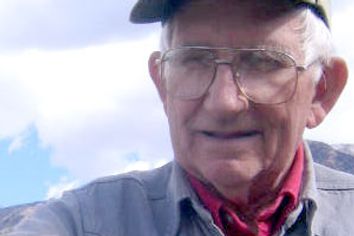
Ken Sleight is 77 years old, lean, dusty-booted, hard of hearing, wears old jeans and long-tailed shirts untucked. It is said that as a younger man he was the model for the lapsed Mormon renegade Seldom Seen Smith in Edward Abbey’s novel “The Monkey Wrench Gang,” which itself became the incendiary model for eco-saboteurs such as Earth First. Sleight owns a horse farm called Pack Creek Ranch, up on Abbey Road, outside Moab, Utah, in the high red desert of the canyon country, where for the last five months I’ve been renting a cabin 33 steps from the door of his lodge. I see him every day in his old blue Ranger pickup, or tending to his Appaloosas and Arabians with his wife, Jane, or laying gravel with his tractor and shoveling manure for shade trees.

I like Sleight. I like him because the other night he drank me under the table, because a few days later I got stuck in a September snow in the mountains above the ranch and he dropped everything to get in the Ranger and winch out my truck. I like him because when he drives long distances he pisses in a bottle instead of stopping at the side of the road. “No time to waste and why pollute the water,” he says. I like him because on his horse a few years ago he charged two bulldozers in the forest near the ranch, refusing to dismount until the drivers shut their engines. I like him because he reminds me of my father, both of them agitators and nostalgics, angry young men more than twice my age, twice as angry as the young men you meet today.

Sleight talks about the way things were in southern Utah before the too-many strangers like me showed up, before Arches National Park, so beloved by his old friend Abbey, was snatched away by the seekers of heat and light and solitude once just his own, before the motor-home panzer units full of speedboats and mountain bikes and grandpas and babies in diapers. Just under 800,000 people flocked to Arches last year, almost a fivefold increase from 30 years ago. Everywhere in the red rock national parks of southern Utah — in Arches, Capitol Reef, Zion, Bryce, wherever motorized man can find a way — the people are coming. Sleight calls this “obscene.” Too many “goddamn people,” Sleight says. “In such a conglomeration, it’s like down in Rome when all those masses see the pope. I don’t understand how in the hell they get any meditative spiritual great stuff with so many damn people around.”

Which would sound blinkered, curmudgeonly, elitist, plain mean if it were spoken by anyone else but Sleight, who says it with a sad, generous smile, sipping whiskey at noon. Sleight at first glance has settled down in his old age. He has been a river runner, cattle driver, canyoneer, sheepherder, wilderness guide and, as once denounced by a land developer, a “dangerous saboteur.”

In “The Monkey Wrench Gang,” published in 1975, Sleight, aka Smith, topples road-grading Caterpillars off a cliff, derails a coal train with dynamite, and attempts to incinerate the armatures of three bridges north of Lake Powell, which he refers to as “the Blue Death,” the water having drowned the marvels of Glen Canyon. He prays on his knees atop the dam that created the hated lake. “Dear old god,” the jack Mormon river rat cries out, “how about a little ol’ pre-cision-type earthquake right under this dam?”

Abbey and Sleight met in 1967 at the put-in at Lee’s Ferry on the Colorado River, 15 miles below Glen Canyon Dam, which had been completed four years earlier to charge a hydroelectric turbine that, in turn, would power casinos in Las Vegas and electric toothbrushes in Phoenix. Abbey was posted at Lee’s Ferry as a park ranger with a penchant for cadging beer from river-runners. “Instant recognition,” says Sleight. “We sat there and built a fire and drank and laughed until 3 in the morning. Talked about how to get rid of the goddamned dam! That was probably the start of the Monkey Wrench Gang right there.”

So was Sleight really the model for the marauding Smith? “I admit to nothing except the Mormon part,” he tells me.

In reality the character is not as effective as the man has been himself. “Ken has tilted at more windmills than Don Quixote could in 10 lifetimes — he never gives up,” says Jim Stiles, who publishes (and writes and edits) the Canyon Country Zephyr, southeast Utah’s only alternative monthly newspaper.

Sleight indeed has had a very real hand in stopping more ill-conceived and rapacious projects threatening red rock country than probably any other Utahan. He was the first elected chair and catalyzing force behind the radical Glen Canyon Group of the Sierra Club’s Utah Chapter (his original vision for the group, he would discover, was too radical). In 1999, he was bestowed the David R. Brower Award “for Outstanding Service in the Field of Conservation,” with Brower, the unruly and iconic mountaineer and environmentalist, personally presenting the plaque. For eight years, Sleight honchoed the San Juan County Democratic Club, his chairmanship mostly spent trying to elect Native Americans, more than 55 percent of the jurisdiction, in a county ruled by minority whites. (He himself in 1990 would run for the Utah House of Representatives on an Indian ticket and lose with 35 percent of the vote.)

From what I can tell living at Pack Creek, Sleight doesn’t sleep. Often I see him at 2 a.m. or 4 a.m. or 6 a.m. — “Ken keeps wolf-hours, watch-hours,” says Jane — heading north in his Ranger on the 260 miles of exhausting road to Salt Lake City (bound for a quixotic morning meeting about draining Lake Powell) or driving more contentedly south to work with the Navajo and Ute nations, where corporate prospectors claim the land for coal, uranium, oil and gas, calling it progress; the Indians, left to suffer the cancers and clean up the mess, call it “energy genocide.” At the age of 75, Sleight himself was diagnosed with prostate cancer: “You know what this guy does? He’s getting radiation therapy five days a week in Salt Lake City,” Jane Sleight tells me, “and he’s sleeping in the back of his pickup, in November, in a parking lot. With no heater.”

Today, in Moab and Monticello and Blanding, main habitations in southeast Utah, Sleight’s enemies, a good number of them ranchers, sprawl boosters, oilmen or mining scions with interests in industrializing the high desert to no end, will say (off the record — “in respect for Ken”) that Sleight’s got too much Abbey in his head, too much of Abbey’s doomy vision of technology and sprawl and greed run riot. Maybe this is so.

The drowning of Glen Canyon in 1963 transformed Sleight, but in the end the change had nothing to do with Abbey. If the wilderness needed no defense, only more defenders, as Abbey would write, Sleight was destined for the duty, though his birth would seem to have conspired against it.

Sleight was born into a family of Idaho conservatives, ranchers, horsemen, farmers, his father, who ran a feed business, insisting he was conceived in a saddle (his mother loudly demurring). As Sleight understood it, conservatism among his Mormon kin meant “you go slow, you don’t change dramatically,” Sleight tells me. “You conserve!” In 1951, he took a river trip, his first, down the Canyon of Lodore in what is today Dinosaur National Monument. The first white man to run Lodore, the one-armed Capt. John Wesley Powell, wrote in 1869 that the cliffs of Lodore, blood-burgundy and sheer, were “a black portal to a region of doom,” the rapids quickly slicing in half the first of his four boats, the water-roaring walls, awful and without egress, driving his men to bad dreams. Sleight and his crew, 15 drunken guys and gals in three boats, fared somewhat better — only two of the boats flipped but washed up worthy — and Sleight, 22 years old, was reborn.

There was an interregnum of war, college, confusion. He served in Korea, fought with the 48th Field Artillery Battalion at Pork Chop Hill. He soon had a wife and two children, with two more to come. He graduated in marketing and accounting at the university in Salt Lake City, finding a job with Firestone balancing the books for tire sales. He wore a bow tie to work. He went to John Birch meetings, backed Barry Goldwater; the know-nothingism soon wearied him. He remembered Lodore, “the most exhilarating moment of my life to that point.” Within four years, he had quit Firestone and relocated his family to southern Utah and was in the guiding business, buying a fleet of old Army landing rafts, 8 feet wide, 18 feet long, at $50 each, calling the venture Wonderland Expeditions.

Sleight was a good guide, though the business, by its nature, destined him to a glorified poverty. He was puckish, and a flamboyant cook at camp, and he had the right instincts in the canyons. He could read clouds and white water, could smell out springs in the barrenness of rock. Jane Sleight tells me how once they were leading a group of horses and tourists in a canyon under blue sky, and Sleight turned to her, quietly, his nose twitching, and said, “Maybe we’ll get up outta here.” Minutes later a torrent of floodwater the color of smashed tomatoes filled the arroyo — dumped silently from clouds far up the drainage — and would have carried them and their beasts and clients away.

In 1955, Sleight took his first trip down Glen Canyon. If Lodore had shouted to him, Glen Canyon whispered, laid him down. In 1955, it was among the most remote places in the United States, and it should have been ranked as a wonder of the world. “It was inculcated in my soul,” Sleight tells me. “It was heaven on earth.” When Sleight talks about Glen Canyon, his voice goes quiet, almost murmurous — he stops tonguing his whiskey, there is no shaking of fists or banging of tables, no wanting to charge you with his horses.

“The deep canyons, the meanderings, the quiet of the water, the great beaches,” he begins. “I could show you all down those canyons the silhouettes of a woman’s attributes, her body. The sandstone was petrified dune. It was sculpted, had a natural tendency to curve, everything rounded off, sensuous. And the color: oranges, browns, reds, always changing. You’d sit in one place, the sun’d come up and the colors — the feelings of each of the colors! When the sun was straight up in the sky, I’d go off into a little cavish place and watch the little things of the desert, the closeness of the land, the rock, these fleeting images. I wondered how come a certain place is so calm, so beautiful. Why do I feel so good here? I wondered about the glens along the way, how I’d ever get to know them all. Hundreds and hundreds of amphitheaters, alcoves, tucked away in the cliffs, shadowy, full of maidenhair fern, the dripping springs, the green in the yellow rock — the greenery, the fragrance, it hit you all at once. And always there were no rapids. Water smooth and calm. A matter of floating.”

Sleight pauses. “So the places came to you: Cathedral in the Desert. Music Temple. Temple View. Temples! You’d wait for them in the morning, you’d wait in the evening — spectacular. Eliot Porter” — the photographer whose book “The Place No One Knew” is today’s classic elegiac portraiture of the pre-flood canyon — “told me, ‘Wait for it. Just wait for it.’”

Later I looked up the names of Glen Canyon on a map of the river where it ran before the flood. Here was the Cathedral, and here was Last Chance Canyon, Hidden Passage Canyon, Rainbow Bridge, Salvation and Forbidden and Twilight Canyons, all gone now. Looking at the graveyard of the map, I thought of Sleight and his reverie and suddenly I felt like bursting into tears, a ridiculous sentiment no doubt, given I’d never seen the place and probably never will — yet the loss seemed infinitely sad, personally tragic.

When, in the 1950s, Glen Canyon Dam began its inexorable ascent at the town of Page, it was to be one of the great works of humanity, 800,000 tons of concrete rising 58 stories above the river, costing $750 million and the lives of 16 men. To Sleight, it was mania, a nightmare. He tried to stop it, forming a group called Friends of Glen Canyon with six other river-runners. But no one heard the plea, no one listened. Even the dauntless David Brower, then executive director of the Sierra Club, cut a deal favoring Glen Canyon Dam in exchange for the federal government’s abandonment of a dam project in Dinosaur National Monument. (Brower would forever curse his compromise, and to Sleight it would be a bitter irony when he received the Sierra Club’s highest award from Brower himself.)

Sleight watched the water rise, tortured himself with its rise. “Growing up on a farm, I learned to feel that the land was a part of you, part of your being, your very mind,” he tells me. “I don’t care if it’s public land, you can call it under any jurisdiction or bureaucracy you want — Bureau of Land Management, Forest Service, National Park Service — but it’s your land, it’s my land. Glen Canyon was part of me. And the water starts rising and covering up all those little canyons that I took people into for years. Sometimes a foot a day, sometimes 2. The most agonizing thing. Would you have your temple flooded? How would you feel if your house was bulldozed down? That’s a hard one to think about. I feel it to this day.”

Stiles of the Canyon Country Zephyr always wondered why Sleight stuck around to watch the disaster unfold. “It was as if he felt the need to die some when Glen Canyon went under, as if it was something he owed the canyon,” Stiles says.

The loss radicalized Sleight — or, rather, he understood that the “conservatives” pressuring for development in the Utah backcountry were in fact radicals in disguise and probably dangerous, the kind of zealots who refused to “go slow,” who wanted to conserve nothing. As the 1960s unreeled, Sleight organized. In the good Mormon town of Escalante, Utah, where he was living in 1965, he helped fight off a multimillion-dollar highway that was to have paved easy tourist entry into the slot canyons and towering folds of what is today the Grand Staircase-Escalante National Monument. The Mormons of Escalante turned on him and his family, threatening Sleight from the fearless anonymity of crank phone calls; Sleight even found his truck sabotaged, pushed into a ditch in the night.

Stopping useless automotive-tourist-gerbil-wheel roads became a habit. Thanks, in part, to Sleight, the Book Cliffs near Desolation Canyon on the Green River — where a massive road project was planned in the 1990s — today remains the lower 48′s largest roadless area, a place pretty much untouchable except to the toughest traveler. And thanks to Sleight, the canyon that first welcomed me to the Utah — the winding lonely Davis Canyon outside Canyonlands National Park –remains as it was intended and just as it was when I came there in my tent four years ago under the watch of the rims and the buttes.

In the 1980s, a Mormon cowboy tycoon named Cal Black, representing the interests of progress and profit in conservative San Juan County, was pushing for the nation’s first high-level nuclear waste dump to be sited at Davis Canyon. The plan called for a 640-acre floodlit compound, a truck-haul road, a power line, a rail line, and nuclear waste to squat in salt beds underground for 100,000 years or longer. Sleight was his usual nuisance self, writing letters to his congressmen and governor, protesting at the public meetings, questioning the authority of Black, who didn’t like to be questioned, especially not by a Mormon who every Sunday skipped church.

It was on the figure of Black that Abbey based the chief antagonist in “The Monkey Wrench Gang,” the unforgettably leather-faced, yellow-toothed, power-obsessed J. Dudley Love, better known across San Juan County as Bishop Love, the veritable Bishop of Blanding. (Like Black, who hailed from Blanding, pop. 3,100, Love the booster was a bishop in the Church of Latter-Day Saints.) Here’s how Abbey has Smith describe Bishop Love: “neck deep in real estate, uranium, cattle, oil, gas, tourism, most anything that smells like money. That man can hear a dollar bill drop on a shag rug.” Per usual, Abbey exaggerated. “I liked Cal,” says Sleight. “He was sure of himself, could speak well, write well, make his case. He used to wear a bolo tie that had a vial of uranium strapped to it, wearing it on his chest, over his heart, to show it wasn’t dangerous.” Black got lung cancer and died in 1990 at the age of 61.

By 1986, Sleight had settled down with Jane at Pack Creek Ranch. In the last years of the decade, Abbey often stayed in the ranch’s cabins, where he completed at least one of his 14 books and conceived his fifth child. When Abbey wasn’t pecking at his typewriter or sucking liquor and ogling teenage girls, he’d head out hiking or on horseback in the summer afternoons, usually accompanied by Sleight. The two men talked, as they always did, about Glen Canyon and the dam. They considered alternatives to its violent destruction: How about just draining it like a bathtub? They drank to the notion. In 1989, Abbey, at 62, passed away, battered from a life of alcohol abuse.

Today the National Park Service has made clear that Glen Canyon shall neither exist in memory nor in the history books. “The Place No One Knew” is not sold in the bookstores at national parks. Nor is “The Monkey Wrench Gang.” Nor is the DVD of the recent film in which Sleight appeared, “Glen Canyon Remembered,” a documentary of interviews and archival footage and photography of the pre-flood canyon.

If the dam was built in service of gigantism and profligacy — at once an electricity mill for out-of-control sprawl cities and a cash cow for the Colorado River Storage Project, which itself financed out-of-control high-waste agriculture and still more dams across the Southwest — then its net effect on the culture of the canyon country was expected. Lake Foul, as Sleight dubbed the reservoir, allowed access to wilderness that once required days of travel through labyrinths of rock. Now you could find the drowned ruin of Cathedral in the Desert in two hours via houseboat. It was Lake Powell that first welcomed, in organized form and en masse, what Abbey called “industrial tourism,” which depends for success on accessible wilderness and wildness as a marketed commodity, complete with hotel and restaurant chains and the kind of air-conditioned comfort stations that pimple the shores of Powell and the well-paved roads of parks like Arches and Bryce and Zion. Too many people on too many concrete paths, wanting to see too much in too little time, with too many signs telling them what they’re missing, and what they should see next.

Of course, industrial tourism has in part morphed in the past two decades into a cosmetically greener version of itself, but one no less effective at exploiting the land. Now there are the rock climbers and hikers (like me), the canyoneers, the mountain bikers, and the river rafters and their guides. The hypocrisy of attacking adventure tourism is not lost on Sleight, for the adventure tourists are the very class of citizen that he once catered to as income, to whom he revealed the secrets of the canyons. The difference, offers Sleight, is that there are now too many adventurers. “Maybe,” he tells me, “I shouldn’t have guided one damn person into those places I loved so much.”

The people come, and the developers come, faster than Sleight can counter. They come into his backyard, up into the hills behind Pack Creek Ranch, in jeeps, on mountain bikes. The bulldozers come, enforcing the Bush administration’s Healthy Forests Initiative, chopping down the juniper and the pinyon trees. “I told the Forest Service, ‘I want meetings on this! Bring us in as stakeholders!’” he says. “They said no public meetings.” So last year, still the renegade, Sleight on his horse blockaded the ‘dozers in a standoff that lasted 15 days. The uranium prospectors come, heirs of Cal Black, smelling money in the soaring price-per-pound of the ore. Operations are set to expand at the White Mesa Mill in Blanding, the only working uranium mill in the United States. The nearby Ute Indians don’t want it. The Utes say the mill fouls their water and their soil. At public meetings, Sleight shouts that the plight of the Utes amounts to “environmental racism.” His is a lonely voice among the whites of San Juan County.

A cynic will say that all of this rings of NIMBYism in its most crotchety form, but what Sleight really hopes for is sustainability, a simple and enduring concept by which he means the limited use of resources for limited ends. “There is a carrying capacity to everything,” Sleight tells me. It’s a phrase he repeats over many conversations.

One day in the cool of autumn, Sleight and I rode on horseback into the forest. We rode up a rocky gulch to a hillock where a petrified log had once lain whole, prone as a body, colored cobalt and rust and amber. I looked along the length of the log. Blocks of it had been chopped out like cake slices by scavengers who’d somehow gotten access, back here, where there were once no roads, no people. Sleight looked depressed, standing over the remnant of the find. “Not much left the way it was,” he said. “I think this’ll be gone in a couple years.”

The wily coyotes of New York

The coyote that led cops on a wild chase through Central Park last week illustrates how this supremely adaptive wild dog can live anywhere -- including in the heart of a big city.

Last night the coyotes called by the covered bridge … ‘We are here,’ they say; ‘we’ll eat your apples, your voles, your cats, the afterbirth of your calves; we’re here, we set your dogs to barking, we intend to multiply.’ The coyote: evolving, getting better all the time, under heavy pressure. — Robert Michael Pyle, “Wintergreen: Listening to the Land’s Heart”

American Indians referred to the coyote as Trickster: the sneak, the fooler of fools. This explains events in Manhattan last week when a coyote from the city’s northern greenswards led cops, photographers, reporters, tourists and helicopters on a two-day chase across Central Park before finally succumbing to a tranquilizer dart.

The canid himself was no anomaly, no confused wanderer. He was a colonist, looking for new terrain, probing the limits of his range. At one point, cops cornered him near a duck pond but he dove in the water, swam to shore and was gone. Nicknamed “Hal” by park workers, he was not the first coyote to visit Manhattan this year. Six weeks earlier, on Super Bowl Sunday, a coyote was found smashed up by the side of a road on the Upper West Side. In January 2004, a coyote was seen bounding among the ice floes on frozen Rockaway Inlet, in Queens, near the piney dunes of Breezy Point, 23 miles south of Central Park.

In the Bronx, New York’s greenest borough, coyotes are now established New Yorkers, living in sprawling parks, edging through the trees that line golf courses and baseball diamonds, where the garbage and mice and raccoons are plentiful. It was assumed that last week’s coyote had made his way south from the Bronx beachhead, a young male dispersing in the springtime to find new and better land.

The rise of a northeastern coyote is an unprecedented biological event on the American continent. When white men settled the coasts of the Atlantic, there were no coyotes anywhere on the seaboard. The lonesome Canis latrans, the “barking dog,” ranged only on the prairies of the high plains and deserts of the West, hemmed in by dominant wolf packs in old growth forests.

But the reach of industrial Homo sapiens transformed the coyote’s habitat. By the early 20th century, the forests that fed the wolf had been felled, and the wolf (along with the cougar) was soon decimated, vast swaths of land were subordinated to agriculture, and in this kinder environment, the deer population, freed of top predators, began an inexorable climb to its current saturation point.

The coyote, ingeniously plastic, always adapting, saw opportunity. He pushed east and north and south, assuming the niche of top dog, and today his numbers nationwide are more than twice what they were in 1850. The coyote, says wildlife ecologist Justina Ray, “is the most successful colonizing mammal in recent history.”

The rate of expansion was astonishing. According to Ray, who works with the Wildlife Conservation Society, the coyote’s march during the 20th century covered thousands of miles, even reaching isolated regions in the Atlantic provinces of Canada, including Nova Scotia and Cape Breton Island, arriving in Newfoundland on sea ice as early as 1987.

Today, coyotes live in or near every major American city. They are reported in Atlanta, Toronto, Portland, Maine, running across a schoolyard in Philadelphia, hiding under a taxi in Chicago, and everywhere in the metro west, including Denver, Phoenix, Los Angeles and Las Vegas. A landmark study from Ohio State University, to be published this spring, tracked coyote behavior in urban Chicago for six years, concluding that the Windy City’s coyote population was vastly larger — at least 2,000 and growing — and more successful than ever expected. Urban coyotes, the study found, live longer than their country cousins, their range per pack is more compact (much like urban humans), and they hunt more often at night (also like urban humans). The study also found that the creatures likely do not pose a threat to people.

Their acculturation serves as a lesson in the rigors of urban survival. Coyotes have learned to negotiate traffic, listen for voices, watch for lights. They’ve become ever more nocturnal, remote, secretive. They learn that uncollected garbage, weedy lots and abandoned buildings are their friends. They eat primarily everything: garbage, grass, frogs, chipmunks, shoes, dragonflies, air. They follow human trails. They use our roads, our riverbanks, our bike and hiking paths, our railways and backyards. In Boston, biologists who radio-collared a female coyote during 2004 reported that the dog traveled freely across the towns of Revere, Medford, Somerville and Cambridge, at one point crossing into Boston itself via a railroad line at 3 a.m. before bedding down in an abandoned rail yard north of the Charles River. The coyote, nicknamed Fog, had “little more than shrubs for her to sleep in.”

Fog was technically an eastern coyote, as distinguished from the western coyote. Scientists believe there is considerable genetic difference between the two animals, enough that the eastern coyote, now expanding fully in our midst, may represent an entirely new subspecies of canid — a larger, smarter, more versatile creature. Coyotes, as they foraged east and north over the past 100 years, have grown to twice the maximum weight of their Western ancestors, with the biggest males topping out at over 50 pounds. The slimmer western coyote hunts alone, but the big eastern coyote has learned cooperation, pack-hunting, a wolf behavior. Some biologists argue that the eastern coyote developed through commingling with the Wisconsin timber wolf, a subspecies of the gray wolf that, rather than face extinction, perpetuated at least a portion of its gene pool by joining the migrant coyote flood (thus the coyote’s boost in size). Other scientists say that natural selection in the face of bigger game, higher snows, and colder weather catalyzed the coyote’s physical flowering.

Whatever it is, big dog or little wolf, the eastern coyote has met and deftly answered the speed of ecological change wrought by man. This is what fascinates: his tenacious adaptation, his vastly accelerated evolution.

Hal’s adventure in Central Park last week was a repeat performance of seven years ago when, on April Fool’s Day 1999, a similarly tricky coyote named Lucky Pierre led cops, photographers, reporters, tourists and helicopters in a chase across the park before, yes, finally succumbing to a tranquilizer dart. Whence do the coyotes come?

At least 20,000 now live in New York state, and an unknown number in New York City. The dogs first appeared out of Canada, in 1925. Some 70 years later, they arrived in the Bronx. A Bronx woman in 2002 claimed she watched a coyote quietly “saunter” across her backyard. There were sightings that same year of a mother and two pups in Van Cortlandt Park. At least one coyote a year is road-killed along Bronx expressways.

Each spring, coyotes disperse from the pack to find new proving grounds, a space of their own in which to hunt and dominate and attract a mate, with whom they will remain for life. A few days before he made his madcap debut on April Fool’s Day, Lucky Pierre, a classic spring disperser, was sighted at Riverside Park near 149th Street. Maybe he crossed the George Washington Bridge 30 blocks north (New Jersey hosts at least 3,000 coyotes). More likely, he traversed the Henry Hudson Bridge at Manhattan Island’s northernmost tip, or followed the Metro North line south through Riverdale, using the weedy rail span to cross the Harlem River. Or maybe he swam the river. From there, it would be easy going along the green cliffs of Inwood and the Cloisters, with the gem light of the water of the Hudson below him and rats in their burrows wherever he looked.

Lucky Pierre, so named because he was holed up in a cave across from 5th Avenue’s Pierre Hotel, was rechristened Otis and brought to the Queens Zoo, where he resides today. He paces a lot, though he enjoys an expensive diet of strawberries, blueberries, yams, kale and fish. His seven-year-itch brother of last week met with a kinder fate. Hal was handed over to a Long Island couple, Bobby and Rebecca Horvath, who are rehabilitating him before releasing him into the wilderness.

Bobby Horvath is a firefighter, Rebecca a cop. During their off-time, mostly out-of-pocket, with their suburban home as menagerie, they run a teeming nonprofit called Wildlife in Need of Rescue and Rehabilitation. In their backyard, in big cages, they have two barred owls from Connecticut, four red-tailed hawks from New York City, a bald eagle from Alaska, and a 40-pound bobcat, Tasha, rescued from a fur farm. Inside their house, they keep two white-faced capuchin monkeys, a one-legged German shepherd, four fat cats, and a parrot that ululates wildly but doesn’t speak. Among other animals, they’ve treated foxes, raccoons, opossums, seals, sea birds such as cormorants, herons and egrets, cats like Tasha who never made it to the factory shears, and primates such as squirrel monkeys, marmosets, or their own capuchins.

And now, for the first time, they have coyotes. Hal is the second in two months. The first was the coyote nearly road-killed on Super Bowl Sunday. He was a yearling, about 32 pounds, in healthy condition. His eyes were clear, his teeth were pearly, he had few ticks, no internal parasites. “He was spectacular,” said Rebecca Horvath. From the accident, however, he suffered a laceration on his back leg that needed suturing, head trauma, and one of his back teeth was cracked and had to be pulled out. He was dewormed, deticked and treated with steroids to reduce the swelling behind his eyes and in his brain. He was 38 pounds when the Horvaths freed him, 25 miles north of the New York City limits, in Westchester, on the large wild acreage of a friend’s property.

At the Horvaths’ house, Hal was curled in a dog cage that Bobby had placed in the humid dark of the basement to approximate a den. Hal, who was runtish for an eastern coyote, about 30 pounds, just bones and fur, lay in a far corner of the cage, his eyes pooled black but flashing green and gold and orange in our lamps. He shifted a little among the blankets, looking worried. Bobby reached in and touched him and the animal allowed the caress. His fur was coarse as Brillo and shaded tawny with black ticking. “Hey, guy,” Bobby softly told the coyote. “They’re not after you anymore.”

Bobby turned to me. “Can you imagine being chased around by a mob of people for two days and then being shot with drugs?” Bobby shook his head in shame. He said he counseled the Parks Department to set out a cage with a trap door and wait. No, they had to make a spectacle of things. The coyote might be dangerous. Someone might get hurt.

“Look at this guy, he’s not a killer. He wants nothing to do with us,” Bobby said. “People react with ignorance. Fear. But we’re gonna need to learn to live with them. Because they’re not going away.”

A few days later, Rebecca handed Hal into the custody of the New York State Department of Environmental Conservation, whose biologists were to release him in a state forest 40 miles north of the city. “He wanted to leave. I could see it,” Rebecca said. “He watched out the windows of his cage. He seemed excited to see the outdoors.” On Friday morning, March 31, a warm spring day in the Northeast, good weather for finding a mate, the Horvaths received word that Hal had died just as he was about to be released. A spokesman for the DEC said the cause was unknown. He simply stopped breathing.

Continue Reading Close

The angry patriot

Enraged by illegal immigration and traumatized by 9/11, Chris Simcox convinced hundreds of volunteers to join his Minuteman Project. Their goal: Seal the border and restore their American dream.

High drama suits Chris Simcox. You imagine that even when he’s home alone talking to his cat, he acts as if he’s addressing a sea of people. The hyperactive and bone-thin 43-year-old is the key organizer of and barker for the Minuteman Project, the citizen border patrol that in April sought with a single bold stroke to put a stop to illegal immigration along the Arizona-Mexico border. On the eighth day of the project, in the Arizona village of Palominas, Simcox is briefing 10 new recruits in a dirt lot near an oily little restaurant called the Trading Post. Several R.V. campers squat in the lot near a Port-O-San. Beyond is the empty scrub desert and two miles away the Mexican border.

“The government can’t afford to let this thing succeed,” Simcox tells the anxious men. “So stick to the SOP. That’s the most important thing.” Standard operating procedure is to call the U.S. Border Patrol at the sight of anyone trying to sneak across the border. Added to the tension is the news that Simcox has received death threats, supposedly from a Central American gang lord; he wears a bulletproof vest.

He tells the men they can carry pistols but they should not try to capture or detain migrants; there should be no contact at all between the Minutemen and their quarry. “It’s gonna get boring because we have to shut down this border,” he continues. “But don’t get suckered into an encounter. People coming across to work are victims. Just as you are. Your most effective weapon is your video camera. Someone approaches, your video camera is on!”

This is the new Chris Simcox, the politically correct, sanitized version. In January 2003, federal park rangers arrested Simcox after he wandered onto national parkland in search of illegal immigrants. In his possession was a loaded pistol, two walkie-talkies, a police scanner, a cellphone, a digital camera and what appeared to be a toy figurine of Wyatt Earp on a horse.

But being convicted on a misdemeanor firearms charge and serving a year of probation obviously got to him. He put away his revolver, re-angled his rhetoric and ultimately netted hundreds of volunteers to his cause. Standing near the border, whipped by the desert wind, Simcox tells me, “This is the Boston tea party! We are reestablishing the can-do attitude! We’re tough and tenacious but humane and civilized. We are the American spirit. We say no, we mean no. The word is ‘temerity’ — rock-solid character! We are challenging two governments. This is about will.”

The Minuteman Project commenced operations on April Fool’s Day in the cardboard cowboy town of Tombstone. Day and night, nearly 900 working-class men and women from across the country, nearly all of them white, stood guard at half-mile intervals along a 23-mile stretch of the Mexican border in southeastern Arizona. Some carried pistols, some binoculars, some held scribbled signs, some sat in lawn chairs. They were angry and worried and depressed. To them, the deluge of illegal immigrants stole American jobs, drove down wages, burdened city services, and spawned crime waves. They loved their country but hated their government. It was failing to protect them and its own sovereignty. The American dream was dying on the border.

At the end of the month, the Minutemen announced with great fanfare that their presence, and their reports to the U.S. Bureau of Customs and Border Protection, had reduced illegal crossings on their little stretch of border by more than 98 percent, from 800 to 13 per day. California Gov. Arnold Schwarzenegger swallowed the hype, declaring that the Minutemen had done “a terrific job” in preventing illegals from crossing the border. He even suggested that they move the operation to California’s equally porous border.

Federal customs officials, however, responded that the Minutemen did little more than get in their way; they were especially annoyed that the good citizens kept tripping motion detectors hidden in the brush. What neither border officials nor immigration experts deny, though, is that the Minuteman Project focused the hot light of the media on the world of problems surrounding illegal immigration.

“It seemed there were more stories in the papers about the Minutemen than there were migrants apprehended,” says Tamar Jacoby, author of “Reinventing the Melting Pot: The New Immigrants and What It Means to Be American.” “But they put the issue back in the news, that’s for sure.”

In 2004, more than 1 million illegal immigrants were captured on the Mexican border. In the previous 10 years, at least 2,500 died in the crossing from sun, cold, thirst. If the wrath of the desert didn’t kill them, the pitiful conditions provided them by black-market smugglers did. The human flood resulted in endless troubles for patrol agents, who in greater numbers than ever were being shot at, stoned, ambushed, both by migrants and drug traffickers. In 2004, there were 118 assaults on border agents in just the 30 miles of border stretching east and west of Palominas.

With the migrations, violence and human smuggling, “People are right to be frustrated and angry with the border problem,” says Jacoby. “Nobody can quarrel with the point that the system’s broken.”

Simcox, with his maniacal and often shameless declarations about immigration, and his contradictory sympathy for migrants, whom he appears to hate for coming to his country, is already imagining an outsize place for himself in the history books. He sees himself as the lone man who will fix the system and close down the border.

I got to know Simcox in the winter of 2003. I was in Arizona writing about a group of border “vigilantes” called Ranch Rescue, a heavily armed militia led by the baby-faced blowhard Jack Foote, who talked of invading Mexico and killing the leaders (though Foote, a former U.S. Army officer, had himself never seen action). The Ranch Rescuers wore camouflage fatigues, painted their faces, and tracked down migrants on midnight forays, carrying Kalashnikovs, Glocks and extra ammo. Occasionally their hunts went awry. One of Foote’s militiamen was arrested in 2003 on assault charges after allegedly pistol-whipping a migrant waylaid deep in the desert. Mostly, though, the militiamen drank beer and whiskey and ate beans out of cans and smoked a lot of pot, which I found strange, as much of their mission was to interdict drugs. “Only if it comes in legally do we want it,” the men told me, not realizing the ridiculousness of the logic.

But the drunken GI Joes weren’t really Simcox’s scene. He was a loner. In December 2003, I camped out with him for a night of watch in the desert plain near Palominas. He regaled me with the long arc of his life that brought him to the desert.

For 13 years, he taught kids at the private Wildwood School in Los Angeles. The school was “famous for teaching tolerance and diversity to the kids,” he said. But he didn’t mean that in a good way. Liberalism, he said, had produced the kind of tolerance that allowed illegal immigrants to pour into L.A. and form gangs. When he was young, he said, he produced rap albums in New York City, where, twice, he got mugged by people who didn’t speak English.

After 9/11, Simcox confessed that he went crazy. He got fired from the school, his wife divorced him and took their teenage son. “My life collapsed,” he said. He exiled himself to the Arizona desert, to Organ Pipe Cactus National Monument, a remote and hallucinatory place where the cactus looked like men with guns, or women dancing. He began to call himself a 21st century Paul Revere, certain that terrorists were creeping across the border.

One hot night, Simcox said, he was hiking and saw a convoy of troops in trucks and jeeps moving fast, escorted by jogging men carrying AK-47s. Simcox hid in a pinnacle of rock, terrified, awed. He went to the park rangers, who shrugged. “They’re drug dealers,” the rangers said. “Calm down.” “Calm down!” Simcox told me. “No! This was an army! September 11! They’re crossing the border! And these guys aren’t gonna do anything about it!”

Simcox lived in the desert alone in his tent for three months, watching the drug convoys come. “I wanted to join the Border Patrol,” he said. “They said I was too old. Too old? Our country is under attack! I applied to the Army, the Navy, Air Force, Marines — too old!” A few days before Christmas, 2001, while camping in the high desert, the cold morning froze the zipper on his tent and so he melted it open with his cook stove. “That was it for me,” he said. “I came in from the wilderness.”

Simcox drained all his accounts, even those he’d saved for his child, and bought a local newspaper, the Tombstone Tumbleweed. He front-paged his plea: “A public call to arms! Citizens border patrol now forming! Protect your country in a time of war!” He exhorted Americans to “wake up” because “we cannot rely on law enforcement to enforce the laws.” In an open letter to George W. Bush, Simcox warned: “You can stop me by throwing me in jail, killing me or otherwise … What you cannot change is my passion.”

Simcox enlisted a handful of men to his cause and they called themselves the Civilian Homeland Defense. They were disorganized, though, and Simcox often went on search missions by himself.

One cold morning, when I was with Simcox on the Palominas plain, he tracked a group of migrants through the arroyos, up the berms, through the mesquite and the spiky ocotillo plants. Finally he came upon a family of round little Indians with babies. They were country folk, farmers, who had fled Mexico after their chief crop, corn, had crashed in the debased market for Mexican agriculture. Simcox called in the coordinates to a Border Patrol unit, which arrived on foot and took the Indians away.

“There’s only one way to stop this,” Simcox said slowly, like a man about to hit an insect. “Mo-bi-li-za-tion! Militarize the border! It would create a boom economy! Think about it. A binational workforce that builds towers and surveillance and video cameras and sensors. I’m tired of this wishy-washy pussy country we’ve got. Republicans are stuffed suits! Pussies! Why is America not standing up and enforcing the law down here? Cause everybody’s a victim, right?”

He scowled and scoffed and huffed. “I got dual feelings about migrants,” he said. “I’m pissed at ‘em because they’re breaking into my country. But I feel for ‘em because they’re dying in the desert for a minimum wage, being exploited by two governments. Cheap labor! Capitalism! Exploitation! What in god’s name is going on in this country? Who mows your lawn, washes your laundry, picks your food in the field, so you can sit around and watch ‘Friends’? This is a psychosis.”

Over the next two years, Simcox managed to calm down. With his newspaper and Web site, he tweaked his passion into savvy sound bites, gave the movement an epic banner, and began to drum up volunteers. The Minuteman Project, he bragged, was named after the militia of average men who fought the war that birthed this country.

On a hot afternoon, a week into the Minuteman Project, Simcox goes up and down the borderline near the Arizona town of Naco, cheering the troops. Observers with the American Civil Liberties Union are camped close by, on their own lawn chairs, watching the watchers. Simcox taunts the ACLU observers. He says he captured on film a group of them smoking marijuana. “Stoners! We’re gonna get that video to Sean Hannity,” Simcox says. The ACLUers conclude that the Minutemen are ignorant xenophobes.

Through the scrub, I spy Xavier Zaragoza, a Mexican-American reporter with the Douglas Daily Dispatch, a regional newspaper in southeastern Arizona. Zaragoza has been toiling on a documentary film about border politics for four years. With an impish smile, he says, “Every time I walk up to the Minutemen they say, ‘You a citizen?’ What are they judging me on? Skin color? ‘You speak ‘merican?’ I hear it over and over. ‘It’s an invasion! Stealing our land! You bring leprosy! You speak ‘merican?’ It’s pretty sad.”

Zaragoza had gathered footage of dead migrants, of living migrants dashing to the border, of infants captured by Border Patrol, and of Ranch Rescue imploding in alcohol and idiocy. Now with his camera he was getting inside the Minuteman Project. He was sick of the border. “This place is a fucking nightmare,” he says.

I have the good luck of finding a few articulate Minutemen. Like Simcox, they feel that migrants are victims of greedy American companies that exploit the pool of cheap labor. Mike Gaddy from Farmington, N.M., a retired Army paratrooper, walks to his truck to show me a biography of U.S. Marine Maj. Smedley Butler, a populist hero in the 1920s and ’30s. “War is a racket,” Butler famously observed in 1935. Gaddy, like Butler, spent over 30 years of active duty in the services. He recites his litany of service: “’64 to ’94: ‘Nam, Grenada, Beirut, Panama, Desert Storm,” he says. He taps his hands on a page in the Butler biography and tells me to read: “I spent most of my time being a high-class muscle man for big business, for Wall Street, and for the bankers. In short, I was a racketeer for capitalism.” Gaddy nods, his red beard shining. “When I read Smedley Butler, it was like the sun came out,” he says. “It explained my whole life.”

I bump into Johnny Petrello, a 33-year-old electrician from Arizona and one of the original members of Simcox’s Civilian Homeland Defense. Petrello had assisted enough citizen arrests of migrants that a $10,000 bounty was placed on his head by Mexican gangsters operating out of Naco. Or so he claims. He laughs about it; he is sympathetic to migrants. “If I was a Mexican, a Guatemalan, Haitian or Colombian, you bet your ass I’d be trying to get into the United States, by any means necessary,” he says. It’s just that illegal migration, he says, is “a slap in the face” to his grandfather, who arrived on Ellis Island from Palermo, Italy.

He seems genuinely anguished and confused. Mexicans who work for cheap wages, he says, are ruining his own livelihood. “In 1990, I was making $15 to $20 an hour on construction sites. Now I make $8 an hour. The issue is not the Mexicans: they’re good workers, they show up on time, work all day and go home.” He pauses. “The more I look for answers, the more questions I have. And for this I’ve been called a Nazi, a fascist, a white supremacist, a racist, a redneck. A CNN reporter asked me, cameras rolling, ‘John, how many Mexicans have you murdered on the border?’ I nearly threw up. What a sucker punch. How could you even answer that without legitimizing it?”

Like Petrello, many Minutemen feel the need to impress on reporters that they are “not racists.” This is only truly compelling when offered by the dozen or so Mexican-Americans who stand guard, such as Ruben Medina, of the San Fernando Valley in California. Medina says his father and mother are first- and second-generation Americans, the sons and daughters of legal Mexican immigrants. “I proudly speak Spanish when I go to see my cousins in Chihuahua,” he says.

But he is also outraged that the services of six emergency rooms at hospitals in the San Fernando Valley have been slashed due to the systemic pressures from illegal aliens. This was his breaking point, and when Medina heard the Minuteman call, he took a week off from work to come to the border. “I hope one day that poor people in Mexico can enjoy an economic and political change so that both sides of the border can benefit,” he tells me.

Other Minutemen complain that they are sick of paying taxes for social services like hospitals that are abused by immigrants. They also protest that because many of the private companies in their communities get tax breaks, and because those companies hire migrants, they are effectively subsidizing illegal immigration. Barbara and Jack Fagan, who had driven from Spokane, Wash., bitterly complain about the tax issues. A wind kicks up and blows dust in their eyes and mouths, but the couple, both retired, appear to enjoy themselves. I ask if they are wearing guns. Barbara Fagan says, “I’m wearing a crochet needle and thread.”

Of course, some of the Minutemen fit the stereotype of the know-nothing. In Palominas, I talk to an 18-year-old girl named Ashley Miller, who is pregnant and whose 3-year-old stepson plays in the dust. Miller has lived on the border all her life and watched migrants cross her land without trouble. She is not happy with the Minutemen, nor is her family, who grow hay in irrigated fields nearby.

“These people come here for a minute and they think they’re men,” Miller says. “They don’t live on the border, they don’t know the border, they know hearsay, what they’ve read. They’ll get some ego boost from saying they’ve defended the border.” Then, she says, they will depart, and nothing will change, except that migrants crossing her land will now expect her father and uncle and grandfather to be armed and hostile. “These Minutemen are putting the children, the people waiting at a bus stop, the people in their homes in danger,” she says.

At that point, a Minuteman with watery eyes and yellow teeth approaches, cursing Miller and me. “So,” he says, drawing close. “Anti-Minuteman, eh, little girl? A l’il bit iffy about the situation, little girl?” He leers and sways and Miller recoils. “And you — New York reporters! I’ve never been east of Jackson, Wyoming. So I say fuck y’all!”

“People like you make us feel ashamed,” Miller says quietly.

“I’m trying to help you,” he screams.

“Help me with what?”

“Freedom!” There is more screaming. Miller, near tears, picks up her 3-year-old and walks across the road to her home.

At the Naco Border Patrol detention center, I interview Jose Andres Perez, 21. He is bewildered and wide-eyed and covered in dirt. He tells me his story through a translator, and then is put back in a cage with a dozen other young men, all as filthy but not so innocent-looking.

Perez lived in Puebla, 1,200 miles south of the border, in a three-room hut that he rented with his mother and father and 13 others. They together worked a lemon farm but the money wasn’t enough — 300 pesos or $30, a week — and his parents became ill. So Perez made the trek north — a 20-day journey — moving day and night, mostly on foot, but sometimes, if he was lucky, on hitched rides. At the border, before crossing, banditos robbed him at gunpoint of 500 pesos, along with his backpack and food — everything he had. In the dusty, broken-down border town of Naco, he found a coyote to guide him over the desert into the towering Huachuca Mountains.

Coyotes, like their animal namesake, prey on pollos — chickens — like Perez. When a coyote gang leads pollos north, they march their cargo fast and cruelly. Families are often separated, wives from husbands, mothers from children, to keep them scared. Sometimes the coyote feeds his pollos pills, a mix of ephedrine, caffeine and aspirin. Ironically, the pill slows people up because of its diuretic effect — migrants literally piss their lives away in the desert.

Perez crossed with a group of 16 others, after midnight, in cold winter, so he wore three torn layers — a plaid button-down shirt, an orange vest, a blue windbreaker — to keep warm. His dusky face was covered in dirt, his jeans — he wore two pair, one over the other — soaked in red mud. The group labored up the ridges, through the spiny cactus, to 7,000 feet, and snow fell as they climbed. Then they dropped, exhausted, into a sheer valley called Ash Canyon, where the coyote told them to sleep. As Perez lay in the snow, he thought of Los Angeles, where his two brothers had a job for him, sewing pants at a few dollars an hour. The next day, Perez was captured by Border Patrol after his coyote abandoned him while he slept.

Many border officials, like Simcox, say they don’t fault people like Perez for trying to flee the poverty of Mexico. Instead they blame current American laws that punish immigrants but do little to penalize the businesses that profit from cheap labor. One U.S. park ranger, formerly with the Border Patrol, tells me that “border policy is clinically insane. It’s schizophrenic.” The ranger doesn’t want to get on the wrong side of his boss, he tells me, so he won’t let me use his name. To begin with, he says, “Stopping the flow at the border is a small part of the issue. Because they all make it through. I’m catching the same guys the next day, the same day, a week later.”

Beyond that, the park ranger says he is frustrated because he can do nothing about an American economy that demands workers like Perez. “We can’t go in and take 10,000 aliens from the tomato harvest because of the huge economic impact,” he says. “We would cause a political uprising. People want their cheap lettuce, man.”

Today, immigration observers point out that more than a billion dollars a year is sunk in keeping illegals out, and once they’re in, billions of dollars depend on them staying. Without illegals, a great many industries — agriculture, meat-packing, restaurants, hospitals, construction, landscaping — would be thrown into chaos. It is no stretch to say that the hand of the Mexican migrant feeds the United States. He picks the food in the fields, stocks it on the shelves in the supermarkets, cooks it in the restaurants, and cleans the dishes afterward.

“Our economy depends on a robust influx of immigrant labor,” says immigration scholar and author Jacoby. “Our workforce is more and more educated and middle-class. People don’t want to work outside in the fields. So we have whole industries that rely on international smuggling cartels to get their workers.” However, Jacoby says, “Illegal immigrants are not stealing jobs from American workers. They’re doing jobs most Americans don’t want to do.”

In the meantime, “interior enforcement” — raids on farms and construction sites that employ migrants — has declined by 80 percent since 1998. In 1992, the Immigration and Naturalization Service fined 1,063 employers for illegal labor violations. By 2001, that number had plummeted to a piddling 78. A senior agent with the U.S. Border Patrol, who spoke honestly and therefore anonymously, tells me, “Well, why not hire the illegal? He works just as hard, if not harder, than an American, and for half the money. That’s the big magnet. If you’re ever gonna stop this, you gotta start fining employers. You gotta demagnetize the job pull.”

It is these larger currents of business and politics that push the problems of illegal immigration far beyond the control of Simcox and company. Still, on their Web site, the Minutemen claim that their vigil on 23 miles (of the 2,000-mile border) reduced immigrant crossings by almost two-thirds over a year — from about 12,000 in April 2004, to just under 3,000 this April. Spokespersons with customs and border patrol in both Washington and Arizona say the Minutemen skewed the numbers.

Barry Morrissey of U.S. Customs and Border Protection points out that apprehensions did decline in April 2005, but that’s due to a new program, the Arizona Border Control Initiative, which deployed dozens of extra patrol agents along the border. The new program “was not done in conjunction with, or as a response to, the Minutemen,” Morrissey says. Ultimately, he says, the Minutemen were more of a hindrance than a help with their reports: “In a number of cases, Border Patrol agents had to be deployed for no good reason.”

Similarly, much of the Minutemen’s rhetoric about illegal aliens sapping American services and burdening the tax system doesn’t entirely stand up to the facts. As the New York Times reported in April, the Social Security Administration estimates that illegal immigrants, many of whom are Mexican, contribute as much as $7 billion annually in Social Security revenues and $1.5 billion to Medicare coffers. Illegal immigrants pay into both systems because they provide phony Social Security numbers and fake I.D.s to their employers, who then withdraw taxes from their paychecks. In this boon to the American social safety net, migrants don’t reap the benefits. Studies show that when federal agencies contact employers about dubious Social Security numbers, employers fire the migrants or the migrants quit their jobs for fear of being deported. In the words of a Border Patrol officer, “That’s an exploited worker.”

Today, promising solutions linger on the horizon. This week, Sens. John McCain and Edward M. Kennedy will introduce an immigration bill that would make it easier for undocumented workers already in the U.S. to apply for visas or green cards after paying a fine. The migrants would receive three-year visas that could be renewed once. After working for six months, they would be able to apply for permanent legal residency. Last year, President Bush urged a “guest-worker” program that would be open to illegal immigrants and other foreigners. Bush supports giving workers legal status for three-year renewable periods, but wants them to return to their countries when their jobs are done.

Jacoby likes both plans. They “give the people already here a chance to earn their way in out of the shadows,” she says. “And if all the jobs that Americans don’t want to do are filled by authorized people, there’s going to be much less incentive for other people to come walking across the border illegally.”

For his part, Simcox endorses a guest worker program, but in a manner so demanding and far-reaching that it could never be implemented. “It would have to be all employer-paid,” he says. “The employer pays for medical checkup and care, immunization, safe transport into the country — so the worker can enter this country with dignity — insurance, proper I.D., and a safe workplace. Anything that an American worker would have. All of a sudden employers are right back to paying $21 an hour. That’s good capitalism.”

I tell him this seems to refute his avowed distaste for government regulation and his self-styled image as a frontiersman. I point out, too, that millions of legal American workers do not have healthcare, safe transport, insurance or a safe workplace. But Simcox is not tripped up by his own contradictions. “No, it’ll stop people from being exploited,” he says. “It’ll make employers think about hiring Americans again because they’re gonna have to pay Mexicans the same goddamn wages.”

This is the zealot’s brand of twisted progressivism. You have to wonder whether Simcox even wants it to succeed. In the meantime, don’t tell him that his Minuteman Project was a bust. It was nothing of the kind, he says. In fact, he has already roped in volunteers to monitor the California border in August. Simcox insists he will keep lobbying government to implement his guest-worker program and is determined to seal the border — seal it utterly. “We, the Minutemen,” he says proudly, “have modeled for the Department of Homeland Security what effective border security can be.”

Additional reporting by Julia Scott.

Continue Reading Close

Long live secession!

It will never work, but that doesn't stop blue-state radicals from insisting they have the right to break up Bush's -- and Lincoln's -- "imperial" union. A revolutionary guide to American history.

The idea of an American right of secession — a state’s right to abandon the union — today invites a veritable cyclone of scorn and bafflement. Secessionism, you will be told, is immoral, treasonous, seditious, the failed machination of slave-holding Southerners whose nutty dream died in the judgment of 1865. “What insanity it is to reopen this issue,” says Pauline Maier, professor of American history at MIT.

What you will not hear is that secessionism is as old as the states themselves, that it was not always a reviled idea, that it cleaves to the heart of a celebrated but perhaps outmoded American principle — the rebellion against centralized power — and that it is a founding American act enshrined in our most revolutionary document. “[W]henever any Form of Government becomes destructive,” counsels the Declaration of Independence, “it is the Right of the People to alter or to abolish it, and to institute new Government.”

Although secessionism today is politically impossible, if tenuously legal, the secession specter has arisen again, waking to the Declaration’s call to self-governance. In 2005, it is the blue-state Northerners, bitter from the defeat of Nov. 2, who are, ironically, wearing its robes.

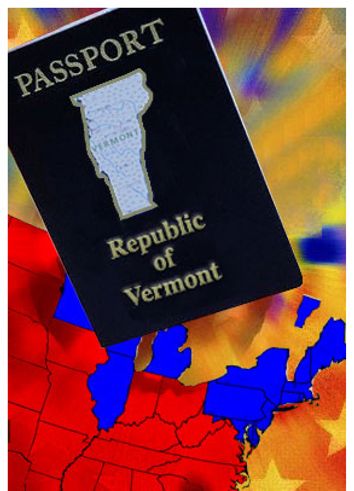
If their plaints have an epicenter, it is in Charlotte, Vt., in the wood-frame house of Thomas Naylor, professor emeritus, agitator, author, Rage Against the Machine fan, and founder and chair of the “Second Vermont Republic.” Naylor seeks the rebirth of Vermont as the independent nation it was between 1777 and 1791. White-haired, jowly and soft-spoken, Naylor describes his little band of “rebels” (the Second Vermont Republic boasts 125 card-carrying members) as “a peaceful, democratic, libertarian, grassroots movement opposed to the tyranny of the United States,” which has become “too big, too centralized, too intrusive, too militarized, and too unresponsive to the needs of individual citizens and small communities.”

Like the original red-state secessionists, it is to the founding documents — the Declaration of Independence and the Constitution of the United States — that Naylor turns to buttress his belief in the morality and legality of secession. “We are enmeshed in a global system of conquest and destruction in which Corporate America and the United States government manipulate and control the lives of millions of ostensibly free individuals,” he writes in his “Vermont Manifesto,” published in 2003. “How many Americans are prepared to die to make the world safe for McDonald’s, Wal-Mart, 747s, gas-guzzling SUVs, the Internet, Bill Gates, and the rest of the Forbes 400 richest Americans?”

Naylor comes to his radicalism by a not uncommon boomerang of contrary experience. He grew up in the 1940s in Jackson, Miss., one-time hotbed secessionist slave state, but hated the states’-righters who lamented the “war of Southern independence.” Naylor kicked his way out of Jackson and went on to found a software company that sold $50,000-a-pop programs to Fortune 500 companies. After he sold the enterprise in 1980, he claims to have never again touched a computer.

For 30 years, Naylor was a professor of economics at Duke University, where he became best known as the co-creator of a freshman course on the giant topic of the “meaning of life” and as the coauthor of the subversive, anti-consumerist book “Affluenza.” He also worked as a management consultant to corporations and governments worldwide — including, fatefully, the Soviet Union, in whose peaceful collapse Naylor happens to see the future of the United States of America.

If the dark comparison holds — the United States, according to Naylor, enjoys a similar far-flung geography, a one-party political system disguised in multiparty rhetoric, a corporate socialism that defies free markets, and a congressional incumbency as stable as the Politburo — then Vermont is the antidote. By this, Naylor means the Vermont of small towns, small farms, small businesses, local governance, grass-roots democracy, green activism: Vermont as the gentle Switzerland of North America (but armed to the teeth, as Vermonters enjoy hunting in the woods).

The push for the Second Vermont Republic is no anomaly. Today there are secession movements afoot in Hawaii and Alaska, both complaining, with some validity, that fraud and coercion forced their entrance into the union. In New York, activist and author Jason Flores-Williams, lately best known for his disruptions at the Republican National Convention, plans a New York City secession movement “as much Andy Warhol as it is Tom Paine,” he says, predicting his “secession parties” will become “the most happening cultural events in NYC, events that echo up and down the hierarchy.”

Flores-Williams might consider contacting the people at Republic of Atlantica, which imagines a seaboard megalopolis nation stretching from Boston to Washington, D.C. Three thousand miles to the west, the Republic of Cascadia seeks to comprise Oregon, Washington and British Columbia as the country “whose software is on 97 percent of the world’s computers.” The group’s Web site warns, “For too long have our people put up with indifference and condescendence from distant seats of power.”

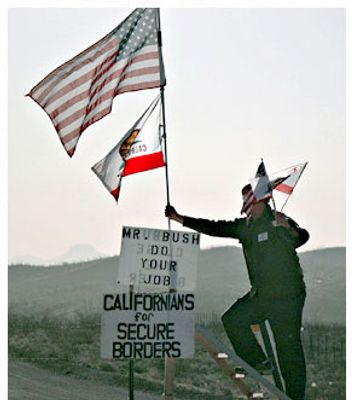
Most recently, on Nov. 15, a former evangelical minister from California named Jeff Morrissette announced the founding of the Committee to Explore California Secession, or Move On California. California as a nation, Morrissette notes, would be the world’s fifth-largest economy — larger than those of China, France, Italy and Canada. Among Morrissette’s “train of abuses” is the brazen piracy of the California energy crisis in 2000 and 2001, which resulted in $9 billion in overcharges to consumers — “economic sabotage,” as Morrissette describes it, engineered by Enron and other energy traders close to the Bush administration.

“I’m not sure that secession is legal or constitutional,” Morrissette says. “But I would certainly draw an analogy to the colonists and King George. The colonists didn’t ask. They simply declared it done.” He adds: “The legality and constitutionality are really a moot point. New nations are born by a declaration of independence.”

The Constitution is silent on the matter of secession — neither denying nor authorizing — and up until the Civil War, the silence was the object of tortured interpretation. It was axiomatic among many antebellum constitutional scholars, both North and South, that if the states were once sovereign entities that had acceded to joining the union, then they implicitly retained the right to rescind the treaty and withdraw. In essence, it was argued, the Constitution’s silence implied consent to the right of secession.

The 10th Amendment appears to back this argument. “The powers not delegated to the United States by the Constitution, nor prohibited by it to the States,” the amendment reads, “are reserved to the States respectively, or to the people.” In other words, states are delegated powers, not sovereignty. Sovereignty remained with the people of the state.

Antebellum thinking was typified by Alexis de Tocqueville’s assessment in “Democracy in America.” “In uniting together, [the states] have not forfeited their nationality; nor have they been reduced to the condition of one and the same people,” Tocqueville observed in 1835. “If one of the states choose to withdraw from the compact, it would be difficult to disprove its right of doing so, and the Federal Government would have no means of maintaining its claims directly by force or right.”

Secession was taught at West Point to young cadets like Robert E. Lee and U.S. Grant. Petulant states in the formative years of the republic habitually threatened it, with Yankees, and abolitionists especially, showing an early fondness for cutting loose from a union that increasingly catered to Southern slaveholder interests. In 1804, lawmakers in New England and New York plotted a failed secession movement, and eight years later, during the War of 1812, the threat to New England’s trade with English Canada was enough to prompt a second and wider Northeastern cry for departure, resulting in the official complaint of the Hartford Convention of 1815.

So it was that on the eve of the Civil War, in the spring of 1861, secession as a basic American principle inspired dozens of Northern newspapers to editorialize on behalf of the Southern independence movement. New York City’s newsmen were particularly noisy in their support. “If the cotton States decide they can do better out of the Union,” said the New York Tribune, organ of abolitionist publisher Horace Greeley, “we insist on letting them go in peace. The right to secede may be a revolutionary right, but it exists nevertheless.” The New York Herald offered: “Each State is organized as a complete government, possessing the right to break the tie of the Confederation. Coercion, if it were possible, is out of the question.” The day after Jefferson Davis was inaugurated president of the Confederate States of America, the Detroit Free Press warned: “An attempt to subjugate the seceded States, even if successful, could produce nothing but evil — evil unmitigated in character, and appalling in extent.”

The counterpoint — however unpopular in the press and on the street — had the benefit of being espoused rather eloquently by the newly elected president. In his 1861 inaugural address, Abraham Lincoln distilled the anti-secession argument to its essence. He claimed that no American state had the right to secede because (among other reasons) “no government proper, ever had a provision in its organic law for its own termination.” Somewhere out there, beyond the letter of the law, Lincoln said, the “organic law” of the government provides for the “Union” as an infinite entity, “indestructible” and “perpetual.”

In fact, a “perpetual union” established in 1781 under the Articles of Confederation, grandfather to the Constitution, was indeed rendered, in the words of the Constitution’s preamble, “more perfect” in the abiding document that was ratified by nine of the 13 states in 1791. “Perpetual union” was dropped from the Constitution’s final language because the sovereign states refused to accept the concept — in the written contract, anyway — of an indissoluble bond under the new government. But the real significance of “more perfect union” is hardly clear: What exactly did the founders mean by “perfection”?

“How do we know,” asks Columbia law professor Michael Dorf, writing in FindLaw, “that the ‘perfection’ of the Union required stronger rather than weaker bonds?” “A ‘more perfect Union’ between states presumably means they will be more perfectly joined,” says Daniel Farber, a professor of law at the University of California at Berkeley and the author of “Lincoln’s Constitution.” However, Farber admits that the question of the legality of secession of 1861 is likely unanswerable, again, because of the silence of the founding document. “My conclusion is that, on balance, the anti-secessionist argument is stronger,” he says. “But since the original Constitution doesn’t expressly speak to the subject, it’s impossible to prove this conclusion beyond a reasonable doubt.”

If current scholarship can’t answer the question, then we might look to the telling record of the rump Congress of 1861 in its legislation following the secession fever that spring. On March 2, after seven states had already seceded, an amendment was proposed to outlaw their departure. Today, Pepperdine University law professor H. Newcomb Morse asks the obvious question: “Why would Congress have even considered [Constitutional] amendments forbidding or restricting the right to withdraw from the Union if any such right was already [prohibited] under the Constitution?”

Adding to doubts about Lincoln’s logic was his odd use of the marriage metaphor in explaining the concept of the union. He blasted the kind of marriage that the South had in mind: “The Union, as a family relation,” Lincoln averred, “would not be anything like a regular marriage at all, but only as a sort of free love arrangement — to be maintained on what that sect calls passionate attraction.”

Sanford Levinson, a University of Texas law professor and constitutional scholar, takes exception to this line, for the argument can be made that free love among the states is exactly what the founders envisioned. “Lincoln’s view of secession seems clearly wrong,” Levinson wrote in a FindLaw column in 2003. “After all, few of us today support a view of marriage that demands its maintenance whatever the degree of unhappiness (or worse) it brings to one of the parties.” Levinson upends Lincoln’s metaphor, noting that “every marriage ‘constitution’ [has] a de facto secession provision. And for good reason: One suspects that many people would hesitate to get married if divorce were legally impossible.”

In the 1780s, the sovereign American states were indeed hesitant, enough so that three of them — Virginia, New York and Rhode Island — wrote escape clauses into their state ratification documents inexplicitly preserving the right to secede. North Carolina and Rhode Island at first refused to join the union, during which time the nascent nationalist government regarded them as foreign sovereigns.

As Levinson argues, the respectful treatment given North Carolina and Rhode Island “indicates that all the states were in an important sense sovereign when they entered into the Constitution.”

By dint of his iconic stature and the kindness of historians (and his assassination, which rendered Lincoln tragic), Lincoln’s claims of the illegality of Southern secession come to us pure, unalloyed and unassailable across the judgment of the ages. But Lincoln was not the moral paladin that the hagiographic textbooks portray him to be.

We might take a moment to consider the maverick history — some call it the real history, others denounce it as a blasphemic, spiteful revision — that places Lincoln as the first of the imperial presidents, an opportunist who in service of a vast expansion of federal power twisted the law in the name of what neoconservatives (who happen to be Lincoln lovers all) call moral clarity.

Loyola College professor of economics Thomas DiLorenzo, in his 2002 book “The Real Lincoln,” argues — and is much attacked for it — that Lincoln’s “moral clarity” was entirely fiscal. Lincoln as the inheritor of the Whig/Hamiltonian principles of centralized government, writes DiLorenzo, fought the war of 1861-65 not to abolish slavery or gestate “a new birth of freedom” but to erect high protective tariffs that would promote Northern industry (industry that bankrolled the Republican Party), while government would offer subsidies to companies building canals and railroads. Lincoln presided, says DiLorenzo, over the bloody birth of the American corporate-welfare imperium.

While DiLorenzo has his objectors, it’s clear from Lincoln’s own words that the blood of the Civil War was not shed, as popular convention would have it, in service of destroying slavery (which likely would have died a natural death from economic, technological and mass immigrant pressures). Responding to a New York Tribune editorial, which challenged him to emancipate the slaves, Lincoln, in the summer of 1862, wrote to Tribune editor Greeley: “If I could save the Union without freeing any slave I would do it, and if I could save it by freeing all the slaves I would do it … What I do about slavery, and the colored race, I do because I believe it helps to save the Union.”

Notably, the 1862 Emancipation Proclamation arrived just two weeks before that year’s gubernatorial elections, which lends weight to the suggestion that freeing the slaves was a political maneuver; after all, politicians do not make earth-shattering decisions on a whim two weeks before an election. The Emancipation Proclamation freed the slaves where they were already free, in the North, and freed them where it had no jurisdiction, in the Confederacy. It also had the effect of stirring up violent opposition to three Republican governors who were expected to challenge Lincoln in 1864. The governors were toppled from office by an electorate driven as much by racism as disgust at what appeared to be a dictatorial fiat.

And if saving the union was Lincoln’s sole purpose, then breaking the law appeared to be his method. One wonders what kind of union he hoped in the end to save. As DiLorenzo notes, Lincoln was the first and only president to suspend habeas corpus. He shut down hundreds of newspapers that preached peace or criticized his administration, arrested thousands of political dissenters en masse, censored telegraph communications, used federal troops to intervene in elections, even deported a congressional opponent. Church ministers too felt his heavy hand: They were threatened with imprisonment if they failed to include at the beginning of each service a prayer for Lincoln and the preservation of the union.

According to Edward S. Corwin, writing in 1947 in his book “Total War and the Constitution,” Lincoln probably “invented” the war-powers doctrine that has since provided such convenient legal cover for militarist ventures issuing from the White House. Oddly appropriate, then, that George W. Bush, announcing “victory” in his war, should have landed on the USS Abraham Lincoln. Following the attacks of Sept. 11, some news outlets, notably the New York Times, went so far, not incorrectly perhaps, as to dub Bush “Lincolnesque.”

Which brings us back to zealous Thomas Naylor and the modern-day secessionists. Unfortunately, they face a Supreme Court decision barring the path to disunion — the 1868 case of Texas vs. White, in which Lincoln’s ex-treasurer and court appointee Salmon P. Chase, who wrote the legislation that financed the Civil War, issued the judicial coup de grâce to secession. Chase’s justification in the highest court was fundamentally the same as Lincoln’s on the brink of war, and almost identical in language. Chase said that despite Texas’ having been an independent republic before joining the union in 1845, it had no right to secede. “The Constitution,” Chase wrote, “in all its provisions, looks to an indestructible Union, composed of indestructible States.”

Some observers question Chase’s objectivity, given that he was a war appointee and the war’s public financier. “There must have been an overwhelming fatefulness in Chase’s mind,” writes John Remington Graham, the author of “Constitutional History of Secession,” and an amicus lawyer in the failed Quebec secession movement in Canada during the 1990s. “The country [had] suffered a million casualties in combat, and had probably lost another four hundred thousand from starvation. This enormous conflict had cost something like three-fourths of the assessed value of all taxable property in the United States in 1860, and had multiplied the national debt fifty-three times in only four years.” Under the circumstances, Graham claims, “[Chase] could not write the truth, so he wrote something else.” Graham’s book is cited by Naylor in his “Vermont Manifesto,” and, it should be noted, endorsed by such Confederacy apologist groups as League of the South and Sons of Confederate Veterans.

The secession issue, however, was collateral to the issue at law in Texas vs. White, which at bottom concerned the legitimacy of state bond sales during the secessionist period of 1861-65. The secession question would have been directly considered in providing Jefferson Davis, president of the Confederate States of America, a fair and speedy trial to answer the treason charge leveled in federal court following his arrest in May 1865. (It was a treason, wrote Harper’s Weekly, “so towering, so sanguinary, so causeless” that the magazine, and many others, called for Davis’ death.)

But Davis was not tried. He was held for two years in prison and then released in 1867 on a $100,000 bond — paid for, in part, by none other than abolitionist Horace Greeley. Today, Davis apologists — he was the first “president,” they say, to appoint a Jew to his cabinet, and the only one to adopt a black child — assert that he was never tried because federal prosecutors feared losing the case.

In any case, Texas vs. White, as penned by Salmon Chase, serves as established law. However, Columbia law professor Dorf suggests that a loophole exists in the Chase decision: Texas vs. White may have made unilateral secession illegal but the door remains open to secession “through consent of the states,” as Chase wrote — what Dorf calls secession by mutual agreement.

Although the Constitution provides no method on how to effect this friendly goodbye, Dorf suggests the process of constitutional amendment, meaning a two-thirds vote in each house of Congress and ratification by three-fourths of the state legislatures, which ensures that a majority of the federalized states agrees to the departure of the seceding state. Whether this is doable depends on the graces of polities and politicians who fully realize that if one state goes, all could go — and the United States would then be well on its way to collapse. And, clearly, it’s not doable.

“Secession is not possible today without violence,” exclaims MIT’s Maier, the author of the acclaimed “American Scripture: Making the Declaration of Independence.” “To assume something different is mad. It’s to follow the example of the Southern secessionists who thought that they could just leave the union peacefully — and, nuttier still, get a part of the unsettled territory as a parting gift. It’s almost as crazy as the idea that once you topple a dictator, democracy happens, much as weeds appear on a plowed field. Isn’t it time that Americans began learning something from history? Or must we again bleed ourselves into wisdom?”

Naylor is undeterred. He offers that no state is more historically prepared for going it alone than Vermont, which he calls “the most radical state in the Union” in terms of town meetings and direct democracy. Vermont, Naylor says, was the first state to outlaw slavery in its constitution of 1777, the first to mandate “universal manhood suffrage,” and is currently one of only two states that allows incarcerated felons to vote. It has no death penalty and virtually no gun-control laws, yet remains one of the least violent jurisdictions in America. It has no military bases, no strategic resources, few military contractors. All three members of its congressional delegation voted against the Iraq war resolution.

Vermont is rural and wild, with the highest percentage of unpaved roads in the nation, the highest percentage of residents living in the countryside; it was the first state to ban billboards alongside highways. It is rebellious: It fathered Ethan Allen and his Green Mountain Boys and 200 years later elected Howard Dean. With its vigorous environmental-impact laws, Vermont fended off the depredations of Wal-Mart superstores longer than any other state; Montpelier is the only state capital in America without a McDonald’s restaurant. Following mock secession debates in seven Vermont towns in 1990, all seven voted for secession.

As it happens, Naylor in his fringe venture has found a rare advocate in the figure of George F. Kennan, the venerated former U.S. ambassador to the Soviet Union and architect of Cold War containment, who envisioned in disenchanted old age just such a dismembering of the United States as Naylor espouses. Kennan as early as 1993 observed that the country might be broken into nine republics whose boundaries serendipitously align with the likes of Atlantica, Cascadia, and the free republics of Alaska and Vermont. “There is a real question,” Kennan observed, “as to whether bigness in a body politic is not an evil in itself.”

When Naylor wrote Kennan outlining a map of New England that united Maine, New Hampshire, and Vermont, Kennan responded with a thunderous letter dictated from his sick bed: “I write to say that in the idea of the three American states’ ultimate independence, whether separately or in union, I see nothing fanciful … I see no other means of ultimate preservation of cultural and societal values that will not only be endangered but eventually destroyed by an endlessly prolonged association [with] the remainder of what is now the U.S.A.”

And should the “remainder” refuse Vermont’s peaceable request to separate — and the nation will — what could Vermont do in answer?

Naylor is a pacifist and will not take up arms, though he admits that Vermont, with its mountains and forests, and high gun ownership among an historically contrarian people, is ideal ground for a guerrilla insurgency. “This is a call for nonviolent revolt against the world’s global superpower by 608,000 people,” he says. “What will the superpower do? Will it burn off the sugar maple trees? Will it destroy all the black-and-white Holstein cows? Just imagine trying to enslave independent-minded Vermonters.”

Continue Reading Close

George W. Bush, the doubleplusgood doublespeaker!

In his interview on "Meet the Press," the president proved he has mastered the Orwellian art of duckspeak.

George W. Bush’s unplugged performance with Tim Russert on Sunday offered hope for even the dumbest of men: You too can become president of the United States.

Yet Bush’s apparent inanity conceals his immense talent as a political speaker. If one applies the principles of duckspeak to Bush’s performance, he is a doubleplusgood doublethinker. Duckspeak, of course, is the language celebrated in George Orwell’s “1984.” Characterized by mindless invocation and the repetition of slogans, it was the highest form of speech in Orwell’s nightmare demolition of the English language, Newspeak. Orwell wrote:

“Newspeak vocabulary was tiny, and new ways of reducing it were constantly being devised. Newspeak, indeed, differed from most all other languages in that its vocabulary grew smaller instead of larger every year. Each reduction was a gain, since the smaller the area of choice, the smaller the temptation to take thought. Ultimately it was hoped to make articulate speech issue from the larynx without involving the higher brain centres at all. This aim was frankly admitted in the Newspeak word duckspeak, meaning ‘to quack like a duck’.”

Loud honking sounds emanated from Bush as soon as the interview started and were most clearly heard after Russert pointed out the numerous times that Cheney, Powell, Rumsfeld and the president himself said there was “no doubt” that Saddam had WMD. “I don’t want to get into word contests,” Bush told Russert. Translated from the duckspeak: Words mean nothing.

As a public service, we take the time here to translate the most relevant portions of the president’s statements to Russert into duckspeak. Where quacks are noted in the translated text (as in “quack quack quack”), they signify portions of the president’s sentences that are mostly or entirely meaningless — connectors, pronouns and verbs that offer the vague appearance of logic behind Bush’s catchphrases and patriotic pap, the “mass of lies, evasion, folly” that Orwell elsewhere described as a “soft snow” covering up the facts. The catchphrases, representing the more cognitively developed portion of Bush’s remarks, have been left intact.

Tim Russert: On Friday, you announced a committee, commission, to look into intelligence failures regarding the Iraq War and our entire intelligence community. You have been reluctant to do that for some time. Why?

President Bush: Quack quack quack winning the war against the terrorists. Quack quack war against terrorists quack war quack hide in caves quack quack quack shadowy networks quack rogue nations. Quack good intelligence system. We need really good intelligence quack quack quack quack quack quack quack quack quack quack quack quack quack quack quack quack quack quack quack quack quack quack quack quack quack quack quack quack quack quack quack quack fighting this war on terror.

[Russert, noting that the Iraq intelligence commission will not report until March 2005] Shouldn’t the American people have the benefit of the commission before the election?

Quack gave it time quack didn’t want it to be hurried quack strategic look quack big picture quack war on terror quack dangerous world quack dangerous world quack war president quack war on my mind quack I see dangers.

The night you took the country to war, March 17th, you said this: “Intelligence gathered by this and other governments leaves no doubt that the Iraq regime continues to possess and conceal some of the most lethal weapons ever devised … How do you respond to critics who say that you brought the nation to war under false pretenses?

Quack weapons quack war against terror quack we were attacked quack every threat quack every threat quack every potential harm to America quack war on terror quack weapons quack suicide bombers quack funding terrorist groups quack dangerous man quack stockpiles of weapons quack capacity to produce weapons quack weapons quack capacity to make weapons quack Saddam Hussein quack dangerous with weapons quack Saddam Hussein quack dangerous with the ability to make weapons quack dangerous man quack dangerous quack a madman quack imminent quack imminent quack new kind of war quack no doubt in my mind quack Saddam Hussein quack danger to America.

In what way?

Quack have a weapon, make a weapon quack he had weapons quack he had weapons quack make a weapon quack weapon quack shadowy terrorist network quack Oval Office quack terrorists with airplanes quack harm America quack worst nightmare scenario quack terrorist networks quack deadly weapons quack strike us quack president of the United States’ most solemn responsibility quack country secure quack Saddam Hussein quack Saddam Hussein quack madman.

Now looking back, in your mind, is it worth the loss of 530 American lives and 3,000 injuries and woundings simply to remove Saddam Hussein, even though there were no weapons of mass destruction?

Quack life is precious quack sacrifice for this country quack our praise quack.

But —

Let me finish quack explain quack parents of those who lost their lives quack Saddam Hussein quack dangerous quack a madman quack a dangerous man quack make weapons quack soldiers who have fallen quack war against these terrorists quack great harm to America quack these young ones quack sacrifice quack free Iraq quack change the world quack historic times quack free Iraq quack children in our own country quack safer world quack hatred and violence quack enemy quack recruit its killers quack America quack responsibility quack responsibility quack responsibility quack responsibility quack freedom quack barbaric people quack Saddam Hussein quack mass graves quack responsibility.

Continue Reading Close

A plague grows in Brooklyn

Swarms of rats are wreaking havoc on my neighborhood -- inhaling garbage, popping up in toilets, killing trees, even skirting up my leg. Still, they enthrall me.

The rain came three weeks ago and flooded Gowanus, in the industrial flats of Brooklyn, N.Y., and the people in the neighborhood thought it would flush out the rats at last. The grain warehouses, the gun factory, the sweatshops, the garbage depots, the crumbling walk-ups, the dying hookers, the wild dogs roaming in packs, even the stinking Gowanus Canal, sat up and stopped and huddled a little in the blasting storm. The rats, who build bunkers in the empty lot across from my home, did not.

Fattened on the current budget crisis, where garbage pickup goes laggard and city exterminators turn deadbeat, New York rats are famous again, as they were in the crumbling 1970s: there are eight of them to every human, which places their number at around 60 million. Problem’s out of control, reports the New York Times. To bring home the point of this slow-summer hysteria, the dailies frontpaged the infamous tale of the rat firehouse in Queens, where the creatures quite simply took over the walls and beams, the very structure, and earlier this month evicted the firefighters. “We thought we were winning the war initially,” the fire chief told the Daily News, “but later it became clear that the rats are winning the war.”

Rats, it goes without saying, have caused mankind more economic and physical misery than any other pest in history. They are the slyest and smartest of humanity’s camp followers; wherever man has laid mortar and started towns, wherever he has civilized himself, the rat was there in tandem, a shadow order, thriving as we. Why the rat, and not the raccoon or the squirrel or the chipmunk? The rat was by far the most efficient in its parasitism, and showing much good sense he attached himself to homo sapiens, the planet’s top parasite. Like man, the rat was adaptable, creative, exploitative; he thrives in all conditions, living in barns, on rooftops, in sewers, ocean liners, trees, basements, and on the tops of 50-story buildings. Like man, the rat is theatrical in its mayhem, the Black Death being its finest production. And like man, the rat enjoys collecting useless glittery junk to its nest, stealing and hoarding coins and jewelry and key rings, anything that its beady eyes mistake for value. More impressive, rats each year destroy some 20 percent of the world’s food supply, by direct pilferage and indirect contamination.

The rats in Gowanus are terrorizing my lady. She cuts a vaudeville figure in the gauntlet to our door, with her Olympic leaps along the moving sidewalks, the way she suddenly charges into the streets and runs down the middle of the road against the traffic. She comes in pale and red-eyed, she throws her bag across the room, she threatens me physically, she tells me I’m a dirty person. She falls in a heap on the bed. It’s an ancestral horror, common sense after the thousand plagues of history.

I find the rats fascinating; I go out at 4 and 5 a.m., near dawn, to watch them build and fight, standing at 10, even five paces; they ignore me. I walk out of our apartment on Ninth Street late one night, past a garbage pile, and a startled rat slingshots from an overstuffed trashbag that leaks diapers and hotdogs. We dance in mutual evasion to one side and then the other, but the beast runs over my sandaled foot and up my leg to below the knee (claws hooking like toothpicks, not piercing the skin — nipping, rather), and in my head and stomach there’s the hot waxen feel of paralyzed terror: a rat cornered or startled will attack; he will pounce like a berserker, running straight up one’s clothes, tearing and gashing and snarling, his teeth hard like stone, constantly worked and refined, and a rat if he’s desperate can gnaw through brick, cinder block, aluminum siding, lead pipe in the space of minutes. What can he do to flesh? He spreads disease, leptospirosis, rat-bite fever, trichinosis, fleas, plague. I thought of an exterminator’s pamphlet I’d read on the powers of the thing: “Adept athletes, rats can leap three feet straight up and four feet horizontally. They can scramble up the outside of a pipe three inches in diameter, and climb inside pipes one-and-a-half to four inches in diameter. They can walk between buildings on telephone or power lines, and scramble on board a ship on its mooring lines. They can fall more than 50 feet and survive.”

My rat did a back flip off my calf and hurried into the darkness, and I drank heavily at bars for the rest of the evening, keeping calm. This was a Norway rat, the largest, meanest, dirtiest and commonest of the species in North America; also known as the brown, the wharf, the sewer, or the house rat, and to biologists as rattus norvegicus. He was 9 inches long — 16 counting his scaly tail — fat through his middle like an otter, heavy like a wet shoe, and colored like a brown paper bag soaked in vegetable oil.

The Norway rat bears young with awful vigor, between four and seven times a year, in litters of sometimes 20 or more, and its offspring prepare to breed as early as 4 months of age. Many thriving families were established in the lot on Ninth Street and Second Avenue in Gowanus. The bunker there was bustling, multi-tiered, with a dozen back doors and side entrances and escape hatches and well-worn paths in highway intersects, as nonstop in its hurry as the sweatshops or the gun factory across the street, which produces pistols for cops. The rats pass each other on the paths, they bump heads, shivering, exchange what might be anthropomorphized as a nod of recognition, even a salutation, and like New Yorkers everywhere make way scurrying to their respective holes. I once saw a black rat and a German shepherd mutt battling over a chicken bone, on a warm sunny morning. They splashed in puddles and the dog howled, the rat shot forward like a party favor and raked the dog’s nose. I can hear the rats, four floors down from my windows, squealing and making little hooting sounds in the garbage piles. They root and roll and slink and slide, biting each other, competing for scraps. Feeding time is the occasion for much social friction, the weeding of the weak, the establishment of hierarchies, where the top rats partake at leisure and the subordinates pick at the remains. In extreme cases, in periods of starvation, for example, the weakest are sometimes themselves eaten.

When the waters rose in the storm, I went out to watch the rats drown. The eye, when it hit, roared against the shoulders of the homes, blowing the water through the casements of windows, causing white-brown waterfalls and chutes and hose-like blasts from the walls of the shores of the Gowanus Canal, which sped in its ebb to sea, helped along by the wind and the overflow of the sewers. Bursts of lightning etched the rain, making the drops stand out. A man standing by the canal, watching, screamed to be heard over the blasts: “Never t’ought ya’d see Niagara Falls in Brooklyn, hein?”

The stretch of Ninth Street from Second Avenue to the bridge over the canal was soon under a meter of water, and where the road sagged to its lowest point, the water assumed the kind of untested dark depth where no one wanted to go. Cars were abandoned at crooked angles, sunk to their windshields. Nowhere else in South Brooklyn was the flooding so bad; true to its swampy nature, Gowanus was the catchment for the poisons of the highlands. In the air and in the great lake forming on Ninth were the smell of sulphur, old feces, old rot, bad whiffs; and the wind, when it turned, carried the sour news of tropical diseases. The force of the water tore open manholes and sewer covers, tossing them aside like tissue, and the tarmac was torn up and ground into slick chocolate clay and dashed against the walls of warehouses, where shirtless men worked frantically in the wide mouths of the loading, sweeping the water out in waves, sump-pumping their gorged basements. In years past, boys from the neighborhood have boogie-boarded on these floods.

In the rat lot, the torrid sewer water rose and rushed. On the warehouse rooftops, big black dogs barked. And when the storm had passed, whitecaps gone, the water on Ninth Street grew murkier in the afternoon light; the colors of the rainbow were slicked across it in oil. Little waves beat at people’s passing as they trudged up to their thighs, hugging the walls of the buildings, their feet emerging licked with dirt and toxic. The waters from the pond on Ninth Street ran away, leaving sludge, a creamy, sticky black scum that clung to boots and made a sucking sound when you stepped in it, the pulverized leavings of an hour of flushed Brooklyn toilets, and soon parts of the scum dried and turned to dust that kicked up against the wheels of passing cars. Trucks from the Department of Environmental Protection were seen circling, flashing their lights, milling, but a week after the deluge the black scum remained, soggy from new rain and exhaling its filthy breath over the people of Gowanus. Along its mucky edges rats trawled for dinner.

- – - – - – - – - – - -

The rat lot flourished thereafter, supplied with new water sources; I soon learned that the great Gowanus storm was nothing to the Norway rat, who, unlike the mouse, is a superb swimmer and can tread water for up to three days, pop up inside toilets, beat with ease against ocean currents.

Late this August, the owner of the lot, Mr. Mardig Kashian, hired a local man, Jose, to weed the garden, expose the rat holes and lay poison. Kashian, an Armenian-American with unruly white hair and a welcoming manner, had been slapped with extraordinary fines from the Department of Health, and he hoped to make a last stand with the rodents. Which of course was impossible, he knew, if surrounding homes made no effort to clean up the garbage left in plenty, uncanned on the streets. “People need to build a cage, heavy chicken wire; put all your garbage in the cage — cage the garbage!” he said, pointing out where the filth spilled over in the front yards of the tenements.

As we spoke, a rat fled under Jose’s foot, through the underbrush, and we turned to watch as Jose and his helper, a thin Hispanic man with no front teeth, threw pieces of brick at the scurrying, flitting, frantic creature; neither man spoke. Jose attempted to smash the rat with a broom, raising a plume of dust around his lined, bearded face. I told him to watch out: Rats will run up brooms like flags up poles and tear off your fingernail. Jose’s hapless helper climbed onto a window sill, frightened when the thing came at him, and again lobbed bricks and broken pieces of mortar and a bottle of Coca-Cola, which shattered. Jose swung again with the broom, snapping it in half; he cursed. Armed now with a shorter, wider, heavier stick, he smashed and smashed and smashed, leaping to one side and another like a whirling dervish, until he said “Aha!” with no fanfare, and reached for the lifeless creature’s tail, tossing it over the fence onto the sidewalk, where its bashed-in head flopped on the petals of broken glass.

“Sixteen pups every two weeks in a nest this big,” Jose said, out of breath. “These aren’t animals no more we talking about.”

Jose pointed out the stunted Ailanthus trees that grew up through the wire of the fencing on the lot, and that until just a few years ago, before the rats became legion, burst with healthy, heavy leaves in spring. The trees were dead, looking cartoonishly like the poisoned skeleton trees near toxic waste sites. Leafless, their arms were held up to the sky; the wood was desiccated and brittle and snapped at the merest pressure; the bark was gray like old chop-meat. Jose put his hands around the lower trunk of one of the taller trees, pushing and pulling; the corpse uprooted easily, crackling like paper, swinging side to side in the soil as if just planted, for the root had been destroyed, and now branches rained on Jose. “The rats eat the roots,” Jose said. “They kill the trees from underneath. Looks like we still got trees, but it’s all hollow inside.” He snapped a thick dead branch in half, weighed it in his palm. “See? No weight. Nothin’ there. Toldja these ain’t animals we talking about.”

Mr. Kashian, a professional sculptor, had stepped away for awhile to his studio, a drafty industrial structure down the block, and when he returned I buttonholed him on his strategy for the big win. He had considered pouring concrete into the warren, smoothing the lot; maybe tarmacking the space. A lot of money, he said. In any case, he remarked, it wouldn’t do any good; there were concrete lots all around us pockmarked with holes that boasted neat little rain-sodden piles of gravel and dirt where the rats had spit out their work, burrowing from underneath and above in constant joining of tunnels.

“Rat population is a function of food supply,” Kashian observed. “You’ll never get rid of the rats unless you get rid of the food.”

The solution, then, was quite clear, I told him. We must get rid of the people. They’re the unruly mob behind this food supply business. “Get rid of the people!” I told him, wishing I could have sounded a trumpet.

Continue Reading Close

Page 1 of 4 in Christopher Ketcham

www.salon.com/writer/christopher_ketcham/index.html