Christopher Noxon

Is my kid a jerk, or is he just 2?

My son bullies me, insults his mother and once punched an old man in the nuts. I know it's probably just a phase. But what if it isn't?

  • more
    • All Share Services

Is my kid a jerk, or is he just 2?

My son pooped on me this morning.

The pooping occurred at approximately 6 a.m. after the 2-year-old leaped into bed and suggested that he’d be most grateful if I got up, escorted him downstairs and turned on his favorite program, a quasi-educational cartoon about a bilingual girl and her pet monkey.

What he actually said was this: “Daddy, up! Dora show! Dora show now!”

On most days, “Dora the Explorer” is good for a solid half-hour of pre-breakfast calm. But not today. Today Oscar motioned to his midsection and said he “hurt.”

Woefully misunderstanding the situation, I kissed him on the head and loosened his diaper. At which point he tore off the nappy and grabbed hold of my leg.

And then he pooped on my foot.

This may or may not have been an accident. Looking up at me in the messy slow-motion moments that followed, his expression could only be described as satisfied.

I have two things to say about this. First: It is truly remarkable how tolerant of bodily waste one becomes raising small children. Before I became a dad, the news that my everyday routine would include being defecated upon would have sent me diving for a home vasectomy kit. It is some measure of how far I’ve come (or how low I’ve sunk) that Oscar’s outburst prompted little more than an exasperated moan as I backed away in search of industrial-grade cleaning supplies.

All of which is well and good — there’s no point getting overly worked up or grossed out over something so ubiquitous to family life that we parents simply call it “number two.”

The second thing I have to say is harder to reckon with. Because the truth is this mishap was entirely in keeping with the general climate of aggression, crankiness, impatience and determined messiness that has come to characterize Oscar’s personality over the last year or so. He demands. He resists. He screeches.

We’ve reached the point where I find myself seriously pondering the question: Is my kid a dick, or is he just 2?

Because you never know. As much as it goes against the current mode of progressive, project-management-style parenting, I take it for granted that some kids are trouble right out of the gate. They’re the preschool gangsters and playground terrorists, flicking boogers and insults at those they’ve identified as too weak to fight back. Just as some kids are born sweet-tempered and naturally gentle, others arrive as thuggish as HMO claims adjusters.

But heaven forbid you ever speak this basic truth among parents. Acknowledging a child’s dickishness is truly one of the last taboos of modern family life.

A child may have “behavioral issues” or “developmental challenges,” but the basic character of a kid must never be called into question. It’s always, “Cody must be tired,” or “Dakota needs a snack” and never, “Wow, Taylor’s kind of a prick.”

The trouble, of course, is that it’s exceedingly difficult to distinguish garden-variety assholery from the normal psychosis of toddlerhood.

Some naughtiness is entirely normal, I know. The pileup of parenting books on my bedside table assures me that kids between 13 and 36 months often experience “challenging developmental steps.” They’re testing limits, exploring their autonomy, learning to control their emotions.

One need look no further than the table of contents of the modern standard, “What to Expect: The Toddler Years,” to get a quick and terrifying picture of how toddlers operate. Whole sections are devoted to “antisocial behavior,” “caveperson language,” “crankiness,” “annoying habits picked up at play group,” “jealousy,” “biting,” “wall art and other destructive drawing,” “toothbrushing tantrums,” “coat combat,” “repeated ‘no’s'” and “impatience (now!)”

You’d never know it looking at him, but my son samples freely from the standard menu of misbehavior. In pictures he’s doughy and sweet with a mop of blond hair, big blue eyes and an irresistible grin. He couldn’t be cuter, really. Most of the time, especially when he’s at play, in the bath or asleep, he is by any measure the most perfect creature ever to grace the earth. Then he whacks you on the head with a spoon, laughs like a banshee and tells his mother that her new earrings are ugly and stupid.

Much of this nastiness is standard-issue obstinacy, but it mostly takes the form of an obsession with control. Control and honor. It often feels like I’m living with an embittered and incontinent samurai who must enforce his will and save face at all costs. As such, he’s ritualistic and rigid, demanding that I and not his mother unbuckle him from the minivan or that he receive one red and one purple Flintstones vitamin or that his diluted fruit juice go in the cup with the frog and not the one with the rabbit. Any deviation from the script is met with screams of protest and a flurry of little flailing fists.

We’ve tried discipline, distraction and even strict adherence to his demands, but the maddening fact is you never really know when he’s going to go ballistic. At an airport security checkpoint recently, he blew up when we removed his shoes and then found a new, more extravagant pitch of tantrum when we tried to put them on again. Later at a Chinese restaurant, he dumped his noodles on the floor and then ran among the tables, licking the tops of the Hoisin sauce containers. At a family barbecue last week, he greeted an elderly relative with a swift punch to the nuts (mercifully, he aimed left).

I wish I could say I take all this in stride, but the fact is it bothers me more than I can say. I’ve heard people without kids complain that parents have a blind spot when it comes to their own kids, that otherwise reasonable adults are only too happy to gush over the preciousness of their progeny while their little darlings run riot like English football hooligans.

I seem to have the opposite problem; instead of glossing over my son’s misdeeds (or, say, chalking them up to standard-issue tomfoolery), I latch on to them as terribly important signifiers of my kid’s true identity. Far more troubling than the chaos or general untidiness of parenthood is the ongoing agony of distinguishing passing phases from the first signs of what sort of person your child is and will forevermore be.

Never mind that his days are spent gnawing on blocks and smearing mucus across his cheek. Somehow, I can’t help feeling that he came in fully loaded, that his identity is complete and while he may get better at sharing his toys and using the potty, this is pretty much it. This is him. Behold my son, the dick.

No wonder so few parents are willing to acknowledge their own kids’ misbehavior. Doing so not only insults your offspring, it inevitably leads to reflection. For if my kid is a red-hot pig, what does that make me?

And the truth is I’m very familiar indeed with many of the despicable aspects of my 2-year-old. I too am often overwhelmed by a desire to kick and scream and punch creepy old strangers in the nuts. Like my son, I’m often irrational, hate being told what to do and cranky when sleep-deprived. But, really, who isn’t? Aren’t we all, on some deep and rarely acknowledged level, temperamental toddlers? We’re just better at hiding and managing it, thanks to helpful crutches like cocktails, reality TV and cardio boxing classes.

For now all I can hope is that my son finds some crutches sooner rather than later. He just turned 3, actually, graduating out of “terrible twos” and into a period rumored to be less traumatic and tumultuous. My two oldest kids are 6 and 8, and I like to think they’ve never been anything less than the sweet and mostly respectful darlings they are today. If I’m being entirely honest, however, I’m pretty sure I could recall a horror story or three.

None of which lessens today’s trauma. Developmental misbehavior may be a normal part of growing up, but pooping on your dad? That’s just wrong.

Irving the Snowchicken is coming to town

Forget Christmakkah and Festivus. Our interfaith holiday involves a magical rooster who fills the children's pants with presents.

  • more
    • All Share Services

I’ve never been particularly religious. I’ve got Canadian Quakers on my dad’s side and Midwestern Protestants on my mom’s, but growing up in ’70s and ’80s Los Angeles, whatever spiritual yearnings I possessed were satisfied via a consuming passion for “Star Wars.” My best friend Jimmy was an altar boy at a church where they prayed to a spooky guy on a cross. I was fine with Obi-Wan.

But then I grew up and fell in love with a Beverly Hills Jewess, and we got married by a cool Reform rabbi who, unlike my mother-in-law, didn’t mind that my first name began with the word “Christ.” And now we have three kids, who, by mysterious matriarchic law, became Jews the moment they touched down at Cedar’s Sinai. All of which explains how I find myself a big goy surrounded by Jews. My kids go to a school called Temple Israel, where they’re drilled in Hebrew and the demands of their religious calling (nothing too major, just tikkun alum — heal the world). At school, there’s a name for families like ours: interfaith. The three kids and the wife, they’re the faithful. I’m the inter.

All of which is fine, really. Even as I stubbornly remain nonchosen, I love that my kids are part of such a deep and durable tradition. I love that they’re soaking up the high value placed on learning and argument, jokes and food. I’ve even come to love Shabbat at my in-laws’ every Friday. And while I don’t think I’ll ever understand gefilte fish, and I’ve been to a few bar and bat mitzvahs that contradicted everything I believe about decency and goodness, on balance I have no regrets about being the flaming shaygetz father figure of a proud Jewish household.

Still, the interfaith equation does get complicated. The biggest hitch emerged in our carefree pre-parenthood years, back when our fiercest arguments were over where to get takeout. Even then, we’d hit a rough patch a few weeks near the end of the year. It was like clockwork. On the day after Thanksgiving we entered the Season of the Perpetual Bicker. The particulars are too boring to detail here, but let’s just say we experienced irreconcilable differences over a holiday whose name shall not be mentioned. Turns out my lovely bride not only didn’t celebrate this holiday but kind of hated it.

She was unmoved by the irresistible aroma of fresh-cut pine and unconvinced that decorating our very own miserable/sweet Charlie Brown sapling with glass balls and paper ornaments was a cultural, not religious, tradition. She failed to see the charm in my abiding love for Claymation Rudolph or the Mormon Tabernacle Choir holiday album.

I began to yearn for the tree, the cookies, the stockings. I had vivid sense memories of tiptoeing out of my bedroom in footsie pajamas, sneaking into the living room to behold the glittering, obscene pileup. As an adult, I couldn’t write off all of that. I didn’t mind ditching Easter and had no trouble donning a kippah every Friday or spinning a dreidel on Chanukah or reading aloud from that wacky Passover booklet about pestilence and frogs. But I found I couldn’t go the extra step of abandoning the holiday whose name shall not be mentioned.

I began discussing our holiday plans with the neutrality and good cheer of a Fox News pundit. While my fellow besieged goyim got fired up in defense of God and faith and family, I felt the righteous call to defend the sanctity of superficial crap. I never gave two shits about tinsel before I got married. Now I wanted to coat our house in it.

And so we ended up where all bickering interfaith couples end up: couples therapy.

My wife picked the shrink. She told me not to make a big deal out of the fact that the shrink was Jewish. What, we should waste our time with one of the three non-Jewish psychiatrists in L.A.? And so we spent six sessions tromping recklessly through a minefield known in interfaith circles as “The December Dilemma.” Never before have the emotional dimensions of a tangerine in the toe of a sock ever been so fully explored. I demanded respect for the tangerine. She demanded respect for going to the movies and eating Chinese food.

Eventually, we arrived at our bottom lines. No matter how superficial or secular the holiday had become, she argued, it was still Christ’s birthday, and my beloved just couldn’t be party to that. No tree, no mistletoe, no Santa. I took stock and realized … none of that mattered to me, either. I didn’t care about the trimmings — they were mostly tacky and meaningless anyway. What mattered to me, as both a grown-up and a parent, was the make-believe. When I boiled it down, all I wanted was someone magical to break into our house and leave us cool stuff.

It began, like all holidays and superheroes do, with an origin story. Late one night a few years ago, we told our children, a stranger appeared on our doorstep. It was a chicken, a Bantam rooster with pure white plumage and an impressive red crown and wattles. He was from the Snowy North. And he came with good news: He’d visit our family with gifts and good cheer every year on this night onward. All we had to do is write our wishes on a note and burn them before going to bed. He’d fly over our house, reassemble the ashes and then, while we slept, haul our goodies into the house and pack them into pants hung over the fireplace.

Every year the holiday gets more elaborate. That’s the thing about a customized holiday; since all the traditions were plucked from thin air, new ones materialize all the time. We now have a songbook of Winter Wonderday classics that includes a recording of “Born to Be Wild” with all-poultry vocals. While burning our wish lists, we now raise our voices in a song that includes a line written by 7-year-old Charlie: “Santa is fired from the job/ He gives presents like a slob.” We’ve also begun the custom of leaving out a tray of food near the pant-festooned mantle — Irving, the kids discovered, favors sunflower seeds and fruit juice. And we now go to great lengths to build a nest for Irving, the construction of which begins with a Winter Wonderhike to collect twigs and leaves, which we then stuff inside a ring of chicken wire (and which is mysteriously littered the next day with soft white feathers that look very much like they were clumsily extracted from an expensive pillow).

In recent years we’ve spent the evening with bowls of candy, frosting and cookie pieces, building entire encampments of Snowy North gingerbread chicken coops. And we’ve found that no Winter Wondereve is complete without a feast at Roscoe’s Chicken and Waffles, where we delight in the combination of maple-soaked fried dough and the sacrificial body of our host.

Friends and family are mostly supportive, but it has been suggested that Winter Wonderday may needlessly confuse our kids or expose them to ridicule from nonbelievers. One can only guess what the playground alpha boys and girls make of our kids’ wide-eyed reverie over the magical talking snowchicken who fills their pants with presents. I’m happy to report, however, that the kids take it in stride. To hear them tell it, our family has an exclusive contract with Irving, so it’s no wonder that other kids might not understand, or even be jealous. And instead of keeping quiet about the holiday, they embellish it — in their version of the myth, Irving works on an “ice farm” where all ice cream and popsicles are made and where he’s assisted by an army of fluffy white helper chicks. On the way to school today, my eldest son, Charlie, told me Irving selected our family over all others because he heard my wife and I bickering about the holiday all the way from the Snowy North.

Charlie is a smart, sophisticated third grader, but when it comes to Winter Wonderday, he still believes. He buried his doubts last year after obtaining what he believes is definitive proof of Irving’s existence. In the weeks leading up to the big day, we spent hours discussing plans to photograph or videotape Irving during his visit. The stakes were high, we understood. If the so-called Irving plot was discovered, our feathered friend might take back our presents and never visit us again. I rejected a proposal to stay up all night inside a hidden sofa cushion fort. Charlie accepted that we couldn’t justify the cost of a motion-activated video camera. And so we settled on a more straightforward strategy. Alongside the 800-twig-count nest, we left a note and a camera. “We want to see what you look like! We hope your feathers are sturdy enough to push the button!” And lo and behold, we awoke the next morning to discover not only a bounty of gifts but also a blurry but identifiable Polaroid self-portrait of a noble white chicken that could only be Irving himself.

The kids are 8, 6 and 2 now, and Winter Wonderday is much more than an in joke (no Festivus or Christmakkah for us!). Several other families join us each year. An old friend has even begun marking the holiday with his interfaith family all the way in Maui. And the kids have begun evangelizing to friends, pointing out all the ways Winter Wonderday is better than that other holiday. Nests are more eco-friendly than trees. Unlike Santa, who is so busy with his Coke billboards and shopping mall appearances that he often forgets presents and leaves behind a mess of chimney soot, Irving is courteous enough to enter through the (tinsel-decorated) dog door.

And perhaps, most important, pants are way bigger than stockings.

Continue Reading Close

Four square for grown-ups?

Childhood games like tag, dodgeball and rock paper scissors are being reclaimed by adults. Is there some deep societal reason why people are returning to kiddie fun?

  • more
    • All Share Services

 Four square for grown-ups?

I had a plan. It was a good plan, a solid plan, one I felt sure would outfox and overwhelm the champion. When the time came for our big match, I’d step forward timidly, my expression and stance a picture of submission. Maybe I’d twitch. Then with a go-ahead from the ref, I’d unleash a devastating assault.

Rock, rock, rock.

The mighty fist of rock, thrown three times to the exclusion of a single peaceful paper or crafty scissors — it was a reckless move, aggressive and obnoxious and sure to rattle the battle-hardened winner of the first annual $50,000 USA Rock Paper Scissors League championship.

That’s right: They’re now giving 50 grand to players of rock paper scissors, a kids game that’s mostly played to settle such high-stakes disputes as who rides shotgun. Ridiculous, I know. But I can’t help it — I feel an irrational attachment to any game that poses a negligible risk of injury and allows me to drink margaritas while playing it. So even though I hadn’t qualified for the tournament and had no chance of actually taking home the big money, I did the next-best thing: I worked out a deal to fly to Vegas and play the winner in a best-of-three showdown.

I’d always thought of rock paper scissors as a game of pure chance, so I was puzzled at the discovery of what is called “advanced RPS strategy.” Along with a bestselling strategy guide, self-styled RPS experts claim to possess mathematical and even spiritual techniques that can be used to read an opponent and beat the odds. “It’s like any great sport,” explained tournament promoter Matti Leshem. “When you’re well prepared and in the zone and totally focused, you can feel what your opponent is going to throw.”

Lacking the time or patience to develop the sort of Jedi oneness with the universe Leshem described, I settled for a quick primer on basic “combination moves” like the Scissor Sandwich (paper, scissor, paper) and the Fistful of Dollars (rock, paper, paper), before deciding on the balls-out gambit known as the Avalanche (rock, rock rock). He’d never know what hit him.

All that pre-game confidence was shaken, however, just before the match when I fell into a conversation with an RPS veteran who’d made it to the final eight from a field of 500. “If all your moves are set in advance, you’re fried,” advised Kristina Hartman, a 29-year-old pharmaceutical sales rep in a fetching white cowboy hat. Hartman claimed her IQ had been tested at 172, all the better for employing “profiling strategies” and “pattern algorithms.” Now the Mensa Cowgirl let me in on a secret: Any experienced RPS player would see my all-rock routine coming a mile away. My genius plan, it turned out, was a total rookie move.

I’d do better, she advised, if I made quick intuitive judgments in response to little things like my opponent’s demeanor (tense players throw rock), stance (arms held at side are a good predictor of paper), or even accent (Southern girls throw scissors). Then again, such signs might be “false tells” from advanced players who would also, by the way, be simultaneously sizing me up, running me through a “13-point inspection” described by the RPS guru Master Roshambollah, a former phone psychic and Arthur Andersen researcher whose only advice to me was, “Don’t throw paper first — everyone knows print journalists throw paper first.”

It was at that point, at the very moment when my pre-game certainty had crumbled away and been replaced by a complex matrix of guesses and second guesses that a tournament organizer approached and tapped me on the shoulder. The champion was ready for me.

By the time I got to him, Dave McGill looked like he’d just stumbled out of a heap of flaming wreckage. Which, in a way, he had — McGill had been playing rock paper scissors for six hours straight, egged on by his girlfriend and an endless supply of free Bud Light. In the sudden glare of cameras from NBC and ESPN, the 30-year-old bartender from Omaha, Neb., turned belligerent, cursing liberally and, astonishingly, dissing the game that had just put $50,000 in his pocket.

“Rock paper scissors isn’t even a sport,” he spat. “A sport is catching a football or getting punched in the face. This is ridiculous.”

Ridiculous? Was that just bravado meant to throw me off my game? And as we took our positions on either side of the official RPS referee, I watched the champ’s face harden, focusing on that small but essential quantity of skill (5 percent? 2?) that had helped him triumph through a grueling 14 rounds of play. “Engage,” called the ref.

And with that, the game was on.

- – - – - – - – - – - -

The specter of 500 adults competing in a televised rock paper scissors tournament may be disturbing — one local columnist took it as proof that “the apocalypse is here” — but it’s not, in fact, all that unusual. Rock paper scissors is just one of many childhood pastimes that have been enthusiastically reclaimed in recent years by adults who should have, by any traditional standard, outgrown such juvenile nonsense eons ago.

Remember four square? That recess favorite in which you bounce a red playground ball around a blacktop grid? More than a dozen teams now compete in a New England adults-only league. New Yorkers now relive the glories of their window-smashing youth in one of three adult stickball leagues. Jump-rope is the specialty of Double Duchess, a California group whose members do acrobatic routines dressed in Catholic schoolgirl uniforms. Then there’s dodgeball, the gladiator contest of the schoolyard set that has, in a strange sort of media feedback loop, become a near-exact reproduction of the semipro fringe sport depicted as absurd comedy in the 2005 Ben Stiller-Vince Vaughn comedy “Dodgeball.” There’s now an International Dodgeball Federation, an annual championship tournament and talk about introducing dodgeball as an Olympic event.

Easy to mock, absolutely. What’s next: Candyland endorsement deals, ESPN hopscotch, skipping footwear by Nike? Regarded in passing, such games look kooky at best, and at worst pathetic. I mean, really: Have we become so desperate to recapture some remnant of our carefree childhoods that we’ll ditch all vestiges of dignity the moment some geek in a SpongeBob shirt calls out, Olley olley oxen free?

But I’m not sure it’s as sad as all that. To be perfectly honest, I was weirdly thrilled to learn that adults were reclaiming games I remembered from childhood, even if not all my memories were fond. One never quite recovers from the exquisite pain of waiting to be picked for P.E. and realizing it’s just you, the chubby kids and the scab-eaters.

Still, I hadn’t actually played most of these games since I was a kid, and the fact that they’ve been simultaneously revived by adults mostly left me mystified. What was going on here? What were so many otherwise reasonable adults getting out of games designed to satisfy the pint-size capabilities of children? Weren’t these games mind-numbingly easy, or else so dependent on luck that winners were mostly arbitrary? And so I set out on a mission: to fan out across the country and go head-to-head with the most dedicated adult players of a few choice kid games. In so doing, I hoped to finally understand their appeal to adults, and along the way, heal some of the schoolyard scars from my own past. After all, I wasn’t a scrawny, asthmatic kid anymore. And really, couldn’t any reasonably in-shape, halfway cunning and sporadically intelligent adult kick ass in, say, a water-gun fight? Even, say, me?

- – - – - – - – - – - -

My double life as a water-gun assassin began with the arrival of a stack of “target dossiers” from the headquarters of StreetWars, a “watergun assassination tournament” that was having its inaugural run in Los Angeles after stints in New York, San Francisco, Vancouver and Vienna. Looking through the stack, one picture stood out. It was a blurry snapshot of a vaguely Matt Damon-ish character with a smoldering cigarette. He was local. He was smirking. And his name, if the dossier was to be believed, was Lane Kneedler.

That clinched it. Must. Get. Kneedler.

StreetWars is the latest, adult-geared incarnation of Assassin, a role-playing game that combines the strategy of hide-and-seek with the soft-core violence of paintball, and which has long been popular in summer camps and on college campuses. After studying my mark’s profile, I now had three days to track down this total stranger and use the water-based weapon of my choice to take him out. I was entering the game late, admitted as a “rogue assassin” to help thin a field that had started three weeks earlier with 200 players. As such, I had the luxury of not being a target myself. But I had to abide by the same ground rules that applied to all players — I couldn’t attack my target at work, on public transportation or in a bar; among their many other charms, kid games played by adults offer a fine excuse to hook up with a bunch of like-minded adults and get loaded.

Before heading out, I sought the counsel of StreetWars’ self-proclaimed Supreme Commander, a 30-year-old securities lawyer from New York named Franz Aliquo. My choice of weapon came first, Aliquo said; he favored the Flash Flood Super Soaker, with a shooting range comparable to some ICBMs. Far more important, however, was preparation. Surprise, he advised, is key. Some players spend days stalking their victim, learning their routines and even ingratiating themselves with friends before breaking cover and going for the kill. Others take a more dastardly and direct route, such as the TV director who learned his target was an aspiring actress. One call to her agent for an “audition” and she was as good as soaked. A simple water-gun fight it wasn’t. Aliquo and his disciples had taken a kids game and amplified and complicated it to the point where it more closely resembled jumping into a summer action flick.

Not being a TV director or someone with an enormous amount of free time to devote to surveillance, I knew I had to come up with something to get past Kneedler’s defenses in a hurry. Something I could use to my advantage. Something he’d least expect.

“Use my Brain Blaster,” offered my 6-year-old son, Charlie, scurrying up to his room and returning with a nifty little water pistol emblazoned with a pulsing plastic brain. He’d won it as a prize for being good at the dentist, dear boy. The gun might come in handy. But the boy, I realized, could prove very useful indeed.

I promptly grabbed my new accomplice and hightailed it to Kneedler’s work address, where we parked the minivan for our very first father-son stakeout. Our plan was to tail Kneedler when he left work and, as Charlie charmingly put it, “jump him” the first good opportunity we got. After a fruitless few hours, we headed out for some reconnaissance, casually pumping the lunch truck crowd for information. A co-worker eventually offered up a prime piece of intelligence: Kneedler, we were told, was home sick.

A half hour later we were in front of Kneedler’s apartment with a get-well bouquet. Crouched under a staircase, Brain Blaster at the ready, I watched as Charlie marched up to the front door with the flowers, glowing like a Hallmark spokeskid. As he rang the bell, I felt my finger twitch on the trigger and my heart swell with pride. My boy was a natural stalker.

But then — no one answered the door. He wasn’t home. It wasn’t until we got home and checked the StreetWars message board that we discovered the awful truth. Kneedler had looked out his window at work, made us as would-be assassins and sent his colleagues out to feed us a line. As much as I wanted to hate the guy — what sort of paranoid loser would go to such lengths for a water-gun game? — I was just as into it. And I had to hand it to him: Not only had we been spotted, we’d been duped.

I’d like to say things got better from there, but the truth is that subsequent attacks were even more pitiful. One night after a family dinner, I did a quick drive-by of Kneedler’s place and brought my 4-year-old daughter to tears after leaping out of the car screaming, “Kneedler dies!” He wasn’t home, of course, just like he wasn’t home the morning I mistakenly opened fire on his skinny Asian roommate. And Kneedler, damn him all to hell, lived on.

- – - – - – - – - – - -

I may be a terrible assassin, but it just so happens I’m an outstanding zombie. This I learned one balmy evening a few days later, charging through a public park with my eyes rolled back in my head and arms outstretched in the classic zombie pose, picking off one competitor after another. The game was Zombie Tag, a variation of the venerable kid game in which “it” is recast as a zombie who turns everyone he touches into fellow members of the undead.

As dorky and dignity-stripping as it sounds, tag is also, it turns out, a hell of a lot of fun. Yes, there’s some cringe-inducing make-believe involved, but once all traces of self-consciousness are stripped away, all that’s left is the engrossing, primal thrill of chasing down packs of other people and dodging pursuers hot on your heels. It can even get pretty rough. After my early triumph as a Zombie, I got reckless in a game of Octopus Tag, in which tagged players sit on the ground and flail at free players. Dashing away from a 40-something videographer, I wheeled into the path of a fellow Octopus, who snagged my passing foot and sent me skidding to the turf. A short while later, in the final stages of Caramel Corn Tag, in which the “its” link arms in a giant chain, I found myself cornered by a phalanx of advancing players, all my possible routes of escape suddenly cut off. So I did what came naturally: I crumpled down into a fetal position and let out what I hoped was a mature, manly whimper.

That’s the thing about adult tag: It may be fun, but it is in no way cool. I got an inkling just how uncool when I told a friend I was planning a trip to Kansas City, Mo., to play with the Tag Institute, a club devoted to the glories of all-ages tag. His reply: “God, that’s gay.”

Tag Institute founder Kate Schurman has heard it all before, but it’s a measure of either stubbornness or obliviousness that she doesn’t particularly care. A sweet-faced 26-year-old, Schurman loves tag like she loves Oscar the Grouch, old-school Popeye cartoons and Mr. Toad’s Wild Ride. There’s no kitsch or self-consciousness at work; she simply never outgrew this stuff. Schurman was working as the manager of a law office when she dreamed up the institute as a sort of weekly play date for grown-ups. Finding fellow adults who shared her enthusiasm took a bit of doing — even friends in a local dodgeball league scoffed — but pretty soon a regular crowd began showing up for the Wednesday night game. On the night I played, the group numbered about 30 and included a tattoo artist named Scott, a sensible soccer mom, her 9-year-old daughter, a few wisecracking college kids, and Schurman’s 53-year-old mom.

No matter that they all look like what one player called “escapees from an asylum or rehab clinic.” During an intense game known as Cougars and Horses, I found myself galloping and whinnying like a wild colt, in pursuit of players who were leaping and growling like big cats. Pausing to catch my breath, I noticed we’d attracted the attention of a couple of women out for a power walk, a high-performance cardiovascular workout that I’ve always enjoyed stopping to sneer at. But today, to my astonishment, the power walkers had stopped to stare at me, and not at all in a supportive, isn’t-that-cute way. It’s some measure of how fully invested in all-ages tag I had become that in that moment, I had to stop myself from hollering, “I’m not the freak — you’re the freak!”

- – - – - – - – - – - -

Hopes of redemption ran high on my arrival in Norfolk, Va., an unremarkable industrial port well known as a bustling Navy town and lesser known as a hotbed of adult kickball.

Here, at last, was a game I had some real experience playing. Back in the mid-’90s I fell in with a bunch of other floundering creative types who gathered on Sunday afternoons on a scrubby little league diamond to work off hangovers playing what might charitably be described as softball for dummies.

I can’t, however, pretend to be even remotely impartial about kickball. I adore the game, not only because I met a deeply funny, improbably available young hottie on one of those bleary Sunday afternoons; not only because I proposed to that woman by planting a diamond ring inside a kickball and dropping to one knee on home plate … but also because I happen to be a goddamn decent kickball player. At least I thought so, before I was given a spot on the lineup of the Tiki Titans, one of the best adult kickball squads in the country.

The Titans are one of 30 teams in the Norfolk area and one of 1,000 in the World Adult Kickball Association, an international league with an official line of merchandise, a lineup of corporate sponsors (Miller Lite: the official beer of kickball!) and, in a final sign of its maturity, legal troubles. (WAKA filed a copyright infringement suit in February against DCKickball, one of several upstart leagues attempting to muscle into the booming adult kickball market.)

This was kickball as I’d never imagined. There were pre-game drills, rosters, umpires, team chants and a fellow on the sidelines introduced as a “kicking strategist.” My other new teammates included a scrappy car customizer, a maternal real estate investor and an earnest cub reporter for a local newspaper. Others were classic jocks and military types, but looking around at the pitcher in the yellow afro wig and the girl at first base with the feather boa, I got the sense that most were the sorts of theatrical geeks and hipsters who never much cared for high school athletics but who still had a thing or two to prove on the field. “Three up!” hollered the 6-foot-7 team captain, an airline manager named Jeff. “Three down!” came the team’s thunderous reply. It was all very gung-ho, but also decidedly goofy. This was a team, after all, that competed in the national championships with matching purple Mohawks. In a misguided attempt to fit in, my pre-game warmup included the application of a thick coat of purple fluorescent hair spray.

Sadly, my new purple do did nothing to dampen the dawning awareness that I was no longer, in fact, a kickball badass. Which was quickly demonstrated on my first appearance at the plate with a girly pop fly back to the pitcher. Out in the field an inning later, I found myself protecting second base against a runner with a crew cut and exposed, bulbous biceps. He charged at me, huffing and puffing like a bull. Then, with all the bravery I could muster, I threw my arms forward, gripping the big red polka-dot like a battle-ax, and tagged his chest.

I’d done it — I’d tagged him out! My brief moment of glory was interrupted by a lot of shouting, which I didn’t particularly understand but which had something to do with how second base had somehow, in the course of my spastic maneuver, been moved a good 4 feet away from its original position. The runner was called out, but I knew the truth, a truth all-too-vividly expressed in Mr. Biceps’ furious mug as he stabbed his finger toward me and yelled, “Dipshit moved the bag! Dipshit moved the bag!”

And just like that the goofiness vanished and I was a scrawny, asthmatic fifth-grader, cowering before a kickball bully. I felt a tremendous surge of relief, then, when a freak thunderstorm cleared the field and the crowd of 300 packed up their gear and headed for a downtown bar.

Nursing a beer while my teammates got down to a serious night of partying and flirting, it struck me that I’d learned what I needed to know about the appeal of kid games to adults. Of course kid games are ridiculous; they can also be incredibly involving and competitive, as evidenced by the number of RPS Bobby Fishers and kickball Wilt Chamberlains, die-hards whose obsessions have driven them far through the looking glass, long past any trace of irony or nostalgia. But all in all, fun is the only real point of these games. Remember fun? That’s that engrossing, anarchic thing that began seeping out of most professional sports around the time of free agent drafts, merchandise tie-ins and doping scandals, the thing that comes so naturally to kids and that adults lost sight of the moment recreation became all about competition, self-improvement and status-accrual. After all, no matter how much money and meaning we invest in our tennis serve or whether the Patriots make the playoffs, we all know that none of it actually matters. All sports are ultimately ridiculous. The beauty of kid games is how they make a mockery of all attempts to take any of this shit too seriously.

- – - – - – - – - – - -

Back in Las Vegas, I considered myself blessed that a seasoned RPS vet had talked some sense into me before I trotted out my lame all-rock plan. Not that I had a better strategy, but as the game began I felt a weird surge of confidence.

Five throws later, it was over. I’d won.

All I can recall now was a moment before the deciding throw, zeroing in on the champ’s clenched jaw and suddenly recalling a bit of advice — tense players throw rock! — and in a move that briefly obscured a thousand childhood humiliations, laying down the open palm of paper.

Continue Reading Close

Mad Mel

Gibson has accused a lot of people -- including me -- of plotting against his controversial new "The Passion of the Christ." Is it brilliant marketing, or serious paranoia?

  • more
    • All Share Services

Mad Mel

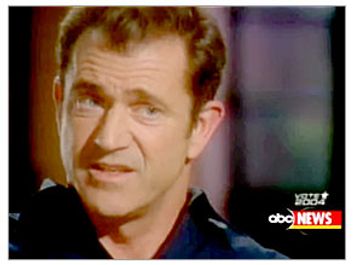
Mel Gibson is on the TV, squinting straight into the camera, talking about … me.

No, wait, this is even weirder: He’s talking to me.

And he’s pissed.

“You can say what you like about me,” he says. “I’m a public person, I suppose, although I don’t remember signing the paper saying I have no rights to privacy. You can pick on me. But like, if you start picking on my family while I’m out of town, get ready.”

He lets that last line hang, leaning forward and raising his eyebrows suggestively. Suddenly he’s Martin Riggs, the wild-eyed cop on the edge from “Lethal Weapon,” laying down the law to a wiseass perp (in a scene that usually comes just before the one where he lets loose a left hook that sends thug teeth flying like so many loose Chiclets. Um, honey, can you check the deadbolt?).

Gibson is appearing on Fox News in the first in a series of charged and bizarre interviews about his film “The Passion of the Christ”; the most recent was Monday’s hour-long exchange with Diane Sawyer on ABC. In addition to defending his movie against fears it will promote anti-Semitism, Gibson has used these appearances to complain about media coverage he says amounts to “character assassination.” While he kept the off-putting conspiracy talk to a minimum Monday night — he’s got a movie to promote, after all — he was never twitchier or more ominous than in his appearance on “The O’Reilly Factor” last year.

“When you touch this subject, it does have enemies,” he said. “There are people sent.” Asked if he actually believed a reporter was out to discredit his faith, Mel slipped back into the role of tough cop. “I think he’s been sent,” he said. “That’s the way it is. You’ve got to deal with these things. I’m a big boy and I can take care of myself.”

There it was: a shout-out from Mad Max. At the time of that appearance, I had spent the past two months working on a story for the New York Times Magazine about the film, about a church Gibson is building near his home in Malibu, Calif., and about the Catholic traditionalism inspiring both projects. Requests for an interview were first ignored, then dismissed, and then answered, though not exactly in the form I expected — I idly imagined it might involve strolls across the Italian countryside and late-night chats about faith and history and this whole crazy circus of celebrity. Instead, Gibson elected to go on “The O’Reilly Factor” to complain about a “media attack” on his pro-Christian message.

In addition to representing what surely ranks as the most surreal experience in my professional life — it just doesn’t get much weirder than sitting at home in your pajamas, watching a movie star trash-talk you on Fox TV — Gibson’s appearance on “O’Reilly” transformed what was at the time widely viewed as a curious vanity project into a high-profile battle in the ongoing culture war.

Watching that P.R. offensive unfold at the time, I was simply dumbfounded — I’m a lone freelance journalist who had approached Gibson’s publicist with questions that were bound to come up when he decided to make a movie that not only represents a huge artistic and financial risk but also an open effort to evangelize. Why not simply address questions about faith, family and history? Why send a $400-an-hour litigator nicknamed “Mad Dog” after me, the New York Times and a homeowner’s group that reviewed plans for his church? Why employ the same ignore-and-then-attack strategy with scholars who wanted a say in how the Passion was portrayed? Why limit screening audiences to political conservatives, evangelical Christians and Kathie Lee Gifford? Why offer this response to a critical piece on the film by New York Times columnist Frank Rich: “I want to kill him. I want his intestines on a stick … I want to kill his dog.”

Really, Mel: Why go ballistic?

Over the course of the past year, I’ve flip-flopped between two explanations. The first is that the aggressive approach is all part of a preplanned, Machiavellian promotional campaign designed to antagonize Hollywood and appeal directly to church groups and the NASCAR crowd — in effect, to treat “The Passion of the Christ” as a political candidate aimed squarely at the red states. Which makes sense, given that “The Passion of the Christ” is a self-financed project with no big stars filmed entirely in the languages of ancient Palestine. It was rejected by his home studio Fox and snickered at by industry peers. He himself called it a potential “career killer.” And yet it opens on Feb. 25 in 2,000 theaters; all signs point to a monster opening weekend and a long life in the industry paradise of DVD aftermarket. Church leaders are buying huge stacks of advance tickets, some for themselves, some just to make a point.

The violence that some find so objectionable — and at a certain point in the film, I did start to wonder if Gibson’s amorous depiction of torture might be inspired by something a little baser than spirituality — is sure to draw moviegoers who don’t get fired up by religion but love a gory crowd pleaser like “The Patriot” or “Braveheart.” Far from being a “Battlefield Earth”-style bomb, Gibson’s movie is poised to easily recoup its creator’s $25 million investment. Gibson’s production company Icon is already talking about starting an entire division devoted to religious films.

Mark Silk, a professor of religion and public life at Trinity College in Connecticut, recently completed a study of the media’s coverage of the film and the religious issues involved. His final report, titled “A Case Study in Media Manipulation?” details how Gibson fanned the flames of controversy while complaining about the heat. “Gibson appears to have been doing what Hollywood producers always try to do: get as much positive buzz as possible about his film before the public,” he says. “What’s different here, of course, is that the people he has gone to for such buzz have not been the usual collection of flacks and blurb-meisters but some of the most ideologically engaged media folks in the country.” Silk concludes, “To say this has been a press agent’s dream is to understate the case on a truly biblical scale.”

Then again, Gibson’s motivations might be much more, as they say, faith-based. As the premiere looms closer it seems increasingly clear that Gibson genuinely believes he has been targeted by shadowy forces aligned to subvert his message of salvation. The strongest evidence of this notion is the film itself, a rough cut of which I saw last week. “The Passion of the Christ” is indeed as bloody, grueling and ultimately difficult as Gibson promised it would be. (I clocked a climactic flagellation scene at just over 10 minutes.) Leaving aside the portrayal of Jewish clerics as vengeful villains and of Pontius Pilate as a sympathetic stooge who was essentially bullied into crucifying Christ - that matter is better debated by Bible scholars - the film is obviously the work of a man who believes he possesses the truth and that the truth has enemies.

I got a brief but intense tutorial in that perspective from Gibson’s father, Hutton, the 84-year-old author and activist who has criticized the Vatican for more than 30 years, writing books titled “Is the Pope Catholic” and a newsletter, “The War Is Now!” which rails against a pope he calls “Garrulous Karolus, the Koran Kisser.” Last November, Hutton Gibson invited me for a weekend at his home near Houston to share his revisionist takes on the pope’s declining health (“I think he’s playacting”), the scandals facing the Catholic Church (“The Vatican bred it all”), and historical accounts that 6 million Jews died in the holocaust (“I don’t believe that for a minute”).

In comments since that interview was published, Gibson has sought to downplay his father’s extremism while suggesting that the holocaust denials were somehow squeezed out of an innocent bystander as part of a sinister plot. “As soon as we started filming, that beacon of journalistic integrity the New York Times dispatched someone to go down there and take advantage of my father,” he told Sawyer. “Their whole agenda here, my detractors, is to drive a wedge between me and my father.”

I’ll admit that I was deeply anguished during the two days I spent listening to Hutton Gibson. But it wasn’t because I felt badly about “driving a wedge” between father and son, or about talking to a man who is, after all, as entitled to his opinion as the pope, a Supreme Court justice or anyone else active in public life at an advanced age. The source of my angst in Texas had nothing to do with Hutton Gibson’s age and everything to do with his worldview; as he laid out his alternate history of the 20th century, I had that gut-churning sensation familiar to any journalist witnessing something horrible — the shock of seeing it, laced by the excitement of being on hand to record it. And while I never assumed that Hutton spoke for his son, the film Mel produced and his comments about it certainly suggest father and son share a core of moral certainty that can alternately come off as righteous, uncompromising or pathological.

So which is it: Is Gibson a master marketer or a conspiracy-minded ideologue? After a year of reporting on and following this remarkable story, I still can’t decide. Gibson himself seems happy playing both roles. He said it best at the press conference at Rome’s Cinecitta Studios two years ago. Twirling a cigarette mischievously and looking for all the world like the wild-eyed cop who always gets his way, he told the crowd, “They think I’m crazy, and maybe I am. But maybe I’m a genius.”

Continue Reading Close