Cole Kazdin

Like a virgin

Having sex for the first time after amnesia was like the real first time, but without Journey playing in the background.

  • more
    • All Share Services

Like a virgin

I have always loved to be kissed gently on the neck, to lie in someone’s arms, to be made mad passionate love to — at least I think I’ve always loved those things. That’s what I’m told.

Things got confusing once I suffered a head trauma that brought on amnesia. Having sex after having amnesia was like losing my virginity all over again, except without the awkwardness and ineptitude of the real first time. And without Journey playing in the background.

In November 2001, I was seriously injured on the set of a low-rent TV pilot. The details of the incident are another story altogether, but suffice it to say that the show’s producers have secured a spot in that special room in hell otherwise reserved for the creators of “The Swan.”

I was left with an immobilizing back injury and — even more immobilizing — amnesia. I had always chuckled at the use of amnesia as a narrative device in films and soap operas — it always seemed a little contrived and unrealistic. My own experience was a combination of short- and long-term amnesia — I didn’t know my history and I often wasn’t aware of what was happening moment to moment.

Not having memory made me a blank slate. Without memory of my experiences and opinions, I had nothing to base any feelings on. I could be a Republican and not even know it.

“She’s a vegetarian!” one of my best friends screamed as she stormed into my bedroom, Paul Revere-like. “Don’t let her eat any meat!” she told Eric, my boyfriend of almost a year. No worries. I was lying in bed virtually comatose, anyway.

I knew some things. I knew Eric was my boyfriend, but I was admittedly indifferent to the fact. When someone told me something, the fact itself would come back to me, but without any emotion or attachment. When my friend told me I was a vegetarian, I thought: Oh, right, OK. I remembered the fact at that time, but not the feelings behind it. I might as well have been eating veal. I could care less.

Eric slept next to me that night and it was strange. Who was this guy? And isn’t it a little presumptuous of him to be hopping into my bed? Did he love me? Did I love him? What if we had had a giant fight the day before my accident — would I have known?

The next morning, he showed me pictures of a recent trip we took to Los Angeles to jog my memory — and perhaps to make a case for the fact that we were actually a couple (though you can do amazing things in Photoshop now). Eric and Cole at the beach, Eric and Cole at Mann’s Chinese Theater, Eric and Cole on the Ferris wheel at the Santa Monica Pier.

I didn’t understand the way he looked at me as I recuperated in the bed day after day. His expression was one of enormous concern and affection. Sometimes he had tears in his eyes. Why are you doing this? I wanted to ask. Why are you feeding me and taking me to doctor’s appointments and keeping my family posted and giving me my many medications?

And what was he getting out of it? Barely companionship. No dates, no great conversation or clever banter. How long do you hang around Sunny von Bulow in a Lifetime Original Movie before you bail?

Sex was out of the question, of course. Physically, there was no way I could participate. Even the slightest movement caused me tremendous pain.

After a few weeks I started to become more coherent. Though my short-term memory was still shaky — a lot of “Did I just take my meds?” moments right after taking them — my long-term memory was coming back. I was still in a lot of pain, but with medication and physical therapy and time, the healing process was beginning. Now, in bed at night, Eric could hold me. We could kiss and, like teenagers, we eventually graduated to light makeout.

I had forgotten what it was like to be touched, so every sensation felt like something I had never experienced before. I could become consumed with even the simplest kiss as I was discovering what it was like to express love physically. I was still confused a lot of the time and didn’t remember much. Had Eric been less sensitive, I’m sure he could have used it to his advantage (“Cole, you always used to love unprotected anal sex — trust me”). Instead, he was very patient and sweet and hesitant for us to do anything physical. Once we got to second base, then third, we stayed there for quite some time.

“I didn’t want you to do anything that was going to cause you pain,” Eric told me a few years later.

Months passed and the more I recovered, the more eager I was to rediscover what this whole sex thing was about. I wanted to re-lose my virginity. What an opportunity! How many people — aside from born-again Christians — get to lose their virginity more than once? And this time, I’d do it right. We’d have dinner first, at a real restaurant. I had my own home now. A great music collection. Candles. And no homework due the next day. Eric didn’t want to rush things. He knew — perhaps better than I — the pain I was in, the trouble I had sleeping, the confusion I still experienced. Whenever we were in bed, not having sex, of course, and I so much as winced he would stop everything: “Are you OK? What do you need?”

Not having sex became a joke itself. “Want to go home and not have sex?” I said one day on our way back from our weekly trip to the neurologist.

I was looking forward to it, but sometimes I would get nervous. What if I wasn’t any good? What if I had forgotten how? Was there a special way to do it? I hadn’t forgotten how to chew food, go to the bathroom. Would sex come back to me instinctively? Sex was a different kind of learned behavior, rooted in experiences that, at the time, I wasn’t able to get to. The high school sweetheart, the college soul mate, the trip-to-Rome soul mate, the mid-20s soul mate, the Brazilian guy, the other Brazilian guy. None of them existed. Was there a place in my brain where my memories and feelings were being saved in a box, waiting for me to access them once my memory came back to me fully?

One night Eric and I had — slowly, carefully — walked to a neighborhood restaurant for Greek food. It was difficult to sit up in the chair because of my back pain, so I tried to recline a bit in the booth. He let me have one very small sip of wine. I was happy to be out of the house and feeling very in love. Tonight was the night, I decided.

We came home, got ready for bed. I lit candles. I made a joke — something about my parents being out of town, something about “going all the way.” I put “Styx Greatest Hits” in the CD player and let Dennis DeYoung work his magic. “La-dy, when you’re with me I’m smiling. Give me whoa-oa-oa your love …”

“Are you sure?” Eric asked. Yes! We kissed and I felt alive with anticipation. What was it going to feel like? What was it going to be?

When we finally did make love, it was unlike anything I had experienced in my life — as far as I knew. It was strange and new, and the sensations were overwhelming and intense but it felt like home. It was perfect. And I began to weep uncontrollably. I was quiet, with tears streaming down my face the entire time. “Oh my god, are you OK?” Eric panicked for a moment, ever attentive. “It’s OK, it’s OK,” I reassured him. It was unbelievable. Indescribable, amazing.

Sex after forgetting awakened sense memories and desires in my body that I hadn’t realized were there because I had been spending so much time trying to tap into my mind. This night it was a joy to be out of my head, to savor this state that had previously been frustrating, of only knowing the present moment, of not knowing what I would feel next. I completely gave myself over to my body.

We don’t talk about it at all now, but I asked Eric recently how he was able to do it for all those months — to take care of me, put all of his own life aside, to be completely patient and loving with his invalid girlfriend. “When I think of that time,” he said, “I think of your injury. I don’t think of what I had to do.” I hoped that I would be so selfless if I were called upon like that.

“I wanted to take care of you,” he continued. “I didn’t really feel like there was a question. I was most worried about you immediately and also I was worried about the long term. I didn’t know how badly you were hurt or how much you would recover. I was angry at the people who did this — the producers. I was worried about how you were feeling, but I also wanted to reassure you because I could tell you were confused and disoriented.” He continued in his classic deadpan, “I was also confused and disoriented but I didn’t want to let on so I pretended I had it all together in order to trick you. Plus you were easy to fool because you were so dizzy.”

Now, I try to look past the pain and frustration and confusion of that time in my life and reinvent it as a great, dramatic love story. Amnesia is the crafty plot device that renders the busy and sometimes demanding New York woman completely helpless, with no choice but to surrender all control. She’s a virgin, of course. And it’s her first love.

Have yourself a horny little Christmas

Looking at the Abercrombie & Fitch catalog makes me want to buy their clothes, but I'm too exhausted from self-abuse.

  • more
    • All Share Services

Have yourself a horny little Christmas

Nothing says “Christmas” like a good old-fashioned circle jerk by the fire.

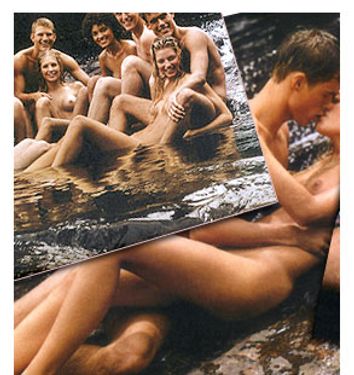
For all you squares who don’t know what a circle jerk is, turn to Page 88 of the Abercrombie & Fitch Quarterly, under the picture of wet, naked college kids and the heading “Group Sex.” (It’s difficult to figure out where you are in the book since most pages aren’t numbered.) It reads: “Sex, as we know, can involve one or two, but what about even more? … A pleasant and supersafe alternative to this is group masturbation.”

The challenge for me, when masturbating with my friends to the nubile nudies in the Abercrombie & Fitch catalog, is trying not to think about serious things like racial diversity; it tends to kill the mood. But because most of the models in the catalog are white and because a lawsuit has been filed against the clothing retailer for allegedly discriminating against a black woman who applied for a job at the store, it’s hard for the issue not to rear its nonsexy head.

Part “Barely Legal,” part vapid teen magazine, the Christmas issue of the A&F Quarterly is unparalleled in the amount of naked frolicking it uses to sell clothing. And considering the demographic it is trying to reach, it’s downright risqué. Besides the couples seemingly in the throes of sexual intercourse, there are subtler seductions. If you look very, very closely, somewhere around Page 100, you can find not-quite airbrushed male pubes on a well-cut frat guy, as he slides in the buff down a wet rock into crashing waves. It’s beyond anything our parents saw in Playboy.

“It’s very healthy to be free and be honest about it,” says Sam Shahid, an A&F board member, and head of Shahid & Co. in New York, the firm that designs the racy ad campaigns. The cover of the Christmas issue promises “280 pages of moose, ice hockey, chivalry, group sex & more.” There wasn’t a whole lot of ice hockey or chivalry, unless, by “ice hockey” they mean bare asses, and by “chivalry” they mean nipples.

One layout is of four giggling topless coeds, tanned and blond, sprawled across a plaid blanket in the woods, pulling down the boxer shorts of a freshly scrubbed muscular guy, with a Cheshire cat grin revealing Tom Cruise-like pearly whites. And his ass.

Then there’s a completely naked couple, making out, or having sex, on wet rocks. There’s Tom Cruise-guy again, naked by the fireplace, but for a strategically placed gift with a bow. And look! Two naked men (can 18-year-olds be called men?) in the river, standing barely far enough away from each other not to be construed as gay — though that’s how I construed it.

“There’s no such thing as being too sexy,” Shahid says. “You’re speaking to the kids. Everybody talks about sex all the time.” He says none of the sexual content in the catalog is meant to shock — though this comes from the same man who gave us the borderline kiddie porn ads for Calvin Klein years ago.

The A&F catalog regularly evokes plenty of outrage and numerous boycotts from Christian, conservative and parent groups all over the country. “Everyone has their own hang-up,” he says. “We think it’s beautiful and gorgeous and we’re not offending [anyone].” And he adds that most of the ideas come from the models themselves. “They have a great time and we don’t do anything that they don’t want to.” The “kids,” as he refers to them — almost parentally — pair up, form friendships, and sometimes have tears in their eyes at the end of the shoot.

But maybe that’s because they can’t find their clothes. In the catalog, the first sweater doesn’t show up until Page 122 and by then, you’re too tired from masturbating to shop. But I’m missing the point. The catalog isn’t about the clothes. Huh?

“How many plaid shirts can one have?” Shahid asks. He explains that they are selling the “aspiration and the idea.” He says Abercrombie & Fitch is “cool and sexy and very Eastern seaboard,” and when you buy the clothes, “your image in your head is: I’m one of those kids. I put one of those shirts on and, Oh! — I’m one of those kids. It denotes a particular feeling. There’s nothing wrong with it.”

There is something wrong with it, according to Brandy Hawk, the 19-year-old college student who filed the recent lawsuit in U.S. District Court in Camden, N.J. Hawk went to prep school and describes the A&F style as virtually her uniform; it was always a place she wanted to work. “It never really occurred to me that I’d be the only black person working there,” she says. She had an interview this past May, where the assistant manager explained that they were looking for their employees to represent “casual lifestyle, American youth, athletes, sorority girls,” says Hawk. When Hawk — an athlete with previous retail experience and a wide-open schedule — never heard from them again, she was mystified. She says a security guard at the store found out from the manager that she wasn’t hired because she wouldn’t represent the company well.

Hawk couldn’t believe that being black had anything to do with it, but when she found out about a similar lawsuit filed in California by a young Mexican-American man, she was heartbroken. This free and casually fabulous lifestyle that she and her friends had so loyally bought into suddenly didn’t want her. “I really took it as a slap in the face,” she says. “It’s knocking the wind out of me. It’s like your best friend doing something …” she pauses, looking for the right word, but can’t find one to convey the severity, “like your best friend doing something really bad to you.”

Hawk filed a complaint with the Equal Employment Opportunity Commission in June, and then, just last Wednesday, filed suit in U.S. District Court. When we spoke on Saturday, she said there had been no response yet from the company.

The cult of Abercrombie & Fitch clearly has some power over the youth of America. The store started in 1892 selling sporting goods. Ernest Hemingway bought hunting gear there in the 1950s. The brand had lost its way until Shahid and current CEO Mike Jeffries entered the picture in the 1990s. It emerged as the elite, young WASP, country club brand it continues to be today. The same kind of country club that perhaps doesn’t admit people of color. Today, it has more than 650 stores, which include Abercrombie & Fitch, Abercrombie for kids, and another store for teenagers, Hollisters. It’s less of a genuinely elite brand like Ralph Lauren, and more of a Middle American-mall version of what prep school is like.

The A&F models look like the rich kids at boarding school who drink too much and crash their parents’ expensive cars and, worst crime of all, wear those obnoxious “Co-ed, Naked Lacrosse”-type T-shirts. Or “Abercrombie & Fitch Ski Patrol,” or some vague “Athletic Department.” When I visit the store in downtown Manhattan, the salespeople look identical to the kids in the catalog — the same contrived cool, almost Stepford-hipness to them. I feel incredibly out of place. I suspect it’s because I’m over 30. I notice another suspiciously old person — a bald guy, alone. Maybe an abandoned dad. (“You’re embarrassing me! Stand by the sweaters!”) Or perhaps another reporter.

The A&F drones remind me of the group in high school of which I was never a part. While I was rehearsing “The Crucible,” they were at lacrosse practice. They threw wild, crazy parties while their neglectful, wealthy parents were out of town skiing. Maybe with the Abercrombie Ski Patrol. Years later, I developed an enormous prejudice and decided these kids were lame and often lazy and their successes were usually owed to their parents’ connections and legacies. For some reason that made me think of George Bush.

I look around the store. I notice two girls and a guy giggling in a corner. A surfer-type guy — or “dude,” as I believe they’re called — stands awkwardly by a display, holding a pair of pants. No one’s folding anything. They’re bad folders. Their dads totally got them in here.

I see an enormous poster of the Tom Cruise look-alike from the catalog. I place my hand on his waxed chest and say hello to his giant teeth like he is an old friend, or a guy I hooked up with during New Student Week. I have seen him naked, after all.

For all the suggestive images on the walls (PG-13 versions of the catalog’s R- and X-rated photographs), the store doesn’t feel sexy or erotically charged in any way. It feels like the gift shop for the sexy world you visited in the catalog. I felt as if I was in some guy’s messy dorm room.

I feel conspicuous so I decide to go into the dressing room to take some notes — not before picking out a pair of meticulously rumpled camouflage pants, red flannel pajama pants (if the catalog is any indication, no matching top exists; it must look better topless) and a tank top. I ask Surfer Dude where the dressing rooms are and he looks confused. He begins to point me in one direction, but then changes his mind and gives me overly elaborate directions simply to the other side of the store. Still not folding, I might add. I find the dressing room. The three gigglers, it turns out, are in charge, but they don’t notice me with my armful of clothes, so I walk past them and into the room where I write down my observations: useless popular kids … no folding … George Bush … no one really seems to work here, everyone is just posing.

I try on the clothes. The fatigues are way too big on me, as are the pajamas. But then again I suppose the pants are intended to be worn around the ankles. I think of the old pickup line: “I like your pants — they’d look great on my floor.” The shirt doesn’t fit well either, and I realize that these are poorly made clothes. They’re cheap.

When I call the Abercrombie & Fitch corporate office I run into more incompetence. I’m transferred incorrectly three times and finally put on hold. The song “Another Brick in the Wall” plays as the hold music. I hum along, enjoying the irony: “We don’t need no education …” I get through the entire first verse by the time the company spokesperson, Hampton Carney, picks up the phone. The name is so perfect that I wonder if it’s real or if it’s a character the company’s developed to talk to the press. Carney’s not so chatty and won’t answer any of my questions. He won’t comment on any of the current litigation. Nor will he comment on the company’s hiring practices, or a recent suit it settled for $2.2 million brought by employees who said they were forced to buy and wear A&F clothes.

I find my conversation with Hampton Carney as unsatisfying as the thin, faux-faded and rough-to-the-touch sweatshirt I pass on my way out of the store. The only thing Hampton Carney does say is that, though there have been complaints from various groups, customers have “responded overwhelmingly positively” to what he calls “adult material” in the catalog.

The catalog is popular. Circulation of this year’s Christmas catalog is 400,000. I see young women lined up at the cash register waiting to purchase it. It’s $7 and you have to be over 18 to buy it. Carney told me a photo I.D. with proof of age is required, but no one was asking for it at the store I went to.

Perhaps more shocking and offensive than the teen orgies in the catalog is the bad writing. At the beginning of the catalog is a letter with a somewhat facetious apology list to all of the groups who’ve complained in the past. Among them, Mothers Against Drunk Driving, who, in 1998, protested a Back-to-School issue that featured a “Drinking 101″ section complete with cocktail recipes. Also, to Asian American organizations that protested a 2002 line of T-shirts with slant-eyed faces and slogans like “Two Wongs Can Make it White” — referring to a laundry business. Abercrombie & Fitch received so many complaints that the company eventually pulled the T-shirts from the shelves.

The apology reads like the courtroom remorse of a frat guy-date rapist who gets off scot free and is then seen that night at the campus bonfire, drunk on his ass, high-fiving his friends and seducing some freshman girl. I think it’s supposed to seem clever and intelligent and spontaneous, but the rest of the catalog seems to me like it was written by a slightly drunk 17-year-old — or perhaps a 55-year-old who is trying to sound like a drunk 17-year-old.

A&F’s Hampton Carney says the writers are all in their 20s. There are interviews with Paris Hilton and cast members of the Fox teen soap opera “The O.C.” — a program whose substance, or lack thereof, merits a story credit at the top of the show, “Inspired by the board shorts of Abercrombie & Fitch.” There are film and music reviews. Words like “sex,” “pussy” and “masturbate” get pulled out and bolded in the middle of the page.

I leaf through the J. Crew catalog I just got in the mail to see what words it pull outs and bolds: “shearling,” and “bright stripes.” Which one would you rather masturbate to?

“I don’t think we’re used to seeing it [sex] commercially in a catalog,” says ad creator Shahid. He talks about his past work for Calvin Klein. “Calvin was a genius — in a fragrance ad, you couldn’t smell it, [but] he gave you a sense of what it is — sexy.”

Could it work for any brand? “L.L. Bean shouldn’t show a guy shirtless,” says Shahid. Then he changes his mind. “No, maybe it could. Maybe it would help! It would have to be the right L.L. Bean guy, with his wife, on the phone. Ed Burns. It’s got to look real and fabulous and everyone wants to be that.”

Brandy Hawk works at Old Navy now. She notices diversity among the employees there, where she didn’t really think about it before. She talks about other stores in the mall selling clothes like Rocawear, Ecko and other hip-hop-inspired lines. “I notice even though the models may be black, they still have white people working in the store.”

Lawyers for the nine plaintiffs in the California suit did not return calls, but according to a June press release, the plaintiffs, all people of color, were denied jobs, fired or allocated to the stockroom rather than the sales floor. Before this happened, Hawk thought that if she didn’t get a job, it was the company’s prerogative not to hire her. “Now I see how much of an injury it is,” she says. When you look at the catalog, or when you go into an Abercrombie & Fitch store, “it’s almost like an army — everyone looks the same, everyone dresses the same.”

Though she liked the clothes, she never understood the A&F catalog. “I wondered what they were trying to advertise,” she says. “It was like soft-core porn. I didn’t see the point.” She would rather have looked at the clothes, which don’t appear until much later in the catalog, and they are pictured on the page without anyone wearing them. Models without clothes followed by clothes without models. “I guess it’s supposed to be artistic,” she says. “Maybe it’s over my head.”

I look at the pictures in the catalog again, searching for a deeper, artistic meaning. Tom Cruise-guy just smiles back at me, his big, toothy, charming smile. He looks like he’s having too good a time to care.

Continue Reading Close

Scoring a husband

The author of a new book says that branding is as important as romance in finding a mate. Part 2 of "I'm Refreshingly Approachable! I'm a Two-in-One Shampoo! Marry Me!"

  • more
    • All Share Services

A few days later …

I keep repeating to myself that I am a unique individual — with thoughts and hopes and dreams … Still, I find myself unable to stop humming my name to the tune of “By Mennen” as I walk down the street. “Cole Kaz-din!” I sing.

Advertising works.

I walk down the street with a hop in my step. I am no longer Cole Kazdin, unique individual who is happy and usually confident but sometimes unsure — I stop myself mid-thought. Complexities, be gone! I am Cole Kazdin, Refreshingly Approachable!

I’m midway through the “Find a Husband” book, slightly disheartened by the idea that I have to strip away whole aspects of my being because they aren’t in my marketing plan, or aren’t wife-y enough, or can’t be sung to the tune of a deodorant commercial. I decide that’s bullshit, but I proceed in the interest of science.

Bearing in mind “Market Expansion,” as author Rachel Greenwald calls it, I “cast a wider net” and attempt to open my eyes to men I would normally pass over. I walk outside of my apartment building and take a long look at Chico, as if for the first time. Sure, he appears to have no job and he spends his days sitting on a stack of milk crates. And yes, he has been wearing a beat-up plaster cast on his leg for the three years I have lived here. But he always smiles through his greasy handlebar mustache and says “Hola” as I pass him each morning. Maybe the man of my dreams was under my nose the entire time.

Chico notwithstanding, the concept of widening your net is valid — especially for women who find themselves dating different incarnations of the same man over and over again.

I’ve never done a manhunt before in my life, but now that I’m “looking,” I realize just how many of them there are. After a girlfriend and I have lunch downtown, we run into two very cute 35-40ish men she knows. In the two minutes we chat in the street, one makes an offhand joke about needing a good woman in his life, as he gives my elbow a squeeze. Huh?

Since I do in fact have a boyfriend, I give off the scent than men love but not even Calvin Klein could bottle: Unavailable — a fragrance for women.

A few days later, after a creepy guy on Rollerblades tries to pick me up in line at the falafel cart on 46th Street, I decide maybe I appear too “Refreshingly Approachable” and maybe I should switch gears, to the more mature and comforting “Let Cole Keep You Warm.”

Greenwald tells me in a phone interview that she considers dating to be a numbers game — once you have your brand, the idea is to get it out to as many people as possible. For example, send beautiful note cards to friends, telling them you’re looking for someone wonderful to spend your life with. Go through your entire Rolodex — all personal and professional contacts — and tell them of your quest. This strategy “is accepted in other arenas,” Greenwald says. “Yet women are so reluctant to do it in relationships. If you were looking for a job, could you send out 100 résumés?”

Of course. But “husband” isn’t a position you’re trying to fill. I thought you were supposed to meet someone and because of who he is, you begin to imagine spending your life with him.

Greenwald has no patience for such romanticism. “The romance comes after the man is found,” she says firmly. “But not in the search process.”

Rachel Greenwald is a lovely, soft-spoken woman to talk to, but she is also savvy and strong and hardcore. And she is becoming a very wealthy woman. Her seminars sell out. Her bestselling book is being adapted into a movie (a romantic comedy about a woman who does the steps of the book and gets married). Match.com has asked to link to her Web site. They probably love her because she plugs them in the “Online Dating” chapter. She says she has no arrangement with them, or with the other companies that seem to pop up a lot in the book: Home Depot, as a place to meet men, or Starbucks — where she suggests you go instead of making coffee at home. It’s true and pretty obvious that your odds of meeting people are higher if you leave your house. In trying to follow her program, I’ve gone to four different Starbucks, four days in a row. I met no one, but I have taken a significant chunk out of my initial budget.

I am trying to mix up my routine a bit, as she instructs — take the long way home, walk into a man-friendly store I would normally pass. The other day I walked 11 blocks out of my way to take a different subway. I pass four gorgeous guys in a row. Then a fifth. This is fabulous! Then it hits me — it is fabulous. I’ve crossed over the rainbow and into Chelsea. The next two men who pass me are holding hands and I realize that nobody here wants to marry me.

I contact friends to try to get a sense of how many available men they are aware of. I go on a “date” with a woman — Greenwald suggests that women invest time going on “dates” with helpful, well-connected women who could potentially introduce them to single men.

By Week 2, I am exhausted. I’m tired of thinking about this stupid book all the time, and I have other, more important stuff to do. One night, I’m feeling particularly moody and probably PMS-y. My boyfriend tiptoes around me — “Um, Cole?” he asks sweetly but tentatively. “Is this a ‘step’?” I find that hilarious and we both start laughing. The poor guy is paranoid he will become a guinea pig in this story.

I could also be a little hungry, even though I feel like I’m eating a lot. I’m still doing the South Beach diet concurrently and I haven’t had a processed carbohydrate in my body for at least 10 days. I feel fantastic. I’ve probably lost at least five pounds and I’m in the skinny jeans. Jeans I can usually only wear when I’m depressed and not eating, or battling stomach flu. Of the two books, South Beach is a hit.

Because of all the energy the husband program takes, the book mandates time off. Indulgence. Finally, a step I can sink my teeth into. I promptly add $100 to my “husband budget” and get a pedicure and a new sweater.

This period of rest is merely preparation for the toughest part yet — Performance Review. Here, you evaluate your results: Are you meeting men? Are you in a relationship? It is here that the “Exit Interviews” are conducted. You have a friend or your mentor call men you have dated but, for whatever reason, stopped calling you. The idea is not to put them on the spot but rather get constructive criticism.

“I would be very civil,” says Todd Levin, a 30-something bachelor imagining getting such a call. “I would try to be as helpful and civil as I could be on the phone and as soon as I got off the phone, I would change my locks.” The whole idea creeped him out.

Like most of us, he has had postmortems after a relationship has ended — talks about what went wrong, regrets, and so on. But from someone you just dated once or twice, as Greenwald suggests, it’s ridiculous.

“It seems silly to ask someone’s opinion when it already hasn’t worked out,” he says. “My issues with [a woman's] appearance, for example, are subjective. Then you’re already trying to change yourself for something that hasn’t worked out.” But maybe if you keep getting the same feedback from different people, there might be something to consider.

Greenwald knows the exit interview isn’t easy, but she does say it’s necessary. In my research, I found not one man who was willing to go through with this, and not one woman who would allow me to call a man she’s dated on her behalf.

“Most people put in that position would be doing anything they could to get off the phone,” Todd says. A lot of times in dating, you just don’t connect with the person and that’s all there is to it.

“Doesn’t it make you sad?” asks my mentor, Jane, referring to the entire program. “It’s so sad, it makes me want to cry. That someone would be that desperate…”

Greenwald doesn’t call it desperate; she calls it proactive. And the women she caters to — women she instructs not to wear power suits on dates — are women in crisis.

“I have women who told me that years ago they never would have touched this program,” she says in an interview. “Years later they call me up and say, ‘I’m ready. I never thought I could make telemarketing calls to my friends. Now I’m doing it. I chose happiness over pride.’”

Because she’s a businesswoman, the idea of using a marketing plan to get men makes sense.

“I think it works for her because that’s who she is,” Jane says. “That’s how her mind works. If you’re not like her and you try the book, you’re going to find a guy that’s right for her. [Then] you’re supposed to live the rest of your life with someone you tricked.”

But Greenwald maintains that “program” marriages are some of the strongest she’s seen, and she goes to brises and christenings and anniversaries on a regular basis.

She is married, of course. She says she did the program years ago without even knowing it, which translates as: She didn’t exactly do the program — this is just her personal style. Greenwald says now that so many fields use a marketing model — healthcare, education — maybe one day 10 years from now, we won’t be able to imagine a time when we didn’t telemarket for dates.

“You shouldn’t need a focus group and a creative brief and flowcharts,” says Todd. “Whatever happened to romantic walks on the beach?”

There was a time when online dating seemed shocking and now it’s common and acceptable. Years ago, in a simpler time, Jane suggests, you lived someplace where everyone knew you were a single woman. There was a social network — the village or your church. “There was a system in place that took care of you,” she says.

Dating is moving in a colder direction. But Greenwald says that most of her clients are married in 12 to 18 months.

Of course her system works. If you focus on anything 100 percent of the time, there’s virtually no way it will not happen.

Which brings us to the final step — sealing the deal. This is expressly for people over 35. Greenwald admits she would never give this advice to a 22-year-old: Always Be Closing. If a man is truly in love with you and over the age of 35, she says, after six months he knows if he wants to marry you.

If you don’t want to marry him, you should break it off. If you do want to marry him and he tells you he’s not ready yet but he loves you, you have to pin him down or leave. In the book, Greenwald suggests a “catalyst” — something to accelerate your answer. Tell him you are contemplating a job in another state, that a new man has asked you out, or that your gynecologist has suggested you freeze your eggs. Something dramatic that will start the discussion.

“Why can’t you just be honest?” asks Todd. “If marriage is that important to you, say, ‘This isn’t going anywhere and I’m old.’ I don’t think it’s OK to say, ‘I have brain cancer.’”

He finds it frustrating that the book puts the business plan before feelings. “She’s not making relationships about emotion at all,” he says. “She’s proposing a dating world where people carry comment cards and suggestion boxes around their necks. The most unromantic thing in the world is to imagine myself as a commodity and that’s what you’re left with after you’ve stripped the emotions out of it.”

I can’t help thinking about something both Todd and Ken said to me when they were formulating my mock ad campaign — it’s an advertising in-joke, apparently, that advertisers create a problem that people didn’t know they had and then offer to solve it with stain remover, pain reliever, baked beans or whatever they’re selling. On the one hand, there are a lot of people who for whatever reason are single, and they want nothing more than to find a spouse. That’s fine. But there are also a lot of people who for whatever reason are a little lost and not sure what they want. And there are a lot of books that tell women in particular that there is something wrong with them and offer a 15-step solution. The most tangible result is that Rachel Greenwald — pleasant and smart as she is — is merely another person getting rich off them.

Incidentally, after two whole weeks on the South Beach diet, the skinny jeans are starting to feel loose, so I’m going to cool it.

I can’t imagine meeting someone this way or, for that matter, marrying someone this way. Could you ever tell him that’s how you landed him?

“What if I told a woman after six months that our meeting wasn’t an accident,” proposes Todd. “That I had been sitting in a van outside her house for six months” prior to that.

He has a point. At the same time, if you think of this book merely as a way to meet people, it seems harmless. The problem is, that’s not all the book purports to be. It sells itself as a solution. Simple, clear-cut and guaranteed. And anyone who’s ever been in love knows that those three little words have absolutely no place near the other ones.

- – - – - – - – - – - -

We want to make you a part of this series. What is the state of your union? Did you find the one and never look back, or has finding lasting love been a marathon of trial and error? Did you have a fairy-tale wedding only to watch things crumble once the reception was over, or have you glided along in marital bliss since Day One? We want to hear your stories of joy, romance, heartbreak and pain. After all, partnership, as we all know, is a complex concoction of all of those things. (Please remember: Any writing submitted becomes the property of Salon if we publish it. We reserve the right to edit submissions and cannot reply to every writer. Interested contributors should send their stories to marriage@salon.com.)

Continue Reading Close

I’m refreshingly approachable! I’m a two-in-one shampoo! Marry me!

In which the hapless author slavishly obeys a new bestseller that instructs husband-hunting women over 35 to market themselves like a brand.

  • more
    • All Share Services

Cole Kazdin is smart, funny, creative and very together. She’s the kind of woman I never thought would date me, but was, in fact, waiting patiently for me to ask her out the whole time. “Cole Kazdin: Refreshingly approachable!”

My creative team has been working overtime on my ad campaign. After I conduct extensive focus-group testing, my pal Todd Levin, ad writer extraordinaire, turns my pages of research into a catchy paragraph and some suggested tag lines.

“Cole Kazdin: What you want. What your friends want for you.”

“Cole Kazdin: Are you fucking crazy? I’m hot.”

“Cole Kazdin: As reflective as a wading pool, not nearly as shallow.”

I decide to go with “refreshingly approachable” because it’s nonthreatening and brings to mind a glass of nice, cold soda. And everybody loves soda.

This is one of the 15 steps I am trying from the not-so-cryptically titled New York Times bestseller “Find a Husband After 35 Using What I Learned at Harvard Business School: A 15-Step Action Program,” by Rachel Greenwald. Steps include packaging, branding, telemarketing and quarterly performance reviews, and I have agreed to give it a whirl.

In the spirit of full disclosure, I am close to but not yet 35, and I’m not looking for a husband. I have a wonderful boyfriend who is good-natured and supportive, especially when I come home and announce I am writing an article for which I have to go through 15 steps toward finding a husband. The book itself is a little frightening in its directness. And that’s just the cover. I look over my shoulder self-consciously in the bookstore as I pick up the book with “husband” in the title and a gold wedding band on the jacket. A man walks by and I reach for “The South Beach Diet” instead. I realize I must be in the “women’s insecurity” section. “The South Beach Diet” promises you’ll lose 8-13 pounds in the first two weeks. “Find a Husband” promises you’ll find a life partner in 12-18 months. I look up at the sign overhead and discover I am not in the women’s-insecurity section at all, but rather the “bestsellers.” Scary. I get both books anyway. “It’s a gift,” I tell the man at the checkout loudly. “Could I get a gift receipt?” I want to convey to him and everyone in line behind me that I am married and thin. This is too embarrassing.

I learn in Chapter 1 of Greenwald’s book, however, that this is entirely the wrong approach. The idea of her “Program,” as she calls it, is to let as many people as you can find know that you’re single and looking for a husband.

I decide to condense Greenwald’s 12-18 months into a two-week crash course. This will be perfect because I can also do Phase 1 of the South Beach Diet right alongside it. No bread, pasta, potatoes, rice, fruit or alcohol. Skinny jeans and life partner, here I come! The first step is to make finding a husband my first priority. I want so much to do this in earnest, but it’s difficult to keep a straight face. I can go so far as to make the experiment itself a priority for a couple of weeks and try — really try — to suspend my disbelief. Greenwald says that if you’re serious about finding a husband, you must also create a budget and separate checking account devoted to your quest — this money is for personal care, thank-you notes to people who set you up on dates, and the welding class at Home Depot you take to meet men (more on that later). I put $40 in an envelope and put it aside. That’s all I can afford right now. Today is the first day of my new life and I don’t miss bread and pasta one bit.

The following day I find a mentor. According to the program, your mentor should be a woman, preferably married, who will guide you and support you on your journey. You sign a written agreement with your mentor to contractually commit to meeting on a regular basis and working toward the common goal of finding you a husband.

“Are you crazy?” asks my good friend Jane. She can’t believe this book exists, much less that I’m going through the steps. But she owes me big because I wore a floor-length green ball gown in her wedding last month. She agrees. We sign the contract for two weeks.

Rooted in marketing techniques, the core of the program deals with packaging yourself in an attractive, wifelike way, then literally creating a brand for yourself and, finally, saturating the market with your ad campaign.

“I wish I could tell you that your inner self is what really counts,” writes Greenwald in the book. Which isn’t to say that you have to be a supermodel, but she says you should look the best that you can look. In creating the “packaging” (“look”) for my “product” (me), I approach male and female friends for feedback and criticism, as the book instructs. There is even a sample script to encourage honest answers:

Tim, I really value your opinion … I have decided that this is the year I am going to find someone to spend my life with. Before I start, I want to make some changes in my appearance. This is really important to me and I need your sincere opinion …

The feedback is surprising and also encouraging. Everyone tells me they prefer my hair long (no one said anything two years ago when I was walking around with a bob — the traitors!). They all independently agree that I’m smart, sexy and I laugh a lot.

“You have a big, beautiful laugh,” says my friend Charlie. “It’s more prominent than other people’s, but it’s part of who you are and I like it.”

“You’re feminine,” says my friend Amy. “Not in a flowery, riding a horse on a beach, tampon commercial sort of way, but a cool girl living in the real world.”

My friend Barbara tells me that if she had a girlfriend, she would want her to look just like me. But she did add that I obsess about my weight sometimes and I don’t need to and it can be annoying. I decide not to tell her about the South Beach Diet.

My mentor, Jane, tells me I’m stylish, but suggests that I go for a more sophisticated look, and to shy away from the more playful, young styles that I admittedly favor. “I think sophistication reflects where you are in your life and career,” she says. “Your personality is warm and playful. That, plus a more professional look is a nice package.”

Jane is right; I decide to work that in.

This all goes toward defining and then refining my “brand” to three words. Three words to sum up my entire essence. Sort of a “Know thyself” geared toward people who clearly don’t. This is surprisingly tough, though. “Fun, sexy writer,” is the first thing that comes to mind. But Greenwald would not approve. “Fun, sexy writer” is the girl you date, not marry. Barbara tells me that a good wife is a cook in the kitchen and a whore in the bedroom. “Whore in the bedroom” isn’t the right approach either.

I look over the notes of my friends’ feedback. They see me as a lot more confident and put together than I feel most of the time. “Warm, fun writer.” That’s a little cozier. I’d marry me.

Still, it seems so generic. I think I am these things, but it’s so nonspecific — it’s not who I am. “Even though you are tough and smart and a go-getter,” says Amy, “the other side of you is so gentle, generous and warm, wearing a little apron while serving a homemade meal.” I never thought of myself that way and I am touched. But she quickly shifts gears and offers her own pitch. She tells me that I am like two-in-one shampoo — the kind with conditioner mixed in. “Or, one of those salad spinner/spaghetti strainer combos.”

I appreciate her input, but I need to consult professionals.

Which brings me back to my creative team meeting. My friend Ken Grobe, another ad writer extraordinaire, notes that “Cole Kazdin” works perfectly to the tune of the “By Mennen” jingle. “Cole Kaz-din!” he sings. Catchy. In his 1983 advertising bible, “Ogilvy on Advertising,” David Ogilvy writes that the one reason Procter & Gamble’s strategy is so effective is that “They always promise the consumer one important benefit.” Ken suggests, “Cole — the perfect companion for you and your man-needs.”

Man-needs?

I fire Ken.

He sings the Cole Kazdin/By Mennen song, and I take him back.

Ken offers that my “current perception in the market” is as a woman who is attractive and successful, but maybe a little intimidating. (My firing him five minutes ago didn’t help this.) He suggests, “Cole has looks, brains and a great sense of humor, and she is accessible enough for me to have a chance with her. She’s the perfect girl for me to marry.” He says I can tailor this to different markets — men with beach houses, for example — by addressing a need they may have. Too many rooms in your beach house? Try Cole Kazdin. He also suggests playing off the double meaning of my name.

“Cole — she’s looking for a diamond,” he says. Too money-grubbing, I think.

How about “Let Cole keep you warm”?

I like that one a lot. It’s comforting. I think Greenwald would be proud — it’s sexy, but with wifely connotations. And it conserves energy.

“I’m trying as hard as I can to fit this stuff into a marketing format without it sounding funny, but it’s impossible,” he says. “It’s comedy gold.” It’s impossible because it’s dehumanizing to think of a woman as a tube of toothpaste or a can of soda. Even if she is “refreshingly approachable.”

I need to go to yoga class to clear my head, but then I remember that yoga’s probably not the best place to meet men. Do I have to go flyfishing instead? I call Greenwald. Shouldn’t I be doing the things I love? Like yoga?

“You can absolutely take the class next year,” she says matter-of-factly. “This is a short-term focus of 12-18 months. I’m not telling you to say, ‘I have always loved flyfishing.’ Walk in the door with the attitude that you don’t know anything and want to try it!” She is very positive and perky about the whole thing, and I realize that none of these ideas are remotely original. “Try new things” is hardly revolutionary.

I have a sudden epiphany that Greenwald’s extraordinary success with this book has little to do with her program’s validity. Rather, it’s due to Greenwald’s own brilliant marketing abilities. I decide to go to yoga.

Tomorrow: I take a look at Chico, as if for the first time

- – - – - – - – - – - -

We want to make you a part of this series. What is the state of your union? Did you find the one and never look back, or has finding lasting love been a marathon of trial and error? Did you have a fairy-tale wedding only to watch things crumble once the reception was over, or have you glided along in marital bliss since Day One? We want to hear your stories of joy, romance, heartbreak and pain. After all, partnership, as we all know, is a complex concoction of all of those things. (Please remember: Any writing submitted becomes the property of Salon if we publish it. We reserve the right to edit submissions and cannot reply to every writer. Interested contributors should send their stories to marriage@salon.com.)

Continue Reading Close

Remember “terror sex”?

What happened to the relationships kindled or rekindled in the aftermath of Sept. 11?

  • more
    • All Share Services

Remember

My sex-kitten friend Ruby has made some big changes since Sept. 11. No more long-distance relationships. No casual sex. No more trite “So, where do you work?” conversations at hipster pickup spots. It’s time for something meaningful and real.

“It’s hard for me to say if it’s Sept. 11 or just getting older,” she says. She’s only a year older, though. Before, she was considering leaving New York to be closer to a faraway boyfriend. Now he’s out of the picture, and she’s still here. She wants to be in New York and date a local boy. She’s still feeling vulnerable and needy: “Even the toughest sex-and-the-city little girl may need somebody to tickle her back and help her go to sleep. You can’t necessarily be tough and make it on your own anymore.”

What happened to “terror sex”?

It’s probably impossible to have end-of-the-world, earth-shattering terror sex for an entire year without serious chafing. And so, at some point between mid-October and January, we stopped. Even the Gold Crown Escort Service — “for the most discerning of gentlemen” — says that it’s been a bit slow lately.

Many New Yorkers recall the feelings of vulnerability, the need to connect with someone physically, the hot, sweaty sex that followed the attack on the World Trade Center last fall. It wasn’t sacrilegious; we just didn’t know what else to do. We clung to each other — just sometimes without clothes. Throughout the city were echoes of screams and cries of pain, panic, despair and passion all rolled into one giant force of uncontrollable emotion like none of us have ever experienced before.

Remember?

For those of us who did not experience the personal loss of a loved one, it has faded a bit. I ride the subway every day without hesitation. Phone conversations start with “Hey!” instead of a loaded, “Are you OK?” and end with “Talk to you later,” instead of, “Remember, I love you.” The planes flying over my house now are because I live 10 minutes from LaGuardia Airport, and not because fighter jets are patrolling the airspace around my city.

Until every news outlet forces me to relive the event Wednesday, I’m doing OK.

Until something else happens, it appears we’ve come out on the other side. Passions may have cooled, but we exchanged “terror sex” for something new.

“One thing I did notice is, around November I couldn’t trick like I used to,” says Stephen. He corrects himself wryly. “Well, I did, but it wasn’t with the same gusto. My heart wasn’t in it.” He admits to being “loose,” and before Sept. 11, found sex in the gay social scene readily available. He would go out at night with the intention of finding someone to have sex with. After the attacks, he says, he found more comfort in having conversations with lovers, emotional connections that he hadn’t experienced in that way before. He didn’t go back.

“In December, after going through this deep depression, I decided to grab life in this really clichéd, Sondheim-y way,” he says. Eat better, exercise more, take more chances emotionally. He met a man who felt the same and they became monogamous right away, which is rare for him.

“We both came together with a similar attitude, which was: I’m kind of sick of the nightlife, sexual rat race. Let’s be honest and let’s be really sexual and let’s get to know each other.” He says it’s the best sex of his life and the relationship itself is more rewarding than he could ever have imagined.

A result of 9/11?

“I think 9/11 got me there quicker. I know this is not an across-the-board thing that all gay men did,” he says. “I think I was headed there anyway.”

In a sense, the events of Sept. 11 and the weeks after felt like “dog years” for people like Ruby and Stephen — in one year, they aged seven.

“One of the questions is: Do [the events] accelerate what would have happened otherwise? Or do they create things that wouldn’t have happened otherwise?” asks Steve W. Cole, assistant professor of medicine at UCLA. It’s most likely the former. Cole studies responses to threat, and he coauthored a study published this year in the Journal of Family Psychology about the aftermath of Hurricane Hugo in 1989. Following Hugo, birth, marriage and divorce rates all went up. The closer people were to the disaster, the more it affected their lives. “The energy behind these kind of events seems to come from a person’s sense of being impacted or feeling threatened,” he says.

Similar predictions followed the attacks of Sept. 11: more marriages and a baby boom. It’s too early to say if they’ve come to fruition. The only baby boom we can be statistically sure of happened at Parrot Jungle in Miami, where 13 Caribbean flamingo chicks were born this year. According to the Miami Herald, that was more than had been born there in the last 10 years. And while there do seem to be a lot of new human babies this summer, July and August are statistically big months for births anyway, according to the National Center for Health Statistics. Most experts agree that the baby-boom theory is probably a bust.

“It’s also possible that we’re going to be seeing less dramatic impact in New York just because of the kind of people New Yorkers are,” Cole says. He doesn’t mean that in a pejorative way, only that New Yorkers are different. They’re not the classic, suburban resident; not as many are married; there aren’t as many kids. “It might not be clear to us right now how it’s going to be different.”

“People try very hard to normalize life,” says Pepper Schwartz, professor of sociology at the University of Washington and author of many relationship books. “An animal just can’t stay in a state of fright all the time — it starts to unravel us.” While she guesses that there may be some warming up around the anniversary, from what she’s seen, people are back to normal.

Many relationships that started around or because of Sept. 11 have since dissolved.

“Everyone needed a hug, and I never got my hug,” says Gene, not really referring to a hug at all. “And a few weeks after that, I met someone else who had never gotten her hug and we slept together on the first date.” By January, they acknowledged that under normal circumstances they’d probably be friends, not lovers, and the relationship ended.

It’s not necessarily a bad thing. “Even so-called meaningless sex isn’t meaningless, because it’s meaningful to you,” says Schwartz.

Susan got into bed with her estranged husband. They had been trying to work things out and Sept. 11 sealed the deal — sexually. It was beautiful, passionate sex, and it made her feel so incredibly good, and so close to him. Now they’re divorced. “He’s a cock-sucking asshole idiot who’s really cute and the father of my children,” she says. She’s had it with terror sex. “I want more than sex now. I either want to be alone and have a relationship with myself or have a full-blown relationship.” She worries more about the sex lives of her two daughters, 17 and 20. “I’m 55 years old, and I know I’m going to die,” she says. “But I look at my children and think: [if I were them] What is the incentive to do my best and be my best? Whereas they might have been careful before, now: What the fuck?” both emotionally, and with regard to safe sex.

“As the city started getting back to normal, a lot of people realized the connections weren’t based on fate, but fear,” says Ruby.

For many couples who were already together, the fear surrounding the attacks got them over the fear they were experiencing in the relationship.

“For people who [had been broken up and] got back together around that time, it strengthened them,” says Ruby. “It was a very telling time.”

“It’s strange, but it took away the fear I had,” says Jane, who had begun to date a man three months before the attacks. “I was just afraid to be in a relationship.” She needed more time, he was younger than she was, but all of that fell away quickly.

“There’s not much left to hide when you’re that vulnerable with somebody,” she says. “It’s completely different when you’re having sex in the context of a tragedy like that. Something shifted and it never went back.” It was a defining moment in their relationship. They started talking about future plans: Do you want kids? He had asked her in August if she would spend Thanksgiving with his family and she put him off, thinking, “Maybe next year, if we’re still together.” When he asked again after Sept. 11, she said yes without hesitation.

“I think it was me realizing how steady he is and how much I could lean on him,” she says. “That was always true, but I realized it because of the circumstances. If we can get through this, we can get through anything.”

“You have to face your fears when you plunge into a relationship,” says Stephen. “And you also have to face your fears in reckoning with Sept. 11.”

The political response, Cole noticed, was to get back to normal right away, to go to the mall and buy, which “adds a wrinkle to people’s normal healing processes.” It takes longer than most of us are accustomed to, “months for the system to absorb and deal with everything, and it doesn’t always happen in a conscious way,” he adds.

Sexual healing made more sense. “Hopping in bed is a lot more compelling than going to the mall. There’s no ash falling on the mall,” Cole says. “I can’t think of a more compelling or safer alternative. It’s nature’s antidote for absorbing a sense of threat.”

One year later and we still don’t know what the real threat is or if we’re going to be bombed again. “At the moment,” says Cole, “nobody has this enduring sense of security and happiness that most of us had before.”

Sara’s feelings of appreciation and gratitude for her husband were always there, but were highlighted after Sept. 11. Reflecting on the past year, she doesn’t think the attacks have influenced her relationship. “I do think I’m more conscious that things get taken away,” she says. She always got nervous when he traveled, but now she notices it a little more when he gets on a plane. And she now feels more strongly about having kids. “I have this weird, freak-out fear that he’s going to die. God forbid anything happen to him, I want to have something left over.” She pauses to regroup. “You’ve got to keep going. You’ve got to keep strong.”

There must be a fire near my house, because a smell just wafted through the window — indescribable but totally recognizable. It reminds me of that World Trade Center smell that we lived with for weeks. Burning rubber, metal, flesh, paper, electrical wires.

Ruby gets annoyed with her friends in California — they don’t get it. “I could smell it. I had to show I.D. to National Guardsmen to get to my house.” She stops for a moment. “There were two weeks where you’d look at people on the subway and make eye contact. People were helping mothers with strollers down the stairs.” No longer. “We’ve gone back to the way things were and that’s fine cause that’s what New York is.”

Continue Reading Close

Dr. Bachelor

The editor of Psychology Today has a theory that you can learn to fall in love, and he's using himself as a guinea pig of passion.

  • more
    • All Share Services

Dr. Bachelor

If Robert Epstein’s experiment is a success, he will fall madly in love. He hasn’t found her yet, but he’s confident he will. The pair will be expressive, trusting and committed. They will vow to attend to each other’s emotional and sexual needs, and they’ll even forgive each other if the whole thing ends up not working out.

What does he know that we don’t? Epstein, the editor in chief of Psychology Today, recently published an editorial in the magazine searching for a woman who would be willing to fall in love with him. The two would read up on love, meet with counselors, learn to fall in love with each other and write a book about the process. If all goes according to plan, by the end of it he’ll have a steady girlfriend and a book deal. He swears it’s in the interest of science.

What makes him different from “The Bachelor” on ABC is that Epstein is attempting to prove a hypothesis that he believes the rest of us can benefit from: Falling in love can be learned.

Though he admits that falling in love doesn’t necessarily mean finding a lifelong mate, he’d like both. “I would love to find love, and stay with this person and marry this person,” he says. Maybe even have children, he adds. Epstein, 48, has four children from a previous marriage. He believes that through the course of his experiment, he will prove that it is possible to learn to fall in and develop true and lasting love — and then bottle it, and sell it to the rest of us.

“We’re very stupid in our society,” he says. “We allow in this culture anyone to get married even though they may be completely ill-equipped.” He believes that the way we go about it now sets us up for failure.

“The way we currently look at love is pretty hopeless and pathetic,” he says. “It says, ‘I have no control. I have to stumble on The One, and if I don’t, I’m just out of luck.’” Though he’s not proposing the idea of arranged marriages for everybody, he looks to them as evidence that our system of love is flawed.

“We do things the opposite. We start out with a passion that disappears. They [cultures with arranged marriages] do it with social support and over time learn to love each other very deeply.” He says we confuse love with lust in this culture. “We date people even if they’re not available,” he says. “We will certainly date people if they’re not suitable — we’ll date them anyway. Because the magic is supposed to overcome any hurdle and it really doesn’t work that way.”

He thinks we should swap the mystery and the chemistry and the je ne sais quoi that drives us toward each other for a more methodical approach. Enter the “love contract.” Conceived by Epstein, written in a cursive computer font and garnished with clip-art hearts, the love contract is a document both parties sign and agree to honor.

In signing Epstein’s contract, the couple pledges to communicate well, express their feelings freely, trust each other, have fun together and, “most important of all, to love each other with a love that is genuine, deep and ever growing,” it reads.

Sex isn’t referred to plainly, but there is a sentence about being “aware of each other’s needs and wants, and to know how to satisfy those needs and wants.” Epstein says that sex falls into that clause.

But there’s something to be said for not knowing about someone’s needs ahead of time. I don’t know how willing I’d be to indulge a man’s leather-glove balloon-fetish fantasy if he revealed it at the outset as one of his “needs” I would be asked to meet down the line. When I first moved to New York, I had dinner with a man who, over linguini marinara, told me that he liked anal sex. He thought it would be good for me to know this for a time down the road if we became a hot, intimate couple. We never made it to dessert, much less anal sex.

Epstein’s love contract presents precise terms so there can be no misunderstanding of either party’s intentions.

“What this says is: We’re available, we seem to be more or less compatible, let’s engage in a process which commits us to learn to love each other,” he says. He plans on developing the process as he goes along, but one element would be regular couples counseling. Why wait until the relationship is falling apart? he says. Start counseling from the get-go. The two would learn communication skills, “get to know each other intimately, to put aside old baggage and overcome traumas.” Epstein and his yet-to-be-chosen betrothed would also go on weekend retreats, exercises like “trust falls” — you fall back, I’ll catch you — and the like.

“It’s about the most bizarre thing I’ve ever heard of,” says David Popenoe, Ph.D., co-director of the National Marriage Project at Rutgers University. “There’s a germ of an idea there, but this isn’t the way to test it. It’s so cheap — like advertising for a wife.” Popenoe does believe that people who are well-suited to each other can probably find love over time. “You want to pick somebody with your head as much as your heart.”

Having a goal like falling in love in six months is a tall order. But it’s less daunting than a marriage contract, Epstein points out. And there is an escape clause. If, at the end of a predetermined time, sparks aren’t flying, or Jane can’t seem to let go of John’s toothpaste-squeezing style, the love contract grants the right to end the agreement at the set date. Written at the bottom: “No hard feelings, please!”

But all of this is difficult to envision when the role of lover has yet to be cast. How will you know you’re ready? How will you know you’re in love?

“Sometimes you don’t have to define a term precisely to know what it means,” Epstein says. “We have an interest in our culture in romantic love in which each person feels enormous passion for the other person. Clearly it’s the ultimate kind of attachment to feel for someone and I think we can get more control over it” — not only by cultivating it once it’s there, he says, but by actually making a concerted effort to conceive it.

He says that in many aspects of our lives, we’ve learned that we have a lot more control than we previously thought. Stress, for example. Today, people are doing yoga, practicing meditation, all with the idea that they can alleviate stress and pressure in their lives. And it works. But we’ve only discovered that recently.

“Originally, if someone meditated or did yoga, that was so weird,” he says. Today we know that “we can control stress — it’s possible to do. Well-being to some extent is something we can engineer.”

He’s not saying that any two people can learn to love each other. Certain elements have to be present, like compatibility and physical attraction. He believes that if a couple agrees to a three- or six-month contract, to date exclusively and commit to trying to fall in love, “that’s going to give them a structured way to learn about loving each other.”

I can’t imagine sexy, Italian people bothering with any of this. But it seems to be what a lot of American women want to hear. Epstein has received more letters and e-mails from women than he can keep track of; he’s guessing it’s in the thousands and it’s growing. Many of the letters are simply to offer support; others are to be considered for the position/book deal. Some women view this as an opportunity, he says. They are ready for a serious relationship and this sounds like a good idea.

It might work, says Popenoe, especially for “people who lack opportunity and are kind of desperate.” He hates to admit it, he says, but Popenoe puts some of the burden on the women who are responding. “The 25 women that showed up for ‘The Bachelor’? Desperation.” Popenoe is curious about how Epstein will select women to date. “How old is Epstein?” he asks. “Fifty? I guarantee you the woman he picks will be under the age of 35,” he laughs.

Epstein doesn’t know where to begin. He has asked friends for help in sorting through the responses. One friend of his even suggested a party, where a group of them would get together and sift through them all.

“I’m overwhelmed,” he says. Plus, “CNN wants me on Monday morning; I’ve had calls today from the London Guardian, ‘Inside Edition,’ ‘Good Morning America,’ ‘Dateline.’” The list goes on. Someone has even proposed a reality TV series.

Epstein’s proposal is not a publicity stunt, he says. “It’s a serious, albeit small-scale, challenge to a vexing myth,” he wrote in his original editorial.

Love isn’t the magic we think it to be, he says. He predicts a success rate of over 50 percent if couples use his method for falling in love. His personal fantasy — bestseller and reality-TV show aside — is that he and his lab partner/significant other/coauthor will experience a very “pure love.” He remembers a time in the past when he encountered it. “I did once love someone in a way that was qualitatively different in that when we broke up all I wanted was for her to be happy.” They were engaged when she discovered that she was a lesbian. “I was upset,” he says, “but I have never had any possessive feelings for her. There was purity to those feelings that I’ve not experienced before.”

Epstein’s four children are completely supportive of the plan, which might result in a new stepmom. “It will certainly be less chaotic than any dating I’ve ever done.”

When we last spoke, he was in his car, on the way to meet the first one of these ladies. It was less a date than it was a photo opportunity with the Los Angeles Times. “I think like a journalist,” he says. The Times suggested the meeting and Epstein chose a letter randomly. He spoke with the woman on the phone and describes her as bubbly and interesting. She was excited when he told her the Times would be coming, which he views as a “good sign.”

Perhaps that means that any potential partner should enjoy attention from the press as much as he does.

Continue Reading Close

Page 1 of 2 in Cole Kazdin