Dan Cryer

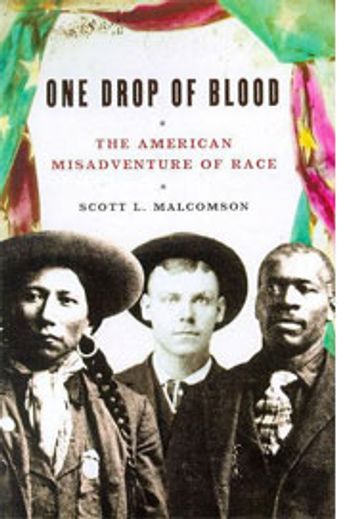
“One Drop of Blood” by Scott L. Malcomson

In a panoramic study of American racial reality, whites, blacks and Indians jostle for position from Colonial times to the present.

There’s a reason “One Drop of Blood” is as long as it is. And it’s not a good one. There are several books hidden within this bloated volume, only one of which bears some news.

Scott Malcomson is a terrific writer who certainly means well, and his subject, the damnable racism at the heart of America, unquestionably remains the central moral and political issue confronting the nation. A former editor at the Village Voice and author of two astute books on ethnic and political clashes abroad, Malcomson here exhibits an enormous and subtle intelligence and an even bigger heart, but the book has serious flaws.

Focusing here on his hometown of Oakland, Calif., he portrays a city haunted by racial nightmare. The Ohlone Indians made this land their home until they were devastated by white settlers late in the 19th century. Midway through the next century, the right-wing Knowland family ruled by publishing the Oakland Tribune and sending William Knowland to the U.S. Senate, where he was majority leader under President Eisenhower. As the city grew steadily blacker in the ’60s and whites fled to the suburbs, Oakland spawned Huey P. Newton and the Black Panthers.

Malcomson observed much of this as a child. His mother and father, a homemaker and a Baptist minister, were white liberals active in the civil rights movement. His hero was local boy Jack London, writer of adventure tales, socialist advocate and, Malcomson belatedly discovered, chest-thumping racist. During boyhood, Malcomson’s pals were a remarkably diverse bunch, but as he moved into junior high he and his black friends began to drift apart. More and more, he hung out with Chinese boys, practiced martial arts and idolized Bruce Lee. “I suspect I chose Chineseness,” he writes, “in hopes of keeping my denial and acceptance of race in suspension.”

But eventually there was no denying his “becoming white,” with all its implicit privileges. As an adult poking around in his genealogy, he learned that some of his ancestors were slaveholders and that one mixed-race relative, if she chose, could claim membership in both the Daughters of the American Revolution and the Cherokee nation.

The enigma of race viewed through the microcosm of Malcomson’s Oakland is fresh and instructive. The ultimate subject is never the author himself but the light his experience sheds on us all.

Given these California origins and current American demography, it’s surprising that Malcomson did not include Asians in so wide-ranging and ambitious a history. Perhaps he found the prospect too daunting. But without this perspective, there’s no way the book can be considered what he apparently wishes it to be: a definitive accounting of the construction of American racial reality.

Oddly enough, Oklahoma rather than Oakland is the book’s fulcrum. At the turn of the last century Oklahoma was a “laboratory of separatism” where blacks, whites and Indians each sought and failed to set up independent states: “One sought to go beyond race by escaping the reminders of one’s own racialness, to ‘separate’ in order to become fully oneself and free. It was already too late. The history of the New World’s three-part racial division stuck to Americans like a burr.” The choice certainly suits Malcomson’s additional theme of racial separatism as impossible dream, even as he admits that the state is “an extreme example.”

Malcomson’s treatment of Indians centers on the Cherokees. Their often-told story is heart-wrenching. No matter how much they became assimilated, educated and Christianized, they were going to be driven from their homelands and “removed” to Oklahoma, no matter what the cost in Cherokee lives and shattered culture. Casino-gambling wealth among the various tribes in our time he regards as obscene hush money intended to quiet the American conscience.

As the author traverses centuries of black-white relations, paradox is the key. By defending Caribbean Indians from Spanish exploitation, the 16th century Dominican friar Bartolome de Las Casas unwittingly cleared the way for black slavery. During the American Revolution, the founding fathers’ rhetoric of liberty clarified the equation of slavery with blacks only. In our time, the segregated black church became the decisive social institution championing an integrated society. All telling points, but none is original.

The book’s organization is unorthodox if not downright infuriating. To say that it tried my patience to slog twice through much the same material doesn’t quite capture my desperate longing to fling this book across the room. In the section titled “The Republic of New Africa,” Malcomson covers slavery, abolitionism and colonization, the Civil War, black codes, Jim Crow segregation, civil rights and Black Power. In “White Flight” he runs through the three centuries again, with only slight variations of emphasis.

Not only is it repetitious, but this misbegotten scheme fails to provide needed context. Take Abraham Lincoln, for example. The Great Emancipator’s views on race, sketchy the first time, come into perspective only with the broader analysis Malcomson provides when he circles around again. Likewise for white theories of racial hierarchy, for black debates on integration vs. separatism and on and on. And any book on the American racial dilemma that reduces W.E.B. DuBois to little more than a footnote is scandalously deficient.

Malcomson is most astute when analyzing culture. His insights into minstrel shows, the Uncle Remus tales of Joel Chandler Harris and the relationship between blues culture and the ’20s Harlem Renaissance are sharp-eyed and unexpected. Unfortunately, they play a small role in a book that resembles nothing so much as the graphic art of M.C. Escher. Circling endlessly, you can’t tell where one of his drawings starts or stops.

In Malcomson’s case, you want it to stop.

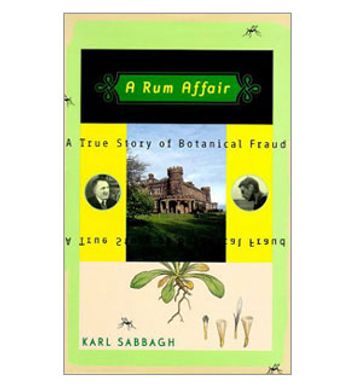
“A Rum Affair” by Karl Sabbagh

Floraphiles get nasty in a true story of the near-perfect botanical crime.

Ernest Rutherford once sneered that botany was more like stamp collecting than real science. The celebrated early 20th century physicist was referring to the field’s lack of mathematical rigor, its frequent unsuitability for experimental research, its openness to amateur enthusiasts.

Before the discovery of DNA, which converted all of biology into the hot zone of science, botanists could indeed seem like nerdy kin to stamp collectors, birdwatchers and hoarders of 300 varieties of salt and pepper shakers. Their passion was not for growing plants, but for finding, identifying and categorizing them. They went out into the field and got excited, for god’s sake, about grasses and sedges and such.

In this seemingly unpromising terrain, Karl Sabbagh, an English author and producer of science programs for BBC Television, has unearthed an intriguing story about the politics of science. It’s a saga with dueling protagonists, outraged charges and countercharges, motivations shrouded in mystery. Yet it’s a saga without a proper conclusion, ebbing away in very low-key, very British understatement. “A Rum Affair,” for sure, as the Brits like to say about odd or strange events.

The time is 1948. In one corner is John Heslop Harrison, an ironworker’s son risen to a professorship in botany at Newcastle University and membership in the Royal Society, Britain’s equivalent of our National Academy of Sciences. His young accuser, John Raven, is a well-connected scion of Cambridge. He is the son of a don in theology and a graduate and tutor in classics himself. Yet he is also an accomplished amateur botanical scholar.

Heslop Harrison has gained prominence as an authority on the flora of the Hebrides, the islands off the northwest coast of Scotland. A man of immense learning and field experience, he is also a brusque personality, dogmatic in his views and hostile to anyone who dares question him. Which is precisely what Raven does. Willing to stand up for his beliefs, no matter how unpopular — he was a conscientious objector during World War II — Raven has come to believe that Heslop Harrison is a liar. For Harrison claims to have discovered on the Isle of Rhum (later called Rum) rare plants, including some of those grasses and sedges previously thought not to be indigenous to the Hebrides. Not a big deal, one might think, except that the claim is a key link in a more far-reaching hypothesis that the islands, unlike the rest of Scotland, somehow escaped the last Ice Age 10,000 years ago.

Sabbagh’s method is to follow his young hero as he stalks esoteric plants and the villainous Harrison. Roadblocks are everywhere. Rhum is isolated and owned by one Lady Bullough, though it’s guarded by Heslop Harrison as though it were his private domain. Raven manipulates his way onto the island, cannot find any sign of the plants, retreats to Cambridge, writes a scathing report for university authorities charging that the great scholar has imported and planted the specimens himself. Simply put, Heslop Harrison’s breakthrough discoveries are fake.

But, alas, Raven’s revelations go nowhere. Harrison suffers no public exposure, no loss of job. Despite never again trusting the man’s work, no one in the British botanical establishment wants to make any waves. And besides, the evidence of fraud isn’t foolproof. Raven’s impossible task has been to prove a negative: that on Rhum’s 40 square miles the specimens do not exist.

Thus “A Rum Affair” becomes a scientific detective tale. Like Susan Orlean’s “The Orchid Thief,” it chronicles skullduggery among floraphiles, though without that New Yorker writer’s smoothly witty delivery. Like Simon Winchester’s “The Professor and the Madman,” it portrays an intellectual odd couple in a British setting, though without that book’s boffo drama of murder and madness.

Though we keep expecting Sabbagh to surprise us by uncovering evidence that Heslop Harrison was innocent after all — in dramatic terms, he’s too much the stock villain, a despot as department head at Newcastle and a nasty, officious opponent for Raven — the author remains convinced of his wrongdoing. In British field guides today, he notes, Heslop Harrison’s “finds” are subtly dismissed.

Sabbagh tries to put his malefactor in context by examining scientific fraud elsewhere, but, oddly enough, never mentions the case that rocked the American molecular biology establishment in the ’90s. What’s most startling is the contrast. A public accusation by a young post-doc that her boss at MIT had faked data, the involvement of Nobel Prize winner David Baltimore, congressional hearings and the accused’s eventual exoneration — all of this would have been anathema among Britain’s tweedy gentlemen of the ’40s.

In the Heslop Harrison case, the most puzzling aspect is the apparent lack of motive. Already at the summit of his profession, he risked his good name for a few more morsels of fame. In the end, Sabbagh’s research indicates that the man was probably a congenital liar. Even in his ventures into entomology, he couldn’t control his penchant for extravagant claims. His alleged sightings on Rhum of the Large Blue butterfly and several species of water beetles have never been duplicated.

Then there’s the matter of Heslop Harrison’s address. Throughout most of his career, he listed his as “Gavarnie, The Avenue, Birtley.” He bestowed a pretentious name, Gavarnie, on his home. So far, so good. It’s the English way. Yet he didn’t in fact live on The Avenue, the most imposing street in his Scottish village, but on an adjoining, less impressive road. You could chalk this aberration up to class resentment against people who began life with more advantages. Or you could simply call it pathology.

Continue Reading Close

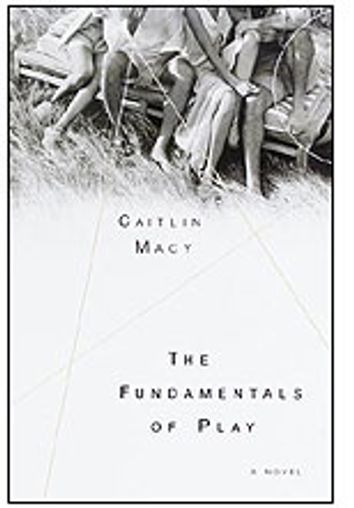
“The Fundamentals of Play” by Caitlin Macy

The rich have rules but they won't explain them, according to a smart novel about life after the Ivy League.

Old money never dies. It just lies low for a while, resurfacing when we’re not looking. And we thought the brave new world of instant, media-friendly celebrity had killed all that. Madonna, Oprah and the Donald have more clout, not to mention larger stock portfolios, than the Biffs and Buffys of old, right?

Maybe so, maybe not. Like a furtive underground movement, old money operates outside the purview of the mainstream, outlasting Nixon and Clinton, bull market and bear, swinging ’60s and buttoned-up ’80s. High society plays by its own time-honored rules, knowing full well that the rest of us upstarts don’t count.

Reading Caitlin Macy’s fine first novel, “The Fundamentals of Play,” is a bit like being invited, unawares, to the party. Unless we’ve prepped at Hotchkiss or Miss Porter’s, been introduced to society at the New York Yacht Club or inducted into Yale’s Skull and Bones, we don’t know quite what to make of things.

The two most intriguing characters in this novel find themselves in just that quandary, though in very different ways. George Lenhart, the 23-year-old narrator fresh out of Dartmouth, toils as a 100-hour-a-week peon in Wall Street corporate finance. He is the soul of ambivalence, at once in awe of old money and resentful that he’s not part of it. What would solidify his status is marriage with Kate Goodenow, the object of his fascination since their boarding-school days at Chatham. A creature of her social class, Kate embodies that indefinable point where breeding, insouciance and a sense of entitlement intersect.

For all Kate’s appeal as the unobtainable mystery woman, she isn’t the other character of greatest interest here. That’s Harry Lombardi. Harry is the author’s Gatsby in the making. Not that he’s rich, yet, or a gangster at all. But he’s very unpolished, very outri, every inch a striver in a culture that prides itself on hardly trying at all.

At Dartmouth, George had fallen under the spell of the arrogant and unlikable Chatland “Chat” Wethers. Chat’s attraction? His family had the money that George’s family once had. Because George’s father had fallen into something close to genteel poverty as a boarding-school headmaster, George was forced to work his way through college, until Chat rescued (and enslaved) him with a loan. For a while Harry was their sometime companion — a public-school kid from Long Island on the fast track to success — until he dropped out. That he was a devout Catholic he couldn’t bear to tell anyone. Eager to learn the games the upper class plays, Harry was subjected to their snickers behind his back.

Here’s the Catch-22: No one is going to tell Harry, or anyone else, the rules. But if you don’t know the rules, you can’t play. Unless you absorb them like mother’s milk when young, you’ll probably never catch on. Above all they stress a cool, understated elegance and ease. Nonchalance is as essential as grace. In a crisis you keep a stiff upper lip. At a party you never run out of tonic.

Kate may be an alluring enigma — certainly the men who swarm about her think so — but the boy in her boarding-school past is even more so. The son of a poor Maine lobsterman, Nick Beale was the natural aristocrat who instinctively knew all the rules, charmed all the girls, won all the sailing competitions. Sent to Chatham after his father’s death by the rich folks (including Kate’s parents) who summered where he lived year-round, Nick proceeded to destroy his future by depriving Kate of her virginity. A decade later Kate still can’t get over losing him. Mostly from afar, Nick haunts this story as a ghostly counterpoint to the gods of ambition and money.

Macy frames her story as a kind of moral coming-of-age tale, with George learning that a steady cultivation of irony can’t shield this crowd from life’s blows. He moves from uncritical acceptance of the rules to a more mature comprehension of their limitations. His eyes opened, he can begin to see Kate, as we do, as shallow, complacent and snobbish.

Macy’s portrait of prematurely conservative rich kids (“We ought to have wanted to start a revolution,” George muses; “instead we bought cocktail shakers”) is richly evocative. Her narrative swings gracefully from present to past and back, slowly revealing the secrets in the shadows. In the restrained, rueful voice of George, this subtly modulated prose acknowledges its debt to the likes of Richard Ford, Ethan Canin and Susan Minot.

Certainly we can quibble here and there. Kate doesn’t seem nearly smart or intellectually curious enough to have made it through Yale. And how deeply can an aborted high school romance really resonate after you’ve outgrown puppy love? Still, not even a touch of melodrama near the end could dilute my pleasure. And I detest rich spoiled brats as much as anyone.

Continue Reading Close

“We're a long way from the end of this”

Alger Hiss' son talks about his new memoir, "The View From Alger's Window," and the espionage case that wouldn't die.

Was Alger Hiss a dedicated public servant or a spy, a victim of Cold War hysteria or a secret communist? For half a century the question has roiled public debate, shaped discourse about honor and justice, split liberals into warring camps and rallied conservatives around the faith of anticommunism.

Hiss was the embodiment of New Deal liberalism. A graduate of Harvard Law School, he had clerked for the U.S. Supreme Court’s venerable Oliver Wendell Holmes and had given up a promising career in New York to join Franklin Roosevelt’s New Deal. He rose high in the State Department and served as secretary-general of the founding conference of the United Nations. By 1948, when he was accused of spying for the Soviets, he was president of a prominent philanthropic foundation, the Carnegie Endowment.

His accuser, Whittaker Chambers, presented a far cloudier image. An admitted ex-communist, the Time magazine writer packed a pistol at the office, harbored a secret homosexual past and muttered about the decline of Western civilization. Nevertheless, in testimony before the House Un-American Activities Committee, where Richard Nixon was an ambitious young unknown, Chambers laid Hiss low. Hiss fought back, accusing Chambers of slander. But following a first trial that ended in a hung jury, Hiss was convicted of perjuring himself about his involvement in espionage.

From March 1951 to November 1954, Hiss was confined in the federal prison at Lewisburg, Pa. After his release, his reputation in tatters, he found work as a salesman for a Manhattan printing firm. Though he always insisted on his innocence, he remained remarkably free of bitterness. He died in 1996 at the age of 92.

Tony Hiss, 57, a former staff writer at the New Yorker, recalls the once-a-month treks to Lewisburg that he and his mother, Priscilla, made to visit the famous father he barely knew. His new memoir, “The View From Alger’s Window” (Knopf), is a devoted son’s attempt to portray a man whose impeccable character made treason inconceivable. But the book is coming out at a time when scholarly opinion about Alger Hiss is increasingly hostile. Newly opened files from Soviet, U.S. and Hungarian sources have provided evidence that, some historians say, links him to Soviet espionage. And despite the lack of any smoking gun, this is also the conclusion of a trio of recent books: “Whittaker Chambers,” a 1997 biography by Sam Tanenhaus; the just-published “Venona: Decoding Soviet Espionage in America” by John Earl Haynes and Harvey Klehr; and “Perjury: the Hiss-Chambers Case” by Allen Weinstein, first published in 1978 and again two years ago in an edition that incorporates newly available archival material.

The contrary stance in “The View From Alger’s Window” is based largely on a cache of 2,500 letters, including 445 Alger Hiss wrote during his imprisonment. They show a man who reads the New Yorker and the Bible, sings in the prison choir, delights in classical music and teaches a small-time mobster to read. Out his window, his eyes feast on sunsets and stars. To his wife, he vows to make use of imprisonment as “a large opportunity for learning and growing.” To his son, he writes touching letters designed to impart lessons in coping and growing up. Buddha, Shakespeare and FDR show up in these letters, but there is not a word about Marx or communism.

My interview with Tony Hiss took place at the Greenwich Village apartment where he spent much of his early life. He lives there now with his wife, the young-adult novelist Lois Metzger, and their 7-year-old son, Jacob. Hiss pointed with pride to a handsome 18th century mirror that Justice Holmes willed to Alger Hiss. For the Hiss family, the mirror isn’t merely an antique — it’s an emblem of loyalty to American tradition.

If the charges against your father were false, do you have any idea why Chambers would have singled out your father?

In the ’60s a San Francisco psychiatrist named Meyer Zeligs wrote a quite interesting book, a joint psychobiography of Chambers and Hiss, “Friendship and Fratricide.” He turned out to be quite a good reporter. He discovered a fascinating fact: that this was not an isolated incident in Chambers’ life. He had a pattern of befriending someone, idolizing them, rejecting them and then trying to ruin them.

Allen Weinstein’s “Perjury” was begun with the assumption of your father’s innocence but concluded that there was “persuasive but not conclusive” evidence of his guilt. First published in ’78, it was acclaimed by both conservatives and liberals.

It received great acclaim from Cold War liberals. You have to remember that once the Cold War became part of everyone’s psyche, a whole generation of liberals came of age within that context. Many of them made it part of their self-definition that no one could pin the pinko label on them by accusing them of having sympathies for Alger Hiss — people like Arthur Schlesinger, Jr., and John Kenneth Galbraith.

Yes, the book was hailed by those who had already accepted that notion, and it got a free ride as a result. It’s a very argumentative book. It is stuffed with footnotes, so it has the apparatus of scholarship. He would be happy to take any scrap of information, ambiguous as it is, and turn it to Alger’s disadvantage. There are Hungarian files released by Noel Field, a troubled person who had had a complicated relationship with Eastern European and Soviet forces. It’s true that he seems to have made some statements to communist interrogators in Hungary implicating Alger Hiss. But it also seems true that he made those statements while being tortured. Both before his imprisonment and after his release, he also made statements which repudiated those accusations.

The biography of Chambers by Sam Tanenhaus accepts the Noel Field statements implicating your father.

Well, he’s writing a very sympathetic, warm biography of Whittaker Chambers. Again, he’s not feeling much of a need to probe Chambers’ stories very deeply. It’s always been a desperate search to find material that might corroborate Chambers, because it’s always been one man’s word against another’s. To feel confident in a perjury case, you’re supposed to have two witnesses. Here there’s only one. So it’s always been a search for documents.

Yale University Press has just published “Venona: Decoding Soviet Espionage in America” by John Earl Haynes and Harvey Klehr. It concludes that there is “little doubt” that Alger spied for Soviet military intelligence, not only in the ’30s but into the ’40s, when he was a high official in the State Department.

That’s because there is this one cable that was intercepted and decoded [by the National Security Agency] that talks about a spy code-named “ALES.” It came with a footnote supplied by the FBI that said “probably Alger Hiss.” That cable said that “ALES” had a network [of spies] of his own, that this consisted primarily of his “relations” — you don’t know whether “relations” is a code name or family. It also says he was in touch with another code-named agent, who has been identified as Gregory Silvermaster. No one has ever shown any ties between Silvermaster and Alger.

The story just gets more and more complicated. For example, it’s now known that the U.S. Embassy in Moscow was in fact so penetrated by Soviet agents that for five or six years, during the time that Chambers said Alger was a spy, pretty much any document from Washington went straight to the Soviets. There were plenty of other candidates for being “ALES.”

Given these attacks, do you feel more besieged than ever?

Alger’s in more trouble than he ever was, and he’s no longer around to deny it. But I think that’s temporary, because rather than having this vast landscape of information around us, we have a vast sea of misinformation or lack of information. It’s going to take a long time before the water drains away and we know what we’re talking about.

Even Weinstein admits the “evidence is persuasive but not conclusive.”

They’re all very careful not to say that it has been demonstrated with certainty. I think it can be helpful to take a closer look at the man accused of these monstrous crimes and see what kind of a person he was. If you wish to be filled with some substance, you’re most vulnerable if you’re empty of some other set of values and convictions. Whereas my father was already full to the brim with purpose and vigor and history and tradition. He thought he was fighting the good fight.

The other dimension of my dad was someone of great resilience and resourcefulness who could find his way through what so easily might have been a devastating experience of losing his job and his reputation — sitting in the slammer and actually making something of it. I admire enormously someone who could say, and mean it, “Three years in jail is a good corrective to three years at Harvard.”

Are you still angry about what you and your parents had to go through?

It’s still an injustice crying out for remedy, but it is not something that I personally feel angry about, partly because my father seemed so amazingly transmuted and was never a bitter person. He always tried to learn from whatever experience came his way. That phrase by Malachy McCourt that I used in the book resonated with me: “Resentment is like taking a poison and waiting for the other fellow to die.”

You write that your son’s 7th birthday was very difficult for you. You had a terrible headache.

Because my own 7th birthday was the day for me when the troubles had begun. It was typical of my father’s headstrong nature that, for all his rationality, he met troubles head-on. That was the day he chose to go to Washington to go before the House Un-American Activities Committee to deny the charges that had just been made by Whittaker Chambers rather than come up to Vermont and be at my birthday party.

Why publish a memoir now?

His death certainly brought things together in my mind in a way we really don’t anticipate beforehand. And the interest in him has intensified in the last few years. So much of the hostile attention, it seemed to me, has to do not with the man I knew but with this strange, monstrous caricature that had formed in some people’s minds. I realized that the only story I could tell was about the person I got to know best, ironically, when he was in jail. I finally had him all to myself.

I assume you wanted to show a different Alger Hiss to the world, a gentle, playful Alger contemplating the nature of happiness and art and so on?

I wanted to write a personal book. I did not want to become just a part of the politicized debate about this case. I realized there was a separation between Alger as he presented himself to the world — often quite stuffy, cold and formal, lawyerly — and the man I had gotten to know, who was very playful, even silly and sweet, and fascinated by people and things around him, birds and sunsets. I think some of this inner Alger, ironically enough, welled up at this point, trying to come to terms with incarceration.

There was no suggestion in any of these letters that Alger was either a communist or a spy?

There’s not even any interest in the rubric of Marxism as a way of explaining the world. He got fascinated in Freudianism. There were countries that appealed to him as in some ways farther advanced than America, but they tended to be [places like] England and France. He was impressed by the English as communitarian and carrying forward the New Deal spirit. If he had been a spy, there’s an enormous irony: He certainly took incredible pains to bring me up to despise all the values that he was accused of having embodied. Loyalty and honesty and trustworthiness were the bedrock of what he was trying to instill in me.

As we know from the British scene, some of the famous Soviet spies, such as Kim Philby and Anthony Blount, were cultivated, well-educated gentlemen. Isn’t it possible that a man as devoted to social justice and as opposed to fascism as your father was would have turned to communism and even come to define spying as an honorable choice?

Yes. But it’s hard to remember that for others the challenge of the ’30s could also be met by what they considered the very radical action of joining the New Deal. This was not half-hearted, lily-livered, pusillanimous. Here was a young lawyer who deliberately left a high-paying, prestigious law firm in New York, took an incredible pay cut and stayed in Washington for about 14 years in order to help put his country back on its feet. He had been summoned by his mentor, professor Felix Frankfurter of Harvard Law School, who sent him a telegram: “On basis national emergency, you must report for duty.” Throughout his life, he boasted about being an unreconstructed New Dealer. This was in the tradition of the man who meant the most in his life, Oliver Wendell Holmes.

I’ve talked to people who were underground communists and asked them, “Is it possible, if that’s what you were, never to have confided in anyone?” From their point of view, this was psychologically an impossibility. You would have been so proud of it that you would have wanted someone to know about it.

From your point of view, might it have been easier, psychologically, if your father had been guilty and paid the price for his crimes? Now you’re in this limbo, as evidence of your father’s guilt mounts.

There have been a few selectively released documents that, when you sift through them, may or may not implicate him. The waters are in fact no less murky than they have ever been. The most astonishing and most overwhelming fact is that there is a huge amount of material, both in the former Soviet Union and in America, that is still under lock and key. The closed-door hearings of the House Un-American Activities Committee after 1944 are not scheduled to made public until the year 2026. In Russia, there are at least five major archives that are still off limits. The KGB files, where a few scholars have had sort of a dollars-for-documents access, are completely controlled by the KGB. Given all this, the scholars who will have all the evidence laid out in front of them and can dispassionately sift through it are probably undergraduates today. We’re a long way from the end of this.

Continue Reading Close

Signs and Wonders

By Melvin Jules Bukiet

In several story collections and the post-Holocaust novel “After,” Melvin Jules Bukiet has proved himself a fierce contender with God. While some of the stories resemble those of the late Bernard Malamud in his lyrical, magic-realist mode, Bukiet’s predominant stance is rage. “Basically, I believe, but I don’t like the Deity,” this former literary editor of the Jewish magazine Tikkun has said. “I think the Deity has unilaterally violated the covenant by killing ‘the chosen people’ time and again … I think he doesn’t like us.”

“Signs and Wonders,” Bukiet’s second novel, continues his bitter quarrel with God. Set in Germany on the cusp of the year 2000, the story chronicles the rise of a most unlikely messiah. Ben Alef emerges from a prison barge on the stormy Baltic Sea — having survived the barge’s sinking by walking on water. He is accompanied by 11 other prisoners. These misbegotten “disciples” include murderers, rapists and a concentration-camp commandant. On shore, they are joined by a final apostle, a fisherman who is the token “good German.”

Ben Alef works other miracles (a revival from the dead, a loaves-and-fishes bit at a wedding), gathers a devoted following and attracts worldwide media attention. Despite negative press revelations — the concentration-camp number on his arm, for example, turns out to be the product of a Hamburg tattoo parlor — his New Jewish Church thrives more than ever. No doubt part of its appeal is an orgiastic sin-and-be saved doctrine straight out of the cabalist salvation kit of Sabbatai Zevi, the 17th-century would-be messiah. In any event, an alarmed pope and German chancellor conspire to crush Ben Alef. Given the scenario of 2,000 years earlier, you can guess how all this ends.

Bukiet’s blend of storytelling brio and audacious imagination calls to mind such disparate maximalists as the Salman Rushdie of “Midnight’s Children” and the Mark Helprin of “Winter’s Tale.” He is at his best in furious bursts of scalding black humor, which come in two sizes: large-scale action scenes out of Cecil B. DeMille (Ben Alef’s survival at sea, his day of doom at a Euro Disney theme park) and in miniature riffs à la Woody Allen (“I like a Messiah I can negotiate with,” a promoter quips. “Managed properly, you can make a killing”).

Bukiet is less adept, however, at getting inside his characters. Ben Alef may be the messiah, but he’s hardly the novel’s central character. That role is given to Snakes Hammurabi, a Hamburg drug dealer whose Turkish parents were cosmopolitan seekers after religious truth (his nickname is based on their last, and fatal, enthusiasm, for fundamentalist Christian snake-handling). But Snakes — surely an alter ego for the author (“He could distrust the Lord and believe in him at the same time”) — is almost as much a mystery man as is Ben Alef, and he shouldn’t be. Nor is Bukiet clear about the nature of his new religion and its relations to existing forms of Judaism and Christianity.

Still, “Signs and Wonders” is both thrilling reading and deeply intelligent commentary that dares to ask timeless questions: Does God care about us, and should we care about the answer? To have pulled off that delicate balancing act is, indeed, something of a miracle.

Continue Reading Close

Ex Libris

"Dan Cryer reviews 'Ex Libris' by Anne Fadiman

At age 4, Anne Fadiman was building castles out of the 22 volumes of her
father’s set of Trollope. As a teenager watching the TV quiz show “College Bowl,” she and her family believed, with good reason, that “Fadiman U. could beat any other U.” As a young woman hiking the Sierra with her future husband, she lugged, alongside mountains of camping gear, the collected works of John Muir. Call Anne Fadiman a certified bibliomaniac, and she’ll own up to it.

Clearly, this was no ordinary family and Anne Fadiman no ordinary reader. Her father is Clifton Fadiman, the legendary critic, anthologist and former Book of the Month Club judge. Her mother, Time magazine correspondent Annalee Jacoby Fadiman, co-authored “Thunder Out of China” with Theodore
White. Their apartment had room for 7,000 books and not much else. Little wonder that their daughter has gone on to take over the helm at the American Scholar and to write the prize-winning “The Spirit Catches You and
You Fall Down,”
which chronicled a young Hmong epileptic’s encounter with the American medical system.

“Ex Libris,” a compilation of essays that Fadiman wrote as a columnist for Civilization magazine, is an unapologetic confession of raging bibliophilia. No need to be scared off by the Latin title. The book is a modest, charming, lighthearted gambol among the stacks. It serves up neither ideas nor theories but anecdotes about the joys of collecting and
reading books.

Like Calvin Trillin, Fadiman believes that family members, however lovable, are best considered as joke material. There’s George, the husband excoriated as “an incorrigible book-splayer” for leaving books overturned and open to page 322 and thus fated to early destruction. Preschool-age
daughter Susannah wonders if “Rabbit at Rest” is a tale about a sleepy bunny. Her 2-year-old brother, Henry, is outed as an unrepentant bibliophage for gnawing on “Goodnight Moon.”

The essayist herself admits to an uncontrollable urge to read anything in sight, mail-order catalogs included. How else, she contends, could she possibly educate herself about such essential stuff as the Ultrasonic Wave Cleaner (via Sharper Image) or the three parts of a 16th century soldier’s
helmet (courtesy of Design Toscano Reproductions for Home and Garden)? Fadiman’s wit also touches down on more conventional book-related topics such as flyleaf inscriptions, marginalia, reading aloud, a delight in big words (sesquipedalianism), plagiarism, compulsive proofreading and the art of writing bad sonnets. When the author reveals that she and her husband have finally merged their previously his-and-hers book collections — no more duplicates, alas, of “Catcher in the Rye” or “War and Peace” — we know in our bones that they really are married. They’re no longer just book
lovers, but spouses.

Continue Reading Close

Page 1 of 2 in Dan Cryer