Daniel Glick

Where the caribou don’t roam (anymore)

Stymied in his plans to drill in the Arctic National Wildlife Refuge, Bush has raced ahead to fast-track oil development elsewhere in Alaska -- imperiling an entire way of life.

  • more
    • All Share Services

Where the caribou don't roam (anymore)

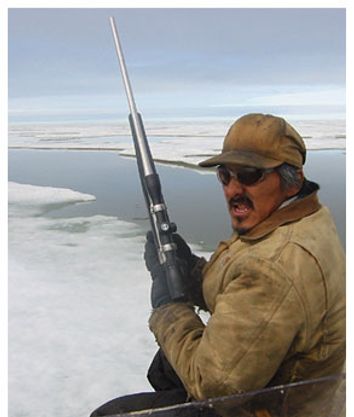
“Let’s go shoot something,” Jeffrey Long says with a grin, sliding his 18-foot boat into the water. We’re 250 miles north of the Arctic Circle, in the Eskimo village of Nuiqsut, Alaska. I hop in next to Long and his friend Eli Kilapsuk, who are armed with a bolt-action Ruger M77, a couple of .22s, a 12-gauge shotgun, a harpoon and a vicious-looking hook for grappling with any kind of animal we might encounter today: caribou, geese, ring seal, bearded seal, walrus, even a polar bear. It’s early July, more than halfway through the short Alaska summer when the sun doesn’t vanish below the northern horizon, and Inupiat hunters like Long and Kilapsuk have only a few more weeks to harvest the season’s bounty and lay in a store for the long winter ahead.

It seems like half the village is patrolling the rivers and channels this evening, their outboards buzzing like the ubiquitous mosquitoes. Kilapsuk, 29, his black ponytail flapping under his “Native Pride” brim, uses the VHF to trade reports with other hunters in both English and Inupiaq. I ask Long, 38, if we’re likely to bag a caribou, or tuttu, as they’re known in Inupiaq. The Inupiat use virtually every part of the animal in their daily lives: the meat for steaks, stews, roasts and jerky; the skins for parkas and winter boots; the sinew to sew together traditional whaling boats; even the brain, which is rubbed into leather to soften it. Along with the bowhead whale, caribou represent a cornerstone of Inupiat life. Long, who looks like an Eskimo Bruce Springsteen, with salt-and-pepper hair and scraggly goatee, throws the throttle down on his 70-horsepower Yamaha. “What we get, we get,” he says.

We speed down the Nigliq channel toward the ocean seven miles away, eyes peeled for motion on the tundra above the banks. “Look, somebody got a caribou,” Long says, pointing to a pair of eagles feasting on a gut pile.

Suddenly, out of the vastness that is Alaska’s coastal plain, I see the incongruous silhouette of an airplane. I point it out to Kilapsuk, who has long since taken it in.

“DC-6,” he says, without looking at it again. “Cargo plane. Going to Alpine.”

His spare words contain more than a trace of bitterness. Alpine is an oil field, one of dozens of new and proposed developments popping up around Nuiqsut like poisonous mushrooms, transforming the open tundra into a vast complex of brown gravel pads, white elevated pipelines, lime green processing facilities, bright orange storage tanks and white Quonset huts. The oil rigs lie on the edge of a vast area of the Arctic called the NPR-A, short for the Northeast National Petroleum Reserve, Alaska. Covering 23.5 million acres, it’s the single largest unit of public land in America. It also contains crucial nesting areas for migrating birds and critical calving areas for hundreds of thousands of caribou. For the past 80 years, “biological hot spots” in the NPR-A have been off limits to oil drilling and other development, granted special protection by the federal government. But now the Bush administration, with its no-holds-barred push for oil production, is fast-tracking new oil fields throughout Alaska’s North Slope, the cumulative environmental consequences be damned. If the administration has its way, its allies in the oil industry could soon displace the caribou and other wildlife around Nuiqsut — and with it, alter a way of life that has survived among the Eskimos for more than 8,000 years.

As we approach Alpine, Long steers the boat past pump stations and drilling rigs that would look more at home in industrial New Jersey than they do here at the continent’s northern edge. A helicopter rotors by and a flock of geese scatter. I ask Long what he thinks about Bush’s effort to expand oil drilling across the North Slope. He shrugs. “We tried to stop Alpine, but we couldn’t,” he says, as we motor past one of the drilling sites. “It bothers me, but what are you going to do about it?” Kilapsuk, as usual, is even blunter. “Man,” he says, shaking his head, “it’s messed up.”

Long, sensing that the caribou have wandered too far inland for us to hunt, turns the boat out to sea to hunt seal. About five miles offshore we reach the edge of the broken ice, blue-green and white chunks floating in a sea of gray-green water. We park on a mini-iceberg and sip coffee as if we were holed up in a cafe rather than floating in the Arctic Ocean. Soon we see a ring seal bobbing its head above the water, and scramble to follow it in the boat. Kilapsuk takes a shot, misses. The seal dives underwater, but the sea is so calm that we can follow its underwater trail. When it surfaces, Kilapsuk hits it with the 12-gauge. Long hops on the bow, harpoons the dying seal and hooks it on board, the first of three natchiq we will harvest today. “The elders love this,” Kilapsuk says. Since it is the first seal of the year, he explains, he’ll give it away in traditional fashion to people in the village who don’t have men to hunt for them. “Have you ever had caribou meat dipped in seal oil?” he asks. “It’s good munchies.”


Alpine development near Nuiqsut.

The NPR-A may not be as well-known as the Arctic National Wildlife Refuge — the unspoiled tract of federal land in Alaska that Bush has made the unsuccessful centerpiece of his energy plan — but it’s every bit as vital to the environment as ANWR. The remote area around Teshekpuk Lake, a sprawling maze of undulating marshes, grassy meadows and rolling green tussocks of moss, is considered one of the most important tundra-wetland ecosystems left on the planet. In addition to the caribou herds that give birth around the isolated lake each spring, rare birds flock here from as far south as Antarctica to breed, nest and molt: Arctic terns, the threatened Steller’s and spectacled eiders, northern pintails, tundra swans, Pacific black brants and rare yellow-tailed loons. The area is “the most important goose molting area in the circumpolar Arctic,” says John Shoen, a former Alaska state wildlife biologist and current senior scientist for the Audubon Society. Schoen says that the cumulative effects of all the proposed development — from roads to seismic exploration — would unequivocally cripple critical wildlife habitat. “All of the science is clear,” he says.

Since the NPR-A was set aside as a strategic reserve in 1923, oil companies have been barred from drilling around Teshekpuk Lake. In 1998, when the Clinton administration opened a big chunk of the reserve to drilling, it made sure to place nearly 600,000 acres surrounding the lake off-limits to oil and gas leasing. But over the past year, while environmentalists have been focused on the fight to protect ANWR from drilling, the Bush administration has quietly moved to strip Teshekpuk Lake and other key “buffer zones” of their protections and auction them off to big oil companies. “ANWR was a convenient distraction,” says a state wildlife biologist who declines to use his name because of political sensitivities. “It kept people from noticing that Bush’s steamroller of development is already moving west across the North Slope.”

In June, Interior Secretary Gale Norton put 8.8 million acres of the NPR-A’s “Northwest Planning Area” up for bid — a move that netted $53.9 million in oil leases. Companies like the European giant TotalFinaElf and the Canadian company Petro-Canada, as well as ConocoPhillips Alaska and Andarko (which are already vastly expanding the Alpine Satellite fields near Nuiqsut), hope to cash in on the new Arctic bonanza. Absent any objection from whoever’s in the White House, the westward push is expected to continue, with new fields consecutively coming on line over the next decade.

After the Northwest lease, the Bush administration quickly took steps to open more area to leasing, notably including the critical area around Teshekpuk Lake — and has developed a novel way to speed up the process. Instead of evaluating how oil companies could harm the environment, the administration has ordered federal land managers nationwide to do exactly the opposite: consider how the environment could harm oil companies. Land managers must now file a “Statement of Adverse Energy Impact” justifying any provision that protects the NPR-A from development, and grant “exceptions” to environmental safeguards that the industry considers “economically prohibitive.” In addition, the administration-backed National Energy Bill wending its way through Congress also gives the interior secretary extraordinary discretion to allow oil companies to drill in the NPR-A without paying royalties if doing so “is in the public interest.”

“This administration considers any level of protection to be too much,” says Brooks Yeager, a senior Interior Department official in the Clinton administration who was intimately involved in opening up new leasing in the NPR-A in 1998. Yeager, who now works for the World Wildlife Fund, says that the science supported some drilling in the reserve, but also supported keeping some areas off the table. The Bush administration, says Yeager, “obviously regarded any restrictions as unnecessary.”

In the past, the Inupiat have often sided with industry in fights over development. Eskimos, by and large, have viewed environmentalists with distrust since the Save the Whales campaigns of the 1970s helped deprive the Inupiat of a critical subsistence resource for years. “We don’t want to hold hands with environmentalists,” says Leonard Lampe, a former Nuiqsut mayor and president of the native village of Nuiqsut. “They were against our bowhead whale harvest.” These days, people like Lampe are ready to bury the harpoon and work together with state and national environmental groups to slow down oil development.

As long as federal officials agree to protect wildlife needed for subsistence hunting and keep royalty payments flowing into local governments, Eskimo leaders on the North Slope have generally supported oil drilling in places like Nuiqsut. But that good will diminished quickly during the current administration. First, oil giant ConocoPhillips proposed expanding its small, contained oil pad at Alpine into a multisite industrial complex that will crisscross the area with oil pipelines, bridges and miles of new roads. Then the Bush administration proposed new offshore oil rigs in the Beaufort Sea and rushed to tear up the Clinton-era protections for Teshekpuk Lake that had been approved only a few years earlier.

“I really feel like we’ve been stabbed in the back,” says Taqulik Hepa, deputy director of wildlife management for the North Slope Borough, a political conglomeration of eight Eskimo villages. “The more they want, the more people they impact.”

The sale of oil leases in June shook up people in Barrow, where Hepa lives. It was the first significant development approved around America’s northernmost city, which serves as the seat of Eskimo government. And the plan to allow drilling in millions of acres around Teshekpuk Lake has enraged even more people — including the area’s most powerful politician. “It seems that all sense of balance has been lost,” says George Ahmaogak Sr., now in his fifth term as mayor of North Slope Borough. “The politics of power and influence are clearly at work.”

The village of Nuiqsut — Inupiaq for “a beautiful place over the horizon” — may be one of the most isolated towns in America. No public roads link it to the outside world; I arrived on an ancient Cessna that runs supplies to the village store. The town, abandoned in the 1940s, was resurrected in 1973 after Congress required the Inupiat to create village corporations in order to claim land rights. Nuiqsut families lived in tents for the first year, eventually building a grid of raised gravel roads and small plywood houses perched on pylons that they pounded into the permafrost. The town displays hallmarks of the rural poor; cars are not so much abandoned as forsaken, windshield-less and wheel-less, amid a landscape of oil drums, snow machines and children’s toys. But look closer and you’ll see signs of Inupiat self-reliance, a way of life that has endured for thousands of years. Bull moose racks of impressive size adorn the doorways of several homes; fox and caribou skins cure in front of others; a collection of musk oxen skulls peer out from one rooftop.

People in Nuiqsut live not so much off the land as with the land. Since agriculture is virtually impossible in a place with a two-month growing season, villagers depend on subsistence hunting for much of their food. Once the ice melts and the waterways open up in early summer, the Inupiat hunt seal and caribou. By August, there will be moose, ripening salmonberries and more caribou. There are whales in autumn, wolf and wolverine in winter, geese in the spring. At different times throughout the year there are whitefish, Arctic cisco, char, grayling and other fish. Each Nuiqsut resident eats 750 pounds of subsistence-gathered meat and fish per year, a high-fat diet essential to survival in the harsh Arctic environment. The Inupiat desire to protect wildlife like caribou from oil drilling has nothing to do with a knee-jerk, save-the-seals reaction. They just want to make sure there are enough tuttu to shoot. The continued dependence on hunting and gathering makes even more sense after a trip to the AC Store, the only one in town. A dozen eggs cost $3.69, a loaf of Wonder Bread is $5.39, a half gallon of milk runs $7.59, and a half gallon of Tropicana orange juice goes for $9.99. Villagers frequently talk about the exorbitant price of what they call “store-bought food.” With relatively few full-time jobs in Nuiqsut, hunting remains a necessity for everyone. “Even for me, I need the subsistence resource,” says Isaac Nukapigak, president of the Kuukpik Village Corp., one of the best-paid jobs in town.

These days hunters around Nuiqsut use modern tools such as high-powered scopes and global positioning systems, but that doesn’t mean the old ways are forsaken. “My son likes Froot Loops,” says Rosemary Ahtuanguruak, the mayor of Nuiqsut. “But he prefers quaq” — the Inupiaq word for a frozen snack of raw meat or fish. Ahtuanguruak has just finished emceeing a fish-scaling contest at the annual Fourth of July games, where the village’s reliance on subsistence hunting is evident in the day’s scheduled events. Adults line up at the local community center to see who can gut whitefish the fastest, and toddlers at a baby Eskimo fashion show model parkas lined with red fox and traditional boots made from caribou and bearded seal skin.

Ahtuanguruak first started getting alarmed about oil development in her former role as a health aide at the village clinic. After the oil pad went in at Alpine, she began noticing high rates of asthma among local residents, especially when gas flares were noticeable. Rates of heart disease, diabetes, hypertension and thyroid disorders rose — and so did truancy, vandalism, drug abuse and other social problems associated with oil development. Fish became sick or infected with parasites from pollution. Hunters talked about being driven away from traditional hunting areas by security patrols for the oil companies, and caribou began passing farther and farther from the town. Up here, seeing the caribou change their migration routes to avoid drilling rigs isn’t just inconvenient — it’s as alarming as if every grocery store in your town suddenly moved 30 miles away, and the only way to shop entailed a long and arduous trip in sub-zero weather. “The land is our store and our garden,” Ahtuanguruak says. “We know that development is going to occur. We just ask that it happens without taking food off our tables.”

At one point during my all-night hunting trip with Jeffrey Long and Eli Kilapsuk, the two men pull their boat up to a ramshackle cluster of cabins along the water. Lydia Sovalik, a village elder, stands at a wooden table, elbow-deep in a caribou carcass, hewing hunks of meat with her ulu, a curved Eskimo knife. Sovalik asks Long and Kilapsuk to pull in her fish net from the channel. They return with a white plastic bag full of writhing whitefish, which Sovalik will dry and cure with driftwood to make what people say is the best smoked fish in Nuiqsut. She worries aloud that the current oil push is causing too many problems, multiplying construction zones and driving away the caribou. “Now we got troubles,” she says, sounding like an Eskimo version of a Southern blues singer. “Things are changing so fast.”

Back at the village, I ask around and learn that Gordon Brown and his 16-year-old son Curtis Ahvakarna had bagged the caribou I saw feeding the eagles out near Alpine. Two caribou, in fact. With the twin heads perched on top of their boat, Curtis recounted how he had circled a herd of 500 caribou while his dad took down two big bucks. They field-dressed the animals, loaded them in the boat, and proceeded to share the meat with family and neighbors. “My favorite is caribou,” Curtis confides. “I don’t really like moose.”

Brown, a newly elected member of the native corporation’s board of directors and a mechanic for the North Slope Borough, doesn’t think that outsiders understand that subsistence hunting isn’t some quaint, archaic hobby — it’s what holds the Inupiat culture together. “It’s still a way of life here,” he says. “That’s what’s being jeopardized by the oil companies coming through.” Like many other Nuiqsut residents, Brown openly expresses his anger at the oil firms and the Bush administration — outbursts unusual in a culture that values comity more than conflict. “It’s irreversible if it all goes wrong,” he says. “When you say ‘irreversible,’ it scares you.”

From Brown’s house, I walk across town to visit Margaret Pardue, a village council member who has just returned from testifying at a public hearing on the NPR-A in Washington, D.C. A soft-spoken woman raised in a traditional household, Pardue is still riled up from the trip. She complains that the administration scheduled the hearing over the Fourth of July weekend “so nobody would attend” and scoffs at the suggestion that her testimony might influence federal officials. “It goes in one ear and out the other,” she says. All the administration wants, she contends, is to “get the oil as quick as they can and who cares what they leave behind.”

The White House insists that more domestic energy production is essential to improving national security. A month after 9/11, President Bush told reporters that “a critical part of homeland security is energy independence” and urged Congress to pass his energy bill that included more Alaska drilling. Vice President Dick Cheney’s controversial national energy policy task force recommended more oil and gas leasing in the NPR-A as one of its top priorities.

But the irony is, more drilling in the Arctic would have no effect on gas prices at the pump and would never equal more than 2 percent of America’s oil supply — not nearly enough to pry the nation from its dependence on foreign oil. Even top energy executives admit that there’s not enough oil in Alaska to make a difference. “We periodically hear calls for U.S. energy independence as if this were a real option,” ExxonMobil chairman Lee Raymond said in a speech in June. “We do not have the resource base to be energy independent.”

The Bush administration does have a few supporters among the Eskimos. Its most powerful ally is the Arctic Slope Regional Corp., an $1-billion-a-year organization that funnels oil money to the Inupiat community in the form of services and cash dividends. Richard Glenn, vice president of lands for the ASRC, says the corporation supports “responsible development” in the NPR-A because oil drilling is the only way to pay for schools, healthcare and other essential services. “We’ve been walking this tightrope between stewardship and development,” he says. “That’s the story of our lives.” Glenn understands the local opposition to drilling in crucial areas like Teshekpuk Lake, but dismisses it as short-sighted. “Asking someone in Nuiqsut today how they feel about the oil industry,” he says, “is like asking a patient in the middle of a root canal how he feels about dentistry.”

In Nuiqsut, however, residents see the Bush administration’s push to expand oil drilling in the NPR-A as far worse than a temporary toothache. “We’re just going to be another lost people in this world,” says Leonard Lampe, the former mayor. “If it were up to us, we’d have no development, period, in the Teshekpuk Lake area. We were assured that there would be no development up there. Now they come back and say, ‘Sorry, we found some oil.’ That makes us very mad.”

Lampe, whom I had seen in another boat hunting seal while I was out with Long and Kilapsuk, grew up subsistence hunting and works hard to pass on the traditions to his children. He says that his 7-year-old already knows how to pluck a goose, and his 11-year-old will “throw temper tantrums” if he doesn’t get caribou stew at least once a week. Lampe doesn’t over-romanticize the modern subsistence life, but emphasizes how central it remains to everybody in the village. “We’re a struggling people,” Lampe says. “Like any culture, we’re trying to keep a self-identity and move forward. We’re desperate to hold on to our lifestyle and culture. We’re just little boys compared to Bush and everybody else. But they should care about us because we’re just like an endangered species. Once we’re gone, there’s no bringing us back.”

Branded

When Staff Sgt. Georg Pogany asked for help after a combat-stress reaction in Iraq, his superiors charged him with cowardice and sent him home. He's fighting to restore his reputation -- and save other soldiers from his ordeal.

  • more
    • All Share Services

Branded

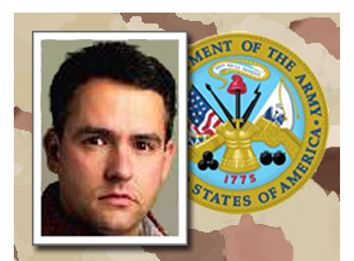
Day after day, Army Spc. Cheyenne Forsythe roamed around Saddam Hussein’s magnificent palace compound in Tikrit listening to dazed and tearful soldiers, many of them barely out of high school. With its lush palm gardens and ornate frescos, the palace was an incongruous place to be counseling American troops shaken by the harrowing montage of combat. There were dazed young men whose skulls had been grazed by 9 mm rounds. Tearful soldiers who had seen their buddies’ bloody limbs blown off by roadside bombs. Thousand-mile-stare soldiers whose convoys had been ambushed by invisible combatants firing rocket-propelled grenades. Soldiers like Staff Sgt. Georg-Andreas Pogany, who came to see Forsythe after being deployed “about two inches from hell” near the town of Samarra, deep in the insurgent-infested Sunni Triangle.

Forsythe, a member of the Combat Stress Control Team in the 85th Medical Detachment, pulled up a couple of plastic chairs on the edge of a marble veranda and listened to Pogany’s story, taking notes in what he calls his “little green book.” It was Oct. 2, 2003. Forsythe had never met Pogany and has not seen him since. Here are some of the things that Pogany said, according to Forsythe’s notes:

“Fell apart.”

“Shaking, throwing up.”

“I don’t want to fucking die here, man.”

Over the next few hours, as shadows stretched across the Tigris River and the oppressive heat abated, Forsythe heard Pogany recite the classic signs of combat fatigue: loss of appetite, sleeplessness, hyper-vigilance, a quick-trigger startle reflex, an inability to focus. Dozens of soldiers had told eerily similar stories to Forsythe about how Iraq had gotten under their skin. How they were locking and loading at the sound of their own Hummer door closing, how they found themselves flipping out all the time, tossing their food, cradling semiautomatic weapons like teddy bears, sweating, hyperventilating. Paranoid. Worried that they were letting their units down. Worried that they’d never feel normal again.

As they talked, Pogany worried aloud about his wife back home, that he hadn’t cashed his military travel voucher, that he didn’t understand what the hell was happening to him. He wondered why he started shaking and vomiting uncontrollably after seeing what was left of an Iraqi who had caught a Bradley’s 25 mm round in his torso.

Pogany recounted that after he saw the body, he had a smoke and went to bed, but woke up 20 minutes later and dashed to the latrine to vomit. He shook all night, didn’t sleep, hallucinated that the roof was coming down on him. In the morning, he knew something was wrong. He went to his Special Forces team sergeant. Pogany, who was not a Green Beret but a military intelligence soldier who had been assigned to work for the elite 10th Special Forces Group unit as an interrogator, knew he was viewed as an outsider by the Special Forces team. The team sergeant (due to Army regulations, Pogany cannot reveal the name of any person in his unit) was clearly unsympathetic to the new guy’s complaint. He told Pogany to pull himself together, gave him two Ambien, a prescription sleep aid, and ordered him to sleep.

Later that day, Pogany was still shaky and told the team sergeant he needed help. The sergeant called him a coward and threatened to cite him for violating some provision of the military justice code. Eventually, Pogany was taken to the Tikrit compound and saw a chaplain, who recommended a chat with a Combat Stress Control Team member.

Forsythe listened as the sky grew dark and reassured Pogany that what he was experiencing was absolutely normal. Pogany cried several times.

No worries, Forsythe told him. It would be OK. It happens all the time.

Forsythe talked Pogany through a few stress-reduction techniques. Deep breathing. Thinking about things he liked to do. Listening to music. Calling his wife. Reading a book. They were both from Florida, and Forsythe said the inspector general on the compound was a Dolphins fan. They could maybe watch a game together. They talked for a few hours.

According to Pogany, the talk with Forsythe helped. Pogany said he felt better and was looking forward to getting treatment and going back to duty.

Forsythe made a recommendation to the Army psychologist, Capt. Marc Houck — a textbook call for the type of combat stress Pogany was suffering from, taken from the “Leaders’ Manual for Combat Stress Control,” Army Field Manual 22-51. Forsythe recommended that Pogany spend a few days with a “Restoration Team” at the nearby Tikrit airfield to learn coping skills and stress-reduction techniques. In all likelihood, the training would give Pogany the help he needed to return to his unit. “The doc agreed it was a clear-cut case,” recalls Forsythe.

Pogany says he repeatedly told his chain of command that he wanted to stay on in Iraq, and says this contention was confirmed by a sworn statement by a Military Intelligence chief warrant officer. Houck’s Report of Mental Status Evaluation, dated Oct. 2, 2003, stated that Pogany “reported signs and symptoms consistent with those of a normal combat stress reaction.” Houck stated that “short-term rest, stress coping skills, and/or brief removal from more dangerous situations are often adequate to resolve such reactions.” He agreed with Forsythe’s recommendations that Pogany spend time with the Restoration Team and concluded that Pogany “is cleared for action deemed appropriate by command.”

What the command deemed appropriate surprised Forsythe. From the start, he could tell that Pogany’s Special Forces superior officers weren’t buying any combat-stress crap from this Army soldier. Forsythe witnessed the company sergeant major berating Pogany within earshot of a bunch of other soldiers. “The sergeant major really had a hard-on for this guy [Pogany],” recalls Forsythe, 28, who left the Army in March when his enlistment period was up and now lives in Killeen, Texas. “I’m like, ‘Wow, what did he do to get this guy on him like that?’”

The next day, Forsythe was stunned to hear that Pogany had been sent home despite the doctor’s recommendations, and even more stunned to hear Pogany would be charged with cowardice. The charge carried a possible death penalty. “Staff Sgt. Pogany was ready to work through it. But he was never given a chance,” says Forsythe. “The sergeant major felt he should be charged with cowardice and sent home. And that’s exactly what happened.” Pogany became the first soldier to be charged with cowardice since the Vietnam War.

But the Army may have picked on the wrong coward. In the months since returning to his base in Ft. Carson, Colo., Pogany, 33, has refused to shut up and go away. He’s fighting the military’s charges against him — charges it has repeatedly reduced. Pogany has become the poster child for how the Army treats combat stress in soldiers — and it’s a pretty ugly poster. As the Pentagon continues rotating troops and more soldiers return to civilian life, this problem will only become more pronounced. By the end of April, the U.S. military had sent more than 250,000 soldiers in support of Operation Iraqi Freedom or to Afghanistan (which has experienced similar psychiatric casualty rates).

In March 2004, the Army released a report by its Mental Health Advisory Team, which concluded that 17 percent of the soldiers serving in support of Operation Iraqi Freedom screened positive for “traumatic stress, depression, or anxiety and reported impairment in social or occupational functioning.” According to Department of Defense statistics, at least 24 soldiers killed themselves in Iraq and Kuwait in 2003 — a rate considered abnormally high and a number that several advocacy groups contend would be considerably higher if it counted soldiers who committed suicide since returning home as well as those who died of self-inflicted wounds that are still under investigation. In March, one of those suicides was a Special Forces soldier from Pogany’s unit, Chief Warrant Officer William Howell, who shot himself with a .357-caliber revolver after he returned to Ft. Carson and argued with his wife. Despite the Pentagon’s official stance that combat fatigue is a predictable consequence of battle that should be treated with the same seriousness as shrapnel wounds, Pogany’s case illustrates that the dominant ethic of the military remains “suck it up” — and that soldiers don’t always get the help they need.

The psychological effects of combat can be devastating, as returning soldiers have learned since warfare began. Using the conservative 17 percent number from the Mental Health Advisory Team (which some think understates the severity of the problem by half), at least 42,500 soldiers who were in Iraq will likely suffer from some sort of combat stress. Yet nearly 50 percent of the military say they believe that if they report a combat-stress reaction, their careers will be in jeopardy, according to an Army survey conducted before the war.

Pogany’s case serves as a very public warning to other soldiers that if they complain, they may face prosecution, ridicule and the end of their military careers. When Pogany was charged with cowardice, says Steve Robinson, executive director of the soldier advocacy group National Gulf War Resource Center, “it sent a chilling message across the Army: If you complain, you will be branded a coward.” According to Robinson, many soldiers quickly decided “We’re not talking about this if that’s the way we get treated.”

Robinson is incensed about the Pogany case, which he finds extreme but far from unique. “Pogany is the public face right now of a bigger problem,” says the burly Robinson, a former Special Forces ranger. “We as a society don’t understand that there are consequences when we send young men and women off to war. We have to expect that they’re not going to act in a robotic manner and they will be affected by what they see and do over there.”

The military has refused numerous requests for comment. “The military will not address the Pogany situation,” says Rick Sonntag, an Army Medical Command spokesman. Maj. Rob Gowan, a Special Operations Command spokesman, says that because of pending legal matters, his command will not comment on the specifics of Pogany’s case, either. Martha Rudd, an Army spokeswoman, says, “We certainly want soldiers who need help to ask for help and to receive help.”

As for Pogany, he isn’t going down without a fight. “They frigging labeled me a coward in front of the entire goddamned country,” he says. Despite having run through his savings to pay mounting legal fees, he continues to challenge an institution with a $400 billion annual budget. “If I can help so one other soldier doesn’t have to go through what I’ve been through, it’ll be worth it.”

Pogany believes that his behavior may have been affected by the drug cocktail that the military gives its soldiers, especially the antimalarial drug Lariam (also known by its generic name, mefloquine hydrochloride, which is what Pogany took). Lariam or its generic equivalent has been associated with the suicides of, or murders committed by, several Ft. Bragg soldiers; and several advocacy groups, as well as Congress, are investigating claims that adverse drug reactions are much more common than the military has acknowledged. “They give soldiers a little anthrax, a little yellow fever, Larium, smallpox, Ambien to help you sleep, antidepressants, whatever,” Pogany says. “Any normal person would say, ‘Hold on there, Hoss.’”

In late March, I met with Pogany and his wife Michelle at their friend’s house in Colorado Springs, where the proximity of the Air Force Academy, Ft. Carson and Peterson AFB encourages a Taco Bell marquee to proclaim, “Thank You Troops! Welcome Home!” After work at the base, Pogany sits on a couch and painfully, deliberately, relives his story. He keeps his 3-inch-thick three-ring binder next to him, filled with legal documents, letters, sworn statements. Following his lawyer’s standing advice, Pogany is careful about what he tells me, knowing that if he reveals operational security details, the military will use it against him. Next to the three-ring evidence binder sits his medical file, 2 inches thick.

He is dismissive of his biography, eager to get to his documents and his recent story. Pogany, a naturalized citizen, grew up in Germany and moved to America in 1990 as an exchange student at the University of South Florida. In 1998, at age 26, he enlisted in the Army, but he missed the initial deployment to Iraq after he injured his shoulder in an attempt to get his “jump wings” at the Army Airborne School. In late September, he was attached to a 12-man Special Forces Operational Detachment Alpha, or ODA, one week before being deployed.

As we talk, his cellphone beeps the “Mission: Impossible” theme as a steady stream of other soldiers calls to lend him support and to share intel, before he finally shuts it off. I ask why he sounds like he’s from New Jersey despite growing up in Europe and spending so much time in Florida. He shrugs. Pogany looks a little like a beefy John Cusack with shorter hair, flecks of grey coming in at an accelerated rate these days.

He also displays a similar wry sense of humor as he describes the first words of the team sergeant when Pogany was introduced to his 12-man A-team: “Who da fuck are you?” As they waited in silence for a transport plane, Pogany says there was little chance to bond with his new squad. “It wasn’t necessarily the time to sit around the campfire and sing ‘Kumbaya.’”

He recounts his tense arrival in Iraq, being met by a Special Forces soldier who told him, “You’ll be lucky to get out of here alive.” He tells how his first convoy traveled the same route where a previous convoy had been ambushed. How a five-ton truck in their convoy broke down for five hours in the middle of what a highway veteran told Pogany was “Indian country.” How he was driving a Land Rover the last leg after dark with a Special Forces medic who developed a strange tic, chanting Dr. Seuss rhymes from the front seat, each of them holding their M-4s on their laps, muzzles out the window. “He goes into Rain Man mode and starts reciting ‘Green Eggs and Ham,’” recalls Pogany, incredulous at the surreal memory. He shut the medic up with a cigarette, and they drove through the darkness to an undisclosed location, “which was definitely not a Club Med.” The compound had been attacked the previous week, and there was evidence of small-arms fire and mortar shells pocking the building where Pogany was told to bunk down. Late at night, a patrol came in after a firefight, jubilant over dead and captured Iraqis.

That’s when Pogany saw the mutilated Iraqi body peeking out from a body bag. Twenty minutes later he was puking his guts out.

After being ordered out of Iraq, Pogany was flown back to Ft. Carson, spread-eagled and frisked, and separated from other soldiers. Special Forces personnel confiscated his belongings, including his laptop and satellite phone. They even took his personal gun from his home and put him on a suicide watch even though every psychiatric evaluation he had undergone specifically said that he was not a risk to himself or others. He was charged with violating Article 99 of the Uniform Code of Military Justice, “cowardly conduct as a result of fear.” The military dropped the cowardice charge on Nov. 6, 2003, and downgraded the charge to willful dereliction of duty.

Meanwhile, Pogany felt vilified. In a notable low point, he was watching Paula Zahn on CNN and saw a split-screen television news program that placed Pvt. Jessica Lynch on one side of the TV with the word “Hero.” On the other side was a picture of him emblazoned with “Coward.”

Then, on Dec. 18, the military dropped the charge of willful dereliction of duty, which would have required a court-martial, and tried to get Pogany on what is called an “Article 15 non-judicial punishment,” a military procedure that allows a commanding officer to control the proceedings, including what evidence can and cannot be presented and whether Pogany could even have a lawyer present. A negative outcome would have effectively ruined Pogany’s reputation and career.

Pogany declined. “I said, ‘Court-martial me, then.’” In a court-martial, he’d be able to call witnesses and produce evidence, including psychologists’ and psychiatrists’ reports, both civilian and military, attesting to the diagnosis of combat stress and the subsequent trauma inflicted by the military’s legal proceedings against him. (Pogany’s diagnosis was upgraded to chronic post-traumatic stress disorder, according to a Report of Mental Status Evaluation dated Jan. 7, 2004. The report, co-signed by a civilian psychologist and an Army psychiatrist, stated, “This soldier has undergone a great deal of legal stress, which has taken a toll psychiatrically.”)

As of early June, Pogany’s legal case was still on hold, pending the military’s next move. Rich Travis, Pogany’s attorney and a former military prosecutor, says that when he inquired recently about what that next move would be, he was told, “The statute of limitations is five years.” Travis suspects the military is trying to delay and goad his client to do something that will help them build a case that Pogany was a nut-bag to begin with — since otherwise they don’t have a case. “I think they’re backed in a corner,” Travis says. “I don’t think they have many options left but to wear him down. I’ve never seen a soldier treated this way.”

In mid-May, Pogany traveled for psychological and other medical treatment at the Walter Reed Army Medical Center in Washington. Then, last week, Pogany was diagnosed by a military doctor in California with “likely Lariam toxicity,” according to medical records from the Naval Medical Center in San Diego. Pogany’s records indicate that he suffered brain-stem damage (it isn’t yet clear if the damage is permanent or not), and the diagnosis lends credence to the possibility that his panic attack may have been related to the antimalarial drug. (Panic attacks are known possible side effects and are listed on the drug manufacturer’s warnings.) The Lariam issue is bound to grow, as more soldiers become aware of the range of possible reactions to the drug, from disorientation to loss of balance to suicide. A two-year investigation by UPI documents dozens of soldiers who appear to be suffering serious psychological side effects from Lariam. Separately, the Department of Veterans Affairs and the DoD have launched independent investigations into the drug’s long-term effect on troops.

What remains abundantly clear is that the military’s judicial proceedings against Pogany have delayed his receiving timely medical and psychological help. He is cautiously optimistic that, with last week’s diagnosis of likely Lariam/ mefloquine toxicity, the military will now begin to help him and other soldiers recover from the psychological and pharmacological odyssey they’ve experienced in service of their country.

From his vantage point in Texas after finishing his hitch, former Combat Stress Control Team member Forsythe worries that Pogany’s case sends a message that “your career is screwed” if you seek mental-health help, even from forward-deployed stress teams like his. What makes this especially maddening to Forsythe is that the Army’s policies are totally inconsistent. He says he’s helped many soldiers just like Pogany. “There’s a whole population that uses us and gets on with their lives. Why are we out there with the tip of the spear if they can’t come and see us? What are we there for?” The low-key Forsythe gets more animated as he considers the implications. “We’re going to have a lot of people coming back who are messed up,” he says. “This was a very simple case. It just got screwed up for no other reason than somebody was out to get this guy from the beginning. It shocked me.”

Continue Reading Close