Daniel Handler

The voice that gave me goose bumps

The "Lemony Snicket" author remembers his nerve-racking musical run-in with Odetta, the late folk singer and activist.

When I learned that folk singer and activist Odetta had died, I had the same reaction as I do when I hear her sing: I got goose bumps.

And I remembered the first and only time I got those goose bumps from hearing her in person, in an uptown recording studio. It was a little over 10 years ago, and I had just moved to Manhattan and met the songwriter Stephin Merritt of the pop band Magnetic Fields. I foolishly told him that I played accordion — neglecting to add that I did not play it well — and found myself helplessly agreeing to participate in an ongoing project of his, playing on a song for a collection in which a vocalist would be accompanied by a sole instrument. My battered accordion was to be the instrument. The vocalist was Odetta.

To my nerve-racked dismay, Odetta had agreed to participate on the condition that we record it live in a professional studio, which meant I had to play right in front of her, rather than doing take after take in the privacy of Mr. Merritt’s studio apartment until I got it right. Odetta’s voice had brought me to paralysis when I was doing nothing but listening to one of her records. I could not imagine what would happen. Odetta arrived a little late, in a regal swoop of flowing clothes and bracelets that were surely going to be a problem for the microphones. Mr. Merritt was then largely regarded as a scruffy indie musician, and I was his new, amateur accordionist, which made me 10 times scruffier. I had learned the song as best I could, but I was nervous, aware that I was in way over my head and that the clock was ticking. Odetta was imperious and a little brusque, dismissing some coaching from Mr. Merritt’s manager and her own — and sending the engineer from the room. But then she sat down, looked at the songwriter and me, and gently told us what the song was about.

She shared a story of two soldiers, both black and both gay, during the Second World War, a story scarcely to be found from the lyrics of the song and completely unknown to the man who had written them. The story was a little odd and a little sad, but her voice sold it, with patience, resonance and a quiver that implied the great ache of the world and the wisdom it takes to navigate it. The tenor of the room changed, and our confusion and resistance got misty. We also got misty. The story, while she told it, became true.

And then she started to sing.

If you listen to this recording — “Waltzing Me All the Way Home,” from the 6ths album “Hyacinths and Thistles,” the second of two takes — you can hear the squeaks of my wheezy accordion, held together with duct tape, and some nervous fumbling in the chords as I prayed I wouldn’t screw it up. But that’s not (I hope) what you’ll be listening to. What you’ll really hear is Odetta’s voice, rich and strange, doing what it did for more than 50 years: finding a narrative — in an old song or a political struggle — and bringing it to people who needed to hear it, using her voice to sell a story to people who didn’t even know that it was there, and giving them goose bumps as they heard what she had to say.

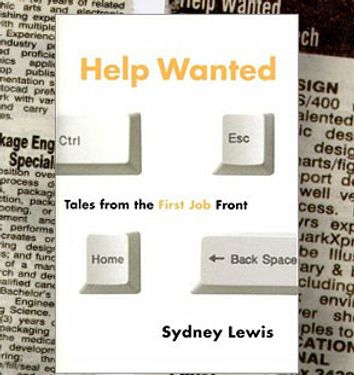
“Help Wanted: Tales From the First Job Front” by Sidney Lewis

Evil retail managers and back-stabbing temp agencies star in a new collection of war stories about work.

Deciding to write a study of the workplace consisting of first-person oral accounts is a bit like deciding to write a long novel about a big white whale — no matter how good a job you do, you’ve got a tough act to follow. Studs Terkel’s classic “Working,” a far-reaching and cohesive investigation into the workplace, an intermingling of housewives, dam builders, electricians and prostitutes, has embedded itself in the American psyche and brought inspiration to everyone from socialists to producers of musical theater. This critic took an umpteenth look at it for the purposes of writing this review, and it was 200 pages before he came up for air.

Still, however enduring “Working” is, the times they are a-changing. What with the recent economic boom, it’s no surprise that follow-ups to Terkel’s masterpiece are beginning to appear. The editors of the now-defunct Word.com submitted their immense compilation, “Gig,” just in time for the first round of Internet layoffs, and now we have the newest hat in the ring: Sidney Lewis turns her microphone to the young generation in “Help Wanted: Tales From the First Job Front.” Lewis even makes the connection to “Working” explicit by interviewing a descendant of one of Terkel’s subjects.

Deciding to narrow her focus was wise, and Lewis, whose previous work includes the valuable and very readable “A Totally Alien Life-Form: Teenagers,” has an obvious rapport with her subjects, resulting in some uninhibited, moving stories and sudden, off-the-cuff wisdom. But the naive energy that makes her 25 interview subjects so interesting also makes the book a bit scattered. Like everyone’s first jobs — unless your first job was “heiress to a fortune” — the occupations chronicled here are temporary, place holders for young people while they relentlessly pursue, aimlessly search for or disgustedly junk their first ideas of what they want to do with their lives. The tales they tell are full of impulsive epiphanies and emotional walkouts, and the subjects’ very restlessness prevents the book from really holding together. Lewis summarizes the “most important lesson” in her introduction: “You have to work it out for yourself.” However true this may be, it’s not much incentive to read accounts of other people working it out.

Lewis, of course, is not required to draw elegant conclusions — Terkel was famously and effectively noncommital — but she sure seems to think she is. She proposes “Help Wanted” not just as an investigative work but as a helpful resource for young people looking for employment, though why young people at odds with the workplace would want to spend their free time reading about young people at odds with the workplace, rather than, say, grabbing other young people they actually know and talking over a few drinks, is beyond me.

“Your identity changes as you move from being a high-school teenager to a university student or a worker; your connection to home loosens as you attend school elsewhere, move to a place of your own or simply exercise your right to stay out later,” Lewis says, but it’s hard to imagine anyone who’s just beginning to stay out later finding this a valuable insight.

In the introduction to the section “Harsh Realities,” Lewis rather wildly assumes, “So you’ve got a job … and you think everything’s going to work out just fine.” With off-putting interludes like these, it soon becomes clear that Lewis’ true precursor is not Studs Terkel but Nancy Friday, whose compilations of people’s sexual fantasies have been, um, engaging softcore feminists and teenage boys for decades now. As anyone who’s read Friday’s books knows — and don’t worry, I’m not asking for a show of hands — the trick to enjoying them is to skip the author’s tacky commentary and go straight to the breathless confessions. It’s the same deal here.

Once Lewis’ subjects take the mike, “Help Wanted” takes off into landscapes alternately inspiring, invigorating, infuriating and inconceivable. Rather than appealing to the young, the book is likely to be more interesting to people far enough from their first jobs that they can read blow-by-blows of evil retail managers and back-stabbing temp agencies without breaking into a cold sweat. I favored Karen Hurley, who hated her clerking job so much that she ran off to boot camp, and Ray Mancison, who started his career in the music business in a scene straight out of a James Cagney movie. (“You got a job, kid — you got balls.”) And I got all bug-eyed at the impenetrable earnestness of Gina Parks, who wanted to be a guidance counselor all her life. You might prefer the overachievements of Max Leonard or the slack philosophy of T.J. Devoe, but that’s the whole point: You have to work it out for yourself. There’s not a lot of insight in “Help Wanted,” but there’s a whole lot of sensational things to read. Consider it work porn: Draw up an ergonomic chair and peruse this collection until something gets its foot in your door.

Continue Reading Close

Winging it

The author of "Watch Your Mouth" and "The Bad Beginning" picks five great books with "bird" in the title.

I’ve lost count of the number of people who have said to me, “Can you name five terrific books that have the word ‘bird’ in their titles?” I think it’s one person, or maybe even less than that. The number of people who have asked me is not important, really. What is important is the word “bird.” Well, maybe not important, but fun to say out loud — go on, try it: “bird” — and also contained in the titles of the following five books, all of which are terrific.

The Birds by Daphne du Maurier
Let’s begin with the book where the birds in the title are attacking you. Actually a longish short story included in different collections of varying quality (several of which are titled “The Birds”), du Maurier’s tense and cerebral tale packs a surprisingly powerful punch. A nuclear family, led by the sort of sturdy, succinct hero required by law to be in all British fiction of the 1950s, is at first curious, then annoyed, then frantic and then something worse than frantic as the ornithological fauna peck and squawk and blow the house down. Like Hitchcock’s adaptation, the cheesy sci-fi premise slowly fades into something truly eerie.

The Wind-Up Bird Chronicle by Haruki Murakami
I’ve said it before, but I’ll say it again because maybe you were dozing earlier: Haruki Murakami is the greatest living practitioner of fiction. With “The Wind-Up Bird Chronicle,” Murakami elevates the brilliant, if pyrotechnic, style of early novels like “A Wild Sheep Chase” into a cohesive and original vision that touches on the immeasurable travesty of war, the tiny pinpoints of heartbreak and how an existential breakdown can be restored by the undeniable beauty of new friends and mechanical objects. The most recent Great Novel I know of, “The Wind-Up Bird Chronicle” will restore faiths you didn’t know you had lost or ever needed.

Birds of America by Lorrie Moore
“There is a pain in his eyes,” Lorrie Moore notes in one of these stories, “something sad and unfocused that sometimes stabs at them — the fear of a misspent life, or an uncertainty as to where he’s left the keys.” That thin ice the sentence is skating on — that tiny, spooky line between the annoying logistics of life and the emotional chasm they try to conceal — is the reason fiction exists, as far as I can tell. With equal parts wit and pathos, these 12 stories explore an intelligent and lonely landscape populated by people who burst into tears, or guffaws, the minute they’re alone, just like you do. There are few collections one can read straight through without getting weary or fidgety, but “Birds of America” works like a perfect pop album — “Dusty in Memphis,” say, or “Sign o’ the Times,” with the lesser numbers giving the gems room to breathe.

The Bird Artist by Howard Norman
This novel explores one of my personal favorite themes in literature: People Living in Cold, Isolated Areas, Getting Bad Ideas. The setting is the blustery Newfoundland, Canada, town of Witless Bay, in which narrator Fabian Vas is growing up with his jittery, determined family and honing his skills at drawing the local bird life. Winter arrives, and so do the bad ideas: Arranged marriages, long boat trips to shoot puffins, adultery with the lighthouse keeper and drinking whiskey with an impulsive woman whose idea of a gift is a loaded revolver are among the dangerous notions that cloud the gray coastal sky. The plot is melodramatic, of course, like all great plots, but unlike his characters, Norman knows how to keep a lid on a potentially overblown situation. Suspenseful and wise, smart and reserved, “The Bird Artist” is a compelling and chilly read — perfect for this blanket-warmed time of year.

Homeless Bird by Gloria Whalen
Whalen’s young adult novel won this year’s National Book Award, and deservedly so. In simple, sparse prose, “Homeless Bird” tells us, detail by detail, just how easily a young Indian girl’s life can go terribly, terribly wrong, and how she thinks up a better future all by herself — and by the skin of her teeth. Like all good children’s books, it holds its own with an adult audience. I even found it to be a nice companion piece to a recent adult novel, Sanjay Nigam’s “The Snake Charmer,” which is a terrific novel but couldn’t be included on this list because the wrong animal is in the title.

While we’re on the subject, the reason there aren’t any ornithological guides on this list is that, let’s face it, you’re not going to read any. The reason certain books by Anne Lamott and Maya Angelou aren’t included is that I don’t think those books are any good. The reason Flann O’Brien “At-Swim-Two-Birds” isn’t included is that, although I am convinced that it’s brilliant, I need to read it a few more times before I understand a single word.

Continue Reading Close
www.salon.com/writer/daniel_handler/index.html