Dave Gilson

America’s laziest fascist

Infamous shock jock Michael Savage bombed in a bizarre, half-baked stage show this week, but his 6 million listeners just heard him call for the U.S. to murder millions of Arabs. Does the FCC care?

  • more
    • All Share Services

America's laziest fascist

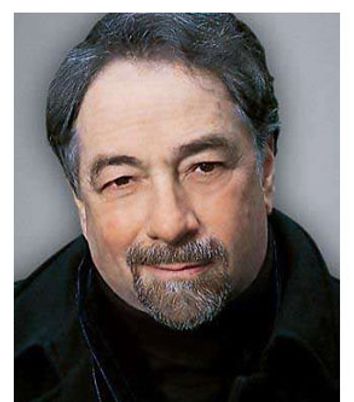
Michael Savage doesn’t get out much. The hardcore conservative radio host of “The Savage Nation” has always been a relatively reclusive figure. He doesn’t do book tours or publicity stunts. He’s not exactly approachable either: He claims to carry a gun with him at all times, and he doesn’t like nosy journalists asking for interviews.

Not that he’s the shy, retiring type. Lately, as the Iraq torture scandal has dominated the headlines, he has taken to calling Arabs “non-humans” and has called for the U.S. to kill “thousands” of Iraqi prisoners and nuke a random Arab capital. Deciding whether to pay attention to Savage has always been tricky, though. It’s never clear whether he really believes what he says in his tirades or if they are simply ploys for public outcry. His is currently the third-most-popular radio program in the nation. Nonetheless, it may be hard for Savage to sit by and watch the FCC’s crackdown against fellow jock Howard Stern effectively lift Stern’s profile even higher into the stratosphere. But Savage’s outbursts are often so unhinged, so vicious, that ignoring them seems irresponsible, especially when so many Americans apparently are nodding in agreement. So when I learned that Savage would be making his first public appearance in three years Saturday night, it seemed worth checking out, if only to see who was paying attention to him and why.

“Savage Uncensored,” as the event was called, marked the end of what’s been a crummy year for the once-hot Savage. Last March, MSNBC gave him a weekly program only to cancel it after four months when he labeled a caller a “sodomite” and told him to “get AIDS and die.” Then the San Francisco radio station that gave him his first big break dumped him and rubbed salt into the wound with billboards that depicted Savage morphing into Sean Hannity, beneath the slogan “Out With the Old, In with the New.” When a couple of anti-Savage Web sites started a boycott of his advertisers, his syndicator, Talk Radio Network, tried to revoke their domain names. When that failed, it tried to sue them for $1 million. That failed too.

Savage’s star may have faded, but it’s still too early to write him off, with “The Savage Nation” pulling in 6 million listeners a week. His latest screed against fifth columnists such as liberals, gays and atheists, “The Enemy Within,” debuted at No. 8 on the New York Times nonfiction list. But when it comes to the true measure of a talker’s cachet — buzz — Savage has slipped several notches in the past year. The anti-Savage sites are now dormant, their owners apparently satisfied that he would never make it back on TV. Fans and foes who once duked it out in Internet chat rooms appear to have moved on. These days, it seems the only people paying attention to Savage are diehard fans and perhaps a few incorrigible rubber-necking journalists.

Savage was scheduled to appear at the Concord Pavilion, an outdoor amphitheater in the suburban hills east of San Francisco. As a Metallica cover band called Creeping Death wailed, 5,000 or so people filed in to see him in the flesh. A quick look around made the demographics of the Savage Nation quickly apparent: Ninety percent were men and a good 95 percent were white. During the next three-and-a-half hours, there would be clear affirmation that they like gay jokes, Arab bashing and mass displays of patriotism. They will offer to share their freedom fries with a complete stranger. And when that stranger fails to boo liberals, holler the phrase “under God” during the Pledge of Allegiance or show sufficient enthusiasm for torturing Iraqis, they are polite enough not to drag him out to the parking lot and pummel him.

The crowd at Concord had paid as much as $100 for an evening of rhetorical red meat for the right-wing faithful. At first, we weren’t disappointed. But by the end of the night, I wasn’t the only one checking my watch.

Savage’s son, Russ Weiner, kicked off the show. With his spiky, dyed-orange hair and calculated scruffiness, he was reminiscent of Dr. Evil’s son Scott from the Austin Powers movies. The resemblance was confirmed when Weiner proclaimed, “I’m proud to be the son of Savage!” The 30-something Weiner is the founder of RockStar, an energy drink that he developed with his dad, drawing on Savage’s previous career as a Marin County herbalist and ethnobotanist named Michael Weiner. RockStar’s herbal liver-cleansing formula is supposed to enable drinkers to “party like a rock star,” which presumably means drinking and doping. Generous free samples had been passed out to the crowd on the way in. It lived up to its hype: The antifreeze-colored, cough-syrup-flavored beverage can only be enjoyed if you’re taking drugs.

But while Weiner has cashed in on other people’s bad behavior, he made it clear that he’s a family-values kind of guy. “Who’s heterosexual and proud?” he asked, prompting manly cheers. “If you’re not, hopefully you will be soon!” Before handing the stage over to the man he called “our leader,” he advised the audience how to handle his hot-tempered dad: “Let him know you love him!”

Love — or an acceptably heterosexual version of it — filled the air as Savage drove onto the stage in a classic red Cadillac convertible. He warmed up the audience by riffing on the day’s news, joking that “Shiite” should be spelled with one “I” and calling Muqtada al-Sadr “a fat bastard in a burka.” Dressed in a calfskin jacket, slouch hat and blue jeans, Savage was at ease, swearing freely and peppering his speech with “Hey, mans” that evoked his days as a North Beach beatnik wannabe. Whatever was in his coffee cup was certainly helping. When it ran dry, he called out, “I need a drink!” and a young woman sauntered over and poured champagne into the mug.

Like everyone else these days, Savage was fixated on Iraq and the Abu Ghraib prison abuse scandal. He managed to combine the two dominant conservative takes: The first being Rush Limbaugh’s insistence that what happened in Abu Ghraib was a harmless prank; the other being Oklahoma Sen. James Inhofe’s assertion that the prisoners got what they deserved.

“These are tough interrogations?” Savage asked. “My father put me through tougher interrogations when I was 16!” He portrayed now-infamous Abu Ghraib prison guard Lynndie England as a poster girl for the war on terrorism — an embodiment of the idea that kicking Muslim ass can be fun. “Let’s hear it for Laurie [sic] England!” he cheered. “The leash chick! Hey man, she had a great time over there!” He couldn’t understand why liberals were so outraged. After all, he said, the acts of sexual humiliation and degradation that took place in Abu Ghraib were no more perverted than typical homosexual behavior. Try to follow his tortured logic: Savage was saying he didn’t mind the Abu Ghraib abuses because they were good clean fun, like gay sex, which he openly abhors.

Savage moved on to another of his favorite topics: bombing the bejeezus out of Iraq. Just a few days before the Uncensored event, he’d been ranting on the radio about dropping fiery death on civilians throughout Iraq and the Middle East. “I don’t give a damn if they hide behind their women’s skirts,” he foamed. “Wipe the women out with them! Because it’s our women who got killed on 9/11! And it’s our women who are gonna get killed tomorrow unless we get rid of the bugs who are destroying us!” Tonight, Savage continued to elaborate on this disturbing vision of how to win the war in Iraq. He said he fantasized of being woken up by the sound of B-1 and B-52 bombers flying over his house on their way to the Middle East. Imagining bombers overhead at 4 a.m., he gushed about these nocturnal missions, “It’s better than an orgasm — it is an orgasm!”

Savage continued the psychological striptease, peeling off more layers of mainstream conservatism to expose his raging right-wing id. Though he has long billed himself as the original “compassionate conservative,” his brand of conservatism does not share George W. Bush’s pretense of caring about Muslim hearts and minds, much less lives. It appears that for Savage, the war in Iraq has nothing to do with spreading democracy or respecting human rights. It is about asserting American power by any means necessary, and screw what anyone else thinks. Predictably, and sadly, this notion went over well with the audience. When Savage blurted out, “Does anyone in this crowd give a shit about the Iraqis?” he was answered with a deafening “NO!”

But if the first half of the event showcased Savage’s ability to stir the faithful, the second half was an object lesson in how a performer can take his audience — and his talent — for granted. Basically, he bombed. He spent nearly 20 minutes sitting in a stuffed chair in front of a television set, free-associating as he channel surfed. Seeing footage of Jordan’s King Abdullah, he screamed, “Kiss my ass! Shut the hell up!” To a soccer match in Spanish, he quipped, “Reminds me of my gardener.” It was about as entertaining as watching a middle-aged man yelling at his living room TV. Savage eventually realized things weren’t going well. “You don’t like this shit,” he said. “It’s a bad act.”

Some fans — mostly older people and parents with small children — started to leave. If this were radio, they would probably already have changed stations. Most of the audience stuck around as Savage went into freefall, flailing wildly for something to catch his fans’ attention. He read from the Bible, played with his new puppy, moaned about his “mother issues” and asked for more booze. The evening’s low point came when he played the audiotape of Nicholas Berg’s beheading over the P.A. system. Berg’s pitiful, frenzied screaming filled the amphitheater. Having not heard or seen the gruesome tape before, I covered my ears in shock. I was not alone. If Savage was trying to incite the audience, it didn’t work. Playing the tape only revealed his desperation for a reaction, any reaction.

“What made you come out on this night?” he asked. “You see the vultures circling this great nation. We feel the vultures flying over the Concord Pavilion.” And perhaps they could smell Savage dying on the stage below.

In a last-ditch attempt to rouse the listless crowd, Savage tried to root out some closet liberals. “Is there any asshole here who hates me, who’s gonna try and rush the stage?” he asked. It was a long way between the cheap seats and the stage, but I was getting tired and bored. Rushing the stage might have prolonged the evening by a few more minutes, so I stayed put. Hurrying off stage, Savage promised, “Wait till you see the close.”

Luckily, the finale lasted all of 15 seconds. From the wings, Savage, obviously thinking he was off-mic, barked, “Play the Arab music!” A Middle Eastern tune blared as his red Cadillac lurched onto the stage. Savage was perched on the back seat, dressed in white robes and sunglasses, looking like a costume-party sheik. As the car disappeared off stage, he waved to the crowd, “Goodbye, infidels! I’ll see you in hell!” And with that, “Savage Uncensored” slouched to its perplexing though somehow fitting conclusion.

The house lights came on, revealing a few thousand blinking and bewildered fans — Savage had just resoundingly bombed on his home turf. “That’s it?” wondered one woman behind me, with real disappointment in her voice. “He said he was going to do Dr. UnSavage,” she said, referring to one of the jock’s longtime on-air characters. A couple of young guys shook their heads. “He misread his audience,” one said. His friend added, “He got into the champagne too much.” Maybe some RockStar would have helped.

His poor performance was not entirely surprising. Unlike his compatriots Bill O’Reilly, Sean Hannity and Dr. Laura, Savage often comes off as a remarkably amateurish and lazy showman. None of his colleagues — no matter how big their egos — would dare adlib their way through a two-hour live performance.

Savage’s unprofessionalism makes it easy for liberals to dismiss him as a crank. But that’s an easy way to overlook his ever-more xenophobic, homophobic and authoritarian political message. Ultimately, his invective may be what keeps his listeners coming back for more. Savage says what many mainstream conservatives can’t or won’t. As frustration with the Bush administration’s handling of the Iraq adventure and the war on terror grows, his message holds appeal for those who believe nothing but desperate measures will work against an increasingly hostile world. And so, Savage will keep calling for Iraqi prisoners to be sodomized with dynamite. If he’s lucky, such antics may score him a public showdown with the FCC. Or perhaps he will finally rant his way into oblivion. Considering the recent developments in Iraq, even if Savage waits another three years to emerge from his veil of heavily armed privacy, there may be no shortage of fodder for his bizarre stage spectacle and the audience it attracts.

Sinners in the hands of an angry dad

The latest product from O'Reilly's factory is, God help us, a self-help book.

  • more
    • All Share Services

Sinners in the hands of an angry dad

At first glimpse, Bill O’Reilly’s new book, “Who’s Looking Out for You?” seems like another cynical attempt sell a few million copies of an overstuffed pamphlet. But there’s something different about the latest volume from the unofficial Fox News mascot: It’s his first foray into the world of self-help publishing.

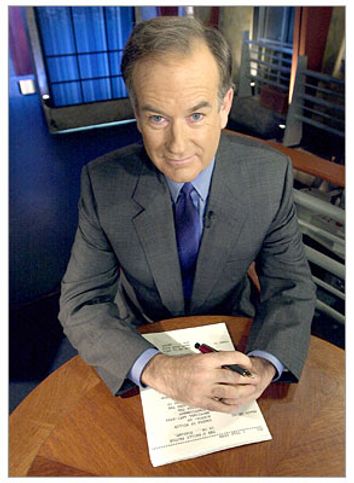
It may sound odd to be getting advice from the bombastic talk-show host best known for shouting down his guests, calling them “pinheads” and, when civility fails, telling them to shut up. In fact, O’Reilly’s fairly unbalanced behavior often suggests that he should be on the receiving end of some professional advice. Perhaps O’Reilly — or at least his publishers — sense this. Witness the front cover of “Who’s Looking Out for You?”: O’Reilly sits by a computer monitor, wearing a casual button-down and an uncharacteristically avuncular expression. He looks relaxed, even approachable, as if you had just brought him a mug of tea while he was helping you out with your taxes. “Come closer,” he seems to be saying. “I won’t bite.”

Is it possible that we’re seeing the softer side of the “no-spin zone”? O’Reilly ‘s image certainly could use a good airbrushing. And now that Bush’s numbers are sinking and Rush is an admitted doper, conservatives could use a P.R. boost. Could a kindler, gentler Bill O’Reilly be the ticket? With “Who’s Looking Out for You?” O’Reilly has ventured out of the echo chamber that is “The O’Reilly Factor” to try out a new role. He wants to be your father figure. Though he already has his hands full with his own pair of rarely mentioned offspring, he apparently has plenty of parental attention to go around. He’s even engraved his own “Ten Commandments of Effective Parenting,” condensed thusly: “The primary duty of a parent is to give his or her children the tools to build a happy and successful life.” If your folks didn’t do the job right, he’s happy to give it a try.

In his introduction, O’Reilly explains that he is so grateful to his millions of loyal fans that he wants to give them a “big thank-you” by sharing his secrets for how to make their lives “much happier and probably much longer.” “Your humble correspondent,” as he likes to call himself, wants to help you become a better person: an honest and caring individual who respectfully listens to others’ opinions and doesn’t go around filing frivolous lawsuits. By the time you’re done reading his book, you’ll be a “kick-butt problem solver” who can face your problems and “knee them in the groin.” Don’t let the $25 price tag fool you — this book is a gift to you, the reader.

But don’t cozy up with Papa Bill quite so quickly. His father fixation explains a lot of his overbearing, melodramatic behavior of late. It also makes his attempt to portray himself as a purveyor of homey advice all the more creepy. With its vaguely Ashcroftian title, “Who’s Looking Out for You?” conjures the image of O’Reilly as a paternalistic panopticon keeper, monitoring Americans’ political beliefs and personal lives whether we like it or not. Maybe he should have called it “Who’s Your Daddy?”

As the wannabe father of us all, he’s a scowling, scolding presence, dishing out tough love and poking his nose into our affairs. This is the O’Reilly who, as proudly recounted in his book, filed a complaint with child-protection officials on behalf of the 9-year-old daughter of Whitney Houston and Bobby Brown. It’s the same O’Reilly who famously went ballistic on “Factor” guest Jeremy Glick, whose father was killed in the World Trade Center on Sept. 11. After Glick criticized Bush and the war on terrorism, O’Reilly lectured, “I don’t think your father would be approving of this.” Displeased with Glick’s perceived lack of filial piety, O’Reilly ordered him to shut up and then demanded that his microphone be cut.

O’Reilly recites the well-worn tale of his “rough-hewn” upbringing in an Irish Catholic family in blue-collar Levittown, Long Island (actually, he grew up in its tonier neighbor, Westbury, according to his mother). O’Reilly again tries to spin his middle-class childhood as a suburban version of “Angela’s Ashes.” This romanticizing might be excused if he weren’t so quick to slap down anyone he perceives as a class traitor. Jennifer Lopez is slammed for trying to keep her street cred as “Jenny from the block.” Meanwhile, Billy from Levittown, who reportedly hauls in $4.5 million a year, self-consciously insists that he’d rather be eating Whoppers than hanging out at swanky Manhattan parties. Later, he gripes how, when he was host of “Inside Edition” (“one of those tabloid infotainment shows, but a good one”) he was denied “perks” such as first-class air travel. You would think he wouldn’t mind sitting with the salt of the earth back in coach, munching on peanuts.

O’Reilly’s ingrained sense that he’s come a long way has less to do with overcoming financial hardship than familial hardship. Even though he calls the concept a “cliché,” he clearly lugs around some pretty heavy emotional baggage. “There was plenty of tension in my house,” he recalls. “Along with a lot of yelling and martial arts.” At the center of the maelstrom was O’Reilly’s dad, an ornery and occasionally abusive figure. “There were times when I hated my father. I admit it. He knew it. The punishment that descended upon me was mostly uncalled-for and born of the frustration of his life.” And his paternal grandfather wasn’t exactly a role model, either. O’Reilly describes him as a crusty Brooklyn beat cop who practiced “a kind of low-grade vigilantism.”

For armchair psychologists, this is pure gold. It’s not too tough to imagine how a kid who grew up with an unsupportive father and a thuggish grandfather went on to host a show like the “Factor.” The apple didn’t fall too far from the tree. However, O’Reilly clearly wants to be a better man than his forebears. Hence his desire to be a crusader, albeit a pretty thin-skinned one. Just last week, he stormed off National Public Radio’s “Fresh Air,” accusing host Terry Gross of doing “a hatchet job on me.” What triggered the congenital O’Reilly temper to flare? Gross had started to read an unflattering People magazine review of “Who’s Looking Out for You?”

Despite his conflicted feelings about his father and grandfather, O’Reilly is loath to condemn them. His dad wasn’t a great parent, but O’Reilly insists that didn’t make him a bad person. Sure, he was a “suspicious guy” who “trusted almost no one” and “set a terrible example by inflicting unnecessary pain on his children.” But, O’Reilly explains: “He did not do this on purpose. He simply could not control himself.” Likewise, Grandpa O’Reilly’s strong-arm approach to law enforcement didn’t make him a criminal. “He was a good man, but some of his cohorts were not,” says O’Reilly. Like his son, his downfall was that he didn’t have a “support system,” a phrase that sounds alarmingly touchy-feely for a guy who cringes at the idea of emotional baggage.

That O’Reilly gives his father and grandfather a moral pass is ironic, considering how quick he is to hold people accountable for their actions, even when those actions might partly be the product of economics, culture or circumstance. It’s even more ironic, considering that O’Reilly spends the better part of two chapters instructing poor people and minorities how to be more responsible. He laments the disintegration of moral values in the inner city and the decline of the African-American family. During these harangues, his message is one of personal responsibility: Get married, get a job, and stop making excuses or blaming others for your lot in life.

Just as he laid down commandments for parenting, so he lays down a list of commandments for poor folks. “[F]or real change to happen in chaotic neighborhoods, there must be rules, strict rules,” he asserts. Rules like “zero tolerance for adults who hurt or endanger kids.” Never mind that his 10 commandments for suburban Fox-watchers condones “corporal punishment as a last resort.” Now suppose that Bill O’Reilly Sr. had lived in the ghetto, hating his life, neglecting his kids, and taking the occasional swipe at them. Think he’d be excused as someone “who simply could not control himself” and who could have been happy if only somebody “gave him direction”? Fat chance. O’Reilly’s got no problem giving white middle-class guys like himself a free ride while people with different-colored skin and skimpier wallets are taken to task.

But, as O’Reilly reminds us, “self-delusions can negate even the best advice.”

In his unconvincing attempt to come off as self-help guru and nice guy, O’Reilly has inadvertently provided a pretty good idea of what makes him tick. As the son and grandson of two failed fathers, it’s no wonder he’s obsessed with dominating male figures. O’Reilly thinks what this country needs is a stern father figure, and he’s more than happy to play the part, whether he’s acting as a surrogate husband for single mothers and their children or making pronouncements about what music you should listen to or whom you should trust.

So who, according to O’Reilly, is looking out for you? George W. Bush gets a lukewarm nod, Fox News gets a thumbs-up, but otherwise it’s a pretty short list. O’Reilly manages to hold back his ultimate answer for 212 pages, until the very last paragraph, when he goes for broke: “I hope I have looked out for you by writing this book. Thanks for reading it.” Betcha didn’t see that one coming.

Continue Reading Close