David Bowman

Harpooning Hollywood

Peter Biskind talks about Harvey Weinstein, Robert Redford, his new book, "Down and Dirty Pictures," and the wild stories he can't tell about '70s Hollywood.

  • more
    • All Share Services

Harpooning Hollywood

It was bad enough that writer Peter Biskind psychically peed all over the Sundance Film Festival in his new book. Then he jinxed producer Harvey Weinstein — a man rotund in both personal girth and temper — from a shot at yet again walking onto the stage of the Kodak Theatre to collect another Oscar for best picture.

In a Salon interview last week, Weinstein tried to spin the Academy Award nominations as an overall win for Miramax (“City of God” was a surprise nominee in several categories). But the fact remains that Weinstein’s big-budget baby “Cold Mountain” was not a nominee for best picture. Or best director. Or best actress. It only got a shot at best actor (for Jude Law), and best Zellweger (uh, sorry, I mean best supporting actress), and some “minor” technical awards like cinematography and editing, not to mention original song and original score (and as we all know, Harvey can’t sing).

“I don’t feel like dumping on Harvey and crowing over him,” Biskind says over the telephone last Tuesday afternoon, shortly after the Oscar nods were announced. “You have good years and bad years, and this is not shaping up as a good year for him.” Pause. “I liked ‘Cold Mountain,’” he goes on. “I’m surprised, frankly, that it didn’t get nominated. I think [Anthony] Minghella is a really good director. He’s a smart guy with a good cast. Those battle scenes in the beginning were right up there with ‘Saving Private Ryan.’ Is this not what you want to hear?”

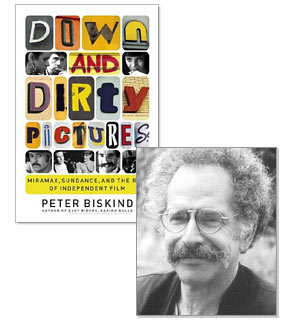
No, no, no. We have no anti-Weinstein agenda. It’s just that he figures so notoriously in Biskind’s new book, “Down and Dirty Pictures: Miramax, Sundance and the Rise of Independent Film.” In its pages, Miramax chief Weinstein is portrayed as the screaming Attila the Hun of independent cinema. Even worse, he partnered with Sundance founder Robert Redford, who is portrayed as a vapid golden boy now pushing 70, who only founded the Sundance Film Festival because the mountain he bought in Utah didn’t get enough snow to turn it into a ski resort.

When this year’s Sundance festival opened two weekends ago, Biskind’s book cast a terrible pall over the opening proceedings. Weinstein, some said, blubbered around contrite like some Ralph Kramden at Alice’s funeral, while Redford just lay low, like an aging ski bum minus Viagra. The days of quitting your day job at Blockbuster and maxing out your Visa card to produce a Sundance-worthy masterpiece of American cinema seemed dead and buried.

Yet by Wednesday of Sundance week, Biskind was forgotten, replaced by the buzz over “Open Water,” a quasi-”Jaws” remake shot on a shoestring by a Brooklyn couple who used real sharks as props. Several miles east of Park City, presidential hopeful Howard Dean threw a televised fit that made even Weinstein’s temper seem as threatening as a stick of cream cheese. At festival’s end, the only film of note appeared to be a documentary about a man who ate Big Macs for a month, not exactly the kind of film that gives us the next Quentin Tarantino, let alone the next Redford.

Salon first interviewed Biskind the day before Sundance began, when halfway across the country Weinstein still believed that — regardless of what Biskind had written about him — he still had a good shot at an Oscar nomination. Biskind talked to us at the legendary White Horse Tavern in New York. With his fuzzy hair and even fuzzier mustache, he looked like Gene Shalit’s doppelgänger. We sat under a photograph of a drunken Dylan Thomas, and Biskind warned he’d have to leave in 45 minutes to make a CNN taping.

So is Harvey Weinstein your Macbeth?

More like my White Whale. My Moby Dick.

What’s the difference between Weinstein and Jack Warner? Or any other Monroe Stahr-style producer from the 1930s?

For one thing, the context has changed. In the 1930s, extravagant mogul behavior was taken for granted. It was a much more rough-and-tumble era. Now Hollywood is buttoned-down and corporatized, so Harvey stands out like a sore thumb. He probably would have fit in really well in the 1930s. Harvey is cut from the same cloth as Jack Warner or Louis B. Mayer. No question about that. But there is a ferocity, an out-of-control quality, in Harvey that you don’t find in the old moguls.

Does the average Joe really understand the difference between independent cinema and the studio days of “Sunset Boulevard”?

The studio system started to disintegrate after World War II. A Senate decree separated the studios from the theaters. Then the attendance started to slide. Then the rise of television. The [McCarthy-era] blacklist. It all started to go to hell in the late 1940s and throughout the ’50s. By the 1960s it was a total mess. And then you have the new Hollywood.

So the new Hollywood is corporate?

What I’m calling “new Hollywood” is the 1970s people. In those days, studios weren’t corporate. The corporatization trend was just starting. TransAmerica bought United Artists. Gulf & Western bought Paramount. But at the same time, in the case of Gulf & Western, Charlie Bludhorn, who ran it, was as crazy and mogul-like, and took as much interest in the studio, as any “Last Tycoon.” He was a real character in his own. I think TransAmerica was similar to what we have today, sort of a faceless corporation.

Say I work at Blockbuster Video. If I can get my orthodontist uncle to bankroll me $20,000, can I become the next Quentin Tarantino? Or are those days over?

It’s harder. If you’re as good a screenwriter as Tarantino, write a script and get people interested in it, and get a movie star attached to it — which is what Tarantino did with “Reservoir Dogs” [in 1992]. He got Harvey Keitel attached to it. I don’t think the film would have gotten made without Keitel. Well, I take that back. Tarantino says he was so determined to make the film that he would have shot it on toilet paper.

I think it’s both harder and easier today to make independent films. There are more people doing it. The way has been paved. The trail has been blazed. People know it’s possible and they see the rewards if they’re successful. The same way, I think a film like [Kevin Smith's] “Clerks,” which was made for $27,000 with no stars by someone completely unconnected to the movie business — never been to film school, and had very little family money — I think those days are nearly over. Everyone says — and I think that it’s true — you couldn’t get “Clerks” into Sundance today. The bar has been raised. The movies are glossier. The budgets are higher. They have movie stars.

How was your first book, “Easy Riders, Raging Bulls,” about the wild outsiders who saved Hollywood film in the 1970s, received by the movie industry?

I think it was received very well. Some of the people it focused on were unhappy. The Robert Altmans of the world, the Peter Bogdanoviches. Some people were very cool with it, like Warren Beatty. Martin Scorsese was pretty OK with it. He wrote me a note, and I heard through Robbie Robertson that he was fine. Scorsese took a grown-up attitude: “If you can’t take the heat, get out of the kitchen. I did live through that era. I did do that stuff. Someone is going to write about it. It’s not the end of the world.”

Other people were more freaked out. I always thought the best comment about “Easy Riders, Raging Bulls” was — not to drop names — when I ran into Oliver Stone. And he told me that he had run into Billy Friedkin [i.e., William Friedkin, director of "The Exorcist" and "The French Connection"] in the men’s room at some hotel right after Oliver had read “Easy Riders.” Oliver said, “I read this book. I see you acted like a real motherfucker in the 1970s.” And Friedkin just turned to him and smiled and shrugged, “Eh, it’s just a book.”

I think that’s a healthy attitude. I never understood why Francis Coppola would get so upset. If I had made the two “Godfathers” and “The Conversation” and “Apocalypse Now,” I wouldn’t give a shit what people said about me. They could say that I was a pederast and I wouldn’t care. You make films like that, you’re safe for life, I would think. But apparently people don’t feel that way.

Just to refer to my experience, I wrote a book on the Talking Heads where I portrayed the bass player Tina Weymouth as the villain. That hadn’t been my original intent, but she would go off on these maniacal rants and claim she wrote songs that she hadn’t, and then insult me. So finally I thought, “That’s it, bitch. I’m going to reveal how insane you really are.” With this book, did you know Harvey was going to be your White Whale from the beginning?

Yes. I already knew Harvey a little bit. As I said in the preface, I was going to write a story about Miramax in 1991 for Premiere magazine, but I was discouraged because they withdrew all their advertising. The next thing I knew I was Harvey’s editor as he was writing columns for me. I would run into him. And he has this reputation, you would hear Harvey stories constantly. I knew before I started that this had to be a major focus of the book. I knew what I was dealing with. Harvey can be so charming and seductive. You’d blurt out atomic secrets if he asked for them.

How could you actually dig up dirt on a saint like Robert Redford?

Well, he was my Tina Weymouth. I wrote this article for Premiere in 1991, on the 10th anniversary of Sundance. I thought my article would just be celebratory about what a great institution Sundance was. Then I started talking to people who actually worked for Sundance. People who had been fired. I started talking to filmmakers. The picture I got was totally contradictory to what I was expecting. I just went with that story. I had no preconceptions. If anything I was predisposed to like Sundance. I was just flabbergasted. Redford was so difficult to work for that some people hated him. He was a micromanager. A control freak. You couldn’t get anything done without his approval or OK, but you could never get his approval or OK, because he was never around. He was off shooting someplace. Or he was indecisive and wouldn’t make up his mind. It was infuriating. That was across the board. I must have talked to 15, 20 people that had the same story.

Now as far as filmmakers went, Steven Soderbergh had this legendary falling out with him after Redford scrambled to sign Soderbergh up after “Sex, Lies, and Videotape” — Redford was completing with Sydney Pollack (his good friend) — and Redford finally got onboard with “King of the Hill.” Then he and Soderbergh had a dispute over how much of their salary they were going to defer. During postproduction, Redford asked to see the movie abruptly over a weekend, and then never got back to Soderbergh on whether he liked the movie. And then Redford tried to take his name off the film. Compounding that, there was a tussle over “Quiz Show,” which Soderbergh was slated to direct. Redford essentially ended up taking it away from him. And here is this guy who is supposed to be the champion of independent film. This wasn’t the only instance of this happening. Robert Redford wasn’t this great benefactor of independent film. He had other agendas going.

How does someone tell you something about Robert Redford off the record?

What do you mean? They say it’s off the record …

But there is a casual “off the record,” and there is the “they’re gong to burn me at the stake if I tell you this” off the record.

There is always this litany of interviewing someone on the record, and then suddenly the conversation stops. And you know there is a story that they won’t tell you, and you say, “Well, you can go off the record.” You have to do this whole song and dance. “How can I trust you? I’ll get roasted alive if this ever gets out.” You can’t keep working in this business, as you know yourself, if you burn your sources and the word gets around.

How much did you not put in the book that you could have?

A lot. Partly because I didn’t have the whole story. I just didn’t have time. It’s inevitable. There’s lots of stuff about the 1970s that I didn’t put in “Easy Riders.” I was told this unbelievable story. [Tells a long story, off the record, about an act of debauchery involving major filmmakers at a Chinese restaurant on Hollywood Boulevard.] The story was totally off the record, and I did not use it. It killed me not to use it.

There was no way to get confirmation from a waiter or something?

No. There weren’t enough people involved. It was so frustrating, but sometimes you just lose that stuff. But ultimately, a year later — who cares? Nobody misses the story because they didn’t know about it to begin with. I always remember this thing that George Lucas said about “Star Wars”: “You’re lucky if you shoot 10 percent of what you have in your head.” The same is true with these books. For all the stories in the book, the real truth — the deeper layer — there’s much, much more stuff and it’s much more outrageous than what is actually in the book. Harvey would quote the line from “The Man Who Shot Liberty Valance”: “Print the legend.” He’d say, “I know you don’t give a shit what the truth is, you’re just going to print the legend.” Sometimes he’d say something himself, and then say, “That’s not really what happened, but it sounds good, so use it.” You do try to find out the truth as much as you can. There are so many versions of the “truth.” Then there are the out-and-out lies.

How often were you lied to?

A lot. I tend to be a credulous person, but I’ve learned to be more skeptical. Sometimes nothing anyone tells you is the truth. There are these legendary gray areas: How much did Robert Evans really have to do with “The Godfather”? Those famous controversies that you never get to the bottom of. Evans says one thing, Coppola says something else. Then you start interviewing peripheral figures; they all contradict each other. And it all depends on whether they’re friends of Evans, or friends of Francis.

So I heard rumblings that “Easy Riders, Raging Bulls” was inaccurate. When I tracked down the source, it turned out that someone who knew Pauline Kael remembered her complaining that you got her story wrong.

That’s a good example because I believe that Pauline Kael lied to me. I had asked her how many scripts she read and which ones they were. I can’t remember what the film was. I think it was a Robert Towne script. She made a lot of suggestions [to Towne], and then she reviewed the movie when it came out. That is really kind of outrageous. I asked, “How often did this happen?” She said that was the only time. Then later, I read an interview with Paul Schrader, and he said he sent her a copy of “Taxi Driver.” I’m sure there are many other scripts that were given to her. She just bald-faced lied to me! This little old lady! [Laughs.] Pauline Kael, the greatest movie critic that ever lived. The Pauline Kael story has never been written. She still has devoted followers — Paulettes.

Do you like Martin Scorsese?

I like him a lot.

Scorsese stopped thinking like an independent filmmaker long ago. I mean, geez, “New York, New York” was him being Vincente Minnelli.

Scorsese has always been one of these people who has been fascinated by Hollywood movies. If you know as much about Hollywood movies as he does, you have to admire his system. He wants to make a musical. He wants to make a western.

[Biskind's cellphone rings. He answers with a flick of the wrist like Captain Kirk. Then: "Yes. OK. Right. Right, right, right. OK. Right. I did, yeah. Yeah, not much later, but I have to leave at 4:30." He flicks it off.]

[Disappointed.] There’s no CNN. We don’t have to stop on the dot at 3. I’ve been preempted by an interview with Spalding Gray’s wife. [The actor is missing and presumed a suicide.] Anyway, I think Scorsese has always been pulled in the direction of being a Hollywood director. At the same time, he doesn’t really have a Hollywood sensibility. So he’s always been pulled between those two poles. There is stuff in “Gangs of New York” that is very much too tough, too dark, for Hollywood.

In the late 1940s, didn’t right-wing pundits demand that Hollywood movies stop glorifying failure, or being too dark?

You had all those dark, dark film noirs with unhappy endings. And everyone would get killed. Or live with betrayal. A lot of the heroes of those movies were down and out: John Garfield. I don’t think Hollywood today is interested in real people. Independents seem less and less interested in real people. Look at “Something’s Gotta Give,” which is the last Hollywood movie I saw. The characters live in the Hamptons and just go from one expensive restaurant to another. They’re all rich. That’s the milieu that Hollywood feels most comfortable in, and what audiences want to see. The only time you see ugly people in “The Lord of the Rings,” it’s the Orcs.

Isn’t “Lord of the Rings” a studio film?

Weirdly enough, it started life as a Miramax movie. It almost was a Miramax movie, but it was too expensive. Harvey tried to kick Peter Jackson off the movie and give it to John Madden.

How did you get your start as the official historian of the last 25 years of cinema?

I was working at Premiere, and I was the same age as a lot of the directors I wrote about in “Easy Riders, Raging Bulls.” I saw most of those movies when they came out. I obviously loved them. I always wrote about them. When I would go to do an interview [with Hollywood people from that period], they would all talk about the old days, how great they were. I remember Warren Beatty saying that in the 1970s there was actually social pressure from his peers to do “good work.” One of the points I make in “Down and Dirty Pictures” is that the phrase “selling out” has no meaning anymore. It used to be a really bad thing. The worst thing you could do as a director or a screenwriter was to sell out. In fact, the director Alexander Rockwell more or less said that to Tarantino when he became successful with “Pulp Fiction.” “You have to be very careful. Don’t sell out.” And Tarantino just looks at him like he doesn’t know what Rockwell is talking about.

In the 1970s people were concerned about selling out. They didn’t care about their careers as much as they did their integrity. I used to listen to those people rhapsodize about those 1970s. I thought the back story of all these filmmakers was the real story, not what they are doing now. Most of them were in a downslide in terms of their careers [by the mid-1990s, when "Easy Riders" was written]. I thought it would be really cool to do this whole era that came after the death throes of the studios.

Let’s follow the money: When MGM made a musical in the 1930s, the money came from MGM itself, right? They didn’t have to go out and try to hustle up the bucks?

They went to Wall Street. They had a credit line with some Wall Street broker or creditor. In those days, the business offices were in New York and the studios were in L.A.

But MGM didn’t have to go to a banker and say, “Hey, want to invest in this new picture called “The Wizard of Oz”?

No. They didn’t do it on a film-by-film basis.

Now it seems like it’s a little of both, isn’t it?

Sometimes it’s a slate of pictures, sometimes it is film by film. It’s quasi-independence. You get part of the money from the studio, and then raise the rest of the money elsewhere. You go out with your hat in your hand to investment bankers. To the Japanese and Germans. You get a lot of foreign money.

This whole post-”Last Tycoon” era has lasted much longer than the studio system did, right?

The studio system ended by the late ’40s. So it lasted for 15 years.

Who are the heroes that are going to keep cinema going?

David O. Russell. Wes Anderson. [Pause.] What’s his name? Miguel Arteta. I like his films. I’m forgetting a bunch of others. Quentin Tarantino. Soderbergh. It’s hard to know what direction those last two are going to go in, but they certainly have lots of talent. [All of these appear in "Down and Dirty Pictures."] I think one of the achievements of the 1990s was to create an infrastructure, a support structure for these people so they can actually have a career instead of one good film. Then you have another generation coming up behind them, like Sofia Coppola.

What did you think of “Lost in Translation”?

I thought it was a great example of the hybrid of the new Hollywood. It used a big movie star [Bill Murray] who got a lot of attention, and at the same time it was a very un-Hollywood movie. There is virtually no plot. Nothing happens. There is an inconclusive ending. You’d never get that film made in Hollywood. I didn’t like everything about it; I thought it was all atmosphere. I just thought it was nice that she pulled it off.

I really felt like I was back in the 1970s.

In a good way?

Oh, yeah. The shots were held longer, like in the ’70s. It wasn’t bam bam bam. I could watch a medium shot of Bill Murray standing in an elevator full of Japanese businessmen for about 10 minutes.

Right. It was slow. Exactly. [To waitress.] Can I have more coffee?

Waitress: Yes. I’m making a fresh pot.

Great. Because this tastes like battery acid.

Waitress: Yeah. It’s not good coffee to begin with. [Both Biskind and the waitress begin laughing.]

Were you living in New York in the late ’70s?

Yeah. I used to be involved with the magazine called Jumpcut, which was printed on newsprint. I used to distribute it myself.

Yeah! I worked at Cinemabilia bookstore, on 13th Street. I remember you lugging in your big piles of Jumpcut. So this was what film culture was like 20 years ago. I’m 19 years old, 20. Working at Cinemabilia for $6 an hour, sneaking into the back to read Jumpcut. Reading about Coppola’s take on camera angles. Robert Altman on dialogue. I’d go to the movies four nights a week between Saturday and Thursday, and every Friday I’d be at some film’s first opening night. I never thought about how much a movie cost to get made. If it went over budget. Whether it lost money. Who cared about that stuff? Then suddenly “Heaven’s Gate” is the world’s biggest bomb, and news about a film’s budget became as interesting as its artistic goal. Now every Monday I’m reading the Times business section to check out the weekend film grosses.

The same was true with me. I was completely into film from an aesthetic point of view. I worship those people in that same way: “God! Why did you put the camera up here!” That’s the way Peter Bogdanovich wrote all those books where he knew more about old movies than the directors who made them. Film technique was the center of gravity if you were a cinéaste in those days. You weren’t interested in budgets or the business part of the industry, because it was corrupt and irrelevant. Nor were you interested in people’s personal lives. All that changed as celebrity journalism got involved in the ’70s, ’80s and ’90s, and the only thing that people were interested in was the money and personal stuff. But how many books can you read about Scorsese talking about where he put a camera on any given film? There are 10, 15 books and that is all they talk about. After a while it gets boring.

Also, as you get older you realize perhaps the biggest triumph of, say, “Lost in Translation” is that she managed to get the money to make it.

Well, she did come from that family. She did have a leg up. It doesn’t hurt. One thing that surprises you about books — when “Easy Riders” came out, and Freidkin said, “It’s just a book,” I sort of felt the same way. Everyone says that nobody reads anymore and book culture is dead. I was amazed and gratified that so many people were interested in a book. It was much different than publishing a magazine article, which I had been doing for 20 years. The thing is there and it’s gone when the next issue comes out. A book is actually treated like a substantial contribution — it’s not just forgotten the next week. If you spend a lot of time writing books, that’s nice.

Well, the main criticism I’ve read about your book is that it’s too gossipy.

One person’s gossip is another person’s interesting personal history. To understand personal films you have to understand what those people are like. Certainly you had to understand the drug culture to understand why the careers of so many 1970s figures went up in flames. I’m not apologetic at all. When you read a biography of Picasso you want to know what he was like. Was he a philanderer? He treated women this way and that way. That’s what biographies are for. These people were historical figures. Public figures. I’m not saying it’s fun to have your sex life written about. I wouldn’t like mine written about.

So there are drugs and sex in your past?

Well … sex — like everybody else. I wasn’t a big drug taker. I always preferred liquor.

Corsets, threesomes and fleshy French thighs

A Kinsey Institute exhibition shows that female desires burn just as brightly as men's.

  • more
    • All Share Services

Corsets, threesomes and fleshy French thighs

If your grandparents were American, they didn’t talk about sex. Certainly their American parents never said a word about it. And because no one talked about sex, most citizens assumed that no one actually did it in America.

Then just before World War II, a biologist living in the middle of Indiana — a guy who studied wasps (of all things!) — conducted a university-funded survey of American sexuality that discovered that Americans did it all the time! He published half of his findings in 1948 with “Sexual Behavior in the Human Male.” Alfred Kinsey had discovered that American men did it in bed, in parked cars, in the kitchen, and even out behind the barn.

A typical American man, say, Fred Astaire, did Ginger while standing up, lying upside down, and even back-to-back like a pair of wayward missionaries. Kinsey even discovered that sometimes Fred did it by himself. Although Fred seldom did it to dead people or children or animals, he probably experimented at least once or twice with another guy, say, Gene Kelly.

As radical as Kinsey’s conclusions were, five years later America reeled when “Sexual Behavior in the Human Female” was published. No American in 1953 had ever considered Ginger’s sexual experience outside of Fred’s. Kinsey revealed American women were as horny as the guys. He even began collecting the pictures to prove it.

Now half a century later, we can see his samples in “Feminine Persuasion: Art and Essays on Sexuality,” the catalog of a Kinsey Institute erotic art show held last year at the School of Fine Art Galley at Indiana University in Bloomington. The subtitle of the book (published by Indiana University Press) really should specify female sexuality, because the work stresses the erotic vision of women artists. Photographs and painting depict lesbian sex, the erotic allure of pregnancy, a woman about to mount a cactus, as well as abstract sculptures that resemble those monstrous white beach balls that used to chase Patrick McGoohan on the TV show “The Prisoner.”

Sandwiched between the women’s work are male fantasies of female sexuality. Guy images include naked woman as cello, naked woman as masturbator, and naked woman as Marilyn Monroe.

I spoke to one of the curators/editors of “Feminine Persuasion,” Catherine Johnson — herself curator of art, artifacts, and photography at the Kinsey Institute — about the place of such art in America’s erotic life.

Is the Kinsey Institute an archive now or do you guys still do research?

We’ve been a functioning research institute since 1947.

Is there anyone there who remembers the founder, Alfred Kinsey?

Not on staff. Our former director Paul Gephardt [who retired in '82] is still around. He worked with Kinsey for about 10 years, so we do have a direct link.

Do you get a sense of what Kinsey was like?

We are in contact with his children. We talk to them about their impressions of their father. There are people on campus and in town who knew him. That is a fun thing about art exhibition openings because people who knew the Kinseys will come — it’s always interesting to speak to people who have firsthand memories.

Is he remembered fondly?

Yes. He was quite a dedicated researcher and a wonderful speaker. His lectures that he gave were renowned. His classes were popular.

Did he have a sense of humor about his work?

Ah, I don’t think he had a huge sense of humor. No. He took his work very, very seriously — that’s the one comment that I’ve heard. He wasn’t one to joke about sex. Whereas today, we all try to maintain a sense of humor because you have to.

In a nutshell can you say who Kinsey was and what he accomplished?

In a nutshell? Well, he was a biology professor who began studying human sexuality in 1938. He did that because he was teaching a class on marriage, teaching the biological aspects of marriage. Because he was an approachable instructor, students would ask questions about sex, about their own sexual lives, asking him what was normal sexual behavior …

Was this a mixed-gender class?

Yes. You had to be an upperclassman; it was mainly for seniors and graduate students — people about to launch themselves into the world and needed to know more about married life. Much of the class was devoted to economics, budgeting. There were talks by different people on the university faculty. But Kinsey was the one who oversaw the organization of the classes, and he taught the biology of marriage.

So these classes were not a cultural academic analysis of marriage. This was practical knowledge like home economics, because the assumption was that of course everyone was going to get married.

Right. It was an elective. If you assumed you weren’t going to get married, you didn’t need to take the class. Most of the students were engaged or they were already married. The thing was in 1938; there wasn’t much known about sex. It wasn’t discussed openly at all. There weren’t any books. There hadn’t been any major studies. No one knew what “normal” behavior was. There were a lot of things that were illegal, but people were probably still doing them — things like oral sex.

Americans were all virgins before marriage — true or false?

One reason Kinsey’s book was so shocking when it came out was because it indicated that a high percentage of men were having sex before marriage. They were having sex outside of marriage with other partners. They were masturbating. A large number of men had some sort of homosexual encounter, even though it might only have been once. American men were much more sexually active than most people thought. When the female volume came out in 1953, it was even more shocking — women were as sexually active as men. Especially in the 1950s, that was a conservative time.

It was bad timing for Kinsey. Wasn’t he accused of being a Communist?

Yes. People argued that his research and his books were encouraging ungodly behavior by saying that all of these sexual behaviors were fairly normal just because a lot of people did them. He had enemies. Which is probably why he didn’t have much of a sense of humor about his research. Of course, his books became bestsellers. Kinsey became a household name. I don’t think he ever enjoyed being a celebrity. He was much more focused on his research.

It’s hard to imagine being his wife.

His wife was quite a strong and interesting person in her own right. She was very involved with the Girl Scouts in town. Taught a lot of kids how to swim. They were both very much outdoors people. When they met, he was studying wasps. He studied gall wasps. They would go on gall wasp expeditions.

“Gull” as in seagull?

No. G-a-l-l. A gall is this round formation that forms on a tree when this wasp has laid its eggs. Kinsey collected about 5 million specimens.

So instead of “the birds and the bees,” it was “the birds and the wasps.”

By the time he taught the marriage class, he had written a major book on wasps and he was ready for a new research subject.

Did he reach any conclusions about the importance of sexual imagery?

He certainly looked into that quite a bit. His research showed that men were more likely to become aroused by visual material than women were. He was very enthusiastic about collecting erotic photographs that people had. He felt that images were really important for studying sexuality, but there weren’t that many images around. There were only a few blue movies. Certainly no Internet. Even so, our documentary photograph collection is about 48,000 prints. It’s been categorized into 40 different categories including “coitus” — the word they chose to use for intercourse.

We probably have over 5,000 photographs of coitus. “Homosexual Male.” “Homosexual Female.” “Petting,” which is a term you don’t hear about anymore. These are photographs that are sexual, but not actually intercourse.

I’m old enough to remember that term — that’s what Laurie Powers and I did in the front seat of her Vega in high school.

The Petting collection is actually the part that gets the most requests. People will use these images in books.

Did Kinsey have to worry that the authorities would consider this stuff as pornography, instead of scientific research?

That was a problem in the 1950s especially. When he started collecting the material, he kept it fairly quiet because people tend to jump to conclusions when they hear about dirty pictures. Today we actually have exhibits of this material, but in his day they certainly did not plan to exhibit it.

In the ’50s, the U.S. Customs in Cincinnati decided that the art coming through the mails to the Kinsey Institute was obscene. This led to a court case that in 1957 was decided in our favor saying that even though this material was considered obscene, it was allowed to come to Indiana University to the institute through the mail because it was used for research purposes. The sad thing was Kinsey was very worried that this case might go against the institute and make it impossible to acquire this material. He died in ’56. He died before the case was settled so he never knew the outcome. [Pause] Have you heard about the film that’s being made?

No. What film is being made?

They’re making a feature film about Alfred Kinsey that will be released next fall.

Who’s playing him?

Liam Neeson.

Who’s playing his wife?

Laura Linney. We’re all quite curious to see how that will come out.

So now, talking to you as an art historian, what is the difference between erotic art created by men and erotic art created by women?

That’s a good question. We have much more imagery created by men than by women. There were some women in the early part of the 20th century who were working as erotic illustrators — a couple are featured in the book. One is a really interesting woman named Clare Tice. I think you can tell from that image that she was an artist. [This etching reveals a naked blond man with an uncircumcised penis who is flanked by two naked women of color, kissing the breast of the woman to his left.]

Tice was Caucasian, wasn’t she?

As far as I know she was. She lived in Greenwich Village and was one of those eccentric artists who lived there in the teens and ’20s. One thing that is interesting about her is that the Society for the Suppression of Vice actually tried to confiscate her material, and the event got her more notoriety and helped her career rather than damage her in any way.

Her women aren’t all African-Americans, are they?

This may be the only one. Most of our images in the book feature Caucasian models. Where we could, we tried to bring examples of non-Caucasian women.

One image that has gone mainstream is the Judy Dater photo of a naked man nuzzling the breast of a naked pregnant woman — the idea of pregnancy being erotic.

I always credit that to Demi Moore’s famous Vanity Fair cover.

But Judy Dater took her photograph more than a quarter-century before.

I was thrilled that we have this one because our complete name is the Kinsey Institute for Research in Sex, Gender, and Reproduction. By far, 99 percent of our artwork deals with sexuality but does not deal with reproduction.

Do you have any children?

I do not.

Can you tell me, ballpark, how old you are?

I’m 46, to be specific.

Guess what, so am I. Do you know the pinnacle of the baby boom? It’s wasn’t just after World War II. It was 1957 and 1958 when more babies were born than ever before or after. You and I are quintessential baby boomers. [Pause] Eroticism is sort of the antithesis of what reproduction is for — reproduction.

When you see a lot of these images you don’t really think about making babies.

Well, the first plate in the book is of a baby being born, the point of all this activity.

That’s why we included it. All during 2003 the Institute celebrated women’s sexuality in honor of the 50th anniversary of “Sexual Behavior in the Human Female.” For many women, sexuality includes childbirth. A lot of the work by male artists focuses on genitalia more so than the works by women. I think things are changing. We have a lot of gay and lesbian images in our collection. The images of men with men, much of that was produced by men who were gay. Much lesbian imagery was produced by men for other men.

I should have said this earlier, I don’t have kids. This is a deliberate decision between me and my wife. So babies have never been part of my sexuality. [Pause] Is your sexuality important to mention?

I don’t really think so. I am with a woman, but I don’t think that makes a difference of my being a curator here.

One of the interesting laments of being my age is that in the late 1970s, girls were sexuality very active, but they were liberated. There was this real sense that eroticism was sexist.

In the 1970s, women’s studies became very popular. It was something you took classes in, and argued about. And pornography was seen as very, very bad. [Chuckles] Anti-woman, and all that. Especially before AIDS arrived and put a damper on things, there was a lot of sexual freedom, but in a way some closed-mindedness in how you viewed sexuality and imagery. I think if you told me at 19 I would end up being a curator for an erotic art collection I would have been quite surprised. As you know, having lived a few decades since then, you do mellow with age.

And I realized the world is not as black and white as it seems when you’re 18. People are still arguing, “What is pornography?” We don’t go there here. We have images here that are certainly pornographic, but people can call Michelangelo’s David pornographic because it’s frontal male nudity. Everybody has very different ideas of what’s pornographic; we just use the word “erotic.”

I think one of the most interesting photographs is on Page 128. [A photo of a naked woman from the rear straddling a naked man, her tampon string seen dangling out of her vagina.]

I love that one. “The String.” It’s great because it shows a bit of real life. If you look at a Playboy, all these perfect bodies, and everything has been airbrushed so there is nothing that resembles what people really look like. This image is showing a couple in their real bedroom. Menstruation is part of everyday life. Laura Letinsky is a good photographer. She’s out of Chicago. Her pieces were loaned to us.

That photo implies a narrative. Is she going to remove it so they can have intercourse? Or is this just a tender moment?

A morning kiss before she starts the day. The cup of coffee by the bed.

Or tea. You don’t notice this at first, but they are in a canopy bed.

[Pause] Hmm.

I find canopy beds tacky. Bad taste.

[Laughs] I don’t know what Martha Stewart says about canopy beds.

I’m sure Martha wouldn’t dig this. The photo seems very late 1970s. Women were really upfront about menstruation, not trying to be some pretty girl or something.

That’s what I like about Letinsky’s photography — the women aren’t pretty girls. The one before that photograph is of parents. That’s one we wanted to include because it showed the result of this couple being sexual. Here we show them looking rather exhausted with their kids. Like I say, we don’t have many visual examples of actual procreation in our library. This is usually seen as a very separate area from eroticism. But our research goes into all those areas.

We’ve been doing research on birth control pills. There are quite a lot of women who take birth control pills — which everyone sees as so convenient, and “what a wonderful invention” — and yet stop taking them. It appears that some women find it affects their sex drive negatively to be on the pill.

Was there any political fallout from your art show?

None whatsoever. We’re quite pleased that we’ve never had any complaints from our shows. We do put up signage outside stating that there is sexual material inside. “If you don’t want to see this, don’t come in.” That’s been sufficient.

There’s this assumption that the right wing is about Mom and apple pie and sex belonging behind the locked door of the master bedroom. Have you seen any pressure against the Kinsey Institute?

Yes. There is actually going to be a TV program on our recent research projects. It’s going to be on “PrimeTime” sometime next month. We told them our perspective, but you never know how it’s going to end up when they air it. We had an ABC news crew here interviewing our researchers and director. The funding for “Mechanisms Influencing Sexual Risk Taking” [A study of how mood affects arousal. When some people are depressed they're more likely to engage in risky sex behavior while other don't want to have sex at all. It's a health issue.] was debated in Congress last summer. Ordinarily we would have had no problem with the funding going through. But because it deals with a sexual topic, they actually voted in Congress whether they should deny the funding. It didn’t pass — the funding went through and they weren’t able to stop it. But it came within two votes of passing. Certainly since Kinsey’s day there have been times when people haven’t been happy with the institute. I’m interested to see what the results of the movie will be.

Certainly it will make people more aware that we’re here. Younger people today have never heard of Kinsey. A lot of kids on campus don’t know anything about his work or his books or anything. I grew up hearing his name. The “Kinsey Scale” was something that we knew about in college.

What’s that?

The Kinsey Scale is a scale from zero to six that you can place yourself on. It goes from heterosexuality to homosexuality. If you’re a zero, you are entirely heterosexual. If you’re a six, you’re entirely homosexual. Kinsey said that all people are not one or the other. They fall somewhere in between. If you’re primarily heterosexual but you had an encounter in high school, maybe you’re a 1. When I was coming out in ’78 in college, that made such sense to us. Why should people be one or the other? There is an illustration on our Web site, if you want to take a look.

Continue Reading Close

The man who loved women

Photography collector and editor Peter Fetterman talks about the naked woman as landscape -- and why women look hotter reading Proust.

  • more
    • All Share Services

The man who loved women

British-born art dealer Peter Fetterman may love women almost as much as the late, great film director Francois Truffaut. The latest testament to Fetterman’s particular rapture over the feminine is an exquisite new collection of photographs he edited called “Woman: A Celebration.”

The celebrator is a trim, elegant, immaculately tailored man in his mid-50s. We meet inside an armory on the Upper West Side of New York where an art sale is being held. We sit, sipping Merlot and comparing the sights of beautiful women walking to and fro with the photographs of beautiful women in his book. I turn to a page at random — Audrey Hepburn leaning out the window of a black limousine is on a page opposite a woman curled up in darkness, revealing only her naked hips, shoulders and braided dark hair.

Do you own all these photographs?

I do. It’s a sickness. This book is the result of my disease.

And you love women?

And I love women. They are so much more interesting than men. So much more complex.

Present company excluded.

Present company excluded. There are a few sensitive, decent men in the world. But you don’t really want to hang out with [most men] too much. Too much aggression. How did you come across the book? You were strolling by your local Barnes & Noble?

I saw a woman paging through it at St. Mark’s Bookshop in the East Village. She was lovely, but I noticed that the book was even more beautiful. [A blonde walks by.] She reminds me of one of the famous photographs in the book ["American Girl in Italy," 1951, by Ruth Orkin]. A gorgeous woman walks down a street surrounded by slouching men ogling and giving wolf-whistles. Was that photo real or staged?

Ruth met this young American woman in Rome — and Rome being Rome, and Italian men being Italian men, Ruth had a sense that an unchaperoned woman walking around the piazza might make some interesting photo opportunities. The American woman walked through once and not much happened. Ruth asked her to do it again and she got that response.

You’re not a woman so I can ask you this: How old are you?

I’m 55 years old.

So you don’t really know what Rome was like in the 1950s?

I did go to Rome as a student and fell in love with her. In those days, you could fly to Rome for $20. Every weekend I could, I would get away.

How did you begin collecting photographs?

I started collecting on a minor level 25 years ago and I became obsessed. It took me over. I changed my life to do it. I felt good surrounded by all these images of women. I thought, “Why can’t I feel good like this all the time?” I was in this very stressful other life — I was producing films. I produced a movie with Mia Farrow called “The Haunting of Julia.” I produced a movie with Pavarotti called “Yes, Giorgio” for MGM. It became the “Heaven’s Gate” of musicals. It was an enormous hit on the airlines, but not on earth. The problem with the film industry is that it’s very hard to indulge in your own tastes because it takes millions of dollars to fulfill a vision. The great thing about photographs is that when I started out you could buy any photograph you wanted because there wasn’t a photography market like there is now.

I think most people are a little confused about what selling photographs means. You don’t have the negatives, do you?

No. My gallery represents photographers who control their own negatives, or we sometimes acquire individual prints from various periods.

Is Ruth Orkin still alive?

No. She passed away in the 1980s. Her daughter runs her estate and from time to time they make some prints.

No two prints are ever alike.

Right. If you’ve ever been into a darkroom you know the nuances to make the piece brighter or darker.

I met my wife in a darkroom.

Did you trip over her and there she was?

We took a darkroom class together and occasionally rented the teacher’s darkroom on the same evening.

So your date night would be printing —

No, no. We barely knew each other. One night I had a sense she was printing nudes. So I waited her out. After she left, I went through the trash and took her discards. They were self-portrait nudes.

I like that story. See, photography is good for men. It’s good for their relationships.

When did you become a “womanphile”?

I didn’t realize I was doing it until I looked around my house and realized that all I had hanging around the house were scenes of women. I never consciously set out to collect images of women, but I suppose — subconsciously — that was my way to understand them.

You operate out of California?

Yes. I have a gallery in Santa Monica.

Before our interview I tried to consider what your prejudices were about woman. For one thing, there are no pictures of women weightlifters.

There are a couple of gigantic women. I suppose I have what they call a “romantic” view of the world. I have this lyrical, impressionistic-painting view of women.

Are you married?

I am married. I live with women. I have two daughters, 4 and 9. I just acquired for my daughters a little female dog. And I have a mother-in-law who comes along most days. I’m surrounded by women, and maybe this book is a way to — [pauses].

How long have you been married?

Ten years, which, in Los Angeles, let me tell you, is one of the longest marriages. People change their partners like they change their cars. And I have my gallery — that’s my little oasis in the desert of Los Angeles.

So let’s keep paging. This is one image that struck me — a topless African-American is leaning back holding a lit cigarette, in a holder.

Max Thorek [the photographer] was actually a doctor in the 1930s. He was an amateur photographer, but he was great. I just saw this image, and I just thought it was luscious and Deco. And unusual. I don’t know the story, but he obviously just worked with this model, and he communicated with her amazingly well, and together they created this sexy image.

How does your wife feel about your collection of images?

She loves it. She loves it. I think they’re all tasteful.

Has anyone accused you of being sexist?

Not yet. I thought that was going to happen, but so far I haven’t had people e-mail me, “How dare you!” I think what’s good about the book is that it’s not just full of pretty women. It switches moods suddenly for no reason. It goes from elegant images to heart-wrenching ones. I think why people like it is that it isn’t predictable in the sense of “Oh, it’s just another fashion book full of pictures of Audrey Hepburn.” It isn’t. It seems to touch men and women, actually. It’s got an international cast.

This is one of my favorites [A photograph of a poised, young, dark-skinned girl.] Charles Scowen, the photographer, operated in India. Back in those days [1870] people in Europe would go on these exotic journeys and they wanted to take back souvenirs of what they had seen, be it the Far East or Asia. And he operated a successful business that captured local Indian scenes. There is something about this portrait — when I first saw it 25 years ago, I thought, “This is an amazing photo.” It’s my favorite in the whole book. There is something haunting about her. The physical print is very beautiful. She just has this wistful air which is very — I want to know her story. I love portraits. That’s what photography is best at. Portraits tell stories. I’m curious. I love stories. And each of the women in this book has a story.

I write for the sex editor. So let’s talk about nudes — here is one of a naked woman curled in blackness.

It’s by Ruth Bernhard, who is one of the great women photographers of the nude. She is 98 years old now. An amazing woman.

It’s “naked woman as landscape.”

She met Edward Weston on the beach by accident in Santa Monica during the 1930s. He encouraged her. She said, “I’m a woman. I can’t be a photographer.” He said, “Yes, you can.” She’ll go down in history as one of the great female interpreters of the nude. And I asked her, “What was the difference between a woman taking a nude of a woman and a man taking a nude?” She said, “I’m much more gentle. I approach it in a much more gentle, natural way than any man.”

To this day, this is one of my great regrets: When I was a photographer I went out with a beautiful woman named Marsha. I took photographs of her wearing a black slip, but I never went further because I wanted to be an artist. I couldn’t imagine keeping my pure artistic vision if she was naked.

You’re a sensitive man.

Ha! Well, 20 years later I think, “You idiot! You could have had nude photographs of Marsha.”

Where is Marsha now? Try and find her. I wonder how she looks.

Have you ever taken photographs?

I take bad photographs of my children. I don’t think I have any talent. I’ve done a lot of what I call photo aerobics: I look at photos all day long, and breathe them. And I think I’ve trained my eye to tell a good image from a bad one.

[Turning to a page] Well, I suppose Edward Steichen started the whole “naked woman as landscape.”

Steichen and Stieglitz were pretty randy guys. They loved being around women. And they were great photographers. I suppose they are the great photographers of the nude. You look at Stieglitz’s images of O’Keeffe. And it’s as good as it gets. And then that Willie Ronis [photograph of a naked woman sitting on a chair], who is one of my favorites. He’s 92 now. The way the light hits her shoulder, it’s very Dutch-painting. Beautiful. Tender. The fact that she’s shot from behind, you don’t see her face. The shadows! The light! The body! It’s one of the great nudes.

Who took the first photograph of a naked woman?

If you go to the Metropolitan Museum now, there is an exhibition of French daguerreotypes from 1839, 1840. There are some very interesting daguerreotypes of nudes. I suppose 1840 is the first time that a guy like you would get a woman to take her clothes off and pose for you.

Were they considered girlie pictures or art back then?

Some of them are very erotic. There are, like, two women together, you know. [He squeezes his voice so he sounds like he's talking about naked women on "Monty Python."] I think they’re incredibly erotic. And there is a whole cult of collectors of nude daguerreotypes.

Where do you draw the line between girlie pictures and art? Do you like Helmut Newton?

He’s very “one note” for me. I think he’s kind of pathetic in a way. It’s just … I wouldn’t want to live with them. They’re interesting to look at. They’re fun. But are they great, great photographs in the way that you’re talking about with a Steichen and Stieglitz? No. They’re very much of a time. They’re kind of voyeuristic and cheap in a way. I suppose I’m not a great Helmut Newton fan. To tell you the truth I find them kind of boring. I don’t find them terribly arousing. Kitsch, you know. One-note kitsch. They’re not going to withstand time. I think in 100 years or 200 years when people are talking about the history of photography they’re still going to be talking about Steichen and Stieglitz, but I don’t think anyone is going to be seriously talking about Helmut Newton.

So you came of age in the 1960s?

I was a ’60s guy. The Beatles, and —

So you’ve slept with hundreds of girls?

Hundreds of people [he says sarcastically]. Yes, this is pre-disease. Pre-everything. University. We were radical. We threw paint at the American ambassador. We wanted to save the world.

When you had sex with girls in the 1960s it didn’t matter that they were naked, right?

I was pretty shy then. I was shy. I wasn’t David Hemmings in “Blow Up.” I was, I don’t know, shy.

But girls got naked all the time in the 1960s.

All the time!

So it wasn’t a big deal.

No. This was the Swinging Sixties in London. This was the miniskirt. I mean, you know, I used to just sit in the university library and watch all the pretty girls walk by in their miniskirts. You know what a miniskirt felt like? It was an incredible revolution. That may be the greatest thing that ever happened to women — the miniskirt. That was liberating. To see girls’ legs — even in the winter! In England.

They all wore underwear, right?

They wore underwear, but they had great legs. It was amazing. Ah, the ’60s. I feel like we’re two old guys sittin’ on a park bench reminiscing.

Did you talk to these women that you slept with? Have conversations?

Yes. Yes. I keep talking about this in my interviews. When you work in an office, there are all sorts of ways of looking at a beautiful woman so she doesn’t know you’re looking at her — or she may intuitively be aware, but she can’t point her finger and yell, “J’accuse!” That’s how we had to look at women who were going to sleep with us the in the late 1970s.

What do you think it’s like now? It’s harder now?

Now there are all these dizzy dames who believe oral sex isn’t really sex — I think it’s back to the 1950s.

No one has time for sex now. Young people are so concerned with their careers and making it and becoming famous.

So back in the 1960s could you objectify a naked woman?

Yeah.

And that was cool?

That was cool. The 1960s were great. It was John Lennon. “All You Need Is Love.”

It’s like when you look at a picture of a naked movie star –

It’s a double. It’s not the real woman. It’s not Meg Ryan. It’s Meg Ryan’s double.

But she’s acting. Have you ever seen a photograph of a casual naked movie star?

I saw some Marilyn Monroe shots. [Pause.] I think actresses today are all surrounded by publicists. They’re not allowed to be casual.

Were the Monroe pictures the ones Stern took?

Those were … they’re pretty good. Especially the ones she marked in red.

I interviewed Stern once.

He’s a character, isn’t he?

To this day he regrets that he could have slept with her during the shooting session, but he didn’t.

He didn’t sleep with Marilyn Monroe?

No. Imagine that as a regret — you could have slept with Marilyn Monroe, but you didn’t.

It’s up there on the great list of missed opportunities. [He begins paging through his book.] This is Henri Cartier-Bresson. Those are his wife’s legs. He’s 96 and his wife Martine is 30 years younger. I love this photo. I think this is one of the sexiest photos in the book not because she has beautiful legs, but she’s in a beautiful short Chanel skirt. And she’s reading Proust. What more could a man want than a woman with a brain?

You’re such a leg man.

I like legs. I mean, look at that. That’s another great leg shot. That’s a Thurston Hopkins of a couple kissing; you see the shape of her legs. And this is one of the great — this is the “Helen of Troy shot.” That shape could launch a thousand ships. He [Edouard Boubat] was obsessed with this woman. I met him before he died. There was a beautiful, small show in Paris of all of his images of Lella, who was the great love of his life — who he never married.

Did he do any nude shots?

Yes. There are a couple of nudes. But this is the greatest one.

Of the customs of the times — how bizarre was it that her bra is –

Black? That was it. She was a style maker. She was strong. Look at that face. It’s like, “Don’t mess with me. I’m gonna do whatever I want.”

She’s the Madonna of 1947.

With a little bit more class. Sorry, Madonna. [Pages through his book.] Jackie Kennedy has her clothes on.

Look! Cheerleaders! You gotta love ‘em.

You gotta love that one. [Pause.] So you are going to promote this book as the greatest sex book about women ever made?

But these aren’t sex photos.

This photo would never happen in America. This picture is backstage at the Folies Bergere in Paris. What’s great about this image is the women and the men are so nonchalant. If this was in America, backstage at 42nd Street, the guys would be right on top of her. But this photo is just so casual. It’s like she’s naked and they’re having a conversation. I love that photo. It’s a great theatrical photo.

Back to naked women — my wife and I are walking on the beach at Montauk, and there’s this nude section –

Like in the South of France?

It’s not an official nude beach. Of course at any kind of nude beach you’re supposed to be casual.

Right. You’re not really supposed to look.

Again, it’s that looking without revealing that you’re looking.

Did you guys go nude?

No. Of course not.

Why didn’t you go nude and join them? Are you shy?

No. I’ve done research on nudist colonies in America that are anti-sex — the idea that the naked body is not erotic. That’s the same philosophy behind nude beaches. I don’t believe in that. I believe unless you’re in a hospital, the naked body should always be erotic.

Absolutely. [Pause.] Absolutely.

So again, at what historical point was there a clear distinction between art and girlie photos?

It’s all in the matter of interpretation. Obviously, photographers realized there was a market for erotic photos. You’re right that there is a distinction between the art photographers and the girlie photographers. Girlie photographers out to make a quick buck, I suppose.

I looked through — for professional reasons —

Sure.

— 15 years of Playboy centerfolds from the 1950s. You think naked women are always the same, but they aren’t. The girls from the ’50s have a kind of kitsch-y innocence about them. The images have aged well.

A lot of touchups, I imagine. A lot of airbrushing going on. He was a pioneer, ol’ Hugh.

You don’t care much for him?

No. Those are not my kind of photos. This is a very classy book. Is this an arty book, do you think?

Yes, but –

But!

A hundred years from now when Playboy is completely antique, the centerfolds from the ’50s will seem like art.

Every period gets rediscovered and reinterpreted.

Continue Reading Close

E-mail me way hard, baby

An Israeli philosophy professor says that online love can be more powerful than off-line because, after all, sex is about the brain, isn't it?

  • more
    • All Share Services

E-mail me way hard, baby

Israeli philosophy professor Aaron Ben-Ze’ev has written a book to be published this Valentine’s Day called “Love Online: Emotions on the Internet.”

“Emotions” — ha! The best parts of his book detail the proliferation and complications of cybersex. We spoke to the professor by phone from Haifa. But before you begin reading, let’s you and I have a little erotic experience. Slip off your pants or skirt. Go on, do it. If you’re sitting in an office, do it subtly so no one sees. Now pull down your underwear, but don’t take it off. No. Leave it stretched between your knees. Feel your bare ass on your seat. The byline on this article says David Bowman. Maybe that’s my real name. Maybe it isn’t. Maybe my name is Donna. If you are straight or gay, male or female, my name now fits into your cosmology. Before you begin reading, say one of these names out loud: “David Bowman.” “Donna Bowman.”

As you read my interview with your underwear stretched between your legs, this is what is going to happen. If you are a woman, straight or gay, your nipples are going to get hard. Real hard. Real big. Like the tops of salt shakers. They’re going to poke through your blouse. Even if you are not sitting bare-assed on your seat, your nipples are visible to anyone who walks by your desk. Don’t be embarrassed. They are your nipples and they are beautiful. And you fellas, don’t think I’ve forgotten about you. Both David and Donna are thinking of lighthouses. Smokestacks. Licking their lips. Oh good Christ, ladies and gentlemen — let’s have cyber sex together!

Aaron Ben Ze’ev feels cyber sex and cyber love are almost more powerful that what he terms “off-line” relationships.

Say the term, “Off-line.”

“Off-putting,” isn’t it?

When was the last time you had really, really good off-line sex? When was the last time you slapped the walls and screamed, “God oh God oh God!” Yeah, right. I thought so. I’m about to give you a fabulous experience. In Ben-Ze’ev’s book, he lets slip that cybersex is so prolific that women now have to fake orgasms online. Well, baby, you ain’t gonna fake nothing with me — I’m your champ. And you, buddy! Saddle up the stallion because we’re gonna herd cattle. Sex ain’t about friction, soldier. Sex is about words. That’s right. And Aaron Ben-Ze’ev and I have the language to make you cream your chair and yodel your lungs out. We’re on an online roll now, baby doll. We’re Circuit City. Can you stand it? How erect and besotted with blood are the appendages on your body? What will your teeth bite down on? No, no, no, not your keyboard! Sit still. Sit very still and just read this interview, and let your hands do what they were born to do.

Your book is dedicated to “Ruth”? Who is Ruth?

[Thick Israeli accent.] She’s my wife.

Did you meet online?

No. We’ve been married for … 18 years. Before the Internet. I’ve read the last interview you did with the woman who said that intelligent women are more successful in getting powerful men. I gave a lecture about emotional intelligence online — what I argue is the combination between emotion and intelligence is much greater online than off-line because that relationship is based on conversation, which is an intellectual activity. Those who are more intelligent can seduce better. One woman told me that, off-line, stupid men can be sexy, but online stupidity cannot work. You have to have a certain amount of intelligence to excite a woman online.

Have you yourself had an online romance with a woman?

I don’t have the time. I think it is a very nice way of creating a relationship. In off-line circumstances, we fall in love in light of external appearances, and then we get to know each other. In online relationships we first get to know each other. And only then fall in love. In this sense, we return to more conservative relationships. In the past, we first got to know each other and only then jumped into the bed.

Do you have any kids?

Two sons. One 13, one 17. They’re all the time online.

Do they date online?

I don’t know whether to call it a “date.” They conduct conversations — most of them are kids that they know. Israel is a small country and when you begin an online relationship you immediately want to meet. It is easy to meet because you don’t live far away from each other.

Did you date your wife?

Yes.

For how long?

Half a year.

Did you live in the same town?

She lived not far away from where I lived. Yes, we dated before the marriage, but it went quite quickly. We met on a blind date that a friend of ours thought we were intended for each other. We fell in love quite quickly.

So this is the antithesis of online love?

Yes, it is. Look, I don’t say online love is the only solution for future romantic relationships. What I do say is that it is a very good means for falling in love and having intense love and wild sex. People say that they experience the most intense love of their life with online relationships. And they say that they experience the wildest sex through the Internet. You feel very safe. And if you are safe you can speak more about yourself. And build intimacy.

I don’t say that this is the only way of falling in love. I don’t say that online love will completely replace off-line relationships. Even successful online relationships want to transform to off-line. They think, “If it was good so far, the physical aspect will increase our love.” In many cases, it does not. On the contrary, it ruins it. This emphasizes a common human failing. We are not satisfied with being happy. We always want to be happier, but this search for being happier may ruin our happiness.

Well, love has always been a head trip, but cyber love seems like taking things too far …

You are right, it is a head trip. It is a brain-to-brain relationship, but what I am saying is that people are not satisfied with mere head trips. They want something more. I’ll give you another example, let’s speak about the sexual aspect of online relationships. A husband says to his wife, “I don’t care if you have an online affair as long as it is kept in computer boundaries. If you get your sexual arousal on the computer, as long as you do the sex at home, I don’t care if you’re aroused outside the home.” The problem is that once you have this online cybersex, then you become attached to the other person. And when you become attached, you may want to meet the other person. Again, it is very hard for us to set the boundaries and then keep to the boundaries because it is so exciting.

A statistic: I bet beautiful women do not have cyber lovers.

If you want statistics — first, couples who met online and then survived the first face-to-face meeting, two years later over 70 percent are still in love and together. There are very good-looking women and men who have online affairs in order that people will fall in love with them in light of their personality and not their external appearance. Sometimes attractive women want to know that men fall in love with them not because of their beauty, but because of their personality. By the way, a colleague of mine told me his wife, his ex-wife I mean, went to the Internet to find a partner. Why on the Internet? Because she is rich and doesn’t want people to fall in love with her because of her money. He told me after their divorce she won $40 million in the lottery.

I said, “Do you not regret the divorce?”

He said, “No, no. It was the right thing to do.”

I said, “Maybe it was the right thing to do, but maybe it was a bit too premature.”

Romantic love is only a couple of centuries old, isn’t it?

This is a disputable issue. Look, I think basic romantic love has existed all the time. We read Shakespeare. We read the ancient Greeks.

What’s the difference between old-fashioned love letters in the mail and online love?

Letters take time. They cannot express the immediacy of emotions where you want a response now. You want to actually speak with the other person. Also in an online relationship you have an anonymity that you don’t have with letters.

You use “love online” and “love off-line” as if the two terms were somehow equal.

Some people told me my use of the term “off-line” love has a negative aspect. But I use it in a neutral sense. Some people write “actual relationship” as opposed to “online” relationships, but many online relationship are “actual” ones. In online relationships the language is not passive like in literature. It is active. It is interactive imagination because the other person is an actual person. [Pause.] One married woman said that she found herself faking cyber orgasms. The whole relationship is imaginary, but she must fake something in order that the relationship will be experienced as the real one.

Some of your fellow teachers are women, aren’t they?

Yes.

And some of them are beautiful?

Yes.

I’ve worked with women online and on the phone for several years, and then I finally met them in the flesh. And they were beautiful. I found myself stunned. I almost wanted to shout: “Your breasts! Your hips! How great!” I realized when you work in an office, you size up women all the time but do it subtly. You’re cool. When that human quality is gone, then it’s shocking to suddenly be face-to-face.

You’ve already developed a relationship. You already have a positive attitude of that personality. Someone wrote online, “I never saw your face, but I cannot imagine someone with such a beautiful soul as you have not to be beautiful.” Handsome people get all the advantages in off-line life. Online it is the other way around. People with a sense of humor get this advantage and then their physical appearance is seen in better terms.

In your book, you mention a woman who falls in love with someone online, but when he walks off the airplane it looks like he’s never taken a bath in his life.

In love there is an element of attraction. We don’t always know how this attraction comes about. For example, a certain type of accent may attract, of clothes, of uniform, of hair, of glasses may generate attraction.

How old are you?

54.

Are you losing your hair?

Not yet. You can see my picture on my home page.

Are you handsome?

My wife thinks so.

Do other woman respond to you?

Yes. With all modesty.

Before you met your wife, was it easy to meet women because you are handsome?

I wouldn’t say I’m like Tom Cruise. My wife admired Tom Cruise. But she didn’t fall in love with me because I look like Tom Cruise.

We have an advantage, being men. Beautiful women can dig us even if we have a mug. Humphrey Bogart had a mug. I have a mug. Once women get over our mugs, then they see how charming and intelligent we are.

Are you handsome?

No. I just told you. I have a mug.

Mug? What is mug?

I’m not homely, but I’m … really, really far from Tom Cruise. And worse, I’m losing my hair.

Men give more weight to physical appearance than women do. But not-so handsome men or not-so handsome women have great success online, because they are intelligent and witty, and they don’t make spelling mistakes. One woman wrote that she cannot stand spelling mistakes. If a man writes to her with spelling and grammar mistakes she cannot have cyber sex with him.

[Laughs] I am a terrible speller, but I have always taken comfort in the fact that F. Scott Fitzgerald was one too.

Look, if you have some disadvantages at the beginning of your online affair because of your spelling mistakes, but then if she continues to write you and sees that you are witty and smart, she may not be bothered by spelling mistakes. But you see, writing skills are very important. One stereotype of off-line relationships may be, what do you call it, your “mug”? And a stereotype of online relationships is spelling mistakes. In the good old days, the perfect partner was a blond, blue-eyed person. Nowadays, a perfect online relationship is someone who can type fast with one hand.

So let’s talk about adultery.

Please do.

Your wife wouldn’t stand for you having an online relationship with some woman, would she?

No way. She is, I believe, a jealous type.

What about marriages when it’s OK to have affairs as long as you never meet in the flesh?

Look, a certain percent of people who have such affairs do not think it is cheating. But 80 percent of their off-line partners think it is cheating. It pertains to their perspective. You don’t meet face-to-face. There is no penetration. There is no risk of pregnancy or AIDS and so forth. Some people who may compromise in their sexual exclusivity may say, “OK. Online affairs are a good solution.” They set boundaries. One husband says, “OK. You can have cybersex with somebody, but not more than twice with the same person.” In order not to get emotional attachment. This is a real problem. We cannot stick to our own boundaries. Because after and before cybersex people usually talk. It’s not like off-line sex, you do bam bam and then fall asleep. In cybersex, you talk. And then you may develop emotional bonds. And then the relationship becomes quite close and generates primary jealousy from an off-line partner.

Just to comment on “bam bam then you fall asleep.” What if while you are having sex with your wife Ruth, she pretends that you are Harrison Ford? You wouldn’t want to know this, right?

I wouldn’t want to know it because it would be insulting. [Pause.] Jimmy Carter spoke about having adultery in his heart.

What if you have a cyber relationship with a woman who is actually a man?

If it is kept in the border of cyberspace it may not make such a big difference. I mention in the book about two people who correspond with each other, and then after 10 days one of them says, “I have something to tell you. I am not a man. I am a woman.” The other woman was quite upset, “How can you deceive me in this manner?” Then a few days later, she wrote, “I have something to confess. I am not a woman. I am a man.” Well, they were upset with each other, but after two weeks they begin to correspond and promise to never lie again. And finally they got married. [Pause.] Incidentally, in an online survey on personal profiles, most women write that their bra size is D plus. This is the type of lie and deception that people always write down. But the more profound traits they cannot hide because those traits are revealed through conversation.

The last topic I want to talk about is masturbation. During the Clinton scandal — phone sex. Now cybersex. They’re both masturbation. Britney Spears even has a new song about “hand love.” (A hand-maiden!) Is masturbation some social rebellion against the tyranny of Alex Comfort’s “Joy of Sex”?

Look, of course cybersex is mainly a form of masturbation. What is interesting, it is mind-to-mind communication. It is the intellectual aspect which we spoke of before. People who are smarter, wittier, have a better sense of humor, are more successful online.

I have a friend who used to convince girls to masturbate in front of him. When you are having cybersex, are you imagining that your partner is making love with you? Or masturbating — and this is what is arousing?

Don’t ask me. I have never had cybersex. Yes, there is an account that I have read that there is both types of images — imagining them masturbating, and imagining them flesh and blood with you. I cite in the book a woman who said her husband likes to see her masturbating with someone online. He likes to watch or do to her what the other person writes that he is doing to her. She said that her husband and herself are getting quite excited by this cybersex.

No one thought this through in the 1990s. Imagine Monica Lewinsky knowing that the president of the United States was jerking off to her instructions. There is degradation in that, but also power. Imagine that you’re influencing the most powerful man in the world to diddle himself.

Yes. Words are quite seductive. We are intelligent creatures and words can seduce us. Words are quite powerful to us. This is the power of online relationships. I believe these people who say online they have experienced the most intense relationships of their life. The most intense sex. I believe them because it is generated by words, and words and the imagination have no limit.

Continue Reading Close

Burning down the house

A definitive new box set will proclaim the eclectic greatness of Talking Heads when the ugliness between David Byrne and Tina Weymouth has long been forgotten.

  • more
    • All Share Services

Burning down the house

The pages of “Anna Karenina” contain Tolstoy’s renowned quip, “All happy families resemble one another while every unhappy family is unhappy in its own way.” His platitude also applies to those artificial family-like groupings called rock bands.

Consider Talking Heads. Led by art school dropout David Byrne, and manned by Army brats Tina Weymouth and Chris Frantz, as well as Harvard architectural graduate Jerry Harrison, Talking Heads’ repertoire included everything from edgy love songs about Washington bureaucracy to African-influenced techno chants that could turn one’s ears into savannas and jungles. Although Mick Jagger and Keith Richards started out as art students like Tina and Chris, the Rolling Stones never wrote a song called “Artists Only” that began with the line “I’m painting again!”

Talking Heads were born of the punk movement, but with their Brady Bunch haircuts and Lacoste shirts, they were obviously not of that brood. The band was also present at the birth of rock videos, yet they transcended the limits of MTV lip-sync fodder, instead producing videos that were the rock ‘n’ roll equivalent of Luis Buñuel and Salvador Dalí’s surrealistic masterpiece “L’Age d’Or.” Then there was David Byrne’s “big suit.” Byrne, normally the hipster generation’s answer to Mister Rogers, would lumber onstage wearing a white suit padded to the size of a sumo wrestler, then sing, “Who took the money? Who took the money away?”

While your parents never knew that the Beatles almost broke up three or four times before they actually did, the members of Talking Heads aired their dirty laundry in public all the time. At the time of their first album, “Talking Heads ’77,” we all learned that Weymouth was a bass prodigy who only first began playing her instrument a few months before the band played in public. We also learned that after the band got a record contract David Byrne heartlessly made Tina re-audition. (Apparently she passed.)

Several years later, after the group began working with musical savant (and former art school student) Brian Eno, Weymouth bitterly remarked, “By the time Brian and David finished working together for three months, they were dressing like one another. I can see them when they’re 80 years old and all alone. There’ll be David Bowie, David Byrne and Brian Eno, and they’ll just talk to each other.” Doesn’t that sound like something best said after your group has broken up?

Fans were surprised that Talking Heads lasted as long as they did. We wouldn’t have been surprised to learn about such backstage backstabbing as Weymouth trying to pull a coup d’état by pleading with visiting guitarist Adrian Belew to replace Byrne as the band’s singer. Belew wisely declined. On the other hand, in the early 1980s a Czech reporter surprised Weymouth by asking, “How do you feel now about the fact that David has announced he’s leaving the group?” This was news to her. Byrne later changed his mind, but it came as no surprise that when he finally broke the band up for good in 1991, he did it in an interview with the Los Angeles Times.

I dredge this up because the first Talking Heads box set, “Once in a Lifetime,” has just arrived, and already the publicity wheels are turning to sanitize the band’s history. Before anything more is said here, it must be pointed out that as an object “Once in a Lifetime” is the most intriguing box set ever created. Rather than some squat Kleenex box, it is a long rectangle the width of three CDs placed side by side, with a cover graced by a poppish painting by Vladimir Dubosarsky and Alexander Vinogradov of a baby among gentle wolf puppies. Inside the booklet are full-frontal nudes of naked suburban men and women, along with a smiling boy whose genitals are bleeding down his leg. On another page, a wolf triumphantly clutches the severed arm of another boy in his jaws. As we will soon see, this is the story of Talking Heads in a nutshell.

Interestingly, Rhino reports that the band was only gingerly involved in this deceptively psychotic package design. Mutilation aside, the box is a reminder that Talking Heads used to spend as much energy creating album covers as they did on recording the records themselves. Byrne and Weymouth labored together to create the mosaic of 529 Polaroids for the cover to the band’s second album, “More Songs About Buildings and Food.” Several years later, Jerry Harrison spent six months trying to find someone to manufacture the cover that artist Robert Rauschenberg had created for “Speaking in Tongues.” Harrison finally found a company in Minneapolis that could do it — it manufactured Oscar Mayer wiener packages.

As for the music in the box, the 55 tracks demonstrate that Talking Heads followed through on the Beatles-Dylan tenet that a band should change musical directions at least several times in its career. The box contains their early minimalist terse-titled numbers like “Pulled Up” and “No Compassion” as well as their brittle funk cover of Al Green’s “Take Me to the River” and the neo-Eno-psychedelia of songs like “Drugs” to the neo-Funkadelic “Burning Down the House” to the simple pop of later Heads tracks like “Creatures of Love.” Byrne once said, “I think Talking Heads can be as popular as the Carpenters.” As unlikely as this goal seemed at the time, the box shows the band almost was.

The box set isn’t a complete history, however. In their time, the songs on the Eno-Byrne album “My Life in the Bush of Ghosts,” as well as the songs Byrne wrote (with production assistance from Jerry Harrison) for choreographer Twyla Tharp’s “The Catherine Wheel,” fit perfectly with Talking Heads’ songs. Even the Shaggs-adelic record Weymouth made with her sisters, “The Tom Tom Club,” goes well with some of the cartoonish songs from “Little Creatures.” What’s missing is worth mentioning because for 30 years now “greatest hits” collections have had as much credibility as original albums. In the early 1970s, the kids too young to have bought Beatles records snatched up “Beatles, 1962-1966″ and “Beatles 1967-1970.” Later, listeners too cheap to buy all the Eagles’ albums made their “Greatest Hits Vol. 1″ one of the best-selling records of all times. Lou Reed has almost as many “greatest hits” albums as full-fledged releases. The first R.E.M. record our children buy is likely to be a greatest hits collection as well.

At least the Heads’ box set negates their 1992 contractual “greatest hits” obligation, “Popular Favorites: Sand in the Vaseline.” All the former’s new “extra” cuts are included in the new box, including the jagged-sounding early CBGB numbers recorded before Harrison joined the band. The box set’s new “alternate versions” archaeology isn’t as exciting as, say, Bob Dylan’s “official” bootleg series. There is no Talking Heads equivalent of “Series of Dreams.” Saying this, I must reveal that in 1999, I sold all my Talking Heads vinyl and CDs to Bleecker Bob’s in Greenwich Village. I now gladly welcome Talking Heads back into my CD shelf with this definitive collection.

I tossed my Heads after having lunch with Tina Weymouth. At the time, I was writing a history of her old band, and her poisonous memories of the band’s divorce finally made it impossible for me to listen to Talking Heads anymore. I mean, we all know about Paul McCartney and John Lennon’s post-Beatles squabbles. John sang to Paul, “How do you sleep at night?” and 30 years later Paul reversed the Lennon-McCartney credits on songs that he wrote by himself. But neither one tried to reform the Beatles without the other, as Weymouth did in 1994 when she wanted to restart Talking Heads without Byrne. Neither John nor Paul ever accused the other of being autistic. In the late 1990s, Weymouth even reportedly called several old friends in the middle of the night to tell them that Byrne had a “baby penis.”

While we were at lunch, Weymouth announced that she had heard David Byrne was a murderer. And she wasn’t talking about his song that goes “Psycho killer, q’est-ce que c’est?” No. She heard at a party that Byrne had killed a boy in Brazil using voodoo. She wanted us to play Hardy Boys and solve the case. “David is a vampire, in a way,” she told me. “Watch out for the autism. It might be something much more complex. Psychics have seen him and they say he just has a firewall around him.”

Talking Heads fans generally don’t take kindly to dumping on Weymouth, but she really is the Lady Macbeth of rock. I find her the kind of tragic anti-heroine who is rarely investigated in pop music histories. It’s not that I see her as some kind of shrew. Rather, I like to picture her as a slim, naked, green angel. I never saw her this way, but more than a few former Rhode Island School of Design students remember Weymouth showing up at an art opening naked, her body covered with green paint. I think there is something sweetly innocent about that.

She recalled her first real meeting with David Byrne by telling me, “I went to visit him in his apartment in Providence, which was a pigsty. There were all these clothes strewn about. There was also a corset and white vinyl boots. ‘Whose are those?’” she asked. “David said, ‘Mine.’ I said, ‘It can’t be. Prove it to me.’ David went behind a wall and dressed in drag.” She made no judgments about Byrne’s propensity for cross-dressing. “Back then,” she told me, “David was kind of fun.”

Lee Blake, a friend of the band from its early days, told me, “People ask me over and over, ‘What’s the matter with the two of them?’ I say, ‘Tina’s always been in love with David.’ Maybe now she wants to destroy him rather than have him not be hers.” Another witness, an old girlfriend of Byrne’s named Mary Clark, believes, “Tina’s obsession is just a control issue. She saw a loss of her own power, the more powerful David became.”

When Seymour Stein — who would sign Talking Heads to Sire Records — first saw the band playing at CBGB, he said, “I was mesmerized. I saw this girl [Weymouth] — and she looked like a Keane painting come to life because her eyes were so blown up — transfixed on David. She was watching his every move. I thought mistakenly that they were together.” He then added, “Not that I gave it much thought, because it was the music and David standing there — great guitar player, that quirky voice and those lyrics one after another, and everything.”

Again Byrne eclipsed Weymouth. She responded by telling anyone who would listen, “David takes the most obvious thing, and people all go, ‘Genius! Genius!’” When you hear her say that in person, her voice rings with utter contempt.

Post-breakup, Byrne has rarely bad-mouthed Weymouth in the press, although I suspect this was for legal reasons. While I was interviewing Byrne, I said something unprintable about Weymouth, and Byrne just stared at the tape recorder and raised his right eyebrow. The only time I saw Byrne get visibly angry concerning her was when he described a letter Weymouth wrote him in 1996.

“I’d get these bizarre letters from Tina,” he said, gritting his teeth. “They’d say what a fucking dumb jerk and asshole piece of shit I was. It would go into detail how badly I’d behaved. What a terrible person I was. How hard I was to work with. How unfair I was. It was this thing meant to make me feel real terrible and how much ‘I hate you. I hate you. I hate you.’ And then in the end she’d go, ‘Why don’t you want to work with us? Why in the world don’t you want to work with us? What’s the matter?’” Byrne paused and sighed. “You’ve answered the question. Look at the beginning of your letter, look at the end. You’ve answered it. There is some kind of weird denial going on.”

In the end, Talking Heads’ box set is a testament to music that transcends even the most sordid history. It also includes a DVD that contains all the band’s videos, including the trademark image of a deadpan Byrne slapping his own forehead and intoning, “Same as it ever was. Same as it ever was …” John Cale, once fired from the Velvet Underground by Lou Reed, told me this about Talking Heads: “The incredible nature of the band at the time [was that] everybody looked at them and wondered what exactly held them together. That’s kind of a really cool cinematic thing about them; the best thing about cinema is when the audience is just incredulous about the plot and the story line of the film. And you think, ‘This can’t possibly be true.’ And you follow it and you believe it and you buy it. The charm of Talking Heads was the same way. ‘This can’t possibly be true.’”

Continue Reading Close

The seductress

The author of a new book says if women want to seduce powerful men, their best weapon is brains, not boobs.

  • more
    • All Share Services

The seductress

Cleopatra is a classic siren. To seduce Julius Caesar, she rolled herself up in a rug and had it delivered to his compound. According to Betsy Prioleau, author of “Seductress: Women Who Ravished the World and Their Lost Art of Love,” “Hollywood got [Cleopatra] all wrong. Short and zaftig, she resembled Elizabeth Taylor only in cup size. She looked more like a ‘before’ plastic surgery profile: a low beetling brow, a large hooked nose and a wide, thin-lipped mouth.”

So how did Cleopatra, more dog than woman, seduce the most powerful man in the world?

“She used her brains to seduce,” Prioleau says, sitting in my New York kitchen. Prioleau is an attractive woman — probably around Cybill Shepherd’s age. She’s dressed in an elegant black skirt and dark hose, and has nice gams. She talks with a slight Southern accent. Most important, Prioleau likes dogs. My English pointer, Snoot, lies at her feet.

“The way Cleopatra got Julius Caesar is totally amazing,” she continues. “Here is a guy — you can imagine Mick Jagger — he was surrounded by groupies. All the women wanted this guy. Men went into battle singing this little ditty about all the women he’d had. Not only that, he was bisexual — he had all the beautiful boys too. He had everybody. He was a jaded ladies’ man. Here’s a guy maybe 56 when Cleopatra saw him. When she rolled out of that rug, she was about 18 and not beautiful at all. Plutarch is clear about that. She rolled out and barraged Caesar with such a stream of charming conversation — a ‘charm offensive’ through language. She addressed him in perfect Latin. Then perfect Greek. She told him jokes. Stories. Displayed her magnificent erudition. She was a brilliant women. She wrote a tract on weights and measurements, of all things. She was happiest in a library. It was said she had a ‘voluptuous’ love of learning. Caesar had never encountered a woman like this. He was so charmed he made her his mistress that night.”

Prioleau proves that it is brains, not just boobs, that powerful men crave. “Seductress” is Priouleau’s second book. Her first was a scholarly text titled “Circle of Eros: Sexuality in the Works of William Dean Howells.” Her publisher, Viking, calls “Seductress” “an authoritative, empowering guide to erotic sovereignty that will electrify you.” I take this to mean that Prioleau’s charged-up history will spark smart unattached women to grab Turkish rugs and hunt down their own Caesars to conquer.

Why did you write this book?

It all started in Manhattan College in 1994. I was teaching a course, The Seductress in Literature. The class was mobbed with both guys and girls. I asked on the first day, “Why are you here?” The girls kept raising their hands, saying, “We are clueless right now. We want to know what these women did.” This is just literature, mind you. We deconstructed Aphrodite and her myths. Then we did Becky Sharp [the anti-heroine in Thackeray's "Vanity Fair"]. “Justine,” by Lawrence Durrell. “Les liaisons dangereuses,” by Choderlos de Laclos. Nadine Gordimer — I had them read “Sport of Nature.” (Marvelous book! The ultimate liberated woman!) It turned out that the seductress defied all the stereotypes even in the fiction.

The most interesting thing is, students flooded my office after class and told me all these horrible stories about what was happening to women on campus. Here was a small Catholic conservative college and the guys had a “Hunters’ Club,” where they had to screw 100 girls to belong. One girl said that two or three people at the tiny end of her hall had been date-raped. They were road kill for these fraternity guys. I realized that women today were in a real romantic crisis. I thought maybe if I studied the women throughout history who had conquered and kept the men that they wanted, then maybe I could figure out a way of solving this issue. My own daughter was 15 and I thought, I don’t want her out in the world just successful in school. I wanted her to have the whole package. Why not?

What year did you come of age?

The 1960s.

Ah, those “free love” days. Are we now in some retro-date-rape culture?

That was maybe the culture of the 1990s. Now I think we’re in a hookup-breakup culture.

In a date-rape culture, how does a seductress go after who she wants and not get jumped?

They don’t drink. About 90 percent of the time, women are drunk when they get date-raped. They think they have to intrigue college boys with slut-wear and giggles. Girls have been lulled into some sort of Victoria’s Secret idea of seduction — the more cleavage, the more “booty delicious” they look, the hotter the guys are going to be. Today’s girls are shy. They don’t know how to go about enchanting a guy. This is a lost art. They then drink too much. The next thing they know they’re making out with a stranger. Now, this is all right. I’m not being judgmental about that. The difficulty is that 64 percent of college girls think they’re going to meet their husband in college, and they want commitment.

How is that different from the wants of the brides in ancient Greece?

In ancient Greece, proper women were absolutely powerless. They were married off at 14 to much older guys, and then they were put into domestic isolation. They weren’t even allowed to go out in the agora. These women were just shut up. Then you have the second kind of woman — professionals. There were six tiers of prostitutes. Those at the bottom of the heap sold themselves for just a drachma, something like that. They just stood naked outside of their houses and took what they could get. But the hetaerae [top whores] got the highest figures and the best men. Aspasia [a famous whore] was actually married to Pericles. But the reason prostitutes were so successful is that they subscribed to this ancient art of love. In Aspasia’s case, she taught it. It was called “the Aspasian Path.” In ancient Greece they just assumed ordinary woman knew all the physical stuff — they had to know dozens of sexual positions, putting on oils and dress. But that was elementary.

For “bachelorettes,” right? Not for wives.

Right. The wife didn’t have to know anything about sex. They were just breeders. Women who were in the trade learned the physical part of sex. You learned it when you were young, and it was pretty simple. But the other part, the intellectual part, the psychological part, was complex. It involved a great deal of learning — the art of empathy, the arts of conversation. You had to be able to recite poetry and compose your own. So the whole idea is that love is a head trip, and in ancient Greece this was realized. You can’t catch a guy by just possessing a perfect 10 [body], because in ancient Greece these women were all terribly gorgeous. They wore these transparent dresses with long dangly earrings. Everyone dyed their hair blond. Heavy, heavy cosmetics.

So the Greeks invented “blondes”?

Right! Right! Except the most successful hetaerae of all, even more successful than Aspasia, was a woman named Phyrne. She was not very pretty. She had completely black hair. She came to Athens when the place was flooded with prostitutes. Phyrne marketed herself with brilliance. She refused to dye her hair. She wrapped herself in this long winding sheet that covered her up completely and put a huge price on her head. She marketed herself like Cartier or something. Men thought, What’s she got? So she started reeling in all the top people. Then once a year for the Feast of Aphrodite, she took off all these robes — she had a perfect body — and walked from the Temple of Aphrodite into the river and went through the ritual of submersion into the waves. Then she got up and walked naked through the streets. People would come weeks and weeks in advance, as you would for the World Series, to line up to watch her do that. It was brilliant marketing. I think part of seduction is to jump from the pack.

Our modern prejudice is that all the men in Athens were gay.

Oh, no. Not in the least.

But it was a bisexual culture?

Yes, because there was no stigma. [Pause.] But there actually was a stigma. If you engaged in “tergo,” you were lower than the low.

What was “tergo”?

Rear entry. You didn’t really do that.

For either gender?

I don’t know. Well, maybe. But certainly the person on the receiving end was toilet paper. The really distinguished homosexuals did it with their thighs.

How did Greek heterosexual seduction translate to the Romans?

Through the cult of Aphrodite. But the Romans were a masculine culture. The art of love became slightly degraded in Rome. If you start reading Ovid, for example, you can see a debased form of the principles. Although he did say, “Be excellent. Turn people on with your brain. It’s the most wonderful thing. You must learn poetry. You must read. You must cast a spell over a man with your mind. Venus favors the bold.”

Just to jump to the 20th century — how would you seduce Einstein, then?

His love life is not very edifying. Some brilliant men need dumb groupies. And he was promiscuous and that kind of thing. Let’s think of a different modern man. The editor of Vanity Fair, for example, Graydon Carter. Let’s say a woman wanted to seduce him. Lots of brilliant and beautiful women surround him. Most women don’t know how to entice a man with witty and charming conversation. It’s one thing to be a brilliant woman and it’s another thing to be alluring intellectually. That’s a very neglected art right now. Carter would probably be attracted to a woman who could be spontaneously witty, could tell a fabulous anecdote, would have an area of specialty — because again this is what Ovid said. “Anything you do well, perfect it. There is no stronger aphrodisiac than excellence.”

She needs a specialty. Say, fashion of 18th century Paris. She could tell an anecdote about fashion in those days. Tease him with some underwear stories. Make it into a joke. Most of the books on women’s humor say it’s desexualizing, that guys hate a funny women. Not true! Not true! Aphrodite was called the “Laughter-Loving Goddess.” If a woman can make a guy laugh, she’s halfway there. She has to then pique his curiosity. Remember the old porn movie back in the ’70s, “I Am Curious Yellow”? I think Casanova said, “Sexual attraction is 90 percent curiosity.”

Were your rules of seduction universal through time?

Different eras had different preferences. The Victorian era is a perfect example of an overly repressive culture. So one of the psychological aspects in the art of love is disinhibition. This is one of the things that make people fall in love with other people. The ability to relax. Love really does jump the turnstiles. In the Victorian period this was notched up so a woman who could be really unrepressed, and could allow men to relax and unwind, was even more desirable.

Your mannerisms remind me of my wife — you’re both Southern. There is this rich sense of feminine charm in Southern culture. Northerners are gauche by comparison. I know many, many smart New York women who are utterly without charm. I wonder if in a masochistic way this lack of charm is seductive to modern man. Like embracing the Catherine Deneuve ice-bitch goddess.

You think so? Are men really attracted to these charmless women? I doubt it. If you took a seductress today, I doubt an alpha guy could resist one of her massive charm offensives.

Are you yourself a full-fledged seductress?

I’m 100 percent average. One hundred percent.

But I meet you in the lobby and the first thing you say is, “I’ve read your book and it’s good.” How can that not be seductive?

That’s authentic on my part. I grew up in this artistic family and every evening my father would bring out his paintings. My mother was a Southern belle — a devastating manslayer. She wasn’t a June Cleaver mom at all. This is a woman who liked to dress up. And sing the “Tattooed Lady.”

She was the first seductress I knew, so I learned all that stuff. I had to walk around the house in 4-inch heels. I had to lie on the sofa and breathe right so I didn’t have a high, squeaky voice, but one low and sexy. I was told, “When you dance with a guy, you have to make small talk.” All that complex stuff was taught to me. My mother was a tigress in her love life. She had men at her beck and call. She had the hottest honey in Richmond for a husband, but she couldn’t [have any kind of] career. Her father said, “No. You can’t do that. You have to join the Junior League.”

I rebelled against all that Southern junk. I became a feminist. Did the commune thing. Went to graduate school. But what bothered me there, they had kicked those glamorous women out of the club. I saw women who had no decent jobs at all, but in their romantic lives they were powerhouses. My friends up North were glamorous. Beautiful. They’d come down to visit me in Richmond, and my Southern friends were plain Janes with flat chests, yet they are the ones who walked off with all the cute guys. They understood the art. On the other hand, the love lives of my Northern friends were a mess, but they were walking off with law degrees. What I wanted to do my whole life was reconcile these two things — love and work.

What are the morals of seduction?

It’s a stereotype that the seductress is a sly, devious, vampy, low-rent Cosmo girl who uses all these disingenuous tricks to get her way. It’s not like that. There isn’t anything immoral about charm. I know feminists say, “Charm is a four-letter word.” But if you go back to the Greeks, charm is really as sophisticated as haute cuisine.

But what about Monica Lewinsky? How charming could she be, snapping her thong?

A seductress is a person who is the complete opposite of Monica Lewinsky. A person who is in complete control of her love life, who is able to captivate, and keep captivated, the top guys. Bill Clinton was not in love with Monica Lewinsky. We’re talking about love. We’re talking inspiring and sustaining passion. That’s what the seductress does. A seductress doesn’t just get a guy to drop his trousers. That is so simple, you know. [Pause.] When a guy seduces a woman, what does it mean? It means he takes her off to bed. A woman who seduces a man makes this guy fall desperately in love with her — for life if she wants.

Let’s talk about power. Men have the power and the seductress gets some of that power.

Reflected glory.

So say you were Margaret Thatcher back in the ’80s. Who was she going to seduce? She had the power. She only wants romance, right?

I have a whole chapter on the “Machtweiber.” That’s a word that has no translation in English. It’s German for a female political leader who is incredibly sexy. This kind of woman wants to have it all. Catherine the Great was a premier example. Curious thing about Catherine the Great is, she used what I call an eroticized M.O. to rule the country. There’s a lot of bad press about Catherine the Great. All that stuff about the horse. And none of that is true. That was all cooked up by a French gossip columnist who hung around the court, and she rejected his advances, and he took revenge by making up all those stories about the horses and the heart-shaped hoofs. His male pride was wounded, but he really did love this woman. You can understand why when you read about her. She was adorable. She was multifaceted in so many ways. She wrote dozens of plays and comedies. Her big boast was, “No one has ever been in my company for longer than 15 minutes without feeling completely at ease.” She ego-massaged the country into doing things her way.

The irony is that she didn’t bother to seduce the gossip columnist…

He was small potatoes. She was interested in more interesting men. The big, powerful guys.

But in terms of her legacy, to this day when you think about Catherine the Great, you imagine her being fucked by a horse.

People don’t want to see a woman with excessive power. It dismantles the male hierarchy. It makes it difficult to see a woman with that kind of power, especially if it is sexual and erotic. It’s one thing to have a woman in power if she’s desexed —

Margaret Thatcher. Golda Meir.

We really have that problem in this country. Jackie Kennedy said there are two kinds of women: women with power in bed, and women with power in the world.

What about Joan of Arc? Doesn’t she transcend all categories?

As a seductress?

Joan got all these men to follow her without putting out.

She’s really overrated. You want me to get going about Joan of Arc?

Oh sure.

Wow! You got me on a hobbyhorse here, because Agnes Sorel is one of the great heroines in my book. Agnes Sorel is the real heroine who saved France. It was not Joan of Arc. Joan of Arc was used for the church as a perfect icon of the salvation of France. She won very few symbolic victories. Three? They were tiny little villages. If you look at the map she didn’t do much at all.

But she got men to follow her.

But after she died, they stopped. And Charles the Second — Seventh, I’m sorry — retreated to his little tower of bliss that was connected by a tunnel to his chateau. He started toying with prostitutes and cronies — he was called the Pauper King. He was so poor he had paper on the windows to keep out the wind. Meanwhile the English started taking over all of France.

Enter Agnes Sorel — this amazing woman. Charles the Seventh saw her at some function and fell madly in love. She said, “Sire, the price of my favors is France. If you don’t save France, then I will defect to the English king.” She said, “You can’t put your hand lower than the top of my dress until you get France back.” Then the guy snapped into action. [Snaps her fingers with a loud click.] It was like one of those courtly love poems. She encouraged him to get rid of all his cronies. She handpicked this stellar group of people to work with him. People who saved France financially and culturally and militarily. So she was really the person who turned the country around. But she was denounced from every pulpit because she was amazingly gorgeous and sexy. She started a style — she was one of these over-the-top dress divas. She wore these shoes that were 14 feet long with these long pointed toes.

Fourteen feet?

No, no, 14 inches. [Laughs.] I’m sorry! Oh my god, they were called “poulaines.” Anyway she wore these over-the-top costumes. And one of the styles that she invented that stuck in everybody’s craw, especially the church, is she would arrive at state feasts with her left breast exposed. And you’d see her painted that way.

Like John Ashcroft’s statue of Justice.

The story of Joan of Arc is like the story of Amelia Earhart. Everyone heralds Amelia for this diddling thing that she did, but the woman who did the water jump was Beryl Markham. No one talks abut Beryl Markham because she was way too sexy, and her love life doesn’t bear inspection. [Gives low belly laugh.] She just seduced everybody.

Now is a good time to ask my prime question. Is there a woman who seduced God?

[Answers instantly.] Yes! Lilith seduced God. She was Adam’s first wife, but she refused to accept the missionary position. She said, “We’re equal, why should I lie beneath you in the dust?” So she flew off and she found all these daemons — hunky studs, hundreds of them. She copulated all day and had lots of children, and then just went around the world looking for comely youths to seduce. In one legend, she hunted Adam down and gave him wet dreams until he died. [Laughs]. In another story she seduced God Himself.

That’s when the Temple of Jerusalem fell. She’s the classic femme fatale. Also, don’t forget Aphrodite was stronger than Zeus. She’s the only goddess in the Greek pantheon who was never raped.

So we’ve come full circle! We began this discussion talking about date rape. On a mythic level isn’t date rape — when it’s having sex with an unconscious drugged, drunken girl — a coward’s complete negation of female sexuality?

It’s necrophilia. It’s like a watermelon. This is the problem that concerns me — female sexual dysfunction. Why should 43 percent of the women in America have problems sexually? It doesn’t make any sense to me because I grew up in the 1960s, and all of that Masters and Johnson stuff — they’d pick women off the sidewalk, these vague creatures, and they were able to have 50 orgasms right like that. That’s just the way women happen to be wired. It’s pretty simple. Why can’t women cash in on that now? I don’t understand it. There’s some head trip on women. There’s just some propaganda going on that I can’t understand. It’s really toxic.

And take the biggest sexual scandal in the country right now — the Kobe Bryant rape trial. Even if he didn’t rape her, he didn’t even bother to go through the motions of seducing a bimbo. She herself didn’t have a clue how to seduce him, yet keep him at a distance. It’s the death of seduction.

It sure is. Tell me. It’s the cheapest thing I ever heard of. She’s just a Handi Wipe. He could do it with a … goat!

Civilization is based on seduction. As soon as seduction becomes “rape at the Holiday Inn” we’re all lost.

I don’t think men or women want that. I don’t think men are happy with faceless, soulless copulation. I think men are wired deep down for some really marvelous woman, some dream woman who has it all, who will keep him satisfied and interested, and go gangbusters in bed, and all of that. I think that this is what a man truly, truly wants. I don’t think he just wants an orifice.

In all this mythology, a wife is never a seductress, is she?

One of the reasons I wrote this book is to answer the question, “Why should marriages get so dull?” Why should there be this “bliss dip,” they call it, after two years now? They used to call it the seven-year itch. It’s called the ramp effect. It’s like a drug. You need stronger and stronger doses. This is what the art of love is all about. Inspiring — but mostly sustaining — passion. Or keeping love. Not so much attracting love — that’s easy to do. But the art of keeping things interesting. The art of keeping someone on high flame. That was the test. The marriages in my book are interesting. If a woman got her dream guy it’s interesting to watch how she kept him at her feet — maybe that’s not the right word — how she kept him totally fascinated and mesmerized in love.

Minette Helvetius is a perfect example of that. She marries the hottest honey in France. This man had three women a day. He had his wake-up girl. His lunchtime girl. And then in the evening he had the most famous actress of the day. He was this gorgeous guy who spoke many languages, and he dueled, and he was some sort of superhero. Minette captured him for life, and he never looked to the left or to the right. She kept him totally enchanted.

Was she totally enchanted with him?

Yes. It was a perfect love match. It’s equally true that some of the women in my book, like Martha Gellhorn, were easily bored with the alpha man that they would pick. I had to set the bar high so I didn’t pick any women who were dumped. Or if they were, it was very seldom. You can’t have a perfect track record. I chose women who were almost always successful.

Is monogamy biological or psychological?

No one has ever bothered to study the real successful women. There’s a lot of speculation about this, that and the other thing in the same way that Bernie Siegel was the first person to study healthy patients who survived cancer. Before, they’d only studied the sick ones, never the survivors. The same with these women. No one has bothered to actually sit down and study the women who were consistently successful in their love lives. What you read about them is, if you find the right guy, the perfect person, I can’t imagine why you wouldn’t be monogamous. If you’re both growing and are crazy about each other, and use these arts of seduction on a daily basis, why would you go to anyone else?

Continue Reading Close

Page 2 of 20 in David Bowman