David Gates

Destination: New England

This stern landscape spawned the first titans of American literature -- and the obsessions with religion, race and guilty sex that still haunt us.

  • more
    • All Share Services

Destination: New England

I hate to sound like one of the America-is-a-Christian-Nation gang, but even a guilt-burdened WASP has to admit that American literature, wherever it’s ended up, came straight outta New England. The original Plymouth Pilgrims and Massachusetts Bay Puritans were people of the Book, who lived not only in a countryside of harsh winters and poignantly fleeting summers, but in biblical landscapes they knew only from their reading and imagining. When, after a couple of generations, a literary culture finally evolved, it produced mostly works of devotion and theology; America’s first major man of letters was the Puritan divine Cotton Mather. It took until the mid-19th century for American literature to stand up on its hind legs before the world, and except for Poe, the canonical writers were New Englanders: Hawthorne, Emerson, Thoreau, Dickinson and Melville, who’d come there by way of New York and Albany. (This revolution looks better in hindsight: “Moby-Dick” tanked when it came out — too weird — and Dickinson hardly published at all.)

These writers did their best to shuck off, or at least to fight, the old binary, near-Manichaean theology — God/the devil, sin/salvation — but they kept the Puritans’ divided cast of mind. They too were drawn to darkness and covert sexuality, and tended to immerse themselves in inner worlds. And their preoccupation with religion, race and rebellion — as well as an atavistic sense of living in a landscape that would kill you if you didn’t lay in firewood and firearms — has pretty much become the American mind-set.

Literary New England has little to do with Wallace Stevens’ Connecticut (“An Ordinary Evening in New Haven” might as well be set in Xanadu) or with God knows whose Rhode Island — John Hawkes’? Stephen King’s Maine, where Evil leaps out of the shadows and rips out Innocence’s innards, is a little more like it, but King lacks that good old Calvinist stoicism — his people really seem aggrieved when their innards get ripped out. Haven’t they read the Book of Job? Robert Frost did. In his bleakly witty play “A Masque of Reason,” God thanks Job for “the way you helped me/ Establish once for all the principle/ There’s no connection man can reason out/ Between his just deserts and what he gets.”

Unlike the Puritans, Frost believes not in evil, but in shit happening, and the darkness that worries him doesn’t come from any Prince thereof. “They cannot scare me with their empty spaces/ Between stars — on stars where no human race is./ I have it in me so much nearer home/ To scare myself with my own desert places.” Yet Frost’s stoicism doesn’t mean he has no heart. In “The Pauper Witch of Grafton” — near the top of my list of Frost’s, or anybody’s, most moving poems — an outcast old widow, once a sexy young bride, reflects on her husband: “I hope if he is where he sees me now/ He’s so far off he can’t see what I’ve come to.” This earth, Frost wrote, is “the right place for love”; the Puritans would’ve agreed, but they would not have meant it as a compliment.

Frost was the figurative son of the garrulous, rusticating Thoreau and the gnomic miniaturist Dickinson. Hawthorne, on the other hand, was the literal great-grandson of an arch-Puritan: John Hathorne, a judge in the Salem witch trials. Hawthorne added the “w” to his name to distance himself from the old wretch, but there he was, still at the scene of the crime, living in Salem, working at the custom house and writing “The Scarlet Letter” by way of atonement and exorcism.

For generations of schoolkids, this novel — it’s a miracle it was ever assigned, given what Hester Prynne’s “A” stands for — shaped their view of Puritan New England as a dystopia of religious crankery, sexual repression and small-town hypocrisy. (Today we call this administration policy.) The secretly sinning minister’s arias of self-contempt now seem laughable: “Of penitence there has been none! Else, I should long ago have thrown off these garments of mock holiness, and have shown myself to mankind as they will see me at the judgment-seat. Happy are you, Hester, that wear the scarlet letter openly upon your bosom! Mine burns in secret!” But the anguish is as real as it ever was — maybe more, thanks to our Freudian educations. While classic New England literature, from Walden Pond to Melville’s Pacific Ocean, is superficially outdoorsy, it often gives a sense of confinement: in whaling ships, in lonely farmhouses, in paranoid communities where secrecy is the only way of surviving.

“The Scarlet Letter” was published in 1850; “Moby-Dick” a year later. (Hawthorne had a friendship with the much younger Melville when they were both living in the Berkshires, Hawthorne in Lenox, Melville in Pittsfield.) Melville’s novel gets out of New England early on, when the Pequod leaves Nantucket, but New England never gets out of the novel. It has both a prophetic, Old Testament grandeur (with a hint of Shakespeare) that Puritans were too self-denying to embrace, and a whole new note of underclass Yankee rebelliousness. When the autodidact Ishmael says that “a whale ship was my Yale College and my Harvard,” he doesn’t just mean that he’s a regular guy and not some Ivy League twit: He and his readers must still have associated Yale and Harvard with the old-school Puritans who established them. (Cotton Mather, the notorious defender of the witchcraft trials, got his Harvard M.A. at 18, and helped found Yale.)

The Pequod is an anti-New England: a tolerant society in which people can pray to carved wooden figures if they want, and a utopia of racial harmony and intimacy, in which eroticized male friendships get no guff, and American Indians, black Africans and tattooed islanders justly get paid more for being expert harpooners than an ordinary seaman does for merely being willing and white. No wonder Hawthorne admired Melville: his own story “Young Goodman Brown,” about a witches’ Sabbath in the woods — the abode of the Indians — connects fear of dark-skinned people with religious paranoia over who in the community might be Satan’s secret servants. Melville had more grown-up things to worry about: demagogic fanatics, and an emptiness like Frost’s “desert places,” embodied in the whiteness of the whale.

Two essential New England novels came from an outsider: the New Yorker Edith Wharton, a well-traveled cosmopolitan who, like Melville and Hawthorne, spent time in the Berkshires. Wharton’s New England has more in common with Thomas Hardy’s primal, fatebound Wessex than it does with the New York of her own “Age of Innocence” and “House of Mirth.” The dying hill towns in the wintry “Ethan Frome” (1911) and its companion piece “Summer” (1917) lack even the delusional dignity of New England’s original settlements, whose elders saw the hand of Providence in each dead Indian. “Summer’s” North Dormer and “Ethan Frome’s” too-conveniently named “Starkfield” retain only insularity, guilty secrecy and guiltier sexuality; in “Summer,” the heroine’s first line is “How I hate everything!” And stoicism is too noble a word to characterize the grim, pointless endurance of Ethan, his wife and his lover, who’ve all lived in the same bleak farmhouse for years — ever since the lover was crippled in the famous sledding accident, and (as a neighbor tells the narrator) “there was nowhere else for her to go.”

Well, at least North Dormer and Starkfield aren’t mini-theocracies. In these towns, religion means only a minister, half listened to, quoting ceremonial Scripture at public occasions. Here’s part of a funeral scene from “Summer”: “‘Forasmuch as it hath pleased Almighty God of His great mercy to take unto himself the soul of our dear sister here departed, we therefore commit her body to the ground, earth to earth, ashes to ashes, dust to dust … ‘ Liff’s gaunt shoulders rose and bent in the lantern light as he dashed the clods of earth into the grave. ‘God — it’s froze a’ready …’” In old Plymouth, he would’ve been whipped for taking the Lord’s name in vain. After Wharton, who could still write about secretly sinful ministers, publicly shamed sinners and censorious goodwives without being guilty of quaintness?

Today there’s a convenience store on the site of Ethan’s farmhouse, and the Pakistani guy who runs it doesn’t feel welcome in the Starkfield Bar & Grill. North Dormer has an outlet mall to cater to the New Yorkers who are bidding up real estate beyond what the locals can afford; the Frome boys are either in trade school or fighting in Iraq. All this could have been extrapolated from old New England’s racism, class structure and predatory economic system. If this sounds anachronistically p.c., the historian Nathaniel Philbrick’s recently published “Mayflower” will have you talking like a commie too. Philbrick follows the Plymouth settlers and their descendants for a bit over half a century, from the Mayflower’s crossing through King Philip’s War, in which the colonists effectively put an end to local culture; from 60 to 80 percent of southern New England’s Native population died, and the whites sold defeated Indian warriors into slavery in the West Indies. Philbrick tries to be fair to the settlers, to use a neutral term — he even subtitles the book “A Story of Courage, Community and War” — but he doesn’t soften the ugliness, violence and fanaticism of America’s origins. “Mayflower” is a work of historical rather than literary scholarship. But without intending to, it makes clear where American literature comes from. Not from the New Jerusalem — which was a help — but from a corner of hell that got a couple months of good weather.

Portrait of the artist as a minor character

"David Copperfield" is the Dickens lover's guilty pleasure -- hammy, sweet and with a strangely passive hero.

  • more
    • All Share Services

Portrait of the artist as a minor character

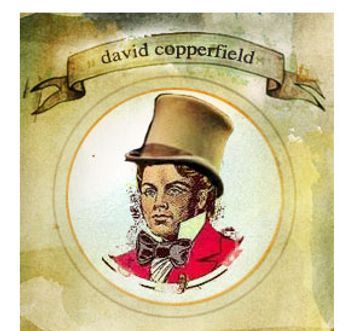
Back before literature hit that high-low fork in the road, leading on the one hand toward “Ulysses” and on the other toward “Gone with the Wind,” “David Copperfield” was probably the most revered and the best loved novel in the English language. Everyone knows (or used to know) that Dickens himself called it the “favourite child” among his fictional progeny; but late in life he also acknowledged that it was the “best” of his novels — a more purely literary judgment. Tolstoy, an impressionable 22 when “David Copperfield” was completed in 1850, considered it the greatest achievement of the greatest of all novelists.

So did just about every middle-class parent in the English-speaking world, who must have thought Dickens’s alchemical gift for euphemism transmuted into opacity such episodes as Steerforth’s seducing Emily, Jack Maldon’s putting the moves on the married Annie Strong and the prostitute Martha’s attempted suicide — not to mention the schoolmaster Creakle’s sadistic sexuality (“I am confident that he couldn’t resist a chubby boy, especially”) and the homoerotic bond between David and Steerforth (who calls him “Daisy” and wishes he had a “pretty, timid” sister). Whatever middle-class children made of the book, they grew up with its characters and language lodged deep in memory.

Samuel Beckett (born in 1906) appropriated a familiar line from Chapter III in his early story “A Wet Night,” simply changing “I” to “we” and adding a vulgarism: “This may be premature. We have set it down too soon, perhaps. But let it bloody well stand.” More ambitiously, P.G. Wodehouse (born in 1881) seems to have appropriated Steerforth’s bloodlessly efficient manservant and pander Littimer in creating Jeeves, Bertie Wooster’s comically omniscient “gentleman’s personal gentleman” — to whom he also gave something like Mr. Micawber’s allusive orotundity. George Orwell (born in 1903) recalled that when he first read “David Copperfield,” around the age of 9, he thought the account of David’s childhood had been written by a child. (Another remark everybody used to know.)

What amazed Orwell was Dickens’s empathy with children; what amazes me is that children could ever read “David Copperfield.” Education has slipped between then and now. But “David Copperfield” has slipped, too. Harold Bloom, in his 1994 survey “The Western Canon,” packs the current conventional wisdom into a single conjunction: “Dickens had enormous affection for ‘David Copperfield,’ but this was his ‘Portrait of the Artist as a Young Man.’” But, not and. Got it. A warmup act for the masterworks.

These days even those of us who have enormous affection for Dickens tend to seek out less guilty pleasures among his books. The bursting-at-the-seams social novels — “Bleak House” (by consensus, his masterpiece, though I don’t consent), “Little Dorrit,” “Our Mutual Friend” — offer more in the way of high seriousness, if that’s our idea of a good time. And “Great Expectations,” Dickens’s other great bildungsroman, is a comparatively modernist novel: it’s tighter, less episodic, and its narrator-protagonist stews in guilt and anguish — which really is our idea of a good time. Dickens wrote “David Copperfield” smack dab in the middle of his career: before all these books, and after the rowdy, exuberant, shamelessly weird, wildly uneven early work — “The Pickwick Papers,” “Oliver Twist,” “Nicholas Nickleby,” “The Old Curiosity Shop,” “Martin Chuzzlewit” — in which we gladly put up with all sorts of nonsense for the privilege of watching him become Charles Dickens.

“David Copperfield” is the absolutely typical Dickens novel; maybe Dickens, the hammiest of all great writers, loved it best because it was just so him. But its very centrality makes it easy to overlook or take for granted. Compared to the early work, its miscalculations seem less understandable, its moralizing less tolerable; shouldn’t he have known better by this time? Compared to the late work, it seems too merrily “Dickensian.”

I don’t know, am I making heavy weather of this? Shouldn’t it be enough to remind folks that this novel, and no other, is the one with Uriah Heep and Mr. Micawber and Mr. and Miss Murdstone and Aunt Betsy and Peggotty and Steerforth and Mr. Dick and Rosa Dartle? And the too-seldom-praised Mrs. Micawber, as heroically deluded as her husband and longer-suffering, who deserves an incomplete sentence all to herself. No writer since Shakespeare could have put together such a cast of scene-stealers — as well as such supposedly minor characters as the respectable Littimer, the willin’ Barkis, the lone and lorn Mrs. Gummidge, the Punch-like Mr. Spenlow and the volatile Miss Mowcher.

Even the less-than-minor characters are indelible: the nameless creditor who stakes out Mr. Micawber’s lodgings (“Pay us, will you? Don’t hide, you know; that’s mean”), the monstrous and deranged shopkeeper who buys young David’s waistcoat (“Oh, my lungs and liver, what do you want? Oh, goroo, goroo!”) or the waiter who playfully, ruthlessly hijacks his dinner (“Come on, little ‘un, and let’s see who’ll get most”). In fact, the comestibles themselves tend to stand out in your memory: the “stout pale pudding, heavy and flabby, and with great flat raisins in it,” which David buys in the Strand, or the revolting sherry he’s served in an inn at Charing Cross, poured from “the stale leavings at the bottoms of several small decanters” and with “more English crumbs in it than were to be expected in a foreign wine.” Everywhere in this book, lifelike details leap at you, interrupting even the headlong melodrama of the shipwreck chapter: “A half-dressed boatman, standing next to me, pointed with his bare arm (a tattoo’d arrow on it, pointing in the same direction).” If ever a writer put words together to create in your mind something like virtual reality — a fictive world you could swear you’re inhabiting, teeming with people you could swear you know — Dickens does it in “David Copperfield.”

And he does more. The better to persuade you that this is all real, he contrives to let his narrator remain foggy about other details, which he could easily have invented and which a lesser writer would have. “I forget whether it was the Blue Bull, or the Blue Boar; but I know it was the Blue Something.” That this narrator is himself a novelist gives the narration a metafictional frisson — which Dickens absolutely intends, innocent though he is of our critical jargon.

Both he and his narrator David know and love “Tom Jones,” in which Fielding teasingly calls attention to the novel’s fictiveness by such devices as telling us he hasn’t been able to find out what Tom had for dinner. But those gaps in David’s memory are even trickier than that. Like Fielding, Dickens plays with your disbelief in fictional artifice, while simultaneously making that disbelief easier to suspend — how improbable it would be, you realize, if David could remember every single thing — while simultaneously calling your attention to how skillful an artificer Dickens must be to disguise his artifice so well.

Yet no writer ever needed artifice less. In his preface to the first edition of “David Copperfield,” he claims that “no one can ever believe this Narrative, in the reading, more than I have believed it in the writing.” The way the best scenes play in your head suggests that they were also squirmingly alive in Dickens’s head: this gift is unfakeable. And he gets carried away by his belief just as you do. Late in the novel, when the Micawbers decide to emigrate, David tells us: “I think, now, how odd it was, but how wonderfully like Mr. Micawber, that, when he went from London to Canterbury, he should have talked as if he were going to the farthest limits of the earth, and, when he went from England to Australia, as if he were going for a little trip across the Channel.” How wonderfully like Mr. Micawber: this isn’t Dickens sneakily complimenting himself on how wonderfully he’s managed to maintain a character’s consistency. It’s an uncalculated expression of admiration for a resilient eccentric whose reality, for the moment, Dickens doubts no more than David does.

And while we’re on the subject of Dickens and David, let’s talk about this portrait-of-the-artist business. I’m not sure I believe the critical commonplace that a sweet guy like David Copperfield could never have written “David Copperfield.” (These sweet guys’ll kill ya.) F.R. and Q.D. Leavis write that “David incarnates the kind of youth the age demanded — sensitive, modest, upright, affectionate, but also resourcefully industrious and successful in rising in the world. Now whatever Dickens was, he was not a Daisy, and his habit of referring to himself as the Inimitable does not sound like David either. While Dickens was a colourful personality David is colourless, and intentionally uninteresting in himself — only a type.”

But I think his colorlessness actually makes David a more convincing representation of a writer — certainly more so than writers might like to admit. He’s suitably self-obsessed — after his mother dies, he looks in a mirror “to see how red my eyes were, and how sorrowful my face” — yet he lacks a stable identity. He answers to any name he’s given: David, Davy, Mas’r Davy, Daisy, Doady, Copperfield, Master Copperfield, Mr. Copperfull, Trotwood, Trot.

It’s glaringly odd that David’s ostensible soulmate, Agnes, calls him Trotwood (the high-toned handle Aunt Betsy has bestowed) rather than his real name. And Dickens must have wanted that oddness: he knew that novelists live rich and strange secret lives behind their faces, and sometimes seem like pod-people to their nearest and dearest. The clueless Dora wistfully tells David he’s “full of silent fancies”; Mrs. Dickens must have known just what she meant.

David’s solitary childhood — we never hear of his having a friend or playmate until he’s sent away to Salem House — and his obsessive reading sound writerly enough. So does his “distrust of myself, which has often beset me on small occasions.” So does his tendency to retreat to an observer’s distance at important moments: as sailors fight for their lives, he notes that arrow-shaped tattoo; when Dora’s aunt consults the crucial letter he’s written, asking permission for his courtship, he notes that the paper looks both “familiar” and “odd” in her hands.

And most writerly of all is his passivity — about everything except his writing career. After he runs away to take shelter with his aunt, the big, splashy events happen to other people: for Emily, Steerforth, Mr. Peggotty and the Micawbers, he’s a likable minor character. David spends the last 600-odd pages of the book that bears his name watching more extreme, dangerous and involving lives than his own, acting as confidant and go-between and letting his “good and bad angels,” Agnes and Steerforth, duke it out for his soul. Toward the end of the book, David says he’s devoted himself to writing “with my strongest earnestness” — a word that keeps bobbing up like a Wagnerian leitmotif — yet surely as a novelist he’s better served in his silent fancies by something like Steerforth’s chameleon duplicity than by Agnes’s radiant integrity.

And that’s what bothers me most about “David Copperfield”: I suspect Dickens isn’t always leveling with us or himself. Sophisticated readers can correct for the merely antiquated: the notion, which no one in this novel questions, that it’s better to die than to have unrepentent sex, or the implication that Uriah Heep isn’t merely villainous but underbred. These are the ground rules; we can play or not. I can even sit still for the cranky, tacked-on chapter about a model prison, which slows up the ending so unconscionably. (Dickens objects to solitary confinement, then considered a promising and enlightened reform, as coddling a bunch of no-goods.)

And I do my best simply to forget Mr. Micawber’s wisecrack about bills of exchange as an invention of the Jews, “who appear to me to have had a devilish deal too much to do with them ever since.” My serious mistrust kicks in when I hit David’s lofty bloviations about the novel’s moral exemplars: Mr. Peggoty, the Christlike seafarer, and Agnes, the celestially backlit hall monitor. “There was something so religious in it,” David says of Mr. Peggotty’s certainty that he’ll find the fallen Emily, “so affectingly expressive of its anchor being in the purest depths of his fine nature, that the respect and honour in which I held him were exalted every day.” And he thinks of Agnes’s “sweet face and placid smile, as though they had shone on me from some removed being, like an Angel.”

When Dickens gets into this mode — and it is Dickens, I’m afraid, not just David — I don’t really know what the hell he’s talking about anymore, except that he seems bent on repudiating the worldliness that nourishes his art. No matter what he thinks he believes, Dickens loves Uriah’s villainy better than Agnes’s virtue. Similarly, he relishes folly more than wisdom: compare his notoriously vague description of Dr. Strong’s school (“very gravely and decorously ordered, and on a sound system”) with his richly contemptuous account of that “progressive” prison and its inmates’ bogus rehabilitation: “I found a great many foxes, disparaging whole vineyards of inaccessible grapes; but I found very few foxes whom I would have trusted within reach of a bunch.”

And, despite the late-inning reformations he engineers, Dickens prefers Mr. Wickfield as an alcoholic wreck, Mrs. Gummidge as a self-pitying hypochondriac and — best of all — Mr. Micawber as an epicure of debt, cheesy eloquence and bipolar self-excitation. Well, so does everybody. The Mr. Peggotty of the early chapters, who roars in barely comprehensible Yarmouthese, likens himself to a “sea porkypine” and drinks at The Willing Mind, is at least an energetic invention. (Although the Leavises understandably find his dialect — for which Dickens consulted a book called “Suffolk Words and Phrases” — “irritating in its patronizing exhibition of the quaintness of the humble.”) The later Mr. Peggotty, a fisher of women who talks about good deeds being “laid up wheer neither moth nor rust doth corrupt, and wheer thieves do not break through nor steal,” is a pain in the butt. Dickens must have known it. And his refusal to know he knew it makes me want to shake him.

“David Copperfield” goes squishy and unctuous when Dickens stops following his storytelling instincts and starts listening to extraliterary imperatives: his dutiful religiosity, his class guilt (which he enterprisingly decided to confront in “Great Expectations”) and — in the case of the dwarf Miss Mowcher — a cease-and-desist letter from a solicitor for the real-life model, a chiropodist and manicurist named Mrs. Hill. She recognized herself in one of the novel’s monthly installments and objected to Dickens’s apparent intention to use Miss Mowcher as a bawd; this explains the headsnapping transformation of a worldly wit in Chapter 22 (“If either of you saw my ankles, say so, and I’ll go home and destroy myself”) into a preachy paragon in Chapter 32: “Try not to associate bodily defects with mental, my good friend, except for a solid reason.”

In Dickens’s presentation of women, especially, he clearly felt constrained both as a Victorian Englishman in general and as Charles Dickens in particular. Nowadays you need either great sophistication or none at all to endure his heroines as they exhibit their virtue in unearthly patience and floribundant oration (Agnes, Annie Strong) or their sexuality in icky coquettishness (Dora, David’s mother). I’m willing to think they played better then than they do now, but if Shakespeare — and, earlier in Dickens’s own century, Jane Austen — could write women who were smart, good and sexy, what was up with the Inimitable?

He writes best about damaged, dark and dangerous women: in this book, the superbly brittle and edgy Rosa Dartle; elsewhere, the majestically embittered Edith Dombey, Estella, the conscience-stricken mantrap in “Great Expectations,” and Miss Wade, the paranoiac crypto-lesbian in “Little Dorrit.” I don’t imagine I want to know why. Nor does it help, really, to learn that while the empty-headed, increasingly burdensome Dora is obligingly, even gladly, dying so David can marry Agnes, his ideal helpmeet, Dickens was regretting his own early and ill-judged marriage — and naming his newborn daughter Dora, after the supposedly lovable character he was about to kill off. Okay, we always knew something was fishy. Now that we know more or less what, it’s still fishy.

I’ve dwelt on these problems — critics have pointed them out for years — just in case anybody still feels crazy for noticing them, and because I might as well clear the air before saying that “David Copperfield” is a staggering piece of work anyway: a novel any writer could still learn from, and should still be intimidated by. It would be scary enough if he’d put it through years of rewrites; in fact, he wrote it as he did all his novels, by the seat of his pants for serial publication. Unthinkable. Was he a Martian?

Dickens’s contemporaries, of course, recognized just as we do his visionary verisimilitude and his Olympian stock company of characters. Today it’s easier to see his psychological acuity: half a century before Freud — whose work would have scandalized him — he knew by observation and imagination that people’s irrational behavior made perfect sense. Of course David would marry a woman just like his mother, right down to the curly hair and the negligent housekeeping. Of course the fatherless Annie would love the geriatric Dr. Strong. Of course the stingy, taciturn Barkis would fixate on the explosively affectionate Peggotty. And of course sexuality can force its way to a hundred non-genital outlets: Uriah’s writhing and handwringing, Dora’s fingering the buttons of David’s coat, Miss Murdstone’s snapping shut her steel purse.

And Dickens’s mastery of the full range of the English language may now be … inimitable. He has what seems like a modernist taste for surreal comedy: “For anything that I can perceive to the contrary,” says Mr. Micawber, “it is still probable that my children may be reduced to seek a livelihood by personal contortion, while Mrs. Micawber abets their unnatural feats by playing the barrel-organ.” He has a postmodernist’s taste for the absolutely trite: “Everything is like life, in my opinion,” says the undertaker Mr. Omer, “if you look at it in that point of view.” But what modernist or postmodernist writer would also risk the sheer loveliness of Emily’s farewell letter to her never-to-be-husband Ham? “In another world, if I am forgiven, I may wake a child and come to you.” Hard as I find it to take seriously the notion that Emily’s transgression needs all this self-abasement, I can’t read that without a lump in the throat.

Finally, it’s the many-minded amplitude of “David Copperfield” that makes it both so formidable and so embraceable. Dickens thunders away by proxy about “earnestness,” yet he permits Mr. Micawber to fly under (or soar above) his ever-vigilant moral radar. His villains, paradoxically, also belong to the world of pure play. Miss Murdstone, the celibate Wicked Stepmother, and Uriah Heep, the charity-school Iago, never make moral choices either: they’re just bad, working their wills like two-year-olds while Dickens revels in their malice.

Yet the same novel can also accommodate a character as subtly drawn as Steerforth: the narcissist who charms everyone but himself, the seducer who half-wishes somebody was smart enough to thwart him, the too-knowing sophisticate who’d like to be as morally uncomplicated as the sailors he hangs out with, and eventually drowns with — or as the fresh-faced schoolfellow who ends up writing about him. His creator surely put as much of himself into Steerforth as into David: Dickens gave David his own boyhood traumas (like his mortifying, terrifying stint at a shoe-blacking warehouse), and Steerforth his own adult suspicion of a spiritual void behind all that Inimitableness.

Every novel is probably a portrait of the artist, a cryptographic autobiography in which the trouble in its author’s head is projected as an imaginary world, people and all. People especially. Scholars tell us Mr. Micawber grew out of Dickens’s father, Dora out of his old sweetheart Maria Beadnell — and his wife — Tommy Traddles out of his friend Thomas Talfourd, and so on. Good to know. But “David Copperfield,” more nakedly than any of his other novels, is all Dickens, all the time: his earnestness and his anarchic humor, his fears and his fantasies, his joy in his own generative powers. His guilt about his joy. But his joy anyway. No wonder he loved this book the best. No wonder some of us still do, deep down. The masterworks can wait.

Copyright ) 2000 by David Gates. Excerpted from his introduction to “David Copperfield” by Charles Dickens, recently published by the Modern Library. All rights reserved.

Continue Reading Close

Bit parts

The author of "Wonders of the Invisible World" picks five great literary walk-ons.

  • more
    • All Share Services

I know it sounds arty to claim that literature works miracles — tries to, anyhow — but what else would you call the creation of absolutely convincing virtual humans, using nothing more techy than words? Not just the Don Quixotes, the Anna Kareninas, the Leopold Blooms — those giant-size protagonists who get to parade themselves in scene after scene. The miracle works just as uncannily in those minor (or even less-than-minor) characters who appear, speak a few lines and disappear back into stories their creators have no time to tell. These characters are often obsessives, grotesques, solipsists: stars of their own inner dramas, glimpsed in midrant and, for all we know, still there ranting to this very day. Often their creators never even name them; in the story we’re reading, they’re important only to themselves, and the main characters soon forget them. Yet we remember them, treasure them, believe in them — as if we could highlight them, double-click and make their untold stories begin to play. Here are five walk-on characters who occupy space in our consciousness (and in their own) out of all proportion to their space on the page.

David Copperfield by Charles Dickens: The “goroo” man (Onstage time: two pages.)
This is the filthy, drunken used-clothing dealer to whom the young runaway David sells his jacket. “‘Oh, what do you want?’ grinned this old man, in a fierce, monotonous whine. ‘Oh, my eyes and limbs, what do you want? O, my lungs and liver, what do you want? Oh, goroo, goroo!’” The lungs and liver alone would make him a comic nightmare, but that growling howl really does the trick. They strike a bargain for eighteenpence, but the old man keeps David waiting the rest of a long day, darting into his shop to lie on his bed and sing the “Death of Nelson,” then darting out again to offer unwanted goods in trade — a fishing rod, a fiddle — rather than give up cash. Meanwhile, the neighborhood boys taunt him: “‘Bring out some of the gold you sold yourself to the devil for. Come! It’s in the lining of the mattress, Charley.’” (Until looking this passage up, I’d forgotten he had a name.) It’s funny as hell — particularly the “Death of Nelson” — but it is hell, the same yesterday as it will be tomorrow. And the goroo man is a damned soul: Ebenezer Scrooge without the beneficent ghosts, without the wormy dignity, almost without language and mind.

Lolita by Vladimir Nabokov: The Kasbeam barber (Onstage time: one long sentence.)
In a fictional Midwestern town on Humbert and Lo’s aimless itinerary, Humbert gets “a very mediocre haircut” from “a very old barber”; he periodically stops his “tremulous scissor work” to show faded clippings about his son, a baseball player who’s been dead 30 years and whose “easeled photograph” stands among “ancient gray lotions.” In his afterword, Nabokov points to this episode as one of “the nerves of the novel … the subliminal co-ordinates by means of which the book is plotted.” I’ve never quite known what to make of this — beyond the obvious point that the sentimentally obsessed old barber, like Humbert, is doing his damnedest to stop time — nor can I imagine why a single sentence, with one colon, should have taken “a month of work.” (Well, actually, yes I can.) Either I’m thick or Nabokov’s overselling this. Still, it’s a moment of sorrowful beauty. How many, many customers, before and after Humbert, must have had to look at those damn clippings?

Stern by Bruce Jay Friedman: The “romantic gentleman” (Onstage time: two pages.)
The eponymous hero of Friedman’s 1962 first novel recalls going into a bar during his hitch in the Air Force. A civilian flying instructor, “with much blond hair curled romantically down over his forehead,” picks up a hooker (“Come, woman, and drink my wine”) and invites Stern to sit with them: “Let the Jew join us, too. I’ll not close our circle to the Jew.” Stern explains he’s not a pilot, but the man won’t hear it: “Big Jew, you fly a deadly plane. Drink deep with me. The woman drinks well, too.” Stern first takes offense, then rethinks: “He saw me as the strong and quiet Jew in a brigade of international fighters. I might have been the Big Swede or the Big Prussian, but I was the Big Jew, the quiet, silent one with bitter memories and a past of mystery.” Using only his voice, seemingly cobbled together out of Hemingway and Omar Khayyam, the romantic gentleman magically transmutes anti-Semitism into Casablancoid camaraderie, and imaginatively transports Stern from a Wyoming gin mill into “a small bar in Macao, among scarred people with grave crimes in their past, at the world’s end now, saying only bitter, philosophical things and waiting to die.” (Part of the fun of Stern is this back-and-forth between cheesy clichi and genuine pain, if that’s your idea of fun.) And, having established his voice, Friedman gives him the perfect curtain line: “The gentleman said, ‘I’ve tasted too much of wine,’ got to his feet unsteadily, and walked out of the club, the hooker supporting his arm.”

The Mother Hunt by Rex Stout: The “button fiend” (Onstage time: two and a half pages.)
OK, sure, it’s ostentatiously pomo and anti-elitist to stick a 1963 Nero Wolfe mystery in with all this august stuff, but trust me: This is a wonderful book. The button fiend actually has a full name — Nicholas Losseff — and a business address: the Exclusive Novelty Button Company, on West 39th Street in Manhattan. It would take too long to explain why Wolfe’s legman (and Stout’s narrator) Archie Goodwin brings him baby’s overalls with weird-looking buttons, but you don’t need to know that to know him. “You listen, young man. I know more about buttons than any man in the world … I have sold buttons to the Duchess of Windsor, to Queen Elizabeth, and to Miss Bette Davis … I know absolutely that no man could show me a button I couldn’t place, but you have done so. Where did you get them?” It’s all right there: his pride (which needs a little celebrity backup), his panic and, above all, his fierce and ultimately selfless curiosity. Archie’s last word on him — “If I ever get as hipped as he was on just one thing, it won’t be buttons” — is the sane, normative, worldly response. But Wolfe, the orchid-growing, gourmandizing polymath, would recognize Nicholas Losseff as a secular saint.

Hamlet by William Shakespeare: The first gravedigger (Onstage time: half a scene.)
The stage directions just call him “Clown”: that is, a rustic; his companion (called “Other”) addresses him as Goodman (i.e., Mr.) Delver, a merely generic name. He sings and tells riddles while digging Ophelia’s grave; he even has the impertinence to bandy words with a bemused Hamlet — and gets the better of the exchange. Doesn’t he realize who he’s dicking around with? This isn’t just the young Danish prince: This is the top gun of the English language, the guy who’s already rattled off the “To be or not to be” soliloquy, told Ophelia to get herself to a nunnery, seriously messed with Claudius’, Polonius’, Rosencrantz’s and Guildenstern’s heads, wittily instructed a bunch of actors on their craft and staged “The Mousetrap” to catch the conscience of the king. Yet the most intelligent character in all literature (according to Harold Bloom) ends up as the gravedigger’s straight man:

Hamlet: Ay, marry, why was he sent into England?

Clown: Why, because ‘a was mad. ‘A shall recover his wits there; or, if ‘a do not, ’tis not great matter there.

Hamlet: Why?

Clown: ‘Twill not be seen in him there. There the men are as mad as he.

Would the gravedigger be impressed by Hamlet’s title? Hardly: He claims to be in Adam’s line of work. Or if he knew what we know about Hamlet’s exquisitely dawning perception of mortality? Not likely: For him, mortality isn’t exactly breaking news, and he’d never sit through a five-act play only to be told at the end that “the rest is silence.” And that play would seem significantly sillier without his — literally — earthy contempt for all pretense and artiness.

Continue Reading Close

Breaking up with the Beats

Kerouac and company were my first literary loves -- but I had to get off their road.

  • more
    • All Share Services

In 1958, decades before his conversion to neoconservatism, the young leftist intellectual Norman Podhoretz ended his essay “The Know-Nothing Bohemians” with what we now recognize as his characteristic either/or pugnacity. The Beat Generation, he argued, glamorized the primitive and the instinctual and hated the civilized and the rational; to oppose or support the Beats, therefore, “has to do … with being for or against intelligence itself.”

Reading this today, I’m inclined to laugh. William Burroughs and Allen Ginsberg, probably even Jack Kerouac, were surely better wired and immeasurably lighter on their feet than an earnest A-minus student like Podhoretz. Nevertheless, in those early days — when Burroughs’ “Naked Lunch” was still the mysterious unpublished novel Ginsberg’s dedication to “Howl” promised would “drive everybody mad” — Podhoretz was smart to recognize the Beat writers as avatars of an alternative, anticanonical literature, whose work demanded, both implicitly and explicitly, that other writers and readers stand with them or against them.

I was only 11 when Podhoretz’s piece came out, but when I discovered the Beats a few years later, I felt the pressure too. So did my friends. So has every generation since. The Beats believed — and not without reason — that rigid literary forms reflect and perpetuate political, social, racial, sexual, psychic and spiritual oppression; their writing was in part an altar call on behalf of a freer, more passionate, more intuitive life and letters. Kerouac’s “On the Road” posits a literary community far from seminars and cocktail parties: the open road and the writer’s life seem like metaphors for each other. Burroughs hit upon a wildly appealing synthesis of high-bohemian contempt for the bourgeoisie and the cantankerous American individualism of the frontier saga and the Hollywood western. Lee, the protagonist of Burroughs’s long-unpublished second novel, “Queer,” feels “a killing hate for the stupid, ordinary, disapproving people who kept him from doing what he wanted to do. ‘Someday I am going to have things just like I want,’ he said to himself. [He has in mind a Huck Finn-like life in a territory where drugs and boys are always on hand.] ‘And if any moralizing son of a bitch gives me any static, they will fish him out of the river.’”

The Beats cast themselves as the Romantics of the 20th century: similarly libertarian, similarly dismissive of received literary forms, similarly intent on what they considered direct expression of inner states of feeling. And like Blake, Byron and Shelley, they pioneered a radical sensibility that, when sufficiently domesticated, came to typify the rest of their century. From Bob Dylan through Kurt Cobain, popular music has been essentially post-Beat poetry with electric guitars, and as Burroughs wrote, “Kerouac opened a million coffee bars and sold a million pairs of Levis to both sexes. Woodstock rises from his pages.”

Directly or indirectly, Beat literature has transformed much of America. Except for American literature. Beat, once-Beat and post-Beat poets (Gary Snyder, Anne Waldman, John Giorno, the poetry slam movement) continue to hold their ground, but they simply constitute one more school — like their evil twins, the New Formalists, squinting over sestinas in the age of hip-hop. Mainstream-modern lyric poets like John Ashbery still win most of the prizes and get most of the teaching gigs. Among novelists, Kerouac and Burroughs may be honored as role models of American cussedness, as familiar spirits, as Promethean innovators, as visionaries who lived on enviably intimate terms with their imaginations. But relatively few people actually want to write like either of them, and few of those few will have their work taken seriously by whatever’s left of the literary establishment. A 21-year-old applying to a writing program is as ill-advised to cite Jack Kerouac as an influence as O. Henry or H.P. Lovecraft.

In a way, this has all worked out just as it should. By keeping their outsider cachet, Ginsberg, Kerouac and Burroughs get to stay forever young; they’re discovered and taken to heart by generation after generation of late adolescent idealists who aspire to become holy degenerates. The Beats make wonderful, moody, endlessly engaging armchair buddies; Burroughs, particularly, is a cranky, brilliant, funny, ironic and sometimes heartbreaking presence on the page. But they’re also dicey company for a young writer. Not so much because they’re apt to make drugs and unsafe sex seem like a hell of an adventure — who could deny it? — but because their ideology of endless possibility paradoxically limited their literary options. And their various theories, manifestos and obiter dicta tended to discourage the rigorous self-scrutiny that enables a writer to reach the truest, weirdest, innermost vision.

Though the Beats’ basically unworldly sensibility seems more congenial to poetry — lyric meditation, prophetic outburst, bardic yarn-spinning — two of the movement’s three great figures were novelists. (For a writer who yearns to leave a mark — however unworldly that yearning may be — the Great American Novel always trumps the Great American Epic Poem.) Predictably, their narratives, for all their expansive and democratic impulses, largely turn away from the society in which most people live — which the Beats regarded with Wordsworthian loathing as a wasteland of getting and spending. Instead, they favor either fictionalized memoirs mythologizing their fellow outsiders or nightmare fantasias in which scraps of the everyday social and political world bob like bits of rotten meat in a foul stew of language.

The mimetic notion of fiction that drives the work of mainstream writers from Richardson through Raymond Carver — the dioramalike illusion of real-seeming people in real-seeming settings and situations, with incidents selected and contrived to give the work a distinct and dramatic shape — interested the Beats only as reading matter (Burroughs liked to kick back with Frederick Forsyth), not as the proper business of a serious writer.

The critique of American life in “Naked Lunch” isn’t essentially different from that in John Cheever’s contemporaneous Shady Hill stories. Burroughs evoked “a vast subdivision, antennae of television to the meaningless sky. In lifeproof houses they hover over the young, sop up a little of what they shut out. Only the young bring anything in, and they are not young very long.” And he could spin out surreal parodies of TV-commercial consumerism: “AMERICAN HOUSEWIFE (opening a box of Lux): ‘Why don’t it have an electric eye the box flip open when it see me and hand itself to the Automat Handy Man he should put it inna water already …’” But it wouldn’t have occurred to Burroughs to try to limn AMERICAN HOUSEWIFE’s secret sorrows. She’s not a character, but simply a voice in one of those “routines,” in which you seldom have to dig deep to hit polemical paydirt.

Cheever, on the other hand, half anthropologist and half fabulist, created an imaginary suburbia in rich and convincing (if sometimes ostentatiously loony) detail, and peopled it with plausible (if sometimes ostentatiously loony) imaginary suburbanites. Francis Weed, in “The Country Husband,” rebels as bitterly as any Beat from what was then called “conformity” — he just doesn’t have the nerve to do much of anything about it — and the miracle cure for his seven-year itch (psychiatry and therapeutic woodworking) seems parodic. Yet Cheever — and in this he’s more like the openhearted Kerouac than the fiercer Burroughs — also saw the sweetness, the covert, ultimately irrepressible anarchy and the admirable if smug and clubby decencies of Shady Hill.

On the one hand, truth and prophetic intensity; on the other, verisimilitude and negative capability. Readers don’t really have to choose sides, even if Norman Podhoretz says they do. Anybody’s library should have room for the book of Revelation (that most Burroughsian of sacred texts), William Blake and Allen Ginsberg, as well as Shakespeare, Jane Austen and T.S. Eliot. Writers, though — except in their capacity as readers — can’t afford to keep an open mind. The Beats’ ethic of spontaneity, their suspicion of form, their openness to aleatory techniques (as in Burroughs’ cut-ups), their extreme subjectivity and their spiritual dogmatism are strong temptations to unformed writers. Kerouac’s “Essentials of Spontaneous Prose” recommends “no pause to think of proper word but the infantile pileup of scatological buildup words till satisfaction is gained” — and no revisions after the fact. In a list entitled “Belief & Technique for Modern Prose,” he advises writers to “remove literary, grammatical and syntactical inhibitions” and reminds them, “You’re a Genius all the time.”

This sounds like a lot more fun than Flaubert sweating bullets all day to grind out two sentences — more fun for the writer, at least — and far more productive than Philip Roth’s standard practice of writing a hundred pages or so to get a few lines that could serve as the starting point for a novel. But it takes a leap of faith to consider every vagary of consciousness aesthetically sacred, and such faculties as judgment, taste and discrimination unholy mutations, offenses against the spirit. And readers with such faculties may not leap with you.

Mainstream writers, of course, regularly go through something like the process Kerouac recommends: spewing out thoughts, images, snatches of dialogue. (Even so mandarin a personage as Vladimir Nabokov once obliged a curious interviewer by reading out a few such random, incomprehensible notebook jottings.) And the Beats — even Kerouac — did in fact revise their work. In a 1955 letter, Burroughs tells Ginsberg he’ll “often sort through 100 pages” of letters and journal fragments “to concoct 1 page” of his pre-”Naked Lunch” novel “Interzone” — exactly like Roth. Subsequent letters show him working 10 hours a day, cutting and rearranging “Naked Lunch”; finally, in 10 days, he “welded the whole book together into a real organic continuity.”

Still, we mostly associate ostensibly conventional writers with heroic perfectionism. The Beats have no legendary feats of hunger artistry like Pound cutting “The Waste Land” or Lish cutting Carver, no Hemingway challenging buddies to shorten a single one of his sentences; fairly or unfairly, the popular image of the Beat writer remains Kerouac speeding his brains out, a mile-long roll of paper chugging through his chattering typewriter. Nor do the Beats have achievements like Hemingway’s “Soldier’s Home” or Carver’s “Fat” — short, exquisitely shaped pieces of utter elegance and devastating power, in which every word pulls its weight.

In “Interzone,” Burroughs made wicked sport with just this sort of talk: “Not bad, young man, not bad. But you must learn the meaning of discipline. Now you will observe in my production every word got some kinda awful function fit into mosaic on the shithouse wall of the world.” This is a masterstroke of contempt. Literary formalists are old blowhards who don’t understand a new mode of writing that can’t be “fixed” with a little stick-to-it-ivity. Worse still, in Burroughs’ essentially Manichaean view, they’re collaborators with the cosmic status quo, the doctored “reality film,” the jailhouse of time, space and language. “What scared you all into time?” Burroughs wrote in Nova Express. “Into body? Into shit? I will tell you: ‘the word.’” Kerouac’s Buddhist Catholicism also led him to regard the visible world as a con game and language as the barker’s spiel. “Why do we fool to be alive,” he wrote in “Desolation Angels.” “Enough I’ve said it all, and there’s not even a Desolation in Solitude, not even this page, not even words, but the prejudged show of things impinging on your habit energy — O Ignorant brothers, O Ignorant sisters, O Ignorant me! there’s nothing to write about, everything is nothing, there’s everything to write about! — Time! Time! Things! Things! Why? Why? … look closely, you’re being fooled — look close, you’re dreaming.”

Needless to say, the conviction that both words and phenomena are unreal doesn’t dispose a novelist either to fuss over le mot juste or to get lost in the intricate passions and conflicts of deluded worldlings. Kerouac and Burroughs wrote their best when most in love with the world — Kerouac chiefly treasured its sad sweetness, Burroughs its rich, Falstaffian villainies and the rich contempt they excited in him — or most pained by its evanescence. Near the end of his life, Burroughs dropped the steely ironies and wrote artlessly and lovingly about his cats. “They are living, breathing creatures, and when any other being is contacted, it is sad: because you see the limitations, the pain and fear and the final death. That is what contact means. That is what I see when I touch a cat and find that tears are flowing down my face.”

Podhoretz was right that our attitude toward the Beats has something to do with our attitude toward intelligence. But it didn’t occur to him that it might be intelligent to be skeptical of intelligence. Samuel Johnson was. Samuel Beckett was. (If they didn’t learn this paradox from experience, they probably picked it up where Harold Bloom says the rest of us did, from “Hamlet.”) If the Beats ditched intelligence too quickly in favor of mysticism or hedonism, how much longer should they have stuck with it? Until they ended up like Beckett’s Unnamable, so gridlocked in dualism that instant denial negated every assertion, and that denial denied in its turn? If the Beats were conveniently self-forgiving in matters of literary craft, at least they had a convenient rationale: As Kerouac put it, “Craft is craft.”

And if the Beats trusted too much that their subjectivities would somehow mesh with their readers’ subjectivities — at least they trusted. Kerouac didn’t tweak his sub-picaresque plots or shape his scenes for dramatic effect, but he somehow got readers to experience a mood and a moment so strongly that they tried to re-create it in their own lives. Dean Moriarty, the pseudonymized Neal Cassady of “On the Road,” is one of American literature’s great characters; so is Kerouac’s ongoing, unprettified self-portrait under such names as Sal Paradise and Jack Duluoz: a needy, self-doubting depressive prone to both spiritual panic attacks and arias of ecstasy. Despite Burroughs’ satisfaction with the “organic continuity” of “Naked Lunch,” its riffs, routines, voices and shards of narrative seem determined by subjective considerations to which we’re not privy. But his inventiveness, his gift for ventriloquism and his weird fusion of the outrageous with the coldly logical supply something like the momentum of a conventional plot, every sentence its own cliffhanger.

And not far beneath Burroughs’ Martian ironies, his fearsome transgressiveness and his flashes of mystic irrationalism, the reader feels moral bedrock. Sooner or later, every would-be writer who takes the Beats to heart has to make Podhoretz’s Choice, and I had to go the other way. For one thing, some of this stuff just wasn’t readable — though I’d still rather slog through “Minutes to Go” or Kerouac’s onomatopoeic sea poem at the end of “Big Sur” than “Finnegans Wake.” For another, I didn’t believe in magic: The Burroughs/Brion Gysin notion of exposing hidden truths by cutting up and folding in texts seemed as silly to me as Yeats or James Merrill summoning up spooks at the Ouija board, and Kerouac’s Catholicism bored me even more than Flannery O’Connor’s.

But mostly it became obvious to me that I wasn’t a genius all the time, and that I could only make my work better by working on it. The Beats reverenced the work in part for the process of its creation. (“The usual novel,” Burroughs wrote to Ginsberg during the writing of “Naked Lunch,” “has happened. This novel is happening.”) This resistance to the notion of art as artifact is a smart way of “reading” a Charlie Parker solo, in which the kick is to witness its coming into being; but for me it began to seem a dubious approach to a text — in which the words count for everything, and what might or might not be in the writer’s mind, heart and soul count for nothing.

And finally, Beat dogmatism and messianism started to wear me out. Burroughs, particularly, loved to hand out free advice in his books — “cut lines of control,” “storm the reality studio” — and I began to think that my relations with reality were none of his damn business. Probably I was being defensive, because I’d begun to wallow in what Kerouac would have dismissed, however sweetly and compassionately, as the world of maya — that is, of Dickens and Austen, Tolstoy and George Eliot — and I figured I’d pay the piper on the next karmic go-around. Or maybe I could do penance here and now in Beckett’s lavish deprivations, his anguished reveling in the noble futilities of language. But my choice was simply a matter of taste and temperament. It wasn’t about intelligence (as Podhoretz would’ve said) or about collaborating with literary Nova criminals (as true believers might think) in order to review and get reviewed in the New York Times. It was just how things happened to happen, and I don’t offer this account of my backings and forthings as covert advice. The Beats were my first vicarious mentors, and they have my gratitude, my admiration — my love, is what I’m avoiding saying. It’s just that they can’t have me.

Continue Reading Close