Debra Dickerson

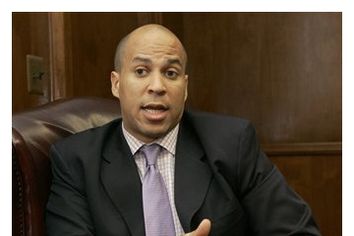
Why Cory Booker is mad as hell

Enraged by his city's unfair drug policies, the Newark mayor vows to stop being polite and start making a difference.

Anger gets a bad rap. It’s the universal disguised denunciation (“Why are feminists so angry?”), the wink-and-nudge code word to signal contempt while fronting as pity for the deranged. That label gives those at whom the anger is directed a get-out-of-jail-free card to abandon the debate since anger is, in one fell swoop, deemed irrational. Neat trick that, changing the subject from the offense that provoked the response to a feigned disgust over the angry person’s “unseemly” behavior.

Here’s hoping that Newark, N.J., Mayor Cory Booker holds onto his newfound rage over his city’s crime rates. A recent column in the Newark Star-Ledger lays out the stark reality that has turned this Zen-y, post-race, teetotaling philosopher, Rhodes scholar, Stanford football star and Yale Law grad into Martin Luther King Jr. If he doesn’t see progress soon, we may be heading for Malcom X territory. A year into his mayoralty, Booker’s million and one grad school-infused plans to save Newark have come to naught and will continue to do so as long as the war on drugs remains a war on the urban poor.

Booker staked his campaign on making Newark safe, yet the city’s as dangerous as it ever was. Its tally of 105 murders last year is the highest in 10 years. But that die was cast long before he nailed his shiny diplomas to his office wall, because New Jersey‘s urban and crime policies are designed to keep Newark an enclave of despair, violence and race-based underachievement. Drugs remain about the only game in town for an urban poor denied entree to the legit life. And, once in the drug life, talk about cutthroat competition; dealers are ruthlessly assassinating each other, up close and personal. The only good news is the decrease in random killings. The number of people hit by gunfire is down 31 percent — people who aren’t drug dealers, that is.

What do we expect as a society, when we fail to educate and embrace “the usual suspects” and send them out into this brutal economy with no way to make an honest living? What’s more, once they’ve fallen into that trap, we do everything possible to ensure they’ll have to repeat the pattern. Cherry on top? The millions that the Halliburtons of America make off the prison-industrial complex. I’m not one given to easy racial tropes, but prisons are indeed the new plantations. New Jersey spends a billion dollars a year on prisons, one-third of which are filled with nonviolent offenders, our nation’s highest rate.

Not surprising, considering that the entire city (save the airport) is within a school drug zone, which means that illegal drug activity in the area carries a mandatory minimum of three years’ incarceration. According to Star-Ledger columnist Tom Moran, 96 percent of those so sentenced are black or Hispanic, though virtually none of the drugs in question were sold to children. Even so, the state Legislature voted down a proposal to shrink the school zones from 1,000 feet to 200 feet, offering instead proposals to make the mandatory penalties, already among the nation’s toughest, tougher still. It also refuses to fund more than token levels of drug treatment or sentencing alternatives for the nonviolent, with predictable results.

A staggering 1,500 state cons are released back to Newark each year. One thousand of them will end up back on lockdown, probably on drug charges, within three years. In between prison stays, the state’s post-release restrictions on employment (or basic adult necessities like, say, getting a driver’s license) are among the nation’s most draconian. Given the underperforming schools most in this group attended, it’s a wonder we don’t just round them up, à la the hapless Baghdad-cabby-and-tea-shop guys of our war on terror raids, and lock them all in conveniently located Gitmos.

In tracing the arc of Booker’s road to rage, columnist Moran noted, “At a time when even states like Texas are changing course, we are sticking with our failed strategy.” Booker told Moran that he was willing to go to jail himself to change things. “I’m going to battle on this,” the mayor said. “We’re going to start doing it the gentlemanly way. And then we’re going to do the civil disobedience way. Because this is absurd … I’m talking about marches. I’m talking about sit-ins at the state capital. I’m talking about whatever it takes.”

Booker’s right. It’s time to let America know that we’re mad as hell and we’re not going to take it anymore. Urban policy, in most of America and especially in Newark, is what we GIs called a self-licking ice cream cone: It exists only for its own satisfaction and benefits no one but itself. This is a reality that dreamy-eyed young leaders like Cory Booker are learning the hard way. Let no one say that he didn’t try to work within the system. Now, the same energy he put into genteelly lobbying Trenton politicians with pie charts and spreadsheets must now take to the streets. No justice, no peace.

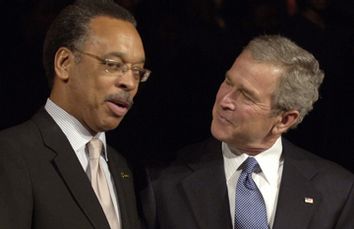
The NAACP’s sad decline

The venerable advocacy group changed history with its civil rights leadership -- so why does it seem to have lost its way?

Could it really be? Is the NAACP, the civil rights group that rocked the entire planet so hard that even the students in Tiananmen Square invoked it, really on the verge of collapsing with a willfully self- destructive whimper?

With Bruce Gordon’s recent departure as president after just 19 months and the recent announcement that the NAACP is shuttering its regional offices, the future does not look bright for the nation’s oldest advocacy organization.

Back in the late ’90s, I was fresh out of law school and raring to take on the system with the tools that NAACP and other civil rights leaders had won for me. Working in D.C. at the time, I remember seeing a photo of then NAACP president Kweisi Mfume in the paper. I was transfixed by the reverential image of him being arrested outside the Supreme Court during a protest against the dearth of black law clerks — an essential steppingstone for young lawyers wanting to enter the upper reaches of the legal profession. Eyes closed, on his knees, handcuffed, he looked with beatific stoicism to the heavens, à la Dr. King en route to the Birmingham jail. A shot for the ages.

But as inspired as I was by traditional civil rights activism, I was also having some nagging doubts about the efficacy of the old-school struggle the world has been watching us play out since the ’60s. After two generations of activism (preceded by NAACP’s earlier dogged war against Jim Crow, beginning with the group’s founding in 1909) racism has changed. Thanks to the sacrifices of the heroes and the martyrs, the battle against overt white supremacy has been won, however imperfectly. Now a critical bloc of black professionals are entering the halls of power and the black masses have a real, though obstacle-strewn, shot at achieving the dream.

As I studied Mfume’s photo, I couldn’t help thinking: Shouldn’t the NAACP have been using its moral authority to extend black influence throughout the nation’s institutions instead of submitting those institutions to unceasing frontal attacks designed merely to expose their racism? Instead of playing the faux martyr on the steps of the Supreme Court, shouldn’t he have been inside, respectfully but firmly lobbying Clarence Thomas and any other justice he could buttonhole? Holding my newly minted law school diploma, I was beginning to think so. It was time for the NAACP to evolve into a problem-solving organization for black America.

That’s why I was thrilled when the NAACP tapped veteran businessman Gordon to lead the black community into the future. Finally, after the organization had spent years clinging to a focus on confrontation without much action, Gordon promised to retool the NAACP to focus on social services and to leverage the civil rights movement’s gains into practical results. A star businessman whose career had been made possible by organizations like the NAACP, he was living proof that black success now requires more pragmatism than protest.

With a membership that peaked during WWII, long-running budget shortfalls, and a leadership and membership dominated by politicians, preachers and the elderly, the NAACP was in danger of becoming all but irrelevant. A history of poor management and disagreement with the group’s protest-focused agenda dried up the corporate and philanthropic monies that had earlier bankrolled black freedom. When former Verizon exec Gordon was named president in 2005, it seemed a tacit admission that America had changed, and that the NAACP would change, too.

Gordon was the ultimate insider motivated by a social accountability ethic born from the civil rights struggles that made his success possible. He had long used his clout, working from within, to significantly increase minority hiring and training programs in the telecom industry. “Civil rights leaders throughout this country did what they did and died,” he said in his acceptance speech, “so my generation has full responsibility to walk in the doors those brave people opened.”

In his brief tenure, Gordon used his corporate ties for Hurricane Katrina relief and brought in staffers with résumés impressive enough to lift morale in the beleaguered organization. He met three times with President Bush, who had shunned the NAACP for nearly six years. But after 19 months of constant warfare with the NAACP’s board over his lack of interest in protest, he was out. With him went the corporate funds and credibility desperately needed to save the NAACP.

In defending the NAACP’s change of heart about the leader who was doing exactly what he’d been hired to do, Julian Bond, chairman of NAACP’s ungainly 64-member board of directors, said, “Put simply, we fight racial discrimination and social service groups fight the effects of racial discrimination. Service is wonderful and praiseworthy and fabulous, but many, many organizations do it. Only a couple do justice work, and we’re one of those few.”

Gordon’s departure was only the beginning of NAACP’s troubles. Now, just three months later, the group has announced it will be “temporarily” closing its seven regional offices and slashing its national staff by 40 percent. It has also had to “delay” moving its Baltimore headquarters to Washington, D.C. The nation’s oldest civil rights organization is on the brink of extinction, defeated by its inability to evolve, a fact that no amount of rhetoric will be able to conceal at its 98th annual convention next month.

If it had been up to me to join a Freedom Ride or face Bull Connor or be spat upon and dragged from lunch counters to a Deep South jail, I’d be cleaning Salon’s office today instead of writing this column. I am in awe that civil rights activists, symbolized by the NAACP, found the courage, and indeed the hope, to lay their lives on the line in a seemingly lost cause. Which is why it breaks my heart to be writing this. Those of us who were not required to find out what we were made of then are required now to find the courage to speak truth to a venerated black power that has lost its way. Sadly, the NAACP seems to have outlived its usefulness.

Continue Reading Close

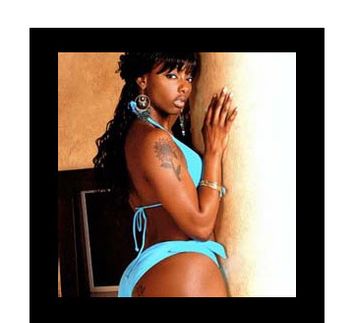
Healthy, my ass

Many blacks love big women, but having a rump the size of Buffie the Body's can put women at risk for disease.

Poor MeMe Roth. She had a misguided crusade against tubby “American Idol” contestants all ready to go, then the damned facts got in the way. All the anti-obesity crusader needed was a hapless scapegoat, but cruel fate denied her that simple request.

Roth, the leader of a wannabe movement called National Action Against Obesity, was surely praying that LaKisha Jones would win “American Idol,” so she could make her the poster girl for the nation’s obesity epidemic. Jones, for all that heavenly voice, was actually obese, whereas bubbly belter Jordin Sparks is merely kittenishly chubby. No matter. Roth was camped out at Fox News before Sparks finished the song that got her into the finals. Her message? Skinny Blake Lewis should win (a singing contest) because Sparks, according to Roth’s warped standards, is fat. Won’t someone please think of the children?

As unbelievably manipulative and self-serving as Roth’s agenda is (how she must regret having missed XXXL-size Reuben Studdard’s win in Season 2, before he dropped 100 pounds), she does help lead the way to a worthy point: the culturally accepted high level of obesity among black women and its related health problems. But Jordin Sparks isn’t the poster girl for this issue. Buffie the Body is.

According to a Village Voice article by Ben Westhoff, there are a slew of “urban” magazines finding success with men of color by replacing the traditional photo spreads of well-known bony models and actresses with unknown, “round the way sisters.” Looks and fitness — not required. Gi-normous butts (and weaves) — must have. Buffie, with a 45-inch ass, is the reigning queen of this scene and her popularity speaks to blacks’ normalization of a very un-p.c. fatness. Besides being a cover girl, Buffie appeared in the movie “ATL” as Big Booty Judy and is “as recognizable in the black community as some supermodels.”

Beauty, of course, is in the eye of the beholder and need not justify itself. I love (non-steroidal) body builders’ physiques and, pre-kids, I was that hardcore gym rat haranguing co-workers over the contents of their lunch sacks. My own mother found my buff body distasteful, though it would have taken Gitmo to make her admit it (my family deputized a representative to ask me if I was gay). So, my issue is not with a butt fetish per se. Fetishizing large rumps (though “large” doesn’t tell you the half of it without the pix) is, of course, no better or worse than fetishizing plastic blimp-breasts, except that the latter could be considered safer. Their supply can be halted, surgeons are regulated, patients are monitored and, of course, the bearers themselves can have the implants removed. But the best way to get a gargantuan ass of urban-lad-mag size is to be obese; this is also the path to ill health and early death for black women, as Buffie’s lifestyle amply demonstrates.

According to the Voice, Buffie “eats nothing but junk food and sugary drinks, and she doesn’t work out.” Starting out at only 120 pounds 10 years ago, she developed her “attributes” by chugging supplement shakes in order to gain weight. “Black women don’t want to be skinny,” she said.

It’s fairly common knowledge that many black (and Hispanic) men prefer their women larger than do other groups, a reality that launched Buffie on her path to glory. It is perhaps less well known that that preference has contributed to extremely high levels of obesity among black women. While I’m all for subverting the dominant (white) Barbie paradigm that equates beauty with starvation, I’m also for subverting the black paradigm of thumbing our noses at mainstream beauty standards just because they’re mainstream. Obesity is killing us, and our obesity is in part cultural; Buffie’s butt-growing supplements and rejection of exercise are a choice, a preference. When significant numbers of black women tell researchers they don’t work out because the sweat will ruin their expensive hairdos, it’s time to take stock of black culture. Not everything about us should be either encouraged or celebrated.

Recent press reports show why black women should be alarmed: More than half of us are obese — 78 percent are considered overweight. And, according to the American Obesity Association, the pounds are not coming off easily, due to “cultural factors related to diet, exercise and weight among African-Americans.” The Centers for Disease Control finds that rates of diabetes, hypertension, cardiovascular disease, cancer and premature death are higher among black women, and when we get these diseases, we’re sicker than white women. But here’s the kicker: Womenshealth.gov reports that “compared with overweight white Americans, overweight black Americans are two to three times more likely to say their weight is average — even after they’ve been told they are overweight or obese by a doctor (emphasis added). It’s one thing not to “see” that you need to lose weight. It’s quite another to reject that knowledge from the medical professional you sought out.

To the degree that this black fat preference is simply a determination to pooh-pooh anything “white,” blacks need to grow up. If it’s simply ignorance, well, now we know and when you know better you’re supposed to do better. Sorry, brothers, but just as I learned to reject “hard bodies” that are the result of steroids, y’all need to reject “lard bodies” that are, at least in part, the result of slow suicide to please you. Just as other cultures have had to discourage certain customs — bound feet, corsets and hoop skirts — blacks have to learn to see a seriously overweight sister not just as freewheeling and “down” enough to enjoy her fried pork chops but as a woman who might be putting her health at risk. Sisters, there ain’t nobody to blame but yourself when you Southern fry yourself, complete with coveted ass, into Forest Lawn while your kids are still in elementary school. MeMe Roth’s anti-obesity campaign may be seriously askew, but so is sacrificing your health to blimp yourself into a Buffie.

Continue Reading Close

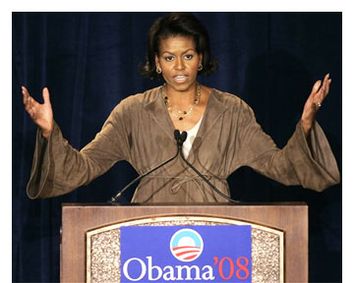
Michelle Obama’s sacrifice

It had to be hard for the high-achieving candidate's wife to give up her career -- and I'm in a feminist fury about it.

You knew it had to happen.

Damn it all, Michelle Obama has quit her $215,000 dream job and demoted herself to queen. Though the party line is that she’s only “scaled back” to a 20 percent workload, I doubt her former co-workers will bother alerting her to many staff meetings. She’s traded in her solid gold résumé, high-octane talent and role as vice president of community and external affairs at the University of Chicago Hospitals to be a professional wife and hostess.

Now, the energy and drive that had her up jogging before dawn and a gratifying day of work and family will mainly be spent smiling for the cameras. Just as we watch curvy, healthy-looking singers and actresses like Lindsay Lohan become anorexic too-blonde hoochies before our very eyes, so we’re now in danger of having to watch the political version of that process: Any day now, Michelle Obama’s handlers will have her glued into one of those Sunday-go-to-meeting Baptist grandma crown hats while smiling vapidly for hours at a time. When, of course, she’s not staring moonstruck, à la Nancy Reagan, at her moon doggie god-husband who’s not one bit smarter than she is.

My heart breaks for her just thinking about it. Being president will be hard. So will being first lady for the brilliant Michelle — imagine, having to begin all your sentences with “My husband and I…”

I’m in a feminist fury about Michelle (I’ll use her first name to avoid confusion with her husband) feeling forced to quit, but make no mistake: I’m not blaming her. Few could stand up to the pressure she’s facing, especially from blacks, to sacrifice herself on the altar of her husband’s ambition. He could be the first black president, you know! Also, she must be beside herself trying to hold things together for her daughters. I’m blaming the world and every man, woman, child and border collie in it who helps send the message that women’s lives must be subordinate to everyone else’s.

No doubt her modern, progressive husband assured her she didn’t have to quit — probably even tried to dissuade her. It’s also quite likely she’s making this sacrifice so her children will have at least one parent available. But the result is the same. Our daughters grow up knowing that their freedom to work at hard-won, beloved careers hinges on the doings of their husbands.

Still, there’s an opportunity in this setback. Now is the time for feminism to reach out to black women via the contingent of Obama-esque overachievers out there who ought to be chilled to the bone by Michelle’s retirement from work of her own. Given Secretary Rice’s, not to mention Oprah’s, persistent singleness, black women who have earned high status may well wonder why they should bother trying to both date and develop successful careers if one’s going to cancel out the other. No other group is less likely to marry. Given the innate conservatism of the black community, the burden to tend to hearth and home falls disproportionately on its women, sending the message to ambitious black girls that they can’t have both fulfilling careers and families.

It would be one thing if Michelle had tired of working, but she’s clearly ambivalent about leaving paid employment, as the Washington Post’s recent coverage made clear:

“Every other month [since] I’ve had children I’ve struggled with the notion of ‘Am I being a good parent? Can I stay home? Should I stay home? How do I balance it all?’” she said. “I have gone back and forth every year about whether I should work.” When she finally winds down her duties as vice president of community and external affairs at the University of Chicago Hospitals in the days ahead…, she said, it “will be the first time that I haven’t gotten up and gone to a job.” “It’s a bit disconcerting,” she said. “But it’s not like I’ll be bored.”

No, you’ll have your well-manicured hands full being your husband’s hostess in chief. Funny how she didn’t mention her husband’s parental angst; there have been whispers that he’s been pretty busy, too, what with being the great black hope and all. Wonder what finally made her decide to quit.

While I’m not blaming Michelle, I am issuing a challenge: This political and professional sutee won’t end until women refuse to step into the fire, disapproval be damned. Sen. Clinton can’t do everything: The rest of us women must stand our ground. Whatever else you think of Clinton, you can’t deny that she blazed a trail for women’s right to work and, like, be smart in public. And, man, what a beatdown she got. Since it was bringing about the end of the civilization as we know it, she caved, took her husband’s name and gave up a public policy role; she had to wait, like a good girl, until her husband couldn’t run for anything else. Valuable years of productivity, wasted. But at least giving up her career wasn’t Hillary Clinton’s first choice, as it is for most of the elite women who are abandoning their careers.

Linda Hirshman was an early observer of the phenomenon of top-tier women leading the retreat back to the kitchen. Following up a controversial article, “Homeward Bound,” with an equally controversial book, “Get to Work,” she harshly chastised elite, well-educated women for choosing not to work once they married high earners. Using census data and interviews, she argues that:

As a result of feminist efforts — and larger economic trends — the percentage of [working] women … rose robustly through the 1980s and early ’90s. But then the pace slowed. The census numbers for all working mothers leveled off around 1990 and have fallen modestly since 1998. In interviews, women with enough money to quit work say they are choosing to opt out. Their words conceal a crucial reality: the belief that women are responsible for child-rearing and homemaking was largely untouched by decades of workplace feminism … Among the affluent-educated-married population, women are letting their careers slide to tend the home fires. If my interviewees are working, they work largely part time, and their part-time careers are not putting them in the executive suite.

I am not saying Michelle Obama is just another member of the so-called opt-out revolution; clearly, her reasons for leaving her job are historic — and even so, she clearly seems pained to do it. And I hate to add to Michelle’s load, but even though she’s made the choice to leave work, I hope she’ll keep her role in women’s history in mind and increase the tiny inroad political wives have made into something approaching women’s freedom of choice. With her personal wealth (albeit obtained by marriage) Theresa Heinz laid some groundwork, speaking her mind on the campaign trail and generally refusing to be mealy-mouthed and dull. Kudos to Dr. Judith Steinberg Dean, too, for refusing to give up saving lives to chat up reporters on her husband’s tour bus. But until more women who want to work feel free to do just that, they’ll continue to be mere appendages of their men, and the American workplace will remain just as family-unfriendly as it is now.

What can Michelle do? If Obama wins, she should go for it and take on a meaningful public policy role, à la Hillary Clinton’s healthcare work. Just a lot more carefully. Why on earth should such an accomplished woman just arrange white-tie dinners? Until then, she should become more outspoken, building on her husband’s willingness to confront dysfunction in the black community — a black mother can get away with what no one else could. Obama has chastised blacks for apathy, for crime, for equating achievement with “acting white,” for allowing their neighborhoods to deteriorate; Michelle’s street cred as a churchgoing, “round the way” sister who made good makes her “ghetto pass” (her ability to operate as an insider) irrevocable. There will be no discussion of whether or not she’s “black.”

Since the Obamas are liberals, Michelle is bullet proof. Anyone who dares to insult her with the same level of vitriol as has been visited on Hillary Clinton and leading white Democrats like Nancy Pelosi or Dianne Feinstein will be trampled by a herd of black ministers, civil rights leaders and church ladies in big hats. (Condoleezza Rice doesn’t get the same protection.) In a post-Imus world, any critiques of Michelle had best be worded very carefully. She could also build on her husband’s interfaith pioneering with mainstream organizations to bring the resources of those well-endowed communities to bear on black problems.

Of course, “black” problems are really American problems; having the golden couple spearheading the fight will make it sexy to help blacks with their systemic problems (education and entrepreneurship, to name two). The two Obamas can de-race these issues (here is where she can use her fancy education) and help America understand that black progress is American progress.

Most important, though, I hope Michelle will bring feminism to black women.

Feminism is rightfully criticized for being irrelevant to black women and ignoring their issues. When it’s not plain arrogant, that is. An excellent example of mainstream feminism’s high-handedness is Maureen Dowd’s recent petty bitching about Michelle’s jabs at her husband on the campaign trail. She sounded like a 1940s white woman reprimanding a “sassy” black maid. But feminism’s failure to engage with black women is only partly its own fault; black men have worked hard to reinforce the image of feminism as not just “white,” not just lesbian, not just a plot to make contented black women unhappy with their lot but also (as usual) a war against black men. This black male victimology has been so successful at changing the subject whenever black women complain that, 20 years after Anita Hill was successfully demonized as a tool of white feminists for daring to “bring down” a prominent black man, here’s Michelle’s tortured answer to the Washington Post’s F-question:

“You know, I’m not that into labels … So probably, if you laid out a feminist agenda, I would probably agree with a large portion of it,” she said. “I wouldn’t identify as a feminist just like I probably wouldn’t identify as a liberal or a progressive.”

How difficult it must be for someone so whip smart and so famously blunt, according to insiders, to have to mouth these political pieties. But if we know nothing else about Michelle Obama, we know she’s determined to live in the world the way it is, not the way it should be. But she’s in a prime position to help change all that.

Now is the perfect opportunity for the movement to reach out to black women by embracing Michelle and black women’s causes in general. Progressive women should be working their way toward the middle ground a political wife must occupy and politely engineer ways in which Michelle can put her postelection time, win or lose, to worthy causes important to the black community — welfare-to-work, hiring and job training, for example.

But even as I seek silver linings, I’m still sad for Michelle. As the Times reports, “She expresses no regret about scaling down her job … where colleagues say she excels at tackling thorny problems. But this winter, after spotting a book on the Obamas’ coffee table celebrating Mr. Obama’s Senate victory, her staff created a matching volume of her accomplishments. Mrs. Obama wept when she saw it.”

Problems don’t come much thornier than this. You’ve got a right to sing the blues, Michelle, so go ahead and cry. Then take action.

Continue Reading Close

I used to be in love with Dan Savage

Dan, you educated me about everything from cuckold fetishes to boinking pets. But after your column on the diapered man-boy, I realized I'm not a wild child after all.

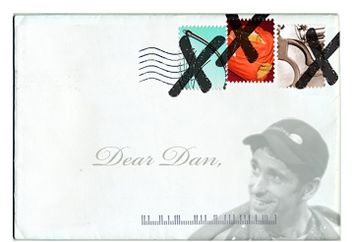
Dear Dan,

This is perhaps the hardest letter I’ve ever had to write. I’ve started it again and again but I know now that I’ll never get it right, so just let me stumble my way through, OK? Please don’t make this any harder than it has to be.

Your Savage Love sex advice column not only made me a better lover but a better person. You introduced me to people, places and things I would have never otherwise been aware of. You were my secret gay crush for five years. Or you used to be. But, sadly, this is both a fan letter and a Dear John, Dear Dan. It’s over and it’s better this way. You’ll see. No, please, Dan — it’s not you. It’s me. But I’m hoping we can still be friends.

When I discovered you, Dan Savage — wonderful sexpert, faggot you — I couldn’t believe the new worlds you opened up for me and how blinkered a supposedly sex-positive feminist like myself truly was. In my GI days in the ’80s Third World, I was proud of myself for overcoming my Southern Baptist brimstone against prostitutes once I understood the world those women lived in while I marched about in my shiny uniform making more monthly than they did annually. I ended up with bargirl girlfriends and shamed my whore-mongering male co-workers into treating them well. That led me, during law school, to work for sex workers’ rights. How open-minded, how transgressive I thought myself even as a bottle of wine and a mix tape were the only accessories I ever encountered in the bedroom.

Then you came along, damn your eyes; how I preened as I “allowed” a homosexual to give me advice on straight issues. Such a liberal! The parade of kink you bestowed on me each week (I do nothing on Wednesdays before reading you); the trannies, the furries, the swingers, the cuckold fetishists. I’m a Dead White Man book-lovin’ geek — what gratitude that you were keeping words like “cuckold” in use!

Since we supplicants make the pilgrimage to your site to admit that which can be admitted nowhere else, here’s my confession: At first, I read your column the way we “decent” folk rubberneck a perp walk — so we can tut-tut and get our disapproval on. But my Church Lady prurient, “I have no part in this” sniffiness slowly gave way to a raised consciousness of all things sexual. This may be the column that made me realize that for all the schtupping I had so proudly done, I still had a lot to learn:

Like those “straight” frat boys I fucked back at the University of Illinois, your boyfriend wants it. He wants you to fuck around with another guy, preferably in front of him. But he doesn’t wanna want it and wishes it would go away. And it does go away, just like magic, immediately after he comes. Unfortunately, it comes roaring back as soon as he’s horny again.

Where did his cuckold fetish come from? Like many fetishes, his cuckold thing is most likely a subconscious, erotic response to a sexually charged fear. While most of us learn to live with and occasionally conquer our fears without eroticizing them, a number of us respond to sexual fears or traumas by incorporating them into our erotic imaginations.

Dan, that’s when I realized you weren’t just enabling my voyeurism; you were dropping knowledge! I had subconsciously assumed a) that a sex advice columnist couldn’t be very deep and that b) fetishists were just natural-born freaks to run from at first sight of those assless chaps and that growling Dustbuster; cerebral me had never thought to wonder where fetishes came from or that most were, however strange, neither harmful nor illegal, in any event. I read you and flipped through my photo album wondering which old lover had secretly lain next to my snoring bod after a thorough, vanilla pounding, and wished he had the nerve to wake me up and order him to mop my floors with his tongue.

No doubt the fetishes you discuss have long been understood, but what a service to have that knowledge broadcast to a general public. And bravo for the top-flight medical expertise you marshal to advise us all on the risks of practices like “water sports,” bestiality and all things poop related. That was when I first thought of writing about you. Working title: That Pervert Dan Savage Is Good for America. Other sex advice columnists turned me off with their faux fey girliness (“you know what happened next”) or their exhibitionism, all but posting their pap smears online. But not you, you’re all business about pleasure, just what a nation so obsessed but so repressed about sex needs.

Dan, you were that lover who turns a virgin out, turns her on, “makes” her do naughty things that go completely against her “nature” and produces a bedroom superstar who looks for all the world like a librarian. You’re the middle-aged housewife who breaks in the lawn boy. (One of the reasons I love you is for your dictum that older lovers should treat their legally aged younger ones like camp sites — left better than when found.) You are a sexual Solomon reigning over a moral universe that’s downright old testament. But.

Alas, maybe it was never meant to be between a middle-aged straight black chick from the Bible Belt and a raging ‘mo with no boundaries. I was with you through your calm instructions to the chick who wanted her pubic hairs plucked with tweezers. The politics of boinking your pets — read every word. But finally, a column from a few weeks ago made my sexual pendulum swing back past the point of equilibrium to a decidedly prudish angle. As I began dating again and anticipating a new, savage lease on sex, the parade of fetishes began to seem like plain old dysfunction to this straight arrow. You didn’t change, Dan. I did. And it was this column that was the final straw, the one that made me dread what was in store for me as I worked on my Match.com profile and looked for porn hiding places my kids wouldn’t find:

My husband … is a diaper-loving, transvestite adult baby … while I’m not into his kink, I’m not against it. I’ve bought him diapers … I’ve set aside a room in our house to be his “nursery,” one weekend a month he gets to be his little-girl self all weekend, and I peg him because he likes to feel submissive and dirty. He knows that I worry — as someone who works with children — that it could get out and ruin my career … lately our vanilla sex life is suffering … he always wants to come in his diapers [OR] he lies there like a lump. Now he’s decided that he doesn’t want to have sex unless it’s playtime … I’ve tried everything I can think of, even compromising the “my turn” rule by letting him whine and cry and pretend to be a baby during my turn. I’m tired of my baby girl; I want my husband back.

You trained me well, Dan. I know I should applaud my fellow savage for being so GGG (good, giving and game), but I don’t. I think she should have headed for the hills at the first mention of Depends. I know I shouldn’t think it. But the fact is that I do. Now, instead of regretting what I missed out on sexually, I’m terrified of what I might learn if I give the least hint of a sexual openness. Now it’s me who’s on the down low, repressing my sexual fantasies for fear of what his might be. I’m the hall monitor geek in the coming-of-age movie who cuts physics for an orgy only to wake up with a persistent itch, a stalker and a big, fat secret to keep buried deep inside. I simply do not want to know what bland Dave in accounting keeps in his spare room.

It took a gay activist to convert me to don’t ask, don’t tell, and regretfully, I’m going to have to DTMFA. Hard as I tried, it turns out that I’m not so good, not very giving and definitely gone. I’m not dumping the column — can’t live without it. But I’ll be reading as a peeping Tom, not an acolyte.

Who was I kidding? I’m no wild child.

Signed,
Repressed and proud of it

Continue Reading Close

Sympathy for the devil: Leave Rev. Al alone!

Why did unnamed Obama supporters attack Al Sharpton? He's only asking questions that need to be answered.

Say it ain’t so, Barack.

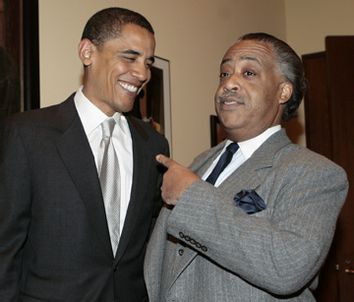
Say you didn’t authorize it (or gloat) when your henchmen pulled down your elder’s pants in public and tried to humiliate the Rev. Al Sharpton in the pages of the New York Post. Whatever Senator Obama thinks of a figure as controversial as Sharpton, black America must demand that he use his position to send a forceful message that neither mudslinging nor extortion will be the hallmarks of a historically disenfranchised group that has long condemned whites for their disgraceful political behavior. Just what the world needs — more proof that power corrupts. With black support still in play among the leading Democratic contenders, rest assured they’ll be watching to see how Obama responds to his supporters’ attempts to marginalize (through the white media, no less) those blacks with the temerity not to worship him instantly as the anointed one.

Watching the growing pains of a black polity trying to grow itself up in this brave new post-civil-rights world is wrenching, but it proves the truth in the cliché: no pain, no gain. This juvenile, malicious and cowardly attack on Sharpton more than proves the point that managing their newfound political relevance is a tightrope walk that blacks have not yet mastered. Since blacks aren’t going to stop being a crucial voting bloc anytime soon, it’s crucial for them to ignore the slings and arrows of white derision and black group-think while they gain their footing and keep their eyes on the prize (to mix a few metaphors). The trouble, though, is in identifying exactly what the prize is: blacks elected to high office? black power-brokering and election of their preferred candidates irrespective of race? black cohesion regardless of individual preference or conscience? or how about the maturation of black intellectual, political and moral authority?

I vote for the last option, maturation — so hang tough, Reverend Al. And Right On to that meaty middle finger you’ve offered in response to black power’s attempt to silence any who step out of line. White elites are certainly doing their part to squash black intellectual and political independence (man, do y’all hate it when we don’t do as we’re told), but New York Post columnist Fredric Dicker’s anonymously sourced attacks on Sharpton highlight a worrying tendency among blacks to demand obeisance to a party line. I know the stakes are getting higher, with rising political figures like Barack Obama and Massachusetts Gov. Deval Patrick, but it should be illegitimate to demand lockstep loyalty within any interest group.

Feel free to peruse Dicker’s contribution to the black cause, or trust my condensed version. Suffice it to say that blacks are no more strangers to silencing and schoolyard bullying than any other group. Supposedly “the high-profile, self-promoting” wannabe Sharpton, driven “crazy” by jealousy and failure, “has launched a ‘big-time’ effort to tear down” Obama, that white-backed poseur with no community ties, surrounded by shady nobodies. I’m surprised Sharpton wasn’t fingered for dropping a dime on Obama’s Marlboros and parking tickets. It’s Sharpton as Salieri, the bitter, conniving also-ran. How did Dicker “learn” this? From “[a] prominent black Democratic activist who knows Sharpton” and “who supports Sen. Hillary Rodham Clinton,” from “another black Democratic activist,” “a source close to [Sharpton],” “Democratic activists,” and “a prominent New York official.” Not one of these “knowledgeable sources,” proof of Sharpton’s venality clutched in their hot little hands, was willing to put his or her name where his or her big, fat mouth was. Please.

Sharpton, being Sharpton, wasted no time hightailing it to the OK Corral. He told CNN, “It’s important to point out, they started this … I wake up yesterday morning with no warning and [read] ‘Is he jealous because he won’t endorse?’ I’ve never heard anything like that in my life in politics. This is one time I didn’t start the fight.” Sharpton went on to explain that he was withholding his endorsement until he got his questions answered on issues like Obama’s civil rights agenda, why Obama stumped for Joe Lieberman (an Iraq war supporter), Obama’s stance in support of tort reform and the like. “Why shouldn’t the black community ask questions?” Sharpton asked. “Are we now being told, ‘You all just shut up’?” Good questions, especially this one: Who’s telling blacks to shut up? Other blacks, that’s who, however much Obama’s white supporters might agree.

I have no doubt that Sharpton is jealous of Obama. Hell, I’m jealous of him. It’s doubtful that there’s anyone who spent decades crawling up the political ladder whose admiration isn’t mixed with at least a soupçon of “What’s so great about him?” Indeed, I argued that mainline civil rights leaders like Sharpton and Jackson need Obama to pay obeisance and show them public respect, if only to take the sting out of his leaving them in the dust. But much more important, Obama needs to respect blacks in general by explaining himself to us, answering our questions, and bloody well winning our vote. Whatever Sharpton may be feeling in his heart, he’s doing his job as a black leader, let alone as a voter, by withholding his endorsement until he’s convinced that it’s in his, and his people’s, best interest to bestow it on a particular candidate. It’s ridiculous to court his endorsement and then denounce him as an insubstantial playa-hater. We can only hope that this ad hominem whisper campaign was not sanctioned by the heretofore classy Obama. Sharpton now says that the senator did call him after the article ran, but that he hasn’t yet returned the call. Admittedly, that’s classless on Sharpton‘s part. But still. Here’s looking for a follow-up article on a staffer or advisor suddenly cut loose from the Obama campaign.

Of course, I’ve held off as long as possible pointing out that the good reverend brought these suspicions about motive and character on himself. His actions during the early years of his public life will forever mar his credibility. Two words: Tawana Brawley. There were other scandals and much mishandled activism, but the Brawley debacle alone was enough to make it impossible for Sharpton ever to become a U.S. senator or any other kind of mainstream politician himself. The refusal of an ordained minister 20 years later to admit his heinous mistake or apologize to the man whose life he ruined — and his noncompliance with court-ordered restitution 10 years after losing a lawsuit — is, simply, unforgivable. He asks of America what he himself is unwilling to do: face the music.

It’s really too bad because, always a crack debater, Sharpton has matured as a thinker and a leader. Far more often than he’s given credit for, he spanks black America and works for the rights of nonblacks. Yet there will probably always be a limit on how seriously America at large is willing to take him. Perhaps that’s why Obama’s proxies felt confident in attacking him. Will Rev. Al ever admit his error? Louis Farrakhan has, albeit sputteringly. Thug par excellence Suge Knight has (sort of), Snoop and Diddy have (kinda).

Here’s hoping Sharpton has it in him. Supposedly, he’s mellowed since he survived a minor stabbing in 1991. He’s admitted that the medallions and track suits that were once his trademarks were camouflage for the flab he’s now worked off, and he’s taken brave stands no one gives him credit for. He’s denounced gangsta rap, nihilism, underachievement, misogyny, homophobia and black apathy on HIV, facts I didn’t know until a few years ago when I read up on him looking for confirmation of his uselessness and “race baiting.” I came away surprised and impressed, especially once I realized that his presidential runs, like Jesse Jackson’s, at least forced America to talk about an urban agenda, albeit only up through primary season. And looky, looky, now Rev. Al’s making sure that the 2008 candidates must “talk black,” too. However tarnished Sharpton’s credibility might be (and his judgment can be astonishingly bad), we wouldn’t all be talking about him if he didn’t matter to blacks, who have always known how to read between the lines of mainstream discourse. No Cold War Kremlinologist deciphering reality from the hogwash in Pravda has anything on a Negro reading the New York Post and rolling his eyes.

So hang in there, Rev. Al, and keep fighting the power. It’s just too bad that this time it’s black power.

Continue Reading Close

Page 1 of 5 in Debra Dickerson

www.salon.com/writer/debra_dickerson/index.html