Debra S. Ollivier

Sex education with a contraceptive chaser

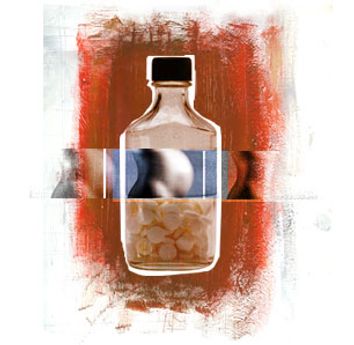
The French will distribute the morning-after pill in schools, much to parents' and the Pope's chagrin.

  • more
    • All Share Services

Sex education with a contraceptive chaser

In several weeks, France will become the first country in the world to distribute NorLevo — known as the morning-after pill — in schools. The move, spearheaded by the country’s education minister and motivated in part by a sharp increase in teen pregnancies and abortion, has created philosophical havoc in a place that outsiders have long perceived to be an outpost of sexual freedom but is, in fact, largely Catholic and very traditional.

Even the Pope has weighed in with his opposition to the decision by Education Minister Sigolhne Royal, who also is the target of vehement protest by Federal Parent-Teacher Association (PEEP), which represents nearly 5,000 similar associations and half a million families.

Said PEEP in its most recent statement, “This decision is an admission of failure of all the preventive health and sex education measures to date … We’re concerned that the decision will result in a banalization of the pill by an even greater number of children.”

“We are not talking about children here,” retorts Natalie Marinier, associate director of a federally subsidized family planning center in Paris. “We’re talking about sexually active young adolescents who already are engaged in, or about to explore, the world of sexual relations. We’ve been asking for more rigorous and widespread education for years. The fact that parents are dissenting reflects a serious lack of awareness about what adolescents confront on a daily basis.”

Intimately familiar with what adolescents confront daily are the adolescents themselves, who appear to be unanimously in favor of NorLevo in schools. “I’m 100 percent behind it,” says Pauline, a 17-year old economics student at the Universith Nanterre. “The morning-after pill is already available in pharmacies. But a lot of girls don’t know this, especially those who live outside of Paris. If the morning-after pill can prevent abortion, I’m all for it. And so is everyone I know.”

In fact, both parents and teenagers are generally unaware of what NorLevo is and how it’s been distributed. NorLevo is a non-abortive progesterone-based pill (not to be confused with the abortive RU-486 pill) that is only effective within 72 hours after sexual relations. It prevents the egg’s implantation in the uterus.

In June of this year, France became the first country in the world to distribute NorLevo on the open market without prescription or parental consent. For the past seven months the pill has been available at pharmacies around the country for 60 francs ($10); it is also distributed free-of-charge along with other contraception at family planning centers.

“When NorLevo was launched on the open market without prescription, no one said a word,” says Annie Filloux, member of the National Union of School Nurses and Health Counselors. “Suddenly the minister of education comes out in favor of its distribution by school nurses, and people are up in arms.

“Most young girls come to us in a state of deep distress. They’ve had unwanted sex, or something’s gone wrong and they’re panicked,” adds Filloux. “For any number of reasons, they don’t want to go to their parents. We have only 72 hours to help them, but often girls come to us after a weekend has gone by.

“We have very little time for any other options. We’re there to help them in these cases of extreme emergency.”

Extreme emergency covers a wide range of circumstances — from adolescents who’ve had sex out of peer pressure or who’ve used a condom that has ruptured, to those who’ve been raped or sexually assaulted.

Until recently, rape was a silent crime in France, largely unreported in schools and shrouded in a complex blend of shame, outrage and denial. Often the first person to learn of a rape is not a parent or a police officer, but a school nurse.

The role of school nurses was put on the national agenda in 1990 during the first wave of massive school protests in France. Says Brigitte Le Chevert, secretary-general of the National Union of School Nurses and Health Counselors, “Everyone was shocked, including the prime minister, when the second student demand, often expressed in quasi-violent terms, was for more school nurses. People had no idea what our role was really all about.”

That role involves an intimate and evolving interplay of technical health consultation, education and psychology. Says Le Chevert, “Students know that when they come to us with problems, they are protected. Except in cases of rape or sexual abuse, we are professionally bound to keep in confidence anything a student tells us.

“Students may come to see us for a seemingly banal problem. But frequently a headache or backache is, in fact, the reflection of much deeper emotional distress. It is frequently in the course of an ostensibly ordinary encounter that difficult memories or painful issues merge. And many adolescents, because of family barriers or culture, feel more comfortable speaking to us than to their parents.”

Le Chevert adds that students are urged by school nurses to seek advice and communicate openly with parents. But many students are fearful of their parents’ reactions, are burdened by a sense of shame, or simply want to keep problems to themselves.

When parents and teenagers do come together, they are often both unaware of their options. What’s been characterized by health professionals as a “dramatic lack of information” about prevention and contraception has prompted education minister Royal, in conjunction with family planning and related associations, to prepare an aggressive nationwide sex education campaign for mid-January.

Previous campaigns, which focused on the use of condoms and which were largely oriented around the prevention of AIDS, have been seen as failures. This new campaign — to be launched in schools, on metros and in other public places as well as on TV, radio and in the press — will provide adolescents with the information they need for contraception, consultation and emergency intervention. Five million copies of a contraception guide will also be distributed in junior high and high schools with accompanying letters to parents.

“Contraception and control of our bodies is a right,” says education minister Sigolhne Royal. “We’ve fought hard for this right and we intend to exercise it. This includes adolescents’ rights to contraception. We’ll be direct with young teenagers in our campaign. We’ll teach them to say ‘No’ if they’re not ready for sexual relations. We’ll teach them how to respect their bodies.

“They must learn that sexuality is one of the most beautiful aspects of being human, and that their first steps toward expression of their sexuality as adolescents will inevitably shape their experience as women. If that first experience ends in abortion, it’s a failure.”

Of the 10,000 unwanted pregnancies last year, 6,700 ended in abortion. Students, as much as Royal and her adult supporters, cite these statistics as the main reason they are in favor of NorLevo in schools.

A small group of girls gathered in front of a school in Nanterre nod enthusiastically as their friend Pauline says she is completely in support of the program. “I’ve used the morning-after pill myself,” adds one girl. “It saved my life.” When asked about their personal experiences with abortion, they are reticent. Only one girl offers her own experience at a clinic. “Let’s just say it was not a happy experience.”

Filloux, also a school nurse, considers NorLevo a last resort, but a critical one. “I can’t tell you how many teenage girls come to me in a state of tremendous grief and guilt. They lament that they are going to kill their unborn child. I don’t want to hear this anymore.”

Doctors on the front line performing abortions also express consistent astonishment at how little many adolescents know about their own bodies, about procreation or contraception. Says Royal, “This lack of education is totally unacceptable in our times. If these kids aren’t getting the information they need from parents, and if the school can provide that role, it will.”

It is precisely this assertive position that angers parents, many of whom are against the state’s involvement in family affairs and resent implications that parental resignation has driven a wedge between them and their children. Counters Royal, “Parents can’t ask for more support and social programs in schools and then prevent us from providing their children with the fruits of social progress.”

PEEP members see things differently. “We aren’t against contraception,” says one member. “But we don’t want our children getting it in schools. We want a partnership with family planning centers.”

This exchange underscores a paradox in France: Of the mere 1,100 family planning centers in the country, 30 percent are in Paris. Annie Costa is a school nurse in the small town of Belmont-de-la-Loire where there is only one pharmacy and the pharmacist, as a result, “knows everyone.” The closest family planning center is 60 kilometers away and closed on weekends.

“When a young adolescent comes to us in distress, the first thing we do is encourage her to speak with her parents,” says Costa. “But when she absolutely refuses this option, we must respect her. Often a girl will come to us with only a few hours left before NorLevo is no longer a viable option.

“We can’t call the paramedics and send her to a hospital. That would also be a flagrant violation of her need for privacy. We suggest NorLevo, but we also provide personal follow-up to assure that she’s supported with the people and information she needs.”

Education Minister Royal emphasizes this follow-up as part of a protocol currently being defined on a national level.

“We’re creating a comprehensive sex education campaign,” says Royal. “It will speak to adolescents before and after sexual relations. It’s one way of reclaiming ground in the field of sex education, which currently amounts to only 30 hours over a four-year scholastic period. The morning-after pill is not a method of contraception, but a last resort at the end of what we hope will be a more global and effective public health and sex-awareness program.”

Royal’s decision to allow school nurses to administer the morning-after pill has been applauded by the majority of health practitioners around the country, but it still faces an uphill battle despite France’s reputation as a sexually open country.

“This is a false perception,” says Le Chevert. “We are a people in contradiction. We are not prude, but we are not direct either. We’ll show women’s breasts on TV and flaunt a certain amount of sexuality, but when it comes to our children, or to our own private lives, we are extremely closed.

“We are still very much living in a Judeo-Christian culture. We couldn’t launch our campaign, for example, until well after Christmas. There was concern that if we did so before the holiday, with its religious underpinnings, we would be communicating the wrong message at the wrong time.”

Why can't a woman be more like a chair?

  • more
    • All Share Services

All over Paris last week, the harbingers of next spring’s haute couture and prjt-`-porter collections were out in force, a strange amalgam of extremes. On the one hand, women played out prurient Victorian baby-doll fantasies, Cinderella vixens billowing and bondaged in bustles, buntings and bodices. Layered in pounds of plumage and petticoats; ruffled, trussed, corseted and masked like so many Marie Antoinettes walking gracefully, if not a bit self-consciously, to their own executions.

On the other side of the fashion extreme, women dressed as objects — quite literally. They were furniture bolsters, missile silos and mutant vegetables (heads bursting from cabbages). Some sported wing flaps and radioactive aluminum siding; others were wrapped in what appeared to be postmodern death shrouds (“… hooded cape encourages stillness of upper body,” is how one American journalist described this look. Translation: Hooded cape is something you’re supposed to be caught dead in). Some women wore things that looked as if they might live inside your radiator or in your air-conditioning duct. Fumbling for descriptors, Le Monde called it all “test tube beauty” and a “starchy and indigestible [fashion] porridge.”

When — in the bonding and strapping — limbs became a problem, they were simply removed. This month’s French Vogue brings us “Cyber Amazon,” a space-age, bikini-clad gladiator who, with her prosthetic leg and hook arm, can “turn lead to gold, enflame libidos and reduce men to objects.” This limbless trend is the brainchild of Alexander McQueen, a British designer who put Aimee Mullens, the first handicapped model (Mullens had both legs amputated when she was 1) on the runway in London this fall. Benetton recently chose a number of mentally retarded and Down’s syndrome children for its ads. Even the ballerinas in the Palais Garnier’s presentation of “Ghiselle” pranced around in straitjackets and mental-ward attire rather than traditional tutus. All this prompted French Elle to declare, “The handicapped are fashionable,” celebrating a new era of asylum, orthopedic chic: women with or without limbs in a variety of surgical neck braces, wooden body and head casts and prosthetic limbs, soon to be complemented with “futuristic orthopedic-bondage jewelry” from Givenchy. Clearly, employing the aesthetics of medical gear and trauma is a dipstick for measuring the extent to which the fashion world has veered into almost psychotic lunacy.

Of course, no one in Paris really dresses in this boudoir-cum-intensive-care-unit style. Fashion has always been another world, if not downright otherworldly. (“Women are apparitions,” Guy Laroche says in a full-page ad in Le Monde, perhaps by way of explanation.) Still, socio-anthropological speculation aside, one wonders not only who buys these vestments but how women actually sit, lean over or disrobe without inflicting physical harm on themselves or innocent bystanders. One wonders how many French women actually fit into the thimble-size, breastless (whatever happened to darts?) body suits, prosthetic armaments or bust-breaking bodices revamped for the ’90s? One wonders who, besides France’s first lady, Bernadette Chirac, actually buys a new $3,000 Dior handbag in an array of new, minty colors? To find out, I made my way to avenue Montaigne, where the sovereign kings of haute couture have taken up residence like so many houses of lords.

Avenue Montaigne is as dynamic as a still life. Even the traffic, normally in a state of frenzied chaos with pileups all over Paris, seems to mysteriously thin out and slow down there, as if it’s a different high-density gravitational field. I went to the houses of Chanel, Dior and Nina Ricci to see how many people actually shopped there. The answer, it seems, is not many. Every store was absolutely desolate. A lone security guard looked on as a tiny, frail woman examined a tiny, frail watch in a near-empty Chanel boutique. Dior featured a variation on the theme of its basic handbag (its padded square patterns have always reminded me of La-Z-Boy lounge chairs) as well as an assortment of dresses-that-are-anything-but, i.e., assemblages made of what appeared to be upholstery swatches, shag carpet, Native American bone and bead decorations, macrami, rubber ribbings. The colors, like the women who’d wear such get-ups, scream for attention: hysterical fuchsias, maddening magentas and canary yellows. The showroom has the literal and allegorical stuffiness of a taxidermist’s boutique, reminding me of the confused and encumbered chameleon in Eric Carle’s children’s story, “The Mixed-Up Chameleon” — who, with his elephant head, seal flippers, giraffe neck, turtle shell and antlers, was “a little of this, a little of that.” Foot traffic here was nonexistent.

Still wondering where all the orthopedic gear and baby-doll dresses were, I crossed the street to Nina Ricci, with its prominent display of Day-Glo purses in the form of tugboats, lounge chairs, watering cans, telephones and flowerpots. At roughly $2,000 a pop, nobody was buying. Then again, no one was there to buy.

What’s going on here? According to France’s Nouvel Observateur, Dior’s sales rose in the first six months of this year by 76 percent in France, 41 percent in Europe and 48 percent in America (dipping a mere 3 to 5 percent in Asia despite the crisis). But that was a mere blip, due in large measure to the arrival at Dior of fashion deviationist John Galliano, in an otherwise bleaker picture. Just three months ago haute couture tailors took to the streets protesting job losses and boutique closings; it’s been estimated that roughly one-third of haute couture jobs have been lost in the last decade. As the French grapple with massive unemployment, transportation and labor strikes, student protests and dwindling social benefits, has the furious and antic extravagance of French haute couture become somewhat of a joke?

Turns out, the fashion action was not far away at Galeries Lafayette, on the perennially congested boulevard Haussmann. Like many venerated but budget-strapped French institutions, Galeries Lafayette is a mix of the shabby and the elegant (a magnificent iron and stained-glass dome, on the one hand; stairwells and lighting fixtures that haven’t been retouched since the Allied invasion of Normandy, on the other). It has the slightly chaotic, colorful disorder of a child’s room. This week the street was celebrating spring collections by opening its runways to young (read: unknown) designers, and a sea of people had come for a peek. Despite the decor (black-light glow, interstellar tinklings piped in from hidden speakers, mannequins rising out of blasted swamps, cattails and all), the atmosphere was decidedly down-to-earth. The models were young, a little inexperienced and clearly having a good time; they sported ready-to-wear pants and skirts with “military allure” and names like “Free,” “Happy Wear,” “Very Happy,” and “Miss Sixty.” If this gear, in its various shades of gray and khaki, and the crowds who came to see it are any indication, spring ’99 will be much more ordinary and typically unisex than the high priests of haute couture would have us believe. For most of us, it will be about dressing for the tribulations of urban life (which in the case of Paris means downpours, metros, cobblestones and dog shit). Jeans, it seems, will remain a staple for men and women alike.

It’s sad that the tautology of French haute couture has eclipsed what is by far France’s greatest contribution to fashion: denim. Originally called “bleu de Nnmes,” denim was a fabric from the French town of Nnmes. Imported by Levi Strauss in the late 1800s, denim became the foundation for the pants with metal rivets (put in vulnerable spots for miners who needed strong, sturdy pants) that would become an unrivaled, universal fashion staple for millions of men and women, and remain so for nearly 150 years. I’m reminded, however, that it wasn’t until the late ’60s that girls were allowed the right to wear jeans in public school. Jeans! Incredulous, on the first day the policy change was official, I went to elementary school in a dress with my jeans (an egregious pair of purple bell-bottoms) in a paper bag just in case the whole thing — the opening of the portals of fashion freedom, girls unbound by the constraints of dainty dresses and uncomfortable skirts, license to explore new rough-and-tumble worlds, the birth of a true unisex revolution — was some kind of a joke.

It wasn’t.

Continue Reading Close

Circumcision in America, Part 2

Despite medical and religious debunking, long-standing cultural biases keep the practice of circumcision alive.

  • more
    • All Share Services

Why is the most “advanced” nation in the
industrialized world alone in practicing a disturbing archaism from less
enlightened times? In “The Saharasia Connection,” Dr. James DeMeo, who calls circumcision “an ancient blood ritual … that has absolutely
nothing whatsoever to do with medicine, health, or science in practically
all cases,” puts forth this hypothesis: “The fact that so many circumcised
American men, and mothers, nurses, and obstetricians are ready to defend
the practice in the face of contrary epidemiological evidence is a certain
giveaway to hidden, unconscious motives and disturbed emotional feelings
about the penis and sexual matters in general.”

It remains to be seen to what extent “unconscious motives” are
responsible for the perpetuation of circumcision today. However, “emotional
feelings about the penis” may very well be knit into the fabric of certain
long-standing myths that persist in the United States despite logical or empirical
evidence to the contrary. After much verbal intercourse with friends over
the years about near misses and close calls with the intact penis, it seems
evident that three persistent myths or biases dominate.

The mother of all myths, now locker-room gospel, is
that a circumcised penis is more hygienic than an intact one. This comes as
no surprise in a culture where the art of sterilization is so pervasive
that certain foods have a half-life that probably exceeds that of plutonium. Still, doctors discredited hygiene as an advantage of circumcision years
ago. When I asked our pediatrician what I needed to clean my son’s intact
penis, he replied: “Common sense.” The American Academy of Pediatrics (AAP) put it another way: “Good
personal hygiene would offer all the advantages of routine circumcision
without the attendant surgical risk.” (This, of course, is the case for
both sexes: Leave any body part unattended for too long and things get,
well, unpleasant.) Yet another doctor posited in “Circumcision: A Medical
or Human Rights Issue?” that removing the foreskin for hygiene’s sake is like
removing one’s eyelid for a cleaner eyeball.

Another popular and profoundly baffling myth is that circumcision
is painless. Studies indicate that those babies who appear to sleep
through a circumcision have most likely slipped into a semicomatose state,
and a slew of recent studies on newborns, traumatic experience and
sensory perception support this hypothesis.

Equally strange is the
cultural bias for the aesthetics of a circumcised penis. In moments of
free-associative candor, girlfriends have compared the looks of an intact
penis to everything from an elephant trunk to a dachshund. The queerness of
it was reinforced by the unsettling feeling that it required at best a
refresher course on basic anatomy, at worst a whole new sex education, as
if an intact man were some sort of Minotaur. To the extent that the
circumcised penis is endorsed largely through culturally determined views
about hygiene and aesthetics, one wonders if it’s not in some odd way a
metaphor for America itself: sleek and streamlined, the way we like our
cars and buildings, connoting speed and unimpeded verticality; but also
surgical and sanitized, and thus thoroughly modern. By contrast, the intact
penis is a little too unruly, too Paleolithic, a little too, well, animal.
(If penises could walk and talk, the circumcised penis would be a suit and
tie, a clean shave and a shoulder-high salute. The intact penis would be a
rumpled shirt, a five o’clock shadow and a finger flipping you the bird.)

Either way, passing judgment on an intact penis in America is like passing
judgment on a real nose in a country where rhinoplasty is imposed at birth.
Quite simply, most Americans have forgotten that an intact penis is
actually the norm, and that for thousands of years the only people who were
circumcised were Jews and Muslims.

- – - – - – - – - -

Which leads me to a word about Jews and the penis. When I mentioned
to certain relatives that my son would remain as nature intended him, the
conversation, once the shock wore off, went something like this:

“But honey, what about the, er, Covenant of Abraham?”

“What exactly is the connection between the Covenant of Abraham
and my son’s penis?”

“Well, I’m not sure. Let me put Sam on the phone.”

Sam wasn’t sure about the God-penis-Covenant connection either.
Neither was Ruth. Nor Morley. Nor were any of my Jewish friends or relatives.

In fact, the Covenant was a pact between God and Abraham, an
expression of both faith and tribal belonging that set the “chosen people”
apart, and which has been passed on to all Jews. Jewish identity, however,
is not determined by circumcision nor is it passed through the penis. As
most Jews know, Jewish identity is passed through the mother, hence the
traditional and immemorial Jewish concern about assimilation through
intermarriage. The “Encyclopedia Judaica” reaffirms this: “Any
child born of a Jewish mother is a Jew, whether circumcised or not.” I’m
reminded of a Jewish friend who insisted that his son be circumcised
despite the fact that his wife was Catholic. “Circumcision,” his rabbi
reminded him, “will not make your son Jewish.” (His wife’s conversion to
Judaism, however, would.)

Despite all this, the issue of Jewish identity, in which
circumcision is inextricably bound up, remains one of the most complex,
thorny and eternally debated subjects around. Volumes have been written on
the subject, and everything is up for personal interpretation. With this in
mind, and given that a vast number of Jews do not know what the Covenant really
is — their sons are circumcised in hospitals without a bris; they
are not Orthodox, and do not keep kosher — one can only surmise that circumcision is
not an act of religious conviction but rather one of deeply entrenched
cultural conformity rooted in the deep past. In fact, a cruel irony lingers
here: Originally, biblical circumcision involved cutting only the tip of
the foreskin (called brith milah), which still left enough foreskin for
certain Jewish men to stretch it forward and pass as gentiles. This gave rise
to a rabbinical movement called Brith Periah. Much more radical in nature,
Brith Periah essentially removed the entire foreskin, making it impossible
for Jews to emulate gentiles. Modern circumcision is based on this much
more radical procedure of Brith Periah — a strange medical twist that has
leveled the playing fields of the penis among Jews and gentiles alike.

Jew or gentile, to the extent that “God” is behind circumcision and
the oft-cited Covenant, one can only wonder: Why ordain the removal of such
a fundamental part of the penis? And why the penis? Here the views of Moses Maimonides, a medieval Jewish philosopher, rabbi and figure in the
codification of Jewish law, are enlightening in a more universal context.
In “Guide to the Perplexed,” Maimonides wrote that the commandment to
circumcise “has not been prescribed with a view to perfecting what is
defective congenitally, but to perfecting what is defective morally.”
Celebrated for his chastity by the sages, Maimonides elaborates: “With
regard to circumcision one of the reasons for it is, in my opinion, the
wish to bring about a decrease in sexual intercourse and a weakening of the
organ in question, so that this activity be diminished and the organ be in
as quiet a state as possible … The fact that circumcision weakens the
faculty of sexual excitement and sometimes perhaps diminishes the pleasure
is indubitable. For if at birth this member has been made to bleed and has
had its covering taken away from it, it must indubitably be weakened.”

Maimonides’ views evoke not only the Victorians, the doctrines that
underlie female circumcision and the “unconscious motives” Dr.
DeMeo wrote about: They also hark back to the forbidden fruits of sex and religion that
have festered in the gardens of earthly delight ever since Adam and Eve
discovered the apple.

Considering the troubling history of circumcision in light of my
own son’s corpulent little penis, I’m reminded that it is the choice — and
in some cases, the courage — of American parents that will determine whether
the next generation of American men reclaims what is rightfully theirs
to begin with. In this regard it might be the late Dr. Benjamin Spock who stands for conventional wisdom at its best. When asked about circumcision in an
interview with Redbook in 1989, he said quite simply, “My own preference,
if I had the good fortune to have another son, would be to leave his little
penis alone.”

Continue Reading Close

Circumcision in America

How did a medically pointless procedure become a routine practice performed on a majority of American males?

  • more
    • All Share Services

When I told people that our newborn son would not be circumcised, I
didn’t realize that a tiny but vital part of his penis would touch off
deeply held convictions about cultural mores, aesthetics, psychology,
hygiene, father-son relations, American identity and thousands of years of
biblical traditions. In fact, I hadn’t given penises much thought since my
teenage years, when every penis was a circumcised penis and the only issue
of overriding concern as the tentative probings of adolescence bloomed
into full-blown sexuality was: “How does this thing work?” Years later, I
was given a detailed, hand-etched poster called “Penises of the Animal
Kingdom”; in this vast forest of mammalian genitalia the only thing more
striking than the banality of man’s penis next to that of the 20-foot gray
whale was the fact that all of them, including man’s, were intact.
Aside from this brush with reality, however, the mushroom leitmotif of the
circumcised penis remained the unequivocal, unquestioned status quo of my
youth and of all my peers. It was the uncircumcised penis, with its strange
fleshy retractability, that was somehow freakish, a slightly vestigial
aberration, like being born with a tail or a set of gills.

Years of living in Europe and being married to a French
(uncircumcised) Catholic changed all that. Because only Jews and Arabs practice routine circumcision in Europe — in fact, the United States is the only
country in the industrialized world to practice it across the board — I
eventually grew so accustomed to the intact penis that a circumcised one
now looks startlingly bereft. Still, when I told people in the States that
our son would not be circumcised it was as if, in keeping his little
foreskin intact, I was committing a perfidious impropriety: refuting both
my Jewish and American identity and, in so doing, robbing my son of both.
For all those who expressed their convictions, however — the
astonished Jewish relative, the slightly repelled girlfriend, the perturbed
American husband — a number of questions hung in the air, unanswered.
Why, exactly, do we circumcise? How did circumcision evolve from a
strictly Jewish and Muslim ritual to a standard medical procedure performed
on a vast majority of American males, irrespective of religion? Why is the
United States the only Western nation in the world to practice it routinely,
despite overwhelming evidence debunking medical claims and enduring myths?
More important, what exactly is the foreskin, what happens when we remove
it and why do we continue to opt for circumcision?

It doesn’t take much to realize that nature didn’t intend the
foreskin and the penis to be separated at birth. Try retracting the
foreskin of a newborn’s penis and you’re struck by the steadfast, tenacious
grip it has on the glans, or head. The foreskin is sealed to its bounty
like a silo, and only slowly, over the years, yields to full retractability.
But it’s far more than just a sheath. The foreskin contains thousands of
highly sensitive sensory receptors called Meissner corpuscles, which are
more abundant there than in any other part of the penis. Richly endowed with a
profusion of blood vessels, it also has a ridged band of peripenic muscles
that protects the urinary tract from contaminants, and an undersurface lined
with mucocutaneous tissue found nowhere else on the body, which contains
ectopic glands that produce natural emollients and antibacterial proteins
similar to those found in mother’s milk. With its frenar ridges and its
thousands of nerve endings, the foreskin not only protects the glans, which
in an intact male is extremely sensitive, it also accounts for roughly
one-third of the penis’ sexual perceptivity. In short, evolution has seen to it that the penises of all mammals come protected in a remarkably fine-tuned and responsive foreskin.

After nine months of infinitely complex and elegant work at literally
becoming whole persons, however, the majority of American newborn males
have their foreskins removed. Curiously, in a culture where the rights of
every living thing are vigorously endorsed by the vox populi, most parents opt neither to view nor to question the mechanics of this procedure. Dr. Hiram Yellen, one of the two inventors of the Gomco Clamp, a tool used in circumcision,
describes the standard procedure for circumcision in the following passage:


“… the prepuce is put on a stretch by grasping it on either side of the
median line with a pair of hemostats. No anesthesia is used. A flat probe,
anointed with Vaseline, is then inserted between the prepuce and the
glans … In cases where the prepuce is drawn tightly over the glans, a
dorsal slit will facilitate applying the cone of the draw stud (the bell)
over the glans. After anointing the inside of the cone, it is placed over
the glans penis … The prepuce is then pulled through and above the bevel
hole in the platform and clamped in place. In this way the prepuce is
crushed against the cone causing hemostasis. We allow this pressure to
remain five minutes, and in older children slightly longer. The excess of
the prepuce is then cut with a sharp knife.”

Within minutes, three feet of veins, arteries and capillaries, 240
feet of nerves and more than 20,000 nerve endings are destroyed; so are all the
muscles, glands, epithelial tissue and sexual sensitivity
associated with the foreskin. Finally, what nature intended as an internal
organ is irrevocably externalized.

Perhaps for parents who don’t watch a circumcision (the majority
don’t; the minority that do wish they hadn’t), the reality here — the
strapping, forcing, cutting, bleeding, stripping, slicing and creating of
immeasurable pain — is a little like the Bomb: something you’d rather not think about unless you absolutely, positively must. But the fact remains that
millions of American newborns routinely undergo this procedure, and most
parents don’t really know why. How did this come to pass?

- – - – - – - – - -

Research into circumcision’s history suggests that it dates back to around 3000 B.C., when it was performed in ancient Egypt as a mark of slavery and as a religious rite. Aside from Jews and Muslims, however, people considered circumcision to be a repugnant form of genital mutilation, and both the Greeks and Romans passed laws forbidding its practice. Thus, for a few millennia at least, most men worldwide enjoyed the virtues of an intact penis. In fact, routine circumcision didn’t take off in America until the Victorian era, and didn’t reach cruising altitude until the Cold War years, when technology, medicine and big business came together in the interest of institutionalized birthing.

The systematic removal of the foreskin owes its ubiquity in America to one man named Dr. Lewis Sayre, once known as the “Columbus of the prepuce” by his colleagues. In 1870, Sayre drew a correlation between the foreskin and an orthopedic malady in a young boy. Through a series of bizarre medical experiments, Sayre and his colleagues eventually determined that links existed between the foreskin and a vast range of ailments that included gout, asthma, hernias, epilepsy, rheumatism, curvature of the spine, tuberculosis and elephantiasis. But what drove circumcision deeper into the bedrock of pediatric medicine was the strident belief that masturbation, thought to be the root of everything from bed-wetting to intractable forms of insanity and mental retardation, could be “cured” with circumcision.

Dr. Peter Charles Remondino, a well-known physician, public health
official and champion of universal circumcision, typified the Zeitgeist. Remondino wrote that the foreskin, which he referred to as an
“unyielding tube” and “a superfluity,” made the intact male “a victim
to all manner of ills, sufferings … and other conditions calculated to
weaken him physically, mentally, and morally; to land him, perchance, in
jail, or even in a lunatic asylum.”

Dr. John Harvey Kellogg, a well-known fundamentalist health reformer and medical journalist (his 1888 “Plain Facts for Old and Young” included roughly 100 pages dedicated to “Secret Vice [Solitary or Self Abuse]“) who went on to create the
world’s preeminent corn flake, was more direct in his approach. “A
remedy for masturbation which is almost always successful in small boys is
circumcision,” he wrote. “The operation should be performed by a surgeon
without administering an anesthetic, as the brief pain attending the
operation will have a salutary effect upon the mind, especially if it be
connected with the idea of punishment. In females, the author has found the
application of pure carbolic acid to the clitoris an excellent means of
allaying the abnormal excitement.”

As astonishing as it may seem, Kellogg’s views were shared by most prominent practitioners of the time. In Robert Tooke’s popular book “All About the Baby,” published in 1896, circumcision is recommended for preventing “the vile habit of masturbation.” And Dr. Mary Melendy, author of “For Maidens, Wives and Mothers,” wrote that masturbation “lays the foundation for consumption, paralysis and heart disease … It even makes many lose their minds; others, when grown, commit suicide.” Appealing to parents who might question the protracted afflictions associated with masturbation, Melendy warned, “Don’t think it does no harm to your boy because he does not suffer now, for the effects of this vice come on so slowly that the victim is often very near death before you realize that he has done himself harm.”

Circumcision was not only bound up with deeply irrational fears
about masturbation at the turn of the century; it was also tied to
sociocultural changes as vast waves of immigration flooded American
cities. Circumcision became a mark of social class that distinguished
gentrified, “real” Americans from the “insalubrious” immigrant masses at a
time when cleanliness was synonymous with godliness. Eventually,
circumcision staked its claim on the American male and his problematic
penis, and became so accepted as the norm that by the early 1900s standard
medical textbooks depicted the normal penis without its foreskin. In this
highly charged atmosphere, American parents who chose not to circumcise
their sons were almost criminally negligent, if not freakishly
nonconformist.

By the Cold War era, roughly 90 percent of American males were
systematically circumcised at birth. It was simply something you did — a
medical procedure as unquestioned as the cutting of the umbilical cord –
and so deeply entrenched in America that it was upheld as standard practice
long after the theories by which it was justified were debunked. People had
long forgotten that circumcision was not based on any supreme medical
imperative but rather on the fantastically phobic mores of a Victorian
society, and the medical establishment did little to clear the smoke on
what had become a profitable business. Was this a perception/reality
problem, or a morality/reality problem?

It wasn’t until the ’70s — after French obstetrician and natural-birthing pioneer Frederick Leboyer’s “Birth Without Violence,” after extensive studies discrediting longstanding medical claims, after lawsuits that forced hospitals to obtain parental consent before circumcising, and after millions of foreskins had been left on the cutting-room floor — that Americans (and Jews all over the world) began questioning circumcision.

By 1975, the American Academy of Pediatrics (AAP) had reversed
its pro-circumcision stance in “Standards and Recommendations for
Hospital Care of Newborn Infants,” by stating: “there is no absolute
medical indication for routine circumcision of the newborn.” And in 1984,
it published “Care of the Uncircumcised Penis,” which, clearly supporting
the intact penis, concluded by saying, “The foreskin protects the glans
throughout life.” But despite a slow decline in the circumcision rate, accompanied by a new awareness
of the rights of newborns — and despite rigorous campaigning against
circumcision by doctors worldwide, in the form of international symposiums,
in-depth studies, human rights legislation, information resource centers
and more — circumcision remains the most commonly performed neonatal
surgical procedure in America. And in this, America stands alone.

Continue Reading Close

Les birds et les bees

When it comes to teaching their toddlers about sex, they really do do things differently in France

  • more
    • All Share Services

BY DEBRA S. OLLIVIER | Every country has its cultural stereotypes, and none is woven more
deeply into the fabric of its society than the association of the
French with sex. Few would disagree that the French are more
laissez-faire than Americans in this department. And indeed, while
tales of Latin braggadocio and sexual virtuosity are often more
mythic than factual, the daily reality in which French kids grow up
(and presumably become those virtuoso Latin lovers) is decidedly
different. In other words, the playing fields for French kids and
their American counterparts are far from level. A sloppy French kiss
at elementary school solicits laughs, not expulsion. Naked toddlers,
who run bare-assed on public beaches long after American kids are
required to don suits, are rarely reprimanded for touching one
another at day-care potty central; rather, they’re frequently left to
explore the terrain. Later in life, instead of being singled out as
a special subject, sex education is part of standard junior high
school biology in France (in my preteen days, it was presented with
the solemnity of a slightly alarming liturgical rite in
gender-specific auditoriums). This is right around when American
girls fret over training bras, which don’t exist in France because,
well, what’s there to train?

Even language reveals sexual mores: In Victorian times, France was
considered so libidinous that even the English language couldn’t
cope, which explains in great measure our abundance of French sex
words — from French kissing and ménage-à-trois to the
vulgarities we excuse with “pardon my French.” And the French
language continues to bloom with cutely flamboyant diminutives for
toddler genitals — “foufounette,” “zezette,” “zizi” — in stark
contrast to English, which offers little beyond the generic “bottom,”
“pee-pee” or “wee-wee.”

But nowhere do children’s sexual landscapes diverge more
flagrantly than when it comes to toys. Consider this: In recent years
Mattel has fitted Barbie’s body with unremovable flowered white
panties. Meanwhile, the French doll company Corolle (owned by Mattel)
has been successfully selling a very different kind of doll on the
mass European market for decades. Recently, my friend’s French
toddler introduced me to one of these dolls; its name is Fanfan, and
with the fierce pride of someone who’d just discovered a new phylum
of animal life, my friend’s daughter lifted up its tiny pants and
declared, “Look! It pees!” What took me by surprise, however, was not
the little drops of phony pee. It was the doll’s little uncircumcised
plastic penis. I found out later that these dolls and other French
children’s products are players in a bull pit of cultural commerce,
where claims of French promiscuity and American Puritanism
relentlessly butt heads.

For starters, anatomically correct dolls do exist in the States.
You just have to look long and hard for them. You’ll find American
dolls that burp, pee, snort and eat, but, as Joanne Oppenheim,
president of the Oppenheim Toy Portfolio (an independent guide to
kids’ toys and books) explains, “Most anatomically correct dolls
available in the U.S. are for the school market. The few that we’ve
seen here have been especially unattractive — with belly button
bandages and baby faces only a mother could love.”

As for the lifelike, anatomically correct Corolle dolls, you won’t
find them in any mainstream toy stores because, according to Beau
James, director of North American Operations for Corolle, “The mass
market is reticent to sell sexed dolls … The U.S. is still a
Puritanical society. Sex is something that Americans don’t want out
in the open.” This statement is laced with contradiction, of course,
because while shielding children from the prurient influences of the
outside world may be high on the national agenda, kids live in a
culture where sex sells everything from mufflers to freeze-dried
coffee. And when it comes to dolls, every day millions of American
children play with bombshell, mass-market Barbie, who’s far more
sexual — panties or no panties — than a pudgy, anatomically correct
Corolle doll. Then again, as far as genitals are concerned, we’re in
the realm of meta-sexuality here. As M.C. Lord points out in her book
“Forever Barbie,” Barbie is a “space-age fertility archetype,” a
“template of ‘femininity’ imposed on [a] sexless effigy — which
underscores the irrelevance of actual genitalia to perceptions of
gender. What nature can only approximate, plastic makes perfect.”

So while “fertility archetype” Barbie is made over to look more
like “real life,” you can forget the genitals in America and, by
extension, the messy business of having sex and babies. As for those
functional dolls that purport to teach kids about the proverbial
birds and bees, Oppenheim isn’t very effusive. “We had a rash of
pregnancy dolls, all of which gave children misconceptions about how
babies were born. There was one with a pop-off belly and a baby
inside — it also came with a flat tummy and no stretch marks — and
another doll that moved inside a sack; when the sack was opened the
child discovered if it was a girl or a boy from the blue or pink
ribbon on the doll. Talk about misinformation!”

Clearly, giving American children more of the real thing (and less
“misinformation”) could alleviate a certain amount of infantile
embarrassment about the body that may continue to spore in an air of
Puritanism. If nothing else, it would certainly prevent some basic
confusion. I’m reminded of a friend’s American husband who was around
8 years old when he first saw an uncircumcised penis. “I was in a
ballpark urinal when I saw this guy peeing,” he said. “I looked down
at him and was horrified. I thought the guy had lost part of his dick
in an industrial accident or a war.” (Imagine his surprise when he
realized that he was the one who’d actually lost part of his
penis.)

- – - – - – - – - – - – - – - – - – - – -

If dolls help kids make sense of their world, then books help mold
their perception of it. And here, too, a Franco-American divide seems
to cast our cultural differences in stone. Our living room is a
fitting example: It’s strewn with lavish French toddler books –
Rabelaisian tales, lush illustrations, fanciful foldouts and plastic
overlays. At first glance you might think they look innocent enough.
And you’d be wrong. “We’ve grown accustomed to Americans requesting
incredible changes to our books before they’re launched in the
States,” says an editor at French publishing giant Gallimard. “This
has been going on forever.” Her sentiments were echoed unanimously by
those I spoke with in French children’s publishing, all of whom had
things to say about books that were tweaked, modified, ignored or
flatly rejected because of material deemed inappropriate for
children. While in a few cases it might seem evident that, for
Americans in particular, the line between art and pornography is
blurred — take, for example, the elegant toddler Louvre museum book
simply called “Breasts” that features memorable mammaries by masters
like Goya, Gauguin and Botticelli and that begins with “When I grow
up I’m going to have breasts just like Mommy” — most of the changes
described by publishers were indeed hard to fathom.

The latest case at Gallimard — “a classic example,” offers the
Gallimard editor — are two books in their famous “Mes Premières
Découvertes” (My First Discoveries) series called “Before Birth” and
“Birth” that use animals to explain the basics of reproduction. From
snails to whales, a vast cross-section of the animal kingdom is
depicted in small, graphically correct illustrations at (fore)play,
mating, brooding and being born. The books were launched at last
year’s Frankfurt book fair and, says the Gallimard editor with a
touch of tempered incredulity, “They were extremely well-received
by all publishers except the Americans, who categorically refused
them on the grounds that they were erotic.”

One of the many Gallimard books that did make its way across the
Atlantic, albeit with significant changes, is called “The Body.” A
sort of bio-anatomy lesson for toddlers, the book uses simple but
lifelike illustrations of a boy, a girl and a baby, with plastic
overlays describing everything from molecules to intestinal tracts.
Before the book could be distributed in the U.S., Scholastic,
American publisher of Gallimard books, required design changes that
put clothes on the two toddlers and diapers on the baby (despite the
fact that the baby’s genitals are not apparent at all in the original
French version). The book is distributed with no design modifications
in roughly 10 countries, including South Korea and Taiwan, which
makes America the only country in the world except for Islamic
nations such as Iran (which banned the French 100-franc bill because
it features Delacroix’s bare-breasted Liberty) to censor material of
this kind.

My inquiries at Scholastic were passed through two editors and
wound up with the V.P. of Communications, who sent off a short,
faceless corporate missive: “When adapting books, all books, for
our market, we may make modifications as needed to avoid questions or
protests … Scholastic does not make moral decisions, nor do we
consider ourselves the arbiters of what is or is not permissible in
the American marketplace.” Who, then, is doing the arbitrating? As
one of the world’s largest publishers and distributors of children’s
books, classroom magazines and educational products, is Scholastic
not exercising a de facto moral decision by clothing children in a
bio-anatomy book, even if its unilateral disclaimer is “meeting
customer demand”?

The waters of book censorship are rocky and complex, and I leave
it to others to tack their sails against the gale. Meanwhile,
there’s reason to believe that publishers may overestimate
American readers’ prudery. A case in point: Chronicle’s
surprisingly successful and visually forthright book “Mommy Laid an
Egg: Or Where Do Babies Come From,” which features kids’ drawings of
the crazy coital ways that mommy and daddy “fit together.” And the
French continue to rail against what they call “the terrible
incorrectness of the politically correct.” With a certain virulent strain
in his voice, Arthur Hubschmed, an editorial director at École des
Loisirs (publishers of some of the most artistically progressive
children’s books around), sums up what seems to be a general
consensus not only in France, but in Europe as a whole: “Americans
systematically censor anything that is vaguely scatological or
sexual. [Anglo-Saxon] children’s books live in a nursery ghetto where
man is good and sex does not exist.”

Back in 1957, Roland Barthes wrote: “The adult Frenchman sees the
child as another self. All the toys (in France) one commonly sees are
essentially a microcosm of the adult world; they are all reduced
copies of human objects … The fact that French toys
literally [Barthes' italics] prefigure the world of adult
functions obviously cannot but prepare the child to accept them all,
by constituting for him even before he can think about it, the alibi
of Nature.”

Is Barthes right? Could it stand to reason that a toddler growing
up in this context might be predisposed or primed to be more
open-minded about sexuality as an adult than his or her Anglo-Saxon
counterpart? Ever since the infamous Marquis de Sade put France on
the world’s sexual map, the country has been a refuge for Americans
fleeing the Puritanism of their compatriots. As Victoria Rock at
Chronicle points out, “The largest perspective gap on sex may be that
between the French and the Americans.” And as long as that’s the
case, the French will continue to boldly live up to their sexual
stereotypes. Meanwhile, Americans will continue to do the same, while
fixating on the genitals of dolls and presidents alike — a
preoccupation the French shrug off as a deeply strange and peculiarly
American form of child’s play.

Continue Reading Close

vive la kiddie pool

In this first of an occasional series of dispatches by an expatriate mom, the author belly-flops into a cultural gulf at her Parisian swimming pool.

  • more
    • All Share Services

the last dog days of summer in Paris: 90-degree heat, second-stage
smog alerts, petri dish air so thick you could cut it with a knife. For those of us
living in the city’s densest district, the only relief is a tiny
square of blue called the Georges-Hermant Bassin d’Enfants. As the waning inferno burns holes in the Tarmac, hundreds of people
in various states of sweaty exhaustion make their way to this dilapidated
kiddie pool. One recent scorching Sunday, I walked like a pack mule with 13 kilos of baby — my French-American 1-year-old, Max — in one arm and 13 kilos of swimming gear in the other, methodically picking my way across a field of slippery tile and half-naked bodies.

The only official rule here is prominently posted in the front
vestibule: No Swimming Trunks. This fashion dictate, which comes not from
the pool management but all the way from the city council itself, is in
effect in public pools all over France, presumably to prevent people from
swimming in pants and dress shoes and for obscure reasons of hygiene. Only
Speedo-type bikinis are permitted for men, which means that your average
American guy has to shed a lot more than his baggies to chill out in this
town.

Beyond this one rule, it’s liberté, égalité and fraternité at
Georges-Hermant. The locker and shower rooms are coed. (The display of
public promiscuity here would make any faint-hearted puritan run for the
hills.) There are also no wall plaques listing the Ten Pool Commandments
and no lane dividers for lap swimming, which makes the pool look like the
Arc de Triomphe during a rush-hour pile-up. When I asked the lone lifeguard
on duty about the latter point, he probably didn’t realize that his reply
could pretty well sum up the national French ethos. “But Madame,” he said,
looking rather shocked, “lane dividers would be an infringement on the
individual rights of people to swim as they like.”

As I stood at the edge of this pool party, it dawned on me that
France is a sort of inverse daguerreotype of America: In France, the rules that are abided by are not the ones posted in public spaces to enforce law and orderly social conduct. Rather, they’re the unspoken ones that are learned by living in a culture where conventions are upheld by history and tradition. The relative
lack of tradition gives Americans the freedom to reinvent themselves in ways that are inconceivable to the French (the simple idea of, say,
a midlife career change is almost unthinkable here), but in American
public spaces, rules and regulations abound. And we obey them. We stand in
lines. We signal when we change lanes. We play by the book. When we don’t,
we draw a Colt .45 to your head or sue you for everything you’re worth. Americans are black or white, while the French are inscrutably gray.

Getting into the kiddie pool itself is a little like walking into a
Hieronymus Bosch painting in your underwear. Hundreds of flailing children
are packed into a pool the size of a carport, with no supervision in sight.
I can see the lifeguard surveying the traffic in the adult
pool below — he’s on a seat hoisted above a concrete wall
that separates the two pools. But unless he has a mysterious third eye in
the back of his head, it’s unlikely he’ll be much help to any children. There are toy fights
in the water, food fights on the pool rim and children upside-down in
half-deflated capsized rubber duckies, floating against the pool wall like
unmanned vehicles in an airport tow-away zone. So where are all the
parents?

From the look of things, many of them seem to be having a good time
at their own in poolside smoking salons. The rest of them have overrun
the small patch of drought-baked lawn, ostensibly a place for kids to run,
now apparently an annex for sun worshipers who can’t find space in
the crammed adult pool area. They cover the grass in a tapestry of
partially nude formations; total nudity is reserved for skinny-dipping
toddlers — delectably delicious when you’re potty trained but somewhat
problematic when you’re not.

Oddly, in this refuge of unregulated public intercourse I’m
surprised to note that there is, in fact, one authority figure, and when he
arrives on the scene a sudden silence overcomes the crowd and brings activity to a halt. To the transfixed and slightly
culpable stares of a hundred poolside toddlers, the man takes a long-necked
aquatic pooper-scooper, casts an implicating glance at onlookers, then
scoops out a small, wayward turd as if it were an expired goldfish. Then he
goes away, engulfed in the throng, and the party resumes in all its bedlam.

I happened to be here with an American swim mate who was so
concerned about her child having “a spill” she obliged her to wear a
diaper under her swimsuit. After an hour, it got so waterlogged it finally ruptured along its seams, and a gelatinous porridge of saturated
silicon beads flowed out of its sides onto the pool steps. The ultimate
consumer test. Later, while we roasted like pork rinds — my son Max
hollering incomprehensibly at birds and her daughter violently attached to
her plastic Elmo — my swim mate made a list of the litigious opportunities
that could rein in big bucks were we in the States.

“Well,” she began, “for starters, there are a hundred safety risks and
violations,” and she went on to describe things I didn’t see — jagged, broken
tiles that had become small tide pools of debris, an unprotected ledge with
a six-foot drop. “And oh my God, there’s that kid over there peeing on
the embankment where people sit.” She shook her head in disgust. “Microbes.
Another public health risk.” Then she took another good hard look around
the pool. “And there’s indecent exposure,” she added quietly, referring to
nearly one-third of the women who were topless.

The day burned on. Despite the medieval fun fest and its study in
multifarious forms of cultural life, we thanked God that this small oasis
existed. Where else could our little love bunnies cool off in this hot
town? It will continue for just a little while longer. But soon, the
unyielding curtain of continental weather will fall, and bring this unruly
show to its most certain close.

Continue Reading Close