Salon Home

Donna Minkowitz

Wednesday, Nov 29, 2006 12:35 PM UTC2006-11-29T12:35:00Zl, M j, Y g:i A T

The softer side of S/M

In his new collection of stories, Stephen Elliott examines his experiences with torture and love through admirably clear eyes.

The softer side of S/M
Topics:

At the age of 20, Stephen Elliott writes, nearly penniless and staying at a scuzzy Amsterdam youth hostel, he meets a woman with “a bored expression on her face” who was “old compared to me, and not pretty. She had thick shoulders, a football player’s body, and short spiky hair that had gone grey in patches … Her skin was the color of clay.” Oh, and she’s very pockmarked. Yet Elliott’s interested in her because he’s seen her torturing a “soft and shapeless” man at a local S/M bar.

He encounters the woman hanging out by the hostel’s lockers, where two men are trying to force their way upstairs so they can beat up a guest who owes them money. Outside are lots of muggers and pickpockets, “gays in chaps and shirtless women cruising” and “junkies [who] sat on bags of garbage sticking their arms.” Elliott tells the clay-colored woman where he saw her before (she asks, “What were you doing in that bar?”) and, although he’s terrified he will have to walk back to the hostel alone — because “there was no safe way back to the hostel at night” — he goes with her for a drink, then to her hotel room.

Continue Reading
Thursday, Jan 22, 2004 9:00 PM UTC2004-01-22T21:00:00Zl, M j, Y g:i A T

“The Gnostic Bible,” edited by Willis Barnstone and Marvin Meyer

Behind the Gnosticism craze: A freedom-loving, feminist, gay-friendly anarcho Creator, or just another pompous ass telling us what to do? This massive collection has it both ways.

Imagine a Bible that begins like this:

God said, “I am the Lord thy God, and there are no other gods but me.” Then a voice came out of the deepest heaven and said, “Thou liest, god of the blind!”

Or think about what church or shul would be like if the sacred text said this:

Then the authorities came up to their Adam. When they saw his female counterpart speaking with him, they became very excited and enamored of her. They said, “Come, let us sow our seed in her,” and they pursued her. And she laughed at them for their witlessness and their blindness; and in their clutches, she became a tree, and left before them her shadowy reflection resembling herself; and they defiled it foully.

Continue Reading
Thursday, Oct 23, 2003 8:00 PM UTC2003-10-23T20:00:00Zl, M j, Y g:i A T

The left’s answer to the Osbournes

A new book dishes the dirt on recently paroled Brinks robber Kathy Boudin and her high-powered -- and completely dysfunctional -- family.

The left's answer to the Osbournes
Topics:,

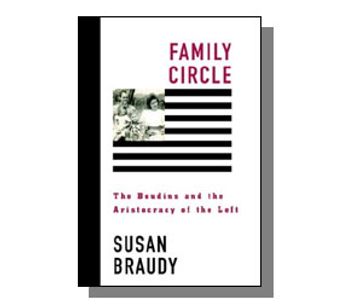
Warning: This article contains scurrilous, unsubstantiated gossip about American leftists. Unfortunately, irresponsibly, unethically, but in some cases deliciously, that constitutes most of Susan Braudy’s new book about Kathy Boudin and her family of gorgeous, superconnected, intimidating, idolized and hated radical superstars.

No, I’m not talking about her family of sorts in the Weather Underground, or later, in the “white, anti-racist, anti-imperialist” brigade of compañeros who annoyed every other progressive within scolding distance in the late ’70s and early ’80s. If you were around and on the left during that time, you probably heard these folks (in organizations called the John Brown Anti-Klan Committee, the May 19th Communist Organization, and the Women’s Committee Against Genocide) delivering stalwart but incomprehensible chants like “Sekou Odinga, live like him,” and shouting that your own organization promoted “genocide” because you did not endorse violence tomorrow to usher in a special, all-black nation that was supposed to take over six Southern states and live segregated from whites.

Continue Reading
Tuesday, Nov 19, 2002 5:13 PM UTC2002-11-19T17:13:00Zl, M j, Y g:i A T

“The Blindfold’s Eyes” by Dianna Ortiz

An American nun who survived the torture chambers of Guatemala describes her ordeal and the fear and guilt that still haunt her.

Topics:,

My first exposure to torture was the comic Nazi on the laugh-tracked POW comedy “Hogan’s Heroes” hissing, “Ve have vays of making you talk.” My second exposure was the excitement of watching Batman and Robin suspended above boiling oil. American children’s media has a surprisingly high number of references to torture, but our adult pop cult has even more — just count the gorgeous scarred chests and backs on an average episode of “Buffy the Vampire Slayer.”

Continue Reading
Thursday, Oct 4, 2001 9:51 PM UTC2001-10-04T21:51:00Zl, M j, Y g:i A T

The living and the dead

At 72, Ursula Le Guin returns to Earthsea to mend the wounds that have long divided her fantasy world

The living and the dead
Topics:

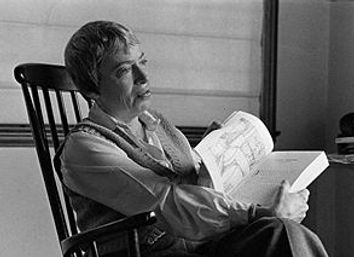
Ursula K. Le Guin is one of the few writers I know who excels at both political fiction and epic fantasy. She’s brilliant at both. But unfortunately, she’s not always brilliant at both at the same time, and indeed, bringing them together is very, very hard. The intuitive demands of myth-making are only uneasily combined with the keen analysis required by a search for justice and equity.

As an avid Taoist, Le Guin knows this better than anyone. Suspect all correctives, look askance at attempts to restore benevolence and righteousness, Le Guin might say, yet her two new books, “Tales From Earthsea” and “The Other Wind,” have been written as a sort of corrective to her stunningly inventive Earthsea Trilogy, originally published between 1968 and 1972.

Continue Reading
Thursday, Feb 3, 2000 5:00 PM UTC2000-02-03T17:00:00Zl, M j, Y g:i A T

My favorite author, my worst interview

I worshipped militaristic Mormon science-fiction writer Orson Scott Card -- until we met.

My favorite author, my worst interview

It was the most unpleasant interview I’ve ever done.

And one of the most instructive.

Science-fiction writer Orson Scott Card wrote one of my favorite books of all time. So when he came out with a sequel, I was delirious with the desire to interview him.

“Ender’s Game,” which won the Hugo and Nebula awards in 1985, is the best book I have ever read about violence. Who would have thought it would result in an interview in which I wanted to throttle the author? “Ender’s Game” is also about loving your enemies, a goal so important to me that I wrote a book about it myself. How could I guess that interviewing the author would make me question that entire project?

Continue Reading

Page 1 of 2 in Donna Minkowitz

Other News