Douglas Wolk
Archie Comics’ gay turn: An explainer
What the arrival of hunky Kevin means for the traditionally conservative franchise aimed at kids
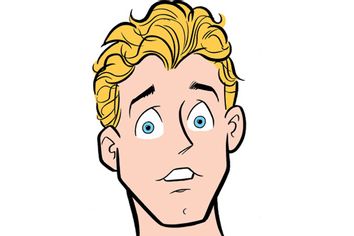
Kevin Keller The reaction to Thursday’s announcement that Archie Comics’ Riverdale High would now include a gay student was as predictable as, well, an Archie Comics plot: hand-wringing and high-fiving, raised eyebrows and rolled eyes. Veronica No. 202 (cover caption: “Meet the Hot New Guy!”), written and drawn by veteran Archie artist Dan Parent, will introduce slender, blond Kevin Keller. From the few pages of the story released so far, it appears Parent is treating Kevin’s orientation as a surprise but not a shock: The hot new guy is being pursued by Veronica but has no interest in her, Jughead advises him that she’s pretty persistent, and Kevin declares that “it’s nothing against her! I’m gay!” To which Jughead’s immediate reaction is deciding to to wait and let Veronica figure it out for herself, and the plot goes on.
Kevin Keller, it’s worth noting, isn’t the first openly gay character in American comic books by a very long shot — he’s just the first character to say “I’m gay” on a panel in an Archie comic book. In superhero comics, it’s old news (and in art comics, it’s very, very old news). The recently announced Batwoman series by J.H. Williams III and W. Haden Blackman will be, as far as I can tell, the first ongoing superhero comic book with an openly gay title character and a Marvel or DC logo on its cover — but “ongoing,” “superhero,” “openly,” “gay,” “title character” and “Marvel or DC logo” are all qualifiers in that description, because otherwise Starman or Renee Montoya or Freedom Ring or Midnighter or any number of other possibilities got there first.
The significant distinction here is that, unlike superhero comics, Archie comics are specifically aimed at kids (well, and at aging collectors who remember reading them as kids, but the kids are the primary audience): They’re a fantasy about what high school will be like. That’s why the addition of Kevin to the series’ endless comedy of desire and disdain is welcome and long overdue. The social fabric of high school is going to include gay people, and the sooner kids (and aging collectors) take that as much for granted as they do the Archie/Betty/Veronica love triangle, the better.
Outside the “safe world for everyone” that Archie Comics’ Jon Goldwater says Riverdale represents, this is, of course, a hot-button issue, and if Archie Comics actually wanted to suggest that it’s no big deal, they’d have just published the story instead of announcing it via press release long before it appears. (Honestly, somebody protesting a fictional character’s entirely chaste homosexuality would be the best possible publicity for this project.) It’s safe to assume that the primary audience for this particular issue of Veronica — which won’t be in stores until September — will be people who haven’t bought an Archie comic in decades, unless they also bought those similarly hyped-up comics a few months ago in which a future Archie married Betty or Veronica.
The comics-historical significance of Kevin’s appearance is that it marks a shift in the Archie franchise’s history. The Riverdale gang appeared in a series of very conservative Christian comic books in the ’70s and ’80s. And in 2003, playwright Roberto Aguirre-Sacasa — who’s also written for Marvel Comics and “Big Love” — wrote a play called “Archie’s Weird Fantasy,” which involved older, gay versions of the Archie characters, and was blocked by a cease-and-desist order shortly before its premiere. (It was promptly rewritten as “Weird Comic Book Fantasy.”)
So how big a deal will Kevin end up being in the long run? Probably not much of one. Parent has noted that the Archie line has been trying to expand the diversity of its cast, but as Chris Sims has pointed out, the last new character who’s actually appeared in Riverdale more than a few times was introduced something like 35 years ago. Even if Kevin sticks around, it’s hard to imagine him having a role beyond “the token gay guy.” That’s just hard-wired into the premise of the last 68 years’ worth of Archie comics: There’s a small, limited group of characters, and everyone gets exactly one personality trait. And it’s safe to assume that the first same-sex kiss in an Archie comic is a good long ways off — the interracial kiss on the cover of this week’s Archie No. 608 was a long time coming, too.
So, yes: Archie’s bosses get points for trying to make Riverdale a slightly less 1940s vision of what American culture is like, because stories for children don’t just reflect the world, they shape it. But the proof that the Archie characters don’t live in a world where everyone is heterosexual won’t be the first story Kevin Keller appears in — it’ll be the 40th.
Cats behaving badly
"Achewood," Chris Onstad's hilarious online comic strip, translates perfectly into a book about male friendship and testosterone overload.
The funniest comic strip currently running doesn’t appear in any newspapers. Until very recently, Chris Onstad’s 7-year-old “Achewood” — a warped fantasia about a bunch of anthropomorphic animals getting into trouble — was almost entirely an online phenomenon. Onstad has self-published nine collections of the strip, but “The Great Outdoor Fight,” a hardcover edition of a story line from 2006, is the first “Achewood” book to be widely distributed, and it suggests that the native format of the American daily strip is shifting, very quickly, from newspapers to the Internet.
Continue Reading CloseA thousand and one knights
There have been countless versions of Batman, from brooding crusader to gadget-loving detective. How does "The Dark Knight" measure up?
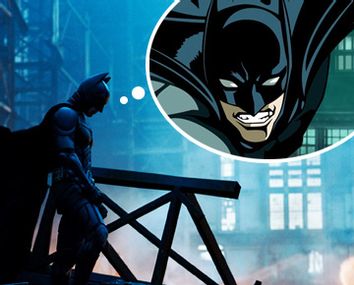
There’s no such thing as a “definitive version” of Batman in comics, movies or anywhere else. He’s a corporate property and a cash cow, so there are a few things that are set in stone about him: the cape, the urban setting, the millionaire-playboy alter ego. Beyond those premises, there are as many interpretations of Batman as there have been creators who’ve worked on his stories — which makes the question of whether Christopher Nolan’s “The Dark Knight” is “faithful” to its source beside the point. Still, Nolan has dropped the ball on one of the most compelling ideas comic books have established about Gotham City’s most famous resident: that his heroism doesn’t come from his batarangs and right hook, but from his magnificent, brooding mind.
Continue Reading CloseThe end of men
The cartoon epic "Y: The Last Man," the most entertaining satire about gender in recent memory, comes to its triumphant conclusion.
The wittiest, most entertaining story about gender in recent memory has just reached its conclusion. This month, writer Brian K. Vaughan and artist Pia Guerra released “Whys and Wherefores,” the 10th and final volume collecting their surprise-hit comic book series “Y: The Last Man.” On its surface, “Y” is a science-fiction epic and a coming-of-age story, with a touch of romance thrown in; read it a little more deeply, though, and it becomes a dead-on satire about the screwed-up gender issues of the world we know.
Continue Reading CloseHow to be a comic book hero
Like graphic novels, manga or superhero tales? New books by Lynda Barry, Jessica Abel and Matt Madden may inspire you to turn your stories and doodles into real cartoons.
It’s hard to imagine two worthwhile books on the same subject more different than Jessica Abel and Matt Madden’s “Drawing Words and Writing Pictures” and Lynda Barry’s “What It Is,” both of which are nominally about how to make marks that turn into stories. (One of them is in comics form, and the other one is focused on how to make comics.) The process of making art is mysterious, though, and it’s a mystery that deserves multiple explanations — even contradictory explanations.
Continue Reading Close“The Rabbi’s Cat”
A graphic novel celebrates a lost Algerian-Jewish way of life and wonders what it means to live as a person of faith in a world that doesn't share it.
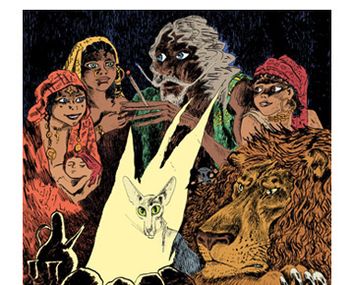
In the Algiers of the ’30s, a nameless, scrawny gray cat belonging to a cheerful old rabbi, Abraham Sfar, eats the rabbi’s parrot and discovers that he can talk. The cat loves the rabbi’s daughter, Zlabya, and the rabbi is uncomfortable with the talking cat hanging around her: he’d better study the Torah and the Talmud, lest he give her bad ideas.
That’s the premise that begins the French cartoonist Joann Sfar’s graphic novel series “Le chat du rabbin.” (The first three volumes were collected in English in 2005 as “The Rabbi’s Cat”; the fourth and fifth have just appeared as “The Rabbi’s Cat 2.”) The joy of the series, though, is that it hasn’t quite stuck with that setup. Instead, it has become a loose, playful exploration of a lost moment in Jewish culture, riffing on the Sfar family’s history and drifting freely between precise historical details, enthusiastic tall tales and meditations on what it means to live as a person of faith in a world that doesn’t share it.
Continue Reading ClosePage 1 of 10 in Douglas Wolk