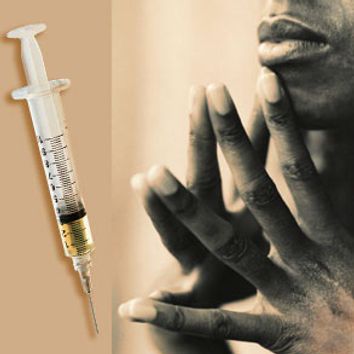
There were two defining moments in Rosa Parks’ life. One was monumental and heroic, and the world honors and cherishes her for it. That, of course, was her refusal to budge from her seat in the white section of a Montgomery bus in 1955. The other moment was tragic, a day in 1994 when a drugged-out young black man beat her in her Detroit home and stole $53.
The two incidents, 40 years apart, tell much about the forward and backward march of racial progress in America. Parks’ courageous and long-overdue act staked out the moral high ground for the modern-day civil rights movement. It was classic good vs. evil. In the years immediately following her act, gory news scenes of baton-battering racist Southern sheriffs, fire hoses, police dogs and Klan violence unleashed against peaceful black protesters sickened Americans. All except the most rabid racists considered racial segregation immoral and indefensible. Parks and civil rights leaders were hailed as American heroes in the fight for justice. Martin Luther King Jr., who tops the list of those heroes and martyrs, owed a profound debt of gratitude to Parks. The Montgomery bus boycott launched him from obscure preacher to American icon.
Still, as America unraveled in the 1960s in the anarchy of urban riots, campus takeovers and antiwar street battles, the civil rights movement and its leaders fell apart too. Many of them fell victim to their own success. When they broke down the racially restricted doors of corporations, government agencies and universities, middle-class blacks, not the poor, were the ones who rushed headlong through those doors. Civil rights organizations and black politicians defined the black agenda in increasingly narrow terms: affirmative action, economic parity, professional advancement and busing replaced battling poverty, reducing unemployment, securing quality education, promoting self-help and gaining greater political empowerment as the goals for all African-Americans.
King’s murder in 1968 was the turning point for race relations in America. The transformation of the old-line civil rights groups such as the NAACP into business and professional organizations left the black poor fragmented and politically rudderless. The black poor, lacking competitive technical skills and professional training and shunned by many middle-class black leaders, were shoved even further to the outer margins of American society. That included many young black men, such as the man who attacked Parks.
The chronic problems of gang and drug violence, family breakdown, soaring incarceration rates, the mounting devastation of HIV and AIDS and abysmally failing inner-city public schools have devastated poor black communities. Parks’ adopted city, Detroit, is torn year in and year out by black-on-black violence.
The old civil rights organizations have been powerless to halt the slide. King’s old organization, the Southern Christian Leadership Conference, though it has recently shown signs of a revival, for years was wracked by bitter leadership infighting, threatened lawsuits and allegations of financial improprieties. The NAACP is still trying to find its legs with its corporate-leaning new leader. CORE, the Congress of Racial Equality, is a shell of its former self, and the Student Non-Violent Coordinating Committee (SNCC) has long since disappeared.
Then there is the self-indulgent grab for expensive cars, clothes and dollars by the MTV generation. That came crashing down on Parks during her long-running battle with the rap group OutKast. The issue was their song “Rosa Parks.” The group claimed it was a tribute to Parks. Parks saw it as a crass attempt to cash in on her name. She was horrified by the get-rich-quick gangster lifestyle of many young blacks. That was certainly not what Parks was fighting for when she made her fateful plunge into history.
Parks worried that young blacks had absolutely no sense and appreciation of the titanic battles that she and the civil rights leaders waged to make America live up to its much-betrayed promise of justice and equality. In a reflective interview many years after the bus boycott, she did not absolve herself and other blacks of her generation of blame for failing to pass on the torch. She called for a redoubling of the effort to make young blacks, as she put it, know what it means to be black in America today.
The civil rights struggle is now the stuff of nostalgia, history books and the memoirs of aging former civil rights leaders, and rightly so. Times have changed, and changed drastically. Parks and the civil rights movement did much to usher in those changes. They have made race relations in America more diverse and open, and at the same time more complex and challenging. Her heroic refusal to give up her seat on the bus, and the assault on her in her home, though worlds apart in time, are both part of the triumph and tragedy of her legacy.
Two things happened Tuesday that tell much about the abysmal failure of the Bush administration to get a handle on poverty in America.
The first was the tragic and disgraceful images of hordes of New Orleans residents scurrying down the city’s hurricane-ravaged streets with their arms loaded with food, clothes, appliances and, in some cases, guns that they had looted from stores and shops. The second was the 2004 Census Bureau report released the same day, which found that the number of poor Americans has leapt every year since Bush took office.
Criminal gangs, which always take advantage of chaos and misery to grab whatever they can, did much of the looting in New Orleans. But many desperately poor, mostly black residents saw a chance to grab items that they couldn’t afford. That’s still wrong, unless the items were necessary for survival. But it’s no surprise. New Orleans has one of the highest poverty rates of any of America’s big cities.
According to a report by Total Community Action, a New Orleans public advocacy group, nearly one in three of New Orleans’ 485,000 residents has lived below the poverty level. The majority of that group is black. A spokesperson for the United Negro College Fund noted that before the hurricane, the city’s poor lived in some of the most dilapidated housing in the nation.
New Orleans is not an aberration. Nationally, according to the census figures, blacks remain at the bottom of the economic totem pole. They have the lowest median income of any group. Bush’s war and economic policies don’t help matters. His tax cuts redistributed billions to the rich and corporations. The Iraq war has drained billions from cash-starved job training, health and education programs. Increased American dependence on Saudi oil has driven fuel prices skyward. Corporate downsizing, outsourcing and industrial flight have further fueled America’s poverty crisis. All of this happened on Bush’s watch.
The 2 million new jobs in 2004 Bush touts as proof that his economic policies work are mostly due to number-counting tricks. The bulk of these jobs are low-paying ones in the retail and service industries, with minimum benefits and little job security. A big portion of the nearly 40 million Americans who live below the official poverty line fill these jobs. They’re the lucky ones. They have jobs. Many young blacks, such as those who ransacked stores in New Orleans, don’t.
The poverty crisis has slammed them the hardest of all. Even during the Clinton-era economic boom, the unemployment rate for young black males was double and in some parts of the country triple that of white males.
During the past couple of years, state and federal cutbacks in job training and skills programs, the brutal competition for low- and semi-skilled service and retail jobs from immigrants and the refusal of many employers to hire those with criminal records have further hammered black communities and added to high unemployment numbers among young blacks that resemble joblessness during the Great Depression. The tale of poverty is more evident in the nearly 1 million blacks behind bars, the HIV/AIDS rampage in black communities and the raging drug and gang violence in many black neighborhoods.
Then there are the children. One-third of America’s poor are children. Worse, the Children’s Defense Fund found that nearly 1 million black children live in extreme poverty. That’s the greatest number of black children trapped in dire poverty in nearly 25 years.
Bush officials claim the poverty numbers do not surprise them. They contend that past trends show that poverty peaks and then declines a year after a jump in new job growth. But the poverty numbers have steadily risen through four consecutive years of the Bush administration. There has been no sign of a turnaround. For that to happen, Bush would have to reverse his tax- and war-spending policies, and commit massive funds to job, training and education programs and provide tax incentives for businesses to train and hire the poor. That would take an active national lobbying effort by congressional Democrats, civil rights and antipoverty groups. That’s not likely either. The poor are too nameless, faceless and vast in numbers to target with a sustained lobbying campaign.
The NAACP has hammered Bush on the Iraq war and his domestic policies, but poverty has not been its top priority. The fight for affirmative action, economic parity, professional advancement and busing replaced battling poverty, reducing unemployment, securing quality education, promoting self-help and gaining greater political empowerment as the goals of all African-Americans. That effectively left out in the cold the one in four blacks now living below the official poverty level.
Continue Reading
Close
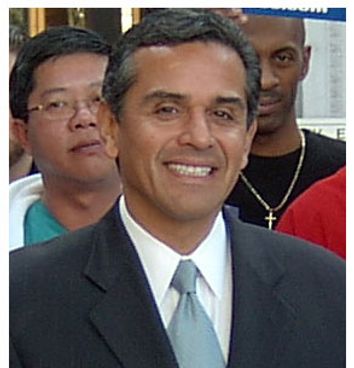
Black voters will face a tough dilemma in the Los Angeles mayoral runoff on May 17. In the contest between James Hahn, the white incumbent mayor, and Antonio Villaraigosa, do blacks back Hahn, who betrayed them by dumping a popular, reform-minded African-American police chief? Or do they back Villaraigosa, a Latino city councilman and former civil rights and labor activist who has worked hard to convince blacks that their concerns, not just those of Latinos, will be heard at City Hall?
The choice that African-Americans make will tell much about the fate of multiethnic political alliances in Los Angeles and nationally.
At first glance, that choice seems easy. Blacks screamed for Hahn’s head when he ousted black Los Angeles Police Department chief Bernard Parks three years ago. They felt Hahn had betrayed the black community by reneging on a pledge to back Parks as part of their price for delivering the black vote to Hahn in the 2001 mayoral contest. Blacks make up about 15 percent of the city’s voters.
Although the multiethnic coalition Villaraigosa is desperately trying to fashion is a healthy model for racial cooperation, blacks didn’t buy it when he faced off against Hahn in 2001. He got less than one-fifth of their vote.
Blacks saw Hahn as a safe and traditional Democrat who would best protect their interests. They viewed Villaraigosa as an inexperienced political maverick who could not or would not deliver the goods for blacks. Lurking underneath everything was blacks’ fear of Latino domination of city politics.
Black leaders have gotten themselves into a disastrous political “either-or” sand trap. They haven’t had the courage or vision to urge black voters to look seriously at independent, reform-minded Democrats or Republicans who refuse to engage in backroom deal making that produces patronage and assorted party favors for the leaders but no tangible gains for the majority of blacks. This cynical manipulation of the political process further deepens the frustration and alienation of many blacks.
The current dreary plight of blacks in California politics is a sorry testament to this. There are fewer blacks in the state Legislature today than five years ago. The political free-fall is so bad that there are almost as many Latino Republicans as blacks in the California Assembly. That’s only part of the reason why the majority of black voters, despite their professed political loathing of a white politician such as Hahn, still may not back a progressive Latino candidate.
Black and Latino leaders have long papered over tensions and conflicts between the two groups by putting on a happy public face marching in lockstep to do battle against race discrimination and poverty. There are many well-documented instances in which black and Latino leaders have joined forces to counter conservative Republican policies that harm black and Latino interests. That cooperation, though, has mostly been among blacks and Latinos at the legislative level — in Congress and in state legislatures — not on the ground, in communities where blacks and Latinos uneasily rub shoulders.
The surge in Latino numbers and voting power in Los Angeles has drastically changed this idyllic notion of black and Latino cooperation. Latinos now make up nearly half the city’s population of 3.7 million, and Latino political leaders and activists relentlessly demand that political and social issues no longer be framed solely in black and white. But that scares many blacks, who complain loudly that Latinos are taking jobs, hogging public services, and lowering educational standards in the city’s failing public schools.
These complaints are irrational and even borderline racist. As long as many blacks and a significant percentage of black voters believe that Latinos are political villains, they will not embrace multiethnic pitches, no matter how much it’s in their interest to do so. Both groups should be fighting for greater funding for and the expansion of healthcare, public services and education programs for poor and working-class blacks and Latinos.
The nation’s second-biggest city is well on its way to being a majority Latino city. Even if Hahn wins reelection, he will almost certainly be the last white mayor of Los Angeles for years to come. But with the numbers and political power of blacks dwindling, the real political test in this mayoral election will be whether enough blacks can tear off their racial blinders and vote for a progressive Latino candidate. If they instead back a white politician whom they’ve spent the past three years condemning, it will be their loss, and a loss to the cause of alliance building among the dispossessed.
© Pacific News Service 2005
Continue Reading
Close
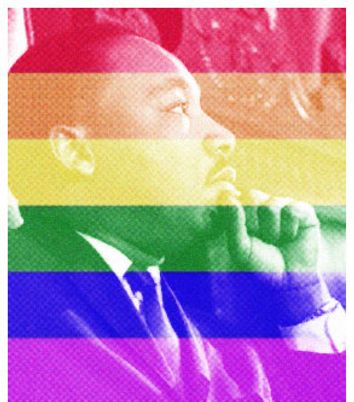
The sight of the youngest daughter of Martin Luther King Jr. standing at her father’s grave site with thousands of demonstrators to denounce gay marriage was painful. The Rev. Bernice King and march organizers deliberately chose King’s resting place in Atlanta to imply that he would have stood with them. But Martin Luther King’s uncompromising battle against discrimination during his life — and his persistent refusal to distance himself from a well-known gay civil rights leader — show that King never would have endorsed an anti-gay campaign.
It’s not the first time that a King family member has sullied King’s name and legacy to torpedo gay rights. In 1998, King’s niece, Alveda King, barnstormed the country speaking at rallies against gay rights legislation. In case anyone missed the King family connection, her group was named “King for America.” Gay rights groups everywhere countered King’s “repent and save yourself” message to gays by quoting a public statement King’s widow, Coretta Scott King, issued in 1996 in which she said that her husband would be a champion of gay rights if he were alive.
In this case, King’s daughter was careful not to mention gay marriage in her talk. Her mentor and organizer of the march Bishop Eddie Long cautiously downplayed the issue, though media reported that Long’s Web site listed the promoting of a federal amendment against gay marriage as a major goal of the march. But Bernice King is an outspoken evangelical, and in the last couple of years she and other black evangelicals have marched, protested, written letters and petitions denouncing gay marriage. Polls show that black evangelicals’ hostility to gay marriage is much stronger than that of white evangelicals.
In King’s day, gay rights were invisible on America’s public policy radar, and homosexuality in both black and white communities was hushed up. There’s not a word about homosexuality in any of King’s speeches or writings.
There’s a way, however, to gauge what King’s feelings were on the issue, and that is the longtime personal and political relationship that King had with Bayard Rustin. Best known as the driving force behind the historic 1963 March on Washington, Rustin was a close King associate and a known homosexual.
In 1953, Rustin was convicted of “morals” charges. In the frozen mood of the day, that was the parlance for homosexual acts. It carried a quick and sometimes stiff jail term. King knew this, as did top FBI officials, black elected officials, civil rights leaders and the tight circle of black ministers around King.
That didn’t deter King from embracing Rustin. At the high point of the Montgomery bus boycott in 1956 that launched King into the national spotlight, and over the vehement opposition of black ministers who called homosexuals and Rustin unsavory and evil, King invited Rustin to come to Montgomery as an advisor. A year later, King asked Rustin to draft the resolutions and the organizational charter of his fledgling Southern Christian Leadership Conference. He demanded that the SCLC board, mostly composed of black ministers, hire Rustin as its coordinator and publicist. King didn’t win that one. The board flatly turned him down, and though it was unstated, Rustin’s homosexuality was a major reason.
The issue continued to dog King and his relationship with Rustin. Harlem Rep. Adam Clayton Powell publicly threatened to accuse King of having a homosexual affair with Rustin if he didn’t call off planned demonstrations at the 1960 Democratic convention. King didn’t buckle to Powell’s blackmail threat and went ahead with the demonstrations anyway.
During the next few years, the assault on Rustin’s homosexuality, and the pressure on King to dump him, escalated. FBI director J. Edgar Hoover, busy with his blatantly illegal spy campaign against King, publicly released wiretaps of scurrilous remarks King associates made about Rustin’s homosexuality. On the eve of the March on Washington in 1963, South Carolina Sen. Strom Thurmond denounced Rustin on the Senate floor as a sexual pervert, and inserted a copy of his 1953 arrest booking slip in the Congressional Record. President Kennedy and Attorney General Bobby Kennedy also flatly demanded that King get rid of him. King did not publicly break with Rustin. And when he did eventually distance himself politically from Rustin, he gave no public hint that Rustin’s homosexuality was an issue.
King risked much to work with and defend Rustin during the tumultuous battles of the civil rights era. He valued him as an ally and a major player in the struggle. He also believed that deeply embodied in the civil rights fight was a person’s right to be who and what he was. While King may have praised his daughter for having the courage and conviction to march for her beliefs, bigotry is still bigotry, whether it’s about race or sexual preference. He would not have marched by her side.
Continue Reading
Close
“Barbershop” is one funny movie. But even more laughable are the outrageous responses to the film by two prominent black leaders.
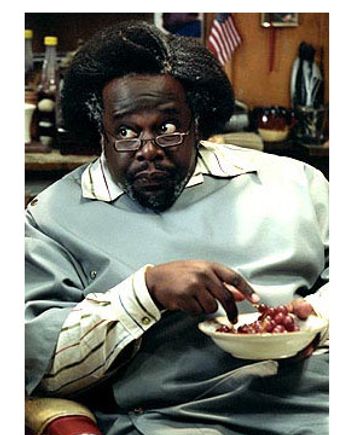
Talk about going over the top. The Rev. Al Sharpton demanded an apology for, and Jesse Jackson was piqued over, two minutes of irreverent humor in the film. They actually took seriously the deliberately silly and inane crack by Cedric the Entertainer that the towering contributions of Rosa Parks and Martin Luther King Jr. to the civil rights struggle had no value.
Certainly none of the characters in “Barbershop” believed it. They immediately jumped all over him.
In fact, it’s due in large part to the magnificent contributions of Parks, King and other legendary civil rights heroes that entertainers such as Cedric the Entertainer and the writers, director and producers of “Barbershop” — all of whom are black — could even get a major Hollywood studio to bankroll their film. The civil rights struggle also opened doors to blacks in education, business and other professions. The crumbling of those barriers has given blacks the awesome economic muscle to help make “Barbershop” a smash box office success.
But Cedric’s enormously off-base wisecrack about black leaders is nevertheless complex. Underneath it flows a current of disenchantment and resentment that many blacks feel toward those who designate themselves — or more likely are designated by whites — as “black leaders.”
Many of these leaders are middle-class businesspeople and professionals. Their agendas and top-down style of leadership are remote, distant, and often wildly out of step with the needs of poor and working-class blacks. They often approach tough public policy issues — such as the astronomical black imprisonment rates, the dreary plight of poor black women, black homelessness, black-on-black crime and violence, the drug crisis, gang warfare, and school vouchers — with a strange blend of caution, uncertainty and wariness. They keep counsel only with those black ministers, politicians, professionals and business leaders whom they consider respectable and legitimate and who will blindly march in lockstep with their program.
Worst of all, they horribly disfigure black leadership by turning it into a corporate-style competitive business in which success is measured by piling up political favors and corporate dollars. The sad thing is that it wasn’t always this way. For decades, mainstream black organizations such as the NAACP relied on the nickels and dimes of poor and working-class blacks for their support. This gave them complete independence and a solid constituency to mount powerful campaigns for jobs, better housing and higher-quality schools, and against police violence and lynching.
The profound shift in the method and style of black leadership began in the 1970s. After the murders of Martin Luther King Jr. and Malcolm X, the collapse of the traditional civil rights organizations, and the destruction and co-optation of militant activist groups, mainstream black leaders, politicians and ministers did a sharp about-face. They quickly redefined the black agenda as gaining admission into more country clubs, buying bigger and more expensive homes, taking more luxury vacations, starting more and better businesses, electing more Democrats, and grabbing more spots in corporations, universities and the professions.
The biggest gripe many blacks have about some black leaders is that they give to themselves the sole right to speak exclusively on behalf of all blacks. That is much evident in Sharpton’s demand that MGM excise Cedric’s politically incorrect quip from a film that has already been seen by thousands — as if the demand to slice is made on behalf of all blacks.
Black leaders get away with this arrogant presumption because many whites regard blacks as so far outside the political and social pale that they see them as monolithic. Whites are profoundly conditioned to believe that all blacks think, act and sway to the same racial beat. They freely use the words and deeds of the chosen black leader as the standard for African American behavior.
Then, when the beleaguered chosen one makes a real or contrived misstep, he or she becomes the whipping boy for many whites. Blacks are then blamed for being rash, foolhardy, irresponsible and prone to shuffle the race cards on every social ill that befalls them.
“Barbershop” is more than a comedic, slice-of-black-life film. It spotlights the historic role that barbershops in black and probably other ethnic neighborhoods have traditionally played in allowing working people to vent, swap gossip and information, keep abreast of social and political issues, and express their own special brand of ethnic in-group humor. There is no need to cut out or apologize for that.
Continue Reading
Close
At the same time that President Bush dumped 30-year guidelines that banned FBI spying on domestic organizations, he also solemnly swore to honor the Constitution and respect civil liberties. But that would be impossible. The new guidelines give the FBI carte blanche to surveil, and plant agents in, churches, mosques and, of course, political groups; they also permit FBI agents to ransack the Internet to hunt for potential subversives. They can do all this without having to show probable cause of criminal wronging. Just as in the days of J. Edgar Hoover, these new rules give the FBI unbridled power to determine who and what groups and individuals it can target.
Bush truly believes that the war on terrorism must override the freedoms that he promises to respect — a sentiment that has come from the White House for more than 40 years. Presidents John F. Kennedy, Lyndon Johnson and Richard Nixon claimed that the battle to nail domestic subversives — that is, communists, socialists, black nationalists, Black Panthers and civil rights leaders, most notably Martin Luther King Jr. — justified bending, twisting, and ultimately breaking the law and violating civil liberties.
It was certainly true that some Black Panthers and Weatherman members, with their violence-laced, off-the-pig and bomb-the-state rhetoric and antics, deserved intense surveillance from insider plants and busts from the FBI. But the same can hardly be said of King and other moderate civil rights leaders who were committed to peaceful change within the system.
There is also ample evidence from the correspondence, internal memos, and discussions made public by historians and former White House staffers that Kennedy, Johnson and Nixon knew that the moderate civil rights leaders posed no real threat to the established order, yet they still winked and nodded as Hoover launched the supersecret and blatantly illegal counterintelligence program, COINTELPRO, that targeted those leaders as well as thousands of innocent Americans during the 1960s. The mandate of the program, spelled out in the stacks of secret documents released by Senate investigators in 1976, was to “disrupt, misdirect, discredit, and neutralize” groups and individuals the FBI considered politically objectionable. Those targeted in nearly all cases were not foreign spies, terrorists, or individuals suspected of criminal acts.
The FBI patterned COINTELPRO on the methods used by its counterintelligence division and internal security sections during the 1940s and ’50s. The arsenal of dirty tactics used by the bureau included unauthorized wiretaps, undercover plants, agents provocateurs, poison-pen letters, black-bag jobs, and the compiling of secret dossiers. Driven by a grotesque mix of personal racism and paranoia, Hoover kicked the program into high gear in the 1960s. The FBI assembled thousands of “ghetto informants” and hundreds of FBI agents in a relentless campaign to harass and intimidate African-American groups. The FBI listed the targeted individuals under categories variously titled Rabble Rouser Index, Agitator Index or Security Index.
The results were immediate and devastating. Thousands lost their jobs, were expelled from schools, evicted from their homes and offices, and publicly slandered. Few of those individuals were indicted, convicted or even accused of any crime. FBI documents released in 1976 revealed that the agency devoted less than 20 percent of its spy activities to infiltrating organized crime or to solving bank robberies, murders, rapes and interstate theft. More than half of its spy targets were political organizations.
Hoover gave local FBI offices wide discretion to pick and choose their targets and the tactics they could use. The new guidelines, like the old FBI spy campaign, give local agents the same wide discretion to determine what groups or individuals it can investigate and what tactics they can use to investigate them.
With the death of Hoover in 1972 and congressional disclosure of the illegal program, the Justice Department assured the public that COINTELPRO was a thing of the past and that it had implemented ironclad control over FBI activities. It didnt. During the 1980s, the FBI waged a five-year covert spy campaign against dozens of religious and pacifist groups and leaders that opposed American foreign policy in Central America. In the 1990s it mounted covert campaigns against civil rights, environmental, and anti-nuclear disarmament groups, as well as against Native American and Arab-American groups. The FBI tactics used against those groups were an exact repeat of the tactics that the 1970s guidelines had supposedly banned.
Attorney General John Ashcroft says that the FBI will not use its restored powers to wage war on law-abiding groups, or maintain illicit files and dossiers on prominent citizens. But FBI officials said the same thing during the 1960s. Then, as now, those in the press and the few liberal Democrats who occasionally questioned FBI abuses had to accept the denials. No government agency in those days would dare attempt to compel the FBI to prove it didnt illegally spy. In the current climate of political fear, it remains to be seen if congressional agencies will be any more diligent in their oversight of the FBI. Bush says that scrapping the old ban on FBI spying will give the FBI tools to defeat terrorism. But if the past is any indication, the “enemies of the state” will be just about anyone and everyone the FBI agents finger. In this post-Sept. 11 climate of fear and political timidity, who will dispute them?
Continue Reading
Close