Eilene Zimmerman

Congress’s small-money champ

Can Rep. John Sarbanes build an army of small donors?

  • more
    • All Share Services

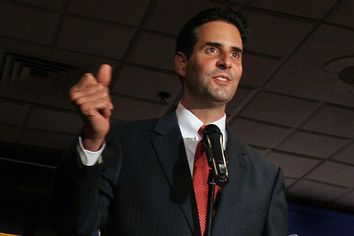
Congress's small-money champJohn Sarbanes/Timothy Jacobsen (Credit: AP/)

Maryland congressman John Sarbanes, D-3rd, isn’t in a highly contested race this year — his opponent is Constitution Party candidate and bartender Eric Knowles. So he has decided to conduct an experiment. Could a congressional candidate in 2012 fund his campaign largely with contributions from small donors? And could he build a network of donors that could be mobilized at a moment’s notice, to pony up cash and fend off attacks by a super PAC?

In October, Sarbanes launched the Grassroots Donor project, a model of fundraising that mimics the Fair Elections Now Act, legislation proposed in 2011 that would give congressional candidates who assemble a large number of small donors access to a federally funded matching fund. The Fair Elections Now Act stands almost no chance of becoming law, and with the Bipartisan Campaign Reform Act made moot by the Supreme Court’s ruling in the Citizens United case, Sarbanes and his colleagues are increasingly frustrated.

Sarbanes’ Grassroots Donor effort is reminiscent of candidate Obama’s 2008 “army of small donors,” which accounted for more than $100 million in contributions. Sarbanes says, yes, “that financing approach Howard Dean pioneered and President Obama perfected serves as a model. But the success of that has only really been proven at the level of presidential campaigns or nationalized races. At the level of rank-and-file congressional races it’s still largely untested.” It’s also arguably most critical at the congressional level because that’s where candidates have the greatest vulnerability to super PAC and other big money attacks.

For example, late last month Karl Rove’s super PAC, Crossroads GPS, paid for television advertising targeting Nevada’s Democratic Senate candidate, Shelley Berkley. Crossroads spent $1.2 million on a package of ads airing in states with competitive races, including Montana, Missouri, Nevada, North Dakota and Virginia. In response, Berkley sent a flurry of emails to supporters asking them to donate $5 or $10 to fight back. (Berkley’s campaign didn’t answer requests from Salon for the amount raised from those small donors.)

After Sarbanes raised $500,000 from traditional donors (individuals giving more than $100, up to the federal limit of $2,500) he locked the money away where it will remain inaccessible until he gets 1,000 people to give between $5 and $100 to his campaign. At this stage it’s less about the money raised from 1,000 donors and more about the number of people involved. “The premise is that if you can get a thousand people to contribute at the grass-roots level, you would have learned enough techniques for reaching them that you can get the next thousand and the next thousand,” says Sarbanes. “The goal of the first thousand is to break into a new way of raising funds, and then you keep going back. Over time the number of donors is large enough to help you fight back.” The congressman is looking for a proof-of-concept, to show his colleagues in the House that it’s possible to build a network of small donors, most of them your constituents, and wean yourself off PAC and other special interest money.

“The collective effect of our dependency on that money is seen when we go to make public policy. The institution leans more in the direction of special interests than in the direction of the public,” he says. For example, even though the public wants the tax on earnings from hedge funds increased, Congress hasn’t been able to do it because the financial industry has so much influence, says Sarbanes. He hasn’t taken any corporate or labor PAC money this election cycle, but acknowledges that most of his colleagues don’t have that luxury.

“Other members are interested in this, but if they are in a competitive district, they have to deal with the system the way it is. I can’t pass judgment on that, a lot of my colleagues are in very difficult races,” he says. “I have some breathing room, so I have the opportunity to experiment, and I feel a responsibility to do this.”

But it’s proving tougher to do than he thought. Sarbanes has 400 small donors so far, three-quarters from Maryland. The average donation is $30. Yet it could work — even if members limit their grass-roots network to donors from their respective districts, that’s about 710,000 people according to the U.S. Census, thousands of them with the ability to give $5, $10 or $15.

Sarbanes’ Maryland district is largely white, with about 15 percent African-American, 8 percent Hispanic and 6 percent Asian. It’s considered a relatively affluent district, although incomes run the gamut. Sarbanes’ issues are the environment — specifically protecting the Chesapeake Bay — as well as environmental education. He’s also involved with public service and volunteerism, and sponsored the Public Service Loan Forgiveness Act, which allows college students with significant federal debt to have that debt forgiven if they perform 10 years of full-time public service work. He authored legislation that established VetCorps, a program within AmeriCorps that provides service opportunities to veterans and military families. And he’s worked to address shortages of healthcare professionals in the workplace.

If Sarbanes can’t reach his 1,000-donor goal, he’ll look into other ways to build a small donor network and tweak his model accordingly. His goal is to introduce campaign finance reform legislation that might include things like a tax credit for the first $50 of contributions to a congressional candidate. “Or a matching fund,” says Sarbanes, possibly funded by a tax on super PAC donations.

“I just want to see if this is possible, to raise money in a different way,” he says. Right now, says Sarbanes, a House member’s downtime is spent making calls to big donors or asking for money from PACs and industry groups. Instead, Sarbanes wants to figure out how to recruit grass-roots donors and what resonates with them. “The way money has to be raised now, it’s consuming us,” says Sarbanes. “It’s making it impossible for us to do the job we want to do.”

I shouldn’t have left the finances to my husband

I'm a business writer and a feminist. But when it comes to my own money, I made a big mistake

  • more
    • All Share Services

I shouldn't have left the finances to my husband

A year ago I got my first American Express card. This might not seem particularly monumental, but in my case it is. I’m a 47-year-old mother of two, a professional journalist who writes about business — entrepreneurs, careers and the workplace. I have a monthly column in the New York Times Sunday Business section. It’s not a stretch to imagine I would be savvy about the business end of my own life. And yet I wasn’t, until very recently. I had never seen a 401K statement, never made a mortgage payment, never bought or sold a car or stock in a company and didn’t know anything about mutual funds.
I left all that to my husband. This despite the fact I consider myself a feminist. I grew up in the shadow of the 1970s women’s movement. As a high school senior I was, to a large extent, supporting myself — buying my own clothes and car, chipping in for groceries at home and even paying my own college application fees. I graduated from the largest women’s college in the country at the time, and paid for it by waiting tables and taking student loans. Gloria Steinem gave the speech at my graduation. In 1986, I marched in Washington, D.C., to protest the death of the Equal Rights Amendment.

Yet 25 years later I had managed to become almost completely dependent on someone else for my survival. I felt more like my husband’s child than his wife. At the beginning of each year he gave me a certain amount of cash (we were both too politically savvy to call it an allowance), which, combined with my comparatively low earnings as a writer, funded my life throughout the year. My expenses were all the things that made daily, upper-middle-class family life possible: piano lessons, organic strawberries, martial arts classes, soccer fees, swimming lessons, birthday parties.

My then-husband was (and still is) an attorney with a corporate law firm who worked, roughly, all the time. When he wasn’t working, he was too exhausted to stay awake. When our nearly 20-year marriage ended, we sat down in his small garage office and I was given a list of all the places our money was saved. “These are the log-ins and passwords,” my husband said, showing me a list of bank accounts, mutual funds, stocks, iBonds and the like. Over the years he had often given me a printed list of accounts like this — sans passwords and log-in names — but it wasn’t until our rendezvous in the garage that it meant anything to me. Before that I was too busy — and tired — to care.

Because while my husband worked, pursuing a coveted law partnership and spending much of his limited free time researching stocks, retirement vehicles and various high-tech gadgets, I focused on pink-collar work: the kids, grocery shopping, housecleaning, cooking meals, supervising homework, picking up dry cleaning and arranging play dates. My freelance writing career was squeezed into what little space existed between everyone else’s needs. I had little energy left over to request passwords to the mutual fund accounts so I could check on how things were doing, or ponder changing the allocation of our investment portfolio.

I had inadvertently become part of an opt-out revolution much different than the one writer Lisa Belkin described in an article for the New York Times Magazine in 2003. In that revolution, upper-middle-class, Type A women opted out of their MBA-fueled careers to stay home and overzealously manage their toddlers’ lives. In my revolution, relatively average women get married and — especially after having children — consciously opt out of duties considered somehow “male,” and I’m not just talking about mowing the lawn. I’m talking about money. I became, like many other middle-aged married mothers, Lucy to my husband’s Ricky, focusing on kids and home and letting him focus on money and all the big decisions that come with it — should we refinance the house? Buy a minivan? Get a new dining room table? Fix the roof? Open a Roth IRA?

Yet the distraction of family life alone doesn’t account for my level of ignorance. I’m clearly responsible for choosing not to learn about any of these things — especially egregious as I make a living, for the most part, writing about business — but society bears some of the burden too. Women haven’t been — and often still aren’t — raised to talk about money or feel confident about managing it. In fact what’s happened to me is actually pretty common in contemporary marriage, says Terri Orbuch, project director of the Early Years of Marriage Project, the longest-running study of married couples ever conducted. The project, which is funded by the National Institutes of Health, has been following 373 couples that married in 1986. Forty-six percent are divorced (mirroring the national rate of 45 percent) and Orbuch says couples reported that money was the No. 1 reason for disagreements, especially in the beginning of their marriages.

“Money is the biggest indicator of power in a relationship,” she says. “It symbolizes opportunity and resources in society and that permeates a relationship, especially for a woman who isn’t making much money on her own.”

My earnings as a writer were about one-tenth of my husband’s salary, making me a financial footnote, and what I lost as a result of that was leverage in my marriage and the confidence to ask for the things I needed — like sleep or time alone or the freedom to travel for my work. I bought into the belief system — one that pervades society and I believe held sway with my ex-husband — that the only jobs with value are the ones with a paycheck. No matter how much we’re told there’s nothing more important than raising children, in real life — or at least in my life — whoever made the most money was allowed to nap when he got home from work. The other person cleaned up after dinner.

About a month after my husband moved out in 2009 I had to pay the mortgage for the first time, although I had been a homeowner for almost a decade. I went online — using his log-in and password — and replaced our former joint checking account number in the system with my own checking account number. Then my work phone rang. I answered it, went back to the screen and couldn’t remember if I had hit the “pay mortgage” button yet. If I hit it twice, I would make two payments.

I called the 800 number at Chase. The woman on the other end of the line said she couldn’t give me any information “about that account.” She told me the account holder was my soon-to-be-ex-husband. “I’m his wife,” I said. “It’s my mortgage too. And I need to figure out if I just paid it.” The woman politely informed me that it wasn’t my mortgage too. It was his.

She offered to call and conference him in so we could get his permission to go into the account and check the payment status. I felt humiliated. I needed my husband’s permission to access the mortgage I was now responsible for paying. I remembered signing papers at our dining room table in front of a notary, so I called my husband and asked how it was possible my name wasn’t on our house mortgage. He said he didn’t know, but that it was possible. “Why?” I asked him. “Why would we have a mortgage without my name on it?” He paused, then said: “I didn’t need you.”

Olivia Mellan, a psychotherapist who works with couples and a pioneer in the field of money psychology, says the reason women often leave this stuff to their male partners is that we’ve been taught by our parents and society to be bookkeepers, not money managers. “Women are told they aren’t good at money. They are taught how to pay bills and use credit cards, but not to keep an eye on the big picture — the future,” she says. “In marriage we put our money in someone else’s name and let them take care of it. We really aren’t expected to have much control over it.”

That can have pretty dire consequences in the long run for a woman. According to the U.S. Census (2007) there are 60.4 million married women in this country. Only half will make it to their 15th anniversary and only a third will still be married by their 25th. Many of them will have a financially difficult old age — in the U.S. the share of elderly women living in poverty is highest among divorced or separated women — 37 percent.

Last summer, Transamerica Center for Retirement Studies surveyed 1,800 working women and asked them to describe themselves when it came to saving and investing for retirement. Three-quarters of the women said they didn’t know as much about retirement investing as they should. When these women were asked how they arrived at their estimated needs for retirement, almost 60 percent of them said they guessed. There were many days, when trying to figure out what I might need for the future, that I felt like throwing figures against a wall and just seeing what stuck. But that’s the old me — the new me isn’t guessing any longer.

After my ex moved out, I began a reeducation program that included a female financial advisor from Charles Schwab, a new accountant and a mortgage broker. On my own I was able to negotiate a financial settlement with my husband. I opened an investment savings account and — with the help of that new advisor — determined how I wanted my money invested (conservatively — I’m not much of a risk-taker). She told me that from her vantage point, the marriages that work when it comes to money are the ones “where both partners have some skin in the game.” Now the game and the skin are all mine and I like that. I’ve learned to read the financial statements I receive each month and even made a modest savings plan for myself. I got that Amex card too.

In July I went down to the county clerk and had the house’s deed reissued in my name. In August I went to a mortgage broker who lives in my neighborhood and asked him to help me refinance my house. By September I had a new mortgage with better terms in my name.

Those successes, of course, didn’t make the last 18 months any less torturous — it’s not easy to navigate through the end of a 21-year relationship. On the other hand, it’s been liberating. My first post-marriage goal may have been to gain control of my financial life, but I wound up with more than money — I wound up with faith in myself. It might seem silly to think that determining what percentage of my savings to invest in bonds would also give me the confidence to buy a new kitchen sink or install a smoke alarm, but it did.

Over the last year-and-a half I have made decisions about my house, my life and my career I could never have made as a married woman. For the first time in a long time, I feel like what I think matters. I finally hold my own purse strings, and you can’t really put a price on that.

Continue Reading Close

Blackwater’s run for the border

The notorious security contractor has plans for a military-style complex near the U.S.-Mexico border. Critics worry the firm's "mercenary soldiers" could join the U.S. Border Patrol.

  • more
    • All Share Services

Blackwater's run for the border

There are signs that Blackwater USA, the private security firm that came under intense scrutiny after its employees killed 17 civilians in Iraq in September, is positioning itself for direct involvement in U.S. border security. The company is poised to construct a major new training facility in California, just eight miles from the U.S.-Mexico border. While contracts for U.S. war efforts overseas may no longer be a growth industry for the company, Blackwater executives have lobbied the U.S. government since at least 2005 to help train and even deploy manpower for patrolling America’s borders.

Blackwater is planning to build an 824-acre military-style training complex in Potrero, Calif., a rural hamlet 45 miles east of San Diego. The company’s proposal, which was approved last December by the Potrero Community Planning Group and has drawn protest from within the Potrero community, will turn a former chicken ranch into “Blackwater West,” the company’s second-largest facility in the country. It will include a multitude of weapons firing ranges, a tactical driving track, a helipad, a 33,000-square-foot urban simulation training area, an armory for storing guns and ammunition, and dorms and classrooms. And it will be located in the heart one of the most active regions in the United States for illegal border crossings.

While some residents of Potrero have welcomed the plan, others have raised fears about encroachment on protected lands and what they see as an intimidating force of mercenaries coming into their backyard. The specter of Blackwater West and the rising interest in privatizing border security have also alarmed Democratic Rep. Bob Filner, whose congressional district includes Potrero. Filner says he believes it’s a good possibility that Blackwater is positioning itself for border security contracts and is opposed to the new complex. “You have to be very wary of mercenary soldiers in a democracy, which is more fragile than people think,” Rep. Filner told Salon. “You don’t want armies around who will sell out to the highest bidder. We already have vigilantes on the border, the Minutemen, and this would just add to [the problem],” Filner said, referring to the Minuteman Project, a conservative group that has organized civilian posses to assist the U.S. Border Patrol in the past. Filner is backing legislation to block establishment of what he calls “mercenary training centers” anywhere in the U.S. outside of military bases. “The border is a sensitive area,” he said, “and if Blackwater operates the way they do in Iraq — shoot first and ask questions later — my constituents are at risk.”

A spokesman for the U.S. Customs and Border Protection denied there are any specific plans to work directly with Blackwater. And Blackwater officials say the complex would be used only for training active-duty military and law enforcement officials, work for which the company has contracted with the U.S. government.

But statements and lobbying activity by Blackwater officials, and the location for the new complex, strongly suggest plans to get involved in border security, with potential contracts worth hundreds of millions of dollars. Moreover, Blackwater enjoys support from powerful Republican congressmen who advocate hard-line border policies, including calls for deploying private agents to beef up the ranks of the U.S. Border Patrol. Lawmakers supporting Blackwater include California Rep. and presidential candidate Duncan Hunter — who met last year with company officials seeking his advice on the proposal for Blackwater West — and Rep. Mike Rogers of Alabama, who is sponsoring a bill to allow private contractors such as Blackwater to help secure U.S. borders.

When questioned at a public hearing with the Potrero planning group on Sept. 13 about Blackwater West, Brian Bonfiglio, a Blackwater spokesman, said, “I don’t think there’s anyone in this room who wouldn’t like to see the border tightened up.” Blackwater currently had no contracts to help with border security, Bonfiglio said, but he emphasized that “we would entertain any approach from our government to help secure either border, absolutely.” Bonfiglio was responding to questions from Raymond Lutz, a local organizer who opposes the new complex. (Lutz recorded the exchange and posted video of it on Oct. 12 at CitizensOversight.org.) Lutz also asked Bonfiglio if Blackwater West would be used as a base for deployment of Border Patrol agents. “Actually, we’ve offered it up as a substation to Border Patrol and U.S. Customs right now,” Bonfiglio replied. “We’d love to see them there.”

Ramon Rivera, a spokesman for the U.S. Customs and Border Protection in Washington, denied Bonfiglio’s claim that the agency is entertaining an offer to use Blackwater West as a substation. “I think that’s just Blackwater trying to sell themselves,” Rivera said.

In fact, Blackwater has been selling itself for direct involvement in border security at least since May 2005, when the company’s then president, Gary Jackson, testified before a House subcommittee. Jackson’s testimony focused on Blackwater’s helping to train U.S. Border Patrol agents and included discussion of contracts theoretically worth $80 million to $200 million, for thousands of personnel. Asked by one lawmaker if his company saw a market opportunity in border security, Jackson replied: “I can put as many men together as you need, trained and on the borders.”

The company has turned to powerful allies on Capitol Hill for support, including Hunter, the ranking Republican on the House Armed Services Committee and a longtime proponent of tougher border security. Joe Kasper, a spokesman for Hunter, confirmed to Salon that Blackwater officials sought guidance from Hunter on getting Blackwater West approved for Potrero. Hunter met with Blackwater officials in May 2006, at which time Hunter recommended the firm contact Dianne Jacob, the county supervisor responsible for Potrero and one of five supervisors who would vote on countywide approval for Blackwater West. Blackwater officials then met with Jacob in May, and in June the company submitted its proposal to the county, where it now must go through an approval process.

Rep. Filner says Potrero residents have complained to him that Hunter also brought pressure locally for Blackwater West. “People in the area told me he called the landowner [of the proposed site] to urge him to sell [to Blackwater]. I don’t know that he did, but it wouldn’t surprise me,” says Filner. “That’s what people in the area are saying.” (Hunter has ties to Potrero, which used to be part of his congressional district; after a redestricting in 2001, Potrero became part of Filner’s district, which borders Hunter’s district.)

Spokesman Kasper denied that Hunter called the landowner, whose identity remains unclear. But Kasper also said that Hunter “supports Blackwater and other private security contractors in Iraq, and he supports the training facility in Potrero.”

One specific concern Potrero residents have raised with relation to Blackwater West is the high risk of wildfires in their part of the county — a danger on display the last two days as Potrero has been ravaged by fire along with other parts of Southern California. Blackwater has in fact pushed as a selling point that the complex would be a “defensible location” during wildfires. But opponents, including Jan Hedlun, the only member of the Potrero Planning Group opposed to Blackwater West, foresee danger rather than a safe haven. As Hedlun wrote in a recent editorial in the San Diego Union-Tribune, “residents state they would not flee to a box canyon with one access point and an armory filled with ammunition and/or explosives.”

Ever since illegal immigration became a top issue for the Bush administration and lawmakers on Capitol Hill, there have been growing calls for the U.S. to bring private security companies into border enforcement. In September 2006, the conservative Heritage Foundation in Washington released a policy paper titled “Better, Faster, and Cheaper Border Security,” which urged Congress and the president to beef up forces as fast as possible. “In particular,” the report said, “private contractors could play an important role in recruiting and training Border Patrol agents and providing personnel to secure the border.” Late last month, one of the report’s authors hosted a symposium in Washington for an updated discussion on the topic, for which Rep. Rogers — a proponent of both Blackwater and DynCorp International, another private security contractor with personnel in Iraq and Afghanistan — was the keynote speaker.

On June 19 of this year, during a House subcommittee meeting titled “Ensuring We Have Well-Trained Boots on the Ground at the Border,” Rep. Christopher Carney, a Democrat from Pennsylvania, acknowledged “it’s no secret that CPB [Customs and Border Protection] as a whole lacks the manpower to fulfill its crucial mission.” Robert B. Rosenkranz, president of the government services division of DynCorp, presented a plan for putting 1,000 DynCorp employees at the border in 13 months, at a cost of $197 million.

In May 2006, the Bush administration had called for a sharp increase in manpower, at least with the existing federal force. President Bush then signed a bill into law on Oct. 4, 2006, to boost the number of U.S. Customs and Border Patrol agents on the ground by nearly 50 percent, from approximately 12,300 to approximately 18,300, by the end of 2008.

But even such an ambitious increase would do little to stop the flow of illegal immigrants, says T.J. Bonner, president of the National Border Patrol Council, which represents most U.S. Border Patrol agents. Bonner, himself a field agent in east San Diego County, told the House subcommittee in June, “Realistically, there is no magic number of Border Patrol agents required to secure our borders and even if there were, it would certainly be much higher than the 18,000 proposed by the administration.”

Scott Borgerson, a fellow at the Council on Foreign Relations who specializes in homeland security, says it makes sense that U.S. companies would try to position themselves to fill gaps in national security with lucrative private-sector solutions. “If I was running a company doing private security, it’s definitely what I would do,” he says of Blackwater’s plan to locate near the border.

In an Oct. 15 article in the Wall Street Journal, Blackwater CEO Erik Prince said that the company now sees the market diminishing for the kind of security work its employees have done in Iraq. He said that going forward the company’s focus “is going to be more of a full spectrum,” ranging from delivering humanitarian aid to responding to natural disasters. But priorities for the Bush administration, including immigration and border security, could also figure into Blackwater’s plans — as Salon reported recently, the company’s skyrocketing revenues during Bush’s presidency are accompanied by the firm’s close ties with influential Republicans and top Bush officials.

Blackwater spokeswoman Anne Tyrrell said that the notion of Blackwater vying for lucrative border security contracts is “merely speculation,” and noted that the location for Blackwater West is close to San Diego’s military bases, a major training market for the company. “But hypothetically,” Tyrrell added, “if the government came to us and needed assistance with border security, we’d be honored.”

Borgerson says there is a role for private contractors in helping keep the United States safe. “But certain jobs belong to trained U.S. government officials — men and women in uniform who have a flag on their sleeves,” says Borgerson, who was a Coast Guard officer for 10 years. “You recite an oath that says you will defend — not Congress, not the president, not even the people — but the Constitution. You don’t sign that oath when you go to work for Blackwater.”

Bonner, of the U.S. Border Patrol, remains skeptical about Blackwater getting involved, and he says others in the upper ranks of the Border Patrol are opposed to private contractors working alongside them. He sees potential problems with both training and patrolling. The much higher pay likely offered to private agents, for example, would threaten an already difficult-to-retain federal force. “It will entice people to jump over to the other side,” he says, “especially if they don’t have a long-term career in mind.” Bonner also says it is crucial to have a single training curriculum, and a single chain of command, to help ensure effective and lawful operations. “This is a bad idea from so many perspectives,” he says of potentially privatizing the force.

The issue may be linked to broader problems the U.S. is currently facing with national security. “If we weren’t allocating a tremendous amount of our resources in Iraq, we wouldn’t have to outsource to companies like Blackwater,” Borgerson says. While securing the U.S. borders is an important priority, he adds, “I feel we shouldn’t outsource our sovereignty.”

Continue Reading Close

Getting blown up, again and again

U.S. soldiers traumatized by Iraq are combating PTSD with a virtual reality treatment that plunges them back into the war zone.

  • more
    • All Share Services

Getting blown up, again and again

Kevin Smith and his unit have just finished an unsuccessful search for snipers inside a house in Fallujah and are headed back to their base. Smith is behind the wheel of a Humvee, the seat beneath him vibrating from the familiar roaring engine. He makes a left turn and suddenly there is an ear-splitting boom, an explosion right behind him that rocks the vehicle. The sky goes dark and smoky, and Smith senses the piercing pain of shrapnel in his neck and hands. The Humvee’s radio crackles with voices asking for information, as his mind races. Will there be more explosions or a hail of bullets from unseen snipers? Are his fellow soldiers hurt? Time seems at once to speed up and slow to a crawl.

Then, just as suddenly, a voice cuts into the nightmare: “What are you thinking right now?”

It is the voice of Maryrose Gerardi, a psychologist at the Emory University School of Medicine and Smith’s guide through the world of “Virtual Iraq.” Smith isn’t actually in Fallujah, where he served as an Army infantry scout in 2004; it is April 2007, and he is in Gerardi’s office, wearing a sophisticated headset and sitting in a chair on a vibrating platform. Smith is one of a handful of Iraq veterans involved in the trial of a cutting-edge therapy that uses a high-tech virtual reality system to treat war veterans afflicted by post-traumatic stress disorder.

Smith, Gerardi and the designers of the virtual reality system say the experimental treatment has had such positive results that it may prove to be the most significant advance in years for the treatment of PTSD — a problem of growing scope among veterans returning from the wars in Iraq and Afghanistan. The treatment’s healing power derives from repeated exposure, using vivid simulation, to a veteran’s most traumatic memories of war.

For years, experts have considered exposure therapy, also known as talk therapy, to be the most effective treatment for PTSD: Doctors help their patients recall and confront troubling experiences, until the patients are habituated enough to control their emotional response. Virtual reality therapy is like exposure therapy on steroids. It plunges the patient into a direct sensory experience of past events, potentially accelerating the coping process.

As the veteran begins to recall an incident, a clinician introduces elements into the experience: A car bomb suddenly explodes, a building catches fire, insurgent snipers unleash a spray of bullets. “Virtual Iraq” resembles a video game, but it is also a convincing portrayal of the war zone, according to Smith. “It was like I was really sitting in the Humvee,” he says. “From behind the steering wheel, everything looked like what it really looked like there. The streets, driving down the road, the desert landscape, the mosques, the people, were realistic enough.” Other simulated sights and sounds include wind, a Muslim call to prayer, babies crying, footsteps, helicopters, rockets and gunfire. The veteran walks, stands or sits on the platform, which has a range of motion. The system, still under development, is also starting to incorporate smells, including gasoline, rotting trash, cordite, diesel fuel, spices and gunpowder.

Smith, whose real name has been withheld, recently finished participating in a five-week trial at Emory. He is one of eight Iraq veterans who have undergone the experimental treatment there; a handful of others have participated in virtual reality studies at military bases in California and Hawaii. Smith is the first Iraq veteran who has completed the treatment to speak about it publicly. He agreed to talk with Salon about his experiences both in Iraq and in the virtual reality treatment if his identity was kept private.

Smith was a 20-year-old college student living with his parents in Georgia when he joined the Army. He was deployed to Iraq in January 2004. Serving as an infantry scout meant Smith was either driving a Humvee or gunning — standing half-exposed in the turret, manning a .50-caliber machine gun. His days were a blur of firefights, of killing and the fear of being killed. He got little sleep, he says, often staying up for days during a mission, and returning to base for some sleep only to be awakened a few hours later for another mission. As Iraq spiraled into deeper chaos, he was constantly on guard against snipers, suicide bombers and roadside explosives.

“How do you feel right now?” Gerardi asks during the pause in the simulated ambush. Some soldiers become so upset or anxious that the therapist may have to shut off the program. “I’m OK,” Smith replies. In the beginning, Smith says the explosions and the sound of the radio going off made his heart race and his stress level quickly rise. “I started to get nervous and couldn’t really talk. I was mumbling but I didn’t even realize it at the time. Dr. Gerardi told me she couldn’t hear me.”

She asks him to rate his anxiety level on a scale of 1 to 100, a regular way of monitoring his response. Then he’s back behind the wheel of the Humvee, doing it all over again.

The goal, according to Gerardi, is to get a veteran to grapple with a selected memory at least twice if not three times in each one-hour virtual reality session. “With every repetition we get more details, and the memory becomes a more complete story. We want a narrative that makes sense and has all the sights and sounds,” she says. “But most important are the feelings that were happening at the time. In a survival situation you don’t have time to feel terror or grief about what is happening at that moment.”

That tends to come weeks, or even months, later. When Smith got back home to the United States in December 2004, he was plagued with nightmares, sleeplessness, irritability, jumpiness and depression. Terrifying thoughts of Iraq could enter his mind at any moment. Driving was difficult. “Bridges startled me,” he says. “Leaves blowing over the car. I was always looking for things on the side of the road.”

After several unsuccessful attempts to get effective treatment, Smith entered the virtual reality trial, and his fears finally began to diminish. “Every time I told the story, the less it bothered me,” Smith says. “For a long while I felt like I had done something wrong in Fallujah. They teach you in basic training that if you get shot, you did something wrong. They want you to be motivated. They tell you that if you die, it’s your fault. It was my Humvee and I was in control of it. I felt it was my fault.”

“He was very courageous,” says Gerardi. “He had some very difficult stuff to think about during the treatment. It was exhausting for him. It’s a very hard thing to do.”

Yet, despite Smith’s progress, some memories from Iraq are still too gruesome for him to confront.

When his unit first arrived in early 2004, Smith says Baghdad wasn’t terribly violent, and although there were occasional ambushes and roadside bomb explosions, it felt manageable. In late spring, he killed a person for the first time. It was then that he also first saw a dismembered body. “It was pretty traumatic,” says Smith. “Then things got worse. There was a lot of shooting, a lot of killing.”

Some of the experiences he survived “are too much for me,” he says. “I don’t want to relive them again.”

But it’s also clear that Smith is determined to win this protracted war within himself. He says that if his virtual reality treatment had continued for longer than five weeks — researchers are conducting 10-week trials at the military facilities in California and Hawaii — he would have attempted to confront other troubling memories. “Definitely certain scenes get me upset more than others,” he says. “One is when we shot up some insurgents in Fallujah, and one of the guys we shot didn’t die. He was pulling his brains out of his head. And I stood there and laughed at him. It’s just that we saw so many dead people. But afterwards, I felt like, holy shit, I just saw this and I laughed at it. I would think back on it, and it really disturbed me. Then it just gets in your dreams and you think about it every day.”

The cliché “war is hell” became true for Smith during one combat operation he refers to only as “the cemetery.”

In August 2004 his unit was sent to help quell an uprising in Najaf Cemetery in the city of the same name. One of the world’s largest graveyards, it is sacred to Shiite Muslims; millions are buried in its terrain, whose focal point is the shrine of Imam Ali, son-in-law of the prophet Muhammad. “It’s like no other cemetery you’ve ever seen,” says Smith, still struggling to discuss it. “The bodies are buried vertically and there are a lot of tombstones, like houses, and the cemetery went on for miles. We were in close combat, you’re getting shot at all the time. There were all these underground tunnels and it was August — like 120 degrees — and we were running around in these tunnels trying to find people. We were there for two weeks. It was one of the worst experiences of my life.”

Smith is one of the lucky ones. Many veterans of the war are suffering from PTSD and going without adequate treatment. In fact, mental health problems are the largest unmet need in veterans’ medical care, according to a recent study by Harvard economist Linda Bilmes. And the problem is growing: The Department of Veterans Affairs now estimates as many as 20 percent of those returning from Iraq suffer from PTSD, while a study released in March by the VA and researchers at University of California at San Francisco showed that nearly one-third of all veterans from Iraq and Afghanistan have some type of mental disorder. Yet, veterans must battle a sluggish bureaucracy to get help. A report from the Government Accountability Office released in March said VA officials estimated that follow-up appointments for veterans receiving care for PTSD may be “delayed up to 90 days.”

Those who do get access to mental health professionals often receive inadequate treatment, according to veterans and their advocates. Caregivers within the military system often tell veterans afflicted by PTSD that their problems are just “normal readjustment issues,” says Joy Ilem, who specializes in mental health issues as the assistant national legislative director of Disabled American Veterans. “These doctors need to be trained to recognize that symptoms that may seem physical in nature are not,” she says. “A lot of times there just isn’t adequate oversight, because the system is so massive.”

For the treatment of PTSD, both the Department of Defense and the VA’s clinical practice guidelines recommend exposure therapy, which includes eye movement desensitization and reprocessing, or EMDR, in which patients rapidly move their eyes while re-imagining a traumatic event. But many doctors stick to traditional psychotherapy, which typically doesn’t help vets confront traumatic memories. Or they just prescribe medications like sleeping pills, antidepressants and anti-anxiety drugs, and send them home.

Smith found himself on that tortuous path before finally getting effective help. He had gone to see a psychiatrist at Brooke Army Medical Center in Houston, while he was there recovering from his wounds from the Humvee ambush. “I talked to her a couple of times and then left. I think maybe she had seen too much of what I had and shrugged it off,” Smith says. “She didn’t seem to care much about it. She gave me some methods for coping, some stuff I should do to take my mind off it. But I didn’t get any actual treatment.”

For a while Smith even thought he might not have PTSD. But the symptoms persisted and got worse. He sought help again, this time closer to home, at a VA center in Georgia, where he returned after his release from the hospital. There he saw six or seven doctors, he says, and wound up with medication — sleeping pills and antidepressants — on which he is still dependent. But one doctor at the VA center also directed Smith to Emory’s virtual reality trial.

Virtual reality treatment is new for Iraq war vets, but its beginnings go back to 1997, when researchers at Georgia Tech released the first version of a more primitive program, called “Virtual Vietnam.” A study in 1998 found that even two decades after that war, symptoms of PTSD in Vietnam veterans were reduced by 34 percent when they were treated using the program. That prompted researchers at the Institute for Creative Technologies at University of Southern California to initiate a project in 2004 to create an even more immersive environment, using the latest technology.

Researchers at USC used the Xbox game “Full Spectrum Warrior” as a starting point, adding virtual elements, different scenery, motion and smell. One of the chief architects of the new system, research scientist and psychologist Albert “Skip” Rizzo, says that for people who haven’t been in combat, “Virtual Iraq” may look cartoonish — but to war veterans, who bring their own memories to the experience, it’s anything but a game. “With ‘Virtual Vietnam,’ we had a rice paddy and a helicopter. That was it. Soldiers would say, ‘I was being shot at by guys in the jungle’ and, ‘I could see the V.C. and there was a water buffalo.’ But none of that stuff was there. It was in their memory.” With “Virtual Iraq,” Rizzo says, the scenery is more complex and the entire experience more sensory, which draws out more details.

There are still some gaps: During the simulated Humvee attack, for example, Smith couldn’t look down while wearing the headset and literally see the knuckle on his hand blown off, or all the blood, or his injured comrades. But enveloped by the other sights and sounds, those details came alive again in his memory. “This process isn’t just about being exposed and sitting passively,” says Rizzo, “but talking about what you went through while you were there. Virtual reality serves as a prompt for that.”

Emory’s five-year study of the virtual reality treatment, begun this year, is funded by the National Institute of Mental Health and is open to any Iraq war veteran diagnosed with PTSD. It tests the effectiveness of virtual reality therapy in conjunction with a small dose, just prior to the session, of a medication usually used to treat tuberculosis: d-cycloserine. Taken before therapy, d-cycloserine can greatly reduce feelings of fear, researchers have found. But it is a “blind” study; Smith was put into one of three groups, so he doesn’t know if he received the d-cycloserine, Xanax (an anti-anxiety medication) or a placebo.

Smith says virtual reality therapy has been the best treatment he’s had so far. “I’m not as depressed. Talking to people is much easier. I’m less irritable, and I’m not as scared of the memories,” he says. Soon he will start seeing a psychiatrist for weekly exposure therapy sessions. “I think maybe then I’ll go over the Najaf memories,” he says. And he has since gone back to school and work, studying civil engineering and working part time at a Home Depot.

Initial results from the virtual reality treatment have been striking. “It’s still early so I don’t want to make grand claims,” Rizzo says, “but the results are excellent.” Four patients in the San Diego trial have completed treatment, and their last medical assessment indicated they no longer qualified for a diagnosis of PTSD, according to Rizzo. (One person completed treatment in San Diego with no benefit; that case is being examined. Two others started treatment and dropped out before completing it, which Rizzo says reflects the typical dropout rate for most forms of therapy.)

Barbara Rothbaum, director of the Trauma and Anxiety Recovery Program at Emory and the psychologist directing the “Virtual Iraq” study, has been treating PTSD since 1986. “I think this might be a powerful tool,” she says. “These guys seem to be doing very well in just five sessions.”

A non-military-related study of virtual reality therapy — being used to treat rescue workers involved in the attack on the World Trade Center — has also had promising results. JoAnn Difede, director of the Program for Anxiety and Traumatic Stress Studies at the Weill Medical College of Cornell University, recently published early results from the WTC study showing that after 14 weeks of virtual reality therapy, five out of eight subjects no longer met the criteria for PTSD.

Yet, as the number of Iraq war veterans with PTSD grows, virtual reality therapy is still rarely offered as an option. Neither the VA nor the Navy’s bureau of Medicine and Surgery, which is conducting the trials for the military, would comment on whether they plan to widen the trials or make it a treatment option for more veterans in the future.

Its advocates remain cautiously optimistic. “The idea was that we used the best technology to train soldiers and to conduct the war,” says Rizzo. “Now we need to draw on the best technology to make things right for these folks when they get home.”

Continue Reading Close

Churches slam doors on sex offenders

Christian, Muslim and Jewish congregations are struggling over whether to let sex offenders worship in their midst. Few have mercy.

  • more
    • All Share Services

Churches slam doors on sex offenders

Ask a Christian these days what the devil looks like and the answer you’ll probably get is “child molester.” One of the toughest moral dilemmas facing churches nationwide is what to do when a sex offender, released from prison and seeking a place to worship, comes knocking at the door. “We get calls every day now about this,” says Greg Sporer, a born-again Christian, psychotherapist and co-founder of Keeping Kids Safe Ministries in Nashville, Tenn., a group that advises churches how to deal with offenders in their congregation. “We train about 50 churches a week,” he says. “Most found out about a sex offender and have panicked.” And although it’s Christians who are most publicly grappling with the issue, the panic Sporer talks about would — and has — hit congregants in many other religions and denominations.

The rabbi of an Ohio synagogue, who asked not to be identified, reports that he has dealt with this issue twice. Rather than bring it to the congregation, the temple’s executive committee made the decision about how — and whether — to welcome offenders to its temple. The verdict: The men could worship with them — “My house shall be called a house of prayer for all Peoples,” explained the rabbi, quoting Isaiah 56:7 — but could not have any contact with children. Rabbi Elie Spitz of Congregation B’nai Israel in Tustin, Calif., faced the same problem many years ago, when he was rabbi of another temple. In that case, the offender, just out of prison, had molested children in a neighboring community. “I told him I wouldn’t prevent him from coming to services, although I would rather he didn’t. He came to worship and there were people in the congregation to whom it was so deeply upsetting to have him there, they couldn’t pray. People came to me in pain over it,” recalls Spitz. After that initial reaction, Spitz did some research into the nature of sex offenders and consulted a psychologist who specialized in the subject. “I wound up writing [the offender] a legal letter saying he was not welcome.” Spitz is doubtful it would be different with his current congregation. “Realistically, I do think it would be a problem. A congregation is a very big family and some people are more secure in dealing with danger than others.”

For Muslims, it’s likely the decision would be equally vexing. Ebrahim Moosa, an associate professor of Islamic studies and director of the Center for the Study of Muslim Networks at Duke University, says that the integration of sex offenders simply is not discussed in mosque communities. But, he says, it’s likely it would be difficult to allay the fears of parents. At the same time, says Moosa, in Islam there is a requirement of both justice and compassion. “In Islam, there is a doctrine that says someone who repents from their sin, it is as if they have no sin anymore. This is the tension you have with the issue. Can religious communities overcome their fear of this man’s psychopathology and accept that he has paid society’s penalty or does he have to suffer the consequences of his crimes forever?”

It’s the same question facing a group of Protestants in Carlsbad, Calif., right now, members of the Pilgrim United Church of Christ who learned in late January that 53-year-old Mark Pliska, a convicted sex offender, wanted to worship with them. The normally progressive, welcoming congregation balked at the notion, and the resulting firestorm forced pastor Madison Shockley to tearfully ask Pliska not to come to services until the church could sort things out. (Shockley says he will announce the church’s decision in mid-May.) “Nothing in my almost 30 years of ministry has prepared me to turn somebody away,” Shockley told the local paper. But Shockely’s biggest surprise wasn’t that a sex offender wanted to worship, but that so many members of his congregation had been sexually abused as children; he estimated one in four of female congregants and one in 10 men. Having an offender in the pews with them on Sunday — even one who had served his time, registered with the authorities and voluntarily identified himself to the pastor — was too big a hurdle for these former victims, Christians or not.

The irony is that barring sex offenders who come forward and identity themselves from attending services may not guarantee a congregation’s safety, since it’s likely there are child molesters in the church anyway — they just aren’t talking about it (or haven’t yet been found out). When Greg Sporer was working in sex offender treatment programs in prisons throughout the 1980s, he was alarmed by the high percentage — generally more than 50 percent — of sex offenders in the program who had been churchgoing before they got caught. Sporer began informally surveying colleagues treating sex offenders to see what percentage of their patients had been churchgoing. He says it was always more than 60 percent.

By coming forward, Pliska, who has given interviews to the San Diego Union-Tribune, the North County Times and the New York Times, took a big risk and, so far, has lost. Not only is he still locked out of the Carlsbad church, but after a parent at Pilgrim’s preschool began a petition drive objecting to his presence — and a local news crew showed up at Pliska’s home — he was evicted. Then he lost his job as an auto mechanic. Coming forth for the safety of the community has only served to isolate Pliska, but he says he is going to stay in San Diego and won’t abandon his hope of attending church. “You can’t keep moving forever,” he told the North County Times. “I put my faith in the Lord right now and hope things will turn around for me.”

Pliska has been in counseling for years now and estimates he spent half his income in the first five years after his release in the 1980s on personal and group therapy. He became religious about six years ago. “It’s been a guiding light for me,” he said. “To me, I’m changed. I’m trying to become an acceptable member of society. It’s an ongoing process.” Pliska attended church last year at the First Congregational Church in Santa Cruz, having agreed to be escorted at all times and with no access to the education building. He moved to San Diego in December looking for work, and wanted to continue going to church. “I’m not a threat to children anymore,” he said. For his part, Pilgrim’s Rev. Shockley takes Pliska at his word. “He’s human, just like everyone else,” he says, “and he strikes me as sincere in his quest to worship with us.”

Prisons have long been sites of passionate Muslim and Christian awakening and conversion. And, throughout history, houses of worship have been places of refuge and redemption; they have sheltered the disenfranchised and the discarded, from runaway slaves and political dissenters to poor immigrants, the homeless, the orphaned and the diseased. So in the case of sex offenders especially, doesn’t it make more sense for religious leaders to establish protocols governing how these men can join congregations — something Pilgrim is in the process of doing — than to treat the offender as a pariah?

I asked Jimmy Akin, director of apologetics at Catholic.com to respond. He paused before answering. “Catholics have the same human nature as everyone else, and there is a delicate balance that has to be struck between offering forgiveness and reconciliation to everyone and taking sensible precautions to protect the community,” says Akin. Dennis Mikulanis, vicar for ecumenical and inter-religious affairs for the Roman Catholic Diocese of San Diego and pastor of San Rafael Church in Rancho Bernardo, Calif. — not far from Carlsbad — says he can’t speculate on how a particular congregation would react. (“Look,” he said, “the Catholic Church has obviously had its problems with sex offenders.”) But Mikulanis did say he “could understand how a congregation would react” the way those at Pilgrim church have and that it’s likely whatever decision they come to will be criticized. “In this society today the church can’t do anything right, and people of religion can’t do anything right,” says Mikulanis.

The Rev. Kenneth Munson, an evangelical minister (who is also my father-in-law), holds a weekly Bible study at a halfway house in Buffalo, N.Y., for those recently released from prison. Munson said Christ was, indeed, a friend to those considered sinners. “Jesus said, ‘A physician doesn’t come to the healthy, he comes to those who are sick,’ and ‘I didn’t come to call the righteous, but I came to call sinners to repent,’” says Munson. But he also says sex offenders aren’t like other sinners because the public believes they are incurable. “To be honest,” he says, “it would probably be easier for a congregation to accept a former murderer.”

Britt Minshall, pastor of Cathedral Church of St. Matthew in Baltimore and a former police officer, says his racially mixed congregation includes several members who went to prison and after release came back to church, including former prostitutes, drug dealers, thieves and murderers. “We had a member who served 25 years in a federal penitentiary for conspiracy to commit murder and when he came to us he was very accepted. He worshipped here until he died. But if I brought a sex offender to worship at our church, it would be blown apart,” said Minshall. “And this is probably one of the most accepting congregations in the country.”

The faithful, of course, are not perfect just because they have faith. They can be hypocrites like everyone else. “We want to be like Jesus, but we know we’re not there yet,” explains Alan Duce, a minister and professor of pastoral ministry at Nazarene Bible College in Colorado Springs, Colo. Minshall says it doesn’t help that in the last couple of years the media has whipped society into a paranoid frenzy over registered sex offenders. When a 60-year-old sex offender wanted to worship at the Lutheran Church of the Good Shepherd in Reno, Nev., last month, the Rev. Rebecca Schlatter, the associate pastor at the church, said, “Clearly, we are called to love. But is it safe to love this particular person up close?” One of the congregants, Mary Carlson, the mother of an 8-year-old girl, was quoted as saying she was astonished that “this individual had already been worshipping among us and that we were unaware of it. Evil has already touched our lives.” It has become so bad, says Minshall, that “There is no way for society to see these people as redeemed, the way they do other criminals. I’m certainly not defending sex offenders, but this is hysteria.”

The uncharitable tenor of the sex-offender debate is disheartening to many church leaders, and goes against their scriptural beliefs and ministerial training. Sadullah Khan, imam of the 1,500-member Islamic Center of Irvine in Irvine, Calif., says, “[I believe] anyone who wants to come and worship, and whose presence in the mosque is not directly harming anyone, should be permitted to come,” Khan explains. “If you had only perfect people in the mosque you wouldn’t have any worshippers.” The Rev. Shockley at Pilgrim said barring Pliska from their sanctuary has implications beyond its effect on the man. “We have to consider not only what it means to receive him, but what it means to send him away.”

About two years ago the Rev. Steve Nickodemus of Christ Our Redeemer Lutheran Church in Sandpoint, Idaho, found himself in the same position as Shockley at Pilgrim church. A 40-year-old man who had served time for child molestation (involving a stepchild) wanted to worship at the church. “He found out from his probation officer what he would need in order to worship here and he agreed to chaperones and to attend only certain services. He’s an honest man, he wrestles with feeling condemned all the time,” says Nickodemus. “He said if he wasn’t a Christian, he would want to leave society and isolate himself. I felt compassion for him. I think he had a real transformation in prison.”

Nickodemus’ congregation struggled with the issue, and some left. But others who had judged this man harshly at first later apologized to him, and these were people with young children. “They ended up asking his forgiveness, and I think we as a congregation are better for it. We have been tested many times and this time we asked ourselves: Are we going to be authentic Christians in terms of confession and forgiveness? Because this is what it means,” says Nickodemus. “This is real.”

Continue Reading Close

Spanking mad

A California bill could make spanking a crime. But when did a swat on the bum become child abuse? And how far should the government go in telling parents how to raise their children?

  • more
    • All Share Services

Spanking mad

When I was a kid, I got hit with all kinds of things. My father would take his leather belt off and make a snapping sound with it before coming up the stairs; my mother chased us around the house with spatulas, wooden spoons, whatever was within reach when she hit her boiling point. Despite the occasional welt on an arm or leg, I survived. I didn’t grow up to be a violent person and I still love my parents. That said, I’d never do something like that to my own children, although I’ve certainly lost my cool and behaved in ways I regret. It may not have happened often, but in moments of frustration, exhaustion and anger, I have hit. Maybe because it happens rarely, or maybe because I follow the slap with 45 minutes of apologies, I bristled when California Assemblywoman Sally Lieber announced Jan. 17 that she planned to introduce a bill making spanking a crime. Get a law like that on the books, I thought, and my slap could land me in handcuffs, dragged to court to face a judge (who knows nothing about me or my family).

I am not the only one with strong feelings about the bill; in the two and a half weeks since Lieber made her announcement, critics on both sides of the spanking issue have gone nuts. Bloggers railed against Lieber, child psychologists weighed in passionately, morning talk shows begged her to be their guest. Of the proposal, state Senate Minority Leader Dick Ackerman said, “I’m trying to pick a word other than crazy.” And a survey of 500 Bay Area adults conducted by CBS 5 in San Francisco reported 57 percent opposed the bill (only 23 percent supported it).

At its root, Lieber’s not-yet-introduced bill, though it has only a slim chance of passing, raises the question of how far the government should go in telling parents how to raise their children. Is it any of the state’s business how we choose to discipline, as long as an essential line isn’t crossed (that line being spanking vs. child abuse)? Hitting a child with a baseball bat — yes, there should be a law against it. And there is; the state has well-established, long-standing child abuse laws, and corporal punishment is already prohibited in California schools, day-care centers and in foster care.

As for what sparked Lieber’s decision to introduce a bill about spanking, it wasn’t a rash of emergency room visits from 3-year-olds with sore bottoms. The San Jose Mercury News, which first reported the no-spanking story, wrote that Lieber “conceived the idea while chatting with a family friend and legal expert in children’s issues worldwide.” That friend was University of San Francisco Law School professor Thomas Nazario, who fiercely opposes corporal punishment. “It was my idea and I was primarily responsible for coming up with the final draft,” he explains. (Which makes Lieber sound more like Nazario’s pawn than a legislative leader, but I digress.)

“Twenty-two countries in the world have similar laws, many more expansive than this. In 1979 Sweden outlawed all forms of corporal punishment regarding children, and then developed educational programs to help parents come up with alternative ways of parenting,” says Nazario. Studies of what happened in Sweden since 1979 show much less violence in the Swedish home. But so far, the reported content of Lieber’s bill does not include parent education programs or anything else that might empower parents.

Nazario, who is a parent, says he has never hit his kids. Gov. Schwarzenegger said two weeks ago that he and his wife, Maria Shriver, have never hit their children. Lieber has never hit a child, not because she’s opposed to spanking but because she has no children. She has never had a child throw a tantrum for more than an hour because she asked her to put on her shoes, or had a child sneak into the bathroom, close the door and pour all the shampoo in the house down the toilet. She has never had to discipline her own kid, because she doesn’t have one. Lieber does have a cat named Scoop, whom her veterinarian told her not to slap. “And if you never hit a cat,” she’s been quoted as saying, “you should never hit a kid.”

Well, sure, that makes sense. The majority of parents love their children and spend most of their waking hours trying to prevent harm from coming to them, not causing it. And the state and federal governments already have a legal definition for child abuse, though not every parent (or non-parent or legislator) necessarily agrees with its boundaries. The U.S. Department of Health and Human Services defines physical child abuse as “any non-accidental physical injury to the child, and can include striking, kicking, burning, or biting the child, or any action that results in a physical impairment of the child.”

But one person’s abuse is another person’s firm tug on the arm — indeed, perhaps it is that difference of opinion that lies at the root of Lieber’s legislative attempt. I once yelled at my 3-year-old when she threw a tantrum in a food market, at a time when my younger child had colic and I hadn’t slept in four days. An older woman singled me out, and publicly lectured me for 10 minutes while I was waiting to pay, accusing me of bullying my daughter. No one was hurt or even crying — except me, by the end of it — but she clearly felt I had crossed some line of parental decency. I felt just the opposite, though: that I had actually employed extreme self-control, considering my state of mind. Her line and my line were miles apart.

But will criminalizing a swat on the bum really reduce child and infant deaths from child abuse? Nazario defends the effort this way: “We’re talking about infants and toddlers, these are the most fragile human beings we have, and a lot of parents hit kids out of frustration. I am trying to get people to think twice.”

It’s hard to imagine any sane person disagreeing that very young children shouldn’t be hit. But that doesn’t mean the state should intervene, especially when we’re not having a statewide spanking crisis. Assemblyman Chuck DeVore, a Republican from Irvine, offered the voice of rationality last week when he said that although he agrees children under 3 shouldn’t be hit, that doesn’t mean it needs to be a law. “At what point are we going to say we should pass a bill that every parent has to read a minimum of 30 minutes every night to their child?” he said.

DeVore isn’t the only one worried about that slippery slope. “The thing that really bothers me about this, is that it could open the door for all kinds of legislation promoting one parenting philosophy vs. another,” one blogger said Sunday on the Web site Silicon Valley Mom. “Most experts agree that breastfeeding is nutritionally optimal for a newborn. Should we legislate that? If you decide not to breastfeed your kid, should you be in violation of the law?” she asked. The government has intervened many times in the past to protect children, enacting laws governing child labor, safety and education. The state also provides lots of free advice, like what to feed children (recall the old food pyramid that is now a customizable MyPyramid), how not to overfeed them (recall the recent childhood obesity/diabetes campaigns), how much exercise children should get, how much reading they should do, how often parents should be eating dinner with them, how to keep them away from strangers trying to lure them into cars with puppies or candy, and how to say no to drugs, sex and alcohol.

The result of this — and of being part of a society so saturated with information that if any child anywhere in the developed world is harmed, we know the details whether we want to or not — is that we have become a generation of parents whose most distinguishing characteristic is anxiety. In a 2002 survey from Public Agenda, a nonprofit public policy research group in New York City, a whopping 76 percent of parents said they found raising children today “a lot harder” than when they were growing up; 17 percent said they felt “overwhelmed” by it. Steven Mintz, a fellow at the Center for Advanced Study in the Behavioral Sciences at Stanford University and a leading authority on the history of families and children, called today’s society “child obsessed” in an editorial titled “How We All Became Jewish Mothers.” As we obsess over rearing the perfect child, we’re driving ourselves crazy. Criminalizing spanking is only going to make us more paranoid and hypercritical. What about hair yanking — will that be next? Or arm grabbing? Gritting teeth? Yelling?

“Anxiety is the hallmark of modern parenting,” Mintz wrote to me in an e-mail. “Today’s parents agonize incessantly about their children’s physical health, personality development, psychological well-being, and academic performance. From birth, parenthood is colored by apprehension.” In his editorial, Mintz wrote that contributing to parental anxiety are “three decades of panic over children’s well-being. Since the early 1970s, there has been recurrent alarm over stranger abductions, poisoned Halloween candies, childhood obesity and pedophiles.”

Child and family therapist David Anderegg, author of “Worried All the Time: Overparenting in an Age of Anxiety and How to Stop It,” said in an interview with Child.com that parents now tend to over-research, overthink and overworry about even the most routine matters. “The problem with over-researching is that experts often don’t agree. At some point,” says Anderegg, “parents just have to trust themselves.” Unfortunately, the government won’t let us.

- – - – - – - – - – - -

Child psychologist John Rosemond, a syndicated columnist who takes a “traditional” approach to parenting and the author of “To Spank or Not to Spank,” calls Lieber’s bill “fascistic.” “These people are fascists,” he says of Lieber, Nazario and anyone else who supports the bill. “They want to insert the state into how families operate. Parents exercising reasonable discretion and discipline should not be interfered with by the state. And there is absolutely no research that justifies this bill, and I’ve looked at all the research.” Rosemond says Lieber keeps using the term “beat” instead of “spank” and her rhetoric is obscuring a line that is extremely clear. (Nazario said the line is vague and that “the truth is parents don’t really know where the line is.”) Rosemond scoffs at the suggestion that most parents — and the vast majority of parents, he says, are well-intentioned and love their kids — have trouble distinguishing the difference between a beating and a spanking. “This is not a fine line. Two swats on the rear end is on one side, beating a child with a belt is on the other. It’s not a fine line, not at all. It’s a Grand Canyon,” he says.

Rosemond doesn’t advocate spanking, but says if you do spank, spanking appropriately — not in anger and sparingly — is the way to go. He admits many parents use spanking too much, but not necessarily because they are physically hurting their children, but because it becomes just another ineffective disciplinary tool. “If it’s a one-note approach — doesn’t matter what the note is, spanking, timeouts — if you do the same punishment for everything, you immunize the child against it,” he says.

Research on spanking is notoriously suspect and unreliable, with plenty of data to support both sides of the issue. A recent study of 168 white, middle-class families found that occasional, mild spankings don’t hurt children. Child psychologists Diana Baumrind and Elizabeth Owens conducted the study. Owens is a research scientist at the Institute of Human Development at the University of California at Berkeley and says the paper and its findings haven’t been peer reviewed yet, but she feels confident in the analysis the pair has done up to this point. As a parent — Owens has a 3- and a 5-year-old — she is “morally opposed to spanking.” But as a scientist, she says, “I like to quote Diana [who could not be reached for this story]. She says a blanket injunction against spanking is not warranted by the data. If you look at the causally relevant evidence, it’s not scientifically defensible to say that spanking is always a horrible thing. I don’t think mild, occasional spankings in an otherwise supportive, loving family will do any long-term harm,” says Owens.

Gail Heyman, a child psychologist and associate professor at the University of California at San Diego, takes a more negative scientific view of the practice. She says the best studies show children who are spanked regularly tend to have more behavior problems later. “There tends to be poor moral internalization, which means kids are getting the message that you do things in order to avoid getting in trouble, rather than just doing the right thing. And when these kids aren’t being monitored, they are less likely to do the right thing,” she says. But Heyman also believes that making spanking a crime is a big mistake. “If you make it illegal, parents are going to be more afraid than they already are to talk to people about it. They will have to hide their behavior from others, including their pediatrician. The people being arrested will be those without resources; is this going to help the child or the parent? It will just make the child’s life much worse, having their parents in legal trouble.”

Most of us have already tried a dozen different disciplinary tactics by the time our kids are in school, and still aren’t sure what works and what doesn’t. The landscape of child discipline is a confusing one because there are a mind-boggling array of theories and tools out there, and way too many books with titles like “Who’s in Charge?” and “Teach Your Child to Behave: Disciplining With Love” or “Setting Limits With Your Strong-Willed Child.” It can be exhausting and frustrating to control your temper in the face of behavior repeated again and again that often doesn’t make any sense. Heyman is the first to acknowledge this. “I have three kids and although I haven’t hit them, believe me, I understand the stresses of parenting. If I didn’t have the support I have, who knows what would happen,” she says. Her suggestion for helping parents avoid hitting their children is better support, not criminalization. “So let’s give them parenting classes, a way to get breaks, give isolated parents someone to talk to. Parents need a whole toolbox of strategies,” she says, “because parenting is very hard.”

- – - – - – - – - – - -

Even if Lieber’s law is introduced to the state Legislature and manages to pass, wouldn’t it be overturned because of privacy issues? Thomas Nazario, the bill’s architect, admits that how parents choose to discipline their children is still perceived as a private decision. “I don’t want to lie, there is some truth to that,” he says. “But that doesn’t make it unconstitutional.” Robert Weisberg, a professor of law at Stanford and director of the Stanford Criminal Justice Center, agreed. “Look, you can make a constitutional argument out of anything,” he says, “but the broadest argument you could make here — that there is a core of family privacy that can’t be violated — won’t work. There is an old Supreme Court doctrine that says there is some core of family autonomy which the court can’t touch. But that mostly applies to religion and education, not discipline.”

Yet a no-spanking law may not make much of a difference. Weisberg says most states have laws against assault that contain exceptions for parental discipline. “Spanking a child is assault, but these exceptions permit some battery against a child, if you define battery as unwanted, harsh physical contact. So would an anti-spanking law make anything different?” he asks. “It probably won’t advance things beyond the situation that exists today.” And legal experts say enforcing the law would be nearly impossible, involving an enormous amount of individual discretion and flexibility in interpretation, because most spanking occurs privately, inside the home.

But if it does become law, it could cause states like Massachusetts and Wisconsin, whose efforts to pass similar bills failed, to resurrect them. Or it could strengthen the resolve of pro-spanking states like Oklahoma, which actually amended its child abuse laws in 1999 to grant parents the right to use paddles and switches to spank their children. It was a response to the Columbine High School shootings and broadened the rights Oklahomans already had to spank their kids. Nevada passed a similar law. At the time in Oklahoma, Democratic Sen. Frank Shurden told Reuters, “I feel like the lack of discipline has led to what we are into now, total chaos and disrespect. Back when I grew up, we got our tails whipped at school, then got it again when we got home. And we didn’t have shootings.” Maybe not, but that doesn’t mean those whippings were a good thing.

The best course of action is likely somewhere between Shurden and Assemblywoman Lieber. Child development specialist Lynne Reeves Griffin, executive director of Proactive Parenting in Boston, offers some suggestions, especially for parents who feel that hitting is sometimes the only way to drive a point home, like when a child runs out into moving traffic. “Parents should predict that the 2-year-old walking ahead won’t recognize the danger when the car comes around the bend, but the small action of taking their hand, or picking them up — even if this is met with resistance — is better than hitting. Some could argue the hit delivers the message, but so too does the parent’s small, logical, in-control action of containing the child. If it’s not negotiable to walk across the street without holding hands, the parent should take their hand,” says Griffin.

That kind of information is useful to parents — particularly new parents — but there need to be education programs in place to get it disseminated. To be clear, Lieber hasn’t said anything about including a parent-education campaign to prevent spanking in her bill. And with a host of studies showing that somewhere between 50 percent and 90 percent of parents spank their kids, it’s hard to imagine how making it a crime will make things any better. Or that the rest of the country will copy California and begin pursuing their own laws to squash spanking. One trip to Paramus Park in northern New Jersey, and you can see California’s logic isn’t going to fly everywhere. Every time I’m back there — usually with my mother — walking through the mall where I worked during high school, I see young women whacking their screaming kids on the behind with one hand while holding a cigarette in the other. And I think back to when my kids were preschoolers, and the moments when I was overwhelmed and reached for whatever body part was closest, and roughly — perhaps too roughly — yanked them back into the stroller or the car seat. Should any of us be doing these sorts of thing? Of course not. But should we be arrested for it? Probably not.

Continue Reading Close

Page 1 of 2 in Eilene Zimmerman