Eli Sanders

How one paper tried, and failed, to confirm Al Gore sex allegations

A Portland paper did everything possible -- even posting Craigslist ads -- to verify the charges. And it couldn't

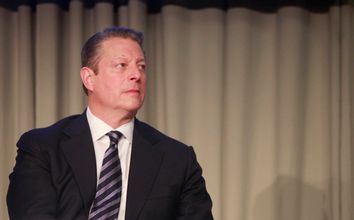
Former US Vice President Al Gore waits to speak at a presentation on melting ice and snow at the UN Climate Change Conference 2009 in Copenhagen December 14, 2009. REUTERS/Bob Strong (DENMARK - Tags: ENVIRONMENT)(Credit: © Bob Strong / Reuters)

Three years ago, a reporter at the Portland Tribune got a tip that led his newspaper to a potentially huge story: A massage therapist had accused Vice President Al Gore of sexually assaulting her in late 2006 inside his room at Portland’s Hotel Lucia.

But the Tribune never wrote a word about the incident.

The story of how the paper quietly but intensely explored the charges offers a timely cautionary tale, now that the explosive allegations against Gore have become widely known, thanks to their publication in this week’s National Enquirer.

Using a combination of sources and shoe leather, the Tribune spent a year tracking down the alleged victim, reaching out to associates of hers and of Gore, and learning about their habits and their accounts of the evening in question. The paper went so far as to take out ads on Craigslist searching for more potential victims in other cities that Gore had visited. But in the end, the Tribune could not put together a story that met its standards of journalistic responsibility.

“The truth is we very much wanted to report the story on Al Gore,” said Mark Garber, 54, executive editor of the Tribune, a 60,000-circulation free weekly that also publishes news every day online. “We worked on it for a year so that we could report the story. There’s nothing we would have liked more.”

On Thursday, after fielding a stream of angry e-mails from conservatives accusing him of both liberal bias and a mammoth cover-up (ironic, he said, because “in Portland we more often get accused of being the more conservative paper in town”), Garber outlined for Salon the timeline of events that led his publication to pursue, and then ultimately set aside, the story of the Gore accusations.

The alleged incident at the heart of all this occurred on October 24, 2006. That’s when, according to the most recent account from the alleged victim, Gore summoned her to his hotel room and then tried to intimidate her into having sex with him, drinking in front of her and trapping her in an “inescapable embrace,” fondling her, and causing her to fear she was about to be raped by a “crazed sex poodle.”

In early 2007, the Tribune found out about the allegations “through a confidential source,” said Garber, who was an editor on the investigative project that ensued.

The tip didn’t come from the alleged victim herself. “It was a source in the community,” Garber said. “It was not an anonymous call, and it wasn’t a letter that came out of nowhere or an e-mail with a fake address or anything. It was a source in the community who knew enough that we took it seriously enough to pursue.”

The journalist who received this tip was Nick Budnick, who at the time was the Tribune’s police reporter. (Budnick, who now writes for Oregon’s Bend Bulletin, declined to speak for this story, referring all questions to his former boss, Garber.)

According to Garber, after getting the initial tip, Budnick quickly turned up two reports — one filed with the Portland police in December of 2006, close to two months after the alleged incident, and one that had been filed with the Oregon State Police. The reports, Garber said, “contained a lawyer’s vague allegations concerning an unnamed victim who refused to speak to the police.”

By early 2007, when the Tribune was first learning about all this, the allegations were months old. In the intervening period, the woman who made them had set up and then missed several appointments to speak with police about what happened to her. Because of this, the paper decided the story wasn’t breaking news. Instead, Garber said, “we decided at that time it was our journalistic responsibility to sort out whether there was any truth to the allegation before we went out and reported it.”

The first thing they needed to do was find Gore’s accuser.

“We sought her out, not the other way around,” Garber said. “We did quite a bit of work to figure out who this woman was. We eventually did locate her. She was a licensed massage technician.”

The woman declined to speak to the paper and, Garber said, “feigned ignorance of the police report.” That stalled things somewhat until, many months later, in 2008, the woman got back in touch with the paper.

“She contacted us, but she wouldn’t talk with us about her specific allegations,” Garber said. Still, she agreed to meet with the reporter on the story, Budnick, and eventually began talking to him.

“We interviewed the alleged victim repeatedly and extensively,” Garber said.

She never asked for money (and the paper wouldn’t have offered money for her story in any case, according to Garber), but she did have certain requirements. “She was making demands about how the story could be told, what information we could include, what we could not include,” he said.

At the same time, the Tribune had been learning all it could about the woman, Gore, and the evening in question. It interviewed employees of the Hotel Lucia; other licensed massage technicians in the Portland area, some who knew the woman; sexual assault experts, who told the paper it was not uncommon for victims of sexual assault to delay reporting attacks to police; friends and acquaintances of the woman; and friends and acquaintances of Gore.

The paper discovered that, among those who knew the woman, “there were a variety of points of view” about her character — not uncommon for anyone. It also discovered that Gore often liked to have massages while on the road — potentially important — and so it placed ads on Craigslist in cities that Gore had recently visited, looking for massage therapists who might have had a bad experience with a prominent person. (The Tribune did not name Gore specifically in the ads.)

“That didn’t bear any fruit,” Garber said.

The paper also contacted Gore. “His responses all came through his lawyers,” Garber said. “They categorically deny that anything happened — said that the story’s completely false.”

Because the woman had once told police that she was dropping her efforts toward criminal charges in order to pursue a civil suit, the Tribune searched for evidence of such a suit and, finding none, asked Gore’s people if there had been an out-of-court settlement in the matter. Gore’s lawyers said no, contending there hadn’t even been an incident that could potentially produce a civil claim.

Eventually, the alleged victim’s conversations with Budnick became difficult.

“She was only willing to go forward if she could have a certain amount of control,” Garber said. Some of information she didn’t want in the story, Garber felt, couldn’t be left out because it was essential to “a full and fair telling.”

And there was another problem. “There were things that we discovered throughout our investigation that raised serious questions in our mind,” Garber said. He wouldn’t specify what, exactly, those things were.

“In the end, we chose not to publish the story,” Garber said. “Our journalistic drive was to do something, but when you looked at all the evidence it was not responsible to move forward. If something else had developed, we would have taken another look at it.”

This week, after his paper found out about the alleged victim’s new account of the incident — an account that was provided at her request to Portland police in January of 2009 and then updated at her request in June of this year — the Tribune tried to get back in touch with the woman by stopping by her Portland home. She wasn’t there.

Eli Sanders is an associate editor at The Stranger and a Salon contributor.

The GOP’s most reluctant Senate candidate

Republicans pleaded with him to challenge Patty Murray, and Dino Rossi doesn't seem happy that he listened to them

SEATTLE — It took Republican Dino Rossi months to decide whether he wanted to take a shot at unseating Washington state’s senior senator, Patty Murray. A three-term incumbent, Murray, polls show, is potentially vulnerable in November, even though she’s also the state’s most popular Democrat.

While Rossi was slowly weighing his options earlier this year, he flew out to D.C. to consult with Republican Party leaders, got a personal pep talk from new GOP star Scott Brown of Massachusetts, and was the subject of flattering public statements made by the head of the National Republican Senatorial Committee, Sen. John Cornyn of Texas, who in April called Rossi a “strong fiscal conservative” poised to help his party win one of the 10 seats it needs in order to take back control of the Senate.

Still, Rossi wasn’t sure, and it was late May before word leaked from D.C. — not Washington state — that he would soon be announcing his intention to run. The night before his announcement, Rossi could be found in a banquet room at an upscale Italian restaurant in the Seattle suburb of Bellevue, acting not at all like a guy who was on the verge of stepping back into the political arena. This up-by-the-bootstraps real estate investor, whose past relationships with some legally challenged businessmen had been used against him in two close-but-failed runs for governor in 2004 and 2008, and who must have known he would face similar attacks in any 2010 campaign, had decided to spend announcement eve getting paid to speak at a seminar designed to teach people how to make money off of foreclosures.

It would have been easy for Rossi to take the foreclosure seminar off his schedule in order to keep Democrats from mocking him for doing something seemingly out of step with average Washingtonians struggling to stay in their homes. Instead, there he was telling moneyed investors “this is the time to purchase,” just 12 hours before he used his May 26 campaign kickoff on YouTube to lament the deep recession that has left many non-investor Americans feeling like they’re sitting “on the edge of a fiscal cliff.”

With the video announcement out of the way, Rossi’s first in-the-flesh public appearance as a Senate candidate came the following evening at the Weatherly Inn, a suburban assisted living and dementia care facility about an hour south of Seattle. It wasn’t your typical kickoff rally, filled with screaming supporters and soaring rhetoric and maybe even some bunting. Instead, Rossi stood in the facility’s dining room (where the only meaningful decoration was three balloons, two red and one blue), nodded toward some state legislative candidates whom he’d previously agreed to come and talk about, and then launched into a rambling seven-minute campaign speech in which he lodged some general complaints about an overreaching federal government and promised a “five-month sprint” to the election.

After which he all but sprinted out of the room, not to be seen again at another public event for two weeks.

This kind of stumbling out of the gate has led political observers in Washington state to wonder whether Rossi’s heart is really in this race — whether he truly sees this as the best chance he’ll ever have of breaking his political losing streak, or whether he was strong-armed into this contest by national Republicans whose real aim is to tie up Murray’s considerable war chest so that she can’t assist Democrats in other states where the Republican challengers have a better shot at victory.

Rossi only keeps providing more reasons to wonder. Last Friday, his campaign announced his first general media availability, at the state Republican Party convention in Vancouver, which is near the Columbia River and the border with Oregon. Again, he lasted seven minutes before speeding away from political reporters, who complained afterward to his newly arrived spokesperson that he hadn’t answered their questions on basic issues such as immigration and abortion. (If the reporters wanted more detail, there wasn’t really anywhere else to go; Rossi’s campaign website, now three weeks old, still lacks an issues page. In fact, dinorossi.com offers only a single page, featuring the old YouTube video announcing his candidacy and a solicitation for volunteers and donors.)

Then, this past Tuesday, a few days after that brief media availability in Vancouver, Rossi was back at that same banquet hall at that same suburban restaurant, giving another paid real estate seminar, this one promising to answer a question that absolutely no one in politics has been asking him: “Is now the time to buy a waterfront home?” His spokesperson, Jennifer Morris, said he plans to do another similar seminar soon (even though the man who introduced Rossi told attendees that “this is one of the last events he’ll be doing before he focuses on the campaign”).

Once again, Democrats pounced. “What’s Dino Rossi doing?” asked Democratic spokesperson Anne Martens in a recent e-mail to political reporters, before answering her own question. “Pitching multi-million dollar real estate deals.” A commenter on a Seattle Times story about the waterfront home seminar wrote: “No wonder Rossi was so hesitant to enter the race! He had a contract to do talks on how to profit off the backs of poor people losing their homes.”

It could be that Rossi is actually trying to follow, in his own way, a national Republican strategy that Hotline recently summarized as “shut up.” The idea is to keep Republican Senate hopefuls such as Rand Paul in Kentucky and Sharron Angle in Nevada, whose every utterance seems to offer an opportunity for Demcorats to paint them as too extreme, from shooting themselves in the foot. Don’t talk unless absolutely necessary, this strategy goes. Just sit back and let the general tide of anti-incumbent (meaning anti-Democrat) frustration do its work.

What makes this explanation unlikely, though, is that Rossi, from his early career in the state Legislature all the way through his failed campaigns for governor, has always run as a calm, collected moderate, someone far from needing to be managed like Paul, who had to walk back statements suggesting he doesn’t support the Civil Rights Act, or Angle, who is now explaining past statements calling for the dismantling of Social Security and the abolition of fluoridated drinking water.

And yet, Rossi now lags behind Paul and Angle in basic transparency on the issues. Even Angle, who briefly pulled down her online issues page after she won Nevada’s Republican primary, now has an issues page available for anyone with an Internet connection to read. Meanwhile, Paul’s issues page is so detailed it has buttons for the A-G, H-P, and Q-Z sections. In fact, there’s no other major Republican Senate challenger aside from Rossi who currently lacks an online issues page — a bizarre distinction for a candidate in a state filled with Web-savvy voters and high-tech companies like Microsoft.

Perhaps Rossi is keeping quiet not so that he can avoid inviting more Democratic attacks, but so that he can avoid making moderate statements that might alienate Tea Partiers in advance of his state’s Aug. 17 primary. National Democrats have certainly pushed this idea, reveling in the notion that Rossi was put in a difficult pre-primary bind when, back in May, Sarah Palin waded into the Washington Senate race and endorsed Tea Party darling Clint Didier, the former NFL tight end and current alfalfa farmer from eastern Washington. But this analysis misses a fundamental fact of Washington state politics: The state’s primary is a “top-two primary,” of the kind that California voters just enacted, meaning the top two vote-getters from any party advance to the general.

Having a top-two primary removes the hothouse effect of registered Republicans going at each other hammer and tongs over intra-party issues, thus denying an insurgent like Didier some potentially helpful political friction. (Washington’s Republican party didn’t even formally take up the question of Didier vs. Rossi at its convention.) The top-two system also allows for more primary day influence by moderates and independents, who appear more likely to favor Rossi. On top of that, a recent poll that mimicked the likely Washington primary ballot by including Didier, Rossi and Murray in the list of choices found that while Rossi was behind Murray, he was way ahead of Didier — by a 26-point margin.

Barring a summer implosion, then, Rossi seems to have nothing to fear from Didier — and ultimately, everything to gain from heightening his contrasts with Murray.

Another explanation for the relative silence could be that Rossi is feeling supremely confident about polling that has shown him close to — and at times even with, or even slightly ahead of — Murray. But this kind of confidence would be misplaced. The Washington Poll, among the most thorough and respected of the public polls that have looked at the Murray-Rossi contest, surveyed 1,695 registered voters in Washington state over most of the month of May and found that among likely voters, Murray solidly beats Rossi, 46-40 percent. (A newer Elway Poll, released this week, confirmed those findings, showing Murray beating Rossi 47-40.) And even the most optimistic of polls don’t suggest Rossi can quietly coast to victory.

The most likely theory, then, seems to be that Rossi is simply hunkered down trying to raise a huge amount of money after wasting so much time dithering about whether to run. On June 3, one week after he announced his candidacy, he put out word that he’d already raised $600,000. But that’s not even one-tenth of the $6.3 million Murray has on hand. Plus, for an excited and determined candidate, raising cash is generally not incompatible with projecting a competent and confident aura.

Rather than proving he can do both of these things, however, Rossi is now leaving an opening for speculation as to why, exactly, he got in this race — and for Murray to say, as she did at a recent fundraiser in Seattle: “Unlike some others in this race, I have never hemmed or hawed or hedged my bets. I have never wondered whether or not I wanted to fight for you every day, or whether it was worth it to me, personally, to be your voice fighting for this region.”

Rossi’s most convincing retort to this came in an aside during his June 11 media availability. As he was telling a reporter about the major question he had on his mind during all those pre-announcement meetings in D.C. (“What would this be like for my family if I were to run?”), Rossi suddenly seemed to realize that the race was now on, he was in fact in it, and yet so many of his words were still wandering through the past, trying to explain how the once-hypothetical had mysteriously become the no-longer hypothetical. He interrupted himself. It was day 16 of his Senate candidacy.

“And we are going to run,” he said, in a flat tone. “And win.”

Eli Sanders is an associate editor at The Stranger.

Continue Reading Close

Worth waiting for

Washington is a rare outpost of optimism in gay America, and that may be because the state is moving slowly on same-sex marriage.

It’s hard to remember, now that the mood of the country feels so different, but last spring was an incredibly optimistic moment for gay rights supporters. In the days leading up to the first legal same-sex marriages in Massachusetts, something unheard of was happening in America: Straight politicians around the country, beginning with Mayor Gavin Newsom in San Francisco, were deciding that full civil equality for gay and lesbian citizens was now so urgent and important that it was worth breaking state law to accomplish.

It was a thrilling time to be a gay American. And honestly, for me, it was also a bit of an embarrassing time. The lawbreaking by officials on behalf of gay rights was migrating quickly, from San Francisco to New Paltz, N.Y.; to Sandoval County, N.M.; to Asbury Park, N.J.; to Portland, Ore. It felt as if a Berlin Wall of legal discrimination against gay people was being torn down, and here I was in Seattle, gay, in favor of same-sex-marriage rights, and doing — well, not doing anything nearly as gutsy as Mayor Newsom. I felt ashamed. When he proudly explained his actions to reporters by saying things like, “There are certain principles in life that transcend patience,” I remember thinking: What am I waiting for?

Last month, when the Oregon Supreme Court nullified some 3,000 Newsom-inspired marriages performed for same-sex couples in Oregon in March 2004, I recalled those feelings from last spring, but without the sense of optimism. A year ago, more than 7,000 of these marriages were conducted in five states across the country. But with the Oregon Supreme Court’s decision, and earlier similar decisions in New York and California, all of these “outlaw” marriages have now been either nullified or invalidated.

Whatever future generations end up calling last spring’s spree of outlaw unions (is the “Gay Spring of Love” too corny for the history books?), the phenomenon is now officially dead. But perhaps we can learn something from its demise.

Here’s what I did last spring after Newsom shamed me into action. In Seattle, where I work as a freelance writer, I began writing articles in a local alternative newsweekly encouraging politicians here to follow Newsom’s lead. I wanted them to issue marriage licenses to gay couples in defiance of the state law banning same-sex unions, just as Newsom had done in California.

It turned out that Ron Sims, county executive for King County, which contains Seattle, was the man who controlled the local levers of marriage license power. That seemed promising. Sims appeared to be someone who could easily be persuaded to follow Newsom’s example. A black politician who promoted himself as someone who always chose the right thing over the politically expedient thing, Sims had been active in black civil rights issues during his youth and now publicly favored same-sex marriage out of the same impulse toward social justice.

As I pressured Sims to break the law, I found that I had landed squarely on one side of a deep divide cleaving the gay rights movement. In one camp were activists, most of them in the higher echelons of the movement, who had been working steadily for years on changing this country, law by law, into a more friendly environment for homosexuals. They saw lawbreaking as risky, and even anathema, to gay interests, since respect for the law is often all that protects minorities. One of them, a prominent Seattle lawyer who is a leader of the national gay rights group Lambda Legal, told me last year that while he was drawn to the idea of breaking unjust laws that discriminate against gays, he worried about the precedent it would set. He wondered, What would stop people who oppose gay rights from demanding that laws protecting gays be broken by their politicians, based on a similar logic of righteous urgency?

In the other camp were gay activists who felt the same impatience as Newsom, or had been newly infected by it. These were the types of people who last spring had taken to quoting Martin Luther King Jr.’s “Letter From Birmingham Jail” (“Wait has almost always meant never”) and wanted full equality for gays and lesbians, immediately and everywhere. Never mind that it took four years of plodding legal work for same-sex unions to become a possibility in Massachusetts — the fact that one state had legalized gay marriage was a powerful antidote to the idea that it could never happen in America. And now that it had somewhere, the injustice of having to wait for the politicians in other states to come around was unbearable. This was the side I aligned myself with last spring, the side that was marching to the King County Administration Building and barraging Sims with e-mails telling him to act now or be considered a moral coward.

A year later, it seems I owe Sims an apology. The brief spree of “outlaw” marriages has not created more opportunities for same-sex unions. Instead, it has helped fuel a backlash against gay rights across the country. Constitutional bans against same-sex marriage now exist in 17 states, including, not coincidentally, Oregon. They will take years, if not a decade or more, to reverse. And now 18 other states are considering constitutional bans. Even the election of George W. Bush in 2004 may have been, to a degree that has been much debated since, a reaction to the television images of gays getting married in San Francisco and elsewhere.

I now have to admit that the other side of the divide in the gay rights movement, the go-slow side, was correct. And so, it turns out, was Sims. He refused to break the law, despite pressure from me and many other impatient gay residents to do so, a stance that seemed to genuinely pain him.

“There is a law in the state of Washington,” he told gay rights supporters in March 2004. “It doesn’t mean I like it. It means I have no choice. It doesn’t mean that I find it just. It means I have no choice but to uphold it.”

Sims didn’t just sit on his hands, however, and contemplate his respect for the law; he decided to work as an activist within the legal system. He told gay rights supporters that he remembered images from his youth of Gov. George Wallace standing in the doorway of an Alabama school to block integration, and said he didn’t want to be remembered as the man who stood in the doorway to block gay rights. On March 8 of last year, he invited six gay couples selected by a local gay rights group to come to the county’s marriage office, at which point he denied them licenses and then promptly invited them to sue King County. The case, Anderson vs. Sims, is now before the Washington Supreme Court.

Sims was preparing to run for governor at the time (if he’d been successful he would have become the state’s first black governor), and he knew his move would anger conservative Washingtonians outside of liberal King County. He addressed these voters with a simple quote from King: “The time is always right to do what’s right.” A few months later, Sims lost in the Democratic primary to state attorney general Christine Gregoire, whose public position had been that Washington was not ready for same-sex marriage. She went on to win the election.

In the end, Sims is perhaps a minor figure in the national battle over gay rights. But his insistence on working within the law created an important study in opposites between Washington and Oregon, one to which gay Americans should pay attention.

Last spring, gay residents of Oregon enjoyed the euphoric feeling of participating in or witnessing officially sanctioned same-sex marriages. But it was a fleeting moment. Now the state has no legal same-sex marriages and a newly approved constitutional ban expressly prohibiting them. Washington, in contrast, is in the midst of a carefully orchestrated legal process, started by Sims, that could very well result in the state’s becoming the next Massachusetts. The deliberate slowness with which justice moves has been frustrating for some gay rights supporters in Washington, but the pace of the process has allowed them to get organized in a way they haven’t been in years, as exemplified by their rapid and loud response to Microsoft’s recent decision not to support an anti-discrimination bill in the state Legislature this session.

It has also given activists time to try to win over conservative residents of rural areas in advance of a Supreme Court decision that, if it follows the growing body of national case law supporting same-sex unions, will be quite upsetting to them. A backlash is still sure to emerge in Washington if same-sex marriage is legalized, but because of the time the legal process has allowed for dialogue between gay rights supporters and opponents, it will probably be less severe than in Oregon and other states.

All of which puts me in a rather humbled position. A year after Sims chose to work within the law rather than break it, life in Washington suddenly seems more full of possibility for gays and lesbians than it does to the south of us, in Oregon. My state has emerged as one of the rare outposts of optimism in gay America, and for that I have to thank, in large part, the fact that Ron Sims didn’t listen to me.

Continue Reading Close
www.salon.com/writer/eli_sanders/index.html