Elizabeth Goitein

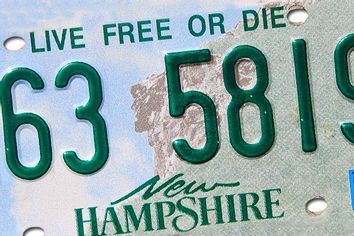
RIP: “Live Free or Die”

GOP candidates in New Hampshire seem to have forgotten the state's motto

  • more
    • All Share Services

RIP: Motto forgotten

As New Hampshire gears up for tomorrow’s Republican primary, the candidates seem to have forgotten the state’s motto: “Live free or die.”  Those words capture a libertarian spirit that traditionally has been at the core of conservatism in this country: that the government should not intrude unnecessarily into the lives of its citizens.  Where national security policies are concerned, though, most of the GOP candidates’ commitment to this principle — and to other principles that are nominally favored by conservatives — appears to be running thin.

Take the candidates’ position on the government’s use of its war powers against U.S. citizens.  The powers a government exercises during wartime — including detention without charge and summary execution — represent a far greater intrusion on individual liberties than, say, the power to raise taxes or confiscate private property.  To an unprecedented extent, our government is claiming the right to exercise these drastic powers against Americans.

One might expect conservatives to unite against this trend.  The specter of the government turning its military force against the people helped drive conservatives’ support for an individual right to bear arms under the Second Amendment.  Yet most of the candidates seem unconcerned about indefinite military detention for U.S. citizens. Three of them (Romney, Perry and Santorum) have praised the government’s execution, without trial and based on secret information, of U.S. citizen Anwar Al-Awlaki.

Conservatives also tend to be “tough on crime,” which might explain their position on detaining or executing suspected terrorists.  But suspected wrongdoers aren’t the only ones surrendering the right, so cherished by conservatives, to be left alone by the government.  Changes in the law after 9/11 have allowed government officials to invade Americans’ privacy even when no reason for suspicion exists.  For instance, the PATRIOT Act allows the FBI to obtain any American’s telephone and financial records without a warrant, regardless of whether that person is a suspect in an investigation.  At a debate in November, Gingrich and Perry supported extending this power.

In any case, being “tough on crime” is another conservative principle that is seemingly going by the wayside.  Currently, the government can try suspected terrorists either in civilian courts or in military commissions.  The scorecard is clear: Since 9/11, civilian courts have convicted more than 400 terrorists, while military commissions have convicted a mere handful.  Moreover, the average sentence imposed by civilian courts is higher.  If you go by results, civilian courts are unquestionably “tougher.”  Nonetheless, most of the candidates favor sending suspected terrorists to military commissions.

Another traditional conservative principle is hatred of “big government” and wasting taxpayers’ money.  Nowhere is such waste more evident than in our country’s bloated national security apparatus.  As Dana Priest reports in her recent book, “Top Secret America,” 51 government organizations track the flow of terrorist finances.  And yet, while Rick Perry can name (on a good day) three federal agencies he would like to eliminate, none of these organizations made the list.  Romney, for his part, supports expanding Guantanamo at a cost of $800,000 per inmate per year, rather than using U.S. prisons that would provide equal security (no prisoner has ever escaped from a supermax prison) at one thirtieth the cost.

Finally, conservatives have long championed the importance of religion in American life and opposed any government encroachment on religious freedom.  But today, many law enforcement agencies consider devoutness among Muslims to be a sign of potential terrorism.  In some places, government informants are paid to infiltrate mosques at random.  Such religious profiling makes American Muslims apprehensive about openly practicing their faith.  Instead of crying foul at this governmental interference with religion, Santorum has embraced the profiling of Muslims, and Gingrich favors loyalty tests for Muslims who wish to serve in government.

The truth is, our post-9/11 counterterrorism apparatus has become everything conservatives claim to hate in government: coercive, intrusive, ineffective, wasteful and violative of religious freedoms.  And yet, the only Republican candidate who seems to have noticed — Ron Paul — is the one considered outside the mainstream.  Even the supposedly libertarian Tea Party members in Congress mostly support the runaway national security establishment.

To be sure, this is not a partisan phenomenon.  Conservatives’ wavering commitment to their proclaimed values is matched by a wavering commitment on the part of progressives in government — including congressional Democrats and, on some issues, President Obama — to the civil liberties and human rights they espouse.  This abandonment of principles on both sides of the aisle has enabled the national security establishment’s exponential growth in size and powers.

Which means that New Hampshire, with its proud history of championing individual liberties, has something to teach all of the candidates for office this year.

Bradley Manning didn’t break the secrecy system

It was already broken but the WikiLeaks suspect is the only person held accountable

  • more
    • All Share Services

Bradley Manning didn't break the secrecy system Bradley Manning caught in the secrecy system (Credit: Salon/AP)

On Friday, Bradley Manning, the young Army private accused of leaking nearly three-quarters of a million government documents to WikiLeaks, will come before a military officer for a hearing in his case — the first since his arrest in May 2010. The proceedings that begin this week will determine whether Manning serves a life sentence for disclosing classified information without authorization. But they will do nothing to address the larger issue lurking behind the WikiLeaks disclosures: our nation’s broken classification system.

I do not count myself among those who consider Bradley Manning a hero. To be sure, some of the WikiLeaks documents revealed information that the public had every right to know, and the leaks arguably have done some significant good. Amnesty International, for example, credits the WikiLeaks disclosures with bringing about the Arab Spring by revealing corruption on the part of the Tunisian government and thus provoking revolts that spread throughout the region. Moreover, the U.S. government’s treatment of Manning post-arrest — treatment so shocking, it is under investigation by the United Nations rapporteur on torture — has enabled Manning’s supporters to portray him, justifiably, as a victim.

But none of this lessens the recklessness of Manning’s conduct, if the allegations against him are true. Manning could not possibly have read, let alone thoroughly assessed, each of the 700,000-plus documents he is charged with leaking. Even if he read a sizable sample and found nothing that he deemed a threat to national security, he could not rule out the possibility that some of the unread documents were properly classified and could put lives at risk if disclosed. Indeed, certain documents posted by WikiLeaks identified Afghan informants by name — a disclosure that surely endangers their safety.

Nonetheless, a narrow focus on Manning’s culpability misses the bigger picture. The WikiLeaks documents are filled with information that presents no apparent risk to national security — and many of them are plainly innocuous. For example, one cable recounts a U.S. diplomat’s observations of a wedding in the Russian province of Dagestan. The banal fact that Dagestani weddings typically take place over three days is classified as “confidential,” meaning that its disclosure could reasonably be expected to cause damage to the national security.

Other documents contain information that is more consequential, but not because of its national security implications. The documents setting forth U.S. assessments of the risk posed by Guantánamo detainees, for example, include dozens of cases in which the government could find no recorded reason for the individual’s detention — a fact that reveals no intelligence sources or methods, but does reveal a major concern with the government’s detention practices.

In total, the amount of truly sensitive national security information contained within the WikiLeaks cache was small enough that an internal government assessment found little reason to fear any long-term damage resulting from the disclosures.

The high rate of unnecessary classification among the WikiLeaks documents is alarming, but not surprising. For decades, government officials of all political stripes have acknowledged that there is massive overclassification in the federal government. Insiders estimate that anywhere from 50 to 90 percent of classified documents could safely be released.

This near-habitual overclassification harms us in several ways. It impedes information sharing among federal agencies, to the detriment of national security.  It warps the democratic decision making process by denying the public — and sometimes even Congress — information that can be vital to making sound policy judgments.  It diverts billions of dollars from the Treasury to protect information that requires no protection.

And there is one more consequence of overclassification: Bradley Manning. In 1971, Supreme Court Justice Potter Stewart warned that “when everything is classified, then nothing is classified, and the system becomes one to be disregarded by the cynical or the careless.” More than 30 years later, the head of the government office responsible for overseeing classification sounded the same alarm: “The thing that protects information is not the markings, it’s not the safes, it’s not the alarms … it’s people …. Once individuals start losing faith in the integrity of the process, we have an uphill road in terms of having people comply.”

We may never know Manning’s motive for disclosing documents to WikiLeaks (again, assuming he was the leaker), but instant messages allegedly sent by Manning to an ex-hacker and turned over to the FBI suggest he believed the disclosures would be embarrassing to the U.S. government and important to democratic debate — not harmful to national security. In other words, he had no confidence in the designation of “classified.”

What is the solution? If we are to demand accountability on the part of those who wrongly divulge secrets, we must also demand accountability on the part of those who wrongly create them. Currently, officials who are authorized to classify documents are not required to provide any explanation, and in the ordinary course of business, no one reviews their decisions. In theory, agencies may sanction officials who classify documents improperly. In practice, they have no reliable way to identify officials who overclassify, and no motive for doing so. Accountability is simply non-existent.

This must change. Officials who classify documents should be required to identify, in writing, the national security harm that could result from disclosure. Their decisions should be subject to internal spot audits — ideally by the agency’s office of the inspector general, to ensure a fair and independent review — with an eye toward identifying officials who routinely overclassify. Those officials should undergo repeated audits, and a continuing pattern of overclassification should trigger mandatory escalating consequences. Remedial training might be sufficient in some cases; persistent offenders should ultimately forfeit their classification authority.

Manning’s alleged disclosure of documents to WikiLeaks was irresponsible, perhaps criminally so. It was also a symptom of another, deeper problem. Those who acknowledge the former have too often failed to acknowledge the latter. Yet these two propositions are not only both true — they are intimately connected. We ignore the connection, and overclassification itself, at our peril.