Elizabeth Hand

Remembering Thomas M. Disch

In his many dark, satirical, heretical books, the pioneering science fiction author contemplated death with elegant despair.

  • more
    • All Share Services

Remembering Thomas M. Disch

Few people make a successful career of contemplating death and suicide; fewer still approach the subject with the genuine ebullience and elegant despair of the prolific, criminally underappreciated writer Thomas M. Disch, who shot himself in his Union Square apartment, in New York, on the Fourth of July. Disch was a seminal figure in science fiction’s New Wave, the iconoclastic 1960s movement that gave the genre a literary pedigree and popularized the term “speculative fiction.” His books influenced writers such as William Gibson and Jonathan Lethem; his dystopias “Camp Concentration” and “334″ are considered science fiction classics, along with his greatest novel, “On Wings of Song,” a beautiful, dark meditation on the power and limits of transcendence through art.

An openly gay man for most of his working life, Disch wrote mysteries, historical novels and neo-gothic satires; children’s books, including “The Brave Little Toaster” and its sequel; at least five collections of short fiction; 15 volumes of poetry, always as Tom Disch; plays and libretti; four volumes of nonfiction; screen adaptations, novelizations and one of the first interactive computer games. He edited anthologies; he wrote book reviews, theater reviews, art reviews, music reviews. He wrote collaboratively and pseudonymously; he kept a popular blog, Endzone, in which he shared new poems, some unpleasant post-9/11 screeds, and witty discourses on the meaninglessness and minutiae of life. In his most recent novel, he wrote in the voice of God, and on his publisher’s Web site answered questions from readers. He wrote and wrote and wrote and wrote, for the sheer joy of it and for an even more primal impulse: to tell a story to the dark.

“Storytelling is just absolutely natural to me. It’s my way of getting along with people, I guess,” he told an interviewer at the Web site Strange Horizons in 2001. He’d call friends and, after an exchange of pleasantries, ask, “May I read you something?” The answer was always yes and his voice would lift as he read a sonnet or villanelle, or perhaps the section from “The Word of God” where Disch’s deity wonders whether His father was in fact Thomas Mann.

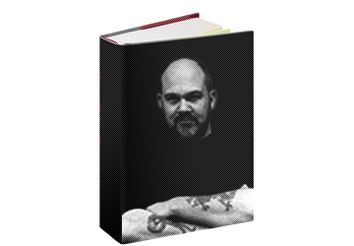
He had a wonderful speaking voice, fluid and seductive. He sounded like John Malkovich, and he looked a bit like Malkovich too, in his prime. I grew up reading Disch’s work, starting with “The Roaches” as a 12-year-old and devouring the novels as I got older. I first met him casually in the late 1980s, but only got to know him and his partner, poet Charles Naylor, during the last eight years or so — far too brief a time. Tall and physically imposing, in public Disch could project a slightly threatening aloofness, with his shaved head, impressive tattoos, bodybuilder’s mass. The silken voice that emerged from that intimidating form made him seem even more dangerous, one of those wizards who is subtle and quick to anger.

But then he’d dissolve in laughter and it would all suddenly seem to be a pose, a disguise, part of a vast elaborate joke that you were in on — maybe. He could be irascible, scathingly dismissive; he held grudges and burned bridges. In recent years he’d put on weight, which exacerbated other problems: diabetes, sciatica, neuoropathy, depression. He had difficulty walking and was almost housebound.

And since the turn of the millennium he’d endured a Job-like succession of personal tragedies, beginning with a fire that severely damaged the apartment he shared with Naylor, his partner of 30 years; frozen pipes that caused a mold infestation at his house in Barryville, N.Y.; Naylor’s long illness and eventual death from colon cancer; and, finally, eviction proceedings begun by the landlord almost immediately after Naylor’s death.

During this siege Disch struggled with crushing grief and depression — only a real deity would not — yet he also had a humorous resignation that seemed very close to valor. He once said, “I am certainly a ‘death of God’ writer,” and much of his work seems fueled by the rage and sense of betrayal of a former believer, as well as a refined sense of the ridiculousness of religious institutions, and the ultimate, absurd realization that we all die alone. His best work builds on Eugene Ionesco’s dictum: “We are made to be immortal, and yet we die. It’s horrible, it can’t be taken seriously.”

Death was the subject Disch returned to again and again, in his fiction and his poetry. Sometimes it was murder, spurred by passion or twisted religious or political fervor. Sometimes, as in his early novel “The Genocides,” or his later satirical novel “The Sub: A Study in Witchcraft,” it was simply a detached, clinical adjustment of the biological status quo, with untidy or unnecessary humans disposed of like irksome insects. He wrote often about suicide, nearly always without melodrama. “Laughter is just a slowed down scream of terror,” he told Joseph Francavilla in a 1983 interview.

… thoughtful minds are free of pain
To the degree that they can think
And alchemize their thoughts to ink.
Happy the man who can declare
His angst with any savoir faire.

— Tom Disch, “Waking New Year’s Day, Without a Hangover,” 1986

Born in Iowa in 1940, Disch spent his childhood and early teens in the Midwest before moving to New York, where he attended Cooper Union and New York University. He held the usual spate of desultory writers’ jobs, most memorably a brief stint in “Swan Lake’s” corps de ballet, where he encouraged the other male dancers to sing “I am, I am, I am a swan” under their breath while Margot Fonteyn expired as Odette. In 1962 he wrote his first story in lieu of studying for an NYU exam and promptly sold it to the science fiction magazine Fantastic. He subsequently dropped out of school to devote himself to writing.

A number of beautifully crafted stories date from these early years. Among the best: “Descending,” in which a man steps onto a department store elevator that only goes down, forever; the much-anthologized “The Roaches”; and the Kafkaesque “The Squirrel Cage,” in which a writer works feverishly, endlessly, on a horror story he cannot even see, and which no one will ever read: “The story has gone on far too long. Nothing can be terrifying for years on end. I only say it’s terrifying because, you know, I have to say something. Something or other. The only thing that could terrify me now is if someone were to come in. If they came in and said, ‘All right, Disch, you can go now.’ That, truly, would be terrifying.”

In the mid-1960s he knocked around Europe and North Africa before touching down in London’s Camden Town around 1967, where he became part of that movable feast of Anglo-American writers and artists associated with the New Wave: Michael Moorcock, John and Judith Clute, John Sladek (a future Disch collaborator), Pamela Zoline, M. John Harrison. “The Genocides” was published in 1965, a vision of Earth as an agribusiness run by extraterrestrials who sow the planet with a single vast plant crop, then methodically exterminate the human pests who infect their harvest. It ends badly. As Disch cheerfully pointed out in a 1990 interview published in the British journal Foundation, “Let’s be honest, the real interest in this kind of story is to see some devastating cataclysm wipe mankind out … My point was simply to write a book where you don’t spoil that beauty and pleasure at the end.”

His next major work, “Camp Concentration,” appeared in 1967 in New Worlds, the New Wave’s flagship magazine, and a year later was published in book form. Now regarded as one of the greatest SF novels, at the time “Camp Concentration” was overshadowed by Daniel Keyes’ “Flowers for Algernon,” which shared some themes and narrative structure. Inspired by the Faust legend, the novel unfolds as the journal of Louis Sacchetti, a schlubby poet interned at an American concentration camp for being a conscientious objector. There he and the other prisoners are injected with an experimental drug that boosts their intelligence even as it erodes their life span.

Samuel R. Delany wrote that “Camp Concentration” was “the first book within the s-f field I have read for which my reaction was simple, total and complete envy: ‘I wish I had written that.’” It remains in print and is probably Disch’s best-known book, though Disch was dismissive of it in the 1980 Foundation interview: “I think it was probably not strong enough to stand on its own outside the genre. Not as a work of literature.”

“On Wings of Song,” his 1979 masterpiece, is a work of literature. William Gibson called it “one of the great neglected masterpieces of late 20th-century science fiction”; Robert Drake named it part of “The Gay Canon.” A savage, politically charged bildungsroman, the novel presents the American Midwest as a fundamentalist police state where air travelers are forced through security checkpoints, books and works of art are considered seditionary, and Daniel Weinreb, a 14-year-old from Amesville, Iowa, is imprisoned for possession of copies of the Minneapolis Star-Tribune. After his release, he makes his way to Manhattan, a secular paradise, and struggles to become a bel canto singer.

The book’s defining metaphor is a form of virtual reality that enables practitioners to experience ecstasy. Not everyone achieves this transcendence, and the attempt can be dangerous: disembodied souls, nicknamed “fairies,” can be trapped and destroyed, their host bodies left in a vegetative state.

“Beauty is probably the antidote to evil — in practical terms for an artist,” Disch once remarked. “Because art is one of the routes of access to joy, and joy is always problematical the moment it stops happening. You’re always asking, ‘Where is it? Why can’t it be brought back?’” It was the essential question for Disch.

Later books explored the nature of evil in more satirical terms. Raised Catholic, Disch took the heretic’s glee in attacking church hypocrisy in works like “The Priest: A Gothic Romance,” which featured pedophile clergy and murderous antiabortion protesters, and his play “The Cardinal Detoxes,” which the Archdiocese of New York attempted to shut down. In Disch’s version of hell, the suicidal poet John Berryman is forced to haunt Minneapolis. He talked about writing a career guide for young girls titled “So You Want to Be the Pope”; the Supreme Being he channels in his just-published “The Word of God” is sensible and gossipy, as demonstrated by the answers He gives to readers on His publisher’s Web site:

Dearest God,

Since food is the most recent topic: Why have you made the pit in avocados so infernally Large? And along the same lines, what’s up with your pomegranate invention?

– Norman

You must have been kibbitzing with Proserpine. Her and her pomegranate diet. But as to avocado pits your guess is as good as mine. But did you know you can grow whole avocado trees from those pits? It takes a lot of patience, but they will grow all the way to the ceiling if you let them.

– God

Disch was an often brutal satirist who wrote a beloved children’s book about sweet-natured household appliances, an ironist who would cheer up a visitor by reading aloud poems ostensibly penned by Paddington the Bear, in Paddington’s voice. He reveled in coincidence, in life and art. With Naylor, he wrote a marvelous historical novel, “Neighboring Lives,” that explored the web of connections between Victorian thinkers and artists in Pre-Raphaelite London. Naylor gave him joy; “On Wings of Song” was dedicated to him.

Almost exactly a year after Naylor’s death in September 2004, Disch began writing a sequence of poems, an extraordinary efflorescence of grief he shared on his blog. Eventually there were 31 of them. He titled the sequence “Winter Journey” after Schubert’s lieder cycle “Winterreise” (a work Naylor loved). The poems are tragic, bitter, bleakly funny, romantic, heart-rending — and also accessible. I can imagine, by some divine fluke, the book becoming a surprise, posthumous bestseller — an irony Disch would have appreciated.

“The song does not end,” Disch wrote in the closing pages of “On Wings of Song.”

… and though he had written that song before he’d learned to fly himself, it was true. The moment one leaves one’s body by the power of song, the lips fall silent, but the song goes on, and so long as one flies the song continues. He hoped, if he were to leave his body tonight, they would remember that. The song does not end.

“Winter Journey” will be published this fall, along with four new collections of recent poetry and short fiction. “The Word of God” was released on July 1 by Tachyon Publications. All were scheduled for publication before Disch’s death.

In meth we trust

Two riveting books look at methamphetamines past and present -- from miracle cure to today's drug scourge -- and why sleep-deprived, sex-obsessed America craves crank.

  • more
    • All Share Services

In meth we trust

Heroin, developed in 1898 by a chemist at the Bayer Laboratory in Germany, derived its name from the German “heroisch” (heroic), and despite everything we know about the horrors of heroin addiction, smack still manages to be marketed as sexy in advertising and art. Whereas “meth” rhymes with “death” and sounds like “mess”: an ugly word for an ugly drug that seems unlikely to benefit from an image update anytime soon.

Even its myth of origin is tainted, deriving from a probably apocryphal story of the drug’s development by Hitler’s chemists to fuel a robotic, remorseless army of Nazi storm troopers. So says Frank Owen in “No Speed Limit: The Highs and Lows of Meth,” his gripping sociocultural history of a substance that has demonstrated a malevolent, near-viral ability to adapt to shifts in taste, popularity, population, production and distribution.

The synthetic methamphetamine has a horticultural analog in ephedra vulgaris, used for millennia by the Chinese as an herbal remedy for asthma and other breathing ailments. In 1887, a Japanese scientist identified ephedra’s active ingredient, ephedrine, a chemical similar to adrenaline. The same year, the German L. Edeleano used ephedrine as the base to create phenylisopropylamine, now known as amphetamine.

But because the substance seemed to have no useful medical applications, the malign genie remained in the bottle until the 1920s, when ephedrine was first used to treat asthma in clinical trials in North America and Europe. Meanwhile, a Japanese scientist developed a more powerful synthetic version of the drug that came to be known as methamphetamine. In 1927, a British research chemist at UCLA named Gordon Alles resynthesized Edeleano’s drug for use as a bronchiodilator, and subsequently sold the formula for use as an over-the-counter inhalant.

The new drug, christened Benzedrine, was initially marketed as a miracle cure, “used to treat obesity, epilepsy, schizophrenia, cerebral palsy, hypertension, ‘irritable colon,’ ‘caffeine mania,’ and even hiccups.” By the 1950s, variations on its chemical theme included Dexedrine, whose “gentle stimulation will provide the patient with a new cheerfulness, optimism, and feeling of well-being”; Norodin, “useful in reducing the desire for food”; Desoxyn, for “When she’s ushered by temptation”; and Syndrox, “For the patient who is all flesh and no will power.”

All these testimonials originated in medical journals, and the drugs were targeted at women, mostly as “pick-me-ups” and diet aids. But even prior to the 1950s, amphetamine and methamphetamine had begun to leave their mark upon the American heartland. During World War II, factories at the San Diego naval base provided troops overseas with Benzedrine. Owen claims “GIs consumed an estimated 200 million pills,” causing untold numbers of soldiers to return stateside with an amphetamine habit.

After the war, some former servicemen took jobs in Southern California’s defense plants, where amphetamines’ “ability to make boring and repetitive mechanical work seem fascinating and meaningful” no doubt came in handy. The San Diego area was also the 1948 birthplace of the Hell’s Angels, whose later habit of transporting illegally manufactured methamphetamine in the crankshaft of their bikes gave the drug its street name, crank.

Owen, a British journalist and the author of “Clubland,” an account of the designer drug Special K, does a mostly deft job of juggling the myriad elements of crank’s sordid history, including its impact upon our legal, chemical, cultural and even religious landscape. “No Speed Limit” has sometimes jarring shifts in chronology and mood, as Owen jaunts from the drug’s late-19th century origins as a plant compound to its current vogue as a signifier for white trash, as well as its privileged spot in the early-21st century Index of Truly Bad Shit.

Owen points out that neither of these contemporary impressions of crank is unassailable. Meth has cut across class lines as both “mother’s little helper” and a frighteningly powerful libido enhancer adopted by the gay club scene in the 1990s. Statistical evidence suggests it is nowhere near as prevalent as for other highly addictive substances.

In 2005 the Substance Abuse and Mental Health Services Administration’s National Survey on Drug Use and Health (doomed to be a flawed sampling, as drug users often lie about their habits) estimated that 10.4 million Americans over the age of 12 had tried meth, with 512,000 classified as regular users. Still, that’s a mere drop in the syringe when compared to 59.9 million regular tobacco users, and 121 million regular drinkers.

But whatever their costs in health and lost productivity, tobacco and alcohol are legal drugs, whereas meth is an illicit industry that now turns hundreds of millions of dollars in profit, most of it for Mexican drug cartels. Owen shows us the human face of meth abuse — not surprisingly, an ugly one it is. A child watches her mother strip the heads off matches so she can soak them in acetone to extract phosphorous, one component in home meth manufacture. Vacant-eyed men obsessively masturbate to online porn, and toddlers sleep on the floor of their daycare center, next to a room where meth is being cooked. (Readers who want even more livid images can go to this site started by the Multnomah County Sheriff’s Office in Oregon, where Deputy Bret King has assembled before-and-after mug shots of meth users in the county detention center.)

Yet the most riveting parts of “No Speed Limit” deal with the ways in which the manufacturers and distributors of the drug have consistently and disturbingly evaded efforts to stop its dissemination. This drama plays out like an illicit chemical variant of a Wile E. Coyote cartoon, with numerous characters stepping into the role of Road Runner. Chief among these is the renegade chemist Steve Preisler, who pseudonymously authored “Secrets of Methamphetamine Manufacture” and “Advanced Techniques of Clandestine Psychedelic and Amphetamine Manufacture,” tomes that helped spur the rise of mom-and-pop meth labs.

Make no mistake: Even casual users can attest that meth quickly becomes a horror-show drug. But it’s also one that dovetails neatly with our current national mood. Each era gets the drug it deserves — or seems to, after the fact, when viewed through the smeary lens of pop history. Hence Coleridge and the other 18th century Romantics with their laudanum visions; Rimbaud and Verlaine sipping absinthe in 19th century Paris; the acid-tinged 1960s; coke-amped 1980s and the 1990s’ sunken-eyed, vampiric heroin chic.

Methamphetamine, a drug that embodies a Platonic ideal of paranoia, perfectly suits our national mood, when sleep-deprived employees are afraid to get off the treadmill of work for fear they’ll fall even deeper into debt, and sexual titillation seems both omnipresent and joyless. The erotic vampires who populated pop culture in the late 1990s and early naughts have given way to zombies stumbling or wanking or fucking their way through the detritus of the early 21st century in recent films like “28 Days Later” and “Shaun of the Dead.”

Owen does a masterly job of detailing the Drug Enforcement Administration’s efforts to limit or prevent the sale of so-called precursor chemicals such as pseudoephedrine, used in meth manufacture. In the mid-1980s, the DEA’s Gene Haislip had succeeded in nearly eliminating Quaaludes from America’s recreational drug cabinet. Haislip’s attempt to make ephedrine and pseudoephedrine regulated substances was nearly derailed by the pharmaceutical industry’s lobby.

When the Chemical Diversion and Trafficking Act finally went into effect in 1989, its impact was muted. Like the mythical hydra, the meth industry almost immediately sprouted new and improved means of manufacture, through the Mexican drug cartels that wrested distribution from long-established U.S. sources such as the Hell’s Angels. Factories as far away as India, Pakistan, China and the Czech Republic began shipping tons of ephedrine powder to facilities south of the U.S. border. Owen writes, “‘The Mexicans do it so simply, so quickly, and their network is so mobile and tight that they can make meth today and have it sold in the Midwest tomorrow,’ a top official from California’s Bureau of Narcotic Enforcement told the Los Angeles Times in 1995.” Even more troubling, Mexican ice is rumored to be 98 percent pure, rather than the 20 percent to 80 percent found in most home-manufactured meth.

In his introduction to “No Speed Limit,” Owen recounts his own experiences with the drug in the late 1980s: “For a writer, meth seemed like manna from heaven … Writer’s block? No big deal … An impossible deadline to meet? Easy as pie. The drug banished any thought of sleep. Piles of boring research to plow through? Bring it on … Meth, I managed to convince myself, was a valuable vocational aid, a tool of the trade like a good thesaurus or a supply of freshly sharpened pencils.”

Owen’s meth use was fortunately short-lived. But he has a disturbing coda toward the end of his book when he describes sampling Mexican ice. Despite his prior experience of the drug and journalist’s detachment, he immediately and inexorably gets sucked into its hallucinatory maelstrom.

“Right from the first line, I could tell this was as different from the old biker meth I used to do as the biker meth was from the adulterated amphetamine sulfate of my teenage years.” His experiment turns into a sleepless, five-day hallucination that involves wild sex with floating holograms and the appearance of FBI agents who accuse him of aiding terrorists. When he comes to, he muses that “the fantasy elements were so seamlessly intertwined with reality, I had spent the last four days living in a David Cronenberg movie and I couldn’t tell the difference.”

James Salant spent a longer time immersed in this nightmare, as detailed in “Leaving Dirty Jersey: A Crystal Meth Memoir.” Salant, now 23, gives us a searing, sordid account of his 19th year, spent shooting and smoking meth and heroin in California, where the middle-class teenager from Princeton, N.J., had been sent to a rehab facility. “Leaving Dirty Jersey” recounts how its young author scored, stole, scammed and screwed his way through an increasingly desperate addiction, then managed to overcome it and write a book with the terrifying energy and harsh, overlit violence of a Tarantino movie.

Salant’s prose sometimes bears the hallmarks of a tyro writer, but more often he nails the hellish tedium and despair of the addict: “I’d … simply gotten worse at telling lies. This was inevitable, considering that believable, preferably true details are what sell a lie: a fabric of truths and easily-could-be truths woven from everyday experiences to support and hide the one thing that didn’t actually happen. Which of course made telling lies nearly impossible for me, because, living on meth, I wasn’t having any everyday experiences.”

Salant’s recovery feels excruciatingly hard won. Given the self-inflicted horrors he endured, one hopes to god he hangs onto it.

Not for the weak of heart or stomach, his memoir is a dirty bomb lobbed from the trenches of crank addiction. Owen’s work, in contrast, is a report from the home front. Neither book suggests that this particular war is near over.

Continue Reading Close