Elkan Allan

Physicians, heal thyselves

The biblical injunction takes on new meaning as British doctors struggle to regain public confidence.

  • more
    • All Share Services

The conviction of Dr. Harold Shipman last month for the murder of 15 of his patients has sparked a major crisis of confidence in British medicine. Now we hear that the bearded, outwardly respectable doctor may have killed as many as a thousand more. And since his conviction, British newspapers have carried at least one story of medical malpractice every day.

The lead story Saturday in the London Times was “Rogue Doctors To Be Struck Off For Life,” revealing that the country’s health secretary, Alan Milburn, is “incandescent with fury” that Shipman, 54, was permitted to go on seeing patients long after he had been accused. He wants the British Medical Council to change its rules to ban doctors from ever practicing again after being found guilty of a medical offense. At the moment, a doctor can apply to be reinstated after 10 months, and 1 in 5 is successful.

Friday’s Guardian reported “New Organ Scandal Forces Hospital Chief To Quit” after staff at Alder Hey hospital in Liverpool disposed of the heart, brain and lungs of 10-day-old Stephen White by mistake, on the day they were to have been handed to his parents for burial. This follows the revelation that the hospital had removed the organs of 893 dead children without informing their parents.

The day before, the Daily Mail had a story titled “Baby Died After Junior Hospital Doctor Sent Him Home.” This was the case of newborn Callum Wright, diagnosed with Group B streptococcus but released from Norfolk and Norwich Hospital, only to worsen a week later. When his parents took him back, a junior doctor, on her first day there, told them they were being “overprotective.” He died at home 24 hours later.

And Sunday’s Observer capped a disastrous week for the National Health Service when it led with “Private Care Bonanza as Sick Spurn NHS.” It revealed that the number of people paying for private operations in order to avoid the long waiting lists has risen by 40 percent since 1997.

What is going on in the country once so proud of its National Health Service for providing free and efficient cradle-to-grave medicine for all? Is there a real breakdown in the system or is it a hysterical press reaction? Has the Shipman case revealed too great a reliance on the family doctor as an unquestioned fount of wisdom?

An avalanche of scandals is forcing Britain to debate these questions. These include:

  • The arrest in February of Dr. John Gordon for the manslaughter of five patients following the exhumation of a body in Carlisle. Keir Hamilton, 18, died from suspected methadone poisoning. Police launched an investigation into the quantity of methadone Gordon was prescribing to addicts to wean them off heroin.

  • The case of Graham Reeves, a 70-year-old Welshman who went into Prince Philip Hospital, Llanelli, to have a diseased kidney removed. Four doctors, now suspended, took out his healthy kidney instead. On March 1 he died. Continuing the bungling, Robert Fletcher Deane, leader of the Royal College of Surgeons’ official inquiry into the blunder, turned out to be in the midst of being sued for wrongfully extracting the healthy kidney of a woman in Glasgow three years ago. “If we’d known, we would have asked someone else,” said an RCS spokesperson.

  • The striking off the medical register of surgeon James Whiseheart of Bristol in February for continuing with open-heart operations despite warnings from other doctors after 29 children died in 53 of his operations and four others suffered brain damage. He told an inquiry, “The problems we experienced are a microcosm of what is happening all across the National Health Service — experienced surgeons battling against difficult circumstances, with inadequate resources and in a culture where the finding of scapegoats appears to be put before the finding of solutions.”

  • The inability of the hospital service to cope with this winter’s flu epidemic. Dying patients were left on gurneys and a third of patients waiting for urgent operations were sent away because there were no beds available. At East Surrey Hospital, near Gatwick Airport, a 71-year-old woman with angina was left on a trolley for 49 hours although government guidelines say no one should be left on a gurney for more than four hours. The hospital also left a 73-year-old woman with a broken leg on a trolley for 45 hours, and a 56-year-old man with pulmonary edema for 32 hours. Chief executive Isobel Gowan blamed an acute shortage of staff, which has forced her to close 30 hospital beds. “Low pay has left the hospital with a shortage of 350 nurses,” she said.

    But it was the conviction of Shipman in Lancashire on Jan. 31 that brought all these scandals into focus. Although prosecutors had open-and-shut cases on the 15 murders they charged him with, they had many more in reserve. Coroner John Pollard revealed “the police are looking into another 130 deaths, bringing the total under investigation to 175. You could speculate on a possible thousand deaths over 30 years.”

    Shipman’s preferred victims were old and female. His chosen method was diamorphine, injected under the pretext of curing them of whatever it was they were suffering from, which quickly brought collapse and death. He watched them die, and never undid one button of their clothing.

    As the judge told Shipman when he imposed 15 life sentences (the death penalty has been abolished in Britain), “I have little doubt that each of your victims smiled and thanked you as she submitted to your deadly ministrations. None of your victims realized that yours was not a healing touch. None of them knew that you, in truth, brought them death — death which was disguised as the caring attention of a good doctor.”

    The effects of Shipman’s exposure will be far-reaching. At 30, he had been fined $1,000 for illegally procuring the drug pethidine to feed his own addiction. But due to lax regulations that are still in force, he was still able to get a senior post.

    Only now is the General Medical Council revising the rules that let Shipman go on practicing. But any system to monitor the performance of doctors will take years to set up, warns RCS president Barry Jackson. It turned out that the General Medical Council had no powers to suspend Shipman while he was being investigated by police.

    There has also been a widespread demand for statistical monitoring of every doctor’s patient list for unusually high death rates. But amid the clamor for closer inspection, there have been words of caution. A group of doctors wrote to the British Medical Journal on Feb. 19, warning that even 30-40 excess deaths a year would not be detected as statistically exceptional. They wrote: “Shipman’s practice list of 3,600 would allow 18 deaths a year above the average to pass as unremarkable, which is more than the 15 murders over three years he is convicted of, and also more than the high estimate of 175 murders over more than a decade.”

    One of the writers, Dr. Stephen Frankel, added: “The best protection against lethal doctors is to strengthen the avenues for patients, relatives, other doctors, pharmacists, coroners and undertakers to inform about aberrant practices.”

    But the fact is that a good five months before Shipman was arrested the police were warned by local funeral parlors and fellow doctors that a disproportionately high number of his patients were dying. They launched a low-profile investigation, but could not find any evidence of wrongdoing. Three more patients were to die before he was stopped. “The records looked all right,” said Detective Superintendent Bernard Postles, “but we now know that was because he was altering them.”

    His patients loved the avuncular, white-bearded, Santa Claus figure. They consulted him. They recommended him. And they trusted him. Even after he had been exposed, many of his patients insisted that he was a wonderful family doctor. Typical was Jennifer Cleary, who said on the day after he was found guilty, “He was very, very kind. Dr. Shipman was superb, and I don’t think I will ever find a doctor as good as him again.”

    When he prevented paramedics from resuscitating one of his victims, 81-year-old Hilda Hibbert, and said with anguish, “You don’t want her bringing back as a cabbage,” they took this as compassion, not guessing that it was really the fear of discovery.

    So why did he do it? Apart from the forging of one will for $617,600, which eventually led to his unmasking when the real heir smelled a rat, he didn’t get any material benefits from the murders. Psychiatrists had a field day trying to answer the question.

    “He felt guilty that he had not been able to ease his mother’s death with morphine when he was a teenager, so he set out to repeat her death and this time be in control of it,” opined forensic psychologist Ian Stephen.

    “He was a necrophile — obsessed not with having sex with the dead, but with the act of inducing death and controlling the moment,” mused psychiatrist Richard Badcock.

    “He was driven by the thrill of having the ultimate power over someone’s life and death. He also had an obsessive-compulsive disorder. He developed this ritualistic act to kill and then felt compelled to repeat the act over and over,” was the view of psychologist Alan Wise.

    All the experts agreed that he craved supreme authority, and it is easy to understand how a British doctor with delusions of omnipotence could get carried away with his power over patients. There, the family doctor is still regarded as almost omniscient.

    House calls are still part of the ailing National Health Service and, in a country that has virtually abandoned organized religion (fewer than half the proportion of the population that goes to church in the United States goes in Britain), the family doctor has replaced the priest as the figure of authority.

    “A consultation with a doctor is similar to a confession in church,” wrote Fred Kavalier, a general practitioner, in the Independent. “In these days of increasing complaints against doctors it may seem bizarre, but there are many patients who want their doctors to be nothing less than God-like. It is easy for a doctor to obtain lethal drugs. If a patient is elderly, everyone feels it is more humane to avoid involving the coroner. It was easy for Dr. Shipman cleanly and quietly to commit murder.”

    Britain is moving only slowly toward the American model of “mini-clinics” replacing the old-style family doctor. Medical practice is strikingly casual compared to North American procedure: When you go to a doctor in Britain neither your weight, blood pressure nor any of the other basic information that is standard pre-consultative procedure in the United States is ever taken.

    In the latest twists to the Shipman saga, the convicted doctor decided to launch an appeal against his sentence, claiming that the press coverage prejudiced his trial. If by any chance he succeeds, the prosecution says it has enough evidence to try him immediately on 23 more charges of murder. And, at last, the British Medical Association has struck him off the list of doctors allowed to practice.

    While the scale of his crimes may be unique, Harold Shipman is merely the latest in a long line of British medical murderers. They are ensconced in British folklore, celebrated at Madame Tussaud’s waxworks and as familiar to every schoolchild as Snow White’s stepmother.

    Back in the 1850s, another doctor, William Palmer of Rugeley, poisoned a dozen of his relatives and patients. And Jack the Ripper, most famous of all British murderers who got away with it, was strongly suspected of being a doctor, so anatomically perfect was his disembowelment of his prostitute victims in London’s East End.

    Dr. Hawley Harvey Crippen, who murdered his wife in 1910 (and fled to the U.S., only to be caught by the first criminological use of wireless telegraphy), is still a household name. And, in the 1960s, Dr. John Bodkin Adams stood trial for murdering his patients and forging their wills, just like Shipman, and was acquitted for lack of evidence.

    Like Palmer and Adams, Shipman was unctuously pious. He decreed in the will he forged for Kathleen Grundy that some of her money should go to an old people’s home and to establish a fund for the support of women who gave birth on the anniversary of her death. The rest was to go to her kindly doctor “for all the care he has given,” as he phrased her grateful thanks to him.

    As the hysteria mounts in the British press, a spokesman for the National Health Service admitted: “The service is underfunded and has too little capacity. There are too few doctors and nurses. We are trying to change that, but it takes time.”

    As for policing doctors, the secretary of the British Medical Association, Dr. Mac Armstrong, says that the present regulatory system is the worst of all worlds. “The General Medical Council has lost the confidence of the medical profession, and doctors worry that it no longer has the confidence of patients.” It seems to be a case for St. Mark’s words: “Physician, heal thyself.”

    However, a new public opinion poll by Market and Opinion Research International found that 87 percent of Britons would still trust their doctor to tell the truth. And how many would trust journalists, presumably including those who were stirring the trouble pot? Just 15 percent. Perhaps we should also be saying “Media, heal thyself.”

  • Will Britain lose its Marbles?

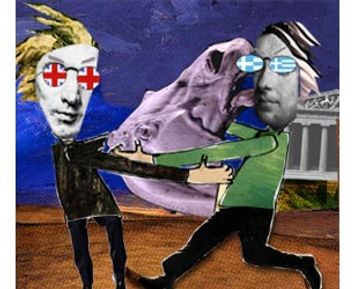
    If the British Museum returned Lord Elgin's treasures to Greece, how safe would any loot be?

    • more
      • All Share Services

    Will Britain lose its Marbles?

    The British Museum has lost its charm for many of the tourists who throng
    its galleries. The government of Greece has lately been kicking up such a
    stink over the museum’s handling of the marbles that Lord Elgin took from Athens’ Parthenon 200 years ago that its 6 million annual visitors
    are beginning to distrust the evidence of their eyes. How much of what they
    had always assumed was perfectly preserved treasure has been tarted up? How plausible is the museum’s long-trumpeted claim to be a caring steward? How many of its 6.5 million exhibits should be there at all?

    The story begins with a deal that Elgin struck in 1801. The Scottish Earl
    of Elgin, a passionate amateur collector of antiquities, had proposed himself for the
    post of British ambassador to Turkey’s Ottoman Empire because of his
    health. He had syphilis, a disease which was to leave him as distressingly
    noseless as many of the chipped statues he collected, and the doctors
    recommended a warm climate.

    Europe was in the grip of the Romantic revival, and he was obsessively keen
    to record and, if possible, obtain as many of the ancient Greek treasures
    now in the uncaring care of Turkey. His purpose, he wrote, was to improve the
    modern art of Great Britain by permitting its artists to see firsthand
    the greatest examples of sculpture ever made.

    Ruling a wide swath of the ancient world, the potentates of Constantinople
    were pleased to accept bribes, gifts, money and munitions from the warring
    countries of England and France. In return, they gave permission to record,
    then sketch, then dismantle, and finally, transport the monuments and
    sculptures by earlier inhabitants of the empire they now ruled. They
    regarded the newfound passion of the European aristocracy and artists for
    ancient Greek artifacts as faintly ludicrous. But if the English and the
    French wanted to compete in carting those long-neglected relics halfway
    round the world, let them.

    So it was that Elgin (called “Eggy” by his vivacious young bride) was able
    to wheedle and buy permission to collect any chunks of the Parthenon
    crowning Athens’ Acropolis that had crashed to the ground, and, he airily
    assumed, any more that might possibly fall down in the future.

    Built between 447 and 432 B.C., the Parthenon was a vast building masterminded
    by the Athenian statesman Pericles. Over the years, the Acropolis had
    many times been a battleground. In 1687 a Turkish powder magazine in the
    temple exploded after a direct hit by besieging Venetians, destroying a
    large part of it. The rubble was used as building material and rifled by
    souvenir hunters. All that was left intact of the three-dimensional art
    that had filled the building was part of the frieze and metopes (sculpted
    pictures) and some pediment sculptures.

    Elgin set about dismantling 274 feet of the original 524-foot frieze, 15 of
    the metopes and 17 figures from the pediments. They ultimately filled over
    100 large packing cases. That some of the best examples of Phidias’
    art broke into fragments while being lowered to the ground was unfortunate,
    but that did not stop Elgin from squirreling up the bits.

    The treasures’ subsequent adventures included sinking in shipwrecks,
    heavy-handed salvaging, being possessed by and rescued from Napoleon’s
    fleet, and then lying, dispersed and neglected — for many years awaiting
    transportation to London.

    Elgin himself suffered imprisonment in France, the infidelity and divorce
    of his countess, worsening health and near-bankruptcy caused by the
    enormous cost of dismantling, transporting and storing 120 tons of marbles,
    which were finally piled up in the back garden of a house at the corner of
    Piccadilly and Park Lane.

    Most distressing for Elgin was finding that his reputation had become that of a despoiler
    of an ancient civilization. His detractors were led by the mad, bad Lord
    Byron, whose hand probably carved on the Acropolis the lines, “Quod Non
    Fecerunt Gothi, Fecerunt Scoti” — “What the Goths spared, the Scots have
    destroyed.” In the bestselling narrative poem, “Childe Harold,” Byron wrote:

    The last, the worst, dull spoiler, who was he?

    Blush, Caledonia! such thy son could be!

    … Cold as the crags upon his native coast,

    His mind as barren and his heart as hard,

    Is he whose head conceiv’d, whose hand prepar’d

    Aught to displace Athena’s poor remains …

    Dull is the eye that will not weep to see

    Thy walls defac’d, thy mouldering shrines removed,

    By British hands …”

    But Napoleon met his Waterloo, and the loot that he had collected
    for the Louvre was sent back: The four horses from St. Mark’s to Venice,
    Rubens’ “Descent from the Cross” to Antwerp, the Medici Venus to Florence. And so, at last, victorious England was able to consider buying the
    Parthenon Marbles from Lord Elgin.

    Elgin claimed that he personally had spent 62,440 pounds on bribes, workmen,
    transportation and storage — roughly $10 million at today’s prices — but the best offer a
    government committee could come up with was 35,000 pounds. Reluctantly, he took it, and returned to Scotland to father eight children with a new countess,
    adding to the four already born to the first Lady Elgin.

    The British government handed the marbles over to the British Museum for
    safekeeping and preservation, but they soon fell victim to the misguided
    Romantic notion that all Greek art should be pristine white. In fact, the
    Parthenon Marbles were probably brightly painted when new and were
    certainly dark brown when removed by Elgin (although how much of that was
    grime and pollution is debatable). Nor did the Victorians like their
    sculptures incomplete: If noses, arms and genitalia had been chipped off,
    new ones were often stuck on.

    Over the next century, the golden patina of the Elgin Marbles was scrubbed
    whiter and whiter until the final desecration, by order of Sir Joseph
    (later Baron) Duveen. The picture dealer had made millions of dollars
    selling often dubious and touched-up old masters to the new rich of the
    United States, and was now busily buying honors for himself. In 1928 he
    offered to build a new gallery for the British Museum to house the Elgin Marbles — on condition that they were made more attractive to the public (and reflected
    more glory on himself).

    On his orders, paid masons attacked the marbles with metal tools and Carborundum, leaving them
    whiter than white but — according to the modern Greeks — irreparably
    harmed. Dr. R.D. Barnett, then the museum’s keeper of Western Asiatic antiquities,
    wrote a suppressed memo detailing his shock at seeing a laborer “day after
    day using hammer and chisel and wire brushes.”

    So damaged were the Elgin Marbles that they were placed behind barriers — still
    there today — so that the public could not get close enough to see the
    ravages. And serious scholars have always resented the way Duveen arranged
    them around the sides of his gallery, when they were meant to be seen
    as a continuous narrative as they were approached and circled.

    In Elgin’s day, the marbles were exhaustively studied by working artists,
    who had the benefit of naked models in poses echoing those of the statues.
    Today they are high on tourist lists and are, indeed, the very best value
    in London, as entry to the museum is free.

    To get to the Duveen Gallery, turn left at the entrance and go through the
    stunning Egyptian collection. You won’t see “Elgin” or
    “Marbles” written anywhere — the collection is neutrally described as “Sculptures of the Parthenon.”

    Once inside, there is no sense of anticlimax. These really are what
    critics have praised for 200 years as simply the most magnificent
    sculptures in the world. Despite their incompleteness, despite their
    unnatural color, despite the poor arrangement, the sculptures come alive at
    a glance. You swear you can see the rippling of muscles and the sway of
    materials. Grace and beauty are meaningful terms here. The centerpiece of a
    family sacrifice is restrained and moving. The long parade of horses and
    riders is magnificent.

    Oddly, for a noncommercial institution, the British Museum allows
    champagne and gourmet food parties in the gallery in return for high
    rental fees. The marbles have become a prized setting for corporate hospitality
    parties. These parties have got the Museum into more hot water, as guests are even
    permitted to be photographed in Ancient Greek fancy dress with the Elgin Marbles
    as a decorative background.

    Sir Kenneth Alexander, a former trustee of the National Museum of Scotland,
    describes this as a “crass misuse of one of the world’s greatest
    antiquities.” Andrew Dismore, a Greek-speaking member of Parliament, says: “I
    am frankly dismayed at the attitude of the museum. What are we going to
    have next? Themed orgies in the Roman galleries?”

    A museum publicist shrugs: “I am amazed that there should be any reaction
    to the museum holding dinners and receptions there. Everybody does it
    now.”

    At a symposium arranged by the museum to placate Greek activists in December, an official confessed for the first time that, “The way
    Duveen went about cleaning the sculptures was a scandal, and the way the
    museum tried and failed to cover it up was a scandal.”

    “The British Museum is not infallible; it is not the pope,” admitted Dr.
    Ian Jenkins, deputy keeper of Greek and Roman antiquities. “Its history has
    been a series of good intentions marred by the occasional cock-up: The
    cleaning was such a cock-up.”

    But almost identical techniques, he said, including wire brushing and
    scraping with metal chisels, had been used in Athens in the 1950s on the
    Hephaesteum Temple. “And while people moralize about bribes paid by Lord
    Elgin 200 years ago, and protest about cleaning that happened 60 years ago,
    South Metope 1 and North Metope 32, two of the finest sculptures that ever
    there were, still rot on the Parthenon as I speak.”

    Ah, but if you let us have them back, we would conserve all the marbles
    in a new 30-billion drachma ($109 million) Acropolis Museum, retorts the Greek
    government. And it would be very nice if they — along with the other bits
    in Paris, Copenhagen, Palermo, the Vatican, Heidelberg, Munich, W|rzburg,
    Strasbourg and Vienna — were returned by 2004, when Athens hosts the
    Olympic Games.

    President Clinton wants Britain to hand them back, according to Elisavet
    Papazoe, the Greek government minister who showed the U.S. president and
    daughter Chelsea around the Parthenon last year.

    Papazoe said Clinton promised to bring up the issue with Prime Minister Tony Blair. But Blair is known to be antagonistic to the demand, unlike former leaders of his Labor Party, Neil Kinnock and Michael Foot, who had both pledged a future Labor government to return the sculptures. The best Blair can come up with is a select committee to look into the matter — a familiar Parliamentary palliative.

    If he did return them and that set a precedent, how many of the world’s museum collections would then have to be also returned?

    Mark O’Neill, director of Glasgow Museums, who has returned the Ghost Dance Shirt originally taken from the corpse of a Sioux warrior at the Battle of Wounded Knee, believes it could be as much as 10 percent for museums with major ethnographic collections: “It’s all about values and ethics. A shirt that was ripped off the body of a dead Sioux had no business in our collection.”

    The looting of treasures has been going on at least since Biblical times. It is recorded in Chapter 52 of the Book of Jeremiah that “the Chaldaeans broke up the bronze pillars from the Temple of the Lord, the wheeled stands and the bronze sea that were in the Temple of Yahweh, and took all the bronze away to Babylon.”

    More recently, in World War II, Germany plundered 427 museums in the Soviet Union, taking the pick of them to Berlin. The National Gallery of Art in Washington coveted 202 paintings salvaged from the wreckage of Germany and “liberated” some of them. The decision was supported by Francis Henry Taylor, director of the Metropolitan Museum, who opined, “The American people have earned the right in this war to such compensation if they choose to take it.”

    American archive officers on the spot demurred. In the Wiesbaden Manifesto, they stated that “the transportation of these works to America establishes a precedent which is neither morally tenable nor trustworthy.” President Truman agreed, and all the art taken to the United States for “safeguarding” was subsequently returned.

    In another case of disputed museum holdings, the Trojan treasures now in the Pushkin Museum in Moscow once belonged to the Museum f|r Vor- und Fr|hgeschichte in Berlin. They were thought to have been destroyed until it was disclosed in 1991 that they had been taken to the Pushkin Museum in Moscow. Germany wants them back, but its claim is disputed by Turkey, which asserts that German archaeologist Heinrich Schliemann excavated and smuggled them illegally from Turkey in the 19th century. When they were put on show at the Pushkin in April 1996, the Turkish ambassador to Moscow refused to attend the opening.

    Similarly, various competing historical claims put the British Museum collection particularly at risk. Among them:

    • The head of Rameses the Great (Egyptian, 1270 B.C.) and the Rosetta Stone (Egyptian, 196 B.C.). Taken in 1799 by a sharp-eyed French lieutenant who prevented its use as a building stone for a Napoleonic fort in the desert, the Rosetta Stone went to George III by Treaty of Alexandria in 1801 and provided the key to hieroglyphics. Egypt has asked for both of them back.

    • Assyrian winged bull gateway, from Khorsabad, Iraq, c.710 B.C. In the 19th century, French and English teams competed to excavate thousands of tons of carved stone from Assyrian palace sites. Like Elgin, Henry Rawlinson bought these huge stone figures in 1850 under license from the Ottoman Empire — a transaction now disputed.

    • Easter Island statue. Cult image, made between 11th and 17th centuries. Collected by British survey ship HMS Topaze in 1868 and presented to Queen Victoria.

    • Statue of A’a. French Polynesia, 18th century. Acquired from Christian converts by missionaries in the 1820s, bought from the London Missionary Society in 1911.

    • Mexican Rock Crystal Skull. Either a unique survival of pre-Spanish conquest Mexican Aztec art or a 19th century fake. Bought from Tiffany’s in New York in 1897.

    • The Benin bronzes. Seized by a British punitive expedition in Nigeria in 1897 in revenge for an ambush in which nine British officers died. Auctioned in London by the Admiralty to cover the costs of the expedition. Twenty-five were returned in 1951, but when Member of Parliament Bernie Grant called for the repatriation of them all, the trustees commented, “we would regard it as a betrayal of trust to establish a precedent for the piecemeal dismemberment of the collections, which recognize no arbitrary boundaries of time or place.”

    Some Zuni Indian claims are equally contentious. In 1990, the U.S. Congress required museums to respond to requests from Native Americans for the return of “sacred objects and communally owned cultural patrimony.” As a result, private collectors and art dealers, as well as museums, have sent many wooden gods back to New Mexico.

    But the Pitt Rivers Museum in Oxford, England, refused to return a wooden god in its collection. They replied that it was not a real one — it was made by Frank Hamilton Cushing, an anthropologist. The Zunis retorted that the god was certainly authentic because it was made by Cushing with “Zuni knowledge.”

    The piece is still in Oxford, but for how long is anybody’s guess. In the new world of international political correctness, pressures are building for a global treasure hunt.

    One expert who appreciates the new mood is Ricardo Elia, professor of archaeology at Boston University and the editor of the Journal of Field Archaeology. “The only way to collect ethically, and without contributing to the looting problem,” he says, “is to refrain from acquiring anything unless it can be proved to have been legally removed and exported from the country of origin.”

    Curators and collectors, look to your mantelpieces, empty your glass cases and prepare for the great swap of the 21st century. Maybe you’ll get something from your country back in return.

    Continue Reading Close

    London fog

    How Tony Blair, loony leftists and a sex scandal around a charismatic author turned the London mayor's race into a political-party nightmare.

    • more
      • All Share Services

    This spring, London residents will choose a mayor who will have hitherto unheard-of authority. The vote will follow months of struggle for Prime Minister Tony Blair and other British political leaders. Ironically, the search for viable mayoral candidates has all but exhausted the very political parties that had hoped to gain power through the election.

    London has had a lord mayor since the Middle Ages, but in modern times, it has been little more than a courtesy title, an annual reward for merchant philanthropists. The lord mayor’s nominal jurisdiction is only over the square mile in the center called the City of London.

    So when Blair came up with the idea of executive mayors with real power for Britain’s larger cities, the only people who bridled were hard-line traditionalists. They objected that it was one more step down the slippery slope toward complete Americanization.

    The political parties in Britain particularly loved the idea. A LaGuardia-Walker-Giuliani for London provided the opportunity to promote one of their own to greater glory — and maybe even tackle some of London’s chronic problems, such as traffic gridlock, lamentable public transportation and a failing police force. Party leaders enthusiastically began preparations for the first election to be held May 4, 2000.

    But of the three effective parties, only the Liberal Democrats could agree on a candidate. They speedily nominated an unknown, Susan Kramer, who has stayed that way and will inevitably finish a poor third.

    The Labor and Conservative parties, however, soon found themselves with splitting headaches, for more or less the same reason. Each had a charismatic front-runner whom their party machines did not want.

    On your left, find Ken Livingstone, an unreconstructed far-out socialist. As leader of the last local London administration, Livingstone consistently embarrassed the Labor government with such radical gestures as inviting two leaders of the Irish Republic Army as official guests, long before they were welcome anywhere else in the United Kingdom.

    But ordinary members of the Labor Party loved “Red Ken” for introducing cheap subway tickets and other populist measures. Many of them — perhaps a majority — prepared to vote for him. Blair, faced with the prospect of his great ideas being subverted by “the founder of the loony left,” as he called Livingstone, set about stopping him.

    On your right, we have Jeffrey Archer, author of lurid bestselling novels, whose passion is politics. Archer has held a series of high-profile jobs under Conservative prime ministers Margaret Thatcher and John Major, culminating in a seat in the House of Lords. Never mind that Lord Archer’s career was littered with allegations of theft and fraud. In order to get into Oxford, he falsely claimed to have been at the University of California. In another gaffe, he walked out of a Toronto store with two unpaid-for suits, insisting he was looking for the shirt department. He also indulged in insider trading of television shares.

    When it became obvious that the rank and file of London conservatives were prepared to ignore the unpleasant aroma around Archer in favor of his undoubted charm and electric crowd-pleasing, Tory Party leader William Hague bit the bullet. Smiling bravely, he announced that he was convinced that Archer was “a man of probity and integrity,” adding, “I am going to back him to the full.”

    While Archer busied himself visiting malls, kissing babies and ordering for a millennium fancy dress ball a costume of Dick Whittington (the only lord mayor of whom anyone had ever heard), the Tories relished the spectacle of Labor desperately attempting to leaven democracy with the dictates of its leader: Blair set up a panel packed with his own people and gave it the power to veto candidates.

    This transparent attempt to bar Livingstone upset the public. Even Blair’s own choice for mayor, veteran Frank Dobson, announced he would withdraw unless Livingstone was allowed to run. This gesture, however, may have sprung less from a sense of fairness than from the fear that, if barred, Livingstone would run as an Independent against him. If he had been less genteel, Dobson could have quoted LBJ’s celebrated preference about tents and pissing.

    Meanwhile, the third Labor candidate, erstwhile theater and movie star Glenda Jackson, M.P., was completely upstaged.

    As Hague, not hitherto known as a funny fellow, neatly put it to Blair across the floor of the House of Commons, “Why not split the job in two, with Frank Dobson as your day mayor and Ken Livingstone as your nightmare?”

    Tory laughter stopped abruptly on Nov. 19 when the Murdoch tabloid, News of the World, presented Archer with a sworn statement by an old friend and the transcripts of three bugged telephone calls. They concerned a 13-year-old libel case in which the Daily Star was ordered to pay $750,000 in damages for suggesting that Archer had bedded a prostitute. Though he in fact admitted giving the woman $3,500 to go abroad, judge and jury believed him when he said he had been having dinner with friends on the night in question.

    The new evidence came from a freelance television producer, one Ted Francis. Francis confessed that he had written to an attorney at Archer’s request falsely saying that they had dined together that night. He later received $18,000 in used notes from the author as backing for a TV series that was never made. In the calls, Francis had pretended that they had been found out, and Archer obligingly confirmed the fateful facts.

    When Hague heard that the paper was telling all, he abruptly ordered Archer off the mayoral ticket. The Conservatives have gone back to the drawing board to find a new candidate.

    Meanwhile, over at the Labor Party, the vetting panel reluctantly OK’d Livingstone’s candidacy. London members are preparing to vote between Livingstone, Dobson and Jackson. It looks ever more likely that the wrong candidate — from Blair’s point of view — will win.

    But the nightmare is not over yet. With the forecast of a new far-left and a powerful “alternative power base” being created, it may just be starting.

    Continue Reading Close