Emily Holleman

Is it OK for a vegetarian to wear leather?

As a child, I was uncompromising about not eating meat. But there was one little hypocrisy I tried to ignore

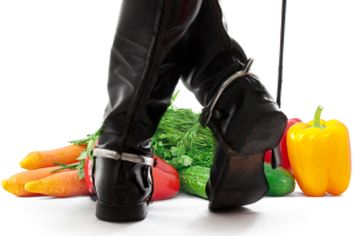
beautiful legs in black leather horseman boots with riding-crop over white(Credit: Lev Dolgachov)

When I was 8, I became a vegetarian. A zealous vegetarian. The kind of vegetarian who at 10 forced herself to vomit an accidental bite of hot dog and spent hours lecturing her friends’ parents on why they should stop eating meat.

As time wore on, my righteous crusade was met with practical challenges. When I’d moo at a friend taking a bite of a hamburger or rail against the cruelty of factory farms or drone on about how terrible cattle-rearing was for the environment, variations of the same question would arise: “Um, Emily, what do you think those shoes are made of?” And then I’d dodge the issue or just flat-out lie (“Um, they’re pleather,” my 12-year-old self would say. “I don’t buy leather”).

But in reality my shoes were leather and that wasn’t the worst of it. I indulged in an entire hobby where I regularly used and consumed leather goods: horseback riding. I owned beautiful black leather show boots that went up to my knee; I rode on a soft chestnut leather saddle; my hands held braided leather reins that connected to a leather bridle. And I had my justifications: The boots were used; the saddle and bridle were more comfortable for the horse (OK, that one was a stretch even back when). But the truth was I not only tolerated the various leather equipment, I liked it. I loved the way it looked, the way it felt, the way it smelled. To this day the distinct aroma of leather tack brings back fond adolescent memories of galloping and grooming horses. I had no problem immediately labeling meat as an animal corpse, but with cowhide I quickly mastered the art of disassociation.

By the time I was 16 or so, I at least wore my hypocrisy on my sleeve. A black ’70s leather jacket had been passed down to me by a friend’s mother. That one was easy to absolve — we’re talking cows that were killed decades ago — but impossible to hide from my friends. And that was OK, mostly, because I’d reached that delightful stage of adolescence where everything is glib and ironic, and any values you once clung to as a child are automatically dismissed as “kid stuff.” So in that context, wearing a leather jacket while refusing to eat meat was some sort of subversive contradiction. Somewhere in the back of my mind, though, it still irked me.

But with time, the black-and-white moralizing of my childhood evolved into something more nuanced. Part of growing up is realizing that the clear and galvanizing may not be as clear (or galvanizing) as you were once convinced it was. Marxists go corporate. Hippies cut their hair. Punk rockers put on ties. And sometimes vegetarians wear leather. I came to realize that not eating meat didn’t give me the right to be sanctimonious but it also didn’t mean I had to beat myself up for a few moral inconsistencies. Being a bit of a hypocrite didn’t make me a bad person. It just made me a person, period.

I still don’t eat meat of any variety, but the fervor is gone. When I found out a delicious goat cheese and mushroom tapa I’d just eaten had been cooked in beef stock, I managed to stomach it with few serious qualms. There are even times when I’d rather not know how exactly my food has been prepared at a restaurant. And I recognize other lapses in an ethical code that once seemed starkly black and white. Not only do I purchase leather products on occasion, I also eat milk and eggs (which if my moral compunctions were consistent, I would do only once assured the products had not been ravaged from the bodies of some brutally enslaved cows or chickens on a factory farm).

Now when people ask me why I’m a vegetarian, I don’t give them a lecture on morality. Truth be told, my vegetarianism no longer feels like an ethical choice so much as a long-standing habit or bizarre personality quirk. So, when pressed, I come up with something along the lines of, “I have the luxury of not having to eat meat so I don’t.” Of course, I also have the luxury of not having to buy leather, but I still do.

The Year in Sanity: Diane Ravitch

A former advocate of the No Child Left Behind Act concludes the policy was wrong

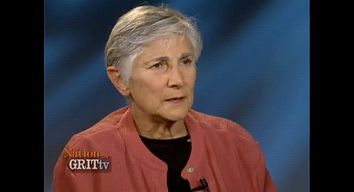
Diane Ravitch

It’s hard to admit you were wrong. It’s even harder to admit you were wrong in publicly backing the largest educational reform bill in a generation. So, it’s all the more impressive that Diane Ravitch not only acknowledged that she had made a mistake by advocating the No Child Left Behind Act, but also wrote an entire book, “The Death and Life of the Great American School System: How Testing and Choice Are Undermining Education,” about just how misguided that policy was.

Ravitch, who served as the assistant secretary of education under President George H.W. Bush and became an early and vocal supporter of his son’s 2001 plan, made a name for herself touting the conservative pillars of educational reform: choice and testing. As recently as 2005, she praised the No Child Left Behind Act, writing, “All this attention and focus is paying off for younger students, who are reading and solving mathematics problems better than their parents’ generation.”

But then Ravitch did something few of us ever bother to do — she researched the issue in depth and came to the realization that her views were incorrect. Earlier this year, Ravitch said on NPR, “I was known as a conservative advocate of many of these policies. But I’ve looked at the evidence and I’ve concluded they’re wrong. They’ve put us on the wrong track. I feel passionately about the improvement of public education, and I don’t think any of this is going to improve public education.”

When she spoke to Salon’s Mary Elizabeth Williams in March, Ravitch explained why those appealing ideas of “choice” (vouchers and charter schools) and “standards” (testing) are bad things: “You create a mentality that private education is good, and public education is bad. What’s the long-term result? Look at New Orleans, where over 60 percent of the kids are in charter schools. The schools are basically in the hands of private entrepreneurs, who may or may not have the best interests of kids at heart.”

By admitting her mistakes and fighting against the now-popular concepts she long championed, Ravitch displays a quality rarely seen in public life: a true dedication to education that trumps allegiance to any particular ideology.

Continue Reading Close

How I learned to love being a vegetarian

16 years later, I've come to terms with what it means to me -- not sacrifice, not gospel, just being

Over the last week, Salon has featured a series of essays about our complex relationship with eating meat. Some of these pieces were written by meat-eaters who question their choices, and some authored by confused, troubled and temporarily lapsed vegetarians. In the letters section, though, accusations flew: Salon, evidently, was “funded by the meat industry” and hell-bent on “trying to turn vegetarians into meat eaters.” The same question echoed throughout each thread: Why can’t Salon publish an article about a content vegetarian for once?

I am a content vegetarian. I’ve lived with being a vegetarian for so long that most people I meet don’t notice it. I don’t try to hide my dietary restrictions, but I’m not shouting from the rooftops either. After a more vocal youth, I no longer feel the need to spread the gospel of meatless eating. At some point, I found a combination of peace and internal conflict that keeps me happy to just be.

I stopped eating meat when I was 8. It was your typical “city girl goes to the country for sleepaway camp, realizes cute farm animals turn into meat products and declares vegetarianism” story. In the immediate aftermath, the decision wasn’t particularly difficult: The camp was run by hippies and had an entire meatless section in the cafeteria.

My parents were understandably horrified when I returned home. I was an infamously picky eater whose preferred diet consisted of pizza, cereal, bagels and hot dogs. Getting rid of meat would significantly cut into the foods I was willing to eat. They did strike a deal with me, though: Fine, be a vegetarian, but you need protein, so you have to eat fish.

Over the next few years, I went through the vehement phase of my vegetarianism. Factory farms were unspeakably cruel. Family farms betrayed the trust between animals and their human keepers. (At that age, I didn’t understand that small farming operations barely existed in America.) The concept of raising a creature for slaughter was disgusting. My high point was when I convinced one of my friend’s fathers to become a vegetarian. Another victory for the environment and animals everywhere!

As time went on, though, passion faded into habit. I quit eating fish on principle when I was 16 (and largely beyond the purview of my parents’ maxim), but the intensity was gone. I didn’t feel the need to bring anyone into the light.

There have been times when not eating meat felt downright silly: Of all the problems in the world, this was the one I decided to take a definitive stance on? Weren’t the rights of women under the Taliban more important than those of cattle in slaughterhouses? Shouldn’t I be more concerned with the wars America was waging overseas than with methane gas produced by cow flatulence? Didn’t the genocide in Darfur rank higher on the list than the killing of a few more chickens? And didn’t my mere ability to be a vegetarian just smack of upper-middle-class privilege?

For a while, I did feel conflicted about being a vegetarian, but never about the actual not eating meat aspect of it.  My ambivalence stemmed from ideas of what being a vegetarian meant and how it reflected on me as a person. I hated the vision of vegetarians as the progressive equivalent of “Campus Crusaders for Christ.” I didn’t eat meat, but I didn’t feel particularly angry about anyone else doing so. I hated when religious zealots tried to dictate my behavior, so I had no desire to go around telling people what they should and should not eat — or to be closely associated with those who did.

I went through college letting people find out about my eating habits out of necessity; I didn’t advertise them. My attitude went along the lines of, “I’m a vegetarian, please don’t judge me for it!”

Now, I’m a vegetarian the way I’m a New Yorker or a woman or the youngest child. It’s an innate part of who I am, but it doesn’t define me as a person, politically or otherwise. Meat consumption may not be the most pressing problem on the planet, but it is one of the few I can easily combat. Being a vegetarian is one of those little things I do that helps out the planet a bit. Am I the most assiduous recycler in the world? No, but I’ll be damned if I’ll eat a steak.

Continue Reading Close

Catching up with George McGovern

The former senator talks about Obama, Afghanistan, his relationship with the Clintons, and his favorite movie

Former Senator and Democratic presidential candidate George McGovern in 2006.

Salon’s Emily Holleman recently interviewed several notable political figures from the past. Today we present the first installment:

George McGovern made a name for himself in the 1960s as one of the earliest opponents of the Vietnam War, and in 1972 ran against Richard Nixon on an anti-war platform – a campaign that ended in a 49-state defeat.

After South Dakotans voted him out of the Senate in the 1980 Reagan landslide, McGovern launched a second presidential run in 1984 (and mulled a third in 1992), authored a number of books on a wide range of topics, and dedicated himself to the cause of ending world hunger. Now 87, the South Dakota native today resides in St. Augustine, Florida, where he’s begun working on a new book, “George McGovern: A memoir.”

 Salon spoke with McGovern over the phone about what he’s doing now, how Republicans in Washington have changed and Obama’s policy in Afghanistan.

What have you been up to for the last few years?

Well, I’m starting to write my memoirs and I’m finding it very enjoyable. I’ve decided after working on it for several months, that I’m not all bad.

Is there a typical day for you right now?

I get in the morning, read the New York Times. I have it delivered here to my house everyday. Then, I have to eat breakfast and sometimes I’ll take my big Newfoundland dog out for a walk on the beach here at St. Augustine. I’ve got a big Newfoundland dog that gives me a lot of pleasure, so we take a little walk on the beach. Then I’ll come back and maybe work on my writing for two or three hours. Ordinarily, I’ll have a late lunch and then I may do some reading in the afternoon and some more writing. I go out quite a bit in the evening, usually to some nice restaurant with a neighbor or a friend.

Republicans have been complaining that Washington used to be more about compromise. When you were in office, were Republicans more cooperative?

They were more cooperative in the years when I was in the Senate. I used to team up with Bob Dole on matters that related to agriculture or to food or nutrition, school lunches, food stamps. He and I worked hand in glove on those matters and that was not uncommon. Senator [Mike] Mansfield [D-Mont.] and Senator [George] Aiken of Vermont, a leading Republican, used to have breakfast together every morning.

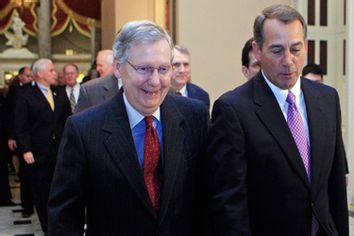
Those kinds of things aren’t happening much anymore. I think it’s too bad. The Republicans seem to have adopted a strategy to just oppose everything that the president proposes on the theory that it will make him look bad and easier to defeat next time around. But when they tried that with Harry Truman, he took his case to the country and pulled an upset and he got reelected. So, it’s kind of a dangerous strategy, even from the standpoint of the Republicans, and it’s certainly not good for the country.

Why do you think things have changed so much?

I think it’s partly the hunger of people to get re-elected or get elected at any cost. I don’t know what has fed that. I suppose politicians have always wanted to get re-elected, but there’s a kind of a feeling now that if you just discredit your opposition, it makes it easier for you to win. I don’t think that’s necessarily true. I think the country’s getting disgusted with Washington partly because of the decline of civility in government.

I think both parties are partly to blame for the crisis in government right now, but much more so the Republicans. At least the Democrats are trying to get things done for the good of the country. The Republicans don’t seem to have a program except to knock down everything that’s proposed on the Democratic side.

Looking back to the 2008 election, you initially supported Hillary Clinton but later switched your endorsement to Barack Obama. What’s your relationship with the Clintons like now?

It’s fine. I’ve been to dinner with the two Clintons. I think Hillary’s doing a great job as secretary of state and I think she would have been a good president if elected. But it just seemed to me, as the campaign went on, that Barack was more in tune with the country. He seemed to be the man of the hour. So, I switched and moved my endorsement to him. I didn’t do that until the mathematics showed that Hillary had no chance of winning the nomination. It was not an easy decision either because she’s very talented, intelligent, strong woman. But I quickly got in touch with her after the election and I attended one of their social functions and had a little chat and things are fine.

Does President Obama every call you up for advice?

No, but I think he’s got lots of advice. He hasn’t called for advice. He knows what I think. He knows I’m opposed to his policy in Afghanistan. We never should have sent more troops into that impossible situation. The problems are not essentially military problems and they won’t be resolved by military means, but I put that in the press. He knows where I stand. I’m sure he does, but he hasn’t called me and I haven’t really expected him to.

On a lighter note, what’s the best movie or TV show you’ve seen recently?

“Crazy Heart.” It was just great. I think it’s superb. I’m a movie buff.

What’s one thing you wish more people knew about you?

I wish people nationwide knew that never in my life have I advocated a course in public that I didn’t believe in in private. I think a lot of people know that about me. I think that’s how I won the presidential nomination many years ago, but it’s something that gives me great satisfaction and I just wish every American knew that. That doesn’t mean I’m always right, it just means I always say what I think is right. And I refuse to advocate a course that I think is wrong, even though it might be popular.

This interview has been edited and condensed.

Continue Reading Close

So, “That’s a Tea Party!”

Watch the new music video from the most recent hip-hop sensation to hit the "grass roots" movement

Here’s the latest from Polatik, the official rapper of the Tea Party Express — the GOP consultant-run PAC mascarading as a grassroots movement.

Not to be confused with Hi-Caliber, the conservative hip-hop artist who graced the stage during the 9/12 Tea Party rallies, Polatik, a young right-wing emcee from Waco, is a more recent phenomenon. The song “That’s a Tea Party” may sound familiar to those of you who are regular on the circuit — he’s been performing it live along the Tea Party Express bus tour from St. George, Utah to Little Rock, Arkansas to Hunstville, Alabama. But the snazzy new music video just came out this week.

From the Tea Party sensation who brought you “Freedom,” here’s Polatik’s oddly defensive explanation of what a Tea Party is (hint: It’s “not a race thing but you hear that often”):

Continue Reading Close

Ex-colleague: Obama will play it safe with court pick

Geoffrey Stone says the next Supreme Court nominee's confirmation will be easy -- but for the wrong reasons

The University of Chicago law professor who once invited Barack Obama to teach there believes the president will shy away from selecting a Supreme Court nominee who will provoke a major fight with the right.

Geoffrey Stone told Salon that whomever Obama selects to replace John Paul Stevens, he or she won’t be as far to the left as the court’s conservative wing is to the right. He predicted that Republicans will use the nomination as a “wedge issue” and attempt “to intimidate the White House away from appointing anyone who would be anything like a Roberts or an Alito except on the liberal side.” And he thinks they’ll succeed.

“I don’t see the Obama Administration at the moment wanting to take on quite that much of a fight, which is, I think, unfortunate… I think it matters a lot that there’s no justice on the Supreme Court today who’s a liberal and who represents that voice in the institution. But I’d be surprised if the administration decided to take that on. So… my guess is that they will appoint someone like Kagan, Wood, and Garland who will, like Sotomoyor, will generate some Republican opposition — which is kind of silly — but they’ll get confirmed, in the end, without much difficulty.”

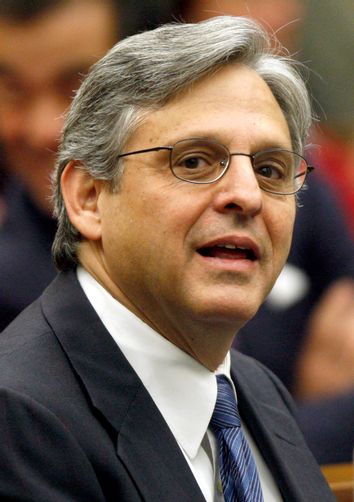
Stone doesn’t have an issue with any of the three big names — Elena Kagan, Diane Wood and Merrick Garland — that are being bandied about.  “They’re all moderate progressive lawyers with very distinguished careers that have records that there are impeccable and any of whom I think would be a fine choice.,” he told Salon.  Each,he noted, would hold the same ideological place that Justice Stevens and Justice David Souter had on the court — “moderate with a progressive tilt.”

Continue Reading Close

Page 1 of 6 in Emily Holleman

www.salon.com/writer/emily_holleman/index.html