Fred Branfman

The dangerous allure of Washington hero worship

Projecting our wish to be safe on the general is making us less safe

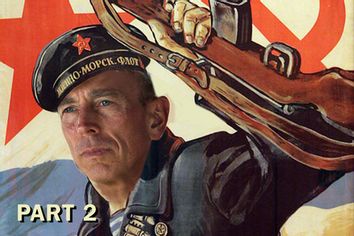
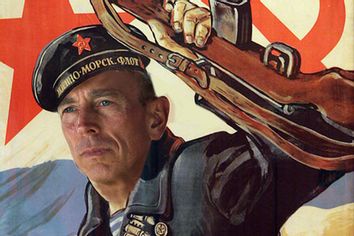
David Petraeus (Credit: AP/Salon)
This is Part 2 of a series on Gen. David Petraeus. Read Part 1: The Petraeus Projection: The CIA Director's Record Since the Surge.

“War is too important to be left to the generals,” said George Clemenceau, French prime minister during World War I — especially to former Gen. David Petraeus, the prime architect of American’s militarized foreign policy. Like Wall Street’s focus on boosting short-term profits at the expense of long-term economic health, Petraeus’ short-term tactical focus on expanding the drone war and ground assassinations throughout the Muslim world is jeopardizing America’s long-term strategic position. Yet Petraeus’ sorry record, as reviewed by Salon, has largely escaped scrutiny.

Congress seems uninterested. During his confirmation hearings to be CIA director last March, most senators genuflected to Petraeus. Only a few dared ask whether as CIA director he might shade his Afghanistan reporting to hide his failures. When he assured them he wouldn’t, they smiled gratefully. “Senators … merely urged the war’s commander to recite once more the reasons why we’re fighting there,” observed Slate. “None of them asked a single tough question.”

Reporters for the mass media seem equally credulous. The Washington Post’s normally perceptive Karen DeYoung, for example, recently referred to the “air strikes that have been proved so effective in Pakistan” — ignoring the many warning signs that Petraeus’ strategy has increased the strength of U.S. foes, undermined the Pakistani government, and increased the dangers of nuclear materials falling into anti-U.S. hands.

Washington Post columnist David Ignatius, a Petraeus confidant who regularly calls him a “warrior-statesman,” recently worried that Petraeus’ top-down style might not work at the CIA. At the confirmation hearings, Ignatius was relieved when “Petraeus reassured the committee that he will be open to the work force … and told the senators that he’d like to eat in the cafeteria some days.”

That sort of irrelevant personal detail has all but crowded out any sort of critical thinking about what Petraeus has actually done. Roger Cohen, columnist for the New York Times, reported that Petraeus is “a soldier-scholar with an impish smile.” Cohen went on to say, “of course I asked about the presidency. The résumé will look good after the C.I.A.” Newsweek’s John Barry told his readers that “the dutiful soldier [is a] hard-as-a-rock, 5-foot-9, 150-pound-distance-running, push-up-pumping Petraeus.” And Barbara Walters chose Petraeus as “The Most Fascinating Person of the Year” in a 2010 program watched by more than 10 million viewers.

Petraeus has gone to extraordinary lengths to cultivate major journalists, as did the diplomat Richard Holbrooke before his sad death in December 2010. Time columnist Joe Klein, for example — an old political friend of mine, decent guy and domestic liberal — has written of his close friendship with Richard Holbrooke, “an extraordinary mentor and an even better friend,” and how Holbrooke “championed” his son’s State Department career after giving him a job on his U.N. staff. Klein also recently wrote a column describing how Petraeus invited him to a weeklong briefing when the general was developing counterinsurgency strategy at Fort Leavenworth, and a recent visit to the general’s home.

Klein’s column was titled “David Petraeus’ Brilliant Career,” as he explained to readers that “the general’s most important legacy may lie in the role he has played in transforming the Army from a blunt instrument, designed to fight tank battles on the plains of Europe, into a ‘learning institution’ that trains its troops for the flexibility and creativity necessary to fight guerrilla wars in the information age.” Klein did not mention that the core of this “learning institution” is an “industrial-sized killing machine” that has given the general a license to unilaterally kill unarmed suspects anywhere on earth without according them any human or legal rights whatsoever.

Petraeus, like Henry Kissinger before him, excels at the hidden game of cultivating journalists with personal attention. Had he hired a public relations firm to write a press release titled “David Petraeus’ Brilliant Career,” it would have been ignored. Klein’s column was much more effective at sending the same message. Since most readers do not realize that many journalists function as a virtual arm of government, however, they are far more influenced by what is considered “objective” reporting. The Joe Klein who today ignores Petraeus’ failure and shameful focus on assassination is not the admirable journalist I knew in the 1970s and 1980s, before access to the powerful fundamentally changed who he is as a person.

The psychological dimension

But even an understanding of the collusion between senior officials and journalists does not fully explain the extraordinary position Petraeus occupies in the American psyche. To understand why journalists and the public avert their eyes from Petraeus’ record of failure since Iraq, one must turn to the realm of psychology, and particularly the phenomenon of projection, one of the most powerful forces driving human behavior.

While the technical definition of psychological projection is attributing one’s own repressed negative traits to others, a “positive projection,” whereby one projects desires for security, love, respect, understanding and other desirable traits onto others, is equally strong.

Anyone who has ever fallen in — and out — of love can understand the unconscious power of projection. As a therapist friend says, “You fall in love with a projection not a person, and the first task of building a relationship is to separate the two.” When we first “fall in love” we inevitably project onto our love-object (whom we may not really know) our desires to love and be loved, valued, cared for and admired. It is only after time that we discover the person behind the projection, a process that often leads to primal bitterness at the failure of one’s projections.

Unconscious projections are particularly strong in the case of powerful politicians and military leaders. Ernest Becker, author of the Pulitzer Prize-winning book “The Denial of Death,” has theorized that the origin of hierarchy itself lies in our unconscious desires to be protected from death — the reason why for most of human history leaders, for example, claiming “the divine right of kings,” have exercised both secular and sacred power.

People naturally project their desires to be protected onto military leaders like Petraeus, especially at this moment in our history. Americans were understandably terrified by the Sept. 11 attack and naturally looked to someone like Petraeus for protection. In addition, we live in a largely hero-less age. Presidents have launched war on false evidence or engaged in adultery. Popes have covered up child abuse. Baseball players have cheated with steroids. Bankers have grabbed huge bonuses after wrecking the economy. We have gone from Franklin Roosevelt to Bill Clinton, from Dwight Eisenhower to George W. Bush, from David Sarnoff to Rupert Murdoch, from Martin Luther King Jr. to Al Sharpton. It is thus understandable why so many Americans, lacking other heroes, have projected their deep desires to be safe and protected onto Petraeus.

Projection itself is not necessarily harmful, of course. Many have been inspired to noble and selfless needs by their projections about their leaders, nation or religion. People who project deep feelings onto actors, musicians or athletes are at worst engaged in harmless fantasy.

But projections can also be quite dangerous. Human history is replete with catastrophes caused by humans either projecting their own repressed negative traits onto hated “others.” In the cases of military leaders from Napoleon to Gen. Westmoreland, people have projected their positive desires onto once-heroic leaders whose subsequent lack of judgment brought ruin to their nations.

This tendency is especially dangerous in our time as war has become increasingly automated, as U.S. leaders employ machines to kill human beings thousands of miles away as if they were playing a video game. As Jane Mayer reported in the New Yorker: “Human beings running for cover (from U.S. drone strikes in Pakistan) are such a common sight that they have inspired a slang term: ‘squirters.’” Today, our special forces roam the globe, assassinating unarmed suspects (and inevitably killing innocent bystanders) so routinely that they refer to it as “mowing the lawn.”

If we once thought of warfare as “inhuman” activity in which enemies who genuinely hate each other commit all sorts of savage atrocities, we have today entered a new age of “ahumanity,” in which war is increasingly becoming a technical exercise, bereft of malice or rancor, an exercise in eliminating “squirters.” The ascent of Defense Secretary Robert McNamara in the 1960s — the corporate executive turned national security technocrat — was one sign of the transformation of war. So too is Petraeus.

Here is a man described by his admirers as “intelligent, forceful, courageous, decent … skill and perseverance, brilliance and selflessness … taut, controlled, driving … a man of force, moving, pushing, getting things done … the body tense and driven, the mind mathematical, analytical, bringing order and reason out of chaos … marvelous with charts and statistics … good intentions, ability, almost ferocious sense of public service … discipline, concentration, relentless work all day and night … years later his teachers would remember him with pleasure, he was always well behaved, never pushy, his work always ready in case you called on him.”

In fact, these words were written about McNamara, the key architect of America’s failure in Vietnam, by David Halberstam in his classic “The Best and the Brightest.” Halberstam explained that he had set out to understand “why men who were said to be the ablest to serve in government in this century had been the architects of what struck me as likely to be the worst tragedy since the Civil War.” His conclusion about McNamara? “If he was brilliant, he was not wise.”

Although Petraeus is commonly described as America’s greatest military hero since Dwight Eisenhower, it is McNamara whom he most closely resembles. McNamara too was the object of hero worship: “so impressive and loyal that it was hard to believe, in the halcyon days of 1963 when his reputation was at its height, that anything he took command of could go wrong,” Halberstam wrote.

Like Petraeus, “that McNamara had such a good reputation in Washington was not entirely incidental — he knew about the importance of public relations, and played that game with surprising skill.” His traits dated back to high school, where “Bob was always well behaved, never pushy, his work always ready in case you called on him.”

We hear the same story today. Mark Bowden has written in Vanity Fair that Petraeus in high school also “diligently tended to his lessons. His old friends remember a boy who kept meticulous notebooks, and who followed instructions.”

Steve Coll reported in the New Yorker that “the General leads the Iraq war in the style of a corporate chief executive … Petraeus is a professional briefer, and with a PowerPoint slide before him he will slip into a salesman’s rapid-fire patter.” Like McNamara, Petraeus frequently misstates figures to give a false impression of progress.

But Newsweek’s John Barry has described perhaps the most important trait that Petraeus shares with McNamara. As Barry wrote this summer, “Petraeus describes his father as ‘at heart a crusty old Dutch sea captain,’ who taught him never to accept anything less than a win. Any deviation from that standard brought an icy-blue stare and a growl: ‘Results, boy, results!’ Those words have driven Petraeus ever since.”

In this single-minded focus on quantifiable results, Petraeus, like McNamara before him, embodies a value-free technocratic mentality that is dangerously abstracted from political reality. At the same time, the public and the press look to him, consciously or subconsciously, for protection from that reality.

If we can detach ourselves from the impulse of hero worship, we can see the problem is not Petraeus’ competence but his judgment. His emphasis on such short-term results has been accompanied by growth in the overall size and motivation of America’s foes. Petraeus may be brilliant, but his role expanding U.S. assassination strategy throughout the Muslim world risks a long-term disaster that could well exceed McNamara’s failure in Vietnam.

As a key former organizer of U.S. clandestine military operations, Petraeus is uniquely positioned to expand the militarization of U.S. intelligence. As CIA director he is now in charge of a dramatically growing fleet of thousands of CIA drone aircraft, and vast networks of U.S. and local assassins on the ground. It is no exaggeration to say that uncritically granting such clandestine power to one man violates the democratic principles America stands for and endangers the very hopes we project onto him. The Petraeus projection poses a growing threat to America.

Fred Branfman served as research director for California Gov. Jerry Brown, 1979-83, and for Sen. Gary Hart’s Center for a New Democracy from 1985-87.  He exposed the U.S. Secret War in Laos as a volunteer and journalist from 1967-71, and has written 10 articles about U.S. warfare in the Muslim world for AlterNet and Truthdig. He can be reached at fredbranfman@aol.com.

The Petraeus projection: The CIA director's record since the surge

Hero worship hides the military failures of the CIA director's "global killing machine"

David Petraeus (Credit: AP/Salon)

Few issues are more important to America’s future than reducing the threat of future terrorist attacks, which not only risk killing Americans but also provoking a U.S. government response that could destroy our democracy. As Bob Woodward has warned: “Another 9-11 … could happen, and if it does, we will become a police state.” It could thus be a matter of the survival of American freedom that the media, instead of continuing to simply record official claims of militants killed by ground and drone assassinations, also report on the compelling evidence that these killings are weakening our overall national security.

Congress, the mass media and public are overlooking evidence that the current U.S. “counter-terror strategy” of global assassination by drones and special operations commandoes, isn’t working.  No small part of the problem is the lack of critical thinking about former Gen. David Petraeus, perhaps the most important architect of this strategy, and now the director of the CIA.

This week’s assassination of Anwar al-Awlaki, a U.S. citizen and Muslim cleric, alleged to have orchestrated attacks on Americans, will no doubt be touted as another victory for Petraeus.

But such victories have a way of proving elusive. The killing of various “al-Qaida leaders” is not heroically “turning the tide” in the war on terror, as unnamed U.S. officials are no doubt explaining to credulous columnists right now. In fact, most of the data from the drone war theater indicates that the Petraeus assassination strategy is increasing the numbers, motivation and geographic scope of America’s foes. It is making our allies are weaker. We face more potential suicide-bombers. And we have managed to increase — not decrease — the danger of nuclear materials falling into terrorist hands.

Yemen, in fact, is a useful case-study of how the Petraeus assassination strategy is creating more new anti-American enemies for every Awlaki it illegally kills. Last May,  the Washington Post reported that U.S. drone and air strikes in the country have depressed the local economy, increased support for anti-U.S. groups and demonstrated “the potential for U.S. policies to have harmful, if unintended, consequences in this politically brittle nation.” Despite the air strike campaign,” reported the New York Times, “the leadership of Al Qaeda in the Arabian Peninsula survives, and there is little sign the group is much weaker.”

The Petraeus record is not pretty.

It is a strategic and military failure. The issue is critical. For if Gen. Petraeus’ policies are backfiring and, God forbid, there is another domestic terror attack committed by Muslims, like the Times Square bomber, angered by U.S. murder in the Muslim world since 9/11, the present U.S. “counter-terror” strategy will be largely responsible.

If Pakistani nuclear materials fall into the hands of anti-U.S. terrorists, or there is a coup by pro-Islamist Pakistani military officers, Petraeus’ misguided policy toward Pakistan will bear much of the blame. If Yemen becomes a new center of anti-U.S. terrorism, it will be at least partly because U.S. drone strikes and ground assassinations have increased, not decreased, anti-U.S. sentiment.

Assassination as policy

Petraeus began focusing on widespread assassination of suspected terrorist  during his time  in Iraq.

“Beginning in about May 2006,” Bob Woodward reported in his book “The War Within,” “the U.S. military and the U.S. intelligence agencies launched a series of top secret operations that enabled them to locate, target and kill key individuals in extremist groups. A number of authoritative sources say these covert activities had a far-reaching effect on the violence and were very possibly the biggest factor in reducing it.”

When Petraeus took over Central Command in 2008, he expanded his assassination strategy throughout the region. As the New York Times reported on May 2010, Petraeus had “ordered a broad expansion of clandestine military activity … sending of American Special Operations troops to both friendly and hostile nations in the Middle East, Central Asia and the Horn of Africa.”

In August 2010, the Times reported that “in roughly a dozen countries” from the deserts of North Africa, to the mountains of Pakistan, to former Soviet republics crippled by ethnic and religious strife, the United States has significantly increased military and intelligence operations, pursuing the enemy using robotic drones and commando teams, paying contractors to spy and training local operatives to chase terrorists.”

The 7,000 Special Operations commandoes Petraeus brought into Afghanistan and the 3,000 conducting assassinations in Iraq, are today the nucleus of a global force of “60,000 operating in 75 countries. As CIA director, Petraeus will now integrate this force with the CIA drone program as part of the new “National Strategy on Counterrorism.” Unveiled on June 29, 2011, the policy commits the United States to “disrupt, dismantle and eventually defeat al-Qaida and its affiliates and adherents” in the following “areas of focus”: “The Homeland, South Asia, Arabian Peninsula, East Africa, Europe, Iraq, Maghreb and Sahel, Southeast Asia (and) Central Asia.”

Retired Col. John Nagl, a confidante of Petraeus, has aptly described the new U.S. assassination apparatus as an “industrial-sized counterterror killing machine.”

Is it working?

Petraeus claimed success for his “surge” strategy in Iraq on the grounds that violence decreased dramatically after U.S. troops were bolstered and redeployed. Whether the calm that followed was the result the U.S. troop buildup or the result of payment of massive bribes to Sunni militia leaders — or both — is still disputed. But there is no question the country became less violent after the surge.

If the reduction of violence, however, is the criterion on which Petraeus deserves to be judged, his record since the Iraq surge is poor. During his tenure at CentComm in 2008-2010, the violence in the region grew and spread — including a fourfold increase in Pakistan alone. In Afghanistan, the U.N. has reported violence rose 51 percent while he led NATO forces there for the past year.

Petraeus’ perceived success in Iraq has blinded the Congress, and much of the media to the reality of his accomplishments. But not Adm. Dennis Blair, the former director of National Intelligence.

Last month, the New York Times published Blair’s careful assessment of the U.S. drone war. While “drone attacks did help reduce the Qaeda leadership in Pakistan,” he wrote, “they also increased ‘hatred of America’.” He said the drone has also damaged “our ability to work with Pakistan [in] eliminating Taliban sanctuaries, encouraging Indian-Pakistani dialogue, and making Pakistan’s nuclear arsenal more secure.”

Blair is hardly alone. Petraeus’ colleagues in the intelligence community have also criticized  the strategy he did so much to shape. Former counterinsurgency adviser Col. David Kilcullen, has written that drone strikes “increase the number and radicalism of Pakistanis who support extremism,” and that “it would be in our best interests, and those of the Pakistani people, to declare a moratorium on drone strikes into Pakistan.” Robert Grenier, former CIA counterterrorism chief, said the drone war has motivated militants so “they now see themselves as part of a global jihad.”

“We have helped to bring about the situation that we most fear,” he said.

Foreign observers have grave doubts. Muhammed Daudzai, chief of staff for Afghan president Hamid Karzai, said “when we do those night raids the enemy will get stronger and stronger in numbers.” Sherard Cowper-Coles, Britain’s  former special representative to Afghanistan, said “for every dead Pashtun warrior, there will be 10 pledged to revenge.”

In Pakistan, violence is surging, with attacks up from an average of 470 in 2004-2008 to an annual average of 1,722 in 2009-2010.. Wajid Shamsul Hasan, Pakistan’s High Commissioner to London for the past 16 years, said U.S. drone and gunship attacks in Pakistan have “set the country on fire.”

And the effects on the battlefield are visible. McClatchy News, one of the last independent news gathering networks, reported recently, “In Valley Where SEALs Died, U.S. Raids Boost Taliban Support”:

“Residents of the Tangi Valley issued complaints about the night raids in their vicinity, charging that they have killed civilians, disrupted their lives and fueled popular support for the Taliban … ‘The Americans are committing barbaric acts in the area and this is the reason that the Taliban have influence,’ [a doctor] said.

Ambassador Cowper-Coles has said that “Petraeus should be ashamed of himself.”

“He has increased the violence, trebled the number of special forces raids … and there has been a lot more rather regrettable boasting from the military about the body count,” he said.

The return of the body count

Last spring, the Washington Post reported that U.S. and Afghan officials had given reporters statistics showing 2,448 insurgents have been killed over the past eight months.” “Team Petraeus Brings Body Counts Back,” wrote Spencer Ackerman of Wired.

After all, it’s the easiest statistic to understand: a dead fighter. The trouble is, the militants never seem to run out of ‘em. The insurgents have between 25,000 and 35,000 fighters, according to a guess by the Afghan Ministry of Defense. As Joshua Foust of the American Security Project notes, that’s been the estimated total for years, suggesting that the insurgency is a) very large and b) opaque to the U.S. and its allies. Clearly the insurgency can replenish its ranks, discrediting the suggestion that NATO can kill its way to victory.

Using a “body count” as a criterion of military success was discredited by the U.S. experience in Vietnam. In that war, North Vietnam, with a population of 16 million, was able to defeat U.S. forces that numbered more than 550,000 men,  largely because it could more than replace the than 1 million soldiers whom the U.S. claimed to have killed.

How could U.S. military leaders be so foolish as to repeat this failed experience in the 1.8 billion-strong Muslim world? Why does the American public acquiesce? In the 1960s, at least, there were senior legislators like Sen. William Fulbright and independent journalists like David Halberstam who challenged claims of success based on body counts in Vietnam. Why are so few challenging Petraeus and the military today?

One factor is the psychological phenomenon of projection: deep unconscious drives that project our primal desires to be protected onto military leaders such as Petraeus. To challenge such military leaders may be a rational exercise, but it also risks triggering fear and anger from those looking to a Petraeus for protection. We need to get beyond the Petraeus projection to the reality of our situation.

Nations have often suffered irreparable harm when they allowed military leaders’ early successes to blind them to subsequent failure. So it was with Napoleon, whose early successes in stabilizing revolutionary France and subduing Europe were followed by his reckless invasion of Russia and defeat at Waterloo. The French WWI heroes who designed the Maginot Line which fell so quickly in the early days of WWII, and the previously distinguished Gen. Henri Navarre who designed the French strategy that proved disastrous at Dien Bien Phu in 1954.

So it was with Gen. William Westmoreland, who stood out in the Korean War but then in the 1960s instituted a “body count” strategy that proved largely responsible for the U.S. defeat in Vietnam. Westmoreland, like Petraeus, once graced the covers of news magazines which  reported his claims that that he was winning the war. In November 1967, he said, “The enemy is running out of men.” The U.S. forces, Westmoreland insisted, had killed some 453,000 to date. The total enemy strength was 299,000, a figure he lowered to 248,000 a few months later.

 Sam Adams, an analyst assigned by the CIA to assess enemy strength, concluded that the more accurate figure was 600,000. In early 1968, the Tet offensive dealt a powerful blow to the U.S. and its local allies.  “There was just no way they could have pulled it off with only 248,000 men,” Adams said.

Then as now, the issue was not how many enemy are killed, but how many remain. When Petraeus rose in the ranks of the U.S. military, he seemed to know this fundamental truth. He seems to have forgotten it.

The nuclear danger

At the same time, the record shows that the Petraeus’ policy has increased the risk of Pakistani nuclear materials falling into anti-American hands. As U.S. Ambassador Anne Patterson wrote in a February 2009 cable released by Wikileaks, “our major concern has been … the chance someone working in [Pakistani government] facilities could gradually smuggle enough fissile material out to eventually make a weapon and the vulnerability of weapons in transit.”

In May 2009, Patterson explained that the Pakistanis were refusing to return nuclear fuel to the U.S. as previously agreed because “if the local media got word of the fuel removal, they certainly would portray it as the United States taking Pakistan’s nuclear weapons.”

This in a country where the drone war has made the U.S. government widely reviled. One recent poll found that 69 percent of Pakistan’s 120 million people — some of whom undoubtedly work in Pakistan’s nuclear weapons facilities — now regard the U.S. as their “enemy.”

So, as the U.S. influence on those controlling Pakistan’s nuclear arsenal grows weaker, the pro-war Long War Journal, reports that U.S. strikes have killed 56 known al-Qaida and Taliban leaders since 2004, the vast majority of them in recent years.. Thus in total, we have killed less than five dozen alleged jihadists at the cost of spreading regional violence and a growing a risk of nuclear proliferation.

Is that a wise or prudent choice? In much of the U.S. media and Congress, the Petraeus projection prevails. That question is rarely asked and our situation is barely understood. An “industrial-sized counterterror killing machine” may sound impressive to some. So did Gen. Westmoreland’s body counts in Vietnam. But if the Petraeus killing machine isn’t turned off, it will achieve the same result: strategic defeat for the United States.

Tomorrow: The Petraeus Projection, Part II: The danger of hero worship

Continue Reading Close

The Ted Koppel I knew

He was a fine journalist and a decent man  but to stay atop journalism's establishment, even he had to make a deal with the devil.

Ted Koppel’s retirement in the midst of Plamegate focuses attention on the most pressing issue facing American journalism: its abdication of its responsibility to expose government wrongdoing and lies. It is critical to raise our sights above the minutiae of Plamegate — what Miller, Cheney, Woodward, Libby, Sulzberger, Cooper, Rove, Russert, Novak and Downie said to each other and when — to the real issue involved: how democracy is weakened when journalists trade access to high officials in return for direct or indirect support of governmental misdeeds.

The media is particularly critical to democracy at a time like today, when one party and ideology controls the executive, legislative and judicial branches. Without a media critical of government, America democracy simply ceases to exist — as occurred when the Bush administration took this nation to war in Iraq by distorting the information it had about Saddam’s weapons of mass destruction.

Dana Priest deserves a Pulitzer for revealing the existence of CIA-run secret prisons. Judy Miller was a mouthpiece, turning out biased reporting that was fatally dependent on administration sources pursuing their own agenda. Nicholas Kristof was a real reporter when he quoted Joseph Wilson refuting administration lies on Niger. Robert Novak was no more a journalist than a Pravda correspondent when he transmitted slimy administration attacks on Wilson. Tim Russert is a hack when he throws softball questions at high government officials like Donald Rumsfeld, while mercilessly bullying the few antiwar figures he allows on his show such as Dennis Kucinich. Bob Woodward was a hero for his role in Watergate. He was a shameless opportunist when, in return for access to inside information, he portrayed President Bush as an in-charge leader in “Bush at War” — a portrait that was convincingly debunked by Treasury Secretary Paul O’Neill, who had actual knowledge of our clueless, disengaged and in-over-his-head president.

No one symbolizes the dilemma of establishment journalism more than Ted Koppel, one of America’s most honorable and well-respected journalists — and an unusually decent human being as well. Koppel has done an admirable job for 25 years now of providing in-depth, original and creative coverage of world events from his perch at “Nightline.” His job, however, has required maintaining the goodwill of the powerful — a fact most dramatically illustrated by his 30-plus-year friendship with Henry Kissinger, which continues to the present day. Ted Koppel knew firsthand about Kissinger’s war crimes in Indochina. But even this decent man felt he had to turn a blind eye to Kissinger’s actions to maintain his powerful position. It is a dramatic illustration of how the incestuous relationship between major journalists and government officials is one of the key structural and fundamental flaws in both our media and democracy.

I spent a week with Ted Koppel back in 1970. He was an ABC News correspondent for Southeast Asia, based in Hong Kong, and was visiting Laos for a series of stories. He hired me to be his interpreter, guide and resident expert. We spent most of a week together, doing stories on refugees from American bombing, CIA support of the Meo army, and the politics of the Laotian war.

During this period I worked and regularly interacted with correspondents from all the major media — CBS, NBC, Time, the Washington Post, the Jack Anderson column, the L.A. Times, AP, UPI, Newsweek. It was clear to me from the start that Ted, whom I hadn’t known from a hole in the wall before our week together, was a cut above the rest.

To begin with, he had charisma, good humor and an unusual mix of professionalism and human decency. The other journalists tended to spend their evenings getting drunk, trading office gossip, and/or chasing women at Laos’ over-the-top bars and whorehouses, the most notorious in Southeast Asia. Ted was always busy writing, doing radio feeds or boning up on some of the books and articles I gave him. He was serious and genuinely interested in learning about the war in Laos: the CIA, the tribal wars, the government corruption, the guerrillas, the bombing.

What struck me most, though, was what occurred when I took him out to the refugee camps to interview peasants who had escaped the mass U.S. bombing that was even then daily murdering innocent rice farmers who had been left behind. I had taken dozens of newspeople and peace activists out to the camps in this period, and Ted had a more genuinely human response to the horror than almost any of the others. He was shaken up, touched and moved. Most of the other journalists saw the refugees as just one more “story.” Ted saw them as the innocents they were: kind, decent human beings who had escaped mass murder no more justified than Hitler’s against the Jews. He cared about them, and he cared that the bombing was continuing, killing more innocents daily.

He put together some moving pieces on the bombing for ABC News, which I remember stood out both for the feeling he put into them, and the hard-hitting nature of his narrative.

His response was of a piece with his basic one-on-one decency. Most of the other reporters just saw me as a hired hand, and after a week of hearing me rail against U.S. war crimes were pleased to terminate our relationship. I remember well how, on our last night together, Ted took more than an hour to teach me how to do radio feeds for ABC News. He cared about me as an individual, was concerned at my lack of money, and went out of his way to ensure I could make some extra income. I remembered his decency when I read some years later that he had stopped working as a journalist for several years to take care of his kids so that his wife could pursue her graduate degree.

A few years after working with Ted in Laos, I returned to Washington to direct the Indochina Resource Center, which sought to end U.S. bombing and other military involvement in Indochina. By 1973 one of our main targets was Secretary of State Henry Kissinger, who had directed a huge expansion of secret U.S. bombing into Laos and Cambodia after 1969, in a cynical attempt to avoid blame for losing the war, without taking any care whatsoever to avoid the mass murder of civilian villagers. I knew by then that Kissinger was more responsible than any other individual except President Nixon for the murder of innocents in Indochina, and would have been executed had the Nuremberg precedent for protection of civilian populations been applied to U.S. leaders. (I discussed Kissingers role in a 2001 Salon article, “Wanted: If Henry Kissinger isn’t guilty of war crimes, no one is.”

Ted was at that time the State Department correspondent for ABC News, and I decided to call him for lunch to talk about the six-month trip to Indochina I had just returned from — particularly the new evidence I had amassed that the ongoing Kissinger-led bombing in Cambodia was continuing to murder civilians. Although I realized that Ted had to be circumspect regarding Kissinger’s culpability for the war crimes that he had observed on the ground in Laos, I assumed we’d be in as much agreement on the horror as we had been in Indochina, and hoped he might do some stories on my new findings. I still remember the friendliness and warmth of Ted’s jovial greeting when I called him up for lunch, and my awe as I entered the beautiful State Department restaurant, filled with important domestic and international dignitaries.

After 15 minutes or so of pleasantries and reminiscences, I brought up the flattering book on Kissinger that had just been published by the brothers Marvin and Bernard Kalb, who worked for NBC and CBS News respectively. Everyone I knew had been outraged by the book, which was a typical establishment journalist suck-up to Kissinger, praising him for his successes and avoiding even a mention of the mass murder that he was even then continuing to conduct. I was particularly annoyed because I had worked with Bernie Kalb as closely as I had with Ted, and Bernie also knew full well of Kissinger’s responsibility for what was occurring.

I said something like “Can you believe that garbage by the Kalb brothers?” To my utter amazement, Ted suddenly drew back and said, in what was to be known years later as his full-throated “Nightline” “Voice of God”: “I’ll have you know that Marvin Kalb is a close personal friend of mine. And so is Dr. Kissinger, for that matter!” Ted was clearly offended, and our luncheon went downhill from there. Shocked, I tried to remind him of Kissinger’s war crimes, which he had personally witnessed just a few years ago. He refused to discuss it. I tried to turn the conversation to my new findings on the ongoing bombing of civilians. He wasn’t interested. We parted, not to talk again for 30 years.

I realized at the time that it was not Ted who had changed, but his institutional role. In Indochina, on the ground, face-to-face with the refugees, he had been a truth-seeking foreign correspondent. Assigned to cover Kissinger back in Washington, depending upon him for information, susceptible to the secretarys flattery and manipulations, he had become a card-carrying member of the journalistic establishment.

On Oct. 22, 2004, the N.Y. Times published an article (must be Times Select member) titled “In Calls to Kissinger, Reporters Show That Even They Fell Under Super-K’s Spell,” about 3,200 transcripts of phone conversations between journalists and Kissinger. “Reporters assumed the admiration and affection they expressed for Mr. Kissinger over the telephone would remain private. What they did not know was that he was having a secretary listen in and take down every word,” the Times reported. Slate’s Jack Shafer also reported on the love-fest between Kissinger and elite journalists.

Ted Koppel was one of those expressing what the Times called his “chumminess” with Mr. Kissinger. “It has been an extraordinary three years for me, and I have enjoyed it immensely. You are an intriguing man, and if I had a teacher like you earlier I might not have been so cynical,” Koppel said. “You have been a good friend,” Kissinger replied. Koppel ended by saying, “We are lucky to have had you.”

To his credit, when interviewed for the story, Ted Koppel told it like it was. “Am I shocked by the notion that people were sucking up to a very powerful official they relied on for information? … Frankly, no.” David Binder, a reporter for 43 years with the N.Y. Times , was even more to the point: “The negative is that if you become too close to a guy you’re covering, you become his spokesman.”

It is not difficult to understand why reporters “suck up” to powerful officials, and become their “spokesmen.” It is not only that official information is critical to getting a story on the TV evening news, newspaper front page, or into a bestseller. It is that the government official in question might give the information to a rival covering the same beat, the single biggest threat to a newsperson’s career.

For let us remember: Reporters and officials are not merely flattering each other for the fun of it. They are trading information, the oil of Washington, a commodity that brings careers, money, Pulitzers, influence and fame to reporters, and political support to government officials to exercise the power they so enjoy. Information is literally power: the power to kill, the power to heal, the power to become rich. For all of the surface camaraderie and talk of “friendship,” it is a deadly serious business.

And being a “good friend” to Henry Kissinger meant turning a blind eye to misdeeds and atrocities. Throughout Ted’s tenure at the State Department, as we have noted, Mr. Kissinger was conducting mass murder of civilians in Laos and Cambodia on a daily basis, overthrowing Salvador Allende in Chile, and conducting a wide variety of other illegal and duplicitous acts. One of the key factors giving him a free hand to conduct these crimes of war was the flattering coverage given him by major journalists, and their refusal to regularly report on his violations of the Nuremberg precedent and other laws of war.

In saying this, it is important not to demonize Ted. He was, and is, a decent human being, as evidenced by his making the moving story of the dying Morrie Schwartz his last “Nightline” broadcast. And although he is not identified with a major scoop that exposed government wrongdoing and lies among his thousands of shows since 1980, he has done more than his share of demanding accountability from government officials and allowing critical voices  although rarely ones outside the accepted parameters of national discourse — on his broadcasts. In recent years, his reading the names of all the Americans killed in Iraq was a major contribution.

It is true that “Nightline” did no better than the rest of the media in exposing the administrations lies about weapons of mass destruction, and Ted indirectly skewed coverage by embedding himself with our troops rather than providing ongoing coverage on the civilians we killed during those same months. But he behaved more honorably than most of the American media.

And that is the point. The issue isn’t Ted himself but what he symbolizes: the institutional and structural corruption of an American media that has chosen to define “news” primarily as the information it receives from American officials, and which has traded a critical and independent stance for “access” to powerful figures. As long as the TV lead and Page One stories primarily come, directly or indirectly, from government officials, and as long as critics and dissenting information are ignored or relegated to page A18, Ted Koppel will be the best we get.

Perhaps the most revealing story I know about Ted comes from a young friend of mine who sought his advice about changing careers in Washington, D.C. Ted, in his typically gracious fashion, granted him a private talk. My friend explained that he had had a successful career running a nonprofit group, but was turned off by the lies and deceit he had found. What did Ted think he should do? he asked. Ted answered that he didn’t know whether my friends ethical concerns were sincere, or if he was just looking for a job in journalism. If the latter, he seemed like a bright young guy, and Ted would consider helping him out. But if he was sincere, Ted advised, he should get out of Washington immediately. Ted then went on a rant for 15 minutes excoriating the officials he dealt with on a daily basis as liars, deceivers and hypocrites. My friend could not have a decent life and remain human so long as he remained in D.C., Ted explained. He should leave.

I talked to Ted for the first time in 30 years last March to urge him to do a “Nightline” story on April 30, the 30th anniversary of the end of the Vietnam War. I suggested he consider returning to Laos, and reinterviewing some of the refugees from the U.S. bombing the Plain of Jars in northern Laos, as we had in 1970. I suggested it would add to the human interest to go with a young Laotian-American woman, Channapha Khamvongsa, who had recently started a “Legacies of War” project after being shocked to learn that even she, a Laotian, had not known of the bombing.

If “Nightline” would not remember the millions of innocents we had killed out there, I asked, who would? Wasn’t it important for the sake of history, and younger generations of Americans, to at least be reminded once that our country is capable of so great an evil? “I don’t do anniversary shows,” Ted responded coldly. And he did not respond to the mailing I later sent him on what such a show might look like.

But Ted did respond to one point: He confirmed the thrust of what he had told my young friend about his attitude toward Washington. “I don’t remember the specific incident, but it sounds about right,” he said after I asked whether he had really told my friend to flee D.C.’s corruption if he wanted to remain a decent human being.

As a devotee of “Nightline,” I am happy Ted didn’t take his own advice. But I’m sorry for him on a personal level that he did not. I dont understand how he can so publicly bask in the approval of government officials he has such private contempt for. And I can only hope that now, as the dean of American TV journalists, that he will do more to safeguard our democracy by becoming the kind of journalist that America really needs.

For let us be clear. The American media will not be changed from within by Plamegate. Woodward will still write his bestsellers. Hundreds of newspapers around the nation will continue to run Robert Novak’s columns. Tim Russert will continue to be at the feet of the powerful and at the throat of the weak. And it is only a matter of time before the next ambitious and unprincipled Judy Miller, who won a shared Pulitzer and a severance package reported to be as high as $3 million through decades of reliance on government distortions and favor-trading, rises to the top of the journalistic heap.

Real change will occur only if and when the public understands the media’s institutional and structural shortcomings, and demands a revolution. Only then will the decent Ted Koppels of the future not have to compromise their basic values to do their jobs.

Continue Reading Close

Raging hormones

In a schizoid world of compulsory chastity and online orgies, how are teenage boys supposed to make sense of sex?

Howard Schiffer is not the first parent to be alarmed that his teenager was learning about sex from either sniggering peers or a deeply confused culture that veers between sexual repression and Internet “creampie” raunch. But he is one of the few to actually write a book for teenagers about sexuality. “How to Be the Best Lover: A Guide for Teenage Boys” describes how sex can be an ecstatic (and healthy) part of life. A former ’60s commune member in Oregon, Schiffer is now — like so many other boomer parents — trying to find a middle way between the utopian, and sometimes wrenching, sexual experimentation of his youth and the increasingly puritanical ethos of the Bush era.

Schiffer, a wiry, intense, energetic 54-year-old, has three children and is the author of “First Love/Remembrances” and “How to Be a Family: The Operating Manual.” He has worked as a midwife and a natural foods vendor. The idea for “How to Be the Best Lover” came to him in 2000, when he noticed his then 13-year-old son displaying clear signs of sexual awareness and development. On a camping trip, his son refused to go swimming and Schiffer writes, “At some point I realized that any movement might have given away the big hard-on” bulging from his son’s lap. “Around this time,” adds Schiffer, “porn sites started mysteriously appearing on my computer,” he says.

The book grew out of a series of talks that Schiffer held with his son over a six-month period. He says that since many families approach the obligatory “sex talk” with as much enthusiasm as a visit to the dentist, he hopes parents will use his book as a catalyst for honest discussions, in which they open up as much as their children.

Salon discussed “How to Be the Best Lover” with Schiffer at his home in Santa Barbara, Calif.

There are a lot of books on the market that stress committed love, sex and intimacy. Why did you feel there was a need for a book directed at teenagers?

There’s a big gulf between what I call the “Sex 101″ books and the adult books. What’s out there for teenagers is elementary anatomy, physiology, birth control and a basic introduction to sex. But I wasn’t interested in teaching my son techniques or different positions. I thought it was important to show him how to make the transition from knowing and socializing with girls, to engaging in activities together, to holding hands, to kissing, to touching, to being sexual. I wanted him to see that you don’t start off with being sexual.

A technique book focuses the message on the sex. I wanted to focus on the relationship and the connection. What’s important is the heart, the emotional component, what’s involved when you start becoming intimate and taking chances with each other. It’s also important that a book for teenagers use language they can relate to. I’m not aware of any such books on the market.

What is your overall message to teenage boys about sex?

My message is that sex is an amazing thing, and a way that you can get incredibly close to another human being. And it exists on many levels — emotional, physical and spiritual. And that it comes with certain responsibilities. When I was 14 no one had told me anything. We had these small 4-by-4-inch cartoon porn books we passed around that were just out-and-out smut. Freddy Antonucci, the high school kid down the street, told me that to “do it” you put your thing inside a girl, move it in and out for a couple of minutes and that was it. That’s all I knew.

For me, all the talk was of sex as this isolated thing. I’m trying to show young boys that it lives in the context of a relationship. Like saying when a girl first starts wanting you to touch her body, that’s one level of commitment. When you start actually being sexual, that’s a much different level of commitment. Boys shouldn’t gossip about it, for example. If somebody’s intimate with you, don’t go telling all your friends, treating it like a cheap thing. Honor it like it is something special.

Your book is mostly about building relationships, and then fitting sex into it. Is your book meant to promote long-lasting relationships?

I think it encourages more real and special relationships. My first time was with a girl I didn’t even know, I mean I had never even seen her before and after it was over I never saw her again. Afterwards I was left with an empty feeling and an awful experience. The difference between that time and a couple of years later when I had a girlfriend all summer, and we went from talking to walking her home, to holding hands, to kissing, making out and then finally at the end of the summer we ended up being lovers was a world apart. For years I called that experience my first time. I still hold it in a special place in my heart.

I’m trying to tell young guys that it’s all about connection. I don’t think the first sexual experiences necessarily lead to marriage, because it takes a while to find the right person. But I think that it leads to wonderful relationships with people, because you were real with each other. Nobody is discussing how you talk about real issues that come up, how to develop intimacy, what relationship really means.

And the message is also that sexual intimacy is really fun. A lot of parents are so afraid of their teenagers getting STDs or AIDS, or getting somebody pregnant, that their message is “just don’t do it.” But this runs contrary to everything these kids are feeling. Their bodies are telling them this is the direction to go in. And it’s much more respectful to them to honor that, to say “Yes, that’s what your body is telling you, and this is what the territory looks like. These are the decisions that you’re going to face, and if you go in, do so with your eyes and heart open.”

Were women involved in writing the book?

I wrote the book, though of course my viewpoint is a product of the many women in my life who have been teachers and partners. I sent out the first draft to many women for reactions, and had a teenage “ambassador” for the second one. She contacted many teenagers, after getting their parents’ permission, to give me feedback on the language and content.

How much of kids’ impressions of sex come from the media these days?

The media has a tremendous impact on kids’ expectations about sexuality and love. A lot of kids think that it’s about being swept away into a perfect romantic entanglement. They’re disappointed when they have a relationship and find they’re not swept off their feet. The media tends to either foster such romantic fantasies, or trivialize sex by presenting it as a subject for jokes and innuendos, or portray it crudely, outside the context of a relationship.

The media has done a good job in one area: discussing sexually transmitted diseases and birth control directly. This can help foster a dialogue between parents and kids. But the media’s overall poor treatment of sexuality is a high price to pay. I’d like TV programs or movies to show real relationships — people getting to know one another, finding out likes and dislikes, and gradually progressing to intimacy or ending it because it doesn’t feel right. I wish the media would get to the heart side.

Isn’t advising abstinence the safest course in the age of AIDS?

I was shocked to read a study indicating that half of all new HIV cases in the United States are kids between the ages of 13 and 24. But the problem is that studies also show that half the young people who take abstinence vows break them within a year or so. And a lot of them are much more likely to have unprotected and unsafe sex because they don’t know what else to do, how else to follow through.

A 1995 study, the National Survey of Family Growth, found that 51 percent of kids were sexual by age 17 and that boys and girls are almost equally active. Given figures like this, I’m saying that it’s best to give the kids all the information about this territory they’re entering so they can make better decisions. I feel there’s a strong possibility my son is going to be sexual before he is married, and I’d like it to be in a relationship in which he cares about the person. I’d like it to be something he can actually feel good about and, even if it doesn’t work out, where he can still be friends with the girl afterwards.

But a lot of parents would say that your approach encourages kids to have sex.

Studies of over three dozen sex education programs have shown that the kids who have more information make better decisions, and that increased sex education does not lead to increased or earlier sexual activity. My book is going to give kids real information so they’ll make much better decisions. It seeks to help them realize that it’s a big decision, and they should not just let their hormones, Internet or television drive them. They should really think about themselves and go at a pace they’re really comfortable with.

Well, what about the opposite argument? The kind of meaningful, loving, satisfying sex you describe in your book would make anyone happy. Why not actively encourage teenagers to pursue this kind of sex?

Because it might not be appropriate for your child. Your child might be shy and really quiet, and 22 or 23 before they feel safe enough for it. It is a very exposing thing to be genuinely sexual with somebody. It takes a lot of self-confidence and self-esteem, and they might not be in that place. If you are encouraging them before they’re ready you might create a conflict between trying to meet your expectations and what they really feel good about. So I think you’re better off giving them the right information, and encouraging them to wait until they’re really ready for it.

Did you practice what people today would call “free love” when you lived in your commune as a young man?

Oh, definitely. There wasn’t AIDS; STDs were not as rampant, and the culture I was in was supporting a sexual revolution. We were willing to make love on a pretty casual level, if there was a bit of connection, or we were friends, or the timing was right.

Is it something you’d want for your kids today?

No, because I think there were a lot of problems with the sexual revolution. There was a lot of unconsciousness, for example, kids being born who weren’t taken care of properly. We weren’t sensitive to each other’s feelings; we didn’t really check in with our partners. We were operating out of a “should” — “if it feels good do it” — rather than an emotional and real point of view. Part of being sexual is opening up your heart, literally exchanging energy, and revealing yourself in a very intimate way to another person. I don’t think that it’s just a physical act. And my experience was that people do get jealous and hurt, there was a lot of heartache. “Free love” comes with a price. You end up spending a lot of your life trying to sort out who’s hurt, who’s feeling OK, and whose emotions are getting trampled over in any given day.

How do you advocate that teenagers approach sex? What are the stages to go through?

The first stage is that you meet them, ideally in some place you’re interested in: music, theater, choir, sports. You’re not just there to find a girl or a boy. And maybe for the first while, you’re involved with that person casually, in group situations. And that might evolve into doing some things together, social things, mutual interests, things that you both find exciting or fun. And that would progress to talking, getting to know the person, getting to understand what’s important to them, what they like, paying attention to who they are. And then that might progress to dancing together, social things, and then touching or actually holding hands first, to kissing, to making out.

What is important in the first sexual stages?

There’ll be somebody lying next to you that you care about. Notice how much touch can be transmitted in your fingertips, touch is so important. And kissing. In each of these steps being the best lover is about showing up as a whole person. Don’t rush through these steps, don’t try to shortchange them. And by the time you want to be sexual with somebody, you will have what you need. You’ll be able to talk, you’ll know who the person is, you’ll know if they like you, you’ll be able to ask what they like, to touch them, to kiss them, to not just rush through it.

What happens when you’re actually considering intercourse?

Still go slow, notice how your partner is responding and, very important, have a conversation about each other’s sexual history. Ask whether we should both get tested. If either partner is not a virgin, you have to realize it might not be them but someone they have been with that might affect you. Without an AIDS test you’re not going to know. And before having sex you should probably go down to a family planning clinic and meet with the people there about birth control options and sexual diseases.

Many parents I know assume their kids would never talk to them about sex.

I think parents would be surprised at how much their kids are willing to talk to them if they gave them the chance. One survey I read said that 83 percent of kids said their parents were their most trusted and preferred source of information. But the majority also said that they’re afraid to talk to their parents because their parents would be so uncomfortable with it.

Are you saying parents are more resistant than kids to talking about sex?

The reason this conversation has such a hard time happening is because parents are embarrassed about sexuality, because they were never talked to as kids, and it reminds them of how uncomfortable they were as teenagers. And most adults have their own current issues about sexuality. When my son was moving from eighth to ninth grade, I came up with a list of things I felt I had to cover: drugs, alcohol, smoking and sex. The surprising thing for me was that all the other ones were easy, and sex was so hard. I was shocked; I thought, I went through the ’60s, what’s my problem here? And I realized I’d never been talked to, that it brought me back to when I was a teenager, and that it made me very uncomfortable.

So how do you encourage parents to overcome their own squeamishness about the topic?

I tell them, You’re putting hundreds of hours a year into working for your kids’ material well-being. You give them music lessons, driving lessons, tennis lessons. But with relationships and sex we kind of pat them on the head and say, “Good luck, see you!” or we say something like “Find somebody’s who’s nice to you” or “Be careful and don’t get pregnant.” Well, teaching your child about relationships and sexuality is the greatest gift you can give them. Nothing is going to be more important to their happiness or, ultimately, your own satisfaction with how you raised them.

How should a parent approach the subject?

When I show my book to parents, I suggest they read it first. I say, “Think what it was like for you when you grew up, so that you can be honest when you discuss this with your kid. You can say, ‘I was really uncomfortable when I was your age, that’s one of the reasons I want to talk about it with you.’”

Second, it’s really important to watch your kid and know the right time to start the conversation, usually between the ages of 11 and 15. A young person’s transition to becoming sexual happens over a period of time, and there is a very fine line. You’re looking at somebody who is playing with Legos one day, checking out the girls the next, and then going back to Legos the day after. The right time is when they are starting to move into this territory. If you wait too long the wall can go up.

Third, and most importantly for the parent, you need to be committed. It will be uncomfortable for you and for your child. So you have to remember that you’re doing it for your connection with your child, and to protect them. It’s scary out there, and you want them to have the right information so they can make the right choices.

Find a good time to do it, maybe on a Sunday afternoon. Have the place for the talk set up, so it can be quiet and uninterrupted. Set it up maybe for an hour, enough to get into it but not be bored. Maybe be lying down side-by-side with your child, so you’re not lecturing at them. Have some kind of a guide that’s an entry-level book. Have it be interactive, so each of you takes turns reading. Stop and talk about it. When it starts talking about erections, you could say: “Do you know any other name for erection? I know ‘woodies,’ ‘stiffies’ and ‘boners.’” And bring in your own experience. You might say, “You know, when I was 13, I remember getting a hard-on when I was at the pool and not being able to move and being so embarrassed.”

If your son or daughter came to you while in college and said they wanted to celebrate spring break in Cancun, “Real Sex” land, would you pay for their plane ticket?

I would advise them not to do that because I think that’s a lot of the old model. It’s a lot of the old stereotype of girls showing their breasts, shaking their butts, and boys going “yeah, yeah, yeah.” Girls drinking beer out of a penis dispenser and everybody going “all right, all right.” I wish those models would change. I wish that girls could be really wild and really have a great time sexually, and still be respected, and not have to shake their butts and bare their breasts to get boys’ attention. No, I wouldn’t pay for my kid’s plane ticket.

I was interested that you talk a lot in your book about sex being spiritual. As you know, most spirituality advises people to transcend the body and sexuality, looking upon it as a “lower” function. How do you see it?

I think it’s a sacred act for a women to let you touch her, to let you in, to literally let you into her body. And for you to want to be there 100 percent for another person, and to do so without ego, without ulterior motives — not because you want to be seen going out with the quarterback or head cheerleader.

I think there’s a transcendency to sexuality that’s one of our most intimate ways of connecting with each other as human beings. Transcending the concerns of the everyday world, of what you’re going to be doing in school, or your dress or your clothes or how you appear. It’s very hard to pretend when you’re being sexual with somebody, because there are not that many places to hide. It doesn’t mean don’t have fun. It just means don’t trivialize, minimize or degrade it.

I must admit I found words like “hard-on” and “blow job” a bit jarring, particularly in the context of talking about sex as part of a meaningful relationship.

Everyone forgets when they were 14 or they get caught in needing to be the “proper” adult now. I know when I was a kid it was all dicks and cocks and tits — that’s how we talked. I can hear myself asking, “Did you get laid last night?” I know I wouldn’t have said, “Did you and Karen have intercourse last night?” And in all honesty as an adult now I did feel a bit uncomfortable with the language but also caught. I felt if I was too clinical and used words like “erection” or “fellatio” that I wouldn’t be connecting with the kids. I was afraid they’d read it and go yeah, yeah, this is a book for adults. But I also felt that too much crudeness wouldn’t be conveying the right message. So I tried to find a middle ground where I could refer to the penis as a “unit” rather than as a “dick” or “cock.” The kids I showed it to all said not to change the language, because it wouldn’t be real to sanitize it. When teenage boys talk about oral sex, they call it “blow jobs” — not “oral intercourse.”

Continue Reading Close

A soldier for peace

The John Kerry I knew during the Vietnam War was far from the radical portrayed by the Bush campaign. He was a courageous truth-teller -- and, caught in a new inferno, the country could use him again.

Since the Bush team routinely practices character assassination on a scale not seen since Richard Nixon, it seems safe to predict that it will soon resume its effort to smear John Kerry for his courageous opposition to the war in Vietnam. In fact, Republicans are striving mightily to exploit talks the young antiwar leader had with delegations from both sides of the war in Paris in 1970 as proof of his traitorous ways. The media, as eager as ever to accommodate the GOP attack dogs, is apparently putting the story in play.

This follows the tempest stirred up by conservative groups earlier this year over a photo of Kerry and Jane Fonda at a Vietnam antiwar rally. Though they did attend the same event, the photo — which showed them in close proximity — was doctored. And in truth, Kerry and “Hanoi Jane,” as the right wing demonized the antiwar movie star, had almost nothing to do with each other during the war.

President Bush is bound to attack Kerry’s 1970s peace activism not only because he wants to distract attention from his own deepening quagmire in Iraq but also because he is at such a distinct character disadvantage on Vietnam. As a young man, Kerry displayed raw physical courage and won a Silver Star, Bronze Star and three Purple Hearts by fighting in a war he doubted, because he thought it was his patriotic duty to do so. Bush, on the other hand, avoided fighting in a war he supported. Bush forces must therefore try to replace the image of John Kerry as war hero with images of John Kerry as scruffy war protester.

While conservatives at the time sought to portray Kerry’s opposition to the war as political opportunism, the opposite was true. Opposing the Nixon administration at the time was politically dangerous, as demonstrated both by Vice President Spiro Agnew’s crude personal attacks against Kerry and by the fact that the young activist lost his 1972 campaign for a congressional seat largely because of his antiwar positions. Kerry demonstrated the highest form of patriotism by risking his political future for the national good.

I am not aware of any other major political figure with electoral ambitions who had the moral courage to so publicly oppose the war. Returning veteran Al Gore, for example, chose not to align himself with Vietnam Veterans Against the War, Kerry’s organization. Kerry’s willingness to oppose the war showed real moral courage — another striking contrast with George Bush’s moral cowardice in avoiding public engagement on the major issue of his generation.

I am quite familiar with John Kerry’s antiwar activism, since our paths crisscrossed in the early 1970s. After serving for four years in Laos as an educational advisor, like Kerry I returned to the United States determined to end the killing in Southeast Asia, and I was responsible for exposing the secret U.S. war in Laos. Most of the peace movement’s focus during this period was on the ongoing slaughter of the people of Indochina, particularly since American casualties were dramatically dropping. In 1968, for example, 16,511 Americans died in Vietnam. In 1972 the number dropped to 551. Official Vietnamese casualties, by contrast, rose from 145,163 in 1971 to 236,536 in 1972. The numbers of Laotians and Cambodians killed by U.S. bombing in that year were not even estimated. Using official figures, my group — Project Air War — calculated that the Nixon administration killed, wounded or made homeless more than 6 million civilians between Jan. 20, 1969, and the fall of 1972. The United States dropped 6.7 million tons on Southeast Asia, or three times more than all U.S. bombing of Europe and the entire Pacific theater in World War II.

While Kerry was concerned with the growing civilian casualties in Southeast Asia during this period, as a leader of the Vietnam Veterans Against the War he was primarily focused on the plight of U.S. soldiers. His famous question to the Senate Foreign Relations Committee was, “How do you ask the last American to die for a mistake?” not, “How do you justify continuing to kill tens of thousands of Indochinese for a mistake?”

Kerry’s focus on American suffering during this period thus made him a conservative within the peace movement and a moderate in the overall political spectrum. His views were consonant with those of Republican senators like Clifford Case of New Jersey, Charles Mathias of Maryland, and Jacob Javits of New York.

And Kerry was a political moderate in a deeper, more significant way. Most of us opposing the war during this period did not believe that electoral politics offered much hope of ending the war, let alone transforming America. I remember well that I fully expected to be working for peace in Indochina for the rest of my life. We were intent on building grass-roots movements to pressure politicians, not to run for office ourselves.

Kerry, by contrast, believed in electoral politics and sought to reform the system from within. He not only ran for office himself in 1972 but also consistently opposed the kind of radical rhetoric or gestures that he felt put the peace movement out of step with the American people. However one feels about his views, then or now, one thing is clear: He was no extremist.

I found this out for myself in the spring of 1971. I called Kerry to talk about the war, and he suggested a lunch in New York at the Yale Club.

Most of our discussion focused on my experience in Laos, where I had interviewed more than 1,000 refugees from the Plain of Jars, an ancient society that had been wiped off the face of the earth by American bombing. Kerry listened, asked questions, and was clearly moved. He was later to mention the bombing in his public appearances, including a debate on “The Dick Cavett Show.”

But I remember being struck later by how different our approaches were. The Yale Club was an apt venue for our discussion. For it was clear that he had a far deeper faith in the ability of the political system to reform itself from within than did I or most people I knew in the peace movement. He was clearly moderate in temperament, and far closer to establishment views than I was.

The Bush campaign, of course, is eager to portray young Kerry in a far different light. They have seized on public statements he made in the early ’70s in which he acknowledged that he and other U.S. soldiers had committed war crimes in Vietnam. “I committed the same kinds of atrocities as thousands of others in that I shot in free-fire zones, fired .50-caliber machine bullets, used harass-and-interdiction fire, joined in search-and-destroy missions, and burned villages,” Kerry said on “Meet the Press” in April 1971. “All of these acts are contrary to the laws of the Geneva Convention, and all were ordered as written, established policies from the top down, and the men who ordered this are war criminals.”

The problem for his conservative critics — then and now  is that Kerry is right. As numerous congressional and press investigations, as well as thousands of first-person accounts (including photographic records) from Vietnam veterans, have proved, the U.S. military was guilty of this and more in Southeast Asia.

In fact, the Toledo Blade just won a Pulitzer Prize for unearthing yet more shocking evidence of U.S. war crimes in Vietnam. The Blade’s award-winning exposé focused on the bloody rampages of an elite Army paratrooper unit, the so-called Tiger Force, whose war crimes against Vietnamese civilians were covered up by government officials, including Donald Rumsfeld. As reported in Salon, the Blade “uncovered for the first time that a secret four-year Army investigation had concluded that 18 members of Tiger Force had committed war crimes, but no charges were ever brought. Instead, the investigation was simply filed away in 1975, during Donald Rumsfeld’s first run as secretary of defense.”

John Kerry was thus being neither radical nor extremist in reporting what he and other U.S. soldiers did. He was simply telling the truth. His willingness to speak painful truths about American policy — in the face of withering attacks from the right — displayed the kind of character we badly need in a president.

The Bush administration drove the country to war in Iraq by brazenly manipulating the truth, and we now find ourselves alone, encircled by flames. It will take a leader with the honesty and integrity that Kerry displayed during the Vietnam War to get us out of this inferno.

Continue Reading Close

Advice to Kerry: It’s all about heart

It's not enough to be smarter than George W. Bush -- you've got to show some real feeling.

Having locked up the Democratic presidential nomination, Sen. John Kerry is programmed to spend virtually every waking hour between now and Nov. 2 campaigning or raising money. In the interest of electoral success, though, it would be far more valuable for him to take a long break, get in touch with his feelings on the key issues of our day and learn how to convey those feelings to the public.

The contrasting TV sound bites by Kerry and George W. Bush on same-sex marriage illustrate, almost painfully, why the challenger will need to dramatically improve his connection with voters on emotional issues if he is to win in November. On Feb. 24, the day he came out for a constitutional amendment to ban same-sex marriage, Bush was portrayed with the usual TV set lighting in a beautiful room at the White House, speaking calmly and with decorum about his support for a constitutional amendment stipulating that marriage should only be between a man and a woman. Kerry, in an AP videotape shown on AOL, was caught between campaign appearances; he was grim and uncomfortable, and spoke irritably:

“I believe as a matter of belief that marriage is between a man and a woman, that’s my belief. If the amendment provides for partnership and civil union, which I believe is the appropriate way to extend rights, that would be a good amendment. I think that you need to have civil unions, that’s my position. Everybody’s known my position, there’s nothing new about my position, it’s been my position all the time that I’ve been in the Senate and throughout this race. I’m for civil unions. And I think that that is permissible within the state law, and ought to be, that’s what I’m in favor of.” [Emphasis added]

It is clear from this example, which is only one of dozens, that Kerry shares the same problem as Al Gore. He has not yet grasped what Bill Clinton and George W. Bush have intuitively understood: that the race for president is more about character, feelings and personality than positions or statistics. Swing voters in particular — the roughly 20 percent of the electorate who by definition do not vote on a basis of party, policy or ideology — are deeply influenced by their feeling toward the person they are entrusting with their lives.

Many Washington types, including the author, winced when we heard Jimmy Carter speak of wanting a government “as good as the American people,” or Ronald Reagan speak of America as the “City on a Hill,” or Bill Clinton say “I feel your pain,” or George W. Bush’s claim to be a “compassionate conservative.” But they were largely successful because they, and/or their handlers, knew that these personal kinds of value statements were the deeper messages needed to reach swing voters.

CNN commentator Bill Schneider is right when he says the contest for the presidency is “the most personal vote” citizens cast. Policy, the state of the economy and international affairs count, of course. But people are also looking for something in the president that they seek in no other politician: a personal connection. The presidency is the only political office in America that still retains vestiges of the age-old combination of secular and sacred power. Many people, particularly in the post-9/11 era, want a president who will make them feel safer. And they make this judgment, often unconsciously, on the basis of their heart not their head, what they feel more than what they think. Kerry’s successes in winning Massachusetts Senate elections and Democratic primaries are not directly relevant to what he will need to do to win the presidency.

An issue like same-sex marriage is a particular litmus test for a politician because it evokes so many deep feelings in people. Marriage directly impacts everything from our psyches and emotions to our finances, health and children. However one feels about it, few people are neutral on the subject. And the question of gays strikes even deeper chords in many people — perhaps men in particular. One can debate the exact nature of the unconscious anxieties that photos of two men kissing trigger in the psyches of many American males, but the bottom line is this: It’s not a pretty picture.

When addressing issues like this, Kerry needs to first go within and get in touch with his own feelings on the subject, and then seek to communicate directly, on a heart-to-heart basis, with potential voters who also feel deeply about the matter. In this case, for example, he might have made the following statement, but in such a tone and manner that made clear he had thought deeply about the issue and was approaching it with some emotional intelligence, with feeling:

“As a happily married man whose relationship with my wife is at the center of my life, I understand why people feel so deeply about marriage. On the one hand, I think we should all be moved by the joy and happiness of couples in San Francisco who are so movingly demonstrating their commitment to each other. On the other, I do believe that the institution of marriage has historically involved the union of a man and woman, usually for childbearing purposes, and I do not believe that the federal government should tamper with this tradition. After long thought, I have come to feel deeply that recognizing civil unions between gays is the best way to both honor their commitment to each other and to preserve the institution of marriage as we know it.

“As president, I will do what I can to encourage all people in our society to commit to loving relationships, whether in marriage, as I prefer, or in other arrangements which promote caring, love and long-term devotion.”

John Kerry’s tendency to speak in terms of positions and talking points is only part of his problem in communicating to voters from the heart. He also can be thin-skinned, and has a disastrous tendency to sound like a caricature of a politician by speaking a series of sentences that each end on a rising note. It’s unclear why so many politicians do this. But one thing is sure: It’s completely unnatural. No one talks this way in their day-to-day life. A politician speaking from his heart and hoping to convey a sense of his own struggle with a difficult issue would avoid this artificial cadence like the plague.

The above is written more out of sorrow than anger. I’ve been acquainted with John Kerry for over 30 years, and admire his courage in breaking with the government’s Vietnam policy. I also applaud his genuine understanding of, and commitment to, the causes of saving the biosphere and creating a new international order.

I believe a continuation of Bush’s policies will turn America into a second-rate power, and wreak worldwide havoc, for generations to come. His deficits will slowly erode our economic strength and burden our children and grandchildren with our debt. His neglect of global warming, biodiversity loss, aquifer depletion and ocean pollution is destroying the biosphere, and will thus threaten the very structure of human civilization. His military policies will increase the threat of terrorism and weaken our national defense. His unilateralist foreign policy has already proved a failure, as the U.S. military finds itself barely able to occupy Iraq; the “Bush Doctrine” was dead a few months after it was declared. His support for the rich at the expense of the poor will further shred the social contract. John Kerry on his worst day would be an incomparably better president than George W. Bush on his best.

But I also supported Al Gore and learned, as did we all, that being smarter than George Bush is not enough. Nor is hiring Bob Shrum and suddenly becoming a born-again populist.

Kerry learned one important lesson from the 1988 Dukakis debacle, and has promised to vigorously respond to all attacks, personal and political, against him.

But he needs also to learn the other lesson that the Dukakis experience taught us: You don’t answer questions of deep personal feeling about issues like rape, abortion or homosexuality with positions. And voters want a lot more than a candidate capable of responding angrily to attacks. They want an empathetic connection, a sense that a potential president is an authentic human being, someone with a good mind and a good heart.

If Kerry is to win, he has to first connect with his own feelings about the issues, and then communicate his feelings to voters. What is needed is not a mere cosmetic change. Better speechwriters or snappier one-liners will not really help.

He needs to reach within, return somehow to the time before he became a senator, to a time when he acted from his heart more than his head. He needs not only to understand his principles and policy positions, but to feel them.

Talk of feelings is not popular among the Washington elite. The George Willses and Jeff Greenfields literally turn up their noses when the subject is raised. But there are no more important issues than feelings and character when it comes to presidential politics. Just ask Al Gore, who unfortunately discovered his voice only in the aftermath of the 2000 election. We can only hope this does not happen with John Kerry.

Continue Reading Close

Page 1 of 7 in Fred Branfman