Gary Presley

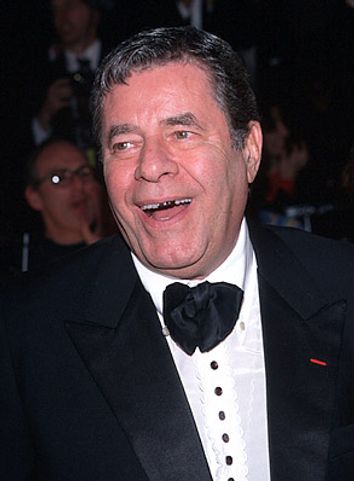
Pity the nutty professor

As a gimp, I watched the Muscular Dystrophy Telethon with disdain -- until Jerry's real kid said she felt "sad" for her daddy.

  • more
    • All Share Services

Pity the nutty professor

“Go back to your TV, you fucking loser!” the guy yelled. Then came a click and the distinctive buzz of a disconnected telephone.

And I did. Geez, I thought, I wonder if a weirdo can be psychic. My telephone friend had called Labor Day afternoon from three states away to share his thoughts about an opinion piece I’d written for the Cleveland Plain Dealer newspaper. My essay encouraged people to rethink their support of the techniques employed by Jerry Lewis during his annual Muscular Dystrophy Telethon, but Mr. Eloquent thought $50 million plus was worth more than respect for people with disabilities.

And that was the show I was watching when he called — the Jerry Lewis MDA Telethon 2002, the annual extravaganza we gimps like to call “the Pitython.”

It was a first for me. I’ve never been able to stand more than a few minutes of Lewis and his MDA crew. The maudlin pleas for money, the pathetic references — “My kids” — give me the creeps. This was the 37th tear-jerking pitython, a record-breaking run for the nutty professor — and that’s in spite of the hard work of a good number of crip activists attempting to push the MDA away from the pity party program and toward a more enlightened attitude about people with disabilities.

I’ve used a wheelchair for 40 years, but I’m late to the anti-telethon party. I got my first invitation a decade ago when Jerry Lewis called me a “half-person.” That kind of pissed me off, especially since Lewis doesn’t know me personally, and I was into sex and rock ‘n’ roll as much as the next guy. But I continued to ignore him.

Then things got worse. Last year, Lewis made some very unfunny comments during an appearance on “CBS News Sunday Morning.”

“I’m telling people about a child in trouble,” Lewis said, responding to a question about criticism of his telethon techniques. “If it’s pity, we’ll get some money. I’m just giving you the facts. Pity? You don’t want to be pitied because you’re a cripple in a wheelchair, stay in your house.”

That pushed my hot button. I hate to be pitied simply because I use a wheelchair. Pity is a tolerable emotion if you can keep it to yourself, but once you put it into words, you’re going to castrate someone.

I wasn’t the only person, crip or not, who got angry last year. In fact, the outcry was enough that the MDA felt compelled to apologize. But it was no surprise to the veterans of the anti-Lewis pitython movement that the apology centered on the use of the world “cripple” rather than the idea that people with disabilities are not objects of pity put on this world to generate cash.

I like to think that I am reasonable person, a gimp without a grudge, and so I decided to watch as much of this year’s telethon as I could stomach. Sunday evening I picked up the remote and packed away as many of my conflicting emotions as possible.

I harbored no illusions. I knew I’d be spending hours with a guy who’ll never change. To Jerry — and the honchos at the MDA, for that matter — it’s all about the money. Dollars equal cure. And if it takes dragging some kid on stage so that Jerry can tell him he’s dying and only money can save him, that’s what will be done. I suppose, if you look at it that way, money can be more important than people.

And that’s why the pitython has always been the antithesis of entertainment to me. I’m the kind of guy who gets embarrassed when other people are put into awkward situations. We all project our own feelings and reactions onto others. And I know if I was asked to parade my body before a national television audience and shill for cash, I’d be damned uncomfortable.

The telethon began in my neck of the woods at 8 in the evening, with Lewis opening the broadcast talking about the 9/11 terrorist attack, the “Mideast cowards” who perpetrated them, and the heroic response of firefighters. Firefighters and their union are, it turns out, one of the major supporters of the MDA.

Lewis, 76, has been in poor health recently, and he’s gained significant weight as a side effect of the steroid drug prednisone he takes to combat pulmonary fibrosis. Jerry, the zany, pratfalling bellboy, lurked unobserved in a large man who mostly sat as he talked about “my kids,” genetic therapy and the cure around the corner.

I fell asleep after Jerry opened the telethon with Norm Crosby, who I last remember seeing on the “Ed Sullivan Show.” I think Nancy Sinatra and Andy Williams were next on stage, but I drifted off. When I awoke before dawn on Labor Day, Lewis was gone. No more all Jerry, all the time.

The telethon droned on, of course. Jann Carl, Cynthia Garrett and Wayne Brady rotated as hosts and kept up a barrage of pleas that alternated with interviews with people with neuromuscular diseases. A parade of Las Vegas lounge acts and celebrities of yore punctuated the pityfest. The television and the telethon became a portal into the past: Andy Williams was joined by Glenn Campbell, Roy Clark, the Lennon Sisters and the Oak Ridge Boys. And then there was Charo, accent unimproved, and Steve Lawrence, Jack Jones and Julius LaRosa, tux-clad and gamely soldiering on.

A time warp, true enough, but the pitython is not locked into the past. Corporate America’s accountants have found a category for charity somewhere above the bottom line, and the MDA repays the favor with a series of infomercials: Albertson’s, CITGO, Anheuser-Busch and American Express, among others, got big chunks of air time for their millions.

And, if you watch the pitython long enough, you see they’ve learned to wring referential congratulations out of every last dollar. No honcho comes out and says, “We hate muscular dystrophy. Here’s a million bucks to prove it,” and then Gulfstreams off to the next merger conference.

No, the major players dole it out in chunks. During the hours I watched, the guys from ACOSTA and CITGO, and the woman representing Albertson’s, were on so many times they began to blur together in my mind. The only guy on air more was International Association of Fire Fighters general president Harold Schaitberger, who trucked in enough checks to total $17 million.

But it’s not the CEOs and the entertainers that upset most gimps. You can’t get out of this world sane if you don’t buy into the idea that most people want to do good, and so a wise person learns to judge slowly or not at all.

No, it’s the incessant talk about dying rather than living. It’s the “medical model,” rather than promoting the idea that people with disabilities can live productive and happy lives. It’s the identification of people as diseases rather than as fellow human beings with common hopes and ambitions and unique abilities.

But this year, Jerry had us beat. He had 12-year-old Mattie Stepanek, billed as “the world’s bestselling living poet.” No more “Poster Child” for the MDA. Mattie is the organization’s national goodwill ambassador.

And, dear God, what a horse to ride. Stepanek has mitochondrial myopathy, a disease that has put him in a wheelchair and on a respirator because it messes up the ability to breathe and process oxygen. It also weakens muscles. That’s his bona fides.

But the blue-eyed, blond-haired little guy with the big smile has been around, more than Jonathan Franzen even, with appearances on “Oprah” and on the New York Times bestseller list with his book of poetry, “Journey Through Heartsongs.” And Stepanek is entirely at home on camera — forthright, eloquent and able to hold his own in an interview, and capable even of discussing his own mortality without being maudlin.

It was nearly enough to make me want to burn my picket sign.

But then came a hauntingly compelling moment. For some reason, the producers — surely not Jerry himself — chose to rebroadcast a portion of CNN’s Larry King interview with Lewis that aired last week as publicity for the pitython geared up. No crip activist would have expected King to ask the hard questions, but sometimes things just fall in your lap.

Lewis’ young daughter had called the King show, and Jerry seemed genuinely surprised she’d been able to navigate the telephone system to reach him. It’s easy to tell that Lewis delights in his daughter, and all went well until King asked the girl how she felt about her father’s significant weight gain. She was confused by the question for a moment, but King pressed on, and she finally ended up saying, “sad.”

Lewis flinched, and he ducked his head, his mouth turning sharply down. God, I thought, maybe the man does understand pity hurts. Maybe he has crossed over.

But I will never know. The nutty professor is a subject worthy of analysis either by Freud or H.L. Mencken, but much too easy a target for my anger.

I am too wrapped up in my own angry response when I am disparaged by pity. And I continue to move about in a society where people with disabilities are left to fight their own battles as progressives organize for the rights of labor, people of color, feminists, gay/lesbian people, prisoners on death row and a hundred other causes.

I didn’t learn much from the telethon, and I didn’t give a dime. I did come to believe Lewis is so much the character he occupies that we will never comprehend if his emotional reactions are real. I know he hates neuromuscular diseases, but I don’t know if he hates me because I’m a “half-person — a cripple in a wheelchair.”

Crippled logic

Who was she to kill herself? If anyone deserved that bullet, I did -- a bitter fool in a wheelchair.

  • more
    • All Share Services

Crippled logic

I had never spoken with anyone ready to eat a gun until the day I told a woman that the price of car insurance quadrupled after a drunken driving conviction.

I peddled insurance and I didn’t much like my job. I was a cynic, trapped by lies, drenched in disrespect, and angry with myself for choosing an easy job that paid good money rather than seeking work that might challenge me.

I had even thought about riding a bullet out of this world, but it wasn’t because of insurance. Insurance wasn’t important enough.

It’s easy to sell insurance because most people magnify their fears. But most people also hate the insurance industry because they believe no one should profit from trouble. I understood the hate and refused to let it touch me. I had convinced myself the service I sold was useful enough in the grand scheme of life.

Don’t think the lies I’m talking about were my own. I never lied about insurance. I didn’t care enough. The lies I hated came through the door and over the telephone and piled up on my desk. I believed nearly everyone would lie to get the best of an insurance company.

Lie to get a better rate: “No, I never drive that car to work. And my son doesn’t live with me anymore.”

Lie to inflate a claim: “Yeah, when they broke into my house they took a real valuable camera collection.”

I once met with a customer who killed herself after telling me the truth.

The woman bustled into the office late one Friday afternoon. She said she needed car insurance and needed it quick. I ran down the usual questions. When I came to the one about license suspensions, she replied, “Yeah, that’s a problem. I got my license pulled for drunk driving. The judge says I’ve got to buy insurance before I can get it back.”

That kind of story wasn’t new, and I had learned not to be judgmental. In fact, I appreciated her forthrightness. It made my job easier. I laid out the procedure. No recriminations. Just hard facts. The money, the time frame, the hassle with the state.

People come to an insurance office thinking it’s going to take maybe a paycheck or two to get out of that sort of jam. They’re always wrong. A highway patrol officer hauls them off to jail. A clerk pulls their driver’s license and takes the bail money. But I was the guy who told them the nasty combination of alcohol and car keys meant they were going to be spending two or three years and two or three thousand dollars climbing out of the trouble they bought by the bottle.

“Oh God,” she said. “I don’t have that much. And I gotta have my license by Monday so I can get to work.”

I have forgotten the woman’s name. She was 30, maybe, but her face is hidden now in the shadows of my memory. She was slender, with dark hair down to her shoulders, dressed in jeans and a denim jacket. Ask me now and I’d say she was hard used, too diffident and beaten down for a woman so young.

I wish I had looked more closely into her eyes. Despair is difficult to hide. Maybe one word from me would have deflected the demon bearing down on her. I wonder now if she blinked, or sighed, or if her shoulders slumped. I can’t remember.

God forgive me, I didn’t care much about her or her problem. I was willing to do my job, politely and thoroughly, but I wasn’t going to get involved. I operated with my own brand of misanthropic karma. You drink, you drive, you get caught, you pay.

I like to think I would have been kinder and less businesslike had I known — that I would have listened better. Maybe I would have offered her a cup of coffee and let her talk out her frustration.

I learned about her suicide when the police called the next day to trace her steps. What I remember most now about that phone call is the electric buzz of apprehension in my gut. I felt guilty, for no other reason than I had apparently been one of the last people to speak with her. The questions from the police were few, and my answers, I suppose, were satisfactory. But I never mentioned the anger and guilt ricocheting around my psyche.

“Stupid silly woman,” I said aloud as I put the phone down.

It seemed then, and it seems now, a thoroughly pointless thing to shoot yourself over car insurance. Surely the mess surrounding her DUI conviction wasn’t the only thing that made her think a bullet to the brain was the right choice. It had to be something more than a couple of years of high premiums and administrative paperwork. I remember sitting, watching the traffic clamor along the edge of the park opposite our office, after my conversation with the police.

“Sitting” is the word that drives this story, for at that point in my life I had spent 20 years using a wheelchair. I was an expert at crippled logic and a heartless bastard if someone attempted to compare his problems to mine. As far as I was concerned, if I could make it through the day without sticking a shotgun in my mouth, no one who could walk had any right to blast a permanent hole in their troubles.

It takes a twisted intelligence to combine arrogance with self-pity. I did it mostly by punching walls when I was alone, and cursing the mirror. I did it by thinking about the Winchester Model 12 in the closet but never touching it. I did it by being the happy crip in public, deflecting patronizing pity with funny replies dipped in sarcasm.

“Oh, I admire you so,” someone would say. “I don’t know how you stay so cheerful.” I couldn’t walk, but I was a good actor. My dirty little secret was that I was angry with the world, angry enough to think about killing myself, and too chicken to pull the trigger.

And so the woman was dead by her own hand, and there I sat, mixing a sour brew of guilt, anger and pity.

I looked across the street, watching the young mothers and children in the park, life in full flower. I thought of the broken soul bound for the grave. Was I envious of her? Remembering that question now makes me wonder if I was as out of touch with reality then as she had been when she raised the pistol to her head. Life can be lived, fully and joyfully, on your feet or on your butt, but it took me a while to discover that truth.

The funny thing is, had it been me instead of her who’d gone home to a bullet, there wouldn’t have been the same kind of fuss. The police viewed her suicide as a mystery, a possible crime. Reporters questioned her neighbors and co-workers.

Standing over me dead in my wheelchair, the cop would have simply shaken his head and said, “Poor guy.”

Oh, my family wouldn’t have liked it, of course. But when the story appeared in the newspaper, there would have been nods of understanding rather than eyebrows raised in puzzlement. “People like that have it tough. I’d rather die than live the rest of my life without walking.” After all, we live in a society where people with disabilities are too often perceived as victims rather than valuable human beings, a society where Peter Singer will discuss your utilitarian value and Kevorkian will manage your pain with lethal injections.

I have received too many pats on the head and heard, “You poor thing…” too many times not to understand the hard reality of living with a disability. If I sit and smile, I am patronized. If I sit and cry, I am pitied. Anywhere I appear in my wheelchair — even at the wrong end of a shotgun — I am defined first by my disability.

Dear God, that stinks of self-pity.

And the truth is, any pity I had for myself burned away long ago. Somewhere on my journey I learned only a glorious fool rages in the face of fate. Now I am married to reality, for better or worse. I expect to live or die by the choices I make, suffering only from my own carelessness or stupidity.

I think I’m alive because I’m an odd combination of cowardice and curiosity. Or maybe it’s because depression and despair didn’t pull the guts out of me. I’ve always had the idea that something interesting might happen the next day, even if it hurt to face the sunrise. And I never got over the fear of the abyss when I looked into the black hole of the shotgun barrel.

I am older now, with nearly all of my certainties pared away. I have watched people die. I have known people killed — by others, by circumstance, or by themselves.

And I have listened, sitting bemused and skeptical at the edge of mortality, as the discussion of suicide has moved from whispers of grief and accusation to proclamations about a right to die.

And I remember the time when a day didn’t pass that I did not think of killing myself. That was a time when I was stronger physically and weaker emotionally, a time when I loved no one, least of all myself, a time when I had been given a right to live and wasted my time thinking about dying.

That was long ago, and I still remember the woman who sat across from me, shadowed by the evening light streaming in through the doorway, depression eating away at her soul like a cancer.

All I know is life. All I know is to cling to it, to celebrate its joys and comprehend its sorrows. And I know despair can kill you.

Continue Reading Close

Ants for breakfast

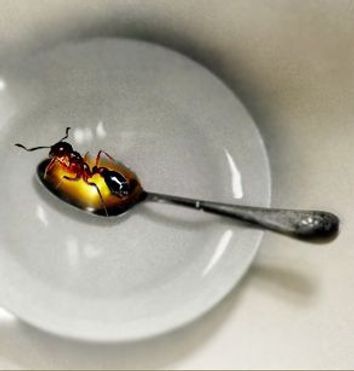
Tart and tangy, the wee Camponotus consobrinus gives me a lesson in world culture.

  • more
    • All Share Services

Ants for breakfast

I ate ants for breakfast last week.

We rise before daybreak in our home, and my wife is off to work. We embrace, kiss and she drives away. The noise of the alarm, the chatter of doors and drawers give way to silence, to time to read, to think and to be alone in the predawn stillness. The world turns quiet, and I am free to start the day on my own terms.

I find a book and settle down to a simple breakfast of tea and dry cereal. I like best the neat little shredded wheat biscuits. I don’t like milk, and so I dip handfuls from the box as I page my book.

Shredded wheat comes in a variety of forms. I prefer the plain, but last week I found only one box left in the cupboard, and that was a box of the type “with honey and almonds baked in.” My wife has a sweet tooth.

That explains the ants, but it doesn’t explain why I ate them.

Actually, it doesn’t completely explain the ants. Spring and fall, our house suffers an invasion of sugar ants, tiny fellows perhaps an eighth of an inch long. My wife murmurs about the efficiency of pesticides. I refuse to listen. I’d rather put up with ants temporarily than spray chemicals indiscriminately.

And so it came to pass that I scooped out a handful of cereal “with honey and almonds baked in” and ate an indefinite number of ants. Admittedly, I was distracted by my book, and I didn’t look carefully as I lifted the cereal into my mouth, and so my decision to add meat to my breakfast was accidental.

I stopped in midbite. Ants, I thought immediately. I’ve eaten ants.

I had noticed earlier a parade of ants along the baseboard, and, since ants are hedonists and would head for dessert first, I knew my wife’s cereal with “honey and almonds baked in” would be a likely destination. And, of course, the fact that I tasted something other than cereal, or even honey and almonds, was the final clue.

You could call the taste bitter, but you wouldn’t be quite right. Add tangy, and you’d be closer. The flavor was sharp, woodsy, but it lacked texture. Of course you wouldn’t expect texture. Ants are minuscule, after all. Certainly not big enough to crackle as you bite down on them.

I didn’t gag or spit out the ant-and-cereal mixture. There is a sense of people-aren’t-watching freedom at that time of morning. I find myself open to possibilities, willing to accept a different rhythm for the day to come.

I thrust my hand into the box, grabbed more cereal and carried it quickly to my mouth. There again, the taste. Tart, wild. Once more into the box, for something never before on my tongue.

I pushed back the lid and looked into the box. I could see dozens of tiny creatures rushing about in panic. I picked out a single piece of cereal and checked it carefully for signs of wildlife. Cereal, nothing but cereal, and so I ate it, slowly, savoring the sensation. And the taste was pure, sweet grain, with no perception of the raw, wild aftertaste lingering on the tongue.

I once was squeamish, nearly obsessive, about the cleanliness of what I ate. I have become less so over the years, but now I wondered if that trait had disappeared entirely.

Amused at myself, I thrust a finger into the box and watched as an ant jumped aboard. He was nearly black, tending toward maroon rather than sable, and his antennae moved constantly as he wandered down from my fingertip.

I have eaten a living, breathing creature, I thought, hair, hide and hindquarters. I turned my hand and looked directly at his microscopic head, rotating about in apparent confusion at being kidnapped from his tribe.

I once sat next to an evangelistic vegetarian at a holiday banquet. “I suppose, to put it simply,” I said, “you won’t eat anything that had a face.” She was not amused.

I eat meat, but I was struck by the odd notion I had engaged in social cannibalism. Much like us, ants maintain a highly organized society, although a literate entomologist might suggest it is closer to a brave new world than a liberal democracy. The little buggers even fight wars.

“Good protein,” my wife remarked later when I told her about my culinary adventure. This from a woman who claims the smell of cooking beef makes her gag.

Of course, she said something nearly identical while we watched a television documentary about spiders. A group of Amazonian aborigines prowled the jungle seeking food, and a hunter speared a tarantula the size of a dinner plate. He tossed it into an open fire, and his children waited eagerly for the beast to roast to perfection.

The oldest child used a small stone to split the spider’s body. After he levered it open, his two sisters and a brother squatted on their haunches beside him and daintily fingered out the meat. The normalcy of it all paralleled a group of youngsters sharing fries at a fast food restaurant, right down to the multiple earrings.

Ants, spiders — does size matter? I have eaten ants, but obviously I have only ventured to the edge of the jungle of exotic foods. Perhaps it is a matter of appearance. Compare a tarantula and an Alaskan king crab, both unlikely looking brutes, but one is subsistence for a Stone Age family and the other is a luxury in gourmet dining rooms.

I looked once more at the cereal box. Why do we eat what we eat? Culture, of course. A friend, a native of the Philippines, must have rice every day, every meal preferably. And dogs are a delicacy in the Far East.

On the other hand, I am a descendant of the malcontents and misfits who fled northern Europe, where the French ate snails, the Scots sheep’s heads, and the Germans blood sausage. In that great migration to the New World, we came upon aboriginal peoples who were dog-eaters, but we didn’t change. The best we could do, it appears, was to admit corn was edible.

Practically speaking, a dog is a quickly renewable source of meat protein. Does Benji sound more appetizing if we phrase it that way? Our cultural equivalent is a pig or a chicken, or, perhaps, a rabbit. But it’s a big world out there, and every group has its table taboos. Hebrews and Muslims eat no swine. Hindus eat no beef. I eat no dogs. I suppose we could share a meal together, but we’d probably need to hire my vegetarian acquaintance as chef.

Of course, I shouldn’t point fingers. Scholars who study this sort of thing protest that any aversion to another culture’s dietary preferences means we are indulging in “ethnocentric assumptions about the food ladder hierarchy.”

That’s a mouthful.

Apparently, while I wasn’t looking, the intelligentsia has pushed us past comfort food to food as a measure of tolerance. I’ve traveled a bit, and I’m sophisticated enough to understand that food choices are cultural and environmental; but now word comes down from opinion-makers that food choices — and our perceptions of other people’s food choices — are political. Of course, it has always been so in a Machiavellian sense. A good prince distributes the harvest wisely and prevents hoarding and suffers no riots in the streets. But princes are no more, and cultures are valued subjectively. We are told we wallow in elitist ethnocentricity if we declare that a Masai feast of cow’s blood and milk descends to savagery. I suppose, if you consider it carefully, it’s no better to eat cow lips, cheeks and other assorted scraps mashed into a gut tube and labeled bologna.

All things considered, I am willing to indulge my Grade A USDA-approved diet and retreat from ethnocentric culinary superiority, but I refuse to be sheepish about my aversion to certain foods. Call it habit. Call me a reluctant explorer. I will even admit to continuing to be judgmental about dietary practices. And, to be frank, I believe there’s a measure of ethnocentric arrogance within the recipe for some cultural specialties.

Bird’s nest soup, a sheep’s head with eyeballs intact or blowfish so poisonous a chef must have a license to prepare it — what is this but gastronomical hubris? Who decided the bird saliva binding twigs together in a swallow’s nest is nourishing and tasty? Who ate the first sheep’s eye? Why is blowfish popular in the Far East although hundreds of people die after consuming improperly prepared servings?

On the other hand, tripe, scrapple and pig’s feet remind us of our wastefulness. I realize people began to eat intestines, brains and trotters from necessity. And while many people continue to eat assorted organs and extremities today, I sense no haughtiness when someone announces he cherishes chitlins.

Ants, tripe or a sheep’s head — I suppose given a choice of the three I would take the ants. I prefer simplicity. Age burns away passion and certainty. Age also consumes appetites. To me, food is fuel. Simple cereal is sufficient in the morning, beans and salsa midday and perhaps an egg, bread and cheese at night. Food is neither my religion nor my vice, and I have come to the point of my life where I have no quarrel with the gourmet, look with some puzzlement on the gourmand and pity the glutton.

I looked at the cereal box, and I smiled in admiration of the industrious Camponotus consobrinus. The sugar ant tribe had managed to discover the single open box of sweetened cereal in our house. I watched as they hustled through a small gap in the top flap. I will eat no more of them, I suppose. Three bites are sufficient. Now I’m left to think about what is and what isn’t food, and about why I must claim accident rather than intention if I tell someone I ate ants for breakfast.

I will take the box outside later, scattering the tainted cereal beneath the great pin oak in our yard. The squirrels will not notice the ants, rejoicing only in the bounty among the leaves. Some of the less squeamish among us see the ants in the same light. Some go further, insisting nourishing protein is available in abundance not only from ants and spiders, but also from grasshoppers, termites, beetles, crickets and nearly every other thing that creeps and crawls. Cattle, sheep, goats, pigs, chickens demand land, energy and human stewardship. Insects breed like flies, take up minimal space and provide excellent food value.

I looked again at the ant-infested cereal box, ideas crawling along the edge of my subconscious. A breakfast of ants has carried my concept of food into unknown territory. I thought that I cared most that I eat nourishing food in minimal amounts, believing control of this appetite, like any other, reflects moral stability. But now I see that may not be enough. It seems every hamburger declares my contempt for the environment, illustrates my lack of regard for ethical choices and proclaims an unsupportable belief in an illusory cultural superiority.

I tried to explain all this to my wife. “Sounds like a heavy burden for a little ant,” was all she had to say.

Continue Reading Close