I was desperate the first time I called Robert Thompson. An editor at Spin had assigned me to write a story about the pervasiveness of the Sony PlayStation on network TV. It was a fine idea. The only problem that was I’d never used the game console, and certainly hadn’t noticed that UPN had squeezed it into the latest “Moesha” script. In other words, I found myself in the same position as the other 1,273 hacks instructed to produce a trend piece about the PlayStation.
A colleague mentioned Thompson, who taught at Syracuse University and had something smart to say about virtually any subject related to television. It got better. Thompson ran the very official-sounding Center for the Study of Popular Television. The New York Times described him as an expert on pop culture.
Thompson returned my call quickly. I pitched a few softballs on what I decided would be a piece about product placement. He started riffing like Yngwie Malmsteen.
It was as if Thompson kept a log of every boob-tube mention of the video game character Crash Bandicoot. Actually, he virtually did. “By the time something is hot enough to be a feature story,” he said, “if we’ve been doing our jobs as scholars and academics, we’ve already done our thinking.”
Over the next couple of days, I interviewed a few obvious sources, including PlayStation fans (the creator of “Felicity,” the bald guy from “Just Shoot Me”) and critics (a left-leaning, anti-corporate watchdog named John Stauber).
During a break in my reporting, I thumbed through a stack of still-unread magazines. That’s when I discovered why I could never again quote Robert Thompson.
In Newsweek, his name appeared not once, but twice, in separate articles only two weeks apart. Big deal? Then I tried a search on Lexis-Nexis.
Ouch. Dr. Bob got more star time than silicone-enhanced breasts at an XFL halftime show. The New York Daily News, Atlanta Journal and Constitution, Orange County Register, Knight-Ridder, the Times, Washington Post, Wall Street Journal. (He’s also been quoted by Salon.)
Thompson was on top of everything. “Who Wants to Marry a Millionaire.” “Baywatch.” “Mary Tyler Moore.” Game shows. Thompson even effortlessly turned a Los Angeles Times piece on storage sheds — storage sheds! — into an honors thesis. “Behind the doors of storage sheds,” he told reporter Jill Leovy, “is really the great American story: the accumulation of stuff.”
Damn, he was good.
I promptly sliced him out of my piece.
Why? Part of the reason was the influence of Eric Alterman’s “Sound and Fury,” which I read in college. In that book, Alterman identified the punditocracy, a group that includes George Will, Robert Novak and John McLaughlin. Beyond being lazy and hopelessly out of touch, they are rotated through the talk show circuit as experts on virtually any topic. Even at my lowest journalistic moment, I wanted to avoid slipping into that kind of pack. Deleting Thompson’s testimony felt deliciously subversive.
But it was also completely ineffective. He was everywhere. In January 2001 alone, a Thompson quote ran in some publication at least once a day — not in academic journals but in virtually every newspaper in the country.
In December, New York Times writer Heidi Schuessler recruited Thompson for his thoughts on the Big Mouth Billy Bass, the mounted, rubber and plastic fish that sings “Take Me to the River.” He talked about it like he was an expert. “You look at it and the intelligent side of your brain says, ‘What is the world coming to?’” Thompson said. “Then the other side of your brain says, ‘Cool, that fish just looked at me.’”
Then, Feb. 1, Thompson scored a hat trick with a quote in the Atlanta Journal and Constitution, a Times Circuits story on Internet shopping and a Times sports desk story on the XFL. More recently, a Sunday New York Times piece by Allen St. John included four separate Thompson quotes, totalling 196 words. Dr. Bob deserved a byline.
The most difficult pill, for me at least, was the fact that most of his quotes were excellent. Thompson was always on point, often funny and seemed capable of legitimizing the most half-baked theory. But should there still be a limit on how much Professor Primetime should be used?
I needed an expert. Naturally, I called Thompson.
He made no bones about his mission: Get the word out.
“That’s any academic’s dream come true, that people actually hear what it is that they are doing,” says Thompson, who is 41. “Even sound bite by sound bite, a sentence quoted a time, there is an opportunity when one talks to journalists that is completely unavailable to the regular academic world.”
Thompson doesn’t coast; he has VCRs rolling constantly on each of his eight TVs. “Sometimes, when I get my paycheck and I’m feeling guilty that my job’s too easy, I just think, well, I did have to watch ‘Bette’ and ‘The Geena Davis Show’ this week.”
He turns down interview requests when he has nothing to say, though that’s rare. He has also paid his dues, having been fired from the State University of New York (Cortland) in the early 1990s because, as he saw it, the university considered the TV program expendable. At Syracuse, he found a tenured home. The dean of the Newhouse School of Journalism encouraged him to open the Popular Television Center.
“If you’re going to understand America at the turn of the new century, you’ve got to understand its presidents and its wars and all the rest of its history but you had better also understand its cheeseburgers and its taxicabs and its interstate highway system,” he says. “And it’s funny that when it comes time to taking that kind of stuff seriously, there aren’t a lot of people out there who want to talk about it. Even something as important as television, which everybody argues, whether you’re on the right or the left or old or young, is so terribly important. When you start actually talking about in any serious kind of way, it’s considered kind of a joke.”
Thompson became interested in popular culture in the late ’70s as an undergraduate at the University of Chicago. A serious student, Thompson spent most of his non-class time studying. On Sundays, he would order takeout food and scoot back to his room. For several weeks, PBS was showing a documentary on Western civilization as told through its painting, architecture and sculpture — a perfect program for an art history and political science major. Yet Thompson found himself drawn to the travails of Jon, Ponch and Grossie on “C.H.i.P.S.,” the hourlong police show that always ended with a freeze-framed chuckle from Erik Estrada.
“I was a snob along with the very best of them,” he says. “At the same time, when push came to shove, I watched ‘C.H.i.P.S.’ That drove me crazy.”
That conflict — why smart people watch dumb television — became his central question. He also realized that pop culture, as a discipline, would be relatively virgin territory.
The first quote came in 1986, a comment about “St. Elsewhere” in the health section of the Washington Post. The first big break arrived a few years later, when “60 Minutes” featured Thompson in a piece on television courses in academia. Gradually, his reputation spread.
Still, he’s not the least bit concerned about overexposure. As far as he can tell, the other side, the predictable knee-jerkers, has been getting most of the airtime for too long.
“Let’s talk about violence on television or how ‘Temptation Island’ is a sign of the end of civilization as we know it,” he says. “There’s the issue of how rock ‘n’ roll music is inferior to the classical output of the nation. These kinds of things are so agreed upon. What I hopefully provide is another way of looking at it. If I become the only representative of that other side, I suppose that could start to sound like a broken record. But we’re listening to 10,000 broken records from the other side of that cultural war. In that sense, I don’t feel like anywhere near reaching parity of exposure.”
Dr. Bob had a point. After we got off the phone, I found myself turning back to my PlayStation transcript. In that interview, Thompson seemed pleased that the PlayStation was getting so much attention.
“At last, television is beginning to reflect the world as we really see it,” he said. “Up until the early 1970s, you could have a show that took place in the Marine Corps without ever mentioning Vietnam. ‘Leave It to Beaver’ debuts with the Sputnik and ends with the Kennedy assassination, and there’s never mention of Cuba or Communism.”
“The PlayStation,” he says, “is the thing that begins to show the texture of American life.”
Concise, logical, weighty: Somebody should quote that guy.
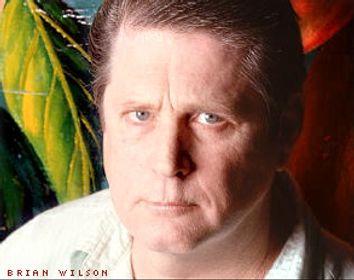
No writer will ever fully understand Brian Wilson. The former Beach Boy is a cagey interview, giving clipped and conflicting answers to questions both pointed and banal. He generally makes it clear to interviewers that he would rather be somewhere else — and that’s when he’s feeling good. His state challenges his interpreters to explain what is essentially an unanswerable question, perhaps even for him: Why is Brian Wilson, a man whose fragile emotional condition forced him off the road at 22, touring now to perform the Beach Boys’ “Pet Sounds” — a 34-year-old album considered simultaneously a commercial flop and one of the greatest achievements in all of pop music? Why would it happen now?
First, let’s dismiss a couple of theories:
Rumor 1: “His wife, Melinda, made him do it.” Yes, she’s been pushing Wilson to tour. But it’s hard to imagine this woman, who by all accounts has created stability for him after he suffered years of neglect and mistreatment, worst of all by his father and then his personal doctor, would want to push her cash-cow husband onto the road against his will. Which leads to the second theory.
Rumor 2: “He’s in it for the money.” Nope. The right time to tour “Pet Sounds,” in business terms, was 1997, when Capitol released its three-disc sessions box set. If Wilson wanted to maximize his tour profits, he would use the Beach Boys name — which is currently used by a sham nostalgia act fronted by cousin Mike Love and a gang of interlopers — play just hits and go out with a smaller band.
My theory hinges on the uncharacteristically symbiotic relationship Wilson has with his fans. I think he’s doing it because it makes them happy, and at this point, that makes him happy. As evidence, I present a point earlier this summer when Wilson began posting messages on his official Web site.
This wasn’t just a greeting or two. In more than a dozen messages, Wilson discussed a range of subjects: the Traveling Wilburys (wouldn’t want to join them), bootlegs (stop buying them), the latest Beach Boys lawsuit (don’t blindly jump on Mike Love) and confirmed that, yes, a few years ago he met with High Llama Sean O’Hagan (“… a real sweet guy, but I didn’t think I needed him to show me how to do the things I had already done 30 years earlier”). Wilson reportedly even telephoned one fan after e-mailing for his phone number.
These initial posts, while fascinating, weren’t necessarily a shock. Lots of artists, emboldened by the controlled nature of an online relationship, have used the Net to communicate with fans. The oh-so-Brianlike portion of my story occurs when a fan tried to impersonate Wilson. Whoops. The site administrator temporarily shut down the message board. When it was back up, the pissed-off readers went after the imposter. A guy named Dave ended up apologizing profusely, even confessing that his judgment was clouded by personal problems. Some accepted the apology, others scolded him for driving out their hero. But Brian Wilson wasn’t gone.
“Hey Dave,” Wilson wrote on the board, “when I get upset or things are goin rough, sometimes I just go in a room put a pillow over my face and scream. It really helps man. You might want to try it. I feel for ya man, so hang in there.”
Charmingly heartfelt, slightly out of kilter and completely unguarded, the posting was the kind of thing you might expect from Christina Aguilera’s kid sister, not a 58-year-old occupant of the Rock ‘n’ Roll Hall of Fame. That, however, is why Brian Wilson is so beloved. Those who have remained — through years of inactivity, Beach Boy feuds, subpar solo productions — will stick with whatever Wilson chooses.
By touring, his choice appears to be reclaiming his music from Love’s never-ending Traveling Medicine Show. This is no small feat. That Brian is the lone living Wilson brother (Dennis drowned in 1983; Carl died of cancer in 1998) is surprising. His decision to spend the summer playing “Pet Sounds” is worthy of the rock history books. This is Syd Barrett putting down his trowel for a “Storytellers” gig or J.D. Salinger calling up Barnes & Noble to ask if they can “throw a little readee-poo together.”
Which is why a few loyal fans have had mixed emotions about the tour. It’s the unstated compromise we have all made to support Wilson over the years: When he doesn’t hit his notes, when his words slur, when he comes off on TV as the ultimate icon of ’60s burnout, the loyalists launch into the usual spiel. We talk of the childhood beatings at the hand of his father, Murry, or the breakdown that kept him from touring even at the Beach Boys’ peak. There is the time he spent in bed battling drugs, obesity and his own family during the ’70s. There is the virtual takeover by Eugene Landy, the disbarred shrink with an eye on the pop charts. There is his overslick second solo album, 1998′s “Imagination,” the title track a collaboration with a former wrestler (Joe Thomas) and local disc jockey (Steve Dahl).
Finally, we — the loyalists trying to explain a particular sour note or strange appearance — get to today’s Brian: loving wife, pair of adopted daughters, the right mix of antidepressants. Knowing this heartwarming comeback tale, we demand that outsiders should make just a few allowances. We never think of whether this compromise is fair to our hero, whose greatest works emerged from a thirst for perfection.
The best part of the “Pet Sounds show” — I caught a performance in Birmingham, Ala. — is that it usually transcends the trappings of Wilson lore. Sure, there were signs that we weren’t watching the greatest showman since James Brown. (He stared at the teleprompter during “California Girls,” and he gazed zombielike at the soloists to make sure he started singing again at the right time.) But it was encouraging to see that Wilson seems, on the surface, to be relatively comfortable in front of a crowd. Wearing a crimson ‘Bama shirt and blue Vans for the second set, he looked to be on the lighter side of his lifelong weight battle. His stage banter could be stilted but there were moments when his childlike charm came through, especially when he flubbed the start of “The First Time” and asked the band to restart. “Sorry guys,” he said, “I was looking at a bug about to go in my eye.”
Has he become so self-aware that he, not one of his advisors, decided to play the Barenaked Ladies’ tribute song “Brian Wilson”? Probably not. He does sing it beautifully and, as on the Internet-only release “Live at the Roxy,” the song glides into a gorgeous, vibraphone-heavy version of “‘Til I Die.”
Much of the credit should go to his 10-person band, which is a blend of hipsters (Los Angeles’ Wondermints) and seasoned studio hands. Paul Mertons, formerly of Poi Dog Pondering, plays flute, clarinet, saxophone and perfectly hit the improvised bass harmonica solo on “I Know There’s an Answer.” Jeffrey Foskett, a longtime Beach Boys touring guitarist, helps with stage banter and, most importantly, takes over the falsetto parts on a number of songs, including “I Get Around,” “California Girls” and “In My Room.” Wilson isn’t masking his live vocal limitations; he’s simply orchestrated a show to fit the band’s strengths. This is the very same philosophy that led him to record “Pet Sounds” with the best session players available while the Beach Boys toured the country.
The only way to truly understand the goodwill surrounding these shows is to experience it. Instead of the usual summer rock crowd — sloppy drunks, chattering spouses, request-shouters (the type that show up at the State Fair Beach Boys revivals) — the audience emotes the feel of a support group. It is as if we understand that the object of our affection is always going to be a little off, even on his best days. How can we complain? We are watching Brian Wilson perform “Pet Sounds.” It is a privilege. The band seems to share in the joy. Instead of Love’s bikini-clad, wannabe Hooters girls, the “Pet Sounds” unit includes singers Scott Bennett and Taylor Mills. Without pretense and from the back of the stage, they couldn’t resist a slow dance during “Be My Baby.”
The real attraction, of course, is the “Pet Sounds” set. It comes after an hourlong Beach Boys sampler that mixes the artsy (“This Whole World,” “‘Til I Die” and “Add Some Music”) with the hits (“California Girls,” “Help Me Rhonda” and “I Get Around”). On many dates, Wilson hires a local orchestra to accompany the band and perform an instrumental medley composed by “Smile”-collaborator Van Dyke Parks. Not on this rainy, Alabama night.
After hearing the touring unit play through, it’s hard to understand how the orchestra could improve the sound. The album is re-created in full, right down to the bicycle horn honks near the end of “You Still Believe in Me,” the theremin during “I Just Wasn’t Made For These Times” and the flute riffs on “God Only Knows.” The instrumentals were also stunning, in particular the spy mambo of the album’s title track. And after “Caroline No,” a pre-recorded train rolled through Birmingham to mark the end of “Pet Sounds.”
Wilson’s biggest flubs came early in his sets, which might explain his chilly performances on Letterman over the years. Maybe he just needs to warm up. On “This Whole World,” the second song of the night, Wilson started slightly off key and never corrected himself. The “Pet Sounds” section opened with him missing his cue for “Wouldn’t It Be Nice” and coughing his way through the second verse.
But Wilson recovered. On “Don’t Talk (Put Your Head on My Shoulder),” he hit each of the high notes, sliding effortlessly into falsetto. He knew how much this meant, jabbing the index finger of his right hand toward the sky with each climbing note.
It was an inspiring moment, but the real test will come this winter, when he has talked of reentering the recording studio. This time around, there won’t be any ex-wrestlers, disbarred shrinks or second-rate shock jocks to distract him. There won’t be any record company jerks pushing for a hit. Only Wilson and the sort of selfless, multidimensional working unit he hasn’t had at his disposal since the “Pet Sounds” days. Who knows what they might create.
Continue Reading
Close
XTC
“Wasp Star (Apple Venus Volume 2)”
TVT
The ’90s were lost years for XTC frontman Andy Partridge. Ever since the trio’s first punky EP in 1977, music has always been Partridge’s therapy. He would write about domestic gloom, Jesus Christ or his “pink thing.” Like his hero, Brian Wilson, Partridge stopped touring in his 20s after a nervous collapse. Off the road, he created some of the most timeless pop music of the 1980s on “English Settlement,” “Skylarking” and “Oranges & Lemons.”
By mixing strings and brass with Rolling Stones riffs, unexpected chord twists with Mersey hooks, Partridge made it safe to call your favorite music art rock. And then in the early ’90s, he and his musical partner, Colin Moulding, disappeared. They didn’t mean to pull a Salinger; the duo and then-guitarist Dave Gregory went on strike when Virgin wouldn’t renegotiate the band’s contract. Unwilling to cave in on their demands or tour again, XTC had no place to exist.
Partridge and Moulding reemerged in 1999 with a new album, “Apple Venus Volume 1,” and a new label, TVT. It was hard to believe seven years had passed. Recorded from a reported 42-song backlog, the orchestral “Apple Venus” made a beautiful comeback. It was framed by a nasty open letter to the wife Partridge had split with during the exile. “F-U-C-K,” he crooned on one song, “is that how you spell friend in your dictionary?”
The follow-up, “Wasp Star (Apple Venus Volume 2),” is a return to the gorgeously crisp electric pop Partridge has been writing for more than 20 years. It is also a tad more upbeat, full of Partridge’s clever sense of humor. On “I’m the Man Who Murdered Love,” the killing is actually more of an assisted suicide. Love has been out of work and pleads to be put out of his misery. After the deed, the angels cheer and shake the heroic narrator’s hand. No more pain, broken hearts or lovers torn apart. “I’m guilty,” Partridge shouts, a believer plowing through a church-choir break.
“Wasp Star” opens with a hard electric guitar line and hardly quiets down. The center of the sound is Partridge’s distinctive voice. He can sing pretty, throw in low harmonies and throat it like Big Mama Thornton. As usual, Moulding delivers three songs. He is George Harrison to Partridge’s Lennon, McCartney, Ray Davies and Syd Barrett, except that you get the sense Moulding is content as second wheel, not a frustrated sideman looking to strike out on his own.
Moulding’s “Boarded Up” is soul music, a ballad about Swindon, the decaying English town where he and Partridge formed XTC. He also sings with Partridge on “Stupidly Happy,” which could make up the first lesson plan in the school of pop music. It opens with a simple riff that remains intact throughout the four-minute song. With each verse, Partridge and Moulding paste on another layer — cascading harmonies, “Bang-a-Gong” groove guitar and that relentless, start-up riff — until they have a pop symphony.
Of course, nothing XTC does in the studio will cut off the inevitable inquiries about touring. Last year, nearly every interview with Partridge included the question: “Why not?” After all, even the notoriously skittish recluse Brian Wilson is taking to the streets. Partridge, who has answered the question a thousand different ways — all with a clear “no” — put it beautifully to a writer from People magazine last year. “Why would you want to see my fat [posterior],” he asked, “when you can buy a slice of my soul and take it home.”
Continue Reading
Close
Years ago, before Britney Spears, Kurt Cobain and even Kajagoogoo, it was safe to believe in power pop. Like the punks, those heroes in skinny ties — the Knack, the Raspberries and the dB’s among them — used electric guitars and quick hooks to fend off the bloated cock-rock of Zeppelin, Journey and Kiss.
Peter Case was at the center of the power-pop scene in the late ’70s. His first group, the Nerves, recorded “Hanging on the Telephone” in 1977, a year before Blondie issued the far more popular version. In 1980, Case moved to Los Angeles and formed the Plimsouls, a band best known for the semihit “A Million Miles Away.” Despite strong billing in the movie “Valley Girl” and a pair of solid records, the group evaporated in the mid- ’80s.
Case launched a solo career in 1986. Instead of trying to do what the Plimsouls were doing on his own, he moved toward a more folkish sound, recording with T. Bone Burnett and then-wife Victoria Williams. He earned a flood of critical praise, but sales were droopy and Geffen kicked him off the label just before his 40th birthday.
Case responded to the bad news in a strange way: Instead of finding another band or booking studio time for his newest songs, he sat down in a living room and recorded a set of old tunes by Blind Lemon Jefferson, Arthur Crudup, Roy Orbison and a host of other old-timers. “Peter Case Sings Like Hell” (1994) sounded more like a new start than a last gasp.
As his fellow power popsters have drifted further into the rear view — where have you gone, Mr. Stamey? — Case has quietly carved out a place as one of today’s best singer-songwriters. And he has done it without losing his knack for pop hooks or embracing the maudlin sentimentality that marked the genre’s most popular age, when its main purveyors were John Denver, Harry Chapin and Jim Croce
The new Case album, “Flying Saucer Blues,” sounds a lot like the last one. The cast of musicians is largely the same as on “Full Service No Waiting” (1998) and “Torn Again” (1995). Soundwise, Case has again found a place where pop, country rock and mountain music meet. There’s Dobro, pedal steel and stand-up bass, along with Case’s flat-picked guitar lines. Case delivers the lyrics with a middle-aged weariness more befitting a wandering, lovesick bluesman than the happily married father he is.
But where “Full Service” had an almost claustrophobic, unifying darkness to it, “Flying Saucer Blues” feels more like a group of aural snapshots from a summer road trip. It rocks more, with the Delta groove of “Cool Drink o’ Water,” soul horns on “Walking Home Late” and jangly midsection of “Paradise Etc.” And the songwriting is more abstract, as much about atmosphere as characters. There’s the blue distance stared at by the curious lovers standing on the edge of a mountain, the black dirt and clay displaced by boys during a backyard dig to China and the blue neon of a motel sign in Memphis. If there’s any doubt that Case knows how to spin a good yarn, “Flying Saucer Blues” wraps up with “This Could Be the One,” a musical descendant of Hank Williams’ “I Saw the Light” and as dark as anything Johnny Cash ever cooked up.
Case will never be as popular as Jewel or have Elvis Costello’s wrinkled lips on his ass like Ron Sexsmith. But like Paul Westerberg, he has found a place far from the electric buzz where his gorgeous hooks can tell short stories about love, crooks and childhood longings. That might not sell many albums, but it sure makes it easy to resist the next Rubinoos reunion.
Continue Reading
Close
As his 60th birthday approaches, Herbie Hancock remains one of a handful of living, innovating jazz giants. His Blue Note catalog from the ’60s is overshadowed only by his work in the Miles Davis Quintet with Tony Williams, Ron Carter and Wayne Shorter. His recent albums — the duets with Shorter on “1+1″ (1997) and the all-star gathering on “Gershwin’s World” (1998) — show that he’s still capable of stretching the music as a serious player.
Which is why there couldn’t be a better time to revisit “Future Shock,” the album that annoyed critics and purists alike upon release in 1983. The record set off a subsequent series of funky, experimental Hancock projects, most of which are being reissued as well. “Future Shock” also produced a fluky, random pop hit, “Rockit.” The turntable-scratching, “Peter Gunn” meets P-Funk instrumental put the jazzman on MTV with a troupe of jerky, robotic video stars.
“Future Shock” offered another dimension of Hancock’s personality: the risk-taker who wants to have fun, even if it meant slipping into the background. His playing here is so understated that he could have released the record under another name. If he had to give up credit, he could have ceded it to Bill Laswell, the cheese-funk savant producer responsible for displacing Hancock’s nimble fingers and harmonic signatures on “Future Shock” with a weirdo mix of old-school hip-hop and fusion funk.
At the time, Laswell was just developing a reputation in the Downtown New York scene, which would lead to production credits on hundreds of albums over the next decade. More a conductor than a chameleon, he has always imposed his sound on anyone he’s produced, whether it’s Yoko Ono, Mick Jagger or Bernie Worrell. And that’s what he did on “Future Shock,” playing bass and co-producing under the moniker of his group, Material.
Except for the dancing piano work on “Autodrive,” it’s easy to forget that Hancock was along for the ride. Each song has an electric drumbeat, synthesizer and fat bass line. The band — reggae drummer Sly Dunbar, Grand Mixer D.S.T., former Miles Davis guitarist Pete Cosey, percussionist Daniel Ponce and Material’s keyboardist, Michael Beinhorn — is the star.
The music is jam-based and electric. But the characteristically Laswellian trippiness is also the album’s main shortcoming. The songs swim by too quickly, the wordless, synthesized funk turned into background music — or into the soundtrack to a “Miami Vice” episode. That said, “Rockit” is a great song. There’s the unmistakable scratch chorus, Laswell’s swimming bass line and Ponce’s bongos playing off Hancock’s basic melody. But it’s easy to start daydreaming during the police chase of “TFS,” or during the hockey organ jam on “Rough.”
The success of “Future Shock” most likely spawned the Laswell-produced follow-ups included in Legacy’s latest Hancock reissues. While “Sound System” (1984) does have its moments — the six-minute rehash of “Rockit” called “Hardrock” is not one of them — “Perfect Machine” (1988) unwittingly recalls the scene in “Revenge of the Nerds” when Booger and the boys play their big jock-thrashing concert. It’s funny on a Comedy Channel rerun, but no one needs the soundtrack.
Hancock should have stopped with “Future Shock.” He made his point, embracing funk and hip-hop by letting the players take over. He also let the jazz purists know that he could stay true to his music and mess with other styles. If “Future Shock” fell short of the more perfect jazz-rap fusion that would hit the charts in the early ’90s — notably Us3′s sampling of one of Hancock’s Blue Note riffs for “Cantaloop” — it at least showed that every old school has a few classes in common.
Continue Reading
Close
The subject line seemed innocent enough: “Happy New Year!” I figured that “Herman,” a college chum, had written a quick hello. Splendid. I had wondered about his new job, some kind of online gig for Time. But just a click into Herman’s communiqui revealed it as yet another piece of “friend” spam.
“If anyone is curious to see how I spent my new year’s eve and weekend,” Herman wrote to his suppressed recipient list, “I was on duty making sure that the best photos from around the world made it onto our site.” He offered the URL to “Into 2000: A TIME Photo Essay.” A-ha. Herman wasn’t being friendly. He wanted to generate traffic for Time.
Maybe I find the idea of journalists pandering for page counts so annoying because my first decade of work has been spent as a newspaper reporter. There is supposed to be honor in upholding the division between editorial and business. Either you’re an underpaid writer chasing a story, advertisers be damned — or you’re one of the handsomely compensated MBAs trying to keep the publication alive by boosting readership and selling ads. But in the Web start-up age, more and more journalists, desperate to get IPO-rich quick, are resorting to P.R. hijinks.
I’ve received dozens of these pleas for traffic. They use a range of tones. While Herman’s request was rather indirect, one that I received a few days later may as well have been slapped on a billboard.
This e-mail came from an editor at PoliticalWag.Com, which best as I can tell is a site that encourages people to post boring thoughts on politics. This spammer and I worked together several years ago at a small paper outside Boston. Instead of explaining why I never liked this guy much, suffice to say that he signed his begging letter with the nickname “Slugger.”
In the e-mail, Slugger first apologizes for not writing personally, “but life has been quite hectic for me.” Then he introduces his employer’s site as an online town hall on “compelling” topics: gun control, school funding and foreign policy. There’s more. The site is planning a public relations campaign. “The best possible thing,” he writes, is if there could be an increase in traffic and postings on the site timed with the P.R. campaign. Slugger promises that once we’re registered, it won’t take more than four or five minutes a day to deal with the site. That’s not all. He’s got free T-shirts.
What a deal. Help out a former colleague. Get free stuff. And if I’m not sparking real debate, at least I’ll help create the appearance of debate to dupe the P.R.-fed public. Does Slugger really believe this kind of “editorial” activity passes as journalism? Or is he deluding himself into believing his net worth will increase if he can just get a few friends to build up traffic to the site?
In the old days, a friend might send you a story or tell you “I got a byline in the Times” because he was proud of his accomplishments. Now, though, many online journalists — who stand to profit from their publication’s financial success — seem to augment their reporting jobs with something more akin to sales and marketing.
Slugger, I’m glad you’re at peace with your career change. But why not leave the audience outreach program to someone in marketing? Instead of spamming me, your time might be better spent improving the site’s content. When I come clicking, I want more than a free T-shirt.
Continue Reading
Close