Georg Mascolo

“But think of the things that were done to Iranians!”

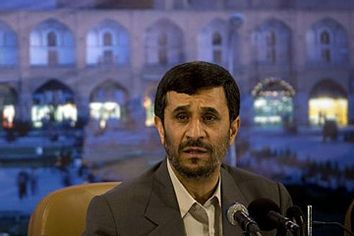
An interview with Iran's President Mahmoud Ahmadinejad.

Mr. President, so far you have traveled to the United States four times to attend the General Assembly of the United Nations. What is your impression of America and the Americans?

In the name of God, the Merciful, the Compassionate, I am pleased to be able to welcome you to Tehran once again, after our extensive conversation almost three years ago. Now on the USA: Of course, one cannot get to know a country like the United States in short visits, but my speech and the discussions at Columbia University were very special to me. I am quite aware that a distinction must be drawn between the American government and the American people. We do not hold Americans accountable for the faulty decisions of the Bush administration. They want to live in peace, like we all do.

The new U.S. president, Barack Obama, directed a video address to the Iranian nation three weeks ago, during the Iranian New Year festival. Did you watch the speech?

Yes. Great things are happening in the United States. I believe that the Americans are in the process of initiating important developments.

How did you feel about the speech?

Ambivalent. Some passages were new, while some repeated well-known positions. I thought it striking that Obama attached such high value to the Iranian civilization, our history and culture. It is also positive that he stresses mutual respect and honest interactions with one another as the basis of cooperation. In one segment of his speech, he says that a nation’s standing in the world does not depend solely on weapons and military strength, which is precisely what we told the previous American administration. George W. Bush’s big mistake was that he wanted to solve all problems militarily. The days are gone when a country can issue orders to other peoples. Today, mankind needs culture, ideas and logic.

What does that mean?

We feel that Obama must now follow his words with actions.

President Obama, who has called your aggressive anti-Israeli remarks “disgusting,” has nevertheless spoken of a new beginning in relations with Iran and extended his hand to you.

I haven’t understood Obama’s comments quite that way. I pay attention to what he says today. But that is precisely where I see a lack of something decisive. What leads you to talk about a new beginning? Have there been any changes in American policy? We welcome changes, but they have yet to occur.

You are constantly making demands. But the truth is: Your policies, Iran’s disastrous relations with the United States, are a burden on the global community and a threat to world peace. Where is your contribution to the easing of tensions?

I have already explained this to you. We support talks on the basis of fairness and respect. That has always been our position. We are waiting for Obama to announce his plans, so that we can analyze them.

And that’s all?

We have to wait and see what Obama wants to do.

The world sees this differently. Iran must act. Iran must now show goodwill.

Where is this world you are talking about? What do we have to do? You are aware that we are not the ones who severed relations with America. America cut off relations with us. What do you expect from Iran now?

Concrete steps, or at least a gesture on your part.

I have already answered that question. Washington cut off relations.

Are you saying that you would welcome a resumption of relations with the United States?

What do you think? What has to happen? Which approach is the right one?

The world expects answers from you, not from us.

But I sent a message to the new U.S. president. It was a big step, a huge step. I congratulated him on his election victory, and I said a few things to him in my letter. This was done with care. We have been and continue to be interested in significant changes taking place. If we intend to resolve the problem between our two countries, it is important to recognize that Iran did not play a role in the development of this problem. The behavior of American administrations was the cause. If the behavior of the United States changes, we can expect to see important progress …

 … that could lead to a resumption of diplomatic relations, perhaps even to the reopening of the U.S. embassy, which was occupied in 1979, the year of the revolution?

We have not received an official request in this regard yet. If this happens, we will take a position on the matter. This is not a question of form. Fundamental changes must take place, to the benefit of all parties. The American government must finally learn lessons from the past.

But you should not?

Everyone must learn from the past.

Then please tell us which lessons you are learning.

We have been under pressure for the past 30 years, unfairly and without fault on our part. We have done nothing …

 … according to you. Americans see things quite a bit differently. The 444-day hostage crisis during which 50 U.S. citizens were held from late 1979 until early 1981 in the U.S. Embassy in Tehran is still a collective American trauma today.

But think of the things that were done to Iranians! We were attacked by Iraq. Eight years of war. America and some European countries supported this aggression. We were even attacked with chemical weapons and [Western countries] aided and abetted those attacks. We did not inflict an injustice on anyone. We did not attack anyone, nor did we occupy other countries. We have no military presence in Europe and America. But troops from Europe and America are stationed along our borders.

The Western governments are convinced that Iran supports terrorist organizations and that Iran has had dissidents killed abroad. Perhaps mistakes were not just made by the one side?

Do you wish to imply that the troops are deployed along our borders because we allegedly support terrorist organizations?

We neither said nor implied that. But the accusation of support for terrorism has been made. Where is your constructive contribution?

First of all: We do not commit terror, but we are victims of terror. After the revolution, our president and prime minister were killed in a bombing attack in the building adjacent to my office. Our faith forbids us from engaging in terrorism. And when it comes to the constructive contributions we are being asked to make, we have contributed to stabilization in both Afghanistan and Iraq in recent years. While we were making these contributions, the Bush administration accused us of doing the opposite. Do you believe that problems can be solved with military force and invasion? Wasn’t the strategy employed by America and NATO wrong from the start? We have always said that this is not the way to fight terrorists. They are stronger than ever today.

Again, we see no evidence of any self-criticism.

Then why don’t you tell me what mistakes we are supposed to have made. We have no interest in a historical settling of accounts.

You are not insisting that America apologize for the 1953 CIA coup against the democratically elected Iranian Prime Minister Mohammed Mossadegh?

We don’t want to exact revenge. We merely want the Americans to correct their course. Do you truly see any signs that this is happening?

Yes, we do. George W. Bush declared Iran a member of the Axis of Evil and he threatened Tehran, at least indirectly, with regime change. There is no longer any mention of these things under Obama.

There are changes in the choice of language. But that isn’t enough. For the past 30 years, European countries have been under pressure from the Americans not to improve their relations with Tehran. That’s what all European statesmen tell us.

‘All Peoples Are Fed Up With the American Government’

It is true that America’s reputation in the world suffered under George W. Bush. But with all due respect, Mr. President, Iran’s reputation has also suffered tremendously during your term in office.

Where? With whom? With those in power or with the people? With which people and with which governments? During my more than three years in office, I have visited more than 60 countries, where I was received with great affection by both the people on the street and those in the government. We have the support of 118 countries in the Non-Aligned Movement. I agree that our reputation with the American government and some European governments is not positive. But that’s their problem. All peoples are fed up with the American government.

But you are not even giving the new administration a chance. Your attitude is characterized by mistrust.

We speak very respectfully of Barack Obama. But we are realists. We want to see real changes. In this connection, we are also interested in helping correct a faulty policy in Afghanistan.

What do you propose to do?

Look, more than $250 billion has been spent on the military campaign in Afghanistan to date. With a population of 30 million, that comes to more than $8,000 a person, or close to $42,000 for an average family of five. Factories and roads could have been built, universities established and fields cultivated for the Afghan people. If that had happened, would there have been any room left for terrorists? One has to address the root of the problem, not proceed against its branches. The solution for Afghanistan is not military, but humanitarian. It is to the West’s advantage to listen to us, and if it does not, we wash our hands of the matter. We are merely observers. We deeply regret the loss of human life, no matter whose lives are lost. This is just as applicable to Afghan civilians as it is to the military forces that have intervened.

That doesn’t sound at all like you have any interest in helping the Americans and NATO fight the Taliban. Obama is placing more emphasis on civilian reconstruction, but he also believes that radicals who seek to stand in the way of this reconstruction must be dealt with militarily.

I am telling you now that Obama’s new policy is wrong. The Americans are not familiar with the region, and the perceptions of the NATO commanders are mistaken. I am telling you this as a trained teacher: This is wrong. As far as the $250 billion is concerned: If the money had been spent in America, perhaps it would have solved the problem of unemployment, at least in part. And perhaps there would be no economic crisis today.

Are you seriously insisting on an American withdrawal from the region?

One has to have a plan, of course. A withdrawal can only be one of several measures. It must be accompanied by other, simultaneous actions, such as strengthening regional government. Do you know that narcotics production has grown fivefold under the NATO command in Afghanistan? Narcotics! That kills people. We have lost more than 3,300 people in the fight against drug smuggling. Our police force made these sacrifices while guarding our 1,000-kilometer border with Afghanistan.

Iran has always been opposed to the Taliban. But its return to power cannot be prevented without military force.

The people should be given the power. This requires economic aid, as well as a clear political process. The Afghan government should have been given more responsibility in the last seven years. President Hamid Karzai said to me once: They don’t allow us to do our work.

Everyone, including Americans, stresses that the people must be respected. Obama and NATO have agreed to a comprehensive list of measures for Afghanistan and they are banking on Iran supporting these measures, out of an interest in a stabile Afghanistan. Do you intend to refuse all cooperation?

I believe that the right approach to looking into such an option is the diplomatic path. You are journalists, not representatives of NATO, which is why I will not explain my position to you in this regard. If we receive a request through diplomatic channels, we will respond to it.

But some politicians in Tehran fear contact with America. According to U.S. officials, your deputy foreign minister, Mohammed Mehdi Ahundzadeh, shook hands with U.S. Special Envoy Richard Holbrooke at the Afghanistan conference in The Hague last week, but then the Iranian foreign ministry vehemently denied the encounter. How can we have any faith in your willingness to cooperate if a  handshake presents a problem to you?

I don’t think that this is truly relevant. A handshake, a pleasantry, this is not a problem in my view.

You are downplaying it. But perhaps there is more to the turmoil over the handshake than meets the eye. Perhaps it is a symbol of how deep the divide is between Tehran and Washington — and of the fact that you are actually unwilling to do without your favorite archenemy.

Naturally, we cannot expect to see problems that have arisen over more than half a century resolved in only a few days. We are neither obstinate nor gullible. We are realists. The important thing is the determination to bring about improvements. If you change the atmosphere, solutions can be found.

Do you, like the Americans, distinguish between the incorrigible Taliban, who must be opposed, and moderate Taliban, with whom talks are possible?

I would not venture a conclusive verdict in this regard. I don’t know what is meant by that. Don’t forget, the Afghan people have close historical ties to Iran. More than 3 million Afghan citizens live in our country.

If the American troops withdraw from Iraq, the security situation there will presumably deteriorate dramatically. Will you fill the power vacuum in neighboring Iraq, where your fellow Shiites make up two-thirds of the population? Do you advocate the establishment of a theocracy, an Islamic Republic of Iraq?

We believe that the Iraqi people are capable of providing for their own security. The Iraqi people have a civilization that goes back more than 1,000 years. We will support whatever the Iraqis decide to do and which form of government they choose. A sovereign, united and strong Iraq is beneficial for everyone. We would welcome that.

American intelligence services have concluded that Tehran plays an entirely different role in Iraq. The CIA claims that Iran is stirring up resistance to U.S. troops through the Shiite militias.

We pay no attention to the reports of American intelligence services. The Americans occupied Iraq and are responsible for its security. In the past, they sought to divert attention away from their own failures by holding us responsible for the unrest. They must correct their own mistakes. Things have improved for the Americans since they recognized this and began to respect the Iraqi people. Our relations with Baghdad are very close. We fully support the Iraqi government. As always, our policies are completely transparent.

Mr. President, that is not true. You oppose the world’s most important nations in one of the central international conflicts. Iran is strongly suspected of building a nuclear bomb under the guise of civilian research. Only recently, U.S. President Obama warned of this very real danger during his visit to Europe. There are four U.N. resolutions calling upon Iran to stop its uranium enrichment activities. Why do you not finally comply with this demand?

What do you mean by that?

Mr. President, we mean that the world is waiting for a sign from you, that we are waiting for a sign. Why do you not at least temporarily suspend uranium enrichment, thereby laying the groundwork for the commencement of serious negotiations?

These discussions are outdated. The time for that is over. The 118 members of the Non-Aligned Movement support us unanimously, as do the 57 member states of the Organization of the Islamic Conference. If we eliminate duplication between the two groups, we have 125 countries that are on our side. If a few countries are opposed to us, you certainly cannot claim that this is the entire world.

We are talking about Europe and the United States, where not a single politician wants to meet with you. Senior Italian politicians avoided you at a U.N. conference in Rome last year.

We see that too, of course. But we are saying that Europe is not the whole world. Why do you believe this? Besides, I didn’t even want to meet the Italian politicians.

Even if you refuse to believe it, the most important international body, the United Nations Security Council, is often unanimously opposed to you. Not just the Western powers, but also China and Russia have already approved sanctions against Iran.

Allow me to set things straight, both legally and politically. At least 10 members of the U.N. Security Counci l…

 … which includes, in addition to the permanent members, U.S., Russia, Great Britain, France and China, 10 elected representatives based on a rotating principle …

… have told us that they only voted against us under American and British pressure. Many have said so in this very room. What value is there to consent under pressure? We consider this to be legally irrelevant. Politically speaking, we believe that this is not the way to run the world. All peoples must be respected, and they must all be granted the same rights.

What right does Iran feel deprived of?

If a technology is beneficial, everyone should have it. If it is not, no one should have it. Can it be … [that] we are not even permitted to pursue the peaceful use of nuclear energy? Our logic is completely clear: equal rights for all. The composition of the Security Council and the veto of its five permanent members are consequences of World War II, which ended 60 years ago. Must the victorious powers dominate mankind for evermore, and must they constitute the world government? The composition of the Security Council must be changed.

You are referring to India, Germany, South Africa? Should Iran also be a permanent member of the Security Council?

If things were done fairly in the world, Iran would also have to be a member of the Security Council. We do not accept the notion that a handful of countries see themselves as the masters of the world. They should open their eyes and recognize real conditions.

Those real conditions include your refusal to abandon your nuclear program, despite international pressure. Does this mean that the International Atomic Energy Agency (IAEA) and its director general, Mohamed ElBaradei, can save themselves the trouble of holding talks with Iran? Will uranium enrichment not be discontinued under any circumstances?

I believe that they already reached this conclusion in Vienna. Why did we become a member of the IAEA? It was so that we could use nuclear energy for peaceful purposes. When a country becomes a member of an international organization, must it only do its homework or is it also entitled to rights? What assistance have we received from the IAEA? Did it provide us with any know-how or knowledge? No. But according to its statutes, it would have been required to do so. Instead, it simply executed instructions coming from America.

“We Are Concerned and Deeply Mistrustful”

With all due respect, Mr. President, Iran has concealed, tricked and misled, thereby arousing the world’s suspicions. Unfortunately, the suspicion that you are abusing your rights and secretly developing a bomb is not so far-fetched.

Where did we use trickery? That’s a huge lie! We cooperated with the Atomic Energy Agency. And besides, wasn’t the IAEA founded so that the nuclear powers would disarm? Where are the reports that document who has disarmed, and to what extent? It simply has not happened. We are concerned, and we are deeply mistrustful.

The world distrusts you, and the world’s greatest concern is that you are building the bomb, because you feel surrounded by nuclear powers, the United States, India and Pakistan, and not least because Israel possesses the bomb.

We have no interest in building a nuclear weapon. We have sent the IAEA thousands of pages of reports and made thousands of hours of inspections possible. The IAEA cameras monitor our activities. Who is dangerous, and whom should the inspectors distrust? Those who secretly built the bomb, or us, who are cooperating with the IAEA?

One can certainly not speak of a true willingness to cooperate on your part. Director General ElBaradei has repeatedly said this in our conversations and this is also documented in publicly-available IAEA reports.

Allow me to make two final observations regarding the nuclear dispute. First, as long as there is no justice, there can be no solution. One cannot measure the world with a double standard — that was Mr. Bush’s big mistake. The Americans should not make the same mistake again. We say: We are willing to cooperate under fair conditions. The same conditions, and on a level playing field. The second observation concerns the warmongers and Zionists …

… your eternal enemy of convenience …

… whose existence thrives on tension and who have become rich through war. And then there is a third group, the intolerant, those who are only interested in power. Mr. Obama’s biggest problem has to do with domestic policy. On the one hand, America needs Iran and must newly realign itself. On the other hand, the new U.S. president is under pressure from these groups. Courageous decisions are needed, and the ball is in Obama’s court.

Until recently, your views about America included the conviction that a black man could never become president of the United States. Is it possible that you have a faulty and completely distorted image of America?

No, it wasn’t the way you describe it. We hope that the changes in American policy are of a fundamental nature, and that more has changed than the color. And that American policy will become more equitable, for the benefit of Africa, Asia and, most of all, the Middle East.

You have become one of the most powerful political players in the region because you have become a champion of the Palestinian cause.

We are defending more than the basic rights of oppressed Palestinians. Our proposal for resolving the Middle East conflict is that the Palestinians should be allowed to decide their own future in a free referendum. Do you think it right that some European countries and the United States support the occupying regime and the unnatural Zionist state, but condemn Iran, merely because we are defending the rights of the Palestinian people?

You are talking about Israel, a member of the United Nations that has been recognized worldwide for many decades. What would you do if a majority of the Palestinians voted for a two-state solution, that is, if they recognized Israel’s right to exist?

If that were what they decided, everyone would have to accept this decision…

… and you too would have to recognize Israel, a country that you have said, in the past, you would like to “wipe off the map.” Please tell us exactly what you said and what you meant by it.

Let me put it this way, facetiously: Why did the Germans cause so much trouble back then, allowing these problems to arise in the first place? The Zionist regime is the result of World War II. What does any of this have to do with the Palestinian people? Or with the Middle East region? I believe that we must get to the root of the problem. If one doesn’t consider the causes, there can be no solution.

Does getting to the root of the problem mean wiping out Israel?

It means claiming the rights of the Palestinian people. I believe that this is to everyone’s benefit, to that of America, Europe and Germany. But didn’t we want to discuss Germany and German-Iranian relations?

That’s what we are talking about. The fact that you deny Israel’s right to exist is of critical importance when it comes to German-Iranian relations.

Do you believe that the German people support the Zionist regime? Do you believe that a referendum could be held in Germany on this question? If you did allow such a referendum to take place, you would discover that the German people hate the Zionist regime.

We are confident that this is not the case.

I do not believe that the European countries would have been as indulgent if only one-hundredth of the crimes that the Zionist regime has committed in Gaza had happened somewhere in Europe. Why on earth do the European governments support this regime? I have already tried to explain this to you once before …

… when we argued about your denial of the Holocaust three years ago. After the interview, we sent you a film by Spiegel TV about the extermination of the Jews in the Third Reich. Did you receive the DVD about the Holocaust, and did you watch it?

Yes, I did receive the DVD. But I did not want to respond to you on this question. I believe that the controversy over the Holocaust is not an issue for the German people. The problem is more deep-seated than that. By the way, thank you once again for coming. You are Germans, and we think very highly of the Germans.

There will be a presidential election in Iran on June 12. You are considered the favorite. Are you going to win?

Let’s see what happens. Nine weeks is a long time. In our country, there are no winners and, therefore, no real losers.

If you are reelected, will you be the first president of the Islamic Republic of Iran to shake the hand of an American president?

What do you mean?

Mr. President, thank you for the interview.

 Translated from the German by Christopher Sultan

Bush and Cheney’s dirty secrets

A former top CIA official blows the whistle on bogus intelligence, covert kidnappings and the alleged torture of terror suspects.

Tyler Drumheller, 54, had a 25-year career working for the CIA. In 2001, he was promoted to become the intelligence agency’s chief of European operations. The controversial kidnappings by CIA agents of suspected al-Qaida terrorists — including the German-Syrian Mohammed Haydar Zammar and the German-Lebanese Khaled el-Masri — happened under his watch. Drumheller, who retired in 2005, recently published his memoir, “On the Brink,” in the United States. He spoke recently about the CIA’s role in international kidnappings and alleged torture (including Europe’s cooperation with the U.S. government), Dick Cheney’s mandate to go to the “dark side” in the war on terror, and the bogus intelligence that unleashed the nightmare in Iraq.

Arrest warrants have been issued in Europe for a number of your former colleagues. They are suspected of involvement in the illegal kidnappings of suspected terrorists as part of the so-called renditions program. Doesn’t this worry you?

No. I’m not worried, but I am not allowed to discuss the issue.

One of the cases is the now-famous kidnapping of Khalid el-Masri, a German-Lebanese who was taken into custody at the end of 2003 in Macedonia and later flown to Afghanistan. How could the CIA allow an innocent person to be arrested?

I’m not allowed by the agency to comment on any of those cases or the so-called secret prisons. I would love to, but I can’t. We have a lifelong secrecy agreement, and they are very, very strict about what you can say.

The so-called rendition program saw the kidnapping of suspected Islamist extremists, who were taken to third countries. Were you involved in the program?

I would be lying if I said no. I have very complicated feelings about the whole issue. I do see the purpose of renditions if they are carried out properly. Guys sitting around talking about carrying out attacks as they smoke their pipes in the comfort of a European capital tend to get put off the idea if they learn that a like-minded individual has been plucked out of safety and sent elsewhere to pay for his crimes.

But at the very least, don’t you need to be certain that the targets of those renditions aren’t innocent people?

It was Vice President Dick Cheney who talked about the “dark side” we have to turn on. When he spoke those words, he was articulating a policy that amounted to “go out and get them.” His remarks were evidence of the underlying approach of the administration, which was basically to turn the military and the agency loose and let them pay for the consequences of any unfortunate — or illegal — occurrences.

So there was no clear guidance of what is allowed in the so-called war on terrorism?

Every responsible chief in the CIA knows that the more covert the action, the greater the need for a clear policy and a defined target. I once had to brief Condoleezza Rice on a rendition operation, and her chief concern was not whether it was the right thing to do, but what the president would think about it. I would have expected a big meeting, a debate about whether to proceed with the plan, a couple of hours of consideration of the pros and cons. We should have been talking about the value of the target, whether the threat he presented warranted such a potentially controversial intervention.

This was no way to run a covert policy. If the White House wants to take extraordinary measures to win, it can’t just let things go through without any discussion about their value and morality.

Perhaps the White House wanted to gloss over its own responsibility?

Let me give you a general thought: From the perspective of the White House, it was smart to blur the lines about what was acceptable and what was not in the war on terrorism. It meant that whenever someone was overzealous in some dark interrogation cell, President Bush and his entourage could blame someone else. The rendition teams are drawn from paramilitary officers who are brave and colorful. They are the men who went into Baghdad before the bombs and into Afghanistan before the army. If they didn’t do paramilitary actions for a living, they would probably be robbing banks. Perhaps the Bush administration deliberately created a gray area on renditions.

Investigations by various European officials are trying to ascertain the extent to which European governments cooperated with the CIA after the Sept. 11 terror attacks. How close is the relationship?

On terrorist issues, very close — we did some very good things with the Europeans. Two weeks after Sept. 11, August Hanning [the head of the German foreign intelligence service, the BND] came with a delegation to discuss how we can make cooperation better. Elements of the Bush administration developed the view that European personal privacy laws were somehow to blame, that the Europeans are too slow. We can be very frustrating to work with. I always said, “Stop preaching to them. The Europeans have been dealing with terrorism for years. We can learn from their successes and failures.”

How important is Europe to the CIA?

The only way we will ever be able to protect ourselves properly is if we can get a handle on the threat in Europe, since that is the continent where fanatics can best learn their most crucial lesson: how to disappear in a Western crowd. Europe has become the first line of defense for the United States. It has become a training ground for terrorists, especially since the war in Iraq has heralded an underground railroad for militants to go and fight there. It is being used for young fanatics in Europe to be smuggled into Iraq to fight Americans and, assuming they survive, to return home, where they present a more potent threat than they did before they left. Since the odds against penetrating the top of al-Qaida are phenomenally high, we must pursue the foot soldiers.

But given the public uproar across Europe, will those countries continue fully cooperating with the CIA?

The guys who attacked the World Trade Center didn’t fly from Kabul to New York. They came from Hamburg. So the value in befriending the local intelligence services in Europe instead of alienating them is clear: We need to ensure that they are telling us everything they know.

But it was your agency that was coming up with all the wrong information concerning Saddam Hussein’s alleged weapons of mass destruction. To what degree is the U.S. intelligence community responsible for the disaster?

The agency is not blameless, and no president on my watch has had a spotless record when it comes to the CIA. But never before have I seen the manipulation of intelligence that has played out since Bush took office. As chief of Europe I had a front-row seat from which to observe the unprecedented drive for intelligence justifying the Iraq war.

One of the crucial bits of information the Bush administration used to justify the invasion was the supposed existence of mobile biological weapons laboratories. That came from a German BND source who was given the code name Curveball. An official investigation in the United States concluded that of all of the false statements that were made, this was the most damaging of all.

I think it is, it was, a centerpiece. Curveball was an Iraqi who claimed to be an engineer working on the biological weapons program. When he became an asylum seeker in Germany, the BND questioned him and produced a large number of reports that were passed here through the Defense Intelligence Agency. Curveball was a sort of clever fellow who carried on about his story and kept everybody pretty well convinced for a long time.

There are more than a few critics in Washington who claim that the Germans, because of Curveball, bear a large part of the responsibility for the intelligence mess.

There was no effort by the Germans to influence anybody from the beginning. Very senior officials in the BND expressed their doubts, that there may be problems with this guy. They were very professional. I know that there are people at the CIA who think the Germans could have set stronger caveats. But nobody says: “Here’s a great intel report, but we don’t believe it.” There were also questions inside the CIA’s analytical section, but as it went forward, this information was seized without caveats. The administration wanted to make the case for war with Iraq. They needed a tangible thing — they needed the German stuff. They couldn’t go to war based just on the fact that they wanted to change the Middle East. They needed to have something threatening to which they were reacting.

The German government was convinced that “Curveball” would not be used in the now-famous presentation that then U.S. Secretary of State Colin Powell gave in 2003 before the United Nations Security Council.

I had assured my German friends that it wouldn’t be in the speech. I really thought that I had put it to bed. I had warned the CIA deputy, John McLaughlin, that this case could be fabricated. The night before the speech, then-CIA director George Tenet called me at home. I said: “Hey, Boss, be careful with that German report. It’s supposed to be taken out. There are a lot of problems with that.” He said: “Yeah, yeah. Right. Don’t worry about that.”

But it turned out to be the centerpiece in Powell’s presentation — and nobody had told him about the doubts.

I turned on the TV in my office, and there it was. So the first thing I thought, having worked in the government all my life, was that we probably gave Powell the wrong speech. We checked our files and found out that they had just ignored it.

So the White House just ignored the fact that the whole story might have been untrue?

The policy was set. The war in Iraq was coming, and they were looking for intelligence to fit into the policy. Right before the war, I said to a very senior CIA officer: “You guys must have something else,” because you always think it’s the CIA. “There is some secret thing I don’t know.” He said: “No. But when we get to Baghdad, we are going to find warehouses full of stuff. Nobody is going to remember all of this.”

In your book, you mention a very high-ranking source who told the CIA before the war that Iraq had no large active WMD program. It has been reported that the source was Saddam Hussein’s foreign minister, Naji Sabri.

I’m not allowed to say who that was. In the beginning, the administration was very excited that we had a high-level penetration, and the president was informed. I don’t think anybody else had a source in Saddam’s cabinet. He told us that Iraq had no biological weapons, just the research. Everything else had been destroyed after the first Gulf War. But after a while we didn’t get any questions back. Finally the administration came and said that they were really not interested in what he had to say. They were interested in getting him to defect. In the end we did get permission to get back to the source, and that came from Tenet. I think without checking with the White House, he just said: “OK. Go ahead and see what you can do.”

So what happened?

There were a lot of ironies throughout this whole story. We went on a sort of worldwide chase after this fellow, and in the end, he was in one place, and our officer was in another country asking for permission to travel. I called up people who were controlling operations, and they said: “Don’t worry about it. It’s too late now. The war is on. The next time you see this guy, it will be at a war crimes tribunal.”

Should you have pressed harder?

We made mistakes. And it may suit the White House to have people believe in a black-and-white version of reality — that it could have avoided the Iraq war if the CIA had only given it a true picture of Saddam’s armaments. But the truth is that the White House believed what it wanted to believe. I have done very little in my life except go to school and work for the CIA. Intellectually I think I did everything I could. Emotionally you always think you should have [done] something more.

- – - – - – - – - – - – - – - – - –

This article has been provided by Der Spiegel through a special arrangement with Salon. For more from Europe’s most-read newsmagazine, visit Spiegel Online at http://www.spiegel.de/international or subscribe to the daily Newsletter.

Continue Reading Close

Fear and loathing in Iraq

Nightly shootings, daily suicide attacks, deadly kidnappings and a hundred-headed insurgency have made life increasingly unbearable.

The road to Baghdad’s airport, long considered the city’s most notorious deathtrap, is flanked by the two neighborhoods Jihad and Amiriya. They have never been considered as exclusive as the area along the banks of the Tigris River, where the cronies of deposed dictator Saddam Hussein once lived. But the districts were nevertheless refuges for members of the Iraqi middle class, who lived there in small villas from the 1970s. At a comfortable distance from the perilous center of power, there were plenty of green spaces, shops, ice cream parlors, schools, parks and mosques. Life was pleasant in Jihad and Amiriya.

But anyone returning to the two neighborhoods these days will have difficulty recognizing the western sections of the Iraqi capital. Within half an hour after sundown, the streets are pitch-black in an area where there is no electricity, and where the only houses with lights are those with rattling, fume-belching generators in their front yards. In the old days, Baghdad’s streets came alive at night, but nowadays the day comes to an end by early evening. No one dares set foot outside, since taking a walk means gambling with one’s life. Shots can be heard every night, and every morning more people are dead.

Handwritten black mourning banners have been fluttering for days on Amal al-Shabi Street in Amiriya. The banners are there to commemorate Bakr Mohammed, who was shot in his grocery shop; Abu Ahmed, who was murdered while on his way to his auto repair shop; and goldsmith Sharif Abd al-Khalid, whose shop was blown up.

“In the name of God the All-Merciful,” begins the obituary for “Dr. Amal al-Mansuri, Martyr,” a pharmacist. According to the obituary, “she was murdered by the cowardly hands of filthy criminals. Condolence visits from November 25-28. We all come from God and we all return to God.”

Only six months after the U.S.-led invasion, the last shop in Amiriya that still sold beer was forced to close its doors. Selling alcohol is a mortal sin for the gangs of young Iraqis who now control the neighborhood. In the changed reality of life in Baghdad today, even male hairdressers who cut women’s hair risk losing their lives unless they abandon their profession.

The killers who forced their way into Sadia Abd al-Hussein’s hair salon weren’t looking for Western customers. Instead, they had their sights set on Hussein himself and his regular Iraqi customers. Three people were dead by the time the terrorists left his shop.

Many hairdressers have switched to the mobile phone business, but that too has become a dangerous profession. Mobile phones play music, and music is “haram” — forbidden under the religious rules the fundamentalist militias seek to impose.

One in four houses in Amiriya is now for sale, as western Baghdad’s once-mixed neighborhoods gradually become more segregated. Shiites are fleeing in droves from primarily Sunni neighborhoods like Jihad and Amiriya, while Sunnis are getting out of majority Shiite areas of the city as fast as they can. But none of Iraq’s religious groups can feel safe as the violence in the once-peaceful neighborhoods spins out of control. “Sunni gangsters shoot faster,” says English teacher Hussam Ali, a Shiite. “That’s the only difference.”

Three weeks ago, another section of the city saw angry protests against the Shiite-dominated government after U.S. troops discovered a secret interrogation bunker run by the Iraqi interior ministry. The soldiers freed about 170 emaciated Sunni torture victims, terrorism suspects the Iraqis had arrested weeks and months ago.

Despite the fact that the prisoners were fellow Muslims, no one in Amiriya expressed outrage over the discovery. “I didn’t hear a single complaint,” says retiree Muhannith Kassim, a former employee in Saddam’s oil ministry. Indeed, Kassim believes that the government does far too little against terrorists in his own neighborhood. “It’s not enough to torture these people in some bunker,” he says. “They should be strung up on the open street, the way Saddam used to do it. They should put the fear of death into these people.”

According to an American study just released, Iraq sees more than a hundred attacks a day — twice as many as last year. Forty-six major bomb attacks, each claiming several lives, were committed in September, making it the deadliest month since the beginning of the Iraq war. About 400 people died in November 2005, more than four times as many as in November 2004.

Criminal statistics in Iraq no longer distinguish between politically motivated killings and conventional murder — and no one even bothers to count the numbers of thefts, blackmailings, muggings and kidnappings. The abyss of violence seems bottomless, and the victims are almost always Iraqi citizens. “There are currently 48 Iraqi victims for each American death,” says Kamran Karadaghi, the chief of staff of Iraqi President Jalal Talabani.

Despite the buzz of commerce in some parts of the country, like the northern Kurdish region, Iraq today is anything but the model democratic state the Americans promised and the Iraqis had hoped for after the fall of Saddam.

Instead, today’s Iraq is the scene of daily horrors. Anyone who spends time standing in front of a police station or near a public institution, a hospital, for example, runs the constant risk of being killed by a suicide bomber. Most attacks are committed by Sunnis, and most acts of revenge by Shiites. The motive of revenge is a tremendous recruitment tool for all terrorist groups in the country — revenge for the destruction of a house, revenge for having to lie in the dust for hours in front of the occupiers, revenge for the death of a friend or relative.

The situation is so bad that some officials in Washington have found it necessary to pay for positive coverage by the Iraqi press. A Pentagon propaganda unit has reportedly made million-dollar contracts with American P.R. firms hired to place pro-American articles in Baghdad newspapers. The questionable approach toward press freedom even has many in the U.S. Department of Defense concerned.

According to Ayad Allawi, a former Iraqi prime minister and considered a leading candidate for the office again in the upcoming Dec. 15 election, there has not even been any progress when it comes to human rights. “They are doing the same things we saw in the Saddam days and even worse,” he complained about the new government authorities in a recent interview with Britain’s weekly Observer.

The kidnapping business is an especially dark facet of violence happening daily. Although abduction for ransom money began in Iraq in the first few days following the invasion, it was hardly noticed because the group most heavily affected was small and shrinking every day — wealthy Iraqis who had not managed to get out of the country in time.

One of them, textile merchant Yassin al-Rubai, 49, comes from the Jihad neighborhood. After much soul-searching, Rubai finally decided to sell his business and move with his family to Egypt. He had expected the drive to the Rafidain Bank in the Mansur neighborhood to be one of his last drives in Baghdad before selling his old BMW. But he was wrong.

A few hundred meters from his house, a red Toyota pulled in front of Rubai, blocking his way. Three men got out, calmly pulled him from his car and threw him into his trunk. “Empty your pockets,” said one of the men, holding a pistol to his head as he lay in the trunk. “You won’t be leaving here before you pay us a lot of money.” Rubai gave the men the $11,000 he had just withdrawn from the bank, and then they shut the trunk and began driving away in the BMW.

Rubai knew that his car’s trunk lock was broken and he was able to open the trunk and jump out. Despite breaking one of his legs and his shoulder, he barely noticed the pain and hobbled from the scene as quickly as he was able, likely saving his life in the process.

He now knows that the men had been spying on him for weeks. Ever since the attempted kidnapping, he has been living with relatives in Sadr City, a Shiite slum on the other side of Baghdad. His leg cast has been removed, but he has already had four surgeries to repair his shoulder. Rubai and his wife have taken their children out of school, fearful that they could be harmed en route. Rubai’s wife spends most of her day sitting apathetically at the kitchen table, sometimes weeping. But the family can no longer afford to flee to Egypt.

As the wealthiest Iraqis have left the country, ransom payments have come down but the number of kidnappings has not. “Ten to 15 kidnapping cases are reported to us each day in Baghdad alone,” says police colonel and Interior Ministry official Adnan al-Hajali. On some days that number is twice as high and Hajali doesn’t even venture to speculate over how many cases go unreported, adding that countrywide statistics are being compiled.

The Interior Ministry has established a department dedicated to tackling the kidnapping epidemic, but few believe it can solve the problem, especially now that its agents’ propensity for torture has been exposed. Even Iraqi police officers have little regard for the new department. “That would be the last place I would go if someone in my family had been kidnapped,” says one police officer. His comment reflects the widespread suspicion that Interior Ministry officials have their own fingers in the pot when it comes to the flourishing trade in human lives.

About half of the abduction cases Hajali lists took place in the relatively affluent western section of the city, especially in the Jihad and Amiriya neighborhoods. The typical victims are Iraqi employees of Western firms — interpreters and employees of the U.S. military, politicians, police officers and security officers. Even children have become targets, reflecting a general decline in moral thresholds.

Saad Jamil is 10 years old and was a pupil at the Ibn al-Heitham elementary school in Adhamiya. In early November, a group of masked men abducted him while he was waiting for a school bus and took him to a warehouse in the Sheikh Omar neighborhood, where they were also holding other children. When the kidnappers called his father, an engineer, and demanded a $100,000 ransom, he barely managed to stammer a sentence, one for which he is ashamed today: “Then kill the boy. I don’t have that much money.” His son was released in mid-November — for a tenth of the original ransom demand.

Over the millennia, violence has always played a major role in what is now Iraq. But kidnapping is a new and increasingly popular weapon, next to more pedestrian crimes, in the growing conflict between Sunnis and Shiites. Nowadays, whenever a prominent Sunni or Shiite disappears, retaliation increasingly comes in the form of another kidnapping. The hostages in these retaliatory abductions are not always exchanged, nor do they always survive.

Iraq’s booming abduction business only entered the global consciousness in April 2004, when a foreign hostage fell into the hands of terrorists for the first time. Whereas Iraqis are kidnapped almost exclusively for monetary gain, the kidnappings of foreigners are often tied to political demands, at least initially. But despite the hundreds of abductions of non-Iraqis to date, it remains difficult to discern any consistent patterns of behavior. Kidnappers are becoming as inscrutable as the terrorist milieu itself.

But almost all cases have one thing in common. Whether the kidnappers are gangs of thugs driven by money or supposedly politically motivated groups affiliated with Iraqi al-Qaida leader Abu Musab al-Zarqawi, none of them hesitate to kill, especially when their hostages are American or British.

As if to convey the message that they must be severely dealt with as punishment for their countries’ invasion of Iraq, American or British hostages are not only humiliated, but their deaths seem to be a foregone conclusion from the moment they are abducted. Especially when they fall into the hands of terrorists like Zarqawi. This only heightens the sense of horror Americans feel when they see images of terrified U.S. citizens captured by terrorists, citizens like 21-year-old U.S. soldier Matthew Keith Maupin. He was abducted on April 9, 2004, in an attack on his convoy and then paraded before the world as a helpless hostage on a video taken by his captors. Since then the fate of Pvt. Maupin is unknown, at least officially, although a poor-quality video released weeks after his abduction appears to show his execution.

The more professional video images of British hostage Kenneth Bigley, 62, are quite the opposite. They reveal a perfidious effort by the terrorists to dramatize the kidnapping and its aftermath. A group affiliated with Zarqawi kidnapped Bigley, an engineer, together with U.S. citizens Jack Hensley and Eugene Armstrong, in September 2004. In an apparent allusion to the al-Qaida detainees in the U.S. camp at Guantánamo Bay, the men, all involved in the Iraqi development effort, were forced to wear orange prisoners’ jumpsuits. The murder of Bigley, whose throat was slit on live video after he had been held for three weeks, remains one of the most gruesome acts recorded during the Iraqi conflict to date.

The relatives of German hostage Susanne Osthoff hope that her close personal ties with Iraq could save her life, but they may not have reason to be too optimistic. Polish hostage Teresa Borcz Khalifa, abducted in October 2004 by a group calling itself the Abu Bakr al-Siddiq Fundamentalist Brigades, probably owes her life to the fact that she had been living in Iraq for 30 years and was married to an Iraqi. After all, the Polish government refused to comply with the terrorists’ demands that it withdraw all Polish troops from Iraq. But the 59-year-old British citizen Margaret Hassan’s relatively strong ties to Iraq did not help her. Her kidnappers were not even impressed by the fact that Hassan, head of Baghdad operations of the British aid organization CARE International, was widely respected in the country for her work on behalf of Iraqis.

“Please help me. Please help me,” stammered Hassan in a video released by her captors. Hassan, who like Susanne Osthoff, was widely seen as a person who would prove resilient under pressure, wept and appealed to the government in London to withdraw British troops, but her efforts were in vain. She was shot on live video. British Prime Minister Tony Blair called the murder of the first female hostage in Iraq “abhorrent,” but he rejected the idea of giving in to the kidnappers’ demands, just as almost every other government affected by kidnappings has.

So far only one head of state, Philippine President Gloria Arroyo, has capitulated to kidnappers. When a group called the Khalid Ibn al-Walid brigade kidnapped Filipino truck driver Angelo de la Cruz, Arroyo came under intense domestic political pressures to meet the terrorists’ demands. She announced publicly in Manila that she would withdraw 51 Filipino soldiers and police officers from Iraq “a few days earlier” than planned. Her efforts paid off for de la Cruz, who was released.

But a government’s unwillingness to yield to kidnapper demands isn’t necessarily a death sentence for a hostage. For example, both France and Italy refused to give in to the terrorists and nevertheless managed to save the lives of hostages. After being held for 157 days, French reporter Florence Aubenas, 44, and her Iraqi driver Hussein Hanun were released unharmed, as was her Italian colleague Giuliana Sgrena, 57. In both cases, the respective governments used their intelligence connections and also did not hesitate to deal with shady middlemen.

The shocking death of Italian agent Nicola Calipari revealed the extent to which Italian intelligence pulled strings to gain the release of reporter Sgrena. The Italians had picked up the journalist from her kidnappers near Baghdad, but Calipari was accidentally shot by U.S. soldiers at a roadblock on the way to the airport. The events surrounding the incident remain a source of tension between Rome and Washington.

Although Sgrena still believes that her kidnappers were “very political,” they didn’t seem to mind that Rome refused to meet their demands, which included the withdrawal of Italy’s troops from Iraq. Sgrena’s release was allegedly brought about primarily by the delivery of up to 8 million euros in ransom money to middlemen in Abu Dhabi. But if Susanne Osthoff has fallen into the clutches of an al-Qaida group, even Sgrena believes that the chances of her release are slim. The former hostage believes that “one murder more or less makes no difference” to people like Zarqawi.

Terrorism expert Mustafa Alani from the Gulf Research Center in Dubai believes the Sunni fundamentalist Zarqawi usually doesn’t kidnap for money. “For al-Qaida, as well as for the larger groups of Iraqi insurgents, it’s the propaganda value of a hostage that’s so important — both to the Western public and to their own supporters,” says Alani, who is originally from the Iraqi city Fallujah.

Alani explains that Osthoff is a hostage of “little political value” for religiously and politically motivated groups, because a German isn’t a particularly attractive trophy for al-Qaida or the Iraqi nationalists. “Germans have no impact on the market in this segment of the kidnapping business,” he says.

Although the overwhelming majority of kidnappings and murders in Iraq are committed for criminal reasons, those crimes by both local insurgents and the religious fundamentalist terrorists will ultimately determine whether Iraq ends up slipping into the chaos of civil war. This is why it is so unsettling to see how little Iraqi officials, as well as American and British intelligence agencies, truly know about an insurgency that has been raging for two years and is increasing in intensity.

Part of this lack of knowledge arises from the fact the guerrilla movement in Iraq is not a homogeneous, national revolt. Comparisons between the Iraqi insurgency and other guerrilla wars in history are of little use. It has no Ho Chi Minh, Castro or Mao, at its helm and the specific political objectives for the daily attacks remain a mystery. The Washington-based SITE Institute, which monitors the activities of Iraqi insurgents on the basis of their publications on the Internet, counts more than 100 resistance and terrorist groups. This increasingly bewildering array of organizations has “no focal point, no leadership and no hierarchy,” says Bruce Hoffman, a terrorism expert with RAND in Washington. “It’s more of a constellation than an organization, and these groups have assumed a structure that guarantees them long-term survival.”

The supporters of former dictator Saddam Hussein have grouped themselves under names like “Flag of Iraq” and “Islamic Army in Iraq.” They liken their struggle to the anticolonial rebellion against the British in 1920. Their goal is to secure the influence of the Sunni minority, and they fear dominance by the Shiites and the Iranian mullahs with whom some Iraqi Shiite leaders have aligned themselves.

The Jordanian terrorist Zarqawi has both latched on to this insurgency and propelled it forward, and he is today considered al-Qaida’s point man in Iraq. His role model Osama bin Laden has dubbed the Iraq conflict the “decisive battle” in a third world war. Zarqawi is able to commit his bombings and murders with the help of a small army of foreign volunteers, religious fanatics who have found their way to Baghdad — and not just from the Arab world but increasingly from Islamic circles in the West. Indeed, there were likely more al-Qaida supporters in Brooklyn than in Baghdad before the war. It is a bitter irony indeed that the once very secular Iraq has become such a hotbed for the spread of jihadist fundamentalist ideology.

The remnants of that secular tradition are reflected in those Sunni groups who are just as attracted to Iraqi nationalism as to fighting non-Muslims. According to a study by the U.S. Army War College, the many-faceted Iraqi resistance movement is “more explosive than in Vietnam, a many-headed snake, incapable of unifying but difficult to kill.”

Statistics on the size of the terrorist organizations in Iraq are just as confusing. According to U.S. military estimates, their numbers range anywhere from 5,000 to 50,000 fighters, and they run the gamut from hotheads willing to fire a Kalashnikov or a grenade launcher for as little as $20 to highly specialized explosives experts with the skills to trigger Russian-made land mines with a mobile phone. Nowadays even children are apparently willing to die as suicide bombers. And in a recent suicide bombing near Baghdad, a Belgian woman who had converted to Islam before marrying a Moroccan became the first European woman to blow herself up for the insurgency.

To save their own skins, some Iraqis have even taken to selling the addresses of members of the new Iraqi security forces to terrorist death squads for a few dinars. The security situation has become so precarious that some Iraqi civil servants wear ski masks on their way to work.

The U.S. ambassador to Iraq, Zalmay Khalilzad, is using generous political concessions to the Sunnis, thick bundles of cash for the Sunni clans, and offers of amnesty for Saddam’s officers in an effort to thin the ranks of the insurgents. His tactics are a reflection of Washington’s aim to divide the rebels. “My philosophy is that we must isolate Zarqawi and those who want to see Saddam back in power from the rest of the country,” Khalilzad says. Officials are already considering issuing a wide-reaching amnesty for any insurgents that do not fall within either of those two categories.

But so far these efforts have not led to a return to normality. The one goal that unites the various insurgent groups is still too tempting: handing a devastating defeat to the American occupiers. Indeed, some Sunni nationalists claim that this is the only reason they have been willing to align themselves with Zarqawi. “Once the Americans are gone, we will fight the jihadists,” promises Abu Kaka al-Tamimi, a former officer in Saddam’s elite Republican Guard who now trains suicide bombers. The holy war against the infidels and the promise of a place of honor in paradise holds little allure for him and others who apparently would be perfectly happy with a decent life in this world.

The American strategy of isolating Zarqawi’s core group of Islamists could still work, says terrorism expert Alani. The group of Iraqi nationalist fighters is increasingly distancing itself from Zarqawi’s cohorts, because they disagree with the goals of the ally of bin Laden. According to Alani, “Zarqawi wants to start an Islamist global revolution on Iraqi soil. The fate of Iraq means nothing to him.”

But the United States’ divide-and-conquer strategy also has its risks. “The leaders of the nationalist groups are concerned that more and more angry young Iraqis are joining Zarqawi’s group,” says Alani. “They see the leaders of the nationalist resistance as too weak and too willing to compromise.” According to Alani, these young recruits are attracted to Zarqawi out of a conviction that “no one can punish our enemies more effectively” than he does.

Jordan’s King Abdullah II has also commented on this fundamental shift in the Iraqi insurgency. Although Zarqawi ordered the series of attacks on three luxury hotels in the Jordanian capital Amman on Nov. 9, they were carried out by four Iraqis — as was confirmed by a woman from Ramadi, the only surviving attacker.

King Abdullah said that he believes that the al-Qaida terrorist network in Iraq, which previously consisted almost exclusively of non-Iraqi Arabs, is increasingly attracting locals. More and more Iraqis are being discovered among the ranks of killed or arrested jihadists, says Abdullah, and at some point this will also apply to the al-Qaida leadership in Iraq. “If Zarqawi is eliminated one of these days, he won’t be replaced by a foreigner,” the king believes. “It will be an Iraqi.”

Washington’s attempts to reduce the number of attacks, control crime and ultimately make the country a safer place have another significant defect: They have met with resistance within the Shiite-dominated government. Muafaq al-Rubai, national security advisor to the government of Prime Minister Ibrahim al-Jaafari, believes that U.S. concessions will only encourage the insurgents to keep up their attacks, threatening to plunge Iraq into a decades-long conflict. Influential Shiite cleric Abd al-Aziz al-Hakim, leader of the Supreme Council for the Islamic Revolution in Iraq, has even asked the U.S. to give Iraqi troops free rein to stage tough counterattacks on the insurgency.

If the Shiites are in fact given carte blanche to fight the insurgents, it would likely remove one of the last remaining obstacles to civil war in Iraq. The country would then descend into years of the kind of carnage that once consumed Lebanon, bloodshed on a much greater scale than the attacks, kidnappings and general increase in lawlessness seen today.

Translated from German by Christopher Sultan

- – - – - – - – - – - -

This article has been provided by Der Spiegel through a special arrangement with Salon. For more from Europe’s most-read newsmagazine, please visit Spiegel Online at http://www.spiegel.de/international or subscribe to the daily newsletter.

Continue Reading Close

Judgment day for Saddam

The trial of the former dictator could be cathartic -- but it could also plunge Iraq deeper into chaos.

When asked his age, Hadji Baki Kokoi first has to think for a minute — back to his 37th birthday on March 16, 1988, the most important day in his life. He and his unit of Kurdish Peshmerga fighters were hiding in the mountains along the Iraq-Iran border. Around noon, the sound of combat aircraft could be heard on the Iraqi side, followed by explosions.

The first refugees began climbing up into the mountains that evening. Their eyes were swollen, and blood flowed from their noses, mouths and ears. They were coughing and vomiting, and many died along the roadside.

The provincial capital of Halabja in northern Iraq had been bombarded with poison gas, presumably a deadly mixture of mustard gas and the nerve agent sarin. Kokoi’s unit waited two days before venturing down into the city to bury the dead. Kokoi, now 55, remembers every gruesome detail of the ensuing two months and seven days he spent in Halabja — the cellars full of corpses, the fathers and mothers who had suffocated and were lying in the streets, holding their dead children in their arms, the farm animals lying dead in the fields. Haunted by these images ever since, Kokoi has finally committed these memories to paper.

Four weeks ago, Raid Juhi, investigating judge on the special tribunal in Baghdad and renowned throughout Iraq for his tough interrogation of Saddam Hussein, came to Halabja. Juhi spent several days interviewing eyewitnesses to the 1988 massacre, and before he boarded a U.S. military helicopter for the flight back to Baghdad, he issued the following instructions: Anyone — even ordinary gravediggers like Kokoi — should write down what they saw happen in 1988. Juhi is preparing the Halabja file, which is expected to develop into the most spectacular of the 12 segments in the massive trial against the deposed dictator and his regime.

Saddam Hussein’s trial begins on Wednesday. Despite high expectations in some quarters, many doubt that it will amount to more than a show trial and are skeptical that fleshing out the past in the courts will contribute to reconciliation among Iraq’s quarreling ethnic groups. Indeed, there are growing concerns that the case against the former despot could pose a serious threat to stability in postwar Iraq.

The harshest penalty

After all, the effort to pay tribute to the concept of law and order is being conducted in a country where lawlessness has become the order of the day. Nevertheless, the Saddam trial, a trial of the century that will give Iraqis the chance to settle the score with a brutal dictator and his henchmen, could indeed bring justice to the victims and serve as a warning to despots the world over. “That’s the most important thing,” says Ibrahim Hauramani, director of the Halabja Memorial Museum, dedicated two years ago by then United States Secretary of State Colin Powell. “We want to be able to look these criminals in the eye, to send a message to anyone who has committed similar crimes.”

Saddam “deserves a harsh penalty, the harshest penalty,” said President Bush, commenting on the trial, which could have political implications for the U.S. administration and its allies two and a half years after the U.S.-led invasion of Iraq. The trial will demonstrate that the controversial Iraq campaign freed the country of a murderous regime, perhaps even overshadowing the justification the United States and its allies originally claimed for invading Iraq, the mistakes of postwar planning, and the abyss into which the country has since descended. For Bush, whose Iraq policies a majority of Americans now oppose, the trial brings the hope of new support.

The U.S. government spent $75 million in preparations for the case. When the first U.S. occupation forces moved into Baghdad, they were accompanied by officials from the U.S. Department of Justice — 50 investigators working for the Regime Crimes Liaison Office, headed by Greg Kehoe, a powerfully built attorney from Florida who had previously investigated war criminals in the Balkans. Kehoe’s team of American prosecutors deposed 7,000 witnesses, while FBI agents secured 2 million documents and archaeologists and forensic experts unearthed hundreds of mass graves. Kehoe is still horrified by what he calls Iraq’s “killing fields,” row upon row of the corpses of women and children, all killed by a single bullet above their left ear, even murdered pregnant women. For Kehoe, one of the most haunting images was the sight of a young boy who was still holding his red and white plastic ball when he was killed. “I’ve been doing gravesites for a long time,” says Kehoe, “but I’ve never seen anything like this, women and children executed for no apparent reason.”

To kill or not to kill

The International Criminal Court in The Hague couldn’t take on the case because, by statute, it can only try crimes committed after July 2002. The tug-of-war over a special tribunal operating under a United Nations mandate was played out like an extension of the controversy over the Iraq war. And former interim Iraqi Prime Minister Ayad Allawi’s insistence that the court be allowed to impose the death penalty quickly obliterated international support for the court, support the United States wanted. U.N. Secretary General Kofi Annan forbade judges from The Hague from assisting in training the Iraqi judges, and the organization Human Rights Watch refused to turn over the evidence it had gathered against the Saddam regime.

In the end, the U.S. invented its own body, the “Iraqi Special Tribunal,” a court whose rules of procedure are a controversial blend of international norms and Iraqi criminal law, including the death penalty at the gallows, which must be carried out within 30 days of the sentencing.

The rules were fine-tuned once again shortly before the trial was set to begin. Saddam Hussein, who suddenly seemed to recall having once obtained a law degree, was barred from arguing in his own defense, a move aimed at preventing the kind of grandstanding that former Yugoslav dictator Slobodan Milosevic used so extensively in his trial.

Victims’ rights organizations, including the group representing the victims of the Halabja massacre, have thrown another wrench into the works for the court’s Iraqi judges. They are insisting that the tribunal address the issue of the Western governments that once supported Saddam, providing his regime with weapons and intelligence. Saddam’s attorneys are also anxious to call as a witness U.S. Secretary of Defense Donald Rumsfeld, who met with the dictator in 1983.

An American show trial?

The fact that this is unlikely to happen has prompted complaint — even from Iraqi minister of justice Abdel Hussein Shandal — that the Americans are exerting too much influence over the trial. “It seems there are lots of secrets they want to hide,” Shandal said.

America’s fingerprints on the court files in the Saddam case have produced yet another unwanted side effect, triggering resistance from the Sunnis who already see the trial as little more than an act of revenge for the victors. As if to bring home that point, the insurgents intensified their campaign of terror leading up to last Saturday’s popular referendum over Iraq’s new constitution. In a letter released by the Americans last week, Ayman al-Zawahiri, Osama bin Laden’s deputy, warned the head of al-Qaida in Iraq, Abu Mussab Al-Zarqawi, to tone down his organization’s brutal attacks so as not to risk losing the battle for the “hearts and minds” of Muslims.

The Iraqi legal team that will try Saddam beginning Wednesday has been housed in the Rashid Hotel in Baghdad’s Green Zone, behind three-foot-high concrete barriers and not far from the presumed site of the trial, a building in the former palace complex. The names of the 49 judges and prosecutors, who are currently in Europe being prepared for the trial, have been kept secret. The murder in March of Barawiz Mahmoud al-Merwani, a member of the team of judges, after terrorists identified him underscored the need for increased security.

Last week, Der Spiegel learned that the chairman of the five-member penalty commission would be a man in his 50s with many years of experience in criminal law. Sources said he is a native of northern Iraq and was apparently recommended for the position by Kurdish leader Jalal Talabani before he was elected president in April.

“You can be sure that this judge will conduct the proceedings with great professionalism, and that he knows how to handle his information — and possible provocations on the part of the defendant,” says a former colleague. “He is known as a gentleman.”

Last Thursday, presiding judge Raid Juhi announced that the tribunal will hear a total of 12 cases. The first case is fairly straightforward: Saddam and his half-brother Barzan Ibrahim al-Tikriti, former Vice President Taha Yassin Ramadan, and five other Baath Party officials will be in the dock. The case deals with the execution of 143 men and boys and the abduction of about 1,500 other inhabitants of the central Iraqi town of Dujail, where Saddam narrowly escaped an assassination attempt in July 1982 and launched a criminal trial against the town’s inhabitants on the same day.

“I shit on the international community”

British television station Channel 4 dug up a film shot by Saddam’s cameraman that shows the dictator standing by the side of a road selecting men for interrogation following the assassination attempt. “I am a member of our people’s army,” stammers one man. Another says that he was just on his way to break the fast, since it was Ramadan. Saddam’s voice can be heard on the tape ordering his men to “take them aside and interrogate them.” The Dujail case is unusual because it includes full documentation of Saddam’s personal involvement and of the chain of command running from the top of the regime through the revolutionary tribunal to the executioners in Abu Ghraib prison.

The opposite holds true for the other major cases set to be tried after the Dujail case: the regime’s expulsion of 200,000 Shiite Kurds to Iran until the early 1980s; the presumed massacre of 8,000 men and boys from the Kurdish Barzani tribe in 1983; the “Anfal” campaign against the Kurdish civilian population during the last years of the Iran-Iraq war; the repression of the Shiite uprising in 1991; and, most prominently, the poison gas attack on Halabja in 1988.

The Halabja file includes an unusual piece of evidence that directly implicates one of the most sinister figures in Saddam’s regime: his cousin Ali Hassan al-Majid, known as “Chemical Ali.” Ali’s chilling words on a tape that was recorded in 1991 after Iraqi troops withdrew from the Kurdish city of Suleimaniya are reminiscent of Heinrich Himmler’s notorious “Extermination” speech in Poznan in 1943: “I will kill them all with chemical weapons,” he said. “Who will protest? The international community? I shit on the international community and on those who pay attention to it. I will not just attack them with the chemicals on one day; instead I will continue with it for 15 days.”

Since his arrest in August 2003, Kurdish politicians and legal experts have argued that Majid should be tried in a Kurdish part of Iraq, not Baghdad. “At least he should be brought here one more time before he meets his fate,” says Ibrahim Hauramani of the Halabja Memorial Museum. In fact, the chances that this will happen are not bad. In a few weeks, the U.S. military will open a new high-security prison not far from the city, on the site of a former military base where Majid’s troops were once stationed. “This jail is not intended for ordinary criminals,” says a high-ranking Kurdish official.

Intense interest in Iraq

Other Iraqis, and even the governments of neighboring countries, would also like to get their hands on Majid and his cousin Saddam. The Shiites in southern Iraq have had a score to settle with Saddam ever since he brutally suppressed their rebellion after Iraq’s defeat in the 1991 Gulf War. The regimes in Kuwait City and Tehran would also like to see the former dictator stand trial in their respective countries.

Last Wednesday, the Iranian justice department filed its own charges against the Saddam regime, in which it accuses the former dictator of “crimes against humanity, genocide, violation of international law and the use of prohibited weapons.” Saddam’s atrocities were so extensive, said Iran’s prosecutor-general, Ghorbanali Dorri-Najafabadi, “that I doubt that the special tribunal will be capable of fully dealing with them.”

Dorri-Najafabadi’s prediction is unlikely to come true, especially in light of the intense interest the case has generated among attorneys seeking to represent Saddam. Ever since the Americans pulled Saddam out of a hole in the ground near his home town of Tikrit 22 months ago, about 1,500 attorneys have registered for the job in Baghdad. In addition to Iraqi lawyers, the list includes prominent international jurists like Ramsey Clark, a former attorney general under President Lyndon Johnson, former French foreign minister Roland Duman, and Jacques Vergès, the “devil’s advocate” who represented major terrorist Carlos and Klaus Barbie, the notorious Butcher of Lyon.

But the colorful collection of legal personalities was disbanded in early August when Saddam’s daughter Raghad, who has been managing her father’s defense from Amman, Jordan, fired his entire defense team, with the exception of Khalil al-Duleimi, an Iraqi attorney from Ramadi.

A recent remark by government spokesman Leith Kubba was particularly unsettling to Saddam’s legal advisor, but also to the many victims of his brutal regime. According to Kubba, if the tribunal imposes the death sentence in the Dujail case, as is widely anticipated, it would have to be carried out “without further delay.” This outcome would deprive many, especially the Kurds and the Shiites, of their opportunity to deal with the wounds of the past by prosecuting the dictator in court.

- – - – - – - – - – - -

This article has been provided by Der Spiegel through a special arrangement with Salon. For more from Europe’s most-read newsmagazine, visit Spiegel Online at http://www.spiegel.de/international or subscribe to the daily newsletter.

Continue Reading Close
www.salon.com/writer/georg_mascolo/index.html