It was like food or oxygen to me, an all-consuming need. I knew what I had before it was gone; that doesn’t mean I miss it any less.
It started out as a joyful amusement, a pastime I could even display a sense of decorum and reason toward. Over time, every neuron in my noggin became driven by it, my brain’s chemistry kinked as if I were a laboratory rat pressing a lever in a demented experiment.
It drove me to brazenly exhibitionistic episodes in a bookshelf- and box-filled spare room in my mother’s house in suburban Washington, D.C., in the back of a speeding Greyhound bus somewhere along a highway in the middle of Nebraska and even atop Seattle’s Space Needle.
At home in the Bay Area, I satisfied my lust from the confines of a seat at a crowded movie premiere, in a cab zipping along San Francisco’s Geary Street late at night and even idling in midday weekend stop-and-go traffic along the concrete stretch of Interstate 80 at Oakland’s MacArthur Maze, where three highways merge into the interstate’s last push toward the San Francisco-Oakland Bay Bridge tollbooths.
More recently, I’d made a juvenile game out of it while riding my BART (Bay Area Rapid Transit) train to work in San Francisco. Leaving the system’s stations at Lake Merritt or Oakland’s city center, I’d board a subway car and wait for it to glide into the open air along raised tracks toward the West Oakland station. As soon as we were out, I’d see if I could take care of business in less than two-and-a-half minutes. By the time I’d grabbed a window seat, whipped it out and begun to aim for the horizon, timing my efforts to reach completion before the train began to sink below the horizon and into the Transbay Tunnel, I was often left a little breathless.
My affair with my Ricochet wireless Internet access, courtesy of Metricom, was the stuff of passion, if not love. But now, since last Friday morning when I read the news, I can see myself more clearly. Like former Wisconsin Sen. Joe McCarthy, I can admit, at long last, that I had no sense of decency. I was in thrall to the demands of my little gray friend with the tiny antenna and the flashing-green LED on top. I can’t couch it in the glowing terms of a worthwhile relationship — you know, wholesome give and take, cuddling, late-night runs for Häagen-Dazs, long walks in the rain and all that. It’s been a “monstrous beast breaking its chain” compulsion.
I never gave a thought to any of those Net at your fingertips, cellphone service providers’ plans. Wireless access from a Palm, a Handspring or a BlackBerry never literally turned me on. No, the promises of flat-fee, all-you-can-eat bandwidth piped into my laptop were all I ever wanted, the siren song that sent me to sign up some three years ago. Now, post-Metricom, I have the chance at an offline life again. I know I don’t have to be online all the time, anywhere, anyhow. But I’m still bereft.
The sickest part of my Ricochet rumba has been the constant questions from onlookers in cafes, public parks, bookstores and meetings, and the skin-crawling ego satisfaction I got from explaining. Endlessly the questions came, from the honestly puzzled to the enviously awed: “What’s that on your computer?” “Is that what I think it is?” “No, that’s not a PDA or a disk drive,” I’d reply smoothly. “It’s a Ricochet.” “Ah, I’ve seen the commercials for those,” they’d nod.
The smuggest of the self-appointed digerati I met would occasionally challenge me: “How’s Metricom’s stock doing?” “Hasn’t the company had trouble getting people to subscribe?” Always I’d placate these people with their niggling concerns, soothing their minds and putting them down at the same time. “Yes,” I’d say. “Marketing’s not been the company’s long suit, but it’s rolled out its network in over a dozen cities. I could go to L.A. and log on, like that.”
The technology that turned me loose from a desk and gave me the goods to go online anywhere at any time made me a monster, a smug, egotistical Jekyll who could, without warning, Hyde out in public at any moment.
But now I click on Toaster.net and pore over a list of Bay Area wireless access points for users of the 802.11b protocol, and I grit my teeth when I see that Oakland’s sole entry is at Swan’s Marketplace, eight blocks away from my one-bedroom apartment near the city’s main library and downtown post office. I click on SFLAN, an experimental megabit local area network. I see it covers only San Francisco’s Presidio, a former military base. Outwardly I am calm; inside I quail in shock and disbelief.
I’ve been able to fight free of my wireless habit on some rare occasions. During the belated honeymoon my wife and I took in April 2000, seven months after our marriage, I discovered the firsthand pleasures of Powell’s City of Books, the Japanese Garden and the Grotto in Portland, Ore. These were places I wouldn’t have given the benefit of my full attention if I’d had a way to tap into something like PDX Wireless. When we reached Seattle, I behaved myself for two days. Then I found myself aboard a monorail, heading toward the Emerald City’s most famous landmark, the Space Needle. Once atop it, I had no choice but to turn on the long-suffering PowerBook 540c I had at the time and fire off messages to a couple of friends.
What now? I tell myself that maybe I could relocate to Cambridge, Mass., for the pleasures of Guerrilla.net. Who cares that I don’t know a soul there? Maybe I’d love living in London, logging on to Consume.net and becoming some sort of self-styled SMS-text-sending, BBC Radio One-listening broadband junkie nomad. I could have one ear glued to a “mobile” and another listening to Gilles Peterson’s “Worldwide” show on an earphone, one foot stalking up the high street and down some twisting lane and the other foot planted firmly in the digital ether. But maybe I won’t be happy until I’ve turned myself into a “gargoyle,” one of those gear-toting information junkies from Neal Stephenson’s cyberpunk novel “Snow Crash.”
I’m whining. I can hear the noise I’m making, and it’s insufferable. I mean, I still have DSL at home (thanks to the luck of choosing one of the few broadband providers still solvent) and I came by it without so much as a broken promise about an installation appointment or a serious outage. I could probably wheedle the cost of an Apple AirPort base station and card out of our household budget, follow the directions that came with it and settle for mastery of my one-bedroom apartment domain. If it had to, my AOL dial-up account could handle 99 percent of my online needs. (Just so you understand, that’s neither an endorsement nor an easy thing to admit.) If my local cable provider hadn’t been such a wuss when I inquired about its plans for my building’s aged infrastructure, I might’ve signed up for a cable modem several months ago. But I’d much rather be speeding along, slipping the surly bonds of telephone-tethered connections and the plugged-in plod of the wired wired life.
There will be no refuge from beasts like the kind I used to be, if you faithfully follow forecasts from wireless-industry firms, or if you believe that “from etiquette experts to senior executives at Microsoft, a growing number of people say wireless Internet access is becoming an annoyance — a technology that could potentially become more annoying than cell phones or pagers.” Even the market’s downturn hasn’t put a serious crimp in some companies’ glowing predictions, like NTT DoCoMo Wireless with its visions of 570 million wireless terminals in Japan alone by 2010.
It’s a good thing, I tell myself, that it’s coming to an end. If I repeat it enough times, maybe I’ll even start to believe it. I knew it couldn’t last, this all-access, all-the-time, anywhere-anyplace lifestyle I’ve been taking for granted. Sure, I paid a price for it — $30 a month at the beginning; $75 a month in the past nine months — but the real price is just starting to sink in.
I’ve been studying my laptop browser’s offline page-reading abilities, and feeding myself all kinds of patter about getting to read more books, magazines and newspapers, the way I did before I was on such intimate terms with my Ricochet. I could bike more often, I think. This could be the kick in the pants it will take to get me strapping on my helmet and out on my road bike regularly. I’ll just sling my digital camera jauntily over my shoulder and do more photoessays like I’ve been halfheartedly promising myself (even less convincingly than the excuses I’ve been making to my wife about exercise routines, if you can believe it).
But would I just be replacing one toy with another? Would it still just be me, praying for one more point-to-point protocol-less pursuit?
I know I should follow my wife’s example. Her sense of perspective has been the steady compass in our household. Sure, she’s grown to enjoy speedily surfing the dozen sites she visits regularly. But I get the feeling that she can take it or leave it, and that’s a feeling that I never chose to learn the meaning of.
In New Yorker cartoonist Bruce Eric Kaplan’s recent collection, “No One You Know,” there’s one particularly funny and moving cartoon. As a loved one leans over a dying man stretched out on his back in bed, the man wonders aloud: “All things considered, I could have done with a little less clean living.” Similarly, one way for me to get perspective is to spin the deathbed question a bit: What did I need to do online that had to be done in that moment, and couldn’t have waited until a decent hour in front of a desktop computer? I didn’t download illegally obtained software or porn; I shared plenty of files via Napster and Gnutella, but I always had to factor in the modem’s limits (128 Kbps download, but only 64 Kbps upload — barely better than dial-up).
In the end, I can’t claim it was a necessity. I was never some CEO or a real estate agent whose livelihood depended on up-to-the-minute access to online information. I don’t even have heartwarming stories like that of one online forum poster who recalled sitting in a cafe with friends and drinking, downloading song lyrics all the while and singing them aloud well into the evening.
Most of the time, small moments and small-minded motives stand out. I wanted it because I could pay for it and glibly justify it to myself. It was a shallow ego move, meant to bolster my sense of myself as with it and worthy. But damn, I had fun.
Earlier this month, I saw a two-page layout for Diesel jeans in Details magazine. It’s the only thing I still remember reading in it.
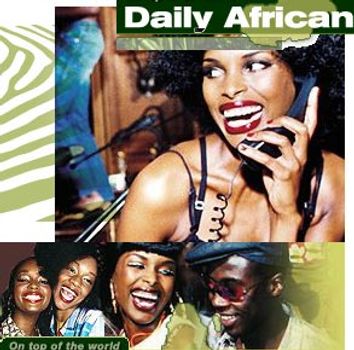
Eight young people sit in a crowded outdoor courtyard, wearing bright, colorful and scanty clothing. They have muscles, curves and even, glowing, dark brown skin. They could be cousins to fashion runway models like Alek Wek or Tyson Beckford or any one of this month’s more handsome, charismatic chart-topping hip-hoppers. Most are smiling or laughing; one man clutches a champagne bottle.
No one I know dresses or acts like this in real life. I never get invited to parties like these, where the clothes look like a dashed-off take on what some corporate designer thought the hip urban youth of today should be wearing this summer. The look that these Beautiful People are fronting isn’t hip-hop swagger, retro appropriation or athletic/surf, but it somehow manages to borrow elements from all three styles without getting caught stealing outright.
The most prominent must-have in the line is “snow bleach” jeans (if one can’t wait until after Memorial Day to begin wearing white in public). The Diesel “fashion expert” tells us that denim is the new black, a statement packed with off-color irony when you consider that the pants are white, the models are brown and the conceit of the whole marketing campaign takes surreal and heretical liberties with all things black.
Over the ad (well out of the way of the models but definitely in your face) floats a newspaper called the Daily African, described on its front page as “Africa’s biggest-selling quality daily.” Its headlines blare startling news: “Birthrate booms in Italy and Spain. Europe set back even further.” The lead story’s sub-headline continues: “With an average of 8.7 children born to every Italian woman and an annual GNP per capita below AFRO 45, there is a high risk of looming tragedy in southern Europe.” The highlighted quote: “The local liquid drug Grappa may be blamed for high sexual activity.”
It’s a triumphant escapist fantasia. Or maybe it’s a symbol-savvy script-flipping of Africa’s image as an unstable, HIV-stricken, famine-ridden post-colonial locus where things fall (ahem) apart. Or is it ad copy for the African Union, the continent-spanning organization that Libyan leader Moammar Gadhafi, with visions of rivaling the European Union in influence and respect from the West, is trying to foster with gestures of goodwill and oil money? Maybe it’s a take on two trends: the awareness of African diasporic youth as fashion and music trendsetters; and the new economy’s speedy upward trajectory and subsequent bumpy descent.
At the paper’s Web site, the top story describes an African telecom CEO’s upscale celebration after her deals to offer cellphones in Germany and England sparked a record rise in the stock market.
In the Daily African — in the Diesel ad and on the Web site — one sees the African continent upside down and the whole world turned topsy-turvy, as if the Global South, rather than North America, Europe and the Pacific Rim countries, were suddenly leading the planet in resources and standard of living. We find the beleaguered continent literally on top of the world and outside of the forces that have influenced its last few hundred years — colonialism, the Afro-Atlantic and the Islamic slave trade, to name a few.
The one wrong note in this style spin would be the peppy promotion of animal print. “Animal print is back in with a vengeance,” says the Diesel style guru. “In fact, it’s the new black.” (Can there be more than one new black?) “So lavish your legs with leopardskin, tease your torso with tiger and zip up with zebra. But don’t overdo it. The scantier the better — let your body do the talking and be a predator out there.”
This is when we begin to edge toward some very uncomfortable territory, especially if we are African-American. After all, negative stereotypes about savagery and wildness have long dogged African representations in Western culture. They may not have stopped Josephine Baker from her famous club routines, and Sudanese beauty Wek has been known to flaunt some hides. But even she had this to say about the issue of black models as exotics in an article in the September 2000 issue of Essence magazine: “I’ve done the leopard skin; I’m not ashamed of my culture, but it has to be right,” she says.
Aesthetic blunders aside, ads like the Diesel fashion blasts do the job they set out to do: They make me rubberneck for a moment or two before I flip ahead to read the “articles,” which were the reason for my impulse purchase of the magazine in the first place. Under fluorescent lights inside the 24-hour newsstand near my apartment, it’s a tableau reenacted at least twice a month: I walk in, I browse the aisles and buy a bright-yellow plastic bag full of glossy paper and subscription inserts. Then I leave. I call it research, my wife calls me gullible (usually with one eyebrow arched behind the one magazine she usually purchases during our visits) and things proceed apace.
Advertisements that toy with accepted social and political issues rarely go mainstream, except in rare cases: French engineer Louis Reard topped Cannes couturier and fellow countryman Jacques Heim’s “Atome” bathing suit by naming his own swimsuit design the “bikini,” in hopes of having an explosive effect on women’s swimwear just as U.S. nuclear tests were having their effect on the Pacific Ocean’s now-infamous atolls. In the last 20 years, the most common reference for cosmopolitan mass-marketed designer fashion would be Oliviero Toscani’s United Colors of Benetton campaign, which began by referencing serious topics like racial prejudice, religious strife and AIDS awareness before veering farther over the edge in recent years with unflinching images of AIDS patients, war scenes and death row models. (And selling loads of goods in branded shops around the world all the while.)
But despite the occasional (OK, way more than occasional) clunker of an image, it’s good to see a campaign that reminds me that ads aren’t just evil objects and visual pollution I must ignore at all costs to my sanity. It’s a pleasant idea, putting aside the Naomi Kleins and Kalle Lasns of the world for a moment, to reflect on a company that seems to be trying to take the unpleasant geopolitical inequities of the world and acknowledge them in the process of communicating to me and millions of others.
And no, OK, Diesel’s campaign isn’t going to make me buy its jeans. I’ll admit this one’s catchier than last year’s campaigns, with Joanna the singing cowgirl and the whole “luxury of dirt” selling point that attempted to play with (and off of) trash-TV truths and tabloid tropes, or the King Frank spokesman thing (about whom frankly, my dear, I couldn’t give a damn). I wasn’t up for the warmed-over “Natural Born Killers” chic — but I’m not so down with the Daily African that I’m going to pull on a pair of those goofy snow bleach pants. The message is cool, but the new black isn’t ever going to be white.
Continue Reading
Close
I’m sorry. I regret having to write this story. But I can’t stand idly by while a literal world of pain stands in need of apology. From China to Japan to Australia to Dan Rather (his own sovereignty), there’s been a worldwide storm of regret this week. So I’ve taken notes:
How not to do it: (Agence France Presse.) “We regret that the Chinese plane did not get down safely and we regret the loss of the life of that Chinese pilot,” Secretary of State Colin Powell told reporters outside the State Department.
“But now we need to move on. We need to bring this to a resolution and we are using every avenue available to us to talk to the Chinese side to exchange explanations and move on.”
How to do it better: “I regret that a Chinese pilot is missing and I regret that one of their airplanes is lost. Our prayers go out to the pilot, his family,” Reuters reports the president as saying.
Sub-stantive regret: TOKYO (AP) — An unannounced port call in Japan by a U.S. nuclear submarine has added to mounting mistrust of the U.S. military in this nation and is threatening to further strain already tense relations between Tokyo and Washington.
The incident, which the U.S. blamed on an “administrative error,” was the first-ever violation of a pact that requires U.S. military authorities to give 24-hour advance notice before the arrival of a nuclear-powered sub in a Japanese port.
Japan’s foreign ministry said Wednesday that the United States had apologized for the incident. But an official at the U.S. Embassy in Tokyo, who spoke on condition of anonymity, wouldn’t confirm the statement. The official said the United States regrets the miscommunication and will take steps to prevent a recurrence.
Rather regrettable: (Reuters.) Veteran CBS News anchor Dan Rather apologized on Wednesday for his recent guest speaker appearance at a March Democratic Party fund-raiser in Austin, Texas, calling the move “an embarrassing and regrettable error.”
The Washington Post reported that donors paid as much as $1,000 to attend the private event at which Rather was billed as the main attraction, citing invitations it had obtained.
The report said the event raised $20,000 for the Travis County Democratic Party, co-hosted by the newsman’s daughter, Robin Rather, who is reported to be considering a campaign for mayor of Austin.
“I made an embarrassing and regrettable error in judgement by going to this event … It was a serious mistake, which I acknowledge.”
G-reef stricken with regret: SYDNEY (Reuters) — The producers of the American reality television show “Survivor” apologized Wednesday after two cast members took coral from Australia’s ecologically sensitive Great Barrier Reef … “On behalf of myself, production and the survivors involved, we extend our sincerest apologies for this error,” “Survivor” executive producer Mark Burnett said in a statement released by Australian network Channel Nine Wednesday. “Please know that this was an honest mistake which we deeply regret.”
Regret to inform: CAMBRIDGE, Mass. (AP) — Harvard University has sent a letter of regret to the widow of a former professor who was forced to resign almost 50 years ago on suspicions he was a Communist.
But Ann Fagan Ginger, widow of Raymond S. Ginger, told the Boston Herald in Tuesday’s editions that the three-paragraph letter falls woefully short of the apology she had sought.
“It’s the arrogance of power,” Ginger said in a telephone interview from her California home. She has sent another letter asking for a full inquiry into the 1954 incident.
Harvard officials would not comment to the Herald on the matter.
“Harvard took an action in the case of Mr. Ginger that many thoughtful people today, looking back, would not find appropriate,” said Harvard’s letter, written by Sharon Gagnon, president of the board of overseers.
“It is also clear that you and your family experienced hardship and anguish as a result, and for that (Harvard’s president) joins me in extending to you the university’s genuine sympathy and regret.”
Regrettaboudit!: NAIROBI (Reuters) — U.N. Secretary-General Kofi Annan said on Monday he regretted President Bush’s rejection of the 1997 Kyoto treaty aimed at cutting greenhouse gases.
Addressing a news conference during a visit to Nairobi, Annan called for a greater sense of urgency in tackling global warming for the sake of future generations.
“I regret the U.S. decision,” he said in answer to questions. “But I think it gives us more reason to fight.”
No regrets: (AP) — “What he told me was that he regretted it (the children’s deaths in Oklahoma City) because it distracted from the mission, from what his intent was in blowing up the Federal Building.”
In the new book “American Terrorist: Timothy McVeigh and the Oklahoma City Bombing,” McVeigh called the children killed in the bombing “collateral damage.” Details in the book marked the first time McVeigh publicly and explicitly admitted to the crime. …
“Most of the people that I see are crimes of passion, loss of control and mental illness. He was none of those things,” Smith said. “The lack of remorse and regret is not typical of murders I see. And I did not see in Tim the remorse. I saw evidence of personal depression at times about himself, his family, his life. But I did not see remorse.”
Regret comes in pairs: Grace Slick regrets two that got away.
Fox News anchor David Asman got a little more information than he wanted when he had Slick, Jefferson Starship lead singer, on as a guest the other afternoon. After a lengthy chat about Slick’s wild times during her band days, Asman closed up the conversation with, “Do you have any regrets?” Slick, not one to waste words, shot back: “Only that I didn’t nail Jimi Hendrix and Peter O’Toole.”
Deeply regrettable: (PlanetOut/Gay.com Network) — An Australian pro rugby player who resigned this weekend after being caught sticking his finger in opposing players’ anuses during a match is now considering taking legal action against the New Zealand Cancer Society (NZCS) for using his picture in an advertisement for prostate cancer checks. …
“I sincerely regret that anything I may have done has caused stress, anxiety and disappointment to everyone involved with the West Tigers,” AFP quoted Hopoate as saying in a statement he released through his manager.
NZCS took out an advertisement in New Zealand’s The Dominion newspaper with a color close-up of Hopoate apparently sticking his finger in North Queensland captain Paul Bowman’s anus. According to the Australian Associated Press (AAP), the accompanying text reads, “A bloke’s chances of developing prostate cancer increases as he gets older. If you have symptoms that you’re concerned about, consult your local doctor. It won’t hurt a bit — promise.”
Continue Reading
Close
Recently released U.S. Census data reveal telling demographic, or at least attitudinal, shifts afoot in the American population and how Americans identify themselves in terms of race. A New York Times story says 5 percent of African-Americans identified themselves as multiracial, or belonging to more than one race; that’s many more than government forecasters with the Office of Management and Budget were expecting.
But this is nothing new for me. In fact, this kind of self-reflection about my mixed heritage is something of an annual ritual. On past St. Patrick’s Days, close white friends have joked about my being “black Irish.” That’s been my cue to trot out a story about my great-great-grandfather, Albert Kelly, who got off a boat from Ireland in Philadelphia in 1868. The family griot, my uncle Douglas who lives in Washington state, says that Kelly married Hilda Cheatham, a Cherokee woman, and settled down on a farm in Mathews County, Va. The youngest of their four children, James Handy Kelly, was my great-grandfather and grew up to spawn my father’s side of the family.
The phrase “black Irish” trips off people’s tongues without much thought. In 20th-century mythology, a romantic cast of characters explains the term: Spanish sailors with generations of Moorish blood in their veins, shipwrecked on Irish shores after being separated from the Spanish Armada; Irishmen deported from Cromwell’s England, pressed into indentured servitude and eventually intermarrying with Africans and Indians on the Caribbean island of Montserrat, yielding descendants who still allegedly speak in a distinct brogue to this day. Others contend it’s an American term that bears no relationship to actual African or Hispanic heritage, while still others blarney further on a genealogical mailing list.
Calling a white person “black Irish” doesn’t seem exclusionary in the same way calling a light-skinned black person a “redbone” would, given the African-American community’s long-running issues with skin color. But I guess the issue isn’t what you call yourself or what you can get others to call you, but how comfortable you are in your own skin.
I’m not the only brother with a Hibernian in the woodpile, either. In “MultiAmerica: Essays on Cultural Wars and Cultural Peace,” the African-American author Ishmael Reed writes of being invited to Irish cultural events because of his Irish heritage, and recalls attending an Irish-American writers conference at San Francisco’s New College in March 1995. And in an interview in “Solo,” a 1998 book on women singer-songwriters, the African-American jazz vocalist Cassandra Wilson briefly riffed on her affinity for Irish culture. “We have to deal with the fact that a lot of us do have European ancestry. That’s something that we don’t readily talk about,” Wilson said. “Why am I so drawn to Irish culture and why do I feel so comfortable with the music? I often wonder if that feeling has something to do with Irish ancestry … There’s a lot happening in many of us. I think you have to celebrate every part. It’s what you are.”
And, of course, the Irish themselves weren’t always thought of as being altogether white. Anti-Irish sentiment after the great potato famine migration of the 1840s led to their being called “Irish niggers”; the two despised groups were often lumped together at the bottom of the American bucket. Two of the 19th century’s great African-Americans were well aware of the parallels.
“During my stay in Dublin, I took occasion to visit the huts of the poor in its vicinity and of all places to witness human misery, ignorance, degradation, filth and wretchedness, an Irish hut is pre-eminent,” Frederick Douglass wrote. “I see much here to remind me of my former condition … He who really and truly feels for the American slave cannot steel his heart to the woes of others.”
W.E.B. DuBois, who grew up in Great Barrington, Mass., in the 1870s, recalled that “the racial angle was more clearly defined against the Irish than against me.”
Still, “African-American” is how I identify myself. It’s how others seem to see me as well, and it’s not as personal a battle for me as it is for some mixed-race people. For some, not acknowledging both sides of their ancestry amounts to a fundamental betrayal of their family’s history. I’m not judging their decision, but it doesn’t feel that way to me personally. I also know that racial data translate into political power. So I’m not checking any other box on future census forms, regardless of my motley heritage. I love the idea that I’ve got some Irish in me, but I’m not ready to go so far as to define myself as Irish-American. Then again, I’m a guy who can’t say the word “Cablinasian” without laughing out loud. The joke will be on me someday soon when my Delhi-born wife and I decide to have kids and raise them as modest, unassuming superhuman golf ‘droids.
But maybe one-race-box-checking guys like me are destined to go the way of the dodo. On this census, not only did lots of black people identify themselves as belonging to more than one racial group, but millions of white people all over America acknowledged their Native American roots. This led to a huge leap in the American Indian population in the latest census, one not directly attributable to birth and death rates, outmarriage, mixed-ethnicity kids or even to the lust for a casino license.
I’m looking forward to my friend Adrienne’s prediction that America will “turn into Brazil.” It may confuse the hell out of the Census Bureau, but we’ll win a lot more beauty pageants and soccer games.
Continue Reading
Close