Graeme Wood

The enigmatic Putin

A new biography delves into the life of Russia's terrifying and mysterious leader

  • more
    • All Share Services

The enigmatic Putin

There are those who believe — and I am one of them — that Vladimir Putin is the only world leader operating today with a coherent long-term strategic vision for his country. Russian policy has been derided as amoral, wicked and misguided. But for the last 10 years, since the departure of the stroke-addled boozer Boris Yeltsin, Russia has never been called unguided, and its mysterious steersman is unquestionably Putin himself.

Barnes & Noble ReviewMasha Gessen’s political history of Putin’s times,“The Man Without a Face,” gives at least a dozen reasons to tremble before her subject. It is a rage-filled indictment of the Russian prime minister, astonishingly brazen in its personal animus and willingness to name Putin as the author of terrible crimes. Among recent profiles of contemporary Russia, there are certainly books that are more sober and more cautious. There are few as furiously accusatory.

Putin comes across as a sort of malevolent and murderous Russian Bismarck, expertly consolidating power after a decade-long anarchic slide. Once in power, Gessen claims, he and his government have spared no effort or life to silence critics and cow the population into acquiescence. Gessen strongly implies that Putin has something akin to a mental defect that compels him not only to triumph over but to rob and destroy his enemies.

As a biography, “The Man Without a Face” struggles to weave the sparse available details of Putin’s life into a coherent narrative. We know certain facts about his childhood: by his admission, Putin grew up a “real thug,” a bloody-knuckles neighborhood brawler constitutionally incapable of backing down from a challenge. His father suffered terrible war wounds but survived, and even as a child, Putin aspired to join the KGB. Normal Russian kids from that era, Gessen says, wanted to be Yuri Gagarin. Putin wanted to be the guy who kept tabs on Yuri Gagarin.

He got his wish and joined the KGB as an operative sniffing out internal dissent. Subsequently, as an officer in Dresden, East Germany, he watched the Soviet Bloc unravel around him. When the newly free East Germans rioted and confronted him personally, Putin appealed to Moscow for guidance and was permanently shaken when his superiors responded that they were powerless and left him and his young family at the mercy of uncertain times.

Gessen contends, contra Putin’s publicly acknowledged CV, that after the break-up of the Soviet Union he never left the intelligence services, and that nearly from the start of the new Russia he has been insidiously tunneling under Russian democracy and preparing it for the utter collapse that we witness today. When he came to power, as Yeltsin’s chosen successor, few knew much about his origins or fitness for the job. He appeared to be “malleable and disciplined,” says Gessen, and therefore a good caretaker for the rich Yeltsin-linked incumbents from the first decade of independent Russia. But, she says, “the people who lifted him to the throne knew little more about him than you do,” and they were spectacularly wrong.

After sketching this thin biography (the ingredients of a detailed version are presumably locked in a KGB vault somewhere) Gessen describes a long series of crimes, most of them well-known, and in almost every case sees Putin as either a silent partner in their execution or as solely responsible. None of the accusations are new — for years journalists and activists have accused the FSB of blowing up apartment buildings, killing hundreds, as false-flag operations designed to boost Putin’s support as an anti-terror figure — but arrayed here in series they make Putin’s government look insanely sinister. These crimes, needless to say, include the murder and beating of the anti-Putin press.  Putin has even menaced foreign journalists. At a public press conference in Brussels, a Frenchman asked an uncomfortable question about Chechnya, and Putin responded by inviting him to come to Russia and have his gonads chopped off.

But the darkest note in Gessen’s book is not political but psychological. Putin’s need for total dominance of others, personally and politically, reaches levels that — if these stories are true — should spook us all. In 2005, when Putin met Robert Kraft, owner of the New England Patriots, he asked to examine the American’s ring, a diamond-encrusted monstrosity given to winners of the Super Bowl. “I could kill someone with this,” Putin said, creepily, and then placed it in his pocket and left. Putin’s fortune is estimated at $40 billion, allegedly the result of skimming a huge share of business deals, so he doesn’t need to take such items for money.  But Gessen says Putin’s nature is to covet, and when he combines pathological covetousness with unrestrained power, the result is the kleptocratic disaster that is contemporary Russia.

Putin’s public presence has, of course, been an occasion for some comedy. Bloggers half-jokingly have professed crushes on him, Stephen Colbert called for a “Putin ’08” write-in campaign for the White House, and we see a photo gallery every time the Kremlin’s releases another album of beefcake publicity photos (showing Putin in varying states of virile undress, performing outdoors activities such as fly-fishing and underwater archaeology).

For those of us safely abroad, where the free press and its gonads are relatively secure, it’s easier to appreciate the humor in all this. Even Russians have been known to laugh: when George W. Bush announced that he had looked into Putin’s eyes and “was able to get a sense of his soul,” Russians thought the quote was a real knee-slapper, since among Russians it is common knowledge that Putin has no soul. But in the context of Gessen’s jeremiad, and the recent elections, the only humor possible about Putin is of the gallows variety.

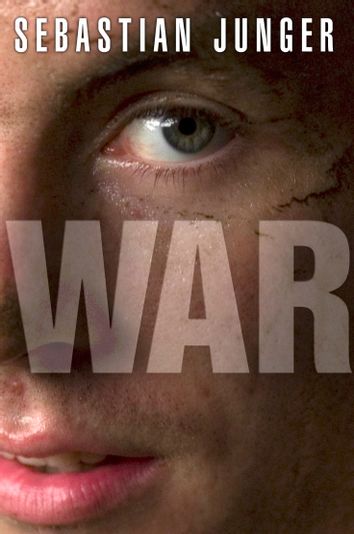
“War:” Sebastian Junger’s hellish Afghanistan masterwork

From the author of "The Perfect Storm" comes an almost unbearably intense report of an American defeat

  • more
    • All Share Services

"War" by Sebastian Junger

In mid-April, the U.S. military executed what it called a “strategic withdrawal” from Korengal, a small valley in northeast Afghanistan that it had tried for four years to pacify. Dozens of U.S. soldiers and many more Afghans had died violently there. When the U.S. pulled out, the valley was still so dangerous that officers had to offer village elders six thousand gallons of fuel as a bribe not to attack the convoys during their drive to safety.

This is about as close to an acknowledgment of defeat as one is likely to see in this war. Sebastian Junger’s new book, “War,” is a depiction of one year in the life of the U.S. soldiers who tried to turn the occupation of Korengal around, and whose battle against a steady barrage of Taliban attacks was eventually judged to be not worth the trouble. Junger, author of “The Perfect Storm” and a reporter for Vanity Fair, visited Korengal’s forts and outposts serially for one year, and his dispatches present a sometimes unbearably gritty look at the daily life of soldiers there. As a narrative of combat in Afghanistan from the U.S. ground perspective, the book has no rivals. It makes one wonder how any army could hold ground in Korengal, and indeed why it would even want to.

Barnes & Noble ReviewThe Korengal of Junger’s narrative is “an Afghanistan within Afghanistan,” crystalizing all the violence and enmity of that country in a divot of earth just six miles long. The local people are completely uninterested in helping their occupiers. The fighters among them are hellbent on overrunning the bases, not only to kill Americans but also to carry off their corpses as prizes. The strategic value of the valley is essentially nil, because it is not really on the road to anywhere; only six thousand people live there. Its sole products, timber and wheat, are not particularly lucrative. Some say Korengal has a sort of “flypaper” role, and attracts fighters who might cause even more damage elsewhere. But none of the explanations is convincing (invocation of flypaper is always a sign of strategic bankruptcy). At one point a soldier tells Junger that the base he commands is really just “a huge middle finger pointed at the Taliban fighters in the valley,” a monument to remind them that shooting Americans will only make them fight harder, until now at least.

With that middle finger now publicly amputated, one might ask what force of will kept it extended for so long. In Junger’s telling, the effort was horrendous, and the stresses it put on American soldiers nearly unimaginable. In several engagements, the Americans take more than fifty percent casualties, and Junger is unflinching in reporting the worst of them, particularly the head shots (usually a quick death) and the “bleed-outs” (ripped arteries, which only a swiftly applied tourniquet can save). His accounts of the few times when Taliban have literally overrun outposts, breaching their walls and shooting freely among the soldiers, are particularly harrowing, and produce the bulk of the American body count in these pages.

The narrative is always compelling but at times difficult to take, for reasons both of squeamishness (though rarely gory, the accounts are wrenching) and of emotional drain. Junger has deliberately ignored strategic questions in favor of an intense and sustained soldier’s-eye view. And while that view does justice to the boredom of base life, it does pack into just a couple hundred pages a full year of death and mayhem, which simply cannot be processed by anyone in the level of detail at which he offers it. Just as a war movie that showed only the most intense scenes of battle (think of the Omaha Beach scenes of “Saving Private Ryan” drawn out over a full two hours) would be unwatchable, by its own potency Junger’s book is rendered unreadable in large doses.

That, perhaps, is the goal. The book is less about fighting with the brain than about fighting with the muscles and glands, and taxing them beyond what they can normally sustain. The soldiers with whom Junger embeds do not care about politics. They are endlessly practical and look for any way at all to bear the physical and psychological burdens of their situation. They know that if you cut off your shirt below the armpit you will stay cool, yet appear still to be in uniform, under your body armor. They know how to sustain bucket-loads of stress hormones in their systems, in anticipation of a wave of Taliban attacks. And they know that wearing flea collars on your ankles doesn’t do much to protect you against Afghan fleas, who on every forward base I have visited have been roughly as ferocious and bloodthirsty as the humans.

This practicality is at times unnerving. The soldiers are concerned at every moment with survival, and that fierce reality reduces them temporarily to bundles of instincts, capable of being described in the language of machines, or as sums of their chemically constituent parts. Junger says they reek of ammonia, because in the course of fighting in nearly a hundred pounds of combat gear they quickly burn off their bodies’ natural grease and start burning muscle, with ammonia as a malodorous byproduct. In firefights they live or die by their reaction speed, like machines or robots. Junger looks up the neurobiology (there is a surprising amount of academic research in this book, though it is worn lightly) and does the math, finding that one might feasibly dodge a bullet, if it is coming from more than ten football fields away.

What does all this amount to? The book certainly explains less than its grandiose, single-word title promises. (The section headings, equally grandiose, are “Fear,” “Killing,” and “Love.” Why this extremely specific and detailed book requires these general and pretentious headings is a mystery.)  There are no Afghans with prominent roles in the narrative, even among the Americans’ comrades in the Afghan National Army, so it would be a strain to claim that it revealed much about the Afghan war as a whole, or about Afghanistan as a country — although since Junger suggests that the Korengal, that unfriendly and valueless place, is a microcosm for Afghanistan, one wonders whether the strategic withdrawal portends one on a larger scale. In the end, and especially with the ignominious coda of last month’s base closing, “War” reads as a melancholy tale of frustration, an account of an inexorable slide toward defeat, with many dead and damaged, physically and psychologically. To foreclose the possibility of a sequel, six thousand gallons of diesel is nothing short of a bargain.

Continue Reading Close

A prisoner’s tale

The saga of a hapless New Zealander who ended up behind bars after seeking work in Iraq reveals the darker side of the U.S.-led coalition's operations.

  • more
    • All Share Services

When Andreas Schafer was released from a prison in Iraq earlier this year, the Iraqi police apologized abjectly for having inconvenienced him for three months. They made sure he knew that if ever he wanted to get back at the arresting officer by, say, slaying the man’s brother, it would be all right by them. And he could expect not to be prosecuted for the crime.

It says something about Iraqi justice and the American-led occupation that Iraq’s finest viewed an invitation to murder as a triumph of decency and due process. Schafer, a hapless, idealistic 26-year-old New Zealander who had gone to Iraq in search of a job with a nongovernmental organization, ended up languishing in a prison in southern Iraq as an unacknowledged prisoner of the U.S.-led coalition. By keeping Schafer in an Iraqi-run prison, rather than in a prison monitored by Americans or international observers, the United States avoided putting him on the books and having to account for his treatment, even to his own government.

It took nearly three months of diplomatic wangling to get him released, and in those three months he observed startling ineptitude on the part of coalition soldiers. He also observed the private life of a segment of Iraqi society that has gone mostly unreported on during the occupation.

The coalition’s stalling and prevarication about Schafer’s status reveal at best a state of utter bureaucratic disarray, in which prisoners can disappear or appear without the slightest official record. At worst it suggests that the secrecy and abandon with which the United States treats prisoners in Iraq are every bit as dark and uncontrolled as critics fear.

I met Schafer in Iran in January 2004, just weeks before he entered Iraq. He had spent months living meagerly in grubby Iranian and Afghan hotels as one of the many unwashed backpackers whom every country but the United States seems to dispatch to the ends of the earth. His half-baked plan in Iraq was to do what he had done in Kabul, Afghanistan, four months earlier — show up, knock on doors and get a job with an NGO. Afterward, he hoped (in a plan doughier in the center than his Iraq plan) to head from Baghdad to South Africa by land, learn to fly a microlight aircraft and chase elephants around the savanna until his cash ran out.

Schafer entered Iraq in late January 2004, at the end of that vanishingly brief moment of post-invasion safety, when visiting Baghdad was merely an act of stupidity and not yet one of stark-raving lunacy. Nick Berg hadn’t yet been decapitated, and reporters felt free to travel major roads, even if they donned flak vests to do so.

Schafer had no flak vest, and with his body type it would be awfully difficult to buy one off the rack anyway. He is of ridiculous proportions, with an elongated physique that looks like Abe Lincoln stretched lengthwise in a funhouse mirror. Sharp features and ultra-skinny limbs give him the profile of a malevolent tree. In an Iraqi crowd, Schafer would have stood at least a head above everyone else, a distracting sideshow on any street corner and perhaps, given his Western looks, a bit of a bomb magnet.

After a couple of days at a cheap Baghdad hotel, Schafer decided on a trip south to Karbala, the spiritual omphalos of the Shiite faith and the site of the most intense observances of the martyrdom of the Shiite Imam Hussein. It was Ashura, the anniversary of Hussein’s death, and tens of thousands of pilgrims had gathered in Karbala, wearing black and self-flagellating in grief over Hussein’s death. Amid the scourging and wailing, bombers attacked the Kadhimiya mosque in Baghdad and the streets of Karbala. Both attacks left scenes of horrific carnage, with splattered human remains smearing the streets. In Baghdad, taxi drivers usually eager to earn a buck told me my money was no good that day, and that they would just as soon stay home than drive into a mob of blood-soaked, enraged religious zealots. That seemed sensible to me.

Schafer was not so circumspect. On the day of Asura, he ventured south from Baghdad to Diwaniya, where after depositing his luggage at a hotel, he met three Iraqi policemen on a city street, and did not leave their custody for almost three months.

The patrolmen said they regretted having to arrest him. The bombings that morning had put them on high alert, they said, so anyone who looked out of place needed to be checked out. (Police later told Schafer that his arrest was the work of overzealous police excited to meet the first tourist in Diwaniya, then arrest him and practice their English.)

By evening he heard that someone in the stationhouse had alerted nearby U.S. forces, who commanded the Iraqis to hold Schafer indefinitely for interrogation. The Iraqis again apologized and told Schafer he would have to sleep that night at the jail. “I was still sure it would be definitely no more than one night,” Schafer says.

The holding area was small, with three cells of 30-40 criminals each. “I was mostly scared of the other people — the freaks of the freaks of Iraq.” Their offenses ranged from prostitution to murder. Many had been caught with the amphetamine pills that Iraqis started popping eagerly soon after Saddam fell.

Almost a week later, American troops showed up for the first of four interrogations that ranged from crisply professional to ridiculously inept. Cuffed, Schafer was led to a room with eight U.S. soldiers decked out in desert fatigues and carrying automatic weapons. Schafer explained who he was, then was politely told that he would have to stay in jail a few days more.

Several weeks later, a completely different set of Americans showed up, this time with a Lebanese-American interpreter. This second group showed no evidence of having read the first team’s report. Moreover, they were ignorant of the most basic facts about the Middle East. At one point, Schafer says, the officer leading the interrogation asked him, “Do you mean to tell me that you were in Iran and Afghanistan four months and you don’t speak a word of Arabic?” (The translator pulled the officer aside and gave him a lesson on Middle Eastern languages. Iranians and Afghans don’t generally speak Arabic.)

And even the translator exhibited some staggeringly incompetent interrogation tactics. “He said to me, ‘I’m going to write something here in Arabic, and you’re going to tell me what it says.’” Schafer replied that he did not speak Arabic. The translator belted out a triumphant “Aha!” and asked how Schafer knew the word was Arabic, rather than Persian or Urdu, both of which use a similar script. “You told me it was Arabic,” Schafer said. Later the translator yelled a word in Arabic and looked for traces of comprehension on Schafer’s face. Schafer again told him that he did not speak Arabic. One more triumphant gotcha later, he asked again how Schafer knew the shout was Arabic. Schafer pointed out that they were, after all, in Iraq.

“They didn’t know the languages. They didn’t know the culture at all, and you could see it just from the way they presented themselves around Iraqis,” Schafer says. The failing most relevant to Schafer was the Americans’ failing of imagination. “They cannot imagine that someone would come to a country less pleasant than their own, unless they’re invading it or have got a really good job.”

Every three to four weeks, a different group of Americans showed up, asked the same superficial or stupid questions and left. Then the Abu Ghraib prison scandal broke, and at the end of one session an interrogator threatened Schafer with a transfer. “What’s probably going to happen now,” he said, “is you’re probably going to Abu Ghraib. You know what happens there, don’t you?” Schafer says the interrogator followed the threat with a suppressed grin and a sheepish laugh.

Schafer was, it must be said, a suspicious or at least implausible figure. You don’t wander around war zones without a reasonable story about who you are and where you’re going. Schafer acknowledges that his presence in the combat zone was odd and that the U.S. coalition would have been negligent not to have demanded more than his own word that he was no threat. “I can understand that they would want to keep me for a couple days,” he says. Mere weeks after he had been picked up, the police raided his former hotel and captured two Saudis bearing a kilo of heroin and a picture of Abu Musab al-Zarqawi.

But less explicable was the lack of any serious effort to discover Schafer’s history or real reasons for being in the country. In New Zealand, Schafer’s mother, Ursula, worried about her son — she had not heard from him since receiving a brief e-mail from Baghdad — and contacted authorities to track him down. New Zealand’s Ministry of Foreign Affairs demanded information from officials in Washington, but they denied that any U.S. personnel in Iraq had ever met Schafer, much less kept him in custody and interrogated him repeatedly. Schafer was, in essence, a ghost detainee, a prisoner in legal limbo whose identity was kept secret from even as harmless and friendly an ally as New Zealand.

From prison, Schafer persuaded an Iraqi to e-mail a second message to his mother to inform her that he was fine (and that he needed her to deposit money into his bank account to cover his credit card payments). The messenger’s shaky English mangled the message, which New Zealand diplomats interpreted as a demand for ransom. New Zealand reaffirmed its policy of not negotiating with terrorists. Ursula Schafer fretted, the Kiwi press carried stories about its kidnapped citizen, the prime minister and foreign minister commented ruefully and, presumably, some antipodean credit card company billed Schafer for a missed payment.

Schafer remained optimistic about his release. “The Americans said, ‘Hold on to him until tomorrow.’ I never stopped thinking that they were going to release me in just a day or two.”

Meanwhile, Schafer’s incarceration made him a rarity among foreigners in the country — a Westerner who had spent time living with southern Iraqi Shiites. Journalists tended to live in or near the smaller of the two Green Zones in Baghdad, safe in the knowledge that they could pass their evenings with a chess game and chicken kebab at the Palestine Hotel. Their Iraqi employees tended to be educated Sunni professionals, not the Shiite illiterates and thugs who were Schafer’s intimates for his months in jail. And this is to say nothing of the political planners of the occupation, whose primary Iraqi informants appear to have been urbane, nonsmoking, secularist polyglots — people as different from the average Iraqi Shiite as one could possibly find.

Prisoners shared food and opinions, and they even offered to place their own lives at risk for Schafer’s sake. At the time, Muqtada al-Sadr’s Mahdi Army was rallying to take control of southern Iraq. In the prison, Sadr’s support was enormous, not least because he vowed to release all prisoners after overrunning Diwaniya. Fighting grew intense around the jail, and before long it appeared inevitable that Sadr’s Shiite guerrillas would spring all the criminals, placing Schafer at the guerrillas’ mercy.

Cellmates advised him to flee with them to a house and lie low. “They kept asking me, ‘Can you run?’” Schafer says. Once Sadr’s militia was outside, close enough to have conversations with the inmates over the walls, the police prepared him for chaos. “The cops came by and told everyone to put their clothes on, because you’re getting out tonight. Everyone wanted to help me. They said, ‘If somebody sees you, they’re going to kill you.’” At the last minute, U.S. forces arrived and pushed back the militia.

Schafer reports that the prisoners’ attitudes toward the Americans were less resentment than disappointment that their promises had come to nothing. The Iraqis harbored weird and pitiful notions of what those promises were. They knew Bush had vowed to make Iraq a democracy, but their understanding of democracy was childishly optimistic. For example, the looters who plundered Iraq after the invasion are reviled in Baghdad and other more educated areas. But to the prisoners, the looting was not just licit — it was a right and duty granted to Iraqis by George W. Bush himself. “They all confused democracy with anarchy,” Schafer says. “They thought democracy was lawlessness. They thought it was anarchy where everything works properly, where you can walk into shops and just take things.”

With few exceptions, Schafer says, his cellmates treated him and one another with respect and civility. They were men of God — 99 percent of them every bit as fundamentalist and strict in their observance as the unspeakably pious Muslims of Afghanistan. Schafer’s descriptions of prison life feature none of the rape and savagery found in Western prisons.

Most of all, Schafer says, the Iraqis he met were simply weary — drained of energy after too many years of a life only barely worth living. “A guy would get 20 years for visiting a prostitute, or for small quantities of drugs,” Schafer says. “After they were sentenced, they’d cry for an hour. And that’s it. They’re just used to suffering. They’re used to their life being really crap.”

It did not help that the justice system that determined their fates was corrupt and capricious in the extreme and meted out decades behind bars for a pocketful of amphetamines. But the same court would let a Mahdi Army foot soldier walk after he slaughtered two sons of a rival. “The level of justice was pretty much terrible,” Schafer says.

Many of his cellmates — Schafer estimated at least a third of the jail’s population — consisted of new Iraqi police. “A policeman hijacked a water truck and sold it for $15,000. And he got two weeks.” Other police were in jail in for sundry crimes, such as murder. “They’re all new recruits, guys who suddenly have a gun in their hand,” Schafer said. “They don’t know what they’re doing.” And since they were viewed as employees of the coalition, the American image suffered from their criminal incompetence.

Other agents of the Americans were more clandestine, which is not to say more competent. One of Schafer’s cellmates, an Iraqi named Ahmed who had lived in a Western country for years, confided to Schafer that he had responded to a TV ad in his adopted homeland soliciting Iraqi exiles to return home and “help with the reconstruction.” The sponsor of the ads, Ahmed said, was the U.S. Embassy, which flew respondents to Kuwait and gave them a two-week crash course in espionage — basic training in how to copy overheard cafe gossip and report back on who was planting bombs and where.

Schafer reports that the operation was botched from the first moment. Ahmed “said the Americans let him out of a Humvee in a crowded market square,” in full view of the very Iraqis on whom he was meant to spy. “And so on his first time out there, he just freaked out, ran off to Baghdad and never came back.” Iraqi police picked him up in Diwaniya the same day they picked up Schafer.

Even if Ahmed had managed to slip undetected into Iraqi society, he was too boorish to blend in and too lacking in basic sense to provide useful information. In Schafer’s presence, Ahmed committed atrocious breaches of courtesy and tact by bragging of his sexual conquests and consumption of drugs and alcohol, so that the pious Iraqis on whom he was intended to inform considered him repugnant, immoral and untrustworthy. His claims about having been recruited as a spy by the U.S. are credible, Schafer says, because Ahmed himself was patently too dim to have come up with stories so detailed and plausible.

After living with Ahmed for several months, Schafer concluded that his roommate from hell was not just a fool but “‘beyond your wildest dreams’ incompetent, the kind of guy who would not have been able to function even in New Zealand.” Schafer says he has no idea how many more village idiots the Americans trained and unleashed to be the coalition’s eyes and ears in southern Iraq.

Schafer says that Iraqi police under coalition authority tortured suspects regularly. He claims to have seen beatings by police and, after he was transferred to a more brutal prison in Kut, at least one instance of an Iraqi electrocuted to the point of unconsciousness lasting three days. Americans, he says, visited the prison regularly and did nothing to stop or discourage the torture.

Even worse were those identified to Schafer as the Mukhabarat, the secret police who did the bulk of the toenail ripping and penis clamping during Saddam’s rule. Ahmed was summoned for an interview with the secret police, who claimed to be operating with the tacit approval of the U.S. “He came back half-insane,” spooked senseless by the Mukhabarat’s promise to torture him “till you can’t tell day from night,” Schafer says.

Eventually the Iraqi police, who had taken a liking to Schafer, granted him five minutes on a satellite phone to talk to his mother, who relayed the information to New Zealand’s Foreign Affairs Ministry that Schafer was stuck in a jail in Diwaniya. Weeks later, after transfers to two other prisons, a British consular officer met him at Camp Victory in Baghdad and gave him a plane ticket to Jordan. Throughout the ordeal, the United States denied having had contact with Schafer, even when the highest levels of the New Zealand government made it clear they were set on pursuing the case. The U.S. State Department still has not acknowledged interacting with him.

Schafer’s experience demonstrates not only the unpreparedness of the coalition and the cruelty of its Iraqi allies but also the deception about what is actually happening in the war. It is disturbing that New Zealand — not as staunch a U.S. ally as Australia, but still friendly enough to have sent a few dozen noncombat personnel to southern Iraq — could not secure a straight answer about the fate of one of its citizens.

Most of all, it shows how poorly the U.S.-led coalition dealt with the unexpected. Their training apparently did not prepare them to meet shaggy backpackers or ungrateful illiterate locals any more than it prepared them for the pitiless Sunni insurgency in Iraq’s north. Although it is a cliché to point out that the military is a monstrous bureaucracy incapable of making fast feints to accommodate changes in situation, in Schafer’s case the clichi is relevant: He fit no battlefield category, and as a result found himself in a hellish holding pattern, at the mercy of the shadow U.S. military.

Schafer was just the type of person the coalition must have hoped would come to Baghdad: educated, unafraid of mortal danger, eager to put his training to use in a country from which anyone with a passport and money was fleeing. His story stands as a cautionary tale for potential U.S. allies, another example of the danger of testing the limits of the inflexible imagination of the Iraq war planners.

Continue Reading Close