Gregory Levey

Pushing right-wing American politics — in Israel

Are Israeli politicians increasingly beholden to conservative Americans who lavish them with financial support and political pressure?

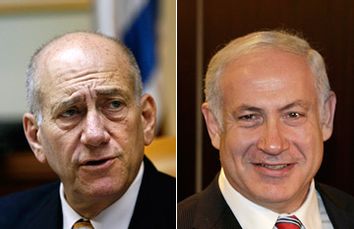
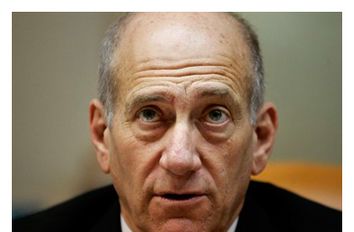
American voters are not alone in soon facing a crucial leadership decision. In Israel, corruption allegations are sweeping Prime Minister Ehud Olmert out of office, and next month the incumbent Kadima Party will hold a primary, with a general election likely to follow close behind. With closed-door negotiations under way with the Palestinian Authority, and tensions rising with Iran, the new Israeli government will be stepping in at a sensitive time, and its decisions will have serious repercussions for the country’s future.

Israeli citizens, then, may be facing a crucial election. But they aren’t the only ones determining who will lead them next.

Much ink has been spilled about the deep influence of Israel lobbyists in U.S. politics, but largely overlooked is that the relationship is a two-way street — with American influence reaching into Jerusalem. In fact, the Israeli political world is increasingly weighed down by American dollars and pressure, particularly from conservative American Jews, Evangelical groups and other hawkish political operatives. That comes to the rising dismay of some in Israel, and is potentially dangerous for both countries in terms of swaying politicians’ actions and decisions.

One of the major causes of Olmert’s downfall was his relationship with Morris Talansky, an American businessman. Talanksy claims that over the last 15 years, he has repeatedly given Olmert envelopes filled with cash, totaling over $150,000. There have been no concrete indications that Talansky received anything in return or influenced Israeli policy, and he has stated that his financial support for Olmert was based on Olmert’s past hard-line positions and Talansky’s desire to help support them. Even if there was no personal benefit to Talansky, though, the scandal has raised questions about the role of American money in Israeli politics.

In general elections, direct foreign donations are prohibited. But in primaries, candidates rely heavily on American funds. According to the Washington Post, in the 2007 Likud primary, former Prime Minister Benjamin Netanyahu — a hard-liner beloved by American conservatives — received about 75 percent, or approximately $400,000 of his more than half-million dollar campaign war chest, from American contributors. (The scope of campaign funds is much smaller in Israel than in the U.S.) Israeli donors contributed only 5 percent. Although Netanyahu provides the starkest example of Israeli politicians relying on American supporters, he is not alone. Labor Party leader Ehud Barak, for example, received approximately $200,000 of his primary funds in 2007 from U.S. backers, about a third of his total haul.

This year, Shaul Mofaz — a top contender to lead Kadima next — is also actively seeking financial support from abroad, according to David Kimche, a member of the advisory council at the Israel Policy Forum. Mofaz has also hired George Birnbaum, the Israeli partner of Arthur Finkelstein, a high-powered American campaign strategist and former advisor to Ronald Reagan and Richard Nixon.

Kimche, who served as director general of the Israeli Foreign Ministry and deputy director of the Mossad, recently told me that he believes these donations do not come without a price. “I wouldn’t say there are strings attached directly,” he said, “but I certainly believe strings are attached indirectly. People who receive the envelopes are beholden to those who give the envelopes.”

To be sure, Israeli politics is by no means an extension of the American political scene. With its many parties and its parliamentary model, the Israeli electoral system is almost hyper-democratic, one in which politics is far more of a blood sport than American politics ever could be. It is constantly rolling with the tides of public opinion in a way that often makes it difficult to govern at all without the fear of quickly losing office. In the end, it is the Israeli electorate, of course, that will have the biggest say in who will lead it. Still, Israelis clearly aren’t alone in making that decision.

In the past few months, Haaretz, Israel’s paper of record, has run a series of articles expressing misgivings about outside influence. In one of them, political scientist Shlomo Avineri wrote, “The voting public has the right — the sovereign right — to guarantee that rich foreigners, however well-meaning, whether from New York, London, Los Angeles or Melbourne, will not be partners in our democratic process because of their money.”

The involvement of foreigners in Israel’s democracy, however, does not end with fundraising — some are getting involved on more substantive levels, including active lobbying. As I wrote about in Salon in December, a coalition of American organizations formed last fall to oppose any division of Jerusalem, even if such an agreement to share control of the city with the Palestinians is called for by the democratically elected Israeli government. At the time, one of the coalition’s supporters, American casino magnate and multibillionaire Sheldon Adelson said, “If someone is going to jump off a bridge, it is incumbent upon their friends to dissuade them.”

Adelson, reportedly the third richest person in the United States and a big-time donor to the Republican Party, has gone further in entangling himself in Israeli politics. A hawkish and enthusiastic supporter of Netanyahu’s, and an opponent of Ehud Olmert, Adelson has used his energy and considerable pocketbook to try to ensure that Netanyahu is elected. Among his endeavors, he launched a daily newspaper called Israel Hayom, which quickly has become the second most widely read paper in the country. As a free paper, it is not a moneymaking venture; instead, it is widely regarded as a vehicle for attacking Olmert’s administration with the aim of propelling Netanyahu into office.

If the paper is seen as contributing to Netanyahu’s successful reelection, it is natural to assume that Netanyahu would take into account the political desires of his wealthy overseas benefactor — even if they do not align with those of the Israeli electorate.

“Bibi is beholden to those people who are helping him,” David Kimche told me, referring to Netanyahu by his popular nickname. “He will think twice about endangering the support he’s getting from Adelson.”

The fact that the majority of such influence comes from the American political right is worrisome for the Israeli left and those who are sympathetic to the Israeli peace camp. Hawkish American supporters of Israel are quick both to open their wallets and to let their voices be heard, while more dovish ones tend to occupy themselves with a variety of different causes and don’t often get as deeply enmeshed in the volatile Middle East.

“American Jews who hold the more conservative views toward Israel are also the ones who tend to be most actively engaged with Israel,” Jeremy Ben-Ami, executive director of J-Street, a new, dovish Israel lobbying group, told the Washington Post recently. “Liberal American Jews tend not to single out Israel as the focus of their philanthropy.”

What this means is that to the extent that Israeli politics is being affected by Americans, that influence is coming mostly from those who lean toward right-wing policies.

When I brought this up with Shmuel Rosner, Haaretz’s chief U.S. correspondent, who follows Israeli-Diaspora relations closely, he told me that, despite ambivalence about American influence on Israeli politics, he does not expect its role in the electoral process to dissipate. “Israelis who lose in the elections do not like the fact that foreigners support the winning side,” he said. “But I don’t think this will become an issue to the extent that it will make politicians more reluctant to get such support.”

In the end, Rosner added, winning power seems to trump all other concerns. “In opinion polls one can clearly see that the Israelis who do not want American meddling are those who do not benefit from it.”

No peace for Obama on Israel

He's facing nervous Jewish voters in Florida, attacks by Joe Lieberman and smear tactics in a political war that threatens his campaign.

In early June, the morning after he became the presumptive Democratic nominee, Barack Obama gave a speech focused squarely on the Middle East and Israel. While the timing was coincidental — his appearance at the annual gathering of the American Israel Public Affairs Committee had been scheduled long before the primary race played out — the speech was fitting, headed into the general election. U.S. dealings in the volatile region promise to remain at the center of the race, and the next presidency. On Israel in particular, Obama faces strategic challenges in his bid for the White House: He has had to combat long-running smear campaigns painting him as anti-Israel, while his Republican opponent, John McCain, has mobilized powerful conservative allies of Israel against him, including Senator Joe Lieberman.

“Jerusalem will remain the capital of Israel,” Obama told the AIPAC crowd on June 4, “and it must remain undivided.” He aimed to show his unequivocal support for Israel, and his remarks were received enthusiastically by the approximately 7,000 attendees at the powerful lobbying group’s event. But they also produced political blowback, including among Obama’s own dovish supporters, demonstrating just how thorny of an issue America’s relationship with Israel remains. Even the State Department sounded wary of Obama’s comments on Jerusalem, with a spokesman stating that the matter must ultimately be left up to the two sides in the conflict to resolve. In an interview with CNN the day after the speech, Obama reframed the issue in softer terms; inevitably, this led to accusations of flip-flopping and insincerity.

Obama’s views on Israel’s security, and the intractable conflict with the Palestinians, have met with uncertainty among some potentially key groups of voters — namely older Jewish Americans, as well as some Evangelical Christians and other foreign policy hard-liners. There are sizable Jewish populations in important swing states such as Pennsylvania and Ohio, where there are also significant numbers of Evangelical supporters of Israel. With about three-quarters of a million Jews, though, Florida is the crucible when it comes to Israel, assuming the state will once again see a close contest in 2008. It has the third largest Jewish population in the country, and politically important southern Florida has one of the highest concentrations of Jews anywhere outside of Israel — many of them senior citizens. According to a recent report in the New York Times, half of the Jewish population in Broward County is over age 59, and half of the Jews in Palm Beach County are over 70.

The vast majority of American Jews don’t cast their votes based on considerations for Israel. Historically, they vote mostly on domestic issues, and they vote consistently and overwhelmingly Democratic. Obama has the support of many younger Jewish voters, amid strong support from youth voters in general, around the country. It is widely believed in political circles, however, that older Jewish voters in particular can be influenced to vote on the Israel issue — if they are motivated by fear or uncertainty.

It is especially with this demographic that there is a danger to Obama in the oft-repeated accusation that his thinking is murky on the Israeli-Palestinian conflict, and on Israel’s security situation vis-à-vis Iran. The doubts among some voters seem to have risen at least in part from legitimate concerns: the young senator’s relative lack of a voting record in the Senate on Israel-related matters, and what some see as a confusing message from Obama more broadly on the region. As one influential Middle East activist and Obama supporter recently told me, “Looking at it objectively, I’d say he sends mixed signals. One day he talks about meeting with Ahmadinejad. Then he recites the AIPAC talking points.”

But perhaps far more important, the doubts about Obama have been expanded and exacerbated for dubious reasons — including attacks by his political opponents, and smear campaigns that were first launched against Obama via the Internet many months ago.

Whatever the cause, the Obama campaign is taking the issue very seriously, as demonstrated by his AIPAC appearance and recent media efforts focused on highlighting his personal and policy views on Israel. (Hillary Clinton’s own comments before AIPAC the same day also reflected the issue’s importance; she had yet to concede the race, but her speech included her first powerful gesture of support for Obama as the presumptive nominee: “I know Senator Obama will be a good friend to Israel,” she said emphatically, to a constituency that has long viewed her as a steadfast ally.) In late June, the Obama campaign announced an upcoming trip abroad that will include a visit to Israel.

Representatives of AIPAC have affirmed repeatedly that they view Obama as a staunch friend of Israel, and that they would be comfortable with either him or John McCain as president.

Jeff Ballabon, a political strategist known as the architect of the 2004 Bush campaign’s outreach to orthodox Jews, describes an intriguing strategic battle taking shape. According to Ballabon, because McCain’s support from Evangelicals and the traditional conservative base of the Republican Party remains weak, McCain will have to use Israel to rally this crucial demographic in key battlegrounds like Florida. But if influential Jewish groups such as AIPAC continue to give their blessing to Obama, he says, Evangelicals and other worried supporters of Israel may take that as a sign that they don’t need to back McCain.

If this logic is sound, the McCain campaign either has to more aggressively paint Obama as detrimental to Israel’s security, or at least foster an impression of uncertainty as to how Obama would handle the Middle East.

That’s where Joe Lieberman comes in.

After Obama’s controversial remarks about Jerusalem, McCain himself said in a press conference, “I can’t react to every comment that Senator Obama makes, because it probably will change as it did on sitting down and talking unconditionally with Ahmadinejad and other dictators.” But it is Lieberman, a key surrogate for McCain, who has great sway on the topic. The hawkish Lieberman is tremendously popular among AIPAC’s membership, Evangelical supporters of Israel, and Florida’s Jewish retiree population. As one of America’s most high-profile Jewish politicians, who broke new ground as the first Jewish vice presidential nominee in 2000, Lieberman carries much weight.

One of his roles in the McCain campaign clearly is to raise doubts about Obama regarding Israel and the Middle East. “I appreciate many of the very good intentions toward Israel that Senator Obama expressed today,” Lieberman told reporters in a conference call following Obama’s appearance before AIPAC, “but I also thought, respectfully, that there was a disconnect between what he said today, particularly in regard to Iran, and things he has said and done earlier.”

In March, Lieberman accompanied McCain on a trip to Israel, a fact McCain highlighted in his own speech at the AIPAC convention. More recently, Lieberman launched an initiative called “Citizens for McCain,” whose goal is to lure centrist Democratic voters into the McCain camp. A key focus for the group is foreign policy, and it has reportedly helped to attract Jewish Democratic donors to McCain. Although Lieberman is not a Republican, he also has offered to speak at the Republican National Convention at the end of the summer, a key moment for McCain to present his case for the White House to the national electorate.

Obama has his own high-profile Jewish lawmaker fighting on the front lines. Florida congressman Robert Wexler, who is co-chairman of Obama’s campaign there, has been stumping for Obama in key areas of the state and working to counter the sway of Lieberman. He has been appealing in particular to older Jewish voters who, according to a recent article in the Miami Herald, see Wexler “more like a son than a congressman.” In late May, Wexler brought Obama to speak at the synagogue in Boca Raton where he got married.

Looking ahead to November, Wexler told Salon in a phone interview that Obama’s “steadfast and unequivocal support for Israel will be a major issue for Senator Obama in Florida and throughout the country, because it’s a primary plank of his foreign policy.”

Views on Obama and the Middle East continue to cut sharply in both directions, depending on who you talk to. Gidon Remba, president of an advocacy organization now sponsoring an initiative called “Jews for Obama” — which is not affiliated with the Obama campaign — says the idea that Obama has been vague on Israel is simply “what those who are trying to sow fear and doubt about Obama want the American Jewish community to believe.” According to Remba, Obama has been “crystal clear” on the Middle East. “Obama would provide full economic, political, and diplomatic support for Israel, and stand by Israel’s right to self-defense,” Remba said. “But he would also clear a layer of rot that President Bush has dressed up in a way that appeals to some in the Jewish community. Sometimes a military policy is the worst thing for U.S. national security or Israel’s security. We learned that in Iraq, and Israel learned that in Lebanon.”

A political strategist close to the Obama campaign offered a similar view. On the Israeli-Palestinian conflict in particular, he told Salon that Obama “has every intention, from the beginning of his presidency, of making a concerted effort to help Israelis and Palestinians reach an agreement. This requires early commitment, and a sustained top-level diplomatic team working regularly both in the region and in Washington.”

From the other end of the political spectrum, Jeff Ballabon agrees about the clarity, at least, of Obama’s views on Middle East policy. He calls them “fantastically obvious.” Obama would push the Israeli government to make concessions, he said, adding that “Israel is under enough pressure as it is, and doesn’t need more from its best friend.”

The particularly incendiary issue of whether to share Jerusalem, as well as the question of how best to deal with a rising Iran, are central to the debate. Jeremy Ben-Ami, executive director of J-Street, a new, dovish lobbying group in Washington, said that Obama’s comment about an undivided Jerusalem at AIPAC was “distinctly unhelpful.” “There has got to be a way to share the city,” he said, “and an American president’s role has to be to facilitate discussion between the parties, rather than have a foregone conclusion.” (Ben-Ami said he was pleased when the Obama campaign softened its position on the Jerusalem issue.)

On the Iran front, J-Street applauds Obama’s emphasis on diplomacy. “From day one,” Ben-Ami says, “the next president has to send a completely different set of signals to Iran and the rest of the world. He has to put some carrots on the table, making it a carrot and stick approach.”

In a tidy inversion of the Bush-McCain doctrine for Iran, the political strategist close to the Obama campaign said that Obama would “not tie his hands by taking certain tools that we have at our disposal off the table — including diplomacy.” He said that Obama would be willing “to meet with Iran at a time of his choosing,” and, in addition to stating U.S. requirements, would offer the Iranians real incentives for their cooperation.

Ballabon’s response is that “Obama’s whole approach to Iran seems absolutely vapid and clueless. America doesn’t need a touchy-feely leader.”

The efforts by the McCain campaign and its surrogates to discredit Obama on the Middle East have been bolstered by the continuing smear campaigns directed against Obama by shadowy right-wing activists. (There is no evidence that these operatives are in any way connected with the McCain campaign.) The libelous emails, some of which even attempt to link Obama with Islamic terrorists, have spread virally since he emerged as a viable presidential candidate in 2007. By some accounts they have been targeted specifically at the American Jewish community using organized e-mail lists, although those rumors have not been proven.

Anecdotal evidence suggests that the e-mails have had an effect — especially among the older Jewish voters in Florida who could end up being influential in a close contest. “There was no other evidence, so I believed the e-mails,” Elizabeth Sadwith, a 90-year-old Jewish Floridian told the New York Times recently, adding that even though her children had assured her that the e-mails contained misinformation, “I still have doubts about him.”

Both the Obama campaign and the unaffiliated Jews for Obama have rolled out websites to counter the smear campaign by rebutting assertions made in the e-mails. Jews for Obama is even planning to send Orthodox Jewish supporters of Obama to Florida to go door to door and persuade their co-religionists that the candidate would serve their interests.

The libelous attacks are unlikely to stop. “We’re seeing as many smears every day as before,” Remba, of Jews for Obama, says. “I fully expect that it will continue as quickly as whoever is coming up with them dishes them out.”

“The right wing never gets exhausted of smear campaigns,” agrees J-Street’s Ben-Ami. “They would be falling down on their job if they did.”

The net effect of widespread efforts to tarnish Obama’s reputation in the eyes of pro-Israel voters — and how important these voters actually will be in the overall electoral results — will only be fully known in November. What is clear already, though, is that both campaigns, as well as their surrogates and proxies, are treating the Israel issue with great seriousness. They can’t afford not to.

Continue Reading Close

When my finger was on the button for Israel

I was a young law student applying for a part-time internship. To my amazement, I was soon casting votes at the U.N. and working for Ariel Sharon.

In January 2004, when I was a 25-year-old Canadian law student in New York, I decided to apply for an internship at the Israeli Consulate. Little did I know, the speechwriter for the Israeli delegation to the United Nations was quitting, and I was soon asked to fill the vacancy. It was just the beginning of a bizarre, revealing and often comical two and a half year journey into the nerve center of Israeli and Middle Eastern politics — a journey that grew even stranger with my transfer, the following year, to an even more unlikely job in Jerusalem, at the heart of the Israeli government.


On an excruciatingly slow August day in New York City, a resolution was coming up for consideration, apparently, at the U.N. General Assembly. There was almost nobody at the Israeli Mission, and those there already had their afternoons planned. “You should go,” one of my superiors said to me. “It won’t be a big deal. Just take notes.”

Nobody thought to explain to me what the resolution was about, and I didn’t think to ask, but I was happy to agree, having very little else to do at the time. And although I had not yet done it at a meeting of the General Assembly, I had gone on a few of these little note-taking missions at the U.N.’s other organs. I went to the meeting hall and took my seat at Israel‘s place, the little placard reading “ISRAEL” in front of me. Thankfully, Italy and Ireland were there, so I didn’t have to deal with Iran sitting — or refusing to sit — beside me, as I’d experienced at a previous meeting. There seemed to be more tension in the room than usual, and a few more people than would normally be present at a regular discussion. Something was clearly up.

Although I didn’t recognize him, the Italian representative greeted me and shook my hand. Then he leaned in and said, “So you know, the vote is definitely going to happen today after all.”

I smiled and nodded, as if I knew what he was talking about. But I was suddenly numb, thinking, “The vote? The vote? What vote? Nobody said anything about a vote!”

“So have you decided how you’re voting?” I asked, more than a little awkwardly. I had absolutely no idea how this sort of discussion normally progressed.

Clearly that was not how, because he gave me a strange look and nodded. “Yes, we’ve worked it out.”

I knew at very least that the “we” was not just the Italian delegation but the whole European Union, which always voted together on issues of foreign policy. Still, that cleared up nothing for me.

“Would you excuse me?” I said to the Italian as suavely as possible — which is to say not suavely at all — before darting out of the room to the hallway, clutching my cellphone. There were still lots of people streaming in, and many had not yet taken their seats, so I knew there was still some time and was not yet totally overcome by the situation.

I called the Israeli Mission, trying the extensions of various senior diplomats, but none of them picked up. Finally I reached the deputy ambassador’s secretary, and started to tell her about the situation, but the phone connection dropped. I had previously noticed that cellphone reception at the U.N. was terrible, but it had never really affected me until now. I tried again and was not able to get any signal whatsoever.

I swore quietly to myself, unsure what to do. This bad cellphone reception problem, I thought, probably didn’t affect most diplomats here quite as much because they probably actually knew what they were doing. I was not so lucky.

Racing back into the assembly hall, I scanned the room, noting that most people were now seated, and those in front who ran the meeting were clearly getting ready to proceed. Starting to get a bit desperate — “Should I vote at all? Will there be repercussions if I don’t vote? What are we even voting about?” — I looked around the room again, hoping that some solution to this problem would present itself. Then one did: the United States of America.

I knew that Israel usually voted along with the Americans, its closest ally and supporter. And since there were no Israelis around to tell me what to do, I figured that I might as well just ask the Americans.

I walked up to them, and after quickly confirming that their U.N. tags listed their country as the United States, I greeted the one who appeared to be the senior diplomat. He was in his mid- to late 50s and was quite clearly an important official from the State Department. Just as clearly to him, I was sure, I was a fool.

“Um, yeah,” I said, drawing out my words awkwardly and almost stuttering. “I’m, uh, representing Israel at this meeting.”

His brow furrowed a bit, and while still trying to remain diplomatic, he gave me a look that seemed to say, “What are you, 15?”

“Anyway,” I went on, leaning in so that nobody else would hear me, “I don’t really, exactly, know how I’m supposed to vote, and — ”

“You don’t know?” he asked incredulously.

“Not as such,” I said slowly, and paused for a second on this note. “There has been some miscommunication in the Israeli Mission today.”

He just nodded.

“Anyway,” I continued painfully, “I just wanted to know if you would mind telling me how you guys were going to vote.”

He looked around warily to make sure that nobody was around. Then he leaned in even closer to me. His two assistants did the same, until the four of us were essentially in a huddle on the floor of the assembly hall.

“This is just between you and us,” he warned me, and when I nodded, he whispered, “We’re voting no.”

Our huddle broke then, and I fought the urge to give the American diplomats a high-five.

“Thank you very much,” I told them instead.

“Good luck,” the senior diplomat said, and I walked away, aware that they were probably puzzling over the fact that Israel was now sending very young-looking North Americans to handle its diplomacy.

Heading to my seat, I thought, “No! They’re going to vote no! But what does that mean? No to what?” I was not about to ask the Americans to explain to me exactly what the resolution they were voting against was about, since that would make Israel look even more ridiculous, so I just made my way across the hall, trying to decide whether to vote the same way as they were.

Shortly after I got back to my seat, with the voting about to begin, I quickly tried my cellphone again. This time, miraculously, I managed to get through to someone with authority at the Israeli Mission. He didn’t know there was going to be a vote, or what the vote was about, but he said he’d find out and get back to me. He then hung up.

It was an astonishing moment of disorganization, but as I would see on a pretty regular basis, the maneuvers and accomplishments of the Israeli government could be as much a function of barely controlled chaos as one of shrewd planning and execution of policy.

After a few more seconds the vote was called, and there was no longer any choice but to go for it. I put my earpiece in and looked down at the three buttons — green, red and yellow. “Well,” I thought, “red it is.”

Literally moments after the vote I got a call on my cellphone. Now, of course, the reception was fine. On the other end of the line was one of the senior diplomats from the mission, speaking urgently.

“Greg,” he said, “are you still there?”

“Yes.”

“We found out what the resolution is about. Vote against it, OK?”

“Sure,” I said. “No problem.”

Only later did I find out that the resolution was about weapons of mass destruction.


At one point during my last week at the mission in May 2005, when I had stepped out of the office at lunchtime to run an errand, my cellphone rang with a call from the mission’s spokesperson.

“Greg,” she said, “I got another call from the Prime Minister’s Office.”

“What could it be now?” I wondered.

“Well,” she continued slowly, and I could tell by her voice that she was smiling. “The prime minister liked your speech, and so did his aides, and they want to know if you want to come work for him in Jerusalem.”

I couldn’t believe what I had just heard. I immediately felt exhilarated and confused. I was, of course, immensely flattered, and started wildly picturing where this unexpected turn could lead me — writing speeches and working for one of the most storied figures in international politics. Ariel Sharon was both hated and loved, but nobody denied his importance. The idea that I could work on his staff astounded me. And not just that, I thought, I could be doing this at a uniquely pivotal time in the Middle East‘s history, as he tried to implement the disengagement plan from Gaza and move Israel forward. It was a time when real, positive change could be brought about for both Israel and its neighbors, and my head spun with the possibilities of tangibly helping to make it happen.

I spoke to an aide to the prime minister, with whom I had recently worked on a speech, and he told me that the position they were offering me would soon be open. It included English speechwriting for the prime minister and a lot of work with the foreign media and other foreign organizations. The withdrawal from Gaza was coming, he said, and they needed all the help they could get. I would have to make the decision very soon so that they could begin the procedure of getting me on the prime minister’s staff. He suggested that early the next morning I speak to Ra’anan Gissin, Prime Minister Sharon’s spokesman and media advisor for English media. If I took the job, he’d be one of my supervisors.

I woke up at 6 the next morning, and still lying in bed, I called the Prime Minister’s Office. For several years now, beginning before I had become involved with the government, I had been watching Gissin on television. He was in his late 50s or early 60s, and in fast, clipped and heavily accented but fluent English, he had heatedly given the Israeli position in frequent appearances on all the major cable networks, always seeming hawkish and cantankerous.

“Yes, hello, hello,” he snapped into the phone.

“This is Gregory Levey,” I said, “calling from New York.”

“Yes; hello, Greg,” he barked quickly, and I had to move the phone away from my ear a little. He was yelling, and I didn’t know why. “You’re gonna come work for us? Work with me? We need you. It’s a very busy time here, and it’s going to get busier. Are you coming? When are you coming?”

He was talking nonstop and in rapid fire, and it was very difficult to get a word in.

“I’ve been watching you on television for years,” I said, rather lamely, “and it would definitely be interesting to work with you.”

“Yes, I’m on TV a lot. You know, let me tell you about this position. When I was in the paratroopers, we thought of ourselves as the advance guard, the guys who go in first, who don’t wait, who don’t take orders, who just go on ahead and look for dangers and opportunities. If you get injured, you deal with it, and you just go on. You know what I’m saying?”

I had absolutely no idea what he was saying, but that didn’t matter because he didn’t give me any time to respond anyway.

“That will be like you, Greg, in this position. You’ll just march on ahead as my sort of front line, looking out for me and the prime minister, for information and news we might need. I don’t need people who just want to take orders. I want them to take initiative, like a paratrooper.”

I tried to say something, but there was still no room for me in the conversation.

“Greg,” he continued at lightning speed. “There’s a lot to do. A lot of things to do. News comes in, and we just move. We don’t wait at all. If you wait, you get left behind. This is the Middle East. It’s not New York. In fact, sometimes we don’t even wait for news. We make it ourselves. Greg, I’ve got to go now, but we’re looking forward to seeing you here soon. We need your help. There’s a lot to do. OK? Bye.”

But even then, I had no idea of how much wilder the ride would get once I landed in Jerusalem a few weeks later.

Continue Reading Close

The Iran hawks’ latest surge

U.S. and Israeli hard-liners -- some with close ties to John McCain -- are once again hyping the Iranian nuclear threat.

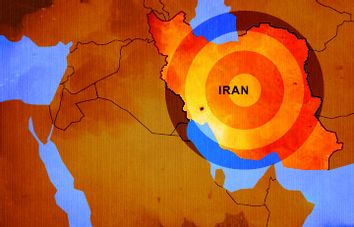
Recently, I asked former Mossad officer Michael Ross what he thought of the latest U.S. National Intelligence Estimate released in December, which downplayed the threat posed by Iran’s nuclear program. “That farce?” he replied, adding that many in Israeli intelligence were “furious about it — not just the conclusion of the estimate, but its timing as well.” Some Iran hawks believe that the United Nations Security Council was poised at the time, with the United States leading the charge, to tighten the vice on the Iranian regime with tough new sanctions. But in the wake of the NIE’s disclosure, there was a powerful shift in world opinion about Iran’s alleged nuclear program, and the momentum was apparently lost.

Ross operated covertly inside Iran in the early 1990s, spying on the Iranian nuclear program for Israel, and worked closely with U.S. intelligence agencies, before retiring in 2001. His view of the NIE, which concluded that Iran had halted the weapons development aspect of its nuclear program in 2003, is similar to views held by hawkish intelligence officials and policy thinkers in the U.S. and Israel. On the Iranian issue in particular, there has long been a close relationship between the Israeli and U.S. governments, and the NIE’s disclosure set off a flurry of activity in both countries. It had put hawks in an extraordinary position: If they wanted to keep up the pressure to go after Iran — using diplomacy and sanctions, or perhaps military force if deemed necessary — they would now have to discredit the highest-level intelligence report produced by the United States.

In Jerusalem, top Israeli leaders convened a meeting to decide how to deal with the problem. One result of the meeting was that when President Bush visited Israel in January, Israeli Defense Minister Ehud Barak was tasked with briefing him on Israeli intelligence on Iran, allegedly including some new information, in order to convince Bush to continue applying maximum pressure on Iran. “It’s apparently true that in 2003 Iran stopped pursuing its military nuclear program for a time,” Barak said then, “but in our opinion, since then it has apparently continued that program.”

Meanwhile, in Washington, various interest groups with hard-line views on Iran and the Middle East have been working vigorously to refocus U.S. and world attention on Iran as an imminent threat. They include Evangelical Christians and conservative Jewish lobbyists — some with close ties to John McCain. The founder of one influential Evangelical group, who has made aggressive calls for attacking Iran, just endorsed McCain’s run for the White House.

With McCain the presumptive Republican nominee, national security and instability in the Middle East are certain to return to the spotlight in the general campaign, as many McCain supporters believe those issues play to his strengths. The director of foreign policy for McCain’s campaign said in an interview Wednesday that McCain remains “skeptical” of the latest NIE’s findings, and outlined McCain’s views on Iran in terms similar to those of some hawkish lobbyists working behind the scenes in Washington.

On Monday, the U.N. Security Council voted to impose a new round of sanctions on Iran. The latest round will freeze the assets of some Iranian officials and companies connected to the nuclear program, as well as prohibit trade with Iran in certain supplies that have both civilian and military uses. Although hawks are somewhat heartened by this development, U.N. sanctions have effected little change in Tehran in the past, and for many of them the latest round is not enough.

David Brog, executive director of Christians United for Israel, has referred to the latest NIE as the “National Incompetence Estimate,” and told me that CUFI is engaged in serious efforts to counter the reduced sense of urgency about Iran that it spawned. Although he hadn’t yet had a chance to fully analyze the latest sanctions, he said his sense was that they were again relatively “soft,” because that would’ve been “the only way to get consensus” at the U.N. Security Council. He said that his organization is pushing for all measures against Iran short of war — but also repeatedly stressed, “No one should take the military option off the table. It would be ill-advised diplomacy to assure Iran or any foe that there will never be military consequences to their actions.”

Brog’s group was founded by John Hagee, who serves as its national chairman. A fiery Evangelical Zionist who has openly called for a preemptive strike on Iran, Hagee endorsed John McCain’s presidential run on Feb. 27.

At its annual conference in Washington last year, CUFI armed its attendees with talking points on Iran and sent them off to see their Congress members and senators, a strategy similar to that of the American Israel Public Affairs Committee, the powerful lobbying group. It is likely that both organizations will do the same thing at their annual conferences this summer, which will come at a time analysts believe could be fraught with danger in the Middle East because of Israel’s escalating conflict with Hamas in Gaza, and continuing tensions between Israel and the Iranian-allied Hezbollah. Brog told me that he hopes the presidential nominees of both political parties will attend this year’s CUFI conference in Washington.

Speaking at last year’s conference, McCain told the crowd that the only thing worse than a military confrontation with Iran was a “nuclear armed Iran,” and that the “regime must understand that it cannot win a showdown with the world.” Since the NIE’s release, McCain has been in the ranks of those dismissive of it. His campaign’s director of foreign policy, Randy Scheunemann, told me Wednesday that “a careful reading of the NIE indicates that it is misleading.” Scheunemann also said that McCain has been critical of the intelligence community for trying to “make policy” with the NIE. “There can be no doubt that the NIE harmed our efforts to achieve a greater diplomatic consensus” to crack down on Iran, he said.

In addition to its efforts on Capitol Hill, CUFI has also held meetings with senior officials in the Bush administration, such as one in 2006 with Deputy National Security Advisor Elliott Abrams that focused in part on Iran, and one this past fall, around the Annapolis peace conference, with National Security Advisor Stephen Hadley. In February, Hadley devoted a major portion of a speech at Stanford University to highlighting the continuing danger of the Iranian nuclear program. “The threat of a nuclear attack on the American homeland remains very real,” he said, listing Iran as one of the sources of the threat.

For its part, AIPAC is behind an effort to tighten the financial noose around Tehran. Rather than pushing for wide-ranging sanctions, as some have in the past, AIPAC is lobbying lawmakers to introduce more specifically targeted — and potentially much more potent — sanctions, which may have a higher chance of being adopted than broader measures. While commending the latest U.N. sanctions, AIPAC is pushing for the U.S. government to unilaterally sanction “foreign banks who continue to conduct transactions with the four state-owned Iranian banks,” and “designate the Central Bank of Iran as a supporter of terrorism and weapons proliferator,” according to one of its recent policy memos.

In addition, according to AIPAC spokesman Josh Block, the organization is throwing its lobbying muscle behind two new congressional bills that include a raft of sharp measures — such as prohibiting foreign subsidiaries of U.S. companies from doing business with Iran. A key goal here is that the U.S. would no longer have to rely only on multilateral enforcement of U.N. sanctions to squeeze Iran. (AIPAC at this point is not advocating any military measures against Iran — arguably an untenable approach for any presidential contender if not most American politicians right now.)

McCain is a favorite of many in the AIPAC fold. Scheunemann, McCain’s foreign policy director, also told me that McCain believes the new U.N. sanctions aren’t enough, and that tougher measures are necessary. He said that McCain would support “sanctions outside of the U.N. framework,” and that although “the military option is fraught with danger” he would not take it off the table.

Propelled by Tehran’s vitriolic words and increasing fears about its intentions, the Israeli government has been ratcheting up its own rhetoric in the wake of the NIE. A few weeks ago, Prime Minister Ehud Olmert was clear on his opinion of the situation. “The basic fact doesn’t change. There is a plan to make non-conventional weapons and it must be stopped,” he said. “Sometimes you don’t need intelligence services. You just need to analyze what you know, what everyone knows, and it’s very obvious and very simple.”

When asked if this meant a military action was possible, Olmert used the line long heard from the Bush-Cheney White House. “No option is ruled out,” he said.

It’s possible that if Israel feels backed far enough into a corner, it may take matters into its own hands. “Planning for different scenarios — or intervention operations — has been under way for years,” Ross, the former Mossad officer, told me. “And attempts have already been made. For example, attempts to shut off power grids to various installations.”

There is an overwhelming consensus in the Israeli government, though, that any operation that went much beyond sabotage should be a last resort. From an Israeli point of view, it would be far preferable for the international community to do the dirty and dangerous work of defusing what is seen in Israel as a ticking Iranian bomb. This effort would presumably be led by the United States.

In “The Volunteer,” a book about his experiences working for the Mossad, Ross recounts learning about Iran’s intentions to gain nuclear weapons, long before it was such a big international issue. He told me he is certain that his successors in Israeli intelligence — as well as their colleagues in the Israeli diplomatic corps — are using regular liaison meetings with their U.S. counterparts to continually press for action against Iran. Because of this, he said, the release of the latest NIE, and the resulting weakening of the American stance, fueled a lot of anger among Israeli officials.

I asked him if he could foresee a time when Israel would lose faith that the international community or the United States would deal effectively with the Iranian situation, and decide to take action on its own. “It’s in Israel’s interest to squeeze as much as possible out of sanctions first,” Ross said. “But I’m thinking that they’re almost there anyway.”

Continue Reading Close

The right wing’s Jerusalem gambit

A new coalition of religious hard-liners with ties to President Bush seeks to scuttle any plans for dividing Jerusalem between Israelis and Palestinians.

On Nov. 26, the U.S. State Department got hit with an unexpected barrage of phone calls. The Coordinating Council on Jerusalem, a new coalition of American groups with hard-line views on Israel, was on the line — all of the lines. Or so the group said two days later in a press release, proudly proclaiming that with 10,000 calls in less than 48 hours it had managed to overload the State Department’s voice-mail system. The group was making known its opposition to any Israeli concessions on dividing Jerusalem between Israelis and Palestinians — an issue that was swirling around the Bush administration’s peace summit taking place in Annapolis, Md.

The new coalition’s dubious achievement wasn’t much noticed by the media, and perhaps isn’t in itself important, but it was a sign of battles to come in the year ahead, as Israeli and Palestinian leaders struggle to move forward with any real progress after Annapolis. Although most appraisals of the conference were reservedly positive — after all, at least the two sides were talking seriously again after a seven-year drought — the event also opened a can of worms.

On the eve of Annapolis, the new right-wing coalition’s representatives directly lobbied a top Bush official with their concerns about the summit. Even Israeli Prime Minister Ehud Olmert took notice and seemed threatened by their potential to obstruct progress — leveling some harsh words just before the Annapolis conference apparently directed at the coalition.

Annapolis was only the beginning of a renewed series of high-level negotiations, and the joint Israeli-Palestinian statement read by President Bush at the event was purposefully vague so as to avoid angering either leader’s constituents or allies. Anyone reading between the lines, however, could see that the most explosive issue of all, dividing Jerusalem, had reemerged. The new coalition of religious groups seeks to use the incendiary Jerusalem question to scuttle any of the progress promised by Annapolis. Its efforts also threaten to cause painful rifts among American Jews, and perhaps shake up some pro-Israel political alliances.

Although the American Israel Public Affairs Committee, the most influential pro-Israel lobbying group in the U.S., seems to be taking a wait-and-see approach to the new high-level negotiations, some of AIPAC’s major donors and allies are involved with the Coordinating Council on Jerusalem. The coalition is also being aided in its efforts by evangelical Christian groups and supported by figures such as G. Gordon Liddy. It is directed by an influential former fundraiser for George W. Bush, Jeff Ballabon.

Ballabon is a Washington lobbyist who served as a major fundraiser for the 2004 Bush reelection campaign and was the architect of a strategy that has sought to bring Orthodox Jews into the Republican fold, in an effort to balance the overwhelmingly Democratic voting habits of mainstream American Jews. Just before the conference in Annapolis, Ballabon, along with Christian leaders and representatives of various Orthodox groups, met with Bush’s national security advisor, Stephen Hadley, to make sure their point of view, and the force of their commitment, were understood by the administration. According to the Israeli newspaper Haaretz, Hadley reportedly assured them that, for the time being, the issue of Jerusalem was in fact not on the negotiating table.

Some interesting fissures have begun to crop up along with the new coalition. A few weeks before the Annapolis meeting, a congressional letter requesting increased aid for the Palestinian Authority — which would help it meet some of its obligations toward achieving peace — was endorsed by AIPAC, surprising many in Washington lobbying circles. (The Israeli government had not opposed the aid.) That decision earned AIPAC a sharp rebuke by one of its most important donors, billionaire Sheldon Adelson, who said, “If someone is going to jump off a bridge, it is incumbent upon their friends to dissuade them.” Adelson, reportedly the third richest person in the United States and a prominent donor to the Republican Party, is also a major donor to the Zionist Organization of America, a group that, although lacking anything near the clout that AIPAC wields, is still influential among Middle East hawks in the GOP. And it is a core member of the new Coordinating Council. The national president of ZOA, Mort Klein, told Salon in an interview that “Israel should not be willing to give away any part of Jerusalem to another entity, just as the U.S. wouldn’t give away any part of Washington.” He added, “Jerusalem is mentioned 700 times in our holy book. It’s not mentioned even once in the Quran.”

ZOA has been active for a long time, but has never gotten the kind of political attention enjoyed by AIPAC and other more mainstream groups, or by the Christian evangelical groups pushing hawkish Middle East polices who have joined the Coordinating Council. What has changed is that the obstructionist agenda of ZOA and the evangelical groups is now being aided by Orthodox and ultra-Orthodox Jewish organizations sympathetic to the goals of the newly formed coalition — many of which have, prior to now, stayed aloof from international politics.

Agudath Israel, for example, an umbrella organization of ultra-Orthodox American Jews, recently broke its long-held rule of not delving into Middle East politics by speaking out against the division of Jerusalem. The Orthodox Union, the largest Orthodox Jewish umbrella organization in the United States, also recently broke its tradition of supporting the policies of the Israeli government, issuing a press release that sharply criticized Olmert’s statements at Annapolis because he “did not explicitly resist Palestinian President [Mahmoud] Abbas’ claim to a piece of Jerusalem.”

That a successful peace deal would necessitate some sharing of Jerusalem is at this point essentially a given in the eyes of most political leaders. It has been floated subtly by Prime Minister Olmert’s Cabinet allies, is quite clearly supported by many in the State Department and is thought of as an absolute minimum for agreement by Abbas.

To Orthodox Jews, however, Jerusalem is a red line (just as it is to their opposites on the Muslim side). Any perceived threat to sole ownership of the holy city summons dangerous levels of emotion and energy, even from those who would not normally pause from their prayers and everyday lives to wade into the swamp of Middle East politics. It is these thousands of Americans, normally not involved in Middle East discourse, that may give the Coordinating Council for Jerusalem the strength and potential to be a real obstacle to peace in the year to come.

These stirrings stateside have not gone unnoticed by the Israeli government. In response to the lobbying intended to preempt any talk of dividing Jerusalem, Olmert stated, “Israel is sovereign to decide on any issue regarding Israel.” The message was that Jerusalem is an issue to be determined by Israel itself, and not by its hard-line American cheerleaders.

To be sure, the views of this new American coalition of religious right-wingers don’t come anywhere near representing the consensus of American Jewry or of Israel’s mainstream supporters in the United States — whose views, unlike those of the CCJ, don’t generally turn on Scripture but rather on issues of peace and security. Still, the vigor with which these actors have recently entered the debate, and the determined efforts with which they will likely proceed over the next year, aren’t going to make anything easy for those striving for a Middle East accord of any kind.

The Annapolis conference may have been a start, but it has also unleashed a zealotry on U.S. shores that may once again help demonstrate how nearly impossible achieving Middle East peace could really be.

Continue Reading Close

Israel’s rising right wing

Together, an enigmatic billionaire and a resurgent Bibi Netanyahu could put Israel on the war path. Dick Cheney, AIPAC and Iran are all watching closely.

One of this year’s nominees for Israeli TV’s “Man of the Year in Politics” award doesn’t speak Hebrew. He has vast wealth and a shady past. He was once a circus worker. He isn’t even a politician, at least not yet.

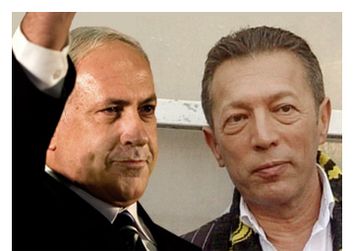
But over the past several years Arcadi Gaydamak, an enigmatic Russian-Israeli billionaire, has managed to become a widely influential figure in Israel. And he is now at the center of a right-wing political alliance — featuring Israeli über-hawk Benjamin “Bibi” Netanyahu — that could dramatically influence the country’s direction. If the rising alliance takes power in the next election, it could push Israel toward military confrontations with Iran, Syria or Hezbollah, while extinguishing any remaining flickers of hope in Israel’s peace camp regarding the Palestinians.

Gaydamak has recently been consolidating his influence as a power broker in Israeli politics. He has used his wealth to gain popularity through social and business initiatives, while deftly exploiting the widespread perception of Prime Minister Ehud Olmert’s government as corrupt and incompetent, particularly during last year’s disastrous war in Lebanon. With his financial capital and cunning political tactics, Gaydamak is like a cross between George Soros and Karl Rove, with a streak of Russian oligarchy at his core.

In a country full of colorful political characters, he may be the most colorful. Gaydamak is wanted in France for illegal arms dealing. He is alleged to have ties, through his former arms-dealing partner, to Halliburton and to corporations that donated to President George W. Bush’s 2000 campaign. He has Russian, Israeli, French and Canadian citizenship, as well as a diplomatic passport from Angola, on which he reportedly travels in order to avoid arrest. He owns a Jerusalem soccer team with a notoriously racist, anti-Arab fan base. And he is said to be planning a run for mayor of Jerusalem.

But it is in Israeli national politics where Gaydamak may now be a powerful — and, some say, dangerous — force. Along with his new Social Justice Party, formed in July, Gaydamak has allied himself with Benjamin Netanyahu, the Likud Party leader and former prime minister. To this alliance Gaydamak brings his rapidly increasing popularity, especially among Israel’s influential Russian population, a growing grass-roots political network, and billions of dollars. Netanyahu brings his credibility as a former prime minister, hawkish bona fides, and resurgent popularity both inside Israel and across the Atlantic, where he enjoys strong support among Washington war hawks and many delegates of the American Israel Public Affairs Committee, the powerful pro-Israel lobbying group.

The goal of this emerging alliance is to make Netanyahu prime minister once again, which would give Gaydamak direct access to the uppermost echelons of Israeli power. Not only does the alliance have the potential to unseat the centrist leadership governing Israel and replace it with one much further to the right — precisely at a time when Israel may be on the brink of war with Iran — but some observers believe it poses a threat to Israeli democracy itself.

Back in February, Gaydamak openly cast himself as an Israeli kingmaker. He announced that he would back Netanyahu’s bid to regain office, declaring, “Any politician that I will support will be the prime minister.”

And he may be right, riding a soaring popularity that he has in some ways literally purchased. For example, in 2005 Gaydamak bought Beitar Jerusalem, a wildly popular soccer team, which also happens to have a core of Jewish nationalist fans who regularly chant “Death to Arabs!” at the team’s games. During the Israeli war against Hezbollah last year, when the country’s leadership was in chaos and the citizenry felt abandoned and vulnerable, Gaydamak stepped in and fashioned himself as a savior. He opened his coffers and set up a tent city on a Mediterranean beach for Israelis fleeing towns in the country’s embattled north. To the south, residents of the Israeli town of Sderot near the Gaza Strip came under constant bombardment by Palestinian rockets, and the Israeli government was not coming to their aid in any substantive way. Gaydamak bused hundreds of Sderot residents to another tent city he had built in a park in Tel Aviv, complete with a stage for entertainment and a mini-amusement park for children. If the government was not going to protect and aid its citizens, Gaydamak seemed to be saying, he himself would.

In doing so, he helped make the Olmert government appear impotent to many Israelis, earning the sitting prime minister’s ire, and further establishing himself as a political force to be reckoned with. In August, Gaydamak clashed openly with a parliamentary committee that took issue with his actions during the war, accusing him of acting entirely for political reasons. This year, as his own popularity has continued to rise, Gaydamak has toned down his explicit backing of Netanyahu, but it is still widely believed that he will lend his support to a Netanyahu prime ministerial bid in exchange for greater power.

To his proponents, Gaydamak is simply the natural result of an Israeli establishment that is so wrapped up in corruption and cronyism that it is unable to care for its citizens, let alone advance a peace process with its neighbors or focus on crucial foreign policy problems. Gaydamak is, in this line of thinking, a positive phenomenon, a practical person in a place desperately in need of practical solutions.

But some Israeli analysts and governments officials have a darker view. One senior Israeli official, who has served at the highest levels of the policy-making apparatus, told me that he sees the rise of Gaydamak as the terrible byproduct of an already bad situation. “There is a sense among some people,” he said, “that democracy just didn’t work for us, and we should be like the rest of the Middle East — that we tried democracy and failed. But Gaydamak is something else. He’s an oligarch. Don’t forget that a lot of his supporters are Russians. They’re not really familiar with democracy.”

Gaydamak has been quietly building a network of activists across Israel and choosing candidates to represent his party in upcoming elections at all levels. He will personally determine his party’s platform, with each candidate meeting the approval of his closest aides. Although he has alluded to running for mayor of Jerusalem, Gaydamak seeks to pull strings in national politics, without putting himself in a vulnerable forward position on his party’s ticket.

Some observers have labeled Gaydamak as antidemocratic for this, as well as for his actions abroad. For example, in 2005, for reasons that remain murky, Gaydamak purchased Russia’s Moscow News, fired some senior journalists, and changed the paper’s mandate to a firmly pro-government one, appointing a pro-Putin journalist as editor in chief. This was widely viewed as hostile to free speech and raised questions about Gaydamak’s possible ties to the Kremlin.

Within Israel, according to the senior Israeli official, Gaydamak is preying on a sense among the Israeli population that the way Israeli democracy functions has left large groups disenfranchised and the country as a whole vulnerable to outside attack. And Netanyahu, as a political leader who has long exploited vulnerability and fear to obtain and wield power, may be Gaydamak’s perfect complement.

Just two years ago, when former Prime Minister Ariel Sharon left Likud to found the Kadima Party, he took many Likud parliamentarians and much of the party’s cachet with him. Netanyahu had to make do with the remnants, a has-been exiled to the political wilderness. But now his fortunes are rising again, with Gaydamak’s support and the winds of Israeli political insecurity at his back. In the wake of the Israeli military’s failure to defeat Hezbollah last summer, and the takeover of Gaza by Hamas, the hopefulness of the Sharon government is long gone. And many in Israel are now anxiously looking rightward again, back at the Likud, and to Netanyahu himself. There are even recent reports that several members of Olmert’s own party have been receptive to feelers from Netanyahu, who might be trying to lure Olmert supporters back to Likud. Among the general Israeli populace, Netanyahu enjoys the highest poll ratings of any politician, and many point to him as the next prime minister.

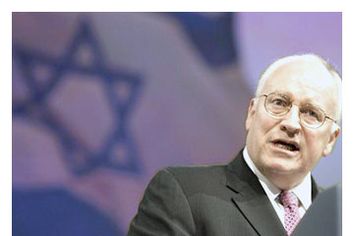
That would be a welcome development for Israel’s most hawkish proponents in the United States. Netanyahu is a favorite among those in Washington promoting hard-line Israeli policies, including a bellicose policy toward Iran. In March, while in town for the annual AIPAC conference in Washington, Netanyahu met privately with Vice President Dick Cheney at the White House, where they reportedly discussed stepping up pressure on Iran, with an eye toward military options.

One American defense industry lobbyist with strong ties to Israel told me around then that he thought Netanyahu was “absolutely awesome,” and that many of his colleagues were equally staunch supporters. Another Washington lobbyist involved in Middle East affairs told me recently that although AIPAC officially declines to endorse one Israeli politician over another, some of its activists “certainly do.” Indeed, when I reported for Salon from the AIPAC conference, many AIPAC delegates were outspoken fans of Netanyahu. Dozens of them told me that he was their preferred Israeli leader, and although Netanyahu wasn’t officially on the program of events for the conference, when word went around that he would be doing a closed-door briefing for select delegates, it set off a vigorous scramble to gain access to him. AIPAC is careful not to overtly interfere in Israeli politics, but it is quite clear to even a casual observer that Netanyahu’s sensibilities are closely aligned with those of many in the organization, and that much of its membership would like to see Netanyahu running Israel.

But not everyone feels that way in Israel, where Netanyahu is known not only as a fierce hawk but also as an unabashed opportunist. Although Israeli politics can be a blood sport, Netanyahu has drawn criticism, like Gaydamak, for maneuvers seen by some as antidemocratic. In 2005, Netanyahu used the planned withdrawal from the Gaza Strip as a pretense to attempt a putsch against then-Prime Minister Sharon and install himself as prime minister. At the time, one official in the prime minister’s office told me that if Netanyahu succeeded he was considering resigning from the office, as were some of his colleagues. “The problem,” the official said, “is not only that Netanyahu is right wing but that he is also reckless.”

Indeed, some of Netanyahu’s statements and actions have been explosive, even by the standards of Israeli politics. Back in 2003 he drew sharp criticism — and, from certain segments of the Israeli electorate, great praise — for saying that the nation’s own population of Arab-Israeli citizens represented a “demographic threat.” More recently, referring to the nuclear standoff with Iran, he has repeatedly said that “we’re in 1939,” referring to the imminent aggression of Hitler’s Germany, and he has all but stated outright that an American or Israeli attack on Iran will soon be warranted.

When Netanyahu was prime minister from 1996 to 1999, his coalition shared power with more moderate Israeli factions, which constrained him from pursuing the more extreme elements of his agenda. His alliance with Gaydamak, however, may obviate the need for that sort of compromise, because of both Gaydamak’s money and rising political support.

The timing of the next Israeli elections is uncertain, but with a weak Olmert government and a volatile political landscape, they could be called as early as next year. A new ruling coalition is formed when the leader of the party with the most seats in the Knesset is able to assemble a grouping of parties with seats totaling more than 60.

A recent poll showed that Gaydamak’s Social Justice Party would win eight seats in an election, only two fewer than the ruling Kadima Party would now win. Netanyahu’s Likud Party is consistently polling at 20 seats or better. Gaydamak’s and Netanyahu’s parties taken together, with 28 or more seats, would be an almost unbeatable bloc. (When Kadima took power in 2006, it had 29 seats.)

A few other parties would then be needed to form a ruling coalition, which would likely be in the Gaydamak-Netanyahu alliance’s grasp: Many in Israel’s religious parties are fans of Netanyahu, and they would bring their seats over to him. He would also draw support from right-wing secular leaders such as the ultra-hawkish Avigdor Lieberman, a former chief of staff for Netanyahu, who heads the openly racist party Yisrael Beiteinu. Lieberman has called for the “transfer” of some of Israel’s Arab citizens out of the country, has suggested bombing Palestinians’ civilian infrastructure in the occupied territories, and has even argued openly for bombing Tehran.

If such additional elements were to join forces with Gaydamak and Netanyahu, it could create the most right-wing Israeli government in decades.

Netanyahu’s apparent willingness to ally himself with powerful fringe figures like Gaydamak was perhaps predictable. A former senior Israeli official, who served in various capacities in the government for more than 20 years and interacted with Netanyahu on numerous occasions, told me some time ago that she had no doubt that Netanyahu would happily work with whoever could help him gain and keep power. “He doesn’t have any real principles,” she said. A former Netanyahu aide echoed this sentiment: “The only thing that’s important to him is becoming prime minister, whatever the sacrifice.”

If Netanyahu succeeds with Gaydamak in his corner, that sacrifice may include wider regional war and perhaps even the erosion of democracy in Israel.

Continue Reading Close

Page 1 of 3 in Gregory Levey