Hannah Wallace

Modern slaves

Hardly a thing of the past, slavery thrives in our world. Investigative reporter Benjamin Skinner tells Salon the shocking truth about human trafficking.

  • more
    • All Share Services

Modern slaves

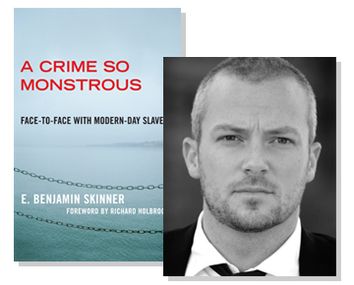
During the four years that Benjamin Skinner researched modern-day slavery for his new book, “A Crime So Monstrous,” he posed as a buyer at illegal brothels on several continents, interviewed convicted human traffickers in a Romanian prison and endured giardia, malaria, dengue and a bad motorcycle accident. But Skinner, an investigative journalist, is most haunted by his experience in a seedy brothel in Bucharest, Romania, where he was offered a young woman with Down syndrome in exchange for a used car.

“There are more slaves today than at any point in human history,” writes Skinner, citing a recent estimate that there are currently 27 million worldwide. One hundred and forty-three years after the 13th Amendment to the U.S. Constitution was passed in 1865 and 60 years after the U.N.’s Universal Declaration of Human Rights banned the slave trade worldwide, slavery — or, as it is euphemistically called, human trafficking — is actually thriving. It is, as Hillary Clinton has said, “the dark underbelly of globalization.”

That slavery in its many forms — debt bondage, forced domestic servitude and forced prostitution — still exists is, indeed, shocking, mostly because it is invisible to those of us who don’t know where to look for it. Skinner’s great achievement is that he shines a light on the international slave trade, exposing the horrors of bondage not only through assiduous reporting and interviews with modern-day abolitionists and government officials, but by sharing the stories of several survivors. These poignant tales — of people like Muong, a 12-year-old Dinka boy from southern Sudan, who is abducted (with his brother and mother) by an Arab slave driver; Tatiana, an Eastern European woman who is tricked into slavery when her boyfriend of six months finds her an “au pair” job in Amsterdam; and Gonoo, an Indian man in the northern state of Uttar Pradesh who inherits a debt from his father and spends his days working it off at a stone quarry — illustrate the harsh realities of slavery while also offering some hope that former slaves can rebuild their lives.

Salon sat down with Skinner to talk about modern-day abolitionists, what’s wrong with redemptions (also called “buy backs”), and why he’s optimistic that slavery can be eradicated.

You infiltrated many dangerous underworlds to get these stories, often putting your life at risk by chatting up child slave brokers and negotiating to buy young women from a Russian mobster in Istanbul who’d just been released from prison. Which situation, in retrospect, was the most harrowing?

There were definitely some moments where I felt I’d made a mistake in terms of personal safety. At this point, though, I have to say that the people who are most in danger in these situations are the slaves themselves. My greatest concern going in was not “Am I going to come out whole?” but “Is there going to be some retaliation against the slaves if my cover is blown?”

I had a principle that I would not pay for a human life. You buy a human being and you can’t just set them free and dump them on the economy with no resources, no support system, no rehabilitation.

When I was offered this young woman in trade for a used car at the Romani brothel in Bucharest, I could have done one of a few things: I could’ve paid to redeem her. I was with a couple of guys and I could’ve fought physically with the traffickers to get her out. Or I could’ve gone to the police the next day to tell them, which is what I did.

Very unsatisfying, that. You want to rip this guy’s head off, right? I was shown this woman who had scars all over her arm — she was clearly trying to kill herself to escape daily rape, and she had Down syndrome. I was so in shock. I was undercover and I had this moment where I thought, “What would my character be doing in this situation?” So I tried to smile. And I physically couldn’t. I was so horrified. I looked at my translator, who had not done this kind of work before, and there was just sheer horror on his face as well. To see somebody who is in such a condition. They had put makeup on her and her makeup was running because she was crying so much.

Did the police do anything?

The response from the police was, “These are the Roma, they have their laws, they have their blood.” The Roma are this incredibly oppressed and marginalized community within Romania — and have been for centuries. That’s why, I think, the major human traffickers in Romania over the past several years have been Roma.

I kept thinking of Samantha Power‘s book as I was reading this because you describe the reluctance of government officials to use the term “slavery” to describe what is obviously exactly that. (Power describes the same studied avoidance of the word “genocide” in “A Problem From Hell.”) Colin Powell didn’t use “slavery” in 2001 when he released the first Trafficking in Persons (TIP) report. Even the major piece of U.S. anti-slavery legislation, the Trafficking Victims Protection Act of 2000, doesn’t use the word “slavery.”

There are over a dozen universal conventions and over 300 international treaties that have been signed banning slavery and the slave trade. We’ve all agreed that this is a crime of universal concern and it requires a robust response to stop it.

The U.S. has actually gotten better at using the term “slavery” when it’s appropriate. One group that has not gotten better in this regard — they’ve taken baby steps — has been the U.N. They are so tepid and afraid of offending member states. Even in a case like Sudan, which was as egregious a form of slavery and slave raiding as you’ve had in the late 20th century. In 1999, at the height of slave raiding, the U.N. Human Rights Commission said, “OK, we will no longer refer to slavery, we will refer to intertribal abductions.” And if you talk to U.N. officials behind the scenes, they’ll say that the logic behind this is that in order to move the issue forward, we had to be diplomatic and reach this middle ground. The problem with that logic is that you lose all leverage. Abduction is not a crime against humanity — slavery is. If it’s a crime against humanity, you get hit pretty hard.

How would you get hit very hard?

The Universal Declaration of Human Rights, Article 4, says slavery and the slave trade are banned worldwide. But actually, you’re bringing up a good point. In terms of enforcement, the U.N. doesn’t have the kind of systems built into it which can really deal with this, and that’s a problem.

The U.N., which has, as part of its original mandate, the eradication of slavery and the slave trade, finds itself now at a stage where there are more slaves today than at any point in human history. And it really makes you question the viability of the model and the strength of the system.

There are philosophical differences about how to combat slavery. Some people, such as Michael Horowitz (the neocon abolitionist), have focused exclusively on sex trafficking, hoping there will be a “ripple effect” with other forms of slavery such as debt bondage and forced domestic servitude.

Nonsense.

But how do you explain this myopia? You cite so much research that shows that the other forms of slavery are even more prevalent — in the U.S., you say, less than half of American slaves are forced prostitutes.

I don’t think enough reports have come out and the ones that have come out haven’t been in the right places. I think when you start getting the 700 Club talking about how the slavery of a young man in a quarry in India — or in a brick kiln or on a farm — is equivalent to the slavery of the Israelites and you start quoting Bible verses, then maybe we’ll be getting somewhere.

Another philosophical divide among modern-day abolitionists has to do with the role of poverty. The late Senator Wellstone, who co-sponsored the Trafficking Victims Protection Act (TVPA) of 2000, was adamant that poverty was a central factor but Horowitz disagreed, vehemently. Why do you think that is? It seems so obvious that poverty is the very reason so many people are forced and hoodwinked into slavery.

Paul Wellstone’s view of this was basically that you can’t address slavery without having targeted anti-poverty programs. When I presented this to Horowitz, he slammed his desk and said something to the effect of “The Paul Krugmans of the world would love for this to be a means for me redistributing my income to Sri Lanka.” And I’ll give him this: I understand his point that the end of slavery cannot wait for the end of poverty. That’s not what I’m calling for and I don’t think that’s what Senator Wellstone was calling for.

But if you don’t recognize that the primary driver of slavery today is the nexus between withering poverty of extreme marginalized communities with unscrupulous criminals, and you don’t address both sides of it — the criminal side and the socioeconomic side — you’re not going to solve this problem. As long as there’s a ready source of people who are so desperate for survival that they will sell their children into slavery, as long as you don’t address that, you will always have slavery. And I fundamentally feel that slavery can be ended.

Do you think the TVPA’s three-tiered anti-slavery system, which evaluates countries’ efforts to eradicate slavery and imposes non-trade sanctions on those who don’t do anything to abolish it, works?

I think it’s a good thing, but I honesty feel it has outlived its usefulness. You can only slap a country lightly on its wrists so many times and have them notice. After a while it totally loses its effectiveness.

Let’s talk about the practice of Redemptions. Are these still going on and is it a viable way to chip away at slavery, buying a slave’s freedom one at a time?

There’s a long history of it, and not all of it is bad. I find it a very imperfect and unjust way of freeing people. You are essentially acknowledging the right of property in man, by buying them. In recent history, I can’t think of any instances where it has worked and been unproblematic.

It’s mostly happening in Sudan, right?

New York Times columnist Nick Kristof did it, of course, in Cambodia where he went in and bought two girls in a brothel. And he went back a year later and found that one of the girls was back in the brothel and hooked on methamphetamines.

To take our own history, Lincoln had contemplated buying all slaves from their masters and then setting them free in either Haiti or Liberia. But I think at a certain point — and I defer to civil war scholars on this — he realized that this was very much an imperfect justice and what needed to happen was the remaking, through force, of a society that would acknowledge that all men are created equal and endowed by their creator with certain unalienable rights, which was the initial promise, of course, of the Declaration of Independence.

What you have in Sudan are these evangelicals coming over with tons of hard currency in the middle of a war zone, going to one of the combatants — in particular, one small faction of the combatants — and saying, “OK, here’s a ton of money, now go get us some slaves.”

Basically funding the militia.

Exactly. And even if every one of those people was a slave and everything was on the up and up … the devil is in the details.

You’d think that the hardest part would be freeing slaves. But once they’re free, their lives are never easy. At one point in the Sudan section you say “free, but free to starve.” What seems to you the best solution for helping former slaves deal with their new-found freedom?

Giving them some access to credit, healthcare, property rights and education. And psychological help.

In many of these far-off places where I was, the arbiters of law — the people who set the rules — are people who are benefiting from a slave economy. As long as that’s the situation, you need to break the grip of those people over the system.

In your epilogue, you say, “George W. Bush did more to free modern-day slaves than any other president.” However, you also criticize the Bush administration for focusing on sex trafficking to the exclusion of other forms of bondage.

The bar isn’t very high. Only at the end of the Clinton years was there a recognition on the part of the executive branch that this was really an issue. But Bush deserves credit. He did more to free slaves than any president in modern history. But history doesn’t grade on a curve on the subject of abolition. And he could have and should have done much more — there’s no question. The fact that there was such a narrow focus really hamstrung his efficacy on this.

Hillary Clinton, on the other hand, has called trafficking “the dark underbelly of globalization.”

Which presidential candidate — Clinton, Obama or McCain — do you think is most passionate about abolishing modern-day slavery?

Listen, I’m not going to give Obama a pass on this. It’s not clear to me that he cares about modern-day slavery — he hasn’t said a word about it. And Hillary has, certainly in the last couple of years. Though not on the trail.

But I think it is a mistake to make this a campaign issue. I think it has to be a big piece of our American foreign policy platform. It needs to be fundamentally a central piece of any meaningful new American foreign policy.

And what about John McCain?

Well, he blurbed my book. John McCain is very close with John Miller, the former head of the TIP office, which is a good sign. But no, he hasn’t been a leader on this.

One of the things I found hopeful about the book is that while it’s important to make policy changes and create tough anti-slavery laws, NGOs and individuals clearly play a vital role in exposing slavery. People like Rampal in India (the activist who runs Sankalp) and the Amsterdam taxi driver who helps Kayta, a sex slave, buy her freedom. So the role of the individual is important.

It is, it’s extremely important. If there’s a critical thing from that U.S. chapter that I was trying to get across, it’s that this doesn’t have to be some kind of neo-McCarthyism where you are spying on your neighbors, but just be aware of what’s going on in your community.

I talk about three things that individuals can and should do. The first is becoming conscious of the reality of slavery — becoming more attuned to the signs of what may be a trafficking or slavery situation. A key part of that is getting educated about slavery. The second thing is pressing elected officials and candidates for office on what they’re going to do about it — what creative approaches they have for combatting modern-day slavery and ending it within a generation. The third things is supporting groups like Free the Slaves (Kevin Bales’ group) and Anti-Slavery International.

Abolishing slavery is clearly an all-consuming issue, something that often drives people who are involved with it to burn out or go crazy or both. How have you kept your sanity during the four years of researching this book?

The question is really how these people that operate at the pointed end of the spear keep their sanity. And the people who run trafficking shelters in Romania — who have weekly or monthly threats from traffickers — how they keep their sanity. For me it was much easier. You go into these situations and certainly it stays with you. When you meet somebody like this young woman in the Bucharest brothel or Gonoo or the trafficker in Haiti who offered to sell me a child for $50.

What drove you to take on this project?

You could say that abolition is in my blood. My great-great-grandfather fought with the Union Army in the Siege of Petersburg [Va.]. His uncle was a rabble-rousing abolitionist in Connecticut. And I was raised Quaker. The Quakers were the heart of the abolitionist movement in the late 18th century, early 19th century.

Fast-forward to 1999. I read Kevin Bales’ “Disposable People,” which is an incredibly good, earnest take on modern-day slavery worldwide. Bales’ estimate of total number of slaves was 27 million — a staggering number. The one thing that I wanted to do was to put a human face on that: to tell the stories of the slaves, the slave masters and the slave traders. And to tell the stories of those who try to free them.

The marriage industrial complex

Rebecca Mead, author of a new book on the out-of-control American wedding, discusses Disney brides, formalwear for pets, and whether hiring a wedding planner is ever a feminist act.

  • more
    • All Share Services

The marriage industrial complex

If you’ve been to a wedding in the past few years (or have staged one yourself), you won’t be surprised to learn that weddings are a booming business. Last year, the average American ceremony cost $27,852; the average dress, $1,025. If such figures don’t shock you (and keep in mind, the numbers are far higher in pricey cities such as New York and San Francisco), maybe a few comparisons will: The median household income in the United States is $46,326 and a 5 percent down payment on a $500,000 condominium is $25,000.

Even more disturbing, perhaps, is how quickly and effortlessly the $161 billion wedding industry seems to have insinuated itself into every corner of the culture — and how impossible it has become to escape its trappings, from diamond rings (which, before the 1930s, were not a de facto wedding accouterment) to wedding planners, bridal registries and glossy magazines that perpetuate weddings as fairy-tale fantasies. In fact, the extravagant, over-the-top gala has become such a fixture of American life that most people don’t question it anymore. And why should they? If marriage is supposed to be a sacred undertaking that happens once in a lifetime, why shouldn’t you do it wearing Vera Wang?

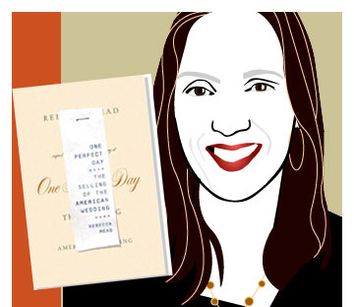
That’s the thorny dilemma reporter Rebecca Mead confronts in her new wedding industry exposé, “One Perfect Day: The Selling of the American Wedding.” Mead’s obsession with the marketing of weddings began three years ago, when she wrote a story for the New Yorker about discount bridal dress chain David’s Bridal. While researching “One Perfect Day,” Mead made her way from Walt Disney World’s Wedding Pavilion (where brides regularly spend $2,500 extra to rent the Cinderella Coach) to the ersatz wedding town of Hebron, Mich., and a crowded bridal dress factory in Xiamen, China. She also attended trade shows, hung out with newly minted bridal consultants and trailed a celebrity wedding planner, a “multifaith” minister and a wedding dress magnate — all to illustrate the ways in which the industry preys upon both a bride’s hopes and her insecurities by aggressively marketing products that promise to make her day “perfect.”

The result is a concise but searing skewering of the marriage marketplace and the “Bridezilla” culture that has sprung up around it, written in the spirit of the great muck-raking journalists. And in the midst of reporting her book, Mead showed her personal rejection of elaborate nuptial extravaganzas by quietly having her own wedding at a New York City courthouse. She and her betrothed dressed in everyday office attire and, a few days later, celebrated with friends and family at their Brooklyn home.

Salon sat down with Mead recently to discuss Cinderella brides, the changing meaning of the honeymoon and whether a feminist wedding planner is an oxymoron.

At the beginning of “One Perfect Day” you point out that marriage used to signal that you were becoming an adult or herald the start of your sex life as well as your departure from the family home. Now that we do all of these things before marriage, do you think it’s the extravagant ceremony itself that has become the rite of passage?

Precisely. It’s amazing the number of people who say, “If we can get through this, we can get through anything,” or “This is the first challenge of our married life together.” And you think, “Jeez, you have no idea what you’ve got coming!” It’s not like it’s a death in the family or anything like that.

This is sort of a psychoanalytic argument, but I think that people need for a wedding to feel traumatic. Because it used to be a traumatic transition. You left your parental home. If you look at documents — diaries or letters from women in 19th century rural America getting married — leaving their mother was a very, very big deal. Wrenching away from your birth family was a very big deal. Now, most of us have done that years earlier. And to some degree, even those people who are living at home are still leading more independent lives.

But I think that people still need to feel that this transition is a viscerally affecting experience. Because being married is very different from not being married. I don’t mean that if you get married tomorrow, suddenly your life is going to be different the next day. But it is a different commitment, as anybody who is going through a divorce will tell you. It’s much harder to break up a marriage than it is to break up a nonmarital partnership. So I think people need the sense of “Wow! Something really big has just happened.”

The purpose of honeymoons has evolved in a similar way, hasn’t it? You point out that they used to be a chance to visit the bride’s relatives and friends, and then they were all about sexual intimacy …

Yeah, and now, if you talk to any couples or look on the Knot.com, you see that people perceive the honeymoon as a time when they can recover from the stress of planning the wedding!

It’s brilliant from a business perspective — it’s as if the wedding industry and the honeymoon industry are in sync — the wedding industry is like, “OK, we’re going to wear them out and then send them to you.”

Right, and you’ll make a fortune off giving them spa treatments!

How did you become interested in writing about the wedding industry?

It wasn’t my own wedding — I got married long after I started the book. It just seemed like a subject that had not been done. I began the book with an article for the New Yorker about David’s Bridal. I loved the story because it was about the way in which small mom and pop stores were being taken over, threatened, by a Goliath; only in this case, Goliath won. And those are always great stories.

Early in the book, you talk about an epiphany you had while attending a Business of Brides conference: that the emergence of extravagant weddings is not a repudiation of feminist principles but, in fact, a direct consequence of them. Can you explain what you mean by that?

It’s interesting. It looks like a contradiction — women in their 30s and younger getting dressed up like princesses to get married. But in a way, it’s not, because it all has to do with the professionalization of weddings. Forty years ago your mother would’ve been planning your wedding, or your aunt would’ve been making you a cake, and your uncle would’ve been taking the photographs. There were big weddings then, but nowhere close to what it is now.

Weddings were traditionally part of the work of women within the household. I don’t know if you’re familiar with the work of Arlie Hochschild, who wrote “The Second Shift.” But you know, women used to make their own dresses, cook, take care of the kids, and now we outsource all of this: childcare, cooking, even getting your eyebrows done or getting your legs waxed. Nobody does their own if they can afford not to — or even if they can’t!

So are you saying that hiring a wedding planner could be construed as a feminist act?

It could certainly be construed as a post-feminist act, though people so shy away from the term now. But certainly, we live in a world that is permeated by and saturated with the achievements of feminism, so we’re all feminists whether we admit it or not.

It’s astounding to see how many wedding “traditions” — everything from the diamond ring to the honeymoon — were invented or co-opted by the wedding industry and neatly repackaged as established conventions.

Oh, definitely. In the book, I mention that in 1939, one survey showed that 16 percent of brides were married in clothes they already owned, a third married without an engagement ring, and roughly a third didn’t go on a honeymoon. Yet, those are all things that we think of as absolutely essential, right? And this was in 1939 — not that long ago. Now the Association of Bridal Consultants says that 43 professionals are needed for the servicing of the average American wedding, and I think that’s not including the bridal consultants themselves. So the idea that the weddings that we have today are traditional is a falsehood. You only have to ask any bride’s grandmother, at a wedding, whether this is in keeping with tradition.

The invention of the engagement ring is a well-known and much-researched story — I didn’t go into great depth because people have written whole books about it. The idea of a diamond wedding ring being a token of enduring love was something that was entirely invented in the 1940s by this woman, Frances Gerety — a very clever copywriter. She came up with “A Diamond Is Forever,” which was called the best advertising slogan of the 20th century.

But some of the inventions that are supposedly traditional are so outrageous. Another very nice so-called tradition is the throwing of the garter. The first company to make bridal garters was in the 1940s, but [brides] weren’t throwing them, and the groom wasn’t removing them with his teeth in those days. But now you’ve got the double garter pack, because you have to have one to throw and one that’s a souvenir. People do that with the flowers, too — you have one bouquet to throw and one to keep.

What do you think will be the next “tradition”?

I was at the Great Bridal Expo the other day — because I just can’t give it up! — which is one of those bridal fairs that go around the country and set up in Marriott ballrooms so brides can go and look at dresses, florists and so on. And there was at least one and maybe more than one tooth-whitening stand. When I was going to these fairs three years ago, I don’t remember tooth whitening. I do remember laser hair removal — but tooth whitening, that’s new.

So you think professional tooth whitening is something that the industry is hoping will become part of the wedding preparations?

Yes, it’s becoming just one of the things that you do, like starting to have facials the minute you’re engaged. The stand was offering a discount if you did it for a party of three. The bride, the groom and the mother of the bride could all get their teeth done — in the same shade, no doubt!

But in terms of actual traditions, I think the garlanded pets seem to be taking off in a very big way. I don’t mean I’ve seen them at lots of weddings, but I can see that they’re being pushed. Garlands or wings — you see a lot of wings for the dogs, too.

You must have become a frequent reader of bridal magazines while working on the book. Which became your favorite?

None of them! They speak not at all to me.

But the most fun to read — if you’re not getting married! — is In Style Weddings. The fascination with celebrity weddings is so huge. And there is something novel and very brilliant, in terms of magazine publishing, about the idea that you could get consensual coverage of weddings and product placement. I have sacks of magazines — anyone who wants to know what sort of dress they should’ve been wearing four years ago should come to my house and take them away!

The magazine I most enjoyed reading was Vows, which is the trade magazine of the wedding dress industry. It’s the other side of the looking glass. There are articles about how to sell wedding dresses — and tiaras, and veils, and all the rest of it. One of my favorite pieces described how to market to the “nontraditional bride” and warned readers that this kind of woman is dangerously apt to “forget the wedding and prepare for marriage.” These articles were often unintentionally hilarious, but also very chilling. People who work in the wedding business often appear to be very warm and sentimental, but they’re salespeople, and the successful ones are completely coldblooded about it.

What do you make of the phenomenon of “Disney brides,” i.e., women who plan Cinderella-themed weddings at Walt Disney World and rent horse-drawn carriages for $2,500?

It’s the infantilization that one sees at Disney that’s interesting to me — the way in which grown women are sold the same princess fantasy that Disney so profitably peddles to little girls, as if one never grows out of wanting to dress up in tulle and wave a magic wand. The whole place treats adults as overgrown children. When you’re in the Magic Kingdom, there are 100 places to buy ice cream, but you can’t get a drink anywhere. And when I was there, that was really what I wanted! There’s this very childish fantasy about what life is like, what married life is like and what the world is like.

The thing about Disney — you can’t believe while you’re there that the people are doing this with straight faces. I don’t mean the consumers, I mean the vendors. They won’t let Mickey Mouse host the weddings because it’s not “traditional,” because it would compromise the dignity of the ceremony. But the company’s idea of tradition, curiously enough, permits couples to hire someone dressed up as Major Domo [Prince Charming's footman in the Disney version of "Cinderella"] to serve as their ring bearer. Of course the difference has less to do with tradition than it does with marketing: Disney has decided to invest a great deal in marketing Cinderella-themed weddings: They’ll sell you everything from a cake topper in the shape of her castle to a ride in her coach. They’ve even started selling wedding gowns inspired by Cinderella.

The cast of characters that you found for this book — from entrepreneur Beverly Clark and celebrity wedding planner Colin Cowie to multifaith minister Joyce Gioia — are at once both sympathetic and scheming. Did that surprise you?

These people think of themselves as providing a service that is needed — and to some extent, they are. But they’re also creating that need and generating the desire, and they’re certainly aware of it; the best ones are very clever marketers. That doesn’t mean they can’t be pleasant enough to talk to.

This wasn’t a book about finding scoundrels, although there is one or two lurking in there! It’s not a surprise to anybody that weddings can be ridiculous and that people spend too much money and get too carried away. And I wasn’t trying to expose some kind of deep, dark conspiracy. What I was interested in was how the wedding industry feeds into the hopes and wishes and dreams of the women, especially — and what that says about how our culture works in a larger way.

You make the argument that spending lots of money on her wedding offers the bride some sort of insurance against divorce. That seems so irrational — do you really think it’s true?

It is irrational. But I do think it is a phenomenon — not that it provides the insurance, of course, just that there is a belief among couples, and it’s probably not even conscious and perhaps not fully stated, that if we’re going to do this and we really mean it, we’re going to show how much we mean it by going all-out, and having our garlanded pet come down the aisle and all the rest of it. This is the generation who has seen so much divorce in their own families, or friends’ families, and there’s really a desire to not do it like their parents have.

But on the other hand, one always hears these stories of people who, once the wedding is over, the marriage is over too. I mean there are people who need to get married in order to get divorced.

Let’s talk about class. You tell one story — about a Brooklyn wedding planner who re-created Melissa Rivers’ wedding for a friend on a budget of $200 — that I found really quite touching. Isn’t there something positive about places like David’s Bridal making luxury affordable to the masses?

Sure. But it’s also just so … pathetic, and I mean that not in a pejorative way but in the true sense of the word. Two hundred dollars doesn’t sound like a lot of money, but it was all that that particular bride had. At the end of the evening, she had to tear open these gift envelopes of cash so she could pay the DJ. But of course people who don’t have a lot of money want to celebrate. And if having a spectacular, warm, huge celebration means a lot to the likes of Melissa Rivers, it means just as much to that young Brooklyn woman. There’s no reason why she shouldn’t want it.

It’s easy to say, “Why the hell not spend this money” and “Let’s go all-out.” But what’s bad is if the whole culture of extravagant weddings encourages women to think that they have to do it — even though they’re not going to be able to pay the rent the next month, or even pay the DJ.

But that suggests that the bride is completely unwitting. Don’t you think she has some agency — can’t she choose to reject the notion that she needs to buy a $1,025 gown or hire a videographer?

Well, she can say no. But two things happen if she says no. One thing is that she has to figure out what she wants instead. Which can be, as I found for myself, extremely difficult.

And then the other thing she can do is say, “Well, you know, we’re just going to elope.” But then there’s the whole elopement industry. You can’t escape! The so-called destination wedding business has grown out of people’s desire to escape the big hometown wedding.

Or you can buy the elopement package from the vineyard in Sonoma County, Calif., that also includes the balloon ride. Then, there’s the recent development of green weddings and carbon-neutral weddings. It’s very small, but you’ll get people talking about how they want to have a carbon-neutral wedding, so they’ll be making donations to this or that company that will offset their emissions. I heard of one wedding where the favor they gave the guests was a packet of wildflowers to be planted. You know, you could just not have a wedding! That would be the most environmentally conscious thing of all. But the new “green wedding” industry is not going to suggest you do that.

Has a “Bridezilla” wedding culture sprung up in other countries, too?

I’m from England and I haven’t lived there for a long time, but I hear that some of the things that we’re talking about here are beginning to happen in Britain. It used to be that you could get married only in a church or in a registry office, but now the wedding marketplace has been deregulated. So people are having these extravagant country house weddings, as if they’re the landed gentry. And weddings in Britain, like everything in Britain, are more expensive.

In China the wealthier, more sophisticated Chinese brides — instead of, or in addition to, having a traditional Chinese wedding — will have a Western-style ceremony, even though they’re not churchgoers. Because they’ve seen it in the movies! Weddings are part of popular culture and America is the generator of that. The spread is inevitable. That’s one of the things the book is about. American consumerism is a dominant force.

What was the most outlandish product — which brides actually buy — that you encountered while doing your research?

Probably this medallion called the “heirloom ornament.” It’s a pewter disk that’s got a picture of a flower and you give it to the flower girl. The one you give to the ring bearer has got a picture of a cushion on it. The suggestion is that they will keep it forever and they will pass it on to their ring bearer or their flower girl. They’ll use it first as a Christmas ornament and then they’ll pass it on.

But the idea that you can buy an heirloom — that is just priceless. You know, “I’ll go into the bridal store and buy myself half a dozen heirlooms.”

Do you have any tips for brides who would like to have less commercial weddings?

I’m trying not to be prescriptive. I don’t have any answers. If I did, it would be a different book, and I’d be a different person. But you know, if there’s anything I would hope that people who are getting married would take away, it is that they should think twice before feeling that they are culturally obliged to participate in practices and rituals that have no meaning for themselves — and really only mean a paycheck for the people who are selling them stuff. I think a lot of people would be a lot less stressed and happier if they felt they were off the hook.

Continue Reading Close

The udder truth

Raw milk really is a wonder tonic, say devotees, who meet secretly to buy it and swear it reverses chronic diseases. But is it safe to drink? The official word: No.

  • more
    • All Share Services

Thirty-four-year-old Brigitta Jansen, a statuesque brunette with radiant skin, is no stranger to unpasteurized milk. She grew up in a tiny German village, where she and her grandmother, pails in hand, would fetch milk fresh from a neighbor’s farm. But over the years, after moving to a bigger town and then, ultimately, to New York City, she unthinkingly switched to pasteurized milk, which was more convenient and easier to find.

Two years ago, however, while pregnant with her first child, the eczema that had always plagued her got a lot worse. “My skin grew so sensitive. I would stand in the shower and scratch my arms and legs,” Jansen says. After a lengthy Internet search, she came across the Weston A. Price Foundation, which promotes the nutritional philosophies of a Canadian dentist who advocated eating traditional foods such as grass-fed beef and raw dairy products. Price’s 1939 book, “Nutrition and Physical Degeneration,” showed — with photographic evidence of implausibly straight and cavity-free teeth — how the nutritionally rich diets of so-called primitive cultures were far healthier than the diets of Western industrial nations.

Jansen bought “Nutrition and Physical Degeneration” and read it cover to cover. After that, “I had to have raw milk,” she says. And through the New York City chapter of the WAPF, now 600 members strong, she found a farmer who produced it. After a few months of drinking the milk on a daily basis, Jansen’s eczema was gone. She guzzled it throughout her pregnancy and now that she’s breast-feeding, craves it even more. “I drink about a quart a day,” Jansen says, laughing.

Jansen is part of a growing movement of health-conscious consumers who say that unpasteurized milk — as long as it’s from grass-fed cows — is capable of reversing chronic diseases from asthma to irritable bowel syndrome. According to raw milk devotees, pasteurization — which zaps the milk to 145 degrees (or even higher with ultra-pasteurization) — destroys vitamins A, B12 and C as well as beneficial bacteria such as lactobacillus, enzymes such as phosphatase (which facilitates proper calcium absorption), and an anti-arthritis compound called the Wulzen Factor. Lactobacillus, in turn, breaks down into lactase, an enzyme that helps people digest lactose, making raw milk easier for even the lactose-intolerant to imbibe.

Many people come to raw milk as a last resort; one man I spoke to for this article had terrible asthma, one woman had debilitating arthritis, and another had osteoporosis (which pasteurized milk hadn’t improved) — and all saw complete reversals of their diseases after a few months of drinking it. Their stories were persuasive, but in an age where E. coli is turning up at Taco Bell and even in organic spinach, I wondered: Is it really safe to drink unpasteurized milk?

In a word: no. A scan of the CDC’s Web site turns up several recent bacterial outbreaks traced to raw milk: Last year in Washington and Oregon, four children were sickened by E. coli O157:H7; in 2002, there was a multi-state outbreak of Salmonella enterica serotype typhimurium; and in Wisconsin, in 2001, 70 people were infected with Campylobacter jejuni. Such outbreaks were the reason pasteurization was introduced in the first place, of course (it was only an added benefit that the process also extended milk’s shelf life). As early as 1908, cities such as Chicago and New York required the pasteurization of milk — and in 1948, Michigan became the first state to ban raw milk. Today, though pasteurization is not compulsory on a national level, it is required of any dairy hoping to ship its wares across state lines and has become the law in states that have adopted the Food and Drug Administration’s pasteurized milk ordinance, an operating manual for the handling and production of milk. Public health officials unanimously agree that pasteurization has dramatically reduced infectious diseases.

Still, despite the risks, remarkable recovery stories like Jansen’s abound — and demand for raw milk is increasing. The Weston A. Price Foundation, founded by nutrition activist Sally Fallon in 1999, already has 400 chapters around the world and more than 9,000 members. According to Fallon, anywhere from 2,000 to 3,000 people join each month. “People are sick and searching for answers — and they’re getting better,” Fallon says. Pam Laine, a 45-year-old from Silicon Valley, was headed toward diabetes when she began drinking raw milk. “It eliminated all my cravings for sweets, refined foods and alcohol,” she told me. “My blood sugar levels are now normalized.” A 53-year-old New Jersey man I spoke to was so impressed with his own turnaround on raw milk (he was diagnosed with hepatitis C, with viral counts at 15 million, and after nine months of drinking it, the virus was undetectable) that he starting giving it to his four grandchildren, all of whom had asthma. “This is the first winter they’re not getting sick,” says the man, who asked to remain anonymous, since raw milk is illegal in New Jersey. “They don’t need their inhalers anymore.”

It’s hard to ignore such compelling anecdotal evidence — even as the FDA, the American Medical Association and most of the scientific community caution that raw milk contains deadly pathogens. Despite the recent outbreaks of E. coli in the American food supply, none of the raw milk drinkers I spoke with were concerned about bacteria lurking in their milk. “I’m from Europe,” Jansen told me. “I wasn’t brainwashed about stuff like that.” Instead, people spoke of “lusting” after the rich, creamy, “living” milk and knowing and trusting the dairy farmers that produce it. Some compared living without raw milk to being deprived of a vital medication. Laine, the near-diabetic, said, “If I can’t get my one-half to one quart per day, I feel the sweet cravings begin to return. Traveling can be a problem for me.”

- – - – - – - – - – - -

It’s a Wednesday night in a brick office building near Manhattan’s Union Square, and a cross-section of New Yorkers — a Dominican family from the Bronx, an African-American woman in her 30s and a young mother with an Australian accent — are traipsing up a stairwell with empty bags and boxes in hand. On the second floor, a hipster couple in their 30s inquire about a delivery of colostrum, while an elderly woman steps gingerly over a cooler full of half-gallon jugs of milk.

A few times a month, members of this private “milk club” come here (and to several other drop-off locations across the city) to pick up raw milk and other natural foods — like grass-fed meat, organic vegetables and fermented foods such as kim chee, sauerkraut and kvaas — that they’ve ordered directly from local farmers. Their reasons for seeking out the milk are as diverse as the members themselves — some are chefs who crave the quality and rich flavor, or immigrants who miss the raw dairy of their homeland, or people of all income levels with health problems, or problems digesting pasteurized milk, who find that raw dairy helps. The timing of deliveries is not publicly advertised, and members learn about drop-offs and sites a few weeks in advance on the club’s Web site.

While such clubs may be reminiscent of Prohibition-era speakeasies, what their patrons are doing is not technically illegal. Each state has the right to regulate its own raw milk — though the FDA banned the sale of raw milk across state lines in 1987 — and in New York state, on-farm purchases of raw milk are legal. The difference is that, rather than commute to the country fields for their weekly fix, milk club members place their orders over the phone with the dairy and mail their checks. The club then hires a middleman to deliver the prepaid orders to the city.

Today, raw cow’s milk is legal in at least 22 states — and is legally available through inventive arrangements in a handful of others. In Florida and Arizona, raw milk can be sold as pet food, as long as it is labeled as such. Dairy farmers in other states are getting even more resourceful in skirting the law while also meeting demand: Cow-share programs, in which consumers buy a share in a cow (usually an annual fee of $25) and then pay a “boarding fee” when they come to fetch their share of the animal’s milk, are thriving in Ohio, Virginia and Michigan. “There is no law against drinking milk from your own cow,” Fallon explains.

But some states — and even the FDA — have begun cracking down on such creative loopholes. Wisconsin banned shares a few years ago, after an outbreak of Campylobacter jejuni was traced to raw milk. In October, state troopers pulled over Michigan dairy farmer Richard Hebron as he was making a delivery and seized more than 400 gallons of his raw milk. And one month earlier, in California (where it’s been legal since 1930 and is to this day sold in retail outlets), agriculture officials shut down the nation’s largest raw milk dairy, Fresno-based Organic Pastures, after five children who drank the milk became infected with E. coli. (Intensive investigations since then have not turned up any E. coli at the farm, in the milk or even in the cows’ manure.) Finally, last fall, an Amish dairy farmer who ran a cow-share program in northeastern Ohio was busted when an undercover state inspector came to his door, feigning interest in raw milk.

One of the most outspoken critics of unpasteurized milk is John Sheehan, director of dairy and egg safety for the FDA’s Center for Food Safety and Applied Nutrition. Drinking it, Sheehan says, “is like playing Russian roulette with your health.” He’s even devised an anti-raw-milk PowerPoint presentation. When I ask Sheehan if he’s familiar with the theory that pasteurized milk is a nutritionally depleted beverage, his response is terse: “Such claims are wholly without scientific support.” Sheehan’s slide show enumerates the hazards of drinking raw milk (especially by those who are immuno-compromised) and appears to be a direct rebuttal to a similar slide show that can be found on the Weston A. Price Foundation’s Campaign for Real Milk site. (One of Sheehan’s slides: Myth No. 1: Raw milk kills pathogens. No it doesn’t.”)

Mark McAfee, the owner of Organic Pastures, says his dairy has been under intense scrutiny since September, when the E. coli outbreak prompted state investigators to shut the company down for a few weeks. Two of the five children infected with E. coli were hospitalized — and one nearly died. Still, McAfee maintains there is no proof that the E. coli strain that infected the five children came from Organic Pastures milk. (Indeed, that strain was also separate from the E. coli O157:H7 traced to Earthbound Farm’s spinach, which infected nearly 200 Americans in 26 states in September.) Even before this scare, McAfee’s dairy was aggressively inspected by the California Department of Food and Agriculture, the Fresno County Health Department and even the FDA.

“I’m probed like you cannot believe,” he says. “There’s no notice — they just show up in their white suits with their hairnets and booties.” Though disruptive, these inspections are essential if he is to keep his Grade A status. “And they’ve never found a pathogen,” McAfee says, with obvious pride. “Anytime, anyplace.”

He isn’t surprised. McAfee’s Holsteins and Jerseys, all 300 of them, feed year-round on fresh, organic grass — Sweet Clover, Bermuda and Johnson — and are kept immaculately clean. McAfee has even invented a mobile milking barn for his cows that allows them to graze rotationally and keeps them away from crowded, manure-filled barns.

Another reason no pathogens have ever been found in his milk, McAfee believes, is that it contains a host of active antibacterial components — not just proteins like lactoferrin, but enzymes, bacteriocins, colicins and at least 25 beneficial bacteria, including lactobacillus and bifidus, the same probiotics that are found in most yogurt. And all of those components, McAfee says, are destroyed during pasteurization. (In her book “Nourishing Traditions,” WAPF founder Fallon concurs: “Pasteurization destroys these helpful organisms, leaving the finished product devoid of any protective mechanism should undesirable bacteria inadvertently contaminate the supply.”) To prove his theory, a few years ago, McAfee sent his milk and colostrum to a private lab and had both injected with high levels of the three pathogens. The bacterial counts of all three bugs decreased over time. And the conclusion of the scientist at BSK Labs? “Raw colostrum and raw milk do not appear to support the growth of Salmonella, E. coli O157:H7, and Listeria monocytogenes,” stated the lab report. McAfee is so proud of his below-normal bacteria counts that he posts annual averages on his Web site.

“Pasteurization is an excuse to produce dirty milk,” says Los Angeles raw milk activist Rahman Dalrymple, citing the outbreaks of salmonella, listeria and Campylobacter that have all been traced to pasteurized milk. In California, accepted bacteria levels for Grade A raw milk are fewer than 15,000 colony-forming units per milliliter; accepted levels for raw milk destined for pasteurization is 50,000. (Post-pasteurization, milk in California can contain 15,000 CFUs per milliliter. States that adopt the FDA’s Pasteurized Milk Ordinance allow pasteurized milk 20,000 CFUs per milliliter, one-quarter more than California’s raw-milk limit.) Dalrymple, who credits raw milk with curing his asthma, emphasizes that he would never drink raw milk that’s destined for pasteurization by a large industrial dairy. Not all raw milk is created equal, Dalrymple says. “Raw milk is dangerous — if you get it from one of these industrial dairies that have fecal matter and pus and blood in their milk. I would absolutely not drink that!”

This distinction — between raw milk that’s destined for pasteurization and raw milk from a small, spotlessly clean dairy that’s kept to higher standards precisely because the milk won’t be pasteurized — is a crucial one, and it’s lost on public health officials like Sheehan, who seem to lump all raw milk into the same pathogen-contaminated vat. Industrial farms are dirty — as the recent agri-exposés “Fast Food Nation” and “The Omnivore’s Dilemma” have proved. When Sheehan thinks of raw milk, in other words, he’s thinking of milk from cows crowded together in barns, eating a diet of corn, and standing in their own manure. All the raw milk advocates I spoke to are against drinking this type of raw milk.

Perhaps even more convincing is the argument, made by raw milk advocates, that safe raw milk must come from grass-fed cows. That distinction, too, is ignored on the FDA’s Web site, in remarks that Sheehan made last May to Ohio’s House Agriculture Committee, and in his anti-raw-milk PowerPoint presentation. Cows, like all other ruminants, are meant to eat grass. Yet, at the vast majority of U.S. dairies — even organic ones — cows subsist on corn feed. In “The Omnivore’s Dilemma,” Pollan explains how eating a high-starch diet acidifies a cow’s rumen, making the animal sick and eventually allowing bacteria to enter its bloodstream. A cow’s corn diet can also make us sick: E. coli O157:H7 has been around only since the early ’80s, when it likely evolved in the acidic guts of corn-fed cattle. (E. coli O157:H7 is so lethal because human stomachs, too, are acidic. We can kill off microbes that evolve in the neutral pH of a grass-fed cow’s rumen, but not the acid-resistant strains such as E. coli O157:H7.) Grass-fed cows also produce milk that is intrinsically more nutritious: Whole milk, butter and cream from grass-fed cows contain conjugated linoleic acid, an omega-6 fat that has been shown to inhibit breast, skin, stomach and colon cancers. (CLA is found in both raw and pasteurized grass-fed milk — it does not appear to be damaged by pasteurization.)

Like irradiation, which has been proposed as a way of ensuring the safety of meat and vegetables in our food supply, pasteurization is an after-the-fact measure that does little to prevent contamination in the first place. Rather than trying to force industrial dairies to clean up their act in order to improve the health of their herds, the FDA has put its support behind higher-temperature pasteurization. As described on Cornell University’s Dairy Science Web site, this process is even more lethal to bacteria, further extending milk’s shelf life. According to the International Dairy Foods Association, the most common method of pasteurization today is high-temperature short time (known as HTST), in which milk is heated to “at least” 161 degrees Fahrenheit for just 15 seconds. But IDFA spokeswoman Susan Ruland says that dairies are increasingly moving toward ultra-pasteurization (UP), during which milk is heated to 280 degrees Fahrenheit for two seconds, and ultra-high temperature (UHT), a method so intense, it effectively sterilizes milk so it doesn’t even require refrigeration. Horizon, the largest organic milk brand in the United States and a subsidiary of dairy giant Dean Foods, uses only HTST, UP and UHT. Such high-temperature, shorter-time methods are ideal for specialty products such as cream or organic milk that don’t move off the shelves as quickly as regular milk.

Raw milk advocates say the higher-temperature pasteurization methods have a much greater impact on milk’s nutrient content than even traditional vat pasteurization, which heats the milk to 145 degrees Fahrenheit for 30 minutes. But according to Kerry Kaylegian, a food scientist at Cornell University who specializes in dairy chemistry, though HTST, UP and UHT inactivate more enzymes and nutrients in raw milk, this inactivation is minimal. “Pasteurizing milk does not affect the nutritional properties of the fats, the proteins or the lactose,” says Kaylegian, who is spearheading Cornell’s Milk Facts Web site. Though Kaylegian acknowledges that lactobacillus is destroyed by pasteurization, she dismisses the assertion that raw milk from small, pristine dairies is somehow safe to drink. “Raw milk, even from healthy cows under sanitary conditions, still runs the risks of having pathogens in it,” Kaylegian says.

But raw milk proponents like Dalrymple are quick to argue that pasteurization isn’t a panacea for pathogens, either — and that plenty of outbreaks have recently been traced to pasteurized milk and pasteurized cheese. In most cases, as in the 2000 case of multidrug-resistant Salmonella typhimurium in Pennsylvania, Delaware and New Jersey, pathogens contaminate the milk after pasteurization when containers, surfaces or hands are not properly washed or the milk or cheese isn’t sufficiently pasteurized. (All of which, raw milk advocates would agree, is terrible: When insufficiently pasteurized, some of the protective, good bacteria is killed off, yet the pathogens remain.) Another worry for the dairy industry is heat-resistant pathogens, such as Mycobacterium avium subspecies paratuberculosis, a hardy bacterium that causes Johne’s disease (pronounced “yo-knees” — a disease common in U.S. herds that has been controversially linked to Crohn’s disease in humans). At least one study, conducted in 2004 by Dr. Jay Ellingson, of Marshfield Clinic Laboratories, in Marshfield, Wis., has shown that MAP can survive pasteurization.

- – - – - – - – - – - -

So, what to make of Jansen’s vanishing eczema or Dalrymple’s complete recovery from his asthma? Ditto the New Jersey man whose four grandchildren no longer need their inhalers?

A compelling new study, published in the June 2006 issue of the Journal of Allergy, Asthma and Immunology, seems to lend support to what these three already know to be true. Researchers at the University of London analyzed the diet of 4,700 children in Shropshire and found that those who lived on farms and drank raw milk had significantly fewer symptoms of asthma, hay fever and eczema. Children who drank raw milk were 40 percent less likely to develop eczema and 10 percent less likely to get hay fever than their non-raw-milk-drinking peers. Blood samples showed that they had 60 percent lower levels of immunoglobulin E, an antibody released by the immune system when it’s confronted by allergens. (IgE, in turn, causes cells to release histamines, which is what causes an allergic reaction.) In their conclusion, study authors Michael Perkins and David Strachan surmised that the lactobacilli found in raw milk protect against eczema. They also stated, “Unpasteurized milk is known to be rich in a variety of gram-negative species and their lipopolysaccharides, and it is plausible that a persistent exposure to a diverse milieu of bacteria from an early age is likely to have an effect on the developing immune system.”

In the end, it seems, raw milk is a lot more complicated than the FDA and the AMA would have consumers believe. Like sushi, raw milk is a nutritionally rich food that can be contaminated if it’s not fresh and prepared in an immaculate, sterile environment. Just as raw milk devotees buy their milk from farmers they know and trust, so sushi connoisseurs tend to patronize the same few high-end restaurants — and know which days the fish is freshest. But the government isn’t lobbying to make raw fish illegal (yet). That may have everything to do with sushi’s status as an exotic Japanese import — a food usually enjoyed (in this country) by city-dwelling adults. Milk, on the other hand — wholesome, nourishing cow’s milk — is more than just a healthy beverage; it’s a symbol of the American heartland. It’s a drink Americans of all income levels feed their children unthinkingly. And the behemoth dairy industry — in 2006, it made $20 billion from milk alone, according to the National Milk Producers Federation — would like to keep it that way. As Dalrymple put it: “Milk is big business. When you think milk, think Exxon.”

Still, to suggest that there’s a conspiracy afoot seems absurd. Small dairy farmers — some of whom can’t even legally advertise that they sell raw milk — make up a fraction of the country’s market. David Gumpert, a columnist at BusinessWeek.com who has covered the recent crackdowns on raw milk farmers on his blog, The Complete Patient, doesn’t think Big Dairy is threatened — yet. “Raw milk is not huge right now, but if it ever caught on…” Gumpert’s voice trails off. Most dairy farmers sell their milk to pasteurization cooperatives for roughly $1 a gallon. But Mark McAfee can get as much as $10 a gallon for his raw milk — and he sells direct to stores and consumers. Though Organic Pastures is a relatively small operation, it doesn’t take an econ major to figure out that those numbers could quickly add up.

Meanwhile, the FDA has just announced that it’s safe to eat meat and drink milk from cloned animals. In such an Orwellian universe, where raw milk from cows that have two biological parents is considered dangerous, while pasteurized milk from cloned cows is safe — is it any wonder that a growing band of consumers don’t trust FDA decisions? Raw milk drinkers don’t appreciate being treated like drug addicts, reduced to buying their milk at clandestine outlets or joining a cow share just so they or their farmer won’t be harassed. But their goal is not to make raw milk ubiquitous, they say — only legal. “We’re not pushing for in-store sales of milk,” says Fallon. “We want to make sure that farmers can sell it at the farm gate.”

Continue Reading Close