Husain Haqqani

Pakistan’s election reckoning

How Saturday's poll could determine the fate of Musharraf, Bhutto -- and bin Laden.

  • more
    • All Share Services

Pakistan's election reckoning

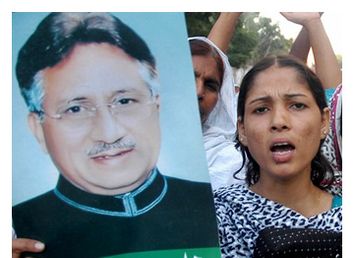
There is nothing normal about the presidential election taking place Oct. 6 in Pakistan. Legal challenges, street protests, political deals and international maneuvers have preceded the vote and will most likely continue as Gen. Pervez Musharraf tries desperately to legitimize his power. Pakistan’s status as a critical country in the war against terrorism, and the presumed base of a resurgent al-Qaida makes Pakistan’s domestic developments important beyond its borders.

Under the Pakistani constitution, the president is a figurehead elected by the country’s Parliament and four provincial legislatures. Musharraf, on the other hand, is anything but a figurehead. After taking power in a military coup in 1999, and especially since he became an important U.S. ally in the war against terror following 9/11, Musharraf has wielded absolute power. He has never been constitutionally elected, so the references in much of the media to his “reelection” are inaccurate. Musharraf declared himself president for five years based on a rigged one-sided referendum in 2002. That “term” ends soon, which is why Musharraf needs to get elected now.

Musharraf’s election bid has been the subject of legal disputes from the first day. He is concurrently president and army chief, and he is seeking election from lame-duck legislators whose term ends in December. The opposition argues that as a serving army chief, Musharraf cannot run for elective office. Even if he were to retire from the army, he would have to wait for two years before he could run in an election, according to Pakistan’s constitution.

Moreover, the idea of legislators who are at the end of their term electing a president for the next five years also appears odd to many. It is as if the majority party of an outgoing U.S. House elected the Speaker for the next term to preempt the possibility that the incumbent majority would lose power in a general election.

A few days ago Pakistan’s Supreme Court made it possible, on a technicality, for Musharraf to run for president without giving up his position as army chief. But now the court is in the process of hearing arguments against Musharraf’s candidacy. In something of a cart-before-the-horse move, the court has refused to stay the election but has ordered that the announcement of results be withheld until a final verdict is reached over whether Musharraf can run.

Musharraf’s supporters hold the majority of seats in the current legislatures as a result of general elections five years ago that were described even by the U.S. State Department as “flawed.” There is little doubt that he will win their votes. At some point, he will be declared elected unless the Supreme Court rules against him. Musharraf has bought insurance against the latter possibility by reaching an agreement with the leader of Pakistan’s largest opposition party, former Prime Minister Benazir Bhutto.

In return for Musharraf’s dropping graft charges that have never been proven, members of Bhutto’s Pakistan’s Peoples Party (PPP) will not join the rest of Musharraf’s opposition in resigning from the federal and provincial legislatures. The PPP could also join Musharraf supporters in amending the constitution to enable him to secure election in case of an adverse judgment against him from the Supreme Court.

The arrangement with Bhutto will, however, depend on how far Musharraf will go to assure Bhutto of a free and fair election. Until now, Musharraf and Pakistan’s military have seen the PPP and other democratic parties as their enemy. Pakistan’s generals believe that only they can keep the ethnically diverse country together and have yet to recognize the aspirations of the Pakistani people for full democracy.

All of this might enable Musharraf to remain president notwithstanding his declining popularity. “Legal” is not the same as “legitimate.” Musharraf will most likely continue to face legitimacy questions even after he has declared himself duly elected and received messages of congratulations from world leaders, foremost among them President Bush.

Bhutto, too, has to balance her willingness to negotiate with Musharraf with the intelligentsia’s perception that Musharraf is an unreformed dictator who needs to be overthrown. She is popular as a social democratic politician who has challenged military rule and suffered for it.

The corruption allegations against Bhutto have not diminished her support, especially among Pakistan’s poor in certain regions. But Bhutto will have to guard against being dragged down by association with Musharraf. Despite U.S. support for an arrangement between the two, Bhutto could find maintaining a hard line toward Musharraf tempting because of the benefits it brings in more votes for her.

An opinion poll conducted in Pakistan by the International Republican Institute in July indicated that 62 percent of Pakistanis want Musharraf to resign as army chief, that 59 percent believe a free and fair poll is not possible while he is in power, and that more people support the prospect of a transition negotiated between Bhutto and Musharraf than are opposed to it.

But another survey in August, from polling organization Terror Free Tomorrow, revealed an even more volatile current across Pakistan’s political landscape — that Osama bin Laden now had a higher approval rating, at 46 percent, than Musharraf, at 38 percent. (President Bush stood at 9 percent.)

Indeed, Musharraf’s shaky capability to provide a bulwark against terrorism has been exposed as parts of Pakistan have slipped deeper under the influence of Islamist extremists. With U.S. intelligence reiterating that al-Qaida enjoys a safe haven in remote regions of Pakistan, Musharraf’s claims about denying terrorists a home base are ringing hollow.

Moreover, beginning with his botched decision to remove Pakistan’s chief justice in March, Musharraf has exposed his darker side, showing a tendency to be repressive and violent as threats to his political survival increase. In days to come, it will become clear whether Musharraf decides to fight al-Qaida and the Taliban with the help of Pakistan’s democrats, or remains focused on repressing civilians seeking the end of military rule.

Subcontracting the hunt for bin Laden

The twisted relationship between the Bush administration and Pakistan's military regime, driven by a mutual desire for survival, is undermining the war on terror.

  • more
    • All Share Services

The day after Homeland Security Secretary Tom Ridge announced a new orange alert, the New York Times reported that the information leading to the alert came from the arrest in Lahore, Pakistan, three weeks earlier of Mohammed Naeem Noor Khan, a computer wizard linked to al-Qaida. It was later revealed that since his arrest Khan had been working as a double agent for the Pakistanis and the Americans, passing on al-Qaida leaders’ messages to its operatives and helping uncover members of the global terrorist network. Khan’s identification in the New York Times ended his usefulness in ferreting out terrorists — a tragic loss in the war on terror.

Reporters initially fingered American officials for leaking Khan’s name. National Security Advisor Condoleezza Rice all but acknowledged the administration’s mistake in an interview with CNN’s Wolf Blitzer. The matter was then written off as another blunder caused by the fog of war.

But in fact, U.S. officials did not leak Khan’s name. The first leak of Khan’s name, according to well-informed, reliable sources in the region who spoke on condition of anonymity, came from Pakistani officials in Islamabad — who perhaps were motivated by eagerness to show off their success in arresting al-Qaida figures or, more ominously, by a desire to sabotage the penetration of al-Qaida that Khan’s arrest had made possible. A second Pakistani leak to Reuters, blaming the Americans as the source of the leak, served to absolve the Pakistanis of any responsibility in breaking up new al-Qaida cells — an important move domestically.

The Bush administration was hardly in a position to haul Gen. Pervez Musharraf’s regime over the coals for this disaster. The United States and Pakistan have a twisted relationship in the hunt for al-Qaida. Although it is ostensibly driven by the mutual desire for security, there is clearly a political element to the relationship related to the survival of both the Bush and the Musharraf governments.

Few people likely paid attention last week when former President Clinton accused the Bush administration of contracting out U.S. security and the hunt for Osama bin Laden to Pakistan in its zeal to wage war in Iraq. In an interview with Canadian television, Clinton asked, “Why did we put our No. 1 security threat in the hands of the Pakistanis, with us playing the supporting role, and put all our military resources into Iraq — which was I think at best our No. 5 security threat?” Clinton also observed, “We will never know if we could have gotten him [bin Laden] because we didn’t make it a priority.”

One consequence of the decision to subcontract the hunt for members of al-Qaida to Pakistan is that the terrorists appear to be regrouping. The Washington Post, quoting senior U.S. and Pakistani officials, reported “new evidence” on Aug. 14 that suggests “that Al-Qaeda is battered but not beaten, and that a motley collection of old hands and recent recruits has formed a nucleus in Pakistan that is pushing forward with plans for attacks in the United States.”

Despite Pakistan’s past role in propping up the repressive Taliban regime in Afghanistan, the Bush administration — in one of its least transparent foreign alliances — continues to rely on Pakistani military and intelligence services to deliver bin Laden. Since much of the give-and-take in this relationship is covert, it is unclear exactly what is or is not taking place.

The Bush administration has defended Musharraf against charges by political and media critics that Pakistan is not doing enough in the global war against terrorism. It has consistently and conveniently ignored Pakistan’s lack of democracy under Musharraf, at a time when the administration claims to be promoting democracy in other parts of the Islamic world. Pakistan even managed to get a free pass on its role in transferring nuclear weapons technology to Libya, Iran and North Korea. The White House undoubtedly is not keen to criticize this important subcontractor in the expectation that it will deliver politically where it counts — in the war against al-Qaida.

Musharraf’s military regime, too, seems eager, as the U.S. election season heats up, to claim credit for its “cooperation” in the U.S.-led war against terrorism. Usually reticent Pakistani officials, especially Interior Minister Faisal Hayat, have been unusually forthcoming about recent successes in arresting al-Qaida-linked terrorist suspects, including some Pakistani nationals. Hayat was even willing to hold a late-night press briefing, just hours before Democratic presidential candidate John Kerry was to formally accept his party’s nomination at the Democratic Convention in Boston, to announce the arrest of Ahmed Khalfan Ghailani, the man wanted for the 1998 terrorist bombings of the U.S. embassies in Kenya and Tanzania.

The Musharraf regime’s current acknowledgment of al-Qaida’s presence in Pakistan is quite contrary to its earlier approach, which was to deny any links between Pakistani Islamist militants and the global terrorist network. In a July 7, 2002, article in London’s Financial Times, I wrote: “During the anti-Soviet Afghan resistance, militants from all over the Muslim world passed through Pakistan to participate in the Afghan Jihad. They were, at the time, supported by the intelligence services of the west as well as Islamic nations. Some of them created covert networks within Pakistan, taking advantage of poor law enforcement and the state’s sympathetic attitude towards pan-Islamic militancy. Now that al-Qaeda and the Taliban have been uprooted from Afghanistan, they are using their former transit station as a temporary staging ground for terrorist operations.”

Pakistani officials at the time denied my assertions in absolute terms. After handing over around 500 Taliban immediately after the end of the war in Afghanistan, Pakistan managed to turn over a slow trickle of al-Qaida operatives to the United States once every few months. Yet most of these early detainees, held at the U.S. prison at Guantánamo, were foot soldiers with little knowledge of al-Qaida’s wider network or its methods.

Pakistan is the only U.S. ally that does not allow the U.S. Central Command to post details of joint operations as well as costs paid to Pakistan on Centcom’s Web site. Yet Pakistan’s ability to produce al-Qaida figures at politically opportune moments has been widely noted in the U.S. media, so it is natural for skeptics to wonder whether there is a political angle to the more recent admission of local al-Qaida links and the spate of arrests of suspected terrorists in Pakistan.

Whether or not the Bush administration is using its ties with Pakistani intelligence for political purposes, the timing of Pakistan’s stepped-up anti-terrorist effort, and the high-level publicity given to it, have led to similar questions about Musharraf’s intentions in domestic politics. The general had promised to take off his military uniform by the end of the year, and Bush administration officials were hoping to use that as a fig leaf for touting the regime as having completed its “transition” to civilian, democratic rule. If Musharraf instead decides not to relinquish his role as chief of the army, he needs to demonstrate his indispensability in the war against terrorism with renewed vigor. That way he might be able to avert the criticism that would be certain to come his way for breaking his promise to give up his uniform.

The relative transparency of the U.S. political system should make it difficult for U.S. officials to be blatant about linking political agendas to a national security issue such as the war against terrorism. In an article titled “July Surprise?” in the New Republic, published several weeks before the Democratic Convention, John B. Judis, Spencer Ackerman and Massoud Ansari wrote of pressure on Pakistan by the Bush administration to produce a “high-value target” around the time of the convention to steal Kerry’s thunder. The suggestion was rejected by some as a conspiracy theory at the time, but when Pakistan announced the arrest of Ghailani, a Tanzanian, in Gujarat, Pakistan, hours before Kerry’s acceptance speech, eyebrows were raised even among those Americans who normally dismiss such conspiracy theories.

For the Bush administration to have risked playing politics with the timing of arrest of terror suspects is a disturbing enough possibility. More disturbing is the prospect that the initiative to gain political advantage from these arrests came not from the Bush administration but from the Musharraf regime. By subcontracting the hunt for bin Laden to an authoritarian ally who has a special interest in the flow of economic and military benefits resulting from this contract, the administration may be giving that ally a powerful say in America’s political agenda whose effect is to undermine the war against al-Qaida.

Musharraf’s enlistment in the war on terrorism is an extension of Pakistan’s long-established willingness to be useful to the United States for the “right price.” Pakistan’s first military ruler, Gen. (later Field Marshal) Ayub Khan (who ruled from 1958 to 1969), told U.S. Assistant Secretary of State Henry Byroade as early as 1953, “Our army can be your army if you want us.” Ever since, Pakistan’s military leadership has seen its alliance with America as its meal ticket.

Pakistan now receives $700 million annually in bilateral economic and military assistance, $84 million monthly to defer costs incurred in its anti-terrorist efforts and $1.7 billion in funds from international financial institutions, where U.S. support is crucial. Pakistan has also benefited from debt rescheduling and streamlining of remittances from overseas Pakistani workers. This significant cash inflow has enabled the government to balance its books, create an impression of economic growth and get back in the market for new weapons for the military. As in the past, the economic component of the U.S. aid package is aimed more at ensuring regime survival than at sustained economic growth or real democratic reform.

To understand the priorities of the Musharraf regime (and the Bush administration), one need only consider that while the United States has agreed to provide $30 million for madrasa (Islamic seminary) reform and $4 million for “training of parliamentarians,” Pakistan’s military is to get $350 million of the bilateral aid package of $700 million. Pakistani madrasas — which educate over 1 million students from ages 6 to 22 — are believed to be a source of Islamic jihadists because of their fundamentalist curriculum, and weaning the seminaries from religious radicalism is a major U.S. policy priority. However, the regular payments to Pakistan for costs incurred in fighting terrorism on America’s behalf (which add up to almost $1 billion per year) go almost exclusively into the budget for Pakistan’s military and intelligence services.

As long as the U.S.-Pakistan relationship remains a single-issue alliance based on the quid pro quo of changes in Pakistani policy for U.S. money, the regime in Islamabad will continue to be tempted to take its time in finding all the terrorists at large in Pakistan. After all, most subcontractors who are paid by the hour take longer to get the job done. And while this may seem like a risky scheme for Musharraf, it conforms to the past pattern of Pakistani military regimes collecting rent from the United States for providing strategic services.

Continue Reading Close

From swatting flies to stirring up hornets’ nests

A new terrorist document shows that as the U.S. flails in Iraq, only al-Qaida seems to have a strategy.

  • more
    • All Share Services

National Security Advisor Condoleezza Rice told the 9/11 commission last week that President Bush was “tired of swatting flies” when it came to counter-terrorism, and that he wanted a “broader package of strategies” that didn’t merely deal with individual terror attacks after they occurred, but eliminated the threat of terror permanently. Unfortunately, it looks as if the Bush administration has traded swatting flies for stirring hornets’ nests.

There’s increasing evidence that the administration’s policies, particularly its war with Iraq, has played into its enemies hands, drawing the United States and its allies into several theaters of confrontation at once and helping to neutralize the Americans’ decisive advantage in conventional warfare. One interesting window into the Islamic resistance’s new strategy comes from a 42-page Arabic document called “Jihadi Iraq: Hopes and Dangers,” which was posted on an extremist Islamist Web site supportive of al-Qaida around December 2003. Counter-terrorism researchers at the Norwegian Defence Research Establishment (FFI) translated it, and they believe it’s a strategy paper intended for the resistance fighting within Iraq. While no one knows for sure who authored the paper, its significance became apparent after the March terrorist attacks in Madrid, just days before the Spanish election. The jihadist strategy paper had recommended “painful strikes” against Spain specifically around the time of the Spanish elections, aimed at weakening Spain’s resolve to stay in the coalition in Iraq.

The jihadist document was ostensibly prepared by the Media Committee for the Victory of the Iraqi People (Mujahedin Services Center). The reference to a “services center” (markaz al-khidmaat) calls to mind the Services Bureau (maktab al-khidmaat) established in Peshawar, Pakistan, during the anti-Soviet war in Afghanistan. Indeed, al-Qaida grew out of the Peshawar Mujahedin Services Bureau in the late 1980s, and the resurfacing of a services center for jihadists in Iraq indicates that the war in Iraq has created a new focal point for militant Islamists instead of being a step toward their destruction. The new Mujahedin Services Center was possibly conceived by Saudi jihadist Yusuf Al-Ayiri, who was reportedly killed by Saudi security forces in May 2003.

Al-Qaida’s objective in attacking American targets on 9/11 was to convince its recruitment base in the Muslim world that the United States was not invulnerable, thereby creating opportunities to expand its terrorist jihad. A surgical military operation against al-Qaida, as well as its financiers and supporters, would have denied the terrorists a wider international audience for radical Islamism. The war for regime change in Iraq, even if well intentioned, has had the opposite effect.

Al-Qaida and its extremist supporters know that America cannot be coerced to leave Iraq by military or political means alone. But according to the authors of “Jihadi Iraq: Hopes and Dangers,” the Islamist resistance can succeed by making the occupation of Iraq as costly as possible for the United States. One of that document’s most important recommendations is to attack American allies present in Iraq “because America must not be allowed to share the cost of occupation with a wide coalition of countries.” The goal of the jihadists is “to make one or two of the U.S. allies leave the coalition, because this will cause others to follow suit and the dominos will start falling.”

The Bush administration’s rush to war in Iraq, and its relative indifference to forging a coalition with traditional allies, are apparently fulfilling the best-case strategic scenario envisioned by the jihadists.

In addition to the Spanish, personnel from Ukraine, Germany and Japan have been targeted in Iraq. Terrorist attacks around the world have also become more frequent, as if fulfilling a strategic design for wider mayhem. Instead of dismantling the networks of terror cell by cell, the United States is trying to dissuade terrorism by demonstrating its greater military might. The number of terrorist cells, however, is continuing to multiply.

Historically, terrorism flourished in the chaos of the wars in Lebanon and Afghanistan. Iraq is now evoking memories of Lebanon, with the added feature of American military presence. The military presence is large enough to attract charges of occupation but not so big that it can keep the place fully under control. By waging war in Iraq to topple an evil regime that was not directly responsible for the 9/11 attacks, the United States has run the risk of overextending itself militarily. Combating the Shiite uprising in most of Iraq, for example, is not a necessary element of the war against terrorism. It is, however, antagonizing Shiite Muslims in Iraq and elsewhere and creating potentially active enemies for the United States where none existed before.

Al-Qaida and other extremists know the Muslim mind and seem also to have some understanding of the Bush administration’s approach. They attract massive American military retaliation through violent acts, such as the murder of American civilians in Fallujah, because the collateral damage of military operations adds to the resentment of the U.S. occupation. The administration’s sledgehammer approach loses America critical goodwill of existing and potential allies.

Adnan Pachachi, a senior member of the U.S.-appointed Iraqi Governing Council, described the retaliatory operations in Fallujah as “mass punishment for the people of Fallujah.” “It was not right to punish all the people of Fallujah,” he said and added that he considered “these operations by the Americans unacceptable and illegal.” Two Iraqi governing council members have already resigned in protest over the wider violence. Such chaos in governance and law enforcement in Iraq seems hardly reflective of the well-thought-out “broader package of strategies” that Rice says has been developed in response to terrorism.

Iraq is not the only area where the administration’s policy seems adrift. The United States also appears to be ineffective in untangling the knots that made Afghanistan a safe haven for al-Qaida. According to Rice, “Al-Qaida was both client of and patron to the Taliban, which in turn was supported by Pakistan. Those relationships provided al-Qaida with a powerful umbrella of protection, and we had to sever them.” While the Taliban have been toppled from power, the administration’s policy toward Pakistan has been to embrace its military ruler, Gen. Pervez Musharraf. Rice describes this as a new “carrot and stick” policy toward Pakistan.

A $600 million annual aid package for five years helps Musharraf retain power, and his military and intelligence services periodically nab and hand over al-Qaida figures to the United States in return. But the flipping of Musharraf can hardly be described a policy achievement. Pakistan obviously had strategic reasons of its own to back the Taliban and for turning a blind eye to al-Qaida. Those reasons are unlikely to change without a change in Pakistan’s leadership or system of government.

Rice has a similarly optimistic view of Saudi Arabia, another source of non-state support for al-Qaida. But the Pakistani military retreated in a recent showdown with al-Qaida supporters in its tribal region bordering Afghanistan, and the Saudis can hardly be expected to suddenly clamp down on the extremist jihadist ideology they have espoused and funded for several decades. All this points toward an ad hoc flexing of muscle, not a comprehensive strategy to root out extremist ideologies, promote democracy, and eliminate terrorism. Meanwhile, the United States flails in Iraq, swatting at one fly after another. Only al-Qaida seems to have a strategy.

Continue Reading Close

The rise of the baby al-Qaidas

Bush's failed strategy in the war on terrorism has spawned more al-Qaidas -- and they're funded by the booming heroin traffic in Afghanistan.

  • more
    • All Share Services

The rise of the baby al-Qaidas

In the 30 months since President Bush’s declaration of war against global terrorism, the U.S. and its allies have ostensibly detained or killed 70 percent of al-Qaida’s senior leaders. But the frequency of terrorist acts worldwide attributed to al-Qaida has increased, compared to the pre-9/11 period. Baby al-Qaidas are being spawned in new regions of the world — striking from Turkey to Spain, from Uzbekistan to Tunisia — and a new generation of terrorists is stepping up to take the place of those killed in Afghanistan or detained in Guantanamo. Is the U.S. underestimating the enemy and not paying sufficient attention to al-Qaida again? Or are the war in Iraq and the grandiose scheme to democratize and reshape the Middle East it represents distracting the administration from the pursuit of the perpetrators of 9/11?

The State Department’s counterterrorism coordinator, J. Cofer Black, testified last week before the House Subcommittee on International Terrorism, Nonproliferation and Human Rights. In his testimony, the 28-year veteran of the CIA’s Directorate of Operations listed “some important successes against the al-Qaida organization” resulting from the coordination of U.S. efforts with those of its allies. Al-Qaida had been deprived of “a vital safe haven” in Afghanistan, most of its known leadership had been decapitated, and it had been “separated from facilities central to its chem-bio and poisons development programs.”

But, according to Black, “a new cadre of leaders” and “relatively untested terrorists” has started to emerge. “Al-Qaida’s ideology is spreading well beyond the Middle East” and “has been picked up by a number of Islamic extremist movements which exist around the globe.” Black also said that “Some groups have gravitated to al-Qaida in recent years, where before such linkages did not exist” — something that “greatly complicates our task in stamping out al-Qaida”.

Iraq was described by the State Department’s senior counterterrorism official as the emerging “focal point for the foreign jihadist fighters.” According to Black’s testimony, “Jihadists view Iraq as a new training ground to build their extremist credentials and hone the skills of the terrorist.” In short, the war in Afghanistan struck a severe blow to terrorism, but the war in Iraq may have resuscitated it. The U.S. will prevail against terrorism eventually, but the problem is with us for the foreseeable future. The administration’s desire to proclaim “mission accomplished” too quickly might actually have prolonged the war against terrorism.

Much has been said by U.S. politicians and analysts about how the war against al-Qaida in Afghanistan should have been finished before starting another war in Iraq. But the conduct of the war in Afghanistan itself has been insufficiently scrutinized. The decision to commit fewer troops to the Afghan war and “outsourcing” the hunt on the ground for al-Qaida to the Northern Alliance and Pakistan probably enabled al-Qaida operatives to disperse instead of waiting to be destroyed by U.S. bombardment from the air. The only reason the U.S. feels it has destroyed 70 percent of known al-Qaida leaders is that its knowledge of al-Qaida operatives was limited to begin with. Less-known veterans of the anti-Soviet jihad started slipping out of Afghanistan soon after the U.S. started bombing Afghanistan on Oct. 7, 2001. Pakistan did not deploy significant numbers of troops along its border with Afghanistan until Dec. 7, giving al-Qaida trainers almost two months to spread out. These individuals have most likely served as midwives of the baby al-Qaidas the U.S. now confronts from Morocco to Indonesia.

The core assumption of the U.S. strategy in Afghanistan was that terrorists cannot operate without state sponsorship. Once the Taliban regime in Afghanistan had been dislodged and al-Qaida’s safe haven had been destroyed, Osama bin Laden’s organization was expected to wither away or at least decline in significance as a source of threat. There was little contingency planning for al-Qaida’s ability to evolve in new ways, operating without state sponsorship in remote parts of insufficiently governed countries. It is true that al-Qaida no longer has the elaborate training camps it had while the Taliban ruled Afghanistan. But these camps were partly needed to train soldiers for conventional war in defense of Taliban control of Afghan cities. With no cities to protect, al-Qaida no longer needs conventional military training. Suicide bombers can be easily trained in the caves of south and eastern Afghanistan and northwestern Pakistan, the jungles of Mindanao in southern Philippines and in basements of homes in the Sunni triangle in Iraq.

Ideological motivation for young men to join its ranks is now more important to al-Qaida than a state sponsor. That motivation has been provided by the haste to war in Iraq. Officials in several Muslim countries have noted a rise in recruitment to extremist groups, and even U.S. officials (including Black) acknowledge that “there are literally thousands of jihadists around the world.” These extremists have added anti-Americanism to their causes, which in the past involved only local separatist wars in remote parts of the world such as Chechnya and Kashmir.

While Osama bin Laden remains at large in Afghanistan or its border region with Pakistan, far more troops and resources have been committed to Iraq than to Afghanistan. There are only 13,500 U.S. troops in Afghanistan, compared with 150,000 in Iraq. Fifty countries promised a total of $8.2 billion in aid to Afghanistan at a donor’s conference in Berlin last week after President Hamid Karzai warned that his country could slip back into being “a haven for drugs and terrorism.”

The U.S. has promised to double its aid to Afghanistan, raising it to $2.2 billion over the next two years, but that is a drop in the bucket in comparison with U.S. spending in Iraq. Afghanistan has massively resumed harvesting opium and now accounts for 77 percent of global opium production according to the last annual report of the U.N. Office on Drugs and Crime. Twenty-eight out of 32 provinces in Afghanistan now produce the drug crop, up from 18 provinces in 1999. Drug revenues, estimated at $2.3 billion annually (obviously more than U.S. aid commitments), now finance local warlords and terrorists, including some al-Qaida affiliates and the resurgent Taliban.

The U.S. and its allies have frozen $130 million in terrorist assets worldwide since 9/11, but that figure pales against the readily available drug money that can continue to finance terrorism for years. If terrorist recruitment is up, al-Qaida has morphed into something different but equally deadly, and terrorist financing continues to increase, victory in the war against terrorism is far from imminent.

Continue Reading Close