James Norton

Chow down, dude

Chris Onstad, author of the popular Web comic Achewood, talks about writing for guys who own one pan, dreaded foodies, and why he's a member of the Bacon-of-the-Month Club.

  • more
    • All Share Services

Web cartoonist Chris Onstad describes the genesis of his comic culinary work, “The Achewood Cookbook,” as follows: “I was sitting there looking at that massive “French Laundry Cookbook,” which is essentially useless to any home cook, and I thought: Well, fuck this. I think it would be fun, and it would be a great challenge, to take on a project for guys who are just out of college and have one pan and one electric burner.”

Praised by Time magazine for its novelistic depth and now clocking around 10,000,000 page views a month, Onstad’s Achewood is a rare bird: a Web comic with a massive following. It’s also one of the only strips in any medium to tackle the nuances of the culinary world, riffing off of molecular gastronomy and eggless Sardinian pasta the way most strips work with put-upon wives and clumsy oversize dogs.

The epicurean tendencies of Achewood emerge organically from its author’s commanding — and borderline obsessive — interest in cookbooks, and his almost militarily perfectionist brand of home cooking. But it’s not the cooking that holds his audience’s attention. It’s his well-developed cast of characters, many of whom just happen to be seriously into good food.

“There’s such a variety of characters in the strips that I always have something for some of them to say. Or one of them always reflects the way that I feel about something, in their mentality, or their approach to life. I guess you could say that I’m dodeca-schizophrenic,” Onstad explains.

Salon reached Onstad by phone at his home south of San Francisco and spoke with him about his awkward online interchange with culinary author Julie Powell, why he despises the word “foodie,” and his increasingly passionate Bacon-of-the-Month blog.

Obviously, you’re a smart guy, and your comics have been praised for their novelistic style. So what drew you to Web comics, as opposed to actually writing novels, or doing screenwriting or literary journalism?

It’s easier. [Laughs] I can bang out a little funny idea and put it up, and I can get a little feedback from people. I think feedback is a really important thing. You can work on a novel in the dark by yourself for 10 years, and it’s a lonely, hard thing if you’re doing it right. But with Achewood, knowing it was making people happy and entertained along the way kept me going.

Cooking and eating have become pervasive themes in the strip. Do you worry that some percentage of your readership just has no interest in what you’re talking about when you get into vegan substitutions or molecular gastronomy?

I do not and cannot care. I have to write about what interests me the most. If I don’t write about what interests me, it’s not going to interest anyone else. And you know, it’s the same thing — oftentimes I’ll sit here, and I’ll be writing a strip, and I’ll make a reference to a uniquely American thing and I’ll go, Oh, well, I’ve got a lot of readers in the United Kingdom and Australia, and they’re not going to get it. But then I think: But you know what? I watch and adore British comedies and oftentimes I don’t get the references, but I can appreciate the completeness and the honesty of it. So I try not to dumb it down, and I try not to think for other people.

How did you personally get into cooking?

My whole life I did nothing but enjoy eating, but when I met my wife she was a bit more of a cook than I was. She spent time in Italy in college. And since she’s mostly vegetarian and I’m mostly omnivorous, we have to do a lot of homework finding stuff that fits both of us. And I’m competitive, and I really want to do a good job with these things and impress people. Also, my wife worked for Williams-Sonoma, so we got just tremendous deals on high-end cookware that we wouldn’t normally have been able to afford.

Do you have a favorite cookbook?

The one that I turn to most often is probably “Jacques Pepin’s Complete Techniques.” It’s basically like a cooking school between two covers. Everything from how to butterfly a chicken to trussing to stocks and all that sort of thing. It’s a go-to book. And lately, I’ve really been getting a lot of use out of the new Mario Batali “Molto Italiano” book. It’s sort of his masterpiece. But also a lot of Patricia Wells stuff, a lot of Julia Child, a lot of Chez Panisse — you know, we’re here in California, it can’t be avoided.

And how about food television? Are there any personalities you follow?

I watch it all. But I find the best stuff right now is on public television on Sundays. You can catch Jacques Pepin, you can catch Rick Bayless — those are shows I’ve been getting into a lot.

Do you like Christopher Kimball from “America’s Test Kitchen”?

I love anything that’s well done. The people at “America’s Test Kitchen” put a lot of effort into it and it’s sincere. I think it’s enormously useful. And Kimball’s just this goofy, 8-foot-tall nerd. It’s fantastic. I describe him as a Yankee Wookie.

How did “The Achewood Cookbook” come to be?

Basically, I was sitting around looking at that massive “French Laundry Cookbook,” which is essentially useless to any home cook, and I thought: Well, fuck this. I think it would be fun, and it would be a great challenge, to take on a project for guys who are just out of college and have one pan and one electric burner. And because of where I was with Achewood at the time, I thought: This is a thing for young guys. It’ll connect well with my young readership. So I went to some chain grocery store like Albertsons and bought ground beef and some eggs and mustard and worked up about 50 recipes for various things ranging from cocktails to Scotch eggs.

You had an awkward online exchange with the food blogger Julie Powell recently. Can you walk me through what happened?

Oh, yeah. I got her book, “Julie and Julia,” for my wife for Valentine’s Day, and I read it and thought: That’s fantastic! And in Achewood, I write about stuff that I read and do in life. So when I wrote about her, I didn’t intend to start up an exchange. But then somebody sent me a link to Powell’s blog, where she talked about seeing the comic and basically summed it up in one word: “creepy.”

I thought … Oh my gosh. If you don’t know Achewood, and you’re well established, you might see it and go: “Oh, there’s this creepy little badly drawn comic strip making a weird adult reference to my work? I don’t like that” — I absolutely understand her perspective. I’m not going to do anything weird and send her a signed copy or anything.

That’s probably shrewd.

I loved her project, though. I’m actually doing something a little bit like it now with the Bacon-of-the-Month Club my wife signed me up for. I’m trying to document my year’s worth of bacon experiments.

So the Julie Powell “Julie and Julia” thing was the seed of that project?

More or less. You can’t look at in any other way, actually. I read a book about documenting a yearlong project … and then I start my yearlong project.

Have you had Nueske’s bacon from Wisconsin?

I’ve only had one of these so far, so I’m a total amateur. But if it’s a renowned artisanal bacon, I’m sure it’ll be showing up at some point during the year.

OK, well, if Nueske’s isn’t on there, you should let me know. We can get it around here in Minnesota. It’s fantastic; R.W. Apple called it “the Rolls Royce of rashers.”

Nice. Yeah, the more I learn about bacon, and the more I hear from the British readers, “American bacon is crispy little strips of paper. It’s nasty stuff. We want thick stuff. We want stuff that’s more akin to a pork chop in our bacon.” So we’ll see.

Speaking personally as a blogger who once invoked the word “foodie” when writing about your strip, I’m now painfully aware that this is not a term you care for. What’s your distaste for the word “foodie”?

The first time I ever heard a friend say it, the hair on the back of my neck stood up, my gut twisted, and I felt angry for some reason. Why do we need this fake new word? There are so many words that already describe the concept of people who like food, or enjoy cooking, or enjoy knowing about cooking. “Foodie”: It’s like the infantile diminutive — you put a “y” on the end of everything to make it childlike. We don’t need it. It’s embarrassing. “I’m a foodie.” Oh my God.

As a fan of good food — as an epicurean, or gourmand, or however you want to frame it — what’s your take on molecular gastronomy?

If people want to do something that’s creative and they’re having fun, go for it. That’s great. Push the envelope — it’s not like we know everything there is to do yet. You know, I watch these shows about Ferran Adrià and Grant Achatz and that [Homaro] Cantu who was just on “Iron Chef,” and I see them, and I see the way the judges and customers are reacting to their food and it’s exciting. I wouldn’t make fun of it if I didn’t like it.

Tell me a little bit about one of your creations, “The Dude and Catastrophe.”

“The Dude and Catastrophe” is the fictitious pub started by Cornelius Bear who is sort of my older Anglophile man-of-the-world-type character. It’s like a Cheers-type place.

Is it sort of a fantasy project for down the line — could it become a real place?

If I get rich and retire, yeah.

Do you have a sense of when your next cookbook will come out and what the theme will be?

I’ve been writing it since I did the last one, and over time the project has morphed into something that’s naturally about the next level of cooking. It’s a higher-end cookbook. It’s not going to be anything with a two-page spread of Jamie Oliver in a hipster T-shirt or anything, but it is going to be something that assumes a bigger pantry, and a greater set of tools, and a little bit of cooking knowledge.

I’ve been doing so much growing as a home cook over the last few years, and as a scholar of … uh … did I just say that? A cookbook scholar. My own approach to food has changed so much since I did that last cookbook that I’d like to — oh, God — I’d like to say it will be done this summer, but we’ve got so many projects in the works right now.

How has your own approach to cooking changed and evolved?

I’m familiar with more tastes, I’ve got more distinct opinions on how things should be served. You know, when I make a pasta dinner for the family, I want everyone to be sitting because every second that you wait, it gets colder. I want steam to be rising off of everything when I set it down. I’m more sensitive to moisture. Just the basic things that you don’t have a touch for when you haven’t done it before. I’m more comfortable with butter. I could go on and on.

A history of violence

Robert Dreyfuss explains how America's meddling in the Middle East unleashed the current deadly wave of Islamic fundamentalism.

  • more
    • All Share Services

A history of violence

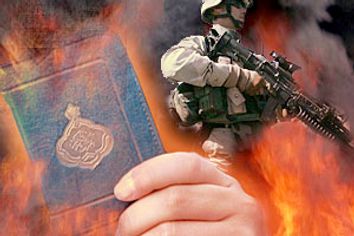
History can be a truly explosive force when it’s connected tightly to contemporary events. The linkage of Islam, terrorism and the war in Iraq has a deep and vivid history, with the potential to hit the American public like a roadside bomb, but it has gone largely untold, emerging only in bits and pieces — until now. “Devil’s Game: How the United States Helped Unleash Fundamentalist Islam” digs up the knotty roots of Islamist violence, exhuming the deep, dirty story behind the “war on terror.”

Part of the story has been told before, in newspaper and magazine articles that put together some of its many pieces. But with “Devil’s Game,” author Robert Dreyfuss has written what may be the most clear and engaging history of the deadly, historic partnership between Western powers and political Islam. Dreyfuss, who covers national security for Rolling Stone, delves deep into the explosive mix of shrewd realpolitik and raw, ignorant fervor that helped fuel the worldwide enterprise of radical Islam and create the extremist theocracies that hold sway today in Iran and Saudi Arabia.

The book is a chronicle of mistakes made, opportunities lost, and lessons most vividly not learned. It’s also the story of the historical error that has come to define U.S. foreign policy in the Muslim world: the Machiavellian use of political Islam as a sword and shield against communism and Arab nationalism. Contextualized by the modern-day neoconservative push for war with Iraq, “Devil’s Game” records the long and sordid history of right-wing and hard-line elements in the U.S. government finding common cause with fundamentalist groups in the Middle East.

For instance: In a chapter on the U.S. proxy war in Afghanistan, Dreyfuss describes how the United States deliberately channeled money to the “nastier, more fanatic types of mujahideen” in Afghanistan (to quote Stephen P. Cohen, a former top State Department official) in order to do the most damage to Soviet occupiers. Among the nastiest: Gulbuddin Hekmatyar, who won the confidence of his Pakistani and CIA backers in part by skinning prisoners alive and approving the practice of throwing acid in the faces of women who failed to cover themselves properly. After 9/11, Hekmatyar would resurface as an ally of the Taliban and a bitter opponent of U.S. occupiers.

Dreyfuss also reveals how Israel helped to create and empower the forerunners of Hamas as a bulwark against Palestinian nationalism (as embodied by Yasser Arafat and the PLO). The Likud-Hamas link — with both organizations thriving in unstable, warlike environments — is sure to be one of the book’s most controversial points, and it is a disturbing parallel to the “blowback” the United States suffered by backing bin Laden and his fellow “freedom fighters” in Afghanistan. Dreyfuss also uncovers how Citibank and Harvard University, among other international players, helped create the Islamic banking system that would act as the financial battery for the Energizer Bunny of violent anti-Western Islamism.

Along the way, Dreyfuss replays long-buried quotes from top American military and intelligence officials that illuminate the shadowy origins of America’s current foreign policy. When asked about the rise of the Taliban in 1996,President Carter’s national security advisor, Zbigniew Brzezinski, offers this thoughtful rejoinder:

“What is more important to the history of the world? The Taliban or the collapse of the Soviet empire? Some stirred-up Muslims or the liberation of Central Europe and the end of the cold war?”

Using the hammer blows of history and polemic, Dreyfuss suggests that “some stirred-up Muslims” may turn out to be something of a problem, after all.

“Devil’s Game” is a book likely to appeal to those who defend the purity of means despite the urgency of the ends. By feeding the monster of militant Islamism to fulfill short-term goals, Dreyfuss argues, the United States helped unleash the most challenging foreign policy crisis of the new millennium. Salon caught up with Dreyfuss recently to discuss the campaign to isolate Syria, the disastrous impact of the war in Iraq, and the pressing need to reduce the U.S. presence in the Middle East.

Tell me about the genesis of “Devil’s Game” — why this topic, and why right now?

Since 9/11, like a lot of reporters, I’ve been focusing pretty heavily on Iraq, the Middle East, Islamic fundamentalism and terrorism, and lots of intelligence issues. In this case the publisher actually called me and asked me if I had any book ideas, and I’d been thinking about this in the following terms: a lot of people saw what happened on 9/11 as some kind of blowback. There was talk about the origins of bin Laden in Afghanistan. What I know about the Middle East is that the blowback goes back much farther than just Afghanistan.

In other words, Osama bin Laden didn’t just emerge from Zeus’ brain in the middle of Saudi Arabia or Afghanistan. He sprang out of a movement of ideologues, of fundamentalists, of salafists, that goes back really into the 19th century, and if you wanted to be historical about it, you could trace it back to the 11th century or even before that.

What fed this movement? How did it move from the fringes to its current place of global influence?

Really, in the modern era, this began with the forebears of the Muslim Brotherhood who began organizing in the late 19th century. Their enemies were first and foremost the leftists and nationalists in the Muslim world, especially in the Arab world, but also in India and Turkey and elsewhere. And on a broader scale, they were fiercely anti-communist. On religious grounds, I think, first of all. Communism was atheism in their minds.

So for these two reasons, because they were anti-communist and because they were anti-nationalist, they became allies of convenience with first the colonial powers, and then later with the United States once the United States inherited primacy in the Middle East after World War II. And so here comes this big dumb giant, the United States, with literally zero background in understanding the Middle East. With no Middle East academic programs at any of its universities including the Ivy League, with no experience in the region. And the United States stumbles into this region as the chief guarantor and protector of Western interests and stability, and so we found ourselves time and time again over the decades in league with political Islam.

That’s the story I wanted to tell. That’s where the real legacy of blunders and stupidity and, in some cases, actually deliberate malfeasance is recorded.

Your book is coming into print just as Scooter Libby, who helped lead the U.S. into war, is leaving office under indictment. Iraq has become a bloody quagmire. The evidence that justified the U.S. invasion has turned out to be mostly exaggerated or falsified. Is there any evidence that the neoconservatives have been beaten into retreat?

I think since the invasion of Iraq went so awry, the neocons have suffered serious blows to their credibility and their prestige, and if I had to guess, I would think that even Donald Rumsfeld has thrown some tantrums about the stuff he was told by the neocons prior to the invasion of Iraq. On the other hand, they’re a very tight-knit fraternity, they stick together, and they’re very single-minded, so I don’t count them out. I think the fact that Bolton has been shuffled off to the U.N., and that Wolfowitz and Feith are both gone from the Pentagon, are useful signs, and certainly the Libby investigation has the potential to unravel the whole spider web.

But I never count them out. I think in a way if you look at the broader picture in the Middle East, they knocked down Saddam, and now pressure is building on both Syria and Iran — and that was really part of the original grand design for the region going back to 2001. We’re also still in control of Afghanistan, we’re building an empire in Central Asia, and Bush remains committed to this fantasy of democracy in places like Egypt and Saudi Arabia overnight, and so in that sense, I think the neoconservative project for the Middle East is moving forward until it’s dead and buried and flowers are growing on its coffin. I don’t see that we can relax.

And we’re still clearly in the midst of a rather poorly defined “war on terror,” which includes the war in Iraq. Is that fight doing anything at all to deter al-Qaida?

Al-Qaida is an ideology above all, and it recruits activists and supporters from a pool of angry and bitter people who are upset, both with their place in life and what they see as injustice. The way to fight al-Qaida, in the broadest sense, is to remove the sense of grievance.

So, in that sense, contrary to what the Bush administration would argue, the way to fight al-Qaida is to pull out of Iraq, because [the U.S. presence] is creating tremendous incentive for people to pick up arms on behalf of this mythical new caliphate [pan-Islamic religious-political empire] that they want to create. It makes sense to reduce our footprint in the Persian Gulf, and in fact the whole Middle East, and to remove this seemingly imperial presence that creates so much anger and unhappiness there.

We should also work a lot harder to solve the problems on what neoconservatives like Bernard Lewis call the “fringes” of the Muslim world — the conflicts from the Philippines to Kashmir to Chechnya to, of course, Palestine — all of those disputes need to be reduced because they create heat that keeps the pot boiling. It’s the molecules that escape from that boiling pot that are immediately snatched up by these terrorist groups in one form or another. They’re catching the angriest, most nihilistic people coming out of this simmering pot. And so we need to lower the temperature.

And then we need to start more generally getting out of the way and letting the people in the region engage in rebuilding their societies and starting on the process of what I call “religion building” — in other words, yanking big parts of the Islamic establishment into the 21st century and reconciling it with ideals of secular modern institutions where church and state are separated.

If we reduce our footprint now, if we pull out of Iraq, doesn’t the U.S. then reward and embolden the hard-line fundamentalists who will say: “We’ve won a victory, we’ve driven them out — next step, new caliphate.”

I don’t know how these lunatics are going to respond to the things we’re going to do, but we need to do what’s right: engage in policy reevaluation to come up with an approach to the region that is based on our real interests. And our real interests are not establishing an empire in the Middle East, and are certainly not a long-term occupation of Afghanistan and Iraq and other countries Bush decides to drag us into.

The victory that bin Laden is trumpeting now is the victory of confirming everything that he has been arguing for the past 20 years — and his forbears have been arguing for a century — which is the clash of civilizations. The West is out to destroy Islam and rape its people and pillage its oil and destroy the Muslim religion — that’s the victory that bin Laden is trumpeting now.

By reducing our presence in the Middle East, we confound him. And most of the smart people who think about the Middle East know that by stumbling into this Iraqi tar baby we have done precisely what bin Laden in his wildest dreams could not have hoped for. We’ve confirmed his worst predictions.

Are democracy and political Islam simply incompatible? Is it critical to ban religious parties from Middle Eastern elections?

I don’t think you can ban any sort of political party. I’m not for banning political parties, as long as they compete fairly in elections. I suppose you can point to Turkey as an example of a country that has a government basically run by an Islamist political party, and which is still maintaining both a democracy and sort of a universal approach toward people who don’t agree. It’s a very complicated question because passions are so high. People flock to these parties because they’re desperate or angry or riled up by imams in mosques and it’s so easy under current circumstances for this to spin out of control. It’s a very delicate question — I think the answer is to go slowly.

I think what happened in Iraq shows that most clearly. Here was a secular dictatorship. We destroyed it, and what emerged in its place is largely a Shiite theocracy on one side, and a Sunni movement that because of civil war conditions is itself pulled very strongly into a Sunni Islamic formation. Neither one of these Iraqi whirlpools — either the Sunni or the Shiite Islamist ones — need to be victorious. I believe there are many Shiites in Iraq who are unhappy with the theocrats, and there are many Sunnis — probably the majority in Iraq — who are nationalists and are secular. But as long as this conflict continues I believe both of those nonreligious elements in Iraq are going to increasingly lose out to the Islamist character of both the Shiite and Sunni leadership.

There’s been a lot of speculation about the actual (and concealed) agenda behind the U.S. invasion of Iraq. What’s your storyline for the administration’s push for this war?

The core of the movement to support the war was the fraternity of the neoconservatives. I believe they saw the war in Iraq as a way of decisively demonstrating American power in a region of the world that was up for grabs in which they believed the United States had to have preeminence because of the oil. Not oil for American oil companies — in fact, I’ve written articles about how American oil companies were opposed to the war in Iraq — but oil in the strategic sense that a principal battle in the 21st century would be for control of Middle East oil between the United States and Russia and China and other powers.

And they picked the Middle East because of its geopolitical and geo-economic value. Tied to that I think quite closely was the fact that so many neoconservatives identify the destruction of Iraq with the security of Israel. So by knocking off Saddam, they believed they could throw the whole Middle East off balance in a way that would lead to an enhanced security environment for Israel.

That’s why so many people have focused on the “clean break” paper that Richard Perle and Douglas Feith and [David and Meyrav Wurmser] and others delivered to Benyamin Netanyahu in 1996. It was kind of a redrawn map of the region that was supposed to be kind of a big-think picture of what Israel’s security could be based on. The core of it was the elimination of Iraq, the destabilization of Syria, and the suppression to nonexistence really of the Palestinian movement. So I think two big motivations kind of linked together were oil and Israel.

Had it not been for 9/11, there is no question in my mind that they could not have achieved either the political support or the support in Congress for going to war in Iraq. And most likely they probably couldn’t have even convinced President Bush to do so. Clearly, President Bush himself was traumatized by 9/11, and he and Karl Rove saw tremendous political value in carrying forward the idea of a war presidency and a war on terrorism. So, they capitalized on that, and they capitalized on Bush’s hatred of Iraq for having tried to kill his daddy, and on other kinds of almost Freudian motivations that the president must have had for all this.

But that starts to get into the tactics of how they accomplished their end. I think the end that they wanted to accomplish was simply the flattening of Iraq and the transformation of Iraq into some kind of pliable American neo-colony.

Is there a historically obvious way to depoliticize Islam in states such as Afghanistan and Iraq, where the U.S. wields some de facto political and economic influence?

Unless someone can create some benevolent despot who can do it by snapping his fingers, I think it’s going to be a project of many decades that has to be undertaken above all by the people who live there. You have to look at the reason why people turn to these kinds of movements. This wasn’t something that happened overnight. This is something that is the product of so many decades of fear and anger and bitterness that unless the temperature is lowered, unless people are given the chance to engage in normal kinds of political debate, there is no chance of separating religion and politics.

Any thoughts on what’s next for Syria as the investigation of the assassination of Lebanese politician Rafik Hariri unfolds?

Rather than increasing the pressure on Syria — rather than squeezing it until it pops, we need to step back and allow diplomacy to work. I think clearly important elements of the Bush administration, and especially the neoconservatives, are pushing for regime change in Syria. They want the Assad government to collapse. They’re doing it without any idea of what might come next.

There is an Ahmed Chalabi in the wings for Syria — a guy named Fareed Al-Ghadiri who lives in the United States who has already had meetings with the State Department and the CIA. They’re playing around with a coalition of Syrian exiles who are at least as unreliable as the Iraqi exiles were in 2003 —

That was going to be my next question…

– but probably even more so. And just like in Iraq where the Shiite religious movement was waiting in the wings until Saddam fell, in Syria there is a majority Sunni population, many of whom are loyal to the Muslim Brotherhood, who are just itching to start a sectarian battle against the Alawite minority elements in Syria.

So it’s a witches’ brew. Syria could explode into a vicious, Lebanon-style catastrophe if Assad were to collapse. On the other hand, intelligence people who I’ve talked to say that Syria was very helpful after 9/11 in providing intelligence to the United States about al-Qaida, that Syria has absolutely no interest in supporting Islamist terrorism, and that if we want to stabilize Iraq we should be approaching both Syria and Iran directly on some diplomatic grounds to help reduce sectarian conflict in Iraq. Instead, what the Bush administration is doing is increasing the pressure on both Syria and Iran … which is precisely the wrong thing to do if your goal is to stabilize Iraq.

I guess their theory is that the best defense is always a good offense, and astonishingly to me at a time when the American adventure in Iraq has gone completely and utterly off the track, rather than think about retreat, they’re thinking about advance.

It reminds me of a piece in the Onion a while ago, which was a satire, saying that Bush announced that we were going to pull our troops out of Iraq, and that they were going to withdraw through Syria. That was a hilarious satire, but it seems to be almost exactly what some people in the administration are thinking.

Are there any politicians on the national stage who seem to be articulating foreign policy ideas vis-à-vis Islam and violent fundamentalism that are well informed by history and the kind of mistakes you write about in “Devil’s Game”?

Not that I can see.

I think one of the lessons of my book is that for the last 60 years the United States has had a pathetically ill-informed notion of how this part of the world works. And even the people who pretend to be most informed sometimes are the most wrong-headed.

I guess the big gap is, there are professionals in the State Department and the intelligence community who have, I think, pretty clear ideas about the facts on the ground and how these societies are organized, but what I’ve found is that there’s an almost complete disconnect between their expertise and the politicians who make the decisions. And I don’t know how to solve that problem.

Is that a disconnect that you think has always been there, or has it gotten much worse since the election of Bush in 2000?

I think it’s always been there, at about the same level. The difference is that I don’t think we’ve ever launched a preventative unilateral war before. That’s the perfect case study because virtually everyone who knew anything about Iraq was against the invasion of Iraq before the war. And the Catch-22 is that, because they were against the war, by virtue of knowing something about Iraq, they were considered untrustworthy by the Bush administration’s planners. That left the planning of the war, by definition, to people who didn’t know anything about Iraq. And that’s true really in every decade of our policy toward the Middle East, to a greater or lesser degree, and really I think that’s the core lesson from my book.

Is there a politician who’s given real thoughtful consideration to this kind of stuff? Not that I can see, because, so far at least, the political consequences would be fatal. You’d have to come out against the war on terrorism, number one — at least as it’s currently conceived, and number two, you’d have to come out against America’s one-sided support for Israel. And either one of those stands politically would be dangerous but both of them together would be fatal for most politicians — or at least that’s how they see it.

- – - – - – - – - – - -

James Norton was the Middle East editor for the Christian Science Monitor during the first year of the Iraq war. His new book, “Saving General Washington,” comes out next spring.

Continue Reading Close

Tales of the city

African-American street fiction is moving on up from sidewalk stalls to megastores like Borders. But should these gritty novels of drugs, gang wars, race and romance replace James Baldwin and Toni Morrison on bookstore shelves?

  • more
    • All Share Services

Tales of the city

Even within street fiction — a literary genre written by, for and about African-Americans, defined by its blunt honesty, aggression and flamboyance — author and publisher Teri Woods stands out as a hard case.

On growing up in a tough neighborhood: “I didn’t work until I was 25. I lived with a drug dealer. And that was before crack.”

On reparations and reservations: “See, the Indians don’t pay taxes. The Indians get checks cut to them every month because their land was stolen from them. We don’t get diamonds. De Beers doesn’t ship everybody a friggin’ diamond.”

On her role as a publishing pioneer: “There was no one out here doing what I did. Selling books out of my car. Selling on the streets of New York. Standing under the Apollo sign. If I left a blueprint for other people to follow behind me in independent publishing, then I accept that. Bow down to that shit.”

While writers like Woods are beginning to taste mainstream success — their books are filtering into megastores and some are being courted by major publishing houses — most street fiction is still moved on actual city sidewalks. The scene in downtown Brooklyn’s Fulton Mall echoes that of urban centers all over the United States. Two middle-aged black women work a table of books, attracting passersby. Potential buyers browse the table’s 70 or 80 titles as though it were a single rogue aisle escaped from a neighborhood bookstore.

The volumes that line the table six deep and 12 across are assembled from the elemental building blocks of drama: sex, death, conflict, hatred, redemption, forgiveness and betrayal. The Bible, the Protocols of the Elders of Zion, and Sun Tzu’s “The Art of War” sit side-by-side with street fiction titles such as “Harlem Girl Lost,” “Block Party,” “South Side Dreams” and “Homo Thug,” as well as Woods’ “Dutch: The First of a Trilogy.” The cover is black, dominated by red type that rings out in a hard sans-serif font. Below the title is a photo of a hundred-dollar bill, soaked and spattered by blood.

It’s undeniable that this is a genre of work that could be thought of as dangerous, glorifying violence and criminality. Its heroes are often pimps, prostitutes and/or drug dealers; the three things most commonly exchanged by its characters are profanities, gunfire and bodily fluids. And beyond questions of content, others worry about street fiction’s creeping acceptance into the black community — especially in schools. Says Gloria Wade Gayles, an author, professor and teacher of literature at Spelman College in Atlanta, “I don’t think we’re introducing young people to some of the major African-American writers. It’s very, very, very problematic, that urban literature is replacing other literature — literature that is part of the African-American history of literary accomplishments.”

Yet, according to its authors and publishers, street fiction is not intended as literature — it’s entertainment, pure and simple. The genre is driven by stories and characters, not esoteric themes and avant-garde style; its authors typically self-publish, or sign up with small independent houses that are themselves headed up by working writers. (Woods runs her own eponymous publishing company, and claims to have sold more than 720,000 books over the last 10 years.) The work of authors like Woods is defined by its jagged, direct prose, roughly hewn stories, and a rawness that is as gripping as it is jarring. In “Dutch,” Woods tells a story about characters who, rather than merely playing within or “beating” the system, dynamite and dismember it. Dutch’s father is a soldier on leave from the Vietnam War at the time of his son’s conception. While on the front lines of the conflict, he kills off his “cracker” brethren, blaming them for the insanity of the war as a whole:

“‘See baby, they fightin’ some war for they President, but I’m fighting my own. So, when I lifted my M-16 he ain’t pay no attention, no attention ’till it was too late. The look on his face, when the nose of that M-16 swung around and stopped on him…’ just then he broke out into a mad liberating laughter which scared and warmed Delores all at the same time …

‘That was my first,’ he said proudly as he took a long drawl on his cigarette, then let the smoke out slowly. ‘I lost count after fifty-somethin’.'”

During lunch in a midtown Manhattan restaurant, I asked Woods why she sympathetically depicted a serial killer who executes his victims based on the color of their skin. “You gotta understand,” says Woods, whose mother is of white and American Indian heritage. “You want me to tell you why that book sells so well? Because ‘Dutch’ is what every black man feels right now. Go to traffic court, dude. Go to criminal court — it’s fucking disgusting! It seems like white life is excusable, and black life is intolerable. We will not be tolerated! ‘Nothing from you fucking people will ever be tolerated.’”

“My father was made to pick cotton at the age of 8,” she adds. “My grandmother was born in the 1800s. I am like this far away from injustice. I’m not going to let it go. You made my father pick cotton, man. You had all my aunts and uncles out there picking fucking cotton. It needs to be aired out.”

Not every book within the street fiction genre is powered by a feeling of racial anger, but most share “Dutch’s” basic hook: A hero or heroine somehow escapes, redefines, finds refuge within, or manages to control, his or her challenging inner-city circumstances.

Escapism is the rule here. Rather than using the street setting as a heart-rending diorama of misery and poverty, urban fiction tends to use it as a starting point for adventure. Sure, the system is rigged, the man is on your case, and the game is deadly. But there are ways out. Grab a gun, pull your friends together, and make something of yourself. Overthrow and supplant the local drug kingpin. Hack your way into the business world where the deck is stacked against you. (Alternately, partake in a crazy threesome with two bootylicious sisters.)

Violence is the flip side to the sexual themes that underpin many street fiction novels. Some books are defined by the romantic trials and tribulations of young black characters. Darren Coleman, a Washington street fiction author who’s crossed to the mainstream, has made headway by putting a male perspective on a style of storytelling that has largely been owned by female writers. Others mix the romance with the drugs and guns that mark the roughest edges of street life. And some, such as “Bloody Money” by Leondrei Prince, live entirely within the world of stash houses, “packages” and gats in order to attract and sustain their readers:

“Pretty E and Dog went over the plans one more time from the top. The plan was to stick Malik and Shawn up for everything at their stash house on the North Side. Over the past couple of months, Malik and Shawn came from outta nowhere, splurging on to the drug scene causing a shortage to their money being made, and that was no good. Dog, Pretty E, and Hit Man laid low and watched their every move. That was their thing!

Watching and waiting for new dealers to make a move in the game, so they could knock them off. It was called capitalism. An idea they thought of long ago. ‘Why should we risk going to jail for pumping hand to hand on some street corner, when we can let the next muthafucka get da gravy, and we take it! Feel me?’ Hit Man said, during one of their many get togethers, and it stuck, and they lived by it.”

But Teri Woods isn’t impressed by the likes of Prince and other rough-hewed street fiction authors. Her style is hard to push into a box, and calculated to be equal parts outrageous and smoothly entertaining, and she doesn’t see peers among the authors whose work crops up next to her own on the tables. When I asked Woods who among them had influenced her writing, she had a categorically negative answer.

“Nobody,” she says. “I mean, don’t get me wrong. There are some really good stories. But they’re really full of shit. A lot of those books that you see on that stand, they have no plot. All they are is just sex, drugs … ‘Gonna go kill somebody …’ There’s nothing there. No substance. Just a Puerto Rican chick on the back of a lowrider on the cover — nothing in the pages that’s ever going to make a difference.”

Halfway through her tirade, she brightens.

“What I like, though, is that they’re flippin’ the dollars,” she says. “I don’t give a fuck what they sell. You got a way to make some money in a society where you’re not supposed to have any? Oh my God! Then fucking get some more Puerto Rican bitches on the backs of lowriders and put some more books out there! If you can flip your dollar, I don’t have nothing to say about that.”

Woods herself is a one-woman publishing phenomenon. Teri Woods Publishing claims to have done roughly $10 million in business since 2000. This year, Woods signed a deal with Borders to put books from her publishing house into the heart of the nationwide chain — a major coup. She’s also in the process of starting a film company in order to turn her first book, “True to the Game,” into a movie. In the process, she’s attracted interest from high-profile actors including Hassan Johnson and Michael K. Williams (who respectively portrayed “Wee-Bey” and Omar Little on HBO’s groundbreaking urban crime series “The Wire”).

She’s also on the radar of mainstream publishers. Rockelle Henderson, associate publisher of the HarperCollins imprint Amistad, which handles books about the African Diaspora, has been following her career for the past three to four years. “Right before you called,” said Henderson, “one of my sales reps called, to say: ‘Do you know the author Teri Woods?’ And I said yes, and I don’t think she wants to go to a major house yet. And he’s like: ‘OK, because her numbers are amazing at Borders.’”

The boom in sales isn’t restricted to Woods alone, according to Henderson.

“Street fiction authors are selling 20,000 copies in a matter of two or three months. These are numbers you even can’t ignore in a major, non-African-American author! The numbers speak for themselves. And guess what? Big publishers want those numbers, too.”

The genre’s growth has been felt at the street-side tables, too. “Right now, the industry is so flooded,” says Darren Coleman, the D.C. writer who now has a four-book contract with Amistad. “And the best indication is if you go out and look at the tables of the vendors. The turnover is so quick. If your book doesn’t become a classic, you’re off that table; in 60 days, you’re old news. There used to be a time when your book would sell strong for a year.”

Coleman, who sold more than 30,000 copies of his first self-published book by working through mom-and-pop vendors and small East Coast chains, also runs a publishing house called NVision. His strong sales have come from an ability to pick and write stories that resonate with his readers, a group that he says includes an increasing number of men.

“Traditionally, people think that men don’t read, or black men don’t read a lot of fiction,” Coleman says. “But I’m getting so many responses from men who say: ‘You know, I haven’t read a book since junior high school, but yours was the first book I picked up and was able to get all the way through.’ I have a large readership in the prisons. I have a large readership of young people, college people. But I would still venture to say 80 percent of the people are women, the core readers.”

Coleman’s brand of gritty, street-ready writing has roots that go back for decades. Chester Himes polarized and captivated readers in the 1950s and ’60s with his edgy black detective novels featuring Coffin Ed and Grave Digger Jones and his earlier, more strident works such as “A Case of Rape.” In the late ’60s and early ’70s, writers such as Donald Goines (“Dopefiend” and the “Kenyatta” series) and Robert “Iceberg Slim” Beck (“Pimp: The Story of My Life”) paralleled the rise of blacksploitation cinema, and laid the seeds of the current street fiction boom.

“I just remember sneaking those books under the kitchen table and reading them, because my older brothers and sisters were reading them,” says Amistad’s Rockelle Henderson. “I think you’re having sort of a rebirth of that sort of thing — it’s the story from the streets, and the people who are buying it, they’re living this. So they’re starting to see themselves in books, and that’s what’s been missing for a long time.”

“A lot of it has to do with drugs,” Henderson adds. “It’s the real stories. They’re not glorifying the streets, it’s just what it is.”

Sister Souljah’s “The Coldest Winter Ever” is often cited alongside Woods’ “True to the Game” as the beginning of this most recent revival of the genre. Both authors have used street stories and racial tension to stoke book sales, selling to a population traumatized by gang violence and the brutal criminal justice system. For much of Woods’ audience, the illicit side of the drug war was a way of life. “That was just a lifestyle that a lot of people lived,” says Woods. “And a lot of people relate to that lifestyle. And if you look up a federal institution and see how many people have 067 behind their number — that means drugs — that’s a lot of them. It was a way out for everybody.”

That way out of the inner city, of course, was also a way into the burgeoning U.S. prison system, where many of the incarcerated cling to books as emotional life rafts. Both Woods and Coleman credit prisoners for an appreciable chunk of their sales, and both have published authors living behind bars. In a recent Publishers Weekly article, Earl Cox, a publishing industry veteran who now runs a consultancy serving African-American writers, directly attributed the genre’s rise to an increase in the prison population, particularly for drug-related crimes. “In the ’80s and ’90s, a lot of folks got locked up and wanted to write about it,” Cox said. And, as Coleman pointed out, those same folks wanted to read about it, too.

“I make a lot of money off of inmates,” says Woods. “There’s a lot of money in jail. People have locked these guys up, mostly black men. And they’ve made society think that they’re right for doing it. Half of those guys are nonviolent. Half of them are in there for drugs, from the ’80s.”

Inmates might find something recognizable in urban fiction; a character, situation or romance might ring particularly true. But what about the black kids devouring titles by Woods, Prince and others at an ever-growing pace? “I’m no expert on urban fiction … I can see how people have concerns,” says Henderson. “My personal opinion is, if it’s a child reading it the parent needs to understand what the child is reading. If you’re an adult, I would hope that you’re responsible enough to understand that it’s entertainment.”

Gayles of Spelman College adds: “Young people do not know writers such as James Baldwin and Toni Morrison. One of the things that some educators are attempting to do in order to get children to read is: ‘I’m going to give you literature you can relate to. So you don’t have to read a Ralph Ellison — that’s not your world, that’s not your time.’”

Is there a disconnect between the great traditional African-American writers and the authors driving street lit’s sales? I ask Woods about her influences: Baldwin? Morrison?

“Jackie Collins. That’s my bitch. That’s my bitch right there.” She turns to her fianci, Lou, who has accompanied her to lunch. “Lou, even you read Jackie Collins, right?”

“Yeah,” says Lou, grudgingly.

“Fuckin’ right.”

Woods has a simple explanation for her own success that could just as easily explain the booming popularity of the genre that she works within.

“I guess at the end of the day, if I do nothing else, I will always give you a great story,” she said. “You’re going to get a hell of a story fucking with me. If my name is on it, you best believe: I’m better than the average fucking movie.”

This story has been corrected since it was originally published.

Continue Reading Close