Jane Smiley

Reading “In Search of Lost Time”

You will spend 70 days in a row with this man, and you will be charmed and offended and amazed and sometimes bored, but you will be lucky.

  • more
    • All Share Services

Reading

After I finished “In Search of Lost Time,” I called the real literary types that I happen to know — the ones who make their livings by being famously well-read — and I asked them if they had read the whole thing, too. Mostly this was to introduce the idea that I had read the whole thing — but I thought it was a good idea to first show deference to their superior reading programs before happening to mention this accomplishment with which I had impressed myself. Mais non! as they say in France. Yet all of them knew someone who had read all seven volumes; that person was Richard Howard, who introduces the Modern Library edition of the novel. I wondered: Could he be the only one other than me and Alain de Botton, who wrote “How Proust Can Change Your Life”? If so, I am here to tell you, we are a lucky group, and it is time for you to begin, because reading all of Proust is not hard.

First, you buy all seven volumes in a uniform edition — mine came in a six-book set — and you arrange them in a row next to your bed, the bathtub or your favorite chair, wherever you are most comfortable reading. For a few days, let’s say no longer than a week, you glance at them from time to time and pick them up and look at the covers. You can even flip the pages — but don’t read anything. You are familiarizing yourself with this new acquaintance. You are coming to recognize his appeal. You are letting him impose upon you, because for the next 70 days or so, you are going to organize your free time around him.

You are going to find that he is both more friendly and more alien than you ever imagined. You are going to be charmed and also offended, sometimes disapproving, and occasionally bored. Quite often you are going to be impressed — his capacity for thinking things through is going to seem almost infinitely great. Mostly, though, if you are like I was, you are going to come to anticipate your daily what? — Dose? Encounter? Immersion? Meditation? — with greater and greater eagerness but also greater and greater languor. You are going to come, at least in your own way, to feel French. When you have finished “In Search of Lost Time,” you will be convinced that you know something visceral about Frenchness, and that that knowledge is important.

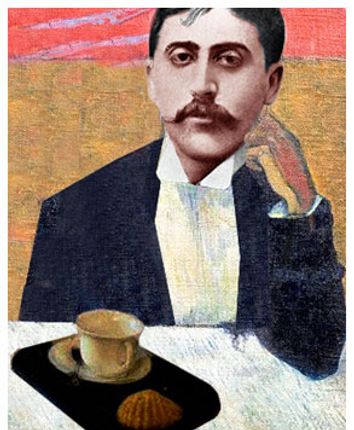
Of course everyone knows that “In Search of Lost Time” begins with a madeleine dipped in tea, except that it doesn’t. It begins with falling asleep while reading a book. Someone, “I,” a voice who occasionally calls himself “M.,” closes his eyes and wakes up a half-hour later, thinking that his book is still in his hands, and by a process of association, begins to think about all sorts of things: the time, an imagined traveler, the comfort of his bed. He sleeps again and is reminded of earlier nights and long ago dreams. The first event he relates is one that happens to have been singular in what seems to be a lonely childhood; unable to sleep and longing for his mother, he is discovered on the stairs by his parents as they go up to bed after a late evening of socializing with their neighbor, Swann. M. expects to be disciplined (“Too late: my father was upon us. Instinctively, I murmured, though no one heard me, ‘I’m done for!’”), but he is not. The normally strict father is sympathetic and merciful, and suggests that M.’s beloved mother spend the night with the child.

In order to pass the time, she reads him a novel by George Sand; already his literary sensibility is at work — “Beneath the everyday incidents, the ordinary objects and common words, I sensed a strange and individual tone of voice.” And so have you. Fifty-five pages in, and something has happened. In 10 more pages, you will have done your first day’s reading without getting to the madeleine, but Proust’s rhythm is well established. It is, let’s say, andante: measured, conversational, even ordinary, but seductive and intimate. And that constitutes his promise for all of the 4,200 pages left to go — his seven volumes will be seductive, intimate, measured and conversational in a way that was unprecedented in the novel of his day and unmatched since.

Sixty-five pages a day is a good goal. Devoting less than an hour every day to “In Search of Lost Time” hardly gets you in the mood, and devoting more than an hour and a half a day for over two months might interfere with your other responsibilities. At the very least, you have to build up some momentum, but not be tempted to skip. (I skipped four pages in the fifth volume when I felt he was being repetitious in his complaints about his captive, Albertine.) Since “In Search of Lost Time” is a story and an essay on what stories mean, skipping sections quickly turns into stopping altogether as you lose the thread of his argument and the relationship of his argument to his story. Besides, there is no way to imbibe his “strange and individual tone of voice,” both the Proust-ness of it and the Frenchness of it, without prolonged exposure.

Proust’s seven volumes (“Swann’s Way,” “Within a Budding Grove,” “The Guermantes Way,” “Sodom and Gomorrah,” “The Captive,” “The Fugitive,” and “Time Regained”) form a cycle. They are not, though they pretend to be, Proust’s memoir. Many significant facts have been changed to enhance the effect of the novel, in order for it to seem, to the author and the reader, to actually recapture the past — that is, Proust’s childhood and the ambience of pre-World War I France. Here is where the madeleine comes in. Shortly after telling about his single night of bliss with his mother, he recounts how it was a family custom to visit his elderly great-aunt on Sunday afternoons. As refreshment, she often offered her visitors madeleines and cups of lime-flower tisane. When, as a young man, M. happens to enjoy this combination again, a sense memory of visits to the long dead great-aunt returns to him. As he gets older, and the volumes of the novel progress, he despairs of making anything of his life and his literary aspirations until several repeated instances of this effect show him how he might portray scenes and senses from his past with enough intensity to go beyond memory, and therefore beyond loss, grief and sadness. In the last volume, he tells how three sense memories in a short space of time motivate him to finally get started, and to produce the seven volumes you have beside your bed.

M. is a friendly fellow, and the past he wishes to recapture is a possibly unique period of European and French history — the late 19th and early 20th centuries. As you progress through “Within a Budding Grove” you will certainly be able to picture it when you think of all the Matisse, Pissarro, Cezanne, Toulouse-Lautrec and Monet paintings you have ever seen. The light is bright, ocean and sky are everywhere, the human figures are beautifully dressed, and that astonishing combination of lush vegetation and stone buildings that is the French countryside is constantly in your mind. Here are the mirrored cafes and there is the flashily attired army on parade, and M. and his friend Albertine even see a hot-air balloon. But after all, M. is French, and closely related, in a literary sense, to the Marquis de Sade on one side and Honoré de Balzac on the other.

In Paris, there is society — which M. investigates at length in Vol. 3, when he becomes something of a protégé to a very wealthy and aristocratic neighbor, Madame de Guermantes. By this time, M. is in his early 20s. At first he is fascinated with everything that Madame de Guermantes stands for in French society and French history. Her family is older and more aristocratic than that of the king, or, indeed, of any king. Kings and queens litter her get-togethers and she does them the favor of being kind to them, even though she prefers the company of M. She laughs at her own lineage and prides herself on being modern and ordinary, but M. does not let you forget the lands and the architecture that Madame de Guermantes is the human embodiment of. You feel a bit privileged to be at her parties, in fact.

And then there is love, which M. explores by imprisoning his beloved Albertine (who is based not on a girl but on a man Proust loved named Agostinelli) in his house in Paris (Vol. 5) and keeping her until she manages to escape and run away (Vol. 6). It is clear from the beginning that M. is ambivalent about Albertine. When he meets her, she is part of a larger group of girls who are breezy, active and liberated. They play tennis and ride bicycles, perhaps have lovers, and perhaps are each other’s lovers (M. can never decide). He chooses Albertine out of the group almost by chance, but once he has chosen her, he becomes obsessed with her, while also doubting whether he can marry her, or, indeed, marry at all. He lures her to his Paris maison while his mother is away in the country and keeps her there, partly by promising her marriage and partly by giving her gifts. Whenever she acts trustworthy and affectionate, he is put off and grows bored. Only when she arouses his jealousy does he actually experience love (remember, this is a book about a very young man). During this section, you might want to take a break. I did, of about a week. I read “R Is for Ricochet,” by Sue Grafton.

M. also explores ideas of love by spying upon the homosexual encounters of many of his male friends and discovering what he soon realizes is a broad and deep underground of ruling-class homosexual connections partially concealed by wealth, marriage, costume, parties and politics. If “In Search of Lost Time” is undeniably about everything that passes through the consciousness of M., one of those things is sex — what he feels about it, how he gets it, who else seems to be getting it, what it means to individuals and to social networks, whether it is worth it, what is more interesting and less interesting, and what it makes people do that they otherwise might not do. He seems to agree with the opinion that the Marquis de Sade expresses in the 18th century novel “Justine,” that woman are for making economic, social and familial liasons; what men really want is to be buggered, or whipped, by the lower orders.

But, as I say, M. is a narrator of great charm. By the time you get to his “homosexual agenda,” many days into your reading of the novel, it will not seem that he is trying to persuade you of anything, only that he is reporting what he sees and thinks and that his greatest desire is to report faithfully and truthfully. As with all novels, you may take it or leave it. Only those who take other people’s private sexual choices as personally threatening (and he portrays those types of boors from time to time, the blind, narcissistic and truly self-centered who don’t have the capacity to hear or appreciate the nuances of the “strange and individual tone of voice” that is the pleasure and fascination of great literature) might want to quit reading at this point.

It is important that you go about your business while you pursue your reading project. You have to take M. with you on planes and trains and into hotels and to the dentist’s office and into your child’s piano lesson. “In Search of Lost Time” will not have its full effect if you sequester it. It must diffuse into your life, color every place you go and every scene you look at with its own tints. When you lift your eyes to glance into your own backyard, you want to do so with the sight of Albertine in your mind, quiet in her own chamber, forbidden to awaken M. too early in the morning; or the sight of M.’s friend, Saint-loup, stepping athletically over the backs of banquettes in a mirrored restaurant in Paris, making his way to M., who is sitting eating his supper; or the sight of Madame de Guermantes in one of her elegant turn-of-the-century Fortuny costumes and her red shoes. You want to listen to M.’s quiet voice in your head even while the news is on or while the dog is barking at the arrival of the UPS man. Seventy days in a row to spend with one narrative sensibility is a long time, but after you are finished, it will seem as though you were with him for years and are with him still.

Biographies of Marcel Proust make him out to be an odd man, who lived in a cork-lined room and worked by night for most of the latter part of his life, but M., his narrator, goes on so eloquently and at such length that it ceases after a while to be tempting to diagnose him. He almost pronounces his own diagnosis at the very beginning, right after his mother stays with him for that one night — if she had stayed away, if they had disciplined him, maybe the twin indulgences of love and literature would not have come to have such a power over him. In the course of his seven volumes, M. hints at efforts the family made, and he made, too, to render him more productive and employable. He goes for cures. He takes too much care of himself. He nearly goes bankrupt buying things for Albertine. He knows he is, and in some sense has always been, a disappointment to his parents. But M.’s sensibility is so fine and so unfiltered that diagnosing him is forgotten in favor of observing him as he observes himself observing everyone around him. His sense of discrimination is robust; his eye is keen; his literary being is abundance itself. He is a man too busy to mourn because he must re-create what is no longer.

Abject failure means never having to say you’re sorry

Why Bush and Blair can't admit their colossal mistake in Iraq.

  • more
    • All Share Services

A piece has been circulating around the Internet in the last few days by Wall Street Journal reporter Farnaz Fassihi that details what life is really like in Baghdad, and it is nothing like Bush and Blair ever wanted or imagined. Foreigners and Iraqis alike are in constant and accelerating danger as the Iraqis grow angrier and angrier at the mess that has been made of their country. The war is lost; the implication of the piece is that more aggressive attacks, such as those planned for after the November elections, will do nothing but further enrage the Iraqi population. Fassihi knows this. I know it. Everyone who has read her piece knows it, and judging by the e-mail chain, everyone by this time is just about everyone. And so, I have to conclude that Tony Blair and George W. Bush also know how bad things are in Iraq — that their adventure, whatever its motives, has proved an ever-expanding disaster. Of course, to hear them “converse” about it, as Tony Blair did on Tuesday at the Labor Party Conference in Brighton, England, you would never know the truth. Blair did his usual lawyerly thing — he spoke eloquently about his feelings without actually giving anyone in the opposition a hook. His warm tone implied regret, but the word “sorry” never appeared in his speech.

Why is this? Why do they keep at it, misrepresenting what is going on, though most adults know that acknowledging mistakes is the first step to solving a problem? Even when given repeated chances at the Thursday debate to admit his blunders in Iraq, the most Bush could say — repeatedly — was that it was “hard work.” Obviously, Bush is in a tight election, and lying and cheating have worked fabulously for him before — his morals are beneath contempt and also beneath analysis. The job of the average American at this point is just to try to avoid the guy. But what about Blair? His political support is seeping away and he is not allowed by his party to put Iraq behind him, even as he throws his left wing the anti-hunting bone, a patently obvious ploy to distract them from the real issue.

I am reminded of Big Tobacco. I am also reminded of Slobodan Milosevic, whose trial is a kind of play-within-a-play for what is going on in the Middle East.

Big Tobacco knew for years, from the evidence of their own researchers, that cigarettes were an addictive health hazard. Big Tobacco executives refused categorically to admit a truth that was plain as the nose on your face — cigarettes cause cancer and other life-threatening illnesses and a cigarette-smoking population has astronomical health costs. Big Tobacco executives spent years lying to the courts until they were caught red-handed. Now Big Tobacco faces a potential punitive fine of hundreds of billions of dollars, a fine that could kill the industry, for doing exactly what Tony Blair and George Bush are doing.

George W. Bush certainly doesn’t want to be tried as a war criminal — he made that clear when he abandoned the World Court on the war crime issue (a decision he proudly flaunted onstage Thursday night). Pundits around the world disapproved for this abstract reason and that, but what seems clear now is that, since Bush already knew that he was going to invade Iraq, he wanted to cover his rear, and didn’t fancy seeing himself hauled to The Hague like Slobodan Milosevic. But he and Karl Rove seem to have taken a leaf out of Milosevic’s defense manual — don’t admit you did anything wrong (to do so would be sending “a mixed message”), blame your enemies, and be as aggressive as possible in claiming the moral high ground. In fact, at this point, some illusionary moral high ground is the only defense Bush and Blair have, as Blair showed when he delved into his “reasons” for invading Iraq on Tuesday. Bush, in the debate, sounded as if he’s been warned by his lawyer that to acknowledge mistakes is to lay himself open to a product liability lawsuit.

It’s no coincidence that Tony Blair is a lawyer and George W. Bush spent his “working” life as a corporate groupie. That’s where they got the morals they display as world leaders. They have no intention of serving the public good. Blair is always excusing himself by means of technical, legalistic language; Bush has no idea at all of — well, of anything. Both try to cover their moral vacuity with religious language that further relieves them of responsibility — God is responsible. That these are our leaders is our fault — we’ve let corporate culture and corporate ways of doing things take over the world. We have the leaders we deserve after our 60-year love affair with multinationals. Today the Iraqis are suffering, but soon enough it will be our turn.

Continue Reading Close

Watching my marriage end on the big screen

The first time I watched "The Secret Lives of Dentists," based on a novella I wrote about my divorce from the father of my daughters, I laughed all the way through it. The second time I didn't.

  • more
    • All Share Services

Watching my marriage end on the big screen

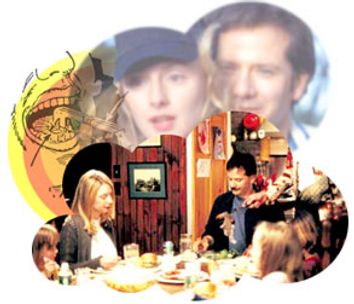
Seventeen years ago, I wrote a novella called “The Age of Grief” about the breakup of my marriage to the father of my daughters, who were then 6-and-a-half and 2-and-a-half. Last night I saw the movie made from the book, “The Secret Lives of Dentists,” starring Hope Davis as me, Campbell Scott as my former husband, and several darling little girls as my daughters. Such an experience of déjà vu, Hollywood-style, is a rare privilege, and I’ve now seen the movie twice. The first time, I laughed from beginning to end, maybe just startled by the uncanny experience of seeing us in different clothes and different bodies, living in a different house, yet speaking words (not all of them but many of them) that I wrote and, indeed, that I spoke. But the rest of the audience was in a good mood that night, as well, and everyone laughed.

Last night, no one laughed. Perhaps, like me, they took it a little more seriously. I thought I was going a second time just to watch my daughter’s reaction, and it was true that she saw something of herself in the youngest child — she opted out of taking her boyfriend to see the movie, remarking that he might realize that her occasionally imperious tone with him has a long history. Campbell Scott and Hope Davis play two dentists, David Hurst and Dana Hurst. The first time I saw the movie, I was all for Dave. The novella and the movie are told from his point of view. He suspects that Dana is seeing another man and that the other man isn’t treating her very well. While he is sympathetic, sometimes poignantly so, to the pain she is going through, he doesn’t want her to tell him anything and begin what he considers to be the irrevocable process of recrimination, separation, divorce and custody. Frankly, I don’t blame him. It is agonizing and tedious. I know — I’ve done it twice.

The second time I saw the movie, though, I saw Dana’s side of things. Dana is a ball of fire — the first girl in her dental school class, ambitious, smart, energetic. The Dave she fell in love with was a scary guy — tall and good-looking, who frequently rode her on the handlebars of his bicycle down a long, dangerous hill (this couple in real life were not myself and my former husband, but two law students I knew).

The Dave she is married to has gotten lost in a sea of little girls — serving, accommodating, taking care. And he is methodical, the way you would have to be to be a dentist. He is responsible and long-suffering. And he is afraid. That’s what jumps out at me about the movie and my life 20 years ago — I was afraid; my husband was afraid. We were afraid separately and we were afraid together, and we didn’t have any method for easing our fears or even sharing them. Our lives seemed fragile in every way — financially, physically, emotionally, geopolitically (remember the evil empire?). We had no faith, even that another day would dawn, and so we were easily startled, easily panicked. In my real marriage, I did several things that I now laugh at. Once I woke up, heard a high wind, became convinced it was a tornado, and crawled with my baby under my arm to the basement. My husband, who wasn’t normally afraid of tornadoes, was so infected by my panic that he crept after me with a flashlight. As we were crawling through the dining room, we noticed outside the windows a brilliant moon in a partly cloudy sky — no tornado in sight. We stood up sheepishly and went back to bed. Some of the fear was inherent in having small children, in protecting them and trying to do a good job rearing them, but much of it was extra, an effect of loneliness.

Because that’s what I learned from watching Mr. Scott play the strange amalgam of himself, the character in the script, and the character in the book, which was my husband as myself and also as a dentist — David Hurst is a terribly lonely man, who stares in longing at a woman in the same room and bed with himself as if she were across a deep ravine and unreachable even when she is reaching out to him. No wonder he is sad (and Mr. Scott excels at depicting Dave’s sadness, especially in the last scene, when Dana returns, admits she has been having an affair, and says she wants to stay). He’s also clumsy. Every time he reaches for his wife, he does it awkwardly, as if he is desperate, but has no idea how to reach her or please her — no idea, in fact, of who she is and what she likes. And so Dana is lonely, too, but also perplexed. If he loves her, as he keeps saying he does, why won’t he talk to her? Why has he, I would bet, never talked to her? How can he be so kind and careful and attentive, and yet so distant?

I didn’t know then, but I do know now.

I used to think that longing was the marker of true love. If you were breathless with longing, what a relief! That meant you still loved him and you could get on with the big project, whatever it was — the courtship, the wedding, the pregnancy, the raising of small children. If you could just look across the room and feel that scoured-out, aching feeling that would at some point be consummated with thrilling sex (if A, then B, according to the conventional logic), then he was the one. Then, when I was almost 50, I happened to be holding my partner in my arms and chatting with him and longing for him like a house afire and I thought, how ridiculous is this? Now I think that the markers of true love are trust, kindness, perceptiveness, care and respect. Dave and Dana Hurst, the truest doppelgängers I will ever have, don’t know anything about any of those qualities. For them are substituted anxiety, placation, ignorance, divvied-up duties and fear. I don’t think their condition is hopeless, but I do think that when Dana gets home that last morning, horrified, chagrined and maybe a little defensive, and Dave discovers he is somehow even sadder and lonelier than he was an hour before, they might pause and try something new.

It would be Dana who starts. She would start by recognizing that most American men, however tall, strong, methodical and daring they are, are raised to be afraid — of punishment, of failure, of sharing, of seeming weak. Manliness is a vexed enterprise in American families and a constant source of worry to most men with any intelligence. And so she would draw him out. She would use kindness and wit, care and comfort. She would seduce him — not into sleeping with her, but into relaxing, into feeling at ease with her. Maybe it would take courage on her part to open him up. When I was in that marriage, I was terribly afraid of my husband’s anger. Lots of high-achieving women are former good girls who have learned not to make a wrong move, not to let anything get out of hand.

After a while, Dave, too, would have to be brave. He would have to be brave enough to give up his own longing and whatever that means to him about sexuality and desire. He would have to accept that he had won the prize girl, but that living with, working with, and relating to the prize girl require different techniques from those needed to win her. He would have to observe her, learn about her, be willing to understand what she does want rather than what she should want. He would have to drop his natural reserve and talk to her. Mostly, both of them would have to find some faith — not necessarily that nothing bad is going to happen, but that whatever it is, they can handle it. To find faith, they don’t necessarily need religion, though that might help; they only need to look outside themselves, outside the house, and realize that most people take care of most business well enough.

I know some people who’ve benefited from divorce. They’ve learned lessons they never would have learned otherwise about letting go of fear and selfishness, not to mention impatience and anger. I know several people who found their true mates after a few tries, but I know others who try and try to no avail, running headfirst into their own bad habits over and over, no matter who the partner is. Thus, I don’t recommend that Dave and Dana divorce. I actually think that Dana might thrive, but Dave would not. And those girls! Well, who can say, except that even though they are as darling as can be, what stepparents are really going to be able to stand them?

As for me, I am not married anymore. My partner concluded from his two marriages that he’s not the marrying kind, and I concluded that he was old enough to make up his own mind. We live in separate houses, which seems to be the case with other couples I know. Fortunately, the pundits of marriage aren’t concerned with couples like us; marriage-wise, we are a lost cause. But we do exercise trust, kindness, perceptiveness, care and respect; we make love once or twice a day; and we don’t worry about the state of marriage in America, ever.

- – - – - – - – - – - -

We want to make you a part of this series. What is the state of your union? Did you find the one and never look back, or has finding lasting love been a marathon of trial and error? Did you have a fairy-tale wedding only to watch things crumble once the reception was over, or have you glided along in marital bliss since Day One? We want to hear your stories of joy, romance, heartbreak and pain. After all, partnership, as we all know, is a complex concoction of all of those things. (Please remember: Any writing submitted becomes the property of Salon if we publish it. We reserve the right to edit submissions and cannot reply to every writer. Interested contributors should send their stories to marriage@salon.com.)

Continue Reading Close

Jane Smiley

"Horse Heaven"

  • more
    • All Share Services

Spanning two years on the circuit, from Kentucky and California to New York and Paris, Jane Smiley‘s Horse Heaven puts us among trainers and track brats, horse-obsessed girls, nervy jockeys, billionaire owners and restless wives. Here is a trainer of integrity and his opposite: a wicked prince of the tract, headed for still another swindle; here are the gamblers and hangers-on. And here are the magnificent Thoroughbreds themselves, from the filly orphaned at birth to the brown horse who always wins by a nose, a lovable “claimer” who passes from owner to owner on a heartwrenching journey down from the winner’s circle.

Jane Smiley is the author of nine previous works of fiction, including The Age of Grief, The Greenlanders, Ordinary Love & Good Will, Moo, and A Thousand Acres for which she was awarded the Pulitzer Prize. She lives in northern California.

Listen to this excerpt of Horse Heaven read by Tony Award Nominee Mary Beth Hurt, courtesy of Random House Audio.