Has the war on terror hurt the war on drugs?
New reports reveal that global demand for illegal substances is higher than ever despite actions to curb supply.
By Jason BurkeThe global drug trade is booming, fueled by the demand from more than 200 million people worldwide who used illegal narcotics last year, new reports show. According to an as yet unpublished U.N. report, despite multibillion-dollar anti-drug measures that have restricted some supplies, the market is as insatiable as ever.
“We have shown that drugs control policies can work in terms of supply, but demand is a very different matter,” a spokesperson from the U.N.’s Office on Drugs and Crime told the Observer. A second new report, issued by the U.S. State Department, confirms the U.N. picture of a world using more drugs than ever. Though narcotic use has stabilized in North America, the world’s biggest single market, it has boomed in Southeast Asia and Australasia, where use of amphetamine-type stimulants, many manufactured in China, has rocketed.
South America, Africa and the Caribbean have also seen serious drug problems emerging. In Europe, though the rapid rise of cocaine use has slowed, an estimated 5.3 percent of the population used cannabis in the past year and heroin and crack use is still increasing in many regions.
Antonio da Costa, director of the UNODC, said global demand reduction measures in recent years had been “lackluster [and] uninspiring.” In 2001 the office estimated that around 180 million people used drugs in the world. The number is now thought to have increased more than 10 percent, to about 3.5 percent of the total global population.
The results will disappoint campaigners and administrators who have struggled for years against one of the world’s biggest industries and will fuel fears that the “war on terror” has distracted from efforts to restrict the production and use of narcotics.
“There has been a lot of effort, but has the world suddenly said: ‘Ooh, we don’t like drugs’? No, nor is it likely to in the near future,” said Harry Shapiro, of the British charity Drugscope. A UNODC spokesmen admitted that drugs had dropped down on the international agenda after 9/11 and the subsequent focus on radical Islam. “There is not the interest these days,” the spokesperson said. “People seem to have dropped the ball.”
One of the biggest problems has been the explosion of amphetamine-type drugs, especially in the Far East, where their use is becoming endemic. Such drugs are now a “global phenomenon,” says Koli Kouame, of the International Narcotics Control Board, another U.N. body. “This is a very contagious phenomenon among the youth,” Kouame said.
The American report shows that demand for drugs has increased in more than three-quarters of some 150 countries surveyed.
A number of countries have recorded surprising consumption levels — Israelis are said to use 100 tons of marijuana, 20 tons of hashish, 20 million tablets of ecstasy, four tons of heroin, three tons of cocaine, and hundreds of thousands of LSD blotters annually.
In Lithuania, there has been a boom in abuse of methadone-type artificial heroin substitutes, while the number of registered heroin addicts in Belarus has doubled. In Finland and Estonia, surveys show an increasing appetite among young people for amphetamine-type stimulants. There have even been drug busts in Iraq — where traffickers have taken advantage of post-invasion chaos to traffic hashish — and in Syria.
“It just goes to show that whatever the penalties — hanging, imprisonment, chopping off hands — there will always be someone who is prepared to traffic, distribute or use drugs,” said Shapiro.
Robert Charles, the American official in charge of Washington’s fight against drugs, has been keen to stress the positive. “The metrics, I think, are beginning to bear out a degree of real success in counter-narcotics and money laundering,” Charles said last week. “Winning the drug war does not mean that we sort of roll up all bad guys and all future bad guys and … go home and do something else. It means that we make steady progress in reducing these threats to our security.” The major achievements, according to Charles, are significant reductions in cocaine production in South America, especially in Colombia, and of opium in the Far East.
However, all drugs experts agree that the massive opium harvests in Afghanistan dominate the landscape. The UNODC hopes that the sheer size of last year’s crop — 4,200 tons — will mean less being planted in coming years, as a glut brings down prices. However, the cheap drugs are already having an impact. According to da Costa, 30 countries reported a rise in heroin use since 2003, 25 were stable and only 18 reported a decrease.
Staggering into uncertainty
After weeks of bloodshed, the prewar vision of a stable democracy in the heart of the Middle East is in tatters -- and the future of Iraq is anyone's guess.
By Jason BurkeAnother day, another few dozen deaths in Iraq, this time in the northern city of Kirkuk, where a car bomb, the third last week, blew up a crowd of people waiting to apply for jobs with the new Iraqi security forces, killing 20.
It wasn’t meant to be this way. The handover of sovereignty to an interim Iraqi government in June was supposed to stop the violence. Instead the last days have seen some of the worst carnage since the fall of Saddam Hussein’s regime. U.S. intelligence services now predict, at best, instability and poverty for the foreseeable future; at worst, violent anarchy by the end of next year. Politicians in London, Washington and Baghdad disagree. Things will get better, they insist.
So what is the truth? How bad is the situation? Are there any positive signs? Just what does the future hold for Iraq?
Once the road from Baghdad airport ran between rows of slender date palms. Now the trees are gone, stripped out to deny cover to insurgents. Though squads of the new Iraqi National Guard — the local security militia founded and trained by the now defunct coalition authorities — loiter in the dusty scrub along its verges and American troops roll along the pitted tarmac in their armored, air-conditioned humvee Jeeps, the road is still one of the most dangerous in the country. The shuttle bus driver ferrying passengers to the renovated terminal yells at anyone who uses a mobile phone in case they trigger a roadside bomb. Vehicles weave to avoid snipers on bridges.
On one side is Camp Victory — the huge headquarters of the 140,000 American soldiers in Iraq — with its vast truck parks, ranks of armored vehicles, 24-hour “chow halls,” prison and rows of trailer cabins. Opposite are the suburbs of western Baghdad: dirt poor, rubbish-strewn and violent. Beyond them lie the Sunni Muslim-dominated badlands around Fallujah and Ramadi, now totally beyond the control of either the new Iraqi government or the Americans.
The scene appears to epitomize all that is wrong with Iraq. The Americans hunkered down in their bases, bandit country beyond the blast walls, and weak and uncertain Iraqi authorities with no authority in their own land.
But, as you head into the center of the Baghdad, things change. Traffic builds up. If it is evening, restaurants in wealthy suburbs such as Karada and Mansoor are busy. Despite the risks, people sit out on the pavement drinking tea. Shop windows are full of expensive consumer goods. Bizarrely, drive through most of Baghdad and there is little on the surface, other than the concrete barriers and barbed wire around government buildings and the occasional dull thump of an explosion in the distance, that distinguishes it from any other scruffy, parched, poor Middle Eastern city.
Analyses tend to veer to extremes — the country is on the brink of anarchy; elections scheduled for January will bring success and stability; the country has risen up against the occupation; the government is popular. The truth is more complex, a mix of some good and much that is very bad, of the mundane, the horrific and the extraordinary. It is the story of people trying to lead normal lives in a world turned upside down.
In the high-ceilinged lounge of her old, ivy-strewn house in Karada, Nawar Sahhar, 49, rearranges the rosaries around a faded picture of Christ. There have been reports that widespread persecution is forcing Iraqi Christians to leave, but Sahhar says she gets on with all her neighbors, “Shiite, Sunni, whoever.”
She does want to leave Iraq but not for fear of sectarian violence. She wants treatment for her severely disabled daughters, ages 13 and 10, and “a better life.” Her litany of problems is familiar to almost all Iraqis: Her husband has not worked for five months, food costs have rocketed, electricity and clean water are still scarce and, above all, there is “no security.”
“I was so happy when the U.S. came. We had no freedom under Saddam,” she said. “But we are so scared now we have no freedom either.”
In fact, though there is more fighting between insurgents and U.S. troops, many Iraqis say that their personal security has improved, albeit marginally, in the past six months in much of Baghdad. In addition, electricity is available four out of every six hours instead of two. And salaries — for those with jobs — have increased. But the pace of progress is so slow that, even in the better areas, such minor improvements go unnoticed, and large parts of the city are yet to experience any significant change since the invasion last year.
Security and reconstruction, everyone agrees, go together. Both Sunni and Shiite militants said lack of progress on basic utilities was critical to their decision to fight. Sadr City, the northern slum district where around 2 million poor Shiites live, has seen fierce battles in recent weeks.
“They promised us everything and gave us dirt,” said Khalid Hadu, a Shiite fighter who was a soldier until the controversial demobilization of the army last year. The 23-year-old, speaking in the ruined center of the shrine city of Najaf during fighting last month, was there to “fight the occupation.” Sunni militants agree. “It’s a matter of pride. We were deceived,” one told the Observer.
But reconstruction, entrusted by Washington to around 15 leading American companies, relies on foreign investment and expertise. And the threat to foreigners in Iraq is currently higher than it has ever been.
Mahmudiya is a scruffy town in desiccated farmland just south of Baghdad. It lies across the main road south and is one of the most dangerous spots for foreigners in Iraq. The local Sunni tribes were heavily influenced by radically conservative strands of Islam imported by Saudi Arabian clerics, and gangs of insurgents and criminals cruise the streets looking for Westerners to kill or kidnap. Reporters drive through at dawn in fast, nondescript cars, lying on the back seats with their fingers crossed.
Not all get through. Two French journalists were seized here last month. Dozens of Arab truck drivers were also captured. Several have been decapitated. A major operation by the Iraqi police and the American army two weeks ago has had no obvious impact.
It is hard to identify the kidnappers. They include radical Islamic groups aiming to strike a blow against the “crusaders,” nationalist insurgents looking to disrupt reconstruction and gangsters. “This is a fluid situation no one has a handle on,” said one security expert.
The resistance is equally diverse. According to intelligence officers, the British army in the south of Iraq faces four threats: “former regime loyalists,” the Shiite al-Mahdi militia, al-Qaida or affiliates, and criminals.
In Basra, where the British are still broadly popular, the numbers involved in violence are small. Though highly professional, the former Baathists may be only a few score strong. Military intelligence estimates that the Mahdi army, which fought bitter battles in August and wounded a soldier on Sept. 17, may number less than 500. And there are no more than a handful of Islamist militants linked to groups such as that of Abu Musab al-Zarqawi, the Jordanian-born jihadi operating out of the militant-run enclaves further north. Then there are smugglers — of oil, arms, people and drugs. Resistance leaders say there is little cooperation between the groups.
But any one problem — such as the continuing disruption of the oil supply around Basra — can be the result of the uncoordinated efforts of many different actors. Thieves steal copper power cables; local tribes destroy the lines that funnel electricity generated locally to the north; former Baathists hit pipelines. The whole situation is confused by the new Iraqi Ministry of Oil’s release, wittingly or otherwise, of erroneous figures that, by indicating less supply, drive up world oil prices. As ever in Iraq, nothing is quite what it seems. Simple analyses — and simple solutions — don’t work.
For three weeks in August, Najaf was a war zone. Apache helicopters blasted volleys of missiles into positions held by Mahdi militia around the holy shrine. Tanks and snipers battled their way through narrow, rubble-strewn streets. The Americans lost 14 men, the militia five times as many. Dozens of civilians died. A truce brokered by Grand Ayatollah Ali al-Sistani, the most senior Shiite cleric in Iraq, brought a tenuous peace, but the conflict was left unresolved.
Last week American jets struck a series of targets in Fallujah, reportedly “al-Zarqawi safehouses.” Arabic-language satellite TV channels broadcast footage of hospitals filled with casualties, many clearly noncombatants. Fallujah and several nearby towns are currently run by local tribal sheiks, in alliance with Islamist radicals, continuing a long tradition of resistance to central rule. Much of the northern city of Mosul and the towns of Samarra and Baquba are also contested.
Mouwaffaq al-Rubaie, the new Iraqi national security advisor, told the Observer that “no armed militia” could exist in “the new democratic, federal Iraq. If there are problems, let’s talk about them. But they must put down their guns,” he said. But the timetable is less certain: “Your guess is as bad as mine.”
Time is running out. The elections scheduled for January are critical. “We need a legitimate, representative administration here,” said one Western diplomat in Baghdad. “Otherwise we’re going to hell in a handcart.”
Senior figures in the Mahdi army indicated to the Observer that they might join the electoral process. “We want to be in the new Iraq and help its people,” said one. Shiites comprise at least 60 percent of the Iraqi population, so have a strong interest in elections going ahead.
But the Sunnis — or at least the minority who actively back the insurgents — will be harder to bring “into the tent.” They comprise 15 to 20 percent of Iraq’s 25 million and, as Iraq’s former elite, have far more to lose.
With Iraq voting en masse for a single card of candidates, not by individual constituencies, it would be possible to go ahead with an election even if Fallujah and other resistance enclaves are outside government control. Prime Minister Iyad Allawi says he will not let 300,000 people in the Sunni triangle hold up national polls. But the key will be the views of the Iraqi people.
Hundreds of conversations with Iraqis — from senior ministers to beggars — reveal that most Iraqis are very pleased Saddam Hussein is gone, don’t like the Americans’ presence, don’t like the insurgents much either, and are prepared to give Allawi and his government a chance. They want elections, better provision of basic utilities and an end to violence. They believe Islam has an important role to play in their identity and do not want their country split into independent ethnic or religious blocs. There is, as anywhere, a wide range of political views. During the battles in Najaf, some local people brought water to the Americans and the government forces; others were angry at all the combatants; some were angry at Allawi — “Bush’s dog, Blair’s puppy,” one shopkeeper called him.
American diplomats claim that Iraq has been handed back to the Iraqis. This isn’t entirely true, at least where policies directly affect security and U.S. military operations. An amnesty offered by Allawi to insurgents was diluted under pressure from the U.S. until it was meaningless. And the new prime minister seems unable, or unwilling, to end the airstrikes that have so far failed to kill many militants and have enraged the local populace.
But the lineaments of a new nation are emerging. Ironically, much of it looks like Saddam’s Iraq, though without the systematic repression. Appalling bureaucracy is back, along with rabid graft. “The smell of corruption is overwhelming,” said a senior advisor at the Ministry of Oil. The new police see their job as maintaining order — in a brutal, often lethal fashion — not protecting citizens against crime. The government has responded harshly to media criticism, closing the offices of al-Jazeera and harassing journalists. Allawi has even created a secret intelligence service and talked of “emergency powers” to counter violence. All of this confirms a prewar memorandum to Tony Blair from senior U.K. government advisors, revealed last week, pointing out there was no certainty that any “replacement regime” in Iraq would “be any better [than Saddam's].” The memo even raised the possibility of a new government seeking weapons of mass destruction.
Much of this is very popular with Iraqis. One Baghdad-based businessman said he wanted to see criminals executed in public. Ali Kathmi Kathm, a teacher in Kufa, said Allawi was the “strong man” Iraq needs. “For so long everything was settled by violence here. Iraqis only understand force,” he said. The British memo warns that “Iraq has no history of democracy, so no one has this habit.”
So what does the future hold? The prewar neocon vision of a prosperous and stable pro-Western democracy in the heart of the Middle East is in tatters. The issue now is salvaging something from the mess. Oddly, what is likely to be salvaged, slowly and painfully, is perhaps the only thing that would have worked in the first place. The state that is evolving is unlikely to be a particularly pleasant — or even pro-Western — one.
Every one of the concessions to the insurgents that are necessary to build a national consensus will take the new Iraq away from the idea imagined by those who launched the war. And any U.S. attempt to interfere will backfire horribly, plunging the country into the total chaos that has so far — just — been avoided. A catastrophic collapse is unlikely. Instead, Iraq is likely to stagger on, amid much bloodshed and pain, into an uncertain, unstable and harsh future.
For ordinary people such as Sahhar there is only one thing to do: “I hope, I hope, I hope. Every day, I hope harder.”
Britain scales back
Its main combat force in Iraq is to be reduced by about a third during a routine troop rotation in October.
By Jason BurkeThe British army is to start pulling troops out of Iraq next month despite the deteriorating security situation in much of the country, the Observer has learned. The main British combat force in Iraq, about 5,000 strong, will be reduced by around a third by the end of October during a routine rotation of units.
The news came amid another day of mayhem in Iraq, which saw a suicide bomber kill at least 23 people and injure 53 in the northern city of Kirkuk. The victims were queuing to join Iraq’s National Guard. More than 200 people were killed last week in one of the bloodiest weeks since last year’s invasion, strengthening impressions that the country is spinning out of control.
Saturday grim footage apparently showing a British engineer kidnapped from a house in Baghdad last week along with two American colleagues surfaced in a video released in the Iraqi capital. The group holding the three threatened to execute them unless Iraqi women prisoners are released from prison. And Saturday night it was reported that 10 more staff working for an American-Turkish company had been seized as hostages.
There are now fears that Iraqi elections scheduled for January will have to be delayed because of the growing instability.
Last week Geoff Hoon, the British defense secretary, said that more troops could be sent to safeguard the polls if necessary, although Whitehall sources said there was no guarantee that they would be British.
The forthcoming “draw-down” of British troops in Basra had not been made public and is likely to provoke consternation in both Washington and Baghdad. Many in Iraq argue that more, not fewer, troops are needed. Last week British troops in Basra fought fierce battles with Shiite militia groups.
The reduction will take place when the 1st Mechanized Infantry Brigade is replaced by the 4th Armored Division, now based in Germany, in a routine rotation over the next few weeks. Troop numbers are being finalized, but military sources in Iraq and in Whitehall say they are likely to be “substantially less” than the current total in Basra. The new combat brigade will have five or even four battle groups, against its current strength of six battle groups of around 800 men. A military spokesman in Basra confirmed the scaling back of the British commitment.
Currently there are 8,000 British troops in the 14,000-strong “multinational division” in southern Iraq, which has responsibility for about 4.5 million people.
The cuts will occur in the combat elements of the deployment — the 5,000-strong infantry and armored brigade that is committed to the provinces of Basra and Maysan. Four Royal navy ships will remain in the Gulf.
However, the incoming force will leave its heavy armor, mainly Challenger tanks, behind, but will be equipped with a unit of Warrior armored troop carriers.
Senior officers say the scaling back of the British commitment in Iraq is a sign of their success in keeping order and helping reconstruction. But both Basra and Maysan have seen heavy combat recently, with some units sustaining up to 35 percent casualties, and remains restive. The al-Mahdi army, which was responsible for most of the fighting, remains heavily armed.
“Whatever they say, fewer troops mean less capability,” a military expert told the Observer . “You need as many boots on the ground as you can get for low-intensity warfare and peacekeeping operations.”
Iyad Allawi, the interim Iraqi prime minister, will hold talks with Tony Blair at Chequers, Blair’s country estate, Sunday on security issues, including elections and the strengthening of border patrols.
News of the troop withdrawal comes at a difficult time for Blair, with the publication Saturday of leaked documents suggesting that he was warned a year before the Iraq invasion that it could prompt a meltdown.
However, Tessa Jowell, the culture secretary and a close ally of Blair, told the Observer that the prime minister still believed that Britain’s actions would be justified by the restoration of democracy, “however difficult and remote a prospect that seems at the moment, when our headlines are crowded with further attacks by the insurgents.”
In another embarrassment for Blair, a draft report from the Iraqi Survey Group, set up to investigate Saddam Hussein’s weapons program, has concluded that the former dictator’s only chemical or biological armament was a small amount of poison for use in political killings.
If Iraqis had full bellies, maybe they wouldn’t resist
A Sunni insurgent who welcomed the Americans at first discusses the complicated motives of those fighting the U.S. occupation.
By Jason BurkeEarly one morning this week, when the police have yet to set up too many checkpoints, Abu Mujahed will strap a mortar underneath a car, drive to a friend’s in central Baghdad and bury the weapon in his garden. In the evening he will return with the rest of his group, sleep for a few hours and then take the weapon from its hiding place. He will calculate the range using the American military’s own maps and satellite pictures — bought in a bazaar — and fire a few rounds at a military base or the U.S. Embassy or at the Iraqi prime minister’s office. Then Abu Mujahed will shower, change and, by 10 a.m., be at his desk in one of the major ministries.
Last week he sat in a Baghdad hotel speaking to the Observer. A chubby man in his thirties with a shaven head, a brown sports shirt, slacks and a belt with a cheap fake-branded buckle, he gave a chilling account of his life fighting “the occupation.” He talked for more than three hours and revealed:
He also spoke about the difficulties of continuing security operations against them and admitted that many Iraqis do not support their actions. Much of Abu Mujahed’s account is corroborated by various independent sources.
Intelligence experts in Iraq talk of three main types of insurgent. There is the Mahdi Army of Shiite Muslims who follow radical cleric Muqtada al-Sadr and have led recent resistance to coalition forces in northern Baghdad, the central shrine city of Najaf and Basra, the southern port under British control. There is also “al-Qaida” — non-Iraqi militants who have come to Iraq to wage jihad. And finally there are the “former regime loyalists,” who are said to want the return of Saddam Hussein or, if that is impossible, his Baath party.
Abu Mujahed, worryingly for the analysts, fits into none of these easy categories. For a start, he was pro-American before the invasion. “The only way to breathe under the old regime was to watch American films and listen to their music,” he said. He had been a Bon Jovi fan.
“It gave me a glimpse of a better life. When I heard that the Americans were coming to liberate Iraq,I was very happy. I felt that I would be able to live well, travel and have freedom. I wanted to do more sport, get new appliances and a new car and develop my life. I thought the U.S. would come here and our lives would be changed 180 degrees.”
He spoke of how his faith in the U.S. was shaken when, via a friend’s illicitly imported satellite TV system, he saw “barbaric, savage” pictures of civilian casualties of the fighting and bombing. The next blow came in the conflict’s immediate aftermath, as looters ran unchecked through Baghdad. “When I saw the American soldiers watching and doing nothing as people took everything, I began to suspect the U.S. was not here to help us but to destroy us,” he said. Abu Mujahed, whose real name is not known by the Observer, added: “I thought it might be just the chaos of war, but it got worse, not better.”
He was not alone and swiftly found that many in the Adhamiya neighborhood of Baghdad shared his anger and disappointment. The time had come: “We realized we had to act.”
Nothing had been planned in advance. There has been speculation, especially among American officials, that Saddam’s henchmen had planned a “guerrilla war” if defeated. But Abu Mujahed, who described himself as “a Muslim but not religious,” and the others in his group were not working to any plan. Everything they did was improvised. And each of his seven-man group had a different motive: “One man was fighting for his nation, another for a principle, another for his faith.”
Significantly, his group contains several former soldiers, angry at the controversial demobilization of the Iraqi military by the coalition last year. Others, like Abu Mujahed, have salaried government jobs. The cell is not part of any broader organization and does not have a name, he said. “We are just local people … There is a sheik who coordinates some of the various groups, but I do not know who he is.”
To start with, the group lacked armaments and knowhow. “We made some careful inquiries. Some people gave us weapons; others sold us stuff they had looted,” he said. The group also sought out experts, often former military officers, who gave impromptu tutorials in bomb making and communications .
The group’s first operation — in June 2003 — was an attempted ambush of three U.S. soldiers in Adhamiya. It was a fiasco. “We were so confused and scared we opened fire at random,” Abu Mujahed said. “They took cover and we ran away.”
Their next try was more successful. The lead vehicle of an American military convoy ran over an anti-tank mine the group had laid in a road. “We think we killed the driver,” he said. “We found the mine in a house that had been used by the military during the war. The Americans were not expecting that sort of device.”
Over the next months the group varied its tactics. “One day we try and snipe them, the next we use an IED [improvised explosive device], the next a mine. We never get any orders from anybody. We are just told: ‘Today you should do something,’ but it is up to us to decide what and when.”
Black soldiers are a particular target. “To have Negroes occupying us is a particular humiliation,” Abu Mujahed said, echoing the profound racism prevalent in much of the Middle East. “Sometimes we aborted a mission because there were no Negroes.”
In contrast to many militants, who have killed hundreds of Iraqis in the last year, Abu Mujahed said his group is careful not to kill locals. “We are now planning to use bigger bombs in central Baghdad. But it is hard because there are so many civilians.” Support for the militants is far from universal. They are not attracting new recruits and finances are tight, he admitted.
“We used to be able to use banks and bank transfers. Now it is harder,” Abu Mujahed said. “Often sympathizers buy cars in Saudi Arabia or Jordan and we get them driven to Baghdad or Basra and we sell them. A supporter in the U.K. has recently sent an Opel pickup. But most of our money comes from local people who support what we do but can’t fight themselves.”
Tactics depend on resources. The price of rocket-propelled grenades has gone up recently as supplies dried up during August’s heavy fighting between Americans and the Mahdi Army in Najaf. The missiles now cost 25,000 Iraqi dinars (around 10 pounds) in markets in Sadr City, the northern Shiite Muslim-dominated area of Baghdad — 10 times the immediate postwar price. The group is restricted to one attack every few days.
There are also spies. He boasted of information from “friends within the coalition” and said that his group has executed two suspected informers within Adhamiya. One was killed less than three weeks ago, after being under surveillance for a month. “He had a wife and child but I did not feel bad. He was a fox. He was made to kneel and shot in the head.” Other suspected spies have been threatened and fled Baghdad.
Western intelligence analysts worry that various resistance elements might combine. But Abu Mujahed dismissed the Mahdi Army as “thugs and traitors who … welcomed the Americans to Iraq with flowers and then went looting,” and said that relations with Islamic militants coming from overseas are worse.
“Some have no allegiance to any group; others have so much money they must come from al-Qaida. It is impossible to work with them. They are bloody people, far too irrational. They do not care if they kill innocent Iraqi people. They are terrorists.”
Last week U.S. military casualties in Iraq passed the 1,000 mark, most killed since the end of the war by the actions of men like Abu Mujahed. The former engineering student said he does not know how many his group has killed: “It is impossible to say what has been hit. I could boast of killing maybe 25, but to be honest we don’t know,” he said. “Maybe only five or six.”
“I know the soldiers have no choice about coming here, and all have a family and friends,” he added. His justification for the struggle was an inconsistent mix of political and economic grievances and wounded pride: “We are under occupation. They bomb the mosques; they kill a huge number of people. There is no greater shame than to see your country being occupied.”
He dismissed Iraq’s interim prime minister, Ayad Allawi, as “the Americans’ Barbie doll,” but then said that if everyone had “full bellies” no one would fight.
“Iraqis’ top priority is to provide a good living for their families. I take home less than 250,000 dinars (100 pounds) a month and I have four children. I have to pay the rent, doctor’s bills; my wife needs something; my house needs something. And a kilo of chicken costs 2,500 dinars.”
“The U.S. and the U.K. are not my enemy. I know that any individual U.S. or U.K. citizen is very good, but we will keep fighting the occupying forces. We have no choice.”
And with that he left. The Observer was told not to contact him again.
The making of Osama bin Laden
From Saudi rich boy to the world's most wanted man: A British newspaper painstakingly retraces the development of a terrorist mastermind.
By Jason Burke
At every corner in the darkened village, guards stood with their Kalashnikovs and rocket launchers at the ready. Sitting on rugs spread on the dirt floor of a mud-brick and wood house, two men ate a meal of rice, grilled mutton and vegetables. High above, the warplanes of America could be heard growling in the night.
The men, both in their mid-forties, bearded and dressed in the local traditional baggy long shirt and trousers, washed, ate, prayed and then talked.
Osama bin Laden, the world’s most wanted man, and Mullah Mohammed Omar, supreme leader of the Taliban regime, had a lot to discuss. A few days earlier, at 8:45 p.m. on Sept. 30, U.S. and British cruise missiles had started hitting targets across Afghanistan in retribution for the terrorist attacks that had killed 5,000 people in New York and Washington nearly three weeks earlier. Now death and destruction had come to villages, cities and military camps throughout Afghanistan. Several missiles had landed near the village where the two men were meeting. Many more had landed on the southern city of Kandahar, the spiritual and administrative base of the Taliban. The two men were there to decide their response to the war they had suddenly found themselves fighting.
The meeting, revealed to The Observer by sources in a Gulf intelligence agency, did not last long. That was partly due to security concerns: a well-placed Tomahawk cruise missile could have wiped out both of the Pentagon’s main targets. Partly it was because the two were in agreement on almost everything. Mullah Omar reaffirmed his support, affection and respect for his Saudi-born friend. Bin Laden replied in kind. The two swiftly reached a decision on tactics. They would jointly resist any aggression, they would work to create and exploit divisions in the coalition ranged against them, and they would exploit the humanitarian crisis — and any civilian casualties — to create global anger against the bombing campaign. Then the two embraced and went their separate ways. They are not thought to have met since.
In 1930, a powerfully built dockside laborer, six feet tall and with one eye, decided there was more to life than loading ships in the ports of his poverty-stricken native province of Hadramaut in Yemen. He packed a bag, bought a place on a camel caravan heading to the newly created kingdom of Saudi Arabia, and set off on a thousand-mile trek to seek his fortune.
The man, who would go on to father a terrorist sought by the military might of the Western world, got his first job as a bricklayer with Aramco — the Arabian-American oil company — earning a single Saudi riyal, about 15 cents, a day. He lived frugally, saved hard, invested well and went into business himself. By the early 1950s, Mohammed bin Laden was employed in building palaces for the House of Saud in Riyadh. He won the contracts by heavily undercutting local firms. It was a gamble that paid off.
Bin Laden’s big break came when a foreign contractor withdrew from a deal to build the Medina-Jedda highway and he took on the job. By the early 1960s he was a rich man — and an extraordinary one.
“He couldn’t read or write and signed his name with a cross all his life, but he had an extraordinary intelligence,” said a French engineer who worked with him in the ’60s. The engineer remembered that the former laborer never forgot his roots, always leaving home “with a wad of notes to give to the poor.”
Such alms-giving is one of the fundamentals of Islam. Bin Laden senior was a devout man, raised in the strict and conservative Wahhabi strand of Sunni Islam. Later he was to boast that, using his private helicopter, he could pray in the three holiest locations of Islam — Mecca, Medina and the al-Aqsa mosque in Jerusalem — in a single day. Visiting the former two sites must have been especially satisfying, for it was the contract to restore and expand the facilities serving pilgrims and worshippers there that established the reputation of his company, confirmed its status as the in-house builders of the Saudi ruling clan and made him stupendously wealthy. Though at one stage he was rich enough to bail out the royal family when they fell on hard times, the tatty bag he had carried when he left Yemen remained on display in the palatial family home. He was killed when his helicopter crashed in 1968.
Mohammed bin Laden had, in the words of the French engineer, “changed wives like you or I change cars.” He had three Saudi wives, Wahhabis like their husband, who were more or less permanent. The fourth, however, was changed on a regular basis.
The magnate would send his private pilot all over the Middle East to pick up yet another bride. “Some were as young as 15 and were completely covered from head to toe,” the pilot’s widow recently recalled. “But they were all exceptionally beautiful.”
Bin Laden’s mother, Hamida, was not a Saudi or a Wahhabi, but a stunningly beautiful, cosmopolitan, educated 22-year-old daughter of a Syrian trader. She shunned the traditional Saudi veil in favor of Chanel trouser suits and this, coupled with the fact that she was foreign, diminished her status within the family. She was Mohammed bin Laden’s tenth or eleventh spouse, and was known as the “the slave wife.”
Mohammed bin Laden gave even his former wives a home at his palaces in Jedda and Hijaz. Hamida was still married to the millionaire when he died and so, amid a huge family and the solid gold statues, the ancient tapestries and the Venetian chandeliers, this is where Osama bin Laden, Mohammed’s seventh son, “the son of the slave,” grew up.
Born in 1957 — the year 1377 of the Islamic calendar — he was 11 when his father died. He never saw much of him. A flavor of the bin Laden household comes from a document provided to the American ABC TV network in 1998 by “an anonymous source close to bin Laden.” It offers unprecedented insights into Osama’s childhood.
“The father had very dominating personality. He insisted to keep all his children in one premises,” it reads. “He had a tough discipline and observed all the children with strict religious and social code. At the same time, the father was entertaining with trips to the sea and desert,” the document goes on. “He dealt with his children as big men and demanded them to show confidence at young age.”
Brian Fyfield-Shayler, 69, gave the then 13-year-old bin Laden and 30 other privileged classmates attending al-Thagh school, an ilite Western-style Saudi school in Jedda, four one-hour English lessons a week during 1968 and 1969. He described bin Laden as a “shy, retiring and courteous” boy who was unfailingly polite.
“He was very courteous — more so than any of the others in his class. Physically, he was outstanding because he was taller, more handsome and fairer than most of the other boys. He also stood out as he was singularly gracious and polite, and had a great deal of inner confidence,” said Fyfield-Shayler.
Bin Laden was “very neat, precise and conscientious” in his work. “He wasn’t pushy at all. Many students wanted to show you how clever they were. But if he knew the answer to something he wouldn’t parade the fact. He would only reveal it if you asked him.”
In bin Laden’s early teens there was little sign of the fanatic he would become. In 1971 the family went on holiday en masse to the small Swedish copper mining town of Falun. A smiling Osama — or “Sammy” as he sometimes called himself — was pictured, wearing a lime-green top and blue flares, leaning on a Cadillac.
Osama, then 14, and his older brother Salem had first visited Falun a year before, driving from Copenhagen in a Rolls-Royce flown in from Saudi Arabia. Oddly, they stayed at the cheap Astoria Hotel, where the owner, Christina Akerblad, recalled them spending the days out “on business” and the evenings eating dinner in their rooms. “I remember them as two beautiful boys — the girls in Falun were very fond of them,” she said. “Osama played with my two [young] sons.”
Akerblad remembered the wealth she found on display when cleaning the boys’ rooms. “At the weekends we saw they used the extra bed in their rooms to lay out their clothes. They had lots of white silk shirts packaged in cellophane. I think they had a new one for every day — I never saw the dirty ones. They also had a big bag for their jewelry. They had emeralds and rubies and diamond rings and tie pins.”
Nor was there any sign of incipient fervor in a bucolic summer at an Oxford language school in the same year. Bin Laden and his brothers befriended a group of Spanish girls and went punting on the Thames.
Last month one woman showed a Spanish newspaper photos of herself and girlfriends — one in hot pants — with three bin Laden boys. Bin Laden, wearing flares, a short-sleeved shirt and a bracelet, looks like any other awkward teenager. His two older brothers look more assured. The young Saudi even once stayed on London’s Park Lane. He had forgotten the name of the hotel his Saudi parents had checked into, he told a reporter several years ago, but he recalled “the trees of the park and the red buses.”
Quite how much of a personal fortune bin Laden had inherited is uncertain. It may well be a lot less than the huge sums (up to $250 million) often cited. The young bin Laden was never interested in money for its own sake. In fact, the very things that had made the father huge riches had begun to trouble the son. The early seventies were a time of huge cultural change in the Middle East. Oil revenue, the wars with Israel and, above all, increasing contact with the West forced a profound re-examining of old certainties. For most of Mohammed bin Laden’s numerous progeny, the answer lay in greater Westernization, and the elder members of the family set off for Victoria College in Alexandria in Egypt, Harvard, London or Miami. But not Osama bin Laden. Like tens of thousands of other young men in the region at the time, Osama had become increasingly drawn to the cool, clear, uncluttered certainties of extremist Islamist ideology.
After finishing high school in Jedda in 1974, bin Laden decided against joining his siblings overseas for further education. Salim, the head of the clan, had been educated at Millfield, a Somerset boarding school. Another, Yeslam, went to university in Sweden and California. Osama entered the management and economics faculty at King Abdul Aziz University. There are some reports, again unconfirmed, that he married his first wife, a Syrian related to his mother, when he was 17. Salim, the elder brother who had run the bin Laden corporation after their father’s death, hoped Osama would take up a useful role in the family business and ensured that a key element of his university course was civil engineering. Bin Laden himself preferred the Islamic studies component of the course. Later, he was to combine the two in a radically effective way.
At university he heard tapes recorded by the fiery Palestinian-born Jordanian academic Abdallah Azzam, and these had a powerful impact. Azzam’s recorded sermons — much like Osama’s videotapes today — brilliantly caught the mood of many disaffected young Muslims.
Jedda itself — and King Abdul Aziz University — was a center for Islamic dissidents from all over the Muslim world. In its mosques and medressas (Islamic schools) they preached a severe message: only an absolute return to the values of conservative Islam could protect the Muslim world from the dangers and decadence of the West. One bin Laden brother, Abdelaziz, remembers Osama “reading and praying all the time” during this period. Osama certainly became deeply involved in religious activities at university, including theological debates and Koranic study. He also made useful contacts, striking up a crucial friendship with Prince Turki ibn Faisal, a young royal and the future chief of Saudi intelligence services.
But events were to overtake him. In February 1979 Ayatollah Khomeini returned to Iran, overthrew the Shah and established an Islamic republic. A shudder of excitement and fear ran through Muslims everywhere. In November — and bin Laden was later to refer to this as a crucial, formative event — Islamic radicals seized the grand mosque at Mecca and held it against Saudi government forces. Bin Laden, young, impressionable, increasingly devout but still unsure of himself and his vocation, was stunned. Eventually, after much bloodshed, the rebels were defeated. “He was inspired by them,” a close friend told The Observer last month. “He told me these men were true Muslims and had followed a true path.”
Sooner than anyone expected, bin Laden got his chance to follow them. In the last days of the year Soviet tanks rolled into Afghanistan.
It is just 30 miles from the Afghan border to the febrile Pakistani city of Peshawar. The road winds down through the Khyber Pass, through the badlands ruled by the violent and unruly Pashtun tribes, past the relics of battles fought by men from a score of armies — Greek, Arab, Mongol, Sikh and British — and then disappears into the choking mayhem of the city’s bazaars.
In the spring of 1980, with yet another army’s tanks parked up against the frontier, Peshawar was seething with soldiers, spies, gun-runners, drug dealers, Afghan refugees, exiles, journalists and, of course, the thousands of sympathizers who had flocked from all over the Muslim world to fight the Soviet forces.
One of them, distinctive in his carefully tailored shalwar kameez and English handmade leather boots, was Osama bin Laden. “I was enraged and went there at once,” he has told interviewers. He was 23 and had found the cause he had been looking for.
Bin Laden’s time fighting the Russians was critical. It was during this period that he changed from a contemplative, scholarly young man to a respected, battle-hardened leader of men. And though he had yet to fully develop his extremist ideas, the war in Afghanistan gave him crucial confidence and status.
“He came to the jihad a well-meaning boy and left a man who knew about violence and its uses and effects,” said one former associate interviewed by The Observer in Algeria last year.
According to Gulf intelligence sources, bin Laden’s first trip to Peshawar lasted little more than a month. He returned to Saudi Arabia and started lobbying his brothers, relatives and old school friends to support the fight against the Soviet Union. When he went back to Pakistan with the huge sum of money he had collected, he took with him several Pakistanis and Afghans who had been working in the bin Laden company. They set about organizing an office to support the Mujahideen and the Arab volunteers.
Within weeks of his first arrival in Pakistan, Osama had been introduced to Abdullah Azzam, the charismatic preacher whose taped sermons had made such an impression at university. The pair got on well. The energy, administrative talent and contacts of the young Saudi complemented the profound Islamic knowledge and commitment of the older man. Azzam, then 38, was a founder of the Hamas guerrilla group on the occupied West Bank and Gaza and thus had the experience to run a major organization. For the next two years, bin Laden commuted between the Gulf and Pakistan. All the time his relationship with Azzam grew stronger.
At first, bin Laden kept a low profile. Journalists in Pakistan at the beginning of the 1980s remember hearing stories about the “Saudi sheikh” who would visit wounded fighters in the university town’s clinics, dispensing cashew nuts and chocolates. The man would note their names and addresses and soon a generous check would arrive at their family home. Such generosity — perhaps learned from his father with his wad of notes for the poor — is something that almost all who have fought for, or alongside, bin Laden mention.
Some — such as one former al-Qaida member interviewed by The Observer in Algeria — speak of $1,500 donations for marriages; others talk of cash doled out for shoes or watches or needy relatives. His followers say that such gifts bind them to their emir as effectively as the bayat or oath that many of them swear.
Sometimes his time was as valuable as his money. One former Afghan Mujahideen remembered how he had befriended bin Laden because he wanted to learn Arabic. The young Saudi spent many hours tutoring him in the language of the Koran. Despite his tough reputation, he was still the quiet and softly spoken young man his teachers had remembered.
By 1984, bin Laden and Azzam had rented a house in the Peshawar suburb of University Town and established a logistics base for the thousands of Arab fighters arriving in the city. It was called Beit-al-Ansar (the House of the Faithful).
“Bin Laden … would receive the Arab volunteers, vet them and then send them on to the various Afghan factions,” said one former associate. The venture was condoned by the CIA, the powerful Pakistani intelligence service, the ISI, and the Saudi agency, the Istakhbarat, soon to be headed by his old friend Prince Turki. None, though, gave bin Laden any American aid.
Beit-al-Ansar was on Syed Jalaluddin Afghani Road, a quiet backstreet full of bougainvillea and large houses built for the local elite. By the mid-’80s the area had become a center for the Afghan resistance. All the leaders of the various groups had offices there. There were two newspapers — one published by Abdullah Azzam and bin Laden. There was even a “neutral” office, in a building rented by bin Laden, where Mujahideen groups could thrash out their differences.
Conditions were spartan — almost deliberately so. The volunteers, and bin Laden too, used to sleep a dozen to a room on thin pallets laid out on the hard floor of their offices. According to former associates, bin Laden used to sit up late into the night discussing Islam and Middle Eastern history. The young Saudi was yet to develop his radical ideology. Instead his views were a mixture of half-remembered history and heavily skewed, and often ill-informed, analyses of current affairs. Bin Laden was particularly angry about what he called the betrayal of the Arabs by the British after the First World War. He also criticized the Saudi royal family, saying they had exploited the Wahhabi to gain power.
At other times bin Laden would lead religious debates among the volunteers. Many centered on Sura Yasin — the key passage known as “the heart” or “the source” of the Koran, when Muhammad the prophet reveals the message and the task that God has entrusted him with. “He used to talk a lot about the warriors of Islamic history such as Salauddin [Saladin],” said one associate. “It was as if he was preparing himself.”
Just over the border from Peshawar into Afghanistan is the small village of Jaji. In 1986 the Soviet garrison there was under heavy attack from the resistance. One morning a senior commander was sheltering from a bombardment by Russian mortars in a bunker when a tall Arab dived through the door as explosions shook the earth. It was bin Laden. His “ground war” had started.
In the mid-’80s — partly due to a massive increase in American funding for the resistance — the war in Afghanistan intensified. Thousands of young Muslims were filling the university town dormitories. Though their motives were varied — some came for adventure, camaraderie or to escape from the law — most came for one reason only. “I went to fight for my faith,” one Egyptian former mujahid told The Observer in London last year.
Through the summer of 1986 bin Laden was in the center of the fighting around Jaji. Once, with a force of about 50 Arabs, he fought off a sustained assault by Soviet helicopters and infantry. “He was right in the thick of it,” Mia Mohammed Aga, a senior Afghan commander at the time and now with the Taliban, said last week. “I watched him with his Kalashnikov in his hand under fire from mortars and the multiple-barrelled rocket launchers.”
Over the next three years, bin Laden fought hard, often exposing himself to extreme physical danger. One leader of the hardline Hezb-i-Islami group said he remembered bin Laden holding a position under heavy bombardment after being surrounded by Soviet soldiers. At least a dozen other senior veterans, many of whom are now opposed to bin Laden, corroborate the accounts of his combat role. They all mention his lack of concern for his own safety. The devout boy was turning into the holy warrior.
Bin Laden’s fanaticism was shared by his men. “I took three Afghans and three Arabs and told them to hold a position [during the battle for the eastern city of Jalalabad in 1989]. They fought all day, then when I went to relieve them in the evening the Arabs were crying because they wanted to be martyred. I told them that if they wanted to stay and fight they could. The next day they were killed. Osama said later that he had told them that the trench was their gate to heaven.”
Bin Laden shared more than their fanaticism. “You never knew he was so rich or the commander of everyone. We used to all sit down together and eat like friends,” another veteran said.
On some occasions he took it on himself to broker truces between Afghan factions. His self-assumed responsibility for supplying the Mujahideen continued. CIA sources estimated he was bringing in at least $50 million a year for the jihad. One veteran said that during the fighting for Jalalabad, he had seen the Saudi by a roadside, caked in mud, organizing food, boots and clothes for the Mujahideen.
However, there were tensions with those who did not share his hardline Islamism. Said Mohammed, another Afghan veteran, said bin Laden had refused to deal with him during one battle because he was clean shaven. Bin Laden was learning the power of the media too. Reports of his exploits, by Arab journalists based in Peshawar, were published throughout the Middle East. They brought him a flood of recruits as well as a respect and a status that he had never had before. The “son of the slave” was now a sheikh himself.
In 1989 the Soviet forces pulled out of Afghanistan and left a puppet government in Kabul. The Mujahideen were now battling other Afghans — and each other. There was little to keep the thousands of battle-hardened fighters of the Arab “international brigade” in Afghanistan. Many left to continue their jihad in their home countries. Bin Laden, hating the internecine squabbles, was one.
“He was very frustrated by it all. He is a very honest, very clean man, and when he saw the Arabs were arguing among themselves he was sickened by it,” said Jammal Nazimuddin, a former fighter. “He used to tell them that they had defeated the Soviet empire alone because they were united and Allah had blessed them. If they were not united, he said, they could not do Allah’s will.”
Bin Laden, aged 33, went home.
Prince Abdullah, the effective regent of Saudi Arabia, placed a soft, plump hand on his young compatriot’s shoulder, smiled and spoke of friendship and loyalty. His words were smooth and conciliatory, but there was no doubting the harsh threat that lay beneath them.
“The family of Mohammed bin Laden have always been faithful subjects of our kingdom and have helped us greatly in our times of need,” he told the gathering. “We are sure that nothing will be allowed to mar our good relations in the future.”
It was the autumn of 1990 and Abdullah was addressing Afghan veterans in a beautifully furnished lounge in his palace in Riyadh. Although the men nodded respectfully at the prince’s words, the man to whom they were directed could barely conceal his anger. “He was seething,” one of the Afghan commanders said. “You could see it in his eyes.”
A few months earlier, on Aug. 2, Saddam Hussein had invaded Kuwait. Osama bin Laden, then living in his home town of Jedda, had immediately sent a message to the Saudi royal family offering to form an army of 30,000 Afghan veterans to defeat the Iraqi dictator. The men who had defeated the Russians could easily take on Saddam, he said, and he was clearly the man to lead them.
Bin Laden was in for a rude — and profoundly upsetting — shock. The last thing the House of al-Saud wanted was an army of zealous Islamists fighting its war. Bin Laden was received by senior royals, but his offer was firmly rejected.
Worse was to come. Instead of the Islamic army he envisaged protecting the cradle of Islam, the defense of Saudi Arabia — and thus of the holy sites of Mecca and Medina — was entrusted to the Americans. Bin Laden, seething with humiliation and rage, could do nothing but watch as 300,000 U.S. troops arrived in his country and set about building bases, drinking Coke and alcohol and sunbathing. Bin Laden saw their presence as an infidel invasion. It even appeared to defy directly the dying words of the Prophet Muhammad: “Let there be no two religions in Arabia.” The 33-year-old started lobbying religious scholars and Muslim activists throughout the Gulf. Playing on his celebrity status, he lectured and preached throughout Saudi Arabia, circulating thousands of audio tapes through mosques.
He started recruiting his army and sent an estimated 4,000 men to Afghanistan for training. The regime grew uneasy, raided his home and put him under house arrest. Bin Laden’s family, worried that his activities might jeopardize their close relations with the ruling clan, tried to bring him back into the fold but were forced eventually to effectively disown him. The pressure mounted.
In late 1990, an escape route appeared. Bin Laden received an offer of refuge from Hassan al-Turabi, the charismatic Islamist scholar in effect running Sudan. Turabi believed that the total defeat of Iraq and the discrediting of “secular” Arab regimes would lead to an opportunity to set up a “pure” Islamic government across the Muslim world. It was a seductive message. And the Saudi regime was thankful for an opportunity to get rid of him. They pushed bin Laden further in the hope that he would leave. Bin Laden cracked. He fled Saudi Arabia for Khartoum, the Sudanese capital. He was never to return to his homeland.
Bin Laden set up a home in a rich suburb of Khartoum with his four wives, his children and a core of close retainers. Then he flew in several hundred Arab veterans from Afghanistan to provide the basis of a broader organization. Life in Sudan was odd. There were football matches and bathing trips to the Blue Nile, and long junior common room-type arguments over whether Shia and Sunni Muslims should unite to fight the common enemy, and points of Islamic doctrine. Bin Laden even opened a personal bank account in his own name. And most of the time of “the sheikh” was spent making money, rather than spreading global jihad.
“The biggest myth concerns his wealth,” Ghazi Algosaibi, Saudi Arabia’s veteran ambassador to London, said recently. “I have read reports that he has $300 to $400 million stashed away. This is simply not true. When he left Saudi Arabia he did not take anything like that amount of money, and the Saudi authorities have taken great care to make sure he does not receive any money from the kingdom.”
In the group’s offices in Khartoum, bin Laden, as befitted the boss, had the largest office. The group was run like any other organization. There was a board of directors, a series of subcommittees and too many meetings. Employees nursed grievances over wages, healthcare and alleged favoritism. Perks included travel (using the passports of Arab volunteers killed in Afghanistan), free tea and groceries.
The organization ran a trading company called Laden International, a foreign exchange dealership, a civil engineering company and a firm running farms growing peanuts and corn. In payment for building a 700-mile road from the capital to Port Sudan, the government gave bin Laden the monopoly on sesame seed export. Sudan is one of the world’s three largest sesame producers, so it was extremely lucrative.
Other ventures were less successful. A plan to import bicycles from Azerbaijan was a total flop. Other hare-brained schemes were hatched, half-implemented and then went nowhere. But there was still enough cash to keep al-Qaida’s core business ticking along. The chief executive never lost sight of his main purpose. More than $100,000 in cash went to Islamists in Jordan, funds were sent to Baku to set up an operation smuggling Islamic fighters into Chechnya, and another $100,000 went to an Eritrean Islamist group.
At one point bin Laden bought a plane for $250,000 and hired a pilot. The plane soon crashed. He also set up several military training camps, and hundreds of Algerians, Palestinians, Egyptians and Saudis received instruction in bomb-making and terrorist tactics. Many of them had fought in Afghanistan and now, like bin Laden, were at a loose end. There was talk of assassinating President Mubarak of Egypt, though nobody was sure how to go about it, and there was some haphazard surveillance of possible targets for a bombing in East Africa, including the Nairobi embassy of the U.S.
There also appears to have been an unsuccessful attempt to buy components for nuclear weapons in Eastern Europe and a bid to smuggle hundreds of Kalashnikovs on camels across the desert to Egypt. A shipload of guns was sent to Yemen and operatives dispatched to help tribesmen fight U.S. troops in Somalia.
The CIA claim that bin Laden was behind the attacks on their troops in Mogadishu in 1993. However, there is little evidence that al-Qaida were heavily involved. “During bin Laden’s stay in Sudan anti-American incidents happened in many places but none were conducted by his group in the usual sense of an order passed down a chain of command,” one intelligence source said. “They were done by people who had trained in Afghanistan and had enough anti-American drive. Bin Laden may have sanctioned them but that was all.”
It was a pattern that was to be often seen in the years to come. A car bomb in Riyadh in 1995 was blamed on him, with the Saudis producing video “confessions” from four Afghans for the attack. The Khobar Towers bombing a year later was also blamed on bin Laden, though Iranian agents are now the prime suspects. In 1994, when the Saudis publicly withdrew his citizenship, bin Laden’s response was to exploit the power of the media. It is believed he set up a London office called the Advice and Reform Committee (ARC). Its job was allegedly propaganda, issued vitriolic criticism against the Saudi regime. It was run by Khalid al-Fawwaz, now fighting extradition to the United States from the U.K.
By January 1996, Khartoum was increasingly uneasy about its guest. Turabi contacted the Sudanese ambassador to Afghanistan, Atiya Badawi, who was based in Peshawar. Badawi, who had learnt the Pashtun language while fighting the Russians, had excellent contacts with his former comrades among the Mujahideen and, with Afghanistan split into hundreds of warring bandit fiefdoms, it was easy to persuade three of the most senior commanders in the Jalalabad area that a wealthy Saudi under their protection might give them an edge over their rivals. The three men — all of whom are now dead — flew to Sudan to ask bin Laden to return to the land of the jihad.
It was a cool autumn evening in Kabul. Outside a high-walled house in the northern suburb of Wazir Akbar Khan were a dozen Japanese pickup trucks. The guards and drivers lounged against them. Though the area had escaped the worst of the fighting in the seven years since the Russians had withdrawn, shrapnel scars still pitted the walls and sandbags were stacked around every home. It was October 1996 and Osama bin Laden was in Kabul to meet the Taliban. It was his first visit to the city and his first encounter with the hardline Islamic militia army who had captured it a month earlier. In May a specially chartered cargo plane carrying the 39-year- old, three of his four wives, half a dozen children and a hundred of his Arab fighters had landed at Jalalabad airport. But the three Mujahideen commanders who had invited him back from Sudan had since been ousted and bin Laden, politic as ever, knew he needed to ingratiate himself with the new regime.
A month earlier he had sent a Libyan associate to Taliban leader Mullah Omar in Kandahar. Omar ordered Mullah Mohammed Rabbani, the deputy leader and mayor of Kabul, to meet bin Laden and see if he was as much of a friend as his subordinate had claimed. Their meeting was wary but friendly. Bin Laden spoke first. Ignoring their doctrinal differences, he praised the militia’s aims and achievements and pledged his unconditional moral and financial support. Rabbani, pleased and flattered, offered the protection of the regime. “Everybody left smiling,” a witness said.
The meeting signified more than an alliance between the world’s most wanted terrorist and the world’s most reviled regime. It was the start of the final — and most critical — phase of bin Laden’s development. Having secured the Taliban’s protection, he was free to start building the most efficient terrorist organization the world had ever seen.
The jihad against the Russians had given bin Laden much-needed confidence, contacts throughout the Islamic world and a taste for fame, respect and adulation. His authority and profile had been boosted further by his stance against Saudi Arabia and exile. And in Sudan he had been able to start the serious work of building al-Qaida — a global umbrella group of Muslim extremists dedicated to overturning “un-Islamic” governments throughout the Middle East and further afield. But in terms of military capacity and strategic thinking bin Laden’s group was still weak. In Afghanistan, he swiftly found a solution.
He had returned to a land that had known anarchy for six years. Thousands of Islamic militants were based in the old Mujahideen complexes in the east of the country. Many were sponsored by the Pakistani secret services who wanted zealots to fight India in Kashmir. Others were backed by a variety of Islamic groups from all over the world. In the camps the volunteers were trained in guerrilla warfare. Many had fought for the Taliban. Bin Laden’s first problem was partially solved almost immediately. He had inherited an army.
In Afghanistan he found himself surrounded by men who could help him, especially dozens of exiled Egyptian extremists. They included Dr Ayman al-Zawahiri, a 37-year-old surgeon and a founder of the effective and sophisticated Egyptian al-Jihad group. Another was Mohammed Atef, the group’s hard and competent military commander. Al-Zawahiri taught bin Laden about the political realities of global war. Atef lectured him on the military necessities. After several security scares, he moved his household to a former Mujahideen base at Tora Bora high in the mountains south of Jalalabad.
The Egyptians told him the best form of defense was attack. “He did what they told him,” one security source said. After two months at Tora Bora, he wrote and circulated a 12-page article, full of Koranic and historical references, promising violent action against the Americans unless they withdrew from Saudi Arabia. In a significant broadening of his view — showing the influence of the Egyptians — he also spoke for the first time of Palestine and Lebanon as well as “the fierce Judeo-Christian campaign against the Muslim world” and “the duty of all Muslims” to resist it. Bin Laden bought four of the Stinger missiles that had been supplied to the Mujahideen by the CIA and had them smuggled to Saudi Islamic groups.
When it discovered the plot, Riyadh was incensed. The Saudi government, along with Pakistan, had supported the Taliban as a means of countering Iranian and Russian influence in Afghanistan. Now the Taliban were sheltering one of their most determined enemies and ignoring demands to hand him over. More extreme measures were needed.
In early 1997 the Taliban discovered what they said was a Saudi plot to assassinate bin Laden. The Islamic militia, who by then controlled about two-thirds of Afghanistan, invited bin Laden to move to Kandahar for his own security. Bin Laden agreed and moved into an old Soviet air force base close to Kandahar airport. He cemented his relationship with the Taliban’s upper command by funding huge military purchases, building mosques and buying cars for the leadership. He even helped construct a new residence for Mullah Omar and his family on the outskirts of the city and started work on a huge compound to be used for prayers at the start of Ramadan.
Bin Laden set up a system to cream off the elite from the existing training camps to al-Qaida. The camp administrators told the volunteers that the best of them would earn an audience with “the Emir.” When bin Laden met them, his aides would pick the most promising and send them to more specialized camps where, instead of basic infantry techniques, they had psychological and physical tests, combat trials and finally instruction in the skills of the modern terrorist. Within a year, bin Laden had created the terrorist version of special forces.
Under al-Zawahiri’s tutelage, bin Laden had also realized he needed to internationalize his cause. Towards the end of 1997 he started to work to unify Islamic movements under the al-Qaida umbrella, using his money, charm and reputation to draw in leaders from around the world. He bolstered his support locally, giving money to village clerics to build mosques and, according to one Taliban source, organizing the import of 3,000 secondhand Toyota Corolla estates from Dubai. They were given to the families of Taliban casualties so they could earn a living.
Finally, in February 1998, he felt strong enough to issue a fatwa in the name of the “World Front for Jihad against Jews and Crusaders.” It was signed by bin Laden, al-Zawahiri and the heads of major Islamic movements in Pakistan and Bangladesh and endorsed by dozens of other groups throughout the region. It was, according to one Western scholar of Islam, “a magnificent piece of eloquent, even poetic, Arabic prose.”
There was nothing poetic about its message. The fatwa said that killing Americans and their allies, even civilians, was a Muslim duty. Shortly afterwards bin Laden told an interviewer that there would be “radical action” soon.
At about 11 a.m. on August, 7 1998, Mohammed Rashid Daoud al-Owhali, a slim-shouldered, bearded 22-year-old Saudi, was standing in front of a toilet bowl in the men’s lavatories on the ground floor of a hospital in a suburb of Nairobi. He was holding a set of keys and three bullets. His clothes — jeans, a white patterned shirt, socks and black shoes — were stained with blood. The keys fitted the lock on the rear doors of a light brown Toyota pickup truck which 34 minutes earlier had ceased to exist when the huge bomb it had been carrying had exploded. The blast had demolished the U.S. embassy, an office block and a secretarial college, killing 213 people and wounding 4,600. Almost simultaneously a second bomb, at the U.S. embassy in Tanzania, exploded, killing 11.
The driver of al-Owhali’s truck, another young Saudi called Azzam, had effectively been vaporized. The two had sung songs in Arabic of martyrdom as they had driven to the embassy. Though at the time they thought they were to die together, in the end they didn’t. Azzam was killed when, still sitting in the driver seat, he pressed a detonator button taped to the dashboard. But al-Owhali ran, and later told the FBI he had been handpicked by bin Laden while training in Afghanistan early in 1997, sent to fight for the Taliban that summer, then sent for more specialized training in terrorism by al-Qaida instructors in March of 1998 and finally, in April, given his mission. Azzam had followed a similar path.
Thirteen days after the bombings in Africa, 75 American cruise missiles slammed into six training camps in the eastern Afghan hills. Other missiles demolished a medical factory in Sudan. The Muslim world exploded in anger and outrage. Bin Laden was launched onto the global stage.
Three months after the missile strikes, two luxury jets landed at Kandahar air base. One brought Prince Turki al Faisal, bin Laden’s student friend and the head of Saudi Arabia’s security services. The second was empty. It was there to take bin Laden back to Riyadh.
Prince Turki, who had been crucial in getting millions of dollars of official aid for the Taliban, went straight to Mullah Omar’s residence where a magnificent lunch had been laid out. The prince began to lecture the Taliban leader about his ingratitude to his former benefactors. In the middle of his tirade Omar took a water jug from an attendant and emptied it over his head.
“I nearly lost my temper,” he told the astonished prince. “Now I am calm. I will ask you a question and then you can leave. How long has the royalty of Saudi Arabia been the hired help of the Americans?” Lunch went uneaten and the second plane returned to Riyadh empty. Shortly afterwards bin Laden pledged allegiance to Mullah Omar and recognized him formally as amir ul momineen — leader of the faithful. His fate and that of the Taliban were now inextricably linked.
He issued a statement denying all involvement in the Nairobi attacks — though he said that he welcomed them. No one believed him. The Taliban then said bin Laden had “disappeared.” No one believed them either. In fact he was spending most of his time at an old Soviet agricultural collective, Farm Hadda, five miles south of Jalalabad.
The Saudi’s life there was described to The Observer by a defecting al-Qaida associate in June 1999. Bin Laden’s daily routine reflected the rigor of his surroundings. After dawn prayers, he studied the Koran for several hours. Breakfast was dates, yogurt, flat Afghan bread and black tea. Lunch and dinner was equally plain. Bin Laden’s life was dominated by security concerns. Instead of using satellite phones — he believed the Americans used their signals to track him — bin Laden dictated messages to an aide who telephoned them from a separate location. He is currently guarded by a select group of mainly Arab fighters led by Saifu al-Hasnain, a 35 year-old Egyptian.
As al-Qaida’s operations expanded security has become simpler. By the beginning of this year, according to Russian intelligence, the group had more than 50 individual bases in Afghanistan. There were units of Arab fighters on at least three front lines, others stationed in Kabul and still more in newly built bases, some with airstrips, in the desert south of Kandahar. Every location was — and is — another safe haven.
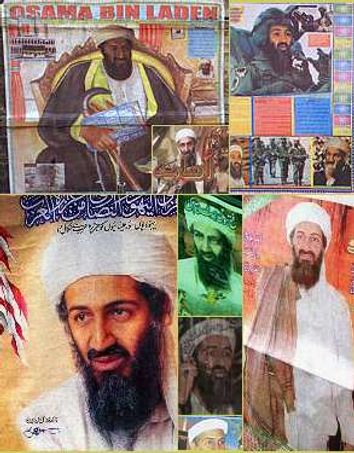
As al-Qaida’s infrastructure expanded inside Afghanistan so did its profile beyond its frontiers. Throughout 1999 and 2000, rattled Western intelligence services blamed bin Laden for hundreds of threats and scores of attacks all over the world. Though many were only tenuously linked to him, bin Laden was happy to take the credit. Clever publicity stunts helped too. When the Americans posted their reward for him, 100-rupee notes were stamped with a picture of bin Laden and distributed throughout Afghanistan. Thousands of cassettes of his speeches were distributed across the region too and, according to a letter signed by bin Laden, journalists were bribed.
To reporters who did meet him he denied everything and nothing at the same time. When asked if he had chemical weapons, he merely said that the duty of all Muslims was to try to obtain the means to defeat tyranny. Questioned about terrorist attacks, he denied responsibility, but welcomed the actions of his “Muslim brothers.” Last year suicide bombers attacked a U.S. warship in a harbor in Yemen. Seventeen servicemen died. Once again Bin Laden hinted at his involvement but nothing more. And he made more threats.
In June he released a video showing al-Qaida operatives training and footage of Palestinians killed by Israeli soldiers. He was shown standing by a map of the world and promising spectacular events in the near future. Also in the summer, arms dealers in Peshawar told The Observer, bin Laden’s representatives had started buying Stingers and other surface-to-air missiles.
He also made massive purchases of small arms and ammunition and gave them to the Taliban, possibly in a bid to build up his credit with them. At a camp in the desert southwest of Kandahar — close to where U.S. Rangers landed nine days ago — al-Qaida completed the construction of a new airstrip. Every night throughout the summer, flights from the Middle East brought extra recruits and supplies. A concerted fundraising operation in the Gulf also replenished al-Qaida’s coffers. There is also evidence that in the days before 11 September a number of al-Qaida members tried to flee Afghanistan. Several were arrested by Pakistani police.
No one knows where bin Laden was when the Twin Towers crumbled. Most sources believe that, though he has been “sighted” at a number of locations in Afghanistan, he was, and remains, in the desert south of Kandahar or in the remote mountains of Oruzgan. We know he is with al-Zawahiri, almost certainly with Mohammed Atef, a number of other prominent extremists and probably his son. An elite group, drawn from the three or four thousand Arab fighters currently in Afghanistan, is guarding him, along with a detachment of Taliban. We know he met Mullah Omar close to Kandahar a few days after the strikes began and analysis of the rocky background in the video released on the day of the U.S. attacks reveals the tape was most likely filmed there or in the eastern province of Paktia, close to the Pakistan border.
“These events have divided the world into two camps, the camp of the faithful and the camp of the infidel” he said. “Every Muslim must rise to defend his religion.” He ticked his targets off one by one — the Israelis, the “apostate, hereditary rulers” of Saudi Arabia, Jordan, Syria and other Middle Eastern states, “those killers who toyed with the blood, honour and sanctities of Muslims.” And he listed the victims — the Palestinians, the Iraqi children dying because of U.N. sanctions, the whole Muslim nation.
Five thousand people were dead in America. The greatest power on the planet was angry and frightened and looking for him. Hundreds of its warplanes filled the skies above his adopted homeland.
At dusk tonight, somewhere in Afghanistan’s blasted and baked mountains and deserts, a small group of men will face the setting sun and kneel. As is customary, the most senior and respected among them will take a step forward and lead the group in prayer. Osama bin Laden will give thanks to God.
Jason Burke has covered the war against the Taliban and Osama bin Laden from day one. He writes for the Observer, a British newspaper.