Jeff Sharlet

The Democrats’ new “Family” values

Thanks to C Streeter Bart Stupak and his allies, the GOP isn't the only party kowtowing to the Christian right

  • more
    • All Share Services

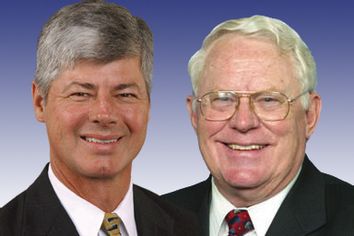
The Democrats' new U.S. Reps. Bart Stupak, D-Mich., and Joseph Pitts, R-Pa.

American women will pay the price for the Democratic dithering that allowed Saturday’s passage of the Stupak-Pitts amendment, a worm virus inserted into the House healthcare reform bill with surgical precision. But the Democratic Party will suffer collateral damage.

Stupak-Pitts isn’t just “the biggest restriction on women’s right to choose in our generation,” as Rep. Diana DeGette of Colorado puts it; it’s also evidence that on abortion the Democratic Party is now captive, just like the GOP, to Christian conservatism. Of course, Republicans traded away their party’s moderate wing for real electoral gains, a base that propelled them to power for decades. The Democrats, already in power, sucker-punched themselves, and all they have to show for it is a big fat shiner in the shape of Bart Stupak’s knuckles.

But if Stupak, a former state trooper from Michigan, provided the muscle, his partner, Joe Pitts — a Pennsylvania Republican with decades in the trenches of the antiabortion battle — may have brought the brains, and more, a new Christian right coalition custom tailored for the Democratic Party’s growing religious conservatism. Stupak is Roman Catholic; Pitts is evangelical. Both are members of the predominantly evangelical organization called the Family; Stupak lives in its C Street house. Together, they’re poster boys for the evangelical/conservative Catholic alliance known as “co-belligerency,” a culture war strategy designed to take territory within the Democratic Party as well the GOP.

Stupak, the Democratic co-chair of the House Pro-Life Caucus, insists that his amendment does nothing more than ensure that the 1976 Hyde Amendment, which forbids the use of federal funds for abortions, is carried over into healthcare reform. Even some of Stupak’s angriest critics within the party concede that Stupak might actually believe that — nobody has ever accused him of being a subtle legislator. (Though Stupak himself, long known for his amiability, now boasts that he was hiding his “wolfiness” all along.) But the facts are plain: Stupak-Pitts will use the Hyde Amendment as a lever with which to radically roll back abortion rights, effectively strong-arming private insurers — most of which will be enmeshed with the federal government now — into abandoning coverage for abortions.

Much is being made in the media about the role played by the U.S. Council of Catholic Bishops, which lobbied hard for the amendment. “We just have to accept this as a Catholic thing,” goes the new conventional wisdom. Leaving aside the fact that a strong majority of American Catholics are pro-choice, that story line obscures the increasingly significant role played by evangelical conservatives within the Democratic Party.

Start with Stupak and Pitts themselves. Although Stupak is a Catholic, he’s lived since at least 2002 in the C Street house run by the Family, which cultivates political leaders on behalf of a long-term vision of what Joe Pitts, speaking at last year’s National Prayer Breakfast (the group’s only public event), called “God-led government.” After the summer sex scandals of Sen. John Ensign, Gov. Mark Sanford and former Rep. Chip Pickering, C Streeters all, made the Capitol Hill address infamous, Stupak denied any knowledge about the house he lives in. “I don’t know what you’re talking about,” Stupak told Michigan reporters when asked about his residence in the house, where he’s been enjoying below-market rent for the last seven years, courtesy of C Street’s tax-exempt status as a church. But when the Los Angeles Times asked Stupak about his role there in 2002, he pleaded secrecy instead of ignorance: “We sort of don’t talk to the press about the house.”

That’s putting it mildly. In its internal documents, the Family refers to itself as an “invisible organization” and the “prayer cells” into which it organizes politicians as “invisible ‘believing groups.’” That doesn’t make it a conspiracy. Rather, the Family represents the soft-sell side of conservative evangelicalism, a social movement that goes beyond — or maybe beneath — pulpit pounding and political purity in pursuit of ideological influence on both sides of the aisle. Longtime Family leader Doug Coe, dubbed the “stealth persuader” on Time magazine’s list of the 25 most influential evangelicals, declares in a sermon delivered to evangelical leaders that “the more invisible you can make your organization, the more influence it will have.”

Joe Pitts can testify to that. It’s a safe bet that until Stupak-Pitts, few Americans beyond Pennsylvania Amish country had even heard of the avuncular Republican, a former gym teacher who rarely attaches his name to legislation. And yet he’s been a driving force in the antiabortion fight for more than three decades. It was Pitts, a “core” member of the Family, who helped bring antiabortion politics into the organization back in the early 1980s. The Family’s focus has always tended toward foreign affairs and economics; Pitts merged the two with the red-hot politics of the abortion wars, quietly exporting free-market fundamentalism and draconian social policy overseas. Pitts and Stupak have joined forces on that front before, teaming up to try to turn President Bush’s underfunded but laudable President’s Emergency Relief for AIDS initiative into an antiabortion crusade. What they couldn’t achieve abroad, they’ve now brought back home, and then some.

They had plenty of help, starting at the Family’s C Street House. It’s home not just to Stupak but also to antiabortion Democrats Mike Doyle of Pennsylvania and Heath Shuler of North Carolina, and two of the Senate’s fiercest abortion foes, Oklahoma’s Tom Coburn — an obstetrician who once mused on applying the death penalty to abortion providers — and South Carolina’s Jim DeMint, famous for pledging to make healthcare reform Obama’s Waterloo. Other Family associates lining up behind Stupak-Pitts include evangelicals Mike McIntyre, D-N.C., John Tanner, D-Tenn., and Lincoln Davis, a Democrat from Tennessee who once proclaimed that no Republican could “outgun, out-pray, or out-family me.”

These Family ties don’t mean that Stupak-Pitts is a plot hatched at C Street. The Family offers politicians a “worldview,” not a vote machine. In the documents stored at the archive of the Fellowship Foundation — one of the Family’s multiple nonprofit entities — at evangelical Wheaton College, congressional briefings typically lead off with reminders that the Family’s prayer groups don’t take direct action but rather facilitate the behind-the-scenes relationships that lead to action. “One person grows desirous of pursuing an action,” Sen. Sam Brownback, a Family man and former C Street resident, explained the process to me, “and others pull in behind.”

Which raises the question: Who’s pulling whom? Did backbencher Bart Stupak really come up with the bluff that led pro-choice Democrats to abandon not one but two compromises, one of which Stupak himself seemed to be signing off on earlier this summer? Or was it Pitts, an abortion-wars warrior since the 1970s, and a longtime leader of the House Values Action Team — an off-the-record caucus of religious right organizations and members of Congress — who drew up the blueprint?

Neither Stupak nor Pitts is talking. Of course, if they just keep quiet, the press will pin it on the bishops — who, to be fair, are more than happy to take credit. That version of events neglects the role of relationships forged within the evangelical context of the Family — a group founded in the spirit of virulent anti-Catholicism, and which maintains to this day that being Catholic brings you no closer to Christ than being Jewish or a Muslim — and the growing evangelical movement within the Democratic Party. A source close to the Faith Table, a gathering of ostensibly progressive Christians helmed by evangelical leader Jim Wallis, notes that the group has been agitating for Stupak-Pitts for months, with Wallis declaring Stupak-Pitts the most important vote of the year.

He may have been right about that. Right now, even the diluted healthcare reform bill that’s limping toward more mauling in the Senate looks like the result of a historic vote. But as a weather vane, Stupak-Pitts tells us which way the wind is blowing. Last time the Democrats possessed this much power in Washington, the Dixiecrats tried to hold the party hostage. Now, it’s the faith-based Democrats. Dixiecrats were racists, plain and simple; the faith-based Democrats are a more complicated bunch, a mix of genuinely moral conservatives, many of them to the left on economic issues, political cowards, and default Blue Dogs. They’re anti-choice and anti-gay but, by God, they’re about love, not hate, a gentler fundamentalism, a faith based in the conflation of Christianity and the Constitution, not the substitution of one for the other. So that’s progress, right?

“Sure,” says the Faith Table dissident who reports that the council of “progressive Christians” was not willing to even consider any deal that didn’t leap past the Hyde Amendment into a new country — or maybe it’s old — of abortion restrictions. “If you’re playing horseshoes with James Dobson.” 

Research support provided by the Investigative Fund of the Nation Institute.

Sex and power inside “the C Street House”

Sanford, Ensign, and other regulars receive guidance from the invisible fundamentalist group known as the Family

  • more
    • All Share Services

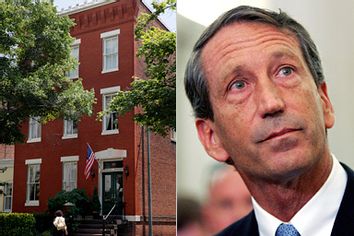
Sex and power inside 133 C Street S.E., a red-brick structure registered as a church and affiliated with a secretive Christian group known by many names, one of them the Fellowship Foundation, is seen Wednesday, July 1, 2009, in Washington. Tucked on the edge of the Capitol complex, the house has functioned as a shield for the lawmakers who live and pray there. South Carolina Gov. Mark Sanford blew away the privacy of the place over the past week, revealing that he had confided in his "C Street" "Christian friends" the cross-continental affair that he had hidden from his wife.

I can’t say I was impressed when I met Sen. John Ensign at the C Street House, the secretive religious enclave on Capitol Hill thrust into the news by its links to three political sex scandals, those of Gov. Mark Sanford; former Rep. Chip Pickering, R-Miss., who allegedly rendezvoused at the C Street House with his mistress, an executive in the industry for which he then became a lobbyist; and Sen. John Ensign, R-Nev. Although Sanford declared today that his scandal will actually turn out to be good for the people of South Carolina because he’s now more firmly in God’s control, the once-favored GOP presidential prospect will finish out his term and fade away. And Ensign’s residence at the C Street House during his own extramarital affair now threatens to end a career that he and other Republicans hoped would lead him to the White House.

When I met Ensign, he was just back from a run, sweaty and bouncing in place, boasting about the time he’d clocked and teasing a young woman from his office. She seemed annoyed that the senator wouldn’t get himself into a shower and back on the job. When I wrote about Sen. Ensign in my book about the evangelical political organization that runs the C Street House, “The Family: The Secret Fundamentalism at the Heart of American Power,” I described him as a “conservative casino heir elected to the Senate from Nevada, a brightly tanned, hapless figure who uses his Family connections to graft holiness to his gambling-fortune name.”

Now, of course, I know I was wrong: John Ensign is a brightly tanned, hapless figure who used his Family connections to cover up the fruits of his flirtations, to make moral decisions for him, and to do his dirty work when his secret romance sputtered. Doug Hampton, the friend and former aide whom Ensign cuckolded, tells us that it was Family leader David Coe, along with Coe’s brother Tim and Family “brother” Sen. Tom Coburn, who delivered the pink slip when it was time to put Cynthia Hampton out of Ensign’s reach.

If sexual license was all the Family offered the C Street men, however, that would merely be seedy and self-serving. But Family men are more than hypocritical. They’re followers of a political religion that embraces elitism, disdains democracy, and pursues power for its members the better to “advance the Kingdom.” They say they’re working for Jesus, but their Christ is a power-hungry, inside-the-Beltway savior not many churchgoers would recognize. Sexual peccadilloes aside, the Family acts today like the most powerful lobby in America that isn’t registered as a lobby — and is thus immune from the scrutiny attending the other powerful organizations like Big Pharma and Big Insurance that exert pressure on public policy.

The Family likes to call itself a “Christian Mafia,” but it began 74 years ago as an anti-New Deal coalition of businessmen convinced that organized labor was under the sway of Satan. The Great Depression, they believed, was a punishment from God for what they viewed as FDR’s socialism. The Family’s goal was the “consecration” of America to God, first through the repeal of New Deal reforms, then through the aggressive expansion of American power during the Cold War. They called this a “Worldwide Spiritual Offensive,” but in Washington, it amounted to the nation’s first fundamentalist lobby. Early participants included Southern Sens. Strom Thurmond, Herman Talmadge and Absalom Willis Robertson — Pat Robertson’s father. Membership lists stored in the Family’s archive at the Billy Graham Center at evangelical Wheaton College in Illinois show active participation at any given time over the years by dozens of congressmen.

Today’s roll call is just as impressive: Men under the Family’s religio-political counsel include, in addition to Ensign, Coburn and Pickering, Sens. Chuck Grassley, R-Iowa, and Jim DeMint and Lindsey Graham, both R-S.C.; James Inhofe, R-Okla., John Thune, R-S.D., and recent senators and high officials such as John Ashcroft, Ed Meese, Pete Domenici and Don Nickles. Over in the House there’s Joe Pitts, R-Penn., Frank Wolf, R-Va., Zach Wamp, R-Tenn., Robert Aderholt, R-Ala., Ander Crenshaw, R-Fla., Todd Tiahrt, R-Kan., Marsha Blackburn, R-Tenn., Jo Ann Emerson, R-Mo., and John R. Carter, R-Texas. Historically, the Family has been strongly Republican, but it includes Democrats, too. There’s Mike McIntyre of North Carolina, for instance, a vocal defender of putting the Ten Commandments in public places, and Sen. Mark Pryor, the pro-war Arkansas Democrat responsible for scuttling Obama’s labor agenda. Sen. Pryor explained to me the meaning of bipartisanship he’d learned through the Family: “Jesus didn’t come to take sides. He came to take over.” And by Jesus, the Family means the Family.

Family leaders consider their political network to be Christ’s avant garde, an elite that transcends not just conventional morality but also earthly laws regulating lobbying. In the Family’s early days, they debated registering as “a lobby for God’s Kingdom.” Instead, founder Abraham Vereide decided that the group could be more effective by working personally with politicians. “The more invisible you can make your organization,” Vereide’s successor, current leader Doug Coe preaches, “the more influence you can have.” That’s true — which is why we have laws requiring lobbyists to identify themselves as such.

But David Coe, Doug Coe’s son and heir apparent, calls himself simply a friend to men such as John Ensign, whom he guided through the coverup of his affair. I met the younger Coe when I lived for several weeks as a member of the Family. He’s a surprising source of counsel, spiritual or otherwise. Attempting to explain what it means to be chosen for leadership like King David was — or Mark Sanford, according to his own estimate — he asked a young man who’d put himself, body and soul, under the Family’s authority, “Let’s say I hear you raped three little girls. What would I think of you?” The man guessed that Coe would probably think that he was a monster. “No,” answered Coe, “I wouldn’t.” Why? Because, as a member of the Family, he’s among what Family leaders refer to as the “new chosen.” If you’re chosen, the normal rules don’t apply. 

So it is for Ensign. Sen. Jim DeMint, one of Ensign’s C Street roommates, insists that the prayer groups that meet there — “invisible believing groups,” in the Family’s words, designed to facilitate private prayer between partners of equally high status — are all about accountability. That is, the kind that takes place behind closed doors. We now know that the Family was aware of Sen. Ensign’s affair long before Doug Hampton’s wounded pride forced it into the public. What’s more, if Hampton is to be believed, their concern with the payoffs made by Ensign and his parents to his mistress’s family was that they were too small; operating in a medical and spiritual capacity, Sen. Coburn counseled $1.2 million, according to Hampton. Coburn is no hypocrite — he’s a true believer in the faith of the Family, the idea that the chosen need to look out for one another. Christian right leader — and Watergate felon — Chuck Colson, converted through the efforts of the Family, has boasted of it as a “veritable underground of Christ’s men all through government.”

What do they do? Rep. Zach Wamp, one of Ensign’s fellow C Streeters who’s been in the news for defending the Family’s secrecy, has teamed up with Family-linked Reps. Ander Crenshaw, R-Fla., and John R. Carter, R-Texas, on an obscure appropriations committee to help greenlight tens of millions in federal funds for new megachurch-style chapels on military bases around the country. Former Rep. Chip Pickering was not only sleeping on the sly with a representative of the telecom industry, he was living with one — former Oklahoma Republican Rep. Steve Largent, a C Streeter who in his post-Congress capacity as the head of a telecom association paid for travel by Pickering and John Ensign. Some might call that “crony capitalism”; Family members call it “biblical capitalism.”

A review of Ensign’s and Sen. Coburn’s travel records, undertaken with researcher Chris Rodda of the Military Religious Freedom Foundation, reveals an even more disturbing overlap of the pious and the political. On at least three occasions in recent years, Sen. Ensign traveled to Asia and the Middle East on what he described as official policy trips, paid for entirely by the International Foundation, one of the network of little-known nonprofits that make up the Family. Sen. Coburn, meanwhile, traveled to Beirut in 2005 on the Family’s dime, with the explicit mission of setting up Lebanese political prayer groups, just like the one that covered for Ensign. The following year, Coburn humbled himself in prayer at a special Family event in the British Virgin Islands, a Christian mission of earthly rewards also undertaken, at Family expense, by fellow C Streeter Rep. Mike Doyle, D-Penn., who also sacrificed himself for God with a Family-paid trip to Aruba.

To be fair, most of the trips sponsored by the Family aren’t pleasure junkets. They’re missionary work. Only the Family missionaries aren’t representing the United States. They’re representing “Jesus plus nothing,” as Doug Coe puts it, the “totalitarianism of God,” in the words of an early Family leader, a vision that encompasses not just social issues but also the kind of free-market fundamentalism that is the real object of devotion for Ensign, Coburn, Pickering, Wamp and Sanford, along with Family insiders such as Sens. DeMint, Sam Brownback and Chuck Grassley. At the heart of the Family’s spiritual advice for its proxies in Congress is the conviction that the market’s invisible hand represents the guidance of God, and that God wants his “new chosen” to look out for one another.

When they arrive in other countries, on trips paid for by the Family, at the behest of the Family, they are still traveling under official government auspices, on official business, with the pomp and circumstance — and access — of their taxpayer-funded, elected positions. Here’s how a former National Security Council official who traveled with Family leader Doug Coe on a tour of Pacific nations described the Family effect in small nations where a visitor like John Ensign is a major event: “It reminded me of the story in World War II, where the British sent an OSS type into Borneo … And this guy parachuted out of the sky and they had never seen anything like this so they looked on him as — he had blonde hair and white skin and he was a white god who had come out of the sky to mobilize them. Obviously his side was going to win so they had no trouble aligning themselves.”

One needn’t be a Marxist to find fault with the Family’s mash-up of New Testament and unfettered capitalism — Adam Smith himself would have recognized that theology as a disingenuous form of self-interest by proxy. Such interests have led the Family into some strange alliances over the years. Seduced by the Indonesian dictator Suharto’s militant anti-communism, they described the murder of hundreds of thousands that brought him to power as a “spiritual revolution,” and sent delegations of congressmen and oil executives to pray to Jesus with the Muslim leader. In Africa, they anointed the Somali killer Siad Barre as God’s man and sent Sen. Grassley and a defense contractor as emissaries. Barre described himself as a “Koranic Marxist,” but he agreed to pray to Grassley’s American Christ in return for American military aid, which he then used to wreak a biblical terror on his nation. It has not yet recovered. More recently, the Family has paid for congressional Christian junkets to bastions of democracy such as Serbia, Sudan, Belarus, Albania, Macedonia and Musharraf’s Pakistan.

If the Family men who stood over John Ensign as he wrote a baldly insincere breakup letter to his mistress were naive about hearts that want what they want, they don’t claim ignorance about the strongmen with whom they build bonds of prayer and foreign aid. They admire them. Counseling Rep. Tiahrt, Doug Coe offered Pol Pot and Osama bin Laden as men whose commitment to their causes is to be emulated. Preaching on the meaning of Christ’s words, he says, “You know Jesus said ‘You got to put Him before mother-father-brother sister? Hitler, Lenin, Mao, that’s what they taught the kids. Mao even had the kids killing their own mother and father. But it wasn’t murder. It was for building the new nation. The new kingdom.”

Sen. Ensign, facing calls for an investigation of what may have been felony abuses of campaign funds in his attempt to cover up his affair, might not get there. Then again, the Family’s preview of a “new kingdom” — a private club of men protecting one another’s secrets — doesn’t sound so different from the old kingdom. That’s the awful secret behind the closed doors of the C Street House, the Family’s authoritarian rhetoric, and even the Family’s real mission: business as usual, fortified by faith in more power for the powerful and privilege itself a form of piety.

Continue Reading Close

Toeing the line

Ambition and her toe lingered between us on the couch that day.

  • more
    • All Share Services

I sat on the train back to New York with my eyes closed, thinking of Gina. Thinking not of sex with her but of her blue jeans: the road of faded denim that led from her knee up the inside of her thigh to her crotch, visible when she’d pulled her legs up on the couch across the room from me and explained why it was hard for her to live in Northampton, Mass. The thing was, she liked people with ambition. Western Massachusetts, she said, lacked ambition, lacked passion. Passion. She had it in her, passion, and it was like she couldn’t do anything other than fulfill it, or try to at least. She would write. That was her passion.

I was visiting her roommate, but my friend was working that evening. An old movie was on the TV, but we weren’t watching. Gina had found out I was a writer. She’d asked me to read some of her work.

“Your rhythm is good,” I told her when I was done. She’d given me a two-page scene she’d written for her creative nonfiction writing class: “Valentine’s Day, 1996.”

“He was a drunk,” she’d written of an old lover, “and I had, as can happen, become one too.”

“It sounds like you,” I said, although I knew it wasn’t a compliment to tell a writer that her prose sounded like her speech. But she thought it was, so I continued: “The way you arrange clauses. You have a voice. This is your sentence.” And I meant it.

“Really?” Gina said, and leaned toward me, her right hand supporting her head with her elbow on the couch’s arm, her left hand reaching across the inner thigh to hold her right hip as she twisted closer. She had long legs and arms well-muscled from practicing karate; she wore an orange corduroy button-down shirt with the sleeves pushed up, and I could see the tendons in her olive forearms flexing like a ship’s rigging. Gina’s face was equally strong, a broad jaw holding big white teeth, one slightly discolored, her umber eyes set deep under plucked, sharp-edged eyebrows, arched like the roof of a colonnade, inviting but controlled. Now her eyes searched, looking for not only praise but ambition, mine and her own. To her I was a writer from New York, and I was telling her she was a writer from Northampton.

“Let me show you,” I said, and moved a book I’d been reading from the cushion beside me to the table on the other side. I edged forward and leaned on my knees. She sat beside me and did the same, two craftsmen consulting. Here, I said, pointing to a sentence, and here, and here. But you don’t need that one; did you add it in a second draft? Yes, she said, and her toe brushed against my left foot. I moved my foot away.

“I add things, sometimes,” Gina said, taking the left side of the page in her hand so that we held it together. “I like it to be clean, but then I worry that it’s not, I don’t know, written.”

“So you add words like ‘allotted’ and ‘inebriated,’” I said.

“Yes,” she said, and her toe touched me again. This time I only moved my foot a little. Her toe followed.

“You’re 25,” I said, “and you’re back in school, and at last you know what you want to do.”

“Yes!” She smiled for her passion, in which she believed wholeheartedly, simply; hers was a passion for writing, no more, nothing complicated. But her toe remained pressed against the edge of my foot. She smelled like the clean sweat that remains even after a shower, warm and distinct.

“So you write something, and you write clean, with good rhythm. Then you go back to it, and you wonder, ‘Where do all the beautiful words go?’ And you add them. Because they look –”

“Writerly,” Gina said, and frowned, her lips and teeth slightly parted in distaste. “I don’t want it to be writerly.” Her toe retreated.

“So don’t worry about beautiful words,” I said. “Concentrate on details. Like here, you describe looking in the mirror and seeing your face, pale and gaunt and with raccoon eyes. That could be anybody. That’s just strung-out. What did you look like? For instance, you have a lot of beauty marks on your face.” Her toe made contact again. “And they’re beautiful. But what do they look like on a pale, gaunt face?”

“I don’t know,” Gina said.

“Make it up,” I said. “Or stay up all night tonight and look at yourself in the mirror tomorrow and see what you see.”

Gina’s shoulder dipped in toward mine just as I moved my foot away from her toe. I moved my foot back toward her; her shoulder retreated, but her hand brushed my thigh. We froze, and I thought: She thinks I know more than her about writing and she’ll keep edging closer as long as she thinks I know more than her. But I think she knows more than me about this kind of thing between women and men, and already I’ve given her doubts, because I have doubts. Is there a difference between a fraud, a coward, a cad? What did that toe mean, anyway?

I didn’t move. Neither did Gina. I sighed.

“Thank you,” Gina said, and stood up and returned to the other couch.

On the train I could think of nothing but her toe pressed against my foot, how I would have continued to feel it even as we had reached for one another, as my hand slid over her hip and her full lips pressed against mine.

Oh, the toe!

I screwed up! What the hell else could a toe pressed up against your foot mean when you’re from New York and published and sitting next to a woman from Northampton reading over the story she’d written about her self-destructive love affair? Why did I hesitate? And what else — she told me the man wasn’t her type, too bony, not like me — her toe, my hand reaching across her, on her hip. The black and white Tony Curtis movie on the TV, “The Sweet Smell of Success.” Tony tells the dame, “Stop thinking with your hips!” Gina was thinking with her hips and talking with her toe, but I never left the page. But if I had — the denim clad column of inner thigh, the toe …

I closed my eyes. Pulsing against the inside of my skull was the rhythm of the tracks and the dappled flanks of the passing world as the sun flickered through the trees, and I sucked in a gallon of air that smelled like the tingle of sweat I’d smelled on Gina. Not sweat left over from before a shower, but fresh beneath her arms, between her legs, in her hair, as she leaned toward ambition, hers and mine.

Continue Reading Close