Jennifer New

The odyssey of “Genghis Blues”

The tale behind the Oscar-nominated documentary is as extraordinary as the Tuvan throat-singers it celebrates.

  • more
    • All Share Services

The odyssey of

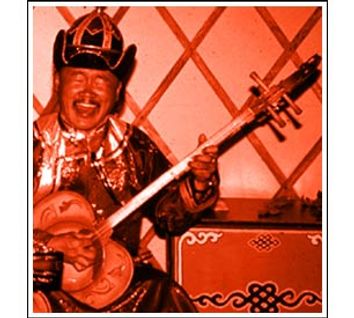
It’s safe to say that whatever Tom Cruise and Annette Bening were doing after learning of their recent Oscar nominations, they were not preparing for six days in the Gobi. That’s the Gobi Desert. Middle of Nowhere. Land of severe weather, yurts and nomadic people. But for Adrian and Roko Belic, the brothers behind the Oscar-nominated documentary film “Genghis Blues,” spending six days in sub-freezing temperatures, huddling in their sleeping bags at night and traveling via camel was just where they wanted to be.

“Our agent was like, ‘Guys, guys, do you have to do this again!’” laughs Adrian. The agent was referring to how they had flown off to New Zealand the day before their first film premiered in Los Angeles.

But in both cases, a free ticket to an unexplored place proved more compelling than anything Hollywood could dish up. So a week before the Oscar nominations, knowing that they were already on a list of 12 non-fiction films that had been whittled from an initial 55, they left as much pertinent information and VHS copies with friends and family as they could muster, then headed off to be the featured speakers at a filmmaking workshop in Mongolia.

This was not entirely new territory. Five years earlier, the brothers had spent considerable time just northwest of Mongolia filming “Genghis Blues” in the Russian region of Tuva. Situated in the center of Asia, Tuva was an independent state until it was annexed by the former USSR in 1944. Centuries before, it had been part of the great warrior Genghis Khan’s Mongolian empire, although Khan had recognized the Tuvans as being a unique tribe, separate from the Mongolians. That kind of brotherly love is no longer readily apparent between the neighbors. Just a week before Adrian and Roko arrived in Mongolia, one of the most bloody incidents in a fierce, ongoing border war occurred. A group of Tuvans machine-gunned a Mongolian family to death and stole their cattle. Given this conflict, it was unclear how a film celebrating Tuvan culture was going to play in Ulan Bator, Mongolia’s capital city.

At the sound of the first dialogue, however, the audience broke into enthusiastic applause. Unbeknownst to the filmmakers, their work had been dubbed into Mongolian by one of the country’s foremost actors. For the next 88 minutes, people laughed, cried and clapped for the ultimate road trip being played out on the screen. Afterwards, a group of Mongolian dignitaries spoke about how the American blues singer featured in the film, Paul Pena, was a hero, an ambassador of goodwill between different cultures. Then some students spoke directly to Adrian and Roko, saying that they were inspirations to young people everywhere to take on global projects.

By the time they made it to dinner, high from the evening’s emotion, Adrian looked at his watch: 9:30 p.m. in Mongolia meant 5:30 a.m. in Los Angeles. Almost on the nose, the call came. The woman who had organized the film’s showing had a cell phone with her for just this purpose. Immediately she erupted into a broad smile. “For the next few minutes, the whole table cheered and clinked glasses; we were so excited!” recalls Adrian of the news of their nomination. “It felt terrific! But pretty soon we had to get down to planning for the Gobi.”

The young filmmakers — Adrian is 30, Roko 28 — have been on a course for both the Gobi and documentary film since childhood. At home in Chicago, they spoke Serbo-Croatian with their parents, Czech and Yugoslav immigrants, and during summer vacations they visited family in Eastern Europe.

As early as they can remember, their mother was telling them that she hoped they would one day travel around the world — a goal both brothers have accomplished, Adrian two times over. To further instill their wonder for a world beyond Michael Jordan and the Sears Tower, she removed the family’s television’s channel dial, leaving it permanently tuned to the PBS affiliate. While their schoolmates were watching baseball and sitcoms, the boys were absorbing hours of African wildlife shows, a series of documentaries about Papua New Guinea made by a two-brother team and “The Last Journey of a Genius,” a film which they rank with “Star Wars” as a major influence on their lives.

This obscure documentary recounts the story of the late Nobel Prize-winning physicist Richard Feynman and his attempts to travel to Tuva. As with the handful of other Westerners who knew about Tuva, Feynman had discovered the area through the unique postage stamps it had issued in the early 20th century. Enchanted by the stamps and by the resonant name of its capital, Kyzyl, Feynman became intent on visiting the remote, mountainous land. The Soviets, however, could not believe that this great mind was interested only in the scenery, and for 13 years, they repeatedly foiled his plans. The Belics, however, determined that they would somehow make it to Tuva.

During college, Adrian circumnavigated the globe twice with the Semester at Sea program — heading west one year and east the next. He sailed up the Mekong River, meeting both northern and southern veterans of the Vietnam War, and had his first snorkeling experience in the Seychelles, off the coast of Africa. After years of PBS wildlife programming, Roko was also eager to get to Africa. In search of an inexpensive, unique way to see the continent, he and his friend Jeff became last-minute team members of a student group that traveled from Kenya to Malawi to deliver money and supplies to refugees of the civil war in Mozambique.

In order to afford their plane tickets, the two spent the first few weeks of the summer painting houses in a Chicago suburb, before flying out on Fourth of July morning. “We went from a tree-lined street with lawn chairs set up for the holiday parade, to baboons and giraffes crossing the road! It was just surreal!” exclaims Roko, still sounding 18. “I remember one of the first mornings of the trip, sitting in the street as the sun came up and hearing the Muslim call to prayer. It struck me as the most engaging, beautiful scene of my life. Now, looking back and having been in Africa again, I know that it was just some dusty street in a small town.”

The leader on that trip, Dan Eldon, was a year older than Roko and Jeff. He had grown up in Nairobi and traveled extensively, recording his experiences in his photo journals. Roko recalls the way in which Dan was fearless about new places and people, completely fueled by curiosity. They learned many tricks from him — how to talk to border guards, how to read a potentially risky situation. Dan and the summer’s experience accelerated Roko and Jeff’s travel instincts, serving as a springboard for bigger, riskier adventures.

Two years later, they took time off from school to travel around the world. This time Roko planned to film their experience. He and Adrian had long been fascinated with video and Super-8 film; as kids, they had often talked their teachers into accepting films instead of research papers. During the African safari, Roko had been charged with documenting the students’ journey, but too agog with his surroundings, he had left the job to other group members. This second time, he diligently filmed and edited the lengthy trip. With understated subtitles describing key moments in the journey, the resulting film is reminiscent of a Victorian travel monologue — complete with suspense, narrow escapes and a cast of unexpected friends and nemeses, a depiction far more interesting than anything you’ll find in glossy travel magazines.

The video begins in a cramped dorm room in Russia, as Jeff, Roko and some local students who have befriended them share vodka and try on an army uniform, dancing and mock-parading around the room. One of the students takes them home to his family, where they’re treated like special guests and, again, entertained with song and drink in the small, simply furnished apartment. Fleeting scenes of the Middle East follow, with Roko attempting to ride his first horse to the pyramids.

In Jordan’s desert, the two friends hike into the abyss, romanced by the sound of the name — Wadi Rum — and a paved road that abruptly ends, eaten by sand. After two nights spent sleeping on a rocky overhang in order to avoid packs of marauding wild dogs, they trudge back out, filming each other as they go, both looking weak with hunger and cold. By the time the pair make it to Dan’s house in Nairobi, they are so grimy you can practically smell them through the VCR. They record a silly afternoon with their friend, clowning through the urban streets. A year later, Dan died in Somalia while covering the war there.

Soon after this point in the trip, they were mugged and their camera was stolen. They took divergent paths through Asia, with Roko still hoping to make it to Tuva. His final leg was a nightmarish train ride through rural China, headed toward a back entrance to Tibet. The farther west he went, the more violent and Kafka-esque the journey became. This progression culminated in the middle of the night when he and other passengers were herded through the streets of a deserted town by soldiers in riot gear. As the only Westerner in the lot, he never understood the soldiers’ intent or what the crowd had done to upset them, though he was enraged by the random beatings of innocent people he witnessed.

When he finally made it to Lhasa, Tibet’s capital, he learned that Western travelers were not allowed in the countryside. Not having come this far to let a silly rule stop him, he donned a traditional sheep herder’s coat and a Chinese hat. With the help of an equine expert Israeli traveler, he bought a horse. “I’d heard so much about Tibetan hospitality,” he says, “that I figured I’d have no problem finding places to stay.”

It was November and growing increasingly cold, so he was happy when on his second night a family did befriend him. The tiny granny of the household, all of 4 feet tall, was more concerned about the horse than she was the disguised Westerner. With a teasing smile, she turned the saddle around to its correct position, hoisted herself on the horse and took off at a wild gallop.

But after that, his luck ran out. He sensed that the Tibetans had been reprimanded for talking to foreigners and were now shy of them. After two weeks of solo ramblings, his water bottle frozen solid as he awoke under a bush every dawn, he decided to go home. It was frustrating to know how close he’d come to Tuva, yet he was eager to go there with fresh eyes on a future journey.

The next year, 1993, Roko was at college when he learned that a group of Tuvan throat-singers were visiting the United States. “I’d traveled around the world thinking I’d end up in Tuva, and now Tuva was coming to me,” he laughs. He attended the packed performance in Santa Barbara and approached one of the singers afterwards. They smiled at each other intently, but Roko’s Russian proved too elementary for a real conversation.

Several nights earlier, the Tuvans had played a sold-out performance in San Francisco, and the same singer had ventured out into the lobby to perform for the overflow crowd. In between songs, he was startled when a large African-American man with a head of wild, curly hair and a long cane came near him and, unannounced, belted out a classic Tuvan song that had not been performed that evening.

Paul Pena, who had played with such blues greats as B.B. King, T-Bone Walker and Bonnie Raitt, and who had written the Steve Miller Band’s hit song “Jet Airliner,” was at that time living in relative poverty and obscurity in San Francisco. Blind from birth, Pena had never found America to be a friendly place for people outside the mainstream. When his wife died, he fell into a depression and spent many nights listening to his short-wave radio.

Once while turning the dial, he was barely able to make out an odd harmonic sound unlike any he’d ever heard. At first he thought it must be an instrument, something akin to a didgeridoo, but he eventually realized it was a single voice producing two notes. He set off to teach himself the art, despite a dearth of recordings or information. Now, nine years later, the Tuvan performer stared at him in amazement: “You must come to Tuva in two years for our national throat singing competition!”

The man who organized the Tuvan singers tour and who would soon try to help Paul get to the competition was Ralph Leighton, Richard Feynman’s friend and would-be Tuva travel partner. Roko contacted Leighton soon after college graduation to tell him of his and Adrian’s desire to go to Tuva and make a film. Not surprisingly, the older man was only mildly interested in the 22-year-old’s plans.

He told him about Paul, but cautioned that the BBC had already shown interest in filming the trip. When Roko said he might try to go to Tuva that December via the Trans-Siberian Railroad, Leighton said he knew of no other Westerners who had made the journey in winter. Three months later Roko e-mailed him from Siberia saying that the train ride had been great and he was taking a bus to Kyzyl the next day. Leighton’s interest was piqued.

Arriving at midnight in the freezing capital, Roko headed towards the first address Leighton had given him, the home of the throat singing legend Kongar-ol Ondar. He knocked on the door of the one-bedroom apartment in downtown Kyzyl, a Soviet-designed town complete with a 50-foot-high statue of Lenin. Immediately, Roko recognized the man as the performer he’d tried talking to in Santa Barbara. Despite the late hour, Kongar-ol offered him a big smile and a place to sleep. Roko stayed in Tuva for five weeks, incurring frostbite from the 50-below-zero weather, but falling further in love with the place of his childhood dreams.

Back in San Francisco, Adrian was already trying to drum up support for the project. As soon as he got confirmation that the BBC was not doing a Tuva film, the brothers approached Paul. He agreed without hesitation. “We had five months before Paul’s trip,” says Roko of the planning that ensued. “I wrote 35 grant applications and got 35 rejections.” Until a week before leaving, they continued to hope for some backing that would allow them to shoot in film. They ended up taking video equipment instead.

The trip that ensued — including a jumpy ride in an Aeroflot plane with its “escape rope,” madcap road trips with Kongar-ol through Tuva’s stunning countryside, Paul’s crowd-pleasing performances at the competition and the series of mishaps that befell the travel party partway through — is the heart of “Genghis Blues,” a film that is as much about the spirit of people to cross cultural and personal boundaries as it is about music.

While the film focuses on the five-week trip to Tuva, the actual story is arguably a 16-year odyssey: Paul’s 11 years of infatuation with Tuva leading up to it, followed by three years of editing and another two of marketing. “We always knew we did this film not only because it was a compelling story,” says Adrian, “but also because it sounded like a lot more fun than graduate school.” In the end, they’ve gotten a hell of an education.

When they finished the film in June 1998, one of the first things they did was enter it in film festival competitions, hoping to gain a distributor in the process. Repeatedly, they were told that they would never make it to a major festival like Sundance. “Who wants to see a film about a blind guy no one has ever heard of?” went the argument. So when the opportunity came to fill out the entry form for the granddaddy of independent film festivals, they checked “35 mm.”

“Sundance doesn’t accept video, which is what we had,” Adrian explains. “The choices were 35 or 16 millimeter. We were just psyched to see the title of our film next to ’35 mm’!”

It was a joke until the call came. Sundance wanted to see a print of the film. A 35-millimeter print. For years, they’d had time but no money. Suddenly, they had neither.

In a moment that is emblematic of the film’s history and the brothers’ overcome-all-odds attitude, they sped home and spent the next four days in a fund-raising fury, trying to raise the $50,000 it would cost to convert to film. It seemed impossible, since to that time they had raised only $2,000 for the project, relying heavily on credit cards and income from odd jobs. Adrian now got out a list he’d kept of everyone they’d met in conjunction with “Genghis Blues”: sound people, lawyers, friends of friends’ parents.

He began his calls by reintroducing himself and saying, “This is the situation …” One New York society woman — he can’t remember how he came by her phone number, the string of connections was so improbable — told him that it was much easier to raise $10,000 that $10. To his disbelief, he found her words to be true. Some very unexpected “friends,” people they hardly knew but who were enthusiastic about the film, appeared just in time.

Following that baptism by fire, Sundance smiled on them. When they were unable to find a place to stay in expensive Park City, another benefactor offered them a condo with fireplaces and Jacuzzis. Then, when festival officials slotted Paul and Kongar-ol for a mere 20-minute concert the day before the film’s screening, Adrian found a local priest who was willing to open his chapel. They packed in more than 100 people for each of three concerts.

Part of the successful buzz they experienced was due to the smart-looking glossy posters and postcards they put up around town. The materials, well beyond their budget, had been eked out through many late nights spent endearing themselves to copy store staffs in San Francisco.

Now, Hollywood types asked them in all sincerity who was doing their press. “I blurted out about how my mom and friends all over the country had pitched in,” Adrian recalls, amused at his own naivete. “Later, someone took me aside and counseled that in the future I should say, ‘Our people are doing great work.’” The entire week was the first sweet whiff of success.

Now, with the Oscars fast approaching and “Buena Vista Social Club” being hailed as a shoo-in, Adrian and Roko and “their people” are hard at it again. “We had to fight for days to get the Academy’s mailing list,” Adrian says, “even though every major studio has a copy of it.” They’ve stayed up late every night since returning from Mongolia, addressing postcards and making phone calls.

“In a joyous way,” he continues, speaking to anyone who still wonders why they’re putting so much into what seems like a David and Goliath battle, “we feel a responsibility to see how far this film can go.” Partly, it’s about being true to themselves and the same level of energy that drives their travels. It’s also for Paul, who was diagnosed with pancreatic cancer just after celebrating his 49th birthday at Sundance last year. The entire experience of “Genghis Blues,” from the close bond he’s made with Kongar-ol, to the acceptance he felt by the Tuvan people, has been a complete and unanticipated pleasure for him.

“Paul keeps telling me that this has been the best time in his life,” says Roko. “It’s really nice to be part of that.”

On Sunday, he’ll have another opportunity he could never have imagined: a trip to the Oscars along with Roko, Adrian and their mother. It will be a surreal moment for the brothers as well, sitting under the flashing lights, surrounded by a sea of tuxedos — half a world away from the sea of stars they slept under just weeks ago, as they nestled into down bags in the midst of the Gobi.

Thanksgiving: A personal history

From the mythic Midwest of my childhood to the mesmerizing Chicago of later years, this holiday has always evoked a place.

  • more
    • All Share Services

Thanksgiving: A personal history

In trying to explain what was missing from her life, how it felt hollow, a friend recently described to me a Thanksgiving she’d once had. It was just two friends and her. They had made dinner and had a wonderful time. “Nothing special happened,” she explained, “But we were all funny and vibrant. I thought life would always be like that.”

This is the holiday mind game: the too-sweet memory of that one shining moment coupled with the painful certainty that the rest of the world must be sitting at a Norman Rockwell table feeling loved. It only gets worse when you begin deconstructing the purpose of such holidays. Pondering the true origins of Thanksgiving, for example, always leaves me feeling more than a bit ashamed and not the least bit festive. Don’t even get me started on Christmas.

Every year, I think more and more of divorcing myself from these blockbuster holidays. I want to be free from both the material glut and the Pandora’s box of emotions that opens every November and doesn’t safely close until Jan. 2. Chief among these is the longing for that perfect day that my friend described, the wishful balance of tradition, meaning and belonging. But as an only child in a family that has never been long on tradition, I’ve usually felt my nose pressed against the glass, never part of the long, lively table and yet not quite able to scrap it all to spend a month in Zanzibar.

When I was a kid, of course, there was none of this philosophizing. I was too thrilled by the way the day so perfectly matched the song we’d sung in school. You know the one: “Over the river and through the woods ” Across the gray Midwestern landscape, driving up and down rolling hills, my parents and I would go to my grandmother’s house. From the back seat, I’d peer out at the endless fields of corn, any stray stalks now standing brittle and bleached against the frostbitten black soil. Billboards and gas stations occasionally punctuated the landscape. Everything seemed unusually still, sucked dry of life by winter and the odd quiet of a holiday weekend.

In less than an hour, we’d turn off the interstate, entering more familiar territory. My child’s mind had created mythic markers for the approach to my grandparents’. First came the sign for a summer campground with its wooden cartoon characters, now caught alone and cold in their faded swimsuits. Farther up the road, a sentry-like boulder stood atop a hill, the final signpost before we pulled into my grandparents’ lane. Suddenly, the sky was obscured by the long, reaching branches of old-growth oak and elm trees. A thick underbrush, a collage of grays and browns, extended from the road and beyond to the 13 acres of Iowa woodland on which their house was situated. A frozen creek bisected the property at the bottom of a large hill. The whole kingdom was enchanted by deer, a lone orange fox, battalions of squirrels and birds of every hue.

Waiting at the end of the lane was not the house from the song, that home to which the sleigh knew the way. A few years earlier my grandparents had built a new house, all rough-hewn, untreated wood and exposed beams, in lieu of the white clapboard farmhouse where they had raised their children. I vaguely understood that this piece of contemporary architecture, circa 1974, was a twist on that traditional tune, but to me it was better: a magical, soaring place full of open spaces, surprises and light.

Upon entering the house, I’d stand and look up. Floating above were windows that seemed impossibly high, their curtains controlled by an electric switch. On another wall was an Oriental rug so vast it seemed to have come from a palace. Hidden doors, a glass fireplace that warmed rooms on both sides and faucets spouting water in high arcs fascinated me during each visit. In the basement, I’d roam through a virtual labyrinth of rooms filled with the possessions of relatives now gone. Butter urns, antique dolls and photo albums of stern-faced people competed fantastically with the intercoms and other gadgetry of the house.

I see now that it would have been a great setting for gaggles of cousins: having pillow fights, trudging through the snowy woods, dressing up in my grandmother’s old gowns and coonskin hat. Instead, I recall holidays as having a museum-like hush. Alone with the friends I’d created in my mind and the belongings of deceased generations, I was content. Upstairs, a football game hummed from the TV, a mixer whirred in the kitchen and the stereo piped one of my grandmother’s classical music 8-tracks from room to room. But the house, with its carpeting and wallpaper, absorbed it all. As I’d seen in an illustration from one of my books, I could picture the house as a cross-section, looking into each room where, alone, my family members read, cooked, watched TV and napped. Pulling the camera farther away, the great house glowed in the violet of early nightfall, as smoke from the chimney wafted through the woodland and then over the endless dark fields, a scattering of tiny, precise stars overhead.

The moment that brought us there together — my grandparents, mom and dad, my uncle and his partner, and my great-grandmother — was perhaps the most quiet moment of all. Thanksgiving supper, held in the dim light of late afternoon, was a restrained meal, as though it were a play and we had all lost our scripts. Only the clank of silverware, the passing of dishes and the sharing of small talk seemed to carry us around and through it.

If I could go back in time and enter the minds of everyone at that table, I would not be surprised if only my great-grandmother and I were really happy to be there. My grandfather: walking in his fields, calculating numbers from stocks and commodities, fixing a piece of machinery. My parents: with friends in a warmer climate, “The White Album” on the stereo and some unexpected cash in their wallets. My uncle and his partner, Bob: willing themselves back home and beyond this annual homage. (Bob himself was a mystery to me, a barrel-chested man who laughed a lot and wore — at least in the one mental snapshot I have of him — a wild patterned smock top and a gold medallion. No one had explained Bob’s relationship to our family, so I assigned him a role in my own universe, much like the cartoon characters at the campground or the sentinel rock. I made sense of him and marveled at his ebullience.) And then my grandmother: thinking she should enjoy this, but tired from the cooking and management of the meal, more looking forward to a game later in the evening.

That left my great-grandmother and me. Both of us were happy to have this time with family, this mythic meal in which we both believed. And, really, everyone else was there for us: to instill tradition in me, to uphold it for her. Isn’t that what most holidays are about? Everyone in the middle gets left holding the bag, squirming in their seats, while the young and old enjoy it.

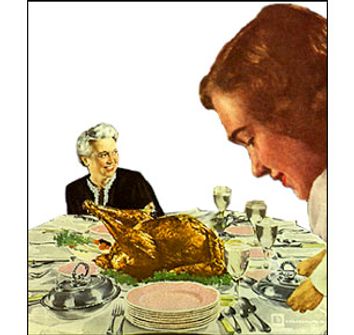
Within a few years, though, by the time I hit adolescence, I’d had my fill of tradition. Not the boulder, the huge house with its secret niches nor even the golden turkey served on an antique platter that my grandmother unearthed every year from the depths of a buffet held any appeal. Gone was my ability to see the world through the almost psychedelic rose-colored glasses of childhood. I also hadn’t gained any of the empathy that comes with age. Instead, I was stuck with one foot in cynicism and the other in hypersensitivity. The beloved, magical house now looked to me like a looming example of misspent money and greed. My great-grandmother, so tiny and helpless at this point, now struck me as macabre and frightening, her papery white skin on the verge of tearing.

Perhaps my parents took my behavior, moody and unkind as it was, as a sign that traditions are sometimes meant to be broken. I’m not sure whether they were using me to save themselves from the repetition of the annual holiday, or if they were saving the rest of the family from me. Either way, we stopped pulling into the wooded lane that fourth Thursday in November. For the next few years, we’d drive instead to Chicago. My mind managed to create similar mythic land markers: the rounded pyramids near Dekalb, Ill., which I’ve since realized are storage buildings; the office parks of the western suburbs where I imagined myself working as a young, single woman, ` la Mary Tyler Moore; the large neon sign of a pair of lips that seemed to be a greeting especially for us, rather than the advertising for a dry cleaner that they actually were. About this point, at the neon lips, the buildings around us grew older and darker, and on the horizon the skyscrapers blinked to life in the cold twilight air. The slow enveloping by these mammoth structures was as heady as the approach down my grandparents’ lane had been years earlier.

We would stay at a friend’s apartment or, better yet, in a downtown hotel. I was mesmerized by the clip of urban life. On the wide boulevard of Michigan Avenue, I’d follow women in their fat fur coats, amazed and appalled. The wisps of hairs from the coat closed tight around their necks, hugging brightly made-up faces. Leather boots tapped along city streets, entering the dance of a revolving door or stepping smartly into the back of a yellow cab. The mezzanines of department stores — Lord & Taylor, Marshall Fields — dazzled me; the glint of light reflected on makeup-counter mirrors, the intoxicating waft of perfume on a cacophony of voices. And my parents, freed of their familial roles, seemed young and bright. They negotiated mantre d’s and complex museum maps; they ordered wine from long lists and knew what to tip.

Of course, like that adolescent hero, Holden Caulfield, I was that thing we hated most: a hypocrite. I couldn’t see the irony in my fascination with the urban splendor vs. my disdain for my grandparents’ hard-earned home. Or that my parents possessed the same
qualities and talents no matter where we were. I definitely couldn’t pan out far enough to see that I was just a teenager yearning for a bigger world, a change of pace.

During these city trips, my sense of Thanksgiving shifted. No longer was it a wishbone drying on the kitchen windowsill, or foil-wrapped leftovers in the refrigerator. Instead, late November connoted the moneyed swirl of holiday lights flickering on the Magnificent Mile as an “El” train clamored over the Loop. It was the bellows of drivers and the urbane banter of pedestrians, weighed down with packages. The soft glow of restaurants — the darker the better — cut me so far adrift from my day-to-day world that I might as well have traveled to another continent. Far away from the immense quietude of the house in the woods, the bellhops now served as my uncles, shop clerks and waiters my cousins, and the patrons in theater lobbies and museums became my extended family. Late at night, I’d creep out of my bed to the window and watch with amazement as the city below continued to move to the beat of an all-night rumba. Without having to be invited or born into it, I was suddenly, automatically, part of something bigger and noisier than my small family.

In years since, I’ve cobbled together whatever Thanksgiving is available to me. After college, friends and I, waylaid on the West Coast without family, would whip up green bean casserole and cranberries, reinventing the tastes of childhood with varying success. There were always broken hearts and pining for home at these occasions, but they were full of warmth and camaraderie. Then, for several years, my husband and I battled a sea of crowds in various airports, piecing together flights from one coast to the other in order to share the day with his family.

On my first visit, I was startled by the table set for more than 20 people. This was a family in which relatives existed in heaps, all appearing in boldface and underlined with their various eccentricities. Neuroses and guarded secrets, petty jealousies and unpaid debts were all placed on the back burner for this one day while people reacquainted themselves, hugging away any uneasiness. This family — suburban, Jewish, bursting with noise and stories — so unlike my own, made me teeter between a thrilling sense of finally having a place at a long table, and a claustrophobic yearning for a quiet spot in a dark cafe. Or, better yet, in a dark and quiet woodland.

This year for Thanksgiving, I will rent movies, walk with the dog down still streets and have a meal with my parents and husband. Throughout the day, I’ll imagine myself moving through the big house in the woods that my grandparents sold years ago. Padding down carpeted hallways, I’ll rediscover hidden doorways and unpack that platter from the buffet. A bag of antique marbles will open its contents to me as the grandfather clock chimes. Counting “12,” I’ll look outside onto the lawn and watch a family of deer make their nightly crossing through the now barren vegetable garden, jumping over the fence that my husband and I put in their path, and into the neighbor’s yard. I’ll press my nose against the cold glass and wish myself outside and beyond the still of the house.

Continue Reading Close

Bare, naked ladies

There's not much room to commune with your own nudity, or anyone else's, in a swimming-pool locker room full of wary onlookers.

  • more
    • All Share Services

It’s summer 1978 and music blares over the intercom. The song, tinny and full of static, wafts over the now-still Olympic-sized pool and disappears into the grove of walnut and oak trees in the park beyond. “Hot child in the city,” some of us sing along in the shower, “acting wild and lookin’ pretty.” Suds roll down our bare backs, the patterns from our Speedos tanned into our skin: paisley swirls, American flags. We use hair bands to keep the shower levers wedged on, indulging ourselves in the streaming hot water. At home our mothers scold us for this, for using up the water at a languorous pace. But there’s not a mother in sight; this place is ours.

Draped in towels, we loll about on the worn, wooden benches, our muscles spent from the miles swum that morning. We are content in our semi-naked, dozy state, like cats on a sill, eking out the final moments of the morning. When each of us left our homes nearly four hours ago, the town was still asleep, dotted with dewy geraniums and curled morning papers. Since we have swum lap after endless lap, kicking and pulling our way along the black lines of the cool water, the day has begun. The sun is now high, its heat becoming concentrated in the clear Midwestern sky, radiating down into the roofless locker room. Outside, a gaggle of small children have assembled, waiting for their lessons. Survival float. Side stroke. We ignore their high-pitched voices as we brush out unruly hair and munch on peanut-butter sandwiches, soft plums and foil-covered Pop-Tarts. We are ravenous, ready for early and ample lunches in our air-conditioned homes. The older among us will continue on to summer jobs and boyfriends, while others have hours of television and board games ahead. But for many, for me, the best part of the day is over. The rest is mere dressing, just time to be passed before the next morning workout, before the next weekend meet.

What comes next? I can hardly see the rest of the day after those brilliantly clear mornings. As I biked home up the steep hill, day lilies and the grasping branches of maples and oaks brushed against me. The house was cool and dark; just the dog and the hum of the refrigerator greeted me. After lunch, but not long enough for my suit to totally dry, I’d turn around, coasting downhill, biking back to the same pool. But this time I’d meet my school friends there. We’d lay our towels out on the sun deck, apply baby oil and listen to the Commodores and Donna Summer on tiny transistor radios. At the concession stand we bought Sugar Daddies, malted ice cream and those long taffies that turned brittle when dipped into pop. Grabbing for Nerf balls, boys dunked us and our bodies met underwater, curious moments filled with yearning and aversion. But all of these memories are like that: murky, underwater moments unfolding in slow motion. The screaming, splashing cacophony is muted, replaced by the slosh of water on my eardrums.

No matter how hard I try to conjure my adolescent summer afternoons, I certainly cannot recall any images of my school-day girlfriends in that same sunny locker room. We didn’t linger on the benches as I did with my swimming teammates. There was no feline idleness, no semi-clothed stretching of muscles or combing of hair. No doubt we were as Victorian in our changing methods as we were at school. There in the old underground locker room of our centenarian building, we showered in dank, dark stalls, first walking over a grate that sprayed an acrid chemical onto our feet. Even at age 12 I thought the scene had a wartime quality: our naked bodies lined up and forced through the paces as a matronly guard called each name from a list. Dripping wet, we’d stand as close to our lockers as possible, shielding our bodies from the eyes of others, the eyes of girls we didn’t know as well, the eyes of friends, the eyes of boys on the other side of the small door who were reported to peek through the keyhole. I don’t think any of us ever really dried ourselves, so hasty were we to be covered, to be back in our familiar clothes. So now, it is only shame and anxiety that I can recall about these girls unclothed, not their tanned arms, the white of their bellies, the sinew of their legs.

Years later, I have continued to swim, seeking out public pools in every town where I’ve lived and in cities I’ve visited. Three days a week I stand in a tiled cement room, put on my suit, stretch out my muscles, put on my cap and then an hour later return and go through the same process in reverse. I watch the people around me; I see how teenage girls — those who are at the pool to sunbathe and get dunked by boys — still possess the amazing skill of shimmying in and out of swimsuits with little more than a wrist or a knee exposed to view. Most of them, in their underwire bra bikinis, are more sexy dressed than undressed. The younger girls follow their example, but whereas the older girls seem to be avoiding the prying, judging eyes of their peers, the younger ones are wary of the roving glances of strangers. It’s as though they’ve all watched hours and hours of sensationalist documentaries about child pornography and molestation. They look at me and the other grown women in the locker room with mistrust, as though we’re likely to try something inappropriate. I wonder if girls were like this in earlier eras.

Recently I watched as an entire birthday party of little girls — they must have been about 8 years old — moved amoeba-like into a small dressing stall. In the one foot of open space under the metal door, I saw 14 feet kick off underwear and trip over damp towels dropped onto the gritty floor. One girl, younger than the rest, stayed outside and dressed herself right next to me. Off went her suit with a wet slap. Then she took a moment to look around, assessing her next move. She fished her clothes from a locker and, proceeding methodically, pulled on each pant leg and worked up her zipper. Her cotton undershirt hugged her still-damp belly. She tugged on a green turtleneck, struggling to lift her head into and through the tight hole. Periodically, a voice called to her from the dressing room, one of the brood reprimanding her for her lack of sophistication: “Mandy, don’t get dressed out there! Come in here!” She didn’t blink or smile, but continued at her task, unfazed by both the whining order and my adult presence.

One of my favorite pools remains the Medgar Evers Aquatic Center in Seattle, a place full of charming incongruities. It is one of the rare pools named after a civil rights leader. And in a sport that remains lily white, I never fail to smile at my memory of the local team’s emblem: a decidedly African-American octopus. The pool sits at the juncture of two neighborhoods, one black and the other gay, an area that is simultaneously homespun, beat-down and gentrified. The water aerobics classes are filled with large, older black women in flowered swim caps and flounced suits bobbing side-by-side with thin young men sporting the tiniest swatches of Lycra. Afterwards in the locker room, the women are boisterous, loudly swapping gossip as they rub their bodies with lotion. I imagine the men do the same.

In the years I swam at Medgar Evers, I often shared the water with preschoolers who commandeered the shallow end for a noontime dip. Out in the water, learning to swim, they all dog paddled and made desperate gasps for air. They were children, equal in their ability and enthusiasm. But in the locker room, amid the smell of mold and shampoo, they were a fascinating mixed bag. On Mondays and Wednesdays a group of Muslim preschoolers filed in accompanied by three women in headdresses and flowing robes. The little Mohammads and Chitras moved quickly and quietly to the curtained changing stalls at the far end of the room, averting their eyes from the semi-nakedness of the other swimmers. Their teachers held up towels to shelter any stragglers. Although I could never discern an all-clear signal, none of them emerged until the others were suited up.

On Tuesdays and Thursdays a boisterous class of private-schoolers, each with their funky names and miniature Doc Martens, came running in to greet us older, lackadaisical dressing women. As they tested the acoustics with their squawks and hoots, a lone teacher tried to coax them into changing. She awarded points to any individual who differentiated herself from the wriggling, giggling mass by moving with alacrity from street clothes to swimsuit. One curly haired boy named Conifer was always last. He’d strip to his underwear and then plop down onto the damp cement and commence to stare. Mainly, he stared at me. His staring was so unabashed, as though he were memorizing me for future reference, that it made me wonder what he looked at on those days when I wasn’t at the pool. Initially I was discomforted, not at all sure what the sexual life of a 4-year-old amounted to. But it grew to be such a regular event that I went about my business, neither the teacher nor Conifer nor I making any fuss over it. There we were together under the fluorescent bulbs, all covered in chlorine, unadorned, and getting dressed.

It seems a simple enough process, getting dressed. A daily task that can be done briskly or with calm contemplation, it has the potential for grace. That moment of bareness as we change from one costume to the next is a reminder of our link to other mammals. Beneath the neon-colored bras, high-paneled white cotton undies and other accouterments, we are animals with peach-fuzz fur and soft skin. And when we dispense of our clothing in public it’s a moment to look around, even fleetingly, and see that we are all just bodies of different shapes and strengths, all just animal bodies getting by as best we can in our worlds.

My visits to innumerable locker rooms have left me with a rash generalization: non-Americans seem to get this notion of nakedness better than we Americans do. Around the world, being naked in public is not cause for consternation. But here in the land torn between Falwellian family values and tabloid imagery, we do not do nakedness particularly well. All too often I’ve encountered families bent on turning the public dressing room into a scene of high paranoia. The mood, the message, echoes that of my junior-high locker room: Avert your eyes; be quick about it. Upon entering the little tiled room, a mother and children either disappear into separate stalls or practice the pull-on-shirt-over-bathing suit method that seems like a sleight of hand. Meanwhile I, still in my old swim-club habits, shuffle about the locker room, lazy from a long, hot tub. I rinse out my suit and stare absently into the mirror. At least one mother will glare at me for brazenly walking around disrobed in front of her children. The harder she glares, the more her 8-year-old son (who, by the rules, ought to be in the boys’ locker room) stares at me too. It is not the gentle, spacey stare of Conifer, but the stare of a boy who knows I am naked and that I am bad in my nakedness.

But I’ve also watched immigrants and visitors in locker rooms. I’ve gone to pools in other countries. I’ve listened to mothers converse in Italian or Russian or some African dialect. Their children are troubled by neither their own naked bodies nor those of the strangers around them. It is a time for quiet conversation, for jokes and having your hair brushed by mom. Even those Muslim schoolchildren and their teachers, so orderly in their approach, never made me feel sheepish that I wasn’t dressing behind a curtain. We had different ways; our nakedness simply meant different things.

Of course, most kids don’t immediately get the subtext of locker rooms. Either they make a big deal of covering their bodies and avoiding other people or they’re completely unaware of the whole issue. Sometimes they talk to me. One girl asked me in the smallest voice if I could help her button her dress. My hands tripped over the tiny pink buttons that led like a pathway up her delicate spine. Under the dress she wore hot-pink tights and cotton-candy-colored sneakers. I asked the obvious: Was pink her favorite color? The girl looked at the floor.

“No,” she explained quietly, “my mom bought all of this.”

Trying to bring some uplift to her little person, I pressed on: “Did you have fun swimming?”

No, she hadn’t, because she didn’t know how to swim. Her younger brother was getting swimming lessons but she was only allowed to take cheerleading.

My heart sank at this. Though I was never a cheerleader, I cannot imagine that there’s much locker-room camaraderie associated with the activity. Painting nails and blow-drying hair do not a locker-room experience make. I wanted to take this little girl, with her small, depleted self, and thrust her into a locker room of laughing, strong young women. I wanted her to see muscles flash in the sunlight and hear girls musing about boys in the same breath as they argued about who should swim the final leg of the 400 free relay. I wanted her to feel exhausted and hungry in the way that only pure physical exertion can bring. She would, in my dream, yank off those pink things and run around the locker room draped only in a towel and a smile, happy with the freedom of her young body.

A few days later at the same pool, I was in the shower when a young woman sauntered in and stripped off her suit. We’d just been in the lap area together swimming under the large “Records” board that still holds some of the names of my childhood teammates. Many of the swimmers raise their heads timidly to breathe and stop at the wall after every lap, so we had noted and admired each other’s clean, strong strokes. “You swam?” she inquired. When I told her that my competitive days were two decades ago, alluding to a few of the older names on the board, she nearly dropped her shampoo bottle. Then she looked my naked body up and down. There was nothing sexual about it. It was one athlete surveying another.

“You look great. I hope I look like that at your age.”

I laughed because I didn’t think I’d come to the “at your age” stage of life. Mainly, though, I was just happy to be there under the streaming warm water with another woman who was tired from her workout, who was happy and oblivious to her nakedness. I closed my eyes as the shampoo flowed down my face and I felt myself back in that sunny locker room, with the laughing voices of those girls all around me.

Continue Reading Close

Iowa heartland

Jennifer New describes the joys and dilemmas of being a traveler from Iowa.

  • more
    • All Share Services

It was late February and an Arctic blast had descended on Iowa. Gone was the beauty of the first snowfall or the comfort of donning a favorite old wool sweater following an Indian summer. Now, dirty snow was piled in parking lots and boots were covered with the white smudge of salt stains. A molelike quality had overcome many people, due to both the cold and the short days. Bleak March was yet to be endured.

But I was in Los Angeles, swimming laps outside and going barefoot through the Huntington Gardens, sandals in hand. With any luck, it would be sufficient sustenance to hold me until spring. A friend and I headed north from the city one day in search of beaches and mountains. Stopping at a roadside fish and chips stand, we wedged ourselves into the only available space and shared a table with two hirsute guys. Between gulps of Snapple and bites of battered shrimp, one of them was considering his travel options. “You know where I’d really like to go?” The other man didn’t look up from his fish. “Des Moines. They always dump on that place in the movies, so I figure it’s probably all right. All right by me anyway. Then I want to see Cheyenne.”

My friend raised an eyebrow at me over her dark glasses. I smirked and turned toward the ocean view, opting not to divulge my native Iowan status to the would-be traveler. I could have told him to save his money, that though Des Moines did not deserve such scorn, it also wasn’t worth the price of a plane ticket. But I’ve found that it rarely pays to discuss Iowa outside the Midwest. From Ohio, Kansas or Wisconsin, Iowa is just another set of statistics, weather patterns and possible mutual acquaintances. But to talk about it from a place like L.A. is courting misinformation. Polar opposite stereotypes leap to mind, images of gingham wholesomeness competing with slow-witted depravity. Like any place, it is more complex than its media image.

Half the gain in traveling is the chance to see one’s home and one’s self through fresh eyes. It’s as much about a change of scenery as it is about relearning the old. A house feels different after time away; the workday holds new angles. Who knows what that man might have realized about Southern California had he actually made it to Des Moines. No matter my point of departure, I’ve always traveled as an Iowan, measuring the fields of England and the olive groves of Israel against the neat lines of a soybean field in mid-July. I’ve talked to natives in Maine as the granddaughter of an Iowa farmer and experienced the baking, late-summer heat of wine country as one who has lived through a season in which it topped 100 degrees more than 15 times. Even during the many years when I lived in Seattle, I still carried the memories and residue of this middle-of-the-country spot with me. Part of my decision to return and settle here as an adult came from the realization that this is my point of reference, the constant on my compass. For all its grandeur, Mount Rainier and the Pacific Ocean could never replace the wide open skies and rustling oaks that inform my memory of the past and my vision of the future.

Traveling away from here is complicated, however, by the drawback that few people can find Iowa on a map. In France, I discovered an unlikely geographical explanation in Al Capone, a figure most French people seem to know, just as they know Jerry Lewis. When they’d ask where I was from, I’d say near Chicago (“Pres de Shee-cah-go”) and they’d light up with recognition: Oui! Al Capone! That proved to be ample clarification. In Israel and England, people had some hazy sense that it was “in the middle.” They were clear that it was nowhere near the Golden Gate Bridge, the Statue of Liberty or anything they might want to see if they could ever afford to visit — a shame really, since some of my most enjoyable times in those countries were far from the well-beaten path. On the other hand, I had a Hungarian landlord in Seattle who lived half the year on each coast and always drove between his two adopted cities. He was crazy about Iowa and always stopped en route; it reminded him of home, of Hungary.

The confusion is just as acute when dealing with Americans. I can speak
from experience that all those studies disparaging our geography skills are
true. Iowa might as well be Gabon or Belize. A high school student once
asked me if Iowa wasn’t part of eastern Canada. And when I was readying to
move back, a medical doctor wondered if it was faster to drive to Chicago
or Seattle from Iowa. Incredulous at his utter ignorance of how his own
country is laid out, I blurted that the difference was 35 hours
vs. three and left it at that.

I first became aware that my fellow countrymen had no knowledge of or
interest in my state when I traveled to New York City as a high school
student. It was one of those chaperoned bus trips where teenage couples are
trying to make out in the bathroom of the Greyhound at 2 a.m. and the
teachers just want some sleep. After being herded from one predictable
tourist site to the next, we were allowed an afternoon of freedom. In
search of the Museum of Modern Art and a bit lost, I ducked into the
closest thing to a landmark I could find: McDonald’s.

It proved to be a
topsy-turvy version of the Golden Arches I knew back home. In lieu of clean
tile, faux chandelier fixtures and fellow schoolmates behind the
register, the place was grimy and worn, with clerks who looked about my
parents’ age. A patron with a torn jacket and patched scarf must have
noticed my dazed look and started an off-the-wall conversation with me, the
kind of interaction that city people know how to avoid. But it was 1982 and
I’d never seen someone toting as many oddly filled bags as this woman had
heaped on her handcart, so I answered her questions as the well-mannered
16-year-old that I was. “Potatoes!” she sang out when I told her where I
was from. “That’s Idaho,” I corrected her, a bit dejectedly. “Iowa is corn.”

I’ve been correcting people on the differences between corn and potatoes and
between Idaho and Ohio, and on the route of the Mississippi River, ever since. I
sometimes wonder whether any of my impromptu geography lessons — maps
sketched on airline napkins, countries drawn on the sands of a beach — have
lingered with my momentary pupils. The woman nursing her McDonald’s coffee
certainly hadn’t seemed enlightened: “Oh, one of those places,” she’d
chuckled with a little wave of her hand.

It was interesting to try on being a Seattleite. From cabbies to the
parents of friends, everyone seemed genuinely pleased to meet me, drawing
closer for insider information about the place du jour. The city had made
the cover of Newsweek and been given starring roles in several movies.
Grunge had been born and Starbuck’s had begun its ascent. Whether it was a
party-goer in Chicago or a waiter in Boston, I was always getting pumped
for information from people who wanted to move westward. Talking about the
rain, Bill Gates and coffee became tiresome parts of the same tale. The
shallow repetition reminded me of how the lesser-known siblings of movie
stars must feel.

None of this is a problem with Iowa, of course. There was a short period
during the “Bridges of Madison County” craze when people, often overly made-up women, would ask horribly misinformed questions about covered bridges
(I’ve never seen one). But more often, the mention of Iowa leaves people
speechless. I can have a lengthy conversation with some happenstance person
at a museum or while sharing transport to the airport. We get along well,
perhaps to the point where I can even imagine having a coffee with this
person and getting to know each other better. Then comes the question, “So,
where are you from?” At my response, their face clouds as they try to
think of some interesting fact left over from high school geography. They
want to be polite, to have the right reply, but they’re flustered. “Iowa.
Really?” they say, looking me over again to make sure they hadn’t missed
some telltale sign. “How interesting.”

Although I’m less defensive about it now, rarely enumerating the Ph.D.s per
capita in the college town where I live as supporting evidence of some
respectability, I’m still angered when someone is blithely dismissive. The
wife of an old college friend I met in L.A., for example, yawned when I
told her that I get daily New York Times delivery, saying that of course it
wouldn’t be necessary to subscribe to the local paper since not much
happens where I live. Another friend invoked my ire when, after returning
from a three-month trip to some of the garden spots of the third world, she
refused to stop here on her way from one coast to the other. “Frankly,” she
intoned, letting me in on a little secret, my husband and I had chosen an
“undesirable” place to live. I’ll have to remember that, I thought, the
next time someone is throwing up on me during a crowded bus ride in the
outback of Kenya.

Though their ranks are fewer, there are others who surprise me. One New
Yorker, sporting the tiniest metal-framed glasses and the shiniest loafers,
let out a sigh, “What’s it like to live in Iowa?” Before I could go into my
defense strategy, I noted the dreamy tone of his voice. I could see the
picket fences and rustic red barns floating in his eyes. When I told him
that life here is pretty good, he returned to his legal pad and tapped his
pen. “I’m sure it is,” he muttered despondently. “I’m sure it is.”

I have momentary doubts myself about just how dreamy it is. In the middle
of an ice storm and on the fifth day of below-zero weather, one wonders.
It’s my first 24 hours in a big city, however, that most make me
reconsider. I ride high on a wave of culinary intake, thrilled by the
freshest goat cheese or the most authentic pad Thai. The shops and their
material promise are dizzying; the movie selection surpasses my wildest
hopes. But after the initial glut, I quickly get drunk on the mundane
repetition of things and money. The traffic and noise begin to take a toll
on my nerves, and people, costumed in their urban finery, look less
beautiful and more Fellini-esque. Stress creeps up and grabs me in its
hold, just as it did perpetually when I was a city-dweller. I want to go
home and walk the dog alone at midnight. I long to leave the house unlocked
with little worry. The sounds of cicadas and birds, even my neighbor Earl’s
riding lawnmower, are welcome.

Flying in over the sleepy airport north of town, I look down at the fields
with their neat rows and black soil. For a moment, I’m embarrassed by the
plainness of what I see: It’s so unadorned. But then my eyes refocus. I
downshift from whatever opulent scenery I’ve just taken in and I see the
beauty in the simplicity. My pace slows to meet the geography and I settle
back onto my true place on the map.

Continue Reading Close

Leap of faith

It took a trip to Israel to bridge the gap between a blond, blue-eyed WASP and her Jewish mother-in-law.

  • more
    • All Share Services

“Pull back the curtain. Go ahead.” My mother-in-law reaches over me and lifts a thin synthetic curtain that looks as though it were sewn by a newlywed, circa 1952. Below, the men in the synagogue are supposedly praying and observing the beginning of Shabbat, though it looks to me as though they’re catching up on the week’s gossip. But what do I know, a shiksa from Iowa standing in the women’s balcony of an Israeli synagogue. With my straight blond hair and jet-lagged blue eyes, I don’t belong here. And yet I do. I am with my mother-in-law. We whisper in each other’s ears, lock arms and, days later, dance together. We are here in Israel to learn each other, to move irrevocably beyond our past.

Behind us is a rocky place filled with misunderstandings. On her part, there was a blind desire for her son to marry a Jew, an inability to view me whole. My own movement to forgiveness and understanding has been slowed by an assumption that I know what I need to know about Judaism. Littered between these two stubborn positions lies the residual guilt of the Holocaust, coupled with a murky, groping understanding on both of our parts of what it means to be a good mother, a good daughter. I’m not sure whether the stark and horrifying tragedy of the Holocaust or the centuries-old wounds between mothers and daughters is the larger gap.

Before our engagement, Andrew’s mother had been neutral to me, simply telling him to be careful “not to fall in love” when we announced our plans to move in together. But things grew progressively nastier after our engagement, after I was no longer a phase. The months prior to our wedding, three years before the trip to Israel, was the period of the Phone War. Many ugly, tearful words were volleyed across late night, cross-country phone connections — “You fucking Jew!” being the most outlandish of all. This is the phrase with which Andrew’s mother predicted I would one day degrade him. How or why these words would come to fall from my mouth she did not foretell.

So stunned were we by her prediction that we needed to make the words our own. “Oy, you fucking Jew,” I say to my husband now with a Woody Allen-delivery. Imbued with the silly sweetness of our prenuptial bliss, with our retreat from maternal fury, the phrase makes him giggle. I have, with great practice and, finally, habit, achieved just the right breathiness to my oy, just the right exasperation, as though I’ve walked six miles to the butcher and Mrs. Kline bought the last chicken.

She said other things as well, all cruel and absurd, all spewing forth from a deep shock that her only son — a son who led the entire service of his Bar Mitzvah in near-perfect Hebrew — was marrying a WASP. With the grace of hindsight, I realize that none of this was about me. At the time, however, I was deeply hurt that she didn’t like me, that she was uninterested in getting to know me. I wanted her to like me for the qualities it seemed we shared: interests in feminist health, travel and good books. This was all much more relevant than my ties — illegitimate at that — to the last kaiser of Germany. For me, the books piled next to one’s bed, the articles cut from the paper, speak legions; where or if one worships says relatively little. But my world spins on a different axis than hers.

So I shifted my attention to a more superficial, yet still winning, list of traits for which I might gain her approval: a balanced checkbook, respectable culinary skills, post-collegiate degrees and child-bearing hips all ranked high. Besides, I argued, it wasn’t as though Andrew had been dating a long line of nice Jewish girls and then I’d come along to sully matters. His mother seemed oblivious to the fact that many of her Deadhead, old-time-musician son’s recent dalliances had been saturated in patchouli oil, ensconced in beads and toting a mountain dulcimer on their way to a square dance. They would have turned many heads at the local shul — and not because they weren’t God’s chosen. But me? My hair was too blond, my forefathers too German (we didn’t even tell her about the kaiser), and I didn’t know gefilte fish from lutefisk.

I didn’t want to be suckered into all the hype about in-laws and Jewish mothers. Mother-in-law. The word itself is such a stereotype, not at all nice.
It’s legal, clinical. Like a prenuptial agreement, it bespeaks an arrangement of necessity, not love. Besides, I thought, who needed such terminology. This wedding was about Andrew and me, not our families. For some time, I had been imagining our lives unfurled and intertwined with all the good stuff there, like some peopled version of a Pottery Barn catalog. To be
fair, I’d throw in some late-night tax preparation or a colicky baby. But never did I envision a mother-in-law, certainly not one so formidable.

- – - – - – - – - – - – - – - – - – - – -

Andrew’s mother’s complete rejection of me and our plans to marry was horrible and painful. It put a stress on my relationship with Andrew at a time when I just wanted to be agog with happiness. It made me hate someone in an all-consuming and exhausting way that surprised and saddened me. Her decision, seemingly overnight, to publicly embrace me and pretend the whole thing never happened was just as baffling. Although it was a pattern Andrew had long predicted, there was nothing in my Annie Hall-like past to prepare me for this biblical sway of emotions.

I still can’t say for certain what happened, but after nearly six months of phone wars or stony silence, she contained her fury. Perhaps she just tired of the fight or began to fear doing further damage to her relationship with her son. Of course I didn’t trust her; none of her seemingly kind and apologetic toasts during the wedding, none of her hugs, felt right to me. What else did she have up her sleeve? My friends and family didn’t trust her either. None of them could place this pleasant, youthful woman with the atrocities they’d been hearing.

Supportive and loyal, many of them still view her as the enemy, inquiring about “the mother-in-law” in tones reserved for particularly horrible landlords and employers. They are shocked, disbelieving even, when I tell them that things are wonderful between the two of us. Since the wedding we have forged a happy relationship. I truly love Jan now and enjoy our frequent phone conversations. Slowly, gently, we have tiptoed toward each other, plying a bond. Last winter she came to visit us in Iowa — my hometown, my birth state, the closest thing to a chosen land that I know, but a place no one in Andrew’s family seemed able to locate on a map when we’d first told them we were moving here. She was open-minded enough to enjoy herself, to like the place and sing its praises. This scored points with me.

Despite this firmer ground, Jan’s proposal of two weeks in Israel sounded interminable, a bit too much togetherness. The occasion was a cousin’s wedding, but really it was the final and ultimate olive branch, a time for Andrew and me to spend with her, uninterrupted by the hassles of holidays. Still, it was Israel, the seat of Judaism, loaded with everything that had originally come between us. “Why couldn’t your family live in Provence or northern Italy?” I moaned. Because, Andrew explained, you can’t suffer enough in those places.

Jan’s sister’s household, about a half hour outside Tel Aviv, was in chaos when we arrived. People were stumbling in from all parts of the U.S. A plane carrying the groom’s twin brother had been delayed by a monsoon in India. Most stressful of all was the anticipated arrival of the bride’s family, expected from the city prior to the beginning of Shabbat at sunset. Dogs and toddlers were underfoot. Boxes of produce, bags of bread and crates of wine formed a maze in the small kitchen. Every bedroom, den and sofa in the modest house was spoken for, and there was a perpetual line for the two bathrooms.

Although I was nervous to be the outsider in this hubbub — the non-Jew, the one who married in, the only person who had never before been to Israel — I soon realized that no one would have time to notice my differences amid the commotion, and I decided to make the most of it. Agreeing to go to the synagogue with Jan for evening services, I changed out of my T-shirt and into the obligatory skirt and hat. We walked down the dusty, cactus-lined roads of the small farming community, accompanied by neighbors who greeted each other in the heat of the week’s end. Our destination was not the stained-glass, beautiful building I’d expected — a relic of a vanished Europe — but a squat, utilitarian structure adorned with an overflowing dumpster. Once inside and situated upstairs with the other women, Jan explained everything to me. At first I stiffened, expecting the voice of a converting zealot or maternal guilt. Instead, she spoke as a fellow traveler who’d been here before. Her words were marked by practicality and good humor, dotted with commentary about the beauty of a particular song or the hypocrisy of the women-upstairs arrangement.

By the time we walked home, the night was fully settled. It was after 9 and the air had cooled. The Shabbat meal awaited us. Seated across from the bride’s family, I tensed at their disapproving looks. Although I’d been through several such meals in the States, I worried that I wasn’t keeping pace. Letting down my self-reproach, I realized it was they who didn’t know the schtick. They were secular Jews, and the prayers and order of the evening were a mystery to them. For the first time, they were seeing the family, the religious practice, the depths of belief into which their daughter was marrying. Their discomfort was palpable, especially to me.

Over the course of the visit to Israel, Judaism began to appear to me on a continuum. The bride’s secular parents, like many Israelis, existed on one end of the spectrum. The ultra-Orthodox neighbors with their covered heads and starched white shirts were at the other pole. In between were all sorts of metamorphosing points, people in flux with their spirituality. Even Andrew’s Israeli cousins were spread wide across this map. Aliza had just returned from India, where she’d lived on an ashram and studied a form of Buddhism; still, she insisted in the clear, sure tones of a 23-year-old that she could never marry a non-Jew. And Avi, the handsome twin brother, had studied in the States and now lived in Moscow, a seeming sea of cultures and beliefs.

And then there was Jan. During one tearful phone call prior to our wedding, Jan asked Andrew whether I would convert. This seemed ludicrous to me not only because I didn’t believe in a Judeo-Christian God but because converting inferred that I had something from which to move. As a former boyfriend’s father — a crusty Irish Catholic judge who obviously thought little of me — had derisively put it, I was a secular humanist. Jan cared little for the fate of my soul at that time; her concern was for her unborn grandchildren. If one plays by the rules, children aren’t Jewish unless their mother is. She hadn’t come this far in life to see her line broken by a faithless daughter-in-law.

What’s the big deal, I’d wondered. Nonsensical rules and regulations just so someone can wear the mantle of Jew. From my American vantage point, so not entangled by thousands of years of history, this seemed ridiculous. But Israel made me think differently. Of course there is its antiquity, oldness on a scale I couldn’t grasp. What really helped me to comprehend Judaism and its pull for my mother-in-law, however, was not a visit to the Wailing Wall or any temple but shopping in a Tel Aviv supermarket near midnight on a Saturday.

The place was packed. I’d only seen American markets approach this level of turmoil on the day before Thanksgiving. “What is going on?” I asked the bride-to-be, who seemed oblivious to the throngs. “Shabbat is over,” she answered. “People go out now.” Even from her non-practicing perspective, this made total sense. As I tried to avoid the oncoming, food-laden carts, it dawned on me: Here’s an entire country of people held together not so much by a religion but by a shared history. Pulled apart and beaten down, they’ve managed to stay intact, even if that means grocery shopping together in the middle of the night. I know it sounds absurdly simplistic now, but removing the Old Testament from the picture and focusing instead on these nocturnal shoppers helped me make sense of the etymology of Jan’s desire for a Jewish daughter-in-law. There even seemed to be some rightness in her stance.

But she had moved far beyond her original disapproval of my religious roots or lack thereof. At her nephew’s wedding, she included me in every photo and regaled me with family tales. It didn’t bother her, or even occur to her, that I was the only non-Jew among the 500 guests. I gladly let her guide me through the ceremony, comfortable and happy to be alone with her as Andrew danced with his cousins. Together we watched the signing of the ketubah, the unveiling of the bride, the breaking of the glass.

During the ceremony, the couple stood under a chuppa — a prayer shawl that had been Jan’s father’s — held aloft by male friends and family. Many times over the course of the night I heard from different people how everyone in the family had been married under this same shawl. Everyone wasn’t really everyone since Andrew and I had wed under a canopy of trees with a fiddle band playing behind us and a Buddhist friend leading the vows. Whether this was a polite omission or an honest mistake I didn’t know, but the message seemed to be that with our mixed marriage and different ways, we weren’t quite family.

I was hurt because I wanted to be part of everyone. I too had moved a great distance over the course of 10 days. My outsider’s introversion had been transformed into a magical feeling that I was living in some Gabriel García Márquez novel. The characters were so fully drawn, the setting so rich, one couldn’t help but desire to step into the narrative. While not at all regretting my own wedding, I could finally grasp, without anger, Jan’s disappointment in that ceremony and in me. I told her such as we stood under a flowering tree, watching her sister’s family and their new in-laws tentatively embrace. “You had the most beautiful wedding ever,” she said, taking my face in her hands. “And you are the most wonderful daughter I could ever have gained.” She kissed me. We held hands and did not readily let go.

I wish that every failed relationship in my life could be mended as easily as this. I’ve never experienced forgiveness on this level and it’s hard to describe it without sounding like, well, a zealot. I suspect that with our newfound comfort Jan and I will experience other snags of familiarity. And the grandchildren threshold, full of possibilities for fresh misunderstandings, is yet to be crossed. For now, though, I am more than content to have made this journey around the world with her.

Continue Reading Close

Paper-clothed strangers

Holding a stranger's hand during an abortion is an unforgetable experience.

  • more
    • All Share Services

Jadine, is that her name? Why can’t I remember her name? There is her bulk, her blues, her weariness. She reminded me of a large, scuffed suitcase that for years had been filled with other people’s stuff. She was entrusted with the safe-keeping of their dreams, their wrongdoings, their children, their illnesses. Forty-four years old and patiently exasperated, she muttered, “I didn’t think this could still happen.” Her voice was tired. This was just
one more damned awful thing she had not been intending to have to deal with, but here she was — dealing.

She stared at the ceiling. Occasionally she closed her eyes, lightly. She tried to smile or nod at us. Hers was the lengthiest abortion I’ve seen. I really don’t know how long we were all in tiny Room 4 at the end of the hall. It was a warm summer evening, and with five of us in there the temperature rose. Through it all, people were prodding at her body. One doctor inserted a saline drip in her arm to keep her blood pressure up and to hydrate her. At Jadine’s feet, the clinic director and another doctor, pale with concern, were tensely discussing whether to proceed. Jadine was more than 12 weeks along,
12 weeks being the maximum stage for which
this clinic was equipped.

Across from the doctor, holding the saline drip up by Jadine’s head, was me. A novice advocate, I was telling her to breathe, to hang on, though Jadine had obviously been breathing and hanging on with considerable tenacity for a long while. I wiped her forehead with a cool cloth. Trying to equal the strength of her grip, I held her hand. Later, I arranged the heating pad under her broad back.

I had done this for many women and nearly all
were grateful. But Jadine was one of the few who was almost embarrassed by the kindness of these simple acts. She had held so many hands herself, children and grandchildren. For someone to do these things for her — whisper words of support, remove the cloths dampened by her sweat and blood — this was such a surprise. She didn’t say much to me, but the humbleness of her thanks expressed its depth. Later, waiting outside for a cab, both of us exhausted and the night quietly warm, she directed her gaze at me and then away to some thought, perhaps of a prior touch or of tomorrow’s work that would not wait for her to take the rest she really needed.

The experience of holding a stranger’s hand during an abortion is a powerful one. A piece of your self is taken on by them, just as you take in their pain, relief, tears and nervous laughter. Standing guard next to paper-clothed examination tables, I have been closer to more women than in every locker room and slumber party of my past. It is an odd bond that is made. One woman so exposed, the other there only to attend to her needs. You lie on your back, feet in stirrups, a doctor between your legs, instruments prodding inside, all extracting this small piece of you. No matter how patient and well-intentioned
the others in the room, you are bare, vulnerable. Scars are exposed. Your underwear, soft and worn, rests in a small pile on a chair. Your socks and
toes stick up into someone’s face. Laughing when you are afraid, you sob later
with relief.

It all comes out so oddly here in this small cupboard of a room with these strange, concerned faces. This sliver is all they will know of you. They won’t
know that you balance your checkbook neatly each month or that you once read “War and Peace” in a week. These people, smelling clean and unfamiliar, might learn, because your body gives it away, that you’ve injected yourself with drugs or that you had a Caesarean. But those other things that make you whole, they won’t know those. Now you are a body on a table covered with thin paper — a conglomeration
of pulse and temperature, your family’s cancer history, the date of your last period. Right now you are a woman who has decided to lie on this table, to
go on with her life in a changed way, and these are the people accompanying you
through the physical trials of that decision.

I too have lain on the table, my legs in stirrups, a mild sedative pulsing through my system leaving a soft blur. The faces are fuzzy; I could never pick
out the doctor or even the advocate who was there with me. I vaguely recall the
chill of the speculum, and the quick fist of pain that was the cramping. But these are all physical memories. Afterward in the recovery room (how did I get there? did I fly?), I peered at the city. And though I have a mental snapshot of a gray, cold day dotted with European steeples and bare trees, this is all wrong because it was September and about 80 degrees outside.

When it was finished and I was dressed, the check written and the receipt pressed
between the pages of “The Day of the Locust” (where I found it two years later during a move), I probably said thank you. Almost all women for whom I have advocated have thanked me when it was over. It’s odd how this makes you feel when
you are there to assist. Often I will want to say, “No, thank you.” Thank you
for your patience, your nerves, your warmth. Thank you for revealing yourself.

Now and then, a woman will drop an unpolished stone in your lap, a memory or a dream, something she has held against herself warm and private all these years. And now, after you have held her hand and wiped away vomit from her mouth, now as you move the heating pad under her back, she tells you: “You are the only one who knows this happened. I couldn’t tell my boyfriend because we’re breaking up. None of my friends would approve. Just you.” And so you put this responsibility in your pocket and try to carry it safely through whatever voyage it may be on. I have had women tell me of physical abuse, of failed friendships, of dreams unfulfilled. Momentarily I wonder why they have chosen me. I hope that it is not because there is no one else, though, sadly, I think this is usually the case. I must take care. I must try to remember.

At parties I hesitate to talk to unknown women, checking for any sign of familiarity. I fear someone pausing and squinting her eyes at me: “Don’t I know
you?” I have been around so many abortions that it seems to me that almost every woman has had one. It is not shameful; it is something that happens. Have sex, get pregnant — simple equation. For a woman to get through her entire life without a single unwanted pregnancy demonstrates an amazing degree of self-respect, foresight and emotional health to which few of us are privy. An abortion seems to signal for many women that something is askew, that we need to make changes. This chance for alterations, the prevention of more serious ills, has always been for me the most formidable element of abortion.

But other people don’t immediately see it this way. I have spoken to some of my closest friends about their abortions. Even with me, whom they know to be caring about the subject, their tones are hushed, the pauses long. This is wrong. You are weak. These sentiments are common and firmly intact, no matter what a woman’s politics are. It is hard to shake them away and to replace them with visions of prevention, future and hope. Yes, these friends always include some positive outcomes in their accounts. Needed changes were made. They learned that only they can care for themselves. They gained respect for the power of their bodies. But these are afterthoughts to a story that is scattered with self-blame and guilt.

Recently, I was sitting in traffic in a suburb far from the clinic. A woman crossed right in front of me. Where had I seen her? She was wearing a Denny’s
restaurant uniform, and I recalled a particular woman and her boyfriend for whom I had advocated. They had impressed me with the unity and tenderness with which
they approached the abortion. It was indeed her, looking happy and confident, totally unaware that someone who had been intimately involved in an hour of her
life sat just feet away, watching her cross safely.

I could have sat next to the woman who had advocated for me in a restaurant or on a plane. Without doubt I have been on the same bus or in the same movie theater as some of the women for whom I’ve cared. Our paths cross gently, without our knowing. We help and we receive help in return. Perhaps I will see Jadine again. I would remember her face, I think.

Continue Reading Close

Page 1 of 2 in Jennifer New