Jo Becker

American credibility on trial

Was one of the youngest prisoners at Guant

  • more
    • All Share Services

American credibility on trial

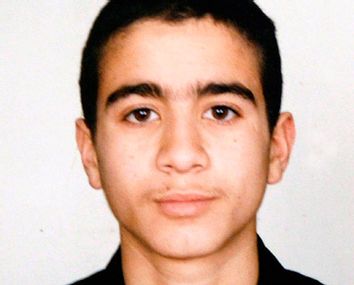
One of the youngest detainees at Guantánamo Bay, a 23-year-old Afghan named Mohammed Jawad, spent two days in a courtroom here last week as his defense lawyer argued that his case should never go to trial. The attorney, Maj. David Frakt, claimed that his client was repeatedly tortured and abused in U.S. custody, charges that were supported by the testimony of a senior U.S. Army criminal investigator.

Perhaps just as troubling, Frakt also asserted that partisan politics played a role: Prosecutors handling the case, he said, were pressured by a Pentagon lawyer to bring charges against Jawad quickly — before the next American presidential election drew too close.

Jawad is accused of attempted murder for allegedly throwing a grenade into a U.S. military vehicle in Afghanistan in December 2002. Two U.S. soldiers and their Afghan translator were injured in the attack. Jawad was 16 or 17 years old at the time (he doesn’t know his exact birth date). Given that he was an adolescent at the time of his capture, arguably he has been treated illegally under international law by his American captors.

Prosecutors for the U.S. military commissions say Jawad is a dangerous terrorist. But Frakt says that Jawad was a naive, illiterate teenager who was duped into joining a militia group and was coerced into signing a false confession after the attack and his capture.

The U.S. government concedes that Jawad was neither a member of al-Qaida nor part of the Taliban, and shortly after his arrival at Guantánamo, it concluded he had no intelligence value. Yet among approximately 260 Guantánamo detainees, he is one of only 20 whom the U.S. has currently slated for trial by the U.S. military commissions.

During last week’s hearing, Frakt argued that Jawad was charged as a result of the political interference of the military commissions’ legal advisor, Brig. Gen. Thomas Hartmann. Testimony in this and other cases lends credence to Frakt’s argument: The former chief prosecutor for the commissions, Col. Morris Davis — who resigned late last year claiming that Hartmann had pressured him to bring charges against detainees before the presidential campaigns got too far under way — testified in June that Gen. Hartmann has pressed his office to prioritize Jawad over other cases.

Davis said that Hartmann was frustrated with the slow pace of prosecutions at Guantánamo, and believed that Jawad’s alleged attack against U.S. soldiers would “capture the American imagination” with him as a trial subject. Unlike many other pending cases at Guantánamo, which are based on charges of conspiracy or material support for terrorism, Hartmann was reportedly drawn to Jawad’s case because, as he put it, the young man had “blood on his hands.”

Testifying before a different judge in another case on Aug. 13, Davis stated that “Jawad went from the freezer to the frying pan, thanks to General Hartmann.” He said that during a three-month period after Hartmann became legal advisor for the military commissions, Jawad rose from approximately “number 25 or 30″ on the prosecution’s list of priorities to “number one.”

Hartmann had previously been prevented from acting as legal advisor in a Guantánamo case. In May, another judge, Navy Capt. Keith Allred, barred Hartmann from that role in the case against Salim Hamdan — the detainee convicted earlier this month for serving as Osama bin Laden’s driver — based on similar complaints that he had improperly interfered with the prosecution in the case.

The military judge in Jawad’s case, Col. Stephen Henley, rejected the argument that Gen. Hartmann had improperly influenced the charges against Jawad. However, he barred Hartmann from playing any role in the post-trial review of the case, reasoning that Hartmann’s public statements aligning himself with the prosecution compromised the objectivity necessary to perform that review. (Under the military commissions’ rules, every trial is automatically reviewed by the convening authority, and Hartmann — as the commissions’ legal advisor — would normally be required to provide advice during the post-trial review.)

Last week’s hearing also focused on defense claims that Jawad has been tortured while in U.S. custody. To make his case, Frakt called Army special agent Angela Birt as a witness. Birt investigated the deaths of detainees at Bagram Air Force Base in Afghanistan in late 2002. Jawad was detained at Bagram at the time, prior to his transfer to Guantánamo in early 2003.

Birt described U.S. soldiers’ abuse of detainees at Bagram as “the worst I’ve ever seen.” She didn’t make the judgment lightly: She has 18 years of experience as an investigator with the Army’s Criminal Investigation Division and has investigated some 2,000 cases over the course of her career.

Birt said she interviewed Jawad in 2004 as part of her investigation of abuses at Bagram. Jawad told Birt that while at Bagram he had been beaten and kicked by guards, shackled and hooded, deprived of sleep, forced to stand for lengthy periods, and shoved down a flight of stairs. Jawad said that military police chained him to the door of his cell, and if he tried to sit or lie down, they would enter his cell and force him to stand. He said he often heard the screams and cries of other detainees. Jawad complained of a broken nose, chest pain and problems in urination as a result of his treatment.

Birt testified that his account was similar to those of many other detainees at Bagram.

In a statement to the military judge last week, Frakt described Bagram “not as a detention camp, but as a torture chamber,” and renewed a motion to dismiss the charges against Jawad because of his alleged torture and mistreatment.

Jawad’s reported abuse did not end at Bagram. On Wednesday, Army Maj. Jason Orlich, formerly an officer with the detainee operations group at Guantánamo, took the stand to answer questions about sleep deprivation tactics used on Jawad at Guantánamo. Known as the “frequent flyer program,” the program entailed moving detainees frequently from cell to cell, typically every two or three hours, to deprive them of sleep. In May 2004, Jawad was moved 112 times during a 14-day period. According to Frakt, Department of Defense guidance limits sleep deprivation to a maximum of four days.

When asked if he believed such treatment was “humane,” Maj. Orlich replied “yes.” He testified that the program was intended to “maintain order and discipline” and to prevent detainees from throwing urine and feces or organizing attacks on guards. Orlich claimed that those subjected to the program were violent detainees — but according to Jawad’s attorney, Guantánamo disciplinary records show no violent behavior by Jawad. The most serious offense recorded against Jawad was “cross-block talking.”

In addition to the “frequent flyer program,” Jawad was reportedly subject to two 30-day periods of isolation. The first occurred in early 2003, just after his arrival at Guantánamo, when he was still not yet 18 (or 17) years old. He was kept in an uncomfortably hot cell, and allowed no copy of the Quran or human contact apart from an occasional interrogation. He was isolated for an additional 30-day period later that year, in September and October. American Correctional Association standards limit isolation for juveniles to five days.

Jawad attempted suicide soon after the second isolation period, in December 2003, but military psychologists reported in both 2004 and 2008 that Jawad had no mental problems. Amazingly, they had determined that for Jawad to be diagnosed with depression, “his condition has to interfere with one of seven ‘major life activities.’” As his attorney remarked wryly: “At Guantánamo, Jawad has no major life activities.”

Judge Henley is expected to announce in late September whether he will dismiss the charges against Jawad on the grounds of torture.

Before recessing on Aug. 14, the judge also surprised observers with an unusual and unprecedented aspect to his ruling. He ordered the senior government official responsible for the military commissions, Susan Crawford, to review the charges against Jawad, consider additional information from the defense and confirm whether she wants to proceed with the case. The basis for the judge’s order was his finding that Gen. Hartmann had failed to include extenuating and mitigating information on Jawad’s case when recommending in October 2007 that Crawford confirm the charges against Jawad.

It’s possible that Crawford will choose not to pursue the case against Jawad at all. According to Maj. Frakt, “This case would never survive scrutiny if they had done a proper pretrial investigation.”

Crawford must decide by Sept. 25 whether the case against Jawad will go forward.

The war on teen terror

The Bush administration's treatment of juvenile prisoners shipped to Guant

  • more
    • All Share Services

The war on teen terror

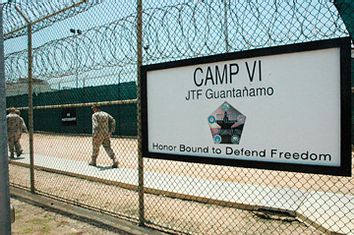
When Mohammed Jawad took the stand in a courtroom at the U.S. Naval base here late last week, he described a litany of abuse he has endured while detained at Guantánamo, including a sleep deprivation regime known colloquially as the “frequent flyer” program.

“Day and night, they were shifting me from one room to another room,” Jawad said. “I don’t remember how much time I slept, but it was only a short time before they were knocking on my door and shifting me from place to place. No one answered me why they were giving me this punishment.”

Military records showed that during a 14-day period in May 2004, Jawad was moved from cell to cell 112 times, usually left in one cell for less than three hours before being shackled and moved to another. Between midnight and 2 a.m. he was moved more frequently to ensure maximum disruption of sleep.

Such tactics used against a detainee would have been severe under any circumstances — Department of Defense guidance limits sleep deprivation to a maximum of four days — but in the case of Jawad, they are particularly disturbing because he was a scared and suicidal teenager at the time. Jawad’s military-appointed lawyer, Maj. David Frakt, described the tactics as “sadistic and pointless,” and moved to dismiss the charges against his client on grounds of torture.

Jawad was arrested by Afghan police in December 2002 after allegedly throwing a grenade into a U.S. army vehicle in Afghanistan that severely injured two U.S. soldiers and their Afghan translator. Frakt argues that Jawad was drugged and forced to fight with Afghan militia. Jawad doesn’t know his exact birth date, but was 16 or 17 years old at the time. In early 2003, he was brought to Guantánamo.

According to government records obtained by the Associated Press under the Freedom of Information Act, more than 20 detainees under the age of 18 have been brought to the prison camp since 2002. The treatment of underage prisoners at Guantánamo, largely in defiance of international law, is one of various ways in which the Bush administration’s policies have tainted prospects for Guantánamo detainees ever to be brought to justice under U.S. law.

Although most of the 20 juvenile detainees have now been released, three remain, having spent more than a quarter of their lives at Guantánamo. The other two juvenile detainees were each only 15 years old when they were apprehended. Mohammad El Gharani was arrested at a mosque in Pakistan and brought to Guantánamo in early 2002. Omar Khadr, a Canadian, was apprehended in July 2002 after a firefight in Afghanistan that resulted in the death of a U.S. soldier. Held for several months in Afghanistan, he was barely 16 when he arrived here later that same year.

The presence of juveniles at Guantánamo first came to light in 2003, when media reports revealed the age of the youngest detainee at Guantánamo — who was only 13 years old. Unable to explain how a 13-year-old could be classified as being among “the worst of the worst,” as top Bush officials had described Guantánamo’s prisoner population, the Pentagon realized it had a PR problem on its hands. It quickly created a special camp for the three detainees between ages 13 and 15. At Camp Iguana, these children received math and English classes and access to a social worker and recreational facilities. Bizarrely and perhaps without any sense of irony, they were permitted to watch movies including “Cast Away.” Defense Department officials proudly gave tours of the special facility.

That year, on behalf of Human Rights Watch, I had several meetings with Pentagon representatives to discuss the fate of these children. In early 2004, they were released to UNICEF in Afghanistan for rehabilitation. But whenever I tried to raise the case of Omar Khadr (we were unaware of El Gharani and Jawad’s cases at the time) I received the same response: “Khadr is off the table; we will not discuss Khadr.”

Unlike with the three boys held at Camp Iguana and released for rehabilitation, the Pentagon has never acknowledged the juvenile status of Khadr, Jawad or El Gharani. Although international law provides that anyone under 18 is a child and entitled to special treatment, the Defense Department created its own standard: Anyone who was 16 would automatically be treated as an adult. When I asked Defense Department officials in 2004 about the rationale for this policy, they had no reply. One official finally admitted to me that it was completely arbitrary.

During last week’s hearing, Frakt, Jawad’s attorney, asked the prosecutor who authorized the charges against Jawad: “You did not believe his age was worthy of bringing to the attention of the convening authority?” Lt. Col. William Britt’s answer: “No, I didn’t.”

The Bush administration’s refusal to treat these prisoners as juveniles has had profound consequences for Khadr, Jawad and El-Gharani. They have had no access to education or recreation facilities and have been housed in the same facilities as adult detainees. After five years of imprisonment, Jawad remains functionally illiterate. None of the three have been allowed to see members of their family.

The effects of prolonged isolation have taken a severe toll. El Gharani has tried to commit suicide at least seven times. He has slit his wrist, run repeatedly into the sides of his cell and tried to hang himself. On several occasions he has been placed on suicide watch in a mental health unit.

Jawad also tried to commit suicide about 11 months after arriving in Guantánamo, by hanging himself by his shirt collar. Prison records also state that he “attempted self-harm by banging his head off of metal structures inside his cell.”

On the witness stand last week Jawad referred to his suicide attempt. “Islam never permits [suicide], but when a person is in great trouble, it was beyond my control. That’s why I tried that.” His lawyer says that Jawad seems to have lost touch with reality and suffers from major depression.

At O’Kelley’s bar, an incongruous Irish pub at the naval base here, journalists, defense lawyers and human rights observers gather to talk about the bizarre world of Guantánamo. I’ve heard people express disbelief repeatedly that although the United States has detained nearly 700 suspects at Guantánamo since its inception, it has singled out two juveniles to be among the first detainees prosecuted under the military commissions. Officials associated with the military commissions have suggested that the youths’ alleged direct attacks on U.S. soldiers would “capture the imagination” of the American public.

Strikingly, it was just around the time that Khadr, El Gharani and Jawad were transferred to Guantánamo that the U.S. ratified an international treaty barring the use of children under 18 in armed conflict. The treaty also obligates governments to help rehabilitate child soldiers and help them reintegrate into society.

In some respects, the U.S. has taken its new responsibilities seriously: Each branch of the armed forces adopted new policies to keep American military personnel out of combat until they reach age 18 and to delay deployment of 17-year-old volunteers. Since 2001, the U.S. has also contributed more than $34 million around the globe to prevent the recruitment and use of child soldiers and to demobilize and reintegrate child combatants. Since 2003, $4.5 million in U.S. funds has supported a demobilization program for over 5,000 former child soldiers in Afghanistan.

The commitment to rehabilitation, however, seems to be missing in action when child soldiers engaging U.S. forces are captured.

Khadr’s attorneys argued at Guantánamo in February that as a former child soldier, Khadr should not be tried before a military commission. They claimed that international law obligates the U.S. to treat Khadr as a victim, not to punish him, and that Congress did not give the military tribunals jurisdiction over crimes by juveniles. The military judge rejected their motion.

As the proceedings move forward the U.S. continues to turn a blind eye to Khadr’s juvenile status. Recently, his attorneys requested funding to secure a child psychologist and psychiatrist as expert witnesses at Khadr’s trial. Those requests also were denied.

International law does not preclude the possibility of prosecuting former child soldiers for serious criminal offenses. But the standards are very clear: Such cases should be handled as quickly as possible through specialized juvenile justice systems. Rehabilitation must be the primary objective, and conditions of detention must include access to family, education, recreation and other special assistance.

On every count, the U.S. has failed at Guantánamo to meet these requirements.

The judge in Khadr’s case announced last week that Khadr’s trial would begin on October 8. Even if acquitted, however, the U.S. government has said that it may continue to detain him “in order to mitigate the threat posed by the detainee.”

Jawad’s hearings will resume in August.

El Gharani has not been charged, and spends his days languishing in a cell with little more than a mattress, a copy of the Quran and toilet paper.

Continue Reading Close