Jon Entine

The coming of the

The genetic revolution will mean the end of sports as we know it -- and that may not be a bad thing.

  • more
    • All Share Services

The coming of the

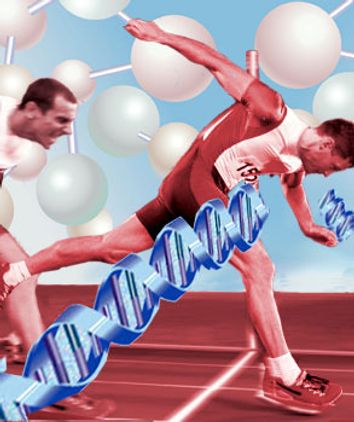
It is sport’s doomsday scenario: a new generation of bioengineered performance-enhancing agents that can transform also-rans into gold medalists. Imagine athletes injecting artificial genes right into their muscles — a virtually undetectable act that would give them the sinewy muscles of a cougar, or endurance like that of an antelope. But this is not the science fiction of Hollywood, like the movie “Gattaca,” or a long-lost chapter of H.G. Well’s 1904 pharmacological fantasy “The Food of the Gods,” about a superhuman race of young giants grown on drugs. This is the new reality in sports, and it is calling into question cherished beliefs about what is “natural” and “unnatural,” fair and unfair, in the world of elite athletics.

At last month’s Salt Lake City Games, a cache of blood transfusion equipment was discovered in a house rented by the Austrian Nordic team only a few days after three cross-country skiers who won six medals between them were sent packing after being nabbed as dopers. Elite athletes, who are always looking for the narrowest competitive edge, apparently gambled that they could beat the system by using the latest magic elixir, genetically engineered darbepoetin, which boosts endurance by enhancing the body’s ability to churn out energy-producing, oxygen-carrying red blood cells.

By the 2004 Athens Olympics or shortly thereafter, sporting officials anticipate an explosion in the use of bioengineered performance-enhancing techniques. “Genetic engineering is accelerating and it’s damaging sports,” warns Norwegian speed skating champion Johann Olav Koss, who serves as an athletes’ representative to the International Olympic Committee’s World Anti-Doping Agency (WADA). “We can’t be naive. We have to be realistic. This is not only an issue for sport, it’s a broad ethical issue for human beings.” Koss, who is also a physician, is one of 35 geneticists, doping experts and sport officials gathered in Cold Spring Harbor, N.Y., this week at the closed-door Genetic Enhancement of Athletic Performance workshop/summit, debating what should or can be done.

WADA president Dick Pound is one of many at the meeting who believes that genetic doping could “end sport as we know it.” “We will look back on Ben Johnson with his Stanoloxol [steroid scandal in 1988 for which he was stripped of the 100-meter gold medal], and say that’s like an ancient rock painting in a cave compared to what we face now with genetic engineering.”

Genetic doping worries Pound and other sport officials because they see it as further undermining sports’ bedrock ethical principle, fairness — and doing so in a way that’s infinitely harder to regulate than traditional performance-enhancing drugs. That concern is legitimate, but it runs up against three difficult realities. First, in the elite world of performance sports like track and field, cycling, power lifting and perhaps swimming, the use of performance-enhancing drugs is already so widespread as to make a mockery of the ideal of the pure, untainted athlete. Second, in the coming age of the cyber-athlete, detection of genetic enhancement will be all but impossible. And third, the advent of genetic interventions raises ethical dilemmas for which there are no easy solutions. There is no double yellow line separating genetic therapy, which conference participants by and large said was acceptable, from genetic enhancement, which they universally condemned. Is it ethical, for example, for an athlete who has injured himself after super-aggressive training to use genetic therapy to repair her body — and gain an advantage over a competitor who was more judicious in her training program? What about athletes who use genetic technology to avoid a debilitating disease — and also realize a side benefit of improved performance? Should they be banned from competition? Or only some kinds of competition?

And beyond victory and defeat, of course, looms the larger issue of athletes’ health. The use of genetic enhancement poses health hazards, many of them still unknown and some of which may never be known.

To be sure, some concerns about genetic enhancement are overblown and futuristic. So-called designer babies, for example, are science fiction. It may be a decade or more before doctors can remove embryonic fluid and generate a readout of the predicted sporting accomplishments of our prodigies in waiting. But less distant are gene therapies, already proven on animals, that can regulate energy metabolism, alter blood flow to the tissues, modify pain perception, or even postpone sexual development to keep preadolescent females — perhaps gymnasts and figure skaters of the future — in their performance prime. As Pound noted, there are more than 500 active studies involving human clinical trials, with numerous therapies on the verge of federal approval. Scientists and athlete guinea pigs are also busy trying out gene enhancements to regenerate the body after cartilage damage, tears and fractures.

And synthetic drugs to boost endurance or increase strength and speed are already widely available. Confined to international cycling and weightlifting only a few years ago, gene doping is spreading to winter sports, track and field, the NFL and even World Cup soccer. FIFA, international soccer’s governing body, has become so alarmed about the surge in use of the natural hormone erythropoietin (EPO), a favorite among endurance athletes, that it announced there would be testing for it at the upcoming World Cup. “I know that certain doping specialists have moved over from cycling to our sport because of the money it attracts,” says Michel d’Hooghe, chairman of FIFA’s medical committee.

World sporting organizations, the Olympic movement in particular, have proved hapless over the years in screening for dopers. The genetic revolution presents even more difficult challenges. Unlike classic drugs such as steroids, bioengineered substances are chemically identical to the body’s natural hormones, making detection difficult at best. The problems will increase exponentially in the next wave of genetic enhancement, the direct injection of viruses or other delivery agents that carry DNA that can turn genes into energy factories or activate dormant muscles.

“If direct injection is used, the DNA will only be present in that specific muscle,” notes Peter Schjerling of the Copenhagen Muscle Research Center. “A positive test would require coring out actual muscle tissue. Not many athletes would allow that. And the sample would have to be at the exact spot of the injection.”

Certainly genetic engineering is becoming an ever more attractive option for those inclined to cheat. “Why would anyone use stimulants and steroids when they can use genetically engineered drugs or therapies, which are virtually undetectable?” says Charles Yesalis, a Penn State University epidemiologist and world expert on doping. “If things spin out of control, it could be a freak show in athletics.”

Some geneticists and sporting officials believe that we only have to look to China to catch a glimpse of this freaky future. While Britain and other Western countries fret over the ethics of genetic engineering, China is holding science fairs displaying a rabbit with human ears jutting from its head, and a tail-whipping monster fish that exploded into adulthood in half the normal time. “Genetic research is like unlocking the secrets of the atom,” enthuses Chen Zhang Liang, vice president of Beijing University, which is bidding to become a world center of genetic engineering. “We need to push forward.”

China’s next great leap forward may already be producing extraordinary rabbits and fish of the human variety. Last November’s Chinese Games in Guangzhou featured some eye-popping results for the rest of the world to ponder. Fifteen-year-old girls finished second in the 400-meter hurdles and the grueling, four-hour 50-kilometer walk. And just 11 days past his 14th birthday, Li Huiquan won the 800 meters in world-class time, only a few days after nearly cracking 3:45 in the 1,500-meter. This was not the junior games, mind you, but the quadrennial showcase of the best Olympic athletes China has to offer. The results in swimming by a band of unknown teenage girls, most not listed in the world’s top 200, were equally mind-boggling. If the Chinese females perform at the Athens Olympics like they did in these games, they will win two out of three medals in every freestyle event from the 100-meter to the 800-meter.

Those suspicious about previous unexpected record-busting performances by Chinese athletes see the fingerprints of doping. But China now has a vigorous drug-testing program. Since most observers believe that these results are at the edge of natural human performance limits, speculation has focused instead on genetic engineering. After all, it was only four years ago that Australian police nabbed Chinese swimmer Yuan Yuan red-handed with 13 vials of genetically engineered human growth hormone (hGH).

That the crisis conference is being held in Cold Spring Harbor is no small coincidence. The Long Island genetics laboratory has been the center of biological research in the United States for more than a century. It was here in 1953 that James Watson presented his and Francis Crick’s double helix model of the structure of DNA. A generation later, geneticists here helped turn theory into practice by showing how RNA splicing could work — the research that led directly to the genetically engineered drugs that are now roiling sports.

Conference organizer Ted Friedmann, a University of San Diego geneticist, is the consummate deliberate scientist who eschews the more frantic projections of some of his colleagues. By day he works on various techniques to move genes around in the body; by night he is a rabid sports fan worried about the future. “I’m concerned that the scientific community is not aware of how their gene transfer methods, which can do so much good, can present so many dangerous temptations to athletes.”

Genetic engineering is an issue, like stem cell research or Bill Clinton’s future, that stirs an immediate and powerful gut reaction. In recent years, biomedical researchers have made small but measurable strides in gene therapy, which involves injecting the body with artificial genes to help block diseases such as hemophilia and cystic fibrosis. The technique, while still being polished experimentally on humans, has been used successfully in animals. Many look forward to an age when many diseases will have been wiped out and hospitals will be obsolete except to treat trauma. But such revolutions invariably result in collateral damage. Friedmann and others gathered in Cold Springs have wrestled this week with the slippery issue of whether it’s medically harmful or ethically wrong for athletes to take advantage of this new technology — not for treatment but enhancement.

The genetics revolution has certainly changed how we view sports and the desire to challenge human performance limits. Since the dawn of the original Olympics in ancient Greece, it had been assumed that training and discipline were the heroic qualities most critical to athletic success. But recent research into population genetics and physiology has battered the myth that sports is a level playing field where athletes who work the hardest go on to glory. The fact is that humans are not equally endowed. The new axiom in sports, especially performance sports like track where skill and technique are comparatively less important than in ones like tennis, is that choosing one’s parents is far more important than choosing a coach. The belief in the power of the environment has been superseded by the reality that much of human nature, and certainly a great deal of the performance potential of elite athletes, is hard-wired and measurable.

For scientists who struggle to measure the real-world relationship of genetics to human behavior, sports offers the refreshing possibility of quantifying differences. Genes matter, and performance sports offer a great way to figure out just how much. Consider the mystery surrounding the cross-country skiing exploits of Eero Mdentyranta. For decades after the Finn won two gold medals in the 1964 Winter Games at Innsbruck, and seven medals over three Olympics, he was dogged by rumors of deceit. Mdentyranta was not noted for his dedicated training habits, which prompted many of his competitors to accuse him of blood doping — adding red blood cells before the race to increase his oxygen and stamina, a not-uncommon practice of cheats of his era. He was tested and shown to have 15 percent more blood cells than normal. But with no evidence of doping, the controversy morphed into one of sports’ most intriguing long-running mysteries.

Although Mdentyranta never failed a drug test, the rumors that he had an advantage turned out to be true. Whether the advantage was unfair depends on what you think of the gifts of fate. By 1993, Finnish researchers were able to conclude that Mdentyranta and his family carry a rare genetic mutation that produced the EPO hormone and loaded his blood cells with 50 percent more red cells than the average man’s. Certainly many elite athletes, especially those in the performance sports, are freaks of nature, but Mdentyranta’s genetic advantage was huge and unique. His body was a natural energy factory. Unlike most people, he had no shutdown valve, so his red blood cell count continuously soared and his endurance never flagged. The extra cells bathed his laboring muscles in energy-producing oxygen, providing the boost to glide past competitors.

Mdentyranta’s case may seem extreme, but only by degree: Many superstar athletes in highly competitive sports are outliers on the distribution of human possibility, the product of accumulating genetic mutations as rare as those that produce a 150-IQ chess champion or a violin-playing toddler. Randy Johnson is a Gulliver among the Lilliputians, a giant with a rocket arm and the constitution of a machine - a genetic rarity if there ever was one. The next “world’s fastest runner” and Shaquille O’Neal are no less genetically unique, beneficiaries of nature’s serendipity.

“Very many in sports physiology would like to believe that it is training, the environment, what you eat that plays the most important role,” says Bengt Saltin, director of the Copenhagen Research Center and a pioneer in the study of the relationship between genes and muscles. “But we argue based on the data that it is ‘in your genes’ whether or not you are talented or whether you will become talented. The extent of the environment can always be discussed but it’s less than 20, 25 percent.”

“You can’t change human nature” may be one of the wisest of adages, but today, even a merely good athlete can be turned into a superstar by engineering “genetic defects” — creating future Eero Mdentyrantas. We are confronted with the reality that we can harness random acts of nature. Athletes often are willing guinea pigs, willing to gamble their health and maybe even their lives for the euphoria and glory of victory — and the genetic revolution will doubtless prove irresistible. And why not? From aging offensive linemen to Kenyan-chasing distance runners, athletes will know that their prospects will be brighter with an injection from the right DNA-filled test tube.

A dark basement laboratory at the University of Pennsylvania offers a peek at what that the future cyborg athlete might look like. There, running tireless circles on a wheel inside a cage, is He-Man. A few years ago, physiologist H. Lee Sweeney injected a tiny white mouse with a synthetic version of a gene called Insulin-like Growth Factor 1 (IGF-1), a protein that makes muscles grow and repair themselves.

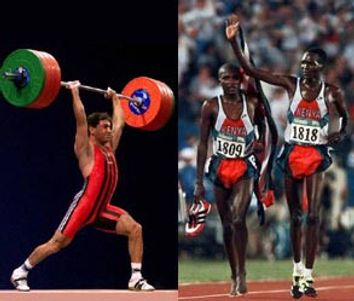
As Sweeney tries to remove him from his pen, He-Man clings stubbornly to the cage bars. “He’s just showing off,” jokes Sweeney, who is only partly kidding. This rodent is ripped. The IGF-1 boosted his muscle mass by more than 60 percent. Today, deep into old age, when most mice would be drawing up their last will and testament, this gene-modified giant looks like “Pocket Hercules,” Turkish weight-lifting icon Naim Suleymanoglu. He-Man can still climb a ladder carrying three times his body weight. The rodent-athletes in a similar experiment conducted at London’s Royal Free hospital and University College London’s medical school balloon to four times their natural muscle mass but weigh only 30 percent more. And all this with no exercise and no detectable health problems.

“We call them the Schwarzenegger mice,” says Harvard geneticist Nadia Rosenthal, who teamed with Sweeney. “I’d be totally surprised if it was not going on in sports. Those with terminal cancer and AIDs want to know ‘What will keep me alive?’ Athletes want to know ‘What will help me win?’”

Genetic engineering will no doubt result not just in outsized performances but outsized risks. Endurance-boosting drugs like EPO cause the blood to thicken, which has led to the death of more than 20 cyclists. Human growth hormone, which is widely used by strength athletes and some sprinters, can result in enlarged organs and uncontrollable bone growth in the face, feet and hands. Called acromegaly, it is irreversible, crippling, and a killer. According to “The Steroid Bible,” “People with excess levels of hGH in their blood rarely live past 60.”

The spreading use of hGH may help explain the unusual times by Chinese sprinters and swimmers, women in particular, and even shed some light on another sporting mystery, the extraordinary success and untimely death of Florence Griffith-Joyner. Before she startled world sport with her four-medal, three-gold performance at the 1988 Olympics, obliterating the 100- and 200-meter records, Griffith-Joyner had been a solid but not brilliant sprinter. Her best effort over 100 meters did not rank in the top 40 marks of all time, and her previous best at 200 was not in the all-time top 20. Then came an overnight transformation of physique and performance. FloJo turned up in Seoul looking sleek and muscular. The records she went on to set were so extraordinary, almost superhuman, that even today’s best female runner, Marion Jones, would find herself trailing FloJo like a basset to a coyote, by nearly three meters.

Keenly aware of the limitations of the human body, athletes and journalists at the Olympic Village speculated on her redefined body and extraordinary performances. Griffith-Joyner angrily dismissed the allegations and volunteered to take a drug test “anytime, anywhere,” but it turned out to be an empty promise. There would be no more tests, no more races. She abruptly retired. Darrell Robinson, FloJo’s former training partner and national quarter-mile champion, has publicly stated that shortly before the Seoul Games, she had paid him $2,000 for 10 cubic centimeters of human growth hormone, which would not have been picked up in any drug test. She dismissed Robinson as a “crazy, lying lunatic,” but she never took legal action against him, and never raced again. After FloJo died suddenly in September 1998, the coroner’s report showed that she suffered from “mild cardiac hypertrophy,” an unusually enlarged heart, and “occasional interstitial fibrosis” of the heart muscle.

In the years since her death, the suspicions and circumstantial evidence have grown substantially. In 1987, a huge cache of hGH was stolen from London’s Great Ormond Street Hospital for Sick Children, only to turn up that summer in the Santa Monica black market. A few months later, Flo-Jo’s training partners began noticing dramatic changes in her appearance and performance. “I am astonished by the way Flo-Jo changed from the slightly overweight, sluggish sprinter I was easily able to beat in training in California,” says British hurdler Lorna Boothe. Boothe also claims she met a nurse from a San Fernando Valley hospital that claimed Griffith-Joyner was being regularly injected with a steroid-like compound.

Whether such accusations amount to anything more than professional jealousy is an open question. But many prominent doping experts with no axes to grind have expressed serious suspicions about Griffith-Joyner. German scientist Werner Franke, who is credited with exposing the drug and sports machine that turned the former East Germany into a world athletic powerhouse, says flatly that Griffith-Joyner’s seizures, which first occurred in 1996, were “symptomatic of the abuse of anabolic drugs or hGH.” Former world champion power lifter Mauro Di Pasquale, who was medical director to the World Wrestling Federation and World Bodybuilding Federation and now holds a similar position with NASCAR, says the details of her heart condition and death are consistent with the side effects of such drugs. Even one of Griffith-Joyner’s former physicians, sports specialist Robert Kerr, who treated her for an ankle injury, has weighed in on the scandal. “From the combination of her physical appearance and her increased performance,” he says, “I believe she was on drugs.”

While FloJo’s grotesque death dominated headlines, she was not the only Los Angeles area track star to die under suspicious circumstances or suffer from questionable medical ailments. For more than a decade during the 1980s and ’90s, the Santa Monica Track Club, led by Carl Lewis and Leroy Burrell — who have both publicly campaigned against performance-enhancing drugs — dominated world track. After nine SMTC athletes took home medals at the 1991 World Athletic Championships in Tokyo, doping experts pointedly noted the unusual fact that seven of those medal winners, Lewis most prominently, wore dental braces. Less than 1 percent of the adult population wears braces, but crooked teeth is a common side effect of using hGH. Lewis, who never failed a drug test, now suffers from chronic, degenerative arthritis. The SMTC’s coach, Joe Douglas, has denied that any of his athletes used performance-enhancing drugs.

Should athletes be allowed to use genetic techniques to improve performance? Most physiologists, ethicists and sport authorities say no. Saltin says, in effect, that messing around with genes is playing God — and only God should play God. “Biological variation is fundamental to sport,” Saltin asserts. “You could say it’s what gives a person their talent. This can now be radically affected with bioengineering, and this must be wrong.”

Saltin looks to a future — perhaps before the Athens Games, he suspects — in which an ambitious sprinter who is tired of running in Maurice Greene’s tailwind turns to a renegade geneticist for help. This scientist would be familiar with new research that has pinpointed genes that can activate dormant human muscle fibers — fibers that resemble muscle from breathtakingly fast animals like cheetahs, and that fire far more quickly than human fast-twitch muscles. Humans only lack a genetic trigger to activate them — and those genes can be turned on. Just a few injections of the right DNA into the quadriceps, hamstring and gluteus, and the muscle fibers would start cranking out Velociphin, activating the fast myosin gene. Within weeks, the muscles bulge and burst with energy.

As Saltin spins the tale, this desperate athlete faces his long-awaited race into Olympic immortality. BANG! The genetically doped athlete dashes into the lead, extending it with every stride. Then at 65 meters, far out in front of the field, a sudden twinge tickles his thigh. Saltin picks up the story:

“At 80 meters,” he says, “the twinge explodes into an overwhelming pain as he pulls his hamstring. A tenth of a second later the patella tendon gives in — because it is no match for the massive forces generated by his quadriceps muscle. The tendon pulls out part of the tibia bone, which then snaps, and the entire quadriceps shoots up along the femur bone. The athlete crumples to the ground, his running career over.”

I gulp as he concludes his tale, nervously fingering the vitamin pill that sits undisturbed next to my morning coffee. “This is not the scenario that generally comes to mind in connection with the words ‘genetically engineered super athlete,’” he adds, “but it is very much a part of the reality.”

Without question, there is a high potential cost to playing God, even if genetic spigots can be developed and therapies perfected. The issue is homeostasis. While many of us naively view the human body as an invincible machine, it is an integrated combination of tendons, cartilage, bones, nerves, muscle, and fat. All living creatures are in delicate balance. One small change can have extraordinary and unanticipated consequences. For example, the same University of Pennsylvania researchers who came up with He-Man have genetically altered a housefly with muscles 300 percent stronger than normal. That may sound promising, but “the fly actually lost power because it couldn’t make its wings move fast enough” to support the added muscle weight, notes Dr. Sweeney.

Olympic authorities take a hard line: Genetic engineering to improve performance is wrong. “Anything you did not get from God is illegal,” asserts Tim Conrad, a U.S. Olympic scientist. “We’re not trying to see what country has the best engineers.” According to new IOC president Jacques Rogge, “Genetic manipulation is there to treat people who have ailments, not to treat a healthy person. I am very clear on this.”

While I agree that the issue of genetic performance enhancement is troubling, both because of health concerns and because allowing its use would unfairly benefit the privileged, I don’t see it as nearly so black and white. First, there’s the question of what is “natural” and “normal” — and why those who benefited by a lucky throw of the genetic dice should not have to face equal genetic competition. Many newly developed drugs and therapies are identical to natural chemicals made by the body. What should be considered “normal” levels of such naturally occurring hormones? Since many great athletes are in effect an accumulation of favorable (for that sport) genetic mutations, at what point do we disallow certain athletes as being too far from the “genetic mainstream”? Should we deny the sons of daughters of Eero Mdentyranta to pursue their dreams of becoming Olympic cross-country skiing champions because they have a huge advantage that is “natural” but no less decisive than an athlete who takes a synthesized version of natural EPO?

The most powerful argument for allowing genetic interventions, however, is that there is a hazy and debatable line between “health restoration” and “performance enhancement.” Genetic enhancement offers promising health benefits — as do any number of treatments that are the result of medical breakthroughs. Imagine an athlete using gene modification to overcome congenital asthma or another genetic abnormality. What about aiding someone who is destined to be short, say below 5 feet? Should they be disallowed from playing competitive sports if genetic manipulation will allow them to lead richer lives by making them 5 feet 10 inches? How about 6 feet 10 inches? Should people be punished because the roulette wheel of genetics did not land on their number?

World and Olympic champion sprinter Maurice Greene believes that the anti-genetic engineering orthodoxy is fueled by hysteria, and raises an intriguing point about personal responsibility. “What if you’re born with something having been done to you?” he asks. Should manipulation of an embryo be considered cheating? Is it fair to disqualify an athlete if the genetic changes were made before she was even born, perhaps even to save her life?

Finally, there is the pragmatic point. It seems overwhelmingly likely that, whether we like it or not, many world-class athletes in the future will have “had their genes done” the way they now get their knees scoped — and no one will know. What can or should we do about that?

There are no easy answers to these questions. The debate over genetic engineering is just beginning: It is certain to rage for years. The Pandora’s box is open. There are cyborg athletes among us.

This story has been corrected.

Philadelphia story

Long before the Sixers, the city was known for basketball -- but the players were Jews and the stereotypes were all about their "trickiness."

  • more
    • All Share Services

Philadelphia story

The red-hot Philly basketball team had a pint-sized but flashy star shooter, and an old-school coach who was more teacher than tough disciplinarian. Sounds like America’s new favorite team, the Philadelphia 76ers, who stunned the Los Angeles Lakers by taking Game 1 of the NBA Championship Series Wednesday night.

Nope. It’s the South Philadelphia Hebrew Association SPHAs (pronounced “spas”), a team that dominated the sport in the 1920s and ’30s. The flashy shooter was set-shot expert Inky Lautman. David was the six-pointed star on the team’s jerseys. And the savvy coach was Eddie Gottlieb, who was also the owner of one of the most successful teams in basketball history.

Today, the only thing Jewish about the current Sixer team is coach Larry Brown, who starred on the U.S. gold-medal team at the Maccabiah Games in Israel before launching his pro career. Brown was born in Brooklyn, that “other” Jewish basketball town. But there are plenty of parallels between the Hebrews, as the SPHAs were nicknamed, and today’s Sixers.

Both were subject to sometimes egregious racial stereotyping. Once the bad-boy rap star of basketball, Allen Iverson has always been praised, even by his detractors, for his incredible athletic ability and lightning speed. But Iverson has never gotten credit for his basketball smarts. For all his athleticism, the wounded warrior and his Sixer teammates are winning with their heads. And anyone who has followed Iverson’s remarkable career has witnessed a tremendous evolution in the quality and selflessness, not just the style, of his game.

But such stereotypes reflect a long tradition going back more than seven decades, when the game emerged from the ghettos of Philadelphia, New York and Baltimore. Then, as now, sportswriters used to go on and on about the gaudy skills of “natural athletes” — but the stars had names like Dutch Garfinkel and Doc Lou Sugerman, and the top teams were the Philadelphia Hebrews and the Cleveland Rosenblums.

“The reason, I suspect, that basketball appeals to the Hebrew with his Oriental background,” wrote Paul Gallico, sports editor of the New York Daily News and one of the premier sports writers of the 1930s, “is that the game places a premium on an alert, scheming mind, flashy trickiness, artful dodging and general smart aleckness.” Writers opined that Jews had an advantage in basketball because short men have better balance and more foot speed. They were also thought to have sharper eyes, which of course cut against the stereotype that Jewish men were myopic and had to wear glasses, but who said stereotypes had to be consistent?

At the turn of the century, European Jews flooded off immigrant ships into the ghettos of the booming eastern metropolises. New York and Philadelphia were the epicenters of the basketball world, with the dominant team, the Hebrews, ensconced in South Philly.

“Basketball is a city game,” notes Sonny Hill, an executive advisor with the Sixers who has run a high school summer league for more than 35 years. “If you trace basketball back to the 1920s, ’30s and ’40s, that’s when the Jewish people were very dominant in the inner city. And they dominated basketball.”

From 1918 onward, the SPHAs barnstormed across the East and Midwest, playing in a variety of semipro leagues that were precursors to the NBA. In an incredible 22-season stretch, the SPHAs played in 18 championship series, losing only five. In the early years of the Depression, the SPHAs surpassed both of Philadelphia’s baseball teams, the Athletics and the Phillies, in popularity.

“Every Jewish boy was playing basketball,” Harry Litwack told me a few years ago, before he passed away in 1999. Litwack starred for the SPHAs in the 1930s before moving on to coach Temple University for 21 years. “Every phone pole had a peach basket on it. And every one of those Jewish kids dreamed of playing for the SPHAs.”

“It was absolutely a way out of the ghetto,” said Dave Dabrow, a guard with the original Hebrews. Dabrow, who eventually took a job coaching Jewish phenoms at South Philly High, died in 1996. “It was where the young Jewish boy would never have been able to go to college if it wasn’t for the amount of basketball playing and for the scholarship.”

The first intercollegiate game in the East, a 6-4 shellacking of Temple by Haverford College, took place in March 1894 at the Temple gymnasium. Basketball had a notorious reputation back then. The rules provided for few fouls, making the game a barely controlled melee. There was no out-of-bounds on many courts, which were often ringed with steel mesh. It was common practice to drive an opponent into the fence, and pileups were as frequent as at hockey games today. Players paraded on and off the court with bandaged legs and bleeding heads. This offended the Victorian sensibilities of Philadelphia, leading to a temporary ban on the game at local YMCAs, which were fearful that their Christian boys would be corrupted.

Not so the Jewish, Irish, Polish and Italian communities, filled with the sons of immigrants. The two best high-school squads, Southern and rival Central, were stocked with first-generation Jews. Gottlieb and future SPHAs Harry “Chicky” Passon, Edwin “Hughie” Black, Mockie Bunnin, and Charlie Newman led Southern to city titles in 1914, 1915 and 1916. These Jews introduced a different style of play.

“It was a quick-passing running game, as opposed to the bullying and fighting way which was popular other places,” explained Litwack. The best high-school graduates went on to play for one of the church teams, until anti-Semitism heated up. In 1918, Gottlieb and some of his former high school buddies convinced the Young Men’s Hebrew Association at Fourth and Reed Streets to buy them uniforms, which featured a samach, pey, hey and aleph — Hebrew letters spelling “SPHAs” — and the Magen David, a Jewish star, as team symbols.

The Hebrews played all comers. The players earned as much as $5 a game each — big bucks for city kids. “Half the fans would come to see the Jews get killed, and the other half were Jews coming to see our boys win,” Gottlieb once said.

By the end of the 1921 season, the SPHA uniforms had become too ragged to wear, but the YMHA couldn’t come up with the money for new ones. Gottlieb, Black and Passon started a local sporting goods store, Passon’s, which also paid for uniforms. With that crisis resolved, the SPHAs ventured out into the world of traveling semi-pro ball, retaining their team name and Jewish identity.

The team’s success attracted up-and-coming stars from Jewish ghettos along the East Coast, including New York favorites “Shikey” Gotthoffer, Red Wolfe of St. John’s and Moe Goldman of CCNY. Even when the college basketball champion St. John’s team, dubbed the Wonder Five (four Jews and a Protestant started on the 1929 team) after amassing a 70-4 record in three seasons, moved intact into the American Basketball League as the New York Jewels, it was the SPHAs who dominated.

With the emergence of Nazism in Germany and an escalation of anti-Semitism in the U.S., basketball was sometimes a brutal experience. The Jewish players faced incessant racial slurs and biased officials in the small towns in which they played.

Tuesday night doubleheaders at the YMHA at Broad and Pine streets attracted crowds of 1,500 or more to watch Lautman, Passon, lady-killer Kaselman and Gottlieb display their skills. At the height of their success, the SPHAs were one of the best teams in the country, sweeping their league’s games and challenging teams in other cities. Among their chief rivals were the Rosenblums, founded by a clothing store magnate; the New York Celtics, a powerful Jewish-Irish team; and the New York Renaissance, the premier Negro team.

The encounters between the “Yids” and the “Niggers” were legendary. The Rens were flashy by the standards of the 1920s, though they would seem merely methodical today. Thousands of fans of both teams jammed the temporary seats set up in the marvelous Ballroom at Philadelphia’s Broadwood Hotel (for at least one season, team member Gil Fitch also doubled as the bandleader for the dances that followed the games), where tickets went for a lofty 65 cents (35 cents for women).

“Usually when the Renaissance would have you licked, the last three, four minutes of the game, they’d start passing the ball around, and the crowd would go crazy,” recalled Gottlieb. According to William “Pop” Gates, the star of the Renaissance, who died in 1989, the SPHAs were renowned as a “thinking” team, while the Rens were famous for their “quickness” — stereotypes about Jews and blacks that endure today.

By the late 1940s, dominion over the urban basketball courts had passed to the fastest-growing group of urban dwellers: blacks who were migrating north from dying Southern farms in search of opportunity. The new generation of Jews began moving on to other pursuits — not to mention out to the suburbs. The depleted SPHAs eventually morphed into the Philadelphia Warriors, owned by the same Eddie Gottlieb, now nicknamed “The Mogul,” who coached the first champions of what became the National Basketball Association. Gottlieb, who died in 1979, eventually sold the team to San Francisco interests in 1962 and became the NBA’s official schedule-maker.

The remnants of Philadelphia’s basketball tradition rest on the shoulders of Coach Brown, an adopted favorite son. Much to the delight of the celebrity-starved NBA, Brown and Iverson have emerged as the Batman and Robin of modern basketball, an unlikely blend of Old World tradition and hip-hop yet hardscrabble dedication. It would be a fitting tribute to the past if the Sixers, cast as David, should prevail against the Goliath Lakers, thanks to the blending of these two great basketball histories.

Continue Reading Close

Young, gifted and under center

The current bumper crop of black quarterbacks leading their teams to the playoffs doesn't mean racism is dead in the NFL.

  • more
    • All Share Services

Young, gifted and under center

Here we go again. Sports fans can’t turn on the tube or open the morning paper without yet another soft-edged commentary about “Black quarterbacks scoring in the NFL” (Los Angeles Times) or the “Change in QB thinking” (Gannett News), as if a black pro football quarterback is a recent phenomenon. Didn’t we go through this in 1999 when two of the top three players in the NFL draft were stripling black quarterbacks? Remember Randall Cunningham? Wasn’t Doug Williams the Super Bowl MVP in 1988?

This time, we are told, it’s different.

The story line for this weekend’s NFL playoff games revolves around five “minority” quarterbacks: four blacks (and a Jew). That may read like the first line of a “walks into a bar” joke, but there is something important going on here, though the sports cognoscenti seem determined to miss it. According to their measure, this breakthrough can be summed up in two themes that run roughly like this:

  • It marks the end of racism in football: By this line of thinking, decades of prejudice are giving way to a level playing field in which race plays little part. “Football’s last race barrier crumbles,” crowed the Christian Science Monitor. “Quarterback color line starting to fade,” echoed the Newark Star-Ledger.

  • It’s no big deal or it shouldn’t be: This “let’s hold hands and sing ‘Kumbaya’” theme was encapsulated in the blaring headline of ESPN.com’s entry: “It’s no longer a question of color.” It gets worse: “Sometimes progress, when it is truly meaningful … doesn’t announce itself,” the writer announced oxymoronically, “it merely … happens.” Another version of this politically correct line came in an outraged letter to the Los Angeles Times in response to its entry in the black quarterback phenomenon sweepstakes. “I find it sad and disappointing that you find it necessary to label these athletes as ‘black quarterbacks.’ Why can’t they just be quarterbacks?”

    There’s truth in both statements — black quarterbacks were indeed held back for decades because of racism — but they miss the real story. The real story is that race still plays a major role in football, and racial prejudice has not gone away, it’s just taken new and subtle forms. Forget the blather about crumbling race barriers; there is a color line in pro football, and it’s getting bolder every year.

    The NFL is dominated by African-Americans, who make up 75 percent of the league’s players (and most of its stars), though only about 13 percent of the American population is black. On one playoff team, the Philadelphia Eagles, 20 of the 22 starters, including all 11 on defense, are black.

    The underlying assumptions of racism’s new form are reflected in almost every article about black quarterbacks. According to the common wisdom, black domination of football (and indeed other major sports, such as basketball and running) can be explained away by two factors: 1) Blacks succeed in sports because it is their only vehicle out of the ghetto; 2) whites don’t work as hard or are intimidated by the “racist myth” that blacks are naturally faster. Thus, rather than finding careers as, say, businessmen, lawyers or teachers, African-Americans are channeled into sports, which is further encouraged by the images, and earnings power, of superstars such as Randy Moss and Ray Lewis.

    The noxious cultural stereotypes of desperate poor blacks and athletically lazy whites are new racial myths created as an overreaction to old, equally pernicious, ones: Blacks do not have the intelligence and leadership finesse to guide a team.

    Intelligence, whatever that means in football, is one of the great mysteries of the game. When linked to the words “black quarterback,” it has been a huge controversy. Consider Cincinnati’s Akili Smith, one of the bumper crop of ’99 draft picks that yielded Philadelphia’s Donovan McNabb and Minnesota’s Daunte Culpepper. “Akili” is Swahili meaning “creativity, power, intelligence.” There is some irony in this, for Smith’s intelligence was a controversial subject. He had put up phenomenal numbers as a late-blooming starter at the University of Oregon. “Rifle arm. Explosive. Elusive. Can improvise and make things happen when the play breaks down.” The scouting reports were universally glowing, save one caveat. He was considered “raw,” a common characterization of African-American quarterbacks.

    With the average NFL playbook resembling the Manhattan Yellow Pages, there are always questions about whether a quarterback can master the complex schemes that separate college prospects from NFL standouts. No one is looking for a Rhodes scholar, but coaches at the pro level don’t have the luxury of taking on projects, especially No. 1 draft picks.

    Prior to 1999, only three black quarterbacks had been drafted in the first round of the NFL draft, none among the top few picks. As recently as the early 1980s, the NFL routinely ignored black college quarterbacks (Warren Moon toiled first in the Canadian Football League to make a name for himself) or shuffled college stars off to other positions that required “speed” and “agility.” (Tampa Bay coach Tony Dungy was converted into a defensive back after he broke most of the passing records at the University of Minnesota.)

    In the rare instances that blacks got a look, it was invariably a quick one. “Blacks get two types of opportunities to play quarterback in the NFL,” said James Harris in 1974, when he was the lone black NFL starting quarterback, playing for the Los Angeles Rams, “a chance and a ‘nigger’ chance.” When blacks didn’t become stars overnight — and quarterbacks rarely do, black or white — there was always talk of shifting them to traditionally “black positions,” where their “natural athleticism” would serve them better. (Pittsburgh’s Kordell Stewart, for instance.)

    It may be hard for some to accept that hard-nosed Vince Lombardi, George Allen or even your garden variety coach acquiesced to racist notions to deny talented blacks a chance to play the premier “thinking position.” After all, owners like to make money and coaches want to stay employed. Winning all but guarantees both. But the racist system that long prevailed in football — and make no mistake, blacks were denied opportunities to quarterback for no other reason than the color of their skin — ran very deep. It cut off opportunities well before talented young black quarterbacks could make their way through the gauntlet of mostly white colleges to even get that look at the professional level.

    The so-called inverse relationship between athletic ability and intelligence — the belief that elite athletes, who are increasingly African-American, necessarily have a lower I.Q. — is supported neither by any data nor by logic. What precisely constitutes “thinking” or intelligence is always a knotty question anyway, and in a not particularly self-critical medium like athletics, it is even more difficult to decipher. “The only thing I’m concerned about is how the guy has performed on the field,” says Minnesota Vikings coach Dennis Green. “Culpepper reads defenses,” he says of his emerging star. “Culpepper puts up the numbers.”

    Despite all the brouhaha about the historical lack of black quarterbacks, the number of black quarterbacks has only looked meager in recent years when set against the outsize black representation in football and many other sports. The more interesting question is why blacks dominate so many sports in which the social barriers are lowest. And does that answer shed any light on the sudden ascension of the black quarterback?

    What can be said with certainty — but rarely is, because such statements are regarded as racist — is that evolution has conferred athletes of primarily West African ancestry (which means virtually all African-Americans) with more explosiveness and speed, on average (individuals vary enormously), than other population groups, be they East Africans, Asians or whites. It just so happens that the quarterback position in today’s NFL requires that kind of elusive quickness far more than it did in the past.

    African-Americans are ideally suited biologically for quick bursts of speed because of a number of factors, such as lower natural body fat, more-efficient metabolism and muscle fiber type. “It’s a strong genetic component what type of muscle fiber you have, either slow or fast” says Bengt Saltin, director of the Copenhagen Muscle Research Center, long considered the world expert in this field. “And West Africans [almost all African-Americans trace their primary ancestry to West Africa] have already 70 or 75 percent of the fast type when they are born.”

    Saltin is still hearing the political correct braying in reaction to his September cover story in Scientific American, “Muscles and Genes,” which addressed many of these issues. The question of whether there are innate differences between races is customarily dismissed outright as racist. After all, aren’t we all born equal, blank slates for culture and the environment to write on? “Very many in sports physiology would like to believe that it is training, the environment, what you eat that plays the most important role,” says Saltin “But we argue based on the data that it is ‘in your genes’ whether or not you are talented or whether you will become talented … The basis is in the genes of these runners. There is no question about that. The extent of the environment can always be discussed but it’s less than 20, 25 percent. It’s definitely a dominant factor how they are born … I don’t see this as a racist issue.”

    The emergence of black quarterbacks has less to do with the end of racist slotting of players (although quarterbacking is the last vestige of that prejudice) than with the need to respond to the increased speed and quickness of NFL defenses dominated by players of primarily West African ancestry. Race has been a factor, “but less and less over the years,” agrees Tampa Bay coach Dungy. White quarterbacks who didn’t fit the mold, such as Buffalo’s Doug Flutie, never got much of a chance either, and were often forced to prove themselves north of the border. Dungy has been around the game long enough to recognize that the race question is often mediated through other issues.

    “For a long time, the NFL had a mold that quarterbacks had to fit,” he says. “Everyone was looking for a drop-back passer with a cannon arm who was relatively tall. If you didn’t fit that mold, black or white, you didn’t get much of a look. The few blacks who got a chance, like Doug Williams, fit that prototype.”

    The days when a classic drop-back passer like Roman Gabriel, Sonny Jurgenson — or Doug Williams — could sit in the pocket are over (with notable exceptions, of course, such as Kurt Warner). All the coaches are looking for “athleticism” — a word that not too many years ago resonated with racial undertones, including “less intelligent.”

    “That used to be a code word to describe a black quarterback whom a coach wanted to shift to receiver or defensive back,” says Minnesota coach Green, who is black. “Now, with the speed and strength in the game, we all need athletic quarterbacks. Every coach is looking for mobility. It’s just not a black-white thing anymore.” That means more Steve McNairs, Donovan McNabbs, Daunte Culpeppers — and Jay Fiedlers (Miami’s white Jewish quarterback). Overall, the pool of such quarterbacks is overrepresented among blacks, but only blacks of West African ancestry.

    We may not be in a golden age of race relations in sports, but there is every reason to believe that racism is less and less a factor in who plays and flourishes at what position in football — even as race remains important. On average, different populations have different anatomies. Continued white domination of the offensive line reflects the bio-mechanical reality that whites have the musculature for more potential upper-body strength. That’s not to say it’s true that blacks are fast and whites are strong: Kenyans and other East Africans are neither blazingly fast nor meaty and strong, but are great distance runners as a result of their ectomorphic bodies.

    With racism on the wane, African-Americans are getting more opportunities because the people making decisions in the NFL have changed, the way the media talks about black quarterbacks has changed and the position itself requires more athleticism. And more than anything else, sports is a business. The bottom line is performance.

    Success in sports is best understood as a biocultural phenomenon. Think of genes as the foundation of a house; culture and the environment are the furniture that give a home character and individuality. But while biological differences stretched across an entire population may help explain the trends in who is more likely to become a sprinter, wide receiver or mobile quarterback, they say little about the success of any individual athlete. While potential is 100 percent genetic, individual accomplishment mostly reflects drive, courage and luck.

    Still, this remains a taboo subject, as the tone of recent articles on black quarterbacks underscores. That won’t change until we as a culture are more willing to openly discuss the social and genetic factors that shape human diversity. That may be a long time coming. A few years ago, I was attending a sports sociology conference discussion on this very subject, racial profiling in football. Despite voluminous evidence that the practice had all but disappeared, most of the academicians were loath to abandon what had been a fundamental belief in sports sociology for three decades.

    In the midst of this insular discussion, a massive black hand shot up from the rear. Sitting by himself was a man the size of a defensive lineman. “I’ve been listening to this nonsense going on half an hour,” he said. “I’ve been a coach at Ohio State, and I can tell you that there is no way we would let stacking go on. This is just bull. At Division I or in the pros, to survive coaches have to recruit the best players and we damn well better play them at the optimal positions. We don’t care if a player is white, black or striped. The pressure to win is immense. If we don’t, we will be out on our ass.”

    The audience, evenly split between blacks and whites, was startled by the even-voiced vehemence of this massive black presence. It says something of the subject’s explosiveness that the one-time Ohio State assistant asked not to be identified.

  • Continue Reading Close

    Olympic colors

    It's obvious that blacks dominate certain sports while whites dominate others. Why can't we talk openly about the genetics of athletic excellence?

    • more
      • All Share Services

    Olympic colors

    It’s Kenya’s national sport, the passion of the masses. Little boys dream that one day, they might soak up the cheers of the adoring fans that regularly crowd the stands at the National Stadium in Nairobi. The best players are national icons. The selection process to spot the great stars begins at a very young age. Coaches backed by federal outlays comb the countryside to find the next generation of potential athletes. The most promising of the lot are sent to special schools and provided extra coaching. It’s not an exaggeration to call Kenya’s national sport a kind of national religion.

    According to conventional and socially acceptable wisdom, this is a familiar story — the sure cultural explanation for the phenomenal success of Kenyan distance runners. There’s only one problem: The national sport, the hero worship, the adoring fans, the social channeling — that all speaks to Kenya’s enduring love affair with not running, but soccer. Despite the enormous success of Kenyan runners in the past 15 years, running remains a relative afterthought in this soccer-crazed nation.

    Unfortunately, Kenyans are among the world’s worst soccer players. They are just terrible. Despite an elaborate school system and the expenditure of hundreds of thousands of dollars of the country’s sparse sports resources, Kenya, the most populous and affluent country in East Africa, is regularly trounced by far smaller countries in West Africa. In fact, there is no such thing as an East African soccer powerhouse. The same thing is true of sprinting. Kenya has tried desperately over the past decade to replicate its wondrous success in distance running at the sprints, to no avail. The best Kenyan time ever in the 100 meters — 10.28 seconds — ranks somewhere near 5,000th on the all-time list.

    What’s going on here? And for that matter, why is it that every running record, from the 100 meters to the marathon, is held by an athlete of African ancestry? Is it racist and a white obsession to be curious about such phenomena?

    In America, the convenient explanation for the tepid performance of whites in running, basketball and, increasingly, football is that blacks just work harder at them, because of cultural expectations and in part to escape sometimes desperate poverty. That’s dubious and I believe racist. Do cultural factors matter? Of course: There are no Texans, white, black or Latin, starring in the National Hockey League. But there is little more than speculation in support of assertions that the racial disparities we see in sports success are “determined,” as many sociologists claim, by social factors alone.

    Frankly, such claims that blacks succeed for cultural reasons diminishes the reality that sports achievement is all about individual accomplishment — fire in the belly. It’s hard work, courage and serendipity that separate champions from the rest of the elite sports men and women.

    Consider Michael Jordan, who grew up in the security of a two-parent home in comfortable circumstances. Or Grant Hill, son of a Yale-educated father and a Wellesley-graduate mother. Or one of the world’s top sprinters, Donovan Bailey, who was certainly not motivated by a desperate need to escape destitution: He already owned his own house and a Porsche, and traded life as a successful stockbroker to pursue his dream of Olympic gold. More and more top black athletes are from the middle class.

    And just look at the athletes winning medals in the Sydney Olympics. Why is the success of blacks and other minorities such as Aboriginal Australians explained away by cultural channeling? Sports success is too complex a phenomenon to be tidily settled by such facile sociology. How do we explain the success of the majority of athletes, of all nations and ancestral heritage, who lived in comfortable circumstances? The classic argument that blacks succeed in sports to escape poverty is less and less plausible and more and more racist every day.

    Genes may not determine who are the world’s best runners, but they do circumscribe possibility. Kenyans and other East Africans have an innate capacity, not an innate ability, to thrive in distance running; individual effort and courage separate the pretenders from the stars. Success in sports is a biosocial phenomenon.

    In Kenya, the cultural argument for the country’s lackluster sprinting and soccer success amounts to an assertion that aspiring sprinters and soccer players don’t train hard enough to keep up with their African brethren on the west side of the continent. That’s sheer nonsense. Kenyan training regimens, in all sports, are legendary.

    No amount of political correctness can obscure the reality that a large part of Kenyans’ mediocre record in soccer and sprinting comes down to genetics: They just don’t have the body or physiology for those sports. They are ectomorphs, short and slender, with huge natural lung capacity and a preponderance of slow twitch muscles, the energy system for endurance sports. It’s a perfect biomechanical package for distance running, but a disaster for sports that require anaerobic bursts of speed — like sprinting and soccer.

    Kenya, with but 28 million people, is the world epicenter in distance running, which only became widely popular in the late 1980s. Today, Kenyans hold more than one-third of the top times in middle- and long-distance races. Including top performances by other East Africans (most from Ethiopia), that domination swells to almost 50 percent. The Kalenjins of the Great Rift Valley adjacent to Lake Victoria, a loosely named population of 1.5 million people, win almost 40 percent of major international distance events. One tiny district, the Nandi, with only 500,000 people — one-twelve-thousandth of Earth’s population — sweeps an unfathomable 20 percent, marking it as the greatest concentration of raw athletic talent in the history of sports.

    At the Seoul Olympics in 1988, Kenya shocked the running world when its top male runners won the 800 meters, the 1,500 meters and the 5,000 meters, plus the 3,000-meter steeplechase. Based on population percentages alone, the likelihood of such a performance is one in 1.6 billion. The more recent figures are even more staggering. At the World Cross Country Championships in 1998, arguably the most competitive running event in the world, each country was limited to six entries. The Kenyans finished No. 1, 2, 4, 5, 6 and 7; the No. 3 finisher was from Kenya’s East African neighbor, Ethiopia.

    Why does the claim that sports success is biosocially based get some people so nervous? After all, it’s conventional science that different body types have evolved in response to differing environmental conditions in different regions of the world.

    The elephant in the living room, of course, is “race.” Fascination about black physicality and black anger about being caricatured as lesser human beings have been part of the unspoken side of the American dialogue on race for hundreds of years. The fear is that some might conclude that if blacks are faster on average, they must, as part of zero-sum reasoning, be weaker mentally. But that’s a conclusion not supported by science.

    Race is a term soaked in much folkloric nonsense. The concept of race is somewhat akin to a sloppy Joe masquerading as a hamburger. It’s a pretty messy concept, sometimes referred to as “fuzzy sets” or extended families. Although racial labels are helpful terms, and I use them in my book, “Taboo: Why Black Athletes Dominate Sports and Why We Are Afraid to Talk About It,” they can leave misconceptions. Many traits are correlated, such as dark skin color and the presence of the sickle cell gene. But such links are not absolute. Blacks who have evolved in cooler climates are no more likely to contract sickle cell than are nonblacks. Although many blacks are lactose intolerant, a result of the utter lack of milk-producing animals in much of sub-Saharan Africa, the Masai, with their tradition of cow and goat herding, are perfectly able to digest milk products.

    “Race,” as we popularly talk about it, carries enough racist baggage as to be problematic at best. It leads to simplistic generalizations that link vague concepts such as “intelligence,” “violence” and “sexual aggressiveness” to populations grouped by skin color. That’s why top geneticists, such as Stanford’s Luigi Luca Cavalli-Sforza, while basing their research on a recognition of populationwide genetic differences, eschew the term “race.”

    As Cavalli-Sforza has so brilliantly demonstrated, trait variations are the result of waves and crosscurrents of migrations that at times — frequently even — belie the folkloric racial categories. This is true, of course, even in sports. Pygmies, who certainly have black skin, are not particularly good athletes. It’s no surprise that their genetic history distinguishes them quite dramatically from much of the rest of sub-Saharan Africans. Similarly, the Lemba tribe of southern Africa was recently shown to be genetically linked through the Y chromosome to the Jewish population of Mesopotamia some 2,000 years ago. In key genetic ways, they are quite distant from many other Africans.

    With these many exceptions in mind, it remains largely true that some body type and physiological patterns show up in various mega-populations such as West Africans, Eurasian whites, East Africans and East Asians. Today, no credible scientist disputes that evolution, along with local social conditions, has helped shape Kenyan distance runners, white power lifters, with their enormous upper-body strength, and athletes of West African ancestry who are explosive runners and jumpers.

    What have scientists documented? Whites of Eurasian ancestry, who have, on average, more natural upper-body strength, predictably dominate weightlifting, field events such as the shot put and hammer (whites hold 46 of the top 50 throws) and the offensive line in football. Where flexibility is key, East Asians shine, such as in diving and some skating and gymnastic events — hence the term “Chinese splits.” Just watch the Olympics and you will see: There are no prominent Chinese sprinters, no runners of any note until you get to the longest distances and no jumpers, but the Chinese flourish in diving and gymnastics. Is this totally a product of cultural factors? It’s extremely doubtful.

    Despite this remarkable confluence of massive on-the-field empirical evidence and overwhelming heritable anthropometric and physiological characteristics, some sociologists and a coterie of ideological evolutionary biologists seem determined to distort this fascinating phenomenon by turning it into a racial issue. Some argue that the empirical and scientific data should be ignored in favor of a personal conviction that humans are a tabula rasa, a blank slate for society and environment to write upon.

    In light of recent advances in genetics and the science of human performance, such extremist beliefs appear quaint, dangerous and even racist. Indeed, populationwide differences are widely acknowledged in disease research. Many populations of sub-Saharan African ancestry are genetically predisposed to contracting colorectal cancer, Eurasian whites are genetically prone to multiple sclerosis — and East Asians by and large are victims of neither.

    Why do we so readily accept that evolution has turned out blacks with a genetic proclivity to contract sickle cell, Jews of European heritage who are 100 times more likely than other groups to fall victim to the degenerative mental disease Tay-Sachs and whites who are most vulnerable to cystic fibrosis, yet find it racist to acknowledge that blacks of West African ancestry have evolved into the world’s best sprinters and jumpers and East Asians into the best divers?

    Yet that’s the typical position staked out by ideologues such as University of North Carolina at Charlotte anthropologist Jonathan Marks. Marks rails against even discussing the issue of human differences on the basis of his disingenuous assertion that the dramatic patterns of athletic success by athletes of different ancestral origins cannot be proved, in a laboratory, to be linked to specific genes. “If no scientific experiments are possible, then what are we to conclude?” he writes. “That discussing innate abilities is the scientific equivalent of discussing properties of angels,” is “outside the domain of modern scientific inquiry” and therefore should not be pursued.

    What a breathtakingly simplistic — and indeed racist — claim, that we should not even discuss the science of sports. Such a stand enrages many geneticists engaged in lifesaving research. “I believe that we need to look at the causes of differences in athletic performance between races as legitimately as we do when we study differences in diseases between the various races,” declares Claude Bouchard, a leading geneticist studying obesity and athletic performance and director of the Pennington Biomedical Research Center in Baton Rouge, La. “In human biology … it is important to understand if age, gender, race, and other population characteristics contribute to the phenotype variation,” he writes in the American Journal of Human Biology. “Only by confronting these enormous issues head-on, and not by circumventing them in the guise of political correctness, do we stand a chance to evaluate the discriminating agendas and devise appropriate interventions.”

    Of course we have heard echoes of this debate before. It’s similar to the classic defenses of the indefensible, such as the tobacco industry response to charges that smoking causes cancer and the creationist attack on evolution. For years, tobacco lobbyists have held that because there is no confirmed laboratory “proof” that smoking directly causes cancer in humans (independent of uncontrollable individual circumstances), we should not consider this an issue of “science.”

    Similarly, creationists have argued (in an unsuccessful legal brief before the Supreme Court by the Creation Legal Research Fund) that there is no direct “proof” for human macroevolution. “The evidence for evolution is far less compelling than we have been led to believe,” states the brief. “Evolution is not a scientific ‘fact,’ since it cannot actually be observed in a laboratory.”

    Such posturing by the tobacco industry, creationists and environmental determinists is scientific hogwash. As Barbara Ehrenreich and Janet McIntosh wrote in the liberal weekly the Nation in 1997, this is yet another round of an unrelenting, almost hysterical, attack on the scientific method by a coterie of influential social thinkers, including Marks of UNC-Charlotte. Its goal is entirely political: to caricature the clear scientific fact that there are biologically based commonalties in populations to support the now-discredited belief that humans are a blank slate, shaped entirely by their environment and culture.

    This ideologically driven perspective is infected by a fundamental misunderstanding of scientific reasoning, which rarely lends itself to “smoking guns” and absolute certainty. The search for scientific truth is a process. It may be years before we identify a gene that ensures that humans grow five fingers, but we can be assured there is one, or a set of them. We have yet to find the gene set for height, yet we can be quite certain that if one exists, men will be more likely to have it than women. Most theories, including those in genetics, rely on circumstantial evidence tested against common sense, known science and the course of history. If scientific theories depended only upon observable evidence or laboratory experiments, then everything from the theory of relativity to the certainty that the Earth revolves around the sun could be written off as speculative.

    The fact that geneticists cannot yet isolate the chromosomes that contribute to hip-shifting, breakaway running does not automatically undermine the theory that such skills are genetically based — any more than the lack of an eyewitness at a crime is proof that the crime never happened. It may be years before geneticists isolate particular strands of DNA linking population clusters to athletics, “but that is not the same as saying that there is not a genetic basis for the racial patterns we see in sports,” asserts Bengt Saltin, a physiologist, director of the Copenhagen Muscle Research Institute and author of the cover story on why athletes are born, not made, in the September Scientific American. “Identifying genes will not and cannot expect to resolve the issue. The basis for the success of black runners is in the genes. There is no question about that.”

    Although ideological critics will undoubtedly continue to spin this issue, “what began as a healthy skepticism about misuses of biology [has become] a new form of dogma,” write Ehrenreich and McIntosh. “Like the religious fundamentalists, the new academic creationists defend their stance as if all of human dignity — and all hope for the future — were at stake,” they add. But “in portraying human beings as pure products of cultural context, the secular creationist standpoint not only commits biological errors but defies common sense.”

    Here’s a challenge to academic creationists, who are far better at mau-mauing than rational debate: If there are no biological differences that contribute to the vast performance disparities in sports, what is the explanation for the fact that 498 of the top 500 100-meter times in history are held by athletes of primarily West African ancestry? And why shouldn’t we discuss it?

    Limiting the rhetorical use of that problematic concept of race, an admirable goal, is not going to make the patterned biological variation on which it is based disappear. Although people share a common humanity, we are different in critical ways, such as our varying genetic susceptibility to diseases.

    Sports is a wonderful metaphor to encourage a constructive discussion of the wonderful benefits and potential ethical concerns ushered in by the revolution in genetics. Indeed, if we do not welcome the impending genetic revolution with open minds, if we are scared to ask and to answer difficult questions, if we lose faith in science, then there is no winner; we all lose. The question is no longer whether genetic research will continue but to what end.

    Athletic competition, which offers a definitiveness that eludes most other aspects of life, is a perfect laboratory for a serious exploration of our humanity. The challenge is in whether we can conduct the debate so that human diversity might be cause for celebration of our individuality rather than a source of distrust. After all, in the end, for all our differences, we are far, far more similar.

    “If decent people don’t discuss human biodiversity,” writes George Mason University professor Walter Williams in a review of “Taboo” in American Enterprise magazine, “we concede the turf to black and white racists.”

    Continue Reading Close