Jonathon Keats

Life is out of whack

It may drive ecologists crazy to talk about a balance in nature. But it's more necessary than ever

Aristotle would probably flunk a college ecology class. With tutoring he might overcome the language gap, and even learn how to file his homework by computer. But he’d be doomed to failure for his firm belief in a balance of nature.

Most ecologists do not like the idea — still popular more than two millennia after it gained acceptance — that nature is in balance. Mention the concept and some researchers get downright dyspeptic. A Wheaton College professor named John Kricher has even written a book, “The Balance of Nature: Ecology’s Enduring Myth.” “Historically, the notion of a balance of nature is part observational, part metaphysical, and not scientific in any way,” he argues, leaving no chance for disagreement: “Any notion of a balance of nature is surely naïve, given the reality of present climate change and its collective effect on global ecosystems.”

Why are ecologists such as Kricher so touchy about whether nature is in balance? In a word: Creationism. While Aristotle was by no means a Christian fundamentalist, fundamentalism (and indeed all Christianity) owes much to him for laying the intellectual framework for teleology with his so-called Great Chain of Being. The balance of nature was born out of the conviction that every creature had a proper place in the world, a permanent role embodying the purpose for which it was created. Kricher provides an example of this worldview in the ancient observation that predators have lower fecundity than prey, a divine ordering ensuring that the former have enough to eat without eradicating the latter. It’s a clever explanation, fatally flawed scientifically by the lack of proof for a divine ordering.

Instead we have evolution, inarguably one of the most powerful theories ever advanced. Evolution needs no creator, for the creative act is built into the system, which applies natural selection to random genetic mutation. While the Great Chain of Being is perfectly conceived and eternally lasting, constant change is the creative engine of evolution, and progressive compromise is its product. “One obvious argument against the existence of a balance of nature, at least as such a balance implies purpose and teleology, is the reality of just plain luck,” Kricher writes. “If evolution-altering events are stochastic in nature, then patterns of extinction and speciation … may have little to do with anything other than ‘dumb luck.’ This reality does not reduce the importance of natural selection. Indeed, natural selection is stimulated in such situations, as it is in such situations that new species evolve.” We are indebted to imbalances for the environmental pressures that led to everything from multicellular organisms to human intelligence.

All of this is known by most people with a high school education, and (at least outside the Creationist community) it’s as uncontroversial as the Earth’s revolution around the sun. The question is whether the dismissal of intelligent design rules out the possibility of balance in nature. This issue is far from trivial, for precisely the reasons Kricher cites: the reality of present climate change and the necessity to do something about its collective effect on global ecosystems. In his rambling way, Kricher makes a fine case for precisely the position he proposes to overturn. As he acknowledges, “the balance of nature is esthetically satisfying, a fact that is largely responsible for its continued vigor through the ages.” He also recognizes that “environmental ethics must embrace emotive connections.” If the idea of nature in balance is broadly appealing to us, should that view not be encouraged as our collective environmental irresponsibility threatens the future of the planet?

Current ecological data, much of it cited by Kricher in the tedious manner of an Ecology 101 lecture, scientifically supports the notion of balance in nature at least as strongly as it refutes the idea. For instance, consider research on the sea otter, which Kricher describes at great length, only rather obviously to conclude that “humans can unwittingly induce major alterations in ecosystem food webs.”

In fact, the research illustrates much more than that. Between 1990 and 1997, in the western Aleutian Islands, the otter population plummeted by 90 percent because orcas began feeding on them. Previously orcas subsisted on fish-eating harbor seals and sea lions, but human over-fishing in the region led to a drop in seal and sea lion populations, forcing orcas to broaden their diet. Since the otters preyed on sea urchins, fewer otters meant more urchins, a rapidly expanding population that decimated the undersea kelp forests on which they fed. The loss of kelp in turn further disturbed the fish in the area, which relied on kelp for shelter, exacerbating the seal and sea lion famine, impelling orcas to eat more otters. The effect was so dramatic because otters were a “keystone” species in the region, meaning that the stability of the food web depended disproportionately on their well-being. Which is to say that a steady otter population helped to maintain the balance of nature.

Crucially, all of this was specific to the western Aleutian Islands in the late 20th century. Otters are not always a keystone species, and there’s nothing universal or immutable about this particular island ecosystem. Indeed, the western Aleutians may have changed so dramatically because of the otter crisis that otters may no longer play a significant environmental role. Another entirely different balance may have been attained since the study was conducted in 1998, a balance which will inevitably be overturned in its own right. In other words, the point is not about otters but about food webs, which are significant because — often in ways too complex to be described — they represent natural balances. They’re inherently dynamic, but mechanisms such as cascades and feedback loops balance the energy flow to a far greater extent than could be expected by purely random arrangement.

Anybody with a basic understanding of ecology knows this, yet the importance of it is no more to be dismissed than the importance of change. A model of the natural world in successive states of balance is as valid as a model of the natural world in successive fits of imbalance. A model is a man-made thing, and its value is pragmatically determined. Looking at the natural world from the perspective of imbalance may be more useful for describing the creative work of evolution, but viewing the natural world from the perspective of balance is often better for purposes of figuring out how ecosystems — from marshes to rainforests — operate in a given place and time, and how least to disturb them. The model of nature in balance is also likely to be more effective for purposes of persuading people that global warming is real, and perilous from a human perspective, and even that it can be moderated by habitat conservation or decreasing fuel consumption.

At the deepest level, life thrives in a balance between natural imbalance and balance. Kricher himself describes this in writing about the importance of natural disturbances to an ecosystem, from cold snaps to meteor strikes. “What ecologists have learned is that intermediate disturbance levels seem to result in maximum biodiversity. Too little disturbance and the competition among species will eliminate some species and reduce the diversity. Too much disturbance and few species will be able to tolerate the frequency of perturbations.” Through the agency of global warming, human environmental irresponsibility is exponentially increasing disturbance levels, upsetting the balance between balance and imbalance.

Thinking about nature in terms of balance does not mean placing our future in the hands of a Creator, but rather considering our behavior in terms of the model pragmatically needed now. There is an aesthetic side to it — just as there was an aesthetic side to the work of John Muir — but the aesthetics is not replacing good science, merely allying good science with forceful emotion. If we envision nature in terms of balance, we’re more likely to balance the carbon budget. And we may even survive as a species long enough to enjoy the balance of nature, as Aristotle once did, for its own intrinsic beauty.

Craig Venter is the future

The most groundbreaking science is being done outside academia and government. And the egomaniacal geneticist is leading the way.

As an employee of the National Institutes of Health in the ’80s, J. Craig Venter once found himself trailed by two men in suits. After shadowing him for a day in their brown Ford Fairlane, they appeared unannounced at his lab, where they showed him ID cards from the Department of Defense. The men asked him about his work on receptor proteins, which make cells sensitive to chemicals such as adrenaline. Might those proteins also be used to detect nerve poisons? While Venter had previously organized war protests, he’d also served as a medic in Vietnam, and his current research interests coincided with the military’s. The questions they were asking were scientifically pertinent. So he accepted a Defense research grant of $250,000.

The NIH was not pleased. Administrators looked upon the money with institutional jealousy. Begrudgingly they set up a special account for his nerve poison research — and bluntly informed Venter that he was “perhaps too entrepreneurial.”

That, of course, was an understatement. Within a decade, Venter was in direct competition with the NIH, backed by $300 million in corporate funding against the agency’s multibillion-dollar budget, engaged in arguably the most high-stakes clash in the history of science. The Human Genome Project, which made Venter one of the most admired and reviled figures in the world, has provided a genetic template for studying our species. At the same time, Venter’s success dramatizes a paradigm shift in the culture of science, demonstrating the power of noninstitutional research. In the 20th century, the tenured professional supplanted the independent gentleman scientist: James Watson succeeded Charles Darwin. In the 21st century, the tenured professional is becoming outmoded, replaced by the intellectual entrepreneur: The mantle is passing from Watson to Venter.

Like Darwin, Venter was not quick to show his potential. In high school, the only A’s he received were in P.E., wood shop and swimming, and, while he was a good enough athlete to get offered a scholarship by Arizona State, he opted instead for bodysurfing on the Southern California beaches and a night job pricing toys at Sears. That came to an end with the Vietnam War. He joined the Navy, which offered him his choice of positions after he scored an unexpected 143 on an IQ test. The medical corps looked best, because it required the briefest tour. Thus began Venter’s unlikely career in medicine and science, propelled by the intoxication of accomplishment, leading from the tents of Da Nang to the lecture halls of U.C. San Diego to the laboratories of SUNY Buffalo, where he taught and conducted research for several years before taking a position at the NIH.

The rapidity of Venter’s ascent, however, could never keep pace with his ambition, or his ego, and his tenure at the NIH was tempestuous from beginning to end. In his new memoir, “A Life Decoded,” he constantly casts himself as a prophet amongst philistines: “I knew that I had made a breakthrough that could change genomic science,” he writes of his most storied struggle, “and I was wasting my time, energy, and emotion on battling with a group that had no serious interest in letting an outsider analyze the human genome.”

So he left. Simply put, Venter believed that he had a faster and cheaper way to sequence the genome than was feasible using the approved methodology, and that other laboratories were thwarting him because of territorialism and fear of losing funding. His assessment was essentially accurate, and their caution was largely justified. Venter’s approach, called shotgun sequencing, was daring scientifically and risky politically, unproven at a scale even approaching the human genome, yet likely to make Congress question why the government was allocating so much for the NIH’s safer methods. In other words, funding for him might mean less funding all around, and if he failed to deliver, no second chance for the genome.

Private money, on the contrary, was a different matter. By leaving the NIH, Venter escaped the entrenched interests of a stratified bureaucracy, entering into a realm that embraced risk as an investment strategy. Of course, for a scientist interested in answering fundamental questions rather than improving shareholder returns, that can present a different set of problems.

Venter’s turbulent relationship with HealthCare Ventures, which funded his Institute for Genomic Research when he left the NIH, and with PerkinElmer, with which he formed Celera Genomics after his HealthCare Ventures partnership collapsed, amply illustrate the challenges of intellectual entrepreneurship in a venture capitalist economy. Businesses want to protect their investments, which translates into monopoly control or secrecy, policies anathema to open scientific exchange.

Moreover, expectations are often unrealistic. Venter scornfully writes of the “one gene, one protein, one billion dollars” mantra — referring to the manufacture of drugs in a petri dish — and points out that fewer than a dozen of the approximately 23,000 human genes have ultimately been lucrative for investors. Good research takes time, and success often rests on failure, notions that every Ph.D. understands but that confound the average MBA.

Venter got the human genome first — and considerably accelerated the NIH effort in the process — because he held nothing sacred other than the quest for knowledge. At times, sheer stubbornness drove him forward. He made his $300 million deal with PerkinElmer despite his failed HealthCare Ventures partnership, and ignoring advice from his lawyer to “get the hell away from them while you still can,” for the simple reason that the human genome was “the biggest prize in biology,” and was attainable only with big pharmaceutical money.

In other instances, he engineered shrewd compromises, such as publicly releasing the raw genome while constructing restricted-access databases designed to make the sequences more useful for industry. He was fired by Celera anyway — officially because Celera was moving into drug discovery, unofficially because the company could no longer contain his ego — but not before he had a chance to announce, at a televised ceremony in the Clinton White House on June 26, 2000, that “for the first time, our species can read the chemical letters of its genetic code.” And afterward? That was the real start of Venter’s career as an intellectual entrepreneur.

The key to intellectual entrepreneurship is self-autonomy. The intellectual entrepreneur is not beholden to institutional politics or public opinion. One obvious example is Ray Kurzweil, whose ’70s invention of the flatbed scanner and development of character-recognition software provided him with the security to extend his investigation of artificial intelligence into fields ranging from economics to history. More interesting, and significant, is the case of Stephen Wolfram, who has devoted a quarter-century to developing a radical new approach to the sciences as a whole, funded by commercial sales of Mathematica, his highly popular mathematics software. His project is not exactly modest.

“Three centuries ago science was transformed by the dramatic new idea that rules based on mathematical equations could be used to describe the natural world,” he claims at the outset of his self-published 1,280-page treatise. “My purpose … is to initiate another such transformation, and to introduce a new kind of science that is based on the much more general types of rules that can be embodied in simple computer programs.”

The idea that the universe is an overgrown mainframe, and that meaningful physics experiments can be done by running software on a Sun workstation, was heretical enough to make life uncomfortable for Wolfram at the famously open Institute for Advanced Studies in the ’80s. With sales of Mathematica supporting development of Mathematica for his own purposes, Wolfram has since been able to establish the independence to pursue his maverick work — reducing all phenomena in nature to a few lines of code — and to present this new kind of science on his own terms.

Yet it would be a mistake to assume that intellectual entrepreneurship is synonymous with personal wealth. In November, a 39-year-old surfer named Garrett Lisi posted a paper, “An Exceptionally Simple Theory of Everything,” on the physics pre-print archive arXiv.org, which claimed to unify all the known particles and forces of nature by showing how they related on the 248 points of an eight-dimensional mathematical pattern. While still unproven, his model directly addresses the most fundamental problem in physics, which eluded even Einstein — the integration of quantum mechanics and general relativity — and provides a testable alternative to string theory. Lisi has supported himself by building bridges and guiding hikes, often residing in a yurt. Shunning university affiliation, he has negotiated an independent living, an intellectual entrepreneur whom nobody would mistake for a mogul.

Still, money doesn’t hurt, especially in a costly field such as Venter’s, and the extraordinary range of his intellectual entrepreneurship has depended largely on the $150 million in Celera stock transferred to his own nonprofit foundation upon his departure. That foundation funds his diverse research interests, keeping pace with his curiosity, and exploiting new scientific opportunities, as no peer-reviewed grant ever could.

As always, his ambition is epic. “I decided to move forward, to at least strive to do something new that could have an even bigger impact than sequencing the human genome,” he says of his work following his Celera ouster. That quest has resulted in two related projects, one of which entails trawling the world’s oceans for microbial life, and the other of which involves creation in the laboratory of the world’s first synthetic organism. Both are controversial, on account of their vast potential to make money, especially if combined and patented. Critics often refer to the J. Craig Venter Institute as Microbesoft.

Nevertheless, the scientific justification for his work is unimpeachable. Before Venter began sailing the seas on his personal research vessel — essentially a yacht with a lab bench — some 6,000 species of microorganism were known. Since setting out on his quest to sequence “a genome of the ocean,” he’s added tens of thousands to the roster, and discovered 1.3 million new genes, more than doubling the number cataloged for all species before he set sail. The data is overwhelming if considered en masse, yet already can be searched to map worldwide biodiversity, and to monitor environmental changes as global warming advances, a living litmus test.

Complementary to this blossoming of the phylogenetic tree is Venter’s effort to prune the genome of an individual species to the operational minimum. That species is Mycoplasma genitalium, a bacterium that already has one of the smallest genomes of any organism, 482 genes arranged in a circular chromosome. Knocking out as many of these as possible, reducing the total to 381, Venter has created a synthetic genome for a new species he calls Mycoplasma laboratorium. The science is exhilarating. Venter’s synthetic organism has the potential to reveal the minimum conditions for life — to suggest how we arose from insensible chemicals — and to provide researchers with a lab-in-a-membrane as additional genes are introduced to the artificial organism’s chromosome.

Some of those genes might be taken from Venter’s oceanic catch of 1.3 million, approximately 800 of which allow aquatic species to harvest light in myriad ways, and thousands of which are involved in the processing of hydrogen. With Mycoplasma laboratorium as a chassis, bacterial power plants might provide an environmentally responsible alternative to oil, a concept that Venter has not overlooked, and that his Institute for Biological Energy Alternatives seems poised to exploit.

Yet even if Venter does cash in, his past behavior suggests that the money will only fund future research that otherwise might not be undertaken by anyone, least of all those bound by institutional protocols. The terms of intellectual entrepreneurship are necessarily economic, but money is merely a conduit: The investment pays a dividend of future discoveries. Some will abuse that trust, just as Korean stem cell researcher Hwang Woo-Suk abused the old institutional framework. Most scientists are not like Hwang Woo-Suk, who claimed he had created human embryonic stem cells through cloning, and was later charged with fraud and embezzlement. While seldom as ambitious as Venter, or as curious, most share his interest in understanding how the world works.

In fact, Venter and his fellow intellectual entrepreneurs differ from 20th century tenured professionals most of all in their resemblance to the researchers who the tenured professionals ostensibly eradicated: 19th century gentleman scientists, such as Darwin, who answered only to themselves. The resurrection of the independent scientist makes sense, following a century of institutionalization. Professionalized specialization was a necessary mechanism for processing the bounty of 19th century discovery, but focus can take knowledge only so far before perspective is wanted again. Intellectual entrepreneurship accomplishes this within the context of the 21st century economy, leveraging new millennium technologies.

Perhaps no project of Venter’s embodies the return of speculative independence more than his decision to read his own DNA. Self-sequencing has naturally inspired accusations of megalomania, but has also provided a basis for worthy science. Comparison of his genome to the Celera/NIH standard can address questions about genetic variation within our species, and about how and when genes are physically expressed. At present, none of this is well understood, contrary to what for-profit DNA testing services such as 23andMe would like people to believe.

For instance, variants of the genes ENPP1 and CAPN10 are both linked to susceptibility to diabetes, and Venter has the high-risk variant of the former but not the latter. He notes that “our understanding of genetic influences is far from clear, and yet to be determined is how the apparently contradictory results from these two genes influence my overall type 2 diabetes risk. Nor are genes the whole story, for activity and obesity play a huge role in the development of adult diabetes.”

At the forefront of science, Venter’s million-dollar decision to examine his own genome echoes the 19th century tradition of scientists experimenting on themselves. Perhaps most famously, Royal Society president Humphry Davy discovered the effects of nitrous oxide by inhaling various gases, a significant physiological finding (and also, for him, an addictive one). Reading his own DNA with unprecedented precision, Venter has detected sequences that correlate not only with diabetes, but also with Alzheimer’s and heart disease, and accordingly has taken provisional measures to preserve his health.

Over the next few decades, the relationship between genes and environment — the mysterium tremendum of genomics — will play out, tangibly, in his own body. It won’t be the sort of statistically significant clinical study, or controlled laboratory experiment, that the NIH would fund, but scientific insights also come from introspection. The 19th century gentleman scientist implicitly understood this. The 21st century intellectual entrepreneur explicitly embraces it, for the benefit of everyone.

Continue Reading Close

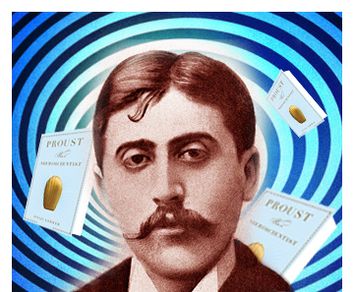
“Proust Was a Neuroscientist”

Did novelist George Eliot anticipate the ability of the brain to grow new cells? Did chef Auguste Escoffier foretell the science of the palate? Jonah Lehrer thinks so.

The world premiere of Igor Stravinsky’s “Rite of Spring,” by the Ballets Russes in 1913, featured shouting crowds in fancy dress, and a guest appearance by the French police. While none of that was choreographed, the mayhem was exactly what impresario Sergei Diaghilev sought, and affirmed Stravinsky’s ambition to write music “of daring.” Made famous by the uproar, “The Rite of Spring” entered the repertory, ever rising in popularity. By 1940, Walt Disney had scored it for “Fantasia.”

Igor Stravinsky is one of eight major artists of the 19th and 20th centuries considered in “Proust Was a Neuroscientist,” Jonah Lehrer’s earnest attempt to vindicate the accomplishments of art by demonstrating how great composers and novelists and chefs of the past, from Marcel Proust to George Eliot to August Escoffier, anticipated recent scientific discoveries. “I have chosen them because their art proved to be the most accurate,” Lehrer writes, “because they most explicitly anticipated our science.” Lehrer’s thesis would be indefensible even if his examples were convincing: Accuracy is no standard for art, which can fully justify its worth without recourse to peer review. As it stands, even the rationalist lens of science cannot support Lehrer’s sophomoric project.

So why was Igor Stravinsky a neuroscientist? “Stravinsky’s [musical] malevolence was rooted in a deep understanding of the mind,” Lehrer writes. “He realized that the engine of music is conflict, not consonance. The art that makes us feel is the art that makes us hurt.” This is a reasonable representation of Stravinsky’s artistic strategy in “The Rite of Spring.” The problems for Lehrer begin when he attempts to relate this to neuroplasticity, the ability of the brain to discover new patterns, and to be reshaped by them. “[O]ur ability to adapt to new kinds of music,” he claims, “was Stravinsky’s enduring insight … Nothing is difficult forever.” In fact, if one takes seriously Stravinsky’s own stated goals, this shows the composer’s misunderstanding of the mind, and marks the “Rite’s” failure. As his music gradually surrendered difficulty to listeners’ neuroplasticity, it progressively lost its audacity, and, to the extent that daring was its purpose, its effectiveness. Stravinsky specifically sought to thwart such complacency. “To listen is an effort,” he claimed, “and just to hear is no merit. A duck hears also.” Disney is about ducks.

Not all of Lehrer’s artists are so far off-base, neuroscientifically speaking. Perhaps inspired by his job as a line cook at Le Cirque 2000 — duly noted on the dust jacket together with his work in Nobelist Eric Kandel’s neuroscience lab — Lehrer has included a chapter on the redoubtable fin-de-siècle French chef Auguste Escoffier. Escoffier was a neuroscientist, according to Lehrer, because he invented veal stock. Veal stock is heavy in the amino acid L-glutamate, the basis of MSG, that notoriously savory seasoning that every Chinese restaurant in America denies using. “[Escoffier's] genius was in getting as much L-glutamate on the plate as possible,” Lehrer writes. His cooking anticipated synthetics later scientifically shown to be tasty.

The story of this chemical discovery is not without interest. Since ancient times, the tongue was considered sensitive to only four basic flavors — sweet, sour, salty, bitter — none of which seemed especially present in appetizing victuals such as veal stock and Japanese dashi. This puzzle inspired a lifetime of research by the 20th century chemist Kikunae Ikeda, who ultimately established a place on the tongue for a fifth flavor, umami, and showed that this was the flavor of L-glutamate, the major amino acid from which our bodies are built. “The tongue loves what the body needs,” Lehrer writes. And how does this pertain to Escoffier? “The culture of the kitchen articulated a biological truth of the tongue long before science did because it was forced to feed us,” argues Lehrer. “For the ambitious Escoffier, the tongue was a practical problem, and understanding how it worked was a necessary part of creating delicious dishes.” Lehrer’s point is perfectly valid, but utterly meaningless. Like many cooks before him, Escoffier worked out appealing recipes. Science later determined how they appeal to us (in terms of sensory biology) and proposed, somewhat less convincingly, why they must (by way of evolutionary determinism). To call Escoffier a neuroscientist makes as much sense as to say that anyone who ever encountered an apple falling from a tree anticipated Newtonian gravity.

Lehrer’s ponderings about Escoffier are trivial. His writings about novelists including Proust, Virginia Woolf and George Eliot are disastrous. His treatment of Eliot serves an apt example, since he credits her with anticipating an especially surprising discovery about the brain: neurogenesis, or the ability to grow new neurons. Like the dogma of four flavors, the belief that the mature brain is cellularly complete was long taken for granted, only to be refuted by a scientist working at the margins of her discipline. In this case, the heroine was a postdoc named Elizabeth Gould, who observed rat brains healing themselves. Following years of diligent experimentation, Lehrer writes in his boilerplate Horatio Alger prose, “[t]he textbooks were rewritten: the brain is constantly giving birth to itself.” Which makes him think of Eliot’s “Middlemarch,” in which characters have the startling ability to develop, becoming, by the end of the book, different from who they were at the beginning. “[N]eurogenesis is evidence that we evolved to never stop evolving,” Lehrer writes. “Eliot was right: to be alive is to be ceaselessly beginning.”

Setting aside the fact that Eliot hardly needed to anticipate neurogenesis (or even neuroplasticity) to conjure characters changed by circumstances, the essential question arises: What is the good of saddling Eliot with neuroscience? Lehrer’s reductionist reading of “Middlemarch” strips it of any interest as literature, and denies the value to be found in any work that doesn’t operate as an exemplar of neurogenesis, such as fatalistic “Oedipus Rex.” Lehrer claims affinity for literature, posing himself as a defender of the arts. He is fond of homilies such as, “our reality exists in plural.” If illustration of scientific principles avant la lettre is the best defense to be had for the arts, the arts are better off dead.

Lehrer’s book is worth discussing for this reason: It embodies an approach to the humanities and sciences that threatens the vitality of both. In his coda, Lehrer evokes C.P. Snow, whose 1959 book, “The Two Cultures,” has become the standard reference in any discussion about the “mutual incomprehension” (as Snow phrased it) between these divergent realms. Snow famously proposed a third culture to fill this gap. Lehrer rightly believes that the scientific writings of Richard Dawkins and Brian Greene and Steven Pinker, which have sought to make science accessible to all, have addressed this divide without truly bridging it. He justly says that “[t]here is still no dialogue of equals … [and that] there are many ways of describing reality, each of which is capable of generating truth.” While often artful in their writing, Dawkins and Greene and Pinker show no interest in the arts as such. Theirs is a world understood totally through the scientific method, to the exclusion of literature and music and painting, except to the extent that the arts offer apt imagery, or provide ready-made examples of phenomena in need of scientific explanation.

To address this problem, and perhaps claim Snow’s mantle, Lehrer proposes a fourth culture, one that will “ignore arbitrary intellectual boundaries, seeking to blur the lines that separate.” As an example of this — his only example — Lehrer cites Ian McEwan’s “Saturday,” which has the merit of providing a neurosurgeon as narrator.

There is nothing wrong with McEwan, or with “Saturday,” but by pointing to this novel as an ideal, Lehrer condemns us to a future resembling his revisionist past. Having spent 200 pages arbitrarily and often inaccurately illustrating the sciences with works by artists, he wants artists to become self-conscious illustrators in their own right.

Artists can learn from the sciences, as McEwan has done in researching neurosurgery, and as a latter-day Stravinsky could do by rigorously undermining neuroplasticity. Science is material for the arts and art is material for the sciences, yet each must maintain its own integrity. After all, each has its own virtue: The sciences lift us outside of experience, so that we can more clearly survey it. The arts immerse us in experience, so that we can more fully encounter it. The true third culture is to be found in an educated and interested public, able to embrace each endeavor on its own terms. Enslaving the arts to the sciences, as Lehrer wishes done, will merely diminish two cultures to one.

Continue Reading Close

Before Paris and Nicole

Buffalo Bill and Annie Oakley aren't just relics of the Wild West, argues "Lonesome Dove" author Larry McMurtry -- they're America's original celebrities.

At the end of the 19th century, Buffalo Bill Cody was arguably the most famous man in the United States, because he looked sharp while riding a horse. And Annie Oakley was arguably the most famous woman, because she looked comely while firing a gun. Commonplace as such superficiality may be — characteristic of celebrities from Ronald Reagan to Paris Hilton — the popularity of Cody and Oakley is hard to fathom in our megaplexed, multichannel, celebrity-saturated society. Not only were they, as Larry McMurtry notes in “The Colonel and Little Missie,” our first superstars. Adjusted for ego inflation and the explosion of media bandwidth, they were also, and will likely remain, our foremost.

Exactly who Cody and Oakley were, though, becomes less clear with each attempted biography. The greater the scrutiny, the less certain their history. Every detail is questionable. With his novelist’s eye and footing in the West, McMurtry is positioned to deliver as good a book on the pair as we’re likely to get. He has succeeded for the most part, by telling us all that isn’t known about them, that we might more fully appreciate the extraordinary story of their fame.

Annie Oakley isn’t quite as much of a mystery as Buffalo Bill. Having apparently led a less eventful life, there are fewer events concerning her that may be apocryphal. Still, we can’t be certain even of her real name: While we know that she changed it to Oakley — after a respectable neighborhood in Cincinnati — nobody is quite sure whether she was born Phoebe Ann Moses or Phoebe Ann Mozee. As for the year of her birth, it seems to have been 1860, though for most of her life she insisted on 1866. What nobody doubts is the desperate poverty of her childhood in Darke County, Ohio. McMurtry puts it best when he writes, “Charles Dickens had nothing on Annie Oakley.”

Somehow she figured out how to shoot. One story claims that, as a young girl, she picked up her father’s shotgun and hit a squirrel between the eyes. Another story makes the creature a bird, and holds that the recoil broke her nose. Either way, the animal probably became supper, and by the time she turned 15 she was bringing in game full time for a local grocer.

Or not quite full time: Like any good shot, she also entered skeet competitions, as ubiquitous in 19th century rural America as pickup basketball games are in Chicago or Detroit or New York today. That’s where she met her future husband, the marksman Frank Butler. We don’t know for sure whether she beat him at their first meeting by two clay pigeons or one. We do know that he became her manager, and, within a few years, she was an international superstar.

Buffalo Bill became famous first, though, and provided the stage upon which Oakley’s legend was made. He had a 14-year head start. William Frederick Cody was born in Iowa in 1846, and, while not as bad as Oakley’s, his childhood in the bloody Kansas territory would also have given Dickens a run for his money. (“In these parts,” McMurtry notes, “the Civil War lasted something like twenty years, rather than four.”) Then, in the same spontaneous, inevitable way that Annie got her gun, Buffalo Bill landed in the saddle. His first job, at age 11, was delivering messages for the Western freighting firm that would shortly found the Pony Express.

That did not make him, as legend has it, a part of the Pony Express, let alone its star rider. The mount he was assigned was a mule, and the extent of his run — from freight yard to telegraph office — was all of three miles. McMurtry believes that, by the time the Pony Express came along, 14-year-old Cody had advanced enough to become its youngest messenger, but the best proof McMurtry can muster is only that it makes a good story. (All the supporting evidence from Cody’s day, as McMurtry ably demonstrates, is not the least bit plausible, and the documentary evidence is spottier than Buffalo Bill’s arithmetic.) None of which would make much difference — since nobody has ever doubted Cody’s skill as a rider — except for the fact that he pretended to have been a Pony Express messenger, for more than 30 years, as the centerpiece of his performance in “Buffalo Bill’s Wild West.”

In his world-renowned entertainment — which seems to have been a cross between a vaudeville act and a military parade — he also pretended to have done a bit of Indian killing. In particular, he was fond of showing how he’d taken “the first scalp for Custer” while he was employed as a scout by the Army. If he did so, it was in 1876, shortly after the massacre at the Little Big Horn had left Gen. George Armstrong Custer dead alongside 250 of his men.

According to Buffalo Bill, the scalp belonged to a Cheyenne chief named Yellow Hand, whom Cody caught early one morning leading a raid on the Fifth Cavalry. Yellow Hand challenged him to a duel. “We fired at each other simultaneously. My usual luck did not desert me, for his bullet missed me while mine struck him in the breast. He reeled and fell, but before he had fairly touched the ground I was upon him, knife in hand, and had driven the keen-edged weapon to the hilt in his heart. Jerking his warbonnet off, I scientifically scalped him in about five seconds.”

This turn of events has been refuted by many people, from modern historians to eyewitnesses in Cody’s own brigade. One account holds that Cody shot the Cheyenne’s horse and a fellow cavalryman hit the Indian. A differing account has another scout — Baptiste “Little Bat” Garnier — killing the warrior in a ravine, and leading Cody to the body several days later because Buffalo Bill wanted a souvenir for his wife in North Platte, Neb. Lulu Cody got the scalp all right, and Buffalo Bill used it in shows for the rest of his life, persistently calling the warrior Yellow Hand, when in truth the man’s name was Yellow Hair, and calling him a chief, when he was a mere lookout. “In fact Yellow Hair had not been a famous Indian,” McMurtry writes, “he became famous with his death.”

Indeed, the same was true of the Pony Express, which was made mythic posthumously as part of Buffalo Bill’s show. And it was true of Cody’s role as a hero of the West as well — he called himself a colonel because he liked the title — although of course he was alive and well at his center-stage apotheosis. “[I]t’s easy to forget that the narrative of his life is one story and the narrative of his fame is another,” McMurtry writes. Easy to forget, and essential to remember.

Then why the outsize celebrity? Annie Oakley was a good sharpshooter and Bill Cody was a good scout. Nobody ever disputed that. But by no means was either the best, even in these dubious areas of achievement. Others shot more clay pigeons than Annie. Many others slaughtered more Native Americans, to say nothing of buffalo, than Cody. But, had they been better at what they did, had that been the basis of their fame, they certainly wouldn’t have been superstars.

More than she was for her shooting score, Oakley was endearing to audiences for her pout when she missed a tossed penny and for how she kicked the ground with her boot when she hit the mark. As for Buffalo Bill, had he been a real Indian fighter, out taming the frontier, he wouldn’t have left the plains to perform in London, with a troupe of Native Americans, in front of Queen Victoria. “Buffalo Bill’s Wild West,” which traveled the world in various guises from the 1880s until Cody’s death in 1917, was presented as historical reenactment — Cody never called it a show — but the only history it really reenacted, by interminable repetition, was the history it invented.

In truth, the West was not won but lost, irretrievably, and Cody and Oakley became legends by turning it into a myth, almost perfectly devoid of authenticity. McMurtry notes that “Buffalo Bill’s Wild West” was popular, against all predictions, in cities such as San Francisco, because people living in such still-remote outposts “might prefer, for an hour or two, the fantasy rather than the reality.” He seems mystified, though, by testimonials by the likes of Mark Twain, who asserted that “[d]own to the smallest detail the show is genuine … wholly free from sham and insincerity.” He wonders whether Twain was drunk when he wrote those words. Twain probably was — a safe bet any day — but McMurtry’s perceptiveness unaccountably deserts him at this juncture: Like Buffalo Bill, Twain was a storyteller, and recognized the truth that legend makes of itself.

Indeed, “Buffalo Bill’s Wild West” was a more appropriate moniker than Cody may have recognized. By the turn of the century, the Wild West was more or less Buffalo Bill’s own possession, and, along with Annie Oakley, he was its chief asset.

Today we condemn celebrities for their shallowness. Their appearance is their talent. They’re a cultural null set. But, if we are to believe that Buffalo Bill and Annie Oakley are meaningful — to acknowledge that we are a product of the stage-set Wild West they brought us — we would do well to give the likes of Paris Hilton more credit. The emptiness of celebrity is the vessel of our collective legend. Superstardom is our heritage.

Continue Reading Close

The king’s word

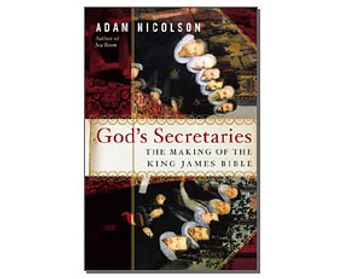
In "God's Secretaries," author Adam Nicolson tells how James I manipulated 48 translators to create the supreme achievement in the English language: The Bible.

Never in history has a book been printed in such quantity as the King James Bible, nor has the English language ever produced a volume more influential. That it should also be our finest work of literature, however, despite translation by committee amidst the political instability of early 17th century England, seems, today, almost miraculous. Only if the complicated process of translation and its historical context are taken together, and appreciated for their very incompatibility, do the circumstances explain how the King James translation came to be the standard version of the Bible, and the embodiment of English eloquence.

Adam Nicolson describes the feat with impressive skill and frequent insight, if at greater length than necessary, in “God’s Secretaries.” “The age’s lifeblood was the bridging of contradictory qualities,” he claims. Judging from Nicolson’s characterization of the 54 translators, their prickly king, and their precarious era, that may be the understatement of the century.

Even in his initial decision to translate the Bible, King James I resembled wily Machiavelli as much as wise Solomon. Several translations were in circulation already, most notably the extensively annotated Geneva Bible preferred by English Puritans, and the rigidly formal Bishops’ Bible, distributed by Queen Elizabeth to every parish in the country, testament to the break from the Roman Catholic church made by her father Henry VIII, when he divorced Catherine of Aragon. In the distinction between the two versions can be discerned the tension James faced on inheriting the English throne in 1603: A struggle between the plainspoken Presbyterians who believed that worship of God, his good word, needed no priestly intermediary (and less still one who went around in a fancy surplice and fine silk tippet) and the punctiliously Episcopalian church hierarchy. Born Catholic and raised by Presbyterians — following the decapitation of his mother, the notorious Mary, Queen of Scots — James was familiar with both positions and, after 35 years as the king of embattled Scotland, anxious to bring about a reconciliation.

With that in mind, James called for a conference to consider the future of the Anglican Church. After establishing authority over his bishops by verbally abusing them as they knelt before him, he turned his attention to those of more Puritan persuasion. The danger they posed was greater, or at least more immediate, than that of his bishops, who were a threat to his authority only to the extent that they were crypto-Catholics: James had no intention to cede his divine right to the pope in Rome. The Puritans, on the other hand, challenged the very hierarchy of which he was the head. If everyone had a personal relationship with God, the King had no special claim to divinity. If God’s law was apparent to all, what need had people for a monarchy? “No bishops, no king,” James reasoned, with typical clarity.

The Geneva Bible, printed with maps, charts and marginalia for purposes of personal worship, epitomized the self-reliant attitude of the Puritans, and so was loathed by James to a degree at last equal to their own scorn for the pompous Bishops’ Bible. As a result, when John Reynolds, one of the Puritan petitioners, attempted to supplant the Bishops’ Bible with the Geneva by proposing that there be “only one translation of ye byble to be authenticall and read in ye church,” James responded by “professing that he could never, yet, see a Bible well translated in English; but the worst of all, his Maiestie thought the Geneua to be.”

If, on the surface, James’ reply seemed a cheap trick, a threat to put the Geneva Bible out of print, it also served as an opportunity to begin anew: The King’s thorny upbringing, which had embittered him to the excesses of both Catholicism and Presbyterianism, prepared him to see that the evils of the Geneva Bible didn’t necessarily make the Bishops’ Bible acceptable, that he need not be satisfied with either. By alienating both sides, taking away what was most sacred, James could, paradoxically, bring them together. As Nicolson explains, a new translation “had the potential to become, in the beautiful phrase of the time, an ‘irenicon’, a thing of peace, a means by which the divisions of the church, and of the country as a whole, could be encompassed in one unifying fabric founded on the divine authority of the king.”

That, then, was the ideological backdrop against which were drafted the instructions that would guide the translators in the creation of the King James Bible. There were to be six companies of eight members, each headed by a director, the books of the Old and New Testaments divided between them. While none of the translators were either Presbyterian separatists or avowed papists, the scholarship required to make this Bible superior to any other inevitably brought with it a remarkable degree of religious diversity. The puritanical John Reynolds, for example, served alongside the future Archbishop of Canterbury. Given that each company was required ultimately to review the work of the others, consensus was bound to be contentious. Every word was to be hard-won.

Moreover, the king’s instructions explicitly called for careful consideration of the translations already in circulation, not only the Bishops’ and the Geneva, but also the Coverdale, the Matthew’s, the Whitchurch, and the earliest of all, a 1525 work of William Tyndale, for which — given the Vatican’s aversion to making the Bible intelligible to anyone but the Latin-tongued clergy — he’d been duly garroted and burned at the stake. Each of these Bibles, guided by a distinct belief system, differed markedly from the others. Sometimes the divide was clearly political, such as the use of the word “tyrant” in the Geneva where the Bishops’, for obvious reasons, favored “king.” Other differences ran deeper, such as the preference for straightforward simplicity in the Tyndale: Following the lead of Martin Luther, the translator was trying above all to make the Bible accessible, “less interested in the grandeur of its music,” Nicolson explains, “than the light it brings.”

The King James translators took liberally from all these sources, comparing them to the earlier Hebrew, Greek and Latin. In this way, the new Bible benefited from all that came before it, maintaining a sense of historical continuity, a calming traditionalism even as corrections and modifications were made. The language of the King James Bible was archaic even in the early 16th century, and in fact sounds of no period in literary history. The words, like the stories they tell, are truly timeless. Already ancient, they seem, paradoxically, never to age.

As Nicolson points out, such language had the potential simultaneously to satisfy the Puritans and the church hierarchy: “It both makes an exact and almost literal translation of the original and infuses that translation with a sense of ceremony and beauty,” he writes. Rather than a modern-day split-the-middle sort of compromise, it was a solution reached, improbably, headlong in the pursuit of apparent contradiction.

That tension, in fact, explains more generally the profound force of each chapter and verse. Consider the second line of Genesis as translated by Tyndale: “The erth was voyde and emptye, and darcknesse was vpon the depe, & the spirite of God moued upon the water.” Compare that to the King James translation: “And the earth was without forme, and voyd, and darkenesse was vpon the face of the deepe: and the Spirit of God mooued vpon the face of the waters.” Three things become apparent: First, the latter is stylistically more majestic, written and punctuated in the grand manner of oratory. Second, it’s technically more accurate, including the word “face” which is to be found, in the sense of “surface,” in the original Hebrew. Third, it is imbued with meaning beneath that surface, again in the choice of the word “face,” an anthropomorphic reflection of God foreshadowing His creation of Adam in His image.

That third quality, the multiplicity of meanings loaded into each individual word, is the most crucial. “This is the heart of the new Bible as an irenicon,” Nicolson writes, “an organism that absorbed and integrated difference, that included ambiguity and by doing so established peace.”

It is also the key to appreciating how the King James Bible, in its profound beauty, could be the product of a committee in such a deeply split country. The political and religious circumstances made the translators act not as a democratic delegation seeking a single resolution explicitly acceptable to all, but rather in a manner akin to an old-fashioned royal court, operating on duplicity, deceit and doublespeak.

Those qualities most reprehensible in statecraft are essential to great literature. The writer’s mind is mired in contradiction, which takes to the page as ambiguity. In the case of the King James Bible, that mind comprised, collectively, many men. Yet, in their irreconcilable differences, that essential irresolution, they operated as one.

Continue Reading Close

“The Spinster and the Prophet” by A.B. McKillop

In the 1920s, judges ridiculed a Canadian woman who said H.G. Wells plagiarized her book, but a modern scholar finds her case convincing.

When H.G. Wells, world-renowned author, was charged by an unknown Canadian spinster with plagiarizing a book that purported to cover all that had happened to mankind since the beginning of time, he didn’t take her claims especially seriously. He preferred, on the contrary, to poke fun at the 60-year-old woman for “conceiv[ing] the strange idea that she held the copyright to human history.”

If, on the surface, his dilemma bears a resemblance to that of rogue historian Doris Kearns Goodwin, in another respect the court case against him seems strongly to anticipate such tussles as the lawsuit, recently dismissed, against J.K. Rowling disputing her claim to have created Harry Potter. All of which is to say that the litigation that challenged Wells’ reputation some eight decades ago vividly evokes, and may even explain, the reasons for our confusion about plagiarism to this day.

The incident was almost forgotten — another episode in Wells’ overloaded biography — until a Carleton University professor named A.B. McKillop expertly resurrected it in his absorbing account, “The Spinster and the Prophet,” a new book that, whether by design or accidentally, couldn’t be more timely. The motivations of Wells and his nemesis, Miss Florence Deeks of Toronto, as well as the behavior of any number of publishers and lawyers, are pieced together in McKillop’s deeply researched story. Is Wells guilty? We must first consider what we mean by the question. And we can do that only by examining the contested facts.

The book that Florence Deeks claimed was based on her own was titled “The Outline of History,” and its true origin will forever remain a mystery. It was mired in controversy from the moment it was published in 1920. One respected critic called it “a great book — one of the greatest of all time!” while a prominent scholar held it to be “commonplace in the extreme.” It shortly became a bestseller and made Wells a fortune, in England and America alone earning him 25 percent royalties on more than 2 million copies over its first few years in print.

The book displayed all the virtues and vices of the man whose name graced its covers. Necessarily general, it provided an overview of the universe from the formation of the solar system through World War I, serving as a sort of Cliff’s Notes version of the past 4.5 billion years, as well as an argument for a future world democracy in which there’d be neither poverty nor war.

For the perspective it provided, “Outline” was an extraordinary accomplishment, yet what it left out was more than a little significant. Tamerlane never made the cut, nor did — ever the good socialist, Wells — Adam Smith. Much of India’s history was omitted, as well as that of Japan, and the United States vanished from his summary for the 50 years between the War of Independence and the birth of the Monroe Doctrine. The deepest flaw of all, though, was surely the omission of almost any mention of women.

If the discrepancy between lofty aims and shoddy execution was typically Wellsian, the sexism of his world history even more strongly reflected his personality. His affairs, too countless to mention, are notable chiefly for their similarity, or, rather, for his inability to differentiate between women: His interest was in novelty, and while he bedded some of the best minds of his day — from Margaret Sanger to Rebecca West — his fiction demonstrated even less knowledge of them than it did self-awareness. A man blind to the accomplishments of the women with whom he’s intimate isn’t likely to appreciate the significance of Queen Elizabeth or Joan of Arc or Hatshepsut, either.

Hatshepsut, a great Egyptian pharaoh, was in fact included in Wells’ history, although under the odd spelling “Hatasu.” As it happens, Florence Deeks too included “Hatasu” in the overview of world history she completed several years before Wells published his “Outline.” That the female pharaoh was included was to be expected: Deeks wrote her book, “The Web of the World’s Romance” to lend importance to women’s role in the past, and to suggest that peace and prosperity were characteristic of female leadership.

Deeks was neither a professional scholar nor a published author. Inspired by feminist activists traveling through Canada at the start of the century, she’d simply seen it as common sense to seat herself in the reading room of the Toronto public library, and not to leave until she’d rewritten world history.

She worked straight through the Great War, wearing her overcoat when there was no power, going home each night to her widowed mother, her two sisters and her typewriter. “The Web” gerrymandered together facts from a number of popular histories and encyclopediae — beginning with the formation of the solar system and continuing on through the war — but leaned rather heavily on John Richard Green’s “Short History of the English People.” In fact, she’d borrowed from Green freely enough that it became a worry. Unsure whether her dependence amounted to outright plagiarism, she decided to bring the manuscript for vetting by Green’s publisher, the venerable Macmillan & Co.

With offices in New York and London as well as in Canada, Macmillan was the chosen house of writers from Rudyard Kipling to Lewis Carroll to Alfred, Lord Tennyson. Naturally, it also published the acclaimed author of “The Time Machine” and “The War of the Worlds,” Herbert George Wells. At around the time John Saul, an editor in the educational books division of Macmillan Canada, promised to give Deeks’ manuscript a read, Wells wrote a letter to Macmillan New York publisher George Brett proposing a history of mankind “of about two hundred thousand words, and about one thousand maps, illustrations, full page or smaller. What do you think of the project?” he asked.

Brett not unreasonably responded that Wells has told him “nothing of the way in which you intend to write the book,” pointing out that “it might be prepared from the standpoint of Social History of Mankind … Material History of Mankind, or the purely natural development of Mankind from its physical standpoint.” Wells seems not to have thought his idea through even to that extent, for his next letter was to Sir Frederick Macmillan in London, again proposing his “Universal History,” this time adding only the less-than-helpful detail that it might be used in schools as “a prize book & for reading.”

Starting with that vague notion, Wells appears to have produced — without any preparation or training in history, while simultaneously writing a novel and carrying on an affair — a two-volume book of 1,324 pages in about a year. To McKillop, a professional historian, this proposition “beggars the imagination. In mid-November 1918, nothing on the project had advanced as far as the typescript stage. By February 5, 1919, [Wells' wife] Jane had produced 50,000 to 60,000 words in typed form. Twenty days later, her husband had reached the 125,000-word mark — halfway through the projected book. He had written between 75,000 and 80,000 words in under three weeks, researching along the way … At the end of the year, the whole manuscript was complete. The achievement was nothing short of miraculous.”

Several scholars at the time agreed, and even said so under oath when Deeks pressed suit in 1927. She’d taken a while to bring Wells to court: Her manuscript had spent a full year at Macmillan, during which Saul had put off the old spinster, promising to examine the text as soon as he had a spare moment. That moment had never come, at least not until Saul was gone. His successor had simply sent her a short (and unsolicited) rejection letter.

Then, about a year later, Deeks happened upon a review in Saturday Night magazine that praised H.G. Wells’ latest, his “Outline of History.” The critic, Hector Charlesworth of Toronto, wrote that, “Such a synthesis, such an interpretation of life as a cognate whole has never been attempted single-handed by any other man.” While that was hardly a claim that Deeks could deny, her curiosity turned to concern as she bought Wells’ tome at the local department store, and began to compare it to her own.

When her manuscript had been returned, she’d wondered why it was so tattered and dog-eared, as if it had been read and referred to repeatedly. “The Outline of History” gave her an explanation: The books had in common not only facts and phrasings, but many of the same omissions. She, too, had called Hatshepsut “Hatasu,” a spelling not used by anybody since the 1890s, copied by her from one of the out-of-date books in the Toronto Public Library. From both histories, Adam Smith was missing, and much of India. Wells held, as did Deeks, that the Phoenicians traded by land rather than sea, and both called Roman general Sulla “aristocratic,” when in fact he was — a subtle but crucial linguistic distinction — strictly patrician.

While some of these similarities were discovered by Deeks, most were found by academics she hired to help her. By the time she took Wells to court, the list of such parallels ran to many pages, and scholars were even more shocked by the inaccuracy of Wells’ facts than by how quickly he’d allegedly written his manuscript. After all, he’d credited an array of experts, four mentioned on his cover page and about 100 more in his acknowledgments, for helping him work so fast. Naturally, given his connections, all were leaders in their disciplines. How, then, could they have led Wells so far afield?

Deeks’ chief expert witness, University of Toronto professor William Irwin, held that the names were but a bluff. “The work has no merits that would preclude it being dependent upon an unknown writer,” he told the court. “Indeed on the contrary, the striking deficiencies and inaccuracies of Mr. Wells’ treatment, taken in connection with his imposing array of scholarly collaborators implies rather cogently that there is something deeply wrong.” McKillop’s failure to find substantive exchanges about “The Outline of History” in Wells’ correspondence with any of his alleged advisors, many of them already elderly, supports Irwin’s claim; the author’s letters seem primarily concerned with convincing Sir E. Ray Lankester et al. to lend him their esteemed names.

In at least that respect, Wells knew exactly what he was doing. Impregnable behind his reputation, he used his brief time in court to make light of the case: Asked where he found certain passages, he cited Herodotus, who, as far as he was aware, “knew nothing of Miss Deeks.” Following Wells’ lead, the Canadian court seems not to have taken the spinster’s case especially seriously. The newspapers made headlines of her demand for $500,000 in damages, but the judge mostly preferred to adjourn for lunch.

Wells won the case. Deeks appealed. Dismissed. She boarded a boat for England, where she appeared before the British Privy Council. But Lord Atkin of Aberdovey, Lord Tomlin of Ash and Lord Thankerton proved no more sympathetic than the Canadians. That left only the King of England — by common law “every British Subject has a right to appeal to the mercy seat of the throne” — so she sent off a petition to George V. The case, which by then had cost her approximately $750,000 in today’s dollars, was summarily judged “frivolous.”

That “The Web” had been a book about the power of women through history is only the easiest of many ironies. Assuredly more difficult for Deeks to take was the publishing industry’s response to her revision of “The Web,” to which she turned when her lawsuit could go no further. “Your book would be subject to comparison with Wells’ ‘Outline of History,’” wrote an editor at Little, Brown, perceptively. “For that reason, I think you will have difficulty in securing a publisher at the present time.” Nevertheless, to feel sympathy for Deeks does not require that we disagree with Wells when he writes, in one of his books, that “Fools make researches and wise men exploit them.”

Strictly as a matter of copyright, Wells may have done wrong; the selection and organization of information is protected as intellectual property. His claim never to have seen the Deeks manuscript, at any rate, seems highly unlikely. (Not only is there an overwhelming amount of textual evidence, but also, as important, McKillop finds a path through Macmillan that convincingly explains how Wells was secretly lent “The Web” when he needed it most desperately.) The more pressing question, though, isn’t who owed how much money to whom — they’re all dead anyway — but rather how we’re to treat a famous author’s reputation. And that brings us back to plagiarism.

H.G. Wells may have been a liar and a thief, but that is the extent of his guilt. However reprehensible we may find his opinion of women, he set out to do something fundamentally different with the material at hand than was done by Florence Deeks. He didn’t plagiarize her any more than she did John Richard Green, or, for that matter, than any writer who uses words in the correct grammatical order plagiarizes H.W. Fowler.

What is admirable about “The Web” is the argument it makes, deeply original for its time, that civilization (as opposed to barbarity) is feminine. Green wasn’t saying that, nor were any of the other histories or encyclopediae of the time. Likewise, the greatness to be found in “The Outline of History” exists in its trajectory, the way in which it sets the progress of society as a function of democracy. Wells has often been called prophetic, and that is the virtue of his book: The failure of the League of Nations — the rejection of his notion of progress — led to another century of butchery.

Plagiarism isn’t a legal term. For that we have “copyright.” On the contrary, it is a condemnation to infamy. To be called a plagiarist is in effect to be burned in effigy. Wells does not deserve that epithet. Our disdain for him personally is quite beside the point; our assessment of his legacy must be a function of his ideas, and their expression, in his books. Ultimately, plagiarism is a matter of originality, not origination. (We wouldn’t think less of Picasso’s art if we learned he’d stolen his paints.) For all its flaws and ill-gotten gains, “The Outline of History” is an astounding work of creativity.

So it goes with Doris Kearns Goodwin. As a matter of plagiarism, once we strike questions of copyright, her case isn’t any different from that of J.K. Rowling, who’s been repeatedly accused by author Nancy Stouffer of stealing the term ‘muggle.’ Stouffer’s muggles, who appeared in some booklets printed in the ’80s, were “tiny hairless creatures with elongated heads who live in a fictional post-apocalyptic land called Aura.” In Rowling’s Harry Potter novels, ‘muggle’ is, quite the contrary, what wizards call ordinary people. Charming as the word may be, Rowling’s real creativity is to be found in the world in which said creatures live. The world of the imagination. A place unknown to Stouffer. (Or perhaps not entirely so; the judge who dismissed her suit against Rowling and enjoined her from making further claims that Harry Potter infringes on her copyright also ruled that Stouffer had forged and altered evidence she presented in the case and “failed to correct her fraudulent submissions even when confronted with evidence undermining the validity of those submissions.” Stouffer has filed a motion for reconsideration.)

And what of Goodwin? Surely our respect for her as an historian isn’t a question of her access to a good library. So she copied a few phrases. So she broke a few rules. A reputation should be taken away only on the same grounds as it was given: Cheated ideas. A stolen story.

A book that moves us, whether fiction or history, is a great rarity. We ought not be so foolish, so frivolous, as to dismiss it, and toss its author away, on a technicality.

Continue Reading Close

Page 1 of 5 in Jonathon Keats

www.salon.com/writer/jonathon_keats/index.html