Judy Oppenheimer

“Law and Order: SVU” diagnosed my Parkinson’s

Watching a rerun, I saw my own strange symptoms. Three years later, I'm still navigating a mysterious disease

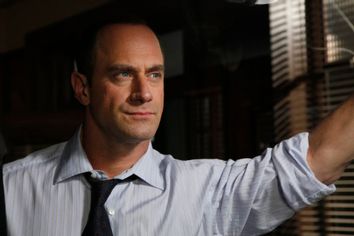
Christopher Meloni as Detective Elliot Stabler (Credit: NBC/Will Hart)

People always want to know how you got a certain disease. They’re thinking of themselves, of course — the sore throat, the odd bruise on the wrist, that lingering cough. But people are surprised when I tell them how I discovered I had Parkinson’s. I was watching “Law and Order: SVU.”

I had flipped on a rerun, which I do when I’m tired and bored. It’s better than reality TV, and it’s reliable. There’s always an episode of “Law and Order” playing somewhere.

I’d seen this one before, so I was paying minimal attention. I flipped through a magazine. A man, shaking badly, was telling the detectives about his disease, Parkinson’s. Years ago he’d started having symptoms. He listed them.

I put down the magazine. A chill ran up the back of my neck. I had every single one.

Why hadn’t I suspected anything was wrong until then? Easy. I had found a way to explain away every problem I encountered. My car key didn’t open the door without a struggle? It must have gotten bent somehow. My can opener didn’t work anymore? Ditto. My favorite cutting knife couldn’t seem to do the job right? Fine, I’d replace it one of these days. What did any of this have to do with me?

There was one thing that did, though, and it puzzled me — my right arm didn’t swing anymore when I walked. It wanted to bend itself at the elbow, jutting out stiffly. I wondered about that one, even mentioned it to a friend, a longtime nurse practitioner. She chalked it up to another manifestation of my long-term back problem. I figured it might be punishment for the way I gripped my computer mouse.

Only now, the man on the show explained issues that were all too familiar — he had a stiff arm, too, and difficulty with the simplest motor skills. And more: exhaustion, odd aches, a suddenly clumsy gait.

And hearing him, I knew. I knew with a rare clarity. The clean pop of a ball into a glove: connection complete. I called no one. Tomorrow I’d search the Internet; tomorrow I’d find a neurologist. But none of that was strictly necessary, not for diagnosis, anyway. Finding the specific traits on the Internet the following day, hearing the neurologist confirm it a few days later -all of that was anti-climatic. Sitting there, watching that damn rerun, I knew the truth: I had Parkinson’s.

Everyone knows something about Parkinson’s, thanks to Michael J. Fox. It’s a progressive neurodegenerative disease that involves shaking, rigidity, weakness. What I hadn’t known was that apparently Parkinson’s can affect your mind, too.

“Any problem with word retrieval?” asked the neurologist the first time I saw him, his eyes sharp with interest. Well, sure, I had some now and then, like everyone who is over 60. I dismissed it, airily.

“Any problem with word retrieval?” asked the neurologist the second time I saw him. What was this, a mantra? Again, I said calmly I was doing fine. As a matter of fact, better than him. He was not all that young himself, and an extremely slow talker. Several times I found myself filling in words for him; a couple of times, analogies as well.

“Any problem with word retrieval?” asked the neurologist the third time I saw him. This was beginning to grate. Was it supposed to be some kind of hypnotic suggestion? If you ask something enough times — in a paternal tone of voice, eyes twinkling expectantly, with a distinct aura of anticipation — well, hey, aren’t you going to end up causing it? No, no problem, I said.

That week, I received a long form in the mail for a movement disorders clinic where I had an appointment. It chilled me. Are you able to turn over in bed by yourself / with help / not possible. Are you still able to form sentences (usually/rarely/never). Can you swallow?

Has anyone in the field ever heard of the tyranny of low expectations? Personally, I don’t appreciate these hints, if that’s what they are, that I’m about to descend into mouth-foaming dementia any minute.

Michael Kinsley had a long piece in the New Yorker a few years ago, which dealt with his Parkinson’s. (He’s had it 20 years; he still seems, against all odds, to have plenty of words at his disposal.) He was enthralled by one of the side effects mentioned in the literature, an urge to take up gambling. I haven’t gotten that one myself, but not long after I dumped the first neurologist, I was intrigued by a book in my new doctor’s office, “How to Win at Poker.”

“And what is this?” I challenged him when he finally showed up. (He had the grace to blush, insisting a patient must have left it.)

This neurologist doesn’t bring up the cognitive issue, but he does make sure one of his associates gives me the test every time I drop by.

Not heard of the test? Obviously you’ve never had a relative with Parkinson’s or Alzheimer’s, like my dad, who died of that latter disease 10 years ago. It’s the same test they gave him at each appointment. You’re told to draw a clock, poised at 10 after 11. You’re told to count backward from 100 by sevens, list all the words you can think of starting with an F. (After a few go-rounds you stop trying to avoid the obvious ones — what the hell.) Most irritatingly, you have to remember five disconnected words for five minutes, then spew them back.

I decided to engrave the words (they’re always the same ones) on my brain. And it worked. I may eventually forget the date, the current president, the names of my grandchildren. But what I will never forget — I’ve made sure of that — are those five words, which I generously pass on to anyone with similar concerns: red, velvet, face, church, daisy.

Six months after my initial test, when the associate told me she was going to give me five words, I interrupted her and reeled them off. She was suitably impressed. A year later, accompanied by an intern, she had me do it again, which I did, feeling a bit like a circus seal. Would I manage so well if they changed the words? I don’t know. But for now, silly as it sounds, this hurdle does make me feel like I’m holding my own. Of course I do other things: take my meds, undergo physical therapy, go to the gym, have intensive sessions with a Parkinson’s exercise guru, even take a few drum lessons. Do what I can, in other words.

Parkinson’s has a lot in common with other neurodegenerative diseases: To be blunt, they don’t really know a damn thing about it. Early on I posed this question to a Parkinson’s specialist: I suffered a fairly serious head injury six years ago. Could that have been the cause?

His answer? A giant shrug. Unfortunately, no one else knows either. The Internet is crawling with possible cures. It’s not a week that a friend doesn’t send me one. Tincture of marijuana? Lyme disease treatment? Tandem bike riding? Wet battery packs, whatever those are. I appreciate their concern, even if I’m not necessarily up for trying this stuff.

Of course, Parkinson’s is an extremely individual disease, different for every case. For some, it can be fast moving and brutal. The mother of one of my son’s friends was diagnosed the same week I was, and can no longer live on her own.

Michael J. Fox, our beloved patron saint, calls himself lucky. I wouldn’t go that far, but when it comes to having Parkinson’s, I know I’m one of the fortunate ones.

It’s been over three years since that “Law and Order” rerun. I get exhausted easily, I move more slowly than I did before, I have various aches and pains. But I’m still reasonably intact, still mobile, and I have a handicapped placard, a true advantage for anyone living in D.C.

Some people prefer to keep medical information to themselves. But when people ask how I’m doing, I tend to blurt out my diagnosis. I can’t stand the idea of someone treating this like a deeply unmentionable horror. My candor can lead to confusion sometimes, because people don’t understand Parkinson’s, though maybe that will dissipate over time. After I told one woman, she later informed a party of people that I was dying.

I’m not, OK? Not even close.

They ask if I’m from New York

What they mean is, they think I'm Jewish.

“You’re from New York, right?”

I wish I had a buck for every time someone had asked me that over the years. It wouldn’t make me rich, but I’d definitely have enough for a nice weekend getaway — hotel, sauna, massage, dinner, the works.

I have nothing against New York, which I visit a couple of times a year. But I wasn’t born there and have never lived there; ditto for parents, grandparents and so on, straight back through the entire genetic line. I have no connection — historical, philosophical or linguistic — to the Big Apple. I don’t look, dress or sound like a New Yorker.

What I am, though, is Jewish.

“Aren’t you from New York?”

The people who’ve asked me this over the years would be shocked at any suggestion that they are being racist. Their vocabularies are devoid of epithets. They would fiercely contest the idea that they cherish stereotyped notions about any group of people.

“Now, you came from New York originally, didn’t you?”

For the first 20 times or so, I reacted politely, smiling as I shook my head. Then I started to get annoyed. The comment came so often, always posed the same way, with the same raised eyebrows, the same knowing glint. “I’ve nailed you,” it said; “I’ve got your number. I know.”

“New Yorker, eh?”

I changed my response. “Why do you think that?” I’d ask. Or, “Gee, it’s really interesting you would say that.” And finally, “No. But I bet I know why you thought so. It’s because I’m Jewish, right?”

This last response was only a good idea if I enjoyed seeing people squirm, or get hotly defensive; never the best way to liven up a party or a job interview. In recent years, I’ve reverted back to just saying no, eliminating the smile. Trying to respond with my own glint, which says the same thing as theirs: “I’m on to you.”

None of the cultural shifts over the past 40 years have had much effect on the frequency of these comments. And no, they don’t carry the same wallop as the one Peter Trelogan threw at me in sixth grade, twisting around in his chair to confront me with — “You Jews killed Christ, didn’t you?” That’s not something we get much of anymore, thankfully.

But stereotyping is still alive and well. Thriving, actually. I was reminded of this recently because of another comment, one my sister has been hearing a lot of lately. Her son, my nephew, is currently attending his first year at Middlebury College, on a full scholarship.

“It’s a basketball scholarship, right?” or “He got it through basketball, didn’t he?”

My nephew, as it happens, is biracial. His father is black. And no, it wasn’t a basketball scholarship, as a matter of fact. It was an academic scholarship. My sister, teeth clenched, puts them right. Their eyes glaze; the glint fades. You can tell they’re not pleased to have their preconceptions blown away. Their fond, warm, deeply held preconceptions; those persistent barnacles attached to the brain that nothing — no movement, shift, information, or reality — seems capable of dislodging.

No one, at least, is going to be peppering him throughout his life with “Aren’t you from New York? You’re a New Yorker, right?” Which he is, by the way, born and bred. Jewish too. But he doesn’t look it. If you know what I mean.

Continue Reading Close

Dying with dignity

My sons are all too eager to help me go.

Old age, and the necessity to prepare for it, are hot topics of late. We are urged, those of us moving into middle age, to ready our families for the decline. We must discuss “arrangements” — nursing home, retirement village or Leisure World — while preparing living wills and making sure that everyone knows our wishes, pull-the-plug-wise.

This makes sense, especially as it has become apparent to me that certain relatively common side effects of old age are ones I would prefer to forgo. Senile dementia, for instance. I’ve seen the effects in my own family. To my thinking, senile dementia is a good place to make one’s exit. Who would want to stick around for that? (Assuming, of course, one has the presence of mind to know exactly when senile dementia has arrived.)

Consequently, I decide to announce to my two sons, each of them in turn, that I do not intend to go through anything like that. No way. If I start to slip, if my mind starts to dim, they are to escort me to the balcony and give me a push.

I spend time phrasing this request, to give it both the impact and the weight it deserves. My sons, I feel modestly, will undoubtedly be impressed with my foresight, my trust in them and my discernible courage.

The conversations, however, do not go quite the way I’d envisioned. To their credit, both my sons politely refrain from pointing out that my apartment is only on the second floor. They understand that I am talking metaphorically, not asking for a sprained ankle. I appreciate this.

Still, their reactions are not what anyone would call satisfactory.

Jesse, the older at 31, actually gets a noticeable gleam in his eye, which I find most unsettling. He squares his shoulders, clearly finding the image of himself as the Terminator strongly appealing.

“You mean it?” he asks. “You really mean it? Because I’ll do it.”

There is something a bit unseemly, not to mention precipitous, in his readiness. I do mean it, and am sure many others over the years have made similar requests just as wholeheartedly, but I don’t know that such a frank eagerness to comply is the effect I was looking for.

“I mean it,” I say, but even I can hear a note of doubt creeping into my voice. I move to clarify. “I’m talking about my mind going, you understand.”

“Yeah, yeah,” he says impatiently — he’s focused on the bottom line. “Sure, great. If you want it, I’ll do it.”

I suddenly recall how often in the past he has been quick to call me on small errors of memory; how incensed he has always been when I accidentally call him by his brother’s name, or his father’s name, or make any one of the tiny inadvertent slips a middle-aged woman can be expected to make. Perhaps he thinks …

“When it goes completely,” I emphasize. “You know, totally. When I no longer know what I’m …”

“You want it, I’ll do it,” he says, smiling happily, overriding me. “Sure. No problem. Nooo problemo.”

At this point, I consider it best to change the subject.

I comfort myself with the knowledge that Toby, his 29-year-old brother, will react differently. A compassionate guy, he will sense instinctively the correct response, know exactly the sensitive, caring, reassuring words …

“I’ve got an even better plan,” says Toby, immediately, when I reach him by phone.

“What’s that?”

“Why don’t I just take you out right now?”

“But …”

“Sure, that way we won’t have to wait around, not knowing when it’s going to happen, wondering … you know. We can just take care of the whole thing right away. Case closed.”

He’s joking, right? “I’m not sure that would be quite what I …”

“Of course it would! Great idea, Mom. That’s how we’ll handle it, then. See you soon!”

I have, it appears, given birth to the Menendez brothers’ brothers.

There was actually a time when I was proud to have produced sons. Girls whine, I used to say dismissively. They sulk, their hair needs undue attention, their clothes need ironing.

They never talk casually about whacking you, either.

I fantasize lovingly about having the dignified-death conversation with a daughter.

“Mom, don’t talk like that! Don’t even say it!” She bursts into tears.

I am calm, infinitely serene. “Darling, we need to talk of these things. It’s much better to prepare.”

“I can’t even bear to hear you say it. I could never — and anyway, it’ll never happen. Why, you have the best mind in the world! I can’t imagine …”

“Yes, yes, I know. But if something should happen …”

“Why, if anything like that happened, I wouldn’t be able to live! How can you even think of it? What would I do without your advice? Your counsel? It’s unbearable to even contemplate!” She sobs uncontrollably.

That’s my girl.

But I have sons.

Thus I am now faced with the necessity of informing Jesse firmly, at regular intervals, that his services are not yet required. Toby, I’m not sure I even want to be in the same room with. I cannot move out of my second-floor apartment anytime soon. In fact, it might be wise to stay away from heights, period, and keep my back to the wall around both of them for the next 30 years.

Or, to be extra safe, I might arrange my retirement through the Federal Witness Protection Program.

Continue Reading Close