CHICAGO (AP) — An artist admitted Friday to taking shortcuts in crafting an often harrowing tale about Apple Inc.’s operations in China after the veracity of his one-man theatrical show was challenged by a public radio program that had based a broadcast on his work.
But writer Mike Daisey said he stands by his monologue and called what he does theater, and not journalism.
“It uses a combination of fact, memoir, and dramatic license to tell its story, and I believe it does so with integrity,” Daisey said in a statement posted on his website.
Citing what he called “numerous fabrications,” Ira Glass, the host of the popular public radio show “This American Life,” said he could not vouch for the truth of a Jan. 6 broadcast excerpted from Daisey’s critically acclaimed one-man show “The Agony and the Ecstasy of Steve Jobs.”
Later Friday, The New York Times said it had removed a questionable paragraph from the online archive of an op-ed piece Daisey wrote for the newspaper in October.
Daisey also twisted the truth about his time in China during an interview with The Associated Press late last year. Paul Colford, a spokesman for the news cooperative, said the AP was reviewing its coverage of Daisey to determine what corrections will be necessary.
In his monologue performance, which currently running at the Public Theater in New York, Daisey describes meeting very young workers who put in very long hours and were forced to do crippling, repetitive motions at factories that make Apple products in China. Some he claimed had been poisoned by a chemical called hexane.
But “This American Life” says a China correspondent for the public radio show “Marketplace” named Rob Schmitz located and interviewed Daisey’s Chinese interpreter, who disputed much of the artist’s claims.
Daisey, in an interview with Glass broadcast as part of Friday’s episode of “The American Life,” admitted that he didn’t meet any poisoned workers and guessed at the ages of some of the workers he met.
“This American Life” said in its statement that staffers asked Daisey for his interpreter’s contact information while fact-checking the story. Daisey replied the cellphone number he had for her didn’t work anymore and he had no way to reach her.
“At that point, we should’ve killed the story,” Glass said. “But other things Daisey told us about Apple’s operations in China checked out, and we saw no reason to doubt him.”
Apple has been rebutting Daisey’s allegations for months, to little effect. The Times also wrote an investigative series in January on dangerous working and living conditions for people who make Apple products in China, including explosions inside factories making iPads where four people were killed and 77 were injured.
An Apple spokeswoman declined to comment Friday. Daisey spokesman Philip Rinaldi said Friday his client was “not speaking to anyone about this right now.”
The original “This American Life” episode, “Mr. Daisey and the Apple Factory,” has become the most popular podcast in the history of “This American Life” with nearly 890,000 downloads.
Daisey also claimed in an interview with AP late last year that he met Chinese workers whose joints in their hands had disintegrated because they were doing the same motion hundreds of thousands of times.
“I know that people in charge know about these things and chose not to address them. And that’s hard to swallow when you see the damage it does and you know how little it would take to ameliorate a high degree of human suffering,” he said then.
The Times, which published Daisey’s op-ed piece following Steve Jobs’ death in early October, removed a paragraph from the online version that discussed conditions at Apple’s factory in China. The newspaper posted an editor’s note warning readers that the section had been removed because “questions have been raised about the truth.”
“The rest of the piece is his opinion as a performer and a thinker,” said Eileen Murphy, a Times’ spokeswoman. “If this were a news story it would be a different situation. It’s not. It’s an op-ed.”
In his original monologue, Daisey splices Jobs career milestones and the transformation of Apple from a David into a Goliath with more personal stories about his own connection to the computer maker.
He has said that when he saw four photos posted online taken by workers at a Chinese factory to test the iPhone but mistakenly not erased, he suddenly realized people, not robots, were putting the sleek devices together.
In interviews and on stage, Daisey has said he traveled to the Chinese industrial zone of Shenzhen and interviewed hundreds of workers from Foxconn Technology Group, the world’s largest electronics contract manufacturer, who suffered from their work.
“It’s like carpal tunnel on a scale we can scarcely imagine,” he said while performing the show in New York in October.
In this weekend’s “This American Life,” Daisey tells Glass he felt conflicted about presenting things that he knew weren’t true. But he said he felt “trapped” and was afraid people would no longer care about the abuses at the factories if he didn’t present things in a dramatic way.
“I’m not going to say that I didn’t take a few shortcuts in my passion to be heard,” he tells Glass.
Daisey has performed the monologue for some 50,000 people from Seattle to Washington, D.C., and it is now at The Public Theater until Sunday. Daisey was expected to take the show on tour, but its future is now in doubt.
In a statement, The Public Theater said the show would be performed in New York as scheduled and stood by what it called “a powerful work of art.”
“Mike is an artist, not a journalist,” the statement said. “Nevertheless, we wish he had been more precise with us and our audiences about what was and wasn’t his personal experience in the piece.”
____
AP Drama Writer Mark Kennedy and Associated Press Business Writer Ryan Nakashima contributed to this report from New York.
___
Online:
—http://www.thisamericanlife.org/radio-archives/episode/460/retraction
—http://mikedaisey.blogspot.com
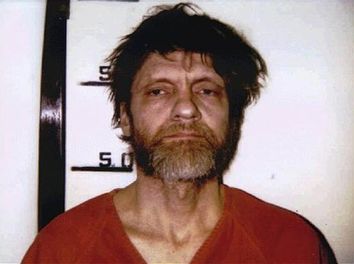
The FBI has requested a DNA sample from “Unabomber” Ted Kaczynski as part of its investigation into the 1982 deaths of seven Chicago-area people who took cyanide-laced Tylenol from packages that had been tampered with, officials said Thursday.
Kaczynski, who pleaded guilty in 1998 to setting 16 explosions that killed three people and is serving a life sentence in federal prison, has declined to voluntarily provide a DNA sample.
Chicago FBI spokeswoman Cynthia Yates said the FBI is seeking DNA from Kaczynski and “numerous individuals,” although she wouldn’t provide details about any of the others. She declined to say whether the agency would try to compel Kaczynski to give a sample, but in a motion filed in California court, Kaczynski said he was told the FBI would try to force his hand.
John Balasz, Kaczynski’s attorney, said he thinks the FBI is wants Kaczynski’s DNA simply to rule him out as a suspect in the Tylenol case.
“You’ve got to ask the FBI how serious they are. I think it’s probably more that they want to exclude him,” he said.
Balasz said he’s “completely convinced” that Kaczynski had no involvement in the case.
The U.S. Marshals Service is currently auctioning off items seized from Kaczynski’s home. Ahead of that auction, he filed the court motion in California asking the court to order the government to keep certain items taken from his cabin in 1996, including journals that could prove his whereabouts in 1982 and other evidence that could clear him in the Tylenol case.
In a response filed Monday, federal prosecutors said the courts lack the jurisdiction to enter such an order. They also noted that Kaczynski hasn’t been indicted in connection with the Tylenol investigation “and no such federal prosecution is currently planned.”
Kaczynski, who’s in federal prison in Colorado, said in his motion that the officials who notified him of the FBI’s request said the agency was prepared to get a court order to compel him to provide a DNA sample. He said he would provide one “if the FBI would satisfy a certain condition that is not relevant here,” but doesn’t elaborate.
Balasz said he’s told the government they’ll have to get a court order to get the DNA sample.
The Tylenol case involved the use of potassium cyanide and resulted in a mass recall. Kaczynski said he has “never even possessed any potassium cyanide.”
In a space of three days beginning Sept. 29, 1982, seven people who took cyanide-laced Tylenol in Chicago and four suburbs died. The deaths triggered a national scare and a huge recall, and eventually led to the widespread adoption of tamperproof packaging for over-the-counter drugs.
In 2009, federal agents searched the Boston home of James W. Lewis, who served more than 12 years in prison for sending an extortion note to Tylenol maker Johnson & Johnson demanding $1 million to “stop the killing.” Lewis has denied involvement in the poisonings.
The Tylenol poisonings case has stymied investigators for all of its nearly 30 years, and no charges have ever been filed in the deaths.
Helen Jensen, a former nurse who accompanied investigators to the home of one of the victims, said she hopes this latest news isn’t a dead end like so many before.
“It sure would be nice to finally get some end to the whole thing, for the people that are survivors,” she said, adding that she still occasionally talks to the grandmother of a 12-year-old girl who died. “It’s all very tragic; her whole family was destroyed by it.”
——
Associated Press writer Don Babwin contributed to this report.
Continue Reading
Close
More than a decade after Illinois put all executions on hold, a bill to abolish the death penalty altogether awaits only the governor’s signature.
But Pat Quinn’s approval is hardly assured. While he says he supports capital punishment when properly applied, he has not yet indicated whether he will sign the proposal, despite intense pressure from fellow Democrats.
“I think it’s important, given the importance of this measure, that people from all over Illinois express their opinions,” Quinn said Wednesday, a day after lawmakers sent the historic bill to his desk. “I’m happy to listen and reflect, and I’ll follow my conscience.”
And as he listens, the world watches.
Former Gov. George Ryan thrust Illinois’ death penalty system into the spotlight when he imposed the moratorium in 2000 and again when he emptied death row in 2003.
When Ryan called for the moratorium, the state had executed 12 death row inmates since 1977. The sentences of 13 others had been overturned.
In some of those 13 cases, evidence showed the suspects were innocent. In others, the trials were deemed unfair or confessions were found to be coerced by abusive police. Since then, the number of overturned capital cases has risen to 20.
In Illinois, perhaps more than anywhere else in the country, the death penalty is an issue that pits those who have lost loved ones to violence against those who have lost years of their lives to prison for crimes they didn’t commit. And both sides plan to give Quinn an earful.
Bill Sloop said death is the only just punishment for the man who shot and killed one of his daughters and wounded another in a 1996 attack that also left a second girl dead and two toddlers permanently injured.
To Sloop, inmates “wouldn’t be on death row if they didn’t deserve to be there.”
“To keep them on life in prison without parole . that’s our taxpayer dollars keeping somebody alive that didn’t care about other people’s lives,” Sloop said. The convicted killer, Daniel Ramsey, “did not care what our daughter asked. She asked him not to shoot, and she begged, and he went ahead and did it. And the only real justice for him is the death penalty.”
But for former death row inmate Ronald Kitchen, the death penalty delivered anything but justice. Kitchen spent 13 of his 21 years in prison on death row after being coerced into confessing to five murders he had nothing to do with. He was released in 2009 and plans to lobby Quinn to sign the repeal.
“I want Governor Quinn to see my face,” Kitchen said. “Just nine years ago, I was sitting on death row, fighting, hoping that the truth will come out, that my innocence will be proven … that I was an innocent man sitting on death row waiting to be murdered by the state.”
“The system is not working,” he said.
Three years after imposing the moratorium, Ryan cleared death row of 171 people, commuting most sentences to life in prison and freeing four more inmates whose guilt was in doubt. Significant changes — including more money and training for defense attorneys, videotaped interrogations and easier access to DNA evidence — soon followed.
Just a month after death row was emptied, courts began sentencing inmates to death again. Death row currently has 15 occupants. The last execution in Illinois was in 1999.
If Quinn rejects the death penalty repeal, he would go against his fellow Democrats, who pushed the bill through the Legislature over the last week.
State Sen. Kwame Raoul, a Chicago Democrat, urged colleagues to help the state “join the civilized world by ending this practice of putting to death innocent people.”
There’s no proof Illinois ever executed an innocent person.
Quinn is being tight-lipped not only about his decision but also his decision-making process. Asked whether religion will weigh in his thinking, he repeated that he plans to listen carefully. The newly inaugurated governor is Roman Catholic, a church that condemns capital punishment.
Former law enforcement officials in the Senate had argued that prosecutors need the threat of death to get guilty pleas from suspects who opt for life in prison. And prosecutors complained that legislators rushed the repeal measure through.
“I believe that they’re leaving the family members completely out of the process,” said Jefferson County State’s Attorney Nicole Villani, who helped to prosecute death row inmate Cecil Sutherland. “I just don’t feel like their voices were heard.”
Fifteen states and the District of Columbia have already ended capital punishment. Colorado, Connecticut, Kansas, Maryland and Montana are among those that have considered repeal in the past year or still are reviewing it, according to abolition advocates.
“This is just the beginning,” said Jeremy Schroeder, executive director of the Illinois Coalition to Abolish the Death Penalty. “Illinois is really in the beginning of a wave.”
——
Associated Press Writer Deanna Bellandi in Springfield contributed to this report.
——
The bill is SB3539.
——
Online: www.ilga.gov
——
Online:
http://www.ilga.gov
Continue Reading
Close
Congressman Danny Davis has a message for former President Bill Clinton: Don’t take sides in the Chicago mayor’s race — or else.
Davis, a longtime friend of Clinton, warned the ex-president on Tuesday that he could jeopardize his “long and fruitful relationship” with the black community if he campaigns for former White House chief of staff Rahm Emanuel instead of one of the two black candidates running — Davis or former Sen. Carol Moseley Braun.
The warning highlights the stakes in what is gearing up to be a contentious race for mayor in the nation’s third-largest city. About a dozen people have made it on to the ballot to replace retiring Mayor Richard M. Daley, who is bowing out after more than 20 years in office, giving candidates their first real shot at Chicago’s top job for the first time in two decades.
In a news release, Davis, a Democrat from Chicago’s West Side, said Clinton’s relationship with the black community may be “fractured and perhaps even broken” if he comes to town to stump for Emanuel, who moved back to Chicago this fall to run for mayor and is leading in the polls.
Davis later told The Associated Press that he intended the news release to be a personal appeal to Clinton, friend to friend.
“You just wouldn’t want your friends to be campaigning against you,” Davis said with a laugh. “I’ve enjoyed a great friendship and relationship and have a tremendous amount of affinity for both the Clintons … and I’d like to keep it that way.”
“I want him to be neutral,” Davis said of the former president.
Emanuel’s campaign recently announced that Clinton was going to head a campaign event in January, but no date or time has been announced. Campaign spokesman Ben LaBolt declined to comment on Davis’ statement, and messages left with Clinton’s foundation weren’t immediately returned on Tuesday.
Blacks make up 35 percent of Chicago’s population, a key voting bloc that has the potential to doom or elevate a candidate. A recent Chicago Tribune/WGN poll showed Davis leading Emanuel among black voters, but just barely. Davis was backed by 21 percent of black voters, Emanuel was backed by 19 percent, but 30 percent were undecided.
Emanuel held various positions in Clinton’s administration, including senior policy adviser, director of special projects and political director. Davis also has known Clinton for years, and political consultant Delmarie Cobb said Davis was among the first black leaders to support Clinton’s presidential campaign before he had widespread name recognition.
“I can see where Danny Davis would be very upset,” Cobb said.
Braun, the race’s other leading black candidate, joined the U.S. Senate the same year Clinton became president, and he was always supportive of her, Cobb said. Clinton appointed Braun as ambassador to New Zealand after she lost her Senate re-election bid.
Messages left for Braun’s campaign weren’t immediately returned.
Clinton — who Nobel Prize winner Toni Morrison once dubbed the country’s first black president — still enjoys a great deal of support among black voters, and Davis said part of his concern is about Clinton’s impact on the mayor’s race.
“I think he certainly has some sway and power,” Davis said. “He’s still a tremendous draw.”
But Cobb wasn’t convinced that Clinton’s popularity would translate into votes. She and other black leaders want Clinton to stay on the sidelines because “a president shouldn’t inject himself in a local mayoral race. He’s an international figure.”
“This is not something he should be a part of, especially when he has no direct ties to Chicago,” Cobb said. “He is bigger than this.”
While Davis said his message to Clinton was meant to be a friendly appeal, the tone of his statement was more direct, suggesting that the former president would lose black support if he campaigned for Emanuel.
“The African-American community has enjoyed a long and fruitful relationship with the Clintons, however it appears as though some of that relationship maybe fractured and perhaps even broken should former President Clinton come to town and participate overtly in efforts to thwart the legitimate political aspirations of Chicago’s Black community,” the statement said.
Cobb echoed that sentiment, saying that if Clinton visits Chicago for Emanuel, “it would appear that the president was supporting a white man over Hispanic and African-American and women candidates, and I’m sure that’s not . . . the perception the president wants to project.”
Continue Reading
Close