
Linda Shiue

Hawaiian-inspired French toast with coconut syrup

Take one part doughnut, one part coconut, add sweet bread and spiced batter ... and have a vacation at breakfast

  • more
    • All Share Services

Hawaiian-inspired French toast with coconut syrup

What would be your last wish on your final morning in Hawaii? Catch the sunrise? A last-minute dip into the Pacific? Or perhaps one last exploration of tide pools, looking for crabs, starfish and sea turtles?

After a glorious week in the sun, while the rest of us were still asleep to the hypnotic sounds of waves, the breeze gently blowing through palm trees, and the lazy whir of the ceiling fan, my husband woke up quietly to sneak out for his one last wish. He drove 45 minutes (each way) to get a dozen malasadas. That’s the kind of guy he is.

Malasadas are the yeasty, eggy, sugary doughnuts that were introduced to the Hawaiian islands by Portuguese immigrants from the Azores generations ago. Eagerly incorporated into the cuisine of the Hawaiian islands, each island has a “best” place to get them. On the Big Island, that place is Tex Drive In, in Honokaa, near Waimea.

To the casual observer, the malasada looks like a typical raised doughnut, rolled in granulated sugar. Stace, one of the kama’aina (locals) I talked to, shed some light on what makes Tex’s malasada special: the first owners converted their recipe for pao doce (Portuguese sweet bread) and used it to make their mouth-watering and award-winning malasadas.

My husband arrived back with the box of malasadas just as the rest of us were waking up, and we quickly devoured them. That’s how you can eat on vacation — without consequences.

Back home, I wanted to make a Sunday brunch to remind us of Hawaii, which we miss too much already, but I don’t do much deep-frying in my kitchen. Thinking back to Stace, Tex’s malasadas, and the Portuguese immigrants who brought their sweet bread and malasadas to another heavenly island home, I made a not-too-guilty replacement: Portuguese sweet bread French toast with coconut syrup.

Portuguese-Hawaiian sweet bread French toast with coconut syrup

Sweet bread makes excellent French toast because of its eggy, light and slightly chewy texture. I made this version with guava- and taro-flavored sweet bread we brought back with us from Punalu’u Bake Shop, which by being located 30 minutes South of Hawaii Volcanoes National Park in Na’alehu is known as the “Southernmost Bakery in the U.S.A.” King’s Hawaiian bread or rolls, readily available in all major grocers on the mainland, make a great substitution. Hawaiian coconut syrup is more difficult to come by, so I’ve made a recipe you can make from ingredients easily found anywhere.

Ingredients

For coconut syrup

  • 1 can (13- or 14-ounce) unsweetened coconut milk
  • 1 cup simple syrup (made of equal amounts of granulated white sugar and water, boiled together)
  • pinch of salt

For French toast

  • 1 pound loaf of Hawaiian sweet bread (or rolls), such as King’s Hawaiian
  • 5 large eggs
  • ¼ cup milk
  • 1 teaspoon vanilla extract
  • ½ teaspoon ground cinnamon
  • zest of a lemon, lime or tangerine
  • butter, as needed for griddle or pan

Directions

For coconut syrup

  1. Whisk together coconut milk, simple syrup and salt in a saucepan, and bring to a gentle boil over medium heat. Stir occasionally to prevent scorching.
  2. The syrup is ready when boiled, but you can reduce to desired thickness by continuing to cook over low heat, stirring frequently.

For French toast

  1. Slice sweet bread into desired size slices.
  2. Whisk together eggs, milk and seasonings.
  3. Heat griddle or pan to medium-high and grease with a small amount of butter.
  4. Dip slices of sweet bread into egg mixture, then cook on griddle for a minute or so on each side, until nicely golden.
  5. Serve with coconut syrup and a dusting of powdered sugar.

Hawaiian-inspired French toast with coconut syrup recipe

  • more
    • All Share Services

Hawaiian-inspired French toast with coconut syrup recipe

Sweet bread makes excellent French toast because of its eggy, light and slightly chewy texture. I made this version with guava- and taro-flavored sweet bread we brought back with us from Punalu’u Bake Shop, which by being located 30 minutes South of Hawaii Volcanoes National Park in Na’alehu is known as the “Southernmost Bakery in the U.S.A.” King’s Hawaiian bread or rolls, readily available in all major grocers on the mainland, make a great substitution. Hawaiian coconut syrup is more difficult to come by, so I’ve made a recipe you can make from ingredients easily found anywhere.

Ingredients

For coconut syrup

  • 1 can (13- or 14-ounce) unsweetened coconut milk
  • 1 cup simple syrup (made of equal amounts of granulated white sugar and water, boiled together)
  • pinch of salt

For French toast

  • 1 pound loaf of Hawaiian sweet bread (or rolls), such as King’s Hawaiian
  • 5 large eggs
  • ¼ cup milk
  • 1 teaspoon vanilla extract
  • ½ teaspoon ground cinnamon
  • zest of a lemon, lime or tangerine
  • butter, as needed for griddle or pan
Continue Reading Close

Persian walnut pomegranate chicken (Fesenjan)

When the author's relaxing vacation rental turned into a disaster, she found solace in discovering this dish

  • more
    • All Share Services

Persian walnut pomegranate chicken (Fesenjan)

I have a travel tic. No, not the plastic bags I carry along because they come in handy. While I travel to explore the unfamiliar, the first thing I always do when I arrive is to make myself at home. Whether it’s a room in a hostel, a fancy hotel or a vacation rental, we’re barely five minutes in the door before I start unpacking. I transfer clothes from suitcase to drawers and clothes hangers. Dopp kits get emptied and my toiletries take their places in their new temporary home. A scented votive gets placed on the bedside table, which is where I will also stack my reading materials. It must be a fear of displacement, even when I’ve chosen it, that drives me to nest.

So it was especially jarring to me when the vacation rental in London our friends and I had booked over the Internet turned out to be different than promised. The converted church looked just as it had in the photos; that was not the surprise. It was just that our “Vacation Rental By Owner” was more of a “Vacation Rental With Owners.” Our friends and I had already chosen which rooms we were going to take. Harriet, our host, took us on our tour of the space, and I wondered why there seemed to be one less room than I remembered.

“Where is the light blue room with the fuchsia settee?” (That was the one I had been eyeing.)

“Oh, I didn’t think you would need that space,” Harriet said, not missing a beat as she unlocked a door. “Won’t all the [five] children just stay in one room together? No worries, let me just remove my belongings from there.”

That was surprise No. 1.

“My partner and I will just stay in the choir loft,” she said. “Don’t mind us; just pretend we are not here.”

But it was impossible to pretend when, while attempting to stretch out in the living room that was below the open loft, we’d hear Harriet and Lee’s exaggerated whispers. When we’d return late at night, which should not have been anyone’s business but ours, Harriet would loudly toss and turn and sigh, irritated from being woken up at night. We felt more like houseguests in a stranger’s home than tenants, free to come and go as we pleased.

Further surprises came along. One early morning, we were awoken by loud sounds downstairs. There were at least a dozen people busily moving furniture, laying out lamps and doing hair and makeup.

Harriet eyed us. “You should probably eat your breakfast quickly so that the film crew can start working.” (Film crew?) “Isn’t it exciting?” she said breathlessly. “Mandy Moore is filming her movie here! I hope you have a full day planned so that you won’t interrupt the filming.”

Mandy Moore? Filming? Wait a second– what about the naps our exhausted kids were counting on having? And was our rent subsidizing Mandy Moore’s film? I snuck a peek at the blond-wigged woman whose face was being made up for what seemed like hours. That was not Mandy Moore.

Another day, our breakfast was again interrupted by an unexpected visit. “Sorry about that, ” Harriet said. “These people are probably going to buy the house.”

“Is it for sale?” I asked.

“Yes, but I don’t know too much of the details. The owners are in charge of that.” Turns out, Harriet and Lee were not even owners, but staff of the owners … if even that.

As a seeker of routines, I felt very unsettled. While I exulted in the randomness of our daytime explorations, I needed to come home to the familiar, where I could kick back. I needed some comfort.

Around the corner from our over-occupied vacation rental was the main drag, where you could get everything but English food. There were Thai, Brazilian, Caribbean and Persian restaurants. We tried them all (it was hard to cook in the kitchen, since Harriet and Lee seemed always to be there), but our favorite was the Persian place. We went there for at least half of our dinners that week. The door opened to the view of an open wood-fired oven where lavash and nan were freshly baked. We gorged on kebabs and the classical khoresht, or stews, that are typical of Persian cuisine. To cope with the unending surprises in what was supposed to be our home away from home, we found comfort by eating the same meals over and over.

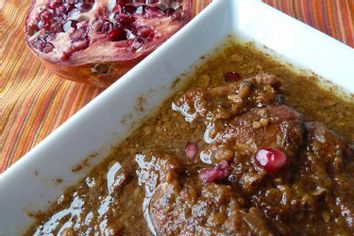
I didn’t tire of those exquisite dishes, and since that time have been waiting for the opportunity to explore cooking Persian food. I am particularly enamored by the dish known as fesenjan. It is a dish of chicken or duck stewed in a sauce composed of the unusual ingredients of pomegranate molasses and ground walnuts, served with fluffy basmati rice. The flavors are rich and exotic to the uninitiated. But they remind me of home.


Fesenjan (Persian Chicken in Walnut and Pomegranate Sauce)

This dish combines the creamy richness of the slow-cooked ground walnut sauce with a sour-sweet undercurrent of pomegranate molasses. It’s savored on special occasions. I’ll be making it again on Nowruz, the Persian New Year, which is celebrated on the first day of spring, which falls this year on March 20. Recipe adapted from Whats4eats.com.

Serves 6 to 8.

Ingredients

  • ¼ cup butter or oil
  • 2 pounds chicken legs or thighs, bone-in, cut into serving-size pieces
  • 1 large onion, sliced thinly
  • 2 cups walnuts, finely ground with a mortar and pestle or in a food processor
  • 1 ½ cups chicken stock or water
  • 2/3 cup pomegranate molasses *
  • ½ teaspoon ground cardamom
  • 1 tablespoon salt, or to taste
  • pepper to taste
  • optional: sugar to taste

Directions

  1. Heat butter or oil in a large, heavy-bottomed pot over medium flame. Add the chicken pieces and brown on all sides. Remove browned chicken and reserve on a plate.
  2. Add the onions to the pot and sauté until translucent.
  3. Stir in the ground walnuts and stock or water and return the browned chicken pieces to the pot. Bring to a boil, then reduce heat to low, cover and simmer for 20-30 minutes.
  4. Stir in the pomegranate molasses, cardamom, salt and pepper. Simmer for another hour until the chicken is tender, the sauce is slightly thickened and the walnuts begin to release their oil. Adjust seasoning to taste, adding sugar if desired, and simmer for 10 more minutes. Serve with plain white basmati rice.

* Pomegranate molasses, sometimes called pomegranate syrup, is available in most Middle Eastern and health food stores. It has the color and consistency of molasses but is simply reduced pomegranate juice, without added sugar. If it is unavailable, you can substitute 2 cups of fresh pomegranate juice, and use only 1/2 cup of stock or water.

Continue Reading Close

Persian walnut pomegranate chicken (Fesenjan)

  • more
    • All Share Services

Persian walnut pomegranate chicken (Fesenjan)

This dish combines the creamy richness of the slow-cooked ground walnut sauce with a sour-sweet undercurrent of pomegranate molasses. It’s savored on special occasions. I’ll be making it again on Nowruz, the Persian New Year, which is celebrated on the first day of spring, which falls this year on March 20. Recipe adapted from Whats4eats.com.

Serves 6 to 8.

Ingredients

  • ¼ cup butter or oil
  • 2 pounds chicken legs or thighs, bone-in, cut into serving-size pieces
  • 1 large onion, sliced thinly
  • 2 cups walnuts, finely ground with a mortar and pestle or in a food processor
  • 1 ½ cups chicken stock or water
  • 2/3 cup pomegranate molasses *
  • ½ teaspoon ground cardamom
  • 1 tablespoon salt, or to taste
  • pepper to taste
  • optional: sugar to taste

Directions

  1. Heat butter or oil in a large, heavy-bottomed pot over medium flame. Add the chicken pieces and brown on all sides. Remove browned chicken and reserve on a plate.
  2. Add the onions to the pot and sauté until translucent.
  3. Stir in the ground walnuts and stock or water and return the browned chicken pieces to the pot. Bring to a boil, then reduce heat to low, cover and simmer for 20-30 minutes.
  4. Stir in the pomegranate molasses, cardamom, salt and pepper. Simmer for another hour until the chicken is tender, the sauce is slightly thickened and the walnuts begin to release their oil. Adjust seasoning to taste, adding sugar if desired, and simmer for 10 more minutes. Serve with plain white basmati rice.

* Pomegranate molasses, sometimes called pomegranate syrup, is available in most Middle Eastern and health food stores. It has the color and consistency of molasses but is simply reduced pomegranate juice, without added sugar. If it is unavailable, you can substitute 2 cups of fresh pomegranate juice, and use only 1/2 cup of stock or water.

Continue Reading Close

Trinidadian greens and coconut puree (Callaloo)

Here's another way to get your vitamins: Sweat them with herbs and chile, then zap them with creamy coconut milk

  • more
    • All Share Services

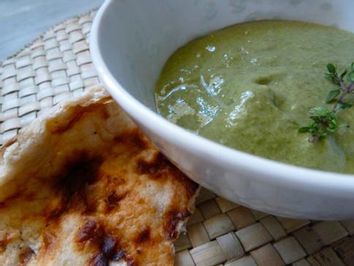
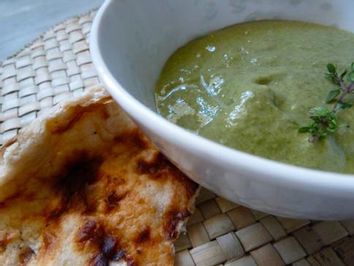
Trinidadian greens and coconut puree (Callaloo)

If ever there were a human definition of dynamo, it is my friend Alan. He appears on a lark, and disappears just as quickly. But in the precious moments that he is with you, Alan makes an impression.

He is making his living these days as an actor and independent filmmaker in New York, but my husband knows Alan from their less glamourous high school days in Trinidad. Both of that rare breed of Trinidadian Chinese, they were destined to know each other. Like all Trinidadians, Alan loves food. He is also an excellent cook, coming from a family that owns a Chinese restaurant and grocery in Trinidad.

On one of those last-minute, fleeting trips Alan made to visit us in San Francisco, he whipped up some callaloo. Those of you from the West Indies may salivate at the thought of this green vegetable stew, which is hard to describe to outsiders. It’s the kind of dish that you eat when your granny makes it for you, but for many young people, it seems like too much work. But it is a taste of home, and worth the effort. Alan, creative and infinitely resourceful, was able to find all the ingredients he needed at, of all places, our local Chinese grocery. The central ingredient is taro leaves, also called dasheen, massive jungly appearing yet surprisingly delicate greens.

“Bhaji,” the local word for spinach, is also sometimes used. The leafy greens are cooked with okra, coconut milk, peppers and a secret blend of spices, and sometimes salt pork and/or crab, to make a stew both creamy and spicy, comforting and complex. I am making it sound easy, and Alan made it look so. I know that Alan, who normally zips around at lightning speed, enters almost a meditative state when cooking. He spent hours picking through the Dungeness crab legs he bought for his luxurious and much appreciated version of this classic dish, which has humbler origins among Trinidad’s African slaves.

Callaloo is part of what is known as “Creole food” in Trinidad, among other foods served by the descendants of those African slaves, including macaroni pie and pelau (rice with pigeon peas). It’s eaten alongside these other foods, served with rice.

Callaloo

Callaloo, despite its humble origins, is as smooth as a French bisque. True callaloo uses taro leaves, which are carried by many Asian markets. If unavailable, whole leaf spinach makes a good substitute. The salt pork and crab add depth of flavor but can be omitted to make a vegan version of this stew.

Ingredients

  • 1 pound taro leaves (about 12 leaves, stripped from tough stem), or whole-leaf spinach, roughly chopped
  • 8 okra, diced
  • 4 chives or two green onions, minced
  • 1 onion, minced
  • 3 garlic cloves, minced
  • 1 Scotch bonnet or habañero pepper, minced
  • 3 sprigs fresh thyme, stem removed
  • 2 tablespoons butter
  • 1 cup chicken or vegetable broth
  • 4 cups unsweetened coconut milk (2 cans)
  • ¼ pound salt pork (optional)
  • ½ pound lump crabmeat (optional)
  • salt, to taste
  • Accompaniment: steamed rice (in the Caribbean, parboiled rice such as Uncle Ben’s is typical) or roti

Directions

  1. Melt butter in a stock pot and then add all vegetables. Sauté until onions are fragrant and translucent.
  2. Add broth and coconut milk and bring to a boil.
  3. If using salt pork, add now.
  4. Simmer for 30 minutes, until all vegetables are very soft.
  5. Purée with an immersion blender or in a standard blender. (Remove salt pork first, if used.)
  6. Return purée to pot. Add salt to taste.
  7. If using crab, add to soup and bring to a boil. Cook for a few minutes until crabmeat is cooked.
  8. Serve over hot rice.
Continue Reading Close

Callaloo recipe (Trinidadian style)

  • more
    • All Share Services

Callaloo recipe (Trinidadian style)

Ingredients

  • 1 pound taro leaves (about 12 leaves, stripped from tough stem), or whole-leaf spinach, roughly chopped
  • 8 okra, diced
  • 4 chives or two green onions, minced
  • 1 onion, minced
  • 3 garlic cloves, minced
  • 1 Scotch bonnet or habañero pepper, minced
  • 3 sprigs fresh thyme, stem removed
  • 2 tablespoons butter
  • 1 cup chicken or vegetable broth
  • 4 cups unsweetened coconut milk (2 cans)
  • ¼ pound salt pork (optional)
  • ½ pound lump crabmeat (optional)
  • salt, to taste
  • Accompaniment: steamed rice (in the Caribbean, parboiled rice such as Uncle Ben’s is typical) or roti

Directions

  1. Melt butter in a stock pot and then add all vegetables. Sauté until onions are fragrant and translucent.
  2. Add broth and coconut milk and bring to a boil.
  3. If using salt pork, add now.
  4. Simmer for 30 minutes, until all vegetables are very soft.
  5. Purée with an immersion blender or in a standard blender. (Remove salt pork first, if used.)
  6. Return purée to pot. Add salt to taste.
  7. If using crab, add to soup and bring to a boil. Cook for a few minutes until crabmeat is cooked.
  8. Serve over hot rice.
Continue Reading Close

Page 1 of 14 in Linda Shiue