
L.M. Fenton

Why being a mother is the greatest role of my life

Unlike Natalie Portman's critics, I don't have a problem saying my family comes before a successful career

  • more
    • All Share Services

Why being a mother is the greatest role of my lifeThe author and her son

Judging by Salon’s front page on Monday, February 28 has been declared Ambivalence About Motherhood Day. One article suggested that women who post pictures of their babies on Facebook are “depressing” and “boring,” not to mention sublimating their own identities. This thesis is proven by a straw poll of several of the author’s anonymous friends (one of whom claims to only know people who populate a male-dominated Jay Gatsby world of polo shirts and golf games). Another Salon writer took Best Actress Oscar winner Natalie Portman to task for daring to suggest, in her acceptance speech, that her greatest role in life was yet to come: Motherhood. A third article posted late Monday night is a sigh of relief from a writer who is much happier now that she moved out of the family home and lives most of her life apart from her young children because she never wanted them anyway.

And here I am, occupying the All Mommy, All the Time camp after many years of pitching my tent on the Holy Hell That’s Depressing side. I’m happy to serve as the canary in the coal mine for any silently gloating Facebook friends who see my baby-crazy turn as validation for the outward focus of their own lives. If you think children are boring and depressing, I think it’s probably for the best that you do not have them anyway. And besides, careers can be filled with extraordinarily fulfilling moments, even if you can’t post about them on Facebook all day long.

I know this from experience. I’ve had a career for five years, mostly as a divorce attorney for low-income victims of domestic violence. And because my career felt so important, and because the experiences I had during my career were so life-changing and enlightening, my mind has been completely changed on the subject of whether a successful career is the most important aspect of my identity. It used to be. It isn’t anymore. If I had to choose between being a successful lawyer and a successful mother, I’d choose the latter every time.

When you are a public interest lawyer, the rungs on the ladder of success are labeled a little differently, and none of them say “money.”  Every divorce judgment was a coup; (almost) every sole custody award was a singular triumph. Often, success was any acknowledgment — from anyone — that I had performed an exemplary service. (Few people thank their divorce lawyer, which comes with the territory, but can still be somewhat demoralizing.) Success was knowing that I had litigated a case far beyond the abilities of lawyers who billed out at $350 an hour with nothing to show their clients for it. Sometimes success was hard to classify, especially when New Boyfriend had a few too many similarities with Defendant Husband. But on the whole, doing my job and doing it well felt necessary and important, and I was and am extraordinarily proud of the work I did. Much of my work could be characterized as helping clients take control of their lives back from someone who had stolen it from them. In the public interest definition of success, I had about reached the top when I felt like I could say that about any of my cases.

And yet, when my wife and I started seriously talking about conceiving a baby, I didn’t suddenly worry about whether my identity as an attorney would be sublimated or overcome. My worry was whether I could continue to handle the work at all. The worst aspects of my career involved the children in the cases, whom I preferred to see and to hear about, as individuals, as little as possible. It was not my job to judge my clients’ parenting choices, but every time a child tagged along to court or to an appointment my heart got a little heavier.

“Don’t worry, he knows all about it,” I heard a few too many times when explaining that a legal interview about violence and sexual assault was not appropriate subject matter for a young child, particularly when it involves the parents of said child.  And too many times did I have to explain to a parent that even if children don’t see violence happen, they live with it as surely as if it were occasioned upon their bodies. Violence is loud. Too many of my clients’ children knew the sound of a tooth breaking upon impact with a fist, of flesh yielding to repeated blows. Violence is visible long after it occurs, and remains an invisible presence in any household ruled by its looming threat. Children born of violence are not, on the whole, happy children. They are traumatized. They are violated. They need therapy, and few of them get it. And they are often doomed to seek out the only relationships they have seen, because it is what they understand of family and love. Many of my clients were also born of violence.

These, the worst aspects of my career, helped me come to a rather pointed conclusion: If and when I become a mother, it will be the single most important job I will ever have. And now that I am a mother, what happens to my career? I am apparently supposed to feel like the answer to this question is at least as important as my baby. I’m even born of the demographic that most often makes this argument: Educated, relatively well-off women who are sometimes forced by a male-driven workplace to choose between motherhood and career. (Ask your nanny, wealthy career-focused parents, whether she feels the work of raising your children is as important or even more important to her sense of identity than the work of raising her own.) And while I have no experience in the matter, I have no doubt it’s true that straight men are not forced nearly as often to choose between career and children. But every day I spend with my son, I find myself caring less about when, if ever, I will check back into the office to resume my climb up the strange and twisted ladder of public interest success.

Due to circumstances surrounding my son’s birth, I find myself caring for him at home, without a job and few prospects in sight. In deciding what to do next, I find that the answer to the career question is also a question, the question with which I answer every other aspect of my life right now, as a new parent determined to do right by my child: What would be best for my son? I feel lucky to be able to ask myself this question, and to (at least, for now) have the freedom to act accordingly. I feel damned lucky that I don’t have to ask which of several dead-end jobs I should take on so my son can be fed and clothed. With my education, resources, and supportive spouse, I cannot fathom asking myself what to do with my son that would be better for my career, especially while he is so young.  I allow that this might change if and when my wife resumes her career. (I also allow that this might change when he starts screaming NO NO NO NO NO WHY, asking for a 700th rendition of Walter the Farting Dog complete with sound effects, and sticking his fingers into electrical sockets.)

So Monday I read these various articles about the relative unimportance of motherhood to a successful woman’s identity. I read them as I wiped caked drool from my shoulder and pressed the upload button to broadcast yet another boring, depressing photo of my chubby little seven-week old to my Facebook world, to be displayed proudly alongside my new profile picture — the fifth in a series since Julian was born, depicting him in a series of poses next to or on top of me. When the mood strikes us, we do a photo shoot. The mood strikes us fairly often. I have yet to hear any complaints beyond eager, far flung relatives who feel I do not post these pictures nearly often enough.

My short career held a lot of promise, but those tiny light-filled eyes hold more. If I never do anything more important than raising him in love, I’ll be a success beyond measure. 

Hate crime laws aren’t the answer

Until the government grants the LGBT community equality, society will continue to quietly condone such crimes

  • more
    • All Share Services

Hate crime laws aren't the answer

This past weekend, as a precursor to National Coming Out Day, the national press reported on two troubling stories of anti-gay incidents in New York. In the first case, Carl Paladino told a group of Orthodox Jewish leaders that, unlike his Democratic opponent, he had not marched in the Gay Pride parade this year because “that’s not the example we should be showing our children.” In the text of his prepared speech, he was to have added, “There’s nothing to be proud of in being a dysfunctional homosexual.” He also accused gays of brainwashing children: “I just think my children and your children would be much better off and much more successful getting married and raising a family, and I don’t want them brainwashed into thinking that homosexuality is an equally valid and successful option — it isn’t.” Paladino will grace November’s ballot as the Republican candidate for governor of New York.

The second incident is a case of stomach-churning violence perpetrated against helpless victims. The instigators, eight men in all, have been arrested (a ninth is on the run). These men singled out three other men whom they suspected of being gay. One by one, the victims were lured to an empty apartment where they were raped and tortured for hours. Because the men uttered anti-gay slurs while committing their awful acts, they will be charged with hate crimes. “Hate crimes” in New York (and in most other states with such legislation) are not new crimes in and of themselves. The men will be charged with preexisting crimes such as aggravated battery, false imprisonment and attempted murder, but if they are convicted, the maximum sentence for their crimes will be longer than if they were not charged under the hate crimes law. These types of laws are also called “sentence enhancement laws.”

“Hate crime” or “bias crime” laws that include sexual orientation as a protected category became popular with U.S. legislators after the 1998 murder of Matthew Shepard, a 21-year-old University of Wyoming student who was beaten and left tied to a fence to die. The men who killed Shepard used an insanity defense and claimed they were provoked into uncontrollable rage after Shepard made sexual advances toward them. (Newspapers at the time termed this claim the “gay panic defense.”)  Both men eventually received life sentences, and the case resulted in an unprecedented amount of attention to the issue of homophobia. Advocates noted that Wyoming had no hate crime statute that included sexual orientation as a protected category, and campaigned for the implementation of hate crimes laws nationwide. While a federal hate crimes bill failed, many states then instituted new hate crimes laws or added sexual orientation (and sometimes gender identity) as a category to preexisting laws. Though still opposed by many conservative legislators when applied to sexual orientation and gender identity, hate crimes laws are a safe way for legislators to announce their tolerance of the LGBT community without having to endorse their full participation in society through anti-discrimination laws that would protect their rights (as opposed to punishing people who commit crimes against them).

Opponents of the laws often argue that hate crimes laws are unconstitutional because they criminalize thoughts or feelings. However, unless there is an element of “harassment” involved — and the harassment fits the state’s already existing law barring harassment for any reason — hate crimes legislation does not turn bias speech alone into a crime. If they did, Paladino would be facing at least a weekend in prison. In a nutshell, that’s the problem with hate crime legislation as an answer to anti-gay incidents. The men who tortured their acquaintances would have faced stiff prison sentences regardless of whether they’d targeted their victims for being gay. The existence of a hate crimes law, which has included sexual orientation in New York for over a decade, did nothing to deter them from committing their heinous acts. Sentence enhancements don’t scare perpetrators into refraining from acts of violence that they already know are wrong, illegal and lead to prison. 

The LGBT community derives no extra protection from laws that make illegal acts even more illegal. While we are targeted for violence, the reason we are targeted is that we are considered lesser than or unequal to our straight or gender-conforming peers. And the idea that we are second-class citizens isn’t just coming from backwater Baptist revivals — the very laws of our country underscore the notion that we deserve less than their full protection. Many states with hate crimes statutes have no protection for things like anti-gay employment discrimination. Roughly half of all U.S. states offer no protection to employees who are fired or otherwise discriminated against for being gay, and even fewer states protect employees who are discriminated against for being transgender. Only five states and the District of Columbia treat gay and lesbian couples equally under their marriage laws. Less than half of the states protect the LGBT community from discrimination in housing. With the recent torture incident and last week’s detailed reporting on the suicides of multiple gay teenagers, the climate is ripe for legislative solutions to homophobia. More and harsher hate crimes statutes are not the answer to these widespread problems of inequality and discrimination. While they may speak to our collective outrage when a member of our community is targeted for violent crime, they do not address the more insidious forms of discrimination many of us face on a daily basis.

What would benefit the LGBT community most would be the implementation of laws that render anti-gay speech like Paladino’s toothless, regardless of whether they deter him from actually voicing his opinions. We need laws that protect the LGBT community from discrimination in employment (not just in the military), in housing, and in receiving healthcare. We need laws that allow us to marry each other and have our marriages recognized by the state, to receive equal benefits to those of our straight counterparts, and that allow us to formalize our relationships with our children. We will only be safe in a world where Paladino’s words are as harmless as they are constitutionally protected, where the general sentiment that there is something abnormal or unnatural about being gay cannot be so obviously connected to a spate of teen suicides. There will always be people who act with extreme violence, for whatever reason. If some of these people are truly motivated by bias alone, the way to fight this violence is to banish the bias from our laws. For how can we expect to confront bias crimes, supposedly predicated on anti-gay sentiment, if the legal framework of our society actually supports their biases?

Continue Reading Close

Clementi’s suicide: Many are to blame

It isn't just a bullying roommate who caused the tragedy. As in other LGBT deaths, society's attitude looms large

  • more
    • All Share Services

Clementi's suicide: Many are to blame

Rutgers student Tyler Clementi’s anguished jump off the George Washington Bridge capped off a week of widely reported youth suicides attributed to anti-gay harassment and bullying. Clementi’s roommate and an acquaintance filmed him having sex with another man, without his knowledge or permission, and live-streamed it to hundreds of other people. When he found out, he jumped off the bridge to his death. Three other teenage boys escaped their pain through hanging, another hanging, and a bullet to the head. None of these acts are equivocal: These young men, at least at the depth of the moment, intended to make a final exit from the world. 

The high rate of suicide among LGBT youth is nothing new, even if more widespread acknowledgment of its root cause is. And while the sheer youth of the three high school students makes their deaths perhaps even more disturbing (one of them was just 13 years old), Clementi’s story is the one that grabbed the national media, and the hearts of just about everyone I know. LGBT youth suicide is such an enormous, devastating problem, and I’m glad it’s finally being taken seriously and talked about openly, so in that regard I guess it doesn’t matter why people are talking about Clementi’s death. But I still wonder why this particular story has legs while the world went quickly silent about JeHeem Herrera, just 11 years old, who hung himself last year. Another 11-year-old, Carl Joseph Walker-Hoover, hung himself just days earlier. Then there was 17-year-old Eric Mohat, whose classmate told him to just go kill himself, because no one would miss him. He did, in 2009. These spates of LGBT youth suicide happen with alarming regularity, and these are just the ones reported in the media. 

While I hope, fervently, that the conversation continues, I have to wonder why everyone suddenly cares. Specifically, what is it about Clementi’s story that squeezes America by the heart? Is it because straight people can identify with the extreme pain, helplessness, and humiliation of being violated via video camera? Covert videotaping of private sexual acts — or even plain nudity — happens all the time. With the proliferation of instant media access, and the ability to transmit just about any image or film without time for a second thought, and without a way to rescind it upon instant regret, I have to imagine that what happened to Clementi happens to teens these days on a fairly regular basis. There are a lot of kids (and adults) out there who know exactly what he must have been going through, the horror of knowing that countless strangers have seen your vulnerability in a moment that should have been sacred and private. Perhaps it is easier to understand, in a limited way, the emotions that drove him to end his life — though I think it somewhat impossible to explain to those who haven’t lived it what a special hell it is to grow up gay in most U.S. cities and towns.

But I think the part of Clementi’s story that most appeals to a larger sense of moral outrage is the availability of two easily identifiable villains: The teenagers who giggled at their prank, filming the gay roommate and showing the world his private moment. But is that, alone, really what drove Clementi off the edge? Most of the other kids identified above lived through years of merciless taunting, humiliation, terrorized because their honest, naked selves didn’t fit in. Surely Clementi’s roommate, whom he considered a decent roommate in a lot of ways, wasn’t the first person to single him out for ridicule, though he may have been the first to live-stream it. But I don’t think that one act drove him to suicide, except in combination with the homophobia that Clementi envisioned raining down on him, full blast, for the rest of his life. He felt it coming from all areas of the country, all eyes on him and not just seeing him but judging him, laughing at him, condemning him to hell. He was the victim of a crime that invaded his privacy, but it was made all the worse by how the public would then perceive, interpret, and judge his private act.

We haven’t heard from the kids who some say caused Clementi’s suicide, for whom some are calling for murder charges, at whom society can point fingers and say: You. You are responsible for this tragedy. In this, we had no part. But I can’t blame those two teenagers for Clementi’s death. They unthinkingly caused him far more pain than I suspect they could have imagined. They should be expelled from their dorms, and perhaps from their school, for the gross and intense violation of his privacy. But jail time? There is no evidence that they intended for Clementi to end his life. They probably didn’t think beyond the moment of their foolish prank. To blame them alone is to take away a very limited lesson: Don’t secretly film your roommate having sex, and certainly don’t broadcast it on the Internet. That lesson alone will do nothing to address the problem of LGBT youth suicide.

In contrast, you don’t have to look far to find people whose every day actions, whose very careers, are designed — specifically intended — to drive LGBT youth to extinction. Here are some people I would like to see in jail for Clementi’s suicide: George Rekers, who is still pushing “conversion therapy” for gay teens, essentially normalizing self-hate. His  methods are still used by Louisiana mental health workers who treat adolescents. James Dobson, head of Focus on the Family, whose bloated multi-million dollar budget is both spent and made on the spreading of gay-hate. Candi Cushman, whose entire career is focused on destroying gains made by anti-bullying campaigns in public schools. The list of the guilty could go on forever: Every elected public official who has ever voted for anti-gay ordinances, marriage bans, adoption bans, prohibitions on health care for same-sex spouses. Every two-bit lobbyist who bargains with these public officials to seal the deal. Every religious nut with a pulpit who weekly tells the congregation, full of kids and teens, that they will burn in hell for being gay. Every psychiatrist, psychologist, or social worker who has ever suggested to a teen that being gay is shameful, abnormal, and a disease to be cured. Every teacher who has turned a blind eye or, worse, joined in the anti-gay harassment of a young student.

Clementi’s suicide is that simple, and that complicated. In order to address the unbearably high rate of LGBT youth suicide, look beyond the secret videotape and the two kids who made a stupid, tragic, callous mistake. There are guilty parties everywhere.      

Continue Reading Close

Oakland BART shooting verdict won’t address the real issue

As long as the police automatically view black males as threats, the same violent cycle will continue

  • more
    • All Share Services

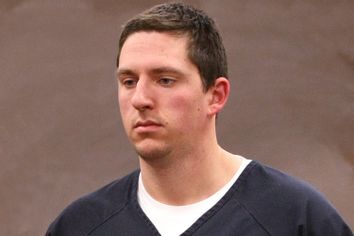
Oakland BART shooting verdict won't address the real issueJohannes Mehserle in January, 2009.

Will justice be served in the case against Johannes Mehserle for the murder of Oscar Grant III, a young father shot in the back as he lay facedown on the BART platform in Oakland, Calif.? Mehserle’s defenders claim he mistook his gun for his Taser. His detractors call him an executioner. The plain facts of the case beg the question of why a police offer would feel the need to use a Taser in this situation, let alone a weapon. It also begs the question of why a police officer would intentionally fire a bullet into the back of a prone, defenseless man in front of a large crowd of people. And no matter what the verdict, the troubling reality remains that the shooting of unarmed black men by police officers happens so often that, outside of the courtroom, the Mehserle case is not so much about what happened at the Fruitvale station on New Years Day 2009. It is about the awful consequences that arise when police officers regard every black man as a potential threat. 

If history is any indication, the jury will let Mehserle go free, leaving Grant’s family and friends to their grief. Take, for example, the officers involved in Amadou Diallo‘s 1999 murder. Diallo, a young Guinean immigrant, died after fleeing four plainclothes NYPD officers who demanded that he submit to their questioning. The cops fired a total of 41 shots, 19 of which struck Diallo. They claimed to have mistaken his wallet for a gun. All four officers were acquitted of second-degree murder. Diallo’s family eventually won a $3 million settlement from New York City.

In another case of NYPD officers mistaking unarmed black men for dangerous targets, Sean Bell died the night before his wedding after several undercover cops unleashed a hail of 50 bullets onto the car he was riding in with two other men (one black, the other Latino).  The officers claimed that they believed one of the men was reaching for a gun. In 2008, three cops were acquitted of wrongdoing in Bell’s death.

The list goes on. There’s Deandre Brunston, who was shot 22 times by Los Angeles sheriffs and left to die while a police dog, also shot, was airlifted for treatment. (The dog died too.)  A 73-year-old cancer patient, Bernard Monroe, was shot to death in front of his family while seated on his front porch in Homer, La. No indictment resulted from the investigation. In six out of seven fatal police shootings of black men in Kentucky, no charges were brought against the officers. In Illinois, the Department of Justice is still investigating the case of an unarmed black man shot to death in front of children at a daycare center by officers responding to a domestic violence incident.

Standing in stark contrast is the Danziger Bridge case, one of the most disgusting examples of police animus toward black men and one of the only cases in which the officers responsible for the killing will be put behind bars. In the chaos of the flooding of New Orleans after Hurricane Katrina, police officers shot one man dead and severely injured several others. Ronald Madison died as he ran from the armed officers with his empty hands raised. He was shot in the back, then beaten and killed. The injured were shot when another officer opened fire with his assault rifle “in a sweeping motion” across a line of men lying prone in surrender. Five years later, the officers implicated are one by one pleading guilty to their involvement. 

Did Mehserle execute Grant, or accidentally kill him with a tragic mistake? The verdict will be rendered and the defendant jailed or set free, but the fact remains that, at best, unarmed black men die at the hands of nervous police officers who see the color of their skin and instinctively think “threat” and not “civilian.”  At worst, black men are targeted by police officers not just for disproportionate incarceration but for coldblooded murder. Given this awful history, is it any wonder that the black community expects justice denied? In an ideal world, law enforcement officials would acknowledge the unspeakable tragedy of the death of a young man who was loved and is missed. They would open a dialogue with black community leaders about how to prevent future killings of unarmed men by police officers. They would own up, apologize, move forward with change in mind. Instead, while community groups work to keep the peace, law enforcement has been working overtime, 12 hour shifts, with the expectation of riots in the event of an acquittal.

Continue Reading Close

Gay teens: Your moxie will pay off

Ceara Sturgis' picture won't appear in her yearbook, but LGBT high-schoolers will fight on -- just like I did

  • more
    • All Share Services

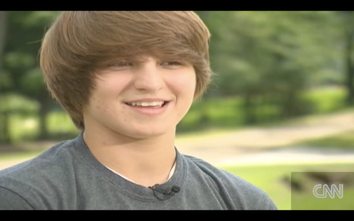
Gay teens: Your moxie will pay offCeara Sturgis being interviewed by CNN

Ceara Sturgis, a teenage lesbian in rural Mississippi, made headlines earlier this year when her bigoted high school principal refused her request to wear traditionally male clothing in her senior yearbook picture. Instead of printing a photo of Ceara in a tuxedo, the school omitted her photo entirely. A CNN reporter recently prompted her to explain how she feels while looking at the page where her picture would have been printed — had she been biologically male or wearing a dress — and she could barely speak about it through her tears. I know how she feels.

I came out around the beginning of my junior year. I was so isolated by then, I didn’t even fit in with the kids at the local LGBT youth support group — and I was lucky that existed at all. It was 1996, and kids all over the country were literally suing the government to force their schools to allow them to form Gay Straight Alliances. (Sadly, in many towns, these lawsuits are still necessary.) In our liberal suburb, we had a brand-new GSA, but I was the only member who was out to the school at large. I resented the closeted kids (and, fascinatingly, one teacher) who preferred silence and anonymity. I’m sure they resented me for drawing attention to them. As soon as I figured out I was gay, I needed to let everyone know about it in the way that teenagers need to stay out until 2 a.m. at that party. Adults don’t understand that kind of need, or we understand it only nostalgically. When you’re that age, your passion controls you with overwhelming urgency. It feels like life will be over tomorrow.

One of my big visibility campaigns was to bring acceptance of same-sex marriage to my high school. For a brief shining moment, Hawaii allowed same-sex couples to marry in the state. That changed in 1998, when voters instituted the first-of-its-kind state constitutional amendment banning same-sex marriage, starting an unfortunate trend. I didn’t live in Hawaii, but you couldn’t tell me that at the time. In my opinion, my high school was just as culpable. My protest tactics mainly consisted of me complaining loudly to anyone within earshot about the unfairness of it all. I vaguely recall fashioning some kind of protest button that no one else would wear.

You can just imagine how popular I was. 

When I saw Ceara looking at the page where her picture should have been, I was struck by a feeling of deep sadness, both for her and for myself at that age. I must have sensed that I was on the cusp of something spectacular. The year after I graduated, I heard about kids coming out at my high school by the dozens. I heard from my younger sister that fake same-sex marriages were being performed at the high school a few years after that. And as there were kids then willing to stand up and fight, at the cost of their privacy and their immediate happiness, there are kids now still doing the same. They shouldn’t have to, but they must. They fight because that’s their power. As we age, we lose the will to make ourselves vulnerable like Ceara, and like Constance, who had to sue her high school so she could bring her girlfriend as a date and wear a tux at the same time.

The Deep South works on a different schedule. Ceara’s school clearly hasn’t evolved even as far as mine had almost 15 years ago. She probably feels like things will never change. But to all the Cearas, and the Constances, and the boys and the girls and the bois and the grrls and all the kids everywhere who have that need to make everything better for the kids that come next, I want you to know that you will change the world without even knowing it. You will change the world and you’ll grow and you’ll fall in love and break your heart and find your peace and before you know it you’ll be pushing 30 and looking back at how they all saw, eventually, that you were right. And once you’ve done your part, you can sit back and ache with pride at the ones who come to take your place.

Continue Reading Close

No-fault divorce? It’s about time

Feminist holdouts against New York's new bill don't understand how family law affects women today

  • more
    • All Share Services

No-fault divorce? It's about time

Oh, New York. Welcome to the 20th Century, where marriage cannot be used as a literal ball and chain by a person unwilling to let go.

What mystifies me the most is the official reaction of Maria Pappas, president of the state chapter of the National Organization of Women, who believes no-fault divorce will cause the sky to fall. Specifically, Pappas believes that “homemakers” are granted leverage with fault-based divorce that they lose when unilateral, or no-fault, divorce is introduced. (It also mystifies me that spouses could still, even in 2010, be forced to stay married to someone who refused to let go.)  She also dismisses the support for no-fault divorce from domestic violence attorneys as “the objections of a few” and suggests that, with the proper education, judges would never force victims to stay in such a relationship even in a fault-based only regime.

These objections are antiquated and wrongheaded. Households of 2010 don’t look quite like they did in 1969, when no-fault divorce actually was a controversial topic and these counter-arguments held some weight. The working dad/stay-at-home mom model of the middle class has been replaced by two-parent earner households and a growing number of working mom/stay-at-home dad arrangements. In working poor and impoverished families, the one-parent provider model was never the norm. No-fault divorce seemed scary when it had never before existed, but the truth is that its introduction was long overdue. Feminist groups at the time supported no-fault divorce, as it provided women an escape hatch from desperately unhappy marriages in a society where they were already disadvantaged on almost every level, regardless of their marital status. Imagine an abusive marriage in 1968, when the court-savvy abuser could actually force the victim to stay in the relationship forever. Imagine that now, and you know why domestic violence attorneys are in full support of introducing no-fault divorce to New York. And the judges aren’t the only problem.

I’ve practiced in two states with radically different no-fault laws, and I can’t tell you how many times I’ve told a controlling, psychologically abusive spouse, “No, Mr. Jones. You can’t make her stay married to you if she doesn’t want to be.” (I also can’t tell you how many times, while teaching a pro-se divorce clinic, I hear the question, “Can I take back my name from her?” But that is another story for another time.)  Fault-based grounds usually include mental cruelty, but true mental cruelty has a psychological component that can make it very difficult for the abused spouse to articulate that abuse. More to the point, the abused spouse may be terrified to describe the relationship on paper and testify about it in a court. And of course, a controlling partner will always choose the path of most resistance to whatever it is that the other spouse wants.

No-fault is simply a mechanism by which the contractual relationship is severed. If this mechanism ends up prejudicing the party at an economic disadvantage, the child and spousal support provisions need to be altered. In many states, a judge is directed to take a list of factors into account when awarding alimony: The earning capacity of each party, the child custody situation, the length of the marriage, and the standard of living during the marriage. In Louisiana, “fault” is a barrier to receiving spousal support, rather than the gateway to it. Illinois doesn’t take it into account. The party who ends up economically disadvantaged is usually the one who has custody of the children, regardless of fault and regardless of earning status prior to the separation. It makes sense — the non-custodial parent pays a percentage of income toward the child each month, while the custodial parent pays in 100 percent toward that child’s needs. In my experience, the primary custodial parent is usually the mom — but no-fault divorce plays no role in creating that inequity. 

Further, married or divorced women aren’t the only ones who face this issue. If there is a modern women’s issue that needs to be addressed, it is the fact that single mothers are often severely disadvantaged to the point of insurmountable poverty, partly for not having married the fathers of their children and especially when they leave a long-term, cohabitative relationship. They face almost-insurmountable obstacles to collecting child support, not the least of which being court systems that treat them with contempt that, in my opinion, should be reserved for the fathers who don’t feel the need to support their children. These women are unable to divide properties or stake a claim in assets that would have been partially theirs if only they’d signed a marriage certificate. If activist groups really are concerned about how women are economically disadvantaged by the breakup of a relationship, they should focus their advocacy efforts on child support rather than on keeping New York in the dark ages of family law.  

Continue Reading Close