Lori B. Andrews

The rise of Facebook Nation

The social network has become as big and powerful as a country -- and it's time its citizens got a constitution

(Credit: ponsulak kunsub via Shutterstock/Salon)
This article was adapted from the upcoming book "I Know Who You Are and I Saw What You Did," available Jan. 10 from the Free Press.

When David Cameron became Britain’s prime minister, he made an appointment to talk to another head of state — Mark Zuckerberg. Yes, that Mark Zuckerberg: the billionaire wunderkind, the founder of Facebook. At the meeting at 10 Downing Street, Prime Minister Cameron and Facebook president Zuckerberg discussed ways in which social networks could take over certain governmental duties and inform public policymaking.

A month later, Zuckerberg and Cameron had a follow-up conversation, later posted on YouTube. Cameron, dressed in suit and tie, chatted with Zuckerberg, who wore a blue cotton T-shirt. “Basically, we’ve got a big problem here,” Cameron pointed out to Zuckerberg, describing the U.K.’s financial woes.

Zuckerberg outlined how Facebook could be used as a platform to decrease spending and increase public participation in the political process: “I mean  all these people have great ideas and a lot of energy that they want to bring, and I think for a lot of people it’s just about having an easy and a cheap way for them too to communicate  their ideas.”

“Brilliant,” Cameron said.

Within a year, Zuckerberg had a seat at the table with government leaders. In May 2011, he attended the G-8 Summit, the annual meeting of key heads of state (named after the  eight advanced economies—France,  the  United  States, the United Kingdom, Germany, Japan, Italy, Canada,  and Russia). The media reported that world leaders from German  Chancellor Angela Merkel to French President Nicolas Sarkozy were more in awe of Zuckerberg than he was of them.

Zuckerberg summarized  how Facebook had played a role in worldwide democratic movements and pressed his own policy agenda — urging European officials to back off of proposed regulation of the Internet. “People tell me, ‘On the one hand, it’s great you played such a big role in the Arab Spring, but it’s also kind of scary because you enable all this sharing and collect information on people,’” Zuckerberg said.

Is it odd to think of Mark Zuckerberg as a head of state? Perhaps. But Facebook has the power and reach of a nation. With more than 750 million members, Facebook’s population would make it the third-largest nation in the world. It has citizens, an economy, its own currency, systems for resolving disputes, and relations with other nations and institutions. After watching the video chat between Cameron and Zuckerberg, I became intrigued by the concept of a social network as a nation. I began to wonder: What kind of government rules Facebook? What are its politics? And, if it is like a nation, should it have a constitution?

People are understandably drawn to social networks. For individuals, social networks allow people to stay in touch, performing some of the same functions performed by telephones and letters in previous eras. But laws protect us against outsiders tapping our phones and reading our private mail. Even prisoners can send mail to their lawyers without having those letters read by prison officials. But everything we post on social networks is fair game for the engineers behind Facebook and any other data miner.

Facebook and other social networks are transforming huge swaths of our lives— how we mate, shop, work and stay in touch with the people we love. They are also changing the political process itself. When John F. Kennedy and Richard Nixon debated on television, concerns were raised that politics would deteriorate into a contest where the most telegenic candidate won. But TV debates took place out in the open — anyone could tune in. And the Federal Communications Commission adopted regulations so that opposing candidates were granted equal time to present their views.

With social networks, it’s not the most telegenic candidate who wins, but the one with the best data crunchers. Barack Obama was swept into office largely because of his presence on the Web. His social network campaign was managed by one of the founders of Facebook, 24-year-old Chris Hughes, who took a leave from the company to help propel Obama into office.

The Republicans did Obama one better and stormed Washington in the 2010 elections through the targeted use of social network data. Data aggregators used data from social networks, such as people’s interest in the Bible, past political contributions, voter registration status, shopping history, and real estate records to identify conservative voters by name and provide that information to Republican political hopefuls. The candidates could then email the people directly, making promises and taking stances that were never revealed to the public — and were shielded from the scrutiny of their opponents.

With not only the rights of individuals at stake, but also the future of the political process itself, it’s time to analyze how we as social network citizens can be protected. What responsibilities should individuals bear? What rules should govern what can be done with our digital selves and our data by the social networks themselves and the third parties who gain access to that information? What rights should social network citizens have?

The complex issues raised by social networks came to the fore after the 2011 British riots. Prime Minister Cameron, who’d previously felt that social network communities were “brilliant,” felt differently once rioters began to communicate with each other via Facebook, Twitter and BlackBerry Messenger to share information about what shops to loot.

“Everyone watching these horrific actions will be struck by how they were organised by social media,” the prime minister told the House of Commons.  “So we are working with the police, the intelligence services and industry to look at whether it would be right to stop people communicating via these websites and services when we know they are plotting violence, disorder and criminality. I have also asked the police if they need any other new powers.”

Member of Parliament David Lammy pointed out that rioters had used BlackBerry Messenger to send encrypted and almost untraceable messages to each other. He urged Research in Motion, the maker of BlackBerry, to shut off that service entirely until order was restored in the streets. The prime minister similarly asked Twitter and Facebook to remove messages, images and videos that could incite riots.

Civil rights advocates reacted immediately. “How do people ‘know’ when someone is planning to riot?” asked Jim Killock, the executive director of the online advocacy organization Open Rights Group. “Who makes that judgment?” Legitimate advocacy and well-grounded protests will be stifled if social networks and websites are pressured to censor their members.

Social networks have stunning benefits. But the  citizens of Facebook  Nation who see those benefits may not realize the downside. The young nation was founded only recently, less than a decade ago. Its original citizens were college students who are probably still too young to have experienced rampant discrimination in jobs, romance or credit lines based on what they’ve posted. They may not yet realize the extent to which their offline self is being overshadowed by their digital doppelgänger.

People came to Facebook Nation for freedom of association, free expression and the chance to present an evolving self. But unless people’s rights are protected, social networks will serve to narrow people’s behavior and limit their opportunities, rather than expand them. Already people are being fired for engaging in perfectly legal activities, such as the wine-drinking employee who is tagged on Facebook. And new norms of behavior are emerging that do not reflect off-the-grid life, such as rules forbidding judges to “friend” lawyers.

Unlike a democracy, Facebook is unilaterally redefining the social contract — making the private now public and making the public now private. Private information about people is readily available to third parties. At the same time, public institutions, such as the police, use social networks to privately undertake activities that previously would have been subject to public oversight. Even though cops can’t enter a home without a warrant, they scrutinize Facebook photos of parties held at high school students’ homes. If they see the infamous red plastic cups suggesting that kids are drinking, they prosecute the parents for furnishing alcohol to minors.

Social networks are taking over many of the traditional functions of government without any legal protections for their citizens. The underlying economic goal of social networks — monetizing personal data — is invisible to their citizens and may in fact be herding them into a land that they wouldn’t want to inhabit.

The U.S. Constitution was penned by philosopher-politicians gravely concerned with the metaphysical question of what was necessary for the flourishing of individuals and society. They understood that living socially and with aspirations meant adopting principles to deal with everything from resolving disputes to encouraging innovation, from structuring relationships with other nations to protecting individual rights.

They recognized the value of protecting people’s privacy and assuring the oversight of governmental actions. They required that the governing rules about the relationship between citizens and the government be clearly stated in advance and not changed without adequate notice and citizens’ input. They favored openness about what the government was doing, believing, as U.S. Supreme Court Justice Louis Brandeis said a century later, that “sunshine is the best disinfectant.” They also saw the value of being able to remake oneself, to start afresh.

Instead of philosophy, computer engineering and data collection are the driving forces behind the policies of Facebook Nation. The quest for more and more information about more and more people is what stimulates the Facebook economy because the service makes its money on data. The executives behind social networks often disregard the values that are central to the U.S. Constitution. The Facebook founders, for example, view the desire for privacy as something to be outgrown. In a 2010 interview, Mark Zuckerberg commented on Facebook’s decision to make certain previously private information public: “People have really gotten comfortable not only sharing more information and different kinds, but more openly and with more people.” Former Facebook programmer Charlie Cheever said, “I feel Mark doesn’t believe in privacy that much, or at least believes in privacy as a stepping-stone.”

And the very structure of social networks prevents you from reinventing yourself. Once information about you and photos of you are on the Web, they can be used against you in perpetuity.

As we each begin to live a parallel life on Facebook, it’s time to figure out, as with any new country, what principles should govern this new nation. Do the principles on which the United States and other democracies were founded still resound with people today? Could they provide guidance for the governance of social networks?

The  project of proposing a Social Network Constitution  may seem foolish. Facebook, Myspace, Google, Twitter, and YouTube are private entities, and the U.S. Constitution  governs only the actions of the government, not private actors. But that is not the case in other countries, such as Germany, Ireland, South Africa and the European  Union, where the fundamental values expressed in the national constitution can apply to companies in addition to governments. After all, companies may be more powerful than some governments — that’s certainly the case with Facebook.

And even in the United States, the fundamental values expressed in the U.S. Constitution  provide guidance for the private realm.  The 14th Amendment’s idea of equal protection under the law provided the foundation for Congress to enact civil rights laws that govern the conduct of corporations and private citizens. The Fourth Amendment’s protections for privacy provided judges with the inspiration to allow lawsuits against individuals and corporations that disseminated a person’s private information without consent.

We needn’t think of a Social Network Constitution  as a set of rules, like the Internal Revenue Code, that would govern in minute detail what a social network should or shouldn’t do. Instead, think of it as a touchstone, an expression of fundamental values, that we should use to judge the activities of social networks and their citizens. These principles could be used to frame the societal debates about social networks — guiding not only the decisions of citizens about what technologies they should reject but also the decisions of courts and legislatures about what principles should govern.

In many instances, the principles would help courts make a determination  in a case, analyze existing laws, and decide whether or not to let evidence in at trial. These values could also guide legislators who are considering adopting new laws to regulate social networks.

The very nature of social networks is constantly changing. New technologies are introduced and individual users face new issues. A set of strict, rigid rules governing the use of social networks might be effective now but will quickly become outdated, just as other laws that are intended to protect people, such as wiretapping laws and consent laws, fail to protect and serve the needs of the current online community. Unlike the rigid, formula-driven Internal Revenue Code, a Social Network Constitution should be flexible and recognize basic principles that we should never outgrow. Its provisions would address the actions of government agencies, social institutions and society at large.

Every democratic nation has governing principles about what rights its citizens have over property, privacy, life and liberty. The citizens of Facebook Nation deserve no less.

Excerpted from I Know Who You Are and I Saw What You Did: Social Networks and the Death of Privacy,” by Lori Andrews. Copyright 2012 by Lori Andrews. Published by Free Press.

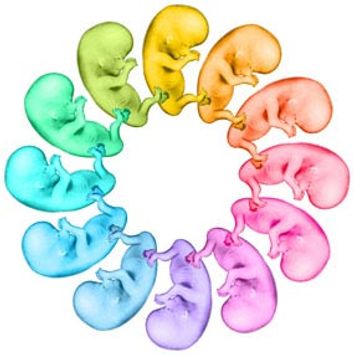
Embryos under the knife

The latest reproductive technology is just the next step on our sprint toward human cloning.

When Maureen Kass entered the in vitro fertilization program at a Long Island hospital, she took fertility drugs to increase the number of eggs she produced. Using a long needle guided by ultrasound, her doctor removed her eggs and fertilized them in a plastic dish with her husband’s sperm. In eight attempts, she became pregnant twice. The first one ended in a miscarriage; the other resulted in an ectopic pregnancy that had to be surgically removed. Already the Kasses had spent nearly $75,000 on their fertility treatments, but still no baby.

On the ninth attempt, Maureen’s doctors removed 16 eggs. Nine were fertilized — too many to be safely implanted into Maureen. So five embryos were frozen for later use. Like most IVF clinics, the hospital insisted that the couple sign an advance directive regarding the fate of the frozen embryos in case the Kasses no longer wished to use them. The choices were to terminate the embryos, donate them to another couple or cede them to research. The Kasses chose research.

Now their private decision is at the heart of a public controversy. In the next few months, Congress will decide whether a ban on research that destroys embryos should be lifted altogether. At fertility clinics across the country, over 150,000 human embryos lie suspended in liquid nitrogen tanks resembling three-foot-tall thermoses. Scientists and biotech companies want access to these embryos, not to create a baby for an infertile couple, but to use the embryos’ stem cells to produce medical treatments. These primitive cells can grow into every type of tissue, including nerves, bones and muscles. But turning human embryos into biological factories raises enormous ethical concerns, converting potential people into products and launching us on a slippery slope toward genetic enhancement and the cloning of human beings.

I’ve spent the last 20 years studying the ever-growing monster of reproductive technology and have followed the debate about embryo research with increasing alarm. What seems to be a simple issue of medical progress — Can we save lives with tissue that would never otherwise be used? — has the potential to turn into a sci-fi nightmare that many would not imagine possible.

Each step along the way, from sperm donation to in vitro fertilization to surrogate mothers to embryo research, we have gradually yet inexorably moved closer and closer toward engineering human life to fulfill individual desire. The compelling tales of infertile couples moved us to endorse creating the potential test-tube babies. And the hopeful pleas of the sick and injured are making us consider the idea of medical research on the leftover embryos. Now a British panel of doctors has suggested that their government allow cloned embryos for research purposes.

This week, Great Britain’s chief medical officer, Liam Donaldson, urged Parliament to allow doctors to begin “therapeutic cloning.” This involves creating an embryo that is a clone of the patient and using that embryo as the source of stem cells, which would guarantee that the resulting tissue is not rejected. Yet perfecting a technique to clone human embryos would pave the way for any such embryo to actually be implanted in a woman to create a living, breathing human clone.

Stakes are high on both sides. At congressional hearings last April, the former Man of Steel, Christopher Reeve, urged the use of embryo stem cells on spinal cord injury victims. Reeve, rendered quadriplegic after a fall from a horse, is confined to a wheelchair which he directs with his breath (a hard breath turns it right, a soft one, left). To speak, he must wait for his respirator to swish air over his vocal chords.

“Why has the use of discarded embryos for research become such an issue?” Reeve asked. “Is it more ethical for a woman to donate unused embryos that will never become human beings, or let them be tossed away as so much garbage when they could help save thousands of lives?”

But critics of embryo research hold no truck with such rhetoric. David Prentice, an embryologist at Indiana State University, likens Reeve’s argument “to the one in Nazi Germany saying we’re going to have these Jews killed, so why not experiment on them?”

A little inflammatory? Perhaps, but Prentice is articulating the concerns of many who are dismayed by the headlong rush towards embryo stem cell research and what it signals about medicine’s increasingly cavalier attitude toward human life. Since removal of the cells destroys the embryo itself, some women have also voiced their concern that embryos will become nothing more than research fodder.

“It’s not like I left a toenail cell at the clinic,” says Risa York, an in vitro fertilization patient with seven frozen embryos. “Each embryo is a potential child. We have to be very careful — and respectful — about how we make decisions about them.”

Despite such dissenting views, embryo research now seems inevitable. This month, the National Institutes of Health (NIH) plans to give the go-ahead for embryo stem cell research — a slap in the face to legislators who believe that it violates an existing federal law banning research which destroys embryos. NIH claims to have found a loophole: federally-funded researchers will not remove the cells themselves (which would terminate the embryos), but will perform research on cells that have already been removed.

Douglas Johnson, legislative director of the National Right to Life Committee, responds bluntly: “If we had a law that barred research in which porpoises were killed, no one would entertain for five seconds that a federal agency could arrange for someone else to kill the porpoises and then proceed to use them in research.”

The upcoming congressional bill, sponsored by Sen. Arlen Specter, R-Pa., will to allow federally funded embryo stem cell research on leftover in vitro embryos, like the ones the Kasses stored at the Long Island clinic. This bill, which has overwhelming support due to the compelling testimony of patients like Reeve, would lead to massive experiments on embryos by researchers at the NIH and at university labs and medical centers that receive federal funding. Already, on the NIH Web site, every institute has posted a plan for what it will do if it can use embryo stem cells. The Heart, Blood and Lung Institute wants to repair failing hearts and grow new heart chambers. General Medical Sciences wants to develop artificial skin. Even Environmental Sciences wants to get into the act, proposing to use embryo stem cells to test “the toxic effects of biologicals, chemicals and drugs.”

Yet if this sounds like an issue that will divide pro-lifers with their strict life-is-sacred values against liberal humanists with their let’s-control-fate-through-science convictions, think again. While staunch pro-lifers, such as Sen. Gordon Smith, R-Ore., have embraced the research because of its potential medical benefit, some pro-choice Protestant groups are lobbying against the bill.

Protestant theologian Gilbert Meilander of Valparaiso University in Indiana argues that while abortion is justified because of the claims of the pregnant women, “there is no such direct conflict of lives involved in embryo research.” The 8.5 million member United Methodist Church opposes embryo stem cell research on the grounds that it turns human life into a commercial product.

A far-fetched fear? Not for the West Coast infertility clinic director who recently called me for advice about the unclaimed embryos in his care. Recognizing that human embryos are now a treasure trove of potential medical cures, he queried: “We have lots of embryos that couples haven’t asked about for a while. Can we sell them to a biotech company?”

But imagine the heartache of the couple who comes back to the clinic a few years later to get pregnant only to learn that their future child has been turned into a kidney. Even couples like the Kasses, who checked off “research” on the forms, might have expected that the clinic would be doing the sort of research that was most important to the couple — infertility research. They might be appalled by the idea that their embryo was converted into a set of nerve cells that was for sale to the highest bidder.

And what if the couple now disagree on the fate of the embryo? After their ninth attempt at in vitro fertilization failed, Maureen and Steve Kass divorced. She then wanted to use her frozen embryos to create a child, but Steve disagreed. After five years of litigation, the highest New York court decreed that the fate of the embryo was governed by the form the couple had initially filled out, saying leftover embryos could be used for research. Although Mrs. Kass desperately wants a baby from the embryos created with her eggs, those embryos are now fodder for research.

What’s perhaps more disturbing is that there’s no guarantee that embryo stem cells will be used to cure serious diseases. Indeed, biotech companies can make more money by offering to use them for the burgeoning market of “enhancement” medicine. Where cardiac patients might need new heart cells to repair a damaged chamber, athletes may use these same cells to increase stamina. Geron Corp., which holds the exclusive U.S. license on embryo stem cell technology, touts the artificial skin it is developing as a treatment not just for burn victims but for people with sun damage and other age-related conditions. Indeed, 70-year-old Specter let slip his real interest in embryonic stem cells when he referred to them as “a veritable fountain of youth.”

“You could use embryo stem cells for genetic engineering and enhancement,” says Prentice, who predicts that doctors will say: “If you want to be a marathon runner, we’ll fix that for you.”

Across the world, government policymakers are eyeing the United States to see how the laws around embryo research will develop. Many countries have national bans on embryo research that forbid even privately funded companies like Geron from undertaking such work. A member of the French Parliament is concerned that medical products made from human embryo cells will become so routine that Europeans will inadvertently use them, despite their own laws. He advocates an “ethical” label, like the European labels that indicate which foods are genetically engineered and which clothes were not made with child labor, to give people a choice not to partake of the products of human embryos.

Specter is trying to head off criticism by including two restrictions in his bill. The proposed law bans the creation of embryos for research (relying only on “excess” embryos from infertility clinics) and forbids the implantation of cloned embryos to create humans. But neither limit is likely to last. As Dr. Edmund Pellegrino of Georgetown University, a Roman Catholic physician and ethicist, puts it: “How is it possible to separate ‘spare’ embryos from embryos intentionally produced as stem cell sources? The temptation to make ‘spares’ is obvious.”

And eventually, even the bright line against cloning whole humans will grow blurry. Specter’s co-sponsor on the bill, Sen. Tom Harkin, D-Iowa, has already gone on record as favoring human cloning. When President Clinton previously urged Congress to ban cloning, Harkin said there should be no limits to scientific research. He told Clinton, “Take your ranks alongside Pope Paul V who in 1616 tried to stop Galileo.”

Does opposing embryo stem cell research really mean throwing in one’s towel with the Pope Pauls of history? Or is there something to be said for restraining the technologies that control life?

Ironically, despite charges that this ban will block promising medical research, it may be having just the opposite effect. The legal restrictions on embryo stem cell research (including flat-out bans on embryo research in eight states — Florida, Maine, Massachusetts, Michigan, Minnesota, North Dakota, Pennsylvania and Rhode Island) have sent scientists scurrying to find other body cells with similar properties. Over the past year, a series of scientific breakthroughs occurred that challenged the traditional idea that adult cells were permanently wedded to their specialized roles in the body.

“Everyone thought that adult cells had gone past the point of no return,” says geneticist Eugene Pergament of Northwestern School of Medicine. “But now we know that, from a genetic perspective, any cell with a nucleus can be made into a stem cell.”

In research on mice, Italian and Canadian scientists found that adult stem cells from the brain can shed their identities and reinvent themselves as blood cells. Researchers at the University of Toronto discovered retinal stem cells in adults that could be used to regenerate damaged eyes. Pancreatic stem cells — including those taken from cadavers — can be persuaded to create insulin-producing cells. And, just this week, researchers announced that adult stem cells from bone marrow can create nerve cells to potentially treat Alzheimer’s, Parkinson’s or spinal cord injuries.

The latest findings suggest that adult stem cells have a developmental repertoire close to that of embryo stem cells. They retain their potential after long-term culture, and can be frozen for later use. If adult stem cells live up to their potential, there may be less reason to disturb those souls-on-ice in infertility clinics.

“The issue is bigger than the fate of some embryos,” says Risa York. “It’s possible to be pro-choice and still respect human embryos as life.” She worries that commercializing embryos — seeing them as just the raw material for medical products — is a trend that could diminish us all. Yet in an era when reproductive medicine is changing faster than a baby grows, York’s vision may soon seem quaintly antiquated.

Continue Reading Close
www.salon.com/writer/lori_b_andrews/index.html